Standing at the offering box, have you ever glanced sideways at the person next to you, counting exactly how many times they bow and clap? Praying at a Japanese shrine really comes down to one core phrase — "two bows, two claps, one bow" — plus the temizu and offering steps around it, and you can learn the whole thing in ten minutes. What makes this guide different: I follow the official steps from Jinja Honcho (the national shrine agency) and the Tokyo Shrine Agency throughout, and I honestly separate what is officially written from what is merely folklore. Several "iron rules" the internet repeats — that temizu must use a single scoop, that the offering must be 5 yen, that the bell must be rung at a set moment — turn out to be things officials never actually mandated, and I flag each one. By the end you will not only know how to pray, but be able to tell who actually understands the etiquette and who is parroting hearsay — including why Izumo Taisha claps four times and why temples do not clap at all. Think of this as the long-form version of the four-step worship summary in my walkthrough on how goshuin collecting actually works.
- The core phrase is one line: at the main hall, "two bows, two claps, one bow" — bow twice, clap twice, bow once more
- Bow before the torii, avoid the centre of the approach: officials use both "eshaku (nod) / ichirei (bow)"; the centre is seen as the gods' path, so walk to the side
- Temizu is a 5-step, single-scoop ritual: officials scoop once, but "one scoop only" is not written anywhere — a mid-way top-up is not a foul
- No fixed offering amount: officials don't require 5 yen or forbid tossing coins; "5 yen = good fortune" is a folk pun officials don't endorse
- Bell timing is not officially specified: custom rings it after the offering and before the bows, but the official steps don't include the bell at all
- Two exceptions to remember: Izumo Taisha is "two bows, four claps, one bow"; temples press palms together without clapping
Contents
The torii and the approach: bow, keep to the side
Worship does not begin at the offering box — it begins at the torii. The gate is the boundary between the human world and the realm of the gods, and passing through it means entering the deity's home. The Tokyo Shrine Agency puts it vividly: approach it as if visiting an elder's house — bow first, then pass through; and when you finish and leave the grounds, turn back toward the main hall and bow once more. Courteous coming in, courteous going out.
There is a small inconsistency worth clearing up first, so it doesn't confuse you later: the same official page slides between two words. The prose says "ichirei" (a bow), but the numbered step list uses "eshaku" (a nod, lighter than a bow). So do not agonise over the exact depth — the practical standard is: at minimum a nod (eshaku), and a clear bow (ichirei) if you want to do it properly, both being expressions of respect. Notably, Jinja Honcho's dedicated page explaining the torii covers only the gate's definition, origins and forms and never mentions any etiquette for passing through it — a reminder that many "rules" are compiled teachings rather than a single official standard.
Once through the torii comes the approach (sando), where one rule is stated consistently by officials and worth remembering above the rest: avoid walking down the exact centre. Jinja Honcho states plainly that the centre of the approach is regarded as the "path along which the deity travels", called seichu in Japanese, so worshippers should keep to the left or right and leave the centre to the gods. If you do need to cross the approach, the Tokyo Shrine Agency gives the method: cross with a slight bow of the head, or first face the front and give a bow at the centre before crossing. Unlike the over-hyped "one scoop" rule, this one is taught consistently by both official sources — just do it.
Temizu in 5 steps, straight from the official text
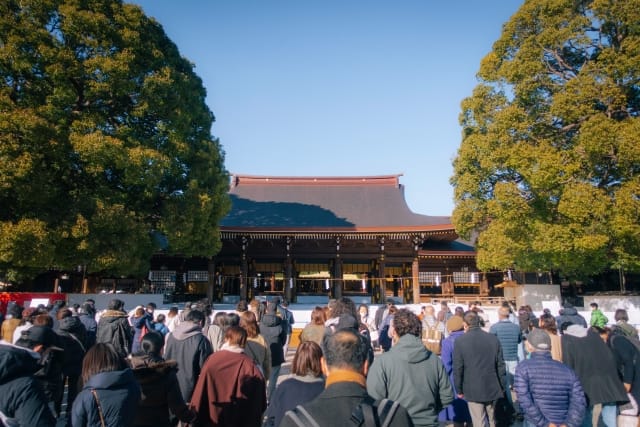
Past the torii and along the approach, you will usually reach a temizuya (chozuya) before the main hall — a roofed basin with bamboo ladles. This step, temizu, symbolically washes away the impurity of your hands and mouth before you face the deity. It is also the step that gets over-complicated most. Here is the official 5-step sequence (ladle version) from the Tokyo Shrine Agency, laid out plainly:
- Prepare and bow: have a handkerchief ready (to dry your hands afterward), give a shallow bow, and begin.
- Rinse left, then right: take the ladle in your right hand and scoop one measure of water, rinse the left hand first; then move the ladle to your left hand and rinse the right.
- Rinse the mouth: move the ladle back to your right hand, pour water into your cupped left palm, and rinse your mouth from that. Key point — officials explicitly say do not put your mouth directly on the ladle; the rinse water goes into the left palm first, not straight from the ladle.
- Rinse the left hand again and clean the handle: rinse the left hand once more, then stand the ladle upright with both hands so the remaining water runs down and rinses the handle, and return the ladle to its place.
- Dry and bow: wipe your mouth and hands with the handkerchief, and finish with a shallow bow.
Now to dismantle the over-repeated myth: is "you must finish temizu with a single scoop" actually an official rule? I read the official steps through several times — officials mention "scooping" only once, at step 2; the rinsing of hands, mouth and handle that follows never mentions scooping again, so the wording does imply the whole thing is done with that first scoop. But the crucial point: no official page states in writing "one scoop only, no refilling mid-way". So the correct reading is that the sequence is designed to be completed with that first scoop — ration the water well and it flows in one; but if you misjudge it and need a small top-up, that is a matter of practice, not a violation of some sacred law. Don't let this over-mythologised "rule" make you anxious.
The rule that is genuinely official is "don't touch your mouth to the ladle" (Jinja Honcho states it in writing), and it makes hygienic sense — think how many people have used that ladle. So if you memorise one thing here, memorise this: pour into your left palm and rinse from there, don't bring the ladle to your lips.
The offering: amount, 5 yen, and tossing, debunked
Hands and mouth purified, you reach the offering box (saisen-bako) before the main hall — the step everyone asks "how much do I put in?" about. This is where the myths pile up, so I will go through them point by point using the official position.
One: is there a fixed amount? No. Jinja Honcho states outright that no set saisen amount has ever been formally decided. So the "standard 50 yen" or "at least 100 yen" claims are not official. The offering is fundamentally "a token of the sincerity you offer the deity" — what matters is the heart, not the number.
Two: must I follow the "5 yen = goen" pun? Up to you. "Goen" (a good bond or fortune) sounds like "go-en" (5 yen), so many people offer 5 yen for luck, and some make "45 yen = lasting good fortune". Officials acknowledge the custom exists but pointedly do not endorse it — their stated line is that "what matters is sincere devotion to the deity, not the amount or the wordplay". In other words, offering 5 yen for luck is fine, but it is folk fun, not a rule you must obey, and certainly not the "wrong amount brings bad luck" scare some sites imply.
Three: place gently, or is tossing okay? Tossing is okay. This is the most over-read rule, usually stated as "never throw it, only place it gently". On the official position: officials do not forbid dropping coins into the box, they even describe it neutrally ("you often see people toss their offering into the box"), and there is no "place gently only" mandate — they only advise "do it with a respectful, careful gesture". So the truth is: tossing is fine, just make the gesture respectful, without awkwardly pressing your coin against the slot because someone told you to "place it gently".
Note the position in the sequence too: officials have you give a nod (eshaku) at the offering box, place your offering in, and then move into the two-bows-two-claps-one-bow. The offering is a lead-in to worship, not something added afterward.
Two bows, two claps, one bow — plus the bell
Now the heart of the whole thing: nihai nihakushu ippai, "two bows, two claps, one bow". The phrase is literally the sequence — bow twice, clap twice, bow once. Broken down from the Tokyo Shrine Agency's official steps:
- Two bows: give two "deep bows" toward the front, upper body clearly bent forward. This "hai" is a respectful deep bow, not a casual nod.
- Two claps: bring both palms together at chest height, draw the right hand slightly back (down), open the hands to about shoulder width, and clap twice. Drawing the right hand back is traditional, expressing the humility of a human not yet fully at one with the deity.
- Prayer: after clapping, press your palms together properly and pray sincerely — this is the moment to express gratitude or a wish.
- One bow: lower your hands and give one more deep bow to finish.
An interesting detail I found while checking: the two official sites do not use identical characters for this action. The Tokyo Shrine Agency and Jinja Honcho mostly write "nihai" (二拝), but one Jinja Honcho passage also writes "saihai" (再拝, meaning "bow twice in succession", synonymous with nihai, just different characters). So if you see "two rei, two claps, one rei" or other phrasings in different sources, don't panic — the wording varies, the action is the same set.
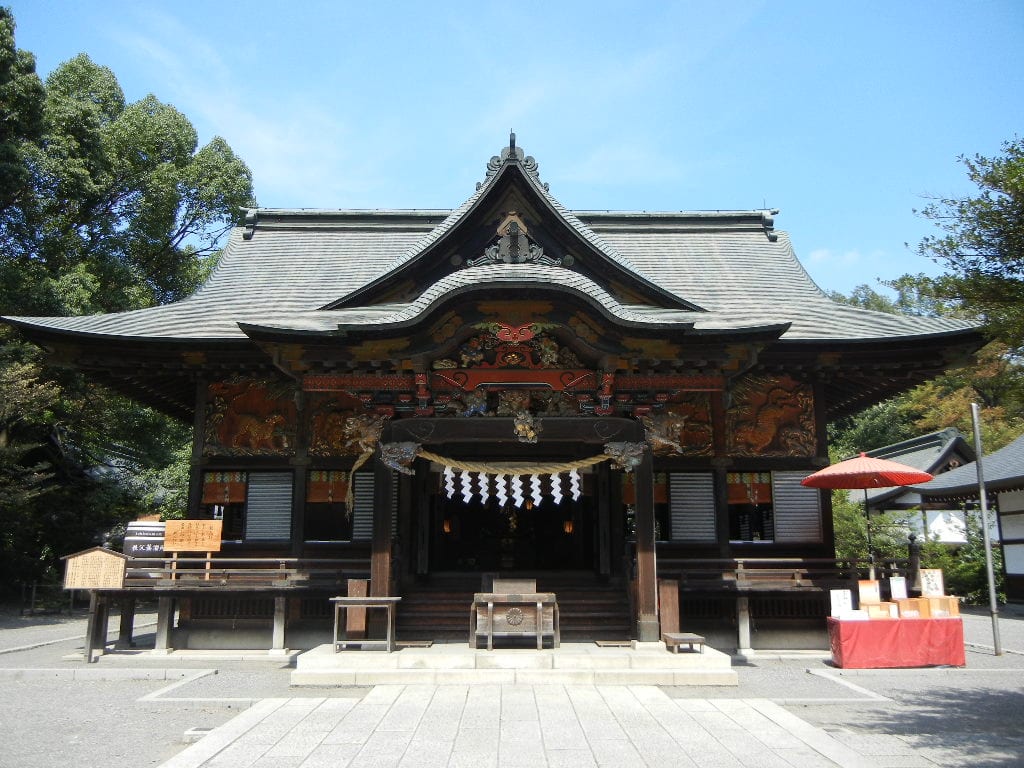
So when exactly do you ring the bell (honzuzu)? I have to be honest here. "Ring the bell after the offering and before the claps" gets stated flatly and confidently, but on checking I found: the official steps say nothing about the timing of the bell. Jinja Honcho's dedicated page on the bell explains only how to ring it and what it means (shaking the hemp rope or five-coloured cloth to sound it, to purify impurity and draw the deity's attention) and never says which step to ring it on; the Tokyo Shrine Agency's full worship sequence never mentions the bell at all — both official teachings skip its timing.
So the honest answer: by common custom, most people ring it after placing the offering and before the two bows, which is convenient and reasonable, and you won't go wrong following it — but understand it is convention, not an official mandated timing. Ring it if there is one; if there isn't (many shrines have no honzuzu), go straight to the offering and bows. Neither is rude. Stop being held hostage by guides that pass off custom as official law.
The most important exception: Izumo Taisha's "two bows, four claps, one bow". If you visit Izumo Taisha in Shimane (the great shrine of matchmaking), the clap count differs — its official FAQ clearly states the formal form is "two bows, four claps, one bow", four claps. The official explanation: at its grand festival (May 14) Izumo Taisha uses eight claps, "8" symbolising infinity since ancient times, expressing boundless praise; for everyday worship, half of that — four claps — expresses that respect. Beyond Izumo Taisha, a handful of shrines follow their own clap counts (just follow the posted signs) — but at any shrine without a specific notice, just use two bows, two claps, one bow; you do not need to switch to four claps everywhere.
Shrine vs temple: one table
The thing visitors most often confuse is that shrines (Shinto) and temples (Buddhist) are worshipped differently — and the key difference is that you do not clap at a temple. Clapping twice in front of a Buddha hall, shrine-style, marks you out. Here is a table of the core differences (the temple sequence follows Naritasan Shinshoji's official page):
| Aspect | Shrine (Shinto) | Temple (Buddhist) |
|---|---|---|
| Entrance marker | Torii gate, shimenawa rope | Temple gate (sanmon), incense burner, Buddha image |
| Purification | Rinse hands and mouth at the temizuya | Temizuya (most temples have one); some also have an incense burner — waft the smoke toward yourself |
| Core worship | Two bows, two claps, one bow (you clap) | Palms together, no clap: bow, offer coins, pray with palms together, then a light bow |
| Clapping | Clap twice (Izumo Taisha four) | No clapping (audible clapping is a Shinto form) |
| One-line memory | See a torii, clap | See a temple gate, palms together |
One honest caveat from the verification: Naritasan Shinshoji (a major official temple) describes a main-hall sequence that is indeed only "bow, offer coins, pray with palms together, then a light bow", with no clapping step, which supports "temples don't clap". But strictly, that page does not literally write "do not clap" — I am inferring it from the fact that the official sequence contains no clapping step, not claiming an explicit ban. The practical rule is simple and easy to remember: clap at shrines, palms together at temples — see a torii, get ready to clap twice; see a temple gate, press your palms together. That keeps you right everywhere. For the wider set of Japan travel manners (train, onsen and dining do's and don'ts), pair this with my complete Japan etiquette guide — that one is the everyday-scenarios overview, while this is the shrine-worship specialist.
Finishing up: worship first, then goshuin
Complete the five stages above — bow at the torii, purify at the temizu, offer, two bows two claps one bow — and you have made a proper act of worship. Only then, if the shrine has a stamp desk, does it become time to collect a goshuin.
Why "worship first, goshuin second"? Because a goshuin is fundamentally "proof of worship". Jinja Honcho's official definition of a goshuin is "proof that you worshipped at the shrine", and Sensoji likewise defines it as "something received as proof of your visit and prayer" — the definition itself implies the order: you need the act of worship before there is anything to prove.
Here is an honest note:after checking, no official page states as a command "you must complete worship before receiving a goshuin" as a written service rule. The "order" basis I found is entirely logical order inferred from the "goshuin = proof of worship" definition, not an official published regulation. So the most accurate statement is: by the logic of a goshuin being "proof of worship", the convention is to worship first and then receive it — an established courtesy rather than an official written rule. Still, since it is the whole point, do worship properly before collecting — don't be the person who queues only for the stamp without praying.
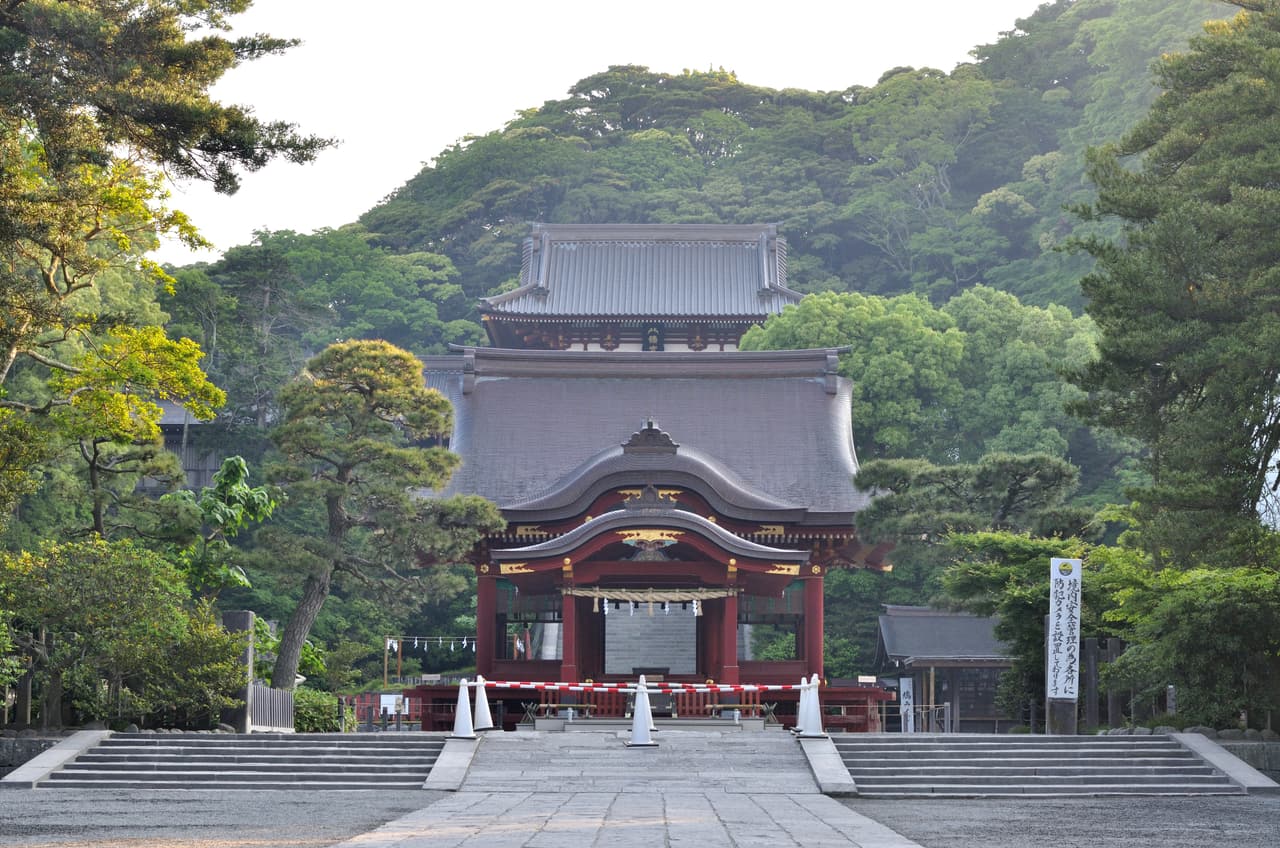
How to collect goshuin, where to buy a goshuincho, typical offering fees, hand-written versus kakioki, and a beginner first-book route — I don't expand on those here, because I cover them fully in my separate goshuincho and offering-fee starter guide; the shrine etiquette you are reading now is really the long-form version of that guide's four-step worship section. To thread "how to pray" and "how to collect" into one complete shrine routine, read the two side by side. And if you want a route with clustered shrines to practise this etiquette in person, I highly recommend Kamakura's Tsurugaoka Hachimangu as a first stop — generous grounds, quiet in the early morning (it opens at 6am), perfect for walking each step of the torii, temizu and two-two-one calmly. The first days of January run on their own logic — what to do when the crowd blocks the centre path, how hamaya and last year's charms are handled, whether hatsumode even has a deadline — and that is covered in our hatsumode guide.
Frequently Asked Questions
- Q1:Do I really have to bow before the torii gate? Is it rude not to?
- Officials do teach a bow before passing through the torii. The Tokyo Shrine Agency likens a shrine to an elder's home and suggests you bow once before passing through the gate, and bow again toward the main hall on your way out. Amusingly, the same official page is inconsistent with itself: the numbered steps use eshaku (a light nod) while the prose uses ichirei (a fuller bow) — even the official wording is not standardised. So the practical answer is: at minimum give a nod (eshaku); if you want to do it properly, a bow (ichirei). Both count as showing respect. Nobody will stop you if you skip it, but it is a low-cost courtesy worth making a habit.
- Q2:Do I have to complete the whole temizu ritual with a single scoop of water?
- This is the most over-hyped rule of the lot. Across the official temizu steps (from the national Jinja Honcho and the Tokyo Shrine Agency), the word 'scoop' appears only once, at the start — rinsing the hands, rinsing the mouth and rinsing the handle all follow without any mention of scooping again, so the sequence implies you use that first single scoop for everything. But honestly: no official page anywhere states in writing 'one scoop only, no refilling'. The correct reading is that the sequence is designed to be done with that first scoop; if you misjudge the water and need a top-up, that is a matter of practice, not a breach of some official rule. Relax — getting your hands and mouth clean is the point.
- Q3:Do I have to offer 5 yen? And is it rude to toss the coins in?
- First the key fact: officials explicitly state there is no fixed offering amount — Jinja Honcho literally writes that no set saisen figure has ever been formally decided. As for the '5 yen = goen (good fortune)' pun, officials acknowledge the folk custom exists but pointedly do not endorse it, taking the line that 'what matters is sincerity, not the amount or the wordplay'. So offering 5 yen for luck is fine, but it is folklore, not a rule. The tossing question is similarly overblown: officials do not forbid dropping coins into the box, and there is no 'place gently only' rule — they simply advise 'a respectful, careful gesture'. Bottom line: any amount, tossing is fine, just be respectful.
- Q4:In the two-bows-two-claps-one-bow sequence, when exactly do I ring the bell?
- This gets stated confidently, but after checking I have to be honest: the official step-by-step says nothing about the timing of the bell. Jinja Honcho's dedicated page on the bell (honzuzu) explains only how to ring it and what it means (shaking the rope or cloth to sound it, to purify and to draw the deity's attention) and never specifies which step to ring it on; the Tokyo Shrine Agency's full worship sequence does not mention the bell at all. So the honest answer: by common custom most people ring it after the offering and before the bows, which is convenient and reasonable — but understand it is convention, not an official mandated timing. Ring it if there is one, skip it if there isn't; neither is rude.
- Q5:I heard Izumo Taisha uses four claps. Do other shrines do that too?
- Yes, it is a genuine exception with an official basis. The standard form at most shrines is two bows, two claps, one bow, but Izumo Taisha's official FAQ clearly states its formal form is 'two bows, four claps, one bow' — four claps. The official explanation: at its grand festival (May 14) Izumo Taisha uses eight claps, eight symbolising infinity since ancient times and expressing boundless praise to the deity; for everyday worship, half of that — four claps — is used. So unless a shrine explicitly says otherwise (Izumo Taisha, and a few others with special clap counts), stick to two bows, two claps, one bow everywhere else; you do not need to switch to four claps at every shrine.
- Q6:Do Buddhist temples also use two bows, two claps, one bow?
- No — you do not clap at a temple, and this is the single easiest thing to mix up between shrines and temples. Take Naritasan Shinshoji (a major official temple): the worship sequence described on its official page is 'bow, offer coins, press palms together in prayer, then a light bow' — with no clapping step at all, in clear contrast to a shrine's two-two-one. To be precise, that official page does not literally write 'do not clap'; I am inferring 'palms together, no clap' from the fact that its official sequence contains no clapping step, rather than claiming an explicit ban. The simple rule of thumb: clap at a shrine (torii, shimenawa rope), press palms together silently at a temple (temple gate, incense burner, Buddha image) — remember that and you will never clap awkwardly in front of a Buddha hall.
Keep reading:
Goshuin Guide: Collecting Japan Shrine Stamps
How to start collecting goshuin: books, etiquette, fees, and a first-timer route.
Gojoin Castle Stamps: 12 Original Keeps Guide
What gojoin are, how they differ from goshuin, plus all 12 original castle keeps mapped.
Tsurugaoka Hachimangu Guide 2026: Goshuin, Hours & More
Free to visit year-round, 6am–8pm, with the goshuin fee confirmed at the desk — plus the Sept 14–16 grand festival's yabusame archery and Komachi-dori's best snack stops.