Japan's powder — the industry calls it japow — is a global skier's dream: dry Siberian cold air sweeps the warm Sea of Japan and dumps snow so light it's almost dust. But "skiing in Japan" isn't one answer: Niseko, Hakuba, Nozawa and Zao suit completely different people, and the wrong pick can mean a beginner stranded on steeps or an onsen lover stuck in an international resort village. This guide compares the five big resorts on snow, terrain, access and crowd profile in one table, then tells you which one is for your kind of skier.
- Beginner / family → Niseko or Furano (Hokkaido): soft snow, gentle runs, direct from New Chitose, international service
- Advanced / varied steep-and-long terrain → Hakuba (Nagano): a 10-resort valley, 1998 Olympics host, easiest from Tokyo
- Skiing + a traditional onsen village → Nozawa Onsen (Nagano): soak in public baths right after your runs
- The "snow monsters" → Zao (Yamagata): Japan's most famous juhyo, with night illumination
- The powder core is January to mid-February; Niseko skis into late April-early May
📖 Table of contents
Why Japan's powder is world-famous
Japan's snow is a product of geography: dry Siberian winter winds cross the relatively warm Sea of Japan, soak up moisture, slam into the mountains of Honshu and Hokkaido, and unload it as light, dry powder — low water content, soft underfoot, painless to fall on. That's japow. The Sea-of-Japan side and Hokkaido, on the windward face, get astonishing volumes; Niseko alone records 10-15 m of annual snowfall and 90+ snow days a season, making it one of the most reliable powder spots on Earth.
The season runs roughly mid-December to early April, and the most reliable snow and quality is January to mid-February. Early December often lacks a base; from late March temperatures rise and the snow turns wetter. Beginners who dislike cold and falling are most comfortable late January to February.
The five resorts compared in one table
The table compares Japan's five most popular ski areas on snow, terrain, access and who they suit. Find your type in the "best for" column, then read the deep dive below.
| Resort | Region | Snow / terrain | Access (gateway) | Best for |
|---|---|---|---|---|
| Niseko | Hokkaido | Biggest, most consistent snow; dry powder; gentler terrain; gated backcountry | Direct transfer from New Chitose, 2-3 hrs | Beginners, families, foreigners |
| Furano | Hokkaido | Dry powder, many gentle runs, fewer crowds | Asahikawa / New Chitose airport | Families, crowd-avoiders |
| Hakuba | Nagano | 10-resort valley, steep/long terrain, lots of off-piste | Tokyo → Nagano shinkansen → bus | Advanced, terrain variety |
| Nozawa Onsen | Nagano | Large area, tree runs, traditional onsen village | Tokyo → Nagano shinkansen → bus | Skiing + onsen |
| Zao | Yamagata | Dry snow, the famous "snow monsters" + night lighting | Tokyo → Yamagata shinkansen → bus | Snow monsters, Japanese feel |
Resort by resort: who each is for
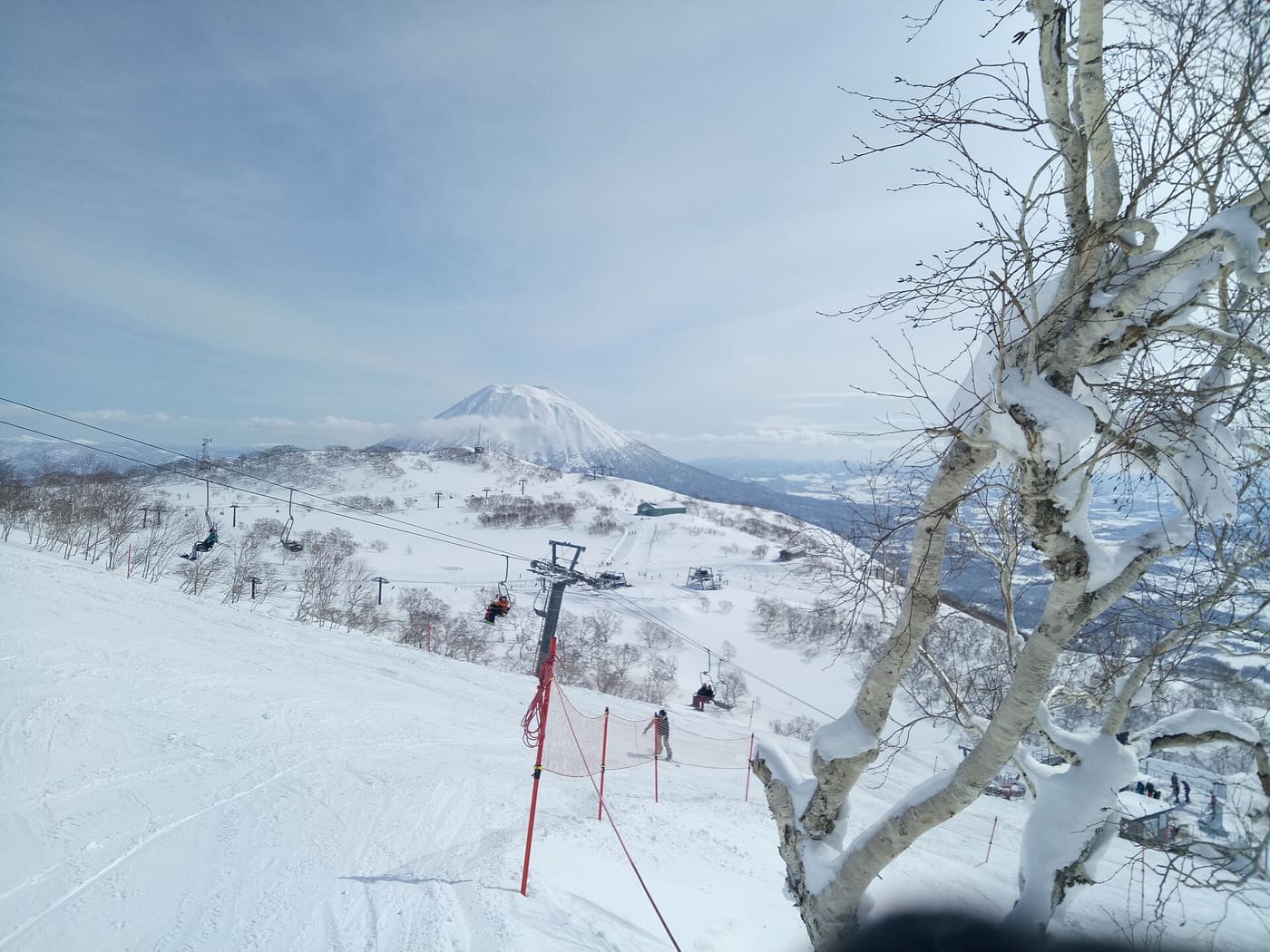
Niseko (Hokkaido) — the powder ceiling, most international
Niseko is Japan's best-known resort, four linked areas (Grand Hirafu, Annupuri, Niseko Village, Hanazono) on one combined pass. Big, consistent snow and uniform powder, plus gentler terrain and plenty of easy runs, make it very beginner- and family-friendly; English service, dining, rental and instruction are all complete, so there's no language barrier. The trade-off: it's the priciest and the most foreigner-heavy — great if you want "Japan but international," less so if you want a purely Japanese feel. There's a direct transfer from New Chitose, ~2-3 hours. The full Niseko guide — choosing among the four areas, the combined pass, lodging and lessons — is in our Niseko ski guide.
Furano (Hokkaido) — quieter, cheaper, family-friendly
Also Hokkaido dry powder, Furano is less crowded than Niseko, friendlier on price, with lots of beginner-to-intermediate runs and a more "local Japan" feel — a good pick on a budget or with kids. Its summer lavender season is famous too, making it one of the few year-round destinations. If the Furano-Biei Norokko sightseeing train is part of the picture in your head, note that it stops for good on 23 September 2026; from 2027 the same corridor is served by the Furano Lavender Express limited express. The full story is in our Furano-Biei Norokko train guide.
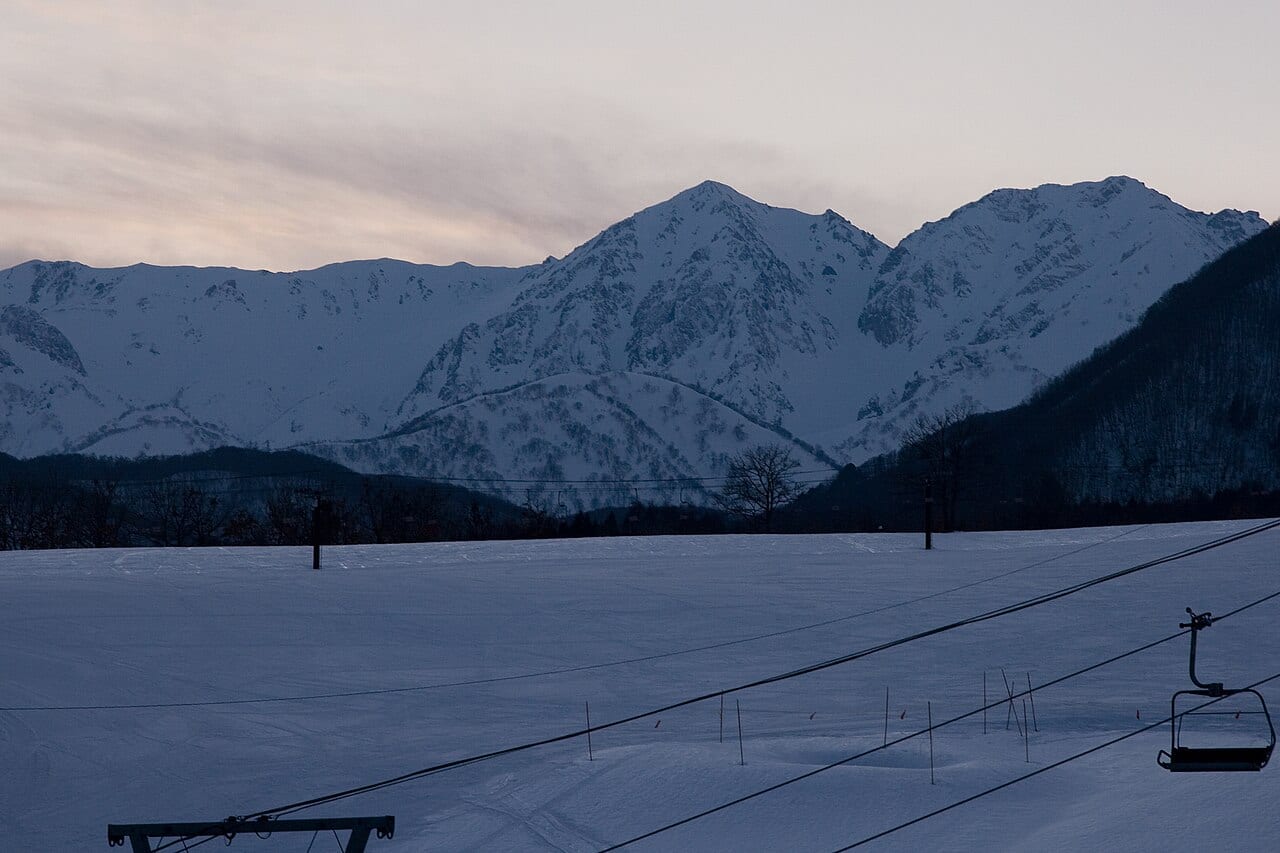
Hakuba (Nagano) — advanced terrain, easiest from Tokyo
The Hakuba Valley is a 10-resort area (Happo-one, Tsugaike Kogen, Hakuba Goryu and more) beneath the Hakuba range, with steeper, longer runs and lots of off-piste and advanced terrain — the 1998 Nagano Olympics were held here. Snow falls less frequently than at Niseko but often in big single dumps. Its biggest edge is access: shinkansen from Tokyo to Nagano plus a bus, ideal for a "Tokyo + skiing" trip. The language and transfer barrier is a bit higher than Niseko. How to choose among Happo-one, Tsugaike and the other resorts, the Hakuba Valley Pass, access and lodging are in our Hakuba ski guide.
Nozawa Onsen (Nagano) — soak right after your runs
If you want "skiing + a traditional Japanese onsen village," Nozawa Onsen is the pick. The ski area is large with fun tree runs, and right below the slopes is an old hot-spring town with 13 free public baths (sotoyu) — finish your runs, walk into the stone lanes, soak and eat nozawana. It's an atmosphere Niseko can't offer. Also in Nagano, it pairs naturally with Hakuba. The full guide — the 13 public baths, the Jan 15 fire festival, access and lodging — is in our Nozawa Onsen ski guide.
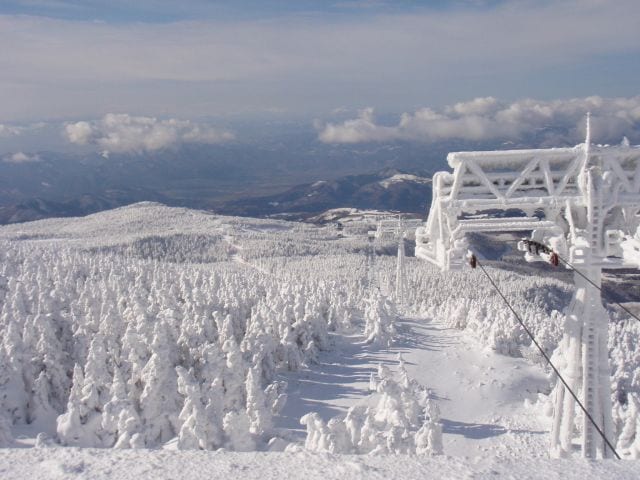
Zao (Yamagata) — the world-class "snow monsters"
Zao is famous not just for skiing but for its "snow monsters" (juhyo) — conifers encased layer by layer in wind-driven frost and supercooled droplets into giant creature shapes, Japan's signature winter spectacle, peaking in January-February, with night illumination and a ropeway to view them. The snow is dry, there's an onsen town, and it suits anyone wanting "skiing + unique scenery + a Japanese experience." Reach it from Tokyo via the Yamagata Shinkansen and a bus — ropeway routes, illumination hours and access details are in our Zao snow monsters guide.
Also worth considering: Rusutsu, Kiroro, GALA Yuzawa
The five above get the most attention, but a few more are worth a look depending on your needs: Rusutsu (Hokkaido) has three linked peaks, heavy snowfall, and a rare indoor amusement park and heated pool — the most family-friendly choice, covered in our Rusutsu ski guide; Kiroro (Hokkaido) is known for a long season and deep powder, with lodging transformed by Club Med's recent arrival — see the Kiroro ski guide; and GALA Yuzawa (Niigata) sits just 71 minutes from Tokyo on the Joetsu Shinkansen with the station wired straight into the gondola base, the easiest day-trip skiing from the city — see the GALA Yuzawa ski guide.
Which should you pick?
- First time skiing / with kids → Niseko (most international, no language stress) or Furano (quieter, cheaper)
- Advanced, wanting steep-and-long terrain and off-piste → Hakuba
- Tokyo-based trip, skiing on the side → Hakuba or Nozawa (shinkansen to Nagano is smoothest)
- Skiing plus a traditional onsen → Nozawa Onsen
- Want the snow monsters / unique scenery → Zao
- On a budget but wanting a Japanese feel → Furano
Picked a resort? Book the bed next
A ski trip almost always means sleeping at the resort: you want the first lift in the morning and a soak after the last run, and staying in a city down the valley means a bus there and back every day. So once you have picked a resort, the next decision is where to stay. The table puts each booking site's area lodging page for the five resorts side by side — whichever sites have one are listed, so use the one you are comfortable with. Which part of each area is most convenient is covered in the resort guides.
| Resort | Area lodging pages | Know this before you browse |
|---|---|---|
| Niseko | Booking · Kutchan / Agoda · Niseko area / Rakuten Travel · Kutchan | Grand Hirafu, Niseko's busiest village, is in Kutchan town, which is why Booking and Rakuten list it under Kutchan. Agoda's Niseko area page also lists Rusutsu hotels — Rusutsu is a different resort, so check the location |
| Furano | Booking · Furano / Agoda · Furano / Rakuten Travel · Furano | The lists mix hotels around Furano Station with ones in Kitanomine at the foot of the slopes; to be close to the lifts, look at Kitanomine |
| Hakuba | Booking · Hakuba village / Agoda · Hakuba / Rakuten Travel · Hakuba village | First-timers do best in the Happo area or the village centre — which area suits you is in the Hakuba guide's lodging advice |
| Nozawa Onsen | Booking · Nozawa Onsen / Rakuten Travel · Nozawa Onsen | The onsen village sits at the foot of the slopes, so staying in the village puts the public baths within walking distance |
| Zao | Booking · Zao Onsen / Rakuten Travel · Zao Onsen | Stay in Zao Onsen up the mountain, not Yamagata city. Booking also has a separate "Zao" that is Zao town in Miyagi — a different place |
These pages open on today's date, not ski season — change the dates to your trip before judging prices or availability.
Season, access, gear and lift passes
Season: mid-December to early April, core January to mid-February, with Niseko into late April-early May. Access: Hokkaido resorts via New Chitose Airport; Honshu resorts (Hakuba, Nozawa, Zao) mostly via shinkansen from Tokyo to Nagano/Yamagata plus a bus. How to set up Hokkaido transit and passes is in our Hokkaido JR Pass guide.
One thing worth knowing about the Hokkaido side: getting between resorts barely involves trains at all. Rusutsu, Niseko, Tomamu and Sapporo Kokusai are all shuttle-bus propositions, and most operators' reservation pages are Japanese-only and do not open until late October. To skip that hurdle, Trip.com sells a Hokkaido ski bus ticket covering 33 routes — New Chitose and Sapporo to Rusutsu, Niseko, Furano and Tomamu, plus Sapporo city centre to Sapporo Kokusai — payable by card with free cancellation up to four days before use:
Hokkaido ski shuttle bus tickets (Trip.com) →
Two honest limits: it does not cover Kiroro (route list expanded and checked on 13 August 2026), and there is nothing for Honshu — Hakuba, Nozawa Onsen and Zao have no equivalent shuttle product on Trip.com right now, so the shinkansen plus a local bus is the main route. Hakuba is the exception: seasonal ski buses run direct from Narita and Haneda, with reserved seats you must book ahead — details are in the Hakuba guide's access section. Ski products are also seasonal listings: this one only goes on sale on 1 December.
Gear and passes: wear, boots, skis and boards all rent on-site (Niseko and Hakuba have full English rental), so beginners needn't lug gear overseas. Lift passes are single- or multi-day; prices and early-bird deals vary yearly, so confirm on the official site; both Niseko and Hakuba have multi-area combined passes. Beginners should strongly consider a half- to full-day lesson. The ski season is peak, so book lodging early — each resort's area lodging pages are in the table above. Resorts have big day-night temperature swings; warm, waterproof packing is in our Japan packing & weather guide. A full Hokkaido winter itinerary is in our Hokkaido winter 7-day itinerary. Want to bolt a snow festival, illumination or drift-ice day onto your ski trip? Every official date and all 25 of our winter guides sit on one page in the complete Japan winter guide.
One pre-trip step skiers skip too often: many basic travel policies exclude skiing and snowboarding as "hazardous activities" — check what to verify before insuring a ski trip.
Frequently Asked Questions
- Q1:When is the Japan ski season, and when is the snow best?
- Roughly mid-December to early April, with some high-altitude and Hokkaido resorts (like Niseko) running into Golden Week or even early May. The most reliable snow and quality is January to mid-February — the core of Japan's "powder season," when dry Siberian cold air crosses the warm Sea of Japan to produce the world-famous light, dry powder (japow). Early December often lacks base, and late March turns wetter, so beginners are most comfortable late January to February.
- Q2:First time skiing, or traveling with kids — which resort?
- Niseko or Furano (both in Hokkaido) suit beginners and families best: dry, soft snow that's forgiving to fall on, plenty of gentle runs, full English instruction and services, and a direct transfer from New Chitose Airport with no train changes. Niseko is the most international with zero language barrier but pricier and busier with foreigners; Furano is quieter, cheaper and feels more "Japanese." Hakuba and Zao suit intermediates-up or those wanting a Japanese atmosphere, with lower beginner-friendliness.
- Q3:What's the real difference between Niseko and Hakuba?
- In short: Niseko has bigger, more consistent snow (10-15m annual snowfall, ~90+ snow days), uniform powder, the most beginner- and foreigner-friendly setup, and a direct transfer from Sapporo's New Chitose. Hakuba is a valley of 10 resorts with steeper, longer terrain and lots of off-piste, host of the 1998 Nagano Olympics, reached from Tokyo via shinkansen to Nagano plus a bus — easier for a Tokyo-based trip, but with a higher language and transfer barrier. Choose Niseko for powder and ease, Hakuba for challenge and varied terrain.
- Q4:I want skiing plus onsen, or to see the snow monsters — which?
- For "skiing + a traditional onsen village," go to Nozawa Onsen in Nagano, where an old hot-spring town with free public baths sits right below the slopes — soak the moment you finish. For the "snow monsters" (juhyo), the frost-and-snow-encased conifers shaped like creatures, go to Zao in Yamagata, Japan's most famous juhyo site, with night illumination too. Both feel more traditionally Japanese than Niseko, but differ in snow and scale, so choose by whether you prioritize skiing or the experience.
- Q5:How do I sort out gear and lift passes for skiing in Japan?
- Ski wear, boots, skis and boards can all be rented on-site (Niseko and Hakuba have full English rental), so beginners need not lug gear overseas. Lift passes are single- or multi-day; prices and early-bird deals vary by resort each year, so confirm on the official site before you go. Both Niseko and Hakuba have multi-area combined passes. Beginners should strongly consider a half- to full-day lesson — far faster and safer than figuring it out alone.