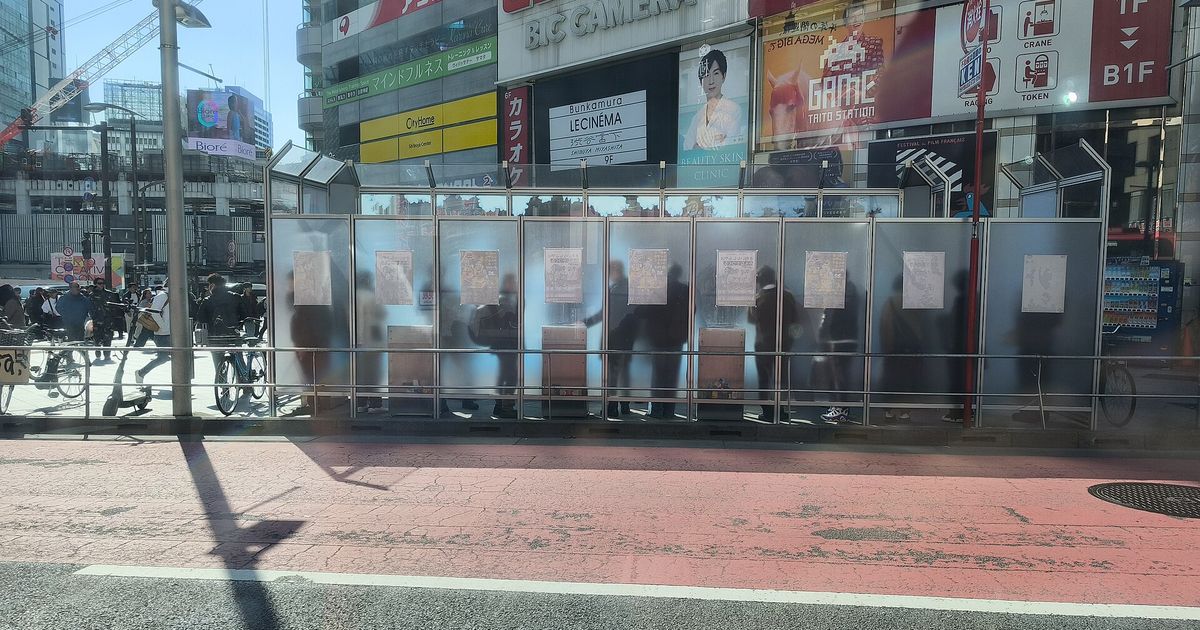
Start with the numbers. Shibuya Ward issued 27,516 on-the-spot street-smoking fines in fiscal 2025 (April 2025 to March 2026) — roughly 75 a day, and 1.63 times the previous year's 16,846. Chiyoda has issued 146,676 since its ordinance began in 2002, of which 46,747 came from Akihabara alone. This is not folklore about strict Japan; it is documented, industrial-scale enforcement. Now the other half. Light the same cigarette a few streets away in Shinjuku and the ward's own website tells you it does not intend to apply penalties at all — street smoking is banned across the entire ward, and the fine is zero. In Japan, “prohibited” and “fined” are two different things, the rules change when you cross a ward boundary, and even the question of whether heated tobacco counts has four different answers in force at once. This guide puts eight municipalities in one table, and then does the thing non-smokers actually need: show you how to settle the indoor question at the door, before you sit down.
- Only four of the eight actually fine you: Chiyoda and Shibuya ¥2,000; Osaka City ¥1,000 citywide; Kyoto City ¥1,000 but only inside designated zones. Shinjuku, Minato, Chuo and Taito ban it with no penalty at all
- Heated tobacco has four coexisting answers: fined in Chiyoda since 2024-11-01, in Osaka since 2025-01-27, banned-but-unpenalised in Shinjuku, and explicitly exempt from the fine in Kyoto
- 🚨 Shibuya added a separate ¥2,000 fine for dropping the butt in June 2026 — smoke and litter, and you can be fined twice. Chiyoda began trialling card payment of fines in Akihabara in early August 2026 (UnionPay and JCB included), citywide from October 1
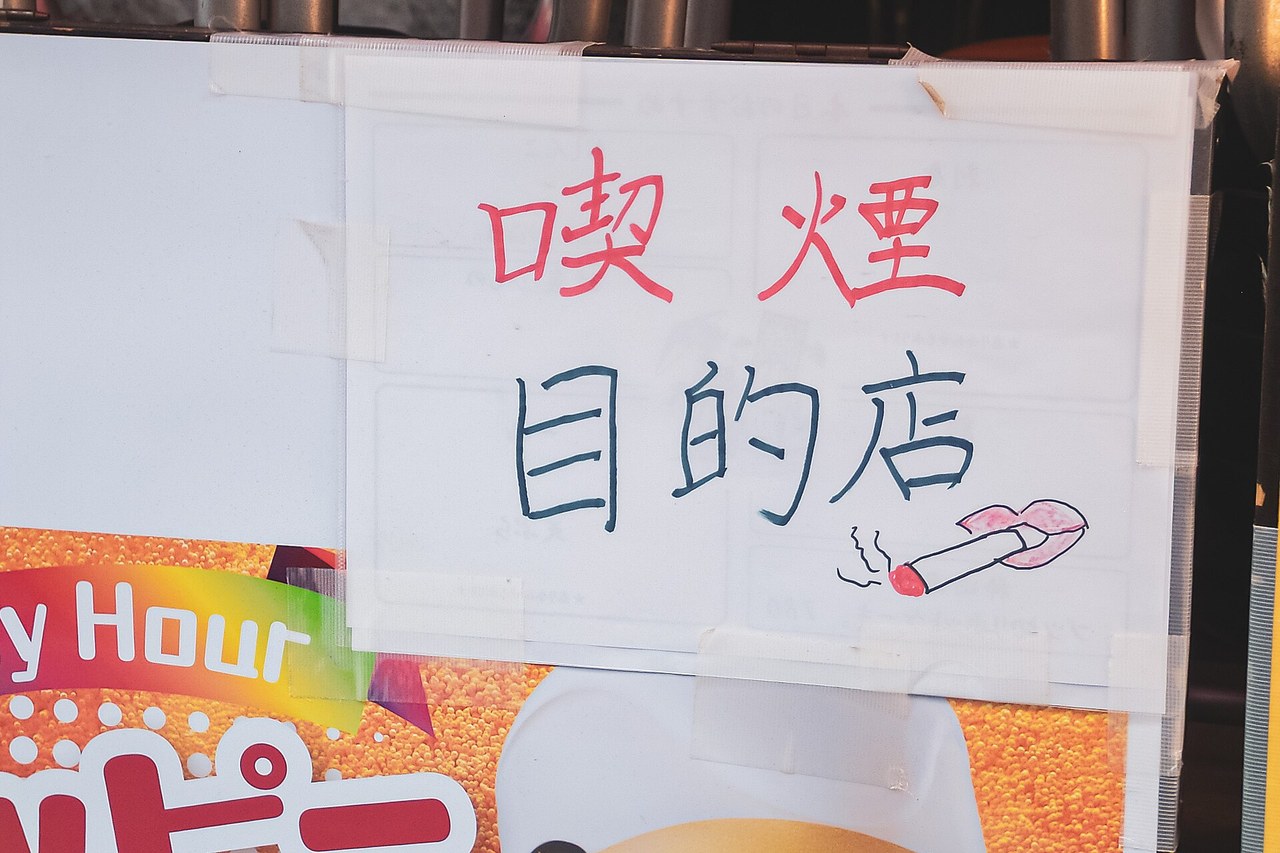
- Indoors, read the door sign — there is no searchable official list of smoking venues, so the 16 legal signs are the only tool. Kitsuen kanoten / kitsuen mokutekiten means the whole venue is a smoking room and under-20s legally cannot enter
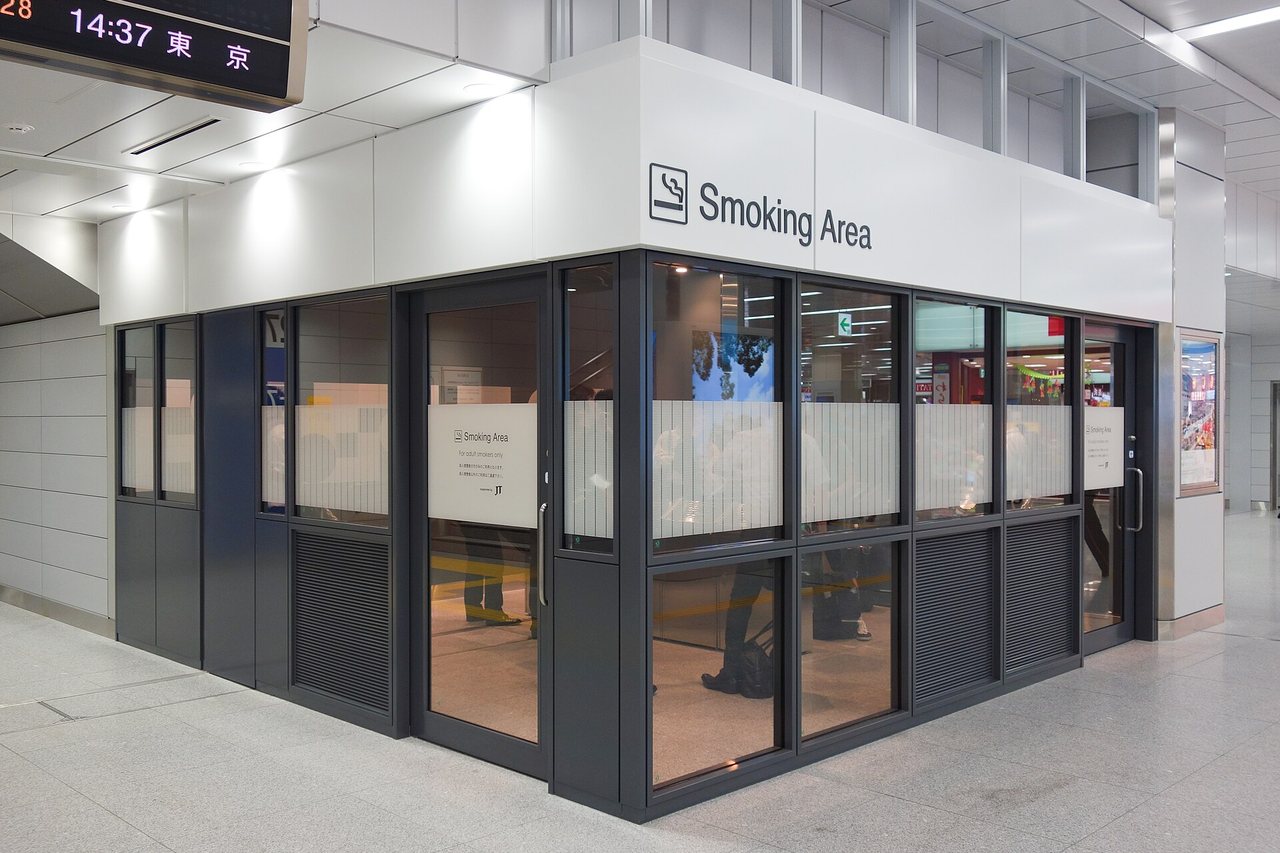
- Counter-intuitive: taxis, buses and aircraft are the strictest category in law; trains and ships may legally have smoking rooms. Onboard Shinkansen smoking rooms ended 2024-03-16, but every Tokaido Shinkansen station still has one inside the gates
📖 Contents
- 1. Prohibited is not the same as fined
- 2. Eight municipalities compared (the core table)
- 3. Heated tobacco: why there are four answers
- 4. Will you actually be caught? The enforcement data
- 5. Indoors: how the law splits premises in two
- 6. Reading the 16 official signs
- 7. Why old izakaya still allow it — except in Tokyo
- 8. Transport, ranked against intuition
- 9. Where you can actually smoke
- 10. FAQ
Prohibited is not the same as fined
Japan's smoking rules compress badly into one sentence: you cannot smoke on the street and it costs about ¥2,000. Both halves are half-right, which makes the whole thing wrong.
Japan regulates smoking through two entirely separate legal systems stacked on top of each other.
- Indoors is national law — the revised Health Promotion Act, fully in force since April 1, 2020 — plus, in some places, a stricter local ordinance such as Tokyo's. This layer governs whether you can smoke inside a restaurant, an office or a hotel lobby. Its penalties run to ¥300,000 and ¥500,000, but they fall mainly on the operator of the premises, not on you.
- Outdoors is governed by each municipality's own street-smoking ordinance. This is the layer visitors collide with, and it has no national standard. Every city and ward decides for itself where smoking is banned, whether to fine, how much, and whether heated tobacco counts.
Japan has more than 1,700 municipalities, each free to write its own version — and they genuinely differ. Walking through three Tokyo wards in a day is an ordinary itinerary. That is three sets of rules.
The trap is the gap between a ban and a penalty. Shinjuku's ordinance prohibits smoking on every road in the ward, and it is drafted tightly enough to cover standing still and riding a bicycle. It sounds severe. Yet the ward's published response says the point is not enforcement and that Shinjuku does not intend to apply penalties. Minato is equally direct: it has no plans at present to tighten the ordinance or introduce penalties, relying instead on patrolling guidance officers.
Two consequences follow, pointing in opposite directions.
- If you smoke: do not let one unpunished cigarette set your expectations. Nothing happens in Shinjuku; in Chiyoda or Shibuya the same act is an immediate ticket, issued by officers whose full-time job is walking those streets.
- If you do not smoke: this explains something visitors often puzzle over — why you keep catching cigarette smoke on the pavement in Shinjuku and Ueno, and much less of it in central Shibuya. It is not that Shinjuku is more permissive in spirit; it is that Shinjuku has no fine behind the ban. If avoiding second-hand smoke outdoors matters to you, the table below predicts your experience better than any general impression of Japan.
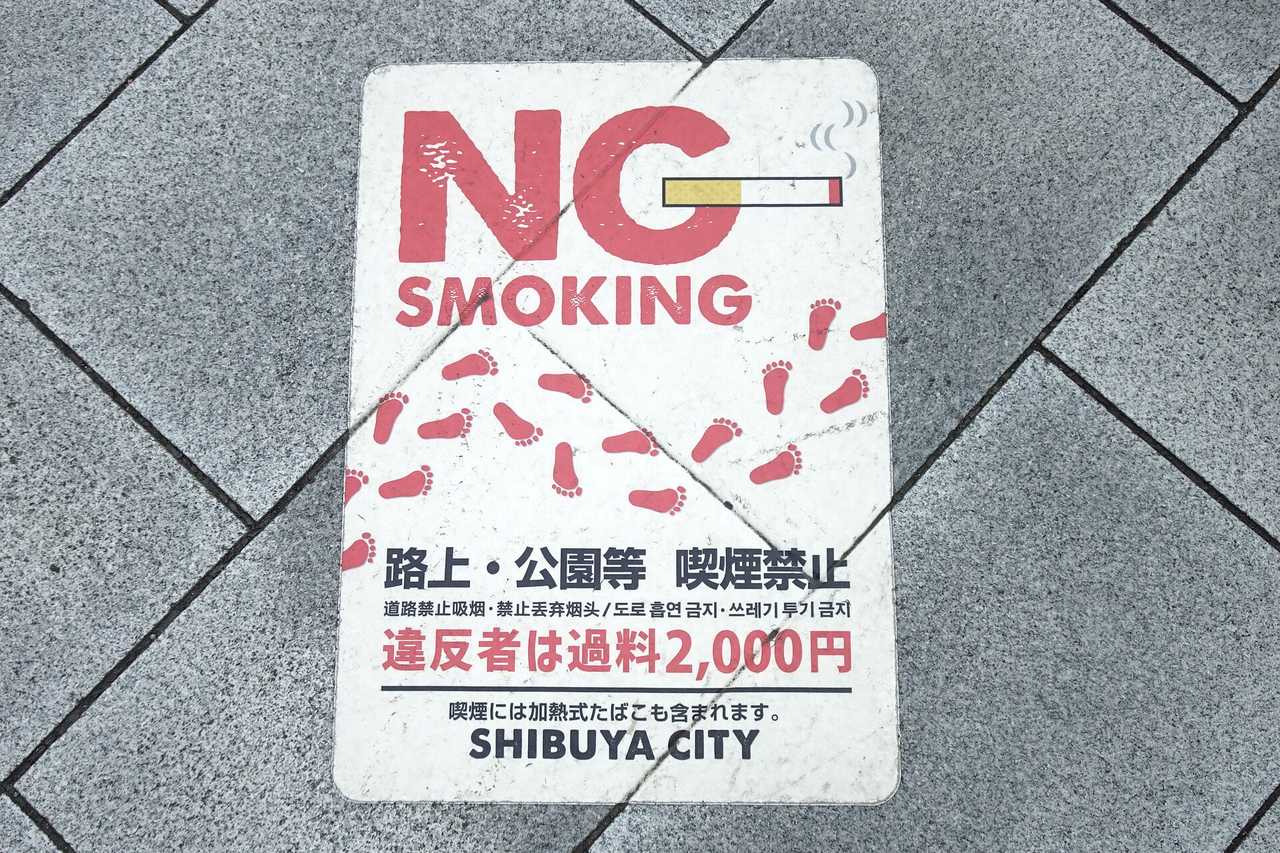
Eight municipalities compared (the core table)
This is the part worth saving. Every figure comes from the municipality's own page, as of August 2026.
| Municipality | Where it applies | Fine | Heated tobacco |
|---|---|---|---|
| Chiyoda (Akihabara, Kanda, Yurakucho) | Every road in the ward except the Imperial Palace grounds, plus public places the mayor designates — all day. The ordinance defines smoking to include merely holding a lit cigarette, so standing still, carrying a portable ashtray and smoking while cycling all count | ¥2,000 Ordinance from October 2002, fines from that November — the first in Japan; extended ward-wide April 1, 2010 | Fined ¥2,000 since November 1, 2024. Liquid e-cigarettes containing no tobacco leaf are not regulated |
| Shibuya | All outdoor public places ward-wide (roads, parks, plazas), designated smoking areas excepted | ¥2,000 on the spot New rules April 2019, enforcement from July 2019 | Official page names IQOS, glo and Ploom as in scope |
| Osaka City | Citywide since January 27, 2025 (city-managed roads, plazas, parks and other public spaces) | ¥1,000 | In scope since January 27, 2025 — previously only lit conventional cigarettes were regulated |
| Kyoto City | Citywide as a duty of effort only; fines apply solely inside the designated enforcement zones — the central area bounded by Kawaramachi, Karasuma, Shijo and Oike streets; the Kyoto Station area; and the Kiyomizu–Gion area | ¥1,000 inside the zones Ordinance in force since June 1, 2007; collected by patrol officers who show ID and issue a city receipt | 🔴 Explicitly outside the scope of the fine (no combusting tip), though still subject to guidance |
| Shinjuku | Every road ward-wide, including while standing still or cycling. Parks and plazas are a duty of effort, not a ban | None. The ward states it does not intend to apply penalties Littering does carry a fine of up to ¥20,000 inside designated beautification districts | Banned by ordinance (page last updated 2025-06-27) — but with no penalty behind it |
| Minato (Roppongi, Odaiba, Tokyo Tower) | Parks, children's playgrounds and outdoor public places, designated smoking spots excepted. The “Minato Tobacco Rule”, in force since July 1, 2014 | None. The ward has no plans at present to add penalties; guidance officers patrol instead | — |
| Chuo (Ginza, Tsukiji, Nihonbashi) | All roads, parks and plazas ward-wide outside designated smoking spots, since July 1, 2020 | No fine published on the official page | Official page states the rules include heated tobacco |
| Taito (Asakusa, Ueno) | Outdoor roads, parks and plazas: smoking banned while walking or cycling; and a total outdoor smoking ban between 07:00 and 09:00 daily, designated public smoking areas excepted | None — manner guidance officers issue warnings | — |
Three things in that table matter more than the rest.
- Taito's 07:00–09:00 window is the strangest cell in the grid. Everywhere else bans smoking while you walk; Taito escalates during the morning commute to a complete outdoor ban, so standing still does not help. Those are exactly the two hours when Asakusa and Ueno are busiest.
- Kyoto is the only zone-based system here. Smoking on a street in Arashiyama or below Fushimi Inari is not a finable offence — those are outside the enforcement zones — while doing it at Shijo-Kawaramachi, outside Kyoto Station or around Kiyomizu is. That inconsistency is real, not your imagination.
- Osaka only went citywide in January 2025. Before that, only designated districts such as Midosuji were covered, so the "designated districts only" description no longer matches the ordinance.
⚠️ This table covers the eight municipalities visitors walk through most. Yokohama, Nagoya, Fukuoka and Sapporo each run their own version. Outside the table, the safe default is simple: if there is a no-smoking marking on the pavement or a sign on a pole, assume it is enforced.
Heated tobacco: why there are four answers
This is the section that catches people out, because heated tobacco is treated differently not only from city to city but between the national, metropolitan and ward layers.
Start at the top. Supplementary provision 6 of the Tokyo Metropolitan passive-smoking ordinance states that for “designated tobacco” — heated products — administrative dispositions and penalties do not apply until the scientific evidence on second-hand exposure becomes clear. At the metropolitan level, heated tobacco has an explicit penalty-free lane.
That has no bearing on the wards. Chiyoda issued a press release on October 1, 2024 announcing that from November 1, 2024 heated tobacco would be fined at the same ¥2,000, and its stated reason is refreshingly practical: heated devices are hard to tell apart from e-cigarettes in the street, so a verbal-guidance-only approach did not work in the field. Osaka City did two things at once on January 27, 2025: went citywide, and brought heated tobacco into scope.
Kyoto deserves quoting directly, because it is the one municipality that spells out the logic:
Because heated and electronic tobacco have no combusting part at the tip, they are outside the scope of the fine within the street-smoking enforcement zones; however, since they encourage street smoking of conventional cigarettes, they are treated as subject to guidance.
Kyoto will not fine you, but it will stop you. Heated tobacco is neither universally exempt nor universally penalised.
One category often lumped in wrongly: liquid e-cigarettes containing no tobacco leaf. Chiyoda's FAQ states explicitly that these are not regulated, while still recommending you use a smoking area. No other municipality in this table publishes a position on liquid e-cigarettes.
My practical advice is to stop tracking the distinction: if you are travelling with an IQOS or a glo, plan as though it were a conventional cigarette. Of the four regimes, two will fine you, one will stop you for a talk, and only the Shinjuku case is genuinely consequence-free. Memorising four rule-sets to save a few minutes of walking is a bad trade.
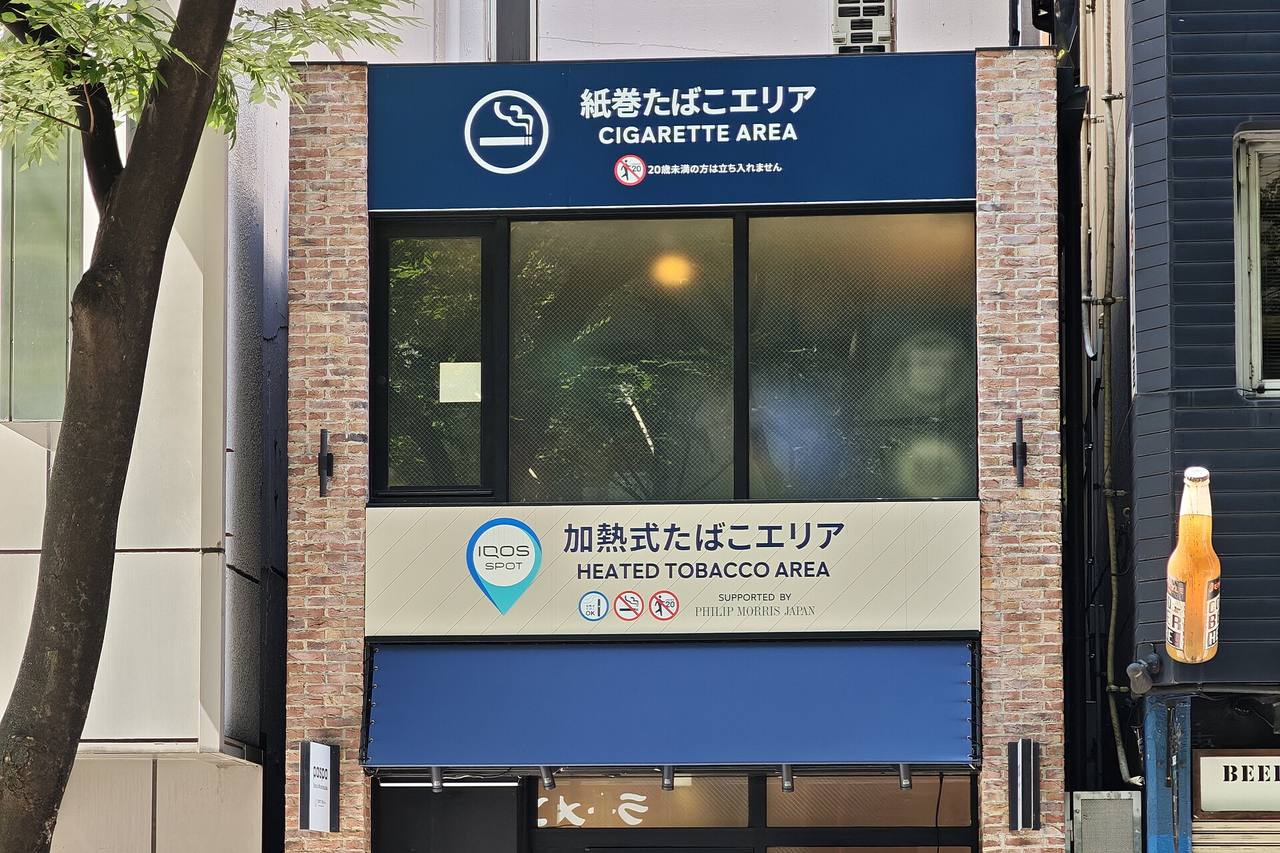
Will you actually be caught? The enforcement data
The comforting belief that nobody really checks is refuted by the municipalities' own published statistics.
| Municipality | Fines issued, FY2025 (Apr 2025 – Mar 2026) | Cumulative |
|---|---|---|
| Shibuya | 27,516 (up from 16,846 — a 1.63× rise) | 77,874 since August 2019 |
| Chiyoda | 8,862 | 146,676 (November 2002 – end of March 2026) By district: Akihabara 46,747, Kanda 24,495, Suidobashi/Jimbocho 22,661 |
Shibuya's 27,516 works out at about 75 tickets a day, and the trend is steep — the figure was 5,042 in fiscal 2019, so it has more than quintupled in six years. Chiyoda's district breakdown is just as telling: Akihabara alone accounts for roughly a third of everything the ward has ever issued. If your itinerary includes an afternoon of electronics and anime shopping there, that is the worst place in Japan to chance it.
🚨 Shibuya: smoke it and drop it, and you can be fined twice
In June 2026 Shibuya made a change many visitors still do not know about: dropping a cigarette butt was converted from a criminal fine into an on-the-spot ¥2,000 administrative fine. The ward's page records 508 dispositions in June and July 2026 alone.
Smoking on a Shibuya street and then discarding the butt is therefore two separate violations, up to ¥4,000 in total. Shibuya also spells out the collection mechanics: payment by cash, electronic payment or payment slip — and non-payment leads to delinquency proceedings, including seizure of bank deposits.
🆕 Chiyoda: fines are becoming card-payable (trial in progress)
Chiyoda is rolling out cashless payment of its street-smoking fine. The trial began in the Akihabara district in early August 2026, with ward-wide implementation scheduled for October 1, 2026. The accepted methods are unusually comprehensive: credit cards (VISA, MasterCard, UnionPay, JCB, AMEX, DINERS, DISCOVER), transport IC cards, electronic money (Rakuten Edy, iD, WAON, nanaco, QUICPay) and QR payments (PayPay, Rakuten Pay, d-barai, au PAY, Merpay among others). Cash still works.
For visitors the notable detail is that UnionPay and JCB are both on the list — the familiar situation of a ticketed tourist with no ¥2,000 in cash is being engineered away. ⚠️ Note that this is a trial, not a completed rollout: as of August 16, 2026 the ward-wide date is still stated as scheduled, not done.
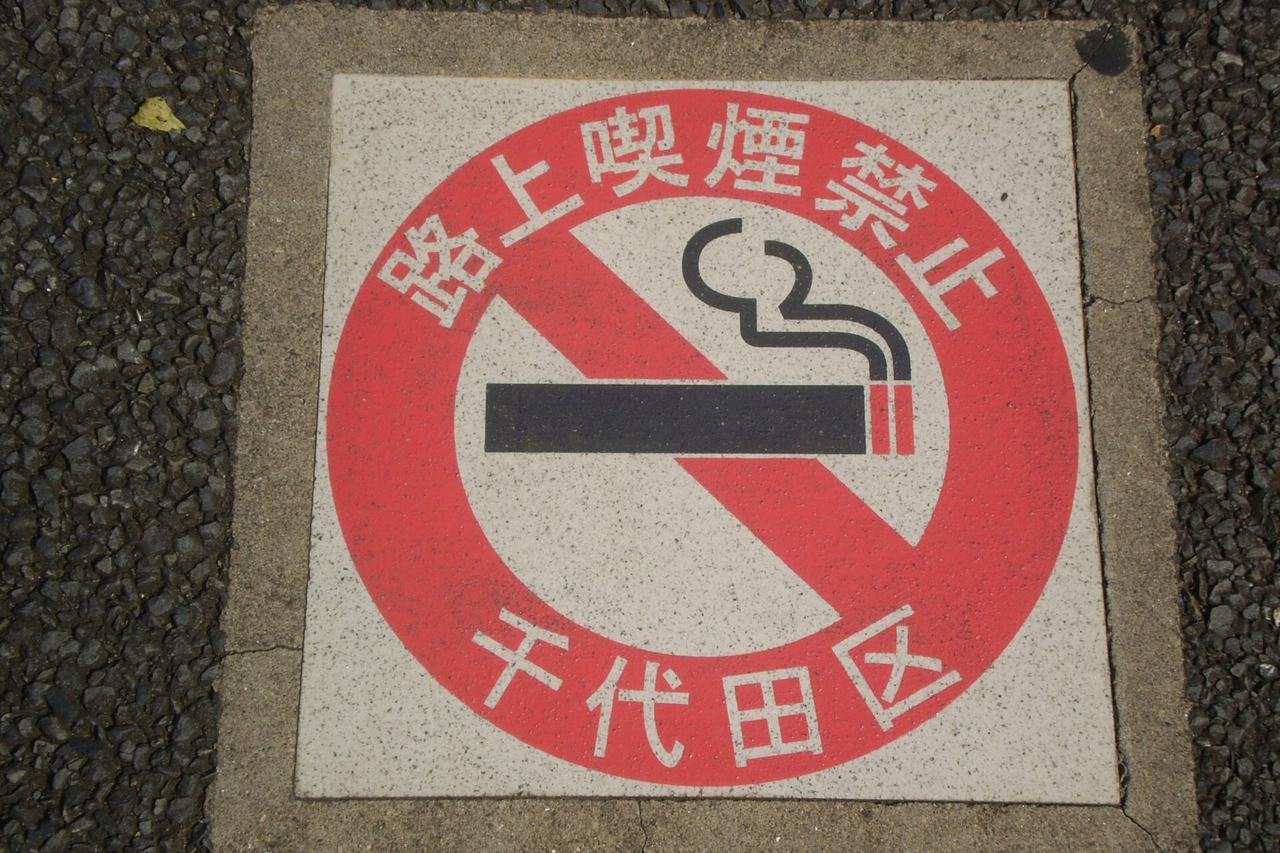
Indoors: how the law splits premises in two
Outdoors settled, now the interior. This layer is national law and applies everywhere, with Tokyo running a stricter overlay covered in section seven.
The revised Health Promotion Act sorts every category of premises into one of two classes.
| Class | Rule | What it covers |
|---|---|---|
| Entire-premises ban (strictest) | No smoking anywhere, including outdoors on site; an indoor smoking room may not be installed | Schools, hospitals, child welfare facilities, government offices, passenger transport vehicles (taxis and buses) and aircraft |
| Indoor ban in principle | No indoor smoking, but a compliant smoking room may be installed | Most other facilities used by the public, passenger transport ships and railways, restaurants, offices, hotels, the Diet, courts |
There is also a set of express exclusions, and they explain something visitors often find surprising. The Act states that hotel and inn guest rooms and other places used as residences are outside its scope entirely. Smoking hotel rooms are perfectly legal, because the law does not reach into them. Tokyo's ordinance lists the exclusions more explicitly still: residences, inn and hotel guest rooms, railway and ship cabins limited to private overnight rooms, accommodation guest rooms limited to private rooms, and the interior of private cars.
Factor that into booking. A Japanese hotel's non-smoking and smoking rooms are genuinely two different products, not the same room with a different label. If you are sensitive to smoke, that checkbox on the booking page matters more than the reviews; if you smoke, you do not need to hunt for a corridor solution.
Four types of smoking room, distinguished by food and by product
| Room type | What you may smoke | Food and drink | Typical setting |
|---|---|---|---|
| Designated smoking room (kitsuen senyoshitsu) | All tobacco | Not permitted | Restaurants and office buildings with a partitioned smoking booth |
| Heated-tobacco-only room | Heated products only | Permitted | Chain cafes and restaurants with a heated-tobacco section |
| Smoking-purpose room (kitsuen mokutekishitsu) | All tobacco | Permitted, excluding staples | Cigar bars, tobacconists, public smoking rooms |
| Smoking-permitted room (kitsuen kanoshitsu) | All tobacco | Permitted | Small pre-existing venues under the transitional measure |
The “excluding staples” line is a ministry note, and the definition is oddly precise: staples means rice dishes, bread excluding sweet buns, and noodles. So in a Japanese cigar bar, nuts, cheese and bar snacks are fine, a sweet bun is explicitly fine, and a bowl of rice, a plate of pasta or a sandwich is not. It is the most obscure rule in the whole framework and easily the most memorable.
What the four types share is short and non-negotiable: nobody under 20 may enter, and a sign must be displayed. The second point drives the next section.
Reading the 16 official signs
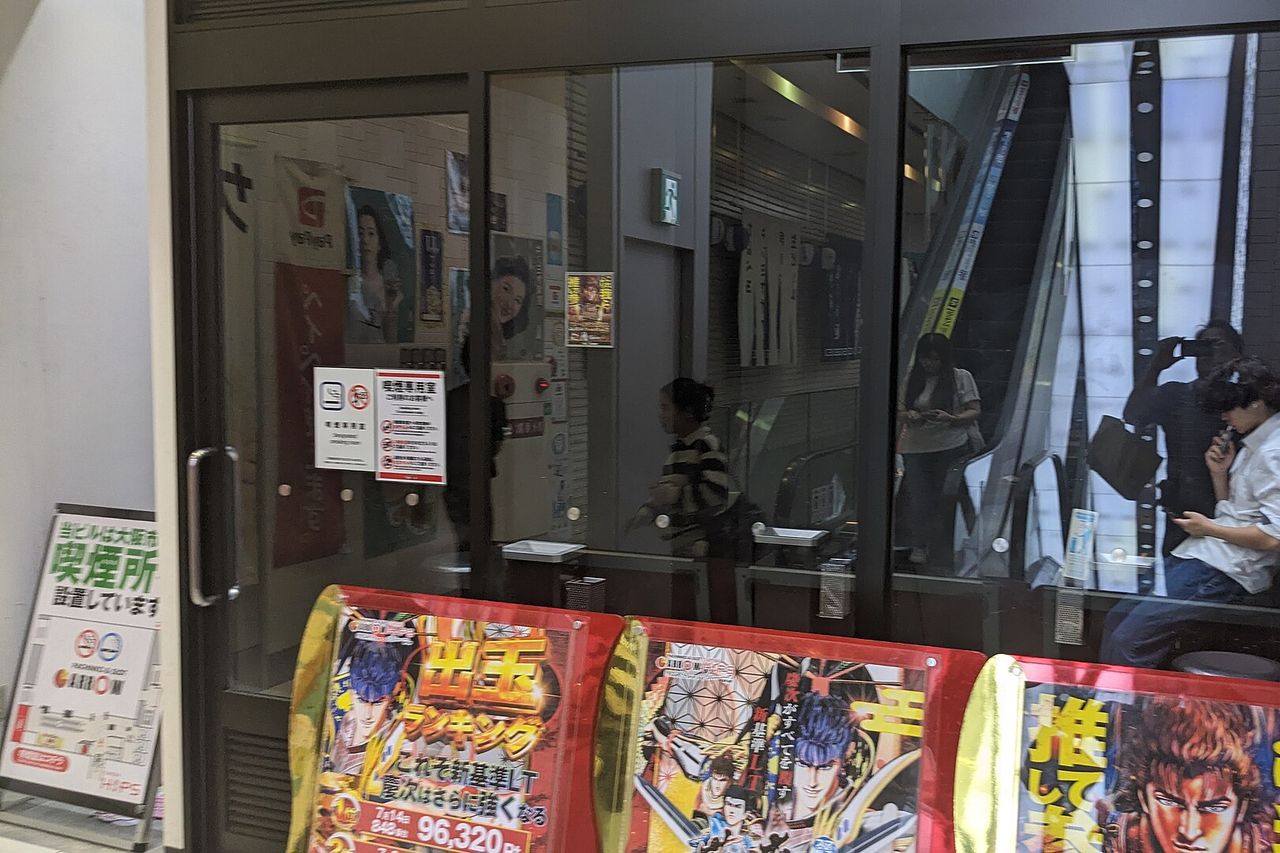
If you do not smoke, or you are travelling with children, start here. There is no official, searchable list of which venues allow smoking. Operators of smoking-permitted rooms must file a notification with their local public health centre, but Tokyo and Osaka publish only the notification desks — never the venue lists. You cannot research this before your trip.
The door sign is the only reliable instrument, and displaying it is a legal duty. Wherever smoking is permitted anywhere inside, the corresponding sign must be displayed at the entrance; a misleading or defaced sign carries a fine of up to ¥500,000. The ministry publishes 16 sign types and a Chinese/Korean translation sheet (the Chinese column is simplified).
You only need five. The Japanese text is the key.
| Sign at the door (Japanese) | What it means | Smoking extent | Children |
|---|---|---|---|
| 禁 煙 (kin-en) | No smoking | Entire venue is non-smoking | ✅ Fine |
| 喫煙専用室あり (kitsuen senyoshitsu ari) | Designated smoking room available | One room only; no food or drink inside it | ✅ Fine in the main seating |
| 加熱式たばこ専用喫煙室あり | Heated-tobacco smoking room available | One room only; food and drink allowed inside it | ✅ Fine in the main seating |
| 喫煙可能室あり (kitsuen kanoshitsu ari) | Smoking-permitted section available | Some seating permits smoking | ✅ Fine in the non-smoking section |
| 🔴 喫煙可能店 / 喫煙目的店 (kitsuen kanoten / mokutekiten) | Smoking permitted throughout | The entire venue is a smoking room | ❌ Under-20s legally cannot enter |
The whole skill compresses into one word: あり (ari). A sign ending in ari announces that such a room exists — meaning smoking is confined to it. A sign ending in 店 (ten, “establishment”) means the designation covers the building. That single character is the line, and it is printed in the most prominent position on the sign.
Travelling with children: the ban covers the area, not the venue
If you have heard either that Japanese restaurants bar children generally, or that sitting near a smoking section is nothing to worry about: both are wrong, and the correct answer is written on the door.
The ministry's language leaves no room: people under 20 are entirely prohibited from entering a smoking area, even where they have no intention of smoking, and it adds that this holds even for employees.
The same official material, however, carries a note confirming that where smoke-leakage measures equivalent to a designated smoking room are in place, under-20s may enter the non-smoking space.
So in practice:
- A sign reading kitsuen kanoten or kitsuen mokutekiten — the whole venue is a smoking area and children cannot legally enter. Do not go in to ask about non-smoking tables; there are none. Pick a different place.
- A sign ending in ari — go in and take the non-smoking seating. Just keep children away from the smoking room door.
- A sign reading 禁 煙 — no issue at all.
⚠️ Tokyo adds a rule that can mislead you here: even entirely non-smoking venues must display a sign at the entrance stating that no smoking area exists (a duty of effort under the metropolitan ordinance, with no penalty). The side effect is that in Tokyo, an entrance with no signage at all tells you nothing — you cannot infer that it must be non-smoking. Always judge on whether the words kitsuen kano or kitsuen mokuteki appear, not on whether a no-smoking sticker is present.
Why old izakaya still allow it — except in Tokyo
If Japan went smoke-free in 2020, why does that little izakaya still smell of cigarettes?
Because the law wrote in a transitional measure, and it has no expiry date. The provision for pre-existing small restaurants reads as a measure “for the time being”, and the heated-tobacco-only smoking room is a measure “until a date to be separately prescribed by law”. Both are labelled temporary; neither has an actual deadline. Which is why “Japan has gone fully smoke-free” remains false in 2026.
The national test: three conditions
A pre-existing food and drink establishment may designate a smoking-permitted room if it meets all three:
- It was already operating on April 1, 2020
- Capital or investment of ¥50 million or less
- Customer floor area of 100 square metres or less
That filter selects for long-established small venues. And the technical standard applied to them is strikingly relaxed: where the whole interior is designated, the only requirement is that the space be partitioned by walls and ceiling — none of the 0.2 m/s inward airflow or exhaust-to-outside standard that a normal smoking room must meet. That is precisely why the smell hits you at the door.
🔴 Tokyo's version adds a fourth condition: zero employees
Tokyo's threshold is not the national one, and it is much harder to clear.
The metropolitan passive-smoking ordinance defines a separate category, the metropolitan-designated food and drink establishment, as an establishment that does not use employees. A further supplementary provision applies the national rules where they are equal or stricter, so a Tokyo venue must in practice satisfy all four:
- Already trading on April 1, 2020
- Customer floor area of 100 sqm or less
- Individually or SME-operated
- 🔴 Not a single employee on the payroll
Put plainly: in Tokyo, hiring one part-timer disqualifies the venue.
The practical difference is large. “Old Japanese izakaya still allow smoking” is true nationally and a rare exception in Tokyo, where qualifying venues are essentially the ones run by a couple or a single owner with no staff. So:
- If you avoid smoke: your odds of walking into a smoky small restaurant are considerably lower in Tokyo than in Osaka, Kyoto or Fukuoka. Do not picture the whole capital as a haze.
- If you smoke: equally, do not assume Tokyo will offer the same indoor options you found elsewhere. The pattern you learned in another city mostly does not transfer.
One frequently muddled point on penalty levels: national law provides for a fine of up to ¥300,000 for smoking in a non-smoking place and up to ¥500,000 for signage violations (routed through prefectural governors and district court procedure), while Tokyo's ordinance provides for up to ¥50,000. Neither of those is the same instrument as the ¥2,000 street fine — three separate systems, three separate numbers.
Transport, ranked against intuition
This section reverses what most travellers assume.
Return to the two-class table in section five. Passenger transport vehicles and aircraft sit in the strictest class; passenger transport ships and railways sit in the second class.
Which means:
- Taxis, buses and planes — legally cannot have a smoking space. Installing one is not permitted.
- Trains and ships — legally may have a compliant smoking room.
Shinkansen carriages could carry smoking rooms precisely because railways sit in the second class, and their removal was a commercial decision rather than a legal requirement: the onboard smoking rooms on the Tokaido, Sanyo and Kyushu Shinkansen were abolished on March 16, 2024, the timetable revision date. JR West's release puts it flatly — from that day the trains are entirely non-smoking. The rooms had been in service since the N700 series launched in July 2007, a seventeen-year run.
But Tokaido Shinkansen stations still have them
JR Central states that every station on the Tokaido Shinkansen has a smoking room inside the ticket gates, as of January 30, 2026:
- On the platform: Tokyo, Mishima, Shizuoka, Hamamatsu, Nagoya
- In the concourse inside the gates: Shinagawa, Shin-Yokohama, Odawara, Atami, Shin-Fuji, Kakegawa, Toyohashi, Mikawa-Anjo, Gifu-Hashima, Maibara, Kyoto, Shin-Osaka
- Available during ticket-gate operating hours
So the planning rule for smokers on the Tokaido line is finish before boarding — and note the platform-versus-concourse split. If you are changing trains at Shinagawa with five minutes to spare, a concourse room inside the gates is realistically out of reach.
⚠️ The station list above is JR Central, JR West and JR Kyushu only. On the Tohoku, Joetsu and Hokuriku Shinkansen and at JR East stations, follow the signage on site.
Airports work the same way. Aircraft fall in the entire-premises ban class, but airport terminals are second-class facilities and may legally have smoking rooms. Follow the terminal signage at Narita, Haneda and Kansai for the specific locations.
Where you can actually smoke
After all those prohibitions, smokers deserve a workable answer.
First, the structural fact: Japan has no national official smoking-area map. The ministry's passive-smoking portal publishes signage and rules only, with no facility search. What exists is municipal:
- Chiyoda publishes an official SMOKING AREA MAP — a ward-wide PDF in both Japanese and English, plus district maps for Akihabara, Kanda, Kudanshita, Iidabashi, Yotsuya and Yurakucho. Paper copies are distributed at the ward office, hotels, smoking areas and participating shops, and there is a separate list of free public smoking areas with opening hours.
- Osaka City publishes a smoking-area map split into city-designated areas (free to use) and information-provided areas inside restaurants and commercial facilities (which normally expect a purchase). It is searchable by all 24 wards and by major stations — Osaka, Namba, Shin-Osaka, Tennoji, Shinsaibashi and Kyobashi — with navigation support.
- Kyoto City operates 16 public smoking facilities: two in the central area, eight around Kyoto Station, three in the Kiyomizu–Gion area, two at Yamashina, and one each at Nishioji, Katsuragawa and Keihan Chushojima.
Smoking areas get suspended and removed — Chiyoda currently carries a notice suspending the heated-tobacco section of one of its own ward-run facilities. For names and opening times, use the official maps above; they are the live version.
Two practical notes:
- Convenience-store ashtrays are disappearing fast. Do not treat a konbini doorway as a default smoking spot, particularly in ward-wide-ban areas like Chiyoda and Shibuya — the pavement outside the shop is still a road.
- Hotel guest rooms are outside the law entirely (section five), so booking a smoking room is the simplest solution available. The inverse is why smoke-sensitive travellers should confirm the non-smoking designation at booking rather than at check-in.
Buying cigarettes, and taking them home
Buying tobacco in Japan carries no special restriction for visitors; convenience stores and tobacconists both sell it. What matters is the duty-free allowance on the way home. The Japanese inbound allowance is covered in our guide to bringing medication and goods into Japan, and the Taiwanese rules for conventional and heated tobacco products are set out in the customs guide for returning to Taiwan.
The short version
One: outdoors, the cost of the same act ranges from ¥0 to ¥2,000 depending on the ward. Only Chiyoda and Shibuya (¥2,000), Osaka City (¥1,000 citywide) and Kyoto City (¥1,000, designated zones only) actually issue tickets; Shinjuku, Minato, Chuo and Taito ban street smoking with no penalty attached. Heated tobacco is messier still — fined in Chiyoda, fined in Osaka, banned-but-unpenalised in Shinjuku, explicitly exempt in Kyoto. Treating a heated device exactly like a cigarette is the only strategy that does not require memorising four regimes.
Two: indoors, the question is settled at the door. There is no official list of smoking venues to research in advance, so the 16 legal signs are the entire toolkit. Learn one word: ari means one room; ten means the whole place. If a sign says kitsuen kanoten or kitsuen mokutekiten and you have children with you, the law says they cannot come in — pick somewhere else rather than asking at the counter.
Three: do not reason about transport by intuition. Taxis, buses and aircraft are the strictest class in Japanese law; trains and ships may legally have smoking rooms. Onboard Shinkansen smoking rooms ended on March 16, 2024, yet every Tokaido Shinkansen station still has one inside the gates. For the wider set of unwritten public-space conventions, our Japan etiquette guide goes further; for pre-departure planning, start with the Japan first-trip essentials checklist.
This layer of Japanese rules decays quickly. Chiyoda added heated tobacco in November 2024, Osaka went citywide in January 2025, Shibuya converted the littering penalty in June 2026, and Chiyoda began trialling card payment in August 2026 — something moved in each of the last three years. The figures here are as of August 2026, so before you travel, spend two minutes on the official pages for the wards on your itinerary.
Frequently Asked Questions
- Q1:How much is the fine for smoking on the street in Japan?
- Anywhere between ¥0 and ¥2,000, depending entirely on which ward you are standing in. There is no national street-smoking fine. As of August 2026: Chiyoda and Shibuya charge ¥2,000 on the spot; Osaka City charges ¥1,000 citywide (expanded from designated districts on January 27, 2025); Kyoto City charges ¥1,000 but only inside its designated enforcement zones — elsewhere in the city it is merely a duty of effort. Meanwhile Shinjuku, Minato, Chuo and Taito all ban street smoking across their entire wards but attach no fine whatsoever. Shinjuku Ward states the position in plain language on its own site: enforcement is not the objective, and the ward does not intend to apply penalties. If you have heard that Japan fines you about ¥2,000 for street smoking, that holds in two of the eight wards here and not in the other six.
- Q2:Do heated tobacco products like IQOS, glo and Ploom count?
- Four different answers coexist, so it depends on the city. Chiyoda added heated tobacco to its ¥2,000 fine from November 1, 2024 — its press release explains the change bluntly, since heated devices are hard to distinguish from e-cigarettes on the street and verbal guidance alone was not workable. Osaka City brought heated tobacco into scope on January 27, 2025. Shibuya names IQOS, glo and Ploom explicitly on its official page. Shinjuku bans heated tobacco on the street by ordinance but, as above, has no penalty to apply. And Kyoto City goes the other way entirely: its official FAQ states that heated and electronic tobacco are outside the scope of the fine because there is no combusting tip, though they remain subject to guidance. Separately, the Tokyo Metropolitan ordinance does not apply administrative penalties to heated tobacco at all (supplementary provision 6, on the grounds that the scientific evidence is not yet settled) — but that is the metropolitan ordinance, and it does not override each ward's own street-smoking rules.
- Q3:How can a non-smoker tell whether a restaurant allows smoking before going in?
- Read the sign at the door — displaying it is a legal obligation, not a courtesy. Under the revised Health Promotion Act, any premises where smoking is permitted anywhere inside must display the corresponding sign at the entrance; displaying a misleading or defaced sign carries a fine of up to ¥500,000. The Ministry of Health, Labour and Welfare publishes 16 official sign types, along with a Chinese and Korean translation sheet. The decisive detail is one Japanese word: ari (あり, meaning “there is one”). A sign ending in ari — kitsuen senyoshitsu ari, kanetsushiki tabako senyo kitsuenshitsu ari, kitsuen kanoshitsu ari — means one designated room permits smoking and the rest of the floor does not. A sign reading kitsuen kanoten or kitsuen mokutekiten means the entire premises is a smoking area. There is no searchable official register of which venues allow smoking. Operators must notify their local public health centre, but Tokyo and Osaka publish only the notification desks, never the venue lists — which is precisely why the door sign is the only tool you have.
- Q4:Can I take children into a restaurant that has a smoking area?
- It depends on the sign, and the distinction is sharper than it looks. The ministry's wording is uncompromising: people under 20 are prohibited from entering a smoking area under any circumstances, even if they are not there to smoke, and it adds that this holds even for employees — a 19-year-old member of staff cannot be sent in to clear plates. But the prohibition covers the smoking area, not the whole venue: the official diagram carries a note confirming that where smoke-leakage controls equivalent to a designated smoking room are in place, under-20s may enter the non-smoking space. In practice: a door sign reading kitsuen kanoten or kitsuen mokutekiten means the entire premises is a smoking room and children legally cannot come in at all — do not go in and ask for a non-smoking table, because there is not one. A sign ending in ari means the non-smoking seating is fine for children.
- Q5:Do Shinkansen trains still have smoking rooms?
- Not on board — but the Tokaido line stations still do. Per official press releases from JR Central, JR West and JR Kyushu, the onboard smoking rooms on the Tokaido, Sanyo and Kyushu Shinkansen were all abolished on March 16, 2024, the timetable revision date; JR West's release states flatly that from that day the trains are entirely non-smoking. Those rooms had been fitted since the N700 series debuted in July 2007. The other half of the picture: JR Central states that every station on the Tokaido Shinkansen has a smoking room inside the ticket gates (as of January 30, 2026). They sit on the platform at Tokyo, Mishima, Shizuoka, Hamamatsu and Nagoya, and in the concourse inside the gates at Shinagawa, Shin-Yokohama, Odawara, Atami, Shin-Fuji, Kakegawa, Toyohashi, Mikawa-Anjo, Gifu-Hashima, Maibara, Kyoto and Shin-Osaka, usable during ticket-gate operating hours. ⚠️ For the Tohoku, Joetsu and Hokuriku Shinkansen, check JR East's own pages.
- Q6:Which is stricter — taxis, buses or trains?
- The answer inverts most people's intuition: taxis, buses and aircraft are the strictest category in Japanese law, while trains and ships are one tier looser. The revised Health Promotion Act sorts premises into two classes. Passenger transport vehicles and aircraft — that is, taxis, buses and planes — fall into the strictest class, where smoking is banned across the entire premises and a smoking room may not be installed at all. Passenger transport ships and railways fall into the second class: indoor smoking is prohibited in principle, but a compliant smoking room is legally permitted. That is exactly why Shinkansen carriages could keep smoking rooms until 2024 — their removal was an operator decision, not a legal requirement. Tokyo's ordinance adds a further carve-out for railway and ship cabins, limited to private rooms used for overnight accommodation, which is why sleeper compartments sit in a different legal world again.
- Q7:Why do some old izakaya still allow smoking, and is Tokyo the same?
- A transitional measure permits it nationally — but Tokyo sets a far stricter bar, and conflating the two misleads visitors. The national test has three conditions: the venue was already operating on April 1, 2020; capital or investment of ¥50 million or less; and customer floor area of 100 square metres or less. Qualifying venues may designate the whole interior as a smoking-permitted room, and the technical standard is unusually lax — only that the space be partitioned by walls and ceiling, with none of the 0.2 m/s inward airflow or external exhaust required of a normal smoking room. Tokyo, however, defines its own category under the metropolitan passive-smoking ordinance: a designated food and drink establishment is one that employs no staff. In practice a Tokyo venue must satisfy all four conditions — pre-existing, under 100 sqm, individually or SME-operated, and with not a single employee on the payroll. Hire one part-timer and the exemption is gone. So smoky old izakaya are a live phenomenon nationally and a rare exception in Tokyo. The transitional measure is written as a measure “for the time being” and carries no expiry date, so Japan is not fully smoke-free.
- Q8:Can you eat in a cigar bar in Japan?
- Yes, but the law explicitly excludes staple foods — and defines them. Of the four room types, the smoking-purpose room (cigar bars, tobacconists and similar businesses whose purpose is smoking) may serve food and drink, but the provision reads “food and drink, excluding staple foods.” The ministry's definition is specific: staples means rice dishes, bread (excluding sweet buns) and noodles. So nuts, cheese and bar snacks are fine, sweet buns are explicitly fine, and a bowl of rice, a plate of pasta or a sandwich is not. The four room types split like this: designated smoking room — all tobacco, no food or drink at all; heated-tobacco-only smoking room — heated products only, food and drink allowed; smoking-purpose room — all tobacco, food and drink minus staples; smoking-permitted room — all tobacco, food and drink allowed. All four share two hard rules: nobody under 20 may enter, and a sign must be displayed.