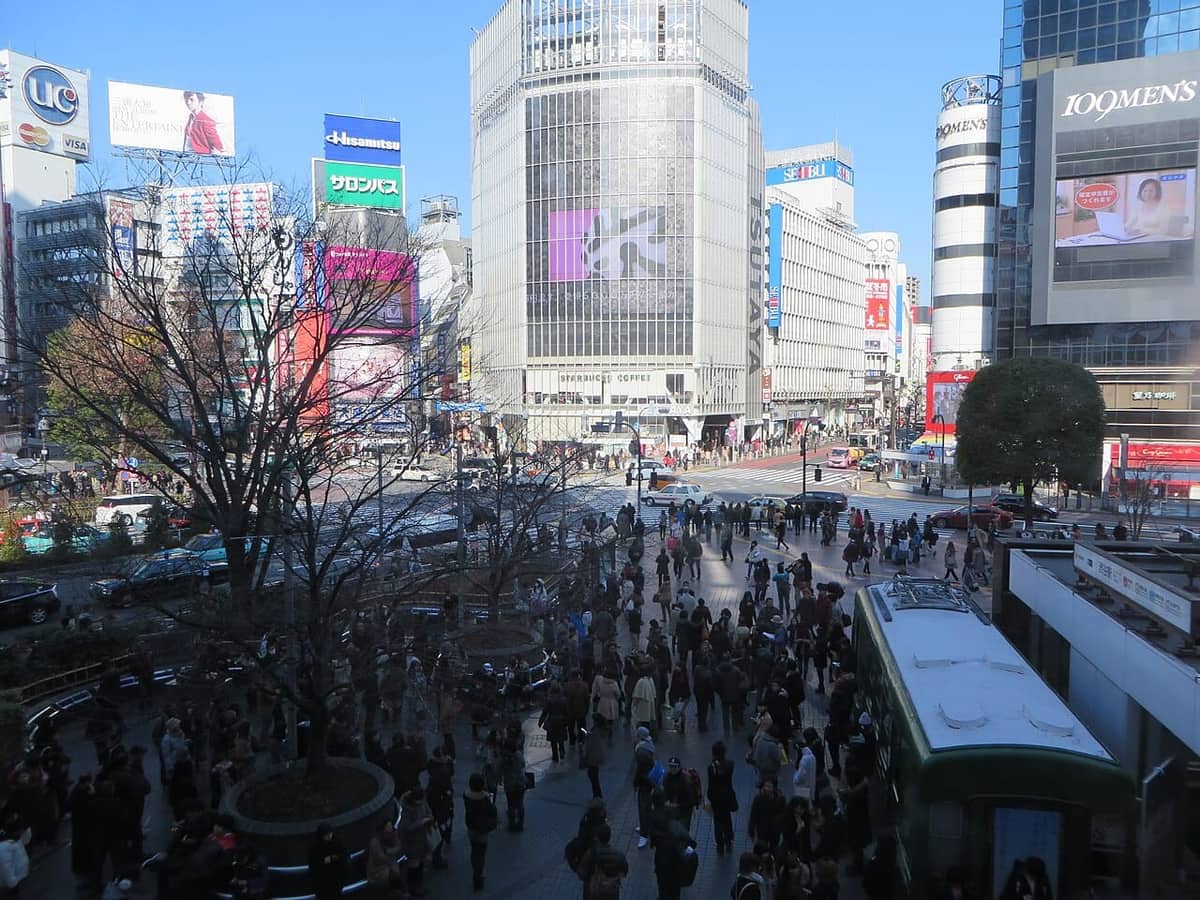
If you're hesitating over a first solo trip to Japan — worried about safety, dreading the awkwardness of eating ramen alone, anxious about being lonely — let me give you a clear verdict up front: Japan is one of the best countries on earth for a first solo trip. It ranks among the safest places worldwide, the transit system is so legible you genuinely can't get lost, and there's an entire mature culture built around doing things alone, from ramen counters to Ichiran's privacy dividers. What you actually need to manage isn't "will something go wrong" — it's a handful of very specific habits you learn once and keep.
This guide is written for someone considering their first solo Japan trip. I'm not going to fob you off with "it's all safe, don't worry." Instead I'll lay out the real safety situations to watch (nightlife districts, spiking, pickpockets), how to choose solo-friendly accommodation, the full toolkit for eating alone without a shred of awkwardness, pacing your days, staying connected, and why solo budgets run a little higher. By the end you'll see that solo travel in Japan isn't a brave-only feat — it's a prepare-a-little, anyone-can-do-it, slightly-addictive way to travel.
- Genuinely safe, but with specific hotspots — random violence is rare; what to guard against is touts in Kabukicho/Roppongi, tampered drinks, and pickpockets. Keep your drink in sight; never follow a tout.
- Eating alone is zero-stress — ramen counters, ticket machines, conveyor sushi, Ichiran booths, set-meal chains. Japan is the easiest place in the world to dine solo.
- Where to stay — business hotels (Toyoko/APA) for reliable value; capsules for cheapest; hostels for company; ryokan often add a solo surcharge — confirm first.
- For women — use women-only cars at rush hour; avoid tout-heavy alleys late; pick capsules/hostels with a women-only floor.
- Solo budget — nightly lodging costs more (no one splits the room), but food and flexibility claw some back; dorm/capsule beds are the lever to cut the lodging hit.
Table of Contents
- Why Japan Is the Best Country for Solo Travel
- Safety: How Good It Really Is, and What to Watch
- Solo Women: Women-Only Cars & Night Safety
- Solo Stays: Capsule, Business Hotel, Hostel, Ryokan
- Eating Alone: Solo Travel's Greatest Perk
- Pacing a Solo Itinerary
- Staying Connected & Navigating Alone
- Solo Budgeting: Why It Costs More, How to Save
- Quick Table: Solo Accommodation Compared
- Frequently Asked Questions
Why Japan Is the Best Country for Solo Travel
The three usual barriers to going solo are: fear of being unsafe, transit you can't figure out, and feeling awkward doing things alone. Japan happens to solve all three unusually well — not by accident, but as a natural product of how the country and its culture are built.
- Safety: Japan sits in the top tier of global safety and peace rankings year after year. The thing that matters most to a solo traveler is the late-night feel — walking through Osaka or Tokyo alone at 11pm generally lacks that "get back to the hotel quickly" tension. That ease is something a lot of Western cities can't offer.
- Transit: Japan's rail network is dense, punctual and clearly signed, with English station names and routing apps (Google Maps, Japan Transit) accurate to the minute. With no companion to help you read the way, you most need a system you can't get lost in — and Japan's is one of the most legible on the planet. Tap an IC card and go; no fare maths.
- Party-of-one culture: this is Japan's special trick. A whole section below digs in, but remember one line: eating alone, going to a movie alone, singing karaoke alone, bathing in an onsen alone are all completely normal here. 'Ohitorisama' (the honourable party of one) is a customer segment businesses serve in earnest.
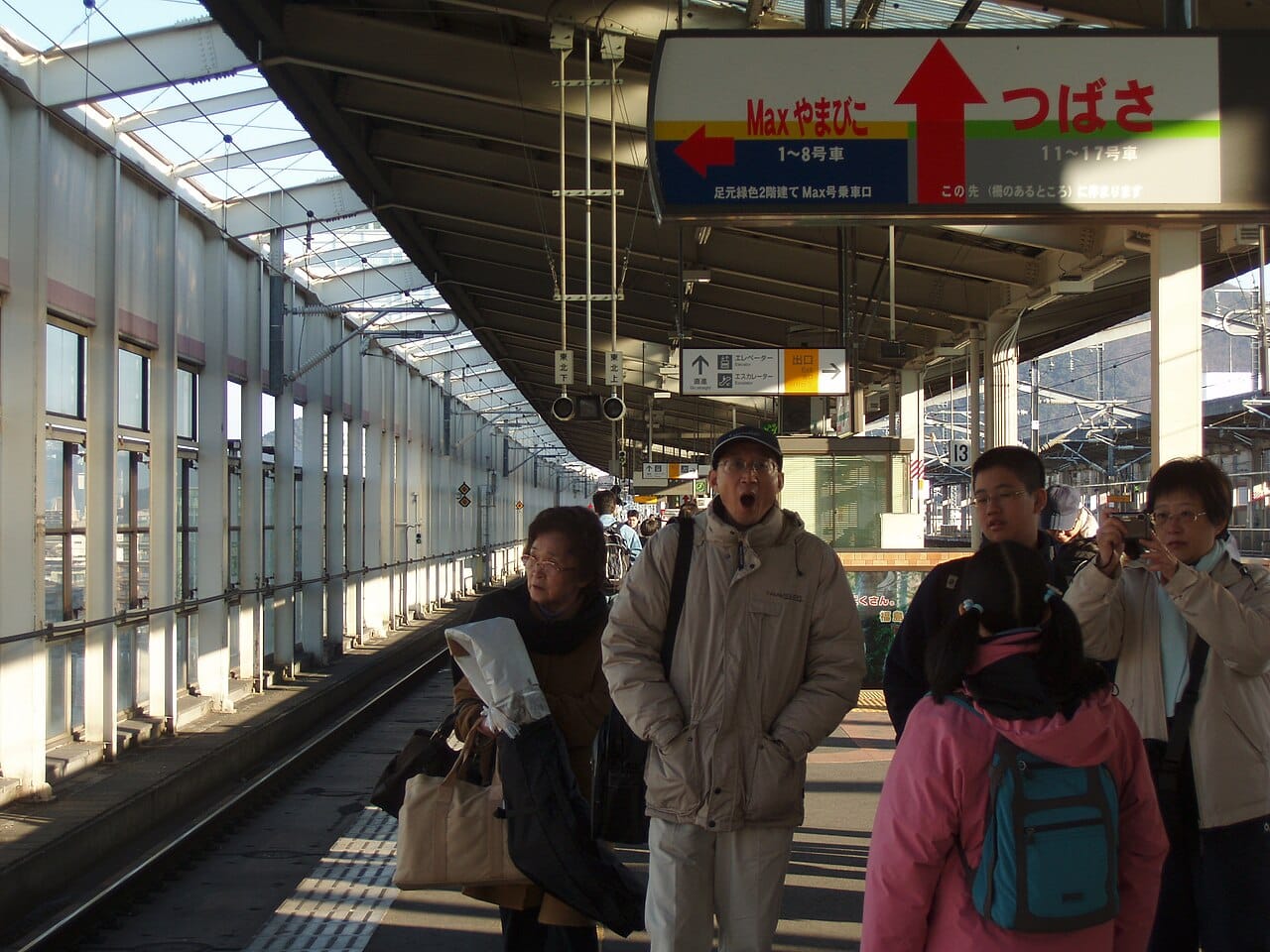
If you don't yet have the skeleton of a trip, build that first and worry about solo details after — our 7-day first-timer itinerary is a strong starting point; the solo version just drops the "find a companion" parts and runs at your own tempo.
Safety: How Good It Really Is, and What to Watch
Let's be precise: Japan's overall safety is excellent, but "excellent" doesn't mean "immune." What a solo traveler should build isn't fear — it's the right direction of vigilance. What you actually need to guard against may differ from what you imagine.
Things you barely need to worry about
- Random violence and street robbery: extremely rare. Walking alone late or catching the last train feels safe across most areas.
- Losing your stuff: Japan's lost-and-found system genuinely works. Tokyo logged 4.85 million found items in its most recent published year, against 2.29 million items reported lost by owners. ⚠️ Those are two independent reporting counts and cannot be divided — the police publish no return rate, so treat it as evidence that a great deal gets handed in and never claimed, not as a recovery probability. Filing a loss report is the highest-yield thing you can do.
What you genuinely should watch (situation-specific)
- Nightlife touts and consumption traps: around Kabukicho and Roppongi, street touts ('kyakuhiki') approach you and lead you to venues that may produce astronomical bills, forced consumption, and — in rare cases — tampered drinks. The rule: never follow a street tout into any venue. Reputable places don't tout.
- Drink-spiking: concentrated in clubs and bars. When drinking alone, keep your drink in sight, don't accept drinks from strangers, and don't drink to blackout. This is universal nightlife wisdom, and Japan is no exception.
- Pickpockets and valuables: crowded tourist zones, stations and New Year/festival crowds see occasional pickpocketing. Don't keep valuables in outer backpack pockets; separate your passport and large cash.
- Natural hazards: earthquakes, typhoons, summer heatstroke. Solo, no one prompts you, so watch the weather and disaster alerts yourself and install a disaster-warning app — but first check whether your roaming phone will actually receive the earthquake early warning, because plenty of travellers assume it does and it may not.
Solo Women: Women-Only Cars & Night Safety
Solo female travel in Japan is common, and you'll see plenty of women travelling alone. Beyond the universal rules above, a few tools and habits are especially useful for women:
- Women-only train cars ('josei senyo sha'): many rail and subway lines in Tokyo, Osaka, Nagoya and elsewhere run women-only cars during peak hours to cut groping in crowds. The platform floor and car doors carry pink markings with Japanese and English text showing the location and active hours (usually weekday mornings, some also the evening peak; off-peak, anyone may board). Standing where the women-only car stops at rush hour is a simple, effective safeguard. Rules vary by line, so follow the on-site signage.
- Choose a "women's floor": many capsule hotels and hostels have women-only floors or female dorms — solo women should prefer these for easier sleep.
- Night routes: stick to main, well-lit streets and avoid tout-heavy alleys; let your hotel or a friend know your movements when out late; taxis in Japan are safe and meter fairly, so just take one if you'd rather not walk.
- Where you stay: pick areas near a station with good amenities so you never face a long dark walk home.
Solo Stays: Capsule, Business Hotel, Hostel, Ryokan
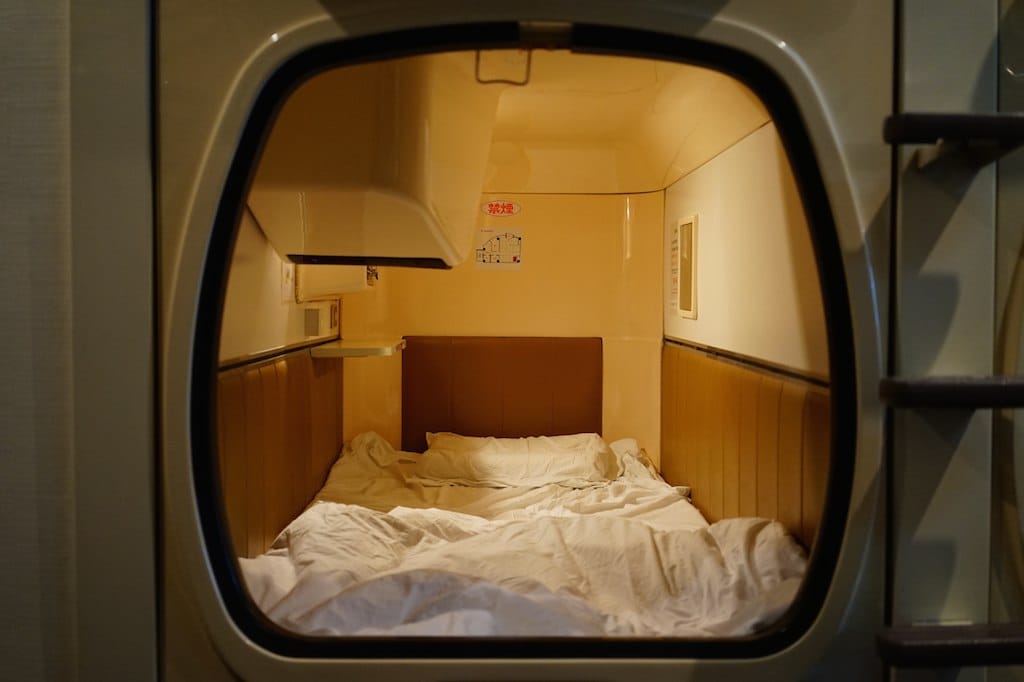
Solo accommodation is really a trade-off between budget, privacy and sociability. Here's my ranking and the situations each suits — no "it depends" hand-waving.
Business hotels — most reliable value, my default
Chains like Toyoko Inn, APA, Super Hotel and Dormy Inn are my main recommendation for solo travelers. Small but clean rooms, private bathroom, almost always next to a station, sensible single rates (a few thousand yen a night in the low season is common), and Dormy Inn often throws in a large public bath. If you want privacy and good sleep so you can actually move the next day, this is the safe pick. For a first solo trip, I'd base most nights here.
Capsule hotels — cheapest, for tight budgets or one night
Central beds at the lowest price, ideal if your budget is tight or you stayed out late and just need to lie down. You accept shared bathrooms, small space, and possible disturbance if you're a light sleeper. Pick a newer capsule with enclosed pods, curtains and a women's floor and the experience is much better; old open-dorm types are more spartan.
Hostels — stay here if you want to meet people
If your solo trip is about making friends, swapping tips and finding people to eat with, hostels are the pick. Shared kitchens and lounges fill up with fellow solo travelers, and conversation starts easily. Beds come as mixed and female-only dorms, often with single/double private rooms too. High social density, but you accept that everyone's schedule overlaps.
Ryokan — yes you can go solo, but watch the surcharge
Many assume ryokan only take parties of two or more, but plenty advertise 'hitori-domari OK' (solo stay), letting one person enjoy kaiseki dinner and the onsen. The catch: solo occupancy often adds a surcharge (because the inn prices per room, so one guest means one less paying head). Before booking, check the solo rate and whether meals are included. If you want one ryokan night on a solo trip, choose a place that clearly accepts solo guests — our 5 best onsen ryokan round-up is a good shortlist; just confirm each inn's solo-stay policy first.
Eating Alone: Solo Travel's Greatest Perk
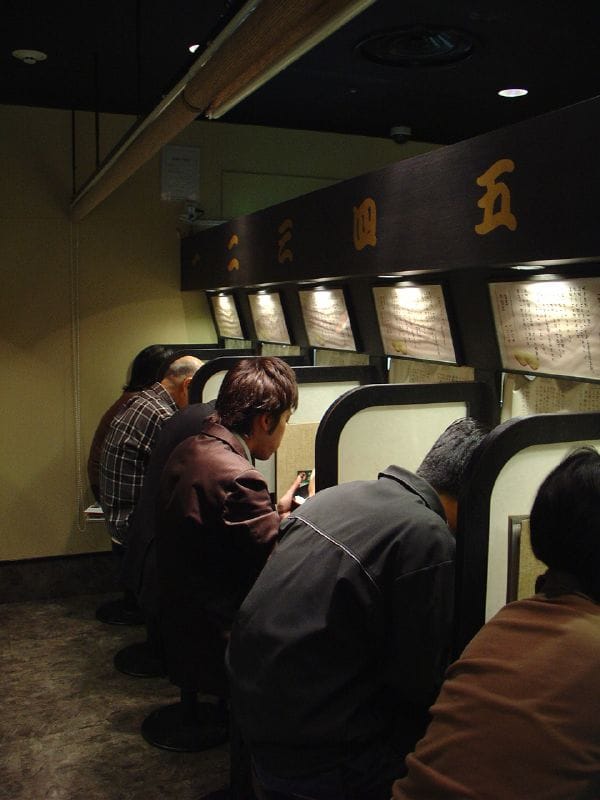
If your one worry about solo travel is "eating alone feels awkward," here's the good news: Japan is the easiest country in the world to eat alone — full stop. There's a culture of 'ohitorisama' so mature it's almost moving, and a great many restaurants are designed for one in the first place.
The "face-the-wall" options (zero stress for beginners)
- Ramen shops: mostly a row of single counter seats facing a wall or the kitchen, ordered from a ticket vending machine at the door — insert coins, pick your bowl, hand the slip to staff, and you barely open your mouth. Solo is the default at a ramen shop, not the exception.
- Ichiran: takes it further — 'flavor concentration' booths give each seat a privacy divider, you order on a paper slip, the bamboo blind drops, and you're sealed off from the world to focus on your noodles. A solo traveler's paradise.
- Gyudon / set-meal chains: Yoshinoya, Matsuya (door ticket machine), Sukiya, Ootoya, Yayoiken — sitting alone is utterly normal, and they're cheap, fast and good.
A step up — still easy
- Conveyor-belt sushi: plates roll past, you take what you want and pay for what you ate, with no one to coordinate with — the most relaxed way to eat sushi solo.
- Izakaya: going to an izakaya alone for a quiet drink is common in Japan; sit at the counter, order a few skewers and a glass, and staff won't bat an eye. Beginners should pick a place with posted prices and counter seating.
- Solo yakiniku / solo hotpot: dedicated 'hitori yakiniku' and 'hitori shabu-shabu' spots are growing, with a private grill or pot at each seat, designed for one.
Pacing a Solo Itinerary
The most underrated benefit of travelling alone is that the itinerary runs entirely on your tempo — no compromising for a companion, no voting on where to go, no waiting on anyone. But that freedom needs handling well. A few notes on solo scheduling:
- Don't over-pack the day: with no companion to carry a bag, read the map or talk things through, solo is actually more draining. Aim for 2-3 main stops a day and leave gaps for the spontaneous — far nicer than cramming and rushing.
- Lean into "better alone" activities: art museums, lingering in cafes, wandering a shrine slowly, soaking in an onsen, catching a film — these are more enjoyable alone than in company, and solo travel is the time to do them.
- Off-peak your meals: popular restaurants are easier to get into solo (quicker seating, easier to share a counter). Go before 11:30 or after 1:30 for lunch and you'll get a single seat faster.
- Leave a "do nothing" window each day: with no one to talk to, a measured dose of downtime matters — don't schedule yourself to the point of no breathing room.
- Engineer social moments when you want them: staying in a hostel, joining a walking tour or day trip, or hitting an izakaya with counter seats are all natural ways for a solo traveler to meet people. Dial the mix of company and solitude yourself.
Staying Connected & Navigating Alone
Travel with company and at least there's a companion's phone to look up routes, translate and call for help. Solo, your phone is your entire support system — navigation, translation, reservations, last-train checks, emergency contact, all of it. So for a solo traveler, data isn't "nice to have"; it's "must never drop."
- Connectivity: an eSIM is the most convenient option for solo travel — scan to activate on landing, with no shared pocket Wi-Fi device to coordinate (a pocket router's worst flaw is "split up from the carrier and you lose data" — solo you don't have that, but it does mean you must carry your own data). Pick an unlimited plan so you never ration navigation or offline maps.
- Transit fares: solo, an IC card (Suica/ICOCA) is the simplest — tap in with no fare maths and no ticket queues; only weigh a JR Pass for inter-city moves. With no companion to mind your bags or buy tickets, the IC card's brainless ease is especially valuable alone. See our IC card Suica / ICOCA guide for setup and top-ups.
- Must-have apps: Google Maps (routing), a translation app, a disaster-alert app, and a reservations/restaurant app. Download and set up offline maps before you go.
If you're moving across multiple cities (say, in via Tokyo, out via Osaka, with stops between), a nationwide JR Pass can still pay off on some route combinations — whether it's worth it depends on your actual plan. That maths is the same solo or paired: lay out the route first, then decide.
Inter-city moves? Check the nationwide JR Pass →Solo Budgeting: Why It Costs More, How to Save
Start with the least intuitive but most worth knowing point: travelling solo, the per-person nightly accommodation cost is usually higher than a split-between-two. Many Japanese hotels price per room — a double occupied by one person doesn't halve because there's one fewer head, and even a single room saves little. In short, lodging is solo travel's biggest cost disadvantage.
But don't be put off, because other categories come out cheaper, and there are effective ways to cut the lodging hit:
- Accommodation (pricier) → cut it with per-bed pricing: capsule hotels and hostel dorms price per person, not per room, which neatly defeats the solo lodging disadvantage. On a tight budget, base yourself on beds and treat yourself to a business hotel or ryokan now and then.
- Food (cheaper): you order only what you want, with no spending to make up a group order. Ticket-machine set meals, ramen and convenience stores are cheap and good, so food is easy to control solo.
- Itinerary (saves flexibility cost): no paying into sights you don't care about, no splitting a chartered car or taxi — every yen goes to what you actually want.
- Tickets / transit: here the per-person price is the same whether you're one or two — no difference.
Net effect: accommodation rises, food and flexibility claw some back. A solo trip usually runs a little above the "two people each splitting" version, but the gap is smaller than you'd think, and you get total freedom in exchange. For how to set a daily budget, low- vs high-season differences and cost by tier, see our Japan trip cost guide — just adjust the lodging line to your solo bed/single-room rate.
Quick Table: Solo Accommodation Compared
| Type | Price | Privacy | Social | Best for |
|---|---|---|---|---|
| Business hotel (Toyoko/APA/Dormy) | Mid | High (private bath) | Low | Good sleep + privacy; the solo default |
| Capsule hotel | Low | Mid (pod/curtain) | Mid | Tight budget, one night, central |
| Hostel | Low-Mid | Low (dorm) | High | Meeting people, finding company |
| Ryokan (solo stay) | High (often surcharged) | High | Low | Treating yourself to kaiseki + onsen |
The one-line summary on solo lodging: base on business hotels, make friends at hostels, save with capsules, treat yourself at a ryokan — mixing by the day beats sticking to one type the whole trip.
One Last Piece of Advice
The biggest barrier to a first solo trip to Japan was never Japan — the country has already paved safety, transit and solo dining to a near-perfect standard. The barrier is the one inside your own head. Fear of awkwardness, of loneliness, of something going wrong — most of it gets replaced, the moment you actually step out, with "I had no idea solo could feel this easy." Lock in what you should guard against (nightlife touts, drinks, pickpockets), sort your data, choose your stays well, and the rest is slowing down and enjoying a trip that is entirely your own — eat what you want, sit as long as you like. Plenty of people, after one solo trip, can't go back to travelling any other way.
Frequently Asked Questions
- Q1:Is Japan safe for solo travelers, including solo women?
- Yes — remarkably so. Japan consistently ranks among the safest countries in the world on international safety and peace indices, with very low violent crime. For solo travelers the standout is how safe it feels late at night: walking or riding the last train alone in a big city generally feels safer than in most Western or Southeast Asian cities. Solo female travel is common and well-supported here. But "safe" is not "risk-free," and the things to watch are specific situations rather than random violence: touts and drink-spiking in nightlife districts (Kabukicho, Roppongi), pickpockets, and drunk-crowd harassment. In practice: avoid tout-heavy alleys at night, never leave your drink unattended, keep valuables secure, and use women-only train cars at rush hour. Cover those and Japan offers a very large solo-travel safety margin.
- Q2:Is it awkward to eat alone in Japan?
- Not at all — this is where Japan is most solo-friendly. Japan has a mature 'ohitorisama' (party-of-one) culture, and a huge number of restaurants are literally built for one. Ramen shops are mostly single counter seats facing a wall, ordered from a vending ticket machine with no conversation required; gyudon and set-meal chains (Yoshinoya, Matsuya, Ootoya) are entirely normal to sit at alone; conveyor-belt sushi is perfect solo; Ichiran even has 'flavor concentration' booths with privacy dividers. Even izakaya, yakiniku and high-end sushi see solo diners. Eating alone draws no strange looks in Japan — it's the social norm, which is a huge psychological relief for first-time solo travelers.
- Q3:How do women-only train cars work in Japan?
- Many big-city rail and subway lines in Japan (in Tokyo, Osaka, Nagoya and elsewhere) run women-only cars ('josei senyo sha') during peak hours, mainly to reduce groping in crowded conditions. Key points: (1) they usually apply only on weekday mornings (some also in the evening peak) — off-peak, anyone can board that car; (2) the platform floor and the car doors are marked in pink with Japanese and English text showing the location and active hours, so just read the signage before boarding; (3) rules vary by line, so follow the on-site notices. For a solo female traveler, standing where the women-only car stops at rush hour is a simple, effective safeguard.
- Q4:Which accommodation is best for solo travel — capsule, business hotel, or hostel?
- Choose by budget and how social you want to be. Business hotels (Toyoko Inn, APA, Super Hotel, Dormy Inn) are the most reliable value for solo travel — small but clean rooms, private bathroom, right by the station, sensible single rates. Pick these when you want privacy and good sleep. Capsule hotels are cheapest and central, ideal if you're on a tight budget and only need a bed for the night, but you accept shared bathrooms and the risk of light sleep (newer capsules with enclosed pods and women-only floors are far nicer). Hostels are the pick if you want to meet other travelers and swap tips — common areas are full of fellow solo travelers. Ryokan (onsen inns) increasingly accept solo guests but often add a single-occupancy surcharge ('hitori-domari' supplement), so confirm before booking. My advice: base a first solo trip mostly on business hotels and slot in a night or two of hostel for company.
- Q5:Is solo travel in Japan more expensive?
- For the nightly accommodation cost per person, usually yes — because no one splits the room with you. Many Japanese hotels price per room, so a double occupied by one person carries the same rate, and even single rooms don't save you much. But other categories actually come out cheaper solo: you order only the food you want, buy one transit pass, and follow your own pace with no compromises. Net effect: accommodation goes up, while food and flexibility claw some back. To minimise the lodging hit, dorm and capsule beds (priced per person, not per room) are your most effective lever. See our Japan trip cost guide for a full breakdown.
- Q6:Are the nightlife "drink-spiking" and "tout" scams real, and how do I avoid them?
- They're real, but concentrated in specific areas and situations — not everywhere in Japan. The usual culprits are certain bars and clubs around Kabukicho and Roppongi: street touts ('kyakuhiki') lead you to venues that may hit you with astronomical bills, forced consumption, and in rare cases tampered drinks. The defence is simple: (1) never follow a street tout into a venue — reputable places don't tout; (2) keep your drink in sight and don't accept drinks from strangers; (3) only go to places you've checked reviews for, with posted prices; (4) don't drink to blackout while alone. Hold those lines and you can still enjoy the nightlife at very low risk. Most of Japan is safe to walk at night — what you're really guarding against here is grey-zone consumption traps, not random crime.
Read next
Japan 7-Day Itinerary 2026: First-Timer Tokyo + Kansai
First trip to Japan with only 7 days? A clean split — 3 days Tokyo, 1 transit day, 3 days Kyoto-Osaka — with day-by-day routes, bullet train vs budget flight, JR Pass advice and a real budget.
Japan Travel Insurance Guide 2026: Medical, Delay & Cards
How expensive is Japanese healthcare for tourists? Travel-medical vs trip-delay vs credit-card cover, how much to insure, ski/hiking/rental-car gaps, and which receipts to keep.
Japan trip prep checklist
eSIM, Visit Japan Web, tax-free, insurance — done in one read.