Japan has endless things to buy, and it's easy to lose your head — but only a handful of them are genuinely worth dragging home. Every year people fly back with a suitcase of nationwide generic snacks (the kind sold identically in every city) and kanji-print T-shirts, only to realise they paid Japan prices for things you can buy anywhere. This is an opinionated guide to what's actually worth it versus what's a tourist trap: snacks, drugstore hauls, stationery, character goods, electronics and traditional crafts — plus the where-to-buy map (depachika, Don Quijote, 100-yen shops, the airport) and how to clear the tax-free threshold of ¥5,000 before tax.
Two rules up front, so you don't waste your money: for food, pick "region-limited"; for goods, pick "genuinely Japan-made" — skip anything available everywhere. Send the precious, polished items (for elders and important people) to the depachika; send the bulk, cheap items (for coworkers and yourself) to the 100-yen shop; and leave only what you forgot for the airport. Get this division of labour right and your souvenir budget goes a long, smart way.
- Must-buy snacks — region-limited KitKats, Shiroi Koibito, Royce nama chocolate, Tokyo Banana, matcha sweets, hand-baked senbei. Generic station snacks are the trap.
- Shop drugstores smart — Matsumoto Kiyoshi for medicines/skincare, Don Quijote for a one-stop restock; line up coupons first for popular items.
- Character & crafts — Pokémon Center, Sanrio, Jump Shop by IP; for crafts pick ceramics, furoshiki, tenugui, sensu.
- Electronics by item — Japan-only appliances at Bic Camera/Yodobashi (tax-free); price-check universal gadgets first.
- Tax-free threshold — 10% off once same-store same-day spend hits ¥5,000 pre-tax, unchanged under both regimes; what changed is the refund — from 1 Nov 2026 you pay tax-included in store and claim at an airport terminal, and it is your purchase date that decides, not your departure date.
Table of Contents
- Edible Souvenirs: The Few That Are Worth It
- Omiyage Culture & Individual-Wrapping Etiquette
- Drugstore Haul: Matsumoto Kiyoshi vs Don Quijote
- Stationery & Kitchenware: Loft, Hands, Kappabashi
- Character & Anime Goods: Shop by IP
- Electronics: Bic Camera / Yodobashi & Tax-Free
- Traditional Crafts: Timeless Things to Bring Home
- Where to Shop: Depachika, 100-Yen Shops, Airport
- Tax-Free & Refunds: The Threshold and the 1 November Switch
- Quick Table: What × Where × Budget
- Frequently Asked Questions
Edible Souvenirs: The Few That Are Worth It
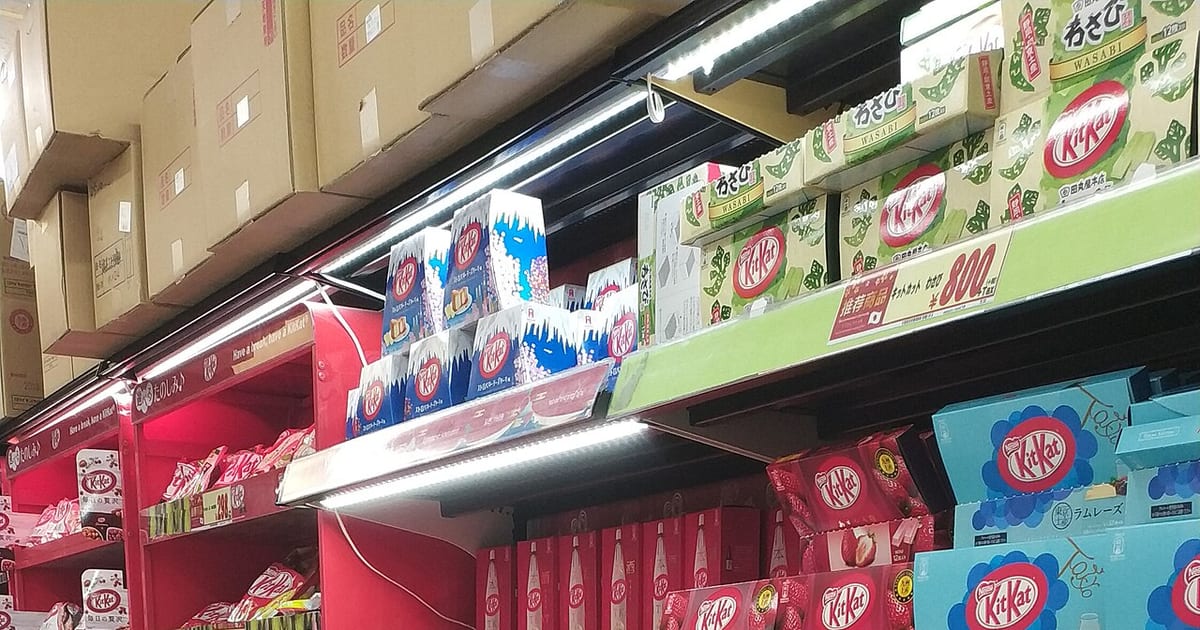
Edible souvenirs are the safest and most welcome choice — easy to share out, individually wrapped, long shelf life, with melting or crushing the worst that can happen. But not all snacks are equal: some are worth a special trip, others are pure tourist tax. My call is blunt — pick "region-limited," avoid "nationwide generic."
Region-limited KitKats (my top sharing pick)
Japan is famous for its KitKat flavour experiments, and many are region-limited: matcha (Kyoto/Uji), Hokkaido red bean, Shizuoka melon, Shinshu apple, Kyushu purple sweet potato — sold only locally or at certain airports. A box holds many small packs, shares out neatly, and looks good, making it nearly foolproof for an office handout. Pick the local-limited flavour, not the basic bar you see in every convenience store — that's the whole point of "brought back from Japan."
The Hokkaido pair: Shiroi Koibito & Royce
- Shiroi Koibito — a Hokkaido classic from Ishiya, white chocolate sandwiched between thin langue-de-chat biscuits, in a smart tin. It's the safe choice for elders and formal recipients, sold mainly in Hokkaido and some airports.
- Royce nama chocolate — another Hokkaido icon, with its melt-in-the-mouth ganache and potato-chip chocolate as signatures. The catch is it needs refrigeration and has a short shelf life, so buy it late in the trip in Hokkaido or at New Chitose Airport, not early.
Tokyo Banana, matcha sweets, hand-baked senbei
- Tokyo Banana — Tokyo's signature station sweet, a banana-shaped sponge cake filled with banana custard, available at Tokyo Station and Haneda/Narita. The classic "I was here" handout.
- Matcha sweets — the matcha nama chocolate, matcha sandwich biscuits and matcha financiers around Kyoto and Uji are a world above the generic versions; matcha lovers should buy the real thing from a local name shop.
- Hand-baked senbei — freshly grilled rice crackers from regional old shops, in savoury and sweet varieties with local character — ideal for elders who like traditional flavours.
Omiyage Culture & Individual-Wrapping Etiquette
Why are Japanese souvenirs almost always "a box of many small packs"? It comes down to omiyage culture: bringing back a little local specialty to share with coworkers, family and friends is an established courtesy. So Japanese sweets emphasise individual wrapping — each piece sealed separately so you can hand them out one by one, hygienically and tidily.
- For office sharing: pick high-count, individually wrapped, room-temperature items (KitKats, senbei, biscuits work best); buy a couple more than the headcount.
- For elders or formal recipients: choose well-packaged name-shop sweets or tinned items (Shiroi Koibito and the like) — quality matters more than quantity.
- For your own stash: 100-yen-shop and supermarket snacks are the best value; don't fuss over packaging.
List out "who and how many" before you shop and you'll buy far more efficiently, without freezing up in front of a wall of choices. For the rest of the Japan-trip essentials, see our Japan trip essentials guide.
Drugstore Haul: Matsumoto Kiyoshi vs Don Quijote
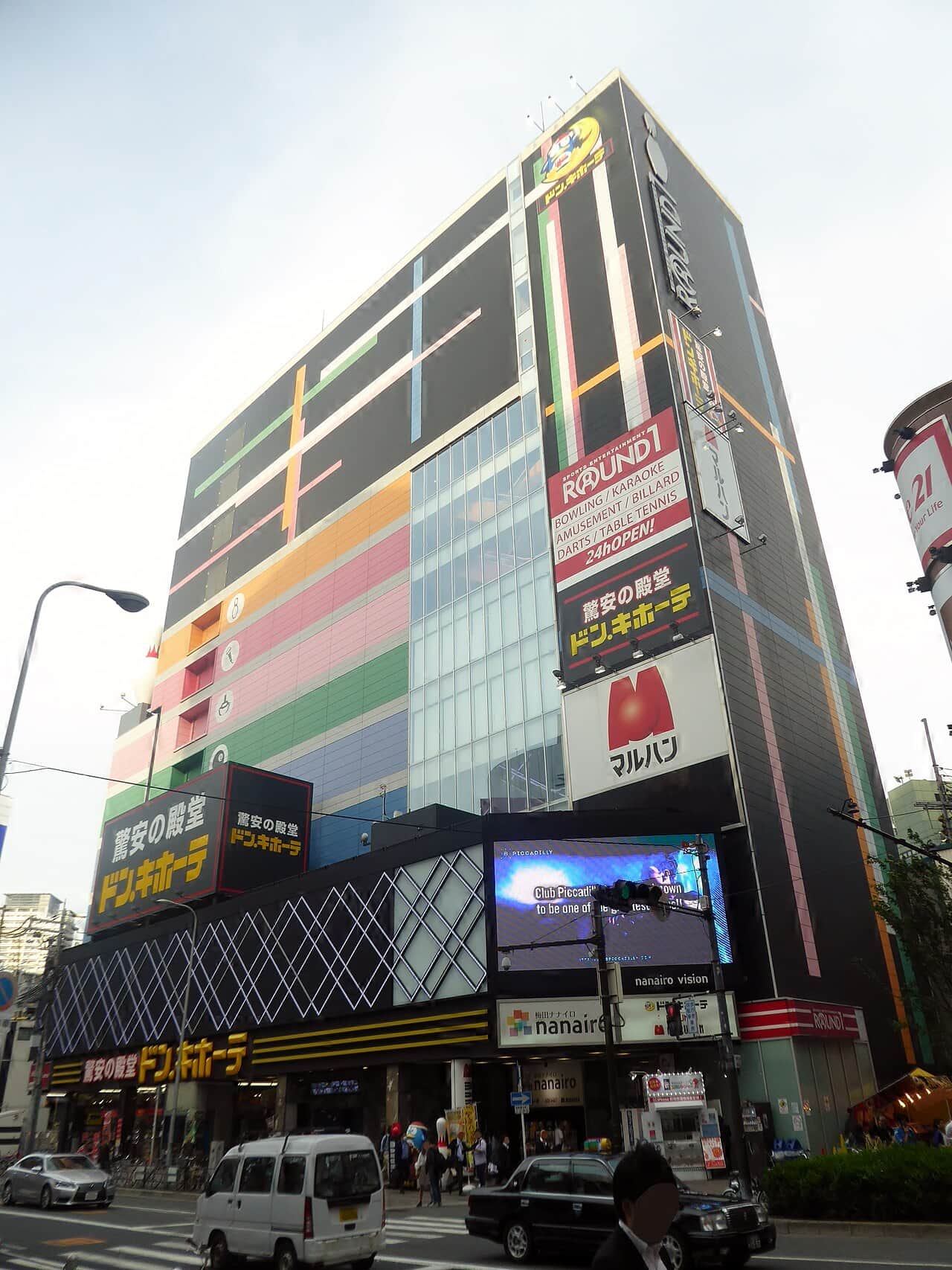
Drugstores are a shopping highlight for many visitors, but Matsumoto Kiyoshi and Don Quijote serve different roles — know which is which before you go in.
Matsumoto Kiyoshi (drugstore specialist)
A drugstore chain like Matsumoto Kiyoshi shines on the breadth of medicines and skincare: over-the-counter remedies (stomach medicine, pain patches, eye drops, cold medicine), affordable skincare and masks, sunscreen, lip and hand balms — Japan's selection is wide and prices fair, and this is the main arena for a drugstore haul. For which items are genuinely worth bringing home and how to stack a coupon, see our Matsumoto Kiyoshi coupon guide.
Don Quijote (general discounter)
Don Quijote (nicknamed "Donki") is the everything store — snacks, drugstore items, electronics, souvenirs, household goods, even clothing — and it's often open late or 24 hours, ideal for a one-stop end-of-trip restock. The downside is the chaotic stock, so leave time to dig. For how to stack discounts and tax-free most efficiently, see our Don Quijote coupon guide.
Stationery & Kitchenware: Loft, Hands, Kappabashi
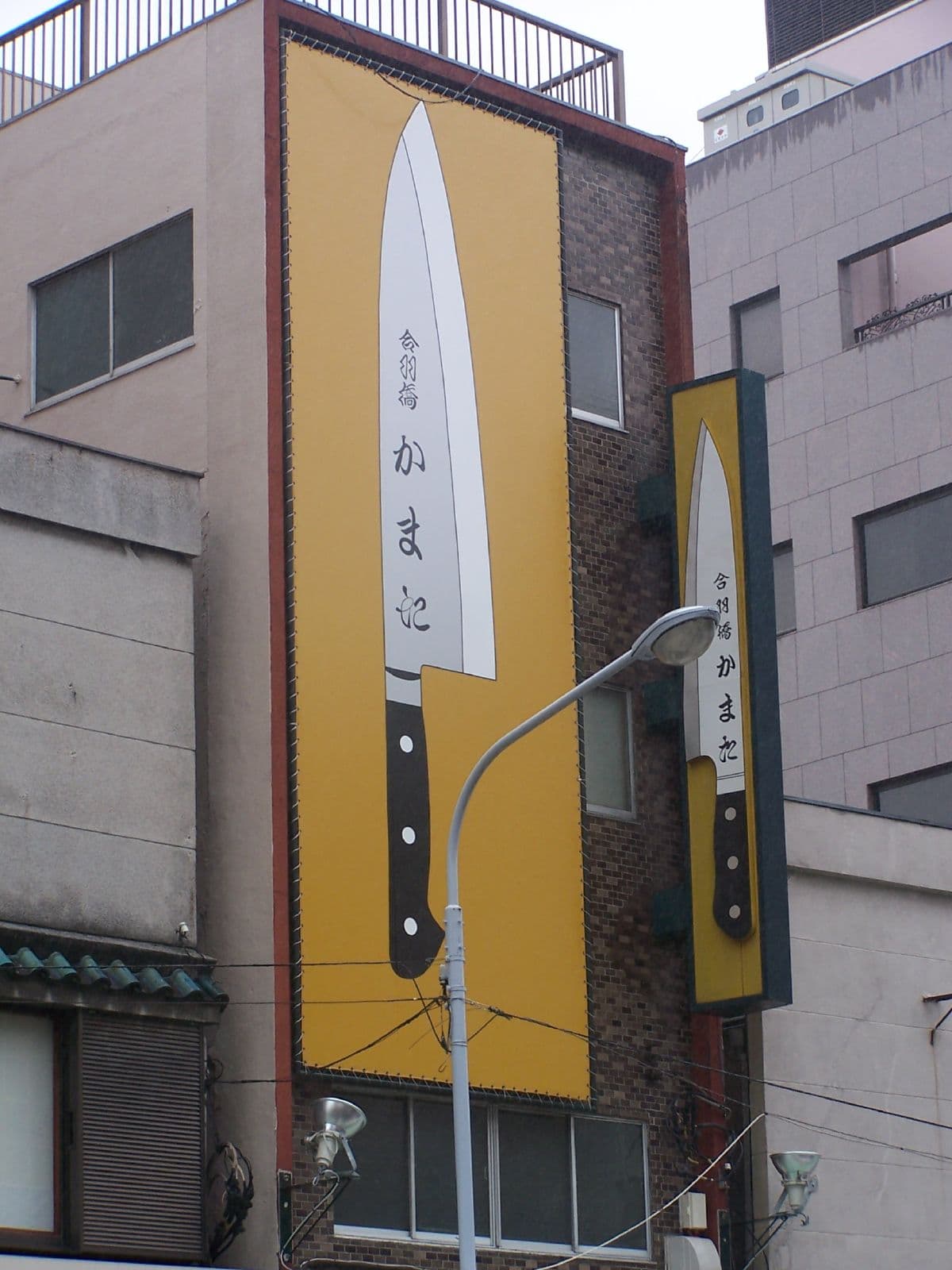
Japan's stationery and kitchenware are famous for their quality and design, and much of it is genuinely Japan-made — more durable than snacks and more meaningful to bring home.
- Stationery — Loft and Tokyu Hands (now mostly branded Hands) are a paradise of stationery and lifestyle goods: fountain pens, ballpoints, sticky notes, planners, stickers and storage gadgets, all designed with care. Anyone who loves writing or journalling won't want to leave.
- Chef's knives (Kappabashi) — Tokyo's Kappabashi tool street is a whole road of professional kitchenware: hand-forged knives, cast-iron pans, tableware and food samples. If you cook, a good Japanese knife is one of the most worthwhile souvenirs there is — durable, useful, and a reminder of the trip every time you use it. Note: knives must go in checked luggage, never carry-on — that holds no matter how short the blade; for the full breakdown of what security will and won't let through, see our guide to Japan's airport security rules for blades and liquids.
- Kitchen gadgets — Hands and Kappabashi also carry plenty of compact kitchen tools (tamagoyaki pans, graters, bento boxes) that are small, easy to pack and very usable.
Character & Anime Goods: Shop by IP
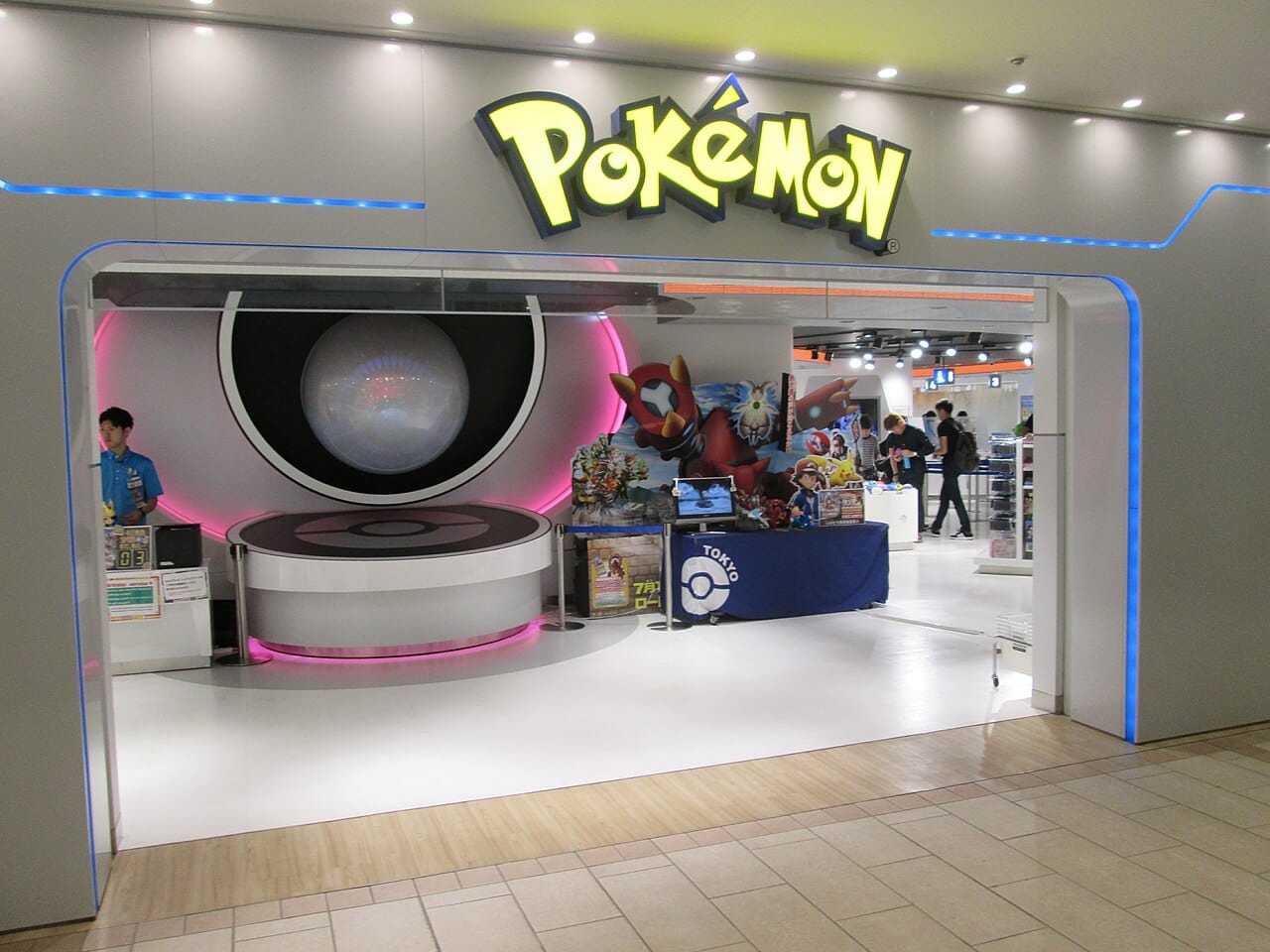
Japan is the home of anime, and character goods are what many people fly in specifically to buy. The key is to shop by IP — pick the right store and don't hunt the wrong thing in the wrong place.
| IP you want | Where to go | What it's known for |
|---|---|---|
| Pokémon | Pokémon Center (major cities) | Official; widest limited plush, stationery, collabs |
| Mario / Zelda / Animal Crossing | Nintendo TOKYO / OSAKA | Official Nintendo store, in-house IP goods |
| Hello Kitty / Kuromi / Pompompurin | Sanrio Puroland & Gift Gate | Full Sanrio character range |
| One Piece / Demon Slayer / Jujutsu Kaisen | Jump Shop | Home of Shueisha Weekly Shonen Jump titles |
| Out-of-print / second-hand hunting | Nakano Broadway, Mandarake, Surugaya | Used & rare, often below official-store prices |
To save money and dig for treasure, don't stop at the official flagships — second-hand chains like Nakano Broadway, Mandarake and Surugaya carry out-of-print plush, old gacha figures and early merch, frequently well below official-store prices. If you're an anime fan, pair your shopping with our Anime Pilgrimage 88 map to link buying and sightseeing routes.
Electronics: Bic Camera / Yodobashi & Tax-Free
Electronics are another popular buy, but not everything is worth buying in Japan — separate "Japan-only" from "globally sold."
- Worth bringing home: Japan-only or Japanese-made appliances — rice cookers, hair dryers (high-end ionic models), beauty devices, camera and lens accessories, niche small appliances. Big chains like Bic Camera and Yodobashi have the widest selection, and you can claim tax-free (the 10% consumption tax) on a foreign passport — deducted at the counter if you buy on or before 31 October 2026, refunded by the shop after an airport customs check if you buy from 1 November 2026.
- Price-check first: globally-sold phones, laptops and headphones aren't necessarily cheaper in Japan — check international pricing before assuming "buying in Japan saves money."
- Voltage note: Japan runs on 100V, so check voltage compatibility or buy the international version, especially for hair dryers and appliances.
Traditional Crafts: Timeless Things to Bring Home
If you want more than consumables, Japan's traditional crafts are a more characterful, durable choice — and many are small and easy to pack.
- Ceramics — small plates, tea cups and rice bowls from regional kilns (Arita, Mino, Kutani) that you'll actually use, with real craft to them. Available at department stores and at the kilns themselves.
- Furoshiki — the traditional wrapping cloth, usable to wrap gifts, as a tote, or as a table cloth. The patterns are lovely and it packs flat — an excellent practical souvenir.
- Tenugui — printed cotton cloths, good as a towel, decoration or headband, with endless regional patterns at friendly prices.
- Sensu — folding fans, practical in summer and decorative when finely made; Kyoto's old fan shops are especially refined.
The beauty of these crafts is that they don't break, don't expire, and remind you of the trip every time you use them — presentable as gifts or for yourself, and far more "brought back from Japan" than a single-use snack.
Where to Shop: Depachika, 100-Yen Shops, Airport
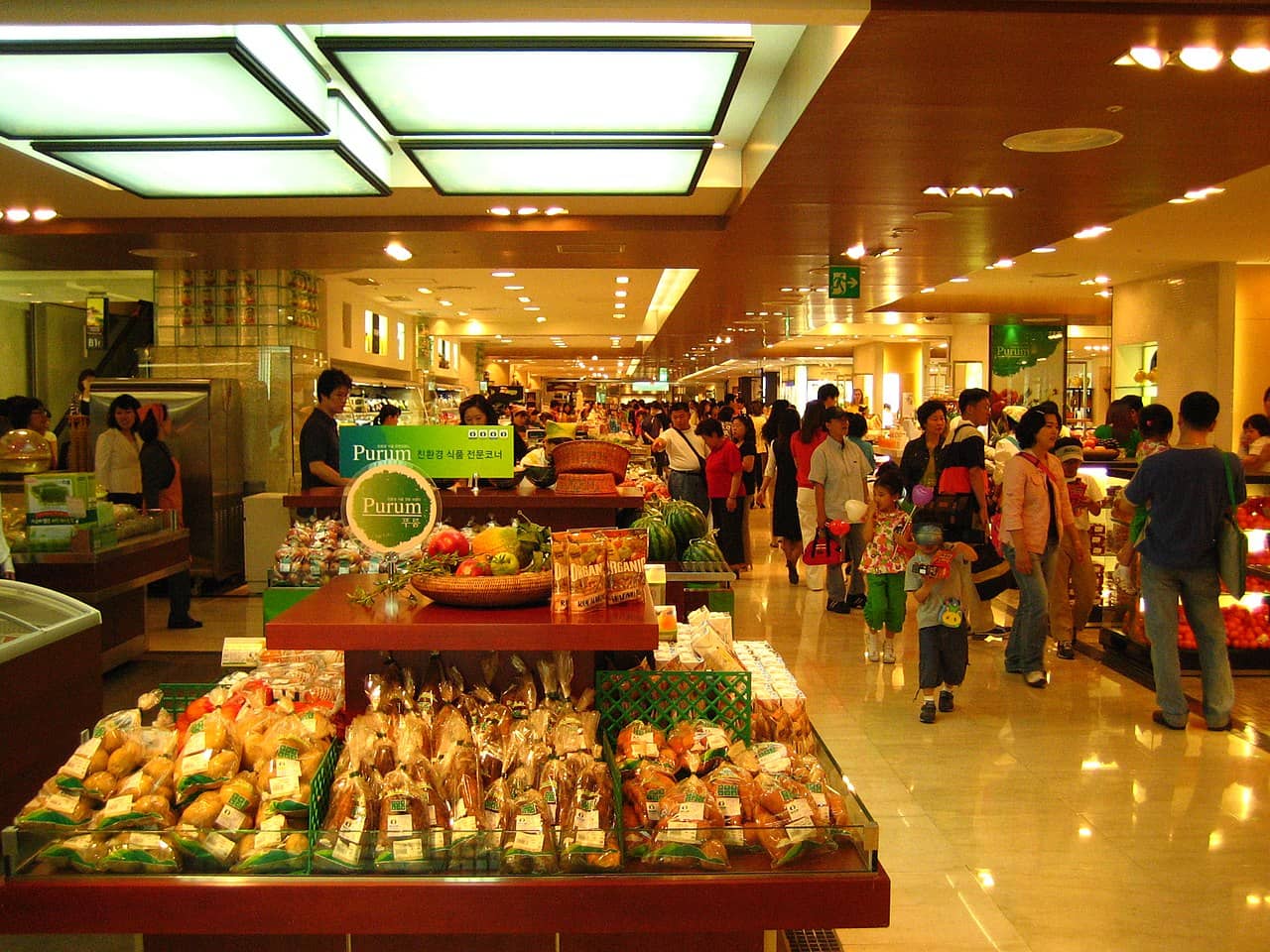
The same thing varies a lot in price and quality depending on where you buy it. Split your shopping channels well and you'll buy faster and better.
Depachika: the high-quality gift option
A department-store basement food hall (depachika) is the hub for refined Japanese and Western confectionery from name shops, with smart packaging and reliable quality — ideal for "send-it-to-elders, send-it-to-important-people" souvenirs. Unit prices are higher, but that polish is something a 100-yen shop can't give you.
100-Yen shops (Daiso, Seria): cheap for yourself and coworkers
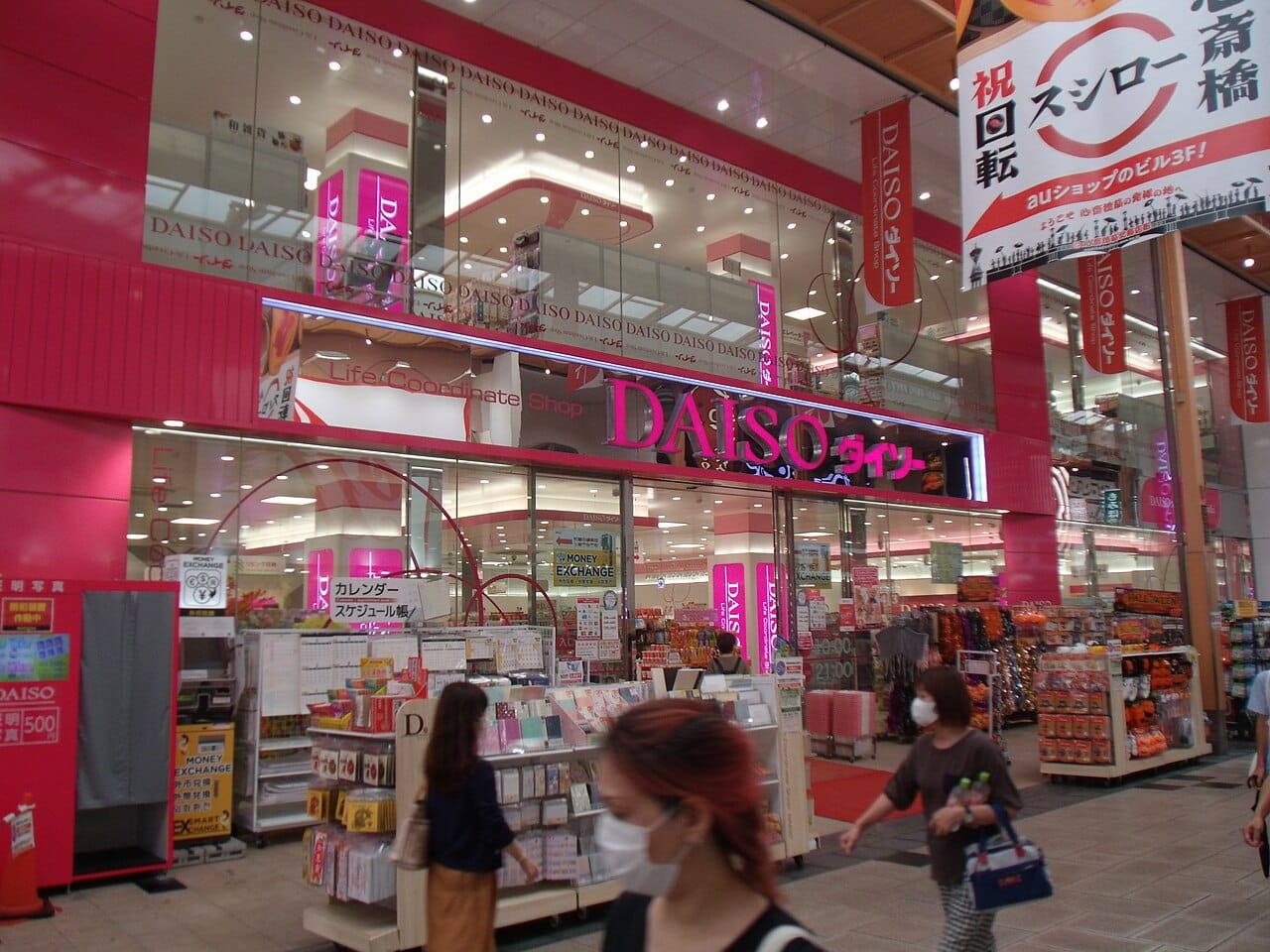
The 100-yen shops (Daiso, Seria) are the value ceiling — stationery, tableware, storage, beauty bits and kitchen gadgets, all Japanese-designed and cheap, perfect for your own stash and for sharing with coworkers. Seria leans more design-led; Daiso has the widest, most chaotic range. Many people leave with a full basket and zero regret.
Don Quijote & the airport: restock and last-minute
Don Quijote, as covered above, is the place for a one-stop end-of-trip restock. Leave the airport duty-free for the things you genuinely forgot — the same sweets are often 20-30% more there, so don't save your main shopping for the airport. Don't overlook convenience stores either, a great place to grab limited snacks and drinks on the go — see our Japan convenience store guide. And for cheap brand-name and sportswear, plan a trip to a Mitsui Outlet Park.
Tax-Free & Refunds: The Threshold and the 1 November Switch
When shopping in Japan, understanding tax-free saves you 10% consumption tax directly — the most practical money-saver there is. But from 1 November 2026 the way you get that money back changes completely: before that date the tax comes off at checkout; from that date you pay the full tax-included price in the shop and claim it back on your way out of the country. What decides which set of rules applies is your purchase date (the day the goods change hands), not the day you fly in or out — bought 31 October, old rules; bought 1 November, new rules; no transition period in between. Work out which side of that line your shopping days fall on before reading further.
What does not change
- Threshold: same store, same day, ¥5,000 before tax, exempting the 10% consumption tax. The official old-versus-new comparison table marks this row as unchanged, and the figure is still judged on the pre-tax price.
- Bring your passport: the shop has to confirm you qualify, so without it in your hand you cannot buy tax-free at all.
- Which stores: 100-yen shops, drugstores, big electronics chains and department stores usually support tax-free; small shops may not. Existing tax-free shops do not have to re-register — a shop licensed as of 31 October is automatically treated as licensed under the new system.
- Clearing the threshold: consolidating same-store, same-day spend to clear ¥5,000 is the simplest way to save — buying your drugstore and snack haul together beats splitting it across visits.
Bought on or before 31 October 2026: deducted at checkout
- General goods (clothing, electronics, crafts) and consumables (food, cosmetics, drugstore items) count toward the threshold separately, and consumables have a 500,000 yen ceiling.
- Show your passport at the store's tax-free counter and the tax comes straight off the bill.
- Consumables go into special sealed packaging, not to be opened while you are in Japan, and must leave the country within 30 days.
Bought on or after 1 November 2026: pay tax-included, refunded later
- In the shop: the general-goods/consumables split, the 500,000 yen ceiling and the sealed packaging are all abolished and everything counts toward one threshold. You pay the tax-included price, and you register how you want to be refunded at the checkout itself.
- At the airport: scan your passport at a self-service tax-free terminal for the carry-out confirmation — a green light means you are done, a red light means taking the goods to the customs inspection counter. The terminals sit in the landside international departure hall, before security, and you must get there before you check your luggage — once a bag is checked in you cannot get it back. At seven airports (Narita, Haneda, Kansai, Chubu, Fukuoka, New Chitose, Naha) you can do this online through Visit Japan Web instead.
- The refund: the money does not come from the airport. It is paid by the tax-free shop that sold you the goods, or a refund agent it appoints. Note that the refund method, how long it takes to land and whether a fee is taken are not regulated by law and not published officially — you have to ask the shop you bought from.
- The deadline: goods must leave Japan within 90 days of the purchase date, up from 30 days for consumables under the old rules.
- New restriction: you may only buy a quantity you can personally carry out with you on departure, and gold and platinum bullion, gold coins and platinum coins are excluded from tax-free altogether.
Quick Table: What × Where × Budget
| Category | Best channel | Rough budget | Notes |
|---|---|---|---|
| Sharing snacks (office) | Supermarket, airport limited, konbini | ~800-1,500 yen/box | Pick region-limited, individually wrapped, room-temp |
| Gift confectionery | Depachika (dept-store food hall) | ~1,500-3,500 yen/box | Polished packaging, for elders/formal |
| Drugstore / skincare | Matsumoto Kiyoshi, Don Quijote | Varies; clear tax-free threshold | Coupons first; hit ¥5,000 pre-tax, same store same day |
| Stationery / lifestyle | Loft, Hands, 100-yen shops | From 110 yen (100-yen shop) | 100-yen shops best value, top self-buy |
| Character / anime goods | Official centers + second-hand chains | Plush from ~1,000 yen | Limited at official, treasure at second-hand |
| Electronics / gadgets | Bic Camera, Yodobashi | Varies; mostly tax-free | Bring Japan-only appliances; price-check universal |
| Traditional crafts | Dept stores, Kappabashi, local kilns | Tenugui/sensu from ~1,000 yen | Durable, non-perishable; ceramics/knives in checked bags |
In one line: region-limited for food, genuinely Japan-made for goods, precious to the depachika, cheap to the 100-yen shop, and clear the tax-free threshold before checkout. Nail those four and your souvenirs come out polished and unwasted. Sort out data, coupons and your itinerary before you go so shopping runs smoothly — for connectivity, a Japan eSIM lets you check prices, find stores and read reviews on the spot.
One Last Piece of Advice
The easiest mistake in Japan shopping isn't overpaying — it's buying things you can get anywhere, paying Japan prices for generic stuff. Spend ten minutes before you go listing "who, how many, which items," then buy by this guide's channel split: region-limited for food, Japan-made for goods, precious to the depachika, cheap to the 100-yen shop, and clear the tax-free threshold before checkout. Do that, and everything you carry home is genuinely "brought back from Japan."
Frequently Asked Questions
- Q1:What are the best souvenirs to buy in Japan, and what should I avoid?
- The genuinely-worth-it list most travellers land on: region-limited KitKats (matcha, Hokkaido red bean, Shizuoka melon and so on), Hokkaido's Shiroi Koibito and Royce nama chocolate, Tokyo Banana, matcha sweets, and locally-made senbei rice crackers. They share you out easily, come individually wrapped, and keep well. The traps to avoid are the opposite: nationwide generic snacks sold at every station (identical in every city), cheap kanji-print T-shirts, and the same sweets marked up 20-30% at the airport. Rule of thumb: for food, pick region-limited; for goods, pick genuinely Japan-made; skip anything you can buy anywhere.
- Q2:What is the tax-free threshold in Japan and how does the refund work?
- The threshold is the same under both the old and new rules: 5,000 yen before tax, same store, same day, exempting the 10% consumption tax. What changed is how you get the money, and which rules apply depends on your purchase date, not your departure date — there is no transition period. Bought on or before 31 October 2026: general goods and consumables count toward the threshold separately, consumables cap out at 500,000 yen, you show your passport at the tax-free counter and the tax comes off at checkout, and consumables go into a sealed bag you must not open in Japan. Bought on or after 1 November 2026: the categories, the cap and the sealed packaging are all abolished, you pay the tax-included price in the shop, and on departure you scan your passport at a self-service tax-free terminal at the airport for customs confirmation, after which the shop that sold you the goods refunds the tax. That terminal step must happen before you check your luggage and before security, in the landside departure hall, and the carry-out deadline is 90 days from the purchase date. Note that customs checks one receipt at a time: if a single item from that receipt is missing, nothing on it gets refunded.
- Q3:What is actually worth buying at Don Quijote and Matsumoto Kiyoshi?
- At a drugstore chain like Matsumoto Kiyoshi the strong buys are over-the-counter remedies (stomach medicine, pain-relief patches, eye drops), affordable skincare and sheet masks, sunscreen, and lip/hand balms — Japan's selection is wide and prices fair. Don Quijote (Donki) is the everything-under-one-roof discount store: snacks, drugstore items, electronics, souvenirs and household goods in one stop, often open late, ideal for a final-night restock. But don't let "cheap" override sense: the same skincare item varies in price between shops, and popular items get cheaper still with a coupon. Sort out which coupons to use before you go.
- Q4:Where do I buy character and anime goods — Pokémon Center, Sanrio, Jump Shop?
- It depends on the IP. The Pokémon Center is official and stocks the widest range of limited plush, stationery and collabs; Nintendo TOKYO/OSAKA covers Mario, Zelda and Animal Crossing; Sanrio Puroland shops and Gift Gate stores handle Hello Kitty, Pompompurin and Kuromi; Jump Shop is the home of Shueisha titles like One Piece, Demon Slayer and Jujutsu Kaisen. To save money and dig for treasure, hit Nakano Broadway and second-hand chains like Mandarake and Surugaya for out-of-print and used goods, often well below official-store prices.
- Q5:Is it worth buying electronics in Japan (Bic Camera, Yodobashi), and can I get them tax-free?
- It depends on the item. Japan-only or Japanese-brand appliances (rice cookers, hair dryers, beauty devices, camera accessories) have the widest selection at big chains like Bic Camera and Yodobashi, and you can claim tax-free (the 10% consumption tax) on your foreign passport. How you get it depends on your purchase date: on or before 31 October 2026 the tax comes off at the counter; from 1 November 2026 you pay the tax-included price in store and the shop refunds you after customs confirmation at the airport. But note: (1) Japan runs on 100V, so check compatibility or buy the international version of an appliance; (2) globally-sold phones and laptops aren't necessarily cheaper in Japan, so check international pricing first; (3) many stores stack a "foreign visitor coupon" on top of tax-free for a few extra percent off, so show it before paying. Bring the Japan-only appliances; price-check the universal gadgets.
- Q6:How should I split shopping between depachika, 100-yen shops and the airport?
- A simple division of labour: a depachika (department-store food hall) for the polished, send-it-to-elders confectionery — well-packaged Japanese and Western sweets from name brands; 100-yen shops (Daiso, Seria) for cheap-but-Japanese stationery, tableware, storage and beauty bits — unbeatable value for yourself and for sharing with coworkers; and Don Quijote for a one-stop final restock. Leave the airport duty-free for things you genuinely forgot — the same sweets are often 20-30% more there. In short: precious and polished from the depachika, bulk and cheap from the 100-yen shop, and don't leave your main shopping for the airport.
Read next
Japan Tax-Free Nov 2026: New Airport Refund Rules
The kiosk reads your passport, not a QR — landside, before bag drop. One receipt, all or nothing.
Don Quijote Coupon Guide 2026: Stack Tax-Free + Coupon to ~17%
Donki has ~669 stores, open late — stack tax-free 10% with the scan coupon (5% over ¥10,000 / 7% over ¥30,000), plus must-buys and store formats.
Japan trip prep checklist
eSIM, Visit Japan Web, tax-free, insurance — done in one read.