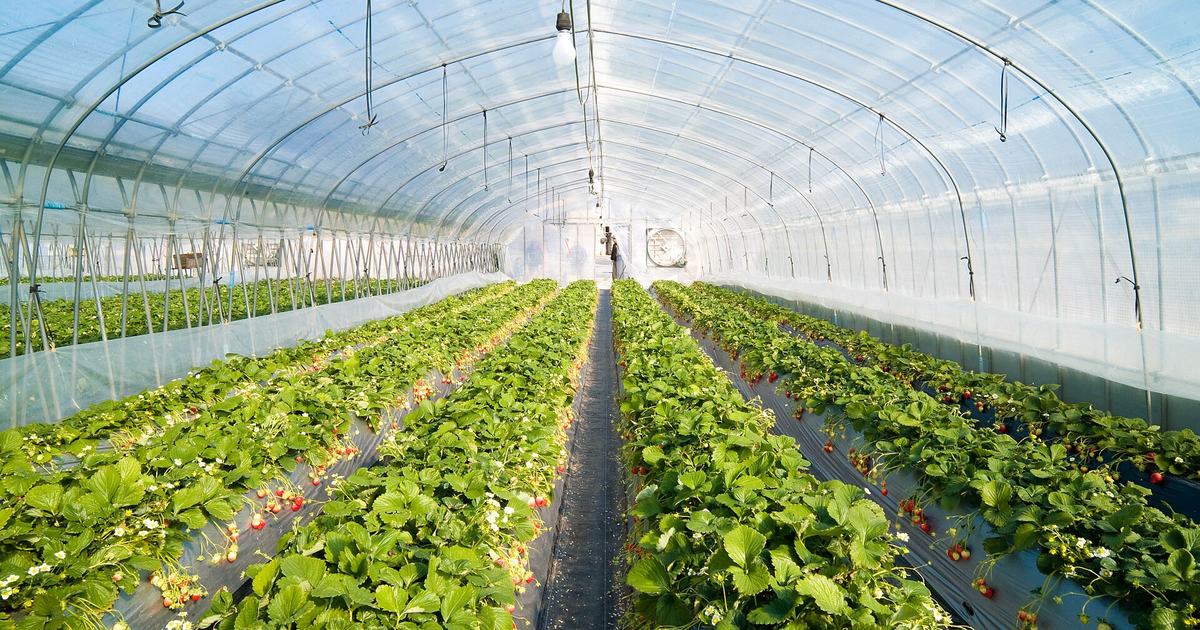
Take one 10-year-old into three strawberry farms inside Chiba City and the bill comes to ¥1,600, ¥2,200 and ¥2,700. All three sit in the same city, on the same prefectural tourism listing, and the gap has nothing to do with the fruit: each farm draws the line between "child" and "adult" wherever it likes. Some start adult pricing at junior-high age, some at primary-school age, so your nine-year-old is half price at one and full price at the next. This guide covers the six things actually worth asking a farm before you go — the age bands, the opening days, the clock, whether bookings are even accepted, whether there will be fruit that morning, and whether a wheelchair or pushchair gets in — and explains why "which month is cheapest" stops having an answer the moment you compare two farms.
- Age bands are set per farm: the same 10-year-old pays ¥1,600 / ¥2,200 / ¥2,700 at three Chiba City farms; Shizuoka's Kunou coast calls them an adult, Izu 40km away calls them a child
- No seasonal pricing rule holds: cut-off dates take at least eight different values, one farm never splits its season, and one farm's cheapest week is Golden Week
- A booking does not guarantee fruit: Chiba Prefecture warns sessions end early once ripe fruit runs out, and one farm states it will not answer same-day availability questions at all
- Booking is not a yes/no question: some farms accept walk-ins only and refuse reservations, so an absent booking button is not a sold-out sign
- You cannot choose the variety — the official wording is that customers cannot specify it
- Only one farm has published 2027 pricing: Ema, 19 Dec 2026 to 5 May 2027, adults ¥2,500
📖 Contents
- 1. Who decides what counts as an adult?
- 2. Is the farm even open that day?
- 3. Is April really cheaper than January?
- 4. Do you need to book?
- 5. Does a booking mean there will be fruit?
- 6. What happens inside the 30 minutes?
- 7. Wheelchairs, pushchairs and picking standing up
- 8. Can you choose the variety?
- 9. What is confirmed for the 2027 season?
- 10. Where do you actually book?
- 11. FAQ
Who decides what counts as an adult?
The farm does, and farms contradict each other. Spend two minutes on this table — it is the most useful page in the guide. The left column is the farm, the middle is how that farm defines its top price band, and the right is where a 10-year-old actually lands.
| Farm (location) | Top band defined as | Where a 10-year-old lands |
|---|---|---|
| Yamauchiya (Shizuoka City, Kunou) | Adult = primary school and up | Full price, ¥3,300 |
| Tsunekichi Strawberry Farm (Shizuoka City, Kunou) | General = primary school and up | Full price, ¥2,000 |
| Ema (Izunokuni, Shizuoka) | General = junior high and up | Child rate, ¥2,200 |
| Fukasaku Farm (Hokota, Ibaraki) | Adult = junior high and up, separate primary band | Primary band, ¥1,800 (weekday) |
| Asuka Strawberry Picking Park (Asuka, Nara) | Adult = junior high and up, separate primary band | Primary band, ¥2,100 |
| Dragon Farm (Chiba City) | Junior high and up | ¥1,600 (ages 2 to primary school, one band) |
| Mitsubachi Farm (Chiba City) | Primary school and up | Full price, ¥2,200 |
| Fruit Land Toke Erdbeere (Chiba City) | Primary school and up | Full price, ¥2,700 |
⚠️ Apart from Ema, every figure above is last season's official price, or a price published without any year on it. It is here to show how the age bands differ, not as a 2027 budget. Section 9 explains why.
Two comparisons do the heavy lifting. First, the Kunou coast of Shizuoka City and Izunokuni are about 40km apart — under an hour by car — and one treats a 10-year-old as an adult while the other treats them as a child. Second, and more striking because every entry comes from the same official listing in the same city: that 10-year-old costs ¥1,600 at Dragon Farm, ¥2,200 at Mitsubachi Farm and ¥2,700 at Erdbeere. The dearest of the three is 1.7 times the cheapest.
So families with primary-school children should change one habit: stop comparing adult prices and go straight to which band your child falls into. For two adults and two primary-school children, where that line sits is a four-figure yen difference on a single visit.
The free-entry age is just as inconsistent, and it does not track the adult line either. Four different rules turned up: Tsunekichi gives free entry under 1; Fukasaku covers ages 0 to 2; Dragon Farm and Mitsubachi Farm say under 2; Ema and Asuka say under 3. A family with a two-and-a-half-year-old gets two different bills depending which of those four rules applies.
One more clause that is easy to miss: Fukasaku Farm states that primary-school children and younger must be accompanied by a guardian. If your plan involved sending the kids in while the adults wait outside, check whether that farm allows it.
Is the farm even open that day?
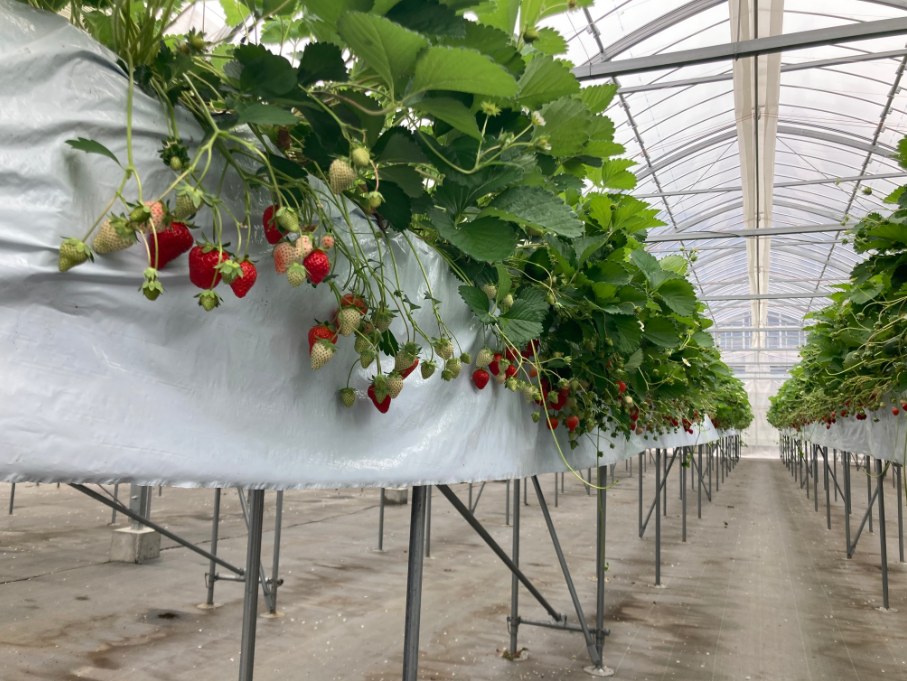
A whole category of farms opens on weekends only, and that never appears on the price table. This is where independent travellers on a weekday itinerary lose a morning: the price is checked, the trains are checked, and nobody checked whether the place opens on a Tuesday.
Three examples, all from official pages. Yamauchiya in Shizuoka City gives its season as Saturdays, Sundays and public holidays from January to May — no weekday opening at all. Matsudo Strawberry Market and Oikawa Strawberry Farm on the Chiba listing give theirs as Saturdays and Sundays, January to April 2026. Asuka Strawberry Picking Park in Nara runs a two-stage rule: weekends and holidays only until early February, then Wednesdays added after that, with daily opening during the Japanese school spring break.
The length of the season varies even more. On Tochigi Prefecture's official farm list, Nikko Strawberry Farm Watanabe runs from 29 November to 31 May — six months. Ino-san's Strawberry Farm runs from early February to 30 April, under three months. Ishikawa Strawberry Farm runs 1 March to 16 May. Longest and shortest differ by a factor of three on a single official list. "Japan's strawberry season is January to May" works as a rough orientation and fails completely as a prediction about one farm.
There is a subtler trap in the same list. A farm's direct-sales season and its picking season can be different dates. Haga Strawberry Farm shows 1 December to mid-May, then notes that picking only starts in January. Turn up in December and you can buy strawberries there but not pick them.
The last way to lose a morning is the structure of the list itself. Tochigi splits its farms into two groups: those doing picking and direct sales, and those doing direct sales only. Drive out with the "tourist strawberry farm list" in hand and you can arrive at a farm shop with no picking. Check which group your farm is in before you plot the route.
Is April really cheaper than January?
At some farms yes, at others the question has no meaning, and at one the answer is inverted. Seasonal price bands are genuinely common — but each farm sets its own cut-off date, and some never split the season.
Lined up, the cut-off dates found take at least eight values: 1 March, 29 March, 31 March, 1 April, 5 April, 28 April, 5 May, 6 May — plus Dragon Farm, which has none at all. Here is what "April is cheaper" does to each:
| Farm | How the season is split | Does "April is cheaper" hold? |
|---|---|---|
| Asuka Strawberry Picking Park (Nara) | One cut-off, on 7 May | No — January and April are the same price |
| Dragon Farm (Chiba City) | No split at all (January to mid-May) | No — one price all season |
| Yamauchiya (Shizuoka City) | Three bands, cheapest is 29 Apr – 5 May | Inverted — Golden Week is the cheapest week |
| Fukasaku Farm (Ibaraki) | Three bands: to 1 Mar / 2 Mar – 5 Apr / 6 Apr – 6 May | Yes, but the third band starts in early April |
| Ema (Izu, Shizuoka) | Two bands, cut-off 31 March | Yes |
| Tsunekichi (Shizuoka City) | Three bands, cheapest is after 6 May | Yes, but the floor is in May |
The Yamauchiya row deserves a second look. Golden Week is normally shorthand for higher prices and bigger crowds across Japan — we cover what to avoid in our Golden Week and Obon guide — but at this farm 29 April to 5 May is the cheapest picking window of the entire season. The reason is not hard to see: late-season yields drop and the berries are smaller and less sweet than in midwinter, so the entry price follows. You are buying cheaper access, not better fruit.
Flip that round and you get the one trade-off in this whole subject that actually travels across farms: January and February are the most expensive band, and they are also when the fruit is at its best. Pay winter prices for quality, or go late in the season and lower your expectations.
Fukasaku Farm adds a second axis that most farms do not have: weekday and weekend pricing. On its last published table, adults paid ¥2,100 on weekdays and ¥2,300 at weekends before 1 March, with toddlers at ¥1,200 and ¥1,300. Where that axis exists, going midweek saves a family of four a few hundred yen — worth knowing, not worth restructuring a trip around.
Do you need to book?
Official tables show at least five different states, and one of them is "reservations not accepted". Read this section carefully, because the common misreading points in exactly the wrong direction.
The reservation column on Tochigi Prefecture's farm list is itself multi-valued. The values that appear include: required, reservation-preferred, required for 10 or more, required for 15 or more, required for 20 or more, required for groups. On a single official table, whether you need to book is not a yes/no question — it depends how many of you there are.
Chiba's listing is messier still. Yonemoto Strawberry Farm and Shimada Strawberry Farm, both in Yachiyo City, say reception at the greenhouse only, reservations not accepted. Strawberry Village Kouzaki is web-booking-only with card payment taken in advance. Others take phone bookings, or bookings through a Japanese travel platform. Chiharu Farm notes that picking reservations only open from mid-February.
The two extremes each have a clear example. Asuka Strawberry Picking Park in Nara is fully reservation-only. Ema's FAQ says general visitors need no reservation and only groups of 20 or more must contact the farm ahead. Fukasaku is the most interesting case: its page heading says no reservation needed, while another line on the same page says reservations are given priority. Both are true at once — you can turn up unbooked, and people who booked go in first.
So when a farm has no booking button, do not conclude it is closed or full. That may simply be its policy. Tochigi's official phrasing is precise: there are strawberry farms you cannot enter without a reservation. Some. What share of farms nationwide require booking has never been published officially, so treat any percentage you see as invented.
One payment detail that catches non-Japanese visitors: farms on full online booking usually take card payment up front, and overseas-issued cards occasionally stall at the 3-D Secure step on a small farm's own booking system. Our Japan travel essentials guide covers workarounds. Confirm the payment method before you leave rather than at the counter.
Does a booking mean there will be fruit?
No — and this is written down by the farms themselves. This is the most valuable section for anyone planning a trip around a picking session.
Chiba Prefecture's tourism site ends its strawberry feature with three warnings: prices and varieties differ by farm and by period; whether a farm takes reservations or walk-ins differs by farm; and crop conditions can change whether the farm opens, its season and its varieties — plus, a session can end inside the advertised time slot once the strawberries run out. That last clause is the one worth rereading. It is not about the farm being shut. It is about you being inside the greenhouse with no ripe fruit left to pick.
Fukasaku Farm spells out the same mechanism: once the red berries are gone, same-day intake closes early, so unbooked visitors should come early. Then comes the hardest line in the whole research file — because daily conditions swing so much with the harvest and with visitor numbers, the farm cannot answer questions about that day's availability by phone or email.
Sit with what that means. You cannot verify in advance whether there will be fruit, because the farm itself does not know until the day. The same tone shows up elsewhere: Tomiyama Tourist Farm on the Chiba listing states it closes on days when there is no fruit at eating ripeness; Takanashi Farm in Otaki asks visitors to phone before setting out; Ema reserves the right to cap entry for crop or weather reasons and tells visitors to check its news page.
Put together, the reader's move set is short and clear:
- Take a morning slot. The fruit is finite and picked in order of arrival. This is the one variable you control.
- Do not make picking the only item on that day's plan. Know what else is within reach before you go.
- Do not buy non-refundable transport around it. A reserved-seat limited express or a non-cancellable rental car is a bad bet on a variable the farm resolves that morning.
- Check the farm's own page the night before. Sudden closures get posted there and nowhere else.
Drivers have a real advantage here: if one farm is out, you move to the next. Japanese strawberry farms cluster along the same roads, which is very obvious in Tochigi, Ibaraki and Shizuoka. Licence rules and driving prep are in our Japan self-drive guide.
What happens inside the 30 minutes?
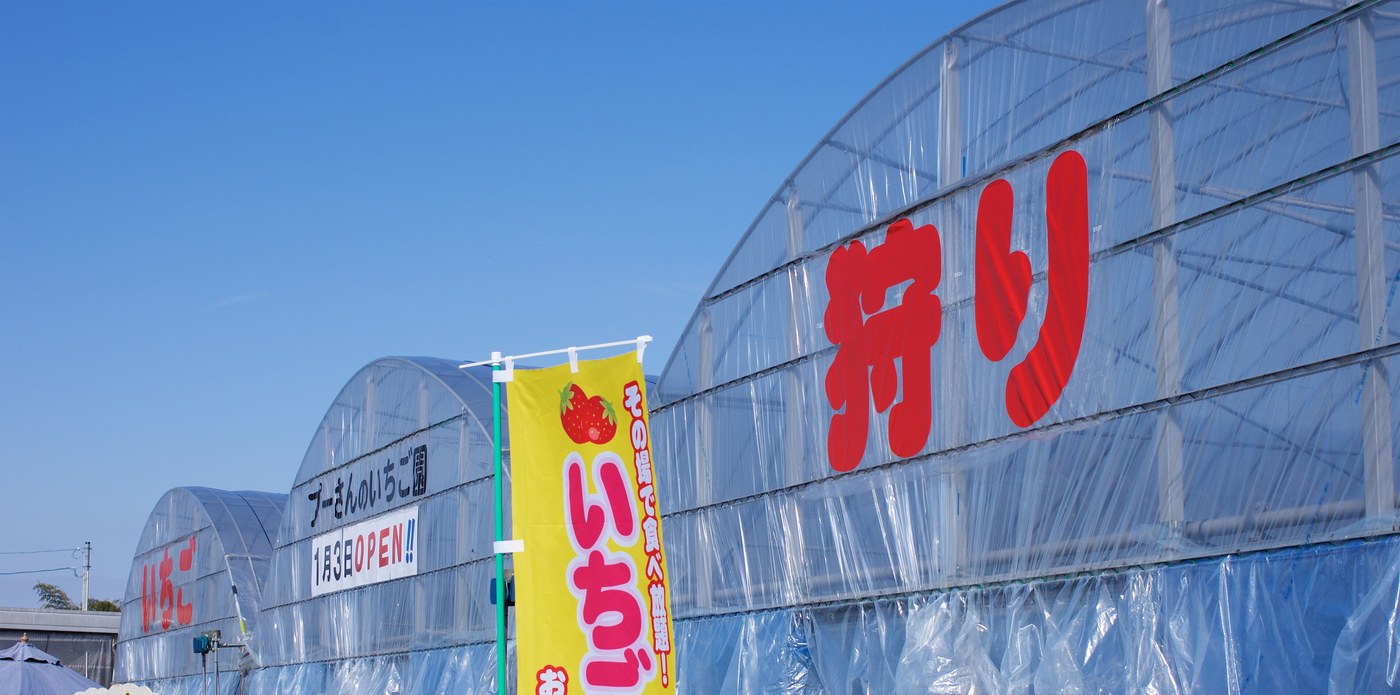
Thirty minutes is the most common length, not a rule — and one farm does not use a clock at all. Chiba Prefecture's page lists 52 farm entries, 38 of which state a session length:
| Session length | Farms |
|---|---|
| 30 minutes all-you-can-eat | 24 |
| 40 minutes | 10 |
| 45 minutes | 1 |
| 50 minutes | 2 |
| 60 minutes | 1 |
⚠️ That count describes one official page and one prefecture; it cannot be extrapolated into a national ratio. What it does tell you is that 30 minutes is the norm and 40 or even 60 is entirely possible. Fukasaku Farm in Ibaraki sits outside the distribution altogether: its heading and body text both advertise unlimited time, with no clock.
Condensed milk: four contradictory answers, all official
Nothing illustrates the per-farm nature of this activity better than the milk question:
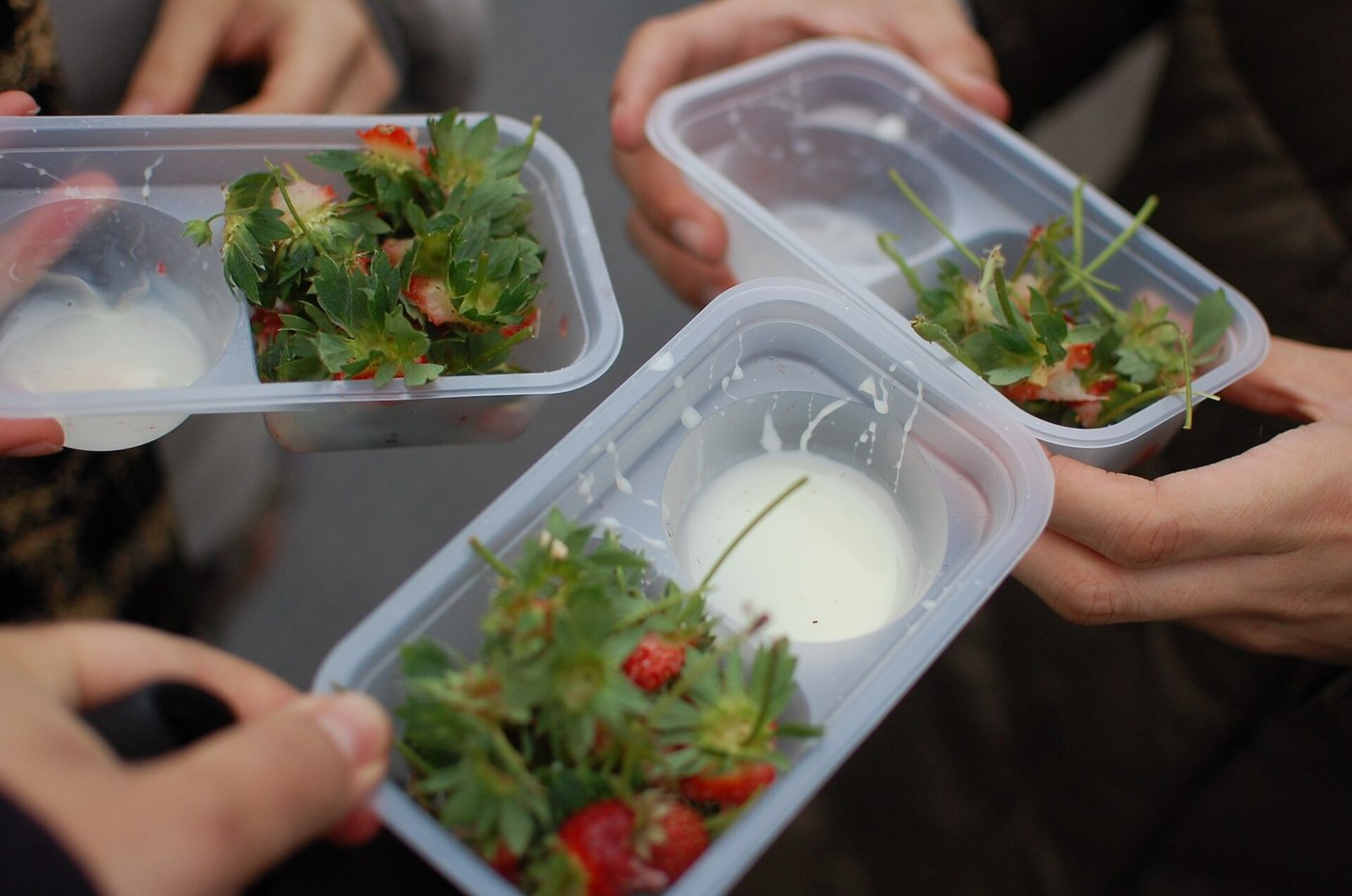
- Included: Fukasaku supplies condensed milk and a hull container; Ema supplies milk, a cup and a wet towel.
- Refillable, and you may bring your own: Ema's FAQ says refills are available — just ask the greenhouse owner directly — and that bringing your own is fine.
- Free and unlimited: Yamaman Yukari Farm in Sakura City is described on Chiba's official page as offering free unlimited condensed milk.
- Deliberately not offered: Tsunekichi in Shizuoka City has the strongest position of the four — it does not serve milk, so that visitors experience the aroma and sweetness of the strawberries themselves.
If your children will not eat strawberries without condensed milk, ask about this one first. If you would rather taste the fruit unadorned, Tsunekichi's stance is a feature rather than a gap.
Taking fruit home: not banned nationally
Most farms say no. Ema's FAQ states that because the session is 30 minutes all-you-can-eat, greenhouse fruit cannot be taken away; Tsunekichi and Fukasaku say the same; Yamauchiya keeps picking and its souvenir counter separate.
Asuka Strawberry Picking Park in Nara runs the opposite model and publishes a take-home rate by weight: ¥300 per 100g in January and February, ¥250 in March and April, ¥200 in May. That is a genuinely different product — you are not only buying a session, you are buying fruit.
And there is a third format. Chandeflaise Nature in Chiba City notes that picked fruit is eaten in an indoor seating area, not in the greenhouse. So "ichigo-gari" covers at least three experiences: eat as you pick, pick then sit down to eat, and pick then pay by weight. Confirm which one you are buying — it matters more than the price does.
Wheelchairs, pushchairs and picking standing up
The official answer may not be the one you expect. Two pieces of official wording drive this section, and both point away from the obvious assumption.
The first is Tochigi Prefecture's guidance note: regarding wheelchair use, there are farms where you can eat picked strawberries at the greenhouse entrance, so please consult the farm. Read that carefully — the prefecture is not saying that some farms are wheelchair accessible inside the rows. It is saying that at some farms you can eat, at the entrance, fruit somebody else picked. Those are different offers, and the official text chose the second. The same PDF does carry two per-farm columns, raised benches and wheelchair use, with values including yes and yes-with-reservation, so the real answer is farm-specific and lives in that table.
The second is Ema's FAQ, where two questions get two refusals. Asked whether a visitor with an elderly companion can request a greenhouse where picking is possible while standing, the farm answers that because there are so many greenhouses, a specific house cannot be requested — though staff will discuss it on site. Asked whether pushchairs may be brought in, the answer is that entry with a pushchair is declined because access into the greenhouses is difficult.
The practical consequence matters: "this farm has raised-bench cultivation" does not mean you will be sent to a raised-bench house. At a large multi-greenhouse site, which house you get is not your decision. If knees, backs or a pushchair are in play, the question to ask is not "do you have raised benches" but "can I be assigned to one".
Farms that state accessibility explicitly are the ones to shortlist. Yamaman Yukari Farm in Sakura City is described on Chiba's official page as step-free with raised-bench cultivation, no bending required, suitable for wheelchair users and for everyone from children to adults. Dragon Farm in Chiba City calls itself a barrier-free tourist farm. Fruit Land Toke Erdbeere in Chiba City advertises raised-bench cultivation and easy picking. Starting from farms that put it in writing beats interrogating a large site that only mentions raised benches in passing.
⚠️ One honest limit on scope: the per-farm wheelchair column in Tochigi's PDF was not tabulated here. It is a wide landscape table with vertical side headings, and machine extraction drops characters. If Tochigi is your destination, read your farm's row on that official table directly.
Can you choose the variety?
No, and this overturns a lot of itinerary planning.
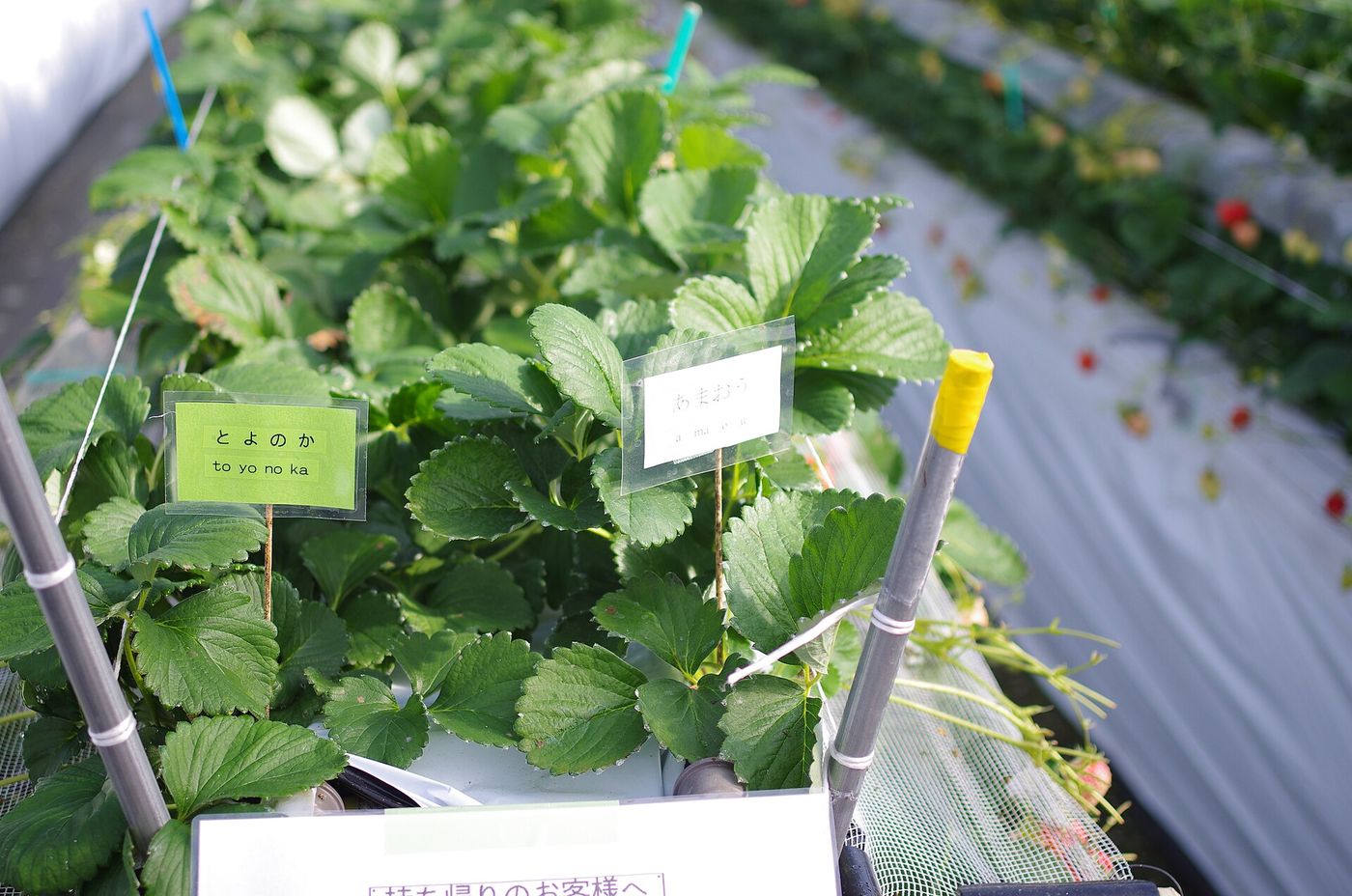
Otake Strawberry Farm in Kimitsu, Chiba, states it outright in the prefecture's listing: the variety you eat is affected by growing conditions and weather, and customers cannot specify it. Ema's product description reads Akihime or Benihoppe — the "or" is doing all the work, and the choice is the farm's. Dragon Farm markets a taste comparison of up to 20 varieties and immediately qualifies it: growing conditions may mean fewer than 20 are available.
Region-locked varieties, on the other hand, are real and have a legal basis. On Tochigi Prefecture's variety-management document, a circle marker indicates a variety that may only be cultivated within Tochigi under a licence agreement. Three strawberries carry it: Tochigi i27 (Skyberry), Tochigi iW1 (Milky Berry) and Tochigi i37 (Tochiaika). Tochihitomi and Natsuotome, in the same column, do not. Nara Prefecture states on its own site that Kotoka is grown only in Nara, with production still small and scarcity value high.
Fukuoka's Amaou needs more careful wording. The prefecture's press release describes an intellectual-property mix: the prefecture protects the variety through plant breeders' rights in Japan and abroad, while JA Zen-Noh Fukuren protects the name through trademark. I obtained no official text stating that Amaou may only be grown in Fukuoka, so the defensible claim is that the name is trademark-protected — not that the law confines cultivation to one prefecture.
Put the two halves side by side and the right expectation falls out:
- This variety is only grown in this prefecture — true, with a legal source for the three Tochigi varieties and an official statement for Nara's Kotoka
- You will eat that variety on the day you visit — decided by the farm that morning; the official wording is that you cannot specify it
One more trap in the same document. Tochigi's page describes Tochihime as a phantom strawberry that does not reach the market, and the accompanying notes then say that because the planted area is small, you must check in advance. So it is not a variety you get by going to Tochigi. It is a variety you get by ringing ahead to find which farm is growing it this year.
What is confirmed for the 2027 season?
One farm. Treat this section as a usage note: nearly every Japanese strawberry price table visible online right now describes last season.
| Source | 2027-season status, checked 6 September 2026 |
|---|---|
| Ema Strawberry Picking Centre (Izunokuni, Shizuoka) | Published: season 19 Dec 2026 – 5 May 2027, both price bands carry the year; online booking opens from December |
| Yamauchiya (Shizuoka City) | Not published — site says the 2026 season has ended |
| Fukasaku Farm (Ibaraki) | Not published — banner says the 2026 season has ended, see you next season |
| Tochigi Prefecture production division | Not published — the live page is the 2026-season farm list |
| Chiba Prefecture official tourism site | Not published — the feature is still titled 2025-2026 and says it will be updated in due course |
| Asuka Strawberry Picking Park (Nara) | Undeterminable — the prices and opening days carry no year at all |
| Tsunekichi Strawberry Farm (Shizuoka City) | More extreme — the farm's own note under the table says the published prices are from 2019 |
That last row deserves its own paragraph. A farm has stated, on its own website, that the price table it is displaying has not been updated in seven years. It is a better argument than any "check the official site" boilerplate, because it shows exactly how stale a farm's own page can be while looking completely normal. The ¥2,000 in this guide's first table is therefore only usable as an example of a farm admitting its numbers expired — never as a current price.
The one set of figures safe to plan around for 2027:
| Period | General (junior high and up) | Child (age 3 to primary year 6) |
|---|---|---|
| 19 Dec 2026 – 31 Mar 2027 | ¥2,500 | ¥2,200 |
| 1 Apr 2027 – 5 May 2027 | ¥2,000 | ¥1,700 |
Under-3s are free. The session is 30 minutes all-you-can-eat with condensed milk and a cup provided, and the variety is Akihime or Benihoppe — the farm's choice. Opening hours are 10:00–15:00 on weekdays and 9:00–15:00 at weekends and on public holidays. The farm reserves the right to cap entry during holiday periods. Groups of 20 or more get a discount.
⚠️ Worth repeating right beside that table: Ema's "general = junior high and up" belongs to Ema alone. The two Kunou farms in the same prefecture use "adult = primary school and up", so budgeting a Kunou visit with Ema's age definition will come out too low.
When will the rest publish? Going by what each source says about itself, early December 2026 is the sensible time to re-check: Ema opens online booking in December, Tochigi typically refreshes its list PDF between late December and January, and Chiba's page says it updates as information arrives. If you are travelling in January 2027, a mid-December check is early enough.
Where do you actually book?
For most farms the official channel is the farm's own website or a phone number. This guide carries no booking links, and the reason is not that the platforms have nothing — they do. Most of what they list bundles picking into a bus tour as one stop of many: a Tokyo open-top bus that hands out a box of strawberries with no picking at all, and a ten-hour Sapporo day tour whose own product page says the fruit may be strawberries, cherries, grapes or apples depending on the season. There is also one genuine stand-alone farm experience — in Karuizawa, Nagano — but it sells summer-autumn strawberries, runs about 30 minutes, and gives you 250 grams to take away; the page states plainly that it is not an all-you-can-eat plan. That is a different activity from the winter-spring buffet this guide is about, and its season sits entirely outside the January-to-May window.
What actually keeps the links off this page is a sentence the same listing puts in its own terms: "depending on the weather and the growth of the strawberries, we may have to decline your request." You can book, pay, and still be turned away before you travel — which is the point of the section on whether a booking means fruit, written this time by the party selling the ticket. The rules are per-farm, the farm does not know until the morning whether there is fruit, and if a platform page promises "30 minutes all-you-can-eat" and the farm's reality that day is different, the loss lands on you. So here are the official routes instead:
- Start with the farm's own website. Prices, opening days and booking policy all live there, and it is the only place that posts a sudden closure in time to help you.
- Then the prefecture's official farm list. Chiba's official tourism site, Tochigi Prefecture's production division, Nara's official tourism site and Shizuoka City's ZRATTO! all publish per-farm tables covering season, booking method, session length and varieties.
- Reservation-only farms usually run a dedicated line or system. Asuka Strawberry Picking Park has a dedicated picking-reservation desk; Strawberry Village Kouzaki is online-only with prepayment; Fukasaku states it cannot handle bookings made anywhere other than its own reservation site.
- If your Japanese is limited, prefer the farms with an online system. Tsunekichi takes bookings by phone only, which is a real barrier — check before you build a day around it.
One geographical quirk worth planning for: Asuka Strawberry Picking Park lists its location as 18 farms within Asuka Village, and tells you which one at the time of booking. You do not know where you are going until the reservation is confirmed, so transport has to be planned afterwards. The village itself justifies the extra half-day — its World Heritage components are right there, covered in our Asuka-Fujiwara guide.
Conclusion: six boxes to fill before you go
Strawberry picking is one of the few tourist activities in Japan where the rules are devolved almost entirely to the operator. There is no national price, no national age standard and no national booking system — three prefectures' official pages all end the same way, by telling you to ask the farm. So the most useful ending is not a price table but a checklist:
| Ask | Why it matters |
|---|---|
| Which band is my child in? | The line sits anywhere from primary to junior-high age; the same 10-year-old varies by a factor of 1.7 |
| Are you open on my date? | A whole category opens weekends only; season lengths differ threefold |
| How long, milk included, can I take fruit home? | 30 minutes is only the norm; milk has four answers; take-home is per farm |
| Do you take bookings — or refuse them? | At least five states on official tables, one of which is reservations not accepted |
| Will there be fruit that day? | Nobody can answer, the farm included — so book a morning and keep a fallback |
| Wheelchair, pushchair, standing? | Multi-greenhouse sites will not assign a specific house; the official fallback is eating at the entrance |
Fill those six in and the only remaining variable is how good the strawberries are. To build the rest of that trip: the plum blossom season overlaps the strawberry season almost exactly (late January to March) and pairs naturally with it; what to eat between December and March is in our Japan winter food guide; and if the month itself is still open, start from the best time to visit Japan.
Appendix: original Japanese sources (click to expand)
The passages quoted or paraphrased above are collected here so you can check them yourself. Sources: Chiba Prefecture official tourism site (maruchiba.jp), Tochigi Prefecture production division (pref.tochigi.lg.jp), Shizuoka City ZRATTO! (zratto.com), Ema Strawberry Picking Centre (ema-ichigo.com), Fukasaku Farm (fukasaku-ichigo.com), Yamauchiya (yamauchiya.com), Tsunekichi Strawberry Farm (tsunekichien.sakura.ne.jp), Nara Tabi Net (yamatoji.nara-kankou.or.jp), Nara Prefecture (pref.nara.jp) and Fukuoka Prefecture (pref.fukuoka.lg.jp). All retrieved 6 September 2026.
1. Three prefectures all say "ask the farm"
※料金・品種は園や時期により異なります。
※受付方法(予約もしくは当日)は園により異なります。
※作況により開催の有無や期間、品種が変更になる場合があります。また、時間内でもいちごがなくなり次第終了になることがあります。(Chiba Prefecture)
【ご利用の際は、事前に必ず各農園にお問合せの上、開園日、開園時間、予約についてご確認ください。予約なしでは入園できないいちご園があります。】(Tochigi Prefecture)
※営業時間と定休日は農園毎に異なりますので、各農園にお問い合わせください。(Shizuoka City ZRATTO!, on the Kunou strawberry growers' association)
2. A booking does not guarantee fruit
赤いいちごがなくなり次第、当日受付が早期終了する場合がございます。ご予約なし・当日受付の場合は、お早めのご来園をおすすめいたします。(Fukasaku Farm)
いちご狩りのご案内状況は、その日の収穫量やご来園状況によって大幅に変動いたします。当日のご案内状況について、お電話やメールにてお問い合わせいただきましてもお答えいたしかねます(Fukasaku Farm)
開園期間中は無休で営業しております。作柄、天候不良等により入場制限させていただくこともございますのでホームページのお知らせ・新着情報をご確認願います。(Ema FAQ)
美味しいイチゴを召し上がっていただくため、食べ頃のいちごが無い日はお休みさせていただきます。(Chiba Prefecture, Tomiyama Tourist Farm)
3. You cannot choose the variety
いちご狩りの際に食べていただく品種は、生育状況や天候等により影響を受けるため、お客様が指定することはできません。(Chiba Prefecture, Otake Strawberry Farm)
「章姫(あきひめ)」もしくは「紅ほっぺ」30分間食べ放題!!(Ema)
最大20種類(生育状況により20品種ご用意できない場合があります)(Chiba Prefecture, Dragon Farm)
4. Age bands and free-entry ages
※一般は中学生以上、子供は3歳以上~小学校6年生までとなります。※3歳未満は無料となります。(Ema)
小学生以上は一般料金です。幼児は2歳~幼稚園まで、1歳児は無料です。(Tsunekichi)
0~2歳は無料でお楽しみいただけます。小学生以下は、必ず保護者同伴でご利用ください。(Fukasaku Farm)
5. Wheelchairs, pushchairs, requesting a greenhouse
1.車椅子でのご利用については、ハウス入口で摘み取ったいちごを食べることができる農園もありますので、農園の方にご相談ください。(Tochigi Prefecture)
Q:高齢者がいるため、立ったままいちご狩りができるハウスを希望することはできますか?
A:大変申し訳ございません。たくさんのハウスがあるため、ハウスを希望することはできません。ですが、一度係員にご相談ください。(Ema FAQ)
申し訳ありません。当いちご狩りではハウスへの入場が困難な状況であるため、ベビーカーでの入場はご遠慮いただいております。(Ema FAQ)
段差のない設計かつ高設栽培でなので、摘み取りに腰をかがめる必要がなく、車いすの方や子供から大人まですべての人が楽むことができます。(Chiba Prefecture, Yamaman Yukari Farm)
6. Booking: refused, preferred, required
直接ハウスで受付 ※予約不可(Chiba Prefecture, Yonemoto and Shimada Strawberry Farms)
一般のお客様は予約をいただく必要はございません。※繁忙期や苺の生育上実が少なくなっている時期があり、時期によっては通常入園をお断りする場合があります。20名様以上でのご利用のお客様は予めご予約をお願いいたします。(Ema FAQ)
予約不要&時間無制限食べ放題/いちご狩りは時間無制限食べ放題です。(Fukasaku Farm)
7. Condensed milk and rain
お客様には、いちご本来の香りと甘みを知っていただくため、ミルクはお出ししておりません。(Tsunekichi)
練乳のおかわりは可能です。いちご狩りハウスの園主に直接お声をかけてください。また、お持ち込みでもOKです。(Ema FAQ)
いちご狩りはハウス内のため、雨の日も通常どおり開催しております。(受付からいちごハウスまでは徒歩5分前後の距離がありますのでご注意ください)なお、荒天(大雨、強風、雪等)の場合や、いちごの生育状況によりましては、中止となる場合もございますのでご了承ください。(Fukasaku Farm FAQ)
8. A farm admitting its price table has expired
※こちらに掲載の料金は、2019年のものです。(Tsunekichi)
2026年度のいちご狩り終了いたしました。(Yamauchiya)
9. Legal basis for region-locked varieties
○は利用権設定契約により、栃木県内のみ栽培可能な品種であることを示します。(Tochigi Prefecture, variety management PDF)
2.「とちひめ」については、面積が少ないため、必ず事前にご確認ください。(Tochigi Prefecture)
「古都華」は奈良県が「いつ食べても美味しいイチゴ」を目指して育成した品種です。…奈良県でしか栽培されておらず、まだ生産量も少ないので、希少価値が高いです。(Nara Prefecture)
「あまおう」(品種名:「福岡S6号」)を開発した県が育成者権により国内外で品種を保護するとともに、農産物の流通・販売を担うJA全農ふくれんが商標権により名称を保護する知財ミックスの取り組みで、「あまおう」のブランドを確立。(Fukuoka Prefecture press release)
10. The 18 farms of Asuka Village
奈良県高市郡明日香村(村内18ヶ所の農園※予約時に場所をお伝えします)(Nara Tabi Net, Asuka Strawberry Picking Park)
Frequently Asked Questions
- Q1:How much does strawberry picking cost in Japan?
- Check which band your child falls into before you compare adult prices, because the adult price on its own tells you very little. Adult entry runs roughly ¥1,500 to ¥3,300 for a timed all-you-can-eat session. The catch is that the same 10-year-old pays ¥1,600, ¥2,200 or ¥2,700 at three different farms inside Chiba City — the strawberries are not the variable, the definition of "adult" is. The only farm with published 2027-season pricing at the time of writing is Ema Strawberry Picking Centre in Izunokuni, Shizuoka: from 19 December 2026 to 31 March 2027, ¥2,500(一般(中学生以上)2026-12-19~2027-03-31) for junior-high age and above and ¥2,200(子供(3 歲~小學 6 年級)2026-12-19~2027-03-31) for ages 3 to 12; from 1 April to 5 May 2027 those drop to ¥2,000(一般(中学生以上)2027-04-01~2027-05-05) and ¥1,700(子供(3 歲~小學 6 年級)2027-04-01~2027-05-05). Every other price table you find online right now is last season's.
- Q2:Do you have to book strawberry picking in Japan in advance?
- Not always — and some farms refuse bookings outright. On Chiba Prefecture's official tourism listing, two farms in Yachiyo City state that they take walk-ins at the greenhouse only and do not accept reservations at all. Fukasaku Farm in Ibaraki puts "no reservation needed" in its page heading. Ema in Shizuoka tells general visitors in its FAQ that no booking is required. At the other end, Asuka Strawberry Picking Park in Nara is reservation-only, and several Chiba farms are online-booking-only with card payment taken up front. Tochigi Prefecture words it carefully: there are farms you cannot enter without a reservation — some, not most. So the useful move is not "book everything just in case", it is check what that specific farm accepts. Reading "no booking button" as "sold out or closed" gets the situation exactly backwards.
- Q3:Does a reservation guarantee there will be strawberries?
- No, and that is the official position rather than our inference. Chiba Prefecture's tourism site closes its whole strawberry feature with a warning that crop conditions can change whether a farm opens at all, its season dates and its varieties — and that a session can end early, inside the advertised time slot, once the ripe fruit runs out. Fukasaku Farm in Ibaraki is blunter: once the red berries are gone, same-day intake closes early, so come early. The same page adds the line that should change how you plan: because daily conditions swing so much with the harvest and the number of visitors, the farm will not answer questions about that day's availability by phone or email. Ema reserves the right to cap entry for crop or weather reasons and points visitors at its own news page. Three practical consequences: take a morning slot, do not make picking the only thing on that day's plan, and do not buy non-refundable transport around it.
- Q4:Can you pick a specific strawberry variety?
- No. Otake Strawberry Farm in Kimitsu, Chiba, states it plainly in the prefecture's official listing: the variety you eat depends on growing conditions and weather, and customers cannot specify it. Ema advertises Akihime or Benihoppe — that "or" is the whole answer, and the choice is not yours. Dragon Farm in Chiba City markets a comparison of up to 20 varieties, then notes in the same breath that growing conditions may mean fewer than 20 are available. So the common plan of "go to Tochigi for Tochihime, go to Fukuoka for Amaou" needs downgrading to a hope rather than an itinerary: a variety being grown only in one prefecture and you eating it on the day you show up are two separate facts, and the second one is decided by the farm that morning.
- Q5:Can wheelchair users and pushchairs get into a Japanese strawberry greenhouse?
- Ask each farm, and be ready for an answer that is not "yes, come in". Tochigi Prefecture words its official guidance like this: regarding wheelchair use, there are farms where you can eat picked strawberries at the greenhouse entrance, so please consult the farm. That is a different offer from step-free access to the rows, and the prefecture chose the narrower wording. Its farm-by-farm PDF carries two separate columns — raised benches and wheelchair use — that you have to check for your specific farm. On pushchairs, Ema's FAQ is explicit: entry with a pushchair is declined because getting into the greenhouses is difficult. The same FAQ also says you cannot request a particular greenhouse because the site has so many of them — so "this farm has raised-bench cultivation" does not mean you will be sent to a raised-bench house. Farms that state accessibility outright are the safer bet: Yamaman Yukari Farm in Sakura City advertises step-free design plus raised benches and explicitly welcomes wheelchair users, and Dragon Farm in Chiba City calls itself a barrier-free tourist farm.
- Q6:Is strawberry picking cancelled in the rain?
- The fruit is under plastic, so rain alone does not close a farm — but severe weather and poor crop conditions will. Fukasaku Farm in Ibaraki gives the fullest official answer found: because picking happens inside the greenhouse, sessions run as normal on rainy days, with the caveat that it is about a five-minute walk from reception to the strawberry houses — that five minutes is out in the weather. The same answer then says sessions may still be cancelled in severe conditions such as heavy rain, strong wind or snow, or when the crop is not in good shape. ⚠️ Rain policy at other farms was not individually verified, so do not treat this as a national rule. Check that farm's own notices before you set out.
- Q7:Which month is cheapest for strawberry picking?
- There is no cross-farm answer — you can only look up that farm's own cut-off date. Line up the cut-offs found across farms and there are at least eight different values: 1 March, 29 March, 31 March, 1 April, 5 April, 28 April, 5 May and 6 May. The direction is not consistent either. Yamauchiya in Shizuoka City has its cheapest band running 29 April to 5 May, which is Golden Week itself. Asuka Strawberry Picking Park in Nara has a single cut-off on 7 May, so January and April cost the same there. Dragon Farm in Chiba City does not split its season at all — one price from January to mid-May. Planning around "April is cheaper" fails outright at three of those.
- Q8:Can you take the strawberries back to your hotel?
- Usually not, but this is another per-farm rule. Ema's FAQ says that because the session is 30 minutes all-you-can-eat, fruit from the greenhouse cannot be taken away; Tsunekichi and Fukasaku say the same. Asuka Strawberry Picking Park in Nara does the opposite and publishes a take-home rate by weight: ¥300 per 100g in January and February, ¥250 in March and April, ¥200 in May. There is also a third format — Chandeflaise Nature in Chiba City notes that picked fruit is eaten in an indoor seating area rather than in the greenhouse. So "ichigo-gari" covers at least three different experiences, and confirming which one you are buying matters more than the price.