
Arriving at Asakusa for Sumida Fireworks at 6:30 PM is, by then, already too late. Police have cordoned off the subway exits since 5 PM, signs in three languages reading this exit, outflow only, and the 35-minute walk from Oshiage station back to the riverbank routinely costs travelers most of the fireworks window. Japan hanabi isn't won by picking the prettiest festival — it's won by understanding ticket windows, arrival cutoffs, and exit logistics. This guide is the playbook you should have on hand.
Table of Contents (click to expand)
- 2026 hanabi calendar: 8 marquee dates
- The July 25 dilemma: Sumida vs Tenjin Matsuri
- Eight festivals, deep dives
- Reverse-engineer your booking timeline
- Festival-day SOP: 10-hour playbook
- Three festivals to skip if you're a first-timer
- Yukata × Hotel × Transit: the three-pillar combo
- Rain rules: 3 principles to memorize
- FAQ: 8 questions travelers actually ask
2026 hanabi calendar: 8 marquee dates
Most major Japanese fireworks dates lock to "a specific Saturday" or "a historic anniversary," so 2026 is mostly nailed down already. Two big shifts to note: Yodogawa moved from August to October (post-Expo schedule stuck), and Jingu Gaien's specific August date won't be confirmed until late May officially.

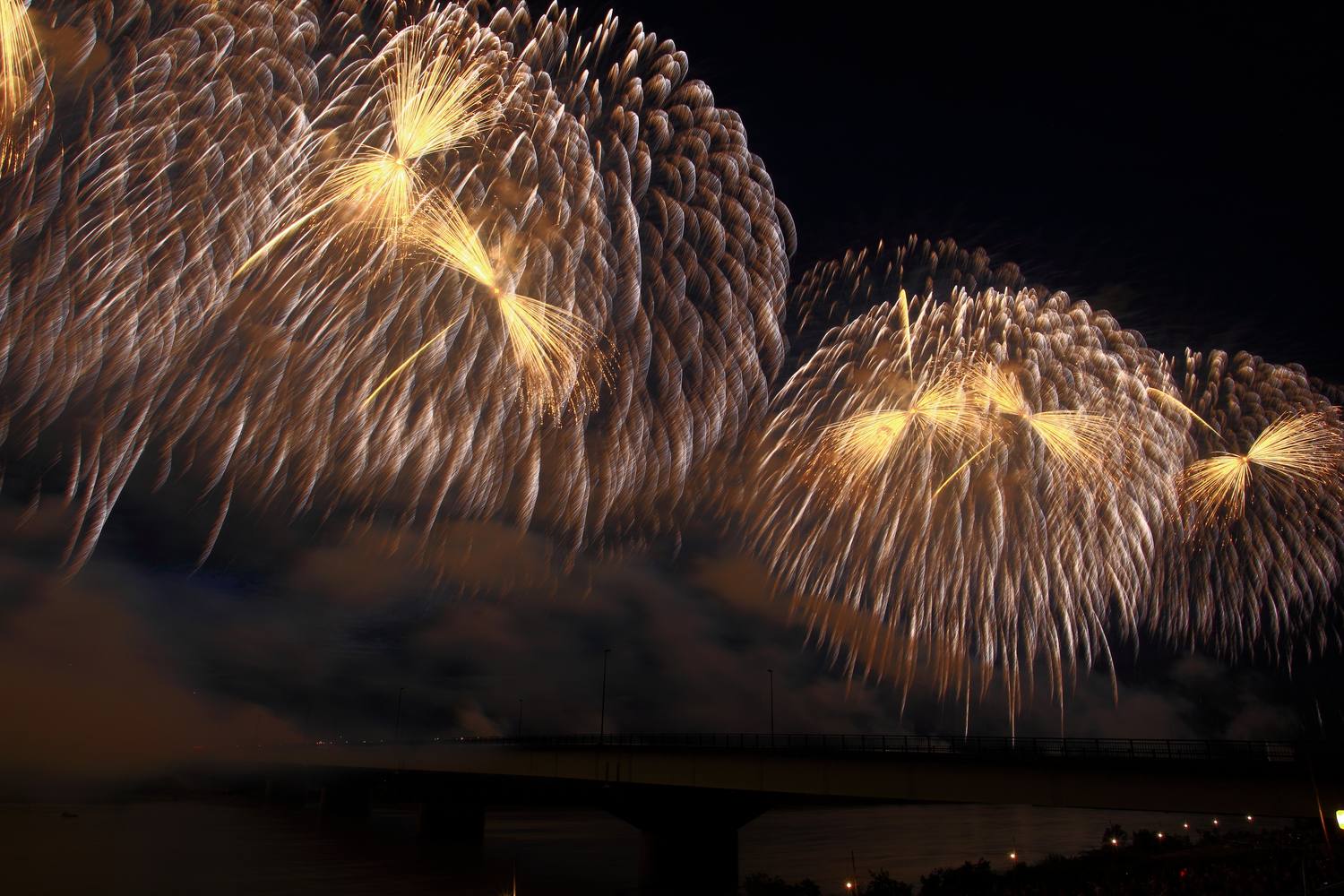
Nagaoka has one of Japan's hardest fireworks tickets — Niigata residents claim the lottery first and general sales open in May, so by the time most overseas visitors start planning, the paid riverbank seating is already gone. The standard workaround is a packaged bus tour departing Tokyo or Nagoya that bundles round-trip transit with a reserved seat, sparing you the shinkansen-plus-lottery shuffle.
Understand how those are sold before you go looking for one. Each is a single-date departure built around one specific festival night, so the entire category disappears from the booking platforms the moment that year's festival ends, and it only returns once the following year's date is fixed — roughly in step with the May general sale. Hunting for a Nagaoka bus tour in late summer or autumn turns up nothing but dead listings; the productive move is to set a reminder for spring and book the week the seats go live, because these sell out faster than the festival's own tickets.
The July 25 dilemma: Sumida vs Tenjin Matsuri
July 25, 2026 (Saturday) is the year's biggest scheduling collision — Tokyo's Sumida fireworks and Osaka's Tenjin Matsuri fall on the same day. The shinkansen between them is 2.5 hours, but festivals here lock crowd positions by 5 PM and gates close around 6 PM. Realistically, you can attend only one.
Pick Sumida if...
Your itinerary is Kanto-based, you want raw scale (20,000 shells vs 3,000), you tolerate 900,000-person density, and you want the Tokyo Skytree-in-frame photo.
✓ 6.6× the shells
✓ Iconic Tokyo skyline
✗ 1-hour walk to exit
Pick Tenjin Matsuri if...
Your itinerary is Kansai-based, you want a full festival day (procession, boat fleet, street stalls, fireworks finale), and you don't need the largest shell count.
✓ 9 hours of content
✓ Yatai street food
✗ Smaller fireworks finale
The honest call: pick whichever city your trip is already in — don't bend a 10-day itinerary around either. Sumida is 90 minutes of fireworks plus 60 minutes of exit-shuffle. Tenjin Matsuri starts at 10 AM with the shrine ceremony, builds through afternoon processions, peaks with 100 boats on the river at 6 PM, and ends with fireworks at 7:30 PM. On total experience per hour, Tenjin wins decisively.

Eight festivals, deep dives
Nagaoka Grand Fireworks
Why it's worth it: the only festival capable of a 2 km-wide tribute (Sumida's river is too narrow). Different programs each night: Aug 2 features Sho-Sanjakudama (90cm shells); Aug 3 features Konohana (650m diameter).
Tickets: resident lottery closes April 28; general sales open in May via Pia, Lawson Tickets, JRE MALL. ¥7,000 chair seats, ¥30,000 masu (4-person boxes), ¥50,000+ for A-zone. Resale carries ID-verification risk; stay official.
Hidden viewpoint: free self-seating zone across the Shinano River near Choseibashi Bridge (arrive by 5 PM); or the high ground 1.5 km toward Nagaoka Station — you'll see the Phoenix span but lose detail.
Lake Suwa Fireworks
Why it's worth it: Lake Suwa is surrounded by mountains — bass concussion bounces off water and rock walls, making this Japan's most physically intense hanabi. Aerial shells reflect 360° on the water surface.
Tickets: Suwa residents bid May 1–22; general public via JRE MALL, Pia, Lawson. C-gate seats from ¥4,500.
Hidden viewpoint: Tateishi Park (south side high ground) — free, panoramic lake-plus-fireworks view, but fills by 4 PM.
Sumida River Fireworks
Why it's worth it: the Tokyo nostalgia icon (festival dates to 1733). First launch site hosts the fireworks competition; second emphasizes entertainment. Frames well with Tokyo Skytree.
Tickets: most viewing is free standing-only; supporter seats from ¥8,000. Yakatabune (traditional boat) viewing from ¥18,000+ with dinner.
Hidden viewpoint: Tokyo Skytree Tembo Deck (book tickets ahead) gives an elevated overhead view; nearby high-rise hotels (The Gate Hotel Kaminarimon, Asakusa View Hotel) offer river-facing rooms — book 8+ weeks ahead.
Naniwa Yodogawa Fireworks
Why it's worth it: post-Expo, organizers confirmed the autumn slot sticks for 2026 — you skip August's brutal Osaka heat, snag 20% cheaper autumn flights, and can combine with early Kyoto foliage. The Umeda Sky Building 40F dinner-viewing plan is the insider's choice.
Tickets: Yodogawa riverbank paid seats from ¥6,000; Umeda Sky Building with dinner from ¥25,000 (sells out 2 months ahead).
Hidden viewpoint: Umeda Sky Building Floating Garden Observatory; high-rise Airbnb near Juso Station.
Tenjin Matsuri Fireworks
Why it's worth it: Osaka Tenmangu Shrine festival since 951 AD; one of Japan's "Big Three" matsuri. Fireworks are the dedication finale to a full-day ritual: ceremony at 10 AM, land procession 2 PM, boat procession 6 PM, fireworks 7:30 PM.
Tickets: Sakuranomiya Park standing zones are free; New Otani Hotel and Imperial Hotel run festival-view-plus-dinner plans from ¥30,000+.
Hidden viewpoint: OAP Tower 27F riverside restaurant; Kawasaki Bridge upper deck (free, still has space at 5 PM).
Kumano Grand Fireworks
Why it's worth it: launched from Shichirimihama Beach — the "self-detonating sanjakudama on the sea" puts large shells directly on the water surface before ignition, exclusive to Kumano. Four hours from Nagoya / 4.5 hours from Osaka makes this the "world heritage hanabi" with low tourist density.
Tickets: mostly free standing on the beach; limited paid seating via local tourism association.
Hidden viewpoint: Onigajo Observatory (1.5 km mountain trail) — sweeping view of Shichirimihama and the sea-surface shells.
Two other notable festivals we're not deep-diving: Jingu Gaien (Tokyo's only inner-city event) and Kamakura (70-minute beachside option). Both worth catching if you're already in the area, but neither justifies booking a flight around. One more clash worth flagging: the big Tohoku summer festivals in early August aren't fireworks events, but they consume the region's hotel stock and seating the same way — and Hirosaki Neputa's Aug 1–7 reserved seating runs on its own system that shares nothing with Aomori Nebuta or Goshogawara Tachineputa, so overlapping trips need planning before you book.

Reverse-engineer your booking timeline
Japan hanabi tickets follow a predictable arc: 3 months out (lottery), 2 months out (general sales), 1 month out (sold out). The most common newbie mistake is checking in late June; by then everything except free standing zones is gone.
If your trip chains multiple hanabi cities (e.g., Tokyo → Nagaoka → Suwa), the JR Pass usually beats point-to-point shinkansen tickets within a 7-day window.
Book the nationwide JR Pass (7 / 14 / 21 days) →
Want to skip the 900,000-person standing crowd on Sumida night? Asakusa Yakatabune Funayado Tsurishin is the boat operator mentioned in our "hidden viewpoint" section — Japanese kaiseki dinner, free-flow drinks, on-deck viewing with Skytree in frame. From ¥18,000/person for a 4-hour cruise.
See Asakusa Yakatabune (Funayado Tsurishin) →Festival-day SOP: 10-hour playbook
Using Sumida as the template; the logic applies to other major hanabi too:
- 10 AM – noon: hotel check-out, store luggage. Change into yukata at the hotel or your rental shop's morning slot — afternoon walk-ins fill by 1 PM.
- 1 – 3 PM: lunch around Asakusa (Senso-ji temple visit + Kaminarimon area). Eat early — by 5 PM every yakitori stand has a 40-minute queue.
- 3:30 – 4 PM: claim ground space at the second launch zone (Komagatabashi downstream). First zone (Sakurabashi) needs to be claimed by 2:30 PM. Bring: picnic mat, water, hand fan, power bank, tissues (public toilets run out).
- 4 – 5 PM: verify the day's go/no-go decision on the festival's official Twitter. If you split up to grab dinner, everyone must be back in position by 5 PM (street movement restricted after).
- 5 – 7 PM: chat with mat-neighbors, photograph the sunset over the river. Use the toilet before 7 PM (closest facilities have 30-minute queues by then).
- 7 – 8:30 PM: fireworks! First zone fires from 7:00 PM, second from 7:30 PM. After the finale, do NOT pack up immediately — wait for crowd control to ease.
- 8:30 – 9:30 PM: slow walk toward Oshiage (not Asakusa — single-direction outflow). Take Tobu Skytree Line or Toei Asakusa Line from Oshiage onwards.
- After 9:30 PM: back to hotel, change out of yukata (return tomorrow), shower. If you have a day before flights, hit Don Quijote for tax-free shopping next morning.
Three festivals to skip if you're a first-timer
- Adachi Fireworks (May 30): nominally Tokyo's "summer kickoff," but venue capacity is way below demand. The Keisei Line typically runs 90-minute delays after dispersal. Skip unless you live in Kita-Senju.
- Lake Biwa Grand Fireworks: moved to fully ticketed seating in 2025 — ¥6,000+ with annual complaints about view restrictions. For lake-surface fireworks, Suwa beats it.
- Edogawa Ward Fireworks (August): co-hosted with Ichikawa City across the prefecture line — both sides have poor standing zones and even tighter exit-direction control than Sumida.
Yukata × Hotel × Transit: the three-pillar combo
80% of festival success comes from these three choices, not the festival itself:

Yukata: do NOT walk in on festival day
Asakusa, Kyoto, and Osaka have plenty of yukata rental shops, but book 2 weeks ahead — festival-day shops fill by 9 AM. English-friendly options: Rika Wafuku Asakusa (¥3,500+ including dressing + hair + next-morning return), Asakusa COCOMO (couple plans ¥6,800), Kyoto Kimono Rental Yumeyakata (Kyoto Hankyu lines, men's yukata available).
If your Yodogawa (Oct 17) trip pairs with Kyoto, Ookini Kimono Kiyomizu-dera Store is one of Kyoto's highest-rated yukata rentals — free hair styling, professional photography, no surcharge on accessories, cross-store returns. Both men's and women's yukata.
See Ookini Kimono (Kiyomizu-dera) →Hotel windows: book M-2 or earlier
Sumida-facing hotel rooms: The Gate Hotel Kaminarimon (rooftop bar faces river), Asakusa View Hotel (upper floors face first launch zone), Tobu Hotel Levant Tokyo in Kinshicho (second zone + Skytree). Festival-night rates are 2–3× normal; closer to launch zone, higher cost.
Transit: do NOT improvise on the day
Major festivals publish strict ingress/egress route maps. Follow the official map, not Google Maps — Google doesn't reflect real-time police blockades. Sumida day: Asakusa Line, Ginza Line, and Toei Asakusa Line all run single-direction. Nagaoka day: shinkansen adds extra trains until 10:30 PM. Suwa: book an Upper Suwa onsen hotel and skip the last-train anxiety entirely.
Cell signal on festival night is brutal (900,000 people on the same 4G cells). Use a dual-carrier eSIM rather than a single SIM — it auto-switches between Docomo and KDDI when one network gets saturated.
See dual-carrier eSIM →Rain rules: 3 principles to memorize
The wet-weather rules for Japanese hanabi are often poorly explained. Here's the playbook:
- Rule 1 — Light rain proceeds. Below ~2mm/min, organizers fire anyway because shells can't be stored for next year. Bring a poncho, not an umbrella (umbrellas block neighbors' view).
- Rule 2 — Heavy rain or thunder cancels (or rarely postpones). Mega-festivals (Sumida, Yodogawa, Jingu Gaien) cancel for the year entirely — too large to reschedule. Mid-size events (Kamakura, Kumano) postpone 1–2 days.
- Rule 3 — Typhoon = auto-cancel. A typhoon within 24 hours of approach near Kanto/Kansai/Tohoku triggers cancellation. September and even October risks remain (Yodogawa Oct 17 is at the typhoon tail).
- Refunds: Most paid seats are non-refundable on weather cancellation — this is Japanese hanabi tradition, not bad service. Read the fine print before purchase.
- Timing of decision: Cancellation calls happen 2–4 PM same day. Follow the festival's official Twitter/X — the most reliable single source.

Pair this with these guides
Summer Japan beyond hanabi:
- Tokyo itinerary → Tokyo 5-Day Itinerary 2026
- Kansai transit → Using the HARUKA e-ticket
- What to pack → What to Wear in Japan 2026 (July–August is hot and humid; yukata is fine in shade)
- When to come → Best Time to Visit Japan (peak-summer hanabi season vs spring sakura and autumn leaves — check whether summer suits you first)
- Festival & dining manners → Japan Etiquette Guide (eating at street stalls, shrine visits, taking your trash back — the details worth knowing)
- Connectivity → Japan eSIM Recommendations
- Tax-free shopping → Japan Tax-Free Guide
FAQ: 8 questions travelers actually ask
- Q1:Which Japan fireworks festival is the most worth flying for in 2026?
- If you can only see one — Nagaoka (Niigata, Aug 2 & 3). The 2 km-wide Phoenix tribute is exclusive (Sumida's river is too narrow). Two consecutive nights run different programs. The reserved-seating system is more orderly than Tokyo's standing-only chaos. Sumida is famous for Tokyo nostalgia; Nagaoka is famous for the fireworks themselves.
- Q2:What's the best strategy for Sumida 2026 without paid seats?
- Arrive by 4 PM to claim ground space (subway exits become outflow-only after 6 PM). Three hacks: book a riverside hotel, take a yakatabune (¥18,000+ with dinner), or use Tokyo Skytree Tembo Deck with advance tickets.
- Q3:Why did Yodogawa move to October?
- After Expo 2025 in Osaka pushed Yodogawa to late autumn, organizers confirmed the schedule sticks for 2026 (Oct 17). Upside: skip August heat, cheaper flights and hotels, pair with early Kyoto foliage. Pack a light jacket.
- Q4:How do I actually buy Nagaoka tickets?
- Resident lottery closes April 28. General sales open in May (Pia, Lawson Tickets, JRE MALL). ¥7,000 chair seats, ¥30,000 masu boxes, ¥50,000+ A-zone. Avoid resale — Nagaoka enforces ID verification. Fallback: free self-seating across the Shinano River.
- Q5:Is wearing yukata as a tourist weird?
- Not at all — 40–60% of locals wear yukata; you'll blend in. Rentals ¥3,000–6,000 include dressing, accessories, hair, and next-morning return. Book 2 weeks ahead, bring flat shoes for backup, and don't forget a foldable umbrella (yukata isn't waterproof).
- Q6:Sumida vs Tenjin Matsuri — same day, how do I pick?
- You cannot attend both. Decision rule: Kanto-based trip → Sumida. Kansai-based trip → Tenjin Matsuri. Tenjin offers 9 hours of day-long content (ceremony, processions, fireworks finale); Sumida is 90 minutes of fireworks plus exit shuffling.
- Q7:What happens if it rains?
- Light rain proceeds. Heavy rain or thunder cancels major festivals (Sumida, Yodogawa, Jingu Gaien). Mid-size events postpone 1–2 days. Typhoons trigger auto-cancellation. Cancellation announced 2–4 PM same day on official Twitter. Paid seats are generally non-refundable on weather.
- Q8:Should I bring kids under 5 to a major hanabi?
- Not to million-attendee events (Sumida, Yodogawa, Tenjin). Kid-friendly alternatives: Suwa (open lakeshore), Kamakura (only 70 minutes), or local neighborhood festivals. If you must: book a window-view hotel, arrive by 5 PM with a picnic mat and dinner, bring earplugs, and leave after the highlights at 7:30 PM.