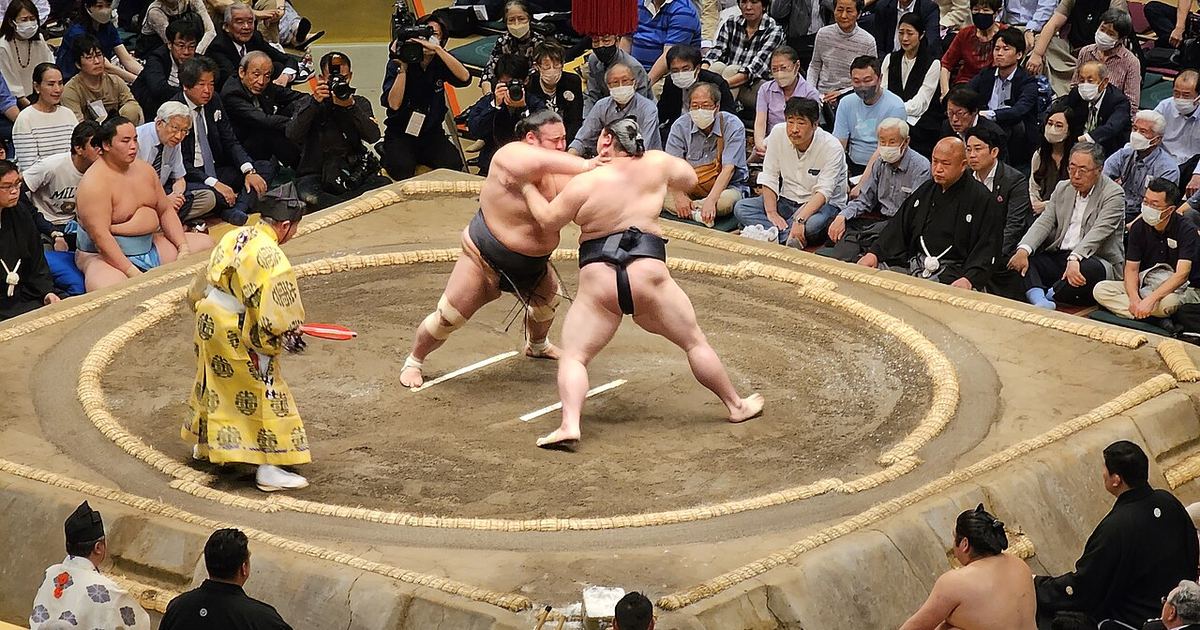
The cheapest seat at Ryogoku Kokugikan costs ¥2,500 for an adult and ¥500 for a child; at the Kyushu tournament in Fukuoka, a weekday chair seat is ¥2,000. Those are the Japan Sumo Association's own published prices, straight off its tournament pricing pages — and they are a fraction of what the packaged sumo listings on third-party ticket sites ask. The conclusion writes itself: sumo is not expensive; the channel most people buy through is. This guide covers the full official seat tables for Tokyo and Fukuoka, the five-stage sales ladder that explains why tickets look sold out instantly, the official face-value resale that gets you a ticket after sell-out, the association's 138 enforcement actions against resellers in 2025, what actually happened to unreserved seating, and the schedule reason why arriving at 2pm is enough.
- Official floor price: Tokyo Chair D ¥2,500 adult / ¥500 child (second tier, row 14); Fukuoka Chair C ¥2,000 weekday. The cheap seats are similar in both cities — the mid-range is where Fukuoka is half the price
- Tickets are not gone in a second — four lottery rounds ran before general sale. For overseas visitors the realistic entries are the Ticket Pia pre-lottery and general sale
- Sold out is not the end: official face-value resale lets you buy released tickets at the original price, with the seller paying the 10% fee. No secondary market required
- What is banned is resale for profit as a business — the terms carry an explicit family-and-friends exception. The association enforced 138 times in 2025 and names viagogo, stubhub and others in its own notice
- Arrive at 2pm: juryo ring-entering 14:15, makuuchi 15:40, top-division bouts 16:05, bow ceremony 17:55 (official times, labelled approximate)
📖 Contents (tap to expand)
- The pricing trap: two official sources that disagree
- Tokyo: Ryogoku Kokugikan seat and price table
- Fukuoka: Kyushu tournament seat and price table
- Tokyo vs Fukuoka: where the real gap is
- How to buy: the five-stage sales ladder
- Sold out? Use the official face-value resale
- Resale rules: the official text, 138 actions, and the exception
- What happened to unreserved seating
- Tournament calendar: 2026, 2027, 2028
- Why 2pm is enough: the official ring schedule
- Choosing a seat: tamari rules and masu rules
- On the day: QR tickets, children, re-entry, bags
- The Kokugikan and the Sumo Museum
- Eating at the arena: chanko, yakitori, rikishi bento
- Morning practice and stable visits
- FAQ
The pricing trap: two official sources that disagree
This has to come first, because it is the reason half the sumo pricing on the English-language internet is wrong. The Japan Sumo Association publishes two different sets of prices, and they do not match.
The first is a set of four generic reference price-list PDFs under sumo.or.jp/pdf/ticket/: Tokyo, Osaka, Nagoya and Kyushu. The Tokyo, Osaka and Kyushu sheets are headed "applicable from the May 2020 tournament onward"; the Nagoya sheet names the new IG Arena and is headed "applicable from the Reiwa 6 (2024) December tournament onward", issued on 19 December 2024. The header only says when that price scheme started — the files themselves get revised (the Tokyo sheet's footer says it was updated on 7 November 2025) — so don't read the header as a date stamp. The second is the pricing page belonging to each specific tournament, at URLs shaped like /Admission/ticket/{month}/price/{id}/; the id changes every tournament — 637 for September 2026 in Tokyo, 638 for November 2026 in Kyushu.
They fail in opposite directions:
- The PDF omits a seat category. The Tokyo PDF has no Chair D at all, yet the September 2026 tournament page sells it — and it is the cheapest seat in the arena at ¥2,500. Work from the PDF and you will conclude Tokyo starts at 3,500 yen.
- The PDF invents categories that are not on sale. The Kyushu PDF lists discounted "tokuwari" masu and chair seats, but the November 2026 tournament page carries no discounted category whatsoever. The bargain Fukuoka fare you may have seen quoted does not exist at this tournament.
Every price below therefore comes from the tournament-specific sales page, with the year and tournament stated. Do the same when you check: open the tournament's ticket page first, then its pricing tab. The generic PDF is only a rough order-of-magnitude fallback for a tournament whose page has not opened yet.
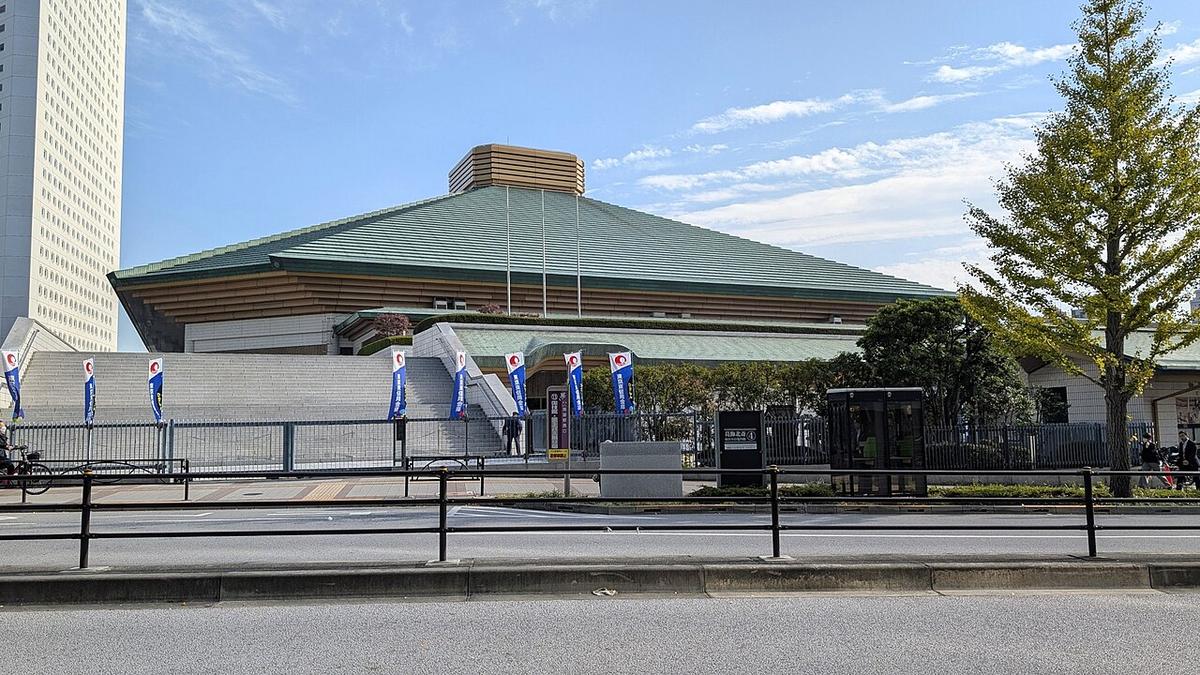
Tokyo: Ryogoku Kokugikan seat and price table
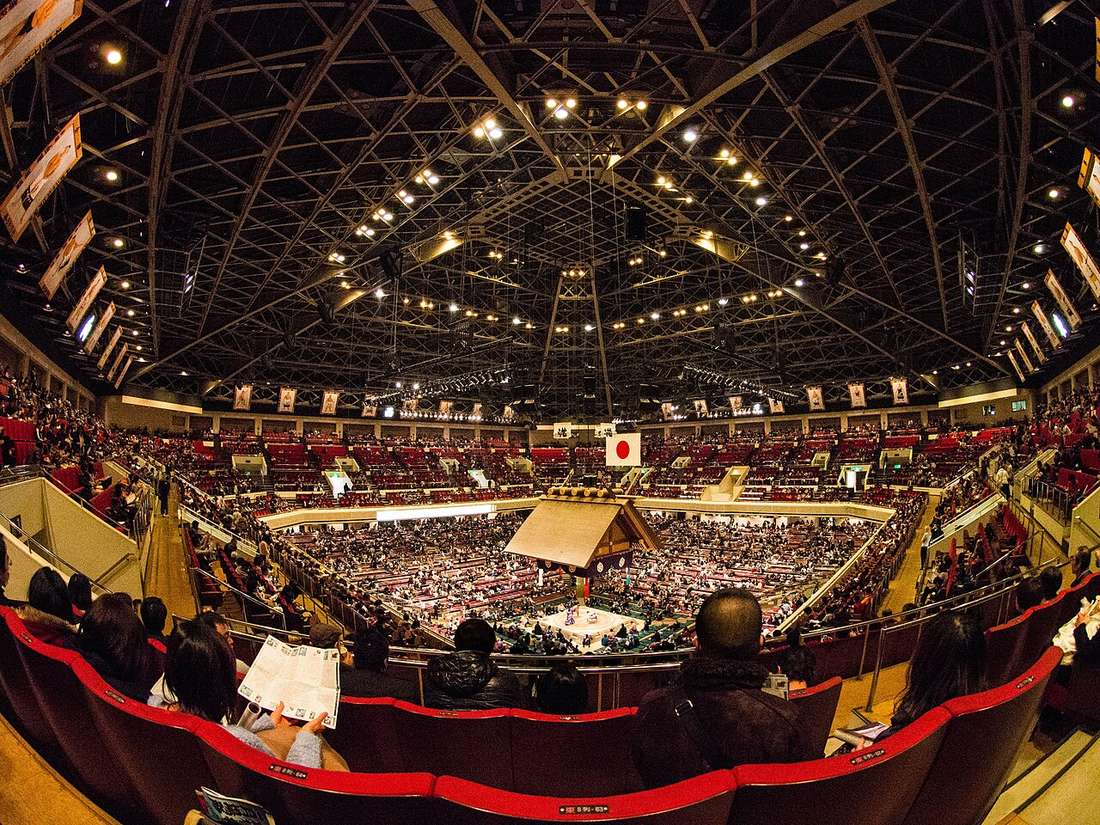
These are the official prices for the September 2026 (Reiwa 8) tournament, from the official pricing page, verified 2026-08-08. Prices are set per tournament, so re-check for the one you are attending. Tokyo's layout: first floor is tamari and masu boxes, second floor is chair seating.
| Seat | Location | Weekday | Weekend / holiday | Notes |
|---|---|---|---|---|
| Chair D (adult) | 2F row 14 (back row) | ¥2,500 (same every day) | Cheapest in the arena; online only, QR ticket only | |
| Chair D (child) | 2F row 14 | ¥500 (ages 4–15) | The cheapest way anyone gets in | |
| Chair C | 2F rows 12–13 | ¥3,500 | ¥4,000 | What the PDF wrongly presents as the Tokyo minimum |
| Chair B | 2F rows 7–11 | ¥5,000 | ¥5,500 | A 4-seat Kids voucher version exists (needs an under-15 companion) |
| Chair A | 2F rows 4–6 | ¥8,000 | ¥8,500 | |
| Chair S | 2F rows 1–3 | ¥9,000 | ¥9,500 | Front of the second tier |
| Masu C | 1F rows 13–15 | ¥8,500 pp | ¥9,500 pp | Sold by the box; 1/2/3/4/6-person versions |
| Masu B | 1F rows 9–12 | ¥10,000 pp | ¥10,500 pp | 1- through 6-person boxes available |
| Masu A | 1F rows 5–8 | ¥12,000 pp | ¥13,000 pp | |
| Masu S | 1F rows 1–4 | ¥14,000 pp | ¥15,000 pp | 4-person box 56,000 yen weekday / 60,000 yen weekend |
| Tamari (ringside) | 1F, around the ring | ¥20,000 (same every day) | Age 16+; no eating, no photography — see the seat section | |
| Wheelchair seat | — | ¥8,000 | User plus one companion; phone line only | |
Three official notes that catch people out. Masu boxes are sold as whole boxes (Tokyo splits this into 1-person through 6-person products). Anyone aged four or over on the day needs a ticket. And the page states that special promotional seats may be added — recent examples include a Masu C package with a commemorative photo alongside a wrestler (34,000 yen weekday, 38,000 yen holiday, and the official page notes you do not need to bring a baby to take part) and a Masu C package including four cans of One Cup Ozeki sake at 34,000 yen on weekdays. These change every tournament and apply only on specified days, so check the current tournament page rather than a list from last year.
Fukuoka: Kyushu tournament seat and price table
Official prices for the November 2026 (Reiwa 8) Kyushu tournament at Fukuoka Kokusai Center, from the official pricing page, verified 2026-08-08. Fukuoka stacks differently from Tokyo: tamari and Masu S on the first floor, Masu A across the first and second, Masu B and C on the second, and all chair seating on the third floor.
| Seat | Location / facing | Weekday | Weekend / holiday | Notes |
|---|---|---|---|---|
| Chair C | 3F, east and west | ¥2,000 | ¥2,500 | Cheapest general seat at any current tournament |
| Chair B | 3F, east and west | ¥2,500 | ¥3,000 | The same money in Tokyo buys only the back row |
| Chair A | 3F, reverse side | ¥4,500 | ¥5,000 | You see the referee's back |
| Chair S | 3F, front side | ¥5,500 | ¥6,000 | The television camera angle |
| Masu C | 2F row 11 | ¥8,000 pp | ¥8,500 pp | 3- and 4-person boxes |
| Masu B | 2F rows 9–10 | ¥9,500 pp | ¥10,000 pp | 2- and 4-person boxes |
| Masu A | 1F–2F rows 5–8 | ¥11,000 pp | ¥13,000 pp | Biggest weekday-to-weekend jump on the sheet |
| Masu S | 1F rows 1–4 | ¥13,000 pp | ¥14,000 pp | |
| Tamari (ringside) | 1F | ¥20,000 (same every day) | Age 16+ | |
| Relaxed 2-person Masu C | 2F rows 12–13 | ¥19,000 (2 people) | A 4-person box given to two | |
| Pair seat with table | 2F row 14 | ¥19,000 (2 people) | Also a 4-person box given to two | |
| Kids/Senior Masu B voucher | 2F rows 9–10 | ¥24,000 (4 people) | Needs a companion under 15 or over 60 | |
| Kids/Senior Masu C voucher | 2F row 11 | ¥20,000 (4 people) | Same rule; valid all 15 days | |
| Wheelchair seat | — | ¥10,000 | User plus one companion; by phone | |
Fukuoka's Kids/Senior boxes are the most under-appreciated product in sumo ticketing, because the qualifying companion can be over 60 rather than under 15 — which means a family travelling with grandparents qualifies. At ¥20,000 for four, that is 5,000 yen each for a second-tier box, roughly three thousand yen below the standard rate for the same rows. But the condition is hard: the official page states that if no qualifying person is present you cannot exchange the voucher and cannot enter, and paying the difference on the day is explicitly not allowed.
Tokyo vs Fukuoka: where the real gap is
The line you often read is that Tokyo costs twice what Fukuoka does for the same seat. Recalculated from the actual sales pages, that is only half right — the gap is not in the cheap seats, it is in the middle:
| Comparison | Tokyo (Sep 2026) | Fukuoka (Nov 2026) | Gap |
|---|---|---|---|
| Cheapest general seat | Chair D adult ¥2,500 | Chair C weekday ¥2,000 | 500 yen |
| Chair B (weekday) | ¥5,000 | ¥2,500 | Fukuoka is half |
| Chair A (weekday) | ¥8,000 | ¥4,500 | 3,500 yen cheaper |
| Chair S (weekday) | ¥9,000 | ¥5,500 | 3,500 yen cheaper |
| Tamari | ¥20,000 | ¥20,000 | Identical nationwide |
So the practical advice splits cleanly. If you only want the cheapest way in, Tokyo and Fukuoka are effectively the same — pick whichever fits your route. But if you want a decent chair seat, the Kyushu tournament is materially better value: Fukuoka's weekday Chair A at ¥4,500 puts you on the third tier facing the ring, where the same money in Tokyo buys a mid-to-back second-tier seat. November is also the most comfortable month of the year in northern Kyushu; our Fukuoka travel guide covers how to build the rest of the trip around it.
For Osaka (March) and Nagoya (July) this guide deliberately publishes no prices. At the time of verification the ticket information for the 2027 tournaments had not been released — the official pages read "please wait until ticket information is published" — leaving only the generic PDFs, which we have just demonstrated are unreliable in both directions. We will add those tables once the official pages open, roughly February 2027 for Osaka and May 2027 for Nagoya.
How to buy: the five-stage sales ladder
"Sumo tickets sell out instantly" is the standard complaint. The truth is that what you call general sale is round five — four lottery rounds ran before it. The official order:
| Stage | Round | Who can enter |
|---|---|---|
| 1 | Official Fan Club first pre-lottery | Yokozuna / Ozeki / Sekiwake paid tiers |
| 2 | Official Fan Club second pre-lottery | Adds Komusubi and Maku-uchi tiers |
| 3 | Ticket Osumo pre-lottery | Ticket Osumo (web) |
| 4 | Ticket Pia pre-lottery | Ticket Pia (web) |
| 5 | General sale | Ticket Osumo, Ticket Pia, Seven-Eleven terminals, phone booking |
For an overseas visitor, stages four and five are the realistic entries — the first two need a paid membership that is rarely worth buying for a single tournament. If your dates are already fixed, the Ticket Pia pre-lottery is the round worth entering, because popular days have not yet been swept by the general-sale crowd.
Conditions differ sharply by channel. This table is the most practical thing on the page (using the September 2026 Tokyo tournament as the worked example):
| Channel | Opens | Closes | Watch out for |
|---|---|---|---|
| Web (Ticket Osumo / Pia) | Aug 8, 10:00 | 17:00 on the viewing day | Requires phone-number verification — clear this before you travel |
| Seven-Eleven terminals | Aug 8, 10:00 | 17:00 on the viewing day | Available 24 hours; P-codes 597-181 (masu) and 597-180 (chair) |
| Phone (0570-02-9310) | Aug 8, 10:00 | 18:00 two days before | Lines 10:00–18:00; pay at Seven-Eleven by 23:30 the next day; one call books one date and one seat type |
| Box office | — | — | If the date sells out beforehand, there are no same-day tickets |
| Wheelchair seats | Aug 24, 10:00 | — | Dedicated phone line only |
| Sumo teahouses (annaijo) | — | — | Listed by the association as an official alternative route |
Understand same-day tickets correctly. They exist, sold via web, convenience store and box office, but what they sell is unsold reserved seats, not a cheap day-of category. The association also notes that dates and seat types that sold out during the lottery rounds are not offered at all. Turning up and hoping is a fallback, never a plan — especially at weekends and on the final day.
There is an official English service, TICKET OOSUMO ENGLISH, linked directly from the association's English site. One data point worth knowing: on 2026-08-08 the association's English homepage displayed "Tickets are sold out all dates." for the September tournament — whose advance sale had opened at 10:00 that same morning. That is the state of the English sales page rather than proof that every seat type at the tournament was gone, but the lesson is the same: know the advance sale date and be online for it, rather than starting your search a week before the trip.
Sold out? Use the official face-value resale
After a date sells out, the association still runs a legitimate route to a ticket — it is linked from the association's own homepage and from every tournament page.
It is called teika resale — face-value resale — operated on sumo.pia.jp and linked from the association's homepage and every tournament page. How it works:
- Sellers: anyone holding a QR ticket, or who paid by card and has not yet collected at Seven-Eleven, can list it back into the official system. The fee is 10% of face value, paid by the seller.
- Buyers: you pay the original ticket price plus fees the seller already paid. The official page states plainly that even when a date is sold out, you can buy at face value with confidence.
- Timing: listings open on the Monday after general sale begins (next business day if that is a holiday). They close at 23:59 three days before the viewing date for QR tickets, or 23:59 the day before for uncollected tickets.
So from the Monday after general sale right up to three days out, that pool is live. The right move after a sell-out is not to search for second-hand sumo tickets — it is to bookmark the resale page and check it once a day. Japanese plans change as often as anyone else's, and returns are routine. The same official page carries the warning that tickets obtained through illicit resale may not admit you on the day: the association has given you a front door, and going around the side is your own risk.
Resale rules: the official text, 138 actions, and the exception
Every tournament ticket page carries the identical sentence: ticket resale is prohibited under the Sumo Spectating Contract Terms. But the scope needs stating precisely, or you will over-apply it.
Article 4 of the Sumo Spectating Contract Terms prohibits transferring a ticket to a third party without the organiser's permission, including resale via internet auction — and then adds an explicit exception: this does not apply where the transfer is based on a specific relationship such as family, friends or business associates, is not for the purpose of profit, and is not conducted as a business. The association's own plain-language summary is shorter still: resale conducted for profit and as a business, without association permission, is prohibited.
So the target is commercial, for-profit resale as a trade. If your travelling companion falls ill and you pass their ticket to another friend, the terms contain a written exception for exactly that. The blanket claim that no sumo ticket may ever change hands overstates the rule.
The enforcement side, however, is not theoretical. The association's notice states that across the six 2025 tournaments its measures against illicit resale — suspension of Ticket Osumo memberships, suspension of fan club memberships, and invalidation of tickets with entry refused — totalled 138 cases, and that it identifies sellers by various means including buying listed tickets on secondary sites itself. The same notice tells buyers directly that admission may be refused even if they turn up with a resold ticket.
A separate association notice names platforms as examples — Ticket Ryutsu Center, Ticket Jam, Buy Sumo Tickets, viagogo and stubhub — and states that apart from Ticket Osumo's official face-value resale, the association bears no responsibility whatsoever for tickets acquired by exchange or resale. Those are the association's own words, not my accusation; the practical meaning for you is simply that if it goes wrong there, nobody official is going to help.
The association also lists the disputes it hears most often, which doubles as a checklist of how these purchases fail: the ticket never arrives before the viewing date; the ticket that arrives is for a different date or event and does not admit you; the seller claims the purchase screen is enough and no ticket ever comes; and — the one that specifically catches groups — someone buys a four-person masu box and receives a single ticket. The official clarification is that a four-person box issues four tickets, and every person entering must hold their own.
To be fair to the legitimate market: Ticket Osumo, Ticket Pia, Seven-Eleven, phone booking and the sumo teahouses are all official routes, and a properly assembled tour-operator package is a separate matter again. This section is about the secondary market, not about third parties in general.
What happened to unreserved seating
A line that has outlived its accuracy: "queue at the Kokugikan box office in the morning for a cheap unreserved seat." That system existed. It has not for several years.
No guesswork is needed, because the association documented it. The price-revision document dated 25 July 2019 (headed "tournament admission prices, applicable from the May 2020 tournament, tax included") lists the changes verbatim, and among them is the line "part of the unreserved seating becomes D", alongside a note that the front-side unreserved seating became Chair C. In the same document, unreserved seating was still on the price table at that moment — 2,000 or 2,500 yen for adults, 100 yen for children — so it was not cut in May 2020; it disappeared at some point afterwards.
By 2026, none of the four venue price lists and neither of the two open tournament sales pages carries the category. And the row numbers match exactly: the old unreserved block sat in row 14, and row 14 of the Tokyo second tier is now the reserved Chair D seat at ¥2,500 for adults and ¥500 for children, sold online only and issued as a QR ticket only. Tokyo's official seating explainer lists just four categories: tamari, masu, chair and wheelchair.
Now the honest caveat. The association has never published a notice abolishing unreserved seating, and the 2012 contract terms still contain the phrase in Article 8, in a clause banning the practice of holding unreserved seats or standing spots you do not need. That old clause cannot be used to argue the category still exists today, but it does show the association never scrubbed the word from its rulebook. So this guide's formulation is deliberate: not "abolished", but "no longer present on the current official price lists, with its position and price band now served by the reserved Chair D seat".
The practical consequence is one sentence: do not build an itinerary around queueing for a cheap ticket on the morning. Same-day sales release unsold reserved seats only, they stop when a date sells out, and the cheapest seat of all is not sold at the window at any point. For the wider category of plans that fail this way, see our roundup of the mistakes first-time visitors to Japan make.
Tournament calendar: 2026, 2027, 2028
The structural facts, all from the official annual schedule (verified 2026-08-08): six tournaments a year, fifteen days each, opening and closing days always Sundays, and advance sales always opening on a Saturday. The rankings (banzuke) are published about two weeks before day one.
| Tournament | Venue | Advance sale opens | Day 1 | Final day |
|---|---|---|---|---|
| 2026 | ||||
| September | Ryogoku Kokugikan | 2026/8/8 (Sat) | 2026/9/13 (Sun) | 2026/9/27 (Sun) |
| November (Kyushu) | Fukuoka Kokusai Center | 2026/9/19 (Sat) | 2026/11/8 (Sun) | 2026/11/22 (Sun) |
| 2027 | ||||
| January (Hatsu) | Ryogoku Kokugikan | 2026/12/5 (Sat) | 2027/1/10 (Sun) | 2027/1/24 (Sun) |
| March | Edion Arena Osaka | 2027/2/6 (Sat) | 2027/3/14 (Sun) | 2027/3/28 (Sun) |
| May | Ryogoku Kokugikan | 2027/4/10 (Sat) | 2027/5/9 (Sun) | 2027/5/23 (Sun) |
| July | IG Arena, Nagoya | 2027/5/15 (Sat) | 2027/7/11 (Sun) | 2027/7/25 (Sun) |
| September | Ryogoku Kokugikan | 2027/8/7 (Sat) | 2027/9/12 (Sun) | 2027/9/26 (Sun) |
| November (Kyushu) | Fukuoka Kokusai Center | 2027/9/18 (Sat) | 2027/11/14 (Sun) | 2027/11/28 (Sun) |
2028 is published too, if you plan far ahead: January 1/9–1/23 (advance sale 2027/12/4), March 3/12–3/26 (2/5), May 5/14–5/28 (4/8), July 7/9–7/23 (5/20), September 9/10–9/24 (8/5), November 11/12–11/26 (9/16).
The two dates that matter right now: for the November 2026 Kyushu tournament, advance sales opened on 2026/9/19; for the January 2027 Tokyo tournament — the New Year basho, which lands inside a lot of people's winter trips — advance sales open Saturday 5 December 2026. Set a reminder now. If you are slotting it into a Tokyo trip, our five-day Tokyo itinerary is a ready-made frame.
One clarification: jungyo regional tours are not honbasho. They are exhibition events held between tournaments, with a separate ticketing system and pricing that this guide has not verified. Do not treat the two as interchangeable. And if your travel dates land in one of the six months without a honbasho (February, April, June, August, October, December), the easiest substitute for "watch a live match" is professional baseball — the NPB season runs late March to October, and Tokyo Dome seats start at ¥2,000 with Koshien outfield from ¥1,700, a far lower barrier than sumo and rarely requiring a two-month head start.
Why 2pm is enough: the official ring schedule
Here is the section that will change how you spend the day. Using the official Tokyo September schedule — which the association itself labels as approximate rather than exact:
| Time | What happens |
|---|---|
| Doors 8:45 | 10:30 on days 13–14; 10:00 on the final day |
| c. 9:20 | Jonokuchi through makushita bouts (9:10 on day 1; from c. 11:00 from day 13) |
| c. 13:00 | New-recruit presentation (middle day) |
| c. 14:15 | Juryo ring-entering ceremony (14:05 on day 1) |
| c. 14:35 | Juryo bouts |
| c. 15:40 | Makuuchi ring-entering ceremony (15:30 on day 1; east side on odd days, west on even) |
| c. 15:55 | Yokozuna ring-entering ceremony |
| — | Intermission; the head referee announces the next day's bouts |
| c. 16:05 | Makuuchi bouts (komusubi, sekiwake and ozeki after 17:00) |
| c. 17:15 | Three-ranks stomping ceremony (final day only) |
| c. 17:55 | Bow-twirling ceremony, after the final bout |
| c. 18:00 | Finish; award ceremony on the final day |
Read that table and the trade-off is obvious: the whole highlight reel is compressed into the last three and a half hours — juryo entrance, makuuchi entrance, yokozuna entrance, top-division bouts, bow ceremony. Arrive in the morning and you get the lower divisions in a near-empty hall. That has its own appeal if you want photographs of an empty arena or to watch young wrestlers work without a crowd, but if you have anything else on that day, a 2pm arrival costs you nothing with a name attached.
Which supports the money conclusion too: buying the cheapest seat and arriving late loses far less than people assume. Sumo is not a sport where the front row hears something the back row misses — the ring sits in the centre and the second or third tier gives you the full ceremony and the whole atmosphere of the hall. Spend the difference on chanko and a rikishi bento instead.
Choosing a seat: tamari rules and masu rules
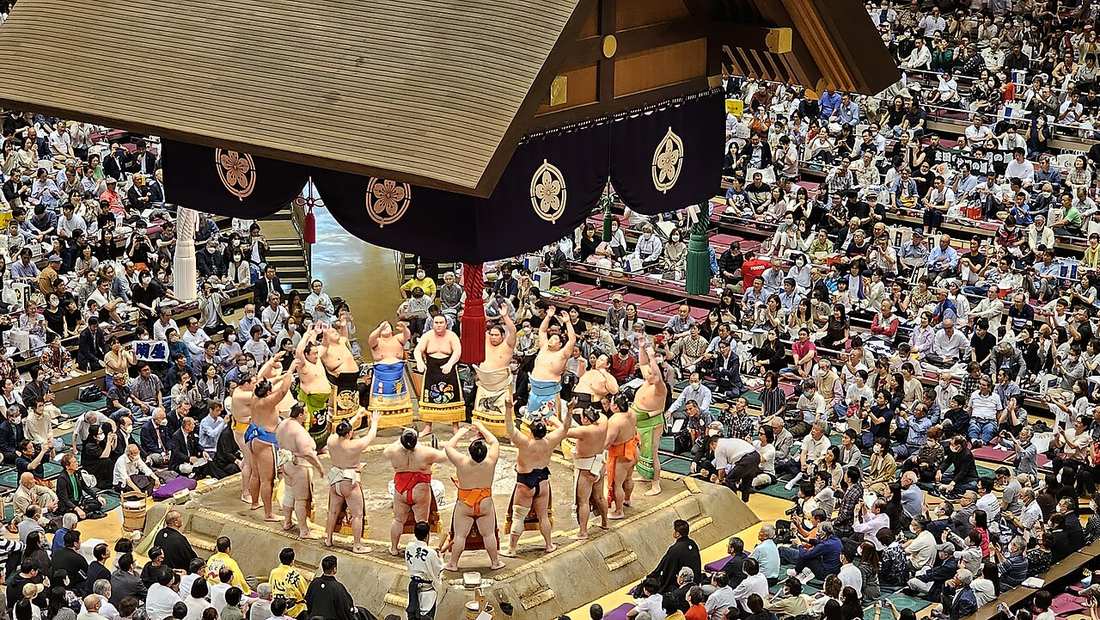
Prices aside, the real question is which seat suits you. Start with orientation, which the official seating page sets out:
- Shomen (front): the official text says this is the same direction you see on television. Pick this if you want the familiar image.
- Mukojomen (reverse): the opposite direction to the television angle — you see the referee's back.
- East and west: you see the back of the east or west wrestler. Fukuoka's cheapest chair seats sit here, which is exactly why they are cheap.
The association also publishes a Kokugikan seat-view tool showing the actual sightline from each block. Five minutes with that beats reading ten guides.
Tamari (ringside): the most expensive seat, and the wrong one for most visitors
A flat 20,000 yen nationwide, right against the ring, and instinctively the VIP option. But the official notice on tickets and spectating spells out the conditions in one dense clause, and there are eight of them:
- The association warns explicitly that the risk of a wrestler or referee falling from the ring, or of objects flying in, is very high, and spectators must take care to avoid harm
- Compensation for injury is limited to direct damages such as medical costs, excluding lost earnings and other indirect or special damages
- No shoes, no eating or drinking, no dangerous items
- No touching wrestlers, referees or judges, and no shouted encouragement or calling out
- No photography without organiser permission
- No mobile phone use, and no moving or standing during bouts
- Age 16 and over only
- No use by anyone unable to respond to danger
The seating page adds two more: you sit on a floor cushion, one per person (the nickname is sunakaburi, "sand-covered"), and you may not bring your own legless chair. It also states that while first aid is available on site, no subsequent compensation will be entertained.
The verdict is blunt: if you want to eat while you watch, take pictures, bring a child, or avoid two hours cross-legged on a cushion, tamari is the worst 20,000 yen in the arena. It suits the committed fan who wants the physical shock of the collisions and will happily sit still and phoneless. Everyone else does better with a second-tier chair seat plus a proper meal.
Masu boxes: the most authentic format, and the most rules
One box measures 1.3 metres square, bounded by steel piping with cushions inside — this is the classic sumo-watching format. The official rules: no shoes, no exceeding the stated capacity, no crossing the box partitions, and no entering or moving into an adjacent box. Squeezing five people into a four-person box is expressly prohibited, so do not plan on it.
Three more answers from the official FAQ: legless chairs are allowed, but not if they obstruct the view of people behind you; shoes go in the storage space behind your own seat, as do umbrellas; and you cannot watch from a wheelchair in a masu box — that requires the dedicated wheelchair seat.
On the day: QR tickets, children, re-entry, bags
QR tickets: a screenshot will get you turned away
Two sentences of official text, worth reading exactly as written: tamari seats and Chair D seats (adult and child) are issued as QR tickets only, and entry will be refused for anyone arriving with an unallocated ticket, a screenshot, or a printout. The spectating notice adds that where a group holds QR tickets, each ticket must be distributed to each individual before arriving at the gate.
In plain terms: Tokyo's cheapest seat is QR-only, and if you are the person who bought all the tickets, you must transfer each one to your companions' accounts before you get to the entrance. Screenshots do not work. Printouts do not work. This is the failure people discover standing at the gate with no signal and half their group stuck outside.
Which makes this one of the few genuinely connectivity-dependent moments of a Japan trip: QR tickets load live, and the distribution step happens on your phone. If you are not planning on roaming, sort data before you fly — our Japan travel essentials guide compares the options.
Age, re-entry and ticket stubs
- A ticket is required from age four on the day of viewing; under-fours are free. The Tokyo Chair D child ticket at ¥500 is the cheapest admission anywhere in the building.
- Re-entry is permitted once per day: the official wording asks you to carry your stub, which staff will check. Keep it if you want to step out for a meal.
- Keep the stub until you leave. Article 2 of the terms requires you to hold it from entry to exit and present it on request.
- Lost tickets cannot be reissued, and without one you cannot enter. There is no exception.
- You may only watch from your own seat. The notice states that spectating is permitted only in the seat or place printed on the ticket, and nowhere else — empty seats nearby are not an invitation.
Food, bags, photography and cheering
- You can eat at your seat — except in tamari. The official line is that eating and drinking at the seat is possible other than in tamari seats. The association also asks you to refrain from bringing food and drink in, which is a request rather than a ban.
- Glass bottles and cans are on the prohibited list. Article 5 bans firearms and blades, fireworks and firecrackers, toxic substances and other dangerous items, anything producing severe odour or disruptive noise, bottles, cans, cool boxes and similar, pets other than guide and hearing dogs, and items used to hoard seating. Plastic bottles are not on that list. Article 5(2) also gives the organiser the right to inspect bags at entry.
- Bags: coin lockers sit in the first-floor east and west corridors and outside, and there is a Yamato cloakroom on the first floor front side, 800 yen, 10:00–18:00, which can also ship luggage onward.
- Photography is fine; flash is not. General seating carries no photography ban (only tamari requires permission), but Article 8 prohibits obstructing others' view with flash or lights.
- Individual cheering is welcome. Article 9 bans unauthorised instruments (trumpets, drums, flutes, metal noisemakers), banners and flags, and organised group cheering that marshals the crowd. The association's own schedule page describes the crowd calling out "yoisho!" as the yokozuna stamps — join in.
- 🚫 Do not throw your cushion. It is a famous scene, but the official notice states plainly that it risks injury and asks you not to.
- 🚫 Do not wait outside to catch wrestlers. The association asks visitors to refrain from waiting for arrivals and departures around the venue, as it disturbs the neighbourhood.
- There is no dress code — but there is an upside: the association runs "kimono day" events where visitors in kimono, yukata, samue or jinbei receive a gift and can join a photo session with a referee. The days are announced per tournament, so never reuse last year's dates. For general venue and public etiquette in Japan, see our Japan etiquette guide.
The Kokugikan and the Sumo Museum
The Tokyo venue is Ryogoku Kokugikan (1-3-28 Yokoami, Sumida-ku), capacity 11,098. Access: 1 to 2 minutes on foot from the west exit of JR Ryogoku station — the association's own access page says two minutes and its overview page says one, so we quote the range rather than pick — or 5 minutes from Ryogoku on the Toei Oedo subway line. The overview page adds roughly 10 minutes from Tokyo or Ueno stations and 17 from Shinjuku.
One hard rule: the Kokugikan has no car park. The official text asks visitors to use public transport. Driving there is a dead end.
The bonus attraction is the Sumo Museum, on the first floor of the arena, and admission is free. Two conditions matter, though. First, during a tournament you need that day's match ticket to get in, because the museum sits inside the arena. Second, it is closed on Saturdays, Sundays and public holidays (with exceptions), plus the New Year period and exhibition changeovers, and its opening days are published on a rolling calendar. Hours are 10:00–16:30 outside tournaments (last entry 16:00) and 12:30–16:00 during them. Check the official museum calendar before you go — the verification date for this guide, Saturday 8 August 2026, was itself a closed day. The single display room is only 150 square metres, so calibrate expectations: it is a well-curated stop, not an afternoon.
Collectors get a small bonus: the museum houses the Nomi no Sukune Shrine reception desk (inside the display room, 12:30–16:00 across the 15 tournament days), offering talismans and amulets, and the official note states that goshuin seals are issued in limited quantities, to ticket-holding visitors only. Three conditions stacked — tournament period, ticket in hand, limited numbers — so treat it as a bonus if it works out, not a reason to make the trip.
Eating at the arena: chanko, yakitori, rikishi bento
Half the pleasure of a sumo day is the food inside the building. The figures below come from the official Kokugikan food page, which labels itself as information for the May 2026 tournament — items and prices change every tournament, so treat them as the right order of magnitude rather than a guarantee:
| Item | Price | Where and when |
|---|---|---|
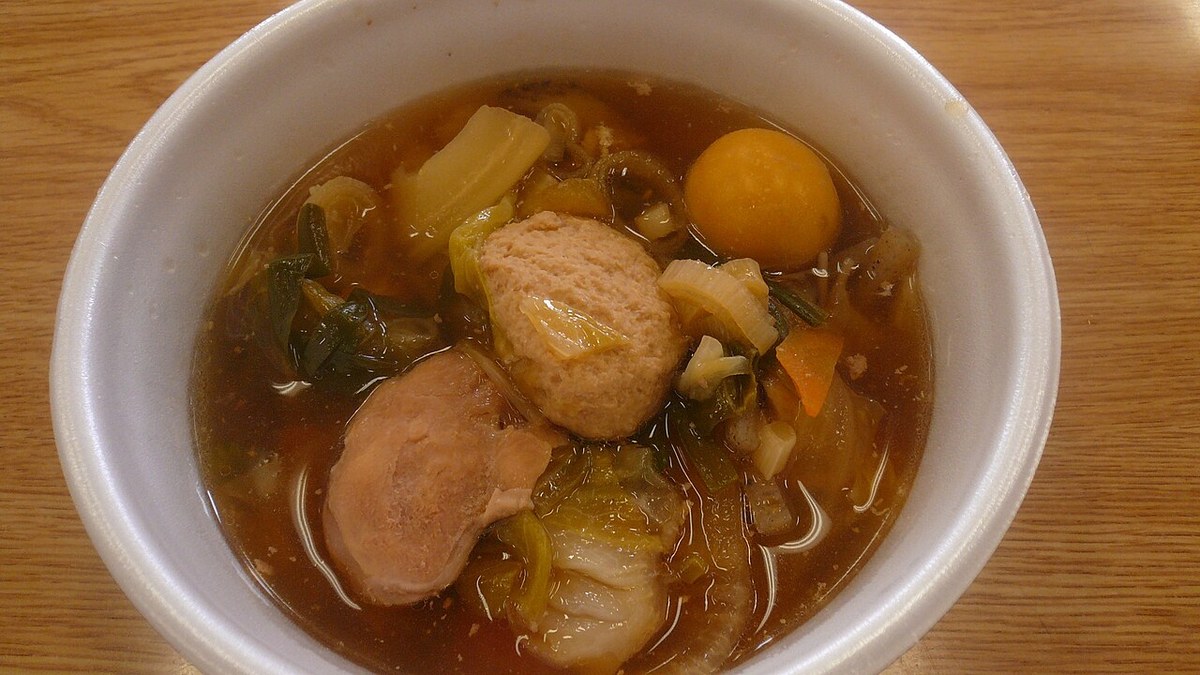
| Special chanko | 500 yen | B1F great hall, 11:00–16:30. The association calls it the number-one seller at over 2,000 bowls a day |
| Kokugikan yakitori (5 skewers: 3 meat, 2 tsukune) | 850 yen | Kokugikan Cafe (2F west) and the food stands; official figure of 45,000 skewers a day on average |
| Rikishi bento (several kinds) | 1,350 yen each | Limited quantities; they sell out early |
| Draught beer | M 600 yen / L 800 yen | |
| Soft serve ice cream | 500 yen | |
| Sumo capsule toys | 500 yen per go | Needs five 100-yen coins; 10:00–17:00 weekends and holidays, 11:00–17:00 weekdays |
Chanko comes with two official rules, and they happen to be a good model: eat it inside the great hall, and it may not be taken out. Buy it, sit down in the basement hall, finish it, then go back to your seat — do not try to carry it away. The origin is official too: chanko nabe became the sumo stable's staple in the Meiji era because it fed large numbers cheaply while staying nutritionally balanced.
The yakitori has a reason to exist as well. A wrestler loses the moment a hand touches the ground, and a bird stands on two feet — so chicken is considered auspicious; the association dates its rise as an arena speciality to the Kuramae Kokugikan era, about sixty years ago. The official page notes it is designed to taste good cold, which makes it a decent late-night snack back at the hotel.
The stable responsible for the chanko and its seasoning rotates every tournament (in May 2026 it was Otowayama stable, soy-based for days 1–8 and salt-based from day 9), so it is a slightly different bowl each time. As for the chanko restaurants around Ryogoku station, the association publishes no list and this guide does not lift restaurant names from blogs — the 500-yen bowl inside the arena is the only verified anchor here.
Morning practice and stable visits
The honest answer: this is not something the association operates as a system. The Japan Sumo Association website has a stables directory listing names and addresses, but no visiting procedure, no times, no booking method and no fee — because those are decisions each stable makes for itself. The rules, whether overseas visitors are accepted, and whether a guide must broker it all vary, and many stables are simply not open. The morning-practice tours sold online are arranged privately by operators; they are not an official programme.
The one practice viewing the association opens to the public is the occasional public session of the Yokozuna Deliberation Council's general practice, held at Ryogoku Kokugikan and free of charge. It is an irregular annual event, however, so check the official announcements for the year rather than writing it into a fixed itinerary.
This guide names no stable and quotes no visiting fee, because there is no official source for either. If you genuinely want to see practice, the right approach is to watch the association's announcements before you travel, or work with an operator that holds a real arrangement — not to turn up at an address you found in a blog post from several years ago.
If you take the operator route, two morning-practice tours were listed on GetYourGuide as of September 2026. Both take you into a working stable to watch real practice rather than a staged show; they differ in how you sit, how long it runs and whether there is expert commentary:
| Operator | What you get | Meeting point | Length | Worth knowing | Book |
|---|---|---|---|---|---|
| Japan Shine Tour | A sumo journalist explains as you watch, with an interpreter guide; the tour then continues on foot to Ryogoku Kokugikan | 7:30 (confirm with your booking), by Exit A2 of Ryogoku Station on the Toei Oedo Line; the guide holds a black flag | About 3 hours | You sit on floor cushions or chairs, and must not stretch your legs out with the soles of your feet toward the wrestlers. Free cancellation up to 24 hours ahead | GetYourGuide |
| MagicalTrip | Chair seats set right in front of the practice ring, with a chance of a photo with a wrestler at the end | Exit A1, Kiyosumi-Shirakawa Station (start time confirmed with your booking) | About 2 hours | A good fit if sitting on the floor is hard. The GetYourGuide listing excludes children under 12, while the same tour on another platform says 6 and over, so ask the operator before booking with kids. Free cancellation up to 24 hours ahead | GetYourGuide |
What both share: a stable is not a tourist venue. Whether practice happens on the day is the stable's call, and if it is cancelled the tour goes with it (MagicalTrip's listing states a full refund in that case). Keep quiet throughout and take any calls outside. What you are buying is an arrangement between the operator and a stable, not an association programme, so the rules of the tour you book are the ones that apply.
A checklist you can actually follow
- Pick the tournament first. Want a good seat cheaply? Kyushu in November. Already based in Tokyo? January, May or September at the Kokugikan.
- Diarise the advance sale date. January 2027 opens Saturday 5 December 2026; advance sales always open on a Saturday.
- Clear phone-number verification before you fly. Both Ticket Osumo and Pia require it for online purchases, and doing it under time pressure is how people miss the window.
- If it sells out, work the official face-value resale daily from the Monday after general sale until three days before your date. Do not go to the secondary market.
- Buy the cheapest seat and arrive at 2pm. The juryo ring-entering ceremony starts around 14:15; everything after that is the reason you came.
- Distribute QR tickets before you reach the gate. One per person, in their own account. Screenshots and printouts are refused.
- Eat the chanko in the basement hall before going back up. 500 yen, dine-in only, no takeaway.
The limitation worth stating: every price, date and rule here was verified against official pages on 2026-08-08, and prices are set per tournament. The 2027 Osaka and Nagoya pricing pages had not been published at the time of writing, which is why those two venues carry no figures above. Check the pricing page for your specific tournament before you buy — do not reconcile against this guide, or any other, at the counter.
Frequently Asked Questions
- Q1:How much does a sumo ticket actually cost?
- Far less than the ringside seats suggest. At Ryogoku Kokugikan in Tokyo the cheapest general seat is Chair D, in the very back row of the second tier (row 14): 2,500 yen for adults, 500 yen for children aged 4 to 15, and the price does not change between weekdays and weekends. The Kyushu tournament in Fukuoka goes lower still — Chair C on the third tier, east and west sides, is 2,000 yen on weekdays and 2,500 yen at weekends. Both figures come from the Japan Sumo Association tournament-specific pricing pages, not from an estimate. One trap worth knowing: the association also publishes a set of generic reference price-list PDFs, and the Tokyo PDF does not list Chair D at all. Anyone working from that PDF concludes the cheapest Tokyo seat is 3,500 yen. Chair D also carries two conditions: it is sold online only, not at convenience stores, by phone or at the box office, and it is issued as a QR ticket only.
- Q2:Can I buy sumo tickets from a third-party reseller site?
- Separate two things here. Official channels include Ticket Osumo, Ticket Pia, Seven-Eleven store terminals, phone booking, and the sumo teahouses (sumo annaijo) that the association itself lists as a purchase route; a legitimate package booked through a travel operator is a different matter again. But the association is blunt about the secondary market. Every tournament ticket page carries the same line: ticket resale is prohibited under the Sumo Spectating Contract Terms. The association published its enforcement record for 2025: across all six tournaments it took 138 actions, comprising suspension of Ticket Osumo memberships, suspension of fan club memberships, and invalidating tickets with entry refused at the gate. A separate notice names platforms as examples, listing Ticket Ryutsu Center, Ticket Jam, Buy Sumo Tickets, viagogo and stubhub, and states that apart from Ticket Osumo official face-value resale, the association accepts no responsibility whatsoever for tickets obtained by exchange or resale. In plain terms: you may be paying for a ticket that does not get you in.
- Q3:What do I do if the tournament is sold out?
- There are two routes, and only one is a plan rather than a gamble. The reliable one is the official face-value resale (teika resale) run on sumo.pia.jp, the association-linked ticketing site. Buyers can purchase released tickets at the original price — the official page says outright that even when a date is sold out, you can buy at face value with confidence. The seller pays a fee of 10 percent of the ticket face value; the buyer pays the original price plus fees the seller has already covered. It opens on the Monday after general sales begin (rolling to the next business day if that is a holiday), and listings close at 23:59 three days before the viewing date for QR tickets, or 23:59 the day before for tickets not yet collected. Bookmark that page and check it daily before your trip. The second route is same-day tickets, but understand what they are: leftover reserved seats, not a cheap day-of seat category. The official wording is that if a date sells out beforehand, there are no same-day tickets, and dates or seat types that sold out in the lottery rounds are not sold on the day either.
- Q4:Is there still a cheap unreserved seat you can queue for on the morning?
- That system existed, but it has been gone for several years. The evidence comes from the association itself. In a price-revision document dated 25 July 2019, unreserved seats (jiyuseki) were still on the table at 2,000 or 2,500 yen for adults and 100 yen for children — and the same document lists, among the changes, the line "part of the unreserved seating becomes D". In other words the association states in its own paperwork that some unreserved seating was converted into a D-category seat. By 2026, none of the four venue price lists and none of the tournament-specific sales pages carry an unreserved seat category at all. The row numbers line up exactly: the old unreserved block was row 14, and row 14 of the Tokyo second tier is now the reserved Chair D seat at 2,500 yen for adults and 500 yen for children, sold online only, QR ticket only. To be precise about what is not known: the association has never issued a notice abolishing unreserved seating, so this guide does not say abolished. It says the current official price lists no longer contain the category, and its old position and price band are now served by Chair D. The specific unreserved fare figures still circulating online come from an official leaflet that has since been taken offline and cannot be verified, so they are not repeated here.
- Q5:What time should I arrive at the Kokugikan?
- Two in the afternoon is enough, and that is probably the single most useful conclusion in this guide. Using the official schedule for the Tokyo September tournament — which the association itself labels approximate — doors open at 8:45, but the morning bouts are the lowest divisions, from jonokuchi up through makushita, in a largely empty hall. Everything with a name attached happens in the final three and a half hours: the juryo ring-entering ceremony around 14:15, juryo bouts around 14:35, the makuuchi ring-entering ceremony around 15:40, the yokozuna ceremony around 15:55, makuuchi bouts from around 16:05 with the sanyaku ranks after 17:00, and the bow-twirling ceremony around 17:55, finishing near 18:00. On the final day there is also the three-ranks stomping ceremony around 17:15 and the award ceremony. So buy the cheapest seat, arrive at two, and you miss nothing. Note the doors themselves shift by day: for the Tokyo September tournament, 8:45 from day 1 to day 12, 10:30 on days 13 and 14, and 10:00 on the final day.
- Q6:Are the ringside tamari seats worth ¥20,000?
- They are the most expensive seats in the building and, for most visitors, the ones to avoid. Tamari seats cost a flat 20,000 yen at every venue and sit right against the ring. The official notice on tickets and spectating devotes an entire clause to them, and the list of prohibitions is long: no shoes, no eating or drinking, no dangerous items, no touching or calling out to wrestlers, referees or judges, no photography without organiser permission, no mobile phone use, no moving or standing during bouts, minimum age 16, and no use by anyone unable to react to danger. The association also warns explicitly that the risk of a wrestler or referee falling from the ring, or of objects flying in from elsewhere, is very high, and that compensation for injury is limited to direct damages such as medical costs. The seating page adds that you sit on a cushion on the floor, one person per cushion, and may not bring your own legless chair. So: if you want to eat a bento while you watch, take photographs, bring a child, or simply not sit cross-legged on the floor for two hours, this is the worst seat in the house at the highest price. Put the money into a second-tier chair seat and lunch instead.
- Q7:Do children need tickets, and what family facilities exist?
- The rule is that anyone who is four or older on the day of viewing needs a ticket; under-fours are free. Helpfully, the Tokyo Chair D child ticket is 500 yen, which is the cheapest way anyone gets through the door. On facilities, the Kokugikan basement level around the great hall has a women-only nursing space with a feeding pillow, nappy-changing mats stocked with a bin, plastic bags and wipes, and a feeding area with two children's chairs where solids can be given — note there is no hot water and no microwave. It runs from doors open until 17:30. Pushchair parking is provided in the first-floor front corridors on both the east and west sides and on the second-floor corridor beside the information desk, and the official FAQ states pushchairs may be used up to the edge of the seating area. One thing to check carefully: the Kids seats in Tokyo and the Kids/Senior seats in Fukuoka are sold as exchange vouchers requiring a qualifying companion aged 4 to 15 (in Fukuoka, 60 or over also qualifies). The 2026 November tournament page is unambiguous — if no qualifying person is present you cannot exchange the voucher and cannot enter, and paying the difference on the day is not permitted.
- Q8:Can I watch morning practice or visit a sumo stable?
- The honest answer is that this is not something the association operates as a system. The Japan Sumo Association website has a stables directory listing each stable's name and address, but it contains no visiting procedure, no times, no booking method and no fee, because those decisions belong to each stable individually — the rules, whether foreign visitors are accepted, and whether a guide is required all vary, and many stables are simply not open to the public. The morning-practice tours sold online are arranged privately by tour operators; they are not an official programme. The one practice viewing the association does open to the public is the occasional public session of the Yokozuna Deliberation Council general practice, held at Ryogoku Kokugikan and free of charge — but it is an irregular annual event, so treat it as something to check against official announcements rather than something to build an itinerary around. This guide deliberately names no stable and quotes no visiting price, because there is no official source for either.
Read next
Japan First-Timer Mistakes 2026: 10 Things to Avoid
What ruins a first Japan trip isn't getting lost — it's cramming the itinerary, buying a JR Pass that no longer pays, assuming cards work everywhere, and not pre-booking the sell-outs. Ranked by how much they actually hurt.
Tokyo 5-day itinerary 2026
A clear 5-day plan: Shinjuku base, two zones per day, honest budget.
Fukuoka Travel Guide 2027: Yatai, Hakata Ramen & Dazaifu
Kyushu's gateway and one of Japan's best food cities — yatai, Hakata ramen, and Dazaifu and Mojiko day trips.
📊 See the 2026 Price Index (JR Pass, DPA, eSIM, Airport Transport) →