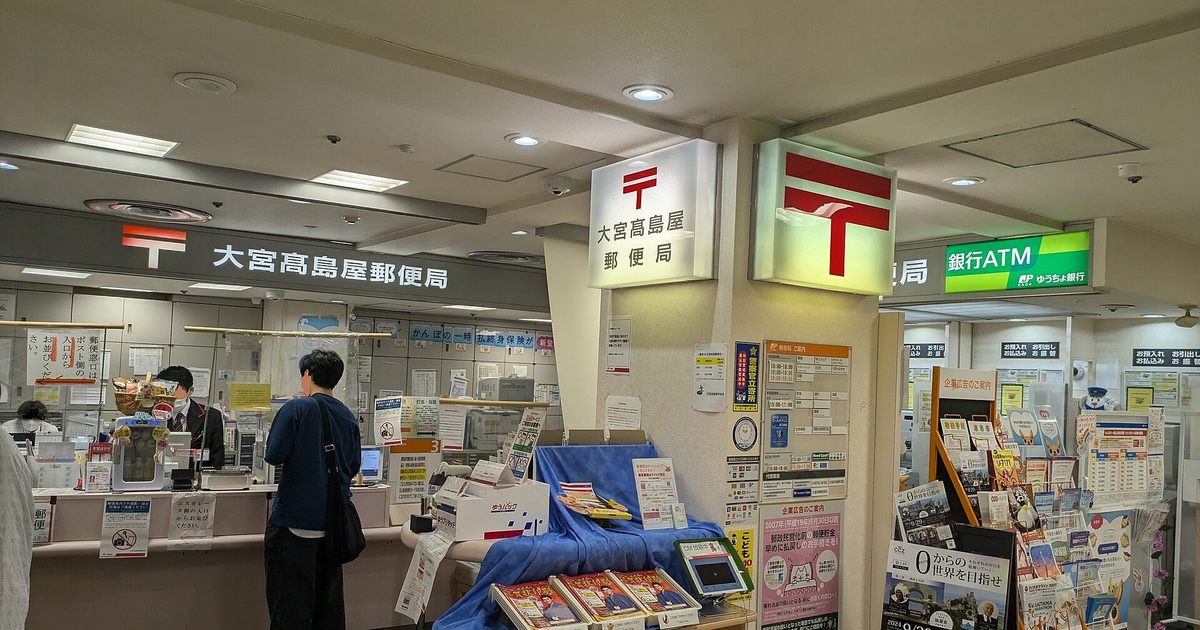
You bought more than fits. Before you queue at a Japanese post office, three things are worth knowing, and all three come straight off Japan Post's own pages. Sea mail costs more than air mail under 1 kg — that is not a typo, it is the published rate table. A power bank cannot be posted by sea either, because Japan Post's ban is written to cover every transport mode, not just aircraft. And SAL to Taiwan has been fully suspended while the fare table still prints SAL prices, so checking the price page first is how people end up at the counter with a parcel that cannot be sent. This guide covers the Japan Post side in full, then the Taiwanese import rules for readers shipping to Taiwan.
Scope: this covers the postal route only — Japan Post's EMS, International Parcel and Small Packet services. I did not check private international couriers, and they are not discussed. Sections 1 and 7 through 12 apply to anyone posting out of Japan; sections 2 through 6 are the Taiwanese import rules and only apply if Taiwan is your destination. What you may legally carry in your hand luggage is a separate regime with different numbers — see Taiwan's customs and quarantine limits for arriving travellers.
- Sea mail under 2 kg is pointless. Small packet by sea costs more than by air at 500 g and 1 kg. Sea only starts paying from about 5 kg.
- SAL to Taiwan is fully suspended — but Japan Post's Zone 1 rate table still lists SAL fares. Check the country conditions page first.
- Power banks, perfume and nail polish are refused by sea as well as air. The ban is written to cover every transport mode.
- Shipping to Taiwan: the duty-free limit is NT$2,000, and going over means the whole parcel is taxed, not just the excess. It was NT$3,000 until January 2018.
- Meat and dairy have no postal channel into Taiwan at all, and the fine of NT$30,000 to NT$150,000 falls on the recipient, repeatably.
📖 Contents (click to expand)
- What does it actually cost to post a parcel out of Japan?
- Shipping to Taiwan: what is the duty-free limit?
- Over the limit: taxed on the excess, or on the whole parcel?
- Was the Taiwanese limit always NT$2,000?
- Does splitting the shipment into two boxes help?
- Can you post meat snacks into Taiwan?
- Power banks, perfume, nail polish: sea mail refuses them too
- What about alcohol and tobacco?
- What about gold, jewellery and watches?
- Can you just fill in a form at the counter?
- SAL is cheaper — can you still use it?
- Can you use a free supermarket box?
- Six things to settle before you pack
- Appendix: official Japanese source text
What does it actually cost to post a parcel out of Japan?
Less than most people assume, and the cheapest service is not the one you would guess at every weight. Taiwan sits in Japan Post's Zone 1, the cheapest band, which is why the numbers below are lower than they would be to Europe or North America.
| Service | Limit | 500g | 1kg | 2kg | 5kg | 10kg | 30kg | Standard days |
|---|---|---|---|---|---|---|---|---|
| Small Packet (air) | 2kg | ¥750 | ¥1,250 | ¥2,250 | — | — | — | 9 days |
| Small Packet (sea) | 2kg | ¥800 | ¥1,300 | ¥2,200 | — | — | — | not published |
| International Parcel (air) | 30kg | — | ¥2,050 | ¥2,750 | ¥4,850 | ¥8,350 | ¥18,350 | 5 days |
| International Parcel (sea) | 30kg | — | ¥1,800 | ¥2,200 | ¥3,400 | ¥5,400 | ¥13,400 | not published |
| EMS | 30kg | ¥1,450 | ¥2,200 | ¥3,400 | ¥6,400 | ¥10,600 | ¥26,600 | 2 days |
Read the day counts the way Japan Post writes them. Two caveats sit directly under the table on the official page: the day you hand the item in is not counted (so a "2" means the day after tomorrow), and the figures are standard days, not a guaranteed delivery time. Sea mail days to Taiwan are absent from all three official tables, so this guide says "not published" rather than repeating the "roughly one to two months" figure that circulates online without a source. One more note on the fares: Japan Post states that Zones 3 and 4 include a special surcharge, which means the Zone 1 figures above do not.
Three conclusions fall out of that table, and none of them match the standard advice.
1. Small Packet stops being the bargain well before its 2 kg ceiling
At 2 kg, Small Packet by air is ¥2,250 against ¥2,750 for International Parcel by air. You save 500 yen and pay for it with four extra days, while sitting right on the weight ceiling where one more sock forces you to repack into a different service anyway. Small Packet's real territory is 1 kg and under: ¥1,250 against ¥2,050, a clean 800 yen saving.
Turn that into an action: weigh the pile before you choose the service. Under 1 kg, take Small Packet. Over roughly 1.2 kg, the gap has thinned to the point where four days is not worth it.
2. Sea mail under 2 kg is a straight loss
This one reads like a transcription error. Small Packet by sea is ¥800 at 500 g and ¥1,300 at 1 kg — both more expensive than air, which charges ¥750 and ¥1,250. Only the 2 kg row is cheaper by sea, by 50 yen, in exchange for a wait whose length Japan Post does not even publish.
Sea mail starts earning its keep from about 5 kg. At 10 kg, International Parcel by sea is ¥5,400, which is 2,950 yen under the air rate of ¥8,350 and 5,200 yen under EMS at ¥10,600. That is the service for a crate of ceramics, cookware or books — not for two bags of snacks.
3. EMS costs money and buys you a week
The 2 kg comparison is the cleanest one on the table: Small Packet by air is ¥2,250 in 9 days, EMS is ¥3,400 in 2. About 1,150 yen for seven days, and EMS is the only option with a realistic chance of arriving before you do. On a trip with two days left and something you need at home quickly, that is money I would spend.
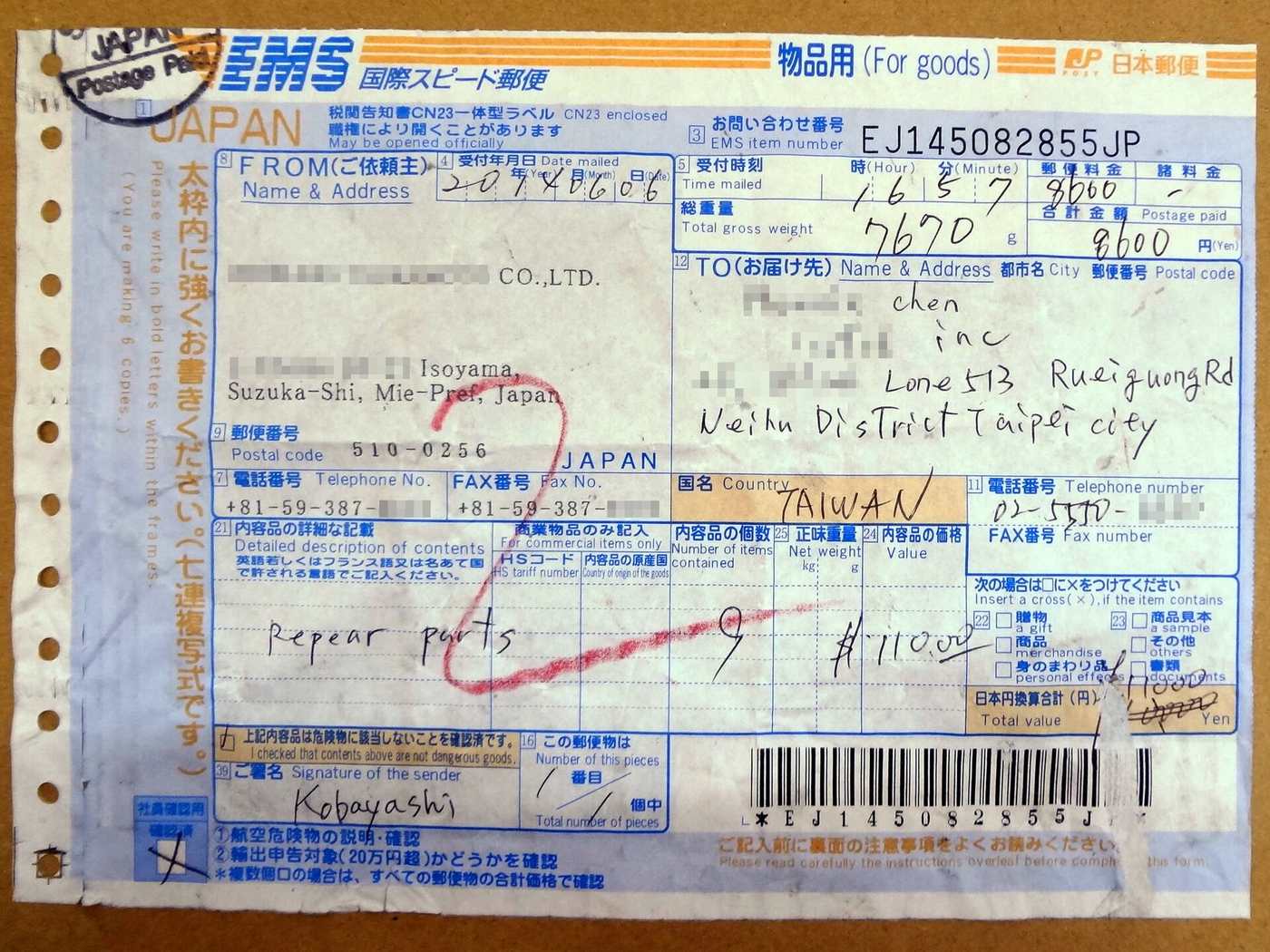
Shipping to Taiwan: what is the duty-free limit?
NT$2,000 of customs value per parcel. That is roughly one mid-range Japanese kitchen knife, or three boxes of drugstore skincare.
The source is Article 7 of Taiwan's Regulations Governing Customs Clearance for Postal Consignments. It lists seven taxes and levies that apply to inbound postal items — customs duty, commodity tax, business tax, tobacco and alcohol tax, the health and welfare surcharge on tobacco, the specifically selected goods and services tax, and the trade promotion service fee — and then exempts only three of them (customs duty, commodity tax, business tax) where the customs value is within NT$2,000.
Two details hide in that sentence. Seven levies listed, three exempted. And paragraph 2 of the same article pulls tobacco, alcohol and tariff-quota agricultural products out of the exemption entirely, at any value — which is the setup for a later section.
Set it beside the hand-carry regime and the gap is almost comic:
| Carried in your luggage | Posted | |
|---|---|---|
| Duty-free allowance | NT$35,000 | NT$2,000 |
| If you exceed it | Tax on the excess portion | Tax on the full amount |
| Animal-product quarantine | You can apply for quarantine on entry | Postal import prohibited — no channel |
| Source | Regulations for inspection of travellers' baggage | Regulations for customs clearance of postal consignments |
The left-hand column, including the 6 kg cap on agricultural and fishery products that catches far more travellers than the money limit does, is covered in how the NT$35,000 allowance actually works. This guide only owns the right-hand column.
One clarification worth making early: NT$2,000 is customs value, not the yen price on your receipt, and how it is assessed is customs' call. So this guide will not tell you whether your particular parcel gets taxed. It gives you the rules and lets you do the reading.
Over the limit: taxed on the excess, or on the whole parcel?
The whole parcel — but the cliff is shorter than the phrasing suggests.
The direction first. Article 8 says that where the customs value exceeds the exemption limit, duties and taxes shall be levied on the full amount. The words "excess portion" do not appear anywhere in it. Now the comparison: Article 12 of the Regulations Governing the Inspection of Incoming Passengers' Baggage says that where a traveller exceeds the allowance, the portion in excess shall be taxed. Two regulations, one clause each, pointing in opposite directions for the same goods.
Now the amount. The rest of Article 8 sends sundry goods to the rate in General Rule 5 of the Customs Import Tariff, and that rate for sundry goods in postal consignments is 5%. What counts as sundry goods is defined backwards in Article 9: the term does not include a single item, or items of the same kind falling under the same tariff heading, whose combined customs value exceeds NT$2,000.
Three tiers, then:
| Your parcel | What happens |
|---|---|
| Customs value NT$2,000 or less | 🟢 Exempt from customs duty, commodity tax and business tax (tobacco, alcohol and tariff-quota farm goods excluded) |
| Over NT$2,000, every single item and same-heading group at or under NT$2,000 | 🟡 Sundry goods: duty at the General Rule 5 rate of 5%, plus business tax and other levies collected by customs |
| Over NT$2,000, with any item or same-heading group over NT$2,000 | 🔴 Not sundry goods: each item taxed at its own tariff rate |
So a parcel assessed at NT$2,001 pays 5% of NT$2,001 in duty — a figure in the low hundreds of NT dollars, not the thousands. The cliff is genuine, since the tax bites on the whole value rather than the overshoot, but it is a low cliff. Do not split one box into three to dodge it: the extra postage outruns the tax, and the next section explains why splitting usually fails anyway.
No total tax figure appears in this guide on purpose. Of the seven levies in Article 7, the base and rate for business tax I did not verify against the Value-added and Non-value-added Business Tax Act, and inventing a headline "you will pay NT$X" number out of an unverified component is exactly the kind of thing that gets copied around for years.
Was the Taiwanese limit always NT$2,000?
No — it was cut from NT$3,000 with effect from 1 January 2018. Articles quoting NT$3,000 are not inventing it. They are quoting the old text.
The 2014 original of Article 7 exempted consignments with a customs value within NT$3,000. An amendment issued on 25 September 2017 revised Articles 7 and 9 through 12, and specified that Articles 7, 9 and 10 would take effect on 1 January 2018. The threshold lost a third of its value, and the sundry-goods definition and the duty-assessment trigger came down from 3,000 to 2,000 alongside it.
There is also a similarly named instrument, the Regulations Governing Duty Exemption for Imported Postal Consignments, that occasionally gets cited as a competing current rule. It was abolished on 7 February 2014, and the regulations quoted throughout this guide were promulgated on the same day. One repealed, one enacted, same date: that is replacement, not coexistence.
Two clauses in that same amendment went the other way
Easy to overlook, and good news if you post things often.
The 2014 text defined "frequent" shipments as two or more within thirty days, or six or more within half a year. The thirty-day half was deleted outright in 2018. The current Article 12 keeps only one test: a recipient who has had more than six consignments released under the exemption within a half-year period loses the exemption.
The aggregation test changed too. The 2014 Article 11 combined consignments arriving from the same dispatch location — effectively, anything posted from the same city. The current text combines consignments from the same sender. If a friend in Japan posts one box and you post another, the old rule might have merged them; the current one does not.
Does splitting the shipment into two boxes help?
Not if they arrive on the same day — and to reset the count, you have to cross into the next half-year period. Two separate rules are working on you here, and only one of them is obvious.
The first is aggregation (Article 11): two or more consignments from the same sender, arriving on the same date, addressed to the same recipient, have their customs values combined. "Same arrival date" is defined as the date the postal authority stamps the dispatch note. Two boxes posted together will usually land together, so they get added up.
The second is frequency (Article 12): more than six exempt releases to the same recipient within a half-year period, and the exemption stops applying. The load-bearing word is "half-year period", which the regulation defines as January to June and July to December — calendar halves, not a rolling six months from your first shipment.
That definition hides a genuinely useful quirk: the count resets at the turn of the year. Sixth parcel in December, seventh in January, and January starts again at one. The same reset sits between 30 June and 1 July.
Worth stating plainly: all of this governs whether the exemption applies, not whether you may ship at all. Exceeding the count simply means that consignment gets taxed. The things that actually get returned or destroyed are in the next section.
Can you post meat snacks into Taiwan?
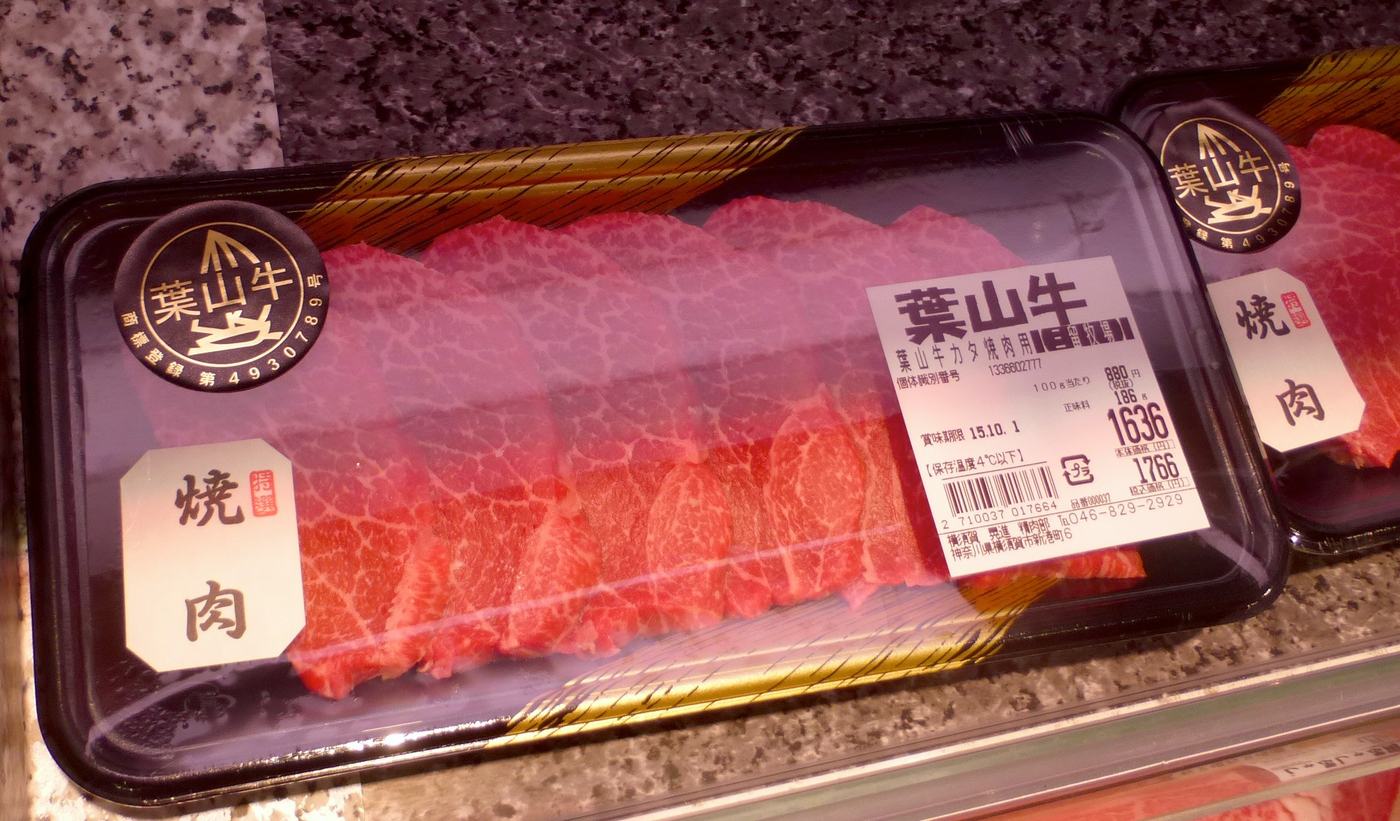
No — and this is not a certificate problem, because there is no postal channel to apply through. Read this section before you buy, not after.
Most people ask this question in the wrong shape. They ask what paperwork is needed. But two separate pieces of primary legislation each contain a clause banning postal import, and the animal side and the plant side are worded differently.
Animal products: no channel, no proviso
Article 34 paragraph 3 of the Statute for Prevention and Control of Infectious Animal Diseases states that quarantine items shall not be imported by post; where they are, they shall be returned, confiscated or destroyed, and the recipient shall immediately submit them to the animal quarantine authority for destruction.
Now paragraph 2 of the same article, covering travellers: passengers and crew carrying quarantine items shall apply for quarantine on entry.
Hand-carry has a declaration channel. Post has an empty cell. The barrier is not high; there is no door. Which is why "I will just get a Japanese health certificate" does not work on this route — no procedure exists to receive it.
And the penalty lands on the recipient, which matters because the person waiting for the parcel is usually family. Under Article 45 subparagraph 13, a recipient who fails to submit posted quarantine items for destruction faces a fine of NT$30,000 to NT$150,000, with a deadline to remedy the situation and, if they do not, repeat penalties. Read that last part twice.
Plant products: two narrow doors
Article 17 paragraph 3 of the Plant Protection and Quarantine Act likewise prohibits postal import of quarantine items, with return or destruction as the outcome, but leaves two provisos: items publicly exempted by the plant quarantine authority from the phytosanitary certificate requirement, and cases where the recipient applied in advance and was approved. Paragraph 4 adds that anything mailed under those provisos must have the contents clearly labelled on the packaging, and the postal authority will notify the recipient to apply for inspection.
| Carried on entry | Posted | |
|---|---|---|
| Animal-product quarantine items | 🟡 Apply for quarantine on entry | 🔴 Postal import prohibited, no proviso |
| Plant quarantine items | 🟡 Apply for quarantine on entry | 🟡 Prohibited in principle, two provisos |
| Who gets fined | The traveller | The recipient |
One limit to be honest about. "Quarantine items" is a category of goods designated by public announcement from the competent authority — it is not a synonym for "all food". So this guide does not print a list of which snacks are and are not mailable; such a list goes stale the moment one designation changes. Check the Ministry of Agriculture's published list for specific products.
Power banks, perfume, nail polish: sea mail refuses them too
Sea mail will not take them either, and Japan Post says so in as many words. The assumption that anything banned from an aircraft can simply travel by boat is the single most common mistake here.
The official wording: goods covered by the IATA Dangerous Goods Regulations cannot be sent by international mail regardless of the category of mail or the mode of transport, with a bracketed note that sea mail will not accept them either.
| Item | Mailable? | Notes |
|---|---|---|
| Power banks, loose lithium batteries | 🔴 No | Refused by both air and sea |
| Lithium battery fitted inside a device | 🟢 Yes | Only if it meets the stated conditions, and only to some countries |
| E-cigarettes | 🔴 No | |
| Perfume, hair tonic | 🔴 No | Flammable liquids |
| Nail polish | 🔴 No | Flammable liquids |
| Lighter fuel, paints | 🔴 No | |
| Alcoholic drinks | ⚪ Two official readings | See the next section |
| Disposable heat packs | 🟡 Conditional | Japan Post publishes a list of 18 approved manufacturers |
The heat pack row deserves a sentence of its own, because it is the only item here with a whitelist. Japan Post maintains a dedicated page titled, in translation, "list of businesses selling disposable heat packs that can be sent by international mail", naming 18 companies (the full list is in the appendix). The reverse inference does not hold: a company missing from the list does not mean a given product is banned, because matching a shelf brand back to its manufacturer needs a separate source that was not checked here. Take the packaging to the counter and ask.
Power banks catch people out badly, because both routes close at once: they cannot go in checked baggage on a flight and they cannot be posted. The airport-security layer, including the watt-hour caps and the liquid rules, is covered in Japan's airport security rules for power banks and liquids. The postal layer is the missing half of that picture — worth settling before you buy one in Akihabara.
What about alcohol and tobacco?
Japan Post contradicts itself on alcohol, and Taiwan taxes it regardless. Neither half of that is encouraging, so this section does not end with a green light.
The Japanese contradiction is on a single page. The summary cards near the top of the prohibited-items page annotate the alcohol card — along with the sunscreen and hair tonic cards — with the qualifier "exceeding 24% alcohol by volume". Further down the same page, the detailed list of flammable liquids includes alcoholic beverages with no qualifier at all. A collapsed note elsewhere on the page says that when sending alcoholic drinks, "the conditions for postal items apply" — and I could not find that separate conditions document as a standalone page.
Since the official page gives two readings, this guide will not pick one, and it will not promise you that sake or umeshu can be posted home. If you want to try, take the bottle to the counter and let staff rule on it. Being turned away is cheaper than being confiscated.
The Taiwanese half has no ambiguity. Article 7 paragraph 2 excludes tobacco, alcohol and tariff-quota agricultural products from the exemption, so those are taxable at any value.
The clause people misread is Article 14 paragraph 2 of the same regulations: imported tobacco and alcohol for personal use, up to 5 litres of alcohol and five cartons (1,000 sticks) of cigarettes, or 125 cigars, or 5 pounds of pipe tobacco, are exempt from the requirement to hold a tobacco and alcohol import business licence. That is an exemption from a licence, not from tax. Two different things, two different articles, same regulations.
Paragraph 1 of the same article has a small but concrete provision for pet owners: imports of pet food up to 6 kg are exempt from the feed import registration certificate.
What about gold, jewellery and watches?
EMS refuses them, registered mail to Taiwan is explicitly excluded, and the last remaining route closed at the end of 2025. This section is new information — it changed less than a year ago.
Japan Post's country conditions page for Taiwan marks "items containing valuables" with a cross, and notes that platinum, gold, silver, pearls, precious stones and similar goods are not handled. The prohibited-items page fills in the rest: valuables cannot be sent by EMS at all; for parcels and ordinary mail other than EMS, they can be sent only where the item is registered or insured, depending on the mail category.
Then the 2025 change: for valuables other than money or documents, handling as registered Small Packet ended on 31 December 2025. The narrow path that existed through Small Packet plus registration is now closed.
Which leaves one answer: carry jewellery and watches with you. They weigh nothing, they take no luggage space, and the hand-carry regime treats them far better than the postal one does.
Japan Post also relays three Taiwanese penalties
The same country conditions page lists three sanctions, written for the sender: false declarations of product name, quantity, weight, contents or value, or a false CN23 customs declaration, attract a fine of two to five times the customs duty or confiscation; enclosing prohibited items brings confiscation plus a fine of three times the item's value; and a blank CN23 bearing a trader's signature is treated as an import for commercial purposes, with a fine of up to NT$30,000.
Label that clearly: these are Japan Post's summary of Taiwanese rules, not the text of Taiwanese law. I did not check the Customs Anti-smuggling Act clause by clause, so no Taiwanese article numbers are cited for them. The direction is useful enough on its own — fill the declaration in honestly.
Can you just fill in a form at the counter?
No, hand-written labels are not accepted — but you do not need to register an account either. Japan Post's own smartphone page says the label tool works without an account.
Two Japan Post pages, the shipping-precautions page and the label page, carry the same sentence: preparing and creating the label requires the International Mail My Page Service, and hand-written labels cannot be sent. Two independent pages, so this is not a single-source claim.
But the label page also states that the smartphone version requires no membership registration. Nobody needs to create an account the night before. You can do this from a hotel room in about five minutes.
- Enter the shipment details on the My Page site.
- A URL displaying a QR code is emailed to the address you specify.
- At the post office, hold the QR code up to the Yu-Pri Touch kiosk next to the counter, and the label prints.
- If that branch has no kiosk, give the counter staff the printing number (the tracking enquiry number) instead.
Two more rules that save trouble if you know them beforehand: one label cannot be copied across several items, and a single shipment can list at most 60 content items. Anyone posting a drugstore haul will hit that 60-line ceiling — itemising cosmetics fills it quickly.
One technical footnote that explains the whole rule: Taiwan's entry in the country conditions table marks electronic advance customs data transmission as mandatory. That is why paper written by hand no longer works.
Finally, scope. Japan Post's sentence is about sending goods (Small Packet, International Parcel, EMS). Postcards and pure document letters are not addressed on that page, so do not stretch this into "you need an online label to send a postcard".
SAL is cheaper — can you still use it?
Not to Taiwan. Acceptance is fully suspended — and the rate table still prints SAL fares. This is the section most likely to save someone a wasted trip.
Japan Post's country conditions page for Taiwan carries a notice in its delivery-delay and suspension field stating that acceptance of SAL mail is currently suspended entirely. The at-a-glance dispatch table agrees: air and sea are both available for ordinary mail and for parcels, while every SAL column is a dash, and the parcel conditions list marks SAL handling with a cross.
The problem lives on a different page. The Zone 1 parcel rate table still prints a complete SAL fare column. Look up the fare, pick the middle option, and you get a price sitting neatly between air and sea — and you pack accordingly.
The habit that avoids it: check the country conditions page before the rate table. Japan Post publishes conditions per destination country (Taiwan's page uses the parameter cid=44), and it tells you what is being accepted right now. The rate table only tells you the price. Those two pages are not in sync, and that is the whole point of this section.
Can you use a free supermarket box?
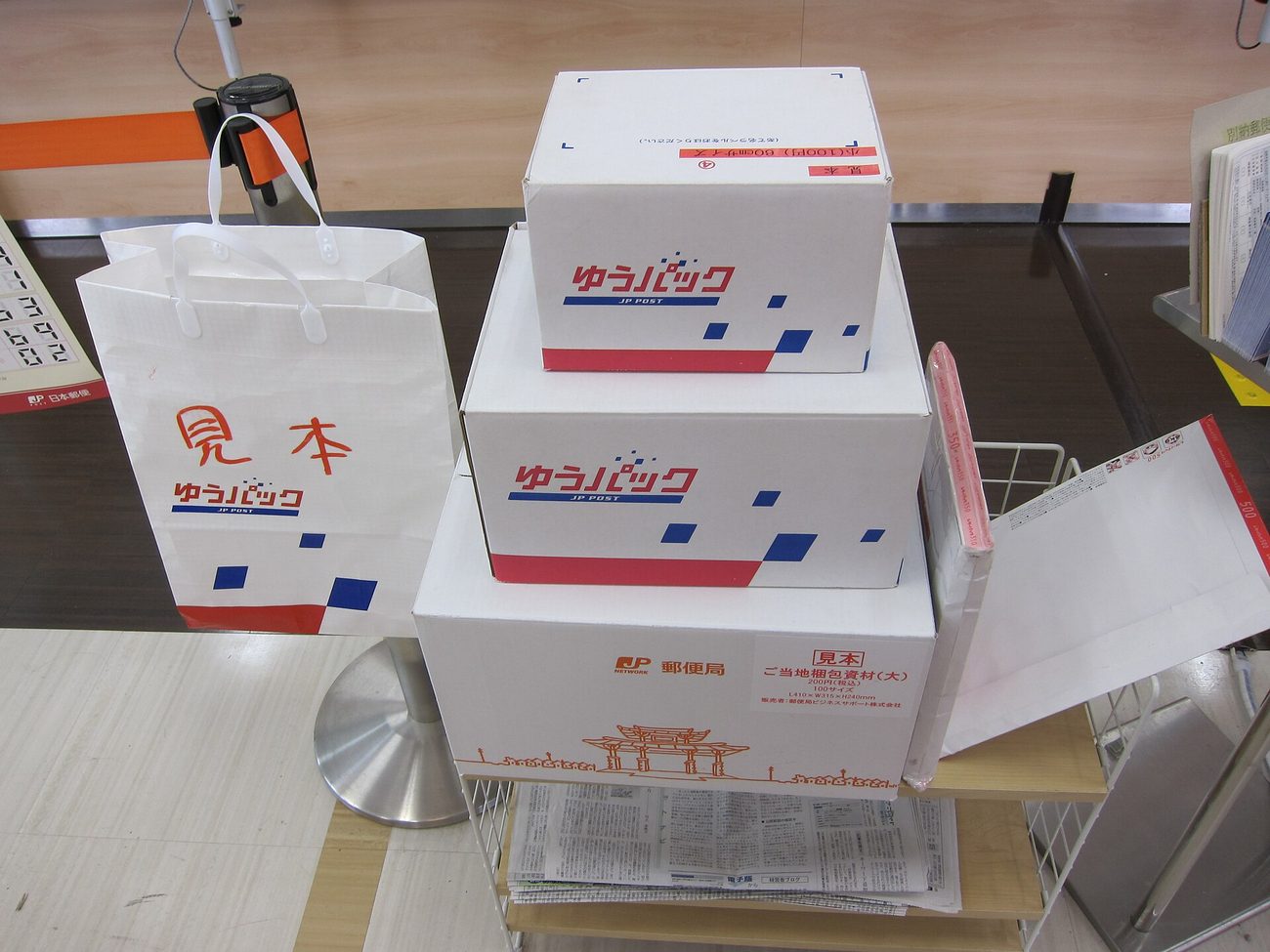
Not if it has meat, vegetables or fruit printed on it. It reads like a joke until you find it written in Japan Post's own list.
The prohibited-items page has a section on commonly attempted prohibited shipments, and it works in two layers. The contents layer: where beef is prohibited in the destination country, cup noodles, curry and consomme are all unsendable, because of the beef extract.
The packaging layer is the trap. Japan Post lists three cases where the box or bag itself cannot be used: printed images of cattle, pigs or poultry or of their meat; printed images of vegetables; printed images of fruit.
Taiwan bans pork, beef, mutton and poultry products outright — that red line applies to hand luggage and post alike, and the category detail is in Taiwan's quarantine red lines — so a free supermarket box advertising pork is exactly what this rule was written for, and it can be turned away at the counter.
The fix costs a few hundred yen: buy a box at the post office, or use a plain unprinted one.
One inference not to make: this does not extend to kitchen knives. Japan Post's bladed-weapon category covers swords, spears and naginata with a blade of 15 cm or more, and daggers, dirks and flick knives with a blade of 5.5 cm or more. Kitchen knives are not on that list, so do not conclude that a Sakai knife needs a weapons declaration. Whether it can board a plane is a different question, handled in the airport security guide.
Six things to settle before you pack
Do these six and nothing gets refused at the counter.
- Weigh first, then choose the service. Under 1 kg, Small Packet. Two to five kilos, International Parcel by air. Urgent, EMS. Over 5 kg and not in a hurry, sea. Under 2 kg, sea makes no sense at all.
- Take meat and dairy out of the box. Shipping to Taiwan, there is no declaration channel for it, and the fine falls on whoever receives the parcel.
- Carry power banks, perfume and nail polish yourself where the rules allow. Neither air nor sea mail will take them.
- Carry gold and jewellery. EMS refuses them, and the registered Small Packet route closed at the end of 2025.
- Make the label on your phone before you leave the hotel. Hand-written is not accepted, the smartphone version needs no account, and check you are under 60 content lines.
- Buy the box at the post office. A free box with meat or produce printed on it can get the whole shipment refused.
If only one of those survives the trip, make it the second. Going over an allowance costs a few hundred NT dollars in tax; picking the wrong service costs a thousand yen. Shipping a prohibited item costs you the entire box plus a fine on the recipient starting at NT$30,000. Deciding which route a purchase will take, before you buy it, is far cheaper than fixing it afterwards.
Two honest limits to close on. Everything above comes from Taiwanese statutory text and Japan Post's own pages, but it is not customs advice — how your parcel's customs value is assessed is customs' decision, and whether a product counts as a quarantine item follows the Ministry of Agriculture's published list. I did not research private international couriers, so every rule here applies to the postal route only. For what the same goods cost either side of the strait, see the Japan and Taiwan price gap list; for saving the consumption tax at the point of purchase, see Japan's tax-free shopping system and the airport process.
Appendix: official Japanese source text (click to expand)
The Japan Post source text quoted above is collected here so you can verify it yourself.
1. Dangerous goods: sea mail refused as well
国際航空運送協会(IATA)の「危険物に関する規則」が対象とする物品(航空危険物)については、国際郵便において、郵便物の種類および輸送手段に関わらず送ることができません。(船便扱いでも引受不可となりますのでご注意ください。)
引火性液体 ライター用燃料、ペイント類、香水、ヘアトニック、マニキュア、アルコール飲料
その他の有害物件 電子タバコ、モバイルバッテリー、リチウム電池※注、エンジン
注…機器に取り付けられたリチウム電池(一定の条件を満たすものに限ります。)は、国際郵便で差し出すことができます。(一部の国・地域宛に限ります。)
2. Alcohol: two readings on one page
Annotation on the summary cards (identical on the alcohol, sunscreen and hair tonic cards):
アルコール濃度24%を超えるもの
The detailed flammable-liquids list further down the same page includes アルコール飲料 with no qualifier. A separate collapsed note reads:
国際郵便でアルコール飲料をお送りいただく場合は、郵便物の条件が適用されます。
I could not locate that "conditions for postal items" document as a standalone page, which is why no single reading is adopted in the body text.
3. Hand-written labels refused; smartphone version needs no account
ラベルの準備・作成には、「国際郵便マイページサービス」のご利用が必要です。手書きのラベルでは送れません。
(スマートフォン版)会員登録不要で、ご利用できます。
マイページで必要な情報を入力します → ご指定のメールアドレスに二次元コード表示用URLが送信されます → 二次元コードを、郵便局に配備されているゆうプリタッチにかざします → ラベル印刷の完了です
ゆうプリタッチがない郵便局で差し出す際は郵便局員に印刷用番号(お問い合わせ番号)をお伝えください
ひとつのラベルをコピーして複数の郵便物に使用することはできません。
一回の差出で記載できる内容品数は60項目までです。
4. SAL fully suspended (country conditions, Taiwan, cid=44)
配達遅延・引受停止情報等
現在、SAL扱いの郵便物の引受けは全面的に停止しています。
Dispatch availability table: ordinary mail — air available, SAL dash, sea available; parcels — air available, SAL dash, sea available; EMS available; electronic advance customs data transmission mandatory. Parcel conditions item 2, SAL handling: cross.
The Zone 1 parcel rate page nevertheless still lists a full SAL fare column.
5. Valuables
ア 貴重品を包有するもの [ご注意]白金、金又は銀、珠玉、宝石等の物品は取り扱いません。 ×
貴重品はEMSでは送ることが出来ません。EMS以外の小包郵便物や通常郵便物では、郵便種別に応じて、書留または保険付とした場合に限り送ることができます。
金銭または書類以外の貴重品について、書留とする小形包装物での取扱いは、2025年12月31日(水)をもちまして終了しました。
6. Taiwanese penalties as relayed by Japan Post (not Taiwanese statutory text)
(2)以下の場合関税の2倍から5倍の罰金あるいは、当該物品を没収される。-製品名、数量、重量の虚偽の記載/-製品内容、価格の虚偽の記載/-虚偽の税関告知書CN23/-その他不正行為をした場合
(3)禁制品を包有する場合は、当該物品の没収に加え、当該物品の当該価格から3倍の価格の罰金が課される。
(5)業者の署名のある空白の税関告知書CN23が空白の際には、輸入目的とするものとし、30,000台湾ドル以下の罰金を課される。
次の場合には、輸入許可書を必要としない。-個人的使用に供される物品及び商品見本で、その価格が1,000米ドル相当額を超えないもの
7. Printed packaging
牛肉が禁制品の場合、送れないものの例 カップ麺 カレー コンソメ
包装材(段ボール箱、袋等)で送ることができないものの例 牛・豚・鳥、それらの食肉が印刷されている場合/野菜が印刷されている場合/果物が印刷されている場合
8. Bladed weapons (not extended to kitchen knives)
【刀剣等に該当するもの】A 刃渡り 15cm 以上の刀、槍およびなぎなた B 刃渡り 5.5cm 以上の剣、あいくちおよび飛び出しナイフ
包丁 (kitchen knives) does not appear on that list, so the body text makes no claim about them.
9. Approved disposable heat pack manufacturers (18)
Page title: 国際郵便による郵送が可能な使いすてカイロを販売する事業者一覧
アイリスオーヤマ(株)/生活協同組合コープこうべ/アイリス・ファインプロダクツ(株)/タカビシ化学(株)/イオン(株)/(株)立石春洋堂/井脇製缶(株)/大日本除虫菊(株)/エステー(株)/日本生活協同組合連合会/オカモト(株)/DCM(株)/紀陽除虫菊(株)/宝商(株)/興和(株)/ユーコープ事業連合/(株)児玉兄弟商会/(株)ロッテ/小林製薬(株)
This is a list of what can be sent. Mapping a retail brand back to its manufacturer needs a separate source, not checked here, so no brand is named in the body text.
10. Official caveats on standard delivery days
お出しになられた日は含んでいません。(例:「2」の場合、翌々日の配達となります。)
この表に書かれている数字は、配達に要する「標準日数」であり、配達日数そのものを確約するものではありません。
Taiwan: EMS from Kanto 2 days; ordinary air mail from Kanto 9 days; International Parcel from Tokyo International Post Office 5 days by air, SAL "not handled". Sea mail days are absent from all three tables.
11. Zone surcharge note
※第3地帯および第4地帯については、特別追加料金を含みます。
Taiwan is Zone 1, so the fares in this guide do not include the special surcharge.
Frequently Asked Questions
- Q1:Is it cheaper to post things home from Japan or pay excess baggage?
- Below about 2 kg, posting is almost always the cheaper of the two — above 10 kg it stops being obvious. Japan Post puts Taiwan in Zone 1, its cheapest band, and a 1 kg small packet by air costs 1,250 yen. A 10 kg parcel by air is 8,350 yen, which is already in the same territory as an airline excess bag. The three services are Small Packet (2 kg limit, cheapest, slowest of the air options at a standard 9 days to Taiwan), International Parcel (30 kg limit, 5 days by air) and EMS (30 kg limit, 2 days). One warning about all of those numbers: Japan Post states plainly that the figures are standard days, that the day you hand the item in is not counted, and that they are not a guarantee of delivery time. Zone 1 rates also exclude the special surcharge that applies to Zones 3 and 4.
- Q2:Can I post meat snacks, jerky or dairy products into Taiwan?
- No, and this is not a paperwork problem — there is no postal channel to apply through at all. Taiwan's Statute for Prevention and Control of Infectious Animal Diseases, Article 34 paragraph 3, says quarantine items may not be imported by post, and that anything arriving by post shall be returned, confiscated or destroyed. Compare paragraph 2 of the same article, which tells arriving travellers carrying quarantine items to apply for quarantine on entry. Hand-carry has a declaration channel; post has none, and the animal side has no proviso whatsoever. The plant side leaves two narrow doors open under Article 17 paragraph 3 of the Plant Protection and Quarantine Act: items the authority has publicly exempted from a phytosanitary certificate, and cases where the recipient applied for and received prior approval. Note who pays: the fine falls on the recipient, NT$30,000 to NT$150,000 under Article 45 subparagraph 13, and it may be imposed repeatedly. Which specific products count as quarantine items is set by the Ministry of Agriculture's published list.
- Q3:Can I post a power bank or a lithium battery from Japan?
- No, and switching to sea mail does not help. Japan Post's wording is unusually absolute here: goods covered by the IATA Dangerous Goods Regulations cannot be sent by international mail regardless of the mail category or the mode of transport, and the page adds in brackets that sea mail will not accept them either. The named list includes power banks, loose lithium batteries, e-cigarettes, engines, lighter fuel, paint, perfume, hair tonic and nail polish. There is one carve-out: a lithium battery fitted inside a device can be mailed if it meets certain conditions, and only to some countries and regions. Since a power bank also cannot go in checked baggage on a flight, both routes are closed at once — worth knowing before you buy one in Japan. Disposable heat packs are a separate case: Japan Post publishes a list of 18 manufacturers whose heat packs are mailable.
- Q4:Can I hand-write the customs label at the post office?
- No, but you do not need to register an account either. Two separate Japan Post pages carry the same sentence: preparing and creating the label requires the International Mail My Page Service, and hand-written labels cannot be sent. That is easily read as 'sign up for an account first', but the same page states that the smartphone version needs no membership registration. The flow: enter the shipment details on the site, receive a URL by email that displays a QR code, then hold that code up to the Yu-Pri Touch kiosk at the post office to print the label. If that branch has no kiosk, give the counter staff the printing number instead. Two rules to know before you pack: one label cannot be copied and used for several items, and a single shipment can list a maximum of 60 content items. Heavy drugstore hauls hit that 60-line ceiling fast.
- Q5:Is SAL mail still available from Japan?
- Not to Taiwan — acceptance is fully suspended, though the price table still shows SAL fares. Japan Post's country conditions page for Taiwan carries a notice at the top stating that acceptance of SAL mail is currently suspended entirely. The at-a-glance table on that page agrees: air and sea are marked as available for both ordinary mail and parcels, while every SAL column is a dash, and the parcel conditions list marks SAL handling with a cross. The trap is on a different page. The Zone 1 parcel rate table still prints a full SAL fare column, so anyone who checks prices before checking conditions will see a fare sitting neatly between air and sea and assume the service exists. The habit worth building: check the country conditions page before the rate table. Rates tell you the price; conditions tell you whether the service is being accepted at all, and the two pages are not in sync.
- Q6:Can I use a free box from a supermarket to pack my parcel?
- Not if it has meat, vegetables or fruit printed on it. Japan Post lists this explicitly among commonly attempted prohibited shipments. There are two layers. The contents layer: where beef is a prohibited item in the destination country, cup noodles, curry and consomme cannot be sent, because of the beef extract in them. The packaging layer is the one nobody expects — the box or bag itself cannot be used if it has printed images of cattle, pigs or poultry, of their meat, of vegetables, or of fruit. Taiwan bans pork, beef, mutton and poultry products outright, so a free box carrying a pork advertisement is exactly the case this rule was written for. Buy a box at the post office, or use a plain unprinted one. It is the cheapest insurance in this entire guide.
- Q7:What is the duty-free limit for a parcel arriving in Taiwan?
- NT$2,000 of customs value, and anything above it is taxed on the whole parcel rather than on the excess. Article 7 of Taiwan's Regulations Governing Customs Clearance for Postal Consignments exempts customs duty, commodity tax and business tax where the customs value is within NT$2,000. Article 8 then says a consignment exceeding the limit shall be taxed on the full amount — no 'excess portion' wording anywhere in it. Contrast the hand-carry regime, where Article 12 of the corresponding regulations taxes only the portion in excess of the allowance. Same country, same goods, opposite arithmetic. Do not over-dramatise the cliff though: a parcel that qualifies as sundry goods is charged duty at the 5% rate set out in General Rule 5 of the Customs Import Tariff, so an NT$2,001 parcel lands in the low-hundreds of NT dollars, plus business tax and other items collected by customs. Tobacco and alcohol never qualify for the exemption at any value.
Related guides
Japan to Taiwan Customs 2026: What You Can Bring Back
Japan is African swine fever free — and it will not save your pork jerky. Taiwan bans cloven-hoofed meat from swine fever zones too. A decision table covering the NT$35,000 allowance, the 6 kg cap, the fresh-fruit ban, and the fine everyone quotes wrong.
Japan Airport Security Rules 2026: Power Banks and Liquids
Customs wants your tax-free goods in hand; security wants your knife in the hold. Only five of Japan's seven power bank rules carry a penalty, and the 100 ml liquid limit has never been relaxed.
Japan Tax-Free Nov 2026: New Airport Refund Rules
The kiosk reads your passport, not a QR — landside, before bag drop. One receipt, all or nothing.