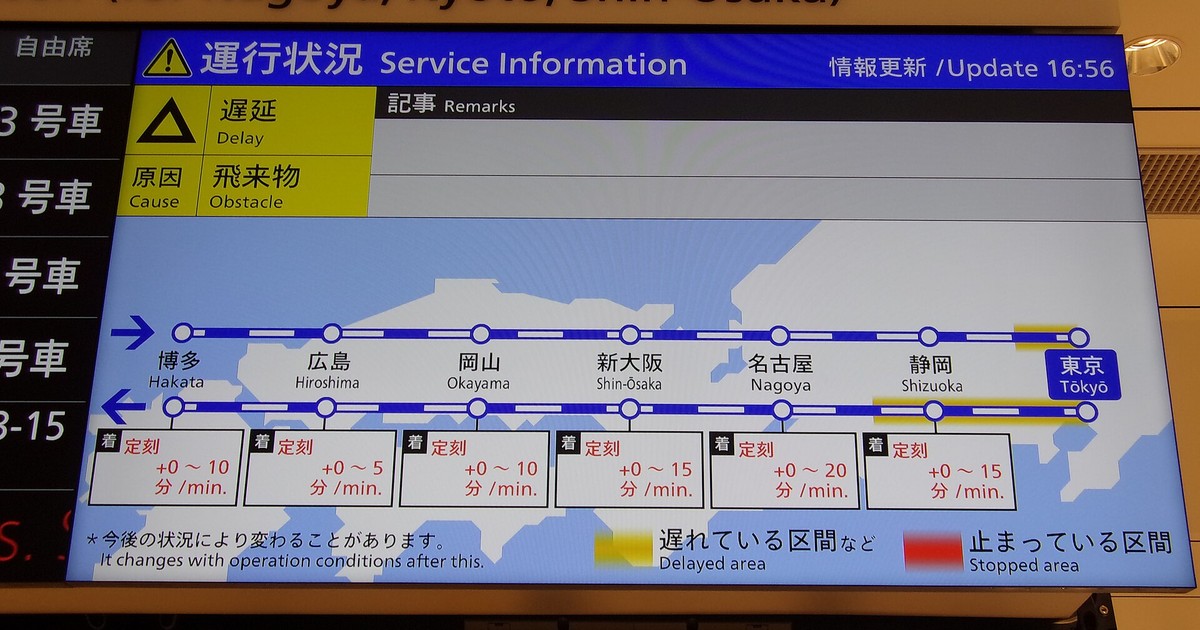
When a shinkansen arrives two hours late, JR gives you back the limited express surcharge — and not one yen of the base fare. That rule sits in Article 289, Paragraph 2 of the Passenger Business Rules. If you have seen it cited as "Article 288", that article is actually about commuter passes and coupon tickets during suspensions lasting five consecutive days or more — nothing to do with a visitor whose train is running late.
Getting the article number wrong costs nothing by itself. Walking up to the ticket counter with the wrong expectation costs you money. So this guide sets out exactly what you can claim when a train in Japan is delayed or cancelled: the two refund thresholds (not just the famous two hours), how cancellation remedies differ from delay remedies, why a JR Pass works in the opposite direction, how substitute transport works and why an IC card locks you out of it, and a tested list of official service-status URLs for 20 operators. Where a source could not be verified, this guide says so by name rather than generalising from one company to all of them.
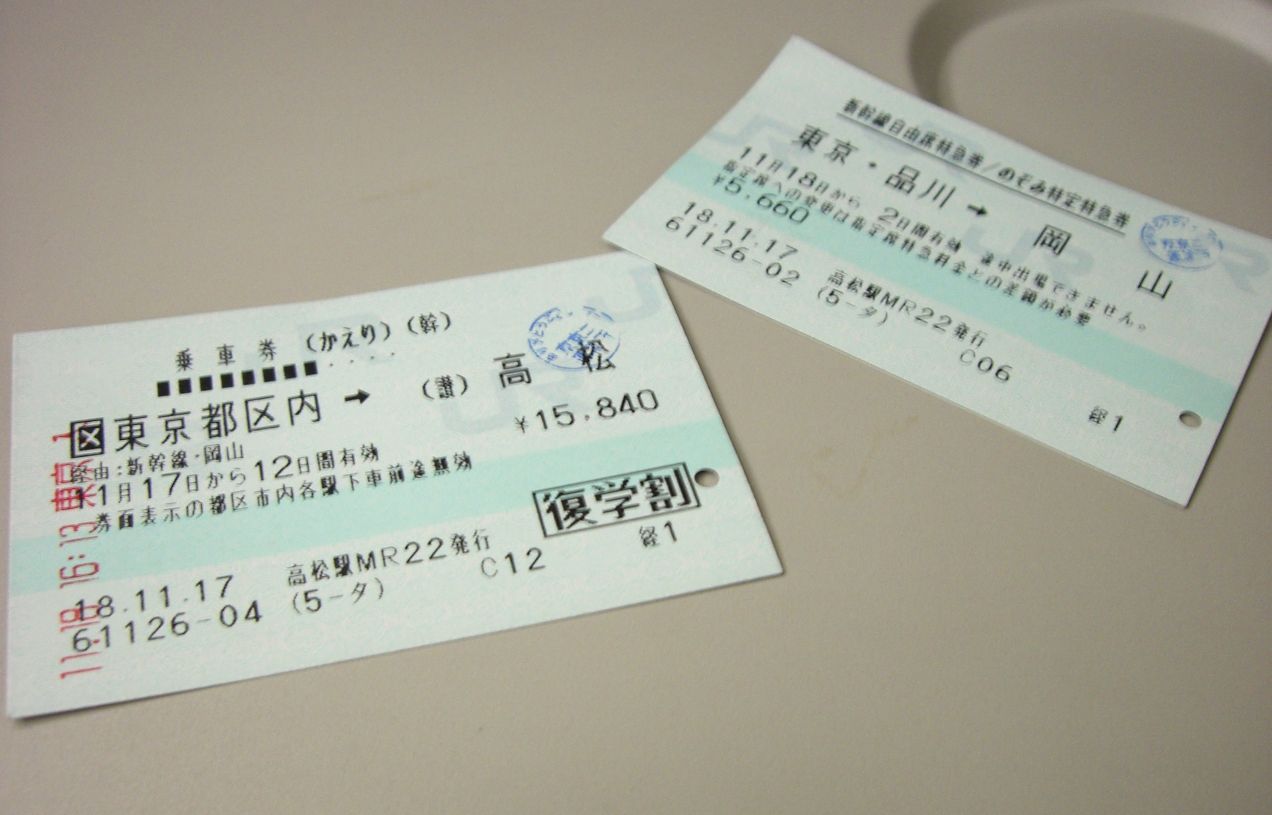
- Only the surcharge comes back — a pure delay refunds the limited express / express fee in full; your base fare is not part of the deal (Art. 289 (2)(iii)).
- Two hours is not the only threshold — if departure is one hour or more late and you give up on the train, the surcharge is also refunded in full (Art. 289 (2)(i)).
- A JR Pass reverses everything — once activated, no extension and no refund for suspensions, delays or natural disasters, and JR will not cover rerouting or hotel costs.
- Suica and PASMO stored value gets no substitute transport — stated officially by JR East, Tokyo Metro, Tobu and Keio, because tapping in does not define your destination.
- How you bought the ticket decides the payout — with EX-Reservation / Smart EX, a confirmed two-hour delay you decline to travel on refunds the whole price, fare included, with no fee.
📖 Contents (tap to expand)
- The counter-intuitive part: they refund the surcharge, not the fare
- When the train is cancelled: three remedies to choose from
- Refund rules by ticket type
- JR Pass and regional passes: no remedy once activated
- EX-Reservation and online booking: the purchase channel decides the payout
- Substitute transport — and why your IC card cannot use it
- Planned suspensions: how typhoon and snow shutdowns are announced
- Official service-status URLs, tested
- Delay certificates: how to get one, how far back
- Why snow slows some shinkansen and not others
- On-the-spot playbook
- FAQ
The counter-intuitive part: they refund the surcharge, not the fare
Japanese rail pricing is built in two layers: the joshaken (base fare ticket, which buys you the journey from A to B) and the tokkyuken (limited express surcharge, which buys you the speed). Buy a shinkansen ticket and the machine hands you two tickets stapled together, which is why so few visitors notice the structure until it matters.
It matters here, because the whole logic of delay refunds follows from it. JR refunds the speed you did not get, not the journey you did complete. The rule text (JR Central Passenger Business Rules, current as of 1 April 2026) says a passenger holding an express ticket may claim a refund of "the full amount of that express fee". The base fare is not mentioned anywhere in the provision, and the plain-language pages of JR Central, JR Kyushu, JR Hokkaido and JR Shikoku all say the same thing in almost identical words.
The two-threshold table
"You need a two-hour delay" is only true along one path. The rules open two more doors at the one-hour mark, and plenty of travellers walk away from money because nobody told them:
| Situation | Threshold | What you can claim | Provision |
|---|---|---|---|
| You ride the whole way and arrive 2+ hours late | 2 hours (measured on arrival) | Full limited express / express surcharge | Art. 289 (2)(iii) |
| Departure is 1+ hour late (or certain to be) and you decide not to travel | 1 hour (measured on departure) | Full limited express / express surcharge | Art. 289 (2)(i) |
| You miss a connection by 1+ hour from the connecting train's departure time | 1 hour | Trip-abandonment refund / validity extension / free return to origin | Art. 282 (1)(ii) |
| You switch to a different limited express because of the delay | — | Full surcharge on the original train | Art. 289 (2)(ii) |
Two details are worth pulling out of the small print:
- The two hours is measured at arrival. How far behind you fell mid-route is irrelevant; what counts is how late you reach your destination station.
- The rule explicitly includes "when the delay is certain". You do not have to actually ride to the terminus to qualify. Once the operator announces a confirmed delay of two hours or more, the condition is met and you can walk away then and there. If you are trying to make a flight, that single clause is the most valuable sentence in this article — abandoning the journey does not forfeit the claim.
What happens to each fee component
| Component | Pure delay (rode the whole way, 2+ hours late) | Basis |
|---|---|---|
| Base fare | ❌ Not refunded. All four plain-language pages refund only the express surcharge and never mention the fare | Operator pages; Art. 289 (2) |
| Limited express / express surcharge | ✅ Refunded in full | Art. 289 (2)(iii) |
| Green Car surcharge | ⚠️ Not refunded on the structure of the rules — see the caveat below | Inferred from the rules, not an official statement |
| Sleeper berth charge | Refunded in full only where the berth became unusable, in whole or in part, between the start of use and 6 a.m. | Art. 282-2 (iv) |
| Reserved seat charge | Refunded in full only where the seat became unusable for part of the route after use began | Art. 282-2 (vi) |
When the train is cancelled: three remedies to choose from
A delay and a cancellation (unten miawase / unkyu) are handled under different provisions, and cancellations are far more generous. Instead of being limited to the surcharge, you pick one of three routes:
| Option | What you get back | When it makes sense | Provision |
|---|---|---|---|
| Abandon the trip entirely | Full refund of fare and charges | You have not started, or you are calling it off for the day | Art. 282-2 |
| Abandon mid-journey | Fare for the unused section, plus the full surcharge on the cancelled train | You are already halfway and switching plans on the spot | Art. 282-2 |
| Free ride back to your origin | A free return to the departure station, plus a full refund of fare and charges | You are stranded midway and restarting from base is cheaper than improvising | Art. 284 |
Three more provisions are worth knowing because they only apply in specific circumstances:
- Validity extension (Art. 283). For a cancellation, validity can be extended from the deposit date through to the day before you restart travel, up to five days after the line reopens. For a mere delay or vehicle failure, it is extended by one day only. That gap is large and worth remembering.
- Alternative routing (Art. 285). You travel by another shortest route; any excess is refunded and any shortfall is not collected. ⚠️ This applies to cancellations only, not to a train that is merely running late.
- Separate travel around a blocked section (Art. 287). Pay your own way around the blocked stretch, then claim back the fare for that section with a "non-boarding certificate".
You can take the next limited express — with two named exceptions
The official pages are clear that if the limited express you are riding stops running at an intermediate station, you may board a following limited express or express service, and the surcharge on the original train is refunded in full. But Article 289, Paragraph 1 carries an explicit carve-out that is easy to get wrong: a passenger holding a limited express ticket for the Tokaido, Sanyo or Kagoshima Main Line may not use this provision to board a Nozomi-class service, and a passenger holding a Tohoku Main Line limited express ticket may not board a Hayabusa-class service, unless the company specifically permits it. In short, the fastest tier is not included in the free switch.
Cancellation refunds carry no handling fee — which is worth more than it sounds
The official wording is "the full amount of fare and charges will be returned", and full means no fee deducted. To see what that is worth, compare JR Kyushu's published fees for a voluntary refund (JR Kyushu page, verified 6 August 2026):
| Ticket type | Normal voluntary refund fee | If the train is cancelled |
|---|---|---|
| Base fare ticket, non-reserved express ticket, etc. | 220 yen | Waived |
| Reserved express, Green Car, sleeper ticket (up to 2 days before departure) | 340 yen | |
| Same, from the day before through departure time | 30% of the price (minimum 340 yen) |
Cancel a reserved seat voluntarily the day before and you surrender 30 per cent. If the operator cancels the train, you surrender nothing. That is why it is worth asking staff whether the situation is officially logged as a cancellation — the answer can be worth thousands of yen.
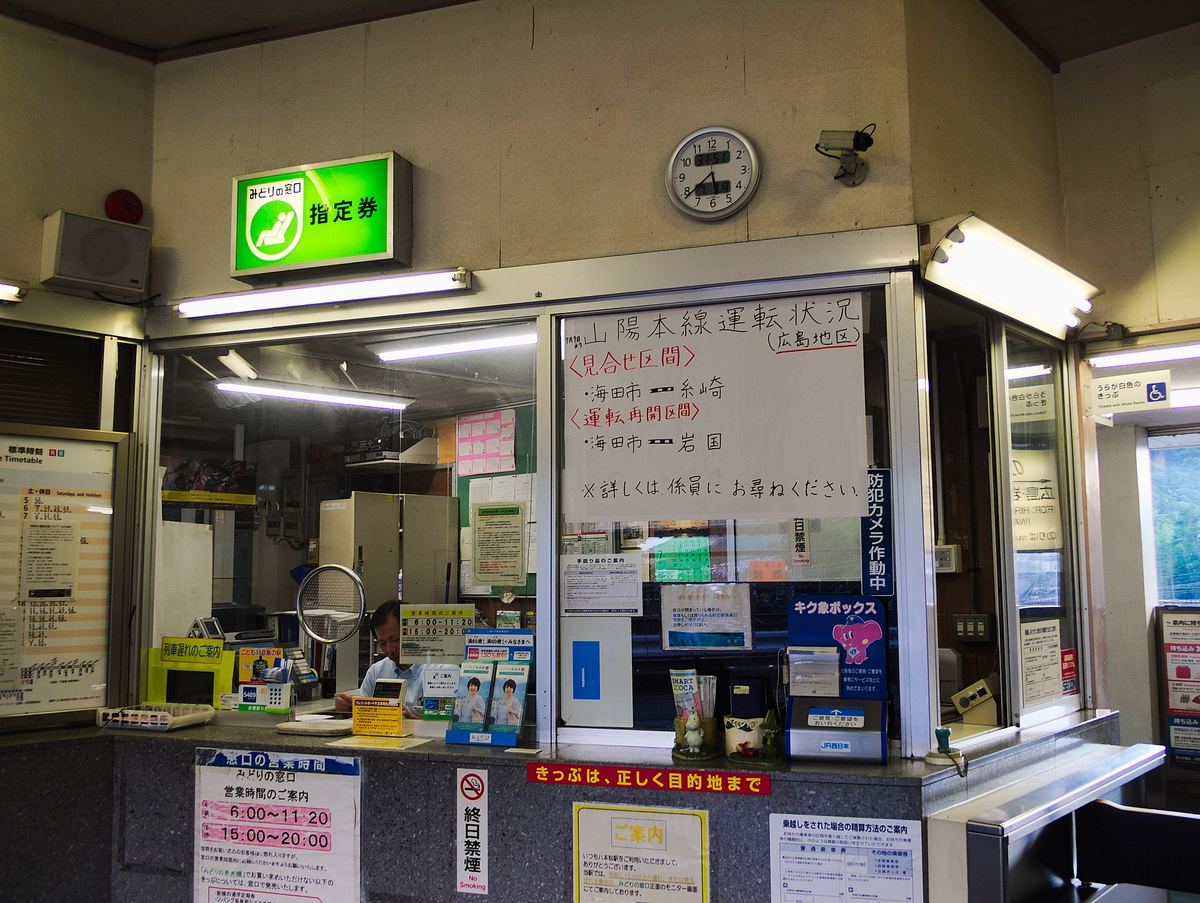
1. Do not put the ticket into the automatic gate. JR Hokkaido states it plainly: if you intend to claim a refund after alighting, you need the ticket, so at stations with automatic gates do not insert it — the machine keeps it. Use the staffed gate and hold on to the ticket.
2. Where you claim is prescribed. Under Article 286, claims are handled at the station where you abandoned travel, or at the station where a free return journey ended, or at the station where alternative routing ended, depending on which remedy you used. Discount tickets are stricter still: JR Hokkaido requires them to be refunded at the place of sale, not at any station.
Time limits, and the claims you cannot make
On deadlines, JR Hokkaido's official page states one year from the day after the event giving rise to the refund, citing the Passenger Business Rules. No equivalent statement was found on the other companies' pages, so treat this as JR Hokkaido's stated policy rather than a JR-wide rule. Directionally, though, it means you are unlikely to be forced to sort everything out the same afternoon.
What you definitely cannot do is claim consequential losses. Article 290-3 restricts passengers to the remedies set out in Articles 282 onwards, whether or not the cause is attributable to the company, and Paragraph 2 states that beyond those, passengers may make no claim whatsoever. In plain English: the hotel night, the rebooked flight and the concert you missed are not the railway's problem under the carriage contract. This is not a customer service posture, it is the written rule.
Refund rules by ticket type
Everything above, compressed. The right-hand column names which companies were actually verified for this guide — where a company is not listed, ask staff on site.
| Ticket type | Pure delay | Cancellation | Verified for |
|---|---|---|---|
| Standard ticket (fare + non-reserved express) | 2+ hours late on arrival → full surcharge; base fare not refunded | Abandon trip → fare and charges in full; abandon midway → unused section fare + full surcharge | JR Central (incl. rule text), Kyushu, Hokkaido, Shikoku |
| Reserved express ticket | As above; Art. 282-2 (vi) covers an unusable seat | As above, fee waived (a voluntary refund would cost 340 yen or 30%) | JR Central (rule text), JR Kyushu |
| Green Car ticket | ⚠️ Not refunded on the structure of the rules if you occupied the Green seat; refundable with a non-use certificate if you did not | Refunded as part of the cancellation refund | JR Central (inference + Art. 290-2) |
| JAPAN RAIL PASS (nationwide) | ❌ No refund, no extension after activation | ❌ Not even for natural disasters, and no rerouting or accommodation costs covered | Official JA + EN pages (both April 2026) |
| Regional "free type" pass | ❌ No refund, no extension after first use | ❌ Same; on "return trip + free type" products the free-ride portion is not refunded even if unusable | JR Hokkaido only (others unverified) |
| Point-to-point discount tickets | Refunded under the Passenger Business Rules, capped at the sale price; must be claimed at the place of sale; one-year limit | JR Hokkaido | |
| EX-Reservation / Smart EX | ✅ Confirmed 2+ hour delay and you decline to travel → full price refunded, no handling fee (base fare included — better than a paper ticket) | EX Service carriage terms (as of 4 Oct 2025) | |
| e5489 (JR West online booking) | Cancellations are refunded automatically with no fee from the day after the travel date; no action needed from you | JR West official page | |
| Eki-net (JR East) | If the service is cancelled and you did not travel on the preceding or following train, the base fare, limited express charge and facility charge are refunded in full (same principle for limited expresses). ⚠️ Free-pass products are excluded; the official wording is that procedures vary by product, so do not assume an automatic refund | JR East official FAQ entries 6151 and 3727 | |
| Commuter passes / coupon tickets | Validity extension or refund only where the line is out for five or more consecutive days (this is what Article 288 actually covers) | JR Central, Kyushu, Hokkaido, Shikoku | |
JR Pass and regional passes: no remedy once activated
Here it is without hedging:pass products run in the opposite direction to ordinary tickets when trains stop.
The official JAPAN RAIL PASS conditions page says the same thing in Japanese and in English, both marked current as of April 2026: once you start using the pass, the period of use cannot be extended, nor will any refund be issued, even if trains and other qualifying transportation services are suspended or delayed for any reason, including natural disasters. And it goes one step further — the JR Group will not bear additional costs due to changes in your route, such as alternative transportation costs or accommodation charges.
Concretely: a visitor on a 7-day JR Pass who loses day three to a typhoon shutdown simply loses it. No extra day, no hotel contribution. On that very same day, the traveller standing next to them holding paper tickets can reclaim the fare for the section they did not ride under Article 282. That gap is not unfairness, it is a difference in what the two products sell. A pass sells unlimited use during a window; you bought that window, and the weather risk is priced into it.
- Refunds are handled only before the first day of the validity period, as a rule.
- Bought online and not yet collected: you can cancel online until 23:30 Japan time on the day before the start date, for a fee of 560 yen per pass.
- Exchange order bought abroad and already exchanged for a physical pass: refunded at an exchange office in Japan, fee 10% of the sale price in yen, per pass.
- After collection, you must present the physical credit card used for payment — a virtual card cannot be refunded.
- Riding non-reserved seats, or riding an ordinary car on a Green Car pass, gets you no difference back.
Regional passes point the same way — but only one was verified
JR Hokkaido's guide to discount tickets (current as of 14 March 2026) is equally firm about "free type" (unlimited ride) products: refunds are handled only before first use, and after use begins there is no refund and no validity extension even for delays or suspensions. The sharpest line concerns combination products: on a "return trip + free type" ticket, the free-ride portion is not refunded even if a suspension makes it unusable.
⚠️ Scope again: only JR Hokkaido was verified, so do not read this as "all regional passes work this way". The direction is supported by two independent official sources (the nationwide JR Pass and JR Hokkaido's free-type rule), which is enough for a practical rule of thumb: before buying any pass product, make "what happens if trains stop after I activate it" a mandatory check on that specific product's terms. For choosing between pass types in the first place, see our comparison of the nationwide JR Pass versus regional passes, and the bigger buy-or-skip question in is the JR Pass worth it.
EX-Reservation and online booking: the purchase channel decides the payout
Here is the most practically useful finding in this guide: for the same Tokyo–Osaka trip and the same two-hour delay, how much you get back depends on how you bought the ticket.
Under Article 23 of the EX Service carriage terms (as of 4 October 2025), where the contracted train becomes unable to run, or where it becomes certain that arrival will be two or more hours late, and the member declines to travel, the "fare and charges" under that EX contract are refunded in full with no handling fee. The phrase "fare and charges" is the key: EX sells a bundled price covering both layers, so the refund is the entire amount — including the base fare a paper ticket would never return.
| How you bought it | Confirmed 2-hour delay and you decline to travel | Fee |
|---|---|---|
| Paper tickets (fare + express) | Full express surcharge; unused fare handled separately under Art. 282-2 | Waived in delay/cancellation cases |
| EX-Reservation / Smart EX | The full bundled price | None |
Paragraph 2 adds another layer: where the company predicts a suspension or a delay of two or more hours and the member declines to travel, a fee-free full refund may also be granted on the same basis. Paragraph 4 notes the company may amend or terminate an EX contract without any request from the member — sometimes the refund simply happens.
Article 22-2 is the one you will appreciate at the station: during a transport disruption, EX members may contract for a train whose scheduled departure time has already passed, which is normally impossible. ⚠️ The terms carve out one group explicitly: members who joined EX via LINE cannot make that change.
The online-booking trap: do not press refund yourself
JR West's e5489 page is refreshingly direct. When a train is cancelled, the system refunds automatically with no handling fee from the day after the travel date and emails you; you do not need to do anything. It even adds that if you processed the refund yourself and were charged a fee, you should call the support line. When a typhoon is approaching or major disruption hits, fee-free self-service refunds may be enabled, with the eligible sections announced on the e5489 top page — and the page tells you to confirm the fee shows as zero before finalising.
🟢 Updated 16 August 2026: the Eki-net gap is now closed. This guide originally left a question mark here, because JR East returns HTTP 403 to automated requests. We have since obtained the answer from JR East's official FAQ platform: where a service is cancelled and you did not travel on the preceding or following train, the base fare, limited express charge and facility charge are refunded in full (entry 6151); limited expresses follow the same principle, base fare included (entry 3727). Free-pass products are excluded from cancellation refunds.
⚠️ One distinction matters: JR West states outright that e5489 refunds automatically and without a fee, whereas JR East's wording for Eki-net is that procedures vary by product — do not assume it refunds you automatically. Check how your particular booking is handled inside the system, or ask at a Midori-no-madoguchi counter. Worth knowing too: Eki-net is officially restricted to residents of Japan, with overseas visitors directed to JR-EAST Train Reservation — eligibility and collection rules are set out in the guide to booking Japanese train tickets online.
Substitute transport — and why your IC card cannot use it
Substitute transport (furikae yusou) is the single most useful Japanese rail mechanism that visitors have never heard of. Tokyo Metro's official definition: where you already hold a ticket covering the affected section, and train operations are disrupted, you may travel within the section your ticket covers by another route, either on the same operator's network or on another company's, at no extra cost. Keio adds the detail that matters in practice: you travel a designated route, not one you pick yourself.
Who qualifies and who does not
| Ticket type | Eligible for substitute transport? | Verified operators |
|---|---|---|
| Paper ordinary ticket (bought before the disruption) | ✅ Yes, within the printed section | JR East, Kintetsu, Tobu, Tokyo Metro, Keio |
| Discount tickets, day passes, coupon tickets | ✅ Yes | JR East, Tobu |
| Magnetic or IC commuter pass (within the commuter section) | ✅ Yes | JR East, Tobu, Tokyo Metro, Kintetsu |
| IC commuter pass but travelling outside the commuter section | ❌ No | Tokyo Metro, Kintetsu |
| Suica / PASMO stored-value balance | ❌ No | JR East, Tokyo Metro, Tobu, Keio — all four state this officially |
| Contactless credit card payment | ❌ No | Kintetsu, stated explicitly |
| No ticket at all | ❌ No; you pay a separate fare | Tobu, Tokyo Metro |
This is a limitation to add, not a recommendation to reverse. Keep using the IC card. But if a typhoon or heavy-snow forecast is hanging over a leg you still have to travel, buying a paper ticket for that one leg buys you a fallback — a few extra seconds at the machine in exchange for the right to be rerouted for free.
How to actually use it: four moves
- Do not tap the gate. Keio spells it out: during substitute transport, do not pass through the automatic gate; show your eligible ticket or substitute travel slip to staff and use the staffed lane — tapping the gate simply deducts the fare from your stored value. Tokyo Metro says the same: do not tap, do not insert, use the staffed lane.
- You usually do not need a "substitute travel slip". Keio states that even without one, showing an eligible ticket at the staffed gate is enough; Kintetsu says outright that it runs substitute transport without distributing slips. ⚠️ Buses are the exception — Keio requires a substitute travel slip for bus substitution, so ask staff for one.
- No extra charge, but no stopovers. Tobu: if you hold a ticket to your destination, no additional fare is required. Tokyo Metro: you may not break your journey within the substitute section, and if you do, the fare for that section is charged separately.
- Taxis and late-night buses do not count. Tokyo Metro states that costs for modes outside the substitute transport scheme — taxis, late-night buses and the like — are the passenger's own. Keio adds a warning worth heeding: a substitute travel slip is not a ticket.
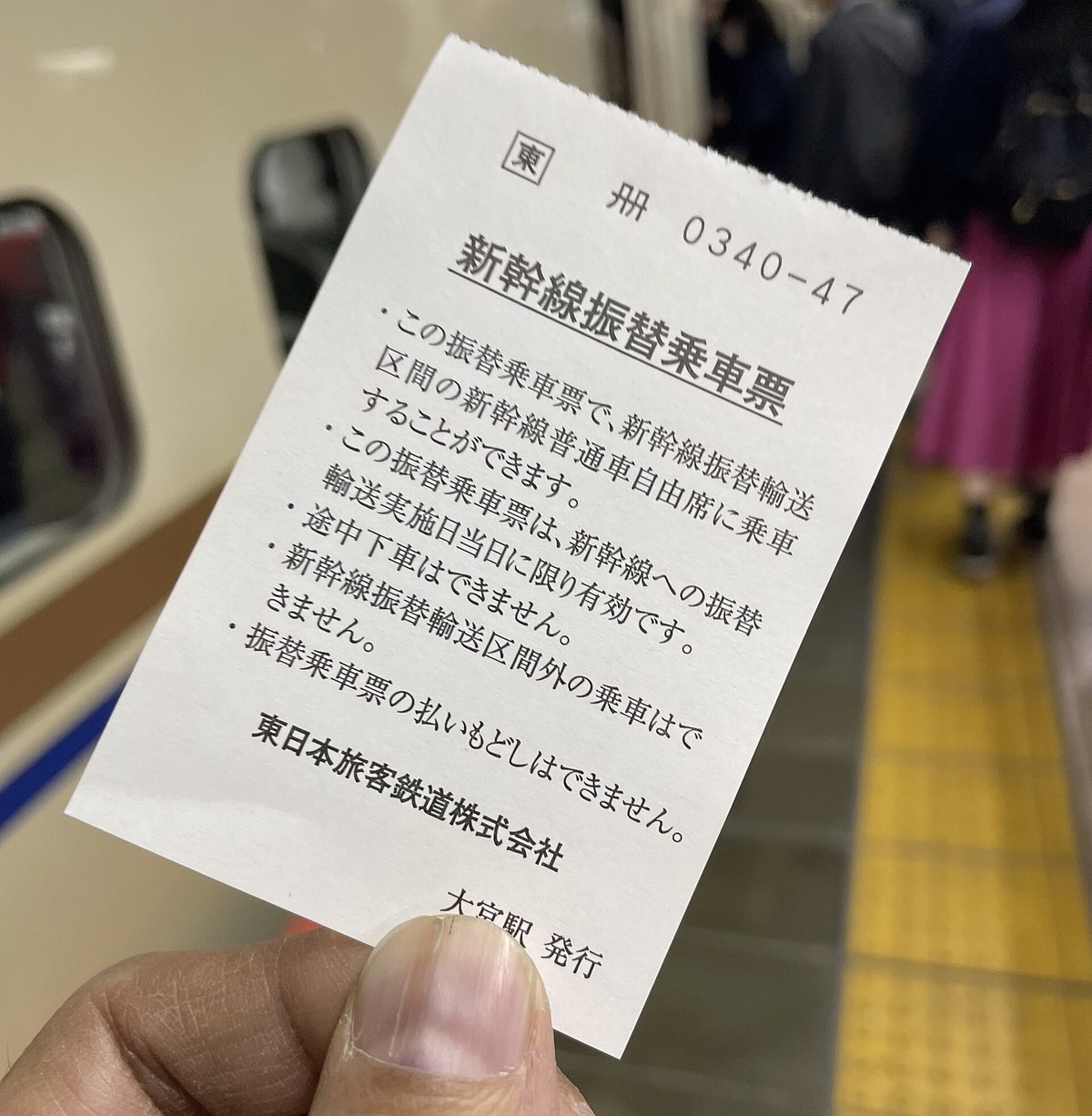
Worth noting in passing: this "we will put you on somebody else's line" structure is specific to rail. Aviation runs the opposite way. ANA states in writing that transfers to another airline or to ground transport are accepted only where the cause is attributable to ANA — meaning that on a weather cancellation there is no substitute transport of any kind, only the airline's own next seat, a refund, or extended ticket validity. The contrast matters on a blizzard day, because it decides whether you chase a train seat or a hotel room first: we cover it in why a snow-cancelled flight only buys you the same airline's next seat.
Planned suspensions: how typhoon and snow shutdowns are announced
Keikaku unkyu — planned suspension — is the Japanese practice of announcing in advance that trains will stop, ahead of a foreseeable event such as a typhoon. For a visitor, the value is not in knowing the term but in knowing that it comes with an information rhythm, which means you normally get time to react. That assumes you can read the warning level the weather agency is issuing that day — and every one of those warning names was rewritten on 29 May 2026, so older guides name alerts that no longer exist.
The framework dates from the Ministry of Land, Infrastructure, Transport and Tourism's final report of 2 July 2019 on how planned suspensions should work. The trigger was the 2018 typhoons Nos. 21 and 24, after which the ministry published an interim report in October 2018 and finalised it the following July. Note that the document was then updated again on 11 October 2019, after the response to Typhoon No. 15 in September 2019 was re-examined; the update added coordination with airport access lines and terminals, stronger preparation before restarting services, and measures against crowd-control chaos when services resume.
The accurate and still-useful version: Japan runs planned suspensions on a structured information rhythm, and the official model starts the drumbeat roughly two days out — so you usually have time to move your plans, provided you know which page to watch (see the URL tables below).
The government itself says a shutdown may come with no alternative
The main report states that whether substitute transport is provided is decided in light of transport capacity and other circumstances, and that providing information is important whether or not it is arranged. Its section on building public understanding lists, as a point the public needs to grasp, that when planned suspensions are carried out, substitute transport between operators may not take place. The October 2019 update supplies the reason: doing so would exceed the receiving operator's capacity limits and compromise safety.
That is a hard planning constraint. Do not assume that "the line is down" means "another line will take me". On a full typhoon shutdown, the company that would rescue you is overloaded too.
Heavy snow was formally brought into scope in June 2024
This is the most valuable institutional finding here for winter travellers. The 2019 model case was designed for foreseeable events such as typhoons (the main body says so, and suggests operators also prepare a timeline for sudden disasters such as earthquakes). But the Ministry of Land, Infrastructure, Transport and Tourism's Disaster Management Operation Plan, Volume 7 (Snow Damage Countermeasures), dated June 2024, now brings heavy snow expressly into the same guidance. The text — quoted verbatim in the Japan Transport Safety Board's Digest No. 46 — instructs rail operators that when heavy snow is forecast and weather conditions are predicted to impede operations, they should, according to line characteristics, provide information well in advance and then suspend services in a planned manner in the interest of safety. The same plan requires operators to avoid passengers being trapped for long periods in trains stopped between stations during snowfall, to strengthen advance preparation, and to carry out service restoration and passenger rescue in parallel where a long stop between stations is expected.
So the winter shutdown you run into in Japan is not a company giving up — it is policy-backed prevention, aimed at stopping you from spending five hours in a stationary carriage in a snowfield. For when and where snow actually falls, the guide to first snow and snowfall timing across Japan covers the meteorological normals; this article picks up where that one ends — the trains have stopped, now what. One group suffers disproportionately from planned cancellations: the winter-only sightseeing trains. The stove train, the steam service and the kotatsu train each run only a few dozen days a season — some only a handful — so a cancelled day is usually the only day your trip had, and there is no make-up run.
⚠️ One honest boundary: no official figure was found for how far in advance a snow-driven planned suspension is announced (as distinct from the typhoon model case's example timings), so this guide publishes no number for it.
Official service-status URLs, tested
When something goes wrong you do not need an article, you need a URL. Below are official service-status pages, each connection-tested on 6 August 2026. The English column marks only pages whose English content was actually read — everything else is flagged unverified, which is itself a useful conclusion: English coverage of Japanese real-time service information is far thinner than visitors expect.
JR companies
| Company | Official service status | English |
|---|---|---|
| JR East | traininfo.jreast.co.jp/train_info | 🚨 Automated access blocked (403); page content could not be verified here. A normal browser opens it fine |
| JR Central (shinkansen) | traininfo.jr-central.co.jp/shinkansen | ⚠️ Unverified |
| JR Central (conventional lines) | traininfo.jr-central.co.jp/zairaisen | ⚠️ Unverified |
| JR West | trafficinfo.westjr.co.jp | ⚠️ Unverified |
| JR Hokkaido | www3.jrhokkaido.co.jp/webunkou | ✅ index_en.html (note: index_en, not index_e) |
| JR Kyushu | jrkyushu.co.jp/trains/info | ⚠️ Unverified |
| JR Shikoku | jr-shikoku.co.jp/info | ⚠️ Unverified |
Greater Tokyo private railways and subways
| Company | Official service status | English |
|---|---|---|
| Tokyo Metro | tokyometro.jp/unkou | ✅ English site |
| Toei Subway | kotsu.metro.tokyo.jp/subway/unkou | ⚠️ Automated access was blocked by bot protection; content and English version could not be verified |
| Tobu | tobu.co.jp/service_status | ⚠️ Unverified |
| Seibu | seiburailway.jp/railway/railwayinfo | ✅ English (states it posts delays of 15 minutes or more) |
| Odakyu | traininfo.odakyu-rt.jp | ⚠️ Unverified |
| Keio | keio.co.jp/unkou | ⚠️ Unverified |
| Tokyu | tokyu.co.jp/unten2 | ⚠️ Unverified |
| Keikyu | unkou.keikyu.co.jp | ⚠️ Unverified |
| Keisei | keisei.co.jp | ⚠️ Unverified |
| Sotetsu | sotetsu.co.jp/train/status | ⚠️ Unverified |
Kansai, Chubu and Kyushu private railways
| Company | Official service status | English |
|---|---|---|
| Kintetsu | kintetsu.jp/unkou | ✅ English (states it posts delays of 30 minutes or more) |
| Nankai | traffic.nankai.co.jp | ⚠️ Unverified |
| Keihan | keihan.co.jp/traffic | ⚠️ Unverified |
| Hankyu | hankyu.co.jp/railinfo | ✅ English |
| Hanshin | hanshin.co.jp/global/operation | ✅ English |
| Meitetsu | top.meitetsu.co.jp/em | ⚠️ Unverified |
| Nishitetsu | jik.nishitetsu.jp/traffic | ⚠️ Unverified |
One trap to flag: some aggregator pages look like an official JR joint information site but state in their own footer that they are private sites with no affiliation to the railway companies. In the moment, go back to the official URLs above.
All of these need a live connection, and station Wi-Fi during a shutdown is exactly as congested as you would guess. Connectivity options are compared in our Japan eSIM comparison.
Delay certificates: how to get one, how far back
The chien shomeisho (delay certificate) is a Japanese rail institution: a document proving that a service really was late, used with employers, schools and insurers. Nearly every operator now publishes it online, so you print or save it yourself rather than queueing at a station.
Online delay certificates and archive windows (as stated on each page, tested 6 Aug 2026)
| Company | Delay certificate URL | Archive window | English |
|---|---|---|---|
| JR East | traininfo.jreast.co.jp/delay_certificate | 45 days | ✅ Yes |
| JR Central | Conventional lines certificate | ⚠️ Not stated on page (dynamic page, unreadable here) | ⚠️ Unverified |
| JR West | delay.trafficinfo.westjr.co.jp | ⚠️ Not stated on page (dynamic page) | ⚠️ Unverified |
| JR Kyushu | jrkyushu.co.jp/railway/delay | 30 days | ⚠️ Unverified |
| JR Hokkaido | www3.jrhokkaido.co.jp/delay | 30 days | ⚠️ Unverified |
| Tokyo Metro | tokyometro.jp/delay | Line pages state 35 days | ✅ Yes |
| Toei Subway | kotsu.metro.tokyo.jp | ⚠️ Automated access blocked; unverified | ⚠️ Unverified |
| Tobu | tobu.co.jp/railway/useful/delay | 30 days | ✅ Yes |
| Seibu | seiburailway.jp/railway/delay | 35 days | ⚠️ Unverified |
| Odakyu | certificate.odakyu-rt.jp | ⚠️ Not stated on page (dynamic page) | ⚠️ Unverified |
| Keio | keio.co.jp/train/delay | 31 days including the day itself | ⚠️ Unverified |
| Tokyu | tokyu.co.jp/railway/delay | One month including the date of occurrence | ⚠️ Unverified |
| Keikyu | delay.keikyu.co.jp | 31 days including the day itself | ⚠️ Unverified |
| Keisei | keisei.co.jp | ⚠️ Not stated on page | ⚠️ Unverified |
| Kintetsu | kintetsu.co.jp/gyoumu/delay | 45 days including the day itself | ⚠️ Unverified |
| Hankyu | hankyu.co.jp/delay | 45 days | ✅ Yes |
| Hanshin | hanshin.co.jp/system/delay | 45 days including the day itself | ⚠️ Unverified |
| Keihan | keihan.co.jp/traffic/delay | 30 days including the day itself | ⚠️ Unverified |
| Nankai | traffic.nankai.co.jp/delay | 🚨 Only 7 days including the day itself | ⚠️ Unverified |
| Meitetsu | top.meitetsu.co.jp/delay-train | 45 days including the day itself | ⚠️ Unverified |
Two conclusions. First, online delay certificates are effectively an industry standard — 19 of the 20 operators tested opened normally (Toei Subway could not be verified because of bot protection). Second, the archive windows vary wildly: most sit between 30 and 45 days, which comfortably allows you to print one after you get home, but Nankai keeps only 7 days including the day itself. Nankai runs the Kansai Airport line, so if you are delayed on the way to or from KIX and need the certificate, deal with it that week rather than after your flight home.
If you plan to claim on travel insurance
On the rail side, the delay certificate is the evidence you can obtain, so the move is simple: save the operator's certificate page at the time, then download and print (or export a PDF) back at the hotel, and keep your ticket stubs and photos of the station notices alongside it.
Whether the insurer pays is a different question, and here honesty is more useful than confidence: this guide verified no policy wording from any insurer, so it will not tell you that rail delays are or are not covered. The travel disruption cover summarised in our Japan travel insurance guide is built around flight delays (typically with 4- to 6-hour thresholds). Whether rail delay falls inside your particular policy, and from how many hours, you need to read in your own policy document before departure. This is one of the few things a travel guide genuinely cannot answer for you.
Why snow slows some shinkansen and not others
Winter travellers often notice something odd: the Tokaido Shinkansen loses ten or twenty minutes on a snowy day, while the Joetsu Shinkansen — running through much deeper snow — often keeps time. The reason is that the two operators use fundamentally different snow systems.
Tokaido Shinkansen (JR Central): wet the snow down, then slow down anyway
According to JR Central's own press material, the chain of cause and effect is this: a train at speed kicks snow up → the snow sticks to the body and underfloor equipment and freezes into lumps → when the ice melts and falls, it flings track ballast upward → the ballast damages underfloor equipment. To prevent that, the company reduces speed through snow-covered sections and the sections adjacent to them.
The sprinkler system around Sekigahara and Maibara is widely misunderstood as melting snow. JR Central's own description is different: water is sprayed to wet the snow near the rails so that the slipstream cannot lift it onto the train body. Wetting, not melting — which is exactly why the speed restriction still applies even where sprinklers are running.
The only official criterion published is a qualitative matrix. Snowfall detection equipment installed at 12 locations distinguishes local weather and snow quality, and controllers set the running speed accordingly:
| Weather | Snow quality | Running speed |
|---|---|---|
| Sleet | Wet snow | Broadly normal operation |
| Sleet | Dry snow | Reduced speed |
| Light snow / snow / blizzard | Regardless of snow quality | Reduced speed |
Other officially described measures include electric point heaters to stop switches freezing, high-pressure washers clearing snow at stations such as Nagoya and Shin-Osaka, onboard cameras fitted to 50 N700-series sets plus ground cameras at four locations watching the Sekigahara, Maibara and Kyoto areas, and running empty trains ahead of service to sweep snow off the line first. The official winter transport countermeasure period runs December to March. Between December 2020 and March 2021 JR Central also trialled a new ejector-nozzle sprinkler 200 metres north of Maibara in Shiga Prefecture, cutting mean droplet diameter by about 11 per cent and saving roughly 100 litres per hour per 20 metres of track — described by the company as a first in Japan.
Joetsu, Tohoku and Hokuriku Shinkansen (JR East): melt it with hot water
JR East takes a completely different approach. Per the company's technology pages (⚠️ the live page now returns 403 to automated requests, so this is taken from an archived snapshot of the official page): the Tohoku, Joetsu and Hokuriku Shinkansen are equipped with sprinkler snow-melting systems that use heat-source units to produce warm water sprayed onto the viaducts to prevent accumulation. The cost is enormous energy consumption — the company puts winter kerosene use across those shinkansen at 10,000 to 15,000 kilolitres a year, equivalent to roughly 25,000 to 37,000 tonnes of CO2.
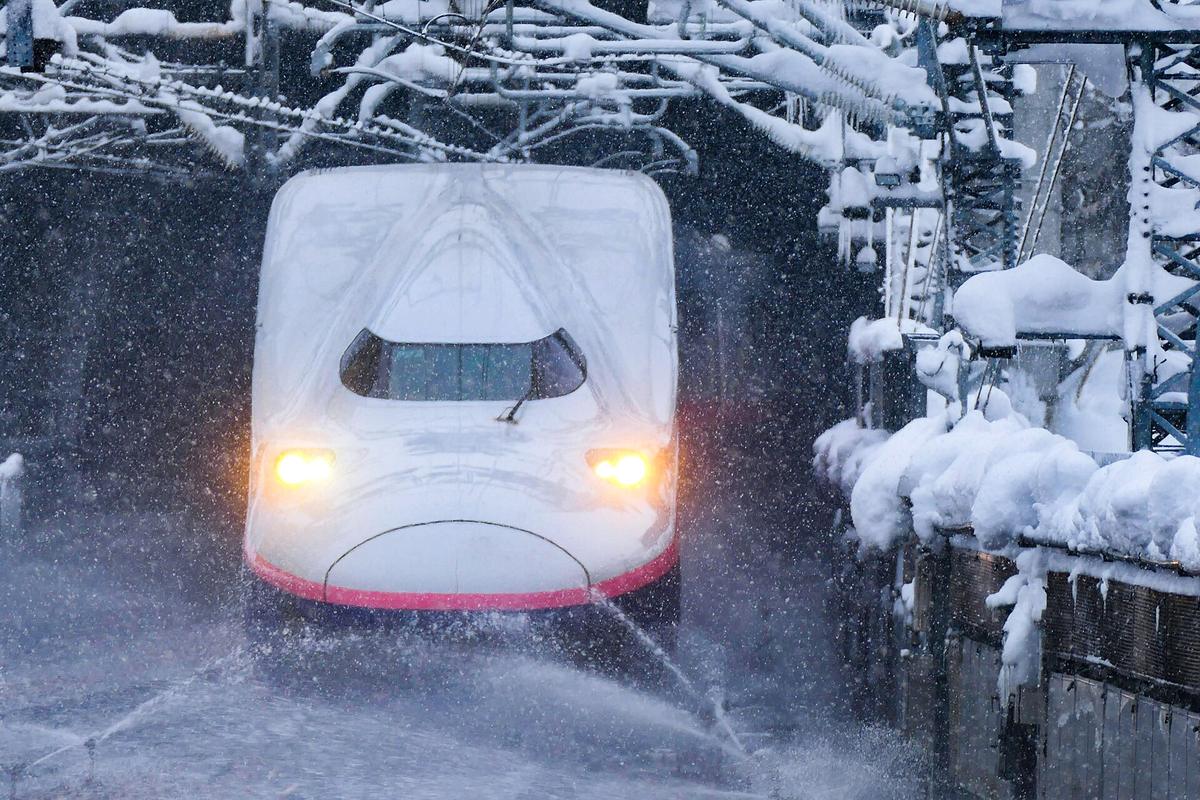
Side by side, the contrast is clean: JR Central wets the snow with cold water so it cannot be lifted, which still requires slower running; JR East melts the snow with hot water, which is why the Joetsu Shinkansen suffers relatively few snow-related speed restrictions. It also explains a pattern regular travellers notice — in winter, heading north from Tokyo is often more punctual than heading west.
As for when conventional lines suspend service, no published numerical criterion was found — operator pages say only that services resume progressively once safety checks are complete. So do not expect a predictable "X centimetres and it stops" line; what you can rely on is the planned-suspension information rhythm described above. If you are driving instead, note that snow-country roads are an entirely different risk set, covered in our winter driving in Japan guide.
On-the-spot playbook
Everything above, compressed into the order you should actually work through it.
Step 1: Establish whether this is a delay or a cancellation
Those two words determine every right that follows. Open the operator's official service-status page (tables above) and check whether it says chien (delay) or unten miawase / unten chushi (suspension). Cancellation remedies are far larger — full refunds, a free ride back to your origin, alternative routing. A delay basically gets you the surcharge.
Step 2: Decide whether to ride it out or walk away
This is the step that needs a fast decision, because the thresholds are attached to that choice:
- Departure is officially confirmed an hour or more late and you have something you must reach today → walk away, claim the full surcharge under Art. 289 (2)(i), and rebuild the day.
- The operator has announced a confirmed 2-hour-plus late arrival → the condition is already met; there is no need to ride to the terminus just to qualify.
- The delay looks like 30 to 60 minutes and nothing today is time-critical → honestly, this is not money worth chasing; riding it out costs you less time than the counter will.
- You booked on EX-Reservation / Smart EX and the two-hour delay is confirmed → walking away is worth the most (full bundled price, no fee); riding it out actively costs you.
Step 3: Check whether your ticket qualifies for substitute transport
Paper tickets, day passes and coupon tickets do; IC card stored value does not. If you qualify, use the staffed gate and show the ticket — never tap the reader. If you do not qualify, you have not lost everything: the cancellation refund route is still open, you simply cannot ride another company's line for free.
Step 4: Preserve the evidence
Three items: the ticket itself (keep it out of the automatic gate), the delay certificate (download from the operator's site), and photos of the station notices. The first is what turns into money; the other two are for your insurer and your employer.
Step 5: Should you switch to another mode of transport?
Here this guide deliberately stops short, because no highway bus or domestic airline rebooking and walk-up rules were verified for this article. You will not read "buses always have same-day seats" or "airlines will waive the change fee" here — those are each operator's own terms, and unread terms do not get published. What can be offered is the decision logic:
- Ask first whether anything is moving at all today. In a typhoon-driven planned suspension the whole region's surface transport is usually affected, so switching modes may buy nothing. A single-line incident or equipment failure is a very different case, where rerouting works well.
- Exhaust the free option first. Substitute transport costs nothing extra; if you qualify and a parallel line exists, it is always the first move.
- Only then consider paying your own way. Before you do, work out how the refund side will be handled — Article 287's "non-boarding certificate" exists precisely for self-funded detours around a blocked section — so you do not end up losing on both sides.
- Taxis and late-night buses are on you, as Tokyo Metro states explicitly. Do not expect reimbursement afterwards.
- An extra hotel night is often the rational answer, but the railway will not fund it (Art. 290-3). Judge it on whether the line is likely to reopen tomorrow morning, not on reluctance to spend the money.
One last piece of advice
If only three things survive from this article, make them these: a pure delay refunds the surcharge, not your fare; under two hours does not mean nothing, because a one-hour-plus late departure you decline to travel on refunds the surcharge in full; and a JR Pass, once activated, pays nothing even when a natural disaster stops the trains. Hold those three and the conversation at the counter changes completely — you are not asking for sympathy, you are asserting a right written into the Passenger Business Rules.
And once more on scope, because it matters: the rules and plain-language pages here were verified for JR Central, JR Kyushu, JR Hokkaido and JR Shikoku, plus JR West's article numbering. Not one JR East rule page could be read for this guide. If your problem happens in Greater Tokyo or on the Tohoku, Joetsu or Hokuriku Shinkansen, use this article as the basis for the conversation and confirm with station staff — do not wave it at anyone as the final word. That is the most honest thing this guide can tell you.
FAQ
- Q1:Does JR refund you if the shinkansen is delayed?
- Partly — and the part that surprises everyone is which part. Under Article 289, Paragraph 2, Item 3 of the JR Central Passenger Business Rules, if a limited express arrives at your destination station two or more hours behind the scheduled arrival time, you can claim a full refund of the limited express / express surcharge. The base fare is not refunded. Japanese rail tickets are two layers — a base fare ticket plus a surcharge ticket — and a delay refund only touches the surcharge. The official plain-language pages of JR Central, JR Kyushu, JR Hokkaido and JR Shikoku all use the same wording and none of them mentions the base fare. Note also that the two hours is measured at arrival, not departure.
- Q2:My train was only 100 minutes late. Do I really get nothing?
- Not necessarily, and this is the most damaging myth in English-language advice about Japanese trains. The rules open two separate one-hour doors. First, if the train departs an hour or more late (or is certain to) and you decide not to travel, Article 289, Paragraph 2, Item 1 still gives you the full express surcharge back. Second, if a delay means you miss a connection by an hour or more measured from the connecting train's scheduled departure, Article 282, Paragraph 1, Item 2 opens up trip-abandonment refunds, ticket validity extension, or a free ride back to your origin station. The real dividing line is not 120 minutes — it is whether you ride to the end or give up.
- Q3:Is a JR Pass refunded or extended if trains are cancelled by a typhoon or snow?
- No, and the official wording leaves no room at all. Both the Japanese and English versions of the official JAPAN RAIL PASS conditions page (both marked current as of April 2026) state that once you start using the pass, the period of use cannot be extended and no refund will be issued, even if trains are suspended or delayed for any reason, including natural disasters. They go further: the JR Group will not bear additional costs such as alternative transport or accommodation caused by a change to your route. This is the exact opposite of a normal ticket, which does carry the two-hour surcharge refund. JR Hokkaido's regional "free type" (unlimited ride) passes are written the same way — no refund and no extension after first use, even for suspensions.
- Q4:What is furikae yusou (substitute transport), and can I use it with a Suica?
- Furikae yusou is a mutual-aid arrangement between Japanese rail operators: when line A is suspended, you ride an alternative operator's designated route to your destination at no extra charge, using the ticket you already hold. The catch is the ticket type. Travelling on the stored-value balance of a Suica or PASMO does not qualify. That is stated in official material from four operators — JR East's official FAQ, Tokyo Metro, Tobu and Keio — and the reason Tokyo Metro gives is blunt: when you tap in with stored value, the operator has not yet collected a fare to any specific destination, so your travel section is undefined. Kintetsu additionally excludes contactless credit card payment. What does qualify: paper tickets bought before the disruption, day passes, coupon tickets, and IC commuter passes within the commuter section.
- Q5:Can I use an online delay certificate to claim a refund?
- No — these are two completely different things, and it is the single most common mix-up. A chien shomeisho (delay certificate) is a document proving a delay occurred, issued for employers, schools and insurers, and nearly every operator now publishes it online for you to print yourself. The Article 289 surcharge refund is a ticket-counter transaction and what it needs is the ticket itself. One practical move follows from that: do not feed your ticket into the automatic gate if you intend to claim — the machine keeps it. Use the staffed gate instead; JR Hokkaido states this explicitly on its official page. Online certificate archives range from 7 days (Nankai) to 45 days (JR East, Kintetsu, Hankyu, Hanshin, Meitetsu).
- Q6:How far in advance does Japan announce a planned suspension?
- There is no legally fixed number of hours, and you will see this stated wrongly a lot. Japan's Ministry of Land, Infrastructure, Transport and Tourism published its final report on planned suspensions (keikaku unkyu) in July 2019, requiring each operator to prepare its own information-provision timeline in advance, and attached a model case. That model case lists "48 hours before" and "24 hours before" as example timing points, each explicitly prefixed with "(example)" — the main report itself sets no such obligation. The useful takeaway is still strong: Japan runs planned suspensions on a structured information rhythm, with the official model starting roughly two days out, so you normally have time to move your plans — provided you know which page to watch.
- Q7:Will JR pay for my hotel or my missed flight?
- No, and the rules say so directly. Article 290-3 of the JR Central Passenger Business Rules states that passengers may claim only the remedies set out in Articles 282 onwards, regardless of whether the cause is attributable to the company, and Paragraph 2 adds that beyond those, passengers may make no claim whatsoever. So consequential costs — an extra hotel night, a rebooked flight, a missed event — are not covered by the carriage contract. That is precisely why the delay certificate matters: it is the evidence your travel insurance will ask for. Whether your particular policy covers rail delay at all, and from how many hours, varies enormously between insurers, so read your own policy wording before you go.
Read next
JR Pass 2026: Is It Still Worth It?
Four real routes calculated, six alternatives that may beat the Pass.
Suica vs ICOCA vs PASMO 2026: Which IC Card to Buy?
The chip shortage is over — unregistered Suica and PASMO went back on sale in March 2025, alongside the deposit-free Welcome Suica and phone options. Which to pick, and how they differ.
When Does It Snow in Japan? First Snow by City
Tokyo’s first snow falls later than Osaka’s on average, and Aomori gets 567cm a winter to Tokyo’s 8cm. The official 30-year normals, city by city.