The hardest part of eating vegetarian in Japan isn't finding food — it's that so many dishes that look vegetarian aren't. Almost everything that seems plant-based — miso soup, udon broth, simmered vegetables, cold sides — is built on "dashi" (stock), and Japan's mainstream stock is made from katsuobushi, dried bonito fish. So a plate of pure vegetables often contains fish. This guide takes the seasoned-traveler view and unpacks that "hidden non-veg" trap: how to ask about stock, which dishes contain fish by default, how to experience shojin ryori (Buddhist temple cuisine, especially at Koyasan — the most beautiful vegetarian tradition in the country), which city vegan restaurants and chains really work (including T's Tantan vegan ramen inside Tokyo Station), what to grab at konbini, halal and prayer-room notes for Muslim travelers, and the Japanese phrases and ingredient cards you'll actually use. The bottom line up front: Tokyo, Kyoto and Osaka are easy; rural areas need preparation; cities run on tools, temples on tradition.
- The big trap is bonito dashi: most "vegetable" dishes use fish stock, so they look veg but aren't — the key phrase is "Dashi wa sakana o tsukatte imasu ka?"
- Shojin ryori is the peak: Buddhist temple cuisine at a Koyasan shukubo — no meat, fish, egg, dairy or pungent roots; one night can outshine the whole trip
- Cities run on tools: HappyCow to find places, T's Tantan vegan ramen (inside Tokyo Station), Ain Soph, and a vegan-café boom
- Halal is niche but improving: certified spots cluster in Tokyo/Kyoto/Osaka; prayer rooms at airports, sparse downtown; watch mirin's alcohol
- Opinion: never assume "vegetables = safe"; ask, use an ingredient card, and carry snacks in the countryside
📖 Table of Contents
- 1. The honest truth: why veg in Japan is hard
- 2. Bonito dashi: the biggest hidden trap
- 3. Shojin ryori & Koyasan: the great tradition
- 4. City vegan restaurants & chains
- 5. Convenience store & supermarket finds
- 6. How to order at conveyor sushi & diners
- 7. Halal & Muslim traveler guide
- 8. Apps & Japanese ingredient cards
- 9. City difficulty: easy vs. prep-required
- 10. Diet × can-eat × avoid quick table
- 11. My verdict: doable, but be proactive
- 12. FAQ
The honest truth: why veg in Japan is hard
People argue endlessly about whether Japan is veg-friendly, and both camps are half right. The "it's easy" crowd is usually in Tokyo or Kyoto, using an app to find dedicated vegan spots; the "it's impossible" crowd usually went rural, walked into a regular Japanese restaurant, and assumed "ordering vegetables is safe" — then hit traps everywhere. The reality is that Japan is wildly polarized on this: specialist places are world-class, but the "default settings" of ordinary dining are not veg-friendly at all.
Three things make it hard: (1) bonito stock is everywhere — the star of the next section; (2) the idea of "vegetarian" isn't widely understood, so staff genuinely believe "no meat" has nothing to do with fish or stock — it's a knowledge gap, not deception; (3) vegan is harder still, because you also rule out eggs, dairy, mirin and fish sauce. So the mindset for the whole trip is: don't assume, ask actively, use tools, base yourself in cities and temples, and carry your own food in rural stretches. Hold that frame and everything below is just tools and detail.
Bonito dashi: the biggest hidden trap
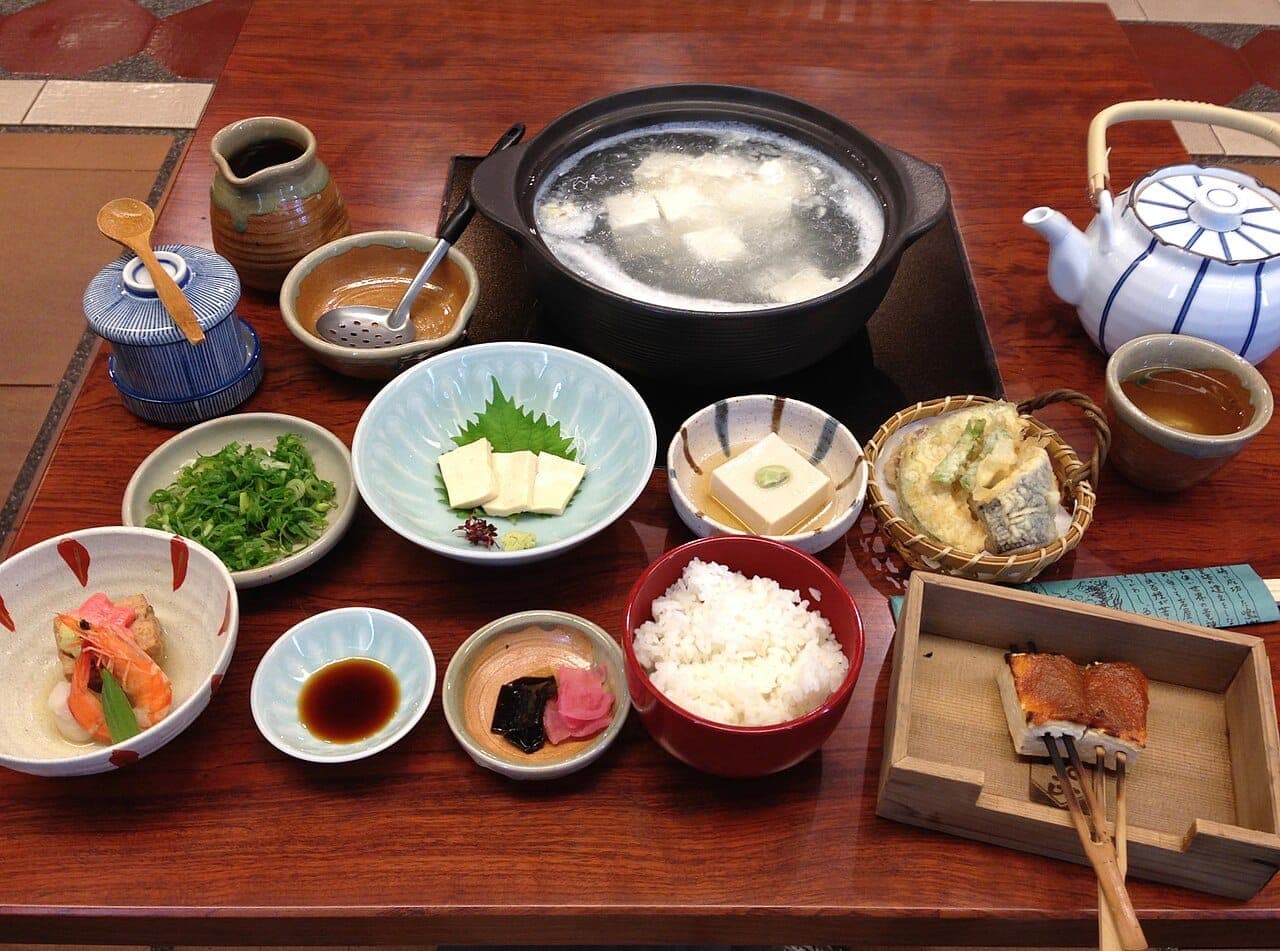
If you remember one thing from this article, make it this: "dashi" (stock) is the biggest hidden non-veg ingredient in Japan. The mainstream stock is "katsuobushi (bonito) + kombu (kelp)"; the only plant-based versions are pure "kombu dashi" (kelp) and "shiitake dashi" (mushroom). The trouble is that bonito stock hides where you'd least expect:
- Miso soup: almost always contains bonito stock unless labeled shojin or vegan.
- Udon and soba broth and dipping sauce (tsuyu): contains bonito plus fish sauce by default — a "plain noodle soup" usually isn't veg.
- Oden, simmered dishes (nimono), chawanmushi: stock-based, so they contain fish.
- Cold and blanched vegetable sides (ohitashi): often topped with bonito flakes or seasoned with fish stock.
- Salad dressings, teriyaki, various dipping sauces: many contain bonito extract or fish sauce.
In other words, "I'll order a plate of vegetables or a bowl of plain noodles, so I'm safe" is the most dangerous assumption. To break it, memorize the key question: "Dashi wa sakana o tsukatte imasu ka?" (does the stock use fish?). If you're strict vegan, add "niku, sakana, tamago, nyuu, dashi, zenbu dame desu" (no meat, fish, egg, dairy or stock). The safest bet is still to look for places that advertise "shojin" or "vegan," or to use the ingredient card below and have staff check line by line. A lot of Japanese flavor comes from stock — that's not a flaw, it just means vegetarians have one extra step of verification.
Shojin ryori & Koyasan: the great tradition
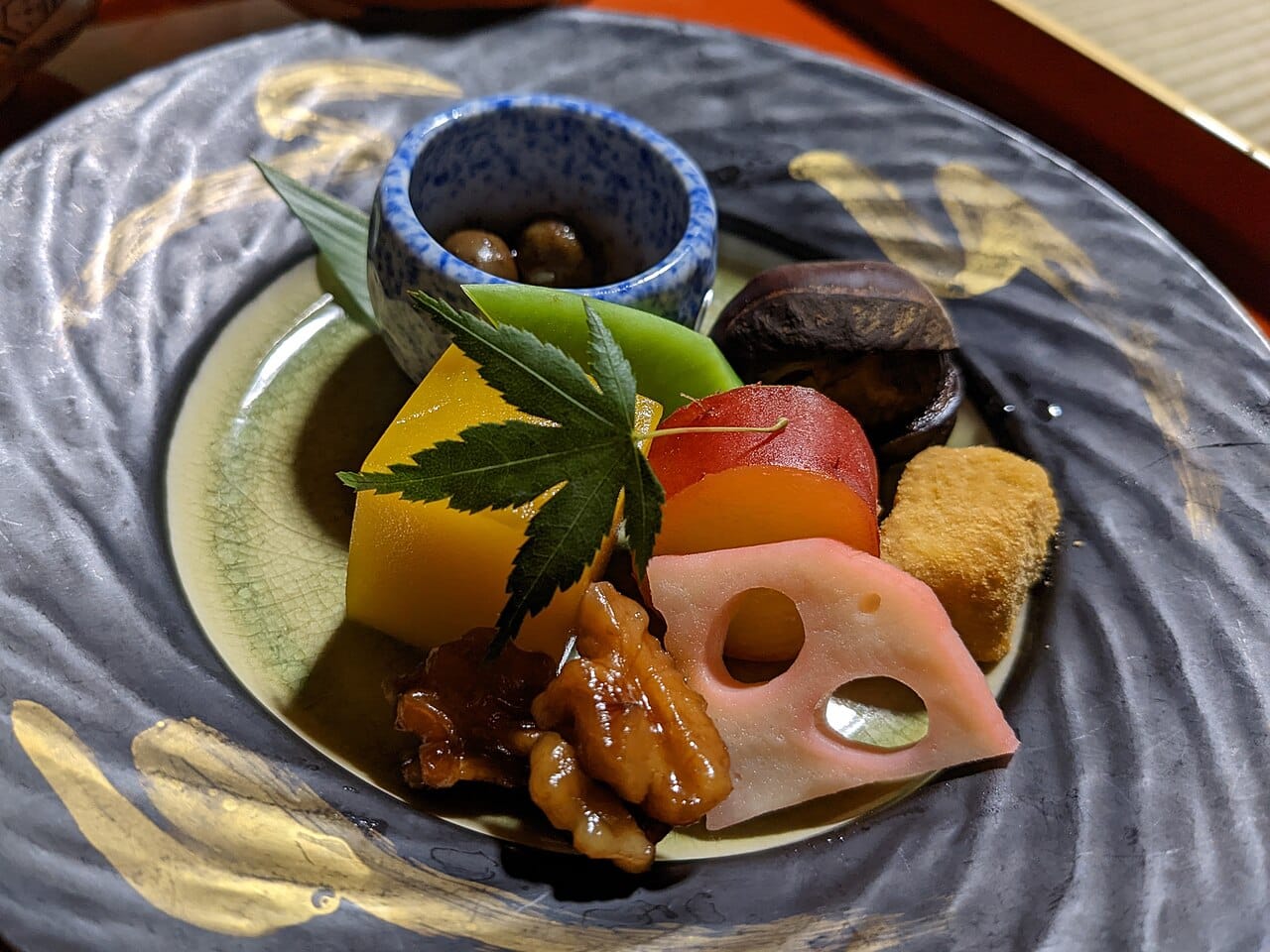
After all those traps, here's Japan's best gift to vegetarians: shojin ryori, the cuisine of Japanese Buddhist temples and arguably one of the most refined vegan diets in the world. Its rules are stricter than ordinary vegetarianism: beyond no meat, fish, egg or dairy, it also avoids the "five pungent roots" (onion, garlic, chives, leeks, asafoetida — believed to disturb the mind), building flavor entirely from seasonal mountain vegetables, tofu, yuba (tofu skin), roots, pickles, miso and seaweed. A full shojin set arrives as a dozen small dishes laid out like artwork; you're eating a philosophy of "less but precise, seasonal, no killing."
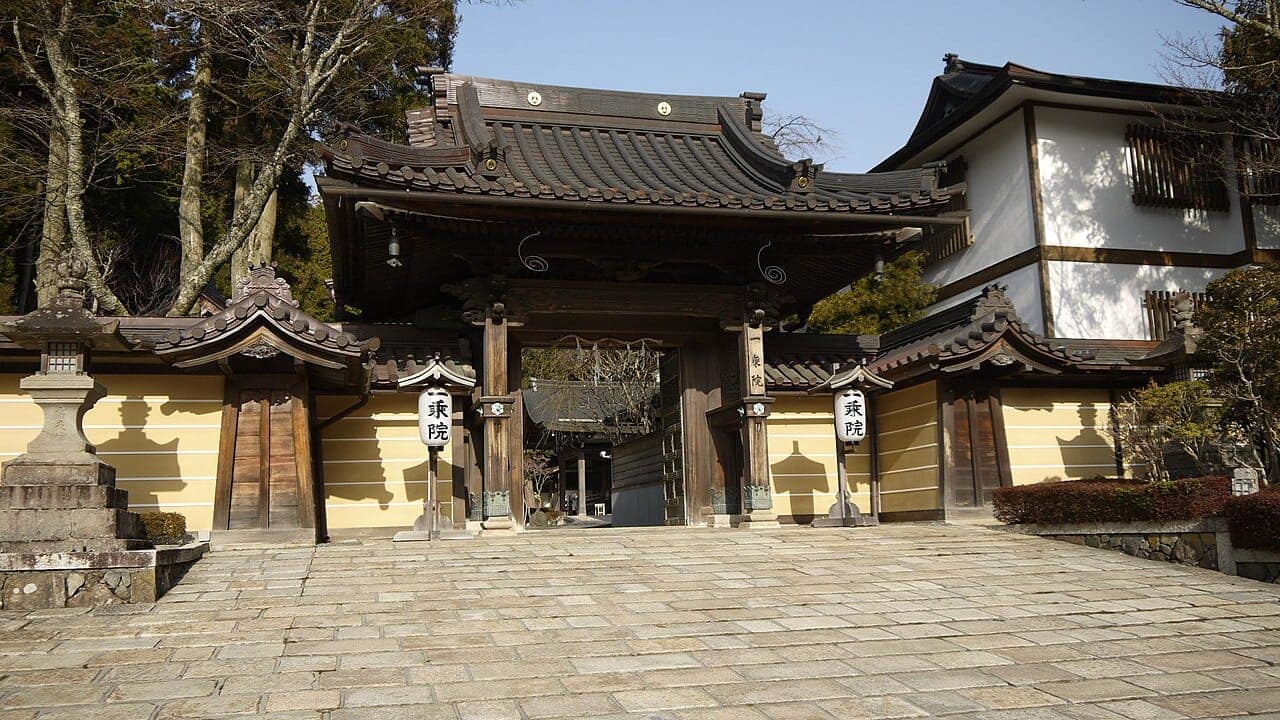
The classic place to experience it is Koyasan (Mount Koya), a Shingon Buddhist sanctuary deep in the mountains of Wakayama. Most "shukubo" (temple lodgings) here serve shojin ryori for dinner and breakfast, and you can join the monks' pre-dawn "otsutome" (sutra chanting) — an experience that fuses food, faith and mountain atmosphere. Based on official and temple information, a shukubo stay with two meals commonly runs roughly ¥10,000–40,000 per person depending on the temple and room. Getting there isn't complicated: Nankai Railway from Osaka Namba to Gokurakubashi, then a cable car up the mountain. For vegetarians and vegans, I'll say it plainly: a night in Koyasan is the high point of eating in Japan, worth a dedicated detour. For temple options, transport and itinerary planning, see our Koyasan shukubo and shojin ryori guide.
If you skip Koyasan, Kyoto is the other shojin heartland — temples like Tenryu-ji and the Myoshin-ji area have famous yudofu and shojin kaiseki spots that take tofu to its limits; Kamakura and Eihei-ji (Fukui) also keep the temple-cuisine tradition. City versions are usually served as lunch sets — easier to book and gentler on the wallet than a temple stay.
City vegan restaurants & chains
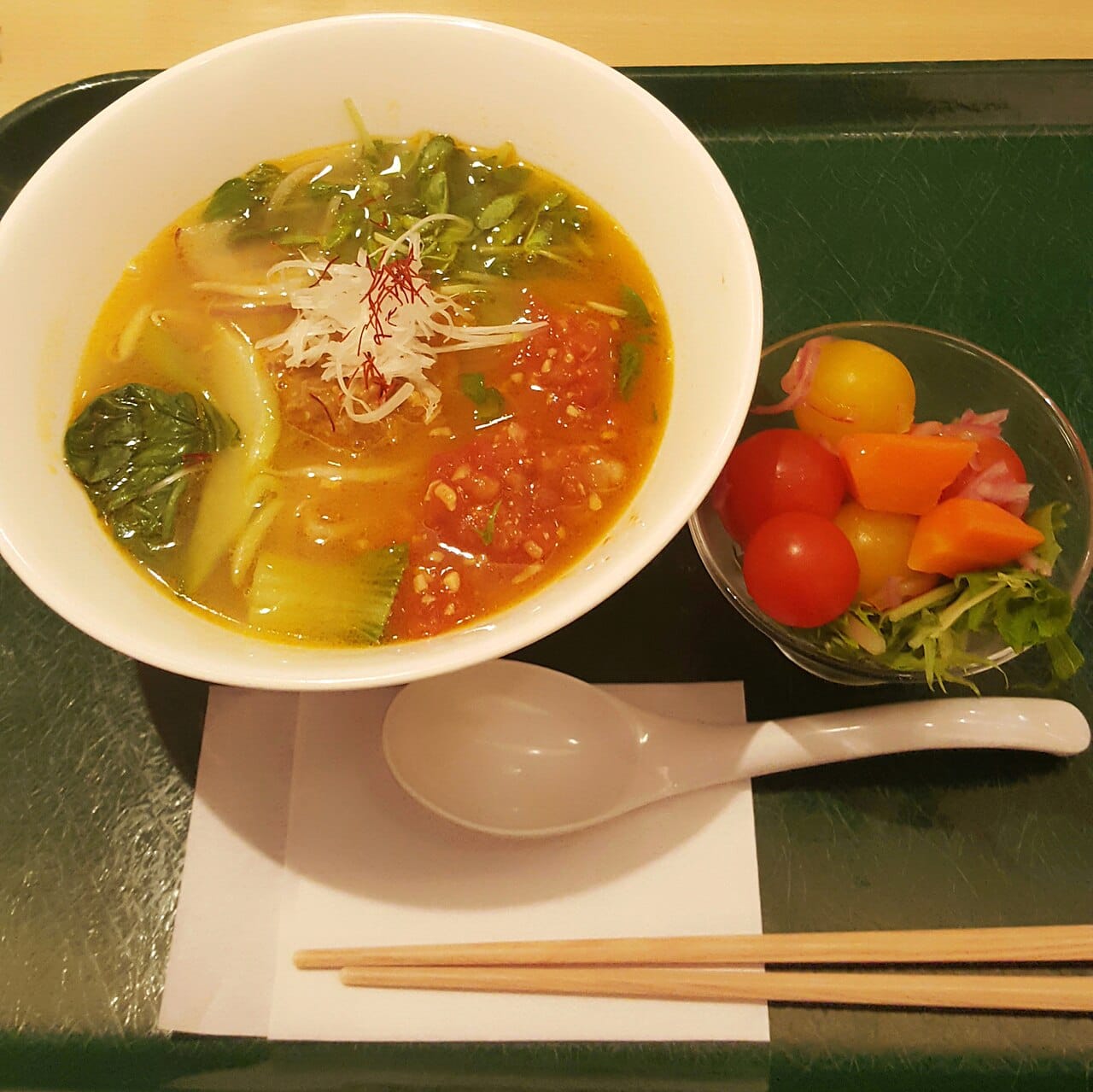
The good news is that vegan-friendly restaurants in Tokyo, Kyoto and Osaka have boomed in recent years. Based on restaurant information and commonly recommended options, a few worth noting:
- T's Tantan — the most useful one. Located inside Tokyo Station (past the ticket gates, so you need a valid ticket or platform ticket to get in), it specializes in vegan tantanmen (golden, black and white sesame dan dan), with no meat, fish, egg or dairy — perfect even in the gap before a shinkansen. Per its official information it continues to operate, and it's the best counter-example to the "Japanese stations have nothing for vegans" stereotype.
- Ain Soph — a vegan restaurant brand with several Tokyo branches, known for pancakes, burgers and rice bowls; more polished, good for sitting down to a proper meal.
- Saishoku Kenbi and other buffet-style vegan spots — generous portions and easy choices in buffet or set-meal form.
- Vegan cafés everywhere — Kyoto, Osaka and Kamakura have loads of independent vegan cafés; a quick HappyCow search turns up plenty.
Fully vegan chains are rare, but a few work in a pinch: CoCo Ichibanya (curry) serves vegetarian curry at some branches (check the sauce base), and Mos Burger occasionally has plant-based options. Konbini and supermarket supplies are in the next section. Pin these to your map and you won't go hungry in cities. For the wider landscape of Japanese food and which dishes are inherently veg-friendly versus inherently meaty, pair this with our Japan must-eat food guide.
Convenience store & supermarket finds
Convenience stores (7-Eleven, FamilyMart, Lawson) are a lifeline for veg travelers, especially in the countryside where specialist shops are scarce. Based on commonly available items, here's what to grab and what to dodge:
- Onigiri (rice balls): relatively safe are ume (pickled plum), grilled rice balls (yaki-onigiri) and kombu — but "kombu" is sometimes seasoned with bonito, so check; avoid "tuna," "mentaiko," "salmon" and "okaka" (bonito).
- Lacto-ovo OK: boiled eggs, egg sandwiches, pudding, yogurt, cheese items (vegans skip these).
- Plant-based: edamame, natto, tofu, salads (check dressing), fruit, nuts, wagashi (daifuku, dorayaki, yokan) and most breads.
- Supermarket deli: inari sushi, pickles and vegetable tempura are usually plant-based, but still confirm the stock and whether frying is shared.
The biggest vegan pitfalls at konbini are bonito, fish sauce, and egg/dairy-based sauces and mayo. Japanese labeling is thorough, so spotting "katsuo (bonito), sakana (fish), nyuu (dairy), tamago (egg), hachimitsu (honey)" tells you what to skip. Treat konbini as a supply stop and save mains for vegan restaurants or temples — the most practical city rhythm. For smarter konbini picks overall, see our Japan konbini food guide.
How to order at conveyor sushi & diners
Ordinary Japanese restaurants aren't off-limits — you just have to order and ask well. Common scenarios:
- Conveyor-belt sushi: order natto rolls, kappa-maki (cucumber), inari sushi, tamago (egg), avocado rolls and pickle rolls. Note: soy sauce and dipping sauces should be checked, and strict vegans skip tamago. The full ordering and billing system at conveyor sushi is broken down in our Japan must-eat food guide.
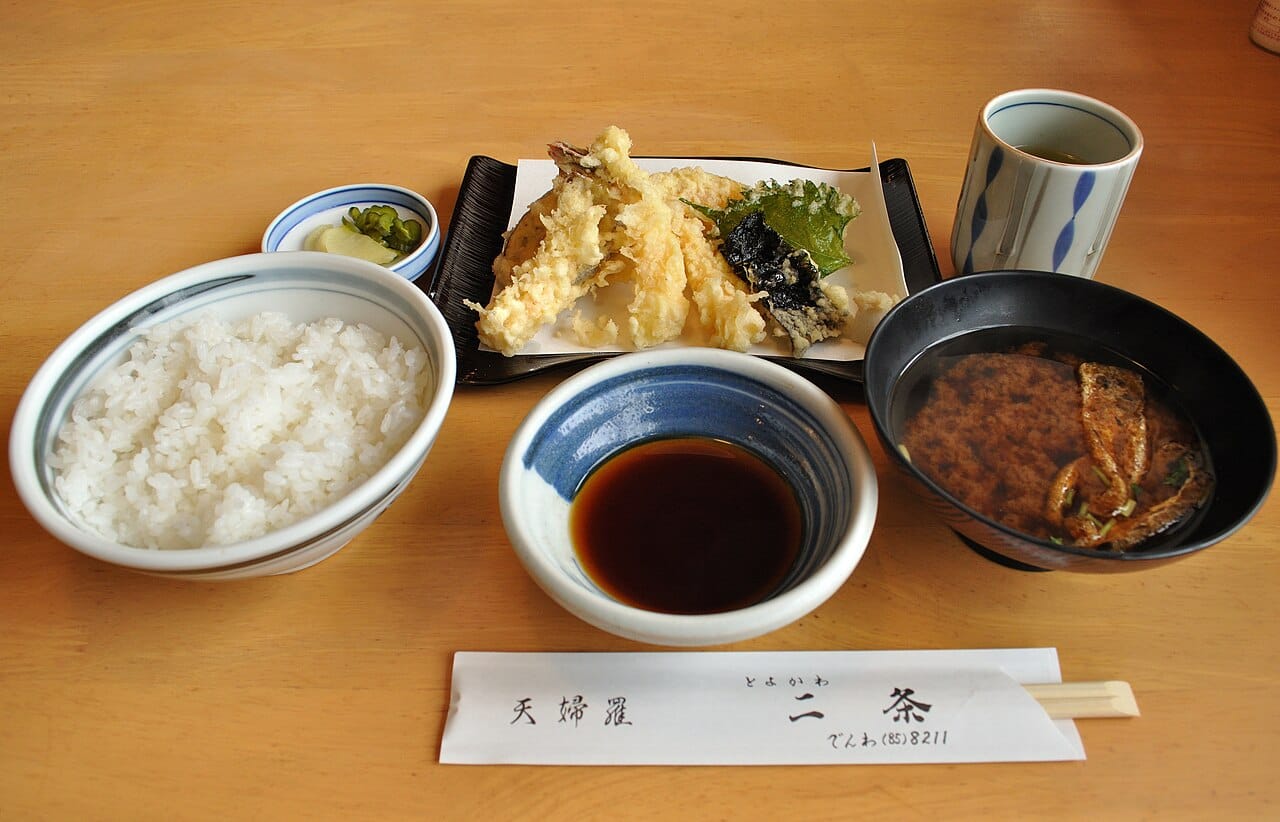
- Tempura: vegetable tempura (yasai-ten) looks friendly, but confirm whether the batter contains egg, whether the dip (tentsuyu) contains bonito, and whether the oil is shared with seafood.
- Teishoku diners: you can often swap a meat/fish main for tofu, natto or egg, but the miso soup and sides still ride on stock — ask.
- Ramen: the vast majority of ramen broths are tonkotsu, chicken or fish-based, so for vegan ramen you go to a dedicated vegan shop (like T's Tantan) — don't expect a regular ramen shop to adapt. For how the broth styles differ, see our Japan ramen guide.
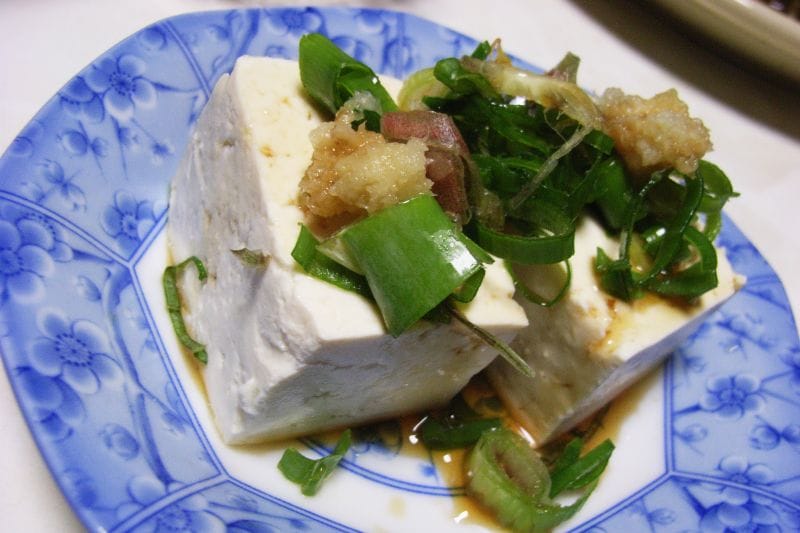
A useful trick: many otherwise plant-based dishes (cold tofu, blanched greens) just have bonito flakes added at the end, so saying "katsuobushi nashi de" (without bonito) rescues them. Memorize this alongside the dashi question and your everyday hit rate jumps.
Halal & Muslim traveler guide
Halal is even more niche than vegetarian in Japan, but tourism growth has clearly improved it. Practical advice for Muslim travelers:
- Seek certified restaurants: Tokyo (Shin-Okubo, Asakusa), Kyoto and Osaka have halal-certified or "Muslim Friendly" venues, and Turkish, Indian, Malaysian and Indonesian places are the most dependable, since they already understand halal needs.
- Watch mirin and cooking sake: many Japanese seasonings contain trace alcohol (mirin, ryorishu), a concern for observant Muslims — much like the dashi trap, seemingly mild Japanese cooking can hide alcohol and stock, so verify item by item.
- Pork is everywhere: butaniku (pork), bacon, ham and tonkotsu (pork-bone ramen broth) are extremely common in bento, ramen and konbini, so always read ingredients; even unrelated-looking dishes may use lard or pork-bone stock.
- Prayer rooms: Narita, Haneda and Kansai airports plus some large malls and stations have prayer rooms, but downtown density is low — use apps like Halal Gourmet Japan and Salah-time to find locations and prayer times in advance.
Overall, Muslim-friendliness runs Tokyo > Osaka/Kyoto > rural, on the same logic as the vegetarian urban-rural gap: big cities and international-restaurant hubs are easiest, while deep countryside means konbini and your own supplies.
Apps & Japanese ingredient cards
In cities, tools decide everything. Three essentials:
- HappyCow — the standard app for veg travelers worldwide; filter the map by vegan / vegetarian / halal tags, read reviews, hours and locations. The fastest way to find places in a city.
- Google Maps — search "vegan," "shojin ryori" or "halal" plus a place name, and use review photos to see the actual dishes.
- A translation app (Google Translate, etc.) — translate ingredient labels in real time and communicate with staff; camera translation of ingredient lists is especially handy.
All of these run on data, so sorting out mobile internet on arrival is a veg traveler's first priority — in an unfamiliar town you need to look up the nearest vegan spot or scan an ingredient label on the spot, and without data you're stuck. Buy a Japan unlimited eSIM online before you go, scan the QR on landing (no physical SIM swap), and HappyCow and your translation app are ready anytime.
Next, a Japanese "dietary restriction card" — write your restrictions in Japanese, screenshot it, and show staff instead of trying to explain verbally. A suggested vegan version: "Watashi wa vegan desu. Niku, sakana, tamago, nyuuseihin, dashi (katsuo, sakana) o taberaremasen. Yasai dake no ryori wa arimasu ka?" (I'm vegan; I can't eat meat, fish, egg, dairy or stock [bonito, fish]; do you have purely vegetable dishes?). For lacto-ovo, drop the egg and dairy lines but keep the stock exclusion. For halal, switch to "butaniku, alcohol (mirin, ryorishu) o taberaremasen" (I can't eat pork or alcohol [mirin, cooking sake]). With this card and the two phrases above, the language barrier nearly disappears.
City difficulty: easy vs. prep-required
Veg-friendliness in Japan is wildly polarized, so it helps to plan by city:
- Tokyo (easiest): the highest density of vegan restaurants in the country, with names like T's Tantan and Ain Soph, plus the most international and halal options.
- Kyoto (easy + traditional): the heartland of shojin ryori and yudofu, blending traditional veg cuisine with modern vegan cafés — eating veg here doubles as a culture experience.
- Osaka (moderate, leaning easy): vegan spots are growing, but B-class street food (takoyaki, okonomiyaki) mostly contains bonito and egg, so choose carefully.
- Koyasan (the temple peak): shukubo shojin ryori — a pilgrimage for vegan travelers.
- Rural towns (prep required): specialist shops are scarce; lean on konbini and supermarkets, check HappyCow ahead for places along the route, and carry snacks if there aren't any.
The planning principle is simple: put your veg highlights in Tokyo, Kyoto and Koyasan, and carry your own food on rural legs — then you won't go hungry or hit hidden traps. For pre-trip prep like customs, tax-free shopping and data, see our Japan trip essentials checklist.
Diet × can-eat × avoid quick table
"What you can eat, what to avoid, and the key phrase," condensed into one table to check on the spot:
| Diet | Relatively safe | Most common trap | Key Japanese phrase |
|---|---|---|---|
| Lacto-ovo vegetarian | Egg dishes, tofu, vegetable tempura, inari sushi, wagashi | Bonito stock (miso soup, noodle broth, nimono) | Dashi wa sakana o tsukatte imasu ka? |
| Vegan | Shojin ryori, T's Tantan, natto rolls, kappa-maki, edamame | Bonito + egg + dairy + mirin + mayo | Niku, sakana, tamago, nyuu, dashi, zenbu dame desu |
| Just hold the bonito | Cold tofu, blanched greens, salad | Bonito flakes added at the end | Katsuobushi nashi de (without bonito) |
| Halal | Certified venues, Turkish / Indian / Malaysian food | Pork, tonkotsu, mirin & cooking sake (alcohol) | Butaniku, alcohol o taberaremasen |
| Konbini supply (all) | Ume onigiri, edamame, natto, fruit, bread | Tuna, mentaiko, okaka (bonito), salmon | Read label: katsuo / sakana / nyuu / tamago |
My verdict: doable, but be proactive
A seasoned traveler writes about food with a stance, so here it is plainly: Japan is "doable, but you have to be proactive" for vegetarian, vegan and halal travelers. It's not Thailand or India where veg food is everywhere, but it's nowhere near the "vegans will starve in Japan" myth either. The difference is entirely whether you're willing to do a few things:
- Don't assume; ask — "vegetables = safe" is the biggest trap, and bonito stock breaks that assumption.
- Use the right tools — HappyCow + a translation app + a Japanese ingredient card make cities almost frictionless.
- Put your highlights in the right place — Tokyo, Kyoto and Koyasan are the sweet spots; the shojin ryori at a Koyasan shukubo is a peak experience worth a dedicated trip.
- Self-cater in the countryside — on legs with few specialist shops, prep konbini and snacks in advance.
Bottom line: build one night of Koyasan shojin ryori into your trip, run cities on apps and an ingredient card, and carry supplies for rural stretches — and not only will you not go hungry as a vegetarian in Japan, you'll eat one of the most refined vegan traditions on earth. If your Kyoto leg also wants to dive into matcha and wagashi (most wagashi are plant-based and veg-friendly), pair this with our Kyoto matcha journey. Bring the right tools and Japan's veg map is wider than you think.
Frequently Asked Questions
- Q1:Is Japan actually vegetarian friendly, or is it as hard as people say?
- Honestly: the problem isn't finding food, it's that "looks vegetarian" often isn't. Japan's biggest trap is "dashi" (stock) — most miso soup, udon and soba broths, simmered dishes, chawanmushi and even cold vegetable sides are made with "katsuobushi" (dried bonito, i.e. fish) or dried sardines, so a plate that looks all-vegetable frequently contains fish. On top of that, the concept of "vegetarian" isn't widely understood, and staff often assume "no meat" has nothing to do with fish or stock. The good news: vegan-friendly restaurants in Tokyo, Kyoto and Osaka have boomed, and Koyasan's shojin ryori is one of the world's great vegetarian traditions. In cities, with the right tools (the HappyCow app, a Japanese ingredient card) you can eat very well; in rural towns you need to stock up and do homework. In short: doable, but only if you ask, verify and never assume.
- Q2:How do I deal with the dashi (fish stock) trap?
- Memorize one phrase: "Dashi wa sakana o tsukatte imasu ka?" (does the stock use fish?). Japan's mainstream stock is "katsuobushi (bonito) + kombu (kelp)"; only pure kombu dashi or shiitake-mushroom dashi is plant-based. In practice: (1) miso soup, udon/soba broth, oden, chawanmushi and simmered dishes all contain bonito by default unless the place is labeled "shojin" or "vegan"; (2) dipping sauces (tsuyu), teriyaki and many salad dressings contain bonito extract or fish sauce; (3) even plain "yasai" (vegetable) dishes may be topped with bonito flakes or seasoned with fish stock. The safest move is to seek out places that advertise vegan or shojin, or use an allergy ingredient card (below) and have staff check item by item — don't rely on "I ordered vegetables so I'm safe."
- Q3:What is shojin ryori (Buddhist cuisine) and where can I eat it?
- Shojin ryori is the vegetarian cuisine of Japanese Buddhist temples — arguably one of the most refined vegan culinary traditions in the world. It uses no meat, fish, eggs or dairy, and even avoids the "five pungent roots" (onion, garlic, chives, leeks, asafoetida), relying instead on seasonal mountain vegetables, tofu, yuba, roots, pickles, seaweed and miso. The classic place to experience it is Koyasan (Mount Koya) in Wakayama, a Shingon Buddhist mountain sanctuary where most "shukubo" (temple lodgings) serve shojin ryori dinner and breakfast, paired with a pre-dawn sutra chanting service. Based on official and temple information, a shukubo stay with two meals commonly runs roughly ¥10,000–40,000 per person. Kyoto also has many shojin ryori and yudofu (hot tofu) restaurants. For a vegetarian or vegan traveler, a night in Koyasan is the high point of eating in Japan — worth building a trip around. See our full Koyasan guide.
- Q4:Beyond temples, which vegan / vegetarian restaurants and chains actually work in cities?
- Based on restaurant information and commonly recommended options: (1) T's Tantan — inside Tokyo Station (past the ticket gates, so you need a valid ticket or platform ticket to enter), famous for vegan tantanmen (sesame dan dan noodles) with no meat, fish, egg or dairy; a reliable on-the-go option that, per its official information, continues to operate; (2) Ain Soph — a vegan restaurant brand with several Tokyo branches, known for pancakes and burgers; (3) Saishoku Kenbi and similar buffet-style vegan spots; (4) plenty of independent vegan cafés in Kyoto and Osaka. For chains, conveyor-belt sushi offers natto rolls, cucumber rolls (kappa-maki), inari sushi and tamago (egg — skip if vegan), while CoCo Ichibanya (curry) has vegetarian curry at some branches. The fastest way to find places in a city is the HappyCow app.
- Q5:Are there many halal options for Muslim travelers, and are prayer rooms easy to find?
- Halal is even more niche than vegetarian in Japan, but it has improved noticeably with tourism growth. Practical tips: (1) seek certified restaurants — Tokyo (Shin-Okubo, Asakusa), Kyoto and Osaka have halal-certified or "Muslim Friendly" venues, and Turkish, Indian, Malaysian and Indonesian places are dependable; (2) filter with apps — HappyCow has a halal tag, and there are dedicated platforms like Halal Gourmet Japan; (3) prayer rooms — Narita, Haneda and Kansai airports plus some large malls and stations have prayer rooms, but city-center density is low, so check ahead or use a Salah-time app; (4) watch for mirin and cooking sake — many Japanese seasonings contain trace alcohol (mirin, ryorishu), a concern for observant Muslims, much like the dashi trap. Pork (butaniku), bacon and ham are extremely common in bento and ramen, so always read ingredients.
- Q6:What can I eat from convenience stores and supermarkets?
- Konbini are a lifeline, but you have to choose carefully. Based on commonly available items: (1) onigiri (rice balls) — kombu, ume (pickled plum) and grilled rice balls are safer, but watch out: "kombu" is sometimes seasoned with bonito, and "tuna," "mentaiko" and "salmon" are non-veg; (2) boiled eggs, edamame, natto, tofu and salads (check the dressing); (3) fruit, nuts, wagashi (daifuku, dorayaki) and bread; (4) supermarket inari sushi, pickles and vegetable tempura are usually plant-based but still check the stock. The biggest vegan pitfalls are bonito, fish sauce, and egg/dairy-based sauces — scan the label for "katsuo," "sakana" (fish), "nyuu" (dairy) or "tamago" (egg). Treat konbini as a supply stop and save mains for vegan restaurants. We have a separate konbini food guide to pair with this.