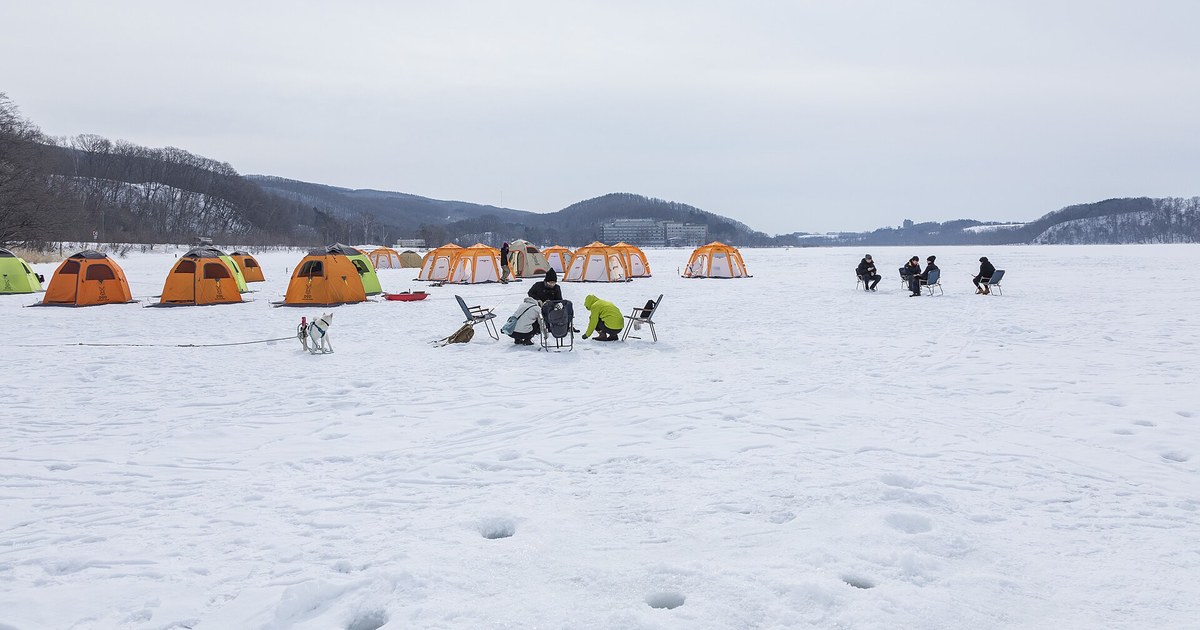
Lake Akagi Onuma and Lake Yamanaka both opened for wakasagi on 1 September, five days before this guide was verified, and neither lake has any ice on it. The opening date you found in a search result is the start of a legal fishing period signed off by a prefectural governor; the frozen surface you pictured is a separate question with a separate answer. That second answer has no date attached: Lake Akan announced its ice opening three days in advance and accepts no bookings, while Lake Matsubara published four hard dates for the season and left one line reading undecided. This guide separates the two timelines, names the four variables that can cancel your day (ice is only one of them), explains why the same permit costs twice as much bought on site, and covers the one death Japanese authorities have written down — which did not happen in the water.
- The opening date is a legal fishing period, not an ice date. 1 September at Akagi and Yamanaka, 1 November at Hibara, all written into governor-authorised rulebooks.
- Ice access has no date and no published thickness threshold. Lake Akan announced three days out and takes no bookings.
- Four things can cancel your day: ice, wind, fish stocks and a seasonal gap. Akagi closes for the whole of December.
- Buying the permit in advance versus on site is two different prices. Yamanaka doubles; Akagi adds a flat 700 yen.
- The recorded fatality happened inside a tent, not through the ice — and three lakes give three contradictory rulings on tent heaters.
📖 Table of contents (click to expand)
- What does the opening date actually mean?
- When does the ice open?
- How thick does the ice need to be?
- Four things that can cancel your day
- Which of the four kinds of wakasagi fishing do you want?
- The one death on record happened inside a tent
- Can you run a heater in the tent?
- What the rulebook actually regulates
- What a permit costs and where to buy it
- What happens if you fish without one?
- Guided trips: the two questions that pick one
- What is published for the 2027 season
- FAQ
- Appendix: official Japanese source text
What does the opening date actually mean?
It means this lake may now be fished for this species. It does not mean you can stand on it.
Start with the document. Article 3 of the Lake Akagi Onuma fishing cooperative rules is a two-column table pairing species with permitted periods: carp and crucian carp 1 June to 31 March, dace 1 June to 31 March, wakasagi 1 September to 31 March. The rulebook took effect on 1 September 2023 and carries a Gunma prefectural governor authorisation number on it. This is a legal instrument, not a seasonal press release.
Lake Yamanaka uses the wording an English-language searcher is more likely to meet. In a notice dated 14 July 2026 the cooperative gave the 2026-27 season as: wakasagi opening day 1 September (Tuesday), dome boat operations from 1 October (Thursday). Both weekdays check out against the calendar, so that is the season currently running.
Lake Hibara is the most useful of the three, because the official page splits the two questions itself. The Urabandai tourism association, carrying information supplied by the Hibara fisheries cooperative, gives the season as 1 November 2025 to 31 March 2026 and then adds a separate line: anyone intending to go out onto the ice must check the Hibara fisheries cooperative website beforehand. The authority is telling you, in one paragraph, that these are two things to look up separately.
Most first-time planners read the opening date as the first day you can walk on the frozen surface and circle it in a calendar. At Lake Yamanaka that reading fails outright, because the lake does not freeze. Its wakasagi fishing happens from boats all season long.
When does the ice open?
There is no date, and the authorities do not appear to be planning to give it one.
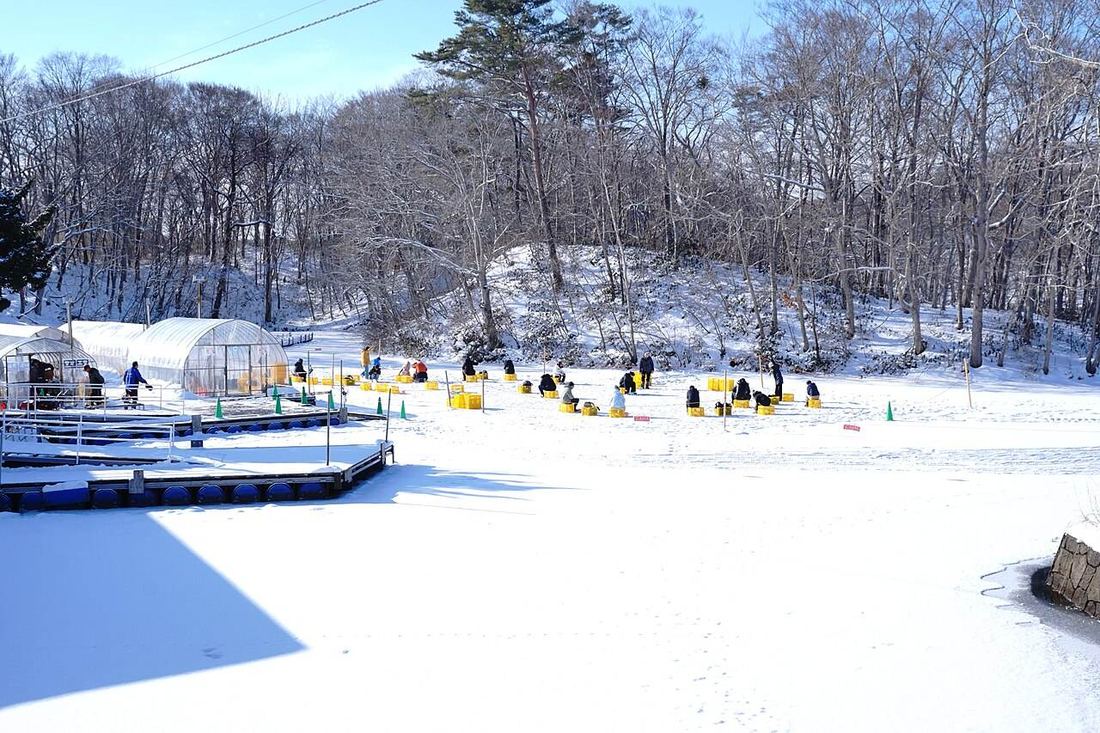
Lake Matsubara supplies the cleanest evidence. The Koumi town tourism association posted the season schedule on 20 November 2025 and pinned down the rhythm of the whole winter: season tickets and dome pier bookings open 2 December, dome pier opens 13 December, the pier itself opens 19 December, an event on 21 December, wrap-up expected 8 March. Five items, four dates. The fifth line reads, in Japanese, the ice is undecided.
That undecided line is the one item most overseas visitors are flying in for.
Hokkaido gives even less warning. The official Kushiro and Lake Akan tourism site posted on 14 January 2025 that the Lake Akan ice attraction would partially open from 08:00 on 17 January. Announced on the 14th, open on the 17th — three days. The same notice carries two sentences with real consequences for an itinerary: reservations are not accepted, and entry is first come, first served on the day.
Translated into planning terms: do not book flights around ice fishing. Make the trip work without it, then treat the ice as an upgrade you discover after arrival. Our seven-day Hokkaido winter itinerary is a reasonable frame to drop this into as an optional slot.
How thick does the ice need to be?
No official document publishes a number.
This is a verified conclusion rather than a failed search. The material checked covers six lakes’ official pages, the complete text of the Lake Akagi and Lake Yamanaka rulebooks, and the joint ice-fishing safety poster issued by the Sapporo Development and Construction Department of the Hokkaido Regional Development Bureau together with Ishikari City and the Sapporo Kita Police Station. Across that set the count of centimetre thresholds is zero.
The Akagi rulebook shows what the authorities do choose to regulate. The word for on-the-ice appears five times in six pages, and every occurrence concerns hole diameter, number of holes, spacing between holes, tent shape, or permitted hours. Officialdom governs what you do on the ice, not whether the ice qualifies.
The Ichinohe town tourism association shows the other pattern. Its 9 February 2026 notice reports that ice fishing at the Oshida Dam reservoir, known as Nagyoko, had reopened for the first time in three years, and that the 2024 and 2025 seasons were cancelled because the ice was not thick enough. It gives a reason without giving a threshold.
The joint safety poster is written entirely as method rather than measurement. When the air temperature goes above freezing the ice melts and becomes dangerous, so check air temperature and ice condition constantly. Stay away from areas where the ice has thinned. Keep the number of fishing holes to the minimum necessary to prevent falls, and watch out for holes other people have opened and left, because many holes make the ice thin more easily. Children on the ice alone is extremely dangerous. If you sense any danger at all, get back to the bank immediately. Those are the rules worth memorising, not a number.
The widely circulated figures — 10 cm to walk, 15 cm to pitch a tent — have no official source behind them, so they are not repeated here, not even in a softened form. The only 15 cm anywhere near this subject is a measured reading reported when Akagi opened in the 2025 season, which describes conditions on a day rather than a standard for entry.
The one threshold written as a number is wind
The Ozora tourism association is unusually specific about the Lake Abashiri Memanbetsu venue. Cancellation is decided when northerly winds of 5 m per second or more are forecast; depending on wind direction, 5 m per second may still allow the event to run, with the final call made from conditions on site; and even after the venue opens, it may be shut mid-session if drifting snow makes vehicles likely to get stuck.
That is the one numeric threshold in the entire set, and it changes what you check on the morning of your trip. Check the wind forecast, not the ice.
Four things that can cancel your day
Ice is one of them, and it is not the one people miss.
| Variable | Documented example | What you can do |
|---|---|---|
| Ice | Nagyoko cancelled outright in 2024 and 2025, reopening 9 February 2026 after three years | Watch that lake’s official page from a week out and hold a backup plan |
| Wind | Lake Abashiri Memanbetsu: cancelled on forecast northerly winds of 5 m/s or more | Read the wind forecast, not the temperature |
| Fish stocks | The same venue ran only to 11 February one season for wakasagi stock protection, against a normal mid-March finish | Never treat last season’s window as this season’s |
| A seasonal gap | Lake Akagi closes from December to early January | Keep Akagi off Christmas and New Year itineraries |
That last row is the one that bites hardest, so it deserves unpacking. The Maebashi convention and visitors bureau lists Akagi Onuma’s closed periods as April to August, December to early January, and days of bad weather. Lay the fishing methods over that: boat fishing finishes on 30 November, and the ice does not open until early January. For the whole of December there is no fishing at Lake Akagi Onuma at all.
December is also the month most people build a Japanese winter trip around. If your plan is a day out from Tokyo, Akagi is — by the cooperative’s own description — the only lake in the Kanto region where ice fishing for wakasagi happens in a normal year, and in December that door is shut. Other options for the same slot are covered in our winter day trips from Tokyo.
The fish-stock row needs the same care. That 5 January to 11 February window at Lake Abashiri Memanbetsu looks like a tidy annual pattern, but the town notes on the same page that the venue normally runs to around mid-March and that the season was shortened specifically to protect wakasagi stocks. It is an exception, not a calendar.
Which of the four kinds of wakasagi fishing do you want?
Three of the four need no ice at all.
| Format | Representative lake | Official period | Ice-dependent |
|---|---|---|---|
| Rowboat fishing | Lake Akagi Onuma | 1 Sep – 30 Nov | ⚪ No |
| Dome boat (heated cabin) | Lake Yamanaka | From 1 Oct (2026-27) | ⚪ No — this lake does not freeze |
| Dome pier / pier | Lake Matsubara | 13 and 19 Dec (last season) | ⚪ No |
| Hole fishing on the ice | Akagi, Shumarinai, Abashiri, Akan, Matsubara | 🔴 No date | 🔴 Yes |
One lake commonly runs three of these in a single winter. Lake Matsubara opens the dome pier and the pier in mid-December while the ice line sits marked undecided; Akagi runs boats in autumn, closes in December, and reopens on the ice in early January. So asking which month a lake is open is the wrong question. Ask which format you want and when that format opens.
The gap between a Yamanaka dome boat and Hokkaido ice is wide enough to change your packing list — a heated enclosed cabin versus an open surface or an unheated tent. Cross-check the month you are travelling against our first-snow and freezing dates by region before you decide what to carry.
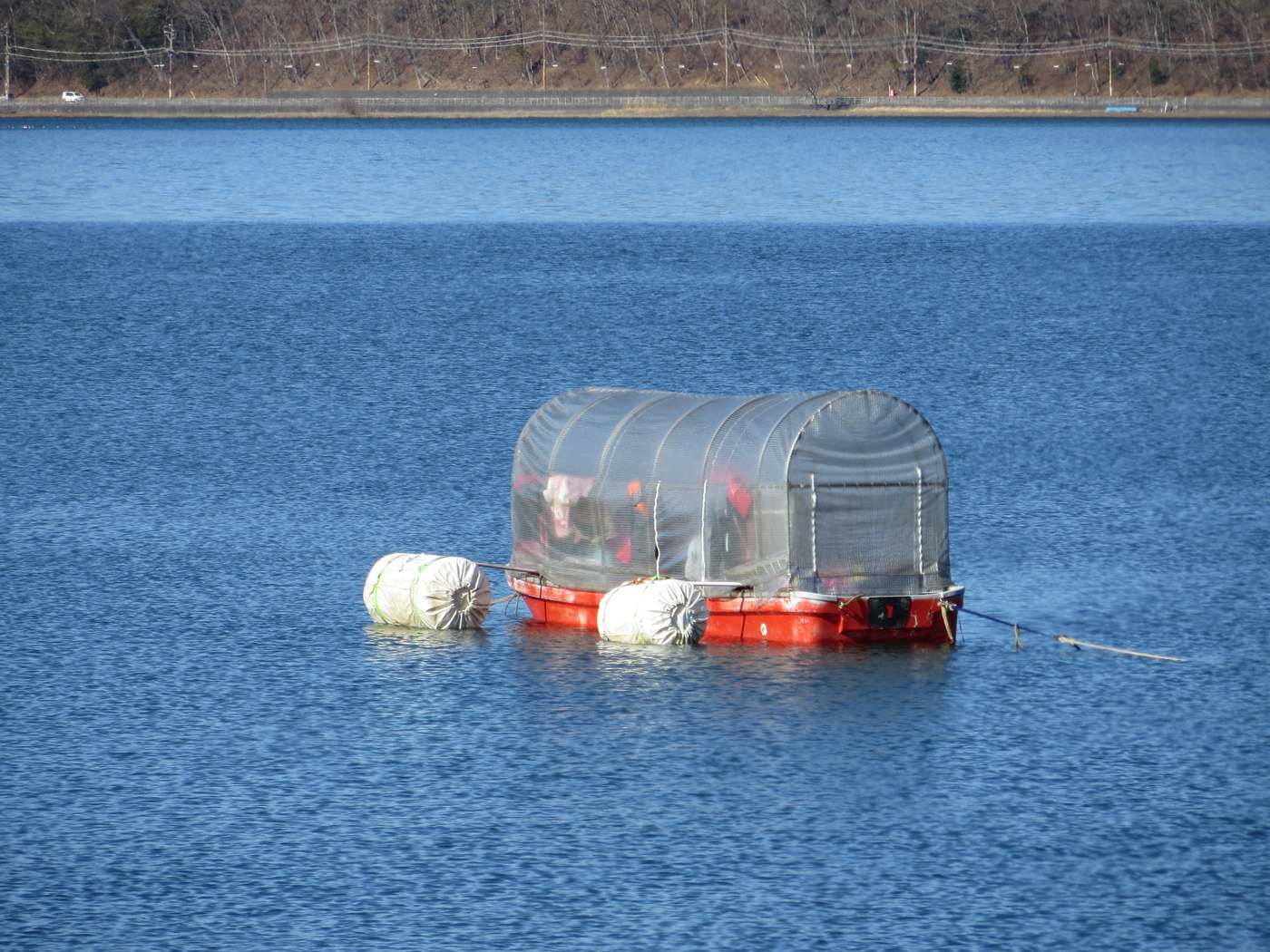
The real use of the dome boat: it does not wait for ice
The section above ends on a problem — ice opening has no date and may not happen at all in a given season. The dome boat is the practical way out of that problem. It has nothing to do with ice: Lake Yamanaka opened on 1 September and the boats start on 1 October, so it is bookable now and can go into a fixed itinerary.
The rules on board are a different set entirely. Heated cabin, flushing toilet, one person can book alone (the opposite of the Hokkaido tours, which mostly need two), ages 5 to 80, groups capped at ten, two sessions at 07:00–10:30 and 11:00–14:00. Smoking is banned inside the cabin and allowed only in a designated area at the stern; you may bring your own food and drink but not alcohol; life jackets are compulsory under 12. If you drive there in winter, winter tyres or chains are mandatory.
The operator sets expectations on its own page: fishing happens in a natural environment, the catch is not fixed, and you may end the session with nothing; from January onwards conditions vary and some days are simply poor. The fare does not include the fishing permit — that is a separate cost, priced in the next section.
Lake Yamanaka dome boat, three hours, bookable for one
The one death on record happened inside a tent
The joint accident record published by the Sapporo Development and Construction Department with Ishikari City and the Sapporo Kita Police Station lists two ice-fishing incidents. The first is an injury: on 21 February 2015, at the Barato River in Shinko-higashi 1, Ishikari City, a man fishing for wakasagi fell into the water when the ice under his feet broke. Other anglers nearby pulled him out immediately; he suffered a minor hand injury and was not in danger. The record adds the context — for roughly a week beforehand, warm air had kept daily maximum temperatures above zero, and the maximum on the day itself was also above freezing.
The second is a death, and it was not in the water. On 23 January 2011, in a tent pitched on the ice of the Ishikari floodway in Shinko-minami 1, Ishikari City, a man died of carbon monoxide poisoning. The record explains the mechanism: burning briquettes or similar fuel where air, and therefore oxygen, is insufficient causes incomplete combustion and produces carbon monoxide; the gas is highly toxic, and even a small inhaled amount causes headache and nausea and carries a risk of death; and because it is colourless and odourless, it is hard to notice.
Read together, the two records invert the intuition most people bring to this activity. The worry going in is falling through the ice. The fatality the authorities chose to write down happened in the spot that feels safest — the tent you climbed into to get warm.
The actions that follow are specific. Keep a permanent ventilation opening rather than sealing the tent. Confirm what the lake permits before you burn anything at all. Treat headache or nausea as a reason to get outside immediately, not as a sign you are cold. The same safety poster adds one more easily forgotten rule: take rubbish and burnt charcoal residue home with you, because illegal dumping of waste is a crime and can carry imprisonment or a fine.
Can you run a heater in the tent?
Three official sources, three answers, and none of them transfers to another lake.
| Venue | Heater in the tent | What the official text says |
|---|---|---|
| Lake Akan ice attraction | 🔴 Prohibited | States plainly that bringing heating equipment into a wakasagi fishing tent is prohibited |
| Lake Shumarinai | 🟢 Rented out | Price list offers a cassette-gas heater at ¥1,000 with one canister, 300 yen per extra |
| Lake Akagi Onuma | ⚪ No heater wording | Article 9 item 6 bans acts that damage the ice and names cooking with oil as an example |
The same activity, three authorities, three rulings. This is the single item most worth confirming before departure, because it decides whether a heater goes into your luggage.
Which also settles the tempura question
Pulling a wakasagi out of the hole and deep-frying it on the spot is the image this activity is sold on. It is not available everywhere, and what blocks it is the rulebook rather than the facilities.
Article 9 item 6 of the Lake Akagi Onuma rules reads, in full effect: when hole fishing on the ice, an angler must not carry out acts that damage the ice, such as using non-screw-type pegs or cooking with oil. That last clause switches off deep-frying. And the Akagi cooperative describes its own lake as the only one in the Kanto region where ice fishing for wakasagi happens in a normal year — so for a trip built out of Tokyo, frying on the ice does not exist at the one available venue.
The two Hokkaido lakes go the other way. The Ozora tourism association tells visitors at Lake Abashiri Memanbetsu that no tempura sets are lent out and that they should bring their own, which reads as a tacit yes. The Lake Akan ice attraction advertises a service that fries your catch; I could not obtain its prices from an official page, so no figures for it appear here. For other things worth eating in the same season, see our winter food guide.
What the rulebook actually regulates
Hole diameter, hole count, spacing between holes — and whether your tent is a shape the cooperative has approved.
The governor-authorised Akagi rulebook is far more granular than most visitors expect. These clauses are decisive for anyone planning to bring their own gear:
- The hours are a rule, not an opening time. Article 4 item 2 prohibits ice hole fishing across the whole fishery from 16:00 until 07:00 the next morning. So 07:00 to 16:00 is a legal window, not a shop schedule.
- Holes must be under 15 cm in diameter. Article 4 item 3 forbids using holes of 15 cm or more.
- Two holes per person maximum, spaced at least 30 cm apart. Same clause. This is the rulebook version of the safety poster’s warning that many holes thin the ice.
- Two rods per person. Article 4 item 1, applying to wakasagi and dace. Lake Yamanaka also caps rods at two.
- 🔴 Only tents of a shape designated by the cooperative may be used. Article 9 item 5. Your own tent may not qualify — ask before you carry one out there.
- An electronic permit means live location sharing. Article 9 item 1 requires that a permit issued through the online system be carried in a state where the angler’s location data is being supplied to the cooperative through that system for the duration of the session. The appendix names FishPass as the only online system, selling day permits only.
Lake Yamanaka regulates different things, because it is boat fishing: anglers must carry the permit and show it when a warden asks (Article 6); fishing hours run from sunrise to sunset daily; and life jackets are mandatory when fishing from a boat.
What a permit costs and where to buy it
Buying in advance and buying on site are two different prices, and at Lake Yamanaka the gap is double.
| Lake | Day permit | Season / multi-use | Under 18 | On-site surcharge |
|---|---|---|---|---|
| Matsubara (Nagano) | ¥500 | Season ticket ¥3,500 | Free to junior high | — |
| Akagi Onuma (Gunma) | ¥800 | Annual ¥5,500 | Junior high free; primary and under need no permit | 🔴 ¥1,500 (+700 yen) |
| Nagyoko (Iwate) | ¥800 | — | Junior high ¥400 | — |
| Abashiri Memanbetsu (Hokkaido) | ¥900 | — | Primary ¥450 | — |
| Yamanaka (Yamanashi) | ¥1,000 | Annual ¥10,000 | Junior high ¥300; primary and under free | 🔴 ¥2,000 (double) |
| Shumarinai (Hokkaido) | ¥1,300 | Six-use book ¥6,500 | Half price to high school; infants free | — |
The two surcharge models work differently. Yamanaka multiplies: ¥1,000 at a designated outlet becomes ¥2,000 bought on the bank, and the junior-high rate goes from ¥300 to ¥600. Akagi adds a flat amount: buy anywhere other than a designated permit outlet and it is 700 yen more.
Buying your permit at the water is therefore the most avoidable loss on the trip. Look up the designated outlets before you leave. At Akagi Onuma those outlets are the lakeside inns and shops themselves, so picking up a permit is a detour of minutes against a gap of ¥1,500 versus ¥800.
Keep the second cost layer separate from the permit. The Lake Matsubara dome pier costs ¥3,500 for adults and ¥2,000 to junior high, with the permit charged on top, so an adult actually pays 4,000 yen. The Lake Yamanaka cooperative states explicitly that dome boat fares do not include the permit, rod or bait; I did not verify individual operators’ own fares, and no figures for them appear here. Shumarinai adds parking at ¥300 and extra rods at ¥500. At Lake Abashiri Memanbetsu the manual ice auger is lent free, with rods at 600 yen, chairs at 300 yen and four-person tents at 3,000 yen.
A permit price on a booking page is not a current price
The Lake Yamanaka dome boat listing is a ready-made example: the same page gives two permit prices that contradict each other. The description opens by stating the rate changed on 1 April 2026 to 1,000 yen for adults (high school and above), 300 yen for junior high students and people with physical disabilities, and free for primary and under. Scroll down to the "not included" block and the old rate is still there: 600 yen for males aged high school and above, 300 yen for females.
The gap is not only the amount. The old rate priced men and women differently and the new one abolishes that split entirely. A woman budgeting from the stale block expects to pay 300 yen and will actually pay 1,000.
So take permit prices from the cooperative and nowhere else — the table above is built on the Lake Yamanaka cooperative's own 14 July 2026 notice for the 2026-27 season. A page selling you a boat seat is not the issuing authority, and nothing guarantees when its "not included" block was last touched. This generalises: any statutory fee quoted on a booking platform should be checked back against the body that issues it.
One cash warning. Shumarinai states that reception opens at 06:00 and takes cash only. Finding an ATM near a Hokkaido lake is not a quick errand, so draw cash the night before in town. If you are driving, note that prefectural and municipal roads in winter behave nothing like the main national routes; read our winter driving guide first.
What happens if you fish without one?
Two layers, routinely compressed into one sentence.
The first layer is the rulebook, and it carries no fine. Article 8 of the Lake Yamanaka rules provides that where an angler breaches the rules, the cooperative may immediately order that person to stop fishing or refuse them in future, and that fees already paid will not be refunded. That is the entire sanction, with no monetary figure.
The second layer is the Fisheries Act. Article 197 paragraph 1: a person who infringes a fishery right or a member’s exercise right is liable to a fine of up to one million yen. Paragraph 2: prosecution for that offence requires a complaint. No complaint from the cooperative, no prosecution.
In practice the sequence you meet is a warden on patrol asking to see your permit, and being asked to leave if you have none. The criminal layer is a separate switch, and the cooperative holds it.
The permit fee is not a price the shop set
This layer rarely gets explained, and it changes how the money reads. Article 170 of the Fisheries Act provides that a holder of a class-5 common fishery licence on inland waters who wishes to restrict harvesting by non-members — the activity the Act calls yugyo, recreational fishing — must establish fishing rules and obtain the authorisation of the prefectural governor. Those rules must specify the scope of restrictions, the amount of the fee and how it is paid, matters concerning the permit itself, and the obligations of anglers. The same article requires the governor to hear the opinion of the inland water fishing ground management committee, and sets as a condition of authorisation that the fee be appropriate relative to the cost of propagating the aquatic species and managing the fishing ground. Finally, the rules have no legal effect until the governor authorises them.
So that ¥800 permit is closer to a regulated levy than an admission ticket. What you pay is tied by statute to stocking and management costs.
One inconsistent article number, described and not explained
The notes at the end of the Akagi rulebook state that where an angler breaches the rules and does not follow a warden’s guidance, the cooperative will report the matter to the police as a fishery right infringement under Article 195 of the Fisheries Act and request enforcement cooperation.
Under the current Act, however, Article 195 covers breaches of reporting obligations, carrying up to six months’ confinement or a fine of up to 300,000 yen, and has nothing to do with fishery right infringement. That offence sits in Article 197. The rulebook is a formal instrument that took effect on 1 September 2023 with a Gunma governor authorisation number.
I did not verify the article-numbering history, so this page records only that the two do not match; it does not explain the discrepancy or declare either version correct. Official Japanese documents printing a superseded article number is not unusual — there is a close parallel in bathing regulation, covered in our piece on the legally required notice on the onsen wall.
Guided trips: the two questions that pick one
Yes — and choosing between them comes down to two questions: which water you are being taken to, and whether you will sit in a tent or in a hut with a flue.
Neither question is invented. The first one is the safety section applied to a booking page: the waters named in the joint official accident record are the Barato River and the Ishikari floodway, and several half-day tours out of Sapporo list the Barato River in their detailed itinerary — some while their headline promises a frozen lake. That mismatch is visible on the product page. The second is the heater section: the one death on record happened inside a tent, from carbon monoxide.
Put those two questions to the three Sapporo departures and this is what comes back:
| Listing | Which water | Where you sit | Price as checked | Reviews |
|---|---|---|---|---|
| KKday 533018 | Lake Shinotsu (south ground, Shinshinotsu Village — a lake) | Fishing hut with a stove (a quilted tent is also offered) | NT$1,429 | — |
| Klook 188648 | Barato River (the listing's own wording) | Tent | NT$1,328 | 4.9 from 38 |
| GetYourGuide t1376995 | Barato River in the detailed itinerary; the highlights say "frozen lake" | Tent | about US$41.67 | none, flagged as newly listed |
The differences are all in that table; pick the one you want. Two things belong alongside it, though, or the table reads as something it isn't.
First, the bottom two are the same water. The Barato River is one of the waters named in the joint official accident material behind the safety section, and the one death on record happened inside a tent, from carbon monoxide. That is not a claim about either operator — legitimate businesses run on that water, and this page has no operating record for any of them. What it means is that the two questions are not there to eliminate anyone; they are there to ask the operator before you pay: how they judge the ice on the day, what heats the tent, and whether it is flued. The safety section is why those two are worth asking.
Second, the GetYourGuide listing contradicts itself: the highlights put you on a frozen lake while the detailed itinerary heads for the Barato River, which is a river. Add the zero reviews, and both facts are here for you to weigh rather than for us to weigh for you.
The KKday option carries more published detail, so it is worth recording: its inclusions list a fishing permit fee in so many words. That line deserves a second look, because it may not be the permit the two sections above are about. The page is flagged as machine-translated, the Japanese term yūgyoken never appears anywhere on it, and it describes its own venue as a private fishing ground — if what you are paying is a private venue's entry fee, that is a different thing from a permit issued by a cooperative under a fishery right, and the rules in the legal section would not apply to it. The page does not clear this up, so ask the operator when you book whether you still need a permit rather than treating "included" as the end of the question. Four hours, free pickup from central Sapporo hotels, morning session leaving at 08:30 and finishing at 13:00 at the north exit of Sapporo Station, with a Genghis Khan grill and wakasagi tempura on site. Three things to know before booking: the minimum party is two, so a solo traveller cannot book it; the hut is not the only format, so say which you want; and confirmation takes up to a day rather than being instant, with free cancellation to two days out and 50 per cent charged one day out.
KKday: Lake Shinotsu half-day trip, hut, Sapporo pickup, “fishing permit fee” listed as included
Klook: Sapporo ice fishing, Barato River, tent
GetYourGuide: Sapporo ice fishing, Barato River, tent, pickup option
There is also a route with no booking platform involved. Permits are sold directly by the cooperatives and by lakeside inns, with some lakes issuing electronic permits through FishPass, and gear is rented at the venue on the day. At Akagi Onuma the designated permit outlets are the lakeside inns themselves, so staying at one solves permit and gear together — but those are small family-run places that mostly do not appear in booking-platform inventory, and going through a platform can steer you away from the very properties that can sell you a permit. Phone or use the property’s own site for that one.
What is published for the 2027 season
The autumn half is running. The ice half is unpublished at all six lakes.
| Item | Status | What is currently on the official page |
|---|---|---|
| Lake Yamanaka: opening 1 Sep, dome boats 1 Oct | 🟢 Published | 2026-27 season, posted 14 July 2026 |
| Lake Akagi Onuma: boat fishing from 1 Sep | 🟢 Already open | From 07:00 on 1 September 2026 |
| Lake Akagi Onuma: ice | 🔴 Unpublished | — |
| Lake Abashiri Memanbetsu | 🔴 Unpublished | Last season’s page (5 Jan – 11 Feb 2026) |
| Lake Shumarinai | 🔴 Unpublished | Rental bookings still listed as opening 8 January 2025 |
| Lake Matsubara | 🔴 Unpublished | The 2025-26 schedule posted 20 November 2025 |
| Lake Akan: ice | 🔴 Unpublished | Latest ice notice dated 14 January 2025 |
| Lake Hibara | 🔴 Unpublished | 1 November 2025 – 31 March 2026 |
Lake Hibara is the row to watch. Its season starts on 1 November, so the equivalent 2026 announcement is roughly two months out — the first cell in this table likely to change.
The whole guide collapses into one instruction: look up two kinds of date, separately. The legal fishing period is findable, written into a rulebook, and stable across the year. Ice access is not findable in advance, needs checking in the last few days before you travel, and may not happen at all — Nagyoko lost two consecutive seasons that way. Build the itinerary around the second case and no sheet of ice can wreck a trip. For a version of Lake Akan that works with or without it, see our Kushiro and Lake Akan winter guide.
Appendix: official Japanese source text
1. The season is a legal fishing period, not an ice date
第三条 次の表の左欄に掲げる水産動物を対象とする遊漁は、それぞれ右欄に掲げる期間内でなければならない。/ワ カ サ ギ 9月1日から3月31日まで(Lake Akagi Onuma fishing rules, in force 1 Sep 2023, Gunma governor authorisation)
ワカサギ釣り解禁日:9月1日(火) ドーム船営業開始日:10月1日(木)(Lake Yamanaka fisheries cooperative, 14 July 2026)
ワカサギ釣り解禁日は令和7年11月1日 ~ 令和8年3月31日 となっております。※氷上に上がられる方は、必ず桧原漁業協同組合様のホームページを事前にご確認ください。(Urabandai tourism association / Hibara fisheries cooperative)
2. Ice access: the authority writes "undecided"
12月13日(土曜日)ドーム桟橋解禁日/12月19日(金曜日)桟橋ワカサギ釣り解禁日/※氷上は未定/3月8日(日曜日)桟橋とドーム終了予定(Koumi town tourism association, 20 Nov 2025)
2025年1月17日 AM8:00 より一部オープンいたします。/ご予約はお受けしておりません。当日受付の先着順となります。(Kushiro / Lake Akan official tourism site, posted 14 Jan 2025)
3. Seasons cancelled outright
大志田ダム「菜魚湖」の氷上ワカサギ釣りが3年ぶりに解禁となりました。令和6年、7年は氷の厚さが足りず中止になったワカサギ釣りですが(Ichinohe town tourism association, 9 Feb 2026; end date stated as undecided)
4. The cancellation threshold is wind, not ice
中止の判断は、北寄りの風で風速5m以上が予想される場合にさせていただきます。…開催中であっても、吹き溜まりにより車両のスタックが懸念される場合は、途中で中止と判断させていただくことがございます。(Ozora tourism association)
遊漁時間 午前8時から午後4時 ※遊漁時間外の釣りは密漁となりますので、時間の厳守をお願い申し上げます。(same)
※例年は3月中旬頃まで実施していますが、今シーズンはわかさぎ資源保護のため、上記期間のみの開催となります。(Ozora town official, updated 2 Dec 2025)
5. Joint government, municipal and police safety material
気温がプラスになると、氷がとけて危険な状態になります。気温や氷の状況を常に確認しましょう。/釣り穴は転落防止のため、必要最小限にしましょう。/子どもだけでの氷上は大変危険です。/テントなどの閉鎖空間での練炭の使用は、一酸化炭素中毒などの危険性があります。(Hokkaido Regional Development Bureau Sapporo River Office, Ishikari City, Sapporo Kita Police Station)
石狩市新港南1の石狩放水路の氷上で設置されたテント内で男性が一酸化炭素中毒で死亡しました。(23 Jan 2011)
石狩市新港東1の茨戸川で、ワカサギ釣りをしていた男性が、足元の氷が割れて水中に落ちる事故が発生しました。/一週間ほど前から、暖気の影響で最高気温が0℃を超える日が続いていました。(21 Feb 2015)
6. Tent heaters: three authorities, three rulings
わかさぎ釣りのテントへの暖房器具の持ち込みは禁止となっております。(Kushiro / Lake Akan official tourism site)
カセットガス式ヒーター 1,000円(ガス1本付、追加 300円)(Lake Shumarinai official price page)
第九条6 氷上穴釣りの場合、遊漁者は、氷にダメージを与える行為(ネジ式以外のペグの使用、油を用いた調理等)を行ってはならない。(Lake Akagi Onuma rules)
7. The detailed ice rules
第四条2 氷上穴釣 / 全魚種 / 漁場全域 / 午後4時から翌朝7時まで〔遊漁してはならない〕
第四条3 氷上の穴釣りは、穴の直径15cm以上のものを利用してはならない。また、使用する穴の数は1人につき2か所以内とする。ただし、氷の釣穴の間隔を30cm以上離すこととする。
第九条5 氷上穴釣りの場合、遊漁者は、組合が指定する形状のテント以外を使用してはならない。
第九条1(後段) オンラインシステムにより発行された遊漁証を使用する場合は…遊漁中はオンラインシステムを通じて遊漁者の位置情報等が組合に提供されている状態で携帯しなければならない。
8. Two layers: the rulebook and the statute
第八条 組合は遊漁者がこの規則に違反したときは直ちにその者に遊漁の中止を命じ又は以後その者の遊漁を拒絶することがある。この場合遊漁者が既に納付した遊漁料の払い戻しはしないものとする。(Lake Yamanaka fishing rules, in force 30 Mar 2022)
第百七十条 内水面における第五種共同漁業の免許を受けた者は…遊漁規則を定め、都道府県知事の認可を受けなければならない。/5二 遊漁料の額が当該漁業権に係る水産動植物の増殖及び漁場の管理に要する費用の額に比して妥当なものであること。/8 遊漁規則は、都道府県知事の認可を受けなければ、その効力を生じない。(Fisheries Act, Act No. 267 of 1949)
第百九十七条 漁業権又は組合員行使権を侵害したときは、当該違反行為をした者は、百万円以下の罰金に処する。/2 前項の罪は、告訴がなければ公訴を提起することができない。
遊漁者がこの遊漁規則に違反し、漁場監視員の指導に従わない場合は、漁業法第195条に規定する漁業権侵害事例として警察に通報し、取締り協力を求めるものとする。(Akagi rulebook notes; the current Article 195 covers reporting-obligation breaches, so the numbering does not match)
9. Akagi's closed season and the "only one in Kanto" claim
休業日:4月~8月、12月~1月上旬、荒天時(Maebashi convention and visitors bureau)
2026シーズンは3/5(木)をもって終了いたしました。(same)
赤城山大沼は、関東地方で唯一例年氷上ワカサギ釣りが出来る湖として、釣り人に愛されています。(Akagi Onuma fisheries cooperative — the cooperative's own description, not third-party certification)
Frequently Asked Questions
- Q1:When does wakasagi fishing season actually open in Japan?
- It depends on the lake, and the date has nothing to do with ice. Article 3 of the Lake Akagi Onuma fishing rules sets the wakasagi period at 1 September to 31 March; that document carries a Gunma governor authorisation number and took effect on 1 September 2023. The Lake Yamanaka fisheries cooperative announced on 14 July 2026 that for the 2026-27 season the opening day is 1 September and dome boats start operating on 1 October. Lake Hibara runs 1 November to 31 March. All three dates mean the same thing: this lake may now be fished for this species. None of them means you can walk on the surface. The Urabandai tourism association makes the split explicit — right after the Lake Hibara dates it adds a line telling anyone planning to go onto the ice to check the Hibara fisheries cooperative site in advance.
- Q2:When does the ice open, and can I plan around it?
- You cannot, because there is no published date. The clearest evidence sits on a Japanese tourism association page. On 20 November 2025 the Koumi town tourism association posted the Lake Matsubara season schedule with four dates nailed down — season tickets and dome pier bookings from 2 December, dome pier opening 13 December, pier opening 19 December, wrap-up 8 March — and one line for the ice that reads, in Japanese, undecided. In Hokkaido the lead time is even shorter. The official Kushiro and Lake Akan tourism site announced on 14 January 2025 that the ice attraction would partially open at 08:00 on 17 January. Three days. The same announcement states that no reservations are accepted and that entry is first come, first served on the day. Plan the trip so it still works without the ice.
- Q3:How thick does the ice have to be before it is safe?
- No official source publishes a number. That statement is the result of looking rather than of not looking: six lakes’ official pages, the full text of two governor-authorised fishing rulebooks, and a joint safety poster issued by the Sapporo Development and Construction Department of the Hokkaido Regional Development Bureau together with Ishikari City and the Sapporo Kita Police Station. Not one centimetre figure appears anywhere in that set. The Lake Akagi rules mention the ice five times and every mention concerns hole diameter, hole count, tent shape and permitted hours. When Ichinohe town announced two cancelled seasons at Nagyoko it gave the reason as insufficient ice thickness without stating a threshold. The widely repeated 10 cm and 15 cm figures have no official source, so they are not used here. The only cancellation threshold anyone writes as a number is wind: the Ozora tourism association cancels when northerly winds of 5 m per second or more are forecast.
- Q4:What happens if I fish without a permit?
- There are two separate layers and they get flattened into one sentence a lot. The rulebook layer carries no fine. Article 8 of the Lake Yamanaka fishing rules says the cooperative may immediately order a violator to stop fishing, or refuse that person in future, and that fees already paid are not refunded. That is the whole sanction. The fine sits in the Fisheries Act instead: Article 197 paragraph 1 sets a penalty of up to one million yen for infringing a fishery right, and paragraph 2 makes it an offence prosecutable only on complaint, meaning no prosecution unless the cooperative files one. In practice what you meet is a warden asking to see your permit. One more piece of official wording worth knowing: the Ozora tourism association describes fishing outside the permitted hours at the Lake Abashiri venue as poaching, in those words.
- Q5:Can I run a heater inside the tent?
- It depends on the lake, and three official sources give three answers that cannot be substituted for one another. The Kushiro and Lake Akan tourism site states plainly that bringing heating equipment into a wakasagi fishing tent is prohibited. Lake Shumarinai does the opposite: its official price list rents a cassette-gas heater for 1,000 yen with one gas canister included and 300 yen per extra canister. Lake Akagi has no wording about heaters at all, but Article 9 item 6 of its rules bans anything that damages the ice and names cooking with oil as an example. The reason this matters more than any ice-thickness number: the joint government and police accident record documents a man who died of carbon monoxide poisoning inside a tent pitched on the ice of the Ishikari floodway on 23 January 2011. The same document notes that carbon monoxide is colourless and odourless and that even a small inhaled dose causes headache and nausea.
- Q6:Is the fresh tempura at the hole part real?
- It is real at some lakes and blocked by the rulebook at others. Article 9 item 6 of the Lake Akagi Onuma rules prohibits acts that damage the ice and lists cooking with oil among them. The Akagi cooperative describes its lake as the only one in the Kanto region where ice fishing for wakasagi happens in a normal year, so for anyone travelling out from Tokyo, the frying-on-the-ice image is written out of the only available venue. Hokkaido runs the other way. The Ozora tourism association tells visitors at the Lake Abashiri Memanbetsu venue that no tempura sets are lent out and that they should bring their own, which is a tacit yes. The Lake Akan ice attraction includes a service that fries your catch. Same picture, three different answers.
- Q7:Are the 2027 dates out yet?
- For the ice, none of the six lakes has published anything. What is currently on the official pages is all last season: Lake Abashiri Memanbetsu shows 5 January to 11 February 2026, Lake Matsubara shows the schedule posted on 20 November 2025, Lake Shumarinai still lists 8 January 2025 as the rental booking start, and the most recent Lake Akan ice announcement is dated 14 January 2025. What is published, and already running, is the autumn half: Lake Yamanaka opened on 1 September with dome boats from 1 October, and Lake Akagi opened for boat fishing at 07:00 on 1 September 2026. Do not reuse the Lake Abashiri window as an annual pattern. The town states on the same page that the venue normally runs to mid-March and that the shortened season was a one-off for wakasagi stock protection.
Read next
Kushiro & Lake Akan Guide 2026: Cranes, Marimo & Ainu Kotan
Red-crowned cranes over Kushiro Marsh in winter, marimo algae balls and Japan's largest Ainu Kotan at Lake Akan, plus the ultra-clear Lake Mashu — the ¥2,700 marimo cruise and Dec–Mar crane feeding grounds.
Hokkaido Winter 7-Day Itinerary 2026
Sapporo → Otaru → Biei → Hakodate over 7 days, with JR Pass math, ski-shuttle reality, and a real two-person budget.
Winter Driving in Japan: Snow Tires, 4WD & Whiteouts
Renting a car in snow country isn't enough — studless tires, 4WD, chain zones, whiteouts, roads to skip, plus insurance and JAF rescue.
📊 See the 2026 Price Index (JR Pass, DPA, eSIM, Airport Transport) →