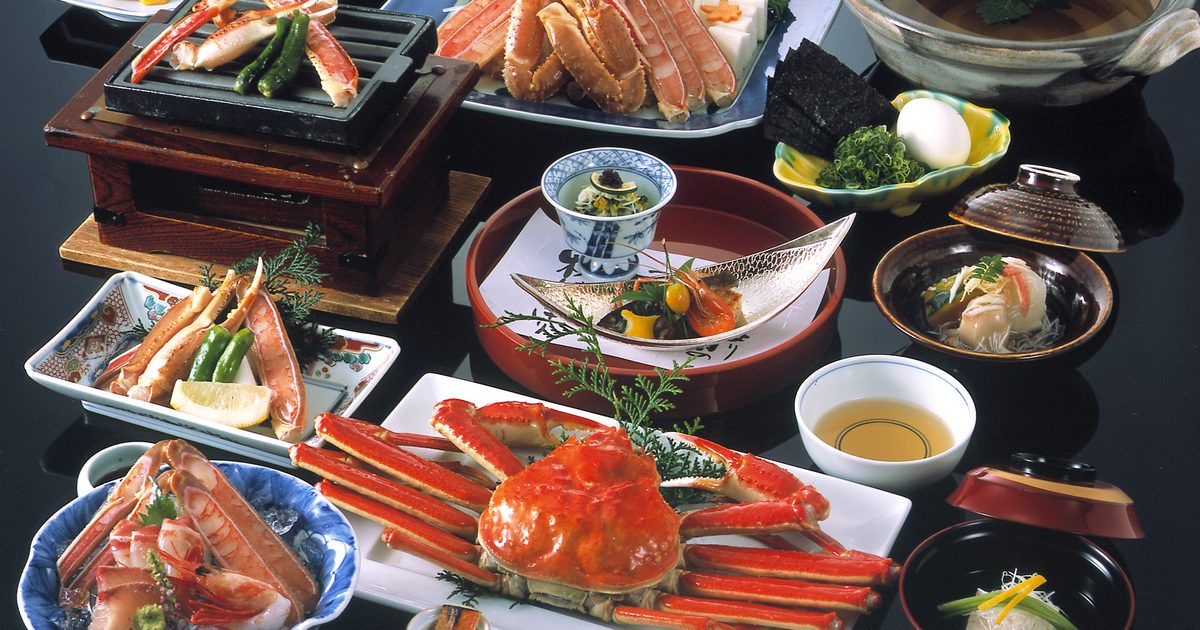
Snow isn't the real star of a Japanese winter — crab is. Kegani, king crab, snow crab and hanasaki crab come from different regions, hit their peak at different times, and reward completely different ordering strategies, and picking the wrong all-you-can-eat crab restaurant can mean paying a premium for a pile of processed, frozen leg meat instead of the fresh sweetness you were expecting. This guide breaks down how the four crab types differ, how to choose a kani tabehoudai restaurant without getting burned, and how to navigate the rest of Japan's winter-only lineup — Ishikari nabe, fugu, oysters, anko nabe and yukimi-zake — including where to eat each one, how to order, and when they're genuinely in season.
- Sort the four crabs first: kegani (rich crab miso), king crab (huge, meaty legs), snow crab (fine, sweet meat, in season roughly November–March), hanasaki crab (Nemuro-only, and actually a summer catch sold frozen in winter)
- Kani tabehoudai pricing swings widely: lunch commonly runs ¥3,000–6,000, dinner or live-crab packages commonly ¥6,000–12,000-plus, always confirm on the restaurant's own site
- Two hot pots, two regions: Ishikari nabe (salmon in miso, Hokkaido) and anko nabe (monkfish in miso, Ibaraki's Joban coast) are not the same dish
- Fugu and oysters both have clear seasons and ordering rules: Shimonoseki fugu, Hiroshima oysters — knowing a handful of menu terms removes the guesswork
- Yukimi-zake paired with atsukan is the classic ryokan winter pairing — set up a KKday Japan eSIM before you land so you can check restaurant hours, reviews and last-minute closures on the go
Table of Contents (click to expand)
- The four crab types: kegani, king crab, snow crab, hanasaki
- How to choose an all-you-can-eat crab restaurant
- Ishikari nabe: Hokkaido's signature winter hot pot
- Fugu: how Shimonoseki's specialty is ordered
- Oysters: Hiroshima's season, raw vs. cooked
- Anko nabe: Ibaraki's Joban-coast hot pot
- Yukimi-zake and atsukan: winter drinking, done right
- Where to eat and how to order: markets, specialists, tabehoudai
- FAQ
The four crab types: kegani, king crab, snow crab, hanasaki
This is the single most confused corner of Japanese winter food, and for good reason. These four aren't just "different varieties of crab" — they come from different regions, hit their season at different times, and reward completely different eating strategies. Getting the order wrong means spending your budget on the wrong thing. Here's the short version: order kegani if you want the crab-miso paste, king crab if you want sheer volume, snow crab if you want sweetness and texture, and hanasaki crab if you want a regionally exclusive, rougher-edged flavor. None of the four is objectively "the best" — it comes down to which texture and flavor profile you actually want.
| Crab | Main origin | Season (by typical pattern) | What it's known for | Best for |
|---|---|---|---|---|
| Kegani (hairy crab) | Hokkaido (Sea of Okhotsk coast, eastern Hokkaido) | Available live year-round; market supply typically peaks in spring and again in late autumn/early winter | Smaller, with a bristly shell; famous for its rich crab miso (the tomalley-like paste), often steamed in the shell or eaten raw over rice | Anyone who cares more about the crab-miso paste than meat volume |
| King crab (tarabagani) | Hokkaido coastal waters; much of what's sold is imported, largely from Russia | Domestic catch available year-round; winter (Nov–Feb) is the market wholesale peak | The largest of the four, with thick, chewy leg meat — commonly boiled, grilled or added to hot pot. Technically a hermit crab, not a true crab | First-timers who want a big, satisfying portion |
| Snow crab (zuwaigani) | Sea of Japan coast: Fukui (Echizen crab), Ishikawa (Kano crab), Tottori/Hyogo (Matsuba crab), among other regional brand names | By typical fishing-season pattern, males run roughly early November to late March; females (seiko/kobako crab) have a shorter run, roughly November to late December | Fine-fibered, distinctly sweet meat, best appreciated steamed or as sashimi; crab miso present but milder than kegani's | Anyone who wants the meat's own sweetness front and center, or a "landed near where I'm eating it" experience |
| Hanasaki crab | Hokkaido's Nemuro Peninsula, exclusively | Peak live catch, by typical pattern, actually falls in summer (roughly July–September); winter supply is mostly cooked-and-frozen stock | Short, spiny shell; crab miso richer and rougher than kegani's, often salt-boiled or grilled; low volume drives up the price | Anyone chasing a regionally exclusive flavor who doesn't mind cooked-frozen product |
Here's a detail that gets overlooked constantly: hanasaki crab is not, strictly speaking, a winter crab at all. Its natural peak season sits in the summer-into-autumn window off Nemuro, and what shows up on winter menus is usually the summer catch, cooked and frozen for later use rather than a live catch pulled fresh that week. That's a different pattern from kegani, king crab and zuwaigani, all of which genuinely track "in season in winter." If freshness matters to you here, it's worth simply asking the restaurant whether their hanasaki crab is live-caught or cooked-frozen stock. For the full story — exact season dates, where to eat it in Nemuro and Sapporo, and what teppo-jiru is — see our dedicated hanasaki crab guide.
How to choose an all-you-can-eat crab restaurant
Kani tabehoudai (all-you-can-eat crab) is common at crab specialty restaurants and onsen ryokan across Japan, but the price swings enormously, and we would not treat any single number as a reliable expectation. Depending on the restaurant's tier, the region, the season and which crab species are included, lunch sittings commonly run around ¥3,000–6,000, while dinner sittings — or packages built around live-prepared kegani and zuwaigani served unlimited — commonly land in the ¥6,000–12,000-plus range. Add unlimited king crab and free-flow drinks to a premium package and the price can climb past ¥15,000. These are typical bands based on how these packages are usually priced, not fixed figures — always check the restaurant's own site or a booking platform for the current season's rate rather than trusting a number you found somewhere online.
Here's the honest trade-off: the crab meat served at an all-you-can-eat restaurant is almost always mass-processed, not live-caught and cracked to order. That's genuinely good value if what you want is volume at a fixed price. But if your goal is the delicate sweetness of fresh, live-caught crab — zuwaigani in particular, where that sweetness is the entire point — the freezing-and-mass-serving process shows up as a real texture difference. Low-volume species like hanasaki crab almost never appear on all-you-can-eat menus at all; they're reserved for à la carte ordering, where the restaurant can control portioning more carefully. Most tabehoudai sittings run 90–120 minutes with a hard cutoff, so the practical move is to order a small amount first, taste it, then keep ordering — piling the table high on your first round just leads to waste.
Ishikari nabe: Hokkaido's signature winter hot pot
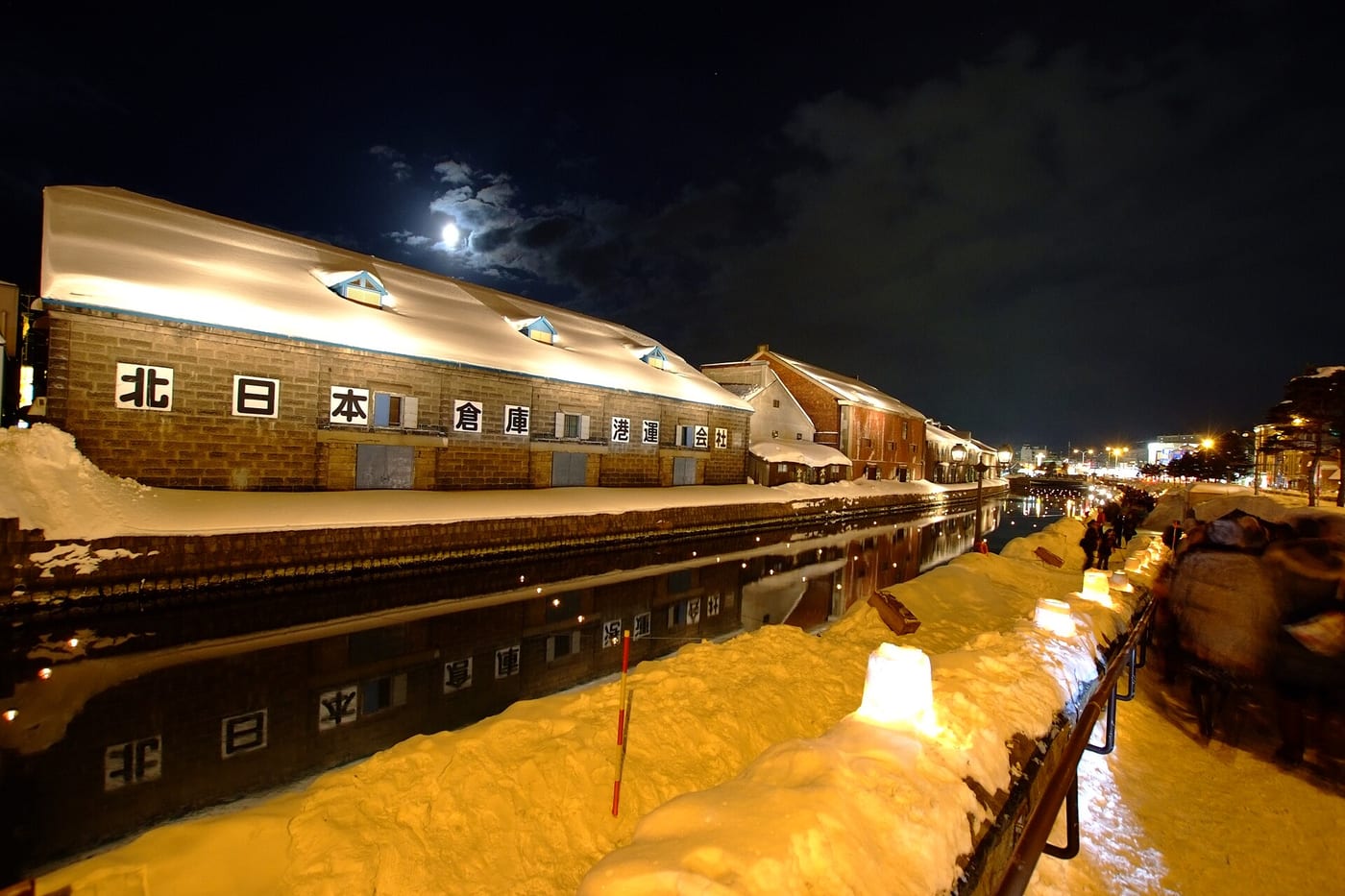
Ishikari nabe is Hokkaido's most representative regional hot pot, built around salmon in a miso-based broth, simmered with cabbage, scallion, tofu, potato and other root vegetables; a lot of restaurants finish it with a pat of Hokkaido's famous butter for extra richness. The name comes from the Ishikari River, where salmon return to spawn — the dish grew out of the everyday cold-weather cooking of Hokkaido's fishing communities and evolved into the regional specialty it is today.
You'll find Ishikari nabe on winter-only menus at regional specialty restaurants and izakayas across Sapporo, Otaru and elsewhere in Hokkaido, typically priced for two people or more, with many restaurants willing to top up the broth and simmer more vegetables or udon at the end. If you want to build a Hokkaido winter trip that fits crab, Ishikari nabe and the snow scenery into one route, our Hokkaido winter 7-day itinerary lays out the plan, and our Sapporo travel guide covers the restaurant and market options in the city itself.
Fugu: how Shimonoseki's specialty is ordered
Shimonoseki, in Yamaguchi Prefecture, is Japan's largest fugu (pufferfish) trading hub, and the local food culture has built an entire cuisine around it. Going by typical seasonal patterns, autumn through winter (roughly October to March) is fugu's prime season, when the fish is at its best and demand peaks — this is the window when a trip to Shimonoseki, or to a fugu specialist elsewhere, is most likely to land you a genuinely in-season set course.
There are three common preparations worth knowing: tessa (sashimi sliced so thin it's nearly translucent, plated in the fan-shaped arrangement fugu is best known for), tecchiri (a light, clean-tasting fugu hot pot), and karaage (deep-fried fugu, crisp outside and tender inside, and the easiest entry point if raw fish isn't your thing). A common approach for a first try is to start with tessa to get a sense of fugu's distinctively firm texture and subtle sweetness, move on to tecchiri, and finish with a rice porridge (zosui) cooked in the leftover broth so none of the flavor goes to waste.
Safety is usually the first question people ask, and it has a straightforward answer: at any legally operating fugu restaurant in Japan, preparation is required by law to be handled by a chef holding a specific fugu-license qualification, and the toxic liver and ovaries are fully separated out and removed before anything reaches your table. Ordinary diners at a licensed restaurant genuinely don't need to worry about this. The one real caution — and it's common sense in Japan but not necessarily obvious to visitors — is never to eat raw fugu prepared outside a licensed establishment.
Oysters: Hiroshima's season, raw vs. cooked
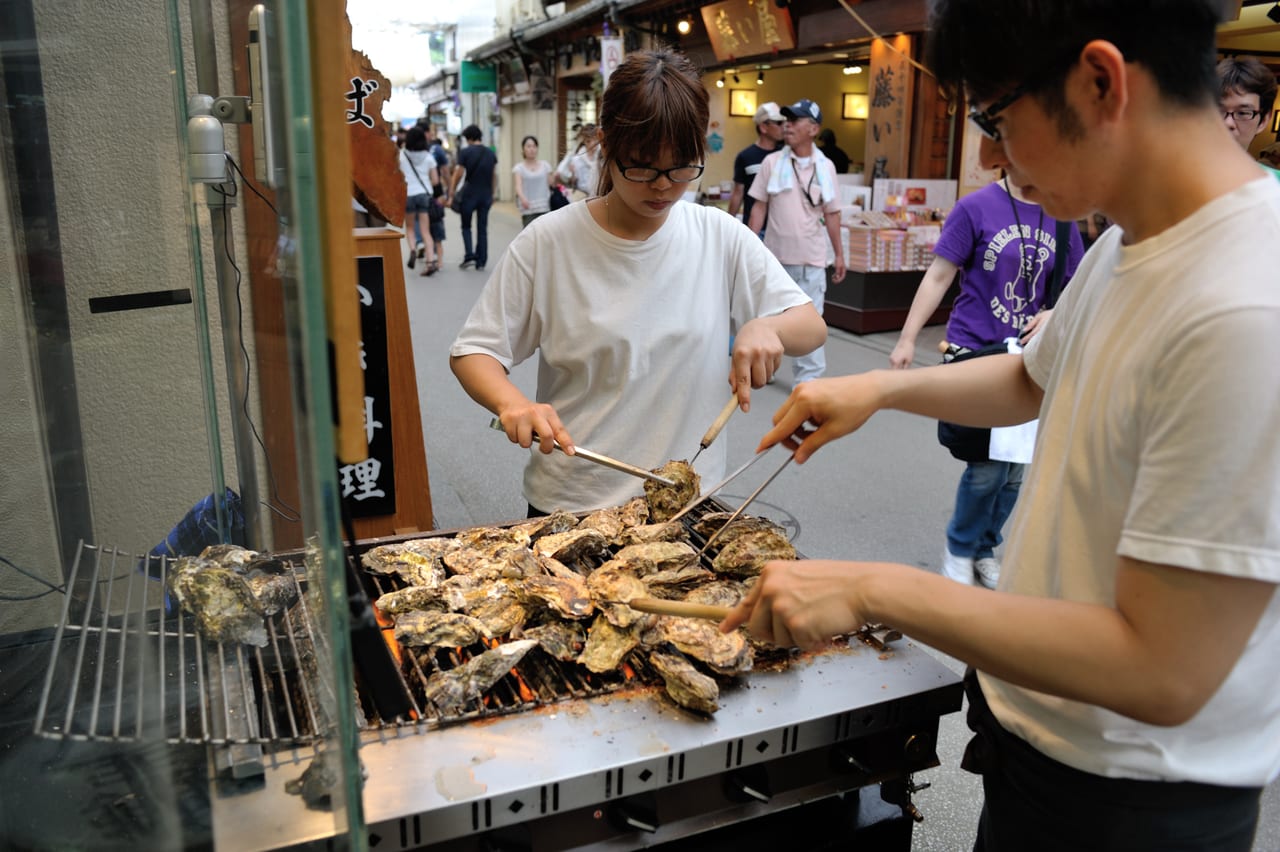
Hiroshima is Japan's largest oyster-producing region by volume, and going by typical farming cycles, the main shipping season runs October through the following April, with the plumpest oysters landing between December and February. Restaurants and grill stalls in Hiroshima city and around Miyajima serve them every way imaginable — raw, grilled (yaki-gaki), deep-fried (kaki fry), and in the winter-only kaki dote nabe, a miso-based oyster hot pot.
One practical thing to check before you order: Japanese oysters are officially categorized as either "raw-grade" or "cooking-grade," reflecting different water-quality handling standards for the farming area, and menus or stall signage generally label this clearly. If your stomach tends to be sensitive, grilled or fried preparations are the safer choice; if what you're after is the pure raw experience, confirm the restaurant is specifically serving raw-grade product before you order.
Grilling a whole tray of them yourself at a fishing port is a different experience entirely — and a different set of rules. Pricing units, table fees and bring-your-own policies at Japan's oyster huts are set shop by shop, which our guide to reading an oyster hut's own page works through field by field.
Anko nabe: Ibaraki's Joban-coast hot pot
Anko nabe is the winter hot pot most associated with eastern Japan, centered on the Joban coast in Ibaraki Prefecture — Oarai and Mito in particular. Going by typical seasonal patterns, late autumn through February is peak season, overlapping neatly with Shimonoseki fugu's window — which is where the local saying "fugu in the west, anko in the east" comes from, pairing the two as eastern and western Japan's respective cold-season fish specialties.
What makes monkfish (anko) distinctive is that it's eaten almost nose-to-tail: liver, stomach, skin, fins, ovaries, flesh and gills are collectively known as the fish's "seven tools" (nanatsu dogu), and each part has a noticeably different texture. Anko-gimo (monkfish liver) in particular has a dense, rich texture that's often compared to foie gras from the sea. The broth style, dobu-jiru, is also miso-based, but the flavor profile is heavier and more concentrated than Ishikari nabe's. Monkfish's soft, gelatinous body doesn't hold still on a cutting board, so traditionally it's prepared by a technique called tsurushi-giri — hanging the fish and carving it while suspended — a specialized skill that most restaurants handle for you tableside or in the kitchen; you won't be expected to do any of the butchering yourself.
Yukimi-zake and atsukan: winter drinking, done right
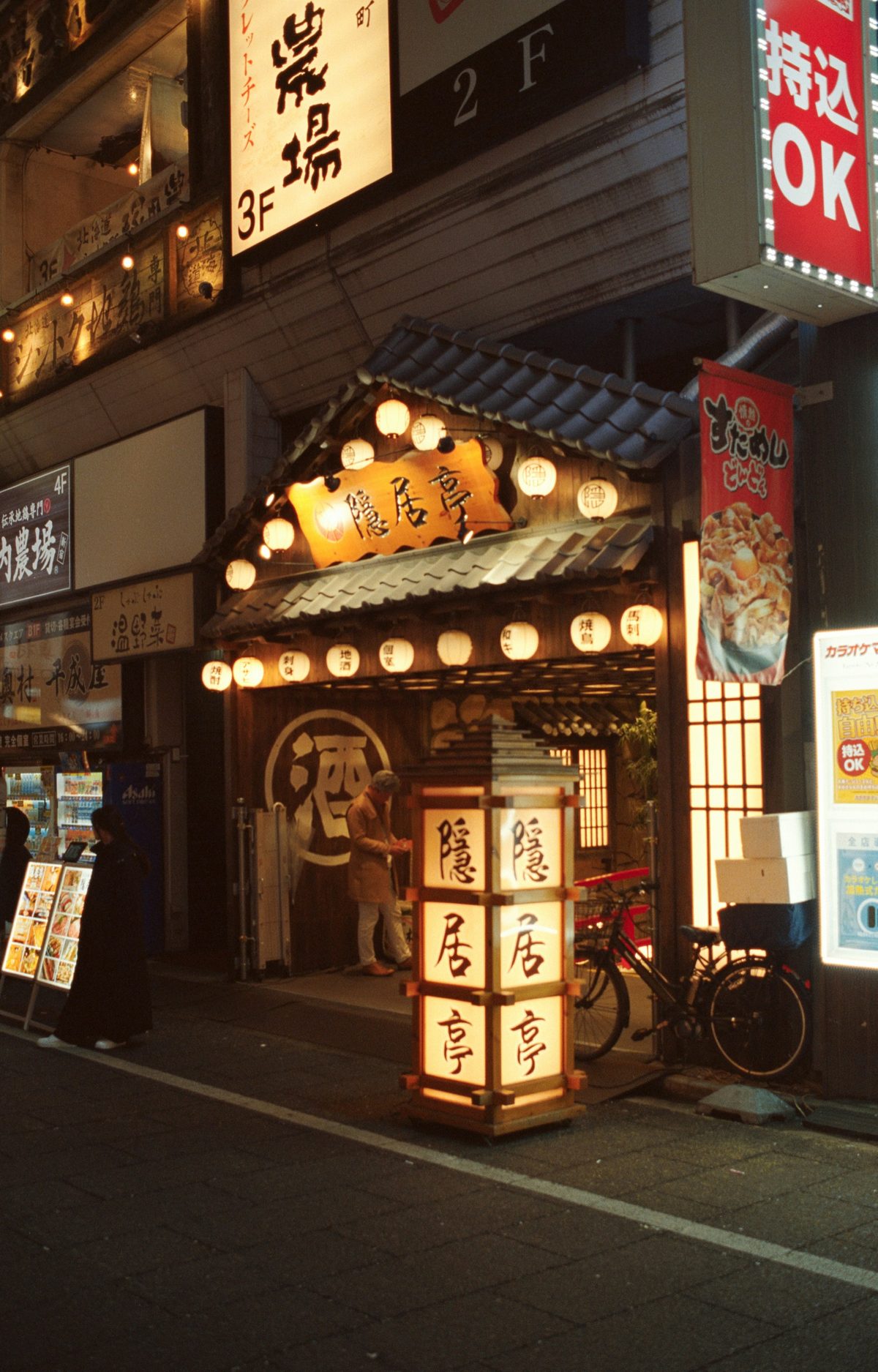
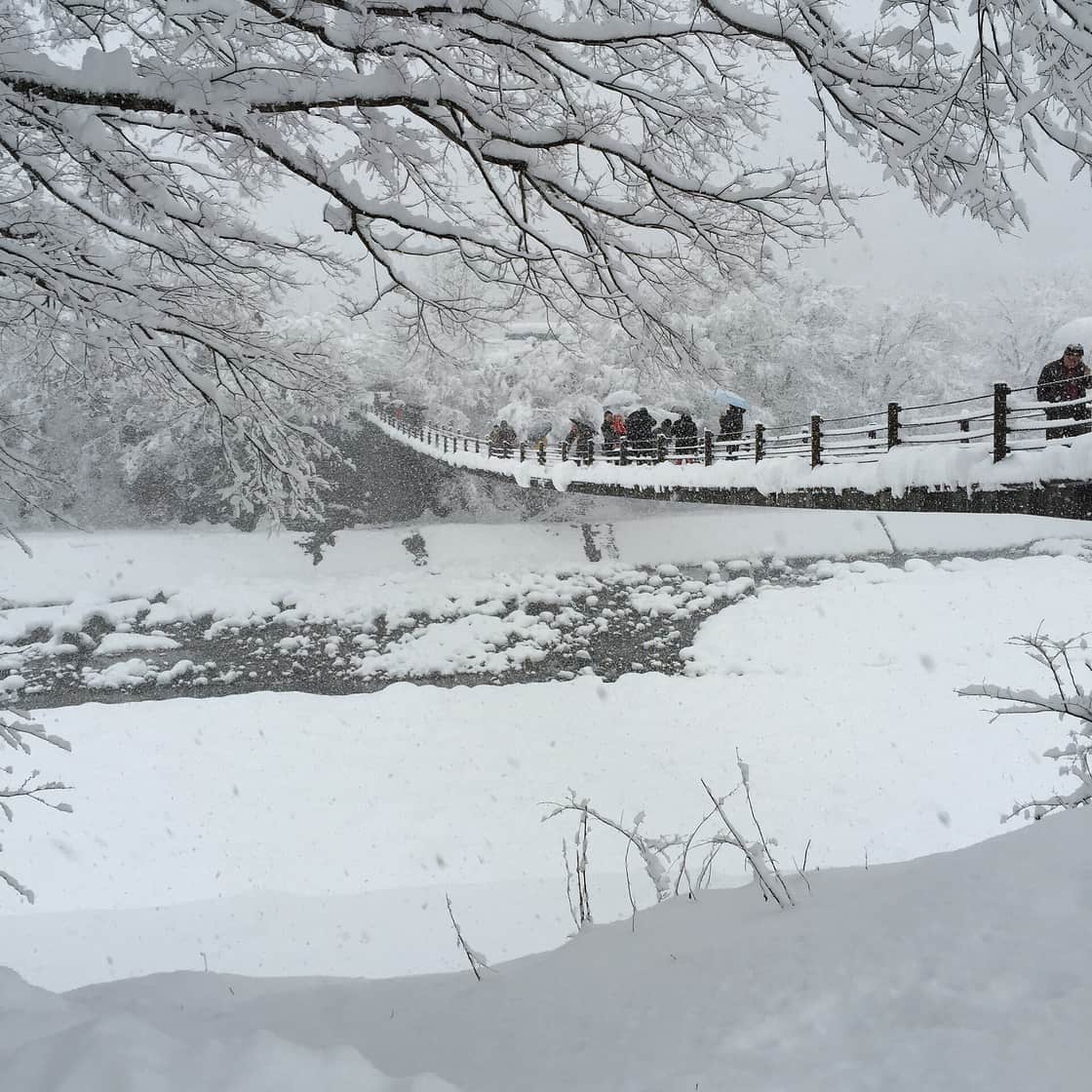
Yukimi-zake isn't the name of a specific sake — it's a general term for "drinking sake while watching the snow," most often associated with onsen ryokan that have a snow-view open-air bath — with the sake afterward, in the room or by the window. The order matters: Japan's Consumer Affairs Agency explicitly advises against bathing while alcohol is still in your system, so this is bathe, dry off, dress, then drink, not carrying a flask into the tub. Atsukan, or more generally kanzake, refers to sake served warm, with several named temperature tiers (from lightly warmed to properly hot) depending on how far it's heated.
There's a useful bit of practical knowledge here: warming tends to flatten the delicate floral aromatics that ginjo-grade sake is prized for, so restaurants typically reserve warming for sturdier, more robust junmai or honjozo grades, while keeping the more aromatic ginjo and daiginjo grades chilled. Pairing a pot of atsukan with a miso-based hot pot like Ishikari nabe or anko nabe is a classic combination for a reason — if you tell the server you want it warmed and want something with a bit more backbone, they'll generally steer you toward the right bottle.
Where to eat and how to order: markets, specialists, tabehoudai
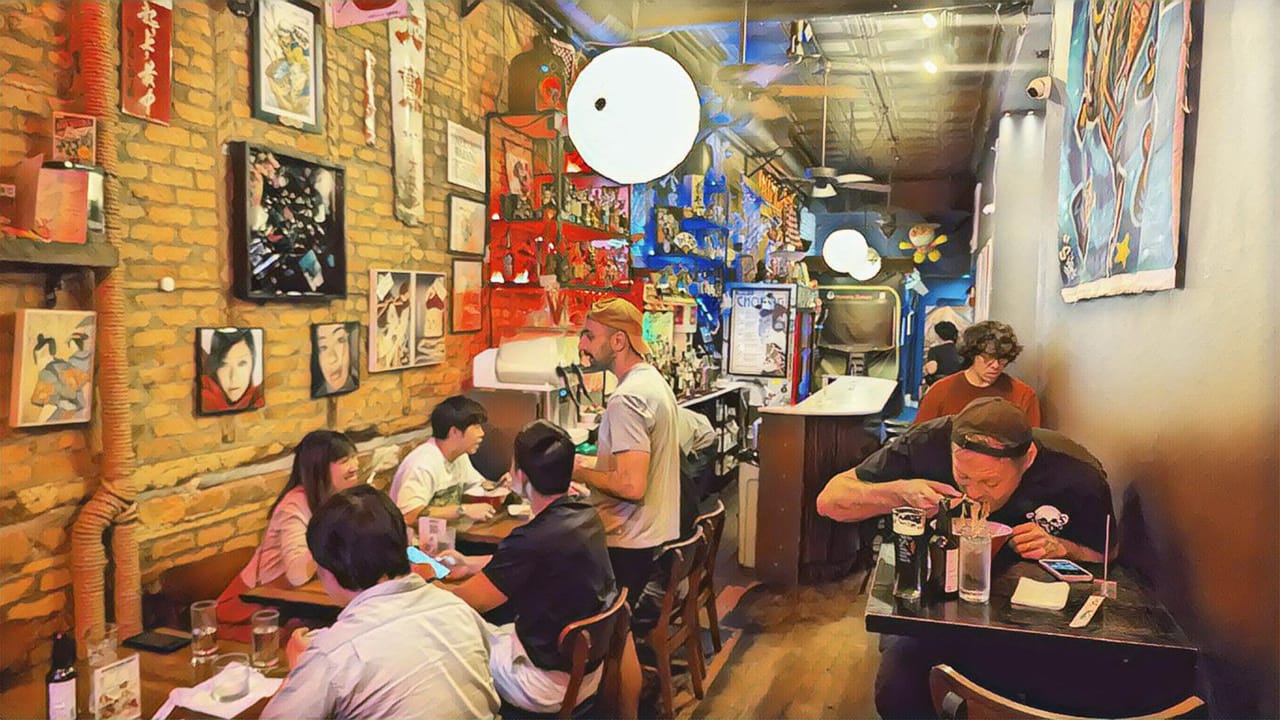
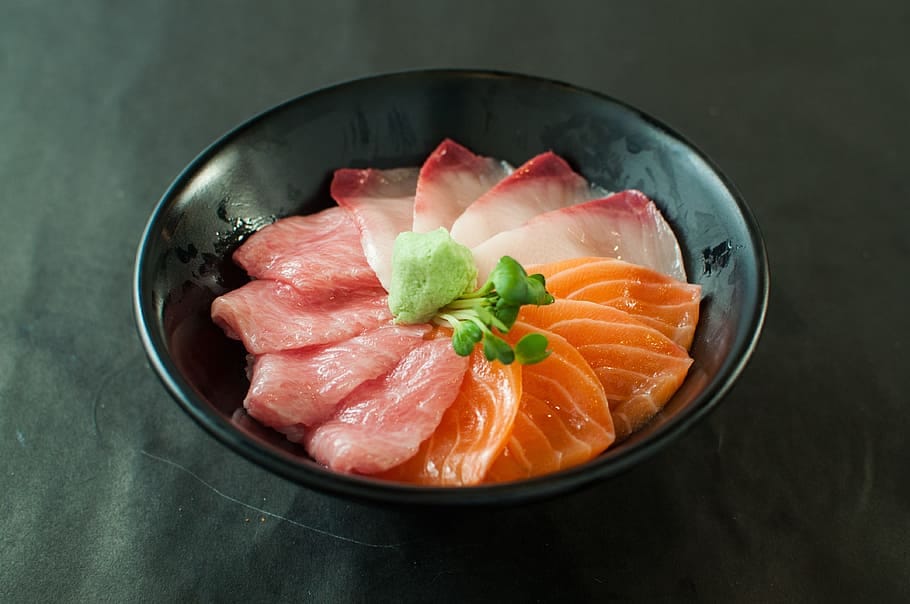
Broadly, there are four routes to these winter dishes. Market food halls — think Sapporo's Nijo Market or the seafood counters around Kanazawa's Omicho Market — typically serve raw-grade crab and seafood rice bowls sourced from that day's catch. Specialty restaurants exist for fugu, anko nabe and crab alike, usually running a kaiseki-style set course where à la carte quality is most consistent. Izakaya menus pick up winter-only specials too, and they're the most everyday, budget-flexible way to sample any of these dishes without a reservation. Onsen ryokan dinners — the one-night, two-meal (ippaku-nishoku) plan — often fold seasonal crab, a hot pot and local sake into a single set course, which suits travelers who'd rather not go restaurant-hunting after a long day of sightseeing.
A handful of menu terms are worth recognizing before you order: kegani, tarabagani (king crab, usually written in katakana), zuwaigani (also katakana), hanasaki crab, kaki (oysters), fugu, and anko (monkfish). If fresh, live-caught sweetness is the priority, go à la carte rather than all-you-can-eat; if budget control and variety matter more, tabehoudai or an izakaya sampler platter is the better value play. Before you head out, it's worth setting up a KKday Japan eSIM so you can check restaurant reviews, hours and last-minute closures on the ground — some winter market stalls adjust their hours depending on weather or how much came in on the boat that day, so it pays to double-check on the day rather than trusting a schedule you found in advance. If Hokuriku snow crab landed close to where you're eating it is the priority, our Kanazawa travel guide covers the Omicho Market route, and it's worth cross-checking our Japan climate and clothing pillar guide before you go, so you're dressed for the cold you'll actually be standing in while you eat.
Japan Winter Food FAQ
- Q1:What is the actual difference between kegani, king crab, snow crab and hanasaki crab?
- The fastest way to sort them is by origin and what they are good for. Kegani (hairy crab) comes mainly from Hokkaido, is smaller, and is prized for its rich crab miso (the tomalley-like paste inside the shell) — order it if you care more about that paste than raw meat volume. King crab (tarabagani) is the largest, with thick, chewy leg meat, and is the pick for a first-timer who wants sheer volume; note it is technically a hermit crab, not a true crab. Snow crab (zuwaigani), sold under regional brand names such as Echizen, Kano or Matsuba depending on the landing port, has fine, sweet meat and is the choice if flavor and texture matter more than size. Hanasaki crab is caught only around Hokkaido's Nemuro Peninsula, with a crab-miso flavor similar to kegani but rougher and more intense, and it is low-volume and priced accordingly. Full comparison in the table above.
- Q2:Roughly how much should I budget for all-you-can-eat crab (kani tabehoudai)?
- The range is wide, and we would not pin this to one number. Depending on the restaurant's tier, the season and which crab species are included, lunch sittings commonly run around ¥3,000–6,000, while dinner sittings or packages that include live-crab preparation of kegani and zuwaigani commonly land in the ¥6,000–12,000-plus range. Premium packages adding unlimited king crab and free-flow drinks can push past ¥15,000. These are typical bands, not fixed prices — check the restaurant's own site or a booking platform for the current season's rate before you go, rather than trusting an old number you saw online.
- Q3:Hanasaki crab isn't actually a winter crab, so why is it on winter menus?
- This trips a lot of people up. Going by typical fishing patterns, hanasaki crab's peak catch around Nemuro actually falls in summer (roughly July–September), not winter. What shows up on winter restaurant and banquet menus is usually the summer catch, cooked and frozen for later use, not a fresh live catch pulled that same week. If you want it genuinely fresh off the boat, late summer into early autumn is technically closer to peak season than winter is — though this varies by restaurant and supplier, so it is worth simply asking whether what is on your plate is live-caught or cooked-frozen. For season details, the Nemuro Crab Festival and where to eat it at the source, see our hanasaki crab season guide.
- Q4:Is fugu (pufferfish) safe to eat? Can I order it raw (tessa)?
- At any legally operating fugu restaurant in Japan, preparation is required by law to be handled by a chef holding a specific fugu-license qualification, and the toxic liver and ovaries are fully removed before the fish reaches your table — ordinary diners at a licensed restaurant have nothing to worry about. Shimonoseki in Yamaguchi Prefecture is Japan's largest fugu trading hub, and local restaurants there are typically more affordable than the high-end fugu specialists in Tokyo or Osaka. The one real caution is never eat raw fugu from an unlicensed source — at a licensed restaurant, both tessa (thin-sliced sashimi) and tecchiri (hot pot) are safe and well worth trying.
- Q5:When is the best time to eat oysters in Japan?
- Hiroshima is Japan's largest oyster-producing region, and going by typical farming cycles, the main shipping season runs October through April, with peak plumpness around December to February. When ordering, check whether the menu lists the oysters as "raw-grade" or "cooking-grade" — the two carry different water-quality handling standards, and restaurants generally label this clearly. If your stomach is sensitive, grilled or fried oysters (kaki fry) are the safer pick; if you specifically want the raw experience, confirm the restaurant is serving raw-grade product.
- Q6:What is the difference between Ishikari nabe and anko nabe?
- They are not the same dish at all — different regions, different star ingredient. Ishikari nabe is Hokkaido's signature hot pot, built around salmon in a miso broth with cabbage, scallion and tofu, often finished with a pat of Hokkaido's famous butter for richness; the name comes from the Ishikari River, where salmon return to spawn. Anko nabe, by contrast, is the winter hot pot associated with the Joban coast in Ibaraki Prefecture (Oarai and around), built around monkfish, which is used almost nose-to-tail (liver, stomach, skin, fins, ovaries, flesh and gills, collectively called the "seven tools"). The broth style, called dobu-jiru, is also miso-based but tastes noticeably different from Ishikari nabe's. Think of them as Hokkaido's and eastern Japan's respective answers to a cold-weather hot pot.
- Q7:What does "yukimi-zake" actually mean? Is it connected to atsukan?
- Yukimi-zake is not the name of a specific sake — it is a general term for "drinking sake while watching the snow," most commonly associated with onsen ryokan that have an open-air bath with a snow view. One thing worth stating plainly, because it usually gets written up as romance: Japan's Consumer Affairs Agency lists among its bathing-accident precautions that you should avoid bathing while alcohol is still in your system (the same list recommends water below 41C and no more than ten minutes in the tub). So the order is bathe first, dry off, get dressed, and then drink by the window. Atsukan (or generally, kanzake) refers to sake served warm, with several named temperature tiers depending on how hot it is served. Warming tends to flatten the delicate aromatics of ginjo-grade sake, so restaurants typically warm sturdier junmai or honjozo grades instead, keeping the more aromatic ginjo and daiginjo grades chilled.
- Q8:Should I go for an all-you-can-eat crab restaurant or order individual dishes?
- It depends on whether you are optimizing for volume or for flavor. All-you-can-eat crab is mostly served as mass-processed frozen leg meat, which suits someone who wants to eat a lot at a fixed price. If your goal is the fresh sweetness of live-caught crab — especially zuwaigani — ordering individual dishes costs more per item but generally delivers noticeably better freshness and quality. Low-volume species like hanasaki crab are also almost never on all-you-can-eat menus; they show up on à la carte menus instead.
- Q9:How should I plan a trip around these winter dishes?
- The main crab-producing regions are spread out — kegani, king crab and hanasaki crab cluster around Hokkaido, while zuwaigani is associated with the Hokuriku coast (Echizen in Fukui, Kano in Ishikawa) and the San'in coast (Matsuba crab out of Tottori) — so no single trip realistically covers all of it. Pick based on your main destination. A Hokkaido itinerary built around our Hokkaido winter 7-day itinerary naturally covers crab and Ishikari nabe around Sapporo and Hakodate; if you want Hokuriku snow crab landed close to where you eat it, pair it with the Omicho Market stop in our Kanazawa travel guide. Fugu, oysters and anko nabe are spread across Shimonoseki, Hiroshima and Ibaraki respectively — treat them as worthwhile detours along a route rather than a reason to build an entire trip around one dish.
- Q10:Which months give me the best shot at catching all of these in season?
- Roughly November through March is the overlap window for most of these winter dishes. Zuwaigani's fishing season, going by typical patterns, runs about early November to late March; fugu and anko nabe both peak from late autumn into early spring; oysters are at their plumpest from December to February. King crab is available year-round but winter is when market wholesale demand and supply both peak. In practice, any trip scheduled between December and February puts nearly everything in this guide within season, so there is no need to reshuffle your entire itinerary around one single dish.
Read next
Hokkaido Winter 7-Day Itinerary 2026
Sapporo → Otaru → Biei → Hakodate over 7 days, with JR Pass math, how to reach the Furano slopes, and a real two-person budget.
Sapporo Travel Guide 2027: Odori Park, Snow Festival & Mt. Moiwa
Hokkaido's gateway and food capital — Odori Park and the Snow Festival, the Clock Tower, Mt. Moiwa's night view, miso ramen, Genghis Khan and soup curry.
Kanazawa Travel Guide 2027: Kenrokuen, 21st Century Museum & Chaya
The craft old capital of Kaga — the three-great-garden Kenrokuen, the 21st Century Museum pool, Higashi Chaya gold leaf and Omicho Market seafood.