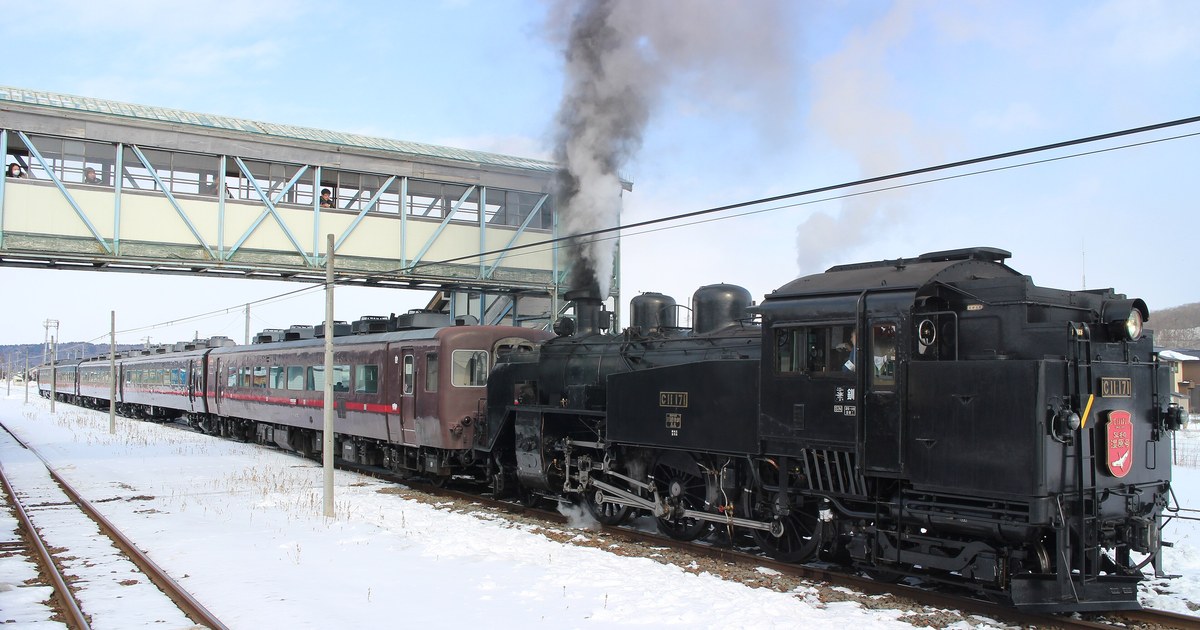
Three trains dominate every list of Japan's winter railway experiences: the Tsugaru Railway stove train in Aomori, JR Hokkaido's SL Fuyu no Shitsugen steam service across the Kushiro wetlands, and the Sanriku Railway kotatsu train on the Iwate coast. Almost every guide lumps them together and adds a line about booking early — and that line is true of exactly one of them. Checked against the three operators' own pages, the picture is completely different. The stove train runs three round trips every single day from 1 December to 31 March, takes no reservations and needs none. The SL runs 32 days in an entire season, once a day, all seats reserved — that is the one you actually have to chase. And the kotatsu train is not a rail ticket at all but a travel product whose reservation window closes five days before you travel, not a month before. Three trains, three unrelated ticketing models. Get any of them wrong and you have wasted a day of a winter trip. This guide sets out all three sets of rules, the official timetables, what you genuinely pay, whether a rail pass helps, and which of them is worth rearranging an itinerary for.
- Three models, not one: stove train — buy on the day, no reservations possible; SL Fuyu no Shitsugen — on sale one month before travel, all seats reserved; kotatsu train — travel product, booking closes 5 days out
- The stove supplement doubled to ¥1,000 on 1 December 2024, same price for adults and children. Pages still quoting ¥500 are two years stale
- The SL is a "local" train, not a limited express: Kushiro–Shibecha one way is ¥3,060 — a ¥1,380 fare plus a ¥1,680 reserved seat. A pass covers only the first part
- The "SL is ending too" rumour has no official basis. JR Hokkaido has announced the end of the two Norokko trains only; three official sources carry no discontinuation wording for the SL
- Every date here is a 2025-26 result, not a 2026-27 announcement. JR Hokkaido publishes around mid-October, Sanriku Railway in early November
📖 Contents (tap to expand)
- The table that matters: three booking models
- Tsugaru Railway stove train: the one you cannot book
- SL Fuyu no Shitsugen: the only genuinely scarce one
- Correcting a rumour: the SL has no end date
- Sanriku kotatsu train: a travel product, 5 days out
- A fourth option: the Ryuhyo Monogatari
- What a rail pass does and does not cover
- Which one is worth a detour
- Winter risk: cancellations, timetable changes, cash
- When the new season is announced
- Action checklist
- FAQ
The table that matters: three booking models
Here is the core of the guide, and the part most often written wrong. The familiar rule that reserved seats go on sale one month before the travel date is a JR rule. It does not apply to third-sector railways — and two of these three trains are third-sector.
| Train | Operator | Ticketing model | Reservation | When to act |
|---|---|---|---|---|
| Stove train (Tsugaru-Goshogawara–Tsugaru-Nakasato) | Tsugaru Railway (third sector) | Unreserved. Fare ticket plus stove supplement, bought on the spot | Not needed, not possible | Turn up. 3 round trips daily, 1 Dec–31 Mar |
| SL Fuyu no Shitsugen (Kushiro–Shibecha) | JR Hokkaido | All seats reserved. Midori-no-madoguchi counters or Eki-net | Mandatory | One month before the travel date |
| Kotatsu train (Kuji–Miyako) | Sanriku Railway (third sector) | Travel product. Official reservation form | Mandatory | Up to 5 days before travel |
| Ryuhyo Monogatari (Abashiri–Shiretoko-Shari) | JR Hokkaido | Partly reserved (not fully) | Only for reserved seats | Standard JR reservation rules |
Internalise that table and you avoid the two commonest mistakes in English-language coverage: telling readers to book the stove train online, when no such channel exists, and applying the month-ahead rule to the kotatsu train, which is in fact a five-day-out deadline you can be both too early and too late for.
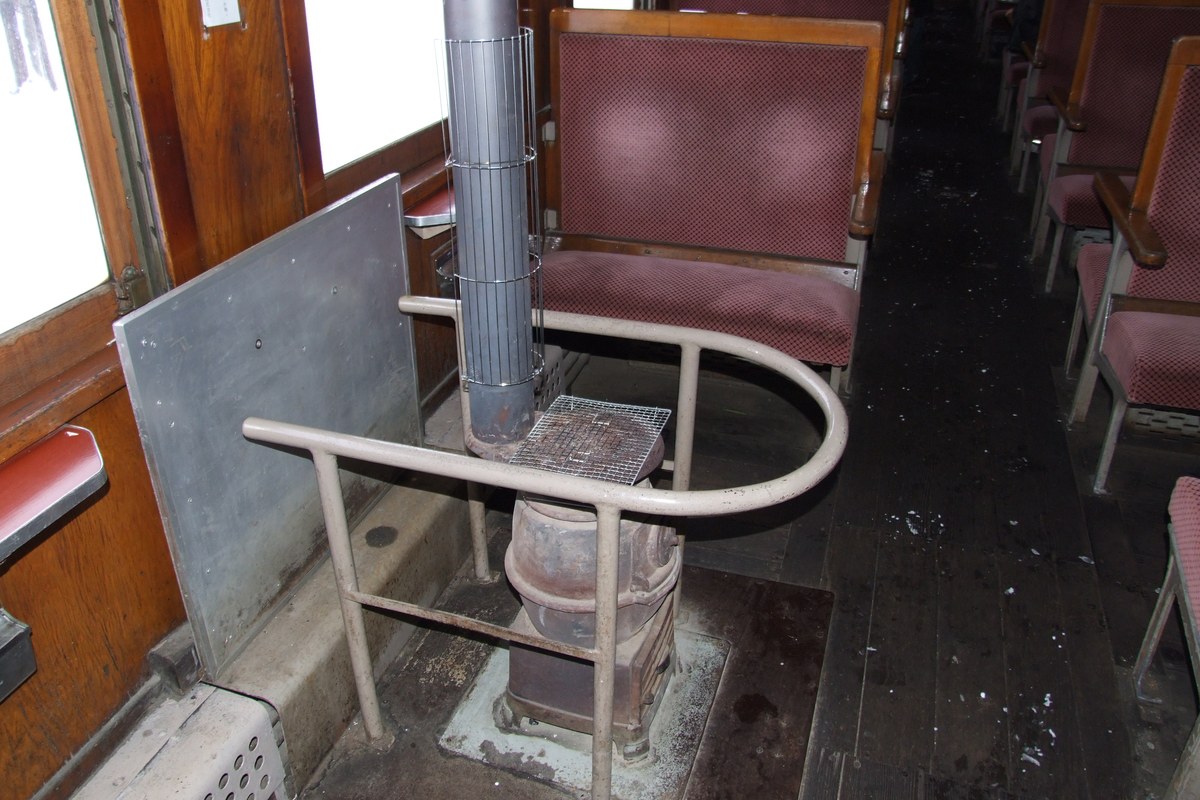
Tsugaru Railway stove train: the one you cannot book
The headline first: the barrier on this line is geography, not tickets. It is not scarce, you cannot reserve it and you do not need to. The only two things to solve are fitting the Tsugaru peninsula into your route and catching one of three departures.
Season and frequency
The official page gives the operating season as 1 December to 31 March, a full four months. The timetable note states that during those months the service runs three round trips every day as a coupled stove car plus local car — every day, weekday or weekend, regardless of passenger numbers.
| Direction | Departure 1 | Departure 2 | Departure 3 |
|---|---|---|---|
| From Tsugaru-Goshogawara | 9:35 (arr. Nakasato 10:18) | 12:00 (arr. 12:44) | 14:40 (arr. 15:24) |
| From Tsugaru-Nakasato | 10:46 (arr. Goshogawara 11:29) | 13:37 (arr. 14:21) | 15:54 (arr. 16:37) |
Journey time is about 43 minutes. These times come from the official timetable PDF revised 1 June of Reiwa 7 and amended 16 June 2026; the railway has changed its timetable mid-year before, so confirm again closer to the date.
What you actually pay — in two parts
This trips people up constantly. Riding the stove train costs two separate amounts: the ordinary fare plus the stove train supplement.
- Stove train supplement: ¥1,000. The official fee PDF states this is per ride and identical for adults and children — no child discount.
- Ordinary fares from Tsugaru-Goshogawara: Kanagi ¥560, Ashino-Koen ¥650, and the terminus Tsugaru-Nakasato ¥870.
- Full-line one way, all in: ¥870 plus ¥1,000 equals ¥1,870.
One outdated number to intercept: a great many pages, in English and Japanese alike, still list the supplement at ¥500. The official page carries a notice that fares were revised on 1 December 2024 — the supplement doubled from ¥500 to ¥1,000. If a guide still says ¥500, it has not been updated in two years, and its other numbers deserve the same suspicion.
Two official rules nobody translates
First, not every carriage on the train needs the supplement. The railway states that passengers riding the coupled one-man car pay the ordinary fare only. The stove train is a coupled formation of stove car plus ordinary local car; if you only need the journey, ride the back and skip the supplement. The corollary matters too: if you did pay, board the right carriage.
Second, the Tsugaru Free Pass cannot be used on the stove train. The wording is unambiguous: holders of the Tsugaru Free Pass may not board the stove train. This is an easy and expensive assumption to make — a regional pass usually feels like it covers everything on the line.
What is sold on board
Dried squid and warmed sake are sold on board, and the attendant will grill the squid on the stove for you — it is the most photographed thing about this train. But to be straight about sourcing: Tsugaru Railway publishes no on-board menu or prices anywhere on its official site. Nothing official could be found, so this guide quotes no figure without an official source behind it. Check the notice on board, and carry cash.
Where the line comes from
Tsugaru Railway opened the Goshogawara–Kanagi section in 1930 and the full line on 13 November of the same year — and started running stove trains that December. The winter formation is effectively as old as the railway. It has been interrupted once: services stopped from 1944 to 1946 through wartime shortages and resumed in 1947. The railway also notes that the current carriages are the fourth generation. The line runs 20.7 km; Kanagi is the birthplace of the novelist Osamu Dazai, and Ashino-Koen is the small wooden station people ride out specifically to photograph in snow. For fitting this into a wider route, see our Aomori travel guide.
SL Fuyu no Shitsugen: the only genuinely scarce one
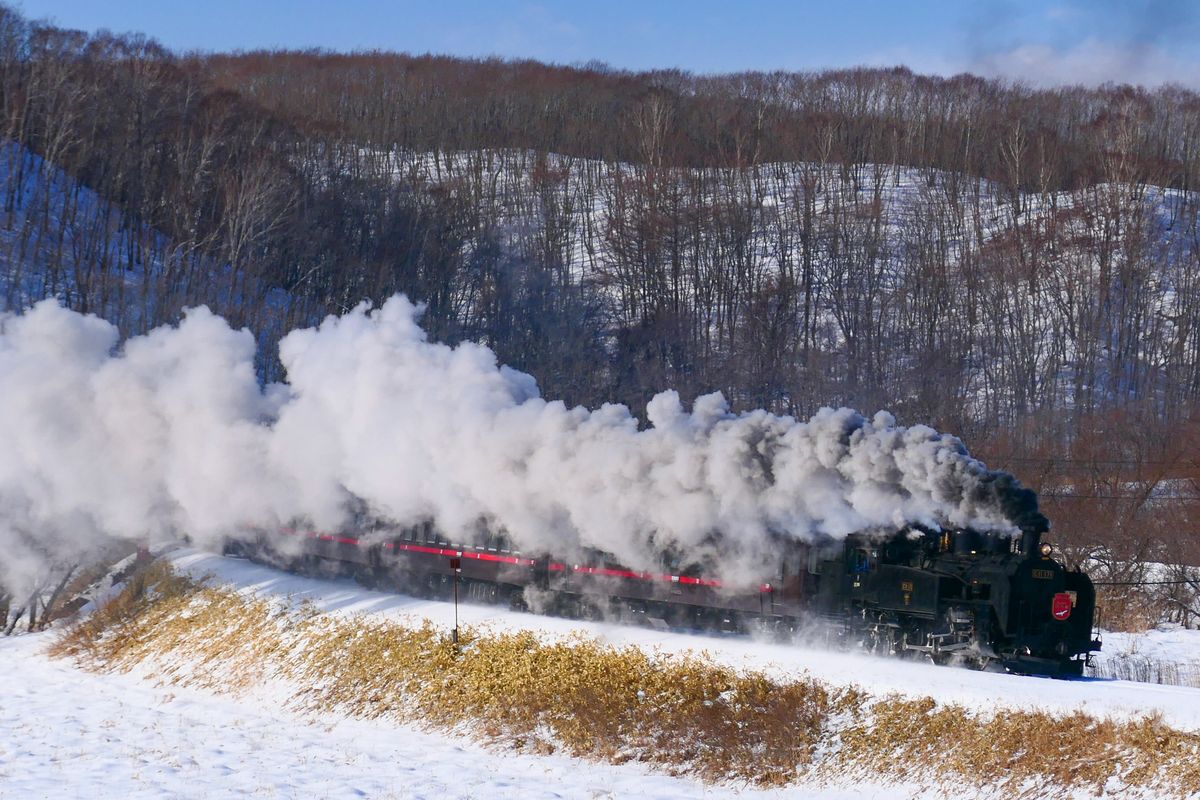
If the stove train's cost is geography, the SL's cost is scarcity. Look at the 2025-26 official record: it ran on 32 days in the whole season (17, 18, 22–25 and 29–31 January; 1, 5–8, 11, 13–15, 20–23 and 26–28 February; 1, 6–8 and 13–15 March 2026), once a day, with every seat reserved. Across an entire winter that is 32 outbound runs and 32 returns in total. This is where "book early" actually belongs.
To be clear once more: those dates are the 2025-26 record, not a 2026-27 announcement. The coming season's dates had not been published at the time of verification.
Timetable
| Direction | Times (per official press release) |
|---|---|
| Outbound | Kushiro 11:05 → Higashi-Kushiro 11:12 → Kushiro-Shitsugen 11:38 → Toro 11:58 → Kayanuma 12:12 → Shibecha 12:35 |
| Return | Shibecha 14:00 → Kayanuma 14:25 → Toro 14:50 → Kushiro-Shitsugen 15:09 → Higashi-Kushiro 15:35 → Kushiro 15:42 |
That leaves about an hour and 25 minutes at Shibecha, and the round trip consumes most of a short winter day. For fitting it into an eastern Hokkaido route, see our Kushiro and Akan guide and the seven-day Hokkaido winter itinerary.
The price, and why the train category decides it
In JR Hokkaido's winter special-train announcement, the SL Fuyu no Shitsugen appears under the category "local", with notes marking it all-reserved and entirely non-smoking. So the structure is basic fare plus reserved-seat ticket, not a limited express supplement. The official sample price reads: Kushiro to Shibecha, one way, 3,060 yen, being a 1,380 yen fare plus a 1,680 yen reserved-seat ticket, and because all seats are reserved you must book before boarding.
| Component | Amount | Note |
|---|---|---|
| Basic fare (Kushiro–Shibecha, 48.1 km) | ¥1,380 | The part a rail pass covers |
| Reserved-seat ticket | ¥1,680 | Unavoidable — every seat is reserved |
| One-way total | ¥3,060 | JR Hokkaido's own sample price |
Sourcing note, stated plainly: the reserved-seat figure currently rests on an archived capture of the official SL microsite dated 16 February 2026, because that site is taken down seasonally and both it and its information page returned 404 on 15 August 2026. The ¥1,380 fare, by contrast, was re-verified on 15 August 2026 through JR Hokkaido's own fare search. When the microsite returns in October, the reserved-seat price needs rechecking.
How to buy
The official wording is that fare and reserved-seat tickets for the SL Fuyu no Shitsugen go on sale one month before the travel date and should be bought at any JR Midori-no-madoguchi counter or through Eki-net. The railway also states that the reserved seat can be booked as a ticketless reserved-seat product with no collection required — but the basic fare ticket still has to be arranged separately.
One verification limit worth flagging: the widely repeated detail that sales open at 10:00 on that date could not be confirmed from a primary source. Eki-net is a JR East system, and JR East's site returns 403 to automated retrieval site-wide; what could be confirmed is only JR Hokkaido's own statement that tickets go on sale one month ahead. So this guide gives the date rule and not the clock time. Practically, set a reminder for one month before your travel date and deal with it first thing that morning, and you have it covered.
Two on-the-ground points, both from official text: IC cards cannot be used at the stations this train calls at — you need paper tickets; and JR Hokkaido itself warns that counters and ticket machines get very crowded before the SL departs, so allow extra time. Claims about the train selling out within minutes have no official or auditable source, so they are not repeated here.
Worth adding: on the day you ride the SL you are unavoidably in eastern Hokkaido, and the Kushiro–Abashiri–Sapporo legs around it are where the real transport budget goes. Whether a pass pays off, and which one, is worked through in separate guides — not repeated here. Just remember the one rule from this page: a pass covers the fare, not the reserved seat.
Check current JR Hokkaido Rail Pass prices (KKday) →Correcting a rumour: the SL has no end date
"The SL Fuyu no Shitsugen is on its way out too" circulates widely — and an older version of this guide repeated it, which has now been corrected. The verification is worth showing, because it is a textbook case of inferring an official decision from enthusiast chatter.
Three official sources were checked in full: JR Hokkaido's press release of 8 January 2026 announcing the start of operations, the official English sightseeing-train PDF of 13 April 2026, and an archived capture of the official SL microsite. None contains the words "last year", "last run" or "end of operation". What JR Hokkaido has announced is the end of the two Norokko services, and they do not finish on the same day: the Furano-Biei Norokko ends on 23 September 2026 per the Asahikawa Branch release of 20 August 2026, and the Kushiro Shitsugen Norokko on 4 October 2026 — and even there the English text is hedged as ending operations "using the current cars", which stops short of retiring the concept. The SL is simply not in that announcement. The Norokko story in full is in our Furano-Biei Norokko final year guide.
That does not make the train risk-free — it means the risk has a different name. C11 171 is an elderly steam locomotive, and from 5 to 8 February 2026 a piston repair meant a diesel locomotive hauled the train instead. The railway states on the same page that the price does not change when the hauling locomotive changes, so there is no refund for the difference. If your goal is photographing a steam locomotive rather than simply riding the service, check for a locomotive-change notice before you travel — that is a far more real hazard than the retirement rumour.
Sanriku kotatsu train: a travel product, five days out
Of the three, this is the one whose rules catch people out, because it is not a ticket. The kotatsu train is a travel product sold by Sanriku Railway's tour arm, booked through an official reservation form, closing five days before the travel date. There is no month-ahead scramble to win, and no buying it at the station on the day.
Everything in this section is the 2025-26 record: the official announcement page returned 404 on 15 August 2026 and the coming season is unpublished, so the figures below come from an official capture dated 19 December 2025.
| Item | 2025-26 season as run |
|---|---|
| Season | 6 December 2025 to 8 March 2026, weekends and public holidays only |
| Route and frequency | Kuji to Miyako and back, one round trip per day |
| Times | Out: Kuji 12:07 → Miyako 13:50. Back: Miyako 14:42 → Kuji 16:40 |
| Participation fee | Adult, one section ¥3,000 / child (elementary age and under) ¥1,500 |
| Infants | Up to two infants not occupying a seat travel free per adult |
| Booking | Up to 5 days before travel, via the official calendar and form |
| Cancellation | 3–2 days before 30% / day before 50% / day of travel or no-show 100% |
The question the operator does not answer
The announcement says only "participation fee, adult, one section, 3,000 yen". It never states whether the ordinary fare is included — and the Kuji to Miyako ordinary fare is ¥2,080, which is far too large a sum to hand-wave. This guide will not pick an answer on the operator's behalf; ask Sanriku Railway before booking. Saying so plainly is more useful than a confident guess that costs you two thousand yen at the platform.
Food rules that catch people out
- Bento are sold only to passengers boarding at Kuji, and the operator states explicitly that they are not sold on the day — order with your seat. Last season's line-up ran to a seafood set at ¥3,500, a sea urchin rice bowl at ¥2,600, abalone bento at ¥1,950 and scallop bento at ¥1,450. ⚠️ The operator also announced that, because a nationwide fall in salmon catches made salmon roe hard to source, the abalone and scallop bento ordered from 1 December had altered contents.
- Sweets are sold only to passengers boarding at Miyako: a choux cream at ¥600 and a confectionery box at ¥1,000, with instant coffee thrown in for those who pre-ordered.
Those bento prices are last season's archived figures for contents that have already been changed once, which is why this guide deliberately does not maintain them as reference data. Treat them as an order of magnitude and wait for the new announcement.
There is also a western-style kotatsu train
A separate "western-style kotatsu train" runs Miyako to Kamaishi; last season it operated on weekends and holidays from 6 December 2025 to 28 February 2026, and the operator confirmed the two services can be ridden as a through connection, so Kamaishi all the way to Kuji is possible. No price is quoted here: the individual announcement page is also 404 and the figures available came from the main announcement text and a prefectural tourism page rather than a live official source.
The maintenance fact that matters most
Sanriku Railway raised its fares on 14 March 2026 — the first revision in 29 years (the previous one was 1997, consumption tax changes aside). Non-commuter fares went up 10.4 percent and the overall rise was 7.4 percent: the minimum fare moved from ¥200 to ¥220, the maximum from ¥3,780 to ¥4,160, and the average from ¥2,035 to ¥2,243. In practice this means most Sanriku Railway fare figures online are now wrong, including plenty of trip-cost calculators still in circulation. It also supports a reasonable inference: with fares up 10 percent, the kotatsu participation fee is likely to move too, so treat ¥3,000 as pending confirmation.
A fourth option: the Ryuhyo Monogatari
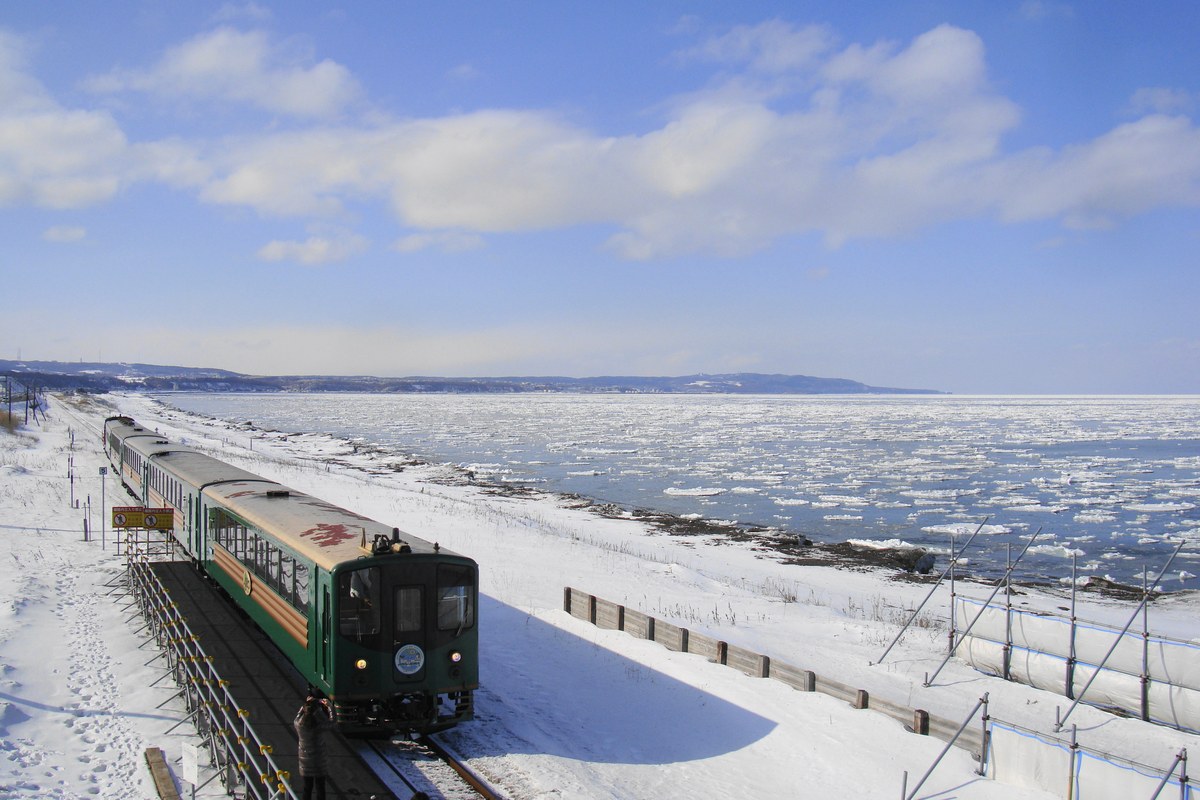
This train is oddly invisible in English coverage, given that it sits in JR Hokkaido's official winter special-train announcement alongside the SL. It runs Abashiri to Shiretoko-Shari, two round trips a day, using the Hokkaido no Megumi series rolling stock.
| Service | Times (2025-26 as run) |
|---|---|
| No. 1 | Abashiri 9:50 → Shiretoko-Shari 10:41 |
| No. 2 | Shiretoko-Shari 11:40 → Abashiri 12:44 |
| No. 3 | Abashiri 13:04 → Shiretoko-Shari 13:55 |
| No. 4 | Shiretoko-Shari 14:10 → Abashiri 15:14 |
It ran on 31 January and 1 to 28 February 2026. The seating system differs from the SL in one important way: it is only partly reserved, so unreserved seating exists and not every passenger needs to book. But the announcement gives only those words and publishes no reserved-seat price, so this guide covers the timetable and the rules and quotes no figure.
Its practical value is flexibility: two round trips a day and a journey of roughly 50 to 65 minutes make it far easier to slot into a day than the SL, and it runs the drift-ice coastline in exactly the season people go to see drift ice. Note the geography, too — the SL works the southern half of the Senmo Line (Kushiro to Shibecha), the Ryuhyo Monogatari the northern half (Abashiri to Shiretoko-Shari). Riding both means travelling the length of the same line.
What a rail pass does and does not cover
This guide does not redo pass break-even maths — that lives elsewhere on the site. It answers one question only: can I use my pass on this train?
| Train | Pass coverage | What you still pay |
|---|---|---|
| SL Fuyu no Shitsugen | Partial | Pass covers the ¥1,380 fare; the ¥1,680 reserved seat is out of pocket |
| Ryuhyo Monogatari | Partial | Fare covered; partly reserved, so a reserved seat costs extra (amount not published) |
| Stove train | None | Third sector. And even Tsugaru Railway's own Tsugaru Free Pass is expressly excluded |
| Kotatsu train | None | Third sector, and it is a travel product booked by reservation rather than a rail ticket |
The "pass covers the fare only" conclusion is derived from the published train category (local) and JR Hokkaido's own price breakdown. In fairness: at the time of verification JR Hokkaido's English rail pass page returned a 404 to automated retrieval, so no official pass-page wording on reserved-seat surcharges was obtained — the reasoning rests on the category and the split price. For choosing a pass, see our complete JR Pass guide, the Hokkaido Rail Pass route maths, and nationwide versus regional passes.
Which one is worth a detour
This is the section where I will give an actual opinion rather than "they're all lovely, depends what you want". The three trains differ so much in scarcity that the reasons to detour differ completely.
SL Fuyu no Shitsugen: worth building the trip around
Simply because it is the only genuinely scarce one: 32 days a season, one round trip a day, every seat reserved, hauled by an elderly locomotive with a documented substitution history. Missing it is not a casual "next year" — you do not know which dates the next season will land on or whether your leave will match. If your winter Hokkaido plan already touches the east, I would treat the SL running dates as the anchor the itinerary is built around, rather than building the itinerary and then hunting for seats. Conversely, if this trip is confined to Sapporo, Otaru and Hakodate, going east purely for the SL adds two days of travel — in that case be honest that it does not fit and save it for another trip.
Stove train: ride it if you are passing, don't build around it
Its cost is geography, not competition for seats, and that is the single idea this guide most wants to change. Three round trips a day for four months with no reservation system means there is nothing to win. The only question is whether your route touches the Tsugaru peninsula. If you are already going to Hirosaki or Aomori, Goshogawara connects easily, and ¥1,870 for a full-line ride on a century-old railway with a coal stove is excellent value. If your Tohoku trip is centred on Sendai, Matsushima or Morioka, be realistic about the half-day-plus round trip you are adding.
Kotatsu train: worth it, but decide five days ahead
Its barrier is neither scarcity nor distance but decision timing. Weekends and holidays only, one round trip a day, bookings closing five days out — you have to commit to a specific date before or very early in the trip, not on the morning you feel like it. For travellers who habitually decide on the day, this is the easiest of the three to lose. And settle the "does ¥3,000 include the fare" question before you book.
Ryuhyo Monogatari: the easiest to fit
Two round trips a day and partly unreserved seating make it the most flexible of the lot. If you are already going to Abashiri for the drift ice in February, there is very little reason not to ride it — it is on the line you are already travelling.
Winter risk: cancellations, timetable changes, cash
The real enemy of a sightseeing train is weather, not ticketing. Blizzards and planned suspensions are routine in a Hokkaido or Tohoku winter and sightseeing services get no exemption — worse, running only one to three times a day means one cancellation usually writes off the day. Three rules:
- Never schedule one on your flight day. Put it mid-trip with a buffer.
- Check service status the night before and again that morning. All three operators post daily operating status.
- Understand the refund rules before you go. JR delay and cancellation refunds have defined thresholds and treat fare components differently — it is emphatically not "delayed means fully refunded". Third-sector operators, and a travel product like the kotatsu train, run on their own cancellation tables. Our guide to Japanese train delays and cancellations includes a directory of operator status pages and is much faster to work from than searching on a platform.
Two practical details that are easy to miss: IC cards do not work at the SL's calling stations — the railway says so explicitly, so bring paper tickets if you are used to tapping through; and carry cash for small third-sector stations and on-board sales. For what to wear and how cold it actually gets, start with our Japan weather and clothing guide and first-snow and snowfall timing guide. If a cancellation forces you onto the road, the highway bus guide is the fallback.
The moment you most need mobile data on this kind of trip is the five minutes on a cold platform working out whether today's train is actually running. Plenty of small stations in eastern Hokkaido and the Tsugaru peninsula have no usable public Wi-Fi.
Checking service status needs data: Japan unlimited eSIM (KKday) →When the new season is announced
The time boundary of this guide has to be stated outright: as of mid-August 2026, none of the three railways had published 2026-27 running dates. Every date above is labelled as a 2025-26 result. The publication rhythm, however, is predictable:
| Operator | Expected announcement | Basis |
|---|---|---|
| JR Hokkaido (SL, Ryuhyo Monogatari) | Around mid-October | Previous season's winter special-train press release was dated 17 October 2025; the archived microsite states its information was current as of October 2025 |
| Sanriku Railway (kotatsu train) | Early November | Previous season's announcement was dated 7 November 2025 |
| Tsugaru Railway (stove train) | Fixed season, no annual announcement needed | Official page gives 1 Dec–31 Mar, three round trips daily — but the railway has revised timetables mid-year, so confirm winter departure times |
In other words, you can use this guide's figures as the skeleton of a winter plan now, but check the official pages again in mid-October and early November. The SL especially: its microsite is seasonally offline — in August it is not on the web at all — and when it returns in October both dates and prices need re-reading.
Action checklist
- Work out which model you are dealing with. Only the SL needs chasing; the kotatsu needs a decision five days out; the stove train needs nothing but turning up.
- SL: check JR Hokkaido in mid-October for the new running dates, then set a reminder for one month before your chosen date.
- SL: check for a locomotive-change notice before you buy — critical if you are there for the steam, and the price is unchanged when a diesel substitutes.
- SL: bring paper tickets. IC cards do not work at its calling stations.
- Stove train: check your route against the three departures (southbound 9:35 / 12:00 / 14:40). Buy on the day; stop looking for an online booking page that does not exist.
- Stove train: do not buy a Tsugaru Free Pass expecting to ride it — expressly excluded.
- Kotatsu: check Sanriku Railway in early November for the new announcement, and ask whether the fee includes the fare before booking.
- Kotatsu: order the bento with your seat (Kuji boarders only, never sold on the day).
- All three: check service status twice, and carry cash.
Finally, the limits of this guide. Every time, price and rule here comes from verification against official pages and official PDFs rather than from a ride report, with the season labelled in each case. The Eki-net sale time of "10:00" is not stated here because JR East returns 403 to automated retrieval site-wide and it could not be confirmed. The SL reserved-seat price rests on an archived official capture and needs rechecking in October. Whether the kotatsu fee includes the fare, the western-style kotatsu train's price, and on-board prices on the stove train are all unpublished by the operators, and none of them is guessed at here. Confirm against each operator's own pages before you travel.
Frequently Asked Questions
- Q1:Do I need to book the Tsugaru Railway stove train in advance?
- No — and there is no advance booking system to use. This is the single easiest thing to get wrong about Japan's winter trains. Tsugaru Railway's official stove train page states the operating season runs 1 December to 31 March, and the official timetable note reads, in the railway's own words, that the stove train runs three round trips every day as a coupled stove car plus local car formation. Unreserved seating, no reservation system, every day of the season regardless of weekday or weekend. You buy a fare ticket plus a stove train supplement of ¥1,000(ストーブ列車券 1 乗車(大人・子供同額)) at the station on the day and get on. What you do have to plan around is the timetable, not the ticket: southbound departures from Tsugaru-Goshogawara are 9:35, 12:00 and 14:40; northbound departures from Tsugaru-Nakasato are 10:46, 13:37 and 15:54, with a run of about 43 minutes. Miss one and the next is more than two hours away. That, not ticket scarcity, is the real constraint on this line.
- Q2:Is the stove train supplement ¥500 or ¥1,000?
- It is ¥1,000(ストーブ列車券 1 乗車(大人・子供同額)), and any page still quoting ¥500 is two years out of date. Tsugaru Railway's own page carries the notice that fares were revised on 1 December 2024, and the official fee PDF states the supplement is ¥1,000 per ride for adults and children alike — children are not half price. Note also that this is a supplement, not a ticket: you pay the ordinary fare on top. From Tsugaru-Goshogawara to the terminus at Tsugaru-Nakasato the adult fare is ¥870(津軽五所川原→津軽中里(20.7km・大人)), so a full-line one-way ride actually costs ¥1,870. One more official rule that almost nobody translates: the stove car is coupled to an ordinary one-man car, and the railway states in writing that passengers riding the coupled one-man car pay the ordinary fare only. If you just want the journey rather than the coal stove, you can skip the supplement entirely — and conversely, if you paid for it, make sure you board the right carriage.
- Q3:Does a JR Pass cover the SL Fuyu no Shitsugen?
- Partly — and the reason is the train category. In JR Hokkaido's winter special-train announcement, the SL Fuyu no Shitsugen is listed under the category "local" (futsu), not limited express. That means the fare structure is a basic fare ticket plus a reserved-seat ticket, not a limited express supplement. The official sample price is ¥3,060(片道總額(乗車券 ¥1,380+指定席券 ¥1,680)) one way between Kushiro and Shibecha, broken down by JR Hokkaido itself as a basic fare of ¥1,380(釧路 → 標茶 片道(大人・48.1 km)) plus a reserved-seat ticket of ¥1,680(指定席券 片道(釧路〜標茶)). A rail pass covers the basic fare portion; the reserved-seat ticket is an extra cash outlay, and it is not optional — the train is entirely reserved, and the official wording is that because all seats are reserved, you must book before boarding. One honest limit on this answer: the conclusion is derived from the officially published train category plus the railway's own price breakdown. At the time of verification JR Hokkaido's English rail pass page returned a 404 to automated retrieval, so we do not have official pass-page wording stating that reserved-seat fees are extra. Which pass to buy, and whether any pass pays for itself, is covered in separate guides here.
- Q4:Is the SL Fuyu no Shitsugen being discontinued too?
- There is no official basis for that claim. It circulates widely among railway enthusiasts, and an older version of this guide repeated it; that has now been corrected. The sources checked were JR Hokkaido's 8 January 2026 press release announcing the start of operations, the official English sightseeing-train PDF dated 13 April 2026, and an archived capture of the official SL microsite. None of the three contains the words "last year", "last run" or "end of operation" anywhere. What JR Hokkaido has actually announced is the end of the two Norokko trains, and the two have different final days: the Furano-Biei Norokko finishes on 23 September 2026 (Asahikawa Branch release of 20 August 2026), while the Kushiro Shitsugen Norokko runs until 4 October 2026. Even there the English PDF hedges with the phrase "using the current cars", meaning the version operated with the present rolling stock. The SL is not on that list at all. The genuine risk with this train is a different one: it is hauled by C11 171, a veteran steam locomotive, and from 5 to 8 February 2026 a piston repair forced a diesel locomotive substitution. The railway states that the price does not change when the hauling locomotive is swapped. So the thing to check before you travel is not a discontinuation rumour but whether a locomotive-change notice has been posted.
- Q5:How do I book the Sanriku Railway kotatsu train, and does the price include the fare?
- The kotatsu train is not a rail ticket at all. It is a travel product sold by Sanriku Railway's tour arm, booked through an official reservation form, and the deadline is five days before the travel date — you cannot buy it at the station on the day, and there is no month-ahead sale to race for either. For the 2025-26 season the participation fee was ¥3,000(おとな 1 区間(税込・2025-26 屆実績)) per adult for one section and ¥1,500(こども 1 区間(小学生以下・税込)) for a child of elementary-school age or younger, running Kuji to Miyako, one round trip per day: Kuji 12:07 to Miyako 13:50 outbound, Miyako 14:42 to Kuji 16:40 back. On whether that fee includes the ordinary fare, the honest answer is that the official announcement says only "participation fee, adult, one section, 3,000 yen" and never states one way or the other — and the Kuji to Miyako ordinary fare is ¥2,080(久慈 → 宮古 片道(大人・2026-03-14 改正後)), which is not a rounding error. This guide will not guess on your behalf; ask Sanriku Railway before you book. Two other traps worth knowing: bento boxes are sold only to passengers boarding at Kuji and sweets only to those boarding at Miyako, and the railway states explicitly that neither is sold on the day, so order with your seat. Cancellation charges run 30 percent from three to two days out, 50 percent the day before, and 100 percent on the day or for a no-show.
- Q6:Have the 2026-27 running dates been published yet?
- No. At the time of verification in mid-August 2026, none of the three railways had published dates for the coming season, which is why every date in this guide is labelled as a 2025-26 result rather than a forecast. The publication rhythm is predictable, though. JR Hokkaido issued its winter special-train press release for the previous season on 17 October 2025, and that document carried the running dates for both the SL and the Ryuhyo Monogatari. Sanriku Railway published its kotatsu train announcement on 7 November 2025. Tsugaru Railway does not need an annual announcement at all, because the stove train runs a fixed season of 1 December to 31 March with three round trips daily — but that railway has revised its timetable mid-year before, so check the winter departure times rather than assuming. One further timing caveat: JR Hokkaido's SL microsite is taken down and put back up seasonally, and on 15 August 2026 both the site and its information page returned 404. The reserved-seat price quoted here therefore rests on an archived official capture from 16 February 2026 and must be rechecked when the site returns in October.
- Q7:What other winter trains are there?
- One more with a verifiable official source: JR Hokkaido's Ryuhyo Monogatari, running Abashiri to Shiretoko-Shari, two round trips a day, using the Hokkaido no Megumi series rolling stock. Per the official winter special-train announcement for the 2025-26 season, it ran on 31 January and 1 to 28 February 2026, with departures of Abashiri 9:50 to Shiretoko-Shari 10:41, Shiretoko-Shari 11:40 to Abashiri 12:44, Abashiri 13:04 to Shiretoko-Shari 13:55, and Shiretoko-Shari 14:10 to Abashiri 15:14. The key difference from the SL is the seating system: this train is only partly reserved, not entirely reserved, so unreserved seating exists. The limit on what can be said is that the announcement gives the seating system but publishes no reserved-seat price, so this guide gives the timetable and the rules and does not quote a figure. As for the other lines that often turn up on English winter-train listicles — the Watarase Keikoku Railway, Yurikogen Railway and Akita Nairiku Railway — this guide deliberately omits them. Watarase's official torokko season runs 11 April to 3 December, so it does not operate in deep winter, and the other two had no winter train pages online as of August 2026, which would make any date or price a guess.
- Q8:What happens if snow cancels the train?
- It happens, and sightseeing trains get no exemption. Winter in Hokkaido and Tohoku brings blizzards and planned suspensions to local trains, limited expresses and third-sector railways alike — and because these particular services run only one to three times a day, a single cancellation usually writes off the whole day. Three practical rules follow. Put the sightseeing train in the middle of your itinerary, never on the day you fly home. Check the operator's service status page both the evening before and on the morning itself. And understand the refund rules before you go, because they differ sharply: JR has defined thresholds and treats different fare components differently, while third-sector railways and a travel product like the kotatsu train run on their own cancellation-charge tables published with the announcement. A separate guide covers Japanese train delays and cancellations, including a directory of operator service-status pages, which is far faster to work from than searching on a cold platform.
Read next
Hokkaido JR Pass Complete Guide 2026
Five routes recalculated with 2026 fares — all-reserved limited expresses and the post-2024 Furano line closure change the math.
When Your Train Is Cancelled in Japan: Refunds and Delays
A delay refunds the express surcharge only, never the base fare. But a one-hour departure delay also qualifies if you give up the trip.
When Does It Snow in Japan? First Snow by City
Tokyo’s first snow falls later than Osaka’s on average, and Aomori gets 567cm a winter to Tokyo’s 8cm. The official 30-year normals, city by city.
📊 See the 2026 Price Index (JR Pass, DPA, eSIM, Airport Transport) →