
The October 2023 price hike took the 7-day nationwide JR Pass from ¥29,650 to ¥50,000 — a 69% jump that completely re-drew the math for almost every kind of Japan trip. "Tokyo 6 days plus Kyoto 2 days," a route that used to make the Pass an automatic buy, now loses you more than ¥20,000, because the same itinerary breaks down to Kansai Wide Pass (¥12,000) + 3-day Tokyo subway pass (¥2,000) + one walk-up Nozomi reserved seat from Tokyo to Shin-Osaka (¥14,720) = ¥28,720, which is ¥21,280 less than the Pass.
Running this math route by route, the conclusion is unmistakable: after the 2023 price hike, the nationwide JR Pass only makes sense for a specific kind of traveler. For everyone else, the regional passes and a few overlooked alternatives are cheaper, often by a lot.
This guide does two things. First, it gives you a 30-second verdict on whether the nationwide Pass fits your trip. Second — if it doesn't — it shows you exactly which alternative will. Pass prices come from the operators' official pages; the leg-by-leg single fares in the route tables are estimates from published fares, so check them against your own dates.
- Tokyo in, Kansai out: stack the Tokyo Wide and Kansai Wide passes and buy one EX Hayatoku 21 fare in between — ¥40,980, less than the 7-day nationwide Pass.
- Consider the nationwide Pass only if: you ride two or more long cross-region legs inside 7 days (a Tokyo–Kansai round trip, or on to Hiroshima or Hakata) and the singles add up to more than the Pass.
- Skip it if: You're doing a single-region trip — Tokyo only, Osaka-Kyoto, Kyushu loop, Hokkaido. A regional pass or single tickets cost less.
- Best regional passes: Kansai Wide 5-day (¥12,000) and Tokyo Wide 3-day (¥16,000). Both are CP-value kings.
- Cheapest alternatives: Smart-EX early-bird shinkansen (save ¥1,740 on Tokyo–Shin-Osaka against a walk-up Nozomi reserved seat), Willer overnight bus Tokyo–Osaka (¥4,000), Peach LCC (¥5,000 when on sale).
- Where to buy: two weeks out. Check the official site first: since 1 October 2026 resellers cost ¥3,000 more on the 7-day pass, and what counts is the date you buy, not the date you travel. The official price is only held for now; choose a reseller for cancellation terms or loyalty credit.
Table of Contents (click to expand)
- 2026 prices at a glance
- The 30-second decision: do I need the nationwide Pass?
- Four real routes, costed out
- The five regional passes to compare first
- Visiting both Tokyo and Kansai: do two regional passes beat the nationwide Pass?
- Six alternatives that beat the Pass on many trips
- How to buy, exchange, and use the JR Pass
- After activation, a suspended train gets you nothing
- The one-page verdict table
- Try it: calculate your route
- Verdict: the Pass is still useful, just rarely the default
2026 prices at a glance
| Class | 7-day | 14-day | 21-day |
|---|---|---|---|
| Ordinary | ¥50,000 | ¥80,000 | ¥100,000 |
| Green (1st class) | ¥70,000 | ¥110,000 | ¥140,000 |
The 7-day ordinary Pass at ¥50,000 sits between two regional pass tiers — convert via the live currency widget if you want a local-currency reference. That is the official JAPAN RAIL PASS Reservation site price. Since 1 October 2026, buying through an overseas agent (online travel platforms such as Trip.com and KKday sell through that channel) costs more; the agent prices are in the box below. Green Car upgrades get you a slightly wider seat and a power outlet, but on most routes under 4 hours the difference is cosmetic. We recommend Green Car only if you're riding the full Tokyo–Kagoshima-Chuo length, or if you're 6 feet tall and plan to sleep on the train.
The 30-second decision: do I need the nationwide Pass?
Here is the question that decides it for you:
Will I take two or more long-distance cross-region rides (each ≥ ¥12,000 one-way) within any 7-day window?
If no, you almost certainly don't need it: a single Tokyo-to-Kansai crossing is cheaper with two regional passes and one early-bird fare. If yes, the Pass is in play, but add up the single fares before you buy. Below are four common trip shapes, costed with published fares.
Four real routes, costed out
Route A: Tokyo → Kyoto → Hiroshima → Tokyo (7 days)
The classic "golden triangle" trip. Here is the single-ticket total using reserved-seat Hikari (Pass holders need a separate NOZOMI MIZUHO Ticket — ¥4,960 Tokyo–Shin-Osaka — for every Nozomi ride, so the comparison uses Hikari). Leg fares are estimates:
| Leg | Reserved seat (Hikari/Sakura, estimate) |
|---|---|
| Tokyo → Kyoto | ~¥13,850 |
| Kyoto → Hiroshima | ~¥11,290 |
| Hiroshima → Tokyo (via Shin-Osaka transfer) | ~¥18,570 |
| Tokyo subway 72-hour pass | ¥2,000 |
| Total | ~¥45,710 |
Verdict: Singles are about ¥4,290 cheaper than the ¥50,000 Pass. Close, but singles win. However — add a single day trip like "Tokyo → Atami hot springs and back" (roughly ¥7,700 round trip with shinkansen, estimated), and the Pass flips the math and saves you about ¥3,410. This is the trip pattern where the nationwide Pass is most defensible.
Route B: Tokyo → Kanazawa → Osaka → Tokyo (7 days)
| Leg | Reserved seat |
|---|---|
| Tokyo → Kanazawa (Hokuriku Shinkansen) | ~¥14,380 (estimate) |
| Kanazawa → Tsuruga (Hokuriku Shinkansen), change at Tsuruga to the Thunderbird limited express → Osaka | Check before you go |
| Shin-Osaka → Tokyo (EX Hayatoku 21) | ¥12,980 |
| Subway/local trains | ~¥3,000 (estimate) |
Verdict: if the Kanazawa-to-Osaka leg costs less than ¥19,640, singles beat the nationwide Pass. Since the Hokuriku Shinkansen was extended from Kanazawa to Tsuruga on 16 March 2024, that trip means changing from the shinkansen to the Thunderbird at Tsuruga, so the old direct fare no longer applies — look the leg up in a route planner and compare it with that threshold. If you do hold the Pass, the Kagayaki is covered too: the only shinkansen the Pass excludes are the Nozomi and Mizuho.
Route C: Osaka + Kyoto only (5 days)
| Option | Price | Best for |
|---|---|---|
| JR Kansai Wide Area 5-day Pass | ¥12,000 | Osaka ↔ Kyoto ↔ Kobe ↔ Himeji ↔ Okayama |
| Single tickets only (Osaka–Kyoto rapids) | ~¥7,200 (estimate) | Only 3–4 Osaka-Kyoto round trips |
| Nationwide 7-day Pass | ¥50,000 | Wasteful |
Verdict: If your plan stops at Osaka-Kyoto, use Suica plus singles. If you'll also do Himeji Castle or Okayama, the Kansai Wide Pass pays for itself in one Himeji round trip. The nationwide Pass on this itinerary costs ¥38,000 more than the Kansai Wide Pass.
Route D: Kyushu loop — Fukuoka → Kumamoto → Kagoshima → Yufuin (6 days)
| Option | Price |
|---|---|
| JR Kyushu All-Area 5-day Pass | ¥24,000 (official online booking ¥23,000) |
| Same route, singles totaled | ~¥29,860 (estimate) |
| Nationwide Pass | ¥50,000 (¥26,000 more than the Kyushu pass) |
Verdict: The Kyushu All-Area Pass comes in under the estimated singles total and includes access to tourist trains like the Yufuin no Mori and Aso Boy that would otherwise require separate reservations. Strongly recommended for any Kyushu circuit.
The nationwide JR Pass — 7, 14 or 21 days
Resellers sell a physical exchange voucher through the overseas-agent channel, whose 7-day price has been ¥3,000 above the official site's since 1 October 2026. For now the official site is the cheaper place to buy; its price page shows both tables side by side and links through to the official reservation site.
See official JR Pass prices →The five regional passes to compare first
Here are the five regional passes worth comparing first, with a concrete itinerary for each.
1. JR Tokyo Wide Area Pass — 3 days, ¥16,000
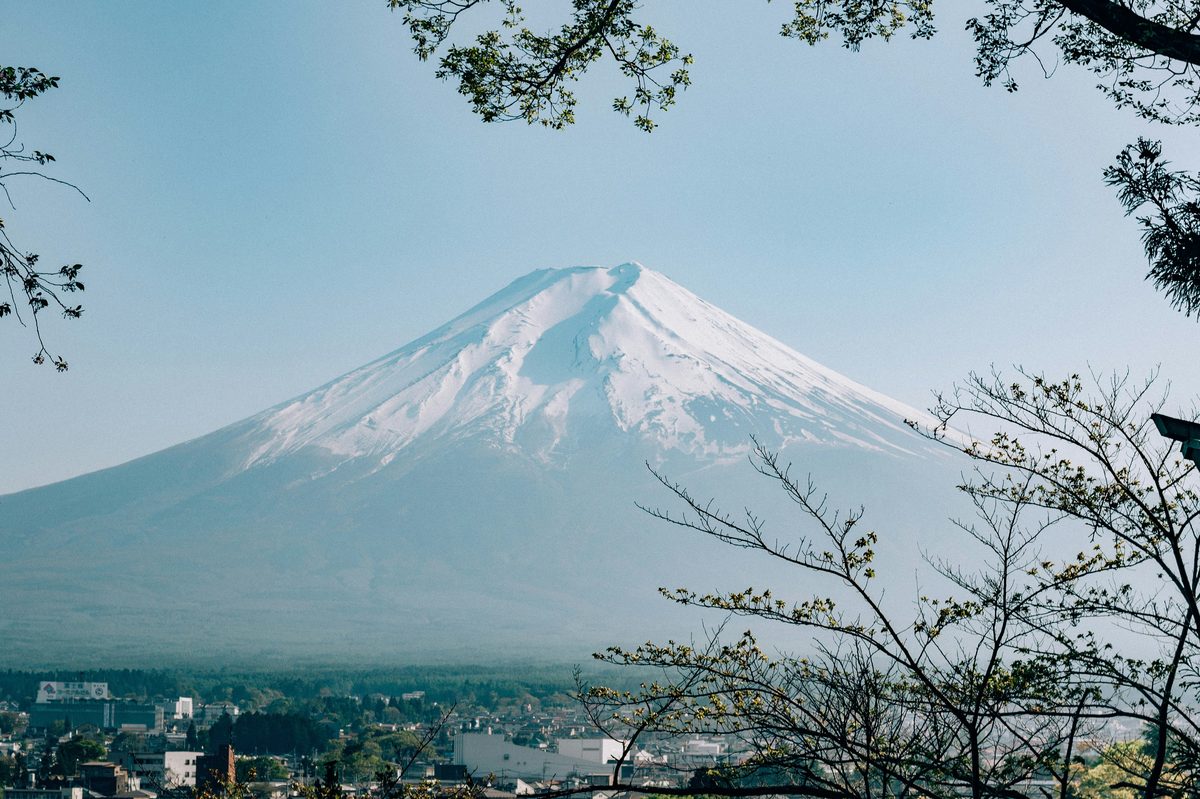
Covers Tokyo's surrounds: Nikko, Karuizawa, Gala Yuzawa ski resort, Kawaguchiko (Mt. Fuji), and the Izu Peninsula. Includes shinkansen and the scenic Odoriko limited express. A three-day plan the pass fits: Day 1 Tokyo city, Day 2 day trip to Nikko (shrines, Kegon Falls), Day 3 Kawaguchiko with Mt. Fuji views.
2. JR Kansai Wide Area Pass — 5 days, ¥12,000
The single best-value rail pass in Japan. Covers Osaka, Kyoto, Kobe, Nara, Himeji, and Okayama — plus the Haruka Express from Kansai Airport and reserved seats on the Sanyo Shinkansen between Shin-Osaka and Okayama. Itinerary: Day 1 arrive KIX → Osaka, Day 2 Kyoto, Day 3 Himeji Castle, Day 4 Okayama Koraku-en garden, Day 5 Kobe + return. If you're doing any Kansai trip longer than 3 days, this is the default. Only riding HARUKA once, without a pass? The discounted one-way e-ticket is covered in our HARUKA e-ticket guide.
3. JR Kyushu All-Area Pass — 5 days, ¥24,000
Includes the Kyushu shinkansen (Hakata ↔ Kagoshima-Chuo) and the island's beloved tourist trains: the Yufuin no Mori, Aso Boy, and Kaze no Raku. Itinerary: Hakata → Kumamoto (castle, Aso volcano day trip) → Kagoshima (Sakurajima) → Yufuin (onsen town) → back to Hakata. A Kyushu circuit is one of the few Japan trips where every single train ride is pretty.
4. JR Hokkaido Rail Pass — 5 days, ¥22,000
Sapporo-based, covers Otaru, Hakodate, Asahikawa, and Furano. In winter it lines up well with the Sapporo Snow Festival (early February). Summer itineraries focus on Furano lavender fields and Asahiyama Zoo. The Norokko sightseeing train runs only until 23 September 2026 (the ¥1,000 reserved-seat supplement applies even with the Pass), so that is the window if you want it; after that the corridor is served by limited expresses. In winter the equivalent is the SL Fuyu-no-Shitsugen-go in eastern Hokkaido, which runs barely thirty-odd days a season and is fully reserved — the Pass does not cover that reservation fee, so confirm you can actually get a seat before building days around it. For the five routes costed line by line and whether this Pass actually pays off, see our Hokkaido JR Pass guide.
5. JR EAST PASS (whole area) — 5 consecutive days, ¥35,000
Covers every JR East line, including the shinkansen towards Nagano, Niigata, Sendai and Aomori. It used to be sold as two separate passes (Tohoku area, and Nagano/Niigata area); since 14 March 2026 there is only this one. For places close to Tokyo such as Karuizawa or GALA Yuzawa, the Tokyo Wide Pass is enough — this one earns its price only when you head on to Nagano, Niigata city or Tohoku, ideally on two shinkansen lines within the 5 days.
Visiting both Tokyo and Kansai: do two regional passes beat the nationwide Pass?
Usually yes — but the Tokyo-to-Kyoto leg in the middle is not covered by either one. Use the Tokyo Wide 3-day (¥16,000) for Tokyo, Nikko and Kawaguchiko, head west by shinkansen, then activate the Kansai Wide 5-day (¥12,000) once you reach Kansai. The two passes total ¥28,000, which is ¥22,000 less than the nationwide 7-day Pass (¥50,000).
Budget for the Tokaido shinkansen between Tokyo and Kyoto (or Shin-Osaka) separately: the Tokyo Wide is a JR East pass, and JR West states the Kansai Wide cannot be used between Shin-Osaka and Tokyo. Even at the walk-up Nozomi reserved fare (¥14,720 Tokyo–Shin-Osaka), that single leg costs less than the ¥22,000 gap, so the stack still comes out ahead; if your date is fixed, an EX Hayatoku 21 fare (¥12,980) brings the two passes plus that leg to ¥40,980 — see the early-bird fare breakdown. The stack also leaves you flexible: city days between the two passes, when you are just walking around, burn no pass days at all.
Flying home from Tokyo changes the answer. Add the return leg on another EX Hayatoku 21 fare and the stack reaches ¥53,960, ¥3,960 more than the nationwide 7-day Pass. What decides it then is your Tokyo days: if you stay in the city, skip the Tokyo Wide and buy only the Kansai Wide plus EX Hayatoku 21 both ways, ¥37,960 in total; if you also make long JR trips from Tokyo such as Nikko and everything fits inside 7 days, the nationwide Pass is back in contention — add those fares in and compare.
The logic breaks once your trip adds a second or third long cross-region leg beyond Tokyo–Kansai (on to Hiroshima, Kanazawa or Hakata). Those singles eat the saving, and that is the niche the nationwide Pass still owns — check the four route calculations above.
Six alternatives that beat the Pass on many trips
1. Smart-EX early-bird shinkansen tickets
The Tokaido and Sanyo shinkansen lines (Tokyo ↔ Osaka ↔ Hakata) offer the Smart-EX booking system with early-bird fares. EX Hayatoku 21 (deadline 21 days before travel) drops Tokyo–Shin-Osaka to ¥12,980 versus the ¥14,720 walk-up Nozomi reserved fare — ¥1,740 saved per leg. No annual fee, links directly to your credit card, and tickets live on your Apple Wallet. If you're certain of your dates, this is often cheaper than even the Pass; the EX Hayatoku 21 vs JR Pass full fare breakdown runs three real routes.
2. Tokyo ↔ Osaka overnight buses
Willer Express and JR Dream Bus run the Tokyo–Osaka night route from ¥4,000 — 70% cheaper than the shinkansen. Yes, it's 8 hours on a bus, but it doubles as a hotel night (¥6,000+ saved), so the net effect is strongly positive. The Willer Japan Bus Pass, which used to give unlimited Willer bus rides, stopped selling after 30 September 2025, so don't plan around it.
3. Suica / PASMO / Welcome Suica
For urban travel within any Japanese city, a Suica card handles subway, bus, convenience store, and vending machine payments. Since 2023, Apple Wallet and Google Wallet both support adding a virtual Suica with no physical card needed. Welcome Suica is a 28-day tourist version with no deposit and no refund process — perfect for short trips. For how Suica, ICOCA, and PASMO actually differ and whether they work nationwide, see our Japan IC card guide.
4. City day passes
Every major Japanese city has an underpriced day pass. Tokyo Metro 24-hour pass ¥1,000; Osaka Amazing Pass ¥3,500 (includes free entry to about 40 attractions like Osaka Castle, Umeda Sky Building, and Tennoji Zoo — it pays for itself in 3 attractions); Kyoto Metro + Bus one-day ¥1,100. For any day with heavy local sightseeing, these beat per-ride fares by 50% or more.
5. Domestic LCC + single shinkansen
Peach Aviation and Jetstar Japan regularly offer ¥5,000 seats on routes like Tokyo-Osaka, Tokyo-Fukuoka, and Osaka-Sapporo — faster and cheaper than the shinkansen. Book 6+ weeks out for the best fares. Combine one LCC leg with one shinkansen single and you can often beat the Pass by ¥10,000 on a multi-region itinerary. For exactly which routes are faster to fly once you count airport transfers, see our shinkansen vs domestic flights comparison.
6. Seishun 18 Kippu
A JR ticket valid only on local and rapid trains, used over 3 consecutive days (¥10,000) or 5 consecutive days (¥12,050). It saves money and costs time. For whether the Seishun 18 Kippu is worth buying and how to choose between the 3-day and 5-day versions, see our separate guide.

How to buy, exchange, and use the JR Pass
- Order 2 weeks before departure. Start with the official reservation site: the 1 October 2026 increase applied to resellers only, so it is ¥3,000 cheaper on the 7-day pass. Pick a reseller if cancellation terms or loyalty credit matter more to you.
- You'll receive an MCO (Exchange Order) — this is a paper voucher, not the Pass itself. Bring it to Japan; do not lose it. The voucher is valid for 3 months from issue date, so don't order too early.
- Exchange at a Travel Service Center on arrival. Shortest queues:
- Narita Airport Terminal 1 or 2, B1 floor JR EAST Travel Service Center
- Haneda Airport Terminal 3 JR East Travel Service Center
- Shinjuku, Tokyo, Shin-Osaka, Kyoto, or Hakata stations
- Set a custom start date. You don't have to activate the Pass on exchange day. You can pick any start date within 1 month — critical if you're spending your first 2 days in Tokyo before regional travel begins.
- Reserve seats. If you bought the Pass on the official JAPAN RAIL PASS Reservation site, you can book reserved seats online on that site and pick the tickets up at a station. If you bought an exchange voucher from an agent or reseller, reserve at the counter: on exchange day, hand the staff your full itinerary of shinkansen trips for the week. They'll issue all reservations at once. Saves hours of queueing later in the trip.
The airport-to-city leg (N'EX, Skyliner, limousine bus) often isn't worth using the Pass for — see our Tokyo airport transport guide for the Narita/Haneda comparison.
After activation, a suspended train gets you nothing
This is the risk to understand before you buy: once the Pass is activated, suspensions, delays, typhoons and snow earn you no extension and no refund. The Japanese and English conditions pages say exactly the same thing (both marked "current as of April 2026"; we re-checked both on 13 August 2026):
Once you start using the PASS, the periods of use cannot be extended, nor will any refund be issued, even if trains and other qualifying transportation services are suspended or delayed for any reason, including natural disasters. Moreover, the JR Group will not bear additional costs due to changes in your route, such as alternative transportation costs or accommodation charges.
One related rule belongs alongside it: refunds are available only before the start of the period of use, in principle. All of the Pass's flexibility sits before activation — the moment your start date arrives it stops being a refundable ticket and becomes an irreversible block of days. So if one leg of your trip carries real weather risk, pushing the activation date back by a day is usually worth far more than anything you can do afterwards.
The one-page verdict table
| Your trip | Our recommendation | Estimated transport cost |
|---|---|---|
| Tokyo only, 5 days | Suica + 72-hour subway pass | ¥3,500 |
| Tokyo + Fuji/Hakone | Tokyo Wide 3-day Pass | ¥16,000 |
| Tokyo in, Kansai out (with Nikko or Kawaguchiko from Tokyo) | Tokyo Wide 3-day + Kansai Wide 5-day, one EX Hayatoku 21 fare in between (see stacking) | ¥40,980 |
| Tokyo–Kansai round trip, Tokyo city only | Kansai Wide 5-day + EX Hayatoku 21 both ways | ¥37,960 |
| Tokyo–Kansai round trip plus long JR trips from Tokyo such as Nikko (within 7 days) | 7-day Nationwide Pass (stacking both passes plus the return leg costs ¥53,960) | ¥50,000 |
| Tokyo + Kanazawa + Osaka | Singles + Smart-EX; skip the Pass if Kanazawa–Osaka is under ¥19,640 | See Route B |
| Osaka + Kyoto + Kobe (5–7 days) | Kansai Wide 5-day Pass | ¥12,000 |
| Kyushu loop | Kyushu All-Area 5-day Pass | ¥24,000 |
| Hokkaido 5 days | Hokkaido Rail Pass | ¥22,000 |
| Tokyo + Kyoto + Hiroshima (7 days) | Singles, narrowly; add a day trip such as Atami and switch to the Nationwide Pass | ~¥45,710 (estimate) |
Hotels within 3 minutes of the shinkansen
The real time-saver on any multi-city trip: a hotel so close to the station that early trains don't ruin your morning. Tokyo, Shin-Osaka, Kyoto, Hakata — all have highly rated options under 5 minutes' walk from the platform.
Near Tokyo Station → Kyoto → Osaka → Fukuoka →The same room is often priced differently from one platform to the next, and the cancellation terms can differ too. Agoda's inventory and pricing in Asia do not fully overlap with Trip.com's, so it is worth opening both before you commit — check Tokyo on Agoda.
Try it: calculate your route
Plug in the cities you're visiting. The calculator compares single tickets against every applicable pass and tells you which is cheapest.
Verdict: the Pass is still useful, just rarely the default
The 69% price hike transformed the JR Pass from a no-brainer souvenir purchase into a precision tool. Cross between Tokyo and Kansai just once and two regional passes plus one early-bird fare do the job for less. Ride two or more long cross-region legs inside 7 days and the Pass is back in contention — it pays off once the singles add up to more. For everything else, the regional passes, Smart-EX early-bird, and a cheap LCC flight do the same job for less money. The habit to build: before you buy, spend 10 minutes in Jorudan or Navitime, list every rail leg, and add them up. If the total is less than the Pass, buy singles. If not, buy the Pass. Either way, you spent 10 minutes and saved thousands of yen.
One more variable to fold in from March 2026: JR East raised ordinary fares on 14 March — 16.4% inside the Yamanote loop, 10.4% across the suburban Tokyo zone — and reissued its whole visitor pass line-up on the same day (the Tokyo Wide Pass went from ¥15,000 to ¥16,000). Single tickets and passes moved together, so any break-even sum written before that date is wrong on both sides. For the new section-by-section fares, see our JR East 2026 fare revision breakdown.
Keep reading
Now that the transport math is settled, the other two pre-trip decisions that save you headaches are which eSIM to buy and the pre-departure essentials checklist — travel insurance, cash-to-card ratio, and the ten apps you'll actually open. If you haven't built your itinerary yet, our 5-day Tokyo plan is a good starting point.
Next Reads
Hokkaido JR Pass Complete Guide 2026
Five routes recalculated with 2026 fares — all-reserved limited expresses and the post-2024 Furano line closure change the math.
Tokyo 5-day itinerary 2026
A clear 5-day plan: Shinjuku base, two zones per day, honest budget.
Osaka & Kyoto 5-day itinerary
Dotonbori, Kiyomizu, Arashiyama in one five-day route.