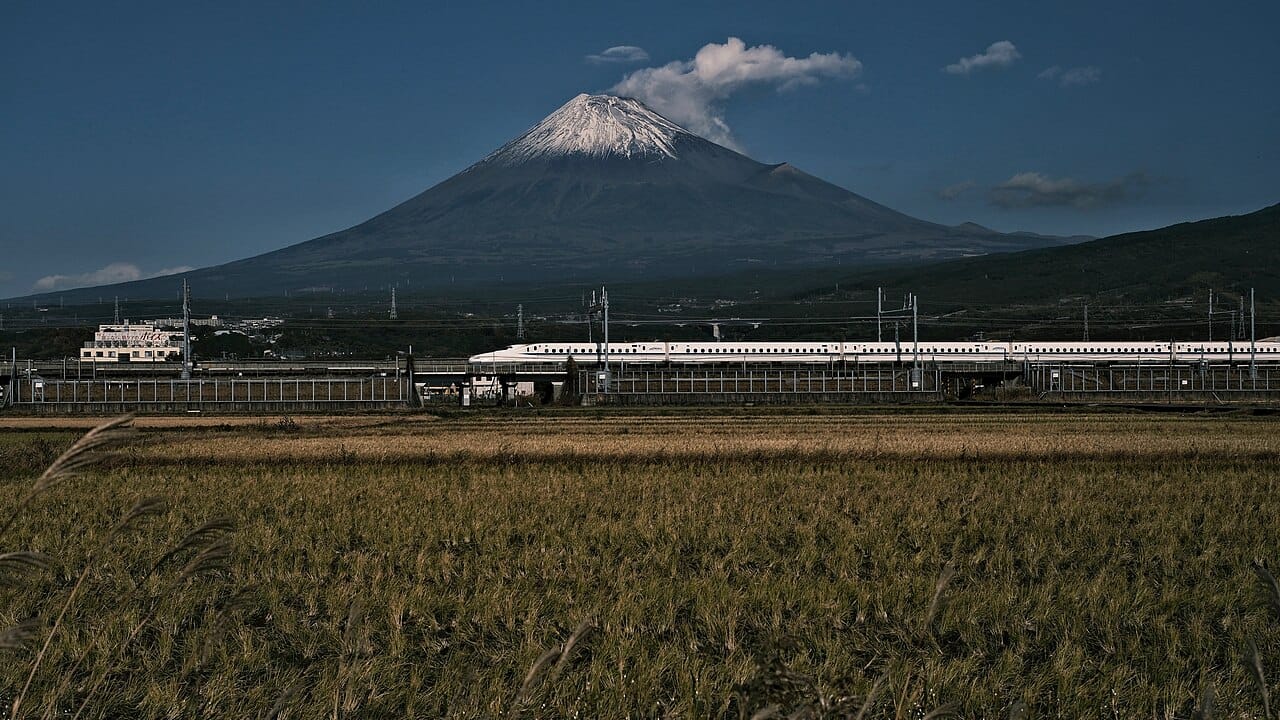
In October 2023, the nationwide 7-day JR Pass jumped overnight from ¥29,650 to ¥50,000 — a 69% hike that flipped the answer to "should I buy a rail pass for Japan?" on its head. The Pass used to be a near-automatic buy. Now, on most itineraries, it is a net loss. The most commonly misjudged case is the lopsided trip — "six days in Tokyo plus two in Kyoto" — where travelers buy the Pass "to be safe" but, run against official fares, end up spending nearly ¥20,000 more than they had to.
This guide settles the math. I break down the nationwide Pass and the five main regional passes (Tokyo Wide, Kansai Wide, Hokkaido, Kyushu, Kansai Railway Pass Lite) by coverage and ideal trip, then run four typical itineraries with the three options — nationwide Pass, regional pass, and singles — side by side. By the end you will have a clear answer for your own trip: which pass to buy, or whether to skip them entirely.
- The nationwide 7-day Pass (¥50,000) only pays off across three big regions — Tokyo + Kansai + a third far city (Hiroshima / Kanazawa / Aomori) inside 8 days.
- Single-region trips → regional pass or singles, every time. Tokyo only, Osaka-Kyoto, a Kyushu loop, Hokkaido — a regional pass saves ¥10,000–¥27,000.
- Best value: Kansai Wide 5-day (¥13,000) and Tokyo Wide 3-day (¥15,000) — each pays for itself in one Himeji or Nikko round trip.
- A simple Tokyo↔Kansai round trip → don't buy a Pass. A Smart-EX Hayatoku-21 single is ¥11,370, saving ~¥17,000 over the nationwide Pass.
- Stack two regional passes (Tokyo Wide + Kansai Wide = ¥28,000) to save ¥22,000 over one nationwide Pass — with more flexibility.
Table of Contents (click to expand)
- Why the nationwide Pass went from default buy to niche tool
- The five main regional passes: coverage and ideal trips
- The master comparison table: pass × coverage × price × best for
- Four typical itineraries, calculated three ways
- Advanced move: stacking two regional passes
- Frequently Asked Questions
- Verdict: measure the shape of your trip first
Why the nationwide Pass went from default buy to niche tool
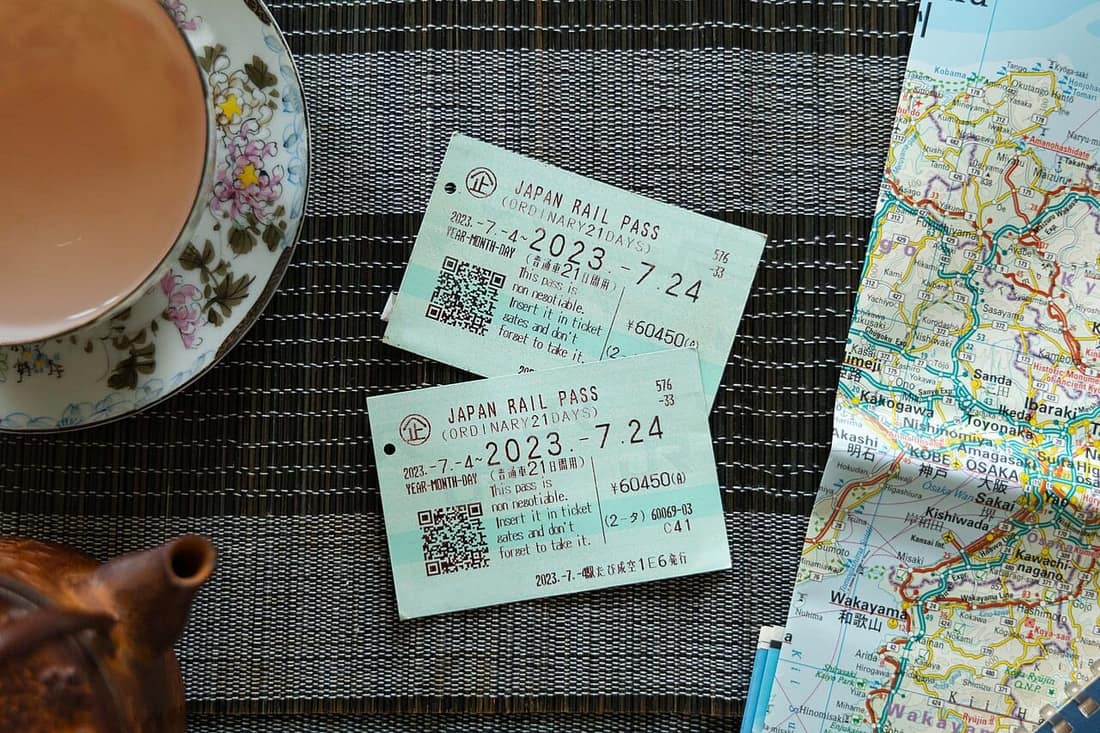
Start with the hike, because it's the premise for everything below. The nationwide 7-day ordinary Pass was ¥29,650 before October 2023; after the reform it became ¥50,000, with the 14-day version at ¥80,000 (Green Car versions are ¥70,000 and ¥110,000 respectively). A 69% jump isn't a tweak — it pushed the break-even bar way up.
How far up? Back in the ¥29,650 era, a single Tokyo–Osaka round trip plus some local hops basically paid the Pass off. At today's ¥50,000, you now need at least two long-distance shinkansen legs of ¥12,000+ each within a single week to come out ahead. In other words, the Pass shifted from "buy it if you'll ride a shinkansen" to "buy it only if you'll cross several big regions with dense long-haul travel." A handful of ¥2,000–¥3,000 day trips (Tokyo↔Atami, Osaka↔Himeji) will never stack up to a ¥50,000 break-even.
One more thing people forget: the Nozomi and Mizuho — the fastest shinkansen — aren't free with the nationwide Pass. Riding them costs a surcharge (about ¥4,960 Tokyo–Shin-Osaka), so Pass holders usually take the slightly slower Hikari or Sakura, adding 15–25 minutes Tokyo–Shin-Osaka. When you compute singles to compare, use the Hikari fare, not the Nozomi fare.
The five main regional passes: coverage and ideal trips
The upside of the hike is that it forces everyone to actually notice the regional passes. They cost just 30–50% of the nationwide version, and their coverage is more than enough for travelers who stay inside one region per trip. These five are the ones I recommend most.
1. JR Tokyo Wide Area Pass (3 days, ¥15,000)
Radiates out from Tokyo: Nikko, Karuizawa, Kawaguchiko (Mt. Fuji), the GALA Yuzawa ski resort, and the Izu Peninsula, with shinkansen and the scenic Odoriko limited express included. Note this one rose with JR East's big March 2026 fare adjustment (from ¥10,180 to ¥15,000), but the value still holds — a single "Tokyo→Nikko day trip" plus "Tokyo→Kawaguchiko" already recovers the price. Best for: a Tokyo-centered trip with one or two deeper day trips nearby. For the broader Tokyo-region routing, see the day-trip legs in our 7-day first-timer itinerary.

2. JR Kansai Wide Area Pass (5 days, ¥13,000)
The single best-value regional pass in Japan, full stop. Covers Osaka, Kyoto, Kobe, Nara, Himeji, Okayama, and Wakayama, plus the Haruka Express from Kansai Airport and the Sanyo shinkansen (non-reserved, Shin-Osaka→Okayama). If your Kansai trip runs longer than three days and includes Himeji Castle or Okayama's Koraku-en, this is the default. For getting from KIX into Osaka/Kyoto (Haruka vs Nankai vs bus), see our Kansai Airport transport guide; pair it with the Osaka Amazing Pass guide for dense in-city sightseeing.
3. JR Hokkaido Rail Pass (5 days, pre-purchase ¥22,000 / on-site ¥23,000)
Sapporo-based, covering Otaru, Hakodate, Asahikawa, and Furano. Strongest in winter: per official fares, a standard Sapporo-based circuit during the Snow Festival saves roughly ¥8,000 versus buying each leg. Pre-purchase is ¥1,000 cheaper than on-site, so book ahead. Hokkaido's distances are long and services thin, which is exactly where the nationwide Pass feels restrictive. For the five routes costed line by line and whether this pass truly pays off, see our Hokkaido JR Pass guide. One variable the pass math does not capture: if you want the SL Fuyu-no-Shitsugen-go in eastern Hokkaido, the pass covers only the base fare and the reservation is on you, and the train runs barely thirty-odd days a season — read how the three winter sightseeing trains sell seats before you lock in dates.
4. JR Kyushu All-Area Pass (3 days, ¥21,000 official / ¥22,000 standard)
Includes the Kyushu shinkansen (Hakata ↔ Kagoshima-Chuo) and the island's beloved tourist trains — the Yufuin no Mori, Aso Boy, and more. Buying on the official site shaves ¥1,000. A full Kyushu loop (Hakata → Kumamoto → Kagoshima → Yufuin) costs around ¥29,860 in singles, so this pass saves over ¥8,000 — and the tourist trains are a highlight in their own right. Best for: a Kyushu circuit that runs the shinkansen the length of the island.
5. Kansai Railway Pass Lite (3 days, ¥6,500, 2026 version)
Formerly the Kansai Thru Pass, relaunched and reduced on April 1, 2026 (¥7,000 → ¥6,500). Two caveats: the Kyoto subway and Keihan Otsu Line are no longer covered from 2026, and it's sold only through October 2026 as a digital QR code. Its key difference from JR passes is that it covers private railways and subways — handy for Koyasan or Himeji Castle, where JR isn't always convenient. But if your Kansai trip leans mostly on JR, the Kansai Wide 5-day usually wins.
The master comparison table: pass × coverage × price × best for
| Pass | Days | Price | Coverage | Best for |
|---|---|---|---|---|
| Nationwide JR Pass (Ordinary) | 7 | ¥50,000 | All JR lines in Japan (excl. Nozomi/Mizuho) | Tokyo + Kansai + a 3rd far city, 3 regions in 8 days |
| Nationwide JR Pass (Ordinary) | 14 | ¥80,000 | Same | Two weeks across multiple far Honshu regions |
| JR Tokyo Wide | 3 | ¥15,000 | Tokyo + Nikko + Kawaguchiko + Karuizawa + GALA + Izu | Tokyo-centered, one or two nearby day trips |
| JR Kansai Wide | 5 | ¥13,000 | Osaka + Kyoto + Kobe + Nara + Himeji + Okayama (incl. Haruka) | Kansai 3+ days, with Himeji or Okayama |
| JR Hokkaido Rail Pass | 5 | ¥22,000 (on-site ¥23,000) | Sapporo + Otaru + Hakodate + Asahikawa + Furano | Hokkaido circuit, best value in Snow Festival season |
| JR Kyushu All-Area | 3 | ¥21,000 (official) | Kyushu shinkansen + tourist trains (Yufuin no Mori, etc.) | A full Kyushu loop |
| Kansai Railway Pass Lite | 3 | ¥6,500 | Kansai private rail + subway (excl. Kyoto subway) | Koyasan, Himeji and JR-inconvenient spots |
| JR Kansai Area Pass | 1 | ¥2,800 | Core Kansai JR (incl. Haruka non-reserved) | Just one day from KIX into Kyoto/Osaka |
Prices verified against official sources in May–June 2026. Passes shift with exchange rates and annual policy, so reconfirm via our 2026 Price Index or the official site before you travel.
Four typical itineraries, calculated three ways
These four routes cover about 80% of Japan trips. Single-ticket fares use 2026 official Jorudan data with reserved Hikari seats (not Nozomi), excluding incidentals beyond the listed local transport. With all three options side by side, the cheapest pick is obvious at a glance.
Route A: Tokyo region only (Tokyo + Nikko + Kawaguchiko, 4–5 days)
| Option | Price | Notes |
|---|---|---|
| Tokyo Wide 3-day Pass | ¥15,000 | Nikko + Kawaguchiko + city shinkansen/express, all included |
| Singles (Nikko RT ¥8,000 + Kawaguchiko RT ¥6,000 + local ¥1,500) | ~¥15,500 | Roughly a wash, but buy each ticket separately, no flexibility |
| Nationwide 7-day Pass | ¥50,000 | Massive waste |
Cheapest pick: the Tokyo Wide 3-day Pass. It's essentially a wash against singles, but you skip per-leg ticketing and can tack on an extra nearby day trip at no cost. The nationwide Pass on a pure Tokyo-region trip is a cardinal sin — you'd overpay by more than ¥30,000.
Route B: Kansai — Osaka, Kyoto, Nara (with Himeji, 5 days)
| Option | Price | Notes |
|---|---|---|
| JR Kansai Wide 5-day Pass | ¥13,000 | Haruka into Kansai + Himeji + Okayama |
| Singles (Haruka RT ¥3,600 + Himeji RT ¥6,000 + Osaka-Kyoto-Nara ¥4,000) | ~¥13,600 | Nearly a wash with the pass |
| No Himeji, only Osaka-Kyoto-Nara (Suica singles) | ~¥4,000 | Pure in-city — singles win decisively |
| Nationwide 7-day Pass | ¥50,000 | Wastes ~¥37,000 |
Cheapest pick: going to Himeji/Okayama → Kansai Wide 5-day Pass (the included Haruka makes airport transport free); staying in Osaka-Kyoto-Nara only → Suica singles. The dividing line is simply "do you go to Himeji or not." The nationwide Pass wastes around ¥37,000 here — three nights of accommodation — so don't. (Whether to tap ICOCA or Suica in Kansai, and if a physical card is worth it, is covered in our Japan IC card guide.)
Check Kansai Wide / Tokyo Wide regional pass prices →Route C: Tokyo↔Kansai trunk (Tokyo + Kansai + Hiroshima, 7–8 days)
| Option | Price | Notes |
|---|---|---|
| Nationwide 7-day Pass | ¥50,000 | All three long-haul legs + city JR |
| Singles (Tokyo→Kyoto ¥13,850 + Kyoto→Hiroshima ¥11,290 + Hiroshima→Tokyo ¥18,570 + local ¥1,500) | ~¥45,210 | Singles win by ¥4,790 |
| Just Tokyo↔Kyoto RT (Smart-EX Hayatoku-21) | ~¥22,740 | If you don't reach Hiroshima, skip the Pass |
Cheapest pick: with a third far city like Hiroshima/Kanazawa, the nationwide 7-day Pass is essentially a wash with singles (¥4,790 apart), and one extra Tokyo-area day trip tips it to a small Pass win; for a plain Tokyo↔Kyoto round trip, buy Smart-EX Hayatoku-21 singles and save ¥17,000 — never touch the nationwide Pass. This is the one scenario where the Pass still stands up, but only if you genuinely have three long-distance legs.
Route D: Hokkaido circuit (Sapporo + Otaru + Hakodate + Asahikawa, 5–6 days)
| Option | Price | Notes |
|---|---|---|
| JR Hokkaido Rail Pass 5-day (pre-purchase) | ¥22,000 | Full circuit, Sapporo-based |
| Singles (Sapporo↔Hakodate express RT ~¥17,000 + Asahikawa RT ¥10,000 + Otaru ¥1,500 + extras) | ~¥30,000 | Pass saves ~¥8,000 |
| Nationwide 7-day Pass | ¥50,000 | Expensive and restrictive |
Cheapest pick: the Hokkaido 5-day Rail Pass, saving ~¥8,000. With thin services and pricey limited expresses, this pre-purchase ¥22,000 (on-site ¥23,000) pass is one of the few you can buy with your eyes closed and still come out ahead. The nationwide Pass in Hokkaido is both costlier and more constrained — not recommended. For the long Tokyo-to-Hokkaido leg, most travelers fly rather than spend a full day on the shinkansen plus a limited express — see our shinkansen vs domestic flights comparison.
Advanced move: stacking two regional passes
A lot of people get stuck on "I want both Tokyo and Kansai — am I forced into the nationwide Pass?" You're not. The cheapest move is often two regional passes, back to back: use the Tokyo Wide 3-day (¥15,000) for Tokyo + Nikko + Fuji, then activate the Kansai Wide 5-day (¥13,000) for the Kansai leg.
That's ¥28,000 total for 8 days, ¥22,000 less than the nationwide 7-day Pass (¥50,000). The long Tokyo→Kyoto leg in the middle? Buy a Smart-EX Hayatoku-21 single (~¥11,370) — the two regional passes neither cover nor need it, and the all-in total of ¥39,370 still beats the nationwide Pass by over ¥10,000. Better still, the in-city walking days in between don't "burn" any pass days, so you get far more flexibility.
There is a logistics catch worth flagging: each regional pass has its own activation window and exchange procedure. The Tokyo Wide is activated from a JR East ticket machine or Travel Service Center; the Kansai Wide is exchanged at a JR West counter (Kansai Airport, Shin-Osaka, or Kyoto). You'll set the start date for the second pass when you reach Kansai, so there's no pressure to nail down exact dates before you fly. The one habit that saves real time: on the day you activate either pass, reserve all your shinkansen and limited-express seats for that pass's window in a single counter visit, rather than queueing again at every station.
Why does stacking beat the nationwide Pass so consistently? Because the nationwide Pass forces you to pay for nationwide coverage you don't use. On a Tokyo-plus-Kansai trip, you're really only riding rails inside two regional bubbles plus one trunk line between them — and that's exactly what two regional passes plus one early-bird single deliver, at a structurally lower price. The only itineraries where this logic breaks down are the ones with three or more far-flung trunk legs, which is precisely the niche the nationwide Pass still owns.
One last money-saver everyone forgets: whichever pass you buy, sort out connectivity the moment you land. Checking Jorudan timetables, making last-minute pass-vs-single calls, registering Smart-EX and scanning a QR at the gate — all of it needs data. An eSIM works on arrival with no physical card swap, the most painless option in recent years.
Check unlimited Japan eSIM (works on landing) →Frequently Asked Questions
- Q1:Is the nationwide JR Pass still worth it after the price hike?
- It depends on the shape of your trip, not on "buying it to be safe." The nationwide 7-day Pass is now ¥50,000 (up 69% from ¥29,650 in October 2023). It only pays off when you cover Tokyo + Kansai + a third far city (Hiroshima, Kanazawa, Aomori) inside 8 days — three big regions, densely. For single-region trips (Tokyo only, Osaka-Kyoto, a Kyushu loop, Hokkaido), a regional pass is typically ¥10,000–¥27,000 cheaper.
- Q2:What's the difference between the nationwide Pass and a regional pass, and how do I choose?
- The nationwide Pass covers every JR line in Japan for a fixed number of days; a regional pass covers just one area at 30–50% of the price. The decision rule is simple: total up every single-ticket leg in Jorudan, compare it to the relevant regional pass, then to the nationwide Pass, and buy whichever is cheapest. Since 90% of travelers stay inside one region per trip, a regional pass is the default answer.
- Q3:For an Osaka–Kyoto–Nara trip, which pass saves the most?
- If you stay strictly within Osaka and Kyoto, a Suica with single tickets wins outright (the JR rapid between them is about ¥580 one-way — three or four round trips is barely ¥3,000). The moment you add Himeji or Okayama, the JR Kansai Wide 5-day (¥13,000) pays for itself on a single Himeji round trip — the best-value regional pass in Japan. The nationwide Pass on a pure Kansai trip wastes around ¥37,000, the cost of three nights at a nice ryokan.
- Q4:For a Tokyo↔Kansai trunk route, should I buy the nationwide Pass?
- If it is just a Tokyo↔Kyoto round trip, the nationwide Pass (¥50,000) is a clear loss — a Smart-EX Hayatoku-21 early-bird single is ¥11,370, so the round trip is ¥22,740, saving you about ¥17,000. The nationwide 7-day Pass only catches up (or edges ahead) when you also add a third far city like Hiroshima or Kanazawa and use three or more long-distance shinkansen legs within the week.
- Q5:For island-style trips like Hokkaido or Kyushu, is a regional pass always better?
- Almost always. The Hokkaido 5-day Rail Pass is ¥22,000 pre-purchased (¥23,000 on-site); during the Sapporo Snow Festival, a standard Sapporo-based circuit saves roughly ¥8,000 versus buying each leg. The Kyushu All-Area Pass is ¥21,000 on the official site and includes the Kyushu shinkansen plus tourist trains like the Yufuin no Mori — a full loop costs about ¥29,860 in singles, so the pass saves over ¥8,000. The nationwide Pass is a poor fit for both regions.
- Q6:Can I stack two regional passes back to back?
- Yes, and it is often cheaper and more flexible than one nationwide Pass. Example: use the Tokyo Wide 3-day (¥15,000) for Tokyo + Nikko + Fuji, then activate the Kansai Wide 5-day (¥13,000) for the Kansai leg — ¥28,000 total for 8 days, ¥22,000 less than the nationwide 7-day Pass (¥50,000). City days in between, when you are just walking around, do not "burn" pass days.
Verdict: measure the shape of your trip first
The 69% hike turned the nationwide JR Pass from an eyes-closed souvenir purchase into a precision cross-country tool. The flip side is that it opened room for regional passes, Smart-EX early-bird fares, and the two-pass stack. On most itineraries, spending ten minutes listing your route and totaling it saves anywhere from ¥8,000 to ¥22,000.
The simplest decision flow: (1) total every single-ticket leg in Jorudan; (2) compare it to your region's regional pass; (3) then compare to the nationwide Pass. Buy whichever is cheapest. If your trip stays inside one region — and 90% do — a regional pass almost always wins. Only a genuine three-region, dense long-haul week earns the nationwide Pass its place.
Read next
JR Pass 2026: Is It Still Worth It?
Four real routes calculated, six alternatives that may beat the Pass.
Hokkaido JR Pass Complete Guide 2026
Five routes recalculated with 2026 fares — all-reserved limited expresses and the post-2024 Furano line closure change the math.
Shinkansen EX Early-Bird vs JR Pass 2026: Which Is Cheaper?
Are shinkansen early-bird fares cheaper than a JR Pass? Three real routes calculated against EX Hayatoku, walk-up seats, and the Pass — per 2026 official fares.