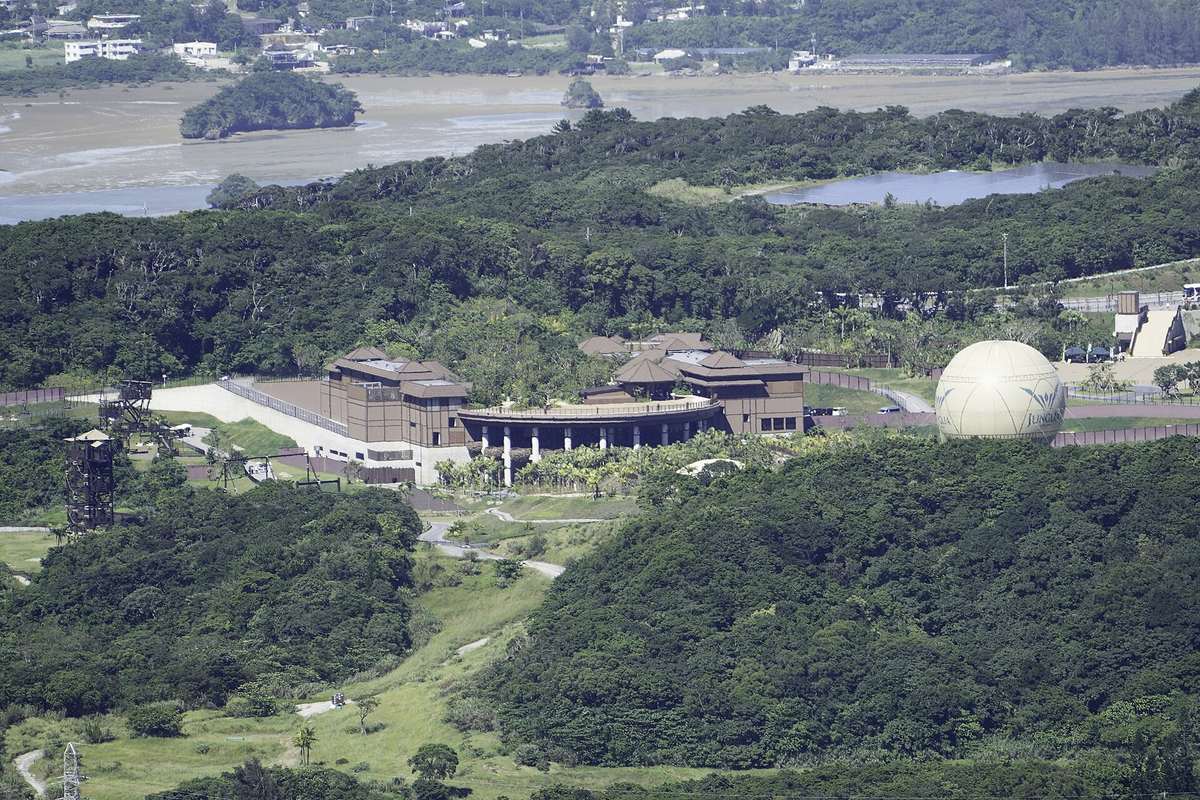
The same JUNGLIA 1Day ticket is priced at ¥6,930 on the Japanese site and ¥8,800 on the English one — a gap of ¥1,870 per adult, or ¥7,480 for a family of four in a single day. Almost everyone who spots this has the same next thought: switch the site to Japanese and buy the cheap one. This guide explains why that route is closed, and it is not a matter of taste or risk appetite. JUNGLIA has written country of residence into its terms of use as a purchase condition, and a ticket bought outside your eligibility is invalidated: no entry, no refund, with an explicit clause saying that holds no matter which channel sold it. Then the part nobody translated for you: the Japanese site lists three car parks, the English site lists two, and the missing one costs ¥800 a day.
- The dividing line is residency, not site language. The Japanese ticket page carries the note "prices for domestic residents" four times; the foreign-language pages say "standard rates".
- Buying outside your eligibility voids the ticket. No entry, no refund, and the terms say it applies regardless of purchase channel.
- Only admission tickets are marked up. Premium Pass and disability Spa tickets are priced identically on both sides. The markup runs from +7.4% to +27%, and the cheaper the ticket, the smaller the gap.
- OTAs are the official channel for overseas visitors. All four foreign-language sites route their "buy tickets" button to Klook — this is the park's own routing, not a workaround.
- Driving? Park at Parking Nakijin for ¥800 a day. That option appears only on the Japanese site. Missing it costs ¥1,200 per car.
📖 Contents (click to expand)
- Can you buy the ¥6,930 ticket?
- What you will actually be charged
- Where you are supposed to buy
- The ¥800 car park nobody translated
- The ¥150 bathing tax: who pays, and when
- Getting there without a car
- The free shuttle is not a park-and-ride
- Opening hours and the one closure day
- You cannot walk between the park and the spa
- Frequently asked questions
- Appendix: official Japanese source text
Can you buy the ¥6,930 ticket?
No — and this is not a recommendation against it. The terms say the ticket is invalidated: no entry, no refund.
Start with how the pricing is presented, because the park is not hiding anything. On the Japanese ticket page, four ticket types — 1Day, the Furatto quick-visit ticket, 1Day Park & Spa, and the Spa ticket — each carry the same line of small print beneath the price: these are prices for domestic residents. Load the same page in Traditional Chinese and that line becomes "the prices shown are standard rates". English says "Prices shown are standard rates." Korean says the same thing.
So the park has never pretended the two prices are the same. It has labelled who pays which tier. The only open question is whether anybody actually enforces it.
They do — through the contract, not through eyeballing you at the gate
The park's terms of use bring residency in at the definition stage. "List price" is defined as the regular price at the time of purchase, and — this is the load-bearing clause — where the price differs according to purchase conditions such as country of residence, it means each of those respective regular prices. On its own that reads like housekeeping. It is the foundation for what follows.
What follows is the clause that bites. If the information about a guest's purchase conditions (age or country of residence) was incorrect such that the conditions are not met, this constitutes a breach of the terms and the ticket concerned is invalidated. An invalidated ticket does not admit you, and the company states it will not provide refunds or other compensation.
Then the parenthesis that closes every side door: this applies regardless of whether or not the ticket was one sold through the online ticketing service the company provides. Where you bought it does not change whether the rule applies to you.
The same clause appears in the separate Spa terms of use. This is not buried in one obscure sub-page — both documents carry it.
The park has also published how it verifies
It is tempting to stop at "they won't check". That conclusion does not survive contact with what the park publishes. There is a whole FAQ article on which documents prove residence, available in all four languages, with a full accepted list: My Number card, driver's licence, qualification confirmation certificate, a copy of the resident register issued within three months, a Japan-issued student ID, residence card, passport, and other booklets issued by public bodies.
The passport entry carries a qualifier that appears only in Japanese: a passport may be used as proof of domestic residence only, and can double as proof for a region-limited ticket only when an address has been written in the holder's entry field. That qualifier was cut from the Traditional Chinese and English versions, both of which collapse driver's licence, health insurance card and passport into a single line that reads as though all three are interchangeable. The English version also drops the three-month limit on the resident register copy and the "Japan-issued" qualifier on student IDs.
The Japanese version also opens with a sentence that is missing entirely from the Chinese and English versions: proof of residence must be shown when exchanging tickets, when purchasing tickets on site, and when using region-limited tickets. That sentence is the trigger condition for the whole article. Strip it out and foreign-language readers are left with a document list and no idea when it applies to them.
The last practical hurdle sits at checkout. The Japanese Spa page's notes state that registration of a Japanese address and phone number is required at the time of purchase. There is no equivalent sentence on the foreign-language pages. Even setting the contract aside, you would have to produce a Japanese address and phone number to get through that step.
What you will actually be charged
The markup lands on admission tickets only. Nothing you add on costs a yen more.
Line the two price lists up against each other and a very clean shape appears.
| Ticket | Domestic resident | What you pay | Gap |
|---|---|---|---|
| 1Day adult | ¥6,930 | ¥8,800 | +¥1,870 (+27.0%) |
| 1Day child (4–11) | ¥4,950 | ¥5,940 | +¥990 (+20.0%) |
| 1Day Park & Spa adult | ¥9,240 | ¥11,550 | +¥2,310 (+25.0%) |
| 1Day Park & Spa child | ¥6,160 | ¥7,480 | +¥1,320 (+21.4%) |
| Quick Visit ticket, adult | ¥2,970 | ¥3,190 | +¥220 (+7.4%) |
| Spa ticket, adult | ¥2,640 | ¥3,080 | +¥440 (+16.7%) |
| Premium Pass, single | from ¥1,870 | from ¥1,870 | 🟢 ¥0 |
| Premium Pass, set | from ¥3,630 | from ¥3,630 | 🟢 ¥0 |
| Spa, disability rate (12+) | ¥1,320 | ¥1,320 | 🟢 ¥0 |
| Spa, disability rate (4–11) | ¥770 | ¥770 | 🟢 ¥0 |
Look at the bottom four rows. Premium Pass and the disability Spa rates carry identical figures in both languages. That kills the intuition that the foreign-language site is simply a marked-up mirror: the surcharge attaches to the act of admission, not to everything a foreign visitor spends inside.
Now sort the gaps by size: +7.4%, +16.7%, +20.0%, +21.4%, +25.0%, +27.0%. The cheaper the ticket, the smaller the markup. The most expensive product takes the biggest hit; the cheapest takes ¥220. The park has never explained why it was structured this way, and this guide will not invent a reason for it.
What that shape means for your planning
There is a practical inference here. If you were already on the fence about adding a Premium Pass, it is relatively better value for you than for a Japanese resident — your admission ticket costs ¥1,870 more while the add-on costs the same, so the add-on is a smaller share of your total. That is arithmetic from the two price lists, not something the park says.
The inference runs the other way for the spa-only route. The Spa ticket's ¥440 gap is the second-smallest in absolute terms, so if all you want is the onsen, the price difference stings least on that path.
One more product exists on the Japanese site and nowhere else: the Royal Ticket at ¥29,700 / ¥26,400, with the FAQ giving a sales window of August 3 to September 30. None of the three foreign-language sites list it. It is also the only ticket type on the Japanese price page without the "prices for domestic residents" note. The park has not stated its eligibility conditions, so this guide does not infer them — and does not suggest you go looking for a way to buy it.
Where you are supposed to buy
Through an OTA. That is the park's own instruction, not a workaround.
There is a Japanese-language FAQ article titled, roughly, "if I live overseas, where can I buy tickets?" Its answer states that tickets can be bought from the overseas online travel agents listed at the links that follow, and then gives four entry points: English, Korean, Simplified Chinese, Traditional Chinese. The article does not exist in the Traditional Chinese or English help centres — it is written for Japanese readers asking how a visiting friend should buy.
So where do those four entry points lead? Checking the "buy tickets" button on each language version of the official site at the HTML level:
| Site language | Where the "buy tickets" button actually points |
|---|---|
| Japanese | ticket.junglia.jp (the park's own ticketing system) |
| Traditional Chinese | Klook product page 141671 |
| English | Klook product page 141671 |
| Korean | Klook product page 141671 |
The front end even ships a dedicated script for handling the Klook URL. This is channel routing, not dual pricing at a single counter. Take the "just switch the language" idea apart and its premise fails immediately: switching the language does not leave you standing at the same counter with a different price tag. It sends you to a different shop.
KKday also sells it, at roughly the official standard rate
Klook is the officially routed channel, but KKday carries the park too, and it is the one channel where I could confirm per-option availability and pricing. Checked on August 29, 2026: the 1Day ticket at TWD 1,740 and the 1Day Park & Spa combo at TWD 2,290, both showing in stock. Converted back to yen at the exchange-rate snapshot used here, both land roughly level with the official standard rate — neither a markup channel nor a discount channel. Exchange rates drift, so no precise difference is quoted here.
Be clear about one boundary: this guide does not compare channel prices. I could not retrieve Klook's per-option prices (403 to command-line requests; the page opens in a browser but the option panel did not render prices), so any sentence ranking one channel against another would be fabricated. Open two tabs and compare for yourself — it takes five minutes.
If you have already decided to go and just want the ticket secured, this is the entry point confirmed in stock:
KKday: JUNGLIA Okinawa tickets (1Day / Park & Spa combo) →
Can you buy at the gate? The park contradicts itself
This one does not get an answer here, because the park has not aligned its own pages.
The FAQ for overseas residents ends by saying tickets can also be bought at the ticket booth, with a warning that they may sell out depending on remaining stock. A different FAQ, covering on-site purchase, states that proof of domestic residence must be shown.
Put those side by side and what happens when an overseas visitor walks up to the booth — which tier they pay, what they are asked to produce — is simply not covered. So this guide will not tell you "just buy at the gate", and will not tell you "you cannot buy at the gate" either. Both go beyond what the park has said.
One conclusion is safe, though: buy online before you travel. That way you never have to test the contradiction, and you do not run into the sell-out the park itself warns about.
Will you need to exchange your ticket on the day?
Depends on the option — do not generalise. The park's principle is that guests who bought outside the official website need to exchange for an admission ticket at the booth, but its examples name travel agencies such as JTB, region-limited tickets and disability tickets, and stop short of naming individual OTAs. In practice the labelling varies: KKday's Spa ticket carries an exchange-required flag, its other options do not.
Read the option page you are actually buying from, and put 20 to 30 minutes of slack in the morning schedule. Better than discovering it at the gate.
The ¥800 car park nobody translated
The Japanese site lists three car parks. The Chinese and English sites list two. The missing one costs ¥800 a day.
For anyone driving, this is the most valuable paragraph on the page. The Japanese access page, car tab, lists three options:
| Car park | Fee | Official note | On the foreign-language sites? |
|---|---|---|---|
| JUNGLIA Okinawa Parking (on site) | ¥2,000 / standard car | No reservation needed; may switch to advance booking in peak periods | 🟢 Yes |
| Parking Nakijin (partner) | ¥800 / standard car | About 10 minutes away, with a free shuttle into the park | 🔴 No |
| Spa JUNGLIA Parking | ¥500 / up to 3 hours | ¥500 per 30 minutes after that | 🟢 Yes |
The Traditional Chinese car tab lists two, and searching the whole page for "Nakijin" or "800" returns zero hits. Same on the English site, where "Nakijin" appears only as the village name inside an address. The official FAQ has the identical split: the Japanese version of the article lists three car parks, the Chinese and English versions of the same article list two.
So a foreign-language reader arriving by car drives straight into the ¥2,000 on-site car park. That is ¥1,200 per car, per day. Roughly two bowls of Okinawa soba with drinks.
Is ¥1,200 worth ten extra minutes of driving plus a shuttle leg? My take: worth it for two adults and one child or fewer, provided you are not planning to return to the car mid-day. If you are travelling with a pushchair, a cool box, or the kind of luggage setup that has you back at the car two or three times, park on site and stop optimising. That is a trade-off, not a right answer.
One more saving, and this one is on the foreign-language sites
The Spa car park entry states two things: three hours free if you are using Tropical Oasis, and — for visits from August 1 onwards — park guests can use the Spa car park free of charge by showing their park admission ticket at Spa reception.
In effect that hands a free parking space to anyone holding a park ticket who also wants the spa that day. Fold it into your routing. For driving in Okinawa more broadly — insurance, fuel policies, drop-off, ferries to the outer islands — see our Okinawa car rental guide.
The ¥150 bathing tax: who pays, and when
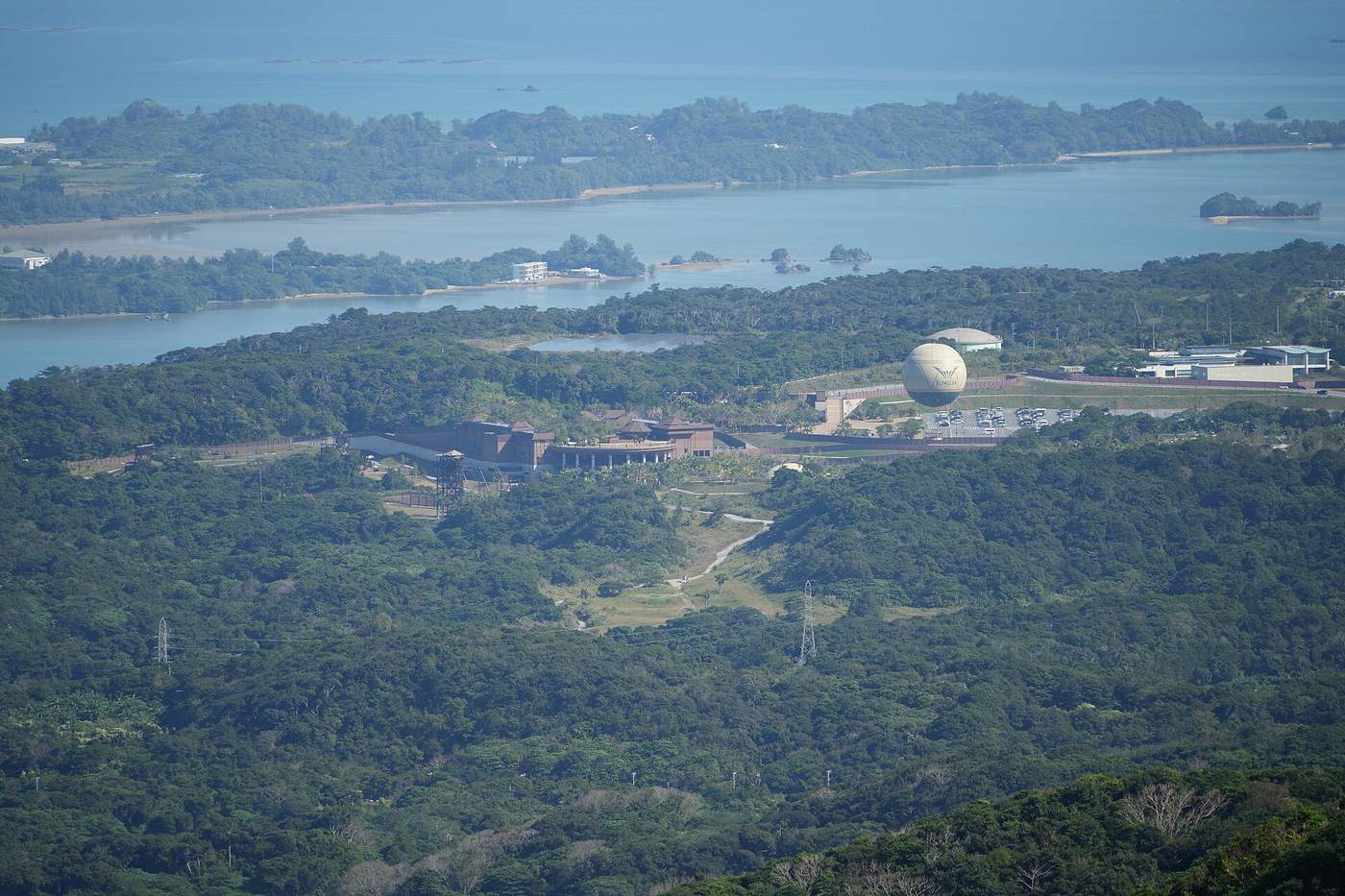
Only Spa users, only ages 12 and over, at ¥150 per person per day.
Get the timing straight first, because the park tells Japanese readers and foreign-language readers two different things — and the version aimed at you is the correct one.
- Buying a Spa ticket through the Japanese official ticketing system: the ¥150 is collected up front, at purchase.
- Buying on site, or through an OTA: you pay it at the Spa reception on the day.
You are on the second path. The English page says "A separate bathing tax is required for adults (12 years and older) when using the Spa. Please pay at the Spa reception on the day of your visit." That is entirely accurate — an OTA purchase was never going to have the tax pre-collected.
The real gap is the amount. The figure ¥150 appears only in Japanese. The English and Chinese pages tell you a tax applies without telling you what it costs.
This is not the park's money
Bathing tax is a local tax. Japan's Local Tax Act levies it on bathers at hot spring facilities, on behalf of the municipality where the spring sits, earmarked for environmental health facilities, spring-source protection, fire services, and tourism promotion — and it sets the standard rate at ¥150 per bather per day. What JUNGLIA collects is exactly that standard rate, and the taxing municipality is Nakijin Village, where the park sits.
One boundary worth stating: I could not retrieve Nakijin Village's own bathing tax ordinance (the village site is JavaScript-rendered and its ordinance index paths return 404), so this says "equal to the standard rate under the Local Tax Act" rather than "Nakijin Village's ordinance sets it at ¥150". The first is verifiable; the second is not.
How accommodation tax and bathing tax stack across Japan, which prefectures and cities levy them, and what changes in 2027, is covered in our Japan accommodation tax guide — which quotes the Local Tax Act article 701 series directly and is the legal source behind this section.
Getting there without a car
There is a direct bus from Naha Airport: ¥2,500, two hours twenty minutes. But the number to remember is zero — that is what it costs from Churaumi.
Credit where it is due: the bus information has no language gap. Fares, journey times and whether reservations are required are itemised identically on the Japanese and Traditional Chinese access pages. This is the one section where the park's translation is complete.
| Route | Reservation | Adult / child | Journey time |
|---|---|---|---|
| Naha Airport / Kencho-mae / Kokusai-dori entrance ⇄ JUNGLIA | Some services need none | ¥2,500 / ¥1,250 | about 2 h 20 min |
| Chatan Gateway ⇄ JUNGLIA | 🔴 Required | ¥2,400 / ¥1,200 | about 1 h 30 min |
| Nago Civic Hall ⇄ JUNGLIA | Cannot be reserved | 🟢 Free | about 30 min |
| Orion Hotel Motobu (beside Churaumi) ⇄ JUNGLIA | None needed | 🟢 Free | about 30 min |
| Official partner hotels ⇄ JUNGLIA | None needed | 🟢 Free | — |
The bottom three rows are the whole point of the table. Bolt JUNGLIA onto a Churaumi day and the transport costs nothing. Orion Hotel Motobu sits beside Ocean Expo Park, 30 minutes away by shuttle. If your itinerary already includes northern Okinawa, this leg is close to free. How to sequence the north, and what time to hit the aquarium to avoid the crowds, is in our Churaumi Aquarium and northern Okinawa day plan.
On timetables, treat what follows as examples only: departures from Kencho-mae at 7:30, 8:15, 10:45 and 13:15; from the Kokusai-dori entrance at 9:10 and 11:00; from Chatan Gateway at 9:15; from Nago Civic Hall at 10:00; from Orion Hotel Motobu at 9:00 and 12:10. The park notes that services printed in red cannot be reserved in advance and are paid on boarding, that timetables may change without notice, and that the Nago and Orion lines are published in monthly segments. Re-check before you travel. These figures are direction, not gospel.
Be realistic about that 2 h 20 min from Naha: it is one way. Doing JUNGLIA as a day trip from Naha while covering the park's 10:00–17:00 window burns close to five hours on the bus alone. Schedule JUNGLIA for a night you are staying in the north, not a night you are staying in Naha.
The free shuttle is not a park-and-ride
The park closes this off in writing, in the same information block.
Read the previous section and most drivers arrive at the same plan: park at Churaumi Aquarium, take the free shuttle into JUNGLIA, pay nothing for parking.
Addressed to people arriving by car, the park states two things that shut this down. The car parks at Ocean Expo Park (Okinawa Churaumi Aquarium) and Orion Hotel Motobu may not be used. And: the Nago Civic Hall car park may not be used.
Both sentences sit inside the descriptions of those two free shuttle routes. The meaning is unambiguous: the free shuttles serve people who are already there — hotel guests, or anyone who reached Nago Civic Hall by other means — not drivers looking for a free interchange.
This is the single most intuitive thing a driver would try. If the goal is to avoid parking fees, the answer is the ¥800 Parking Nakijin from the previous section: it is the park's own designated partner lot, it has a free shuttle, and it is the only one the park explicitly sanctions for this purpose.
Opening hours and the one closure day
Park 10:00 to 17:00, Spa 13:00 to 20:00, and the only announced closure is November 9.
Both the park and the Spa are shut on November 9 — stated in the FAQ and confirmed on the opening-hours calendar. It is the only closure inside the currently published window.
One Spa rule is easy to miss: last admission is one hour before closing, so 19:00. If an evening soak is the plan, 19:00 is your deadline, not 20:00.
How far ahead the calendar goes
The opening-hours page says hours are published at each month-end four months ahead, of which only the first two months are finalised; hours three to four months out may have their closing time extended, and — a nice guarantee — will never be shortened after publication.
An older FAQ says something different: that hours for the month-after-next are published at each month-end. The two do not agree. Reality backs the first: as of August 29, 2026, the calendar already ran to December 31, which is four months. Trust the opening-hours page; the FAQ version is stale.
A note on the scope of that check: six dates were sampled — September 1 and 20, October 10, November 22, December 25 and 31 — and every one showed 10:00–17:00 and 13:00–20:00. The full published range was not swept day by day, so "the hours never change" is not a claim made here. Click your own date on the official calendar.
No reservation, and re-entry is allowed
There is no admission reservation system, and the park states that parking needs no reservation either. The parking line carries a condition: during peak periods it may move to advance booking, announced on the official site two months ahead if it happens. Sweep that page inside the two months before you travel.
And a genuinely useful one: the park allows re-entry. The official instruction is to tell a navigator at the entrance gate on your way out. Leaving for lunch and coming back works.
You cannot walk between the park and the spa
The park states it in writing: walking between the Spa and the park is not possible.
SPA JUNGLIA is a separately ticketed, standalone facility. You can buy into it on its own, and the park describes it as having an infinity bath with a spectacular view and a natural hot spring — a description that lines up with the bathing tax's requirement of a mineral spring bathhouse.
The two sides are linked by a free dedicated shuttle called SPA JUNGLIA Transport, running roughly every 10 minutes with a journey of about 5 minutes. Do not plan to walk it. The park says outright that you cannot.
Which ticket makes sense? The 1Day Park & Spa combo at the standard rate of ¥11,550 saves ¥300 against buying separately (¥8,800 plus ¥3,080). That is small enough that the decision is not about money — it is about whether your day has room. The park closes at 17:00, the Spa does not open until 13:00, and Spa admission stops at 19:00. The overlap window is narrower than it looks; enter the park at 15:00 and the combo probably goes to waste.
One rule matters enormously for families: guests under 10 must be accompanied by a guardian aged 16 or over of the same sex. That is the park's wording. A father taking a daughter, or a mother taking a son, into the Spa does not work under that rule — check your group composition before committing to the combo ticket.
See the 1Day Park & Spa options and availability on KKday →
Where this leaves you
JUNGLIA opened on July 25, 2025, and the park publishes no site area, no ride count and no visitor numbers — so this guide will not tell you whether it is "Okinawa's largest" anything.
The useful advice is structural. You are paying the higher tier and that part cannot be changed, but you can confine the premium to the admission ticket and claw back everything else. The Premium Pass is not marked up. The disability rate is not marked up. Parking Nakijin is ¥800 a day. The shuttle from Churaumi is free. Re-entry is free. Do those five things and a family of four recovers roughly a third of that ¥7,480 gap. Treat the rest as the price of admission.
Heading south afterwards? Naha routing and seasonal planning sit in our Okinawa articles. And if what you are really doing is comparing how Japanese theme parks price their tickets, Fuji-Q works on a completely different model — dynamic pricing that moves day to day — covered in our Fuji-Q Highland ticket guide.
Appendix: official Japanese source text (click to expand)
The Japanese originals quoted above are collected here so you can check them yourself. All are from junglia.jp (official site and terms of use), support.junglia.jp (official FAQ), and the full text of the Local Tax Act via the e-Gov law database.
1. The two price tiers
※ 国内在住者向け料金です。(Japanese ticket page; appears four times, on 1Day, Furatto, 1Day Park & Spa and Spa ticket)
所示價格為一般票價。(Traditional Chinese ticket page) / Prices shown are standard rates. (English ticket page)
2. Residency as a purchase condition, and invalidation (park terms of use)
定価(購入時の正規価格をいい、居住国等の購入条件により価格が異なる場合はそれぞれの正規価格を意味するものとする。)
本パークチケット等について、ゲストが利用する本パークチケット等の購入条件(年齢又は居住国等)に関する情報に誤りがあったこと等により購入条件を満たしていない場合又はゲストが購入に際して提供した情報に誤りがあった場合、本規約又は当社が提供するオンラインチケットサービス利用規約の違反行為として、該当する本パークチケット等(当社が提供するオンラインチケットサービスにおいて販売する本パークチケット等であるか否かに関わりません。)を無効といたします。この場合、無効となった本パークチケット等によるご入場……はできず、また、これにつき、当社による返金等の補償対応もいたしかねます。
3. Proof of residence documents (official FAQ, Japanese version)
チケット引き換えや、現地でチケットを購入する場合、地域限定チケットを利用する場合は、居住地の証明書提示が必要です。
・個人番号カード(マイナンバーカード)/・運転免許証/・資格確認書/・住民票の写し(3カ月以内に発行されたもの)/・(日本発行)学生証/・在留カード/・パスポート(国内在住証明書としてのみ利用可)※所持人記入欄に住所の記入があれば、地域限定チケットの証明書としても利用可/・その他、公的機関が発行する手帳及びそれに準ずるもの
4. Japanese address and phone required at checkout
※ ご購入の際には、日本在住の住所、電話番号の登録が必要です。(Japanese /spa page notes; no equivalent on the foreign-language versions)
5. The official channel for overseas residents (Japanese FAQ only)
チケットは、以下のリンクに掲載されている海外のオンライン・トラベル・エージェント にて購入できます。■英語 …■韓国語 …■簡体字 …■繁体字 … チケットブースでも入場チケットを購入できます。ただし、チケットの残数によっては完売となる場合がございますので、あらかじめご了承ください。
現地でご購入の際、国内在住証明書の提示が必要です。(a separate FAQ article, coexisting with the above)
6. The three car parks (Japanese access page; foreign-language sites list only two)
パーキングはご予約不要です/※混雑期には事前予約制となる場合があります。事前予約が必要となる場合、2か月前にオフィシャルサイトにてお知らせ致します
パークまで約10分/Parking なきじんからは、無料の送迎車両で来場できます
トロピカル オアシスご利用の場合、3時間まで無料/8/1以降のパーク来場のお客様は、スパ パーキングを無料で利用できます。パークの入場チケットをスパレセプションにてご提示ください
7. Car parks that may not be used with the free shuttles
お車でお越しの方へ:名護市民会館の駐車場はご利用できません。ご注意ください。
お車でお越しの方へ:海洋博公園(沖縄美ら海水族館)、オリオンホテル モトブ リゾート&スパの駐車場はご利用できません。ご注意ください。
8. Bathing tax (Japanese site, three places; no amount on the foreign-language sites)
※ 大人(12才以上)の方は別途入湯税150円の支払いが必要です。
オフィシャルチケットサイト上で大人(12才以上)のスパチケットを購入する場合、入湯税(150円)を予めお支払いただきます。/現地で大人(12才以上)のスパチケットをご購入の際には、入湯税(150円)を別途お支払いいただきます。
9. The legal basis for bathing tax (Local Tax Act, Act No. 226 of 1950)
第七百一条 鉱泉浴場所在の市町村は、環境衛生施設、鉱泉源の保護管理施設及び消防施設その他消防活動に必要な施設の整備並びに観光の振興(観光施設の整備を含む。)に要する費用に充てるため、鉱泉浴場における入湯に対し、入湯客に入湯税を課するものとする。
第七百一条の二 入湯税の税率は、入湯客一人一日について、百五十円を標準とするものとする。
10. How far ahead hours are published (the park says two different things)
営業時間は毎月月末に、4か月先まで公開します。なお、公開時点で確定しているのは2か月先までの営業時間です。……3〜4か月先の営業時間は、クローズ時間を延長する場合があります(公開後に営業時間が短くなることはありません)。(opening-hours page)
毎月月末に、翌々月の営業時間を公開します。(例:5月末に7月分を公開)(official FAQ, older)
11. Spa rules
スパ ジャングリアの入館の最終受付は閉館時刻の1時間前です。
スパとパーク間の徒歩移動はできません
10才未満のゲストは、16才以上の同性の保護者の同伴が必要です。
12. Re-entry
パークは、再入場可能です。ご退出の際に、エントランスゲートのナビゲーターへお声がけください。
13. Opening date (official press release)
2025年7月25日(金)グランドオープン!開業セレモニーを実施
Frequently Asked Questions
- Q1:Can a foreign visitor buy the ¥6,930 ticket shown on the Japanese site?
- No. JUNGLIA's park terms of use make "country of residence" part of the purchase conditions, and state in so many words that when those conditions are not met the ticket is invalidated — an invalidated ticket does not admit you, and the company does not provide refunds or other compensation. The terms add a clause that closes every workaround: this applies regardless of whether the ticket was sold through the company's own online ticketing service. One layer down, the Japanese ticketing system asks for a Japanese address and phone number at checkout, and the official FAQ publishes a list of accepted proof-of-residence documents in which a passport is explicitly limited to serving as proof of domestic residence only. This is not a grey area. Overseas visitors pay the standard rate: ¥8,800 for a 1Day adult.
- Q2:Can overseas visitors buy tickets at the gate on the day?
- The official answer contradicts itself, so this guide will not pick one for you. One FAQ, answering where overseas residents should buy tickets, states plainly that tickets can also be bought at the ticket booth — while a different FAQ on the same help centre states that proof of domestic residence must be shown when purchasing on site. Put those two together and it is genuinely unclear which price an overseas visitor pays at the booth, or what they will be asked for. One thing is clear: the park warns that tickets can sell out depending on remaining stock. The practical answer is to buy online before you travel rather than betting the day on a contradiction.
- Q3:Do you need to reserve an entry date for JUNGLIA?
- No. There is no date-reservation system for admission, and the park states that parking does not require a reservation either. The parking line carries one condition worth tracking: during peak periods it may switch to advance reservation, and if it does, the park says it will announce this on the official site two months beforehand. So checking the parking page inside the two months before your trip is a genuinely useful habit. Re-entry is allowed — the official instruction is to speak to a navigator at the entrance gate on your way out.
- Q4:Do OTA tickets have to be exchanged at the ticket booth on the day?
- It depends on the specific option you bought, and a blanket yes or no is wrong in both directions. The park's stated principle is that people who bought outside the official website need to exchange for an admission ticket at the ticket booth — but its examples name travel agencies such as JTB, region-limited tickets and disability tickets, and do not name individual OTAs. In practice the labelling varies by option: KKday's Spa ticket is flagged as requiring exchange, while its other options are not. Read the option page you actually bought from, and build 20 to 30 minutes of slack into the morning in case exchange is required.
- Q5:Who pays the ¥150 bathing tax and when?
- Only guests using the Spa, only those aged 12 and over, at ¥150 per person per day. The timing splits two ways: buy a Spa ticket through the Japanese official ticketing system and the tax is collected up front at purchase; buy on site or through an OTA and you pay it at the Spa reception on the day. The Traditional Chinese and English official pages do say a separate bathing tax applies — they simply do not state the amount, which appears only in Japanese. Worth knowing: this is not the park's own pricing. Japan's Local Tax Act sets the standard rate of bathing tax at ¥150 per bather per day, levied by the municipality where the hot spring sits — here, Nakijin Village.
- Q6:Can you park at Churaumi Aquarium and take the free shuttle to JUNGLIA?
- No, and the park closes this off explicitly. JUNGLIA does run a free 30-minute shuttle from Orion Hotel Motobu next to Churaumi, and another free 30-minute shuttle from Nago Civic Hall. But in the same information block, addressed to people arriving by car, it states that the car parks at Ocean Expo Park (Okinawa Churaumi Aquarium) and Orion Hotel Motobu may not be used, and that the Nago Civic Hall car park may not be used either. The free shuttles are for people already at those places, not a park-and-ride. The legitimate way to save on parking is Parking Nakijin, about 10 minutes from the park at ¥800 a day, with a free shuttle into the park.
- Q7:Are there closure days other than November 9?
- November 9 is currently the only announced closure, and both the park and the Spa are shut that day. Standard hours are 10:00 to 17:00 for the park and 13:00 to 20:00 for the Spa, with last Spa admission one hour before closing. The scope of that check matters: six dates were sampled — September 1 and 20, October 10, November 22, December 25 and 31 — and all showed identical hours, but the full published calendar was not swept day by day, so "every day is the same" is not a claim this guide will make. The park publishes hours four months ahead each month-end, of which only the first two months are finalised. Check your own date on the official calendar before you fly.
Read next
Churaumi & Northern Okinawa 2027: Kuroshio Sea, Kouri Island & Cape Manza
The main island's resort heart — the Churaumi Aquarium's whale sharks, the bridge-linked Kouri Island, Cape Manza and the Onna beaches.
Okinawa self-drive complete guide
Rental company comparison, insurance, must-drive routes.
Japan Lodging and Bath Tax 2026: Kyoto Did Not Raise Yours
Kyoto rooms under 6,000 yen saw no rise at all. From Nov 1, 2026 Niseko Town joins Kutchan in folding the prefectural tax into a flat 3%.
📊 See the 2026 Price Index (JR Pass, DPA, eSIM, Airport Transport) →