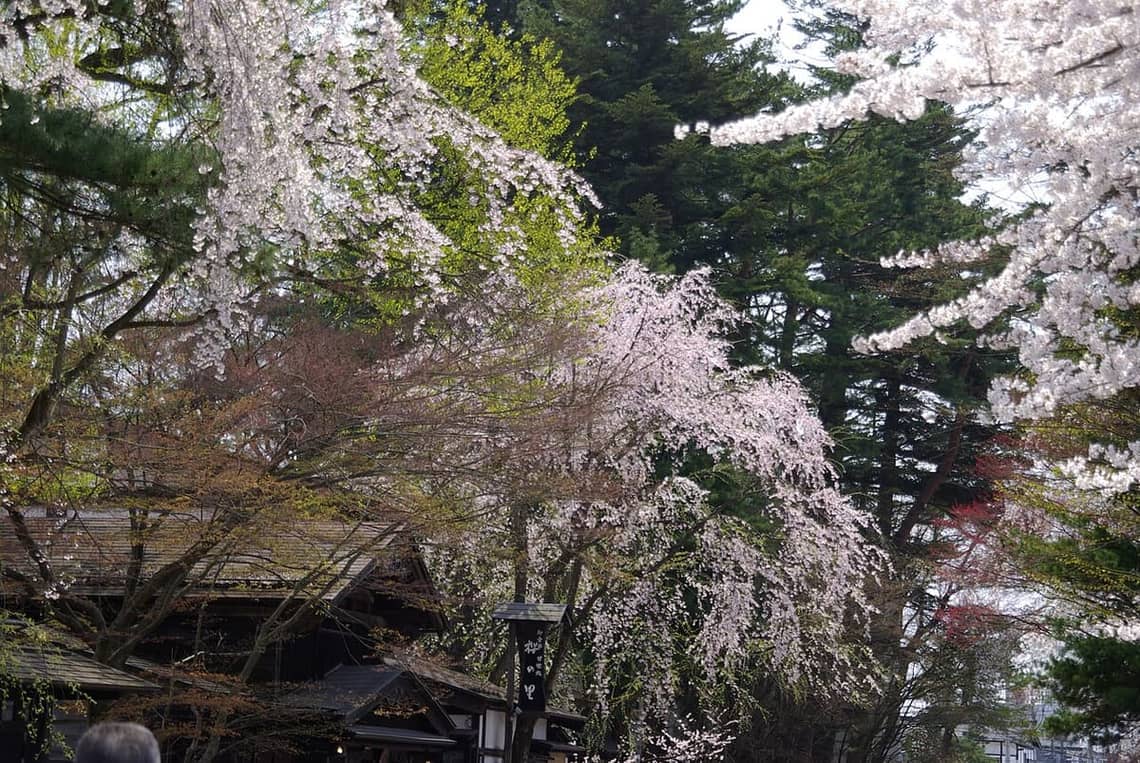
Kakunodate is a small Akita town that, having kept its Edo-period samurai quarter intact, is known as the "little Kyoto of Tohoku." Its sights are concentrated and seasonally charged: the black-fenced samurai district, 162 weeping cherries designated natural monuments, and the 2 km cherry tunnel of the Hinokinai riverbank, plus nearby Japan's deepest Lake Tazawa and Akita's Inaniwa udon. This guide covers the samurai-district tickets, cherry season, the Lake Tazawa extension and access from Tokyo. It's the Akita cherry hub for Tohoku; for the national bloom forecast, see our Japan cherry blossom guide.
- The little Kyoto of Tohoku: a preserved Edo samurai quarter, the Akita highlight
- A cherry-blossom spot: 162 weeping cherries (natural monuments) + a 2 km riverbank cherry tunnel
- Cherry festival Apr 15-May 5 (2026): peak usually late April
- Walking the samurai district is free: Aoyagi-ke interior ¥500
- Lake Tazawa: Japan's deepest lake, the Tatsuko statue, ~15 min away
📖 Table of contents
What kind of place Kakunodate is
Kakunodate sits in central Akita in Semboku City, a castle town ruled in the Edo period first by the Ashina and later the Satake-Hokke clan. The town was deliberately split into a "samurai town" and a "merchant town," and for over three centuries the samurai quarter's layout and many warrior residences have been preserved almost as they were — black wooden fences, heavy gates, gardens and old trees within the grounds, so stepping in feels like a period drama, the source of its "little Kyoto of Tohoku" name.
For travelers the plan is clear: by day, walk the samurai district and merchant town and eat Akita country food, adding the Hinokinai riverbank cherry tunnel in spring — half a day to a day; to go deeper, take a train to nearby Lake Tazawa and the Nyuto Onsen area. Below, in that order.
The samurai district
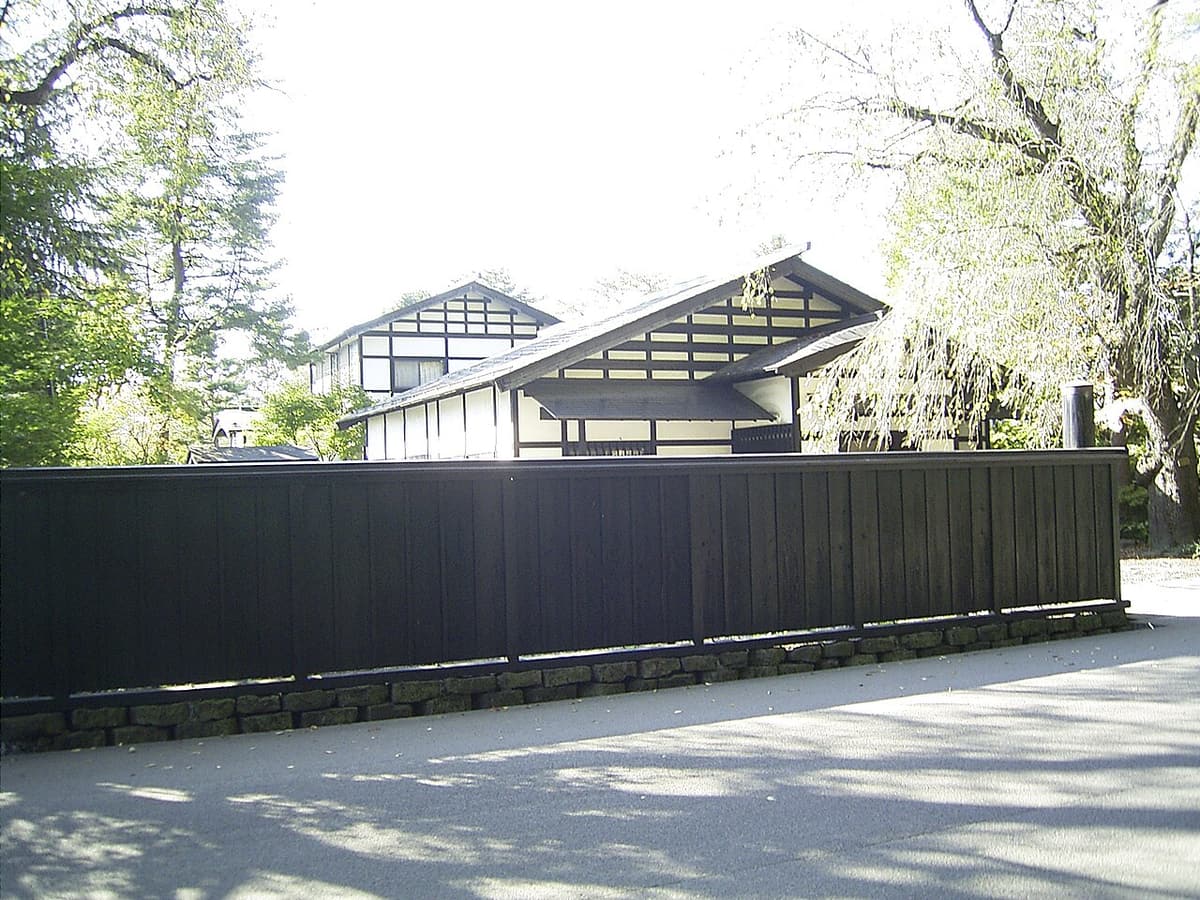
Kakunodate's core is the samurai district — a street lined on both sides with warrior residences. The Edo samurai town enclosed its houses with black wooden fences and planted tall old trees, and the street remains almost unchanged, one of Japan's best-preserved samurai-residence groups and a designated Important Preservation District. Walking the street is free, with most residences' exteriors and front gardens visible.
To see inside samurai life, pick one or two residences that open their interiors: the largest, "Kakunodate History Village Aoyagi-ke," is ¥500, a broad estate with arms and household artifacts on display and gardens; the thatched Ishiguro-ke, one of the oldest surviving samurai houses and still lived in by descendants, also opens. Walking the district plus an interior or two is the core of a Kakunodate half day.
Kakunodate's signature craft is kabazaiku — objects coated in polished wild-cherry bark, a glossy reddish-brown craft developed by the area's lower-ranking samurai and still made here, with tea caddies, boxes and trays sold along the merchant town and a craft museum to see it made. And Kakunodate is more than a spring town: the warrior gardens turn red in autumn, the nearby Dakigaeri Gorge is a noted foliage spot, and in September the Kakunodate Festival sends heavy wooden floats (yama) through the streets, sometimes ramming each other in the "yama-buttsuke." The black-fenced street holds its character in every season, so it's worth a stop even outside the cherry weeks.
Cherry blossoms: weeping cherries and the riverbank
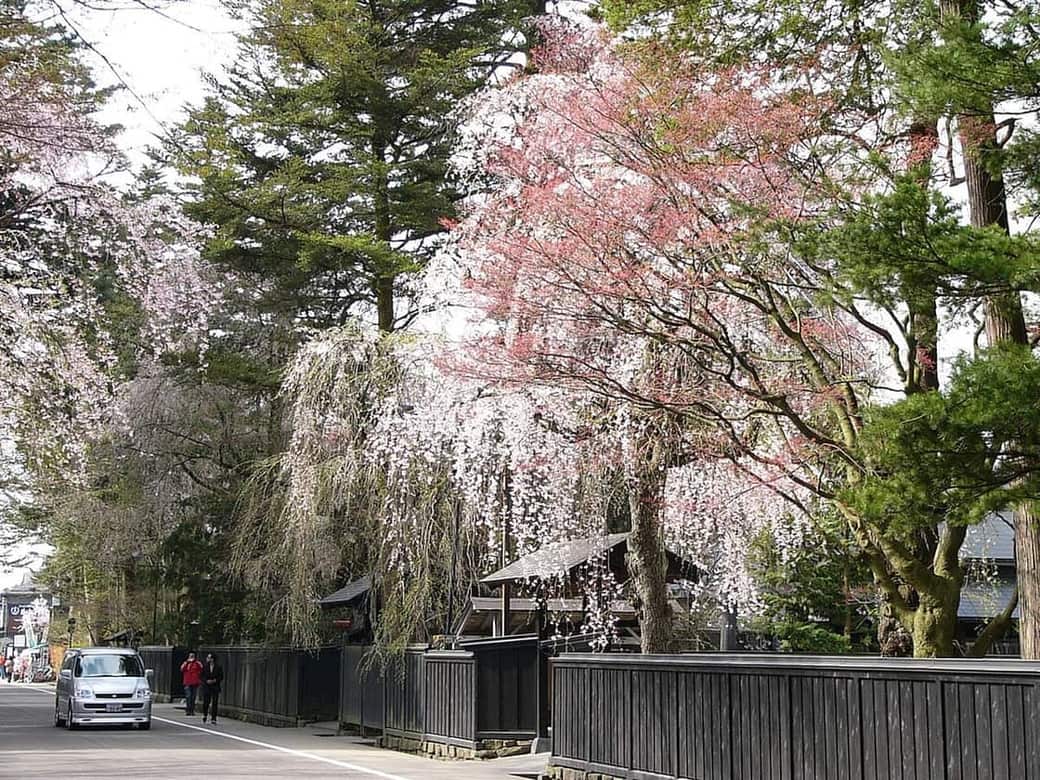
Kakunodate is a signature Tohoku cherry-blossom spot, with two very different blossom scenes. First, the weeping cherries of the samurai district — many brought from Kyoto and planted in the Edo period, 162 of them designated national natural monuments; in full bloom, pink drapes over the black fences, the old street and blossom set against each other, Kakunodate's most iconic image.
Second, the Hinokinai riverbank — about 400 Somei-Yoshino trees along the embankment forming a 2 km cherry tunnel, listed with the samurai district among Japan's "100 best cherry-blossom spots," the embankment walk an unbroken sweep of blossom. Peak is usually late April (two-to-three weeks after Tokyo), and the 2026 Kakunodate Cherry Blossom Festival is scheduled for April 15-May 5. The season is Kakunodate's busiest and most crowded, so book lodging early. For how northern-Tohoku cherry timing chains with Hirosaki, see our Hirosaki and Hokkaido cherry blossom guide.
Lake Tazawa
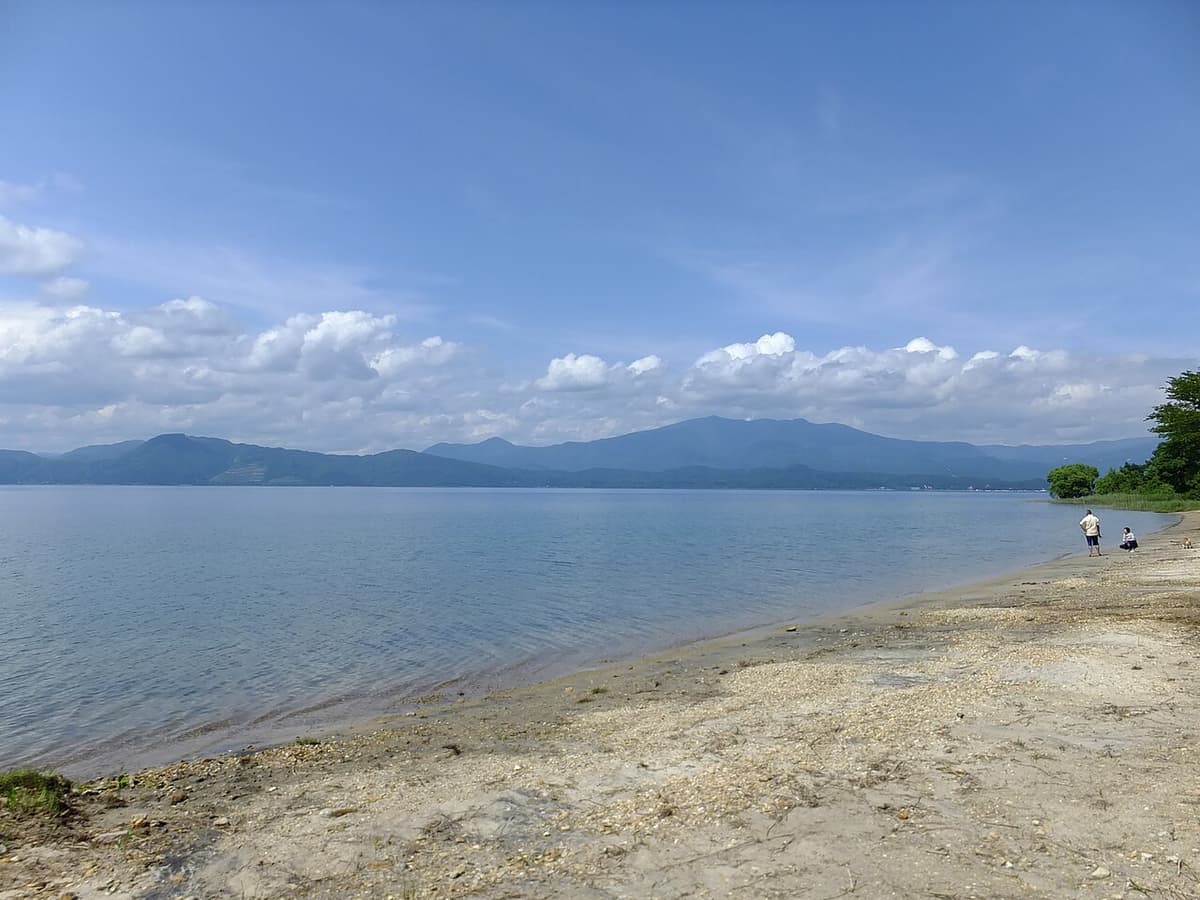
The best extension near Kakunodate is Lake Tazawa — about 423 m deep, Japan's deepest lake, and that depth gives the water a saturated cobalt blue that, on a clear day, makes a wide scene with the surrounding hills. The shore's most famous landmark is the golden statue of Tatsuko, from the legend of a woman who became a dragon and sank into the lake seeking eternal beauty, with the vermilion torii of Gozanoishi Shrine nearby.
From Kakunodate it's about 15 minutes by the Akita Shinkansen "Komachi" or a local train to Tazawako Station, then a bus to the lakeshore. You can rent a bicycle for the lake loop (about 20 km) or bus to the statue and shrine — a half day. Further into the mountains lies the Nyuto Onsen area, famed for its secluded hot springs, worth an overnight soak. Chaining Kakunodate (old town and blossoms) with Lake Tazawa (the lake) into one-to-two days is the smoothest way to do this part of Akita.
If you do go up to Nyuto Onsen, it's a cluster of seven rustic inns in the beech forest above the lake, the most famous being Tsuru-no-yu, with a milky open-air bath that's one of Tohoku's iconic onsen images. The inns sell an "onsen-hopping pass" so you can try several baths beyond your own; rooms at the historic inns book up far ahead, so reserve early if a secluded mountain soak is the point of your trip — for how to do Lake Tazawa, Nyuto Onsen and the Oga peninsula, see our Akita Nyuto Onsen and Lake Tazawa guide.
Akita food: Inaniwa udon and kiritanpo
In Akita, a few country dishes are worth seeking out:
- Inaniwa udon: one of Japan's three great udon — hand-pulled, thin, flat and silky, completely unlike chunky Sanuki udon, good cold-dipped or in hot broth, Akita's signature noodle.
- Kiritanpo: cooked rice pounded half-smooth, wrapped on a cedar skewer and grilled, then cut and added to a hot pot; simmered with Hinai-jidori chicken (one of Akita's three great chickens) as "kiritanpo nabe," a warming winter dish.
- Hinai-jidori: firm, flavorful chicken — beyond the hot pot, excellent as oyakodon or salt-grilled.
Kakunodate's merchant town also has old confectioners (near the cherry-bark "kaba-zaiku" craft shops) and cafes, so you can graze on Akita sweets between samurai houses and fill a day of eating and walking easily.
Access and day-trip vs overnight
Access: from Tokyo the Akita Shinkansen "Komachi" reaches Kakunodate in about 3 hours direct — Kakunodate is a Komachi stop, very convenient. It's a 15-20 minute walk from the station to the samurai district, and the town is walkable; one stop north is Lake Tazawa, with Akita City at the line's end. For a multi-leg Tohoku rail loop, compare a JR East Pass; set up a KKday Japan eSIM first to check timetables and bloom updates.
Day-trip vs overnight: Kakunodate itself is a half-day to a day, and many do it as a same-day trip from Sendai or Morioka in neighboring Iwate, or slot it into a Tohoku traverse; but in cherry season, with crowds slowing things, or to add Lake Tazawa and Nyuto Onsen, an overnight is better. The smoothest plan: a day for the samurai district and blossoms, a day for Lake Tazawa (or an overnight at Nyuto Onsen). For the Tohoku traverse, see our Sendai guide and Aomori guide. Before you go, see our Japan packing & weather guide — Akita is snowy in winter and cool morning and night even in cherry season, so bring a jacket.
A simple plan by season: in spring, give the morning to the samurai-district weeping cherries before the tour buses, the afternoon to the Hinokinai riverbank tunnel, and an Inaniwa udon or kiritanpo meal in between — then, if staying, an evening stroll once the day-trippers leave. In autumn, pair the red-leaved warrior gardens with the Dakigaeri Gorge. Year-round, a clean two-day version is: day one Kakunodate (samurai district, kabazaiku, food), day two Lake Tazawa by Komachi with a lakeside cycle, or an overnight up at Nyuto Onsen for the secluded baths. Book the cherry-season nights months ahead — Kakunodate is small and rooms sell out fast.
Frequently Asked Questions
- Q1:When is Kakunodate's cherry-blossom season?
- Kakunodate is one of Tohoku's signature cherry-blossom spots, with peak bloom usually in late April (about two-to-three weeks after Tokyo), and the 2026 "Kakunodate Cherry Blossom Festival" is scheduled for April 15-May 5 (per the year's notice). Two kinds of blossom: the weeping cherries along the samurai district (162 of them designated national natural monuments), pink draping over the black fences; and the Hinokinai riverbank, a 2 km tunnel of around 400 Somei-Yoshino trees. Crowds and prices peak in the season, so book early.
- Q2:Is there an admission fee for the Kakunodate samurai district?
- The Kakunodate samurai district is a preserved Edo-period warrior quarter, and walking the street is free, with most residences' exteriors and front gardens visible. Some residences that open their interiors charge: the largest, the "Kakunodate History Village Aoyagi-ke," is ¥500, with arms, household artifacts and gardens; the thatched Ishiguro-ke and others also open. Buy one or two interior visits to go deeper into samurai life, or just stroll the street for free if you only want the townscape.
- Q3:How long does Kakunodate need?
- The samurai district and merchant town are clustered within walking distance, so a half-day to a day does it. Add nearby Lake Tazawa (about 15 minutes by train) for a full day, or stay a night in Kakunodate and continue to Tazawa and the Nyuto Onsen area next day. In cherry season, with crowds slowing movement, allow extra time. Kakunodate also slots neatly into a Tohoku traverse (Sendai → Kakunodate → Aomori) as the Akita highlight.
- Q4:How do I get to Lake Tazawa, and is it worth it?
- Lake Tazawa is Japan's deepest lake (about 423 m), and its depth gives the water a saturated cobalt blue, with the golden statue of Tatsuko on the shore (from a local legend) and the vermilion torii of Gozanoishi Shrine. From Kakunodate it's about 15 minutes by the Akita Shinkansen "Komachi" or a local train to Tazawako Station, then a bus to the lakeshore. Cycling the lake loop or visiting the statue and shrine fills a half day, easily chained with Kakunodate.
- Q5:What should I eat in Kakunodate and Akita?
- Akita's country cooking is distinctive: Inaniwa udon is one of Japan's three great udon — hand-pulled, thin, flat and silky, unlike chunky Sanuki udon, good cold-dipped or in hot broth; kiritanpo is pounded rice wrapped on a cedar skewer and grilled, then added to a hot pot, often simmered with Hinai-jidori chicken as "kiritanpo nabe," a warming winter dish. Kakunodate's merchant town also has old confectioners and cafes to graze at between the samurai houses.
- Q6:How do I get to Kakunodate from Tokyo?
- From Tokyo the Akita Shinkansen "Komachi" reaches Kakunodate in about 3 hours direct — Kakunodate is a Komachi stop, very convenient. It's a 15-20 minute walk from the station to the samurai district. One stop north is Lake Tazawa, with Akita City at the line's end. For a multi-leg Tohoku rail loop, compare a JR Pass; for the Tohoku traverse, see our Sendai guide and Aomori guide.