How many goshuin can you calmly collect between Kamakura and Enoshima in one day? The honest answer is four or five, and that’s plenty: Engakuji and Kenchoji up in Kita-Kamakura, Tsurugaoka Hachimangu in central Kamakura, Hasedera on the Enoden line, and then up onto Enoshima for the three halls of Enoshima Shrine — all strung together by a single Enoden train, all within a day trip of Tokyo. The approach here is to honestly separate the prices that are officially published from the ones that are not: the only stop on this route that puts its goshuin price in writing on its own site is Kenchoji (each stamp ¥500). For the rest, officials don’t post a figure, and I’ll tell you stop by stop, then lay out each site’s desk hours, admission fees, a one-day goshuin budget, and the “temples close earlier than sightseeing spots” timing trap that catches people out. Think of this as the full, walked-out version of the “Kamakura and Enoshima first-book route” section in my guide to how goshuin collecting actually works.
- Four or five stops, following the Enoden: Kita-Kamakura (Engakuji → Kenchoji) → Tsurugaoka Hachimangu → Zeniarai Benzaiten (optional) → Enoden to Hasedera → Enoshima Shrine’s three halls
- Only one official goshuin price: Kenchoji, ¥500 per stamp (same at the main hall and Hansobo — a rare posted figure); everywhere else is confirm-at-the-desk
- Admission to budget: Engakuji ¥500, Kenchoji ¥500, Hasedera ¥400, Enoshima’s Hoanden ¥200; Hachimangu grounds are free, Zeniarai Benzaiten is a free-will offering
- The timing trap: temples close earlier than you think — Engakuji, Kenchoji, Hasedera and the Hoanden mostly close around 16:30, and goshuin desks stop even earlier
- Worship first, stamp second: a goshuin is proof of worship — palms together (no clap) at temples, two bows two claps one bow at shrines
- Tight on time? Cut Zeniarai Benzaiten (the hillside detour) and keep your energy for Kenchoji and Enoshima
Contents
- 1. The route overview and a desk-hours table
- 2. Start in Kita-Kamakura: Engakuji and Kenchoji
- 3. Tsurugaoka Hachimangu: the heart of the route
- 4. Zeniarai Benzaiten: the optional hillside detour
- 5. The Enoden down to Hasedera
- 6. Enoshima: finishing at the three shrine halls
- 7. Budgeting a day of goshuin
- 8. FAQ
The route overview and a desk-hours table
First, the skeleton. Geographically, Kita-Kamakura sits furthest north, Kamakura station is central, and Hase and Enoshima run southwest along the Enoden line, so the smoothest way is north to south, then west along the Enoden: start at Engakuji beside Kita-Kamakura station, walk south to Kenchoji, on to Tsurugaoka Hachimangu, back to Kamakura station (loop up the west hills for Zeniarai Benzaiten if you’re doing it), then the Enoden — off at Hase for Hasedera, and on to the end for Enoshima. No backtracking, a page filled at each stop, and a sea-view finish on Enoshima at dusk.
Full disclosure: I only started collecting goshuin recently myself, and my first book began right here in Kamakura and Enoshima. I recommend it as a beginner’s route not just because it walks so well, but because it packs three completely different flavours into one day — grand Zen temples (Engakuji, Kenchoji), a samurai guardian shrine (Tsurugaoka Hachimangu), and a sea-island shrine (Enoshima Shrine) — so you feel how goshuin differ across kinds of sites. The table below is my “check before you go” summary of the official figures I verified; note the “goshuin price” column especially — only Kenchoji is officially published:
| Stop | Opening hours | Admission | Goshuin price | Desk / stamp office |
|---|---|---|---|---|
| Engakuji (Kita-Kamakura) | 8:30–16:30 (Dec–Feb to 16:00) | Adults ¥500 | Not published (don’t confuse with prayer fees) | Butsunichian, Benten-do (scattered) |
| Kenchoji (Kita-Kamakura) | 8:30–16:30 | Adults ¥500 | ¥500 (official) | Left of the main gate |
| Tsurugaoka Hachimangu | Grounds 6:00–20:00 | Free to enter grounds | Not published | Office in the grounds (on site) |
| Zeniarai Benzaiten (optional) | 8:00–16:30 (enter by 16:00) | Free-will offering | Not published | On site (no strong official site) |
| Hasedera (Hase) | Normal 8:00–16:30 (Apr–Jun to 17:00) | Adults ¥400 | Not published | Confirm on site |
| Enoshima Shrine (Enoshima) | Hoanden 8:30–16:30 | Grounds free / Hoanden ¥200 | Not published (no online distribution) | Office beside Hetsunomiya |
Two things jump out of that table. One, admission and the goshuin offering are two separate costs — temples usually make you buy an admission ticket into the paid area before you can even reach the stamp office. Two, desk hours follow closing time, or stop even earlier, and hand-writing takes time, so the later the stop, the more buffer you want. On transport: if you’ll be hopping on and off the Enoden several times, the Enoden day pass (¥800) — the same one I recommend in my Enoshima day-trip guide — is the least fuss; coming from Shinjuku and riding Odakyu all the way in, the Odakyu Enoshima-Kamakura Free Pass (from Shinjuku ¥1,640) is the better-value one-day option.
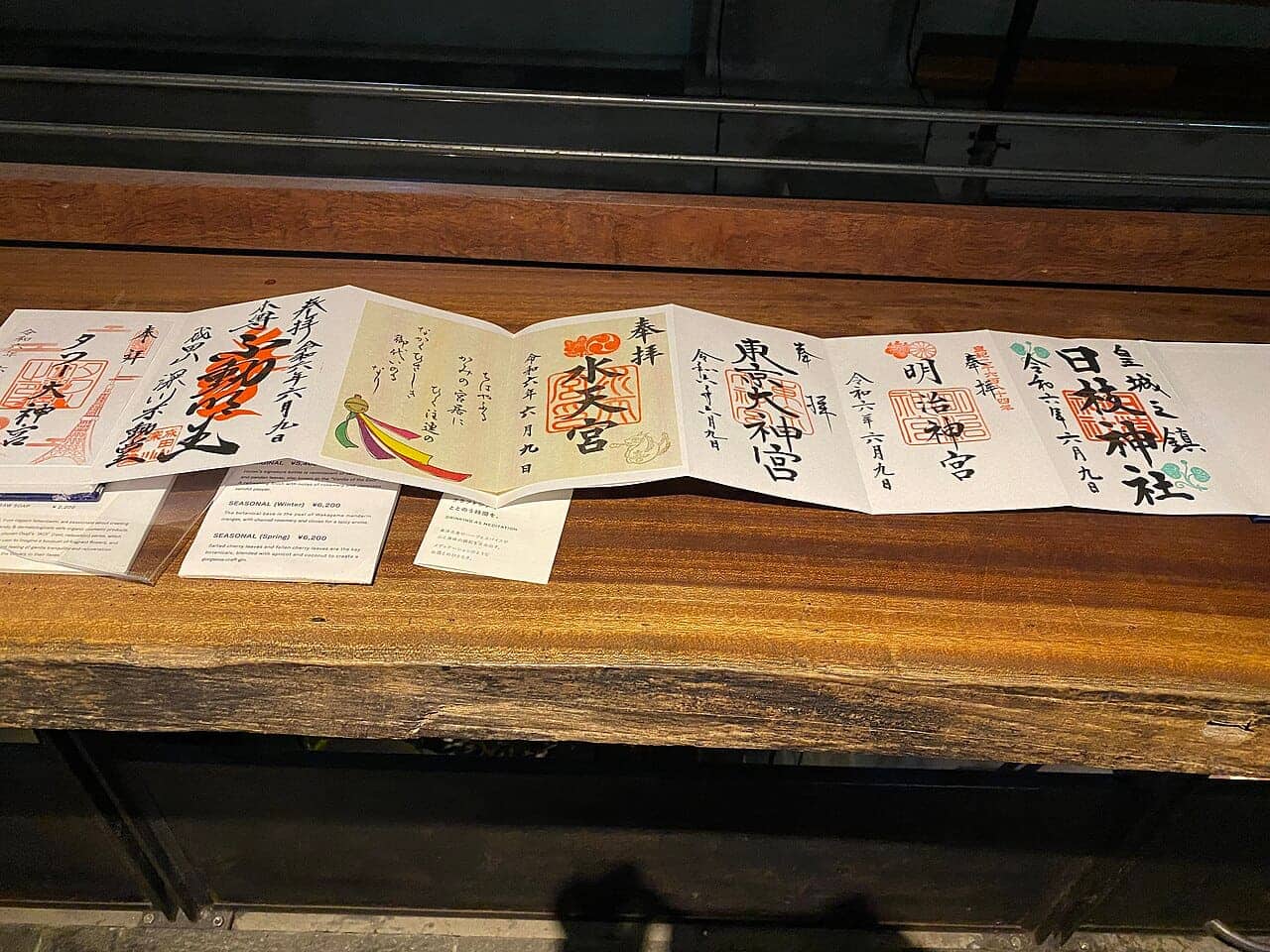
Start in Kita-Kamakura: Engakuji and Kenchoji
I’d put the start at Kita-Kamakura rather than Kamakura station, for a practical reason: Engakuji is right beside the Kita-Kamakura station exit, so you begin the moment you step off the train, and the morning temple is quiet and cool — the nicest time to collect. Engakuji is the head temple of the Engakuji branch of Rinzai Zen; admission is adults ¥500 (junior/senior-high students ¥200), and it’s open 8:30–16:30 (shortened to 16:00 from December to February).
On goshuin, one thing to clear up first so you don’t misread the signage: Engakuji’s official page does not list a price for the goshuin itself. What you’ll see — “Benten-do small fuda ¥3,000 / medium ¥5,000 / large ¥10,000” — are prayer fees (kito), not the goshuin offering; they’re a different thing entirely, so don’t let ¥3,000 scare you into thinking Engakuji’s goshuin is pricey. Engakuji’s stamp offices are also spread out: the thirty-three Kannon goshuin is at Butsunichian, there’s another at the Benten-do, plus the main precinct — several separate points. If time is short, just target the version you actually want rather than queuing at every one.
Leaving Engakuji, walk south along the old Kamakura highway and you’ll soon reach Kenchoji — the stop I most want to highlight on this whole route, because it’s the only place that posts its goshuin price on its own site. Kenchoji is first of Kamakura’s five great Zen temples, head temple of the Kenchoji Rinzai branch; admission is adults ¥500 (elementary/junior-high students ¥200), open 8:30–16:30, cash only (carry cash). Its official access page states plainly that each goshuin is ¥500 (the same at the main-hall and Hansobo stamp offices) — genuinely uncommon among named temples, and a nice positive example that “yes, some official sites really do post a price.”
The reception flow is clear too: the stamp office is to the left just after you pass through the main gate, and the method is to complete admission first, hand your book in at the office, and collect it on your way back after worshipping — so you drop the book on the way in and pick it up after touring, rather than standing at the office waiting. Kenchoji’s grounds run deep, and reaching the Hansobo at the very back means climbing a flight of stone steps (the Hansobo has its own stamp office too), so leave some time and legs for it. That’s exactly why I’d slot Kenchoji into the morning, when your energy is freshest.
Tsurugaoka Hachimangu: the heart of the route
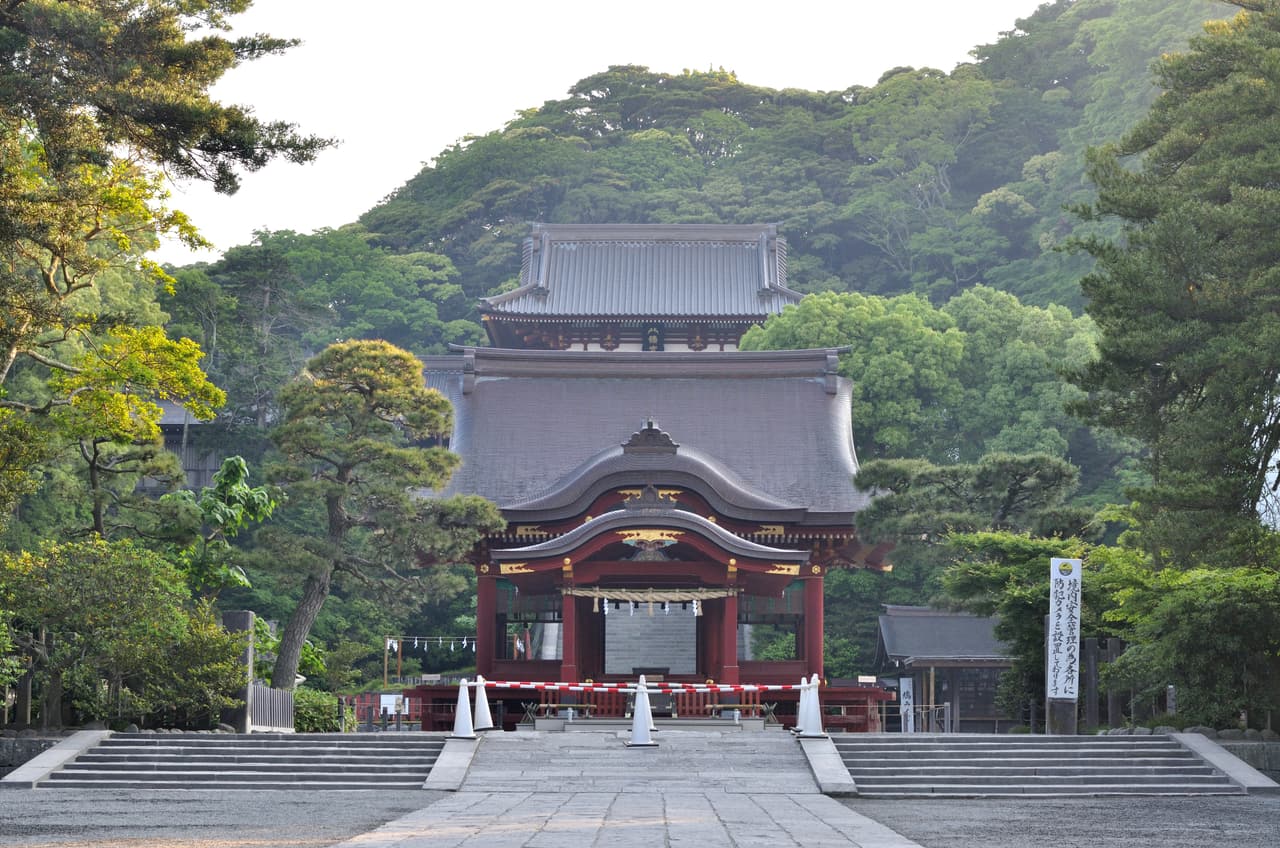
South out of Kita-Kamakura brings you to Tsurugaoka Hachimangu — Kamakura’s spiritual centre, the guardian shrine of the Minamoto shogunate. Its rhythm is completely different from the two Zen temples before it: worship in the grounds is free, it opens at 6:00, and it stays open to 20:00, with generous grounds and an imposing grand staircase — perfect for slowing down and walking a proper act of worship (earliest morning is quietest). This is a goshuin-focused piece, so I’ll only note Hachimangu’s role on the route; for the sights, the annual festival and bonbori calendar, how to walk Komachi-dori, and a half-day plan, my full Tsurugaoka Hachimangu guide covers it in detail and I won’t repeat it here.
On goshuin, Hachimangu is the neat opposite of Kenchoji: its site has no goshuin page and the offering fee is not officially published, so the amount is strictly whatever the notice at the grounds’ office says — carry coins. That actually reinforces this article’s core point: most sites simply don’t post a goshuin price, and Kenchoji’s posted figure is the exception. So treat “can’t find a price” as the normal state of affairs, not missing information, and read the notice on site.
Zeniarai Benzaiten: the optional hillside detour
Climb the west hills behind Kamakura station and you reach Zeniarai Benzaiten Ugafuku Shrine — the famous “wash your money in the spring and it multiplies” shrine. I mark it as an optional detour for a reason: it’s partway up a hill, reached through a tunnel and a stretch of slope, and the round trip eats into your time and legs. If your day is tight, I’d cut it outright and save the energy for Kenchoji and Enoshima; conversely, if the coin-washing ritual is exactly what you came for, or your legs are up to it, it’s one of Kamakura’s more memorable stops.
On cost this stop is kind: admission is a free-will offering (nosan) with no fixed amount, so there’s nothing to fret over. The honest caveat — Zeniarai Benzaiten has no strong official website; the information I could verify comes from semi-official sources like the Kamakura City Tourism Association, and neither official nor semi-official pages give its goshuin reception hours or price, so it’s confirm-on-site only. Opening hours are roughly 8:00–16:30, with entry advised by 16:00. So approach this one with a “worship first, see about the goshuin on site” mindset, and don’t expect reliable details online.
The Enoden down to Hasedera
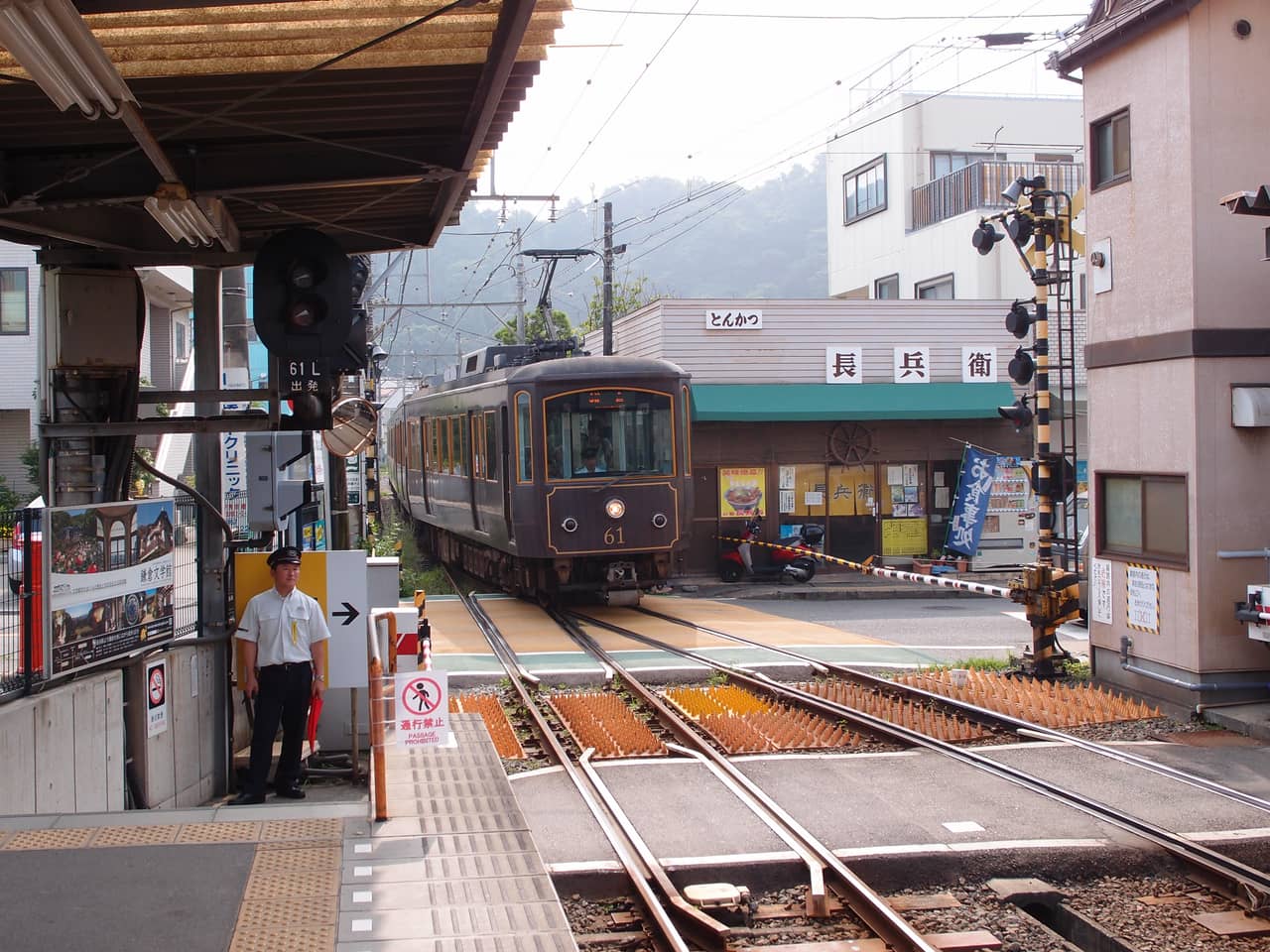
Back at Kamakura station comes the most iconic leg of the route — boarding the Enoden. This old tram running along Sagami Bay is the soul of a Kamakura trip in itself; you’ll ride it up and down, getting off first at “Hase” for Hasedera. Since you’ll ride it several times, that day pass (¥800) mentioned earlier saves you fishing for coins each time.
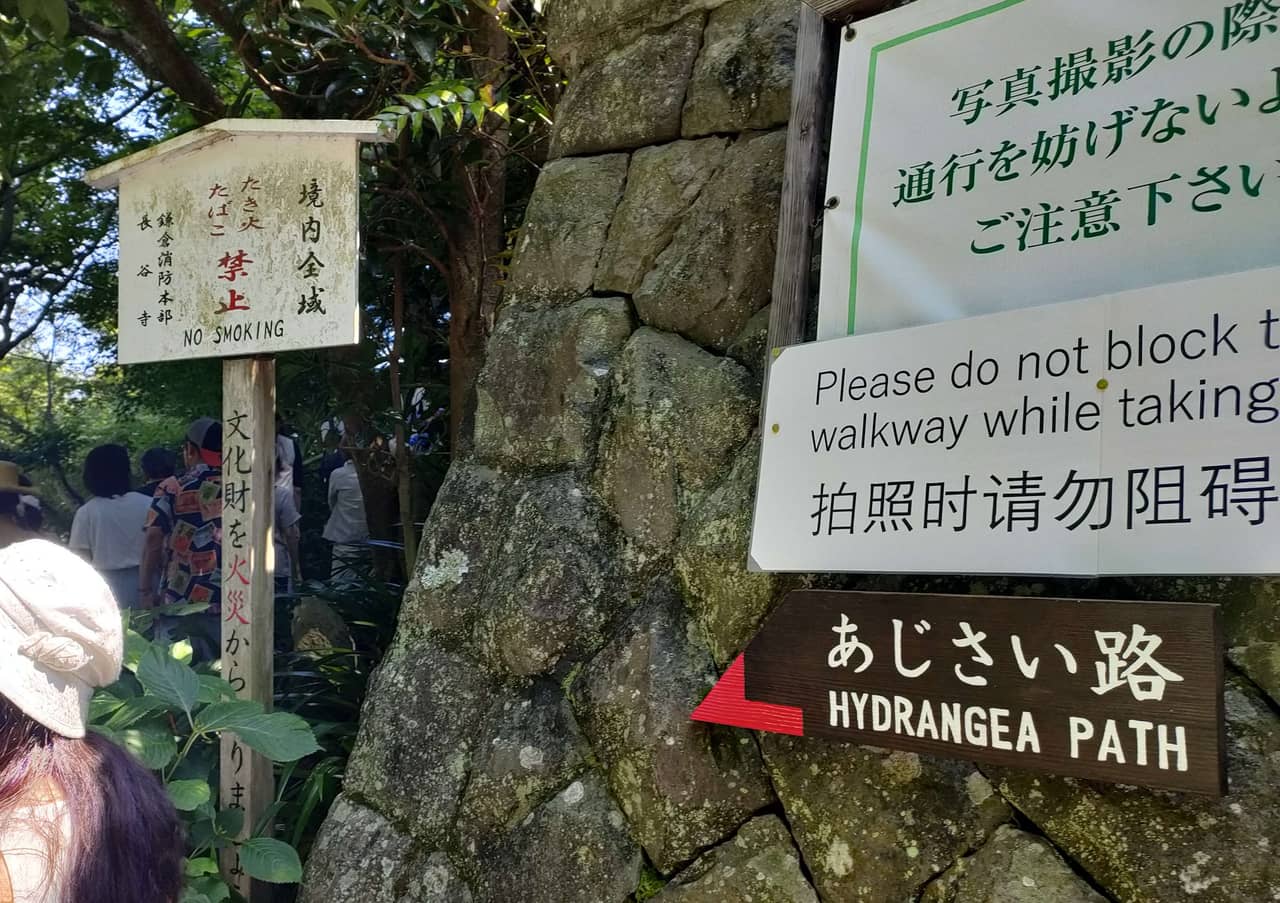
Hasedera is one of Kamakura’s most popular temples (its June hydrangea path is the headline), with admission of adults ¥400 (elementary students ¥200), open 8:00–16:30 in the normal season (closing 17:00), extended to 8:00–17:00 (closing 17:30) from April to June. Opening at 8:00 makes it one of the few stops you can enter very early, so come early if you want to dodge the afternoon crowds.
On goshuin, I owe you an honest reservation about Hasedera: its official page mentions kakioki (pre-printed sheets rather than live hand-writing) in some months, but when I verified it the page redirected and I could not confirm word-for-word exactly which months — so I won’t write “these specific months are definitely kakioki” as fact. Reception hours and whether it’s hand-written or kakioki on the day are all confirm-on-site. If you want hand-writing, again it’s arrive early and avoid peak periods for the best odds. The Hase area also has the Great Buddha at Kotokuin and more; to thread all of Kamakura’s sights into one day, pair this with my complete Kamakura day-trip guide.
Enoshima: finishing at the three shrine halls
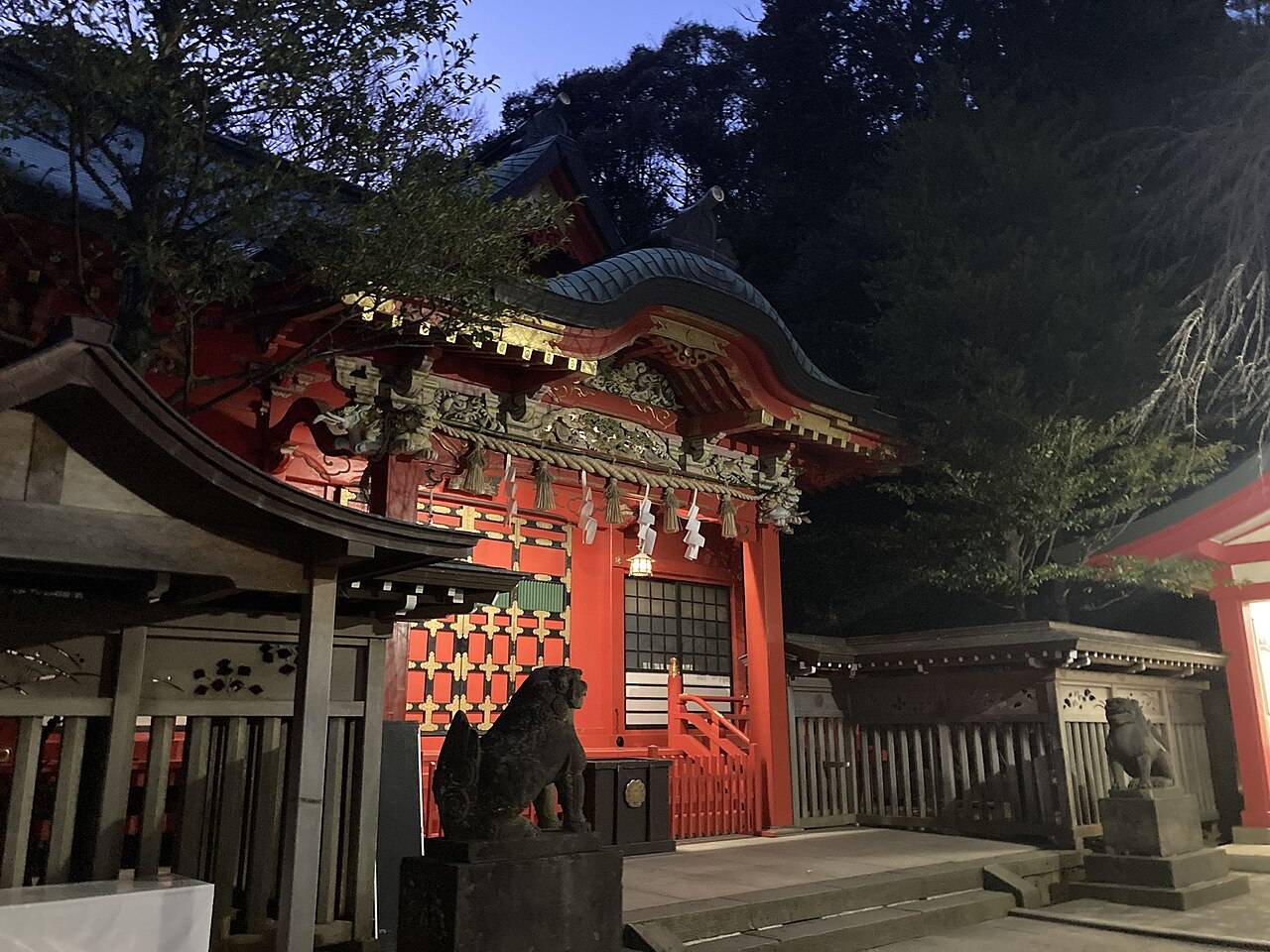
Ride the Enoden to the end, cross the causeway onto Enoshima, and you have the loveliest finish of the route — climbing the island, worshipping and looking out to sea as you go. The island’s Enoshima Shrine spreads along the approach across three halls, which are also the goshuin focus: Hetsunomiya (Tagitsuhime-no-mikoto, the lowest, commonly the “lower shrine”), Nakatsunomiya (Ichikishimahime-no-mikoto), and Okutsunomiya (Tagirihime-no-mikoto, the eldest of the three sister deities) — one of Japan’s three great Benzaiten shrines.
The key point for collecting: goshuin and prayers are received together at the “shrine office” to the right of Hetsunomiya — the official text states that “the granting of amulets, and reception of prayers and goshuin, are all done here.” In other words, you don’t hunt for a separate desk at each of the three halls; just find the office beside Hetsunomiya. As for the amount, Enoshima Shrine — like Tsurugaoka Hachimangu — has no goshuin page anywhere on its site and explicitly states it does not distribute online, so reception hours, whether it’s hand-written or kakioki today, and the offering fee are all confirm-on-site. This is the best illustration of what I’ve stressed throughout: don’t rely on internet hearsay — verify on the ground.
There’s one paid point on the island people often muddle, so let me sort it out: worship in Enoshima Shrine’s grounds is free; only the “Hoanden,” which enshrines the eight-armed Benzaiten, charges a separate ticket (viewing ¥200, hours 8:30–16:30). Many assume the whole shrine charges — it doesn’t; only the Hoanden, which houses important cultural properties, needs a ticket, while worship along the approach and at the halls themselves has no charge noted. You only need to enter the Hoanden if you want Benzaiten-related goshuin and to see the nationally designated eight-armed Benzaiten.
Enoshima’s wider attractions — the Iwaya caves, the Sea Candle, the Slam Dunk railway crossing, the fresh-whitebait food, and how to choose among the island’s three transport passes — I don’t expand here; they’re all in my Enoshima day-trip guide. For this route, just treat the three halls of Enoshima Shrine as your sea-view finale for the goshuin run. Collect your last stamp on the island at dusk, against the Sagami Bay sunset, and your first goshuincho will be gloriously full after a single day.
Budgeting a day of goshuin
Finally, let’s pin down the money and time so you set off with a clear head. First, admission (the ticket into a temple’s paid area, separate from the goshuin): if you do all four paid stops — Engakuji ¥500 + Kenchoji ¥500 + Hasedera ¥400 + Enoshima’s Hoanden ¥200 — that’s about ¥1,600 for adults. Tsurugaoka Hachimangu is free to enter and Zeniarai Benzaiten is a free-will offering, so neither takes a fixed slice of the ticket budget.
Next, the goshuin offering. Here’s where the “honest layering” this article keeps stressing pays off: the only one you can budget in advance is Kenchoji, officially ¥500 per stamp; Engakuji, Tsurugaoka Hachimangu, Hasedera, Zeniarai Benzaiten and Enoshima Shrine all have no published amount, so you go by the office notice on site. The practical approach is to expect roughly ¥500 per stamp and carry coins (¥100 and ¥500 coins are the handiest), treating the real figure as confirm-on-site rather than banking on internet numbers. If you take one stamp at each of five or six stops at about ¥500 each, the goshuin come to roughly ¥2,500–¥3,000.
So across the day, admission ~¥1,600 + goshuin ~¥2,500–¥3,000 + an Enoden day pass (¥800) — excluding food and the fare into Kamakura from central Tokyo — sits comfortably around ¥5,000. On time, one more reminder of the easiest trap: temple goshuin desks almost all stop before closing, and hand-writing takes time, so the later the stop, the more buffer you want, and don’t schedule a finale like Enoshima too late — once the shrine office shutter comes down, the sea-view goshuin you most wanted is gone. Carry coins, set off early, and spend your time and legs on the handful of stops you actually want, and this route collects calmly and happily.
Frequently Asked Questions
- Q1:Can I really collect goshuin across Kamakura and Enoshima in a single day?
- Yes, but pick your priorities and don’t try to hit everything. The strength of this route is that the shrines and temples cluster together and hang off one Enoden line, so it works even as a day trip from Tokyo. The practical shape is: Kita-Kamakura’s Engakuji and Kenchoji in the morning, Tsurugaoka Hachimangu around midday, then the Enoden down to Hasedera, and up onto Enoshima at dusk. Cramming all of it gets frantic; my honest cut is drop Zeniarai Benzaiten if time is tight (it’s a hillside detour with a climb) and save your energy for Kenchoji and Enoshima. Remember one hard limit: temple goshuin desks almost always stop taking books before closing, and Engakuji, Kenchoji, Hasedera and Enoshima’s Hoanden mostly close around 16:30 — don’t schedule your last stop too late or you’ll be staring at a shuttered office.
- Q2:Which stop on this route has an officially published goshuin price?
- Only one puts the figure in writing on its own site — Kenchoji. Its official access page clearly states each goshuin is ¥500 (the same at the main hall and the Hansobo stamp offices), which is genuinely rare among named temples; most official sites don’t post an amount at all. Everywhere else on this route came back as “not officially published” when I verified it: Tsurugaoka Hachimangu has no goshuin page, Engakuji’s page lists only prayer fees (not the goshuin offering), and Hasedera and Enoshima Shrine likewise don’t list goshuin prices. So the right expectation is: you can budget Kenchoji at ¥500; for the rest, go by the notice at the desk and carry coins. This “no posted price” is normal in Japan — not price-hiding, but the fact that a goshuin is closer to an offering than a priced product.
- Q3:Are the ¥3,000–¥10,000 figures on Engakuji’s site the goshuin price?
- No — this is the easiest trap to fall into. The “Benten-do small fuda ¥3,000 / medium ¥5,000 / large ¥10,000” listed on Engakuji’s official page are prayer fees (o-fuda / kito, the cost of a prayer ritual), which are a completely different thing from a goshuin. The goshuin itself has no amount published on Engakuji’s site. So don’t see ¥3,000 and assume Engakuji’s goshuin is expensive — that’s the prayer rate, not the offering for a stamp. Engakuji also has more than one stamp office: the thirty-three Kannon goshuin is at Butsunichian, there’s another at the Benten-do, plus the main precinct — several scattered points. If time is short, just target the specific version you actually want rather than chasing every office.
- Q4:Where on this route should I buy my very first goshuincho?
- This route is a great place to buy a first book, because the temples and shrine at the start mostly sell their own designs. In practice, Engakuji and Kenchoji in Kita-Kamakura, and Tsurugaoka Hachimangu, all sell goshuincho at their offices, often with covers bearing the crest or a signature motif — a meaningful keepsake. If you’d rather pick a design you love before you set off, buying one in advance at a stationery store (LOFT, Tokyu Hands) or online is perfectly fine too. The key caveat: you can buy the book ahead, but the goshuin itself must be received in person after worshipping — Enoshima Shrine even states outright that it does not distribute online. For how to choose paper, whether to keep separate books for shrines and temples, and the first-page convention, my walkthrough on how goshuin collecting works covers the groundwork first-timers should read.
- Q5:Will I get a hand-written stamp or a pre-printed kakioki? Can I choose?
- Usually you can’t “request” one; it depends on the day. Jikagaki (written on the spot) means you hand over your book and a priest brushes it live; kakioki is a pre-written sheet you take home and paste in. As a rule, hand-writing is common when a priest is present and it isn’t heaving; peak periods or a priest’s absence often switch it to kakioki. The one to watch on this route is Hasedera — its official page mentions kakioki in certain months, but when I checked, the page redirected and I couldn’t verify exactly which months word-for-word, so I won’t state “these specific months are definitely kakioki” as fact — treat it all as confirm-on-site. If you really want hand-writing, the trick is simply to arrive early and avoid peak holidays. For the full hand-written-versus-kakioki difference and pasting tips, see the starter walkthrough.
- Q6:Do I need to complete the worship etiquette before collecting a goshuin?
- Yes, and the order is worship first, stamp desk second — that’s the whole point of a goshuin. A goshuin is fundamentally “proof of worship”; the national shrine agency defines it as exactly that, so logically the act of worship has to come before there is anything to certify. Don’t be the person who queues only for the stamp without praying. At shrines the core act is purify at the temizu, then two bows, two claps, one bow; at Buddhist temples (like Engakuji, Kenchoji and Hasedera on this route) you press your palms together without clapping — don’t clap in front of a Buddha hall. For the torii bow, the five temizu steps, the offering and the bows step by step — and which parts are officially written versus mere folklore — I wrote a separate full shrine worship etiquette guide that pairs perfectly with walking this route.
Keep reading:
Goshuin Guide: Collecting Japan Shrine Stamps
How to start collecting goshuin: books, etiquette, fees, and a first-timer route.
Enoshima Day Trip 2026: Shrine, Sea Candle & Slam Dunk
Enoshima makes Kamakura's ideal sunset afternoon: Enoshima Shrine, the Sea Candle, the Iwaya caves and the Slam Dunk crossing. Passes and tips for 2026.
Tsurugaoka Hachimangu Guide 2026: Goshuin, Hours & More
Free to visit year-round, 6am–8pm, with the goshuin fee confirmed at the desk — plus the Sept 14–16 grand festival's yabusame archery and Komachi-dori's best snack stops.