If you can pick only one old capital near Tokyo for a same-day return, I would choose Kamakura without hesitating — the JR Yokosuka Line runs straight from Tokyo Station in about 57 minutes for ¥1,040, no transfer, and you step off into a small city that has a giant Buddha, a coastline, and Zen temples all at once. Its Great Buddha is one of the rare National Treasures you can step inside for an extra ¥50; Hasedera's June Hydrangea Path is so popular it runs on timed numbered tickets; and a single Enoden line threads the coast from Hase out to Enoshima. This guide covers admission for the Buddha and Hasedera, how to dodge the hydrangea crowds, Tsurugaoka Hachimangu and Komachi-dori, the Hokokuji bamboo grove, the Enoshima extension, and a full one-day route. For the wider trip, see our 5-day Tokyo itinerary.
- The easiest old capital near Tokyo: ~57 min, ¥1,040 direct on the JR Yokosuka Line — one day fits
- Great Buddha ¥300, plus ¥50 to step inside the bronze; an open-air statue you can see rain or shine
- Hasedera hydrangeas are June-only: a ¥500 viewing ticket plus timed numbered entry — go at opening
- Tsurugaoka Hachimangu is free; Hokokuji bamboo grove ¥400 (+¥600 matcha); Komachi-dori for street food
- Enoden "Noriorikun" day pass ¥800 pays off at 3+ hops; finish with sunset on Enoshima
📖 Contents
Why Kamakura for a day trip
Honestly, there are several old capitals you can reach from Tokyo in a day, but Kamakura offers the best value. Unlike Kyoto, it does not need a Shinkansen and an overnight to make sense — one direct Yokosuka Line train from Tokyo Station gets you there in under an hour, so you can sleep in, head out, and still be back in Tokyo for dinner. What makes it special is the range packed into one small city: it carries the weight of history (the seat of the Kamakura shogunate from the late 12th century, the birthplace of samurai government), the openness of the coast (Yuigahama, Shichirigahama, and the Enoden hugging the shoreline), and the quiet of its Zen temples (the Kita-Kamakura five-mountain monasteries). A Buddha, hydrangeas, the sea, matcha, and an old shopping street in a single day — that is hard to match in the Kanto region.
My advice on priorities is blunt: first-timers should do the "Daibutsu–Hase line" — Great Buddha, Hasedera, Tsurugaoka Hachimangu, Komachi-dori — the classic, easy, all-on-one-Enoden route, then extend to Enoshima for sunset if there is time. I would save the Kita-Kamakura Zen temples (Engaku-ji, Kencho-ji, Meigetsu-in) for a second visit, because they sit in another direction and run on a slower, quieter rhythm that clashes with the bright coastal line — forcing them into the same day just leaves you rushing. Do not try to "do all of Kamakura" in a day; that only turns every stop into a glance.
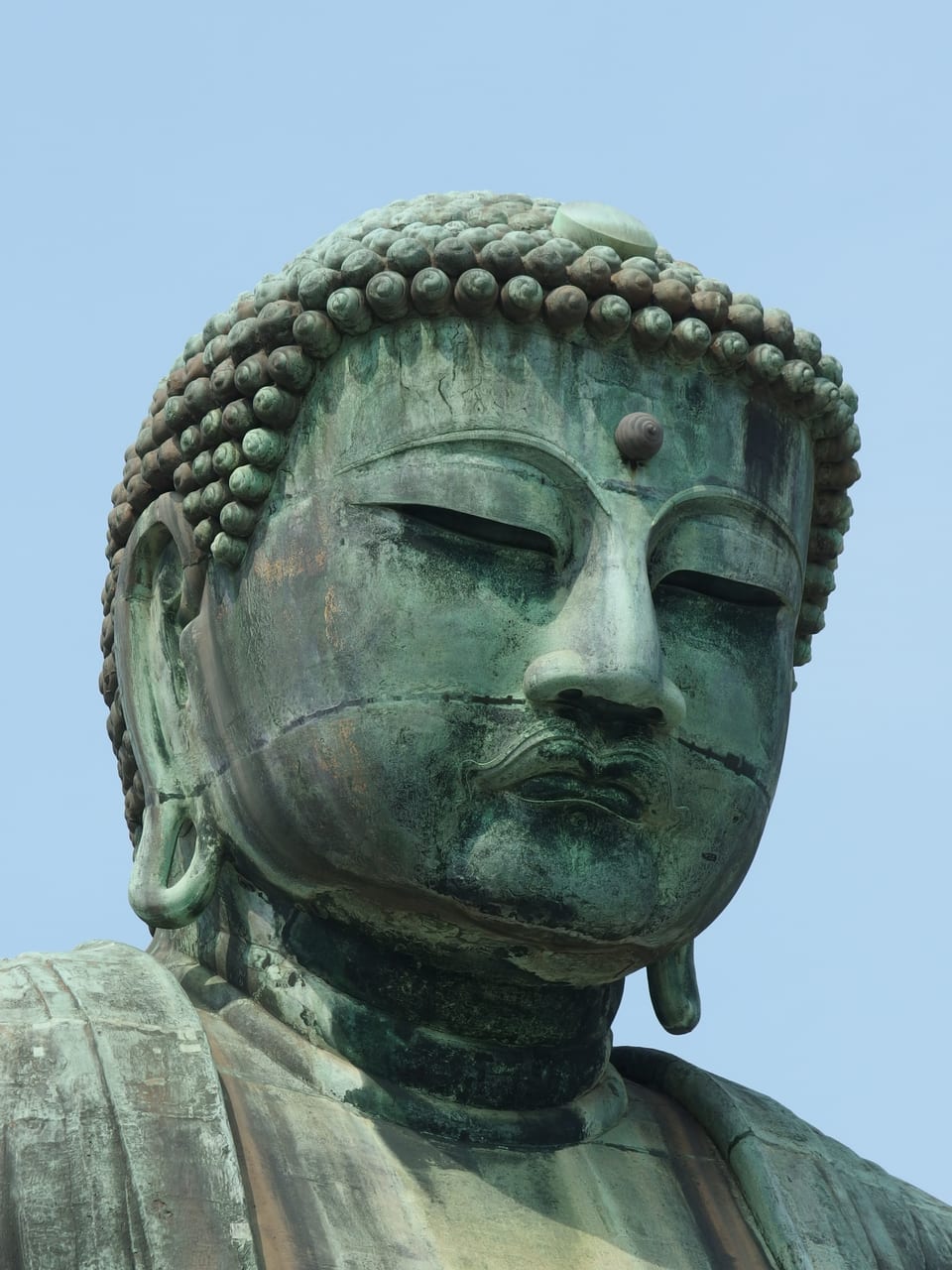
The Great Buddha, inside and out
The Kamakura Great Buddha (formally the bronze Amida Buddha of Kotoku-in) is the city's signature sight. It stands about 11.3 meters tall and weighs roughly 121 tonnes, cast around 1252, and it is a designated National Treasure. Two things make it special. First, it is open-air — the hall that once covered it was destroyed by a tsunami (some say an earthquake) in 1495 and never rebuilt, so the statue has sat outdoors for over five centuries, which is why its bronze surface has that weathered, settled calm. Second, for ¥50 you can climb inside its belly and see the seams where 13th-century artisans cast and reinforced it in sections — a rare chance to get inside a National Treasure.
The practical details: grounds admission is ¥300 for adults, ¥150 for children (6–12); going inside the statue costs ¥50 extra. Hours are 8:00–17:30 (Apr–Sep) and 8:00–17:00 (Oct–Mar). The Buddha is at the Enoden "Hase" station, about a 7-minute walk. The interior holds only a few people at a time, so weekends and hydrangea season mean a queue; for a near-empty shot of the Buddha, arrive at the 8 a.m. opening. One common misconception to clear up: the fact that there is no KKday ticket product for the Great Buddha does not mean you cannot get in — grounds tickets are sold on the spot with no reservation, so just turn up.
Hasedera & the June hydrangeas
Five minutes' walk from the Buddha, Hasedera is, to me, Kamakura's most underrated stop and genuinely good year-round. Built into the hillside, its main hall enshrines a roughly 9.18-meter eleven-headed Kannon (one of Japan's largest wooden Kannon statues), and the viewing terrace in front of the Kannon hall looks out over Yuigahama beach and Sagami Bay — one of the few places in Kamakura where you get both Buddha and sea in one frame. Below sit the Benten cave (a sea-eroded grotto studded with small statues) and gardens that shift with the seasons; the mood is quieter and more rewarding to linger in than the Buddha grounds.
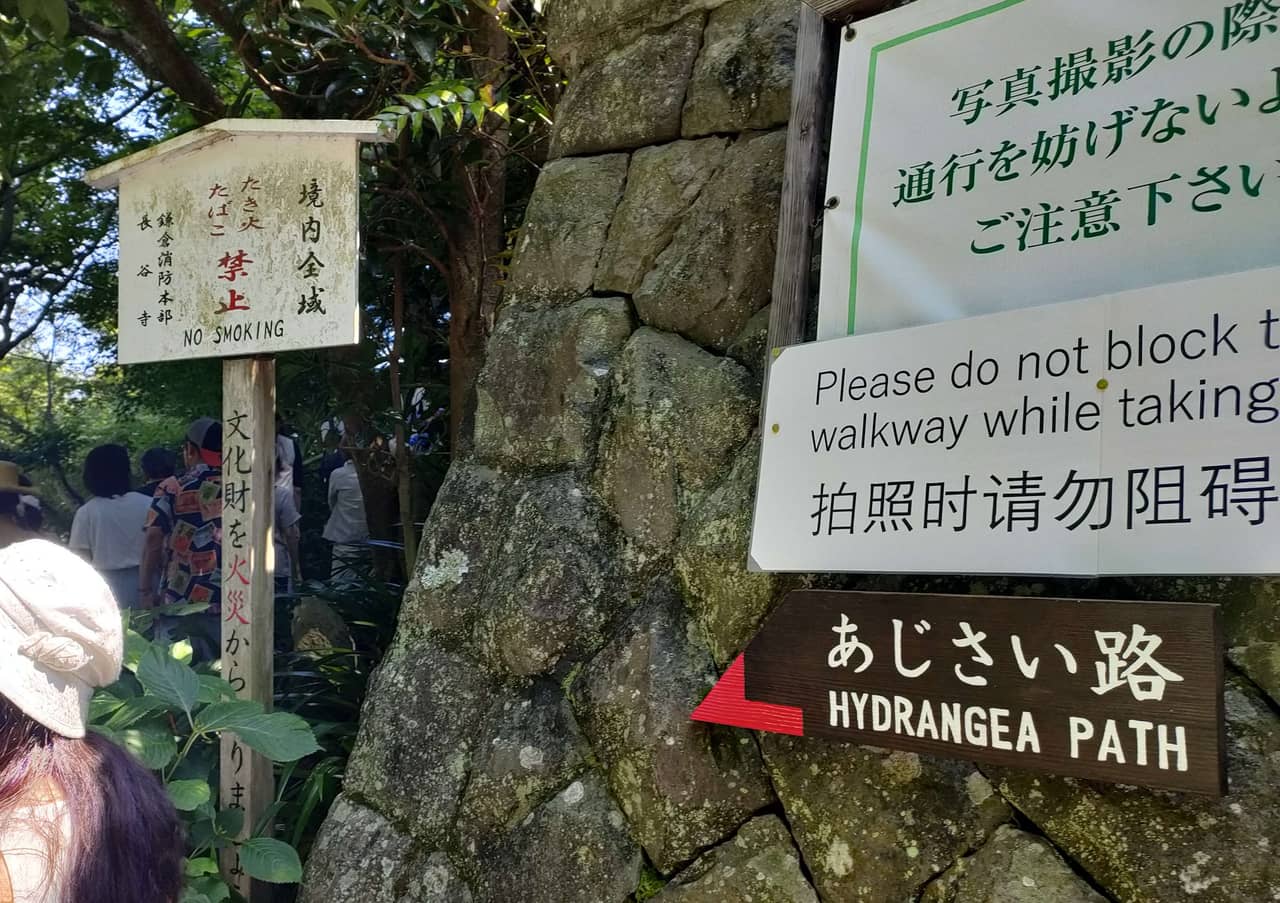
But what truly made Hasedera famous is the June Hydrangea Path (Ajisai-no-Komichi). The temple planted some 40-plus varieties and around 2,500 hydrangea bushes along a narrow uphill trail that blooms in layered blues, purples, pinks, and whites, with the sea below as a backdrop — extremely photogenic. Precisely because it is so popular and the path so narrow, Hasedera runs a dual-ticket and numbered-entry system at peak:
- Base admission: ¥400 for adults, ¥200 for elementary students, year-round.
- Hydrangea viewing ticket: during peak bloom, walking the path needs an extra ¥500 (same for adults and children).
- Numbered timed entry: you collect a return-time ticket at the gate for a designated 60-minute slot; weekend peaks of 60–90 minutes' wait are common.
The smart play is to arrive at the 9 a.m. opening and grab your numbered ticket first, then tour the Kannon hall, the viewing terrace, and the Benten cave while you wait, returning to walk the path when your slot comes up. Peak bloom usually lands early to late June, with Hasedera announcing the exact status in late May — check the official notice before fixing your date. If you are not visiting in June, do not be disappointed: the sea-view Kannon and the gardens are worth it on their own, and without the crush.
Tsurugaoka Hachimangu, Komachi-dori & Hokokuji
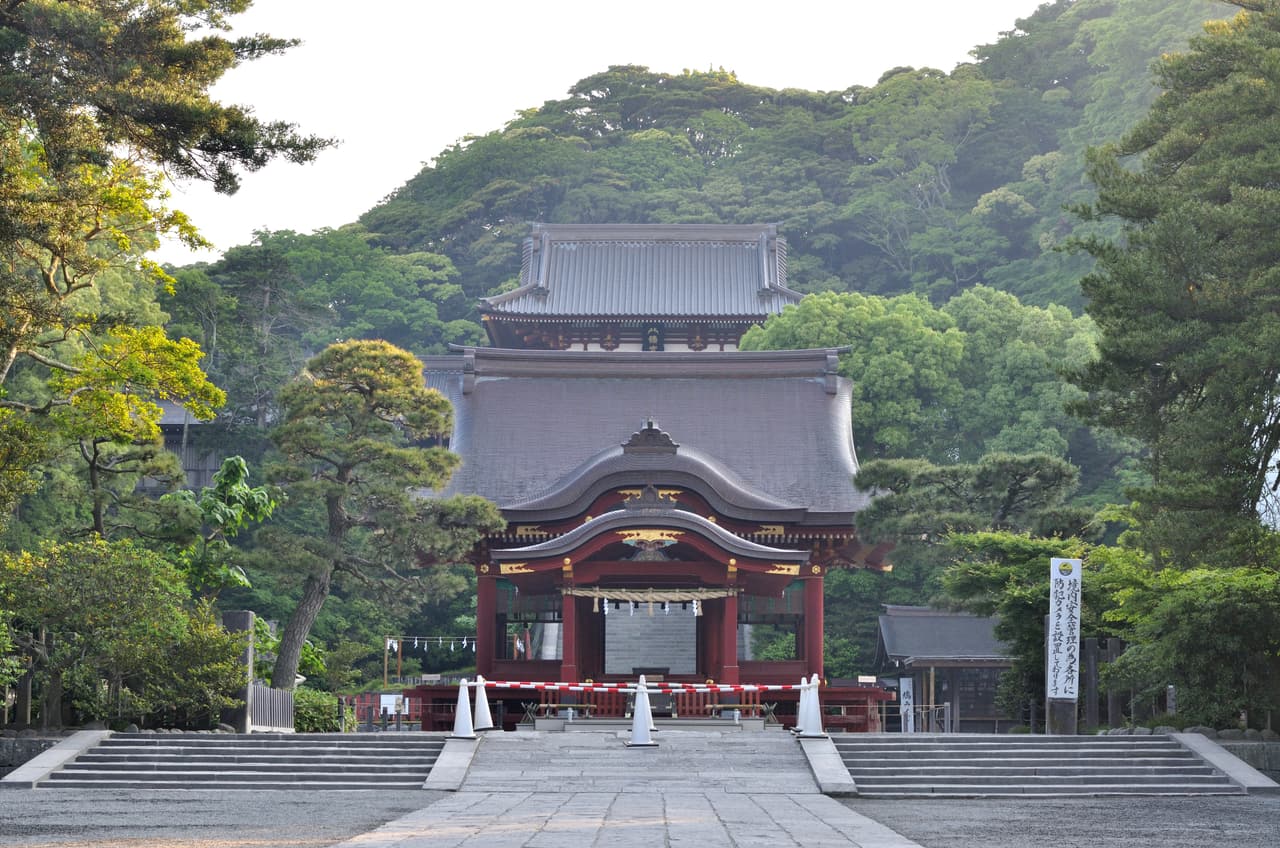
After the Buddha and Hasedera, ride the Enoden back to Kamakura Station — this area is the city's "downtown." Tsurugaoka Hachimangu is its spiritual core: the clan shrine that Minamoto no Yoritomo established as the guardian deity of the Kamakura shogunate. The broad Wakamiya-oji avenue runs straight from the station toward its great torii, and at the end you climb a stone stairway to the main hall. The grounds are free — the Genpei ponds, the dance stage, and the great staircase all reward a slow look — with only special exhibits or the treasure hall charging admission. Autumn ginkgo and New Year's hatsumode are its busiest moments. If you are carving out real time for the shrine rather than just passing through, we go deeper on goshuin desk hours, the September Reitaisai and its yabusame archery, and how ticketing works at the on-site Tsurugaoka Museum in a dedicated Tsurugaoka Hachimangu guide — worth reading before you plan the timing. Kamakura's shrine density makes it ideal for goshuin collecting for first-timers.
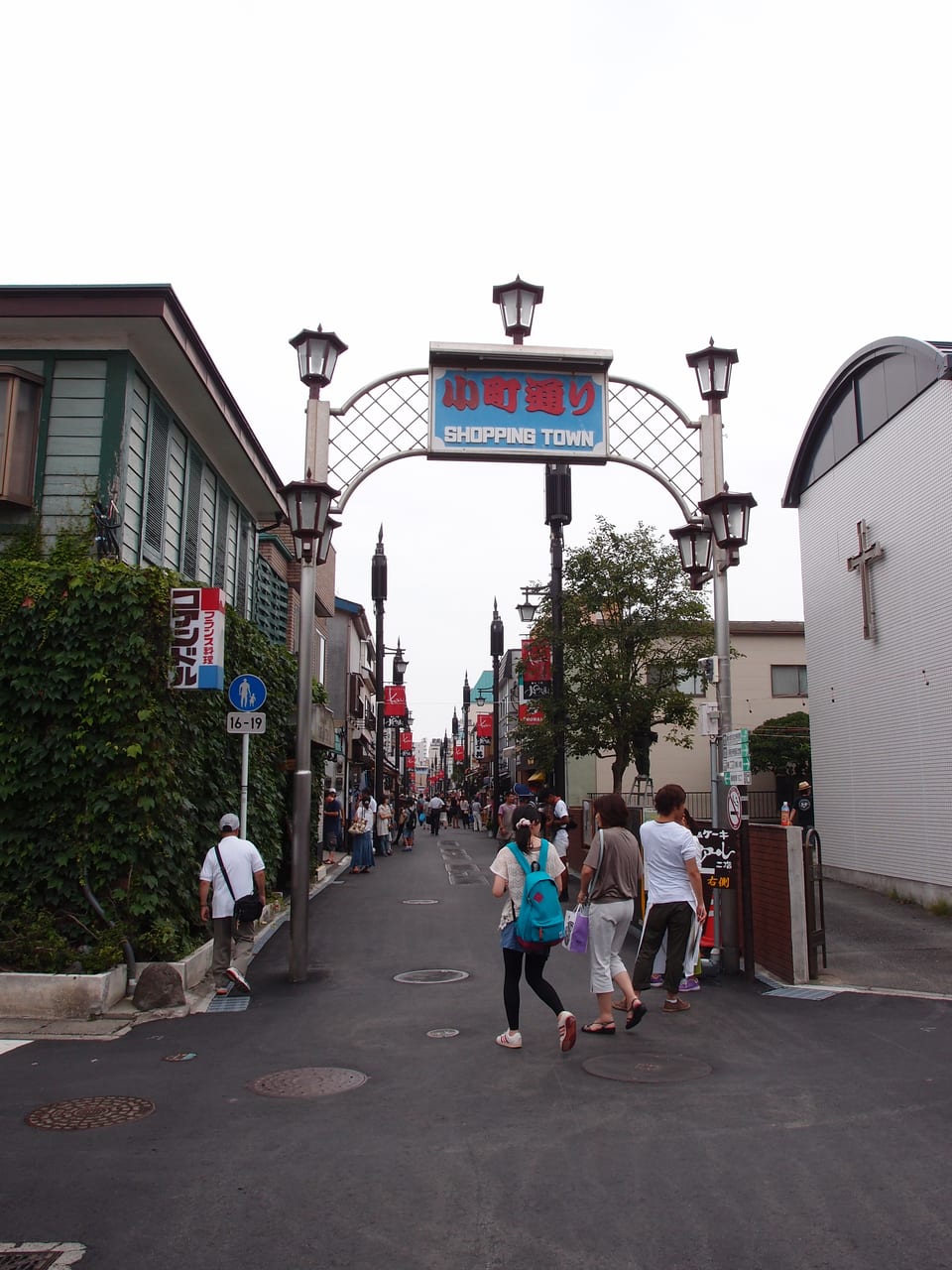
Running parallel to Wakamiya-oji between the station and the shrine, Komachi-dori is Kamakura's main eating-and-browsing street — lined with wagashi, senbei crackers, croquettes, purple-sweet-potato soft serve, matcha, and every kind of snack to graze on, stall by stall. One local rule worth knowing: Kamakura's manners ordinance asks visitors not to eat while walking here, so finish each bite beside the shop before drifting to the next. It is touristy and packed on weekends, but it is the easiest place to handle lunch and souvenirs in Kamakura. My take: treat Komachi-dori as a "browse-and-eat" connector, not a place to expect peace and quiet.
If you have time and like quiet, I strongly recommend Hokokuji (the Bamboo Temple) out toward Kanazawa-kaido. Its rear garden is a grove of some 2,000 moso bamboo, light filtering down through the leaves into a deep green hush — a completely different mood from the busy Buddha and Hasedera. Admission is ¥400 for adults, ¥200 for children, plus ¥600 for a bowl of matcha at the Kyukoan teahouse behind the grove; sipping slowly in the bamboo shade is the signature experience here. Hokokuji is a bit out from Kamakura Station — most people take a bus from the station front. It is not a must-see, but if you have had enough of crowds and want a corner to be quiet for ten minutes, it earns the detour.
The Enoden & the Enoshima extension
The soul of a Kamakura day trip is the Enoden (Enoshima Electric Railway) — this old streetcar-style line, running since 1902, follows the Sagami Bay coast from Kamakura all the way to Fujisawa, passing Hase (for the Buddha), Kamakura-Koko-Mae (the Slam Dunk railroad crossing and sea-view platform, a must-shoot for anime fans), Shichirigahama, and Enoshima. The carriages thread between houses and along the shoreline, and the ride itself is one of Kamakura's best sights. For just one or two legs between Kamakura and Hase, tapping an IC card is fine; but the moment you plan to reach Enoshima and hop off to shoot the coast along the way — three or more hops — the one-day "Noriorikun" pass (¥800 adults, ¥400 children) pays for itself and adds discounts at 55 shops along the line.
Want the full Enoden experience without planning the hops yourself? Trip.com runs a day tour built around Gokurakuji, Enoshima and the Enoden ride, with longer stops instead of a checklist sprint: Kamakura in depth: Gokurakuji + Enoshima + Enoden day tour →
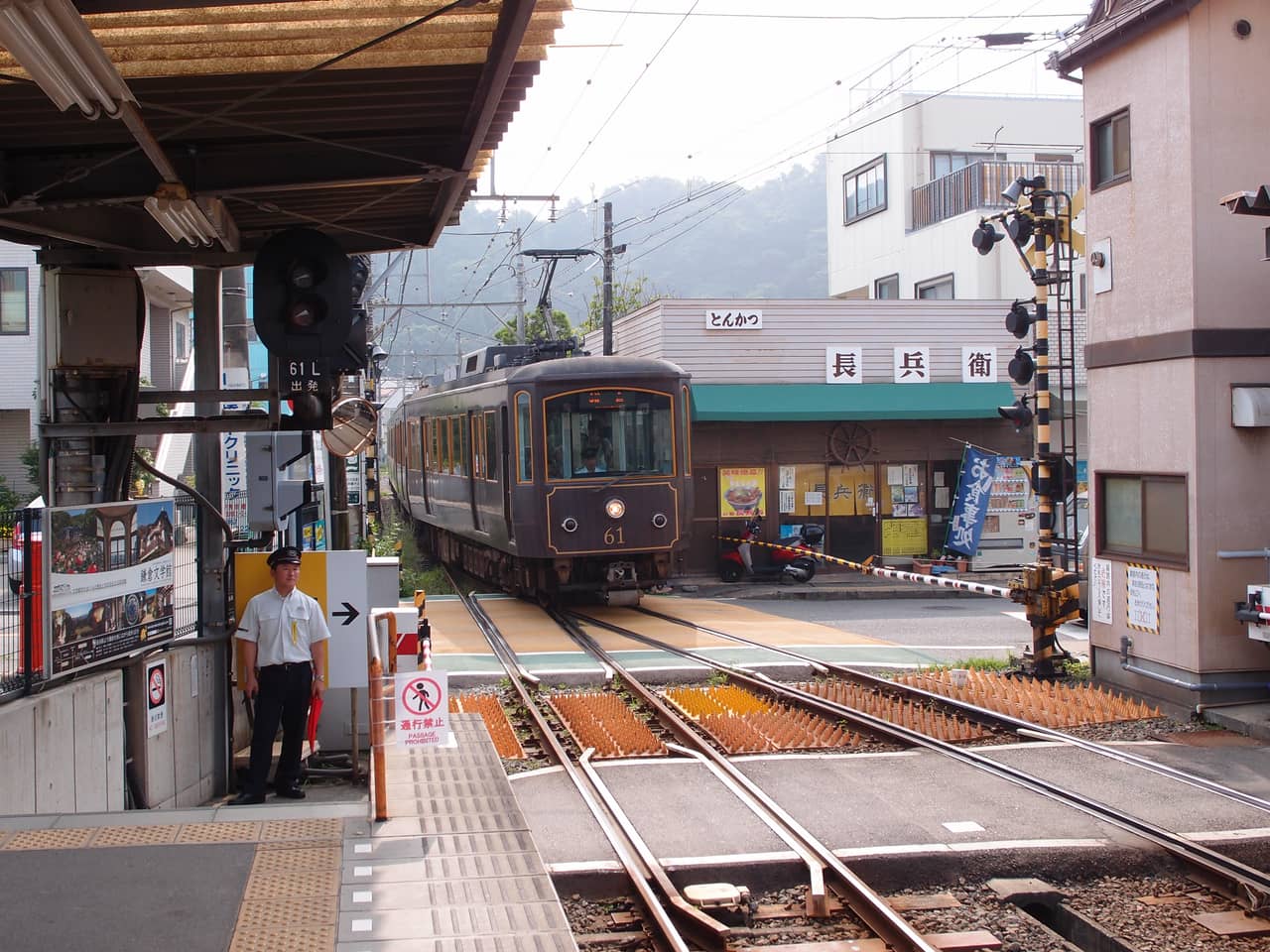
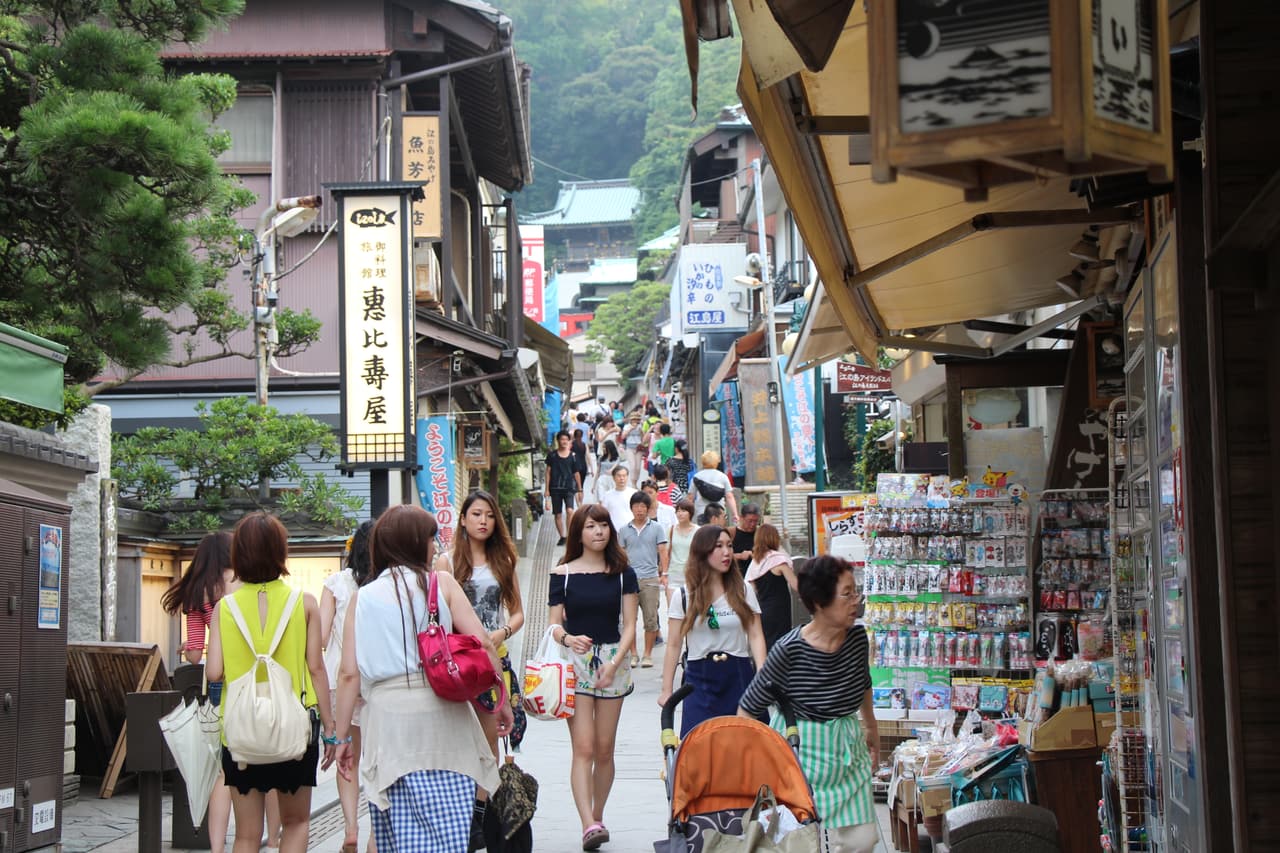
Near the end of the line, Enoshima is the best way to finish this route, especially if you love the sea. Cross the footbridge from Enoshima station onto the island, where you will find Enoshima Shrine (dedicated to Benzaiten), the Sea Candle observation tower (¥800, 60 meters tall, overlooking Sagami Bay with Mt. Fuji on the horizon on clear days), and the Iwaya Caves on the island's back side (¥500, sea-eroded grottoes you walk into carrying a candle — atmospheric). The island is hilly and stair-heavy; if you would rather not climb, there is a paid escalator, or just buy the official "Enoshima 1day" combo ticket (¥1,550), which bundles all four: the escalator, Sea Candle, Iwaya Caves, and Samuel Cocking Garden. Ride the Enoden toward Fujisawa and get off at Enoshima Station, and a sunset on Enoshima with Fuji on the horizon is my favorite way to cap a Kamakura day. If it rains, the island's slopes and sea views lose a lot — switch to indoor options instead, and see our Tokyo rainy-day guide for backups. For the shrine's three-hall pilgrimage order, how to pick between the three ticket types, and how to shoot the Kamakura-Koko-Mae crossing, see our dedicated Enoshima day-trip guide.
Transport & lodging
Getting in from Tokyo is most direct on the JR Yokosuka Line: Tokyo Station → Kamakura Station in about 57 minutes for ¥1,040, stopping at Shinagawa and Yokohama, with no transfer. From the Shinjuku side, you can take the JR Shonan-Shinjuku Line to Ofuna and change to the Yokosuka Line. On the ground, the main mode is the Enoden (covered above), plus a few buses (for Hokokuji and Sugimotodera you take a bus). If your wider trip covers many JR legs around the Kanto region, weigh whether a JR Pass helps using the break-even math in our JR Pass guide — but for a simple Kamakura day return, tapping an IC card leg by leg is the cleanest approach and a pass is not necessarily worth it.
If you would rather skip trains entirely, Trip.com also runs a Tokyo-departure Kamakura & Enoshima one-day bus tour — an easy pick with older family members or bulky luggage: Kamakura & Enoshima day bus tour from Tokyo →
On lodging, honestly most people do not stay overnight in Kamakura — a same-day return from Tokyo is simplest. The two situations that justify a night are wanting to beat the daytime hydrangea crowds at Hasedera with a dawn start, and adding the Kita-Kamakura Zen temples. If you do stay, there is a modest supply of inns and guesthouses around Kamakura Station and the Zaimokuza / Yuigahama beachfront; the seaside options have great atmosphere but limited numbers and tighten in peak windows (June hydrangeas, summer beach season, autumn foliage), so book early. On a budget, basing in Tokyo and doing day returns is actually more flexible — Kamakura is only an hour out, with no real reason you have to sleep local.
A one-day Kamakura route
Here is the same content shaped into a route that runs morning to night without backtracking:
- Morning: JR Yokosuka Line from Tokyo Station → at Kamakura Station, transfer straight to the Enoden to Hase → hit the Great Buddha first (+¥50 to step inside) → walk 5 minutes to Hasedera (in June, grab your hydrangea numbered ticket first, then the sea-view Kannon).
- Midday: Enoden back to Kamakura Station → graze along Komachi-dori for lunch → at the end, visit Tsurugaoka Hachimangu (free).
- Afternoon: with time and a taste for quiet, bus out to Hokokuji for matcha in the bamboo grove; otherwise head back toward Hase and ride the Enoden toward Enoshima (hop off at Kamakura-Koko-Mae to shoot the coast).
- Evening: onto Enoshima — Enoshima Shrine → Sea Candle for Sagami Bay and Fuji → sunset → Enoden back to Kamakura or Fujisawa, then JR to Tokyo for dinner.
If you only want an easy half-day, do "Great Buddha + Hasedera + Komachi-dori + Hachimangu" and head back to Tokyo — no need to push; for a full day, slot Enoshima into the evening. Kamakura pairs well with the rest of the Kanto day trips — the Yokosuka line stops at Yokohama on the way in, so on the way back it's easy to break the journey at Yokohama's Minato Mirai and Red Brick Warehouse for Chinatown and a harbour skyline, pairing an old capital with a port city in one day; west lies Hakone for hot springs (see our Hakone day trip guide), north lies Nikko for Toshogu and the waterfalls (see our Nikko World Heritage guide), and the whole Tokyo plan ties back to our 5-day Tokyo itinerary.
FAQ
- Q1:Is one day enough for Kamakura, or should I stay overnight?
- For most people, one day is just right. Leave Tokyo to arrive before 9 a.m. and you can do the Great Buddha (Hase), Hasedera, Tsurugaoka Hachimangu, and Komachi-dori, then ride the Enoden out to Enoshima for sunset and still be back in Tokyo for dinner. The only travelers who really need a night are: those wanting to beat the crowds at Hasedera during June hydrangea season with a dawn arrival, and those adding the Kita-Kamakura Zen temples (Engaku-ji, Kencho-ji, Meigetsu-in), which need another half to full day. For the Great Buddha, the coast, and the Enoden, a same-day return is plenty. Slot it into our 5-day Tokyo itinerary for context.
- Q2:Can you really go inside the Great Buddha? How much is it?
- Yes — and it is the most fun thing about the Kamakura Daibutsu. Admission to the Kotoku-in grounds is ¥300 for adults, ¥150 for children (6–12); to step inside the bronze statue and see the 13th-century casting seams costs just ¥50 more — one of the cheapest "go inside a National Treasure" experiences in Japan. The interior is small and fills up fast, so expect a short queue in peak season. Hours are 8:00–17:30 (Apr–Sep) and 8:00–17:00 (Oct–Mar). The Buddha is an open-air seated bronze — its hall was destroyed by a tsunami in 1495 and never rebuilt — so you can see it rain or shine.
- Q3:How does Hasedera hydrangea season work? Do I need a timed ticket?
- Hasedera's June Hydrangea Path (Ajisai-no-Komichi) is Kamakura's most famous seasonal sight, and the most crowded. General admission is ¥400 for adults, ¥200 for elementary students; during peak bloom, walking the hydrangea path needs a separate ¥500 viewing ticket (same for adults and children) under a numbered timed-entry system — you collect a return-time ticket at the gate for a designated 60-minute slot, and weekend peak waits of 60–90 minutes are common. The smart move is to arrive at the 9 a.m. opening, grab your numbered ticket first, then see the rest of the temple while you wait. Peak bloom usually falls early to late June, with the exact window announced in late May. Hasedera is worth it year-round too — the sea-view Kannon and Benten cave never close.
- Q4:Do Tsurugaoka Hachimangu and Hokokuji charge admission?
- Tsurugaoka Hachimangu is free — walk to the end of Komachi-dori from Kamakura Station and there it is, the spiritual heart of the city and the Minamoto clan shrine; only special exhibits or the treasure hall cost extra. Hokokuji (the Bamboo Temple) does charge: ¥400 for adults, ¥200 for children, plus ¥600 for a bowl of matcha at the teahouse behind the bamboo grove. Hokokuji is out toward Kanazawa-kaido, a bus ride from the station. Routing-wise, pair Hachimangu and Komachi-dori with the Great Buddha and Hasedera (all on one Enoden ride back to Kamakura Station), and treat Hokokuji as optional if you are short on time.
- Q5:How do I get to Kamakura from Tokyo? Do I need the Enoden day pass?
- The most direct route is the JR Yokosuka Line: Tokyo Station → Kamakura Station in about 57 minutes for ¥1,040, no transfer, with Shinagawa and Yokohama on the way. On the ground, the local highlights run on the Enoden — the Kamakura–Hase–Enoshima coastal line. If you plan to hop on and off three or more times between Kamakura, Hase, and Enoshima, the Enoden one-day pass "Noriorikun" (¥800 adults, ¥400 children) pays off and adds discounts at 55 shops along the line; for just one or two legs, tapping an IC card is fine. Whether a nationwide JR Pass makes sense depends on your wider trip — see our JR Pass guide.
- Q6:Is Enoshima worth extending to from Kamakura? What is there?
- Yes, especially if you love the coast. Enoshima sits across a footbridge past the end of the Enoden line, with Enoshima Shrine, the Sea Candle observation tower (¥800) overlooking Sagami Bay and Mt. Fuji, and the Iwaya Caves (¥500) — sea-eroded grottoes you walk into carrying a candle, atmospheric and a little spooky. If you would rather not climb the island's hills, the official "Enoshima 1day" combo ticket (¥1,550) bundles all four: the escalator, Sea Candle, Iwaya Caves, and Samuel Cocking Garden. Ride the Enoden toward Fujisawa and get off at Enoshima Station — a clear-day sunset with Fuji on the horizon is the best way to end this route. For a rainy-day backup, see our Tokyo rainy-day guide.
Related reading:
Hakone Guide 2026: Free Pass, Owakudani & Lake Ashi
About 85 minutes from Shinjuku by Romancecar — the 2026 Hakone Free Pass, Owakudani, Lake Ashi pirate ships, the floating torii, and a two-day onsen loop.
Nikko Guide 2026: Toshogu, Kegon Falls & Lake Chuzenji
About 1h50 from Asakusa by Tobu express — the World Heritage Toshogu (Yomeimon, three monkeys, sleeping cat), Kegon Falls, Lake Chuzenji, and the Irohazaka autumn hairpins.
Tokyo 5-day itinerary 2026
A clear 5-day plan: Shinjuku base, two zones per day, honest budget.