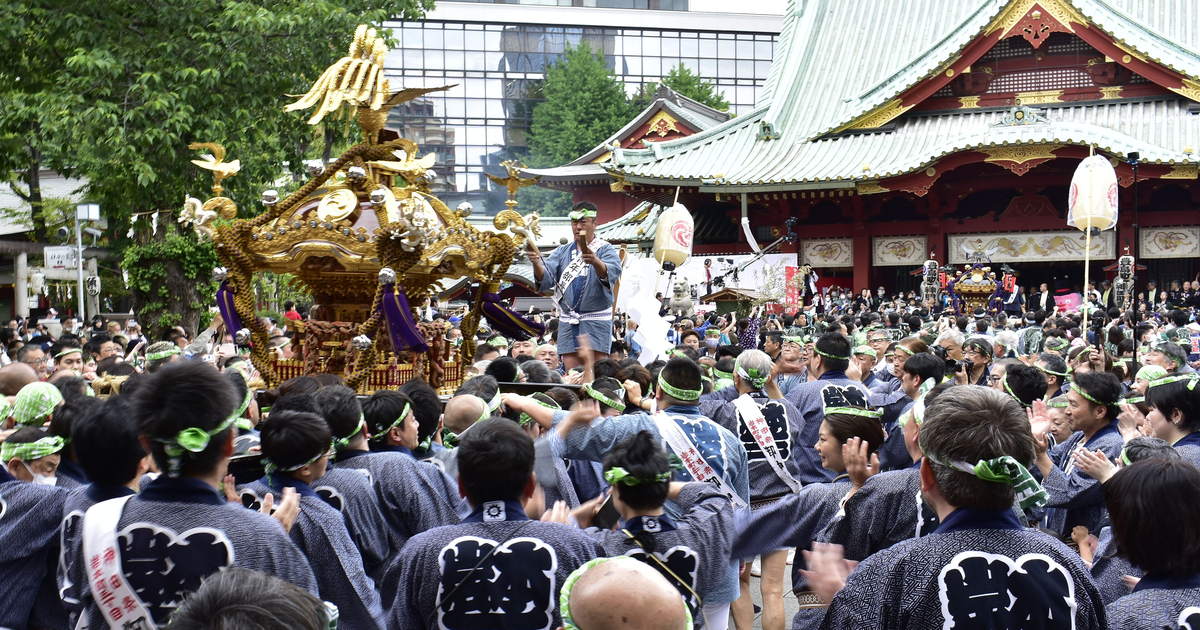
Here is the scale of Kanda Matsuri: a procession covering roughly 30 kilometres, starting at 5:00 am and finishing at 6:20 pm, with more than 200 portable shrines converging on one shrine across two days. And here is the ticketing information that corresponds to it: none. Search all sixteen pages of the official festival site, the twenty-three-item shrine FAQ and the annual calendar, and the Japanese term for viewing seats surfaces exactly once — describing seating for tea ceremony attendees. No grandstands, no reservations, no sign-up. Everything on the street is free and standing-room. So this guide does the only thing worth doing: it takes the one tool the shrine actually gives you, the timetable, and makes it usable. Along the way it clears up the three things easiest to get wrong —what the two-year cycle is actually alternating with, why an off year is not a blank, and why nobody can tell you the 2027 dates yet. It ends with a sentence only the shrine itself would write, about why this festival is not on the UNESCO list.
- 2027 is a main-festival year, but no dates are published — and 2027 has a calendar layout with no precedent (section three)
- The two-year cycle alternates with Sanno Matsuri at Hie Shrine, Chiyoda — a division of labour fixed in the Enpo era, not an abstract big-year rhythm
- Off years are not blank: the Reitaisai, the tea offering and the Myojin Noh all run as normal; only the street half alternates
- Zero seats, zero sign-ups, zero admission — so the entire value of planning lands on where you stand and when you get there
- The shrine flags two peaks itself: 4:20 pm outside Nihombashi Mitsukoshi, 5:10 pm on Akihabara Chuo-dori
- The only ticketed event is the Myojin Noh (¥6,500–¥13,500, 352 reserved seats) — and it runs in both year types
- The chief priest wrote down why the festival missed UNESCO listing: it was transformed by disaster
📖 Contents
- 1. What the two-year cycle is actually alternating with
- 2. An off year is not a blank year
- 3. Why this guide will not give you 2027 dates
- 4. Shinkosai day: the eight official time points
- 5. Mikoshi parade and Tsukematsuri: 200 shrines and a 3:00 pm start
- 6. Zero seating: the fourth category
- 7. The one thing with a ticket: Myojin Noh
- 8. The chief priest own explanation
- 9. What the shrine is worth on an ordinary day
- 10. Tokyo in May, and standing outside all day
- 11. How to actually plan the three days
- 12. FAQ
What the two-year cycle is actually alternating with
Almost every English introduction to Kanda Matsuri says it is held every two years and then stops there. The shrine own wording is far more specific, and the specific part is where the useful information lives:
Until the Enpo era it was held every year, but it came to be held in alternate years with the Sanno Matsuri of Hie Shrine in Chiyoda City, and from then until the present day a biennial cycle became the custom.
The difference is not pedantry. Every second year sounds like an internal rhythm this festival has for its own reasons. What the shrine describes is a split between two shrines — Edo had two festivals allowed inside the castle grounds to be viewed by the shogun, and they took turns. Once you read it as a rota, several things fall into place: why the odd-year pattern is so stable, why cancellations do not shift it, and why the shrine consistently uses the compound phrase about a shogunal festival held once every two years rather than simply saying alternate years.
⚠️ A naming trap worth flagging, because it pollutes search results: the Sanno Matsuri here is at Hie Shrine in Nagatacho, Chiyoda City, central Tokyo. There is a completely separate and equally famous Spring Sanno Festival at a same-named Hie Shrine in Takayama, which is what our Takayama festival guide covers. They share a name and nothing else. The shrine two editions of its own history page are not even internally consistent about the address — the 2025 version says Chiyoda City, the 2015 version says Akasaka — but both mean the same shrine.
Shogunal festival is a sourced term, not marketing
The other phrase that reads like promotional copy is tenka matsuri, the shogunal festival. It has a documented origin:
Under the patronage of the Edo shogunate, a festival procession made up of two portable shrines, roughly 36 groups and 45 floats, the Tsukematsuri and the commissioned performances, entered the inner precincts of Edo Castle and was viewed by the shogun and his consort — and from this the common people of Edo came at some point to call it the shogunal festival.
The Tsukematsuri page adds a corroborating detail: the daikagura performance was a commissioned act funded by the shogunate and permitted only at the shogunal festivals. That kind of specificity is worth more than any adjective.
An off year is not a blank year
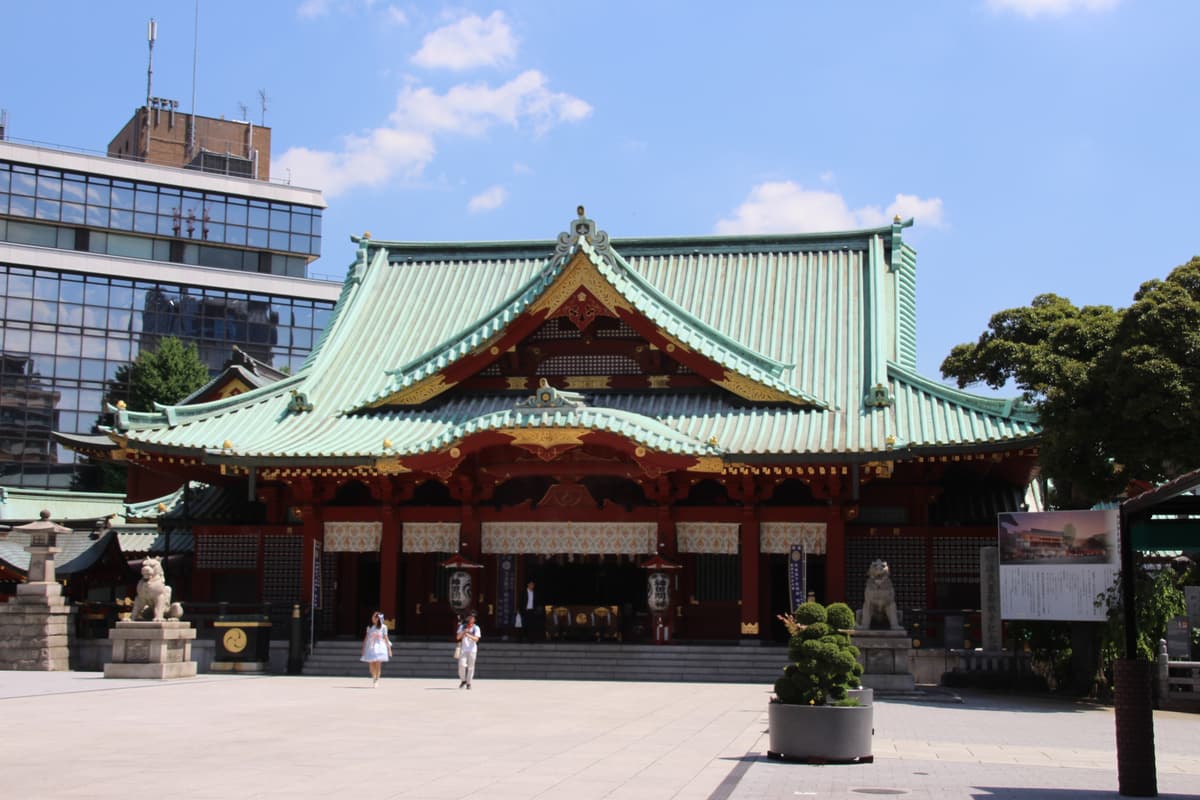
Look up Kanda Matsuri in an even-numbered year and the shrine front page carries a blunt banner: because the 2026 Kanda Matsuri is an off-year festival, the Shinkosai procession and the mikoshi parade will not be held.
A lot of guides read that line and conclude there is nothing to see in an off year. The mistake is treating the festival as a single object. The May entry in the shrine official annual calendar for 2026 is explicit: the rice-planting rite in early May, the tea offering ceremony and the Myojin Noh on Thursday 14 May, and the Reitaisai on Friday 15 May.
So the accurate word is not reduced, it is layered. Side by side:
| Element | Main year (odd) | Off year (even) |
|---|---|---|
| Reitaisai (principal rite) | ✅ on or near 15 May | ✅ on or near 15 May |
| Tea offering ceremony | ✅ | ✅ |
| Myojin Noh (only ticketed event) | ✅ | ✅ |
| Rice-planting rite | ✅ early May | ✅ early May |
| Shinkosai (30 km procession) | ✅ | ❌ |
| Mikoshi parade (200+ shrines) | ✅ | ❌ |
| Tsukematsuri (floats and set pieces) | ✅ | ❌ |
| Two preparatory transfer rites | ✅ | ❌ |
The whole table compresses into one line: what alternates is the three days on the street. The rites inside the shrine have never skipped a year.
And here is the detail that makes the point unanswerable. The only ticketed, reserved-seat, up-to-¥13,500 event in the entire festival — the Myojin Noh — runs in both year types. Its edition number increments annually: the 2025 performance was the 22nd, the 2026 performance the 23rd. It is completely decoupled from the main-year cycle.
Now compare the publishing schedules. For 2026, an off year, the shrine had already announced the full programme and cast: a solo chant performed by the 26th head of the Kongo school, Kongo Hisanori, a Living National Treasure; the kyogen piece performed by Nomura Manzaku of the Izumi school, also a Living National Treasure; and the Noh play performed by Kongo Tatsunori. For 2027, a main year, the procession does not have a date. The tidy binary of main year equals content, off year equals nothing is contradicted by the shrine own announcement calendar.
Why this guide will not give you 2027 dates
This section is the one worth reading twice, because it demonstrates something: an honest I do not know can be far more useful than an invented date.
First, the raw material. Here are five main-year schedules pulled page by page from the shrine own archived festival sites — a table that does not exist anywhere else in English:
| Year | Palanquin transfer | Spirit installation | Shinkosai | Mikoshi parade | Myojin Noh | Tea offering | Reitaisai |
|---|---|---|---|---|---|---|---|
| 2007 | 10 May | 11 May | Sat 12 May | Sun 13 May | 14 May | 14 May | Tue 15 May |
| 2017 | Thu 11 May, 7:00 pm | Fri 12 May | Sat 13 May | Sun 14 May | Mon 15 May, 6:00 pm | Tue 16 May, 10:00 am | Wed 17 May, 2:00 pm |
| 2019 | Thu 9 May, 7:00 pm | Fri 10 May | Sat 11 May | Sun 12 May | Tue 14 May, 6:00 pm | Tue 14 May, 11:00 am | Wed 15 May, 2:00 pm |
| 2023 | Thu 11 May, 7:00 pm | Fri 12 May | Sat 13 May | Sun 14 May | Tue 16 May, 6:00 pm | Tue 16 May, 11:00 am | Wed 17 May, 2:00 pm |
| 2025 | Thu 8 May, 7:00 pm | Fri 9 May, about 2:00 pm | Sat 10 May | Sun 11 May | Wed 14 May, doors 5:30 pm | Wed 14 May, 11:00 am | Thu 15 May, 2:00 pm |
| 2026 (off year) | — | — | — | — | Thu 14 May | Thu 14 May | Fri 15 May |
Two patterns fall out of that table. Neither has ever been stated by the shrine — they are derived here from five official schedules:
- Shinkosai lands on the second Saturday of May, with the mikoshi parade the following Sunday. Five for five: 12 May 2007, 13 May 2017, 11 May 2019, 13 May 2023 and 10 May 2025 were all the second Saturday of their respective Mays.
- Reitaisai lands on 15 May. The only two exceptions are 2017 and 2023, when 15 May happened to be a Monday — the day right after the parade Sunday — and the shrine moved it to Wednesday 17 May. Which means the widely repeated claim that Reitaisai is fixed to 15 May is itself wrong.
Now apply the pattern to 2027
The Saturdays in May 2027 are the 1st, 8th, 15th, 22nd and 29th. The second Saturday is 8 May. Case closed — except for one thing:
In 2027, 15 May is itself a Saturday.
The two patterns collide. If Shinkosai follows the rule and takes Saturday 8 May with the parade on Sunday 9 May, then Reitaisai on 15 May falls on a Saturday — and in every recorded main-festival year, Reitaisai has never fallen on a Saturday. Push the whole block later to protect the 15 May date, and Shinkosai collides with Reitaisai itself. The last time 15 May fell on a Saturday was 2021 — the year the festival was cancelled, leaving no precedent to copy.
So the honest conclusion is this: based on the pattern in five official schedules, the 2027 Shinkosai most likely falls on Saturday 8 May with the mikoshi parade on Sunday 9 May — but that is a derivation, not an announcement, and 2027 presents a calendar layout with no precedent in any recorded main-festival year. Any guide currently naming a firm 2027 date did not get it from the shrine.
When will we know?
Judging by past editions, roughly a month before the festival. Two clues support that. The route PDFs on the 2025 festival site carry a date parameter of 15 April 2025 in their filenames. And on the 2019 site, most event listings went up on 1 April, with the museum special exhibition opening 20 April.
The practical consequence: before early April you can lock a weekend but not a timetable. If you are booking flights around this festival, hold flexible dates across the second weekend of May and watch for the festival site to change over — the fastest tell is the copyright year in the footer, which currently still says 2025.
Shinkosai day: the eight official time points
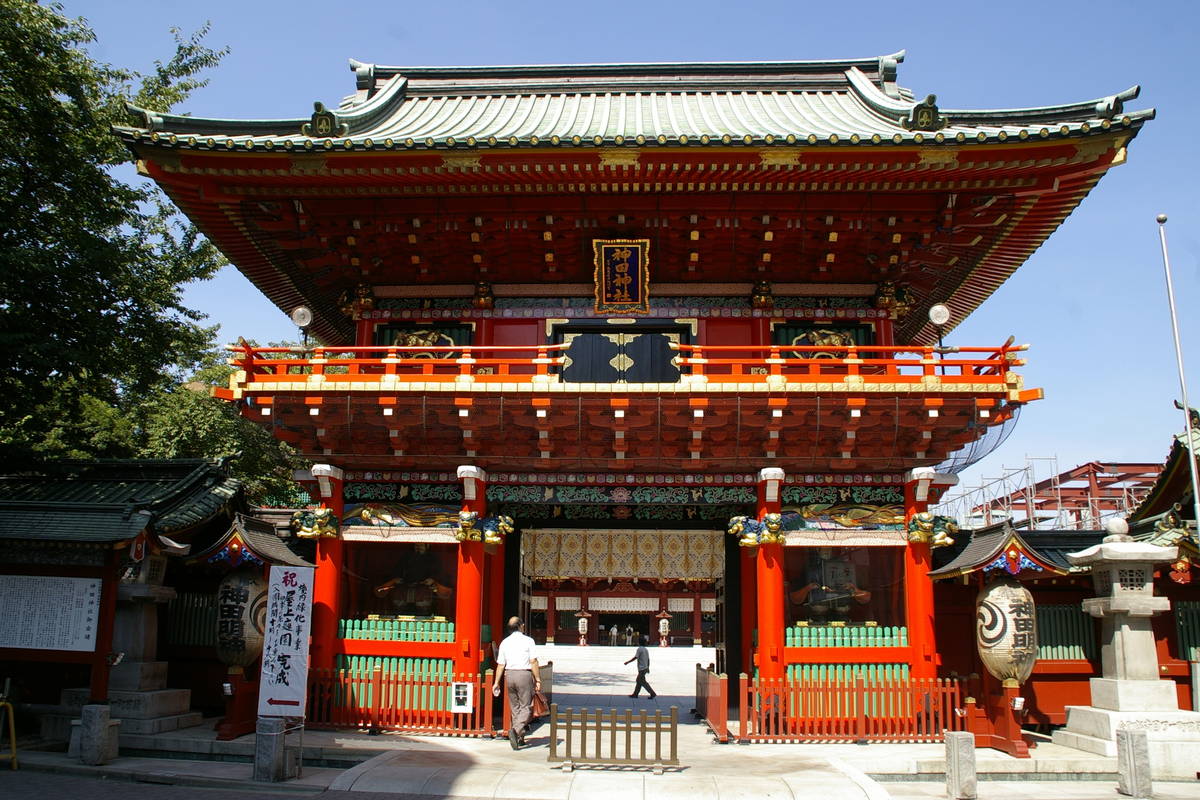
The centrepiece of a main year is the Shinkosai. The shrine calls it the grandest rite of the Kanda Matsuri, describes the route as a long road of roughly 30 kilometres, and says the procession swells to a scale of several thousand people. The official description of the territory covered breaks into four districts: Kanda, Nihombashi, Otemachi and Marunouchi, and Akihabara.
Below is the published timetable. Every time is marked approximate, and the shrine adds that times may change due to various circumstances. ⚠️ These are the 2025 timings; the 2027 version has not been published. Use them to understand the shape of the day, not to set alarms:
| Time | What happens | Where |
|---|---|---|
| about 5:00 am | Key-handover rite: the treasury doors open, the palanquins are set at the front of the precinct | Kanda Myojin |
| about 7:20 am | Departure rite, then the procession leaves | Kanda Myojin |
| en route | Offerings by parish representatives | Parish neighbourhoods |
| about 10:00 am | Offering rite | Masakado Mound, Otemachi (the shrine former site) |
| about 1:20 pm | Midday offering | Former resting hall, Nihombashi Ryogoku |
| about 4:20 pm | 🔴 Shrine wording: the single greatest highlight, where the whole procession comes together | Outside Nihombashi Mitsukoshi, Chuo-dori |
| about 5:10 pm | 🔴 Shrine wording: the procession parades through Akihabara, a world-famous destination | Akihabara Chuo-dori |
| about 6:20 pm | Arrival rite (the day ends) | Kanda Myojin |
What the table tells you to do
The most valuable thing about this timetable is that it answers its own planning question. The procession covers 30 kilometres across thirteen hours; you cannot follow it. But out of eight time points, the shrine attached highlight-grade language to only two of them. That is your multiple-choice answer.
The recommendation here is unambiguous: either be at the shrine for the 7:20 am departure rite, or be on Chuo-dori after 4:20 pm for the complete version. The eight hours in between are the procession spread thin across a city, and chasing them is not worth it.
The two options are qualitatively different, so pick on character rather than convenience:
- The 7:20 am departure. This is the ritual end of the day: three palanquins arrayed in the precinct, then leaving. Fewer people, but what you are seeing is the start — the procession has not yet grown to several thousand. It is also the only window where shrine architecture and palanquins appear in the same frame.
- Chuo-dori after 4:20 pm. The shrine says outright that this is where the whole procession assembles. The cost is that this is the most crowded stretch and you need to claim a spot early. The payoff is that at 5:10 pm the procession continues along the same road towards Akihabara, so you can walk with it and catch both flagged highlights in one go.
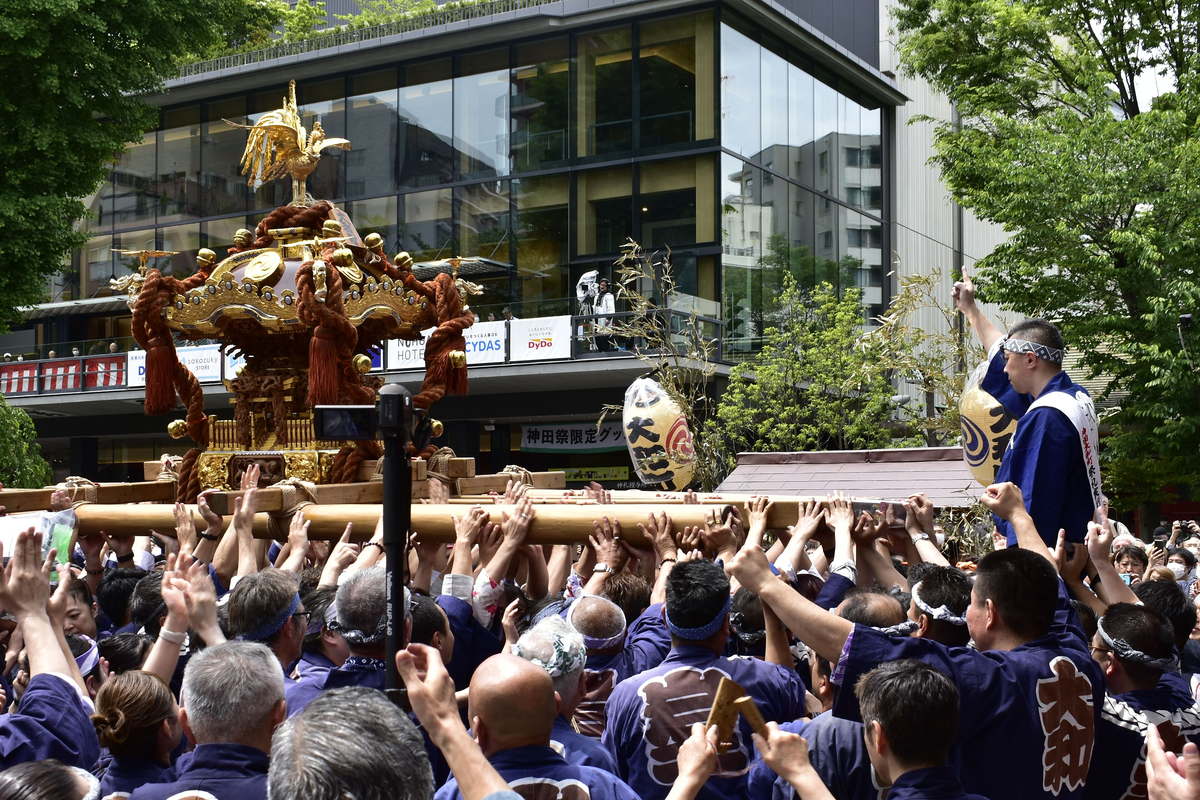
Knowing what you are looking at helps too. The procession is led by three sacred vehicles: the first palanquin carrying Onamuchi-no-mikoto (Daikoku), the second portable shrine carrying Sukunahikona-no-mikoto (Ebisu), and the third palanquin carrying Taira no Masakado — added only in 1987. Two ceremonial floats accompany them, a drum float and a lion-head float.
The second portable shrine carries a detail that closes a neat loop. It was donated in 1973 to mark the 300th anniversary of Nihombashi Mitsukoshi, and restored in 2023 for the 150th anniversary of the enshrinement of Sukunahikona-no-mikoto. And the single point the shrine flags as the greatest highlight of the entire route is directly outside Nihombashi Mitsukoshi. That is not coincidence — it is the procession passing its own benefactor front door.
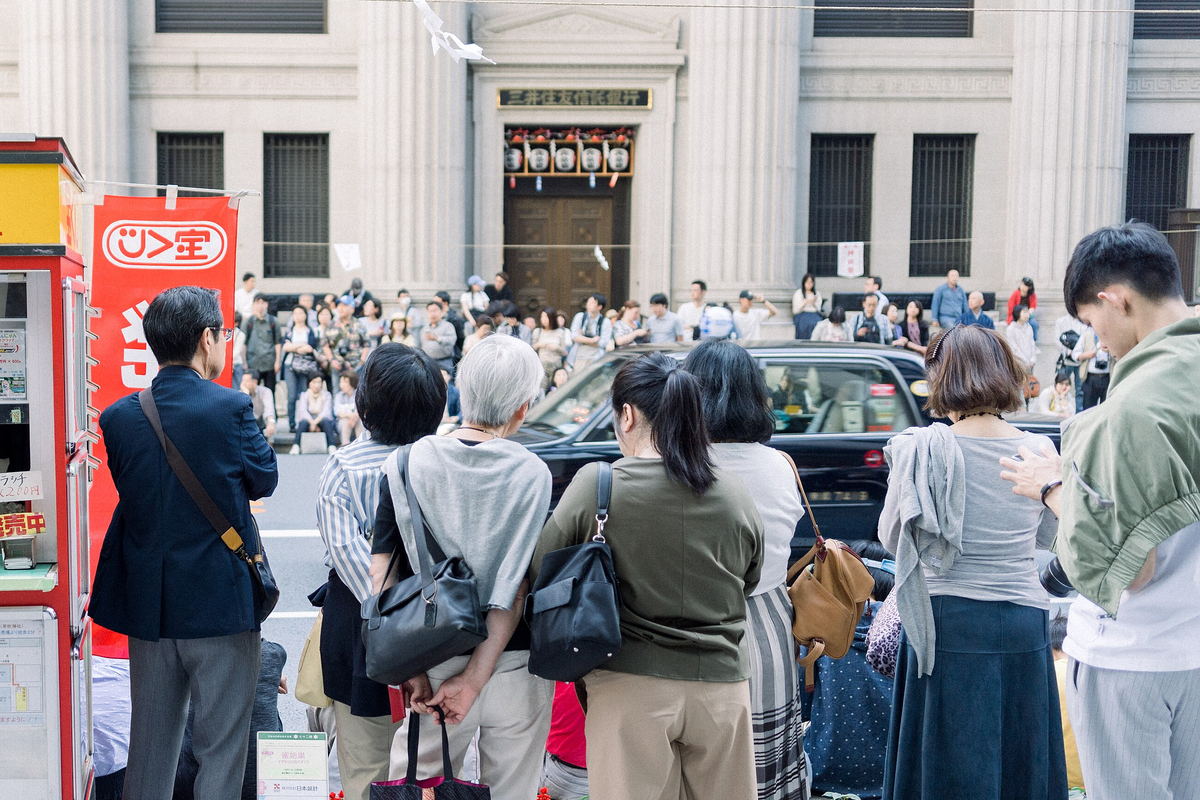
One more stop deserves a note: the 10:00 am offering rite at Masakado Mound in Otemachi. That site is the shrine former location, so the procession returns to its original ground before midday. It is not flagged as a highlight, which likely means manageable crowds — a good option for anyone who wants ceremony without a scrum.
Mikoshi parade and Tsukematsuri: 200 shrines and a 3:00 pm start
If Shinkosai is the deities going out, the mikoshi parade is the reverse: the neighbourhoods bringing their portable shrines in. The shrine describes more than 200 mikoshi of various sizes from the local neighbourhoods weaving through the streets of Kanda towards Kanda Myojin, and calls this the most spectacular part of the festival.
There is a structural detail worth pausing on:the parade is not confined to Sunday. The official running order splits across two days.
- Saturday, the Shinkosai day: children mikoshi from 1:00 pm, then individual neighbourhood associations in order from 4:00 pm.
- Sunday: from 9:00 am, organised by federation — the Sotokanda district federation, the Nihombashi districts, the Kanda Station East federation and so on, each with a listed time.
The shrine notes that parade times and order are subject to change, so the neighbourhood-by-neighbourhood list is a guide rather than a contract. But the fact that Saturday afternoon also has mikoshi arriving is structural, and it changes single-day planning: if you can only be in Tokyo on the Saturday, you can watch the morning departure, come back to the shrine in the afternoon for the first wave of arrivals, and still catch the procession on Chuo-dori in the evening.
The Tsukematsuri: before 4:20 pm you are seeing an incomplete procession
The Tsukematsuri was the most popular element of the Edo-period festival. The shrine explains that the historical Kanda Matsuri fielded roughly 36 groups and 45 tall floats, but that what outdrew even those was the Tsukematsuri, in which a different set of attractions appeared every time. That variability is the point — it is the one part of the festival that is genuinely different each edition.
The 2025 line-up shows how concrete that gets: five mounted warriors from the Soma Nomaoi tradition, appearing as special guests from Minamisoma City in Fukushima; a Bando warrior procession from Bando City in Ibaraki, which the shrine noted was its first appearance since 1994; the folk-tale figure of the flower-blossoming old man, running since 2013; Urashima Taro, revived in an anime-influenced style in 2015; a tapir set piece built by Tokyo University of the Arts, an award-winning entry from its 2024 student festival; and a public bathhouse float built by a Bunkyo architecture youth group. The daikagura performance appears here too — the one funded by the shogunate and permitted only at shogunal festivals.
And now the most practically useful sentence in this article, derived directly from the official timetable:
🔴 In 2025 the Tsukematsuri departed Arima Primary School at 3:00 pm and reached Kanda Myojin at 6:00 pm, merging with the main Shinkosai procession outside Nihombashi Mitsukoshi at around 4:20 pm. Which means: anything you watch before 4:20 pm is the version without the Tsukematsuri. The set pieces, the mounted warriors, the art-school builds — they are all in the later half. That is the real reason 4:20 pm is the dividing line in this guide: not because the crowd is thicker, but because before that the procession is literally not assembled yet. (⚠️ The exceptions are the daikagura and the Soma mounted warriors, both listed as participating along the full route.)
One resource to grab: the shrine publishes three route PDFs on its download page — one each for the Shinkosai, the Tsukematsuri and the mikoshi parade — which you can save and carry offline. ⚠️ Honest limitation: all three are pure image files with no text layer, so this article cannot quote route details from them. What it can tell you is that they exist and that they are the only official route material available.
Zero seating: the fourth category
Every time I cover a major Japanese festival, the same question has to be answered: are there paid seats, and can you buy them in advance? Kanda Matsuri gives the most extreme answer so far.
The method first, because a conclusion of nothing found is only as good as the search behind it. All sixteen pages of the dedicated festival site were checked — home, greeting, history, schedule, access, event information, downloads, merchandise, the transfer rite, the spirit installation, Shinkosai, Tsukematsuri, the combined parade page, the mikoshi parade, the tea ceremony, the Noh and the Reitaisai — plus the twenty-three-item shrine FAQ, the annual calendar and the full news archive. The Japanese word for viewing seats appears once:
Watching the head of the school perform his exquisite tea preparation from the viewing seats set up in the precinct are the attendees, in brilliantly coloured kimono.
That is on the tea ceremony page, describing seating for tea ceremony attendees, with no price, no application process and no sales channel attached. So the seating at Kanda Matsuri is not sold out, not allocated by lottery, and not merely awaiting a price announcement — it has never existed as a product at all.
Set the four festivals side by side and the distinction becomes clear:
| Festival | Paid seating? | Bookable in advance? | How it is handled |
|---|---|---|---|
| Kyoto Gozan no Okuribi | ❌ Organisers do not sell any | — | No ticket channel listed — the organisers do not sell one |
| Hakata Gion Yamakasa | ✅ Published prices | ❌ Official text: no reservations of any kind | Print the price and print the fact that you cannot book it |
| Gion Matsuri | ✅ Grandstands exist | 🟡 A system exists, next-year pricing unpublished | Explain the system, do not invent the number |
| Kanda Matsuri | 🔴 The concept does not exist | — | All planning value lands on where you stand and when |
This sounds like bad news and is actually the opposite: there is nothing to fight over online six months ahead. Kanda Matsuri requires no ticketing action whatsoever. The only things worth planning are whether you are in Tokyo and whether you are willing to be awake at 7:00 am.
Joining in: a more precise answer than no
The next question is always whether you can carry a mikoshi or walk in the procession. The wording matters here, because the shrine position is not a prohibition — it is a total absence of the topic.
Three official entry points return nothing: sixteen festival pages, twenty-three FAQ items and the annual calendar, with no mention of open participation, carrier recruitment or an application process. Mikoshi are always described by parishioner neighbourhood association, and the Tsukematsuri participants are all named bodies — Tokyo University of the Arts, local primary schools, Chiyoda Scout Troop 6, the Manseibashi traffic youth corps, the Kanda fire-brigade youth corps.
The correct formulation is therefore: the shrine offers no participation channel for general visitors, and unlike Hakata Gion Yamakasa it has not published eligibility rules either — the possibility has simply never appeared on its site. Carrying a mikoshi goes through a parishioner association, and that is not something a traveller signs up for online. Do not write that foreigners are banned, and do not write that you can join. Neither has an official source.
Road closures: this guide says nothing
One more boundary to declare. Traffic restrictions for Kanda Matsuri are not published by anyone official. The festival site contains no instance of the Japanese terms for traffic restriction, road closure or regulation. Neither does the shrine news feed or annual calendar. The Chiyoda City page that used to cover Kanda Matsuri now returns a 404. The Chiyoda City tourism association — which, incidentally, is a supporting body for the Myojin Noh — returns zero results for the festival name in its own site search.
So this article will not name any closed street or closure window. What is confirmed is only what the shrine states: the procession passes along Chuo-dori, outside Nihombashi Mitsukoshi at about 4:20 pm and through Akihabara at about 5:10 pm, and the shrine publishes three route PDFs. For actual restrictions, follow on-the-day signage and Metropolitan Police notices. If a guide gives you specific closure times, that did not come from the shrine.
The one thing with a ticket: Myojin Noh
The single element of Kanda Matsuri with a ticket, a price and an on-sale date is the Myojin Noh, subtitled Flower of the Mysterious — a torchlit Noh performance. Position it correctly first: this is a Noh performance, not part of the street festival. The two experiences have nothing in common. One is standing on a road watching a procession pass; the other is sitting in front of a temporary stage built before the shrine hall.
The 2026 details, the 23rd edition:
| Item | Official value |
|---|---|
| Date | Thursday 14 May 2026 — note that this is an off year |
| Venue | Temporary stage before the shrine hall (seating under a large marquee, all seats reserved, 352 in total) |
| Running order | Doors 5:30 pm → gagaku 5:45 pm → commentary 6:15 pm → curtain 6:40 pm → ends after 8:00 pm |
| Prices | SU ¥13,500 / SS ¥12,500 / S1 ¥11,500 / S2 ¥10,000 / S3 ¥8,500 / A ¥7,500 / B ¥6,500 |
| On sale | Saturday 14 February 2026 via Lawson Ticket (L-code 33508); the shrine shop from 10:00 am the same day |
| Purchase limits | At the shrine on 14 Feb only, four seats per person per transaction; unrestricted from 15 Feb. No limit via Lawson Ticket |
| Same-day tickets | B seats only (back row), from 10:00 am on the day at the shrine, limited quantity, three per person, while stocks last |
| Weather | Proceeds in light rain, cancelled in severe weather; the decision is made by noon on the day and posted on the shrine website; no refunds if cancelled after the curtain rises |
| Language support | Free smartphone app with Japanese subtitle commentary, plus an English programme handed out at the venue on request |
| Age | Pre-school children are not admitted |
Is it worth the money? Two different answers depending on why you are there:
- If you happen to be in Tokyo in an off year, this is the strongest substitute available. There is no procession that year, but this runs — and the 2026 edition fielded two Living National Treasures. The shrine own tagline for it translates roughly as torchlit Noh that makes sense even on a first viewing. It is explicitly designed for newcomers.
- If you came in a main year for the festival itself, it drops down the list. The Shinkosai and the mikoshi parade are free, scarce and biennial. A Noh performance happens every year, and it is an experience of Noh rather than of the festival. On a finite budget, save the energy for the three days on the street.
⚠️ Three boundaries to mark clearly: 2027 dates and prices are unpublished; the 2025 prices for the 22nd edition could not be retrieved because the old page has been overwritten, so do not assume prices hold steady year to year; and note the on-sale timing — if 2027 follows the same pattern, tickets go on sale in mid-February, long before the festival dates themselves are announced. Set the reminder for February, not April.
The chief priest own explanation
The most affecting thing about Kanda Matsuri sits on a page almost nobody clicks: the chief priest greeting.
In 2016 UNESCO registered thirty-three Japanese float festivals as intangible cultural heritage of humanity. Regrettably, Kanda Matsuri was not registered, because of the transformation it underwent through disaster.
A festival that calls itself one of the three great festivals of Japan in five places on its own website, and whose organisers wrote down why it did not make the list. That kind of candour is rare in official copy anywhere.
And the phrase about disaster is not decorative. The shrine history page lays out the whole chain:
- 1892: typhoon damage among other factors moved the festival month from September to May.
- Recession, plus the arrival of overhead electric wiring across the city — the tall floats could no longer pass, and they were withdrawn. Those 36 groups and 45 floats disappeared this way.
- 1922: the two portable shrines were consolidated into a single great phoenix palanquin.
- 1923: that palanquin burned in the Great Kanto Earthquake. It had processed exactly once.
The thirty-three entries UNESCO registered are built around one thing above all: the float as a physical object and the craft tradition around it. Kanda Matsuri floats were taken by electric wiring in the Meiji era and an earthquake in the Taisho era. It did not lose on fame. It lost because the thing being registered no longer existed.
Read alongside our Takayama Matsuri guide, the two form a matched pair: that article has to clarify that the listing covers thirty-three float rituals as a group rather than Takayama on its own, while this one covers the equally famous festival that is simply absent from it, and why. Together they explain what that list is actually registering far better than either does alone.
What the shrine is worth on an ordinary day
Kanda Matsuri occupies three days every second year. Kanda Myojin is open all year, and its position among Tokyo shrines is unusual. The published practical information:
| Item | Official value |
|---|---|
| Worship | Free, precinct open |
| Amulet counter / cultural exchange hall hours | Mon–Thu 9:00–17:30, Fri/Sat/Sun and public holidays 9:00–18:00 (normal periods) |
| Goshuin stamp | ¥500, pre-written slips only, no handwritten stamps |
| Victory charm | ¥500 (keyring and paper-wrapped versions same price) |
| IT protection charm | ¥1,000 |
| Catfish charm (disaster protection) | 1,000 yen; described by the shrine as connected to the Kanda Matsuri |
| Museum | Adults ¥500 / students ¥300 / free under 15; closed Thursdays, 9:00–16:00 (last entry 15:45) |
| Formal prayer offering | From ¥10,000 for individuals; individuals cannot book ahead, same-day reception 9:00–15:45 |
| Access | Ochanomizu Station (Hijiribashi exit), 5 min on the JR Chuo/Sobu lines / Akihabara Station (Electric Town exit), 7 min on the JR Keihin-Tohoku and Yamanote lines / Marunouchi line Ochanomizu (exit 1) 5 min / Chiyoda line Shin-Ochanomizu (B1) 5 min / Ginza line Suehirocho 5 min / Hibiya line Akihabara 7 min |
⚠️ Look closely at the access row: JR Kanda Station is not on the official list. The shrine is called Kanda Myojin, but the nearest stations are Ochanomizu and Akihabara. This trips people up regularly, because walking from JR Kanda takes well over twenty minutes. Separately, whether the museum is currently open cannot be determined: its page simultaneously carries an expired special-exhibition notice and a line saying the museum is currently closed with reopening planned for late March — two statements that contradict each other, neither of them carrying a year. If the museum is the reason for your trip, contact the shrine before you go.
The Akihabara thread, written in by the shrine itself
The link between Kanda Myojin and anime and IT culture is not something fans invented. The shrine own 1300th anniversary project site says that in recent years it has resonated with the character of its parish district — pop culture including anime and idols, and IT culture — and transmits that culture outward. The museum description notes that materials relating to collaborations between Kanda Myojin and anime are also on display, and its Chinese version says the same more plainly. Recent named special exhibitions include Initial D and MF Ghost, an Apothecary Diaries collaboration with the festival, and a Blue Exorcist exhibition of demons, deities and exorcism tools.
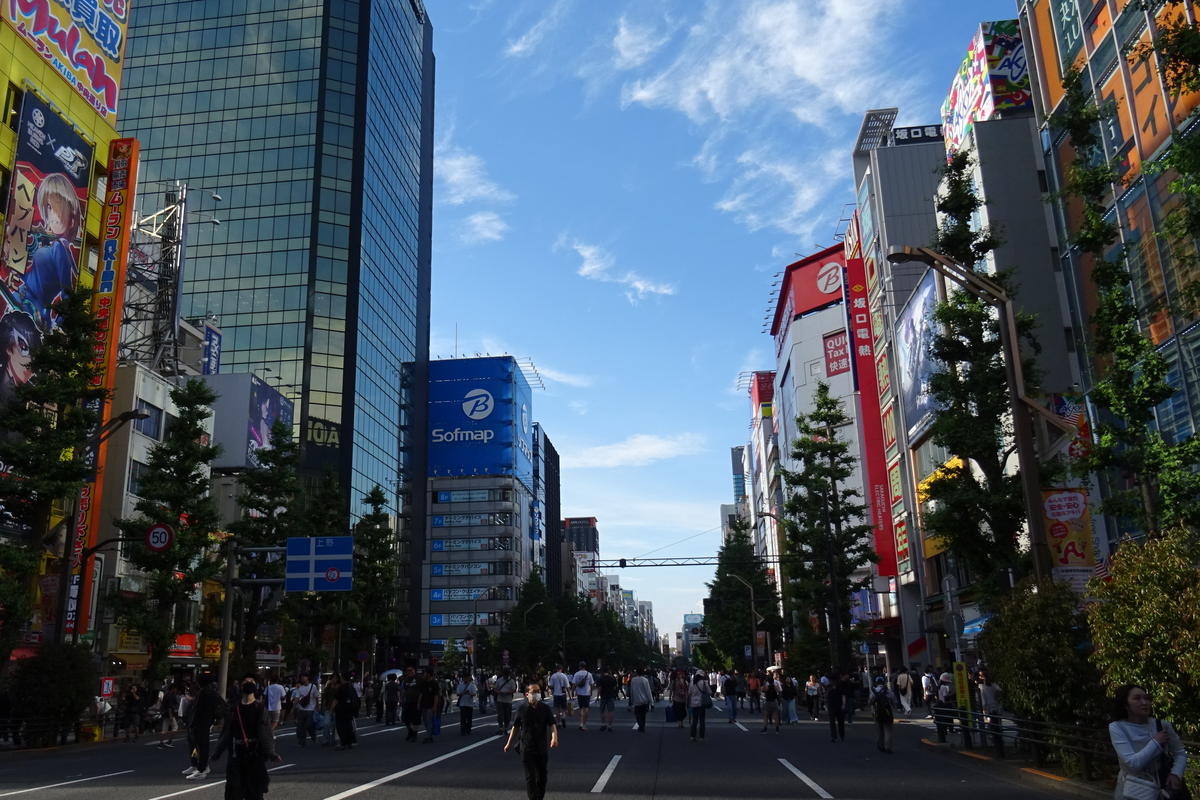
And the Shinkosai walks straight into Akihabara — the timetable annotation for the 5:10 pm stretch reads that the procession parades through Akihabara, a world-famous destination. For readers following our anime pilgrimage map, that is the single most unusual day of the year: the stretch of Chuo-dori you know will have several thousand people in Edo-period dress walking down it.
🔴 But the anime collaboration charms are not currently available. The shrine online amulet catalogue lists fifty-six items, and the words for anime, collaboration, limited edition and the Love Live title return zero matches — the entire catalogue is traditional. Meanwhile the Tokyo metropolitan tourism site still runs a Kanda Myojin page, titled with a Love Live reference, saying collaboration charms and votive tablets are available. That page was last updated on 19 February 2021. Current state: a five-year-old official tourism page versus a current shrine catalogue with nothing on it. ⚠️ There is no official announcement of a discontinuation date for the collaboration items, so this article does not state one.
A small bonus: the shrine keeps a sacred horse named Akari. The FAQ explains that a sacred horse is a horse for the deity to ride, and that during the Shinkosai in May she joined the procession and walked through the parish district. The rest of the time: apart from her two daily walks and a summer break from around July to September, she is in the stable in the precinct and can be visited any time. In other words, she takes July to September off; otherwise she is there.
The 1300th anniversary: the shrine contradicts itself, so this guide draws no conclusions
One last honesty boundary. Kanda Myojin was founded in 730, and the year of its 1300th anniversary is stated inconsistently across two official pages: the dedicated anniversary project site says the shrine will reach its 1300th year in 2030, while the 2017 festival site said the 1300th anniversary would fall in the 41st year of Heisei, which is 2029.
This is not a trivial discrepancy, because 2030 is an even year (off festival) and 2029 is an odd year (main festival) — the two answers point to completely different conclusions about which year to travel. And the shrine has published nothing at all about what it plans to do with the festival in its 1300th year. So this guide states 2030 on the authority of the anniversary site, notes that an older official page said 2029, and refuses to speculate about whether that year will bring a special edition.
Tokyo in May, and standing outside all day
Shinkosai is an all-day outdoor event, running from 5:00 am to 6:20 pm. That makes May weather a feasibility input, not background colour. The Japan Meteorological Agency 1991–2020 normals for Tokyo in May:
| Element | May normal |
|---|---|
| Mean daily maximum | 23.6°C |
| Mean daily temperature | 18.8°C |
| Mean daily minimum | 14.6°C |
| Precipitation | 139.7 mm |
| Relative humidity | 68% |
| Sunshine | 179.6 hours |
| Mean wind speed | 3.1 m/s, from the south |
How to read that: 23.6°C at 68% humidity is the combination where the day is not hot, the evening turns cool, and rain means being wet for the whole thirteen hours. A maximum of 23.6°C means heatstroke is not the risk; but 5:00 am and 6:00 pm will feel meaningfully colder than that figure, and the daily swing is a jacket problem.
The 139.7 mm precipitation figure means more in context: May is already wetter than April at 133.7 mm and drier than June at 167.8 mm — Tokyo is on its way into the rainy season. For an event with no roof and no seating, that is a real exposure.
🚨 And here is a verification gap that has to be stated honestly: the shrine publishes no wet-weather rule for the Shinkosai or the mikoshi parade. The Myojin Noh has one in writing — proceeds in light rain, cancelled in severe weather, decision by noon and posted on the website — but the festival proper has no published postponement or cancellation policy at all. This guide will not extrapolate the Noh rule onto the procession; they are run by different organising structures. Whether the procession runs in rain, and how far, is a matter for official announcements and on-the-ground conditions on the day.
The wet-weather fallback is easy, though, because the shrine location is excellent: Akihabara, Ochanomizu and Jimbocho are all walkable, and indoor options in Tokyo are denser in this pocket of the city than almost anywhere else.
How to actually plan the three days
Everything above, compressed into decisions:
- Confirm the year first, and distrust any source giving firm 2027 dates. 2027 is a main year (because 2026 is the off year, stated in a banner on the shrine front page), but the Shinkosai and parade dates are unpublished. Fastest tell: check whether the festival site footer still says 2025.
- Lock a weekend now, lock a timetable in early April. The five-schedule pattern points at the second weekend of May, but 15 May 2027 is itself a Saturday and that layout has no precedent, so the shrine may arrange things differently. Book flexible.
- Do not chase any tickets. Zero seating, zero sign-ups. The only online action worth taking is watching for the Myojin Noh on-sale date in mid-February if that interests you.
- On the Saturday, pick one end and skip the middle. Either the 7:20 am departure at the shrine (fewer people, ritual and architecture in one frame) or Chuo-dori after 4:20 pm (full procession, Tsukematsuri included). The eight hours between are not worth chasing.
- After 4:20 pm, walk the road towards Akihabara. Nihombashi Mitsukoshi at 4:20 pm, Akihabara at 5:10 pm — same street, both of the shrine flagged highlights in one move.
- Remember Saturday afternoon also has mikoshi arriving. Children mikoshi from 1:00 pm, neighbourhood associations from 4:00 pm — a separate wave from the Sunday federations at 9:00 am. A single-day visitor does not miss everything.
- For ceremony without crowds, consider Masakado Mound at 10:00 am. Not flagged as a highlight, but it is the procession returning to the shrine original ground.
- Do the shrine itself while you are there. Worship is free; the goshuin is ¥500 (pre-written only), the victory charm ¥500, the IT charm ¥1,000; the museum is ¥500 but closed Thursdays and of uncertain current status.
- Pack for May: a jacket and an umbrella. Maximum 23.6°C, 139.7 mm of rain across the month, and no published wet-weather rule for the festival.
If Kanda Matsuri is one day inside a longer Tokyo trip, our five-day Tokyo routing covers how to string the rest together — with one warning specific to this festival: on Shinkosai day, from late afternoon into the evening, Chuo-dori through Akihabara and Nihombashi belongs to the procession. If you had shopping or a museum planned in that pocket, move it.
Three sentences to finish
One: what alternates is the three days on the street, not the festival. The biennial rule comes from a division of labour with the Sanno Matsuri at Hie Shrine in Chiyoda, fixed in the Enpo era — and it survived cancellations in 2011 and 2021 without shifting, because the shrine skipped those editions rather than deferring them. In an off year the Reitaisai, the tea offering and the Myojin Noh all run, including the one ticketed performance.
Two: this festival has no tickets, so the entire value of planning lands on where you stand and when you arrive. No seating, no sign-up, no admission — the only tools the shrine gives you are a timetable and three route PDFs. And the timetable answers its own question: 4:20 pm outside Nihombashi Mitsukoshi is where the whole procession comes together, 5:10 pm is Akihabara Chuo-dori, and both sit on the same road. The Tsukematsuri leaves at 3:00 pm and arrives at 6:00 pm, which means anything you watch before 4:20 pm is an incomplete version.
Three: nobody knows the 2027 dates yet, including the shrine. Five official schedules give a second-Saturday pattern, but 15 May 2027 is itself a Saturday, a layout that has never occurred in a recorded main-festival year, and the last time it came up was 2021 — when the festival was cancelled. Going by past editions, full details go up around early April. Until then, lock the weekend and not the hours.
The closing word belongs to the shrine. A festival that calls itself one of the three great festivals of Japan in five separate places on its own website has its chief priest write, on the greeting page, why it is not on the UNESCO list: regrettably, Kanda Matsuri was not registered, because of the transformation it underwent through disaster. Meiji-era electric wiring took the floats off the streets; a Taisho-era earthquake burned the palanquin that had processed exactly once. It did not lose on fame. It lost because the thing being registered was already gone — and what remains still walks those 30 kilometres, once every two years.
Frequently Asked Questions
- Q1:What are the 2027 Kanda Matsuri dates?
- The shrine has published nothing, and 2027 is a year where even educated guessing breaks down. The dedicated festival site is still showing the 2025 edition — its footer copyright line still reads 2025 — and there is no 2027 entry anywhere in the news feed, the event listing or the shrine blog. Two things are certain. 2027 is a main-festival year, because 2026 is the off year and the shrine says so in a banner on its own front page: the 2026 festival is an off-year festival, so the Shinkosai procession and the portable shrine parade will not be held. And the Reitaisai principal rite has always landed on or near 15 May. What is not certain is which weekend the procession falls on, and this article deliberately refuses to name one. The reason is in section three: the pattern derived from five official schedules collides with a calendar layout that has never occurred in a recorded main-festival year. Judging by past editions, the shrine posts full timings roughly a month ahead, around early April.
- Q2:Why is Kanda Matsuri only held every second year?
- Because it is not alternating with itself — it alternates with another shrine. The official history page states that until the Enpo era it was held annually, then it came to be held in alternate years with the Sanno Matsuri of Hie Shrine in Chiyoda City, and from then until today a two-year cycle became the custom. Edo had two shogunal festivals, and the two shrines split the calendar between them: odd years belong to Kanda, even years to Sanno. That framing matters: read as an internal big-year, small-year rhythm the cycle looks arbitrary, but the official history describes a division of labour, and it is roughly 350 years old. ⚠️ One naming trap: the Sanno Matsuri in question is at Hie Shrine in Nagatacho, central Tokyo. A completely unrelated Spring Sanno Festival runs at a same-named Hie Shrine in Takayama, and it has nothing to do with this cycle.
- Q3:The festival was cancelled in 2011 and 2021 — did that shift the odd-year pattern?
- No, and the shrine documents both cases in its own words. On 2011: the Kanda Matsuri that had been scheduled for May of that year was unavoidably cancelled because of the Great East Japan Earthquake that March, and the festival that followed came after four years. That phrase settles it — the next edition was 2013, meaning 2011 was skipped rather than pushed to 2012. The pandemic gap works the same way: the shrine writes that the festival was unavoidably interrupted for four years because of COVID-19, with the next edition in 2023. Skipped, not deferred, and never swapped with Sanno. So the odd-year rule has now been stress-tested by two separate disasters and survived both, which is why 2027 being a main-festival year is a solid conclusion even without a published date.
- Q4:Is there anything to see in an off year?
- Yes, and this is the most widespread misconception about Kanda Matsuri. The May entry in the shrine official annual calendar for 2026 — an off year — lists the rice-planting rite in early May, the tea offering ceremony and the Myojin Noh on 14 May, and the Reitaisai on 15 May. Nothing about those three is reduced. What alternates is the street half: the Shinkosai procession, the portable shrine parade, the Tsukematsuri floats, and the two preparatory rites that precede them. The sharpest illustration is the ticketing. The single ticketed event in the whole festival — the Myojin Noh, all seats reserved, ¥6,500(B 席(最後列)) to ¥13,500(SU 席) — runs in both year types. Its edition number increments every year regardless. For 2026 the shrine had already announced the full programme including two Living National Treasures, while for 2027 the procession does not yet have a date. The idea that a main year has content and an off year does not is contradicted by the shrine own publishing schedule.
- Q5:Where do I buy tickets or reserved seats for Kanda Matsuri?
- You do not. There are none — the concept does not exist here. Across all sixteen pages of the dedicated festival site, the twenty-three-item shrine FAQ, the annual calendar and the full news archive, the Japanese word for viewing seats appears exactly once, on the tea ceremony page, describing seating set up in the precinct for tea ceremony attendees. There is no pricing, no application process and no sales channel attached to it. Every part of the festival that happens on the street is free, standing-room, first-come. It is worth ranking this against the other big festivals covered here: Gion Matsuri has grandstands but has not published next-year pricing, Hakata Gion Yamakasa publishes prices yet states plainly that no reservations are accepted at all, and Kyoto Gozan no Okuribi simply does not sell seating. Kanda Matsuri is a fourth category: the organisers never designed the option in the first place.
- Q6:Can a visitor join the procession or help carry a portable shrine?
- There is no channel for general visitors — and the precise point is that the shrine has never even raised the possibility. This needs careful wording. The shrine does not prohibit foreign participants, and it does not publish eligibility rules the way Hakata Gion Yamakasa does. The situation is that three separate official entry points return nothing: sixteen festival pages, twenty-three FAQ items and the annual calendar contain no mention of open participation, carrier recruitment or applications. Portable shrines are consistently described by neighbourhood parishioner association, and the Tsukematsuri participants are all named organisations — Tokyo University of the Arts, local primary schools, a Chiyoda scout troop, a traffic-safety youth corps, a fire-brigade youth corps. Carrying a mikoshi runs through a parishioner association, and that is not something a traveller signs up for online. Treat any tour advertising participation as unverified.
- Q7:Is Kanda Matsuri really one of the three great festivals of Japan?
- The shrine claims it in at least five places, so yes — but copy the shrine framing, not the shorthand. The history page says that throughout the Edo period it was counted among the three great festivals of Japan and the three great festivals of Edo. The schedule page opens by calling it one of the three great festivals of Edo. The shrine home page repeats both. The chief priest greeting calls it one of the three great festivals of Japan representing Edo and Tokyo. Even the 2009 archived festival site was titled around the phrase. Two boundaries matter. First, the wording is historical — it was counted among them during the Edo period, which is not a designation by any modern body. Second, and this surprises people: the shrine never names the other two anywhere on its own site. Do not fill in Gion Matsuri and Tenjin Matsuri on its behalf.
- Q8:Is Kanda Matsuri on the UNESCO intangible heritage list?
- No, and the source for that is the chief priest of the shrine himself. His greeting page states that in 2016 UNESCO registered thirty-three Japanese float festivals as intangible cultural heritage of humanity, and then: regrettably, Kanda Matsuri was not registered, because of the transformation it underwent through disaster. That is the opposite of the situation covered in our Takayama Matsuri guide, where the point is that the listing covers thirty-three float rituals collectively rather than Takayama alone. Here the festival is simply absent. And the phrase about disaster is literal, not rhetorical: the shrine history records that the festival month moved from September to May in 1892, that recession plus overhead electric wiring forced the tall floats off the streets, that the two portable shrines were consolidated into a single great phoenix palanquin in 1922, and that this palanquin burned in the 1923 Great Kanto Earthquake after processing exactly once. The floats that the UNESCO listing is built around no longer existed.
- Q9:Can I buy the anime collaboration charms at Kanda Myojin?
- Not one of them appears in the current official charm listing. The shrine online amulet catalogue currently carries fifty-six items plus the goshuin stamp, and searching it for the words for anime, collaboration, limited edition and the Love Live title returns zero matches — everything on offer is a traditional amulet. Meanwhile the Tokyo metropolitan tourism site still runs a Kanda Myojin page whose title references Love Live and whose text still says collaboration charms and votive tablets are available. That page was last updated on 19 February 2021. So the current state of affairs is a five-year-old official tourism page against a current shrine catalogue with nothing on it. ⚠️ There is no official announcement of a discontinuation date for the collaboration charms, so this article does not state one. What you can actually buy: the IT protection charm at ¥1,000(初穂料), the victory charm at ¥500(初穂料(鑰匙圈型/紙包同價)), and a catfish charm for disaster protection at 1,000 yen. Anime content now lives in the museum special exhibitions, not in the permanent catalogue.
- Q10:Will they write the goshuin stamp into my stamp book?
- No — the shrine states this in three languages. Its online amulet page carries the English line that they provide stamped-papers and that handwritten stamps are not available, and the Chinese version says the same thing. You receive a pre-written slip, not brushwork in your own book. The offering is ¥500(御朱印(書き置き)). Worth knowing before you plan, because if you are working through a goshuin collecting route and expecting ink to land on your page, Kanda Myojin will be a letdown. Ordinary worship itself is free and the precinct is open — the shrine FAQ is unusually relaxed about it, saying that a shrine is an open place and you may enter from any direction to pray. If you want the full sequence, see our shrine visiting etiquette walkthrough.