Kansai International Airport (KIX) sits on a man-made island 50 kilometers southwest of Osaka, 100 kilometers from Kyoto. Five different routes connect it to the city, and the classic first-timer mistakes are predictable: missing the last HARUKA by minutes, queuing for a taxi in the rain at 2am, or wrestling an oversize suitcase onto a packed rush-hour local train.
But the real problem isn't the journey itself—it's that first-time travelers often make it harder than it needs to be. You might spend an extra ¥3,000 and 90 minutes because you didn't know about the HARUKA + ICOCA combo ticket. Or you might refuse to spend ¥5 more on the express train and end up stressed in a packed local line with three large bags.
This guide cuts through the confusion. I've tested every major option and laid out exactly which one suits your situation. Most importantly: you're not trying to save ¥200. You're trying to start your vacation on the right foot.
- HARUKA Express — Fastest choice (30 min to Osaka). Comfortable, spacious, reliable. ¥1,820 standalone; foreign tourists can grab the WEST QR digital fare to Kyoto for just ¥2,200 — the cheapest official option. Want a physical ICOCA card too? KKday/Klook still bundle one with a HARUKA ticket (~¥3,200; the official ICOCA/HARUKA combo ended Sept 2023).
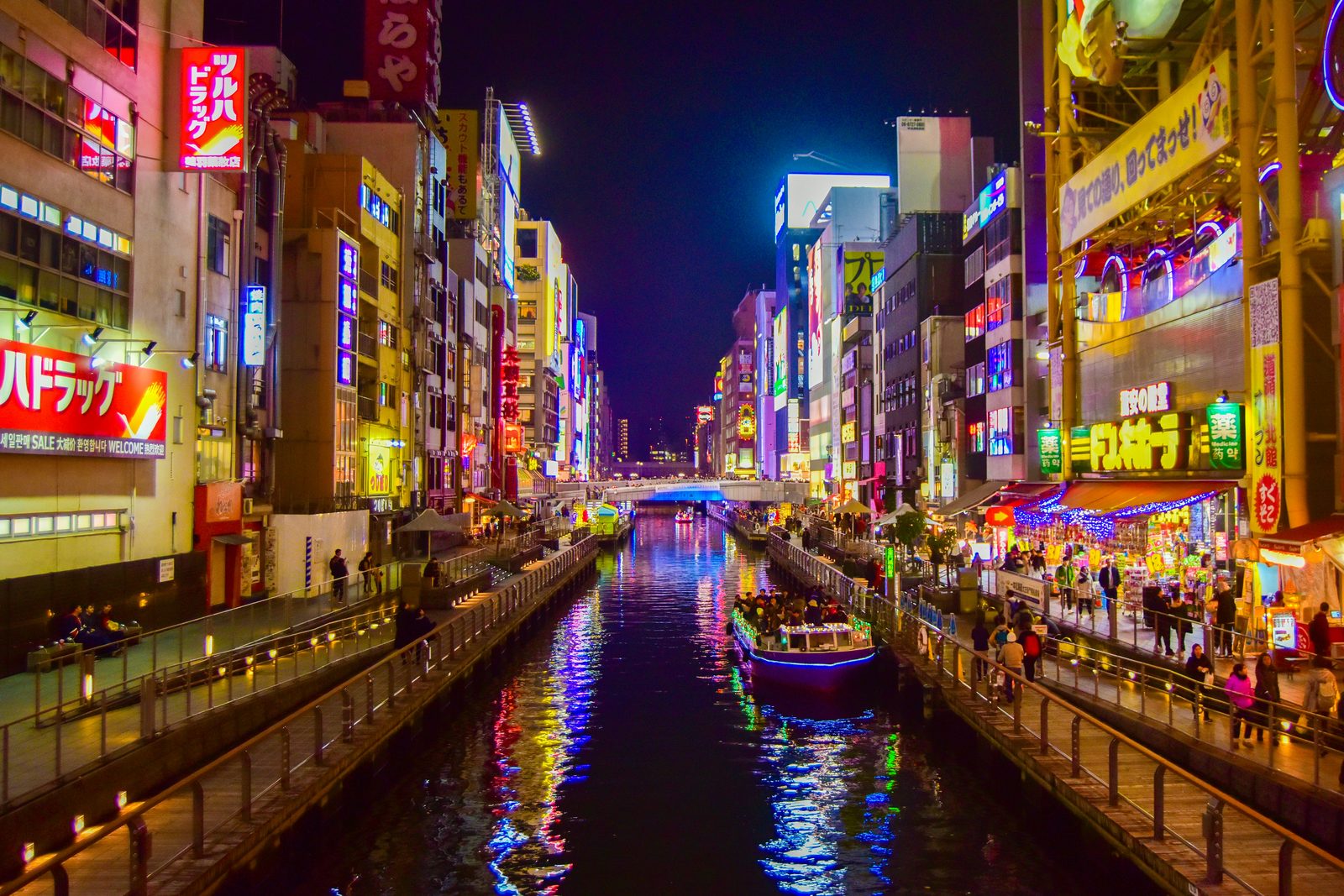
- Nankai Rapi:t — 34 minutes to Namba; retro-futuristic design. Every seat is reserved, so peak departures sell out rather than fill up standing. Good if you're staying in the Dotonbori/Shinsaibashi area.
- Nankai Airport Express — Cheapest (¥970), but 43 minutes and always crowded. Only pick this if you're on a strict budget and have light luggage.
- Airport Bus — Direct to your hotel door. Best for families, large groups, or anyone with mountains of luggage.
- Taxi/MK Shuttle — Only necessary for late-night arrivals (past 10pm) or groups of 3+ splitting costs.
📖 Table of Contents
- About Kansai Airport
- HARUKA Express: The Standard Choice
- Nankai Rapi:t: Design & Speed
- Nankai Airport Express: Budget Option
- JR Airport Rapid: Why We Don't Recommend It
- Airport Bus: Luggage-Friendly Direct Service
- Taxi & Shuttle Services
- Complete Comparison Table & Decision Tree
- The ICOCA Card Explained
- Luggage Forwarding Services
- Common Mistakes & How to Avoid Them
- Frequently Asked Questions
About Kansai Airport
Kansai International Airport opened in 1994 and remains the primary international gateway for western Japan. Located on a reclaimed island, it's relatively isolated — there's no highway connection that lets you drive straight into the city. Instead, everyone takes rail, bus, or cab.
The airport has two terminals. Terminal 1 (south) is where most flights arrive, including nearly all Taiwan-bound aircraft. Terminal 2 (north) primarily handles domestic routes and some low-cost carriers. Your airline confirmation will specify which terminal. If you're uncertain, Terminal 1 is the safer bet.
HARUKA Express: The Standard Choice
HARUKA (遥か, "distant") has been the premier airport-to-city train since KIX opened, and it is the default recommendation for a reason: it actually lives up to the hype.
Routes, Time & Cost
| Destination | Travel Time | Fare |
|---|---|---|
| Tennoji (south Osaka) | 30 min | ¥1,820 |
| Shin-Osaka (Shinkansen hub) | 50 min | ¥2,540 |
| Osaka (Umeda — Umekita underground platforms) | approx. 50 min | same band as Shin-Osaka |
| Kyoto | 75 min | ¥3,430 |
If you are staying in Umeda, ride straight to Osaka Station — no change at Tennoji or Shin-Osaka. The Umekita underground platforms at Osaka Station opened on 18 March 2023, and HARUKA and Kuroshio have called there ever since; JR West's announcement says so verbatim, with roughly 30 services each way per day. ⚠️ Those platforms sit underground and some distance from Osaka Station's original ones, so allow time if you are connecting.
HARUKA skips the minor stations, which is why it's fast. Trains run every 30 minutes throughout the day. Seats are reserved (included in your ticket), meaning you always have a guaranteed seat — crucial after 11 hours of flying. The train is relatively modern, with spacious luggage racks and power outlets at every seat.
HARUKA + ICOCA: the official combo ended — here's what to buy now
One change that is easy to miss: JR West's official "ICOCA/HARUKA" counter combo was discontinued on September 30, 2023 (per JR West's official press release). The cheapest official option for foreign tourists now is the "WEST QR HARUKA" digital ticket — just ¥2,200 one-way to Kyoto, scanned straight from your phone, cheaper than a standalone reserved seat.
Can you still get a "HARUKA + ICOCA" bundle? Yes — but it's now a third-party bundle from platforms like KKday and Klook (a discounted HARUKA ticket plus a ¥2,000 ICOCA card), not JR's own product. It's worth it only if you actually want a physical ICOCA card to tap around Kansai: buying separately at the airport runs ¥3,740, the online bundle ~¥3,000–3,200. If you just want the cheapest fare and no card, use the WEST QR digital ticket.
ICOCA is the regional equivalent of a Suica card. It works on all JR trains (except JR West limited express), most private railways, subways, buses, and even convenience stores and vending machines across Kansai. The card comes with ¥1,500 of usable credit (the other ¥500 is a non-refundable card fee).
Book HARUKA + ICOCA Online
Cheaper than airport purchase. Pick up your tickets at KIX upon arrival.
Book HARUKA Tickets →What If You Have a JR Pass?
HARUKA is included in both the national JR Pass and the Kansai Wide Pass. If you've already purchased either one, you don't pay extra — just show your pass at the station and board. No separate ticket needed. This is one of the reasons JR Pass holders often say it paid for itself immediately.
Nankai Rapi:t: Design & Speed
While HARUKA is the utilitarian workhorse, Nankai's Rapi:t is the design statement. Run by the private Nankai Railway (not covered by JR Pass), this train has won design awards for its retro-futuristic aesthetic — it looks like someone's vision of the future from 1998, and it's somehow still cool today.
Route, Time & Cost
Rapi:t terminates at Namba in 34 minutes. Every seat is reserved, and the fare is the ¥970 base fare plus a limited-express charge: ¥1,670 for a Regular Seat, ¥1,880 for a Super Seat (Nankai's own table lists the surcharges as ¥700 and ¥910; children ¥350 and ¥560). Namba is in the middle of Osaka's most vibrant district — Dotonbori's neon and chaos are within walking distance. If your hotel is in Namba, Shinsaibashi, or around the Namba area, this is genuinely more convenient than HARUKA + a transfer.
The Peak Hour Caveat
Here's the honest caveat, and it is not the one you would expect: Rapi:t has only 6 cars and 252 seats, and mid-morning departures do sell out. But because the whole train is reserved seating, selling out means you cannot board at all — there is no standing option, and no ticket without a seat. Arriving after about 3pm, you'll usually walk up and get one.
The two seat classes differ by ¥210, not ¥610. A Super Seat (¥1,880) is one of just 54 seats in the 252-seat train: three-abreast, 1,200mm pitch, 485mm wide. Worth it with bulky luggage or if you want to doze; otherwise the Regular Seat is fine. The cheapest official channel is the Rapi:t Digital Ticket at ¥1,410, ¥260 below the walk-up fare. Buying the express ticket onboard instead costs ¥300 extra — the worst way to do it.
Nankai Airport Express: Budget Option
Same destination (Namba) as Rapi:t, but half the speed and half the appeal. Airport Express stops at multiple stations, takes 43 minutes, and is genuinely cramped during rush hour. No reserved seats.
Cost: ¥970. That's ¥700 less than a Regular Seat on Rapi:t — the two run on the same track and the same base fare, so the gap is purely the limited-express charge. For backpackers, budget travelers, or anyone arriving in the early afternoon with one carry-on, this is sensible. For everyone else, ¥700 buys 9 minutes and, more importantly, a guaranteed seat: the Airport Express has none.
JR Airport Rapid: Why We Don't Recommend It
JR also runs trains from KIX. The Airport Rapid goes to Osaka Station (65 minutes, ¥1,210) — slightly cheaper than HARUKA. But here's the catch: Osaka Station is on the north side of the city, away from where most tourists stay. You'd then need to transfer to the Yamanote loop line or take a taxi, adding 20 minutes and negating the time savings.
If you happen to be staying near Umeda (the Osaka Station area) and already have a JR Pass, sure, take it. Otherwise, skip it.
Airport Bus: Luggage-Friendly Direct Service
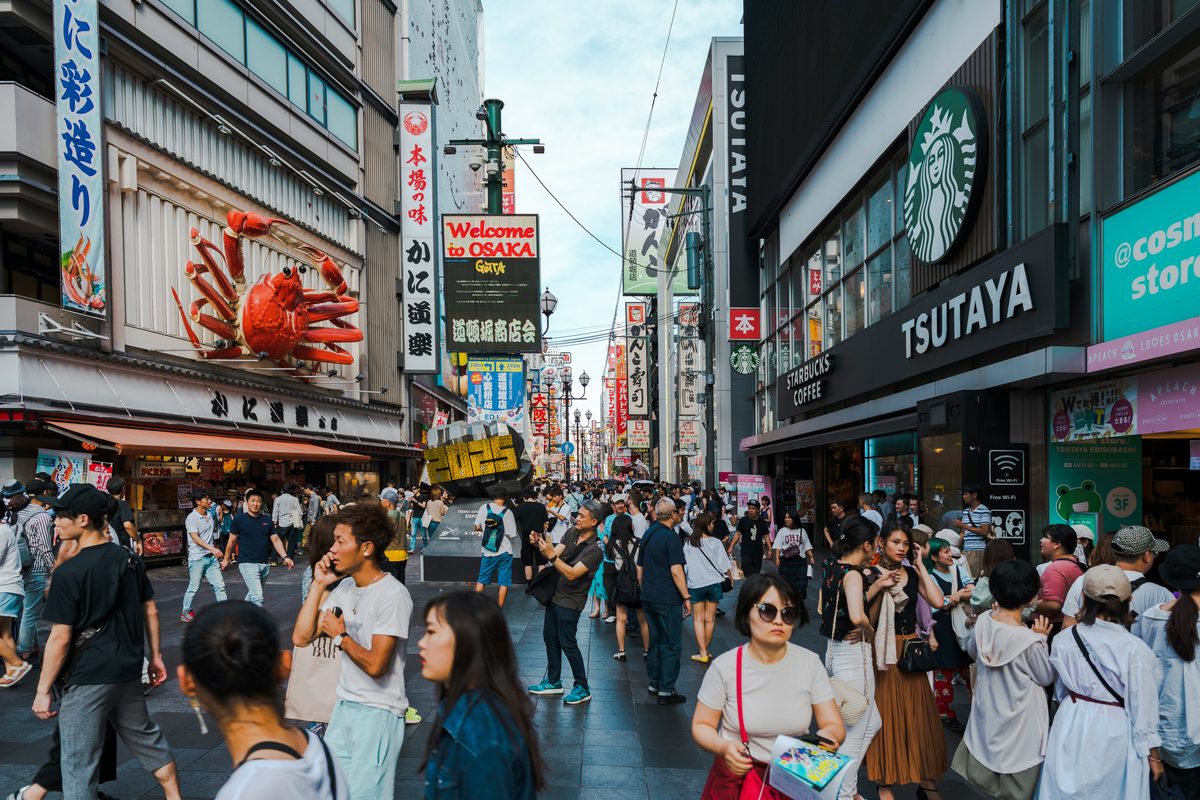
If you're traveling with a family, have more than three large bags, or simply can't face the train, airport buses go directly to major hotels throughout Kansai. No transfers, no luggage juggling, no navigation.
Operators & Typical Routes
Multiple companies operate from KIX (Limousine Bus, Airport Bus, Kobe Bus). Typical fares range from ¥2,500 to ¥3,000 depending on destination: ¥2,600 to Namba, ¥2,500 to Umeda, ¥2,850 to Kyoto Station, ¥2,800 to Kobe Sannomiya.
Pros & Cons
Pros: Direct to hotel. Drivers load/unload luggage for you. No navigating stairs or transfers. Cheaper than taxi. Reservations can be made online ahead of time.
Cons: Buses run every 30–60 minutes (vs. trains every 15–30 min). If your flight arrives between bus schedules, you wait. Peak hour traffic can add significant time. Not all small hotels accept luggage unloading.
Taxi & Shuttle Services
Arriving after 10pm? Most trains stop by then. Your options narrow to taxi or shuttle.
Taxi
A traditional taxi from KIX to central Osaka costs ¥15,000–20,000 for up to 4 passengers. Sounds expensive? If you're a group of 3–4 people, divide that cost by 3–4 and the per-person rate becomes competitive with trains + transfers. Plus, it's direct to your door.
Critical tip: Have your hotel address written in Japanese or saved on your phone's Google Maps (in Japanese). Taxi drivers speak minimal English.
MK Shuttle (Shared Shuttle)
A middle ground between public transit and private taxi. MK Shuttle is a shared van service (4–5 passengers max) that runs 24/7 with advance reservation. Costs around ¥2,500 per person for KIX to Namba — cheaper than taxi, more flexible than scheduled buses.
Good for odd arrival times (like 1am) when trains aren't running.
Complete Comparison Table & Decision Tree
| Option | Destination | Time | Cost | Luggage | Transfers | Last Train | Best For |
|---|---|---|---|---|---|---|---|
| HARUKA | Tennoji / Osaka (Umekita) / Shin-Osaka / Kyoto | 30–75 min | ¥1,820–¥3,060 | ✅ Ample space | Tennoji needs loop-line transfer | 21:33 | Most travelers / Best value |
| Nankai Rapi:t | Namba | 34 min | ¥1,670 | ⚠️ Crowded peak hours | Walking distance to Dotonbori | 23:08 | Afternoon arrivals / Namba area |
| Airport Express | Namba | 43 min | ¥970 | ❌ Very crowded | Walking distance to Dotonbori | 00:17 | Budget travelers / Light luggage |
| JR Airport Rapid | Osaka Station | 65 min | ¥1,210 | ⚠️ Moderate | Needs transfer to reach hotels | 23:13 | Umeda hotels / JR Pass holders |
| Airport Bus | Hotel door | 45–90 min | ¥2,500–3,000 | ✅✅ Best | None / Direct | Scheduled routes (last ~8pm) | Families / Large groups / Heavy luggage |
| Taxi | Any address | 50–90 min | ¥15,000–20,000 | ✅✅✅ Spacious | None / Door-to-door | 24/7 | Late arrivals / Groups / No Japanese |
Quick Decision Tree
- Afternoon arrival + Osaka + 1–2 bags → HARUKA (WEST QR digital fare, or the third-party ICOCA bundle if you want a card)
- Afternoon arrival + living in Namba + light luggage → Nankai Rapi:t
- Afternoon arrival + minimal budget + solo traveler → Airport Express
- Afternoon arrival + family or 3+ large bags → Airport Bus
- Arriving after 10pm → Taxi or airport hotel
- Plan includes Kyoto → HARUKA direct (75 min) is worth every yen; once there, our getting around Kyoto guide covers the buses, subway, and Randen tram
- Heading straight to Kobe or Himeji → take a limousine bus direct to Kobe Sannomiya, or ride JR via Osaka and the Special Rapid out to UNESCO Himeji Castle
- Have a JR Pass → HARUKA is free; just show your pass
Book Airport Transport in Advance
Reserve HARUKA, Nankai Rapi:t, or airport bus tickets online. Cheaper than airport counters, and one less thing to worry about on arrival day.
Compare Options →The ICOCA Card Explained
ICOCA (イコカ) is the regional transit card for Kansai, issued by JR West. It costs ¥2,000 at purchase: ¥1,500 is usable credit, ¥500 is a non-refundable card fee. You can reload it at convenience stores, train stations, or vending machines throughout Kansai.
Where to Buy
- At KIX airport: Ticket machines, convenience stores (Family Mart, Lawson), or station windows. Fastest and most convenient.
- Online before you travel: Buy HARUKA + ICOCA combo ticket via KKday or Klook; pick it up at the airport.
- In the city: Any convenience store or JR station in Osaka, Kyoto, or Kobe.
What It Works On
- All JR trains in Kansai (except JR West Express trains)
- Most private railways (Kintetsu, Keihan, Hankyu, Hanshin)
- Subways and buses in Osaka, Kyoto, Kobe
- Convenience stores and restaurants with a Suica/Pasmo logo
- Many vending machines
It's essentially a region-wide pass that eliminates the need for individual tickets. If you're staying more than a few days, it saves you constant trips to ticket machines. For how ICOCA compares to Tokyo's Suica and PASMO and whether they're interchangeable, see our Japan IC card guide.
Refunding the Card
When you leave Japan, you can refund the ICOCA at KIX airport (station windows or machines). The airport will deduct ¥220 as a processing fee. If your card has ¥50 or less, refund may not be possible — but honestly, ¥50 is worth spending on a final vending machine drink rather than going through the hassle.
Luggage Forwarding Services
Arriving with three suitcases and starting your trip in tight, crowded trains? You don't have to.
How It Works
Companies like Yamato (Kuroneko) and Sagawa operate luggage forwarding desks at KIX. You can send one or more bags to your hotel (or any address in Japan) and they'll arrive the next morning. Cost: roughly ¥2,500–3,000 per bag.
The Logic
After 11 hours on a plane, your arms are tired and your patience is thin. Paying ¥2,500 to avoid wrestling a 28-inch suitcase through a crowded Osaka train is a bargain on your sanity. You arrive at your hotel light and fresh. Your bags are waiting when you return that evening.
I'd recommend this service if: (a) you're arriving after 8pm, or (b) you have more than 2 large bags, or (c) you're traveling with young children. For everyone else, it's optional luxury.
Common Mistakes & How to Avoid Them
Frequently Asked Questions
- Q1:Do I need to reserve HARUKA seats in advance?
- No. Seats are always available at the airport window, even on holidays. You can buy a ticket and board within 30 minutes. The only time to pre-book is if you want to guarantee a specific train time.
- Q2:What if my luggage weighs more than 30 kilograms?
- Japanese trains don't have weight limits, just space constraints. If you can physically lift it onto the rack, it's fine. That said, if you have more than 3 bags or weights that make you uncomfortable, the airport bus is genuinely easier.
- Q3:How do I pick up my pre-booked HARUKA tickets at the airport?
- Find a ticket counter or machine in Terminal 1 (south wing, first floor). Show your booking reference or email confirmation. They'll give you the physical ticket and ICOCA card. Takes about 5 minutes. Walk directly to the train platform and board.
- Q4:Can I use ICOCA to buy things at convenience stores before I leave the airport?
- Yes. Convenience stores in the airport terminals accept ICOCA. Grab a drink or snack before boarding — it's a good way to start using the card.
- Q5:On the way back to the airport, do I use the same route?
- Yes. The same trains (HARUKA, Nankai) run in reverse. If you used HARUKA to enter the city, take it back to the airport. You can use your remaining ICOCA balance for the trip and then refund the card at the airport.
Still need a hotel? Browse Osaka & Kyoto on Trip.com
Once you've picked your transport, book accommodation near your arrival station — Namba, Umeda, or Kyoto Station.
Search Osaka Hotels → Search Kyoto Hotels →A Final Word
Transport is not the interesting part of your trip. The interesting part is what happens after you arrive. So spend the extra ¥1,000 to avoid stress, fatigue, and luggage drama. Take HARUKA. Sit by the window. Watch the city materialize. Arrive refreshed. Start your vacation properly.
That's what these trains exist for.
Next Reads
Osaka & Kyoto 5-day itinerary
Dotonbori, Kiyomizu, Arashiyama — full tested route.
USJ Express Pass + Nintendo World guide
Express 4 vs 7 compared, timed-entry tickets explained.
Best eSIM for Japan 2026: 5 Brands Compared
Airalo, Ubigi, KKday, Holafly and Jetfi compared on coverage, price and speed. Honest ranking.