Karuizawa is the easiest highland escape to reach from Tokyo — the Hokuriku Shinkansen puts it about 60 minutes from Tokyo Station, and you step off into a cool forest town sitting near 1,000 meters above sea level. It has been a summer retreat since the Meiji era, when foreign missionaries and Japanese elites came to escape the heat, leaving behind rows of churches, villas, and Western-style cafes. Today it also has a 200-plus-store outlet mall right next to the station. This guide covers Kumoba Pond reflections, Shiraito Falls, Kyu-Karuizawa Ginza, the Hoshino-area churches and Harunire Terrace, the Onioshidashi lava park and Mount Asama, the cycling culture, and transport and lodging — and it tells you who should day-trip and who should stay a night. For more Chubu mountain ideas, see our Takayama (Hida) guide.
- 60 minutes from Tokyo: the Asama Shinkansen makes a day trip easy, but a night is more rewarding
- Kumoba Pond reflections: foliage peaks mid-Oct to early Nov; a dawn loop runs about 20 minutes
- The Prince outlet is at the station: a 3-minute walk from the south exit, 200+ stores, best done last
- Two Hoshino-area churches: the Stone Church and Kogen Church — visits pause for weddings, so check ahead
- Shiraito Falls and Onioshidashi sit far out; drive or hire a car. Onioshidashi admission is about ¥650
📖 Contents
Why visit Karuizawa
Honestly, Karuizawa is not the kind of place where the sights overflow and three days are not enough. What it sells is cool air, forest, and pace. The altitude keeps it several degrees cooler than Tokyo in summer, and that has been its core appeal for over a century — a Canadian missionary named Shaw brought the foreign community here in the Meiji period, and villas, churches, and tennis courts followed, until even the imperial family summered here. The Karuizawa you see today is still, at heart, a place to slow down, walk, and breathe the forest.
So the right way to enjoy it is not to chase a checklist but to let the rhythm drop: rent a bike in the morning and roll through the leafy lanes of old Karuizawa, linger at a Harunire Terrace cafe at midday, hit the outlet in the afternoon, then catch the Kumoba Pond reflection at dusk. My advice is blunt: if you only want shopping and the pond, a day trip from Tokyo is enough; if you want the real slowness, a night pays off — the empty pond at dawn and the lit-up churches at night are scenes day-trippers never see. Season-wise, summer is for the cool, mid-October to early November is for foliage, and winter brings illumination and skiing, each with its own draw. For pre-trip weather and packing, read our Japan packing and weather guide first — even in summer, Karuizawa mornings and evenings run cool, so bring a light jacket.
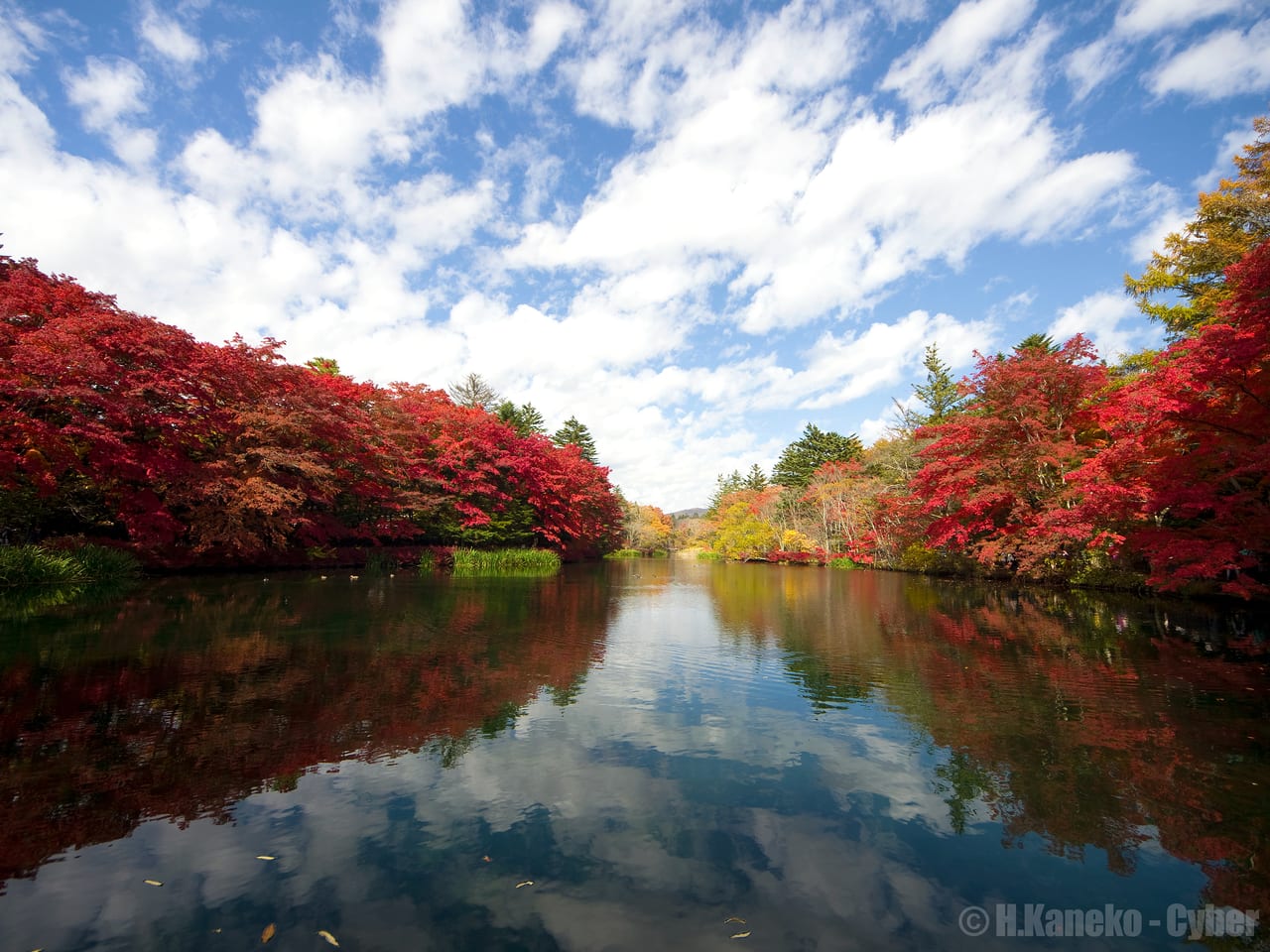
Kumoba Pond & Kyu-Karuizawa Ginza
Both sit within walking or cycling distance of the station, form the core of the town center, and slot neatly into the same half-day.
Kumoba Pond is Karuizawa’s most famous water feature, about a 20-minute walk from the station or a quick taxi ride away. Summering foreigners once nicknamed it "Swan Lake" because swans fly in for the winter. The pond is small, and the loop trail circling it runs about 20 minutes, with trees mirrored in the calm water; on a windless morning you get an almost perfect reflection. In autumn — per local foliage data, roughly mid-October to early November — the maples and rowans turn, and it becomes a photographer’s favorite; in early-summer green it is just as fresh and easy to walk. To dodge the crowds, go right around opening time, when the light is soft and the visitors have not arrived.
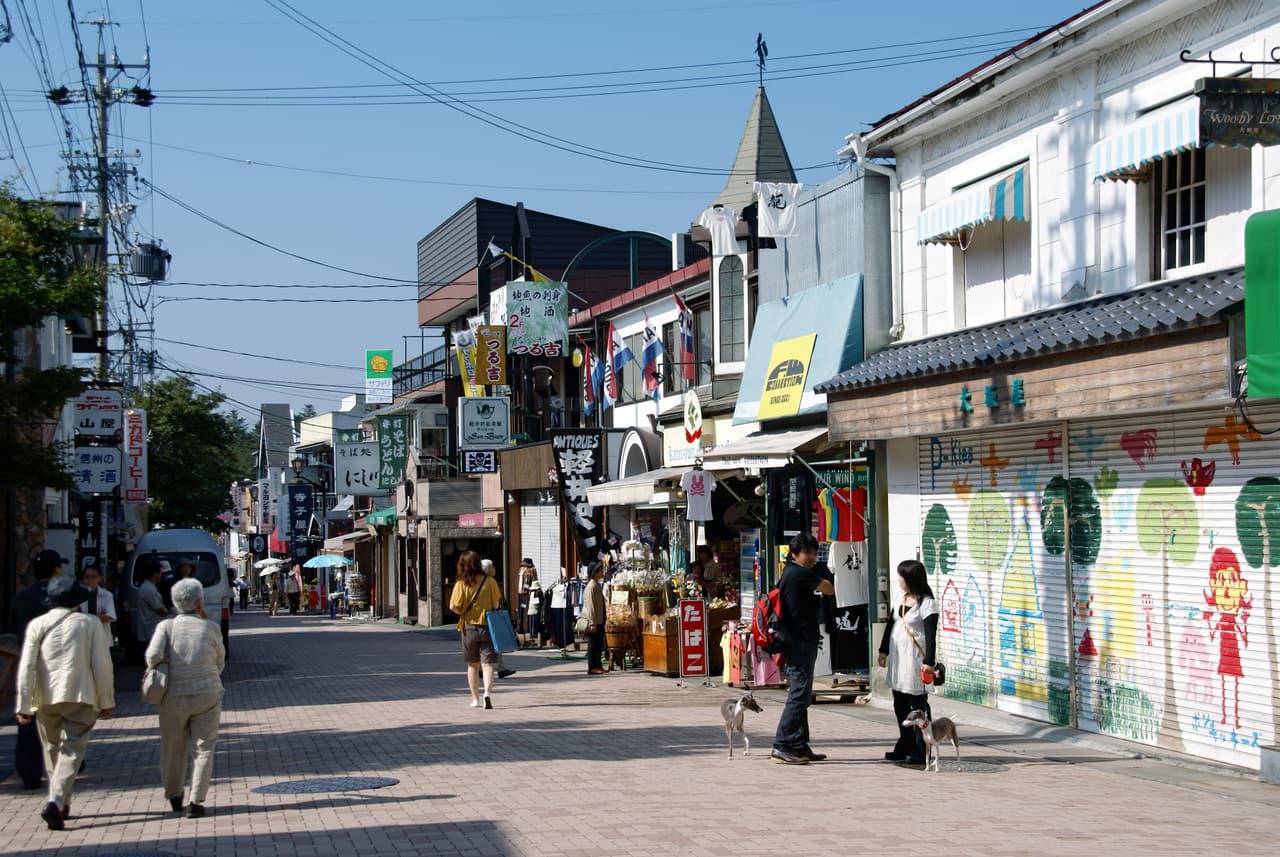
Walking north from the pond brings you to Kyu-Karuizawa Ginza, the town’s old main street, lined with souvenir shops, bakeries, jam stores, cafes, and Western-style goods. Karuizawa’s jams and Western pastries are local specialties — a legacy of the foreign food culture brought here a century ago — so sampling as you walk and buying a few jars of jam as gifts is the classic move. At the far end, paths into the woods lead to St. Paul’s Catholic Church and the Shaw Memorial Chapel among other old buildings. This stretch is ideal to cover slowly by rental bike, with comfortable leafy lanes — cycling is one of Karuizawa’s best-known activities.
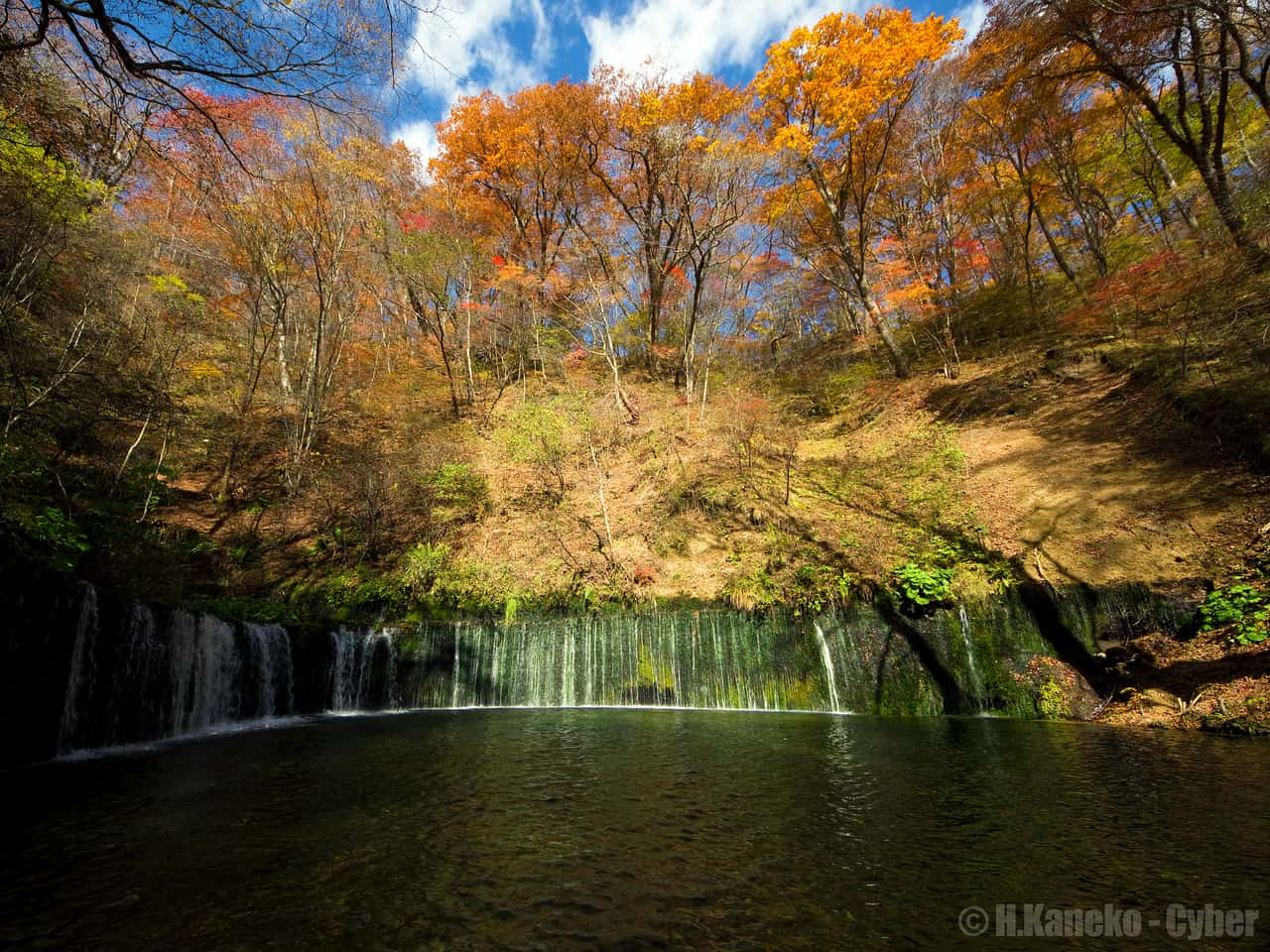
Shiraito Falls
Shiraito Falls (Shiraito-no-taki) sits further from the station but is well worth the trip. It is about 70 meters wide, and the water does not plunge from a single point but seeps down a curved rock face like countless white threads — hence the name, "white threads." It is a spring-fed waterfall, so the flow is steady and cool year-round: standing before it in summer feels like natural air conditioning, autumn brings foliage around it, and some winter periods add night illumination.
For planning: Shiraito Falls is on the mountain road toward Kusatsu (along the Shiraito Highland Way), well out of town, easiest reached by car or the Seibu sightseeing bus (which is infrequent, so check the return timetable before you go). Photographing it and walking the short path takes about 30–40 minutes — no need to over-allot. Because it shares the northern mountains with Onioshidashi and Mount Asama, chaining all three by car in one day is the most efficient routing, leaving the walkable town sights for a separate half-day.
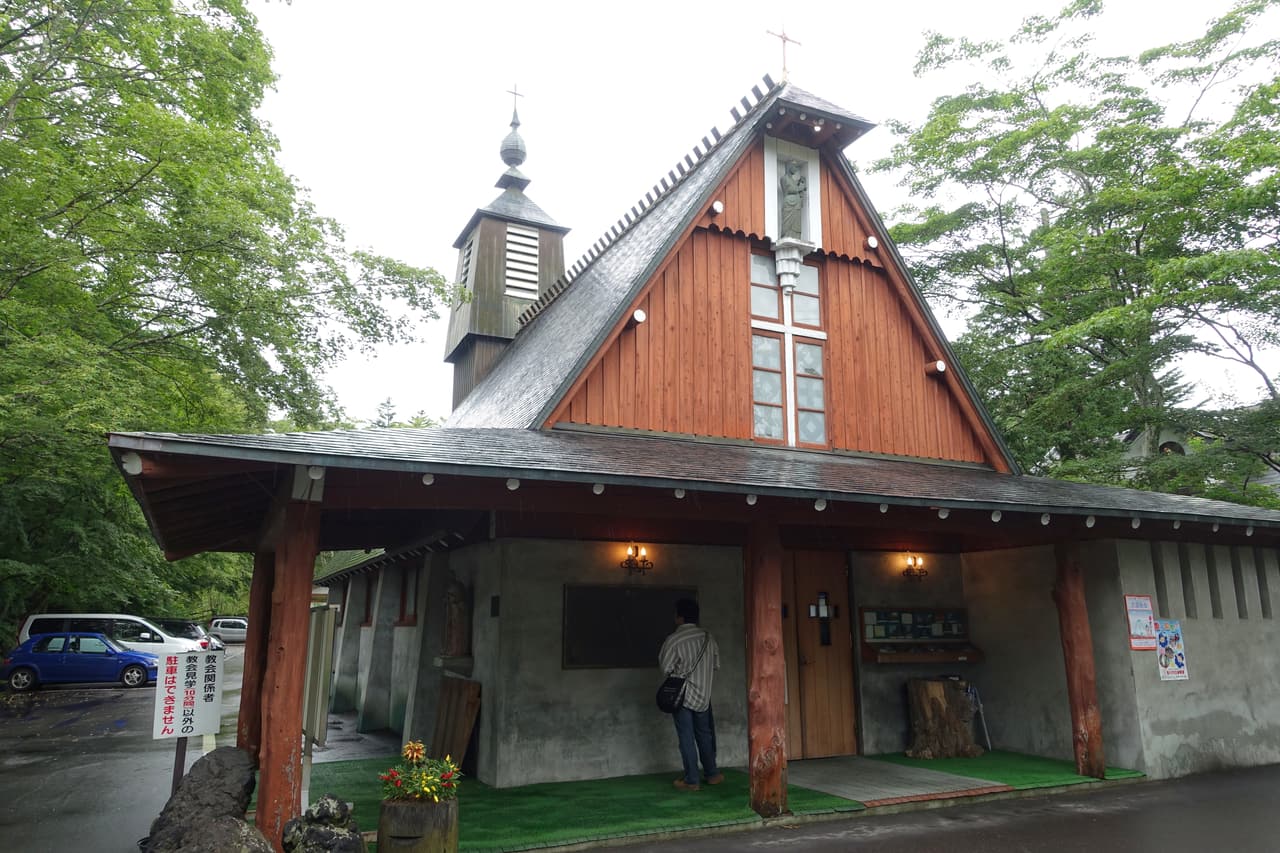
Hoshino-area churches & Harunire Terrace
Karuizawa’s churches are its most distinctive face. Carried over from the Meiji-era retreat culture, these are not decorative props but real venues for worship and weddings. The two most worth seeing are in the Hoshino area (Karuizawa Hoshino), sitting next to each other across the Hoshino resort:
- The Stone Church (Uchimura Kanzo Memorial Hall): per official information, it was built to honor the Meiji- and Taisho-era Christian thinker Uchimura Kanzo, made of interwoven curves of stone and glass that fuse Uchimura’s "non-church" philosophy with architect Kendrick Kellogg’s organic architecture — a rare building worldwide. Viewing runs roughly 9:00–18:00, but visits pause during weddings, so check the day’s notice first.
- Karuizawa Kogen Church: it traces back to a 1921 "free arts education seminar" that gathered cultural figures such as the poets Kitahara Hakushu and Shimazaki Toson, making it a wooden, triangular-roofed church with real historical depth. Its winter illumination and Christmas atmosphere are especially well known.
One reminder: these are living churches, not photo sets. Keep your voice down, do not interrupt a ceremony in progress, and follow any on-site rules on photography.
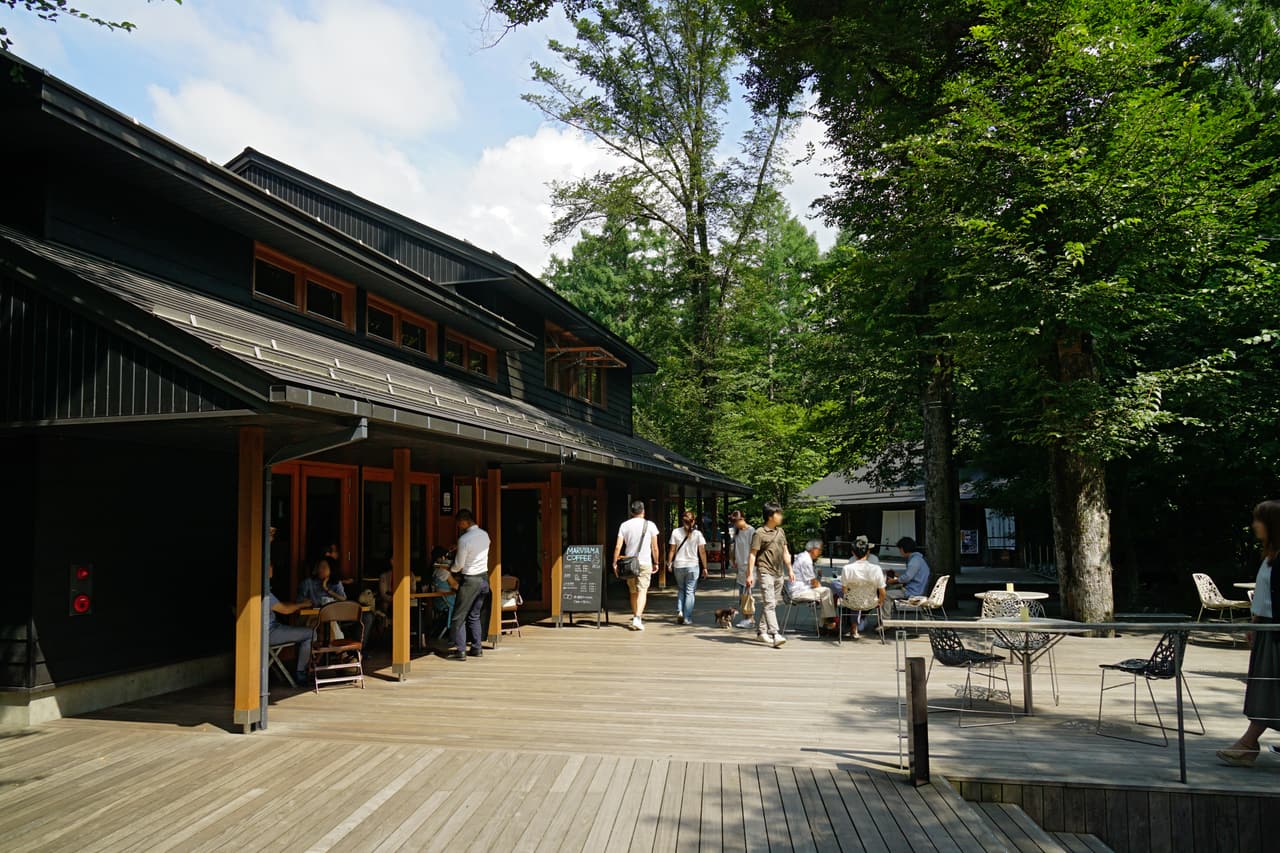
Right beside the Hoshino churches is Harunire Terrace, a little forest street of cafes, restaurants, select shops, and a bookstore connected by wooden decks under a grove of Japanese elm (harunire) along the Yukawa stream. It runs on a slow "everyday Karuizawa" tempo and is the ideal place to sit with a coffee and the sound of the stream after a morning of sights. My suggestion is to make the Hoshino area — the two churches plus Harunire Terrace — a half-day forest block, kept separate in time from the town’s Kumoba Pond and old Ginza so you are not crisscrossing back and forth.
The Prince outlet & cycling
The Karuizawa Prince Shopping Plaza is one of the most conveniently located outlets in Japan — it sits right outside the station’s south exit, about a 3-minute walk, with no transfer or shuttle needed. Per official information, it is an open-air, forest-style shopping village with more than 200 stores, from luxury brands and popular fashion to outdoor and sports gear and homeware, spread across grounds large enough to hold lawns and a pond where you can rest between shops.
A practical tip: slot the outlet in as your last stop before the return train — finish shopping, then wheel your bags straight into the station for the smoothest routing. Peak periods (Golden Week, summer, foliage weekends) draw crowds, so for the best discounts, avoid weekend midday and go early or late instead. To check brand stock, compare prices, or work out which shops handle tax-free, set up an unlimited eSIM before you fly so it works the moment you land — a KKday Japan eSIM, scan the QR and connect, no hunting for Wi-Fi at the outlet.
⚠️ If you plan to shop hard here, know this before you go: from 1 November 2026 Japan stops deducting consumption tax at the register and refunds it after you leave. There is no refund counter at the outlet, or anywhere else — on your departure day you scan your passport at a self-service kiosk at the airport, customs confirms the goods are actually leaving Japan, and the shop that sold them to you pays you back afterwards. The order is the dangerous part: the kiosk sits landside, before the security checkpoint, and you must use it before you check your bags, because official guidance is explicit that checked baggage cannot be retrieved. Anyone wheeling Karuizawa purchases straight onto a shinkansen to the airport tends to get this backwards at the check-in desk. Full walkthrough: how the refund actually reaches you.
Karuizawa’s other signature is its cycling culture. The area around the station and old Karuizawa has plenty of rental shops, and riding through the leafy lanes is the most classic way to experience the town — gentle terrain and clean air. One caveat: per traveler discussion, rental availability in some areas can vary, and bikes can sell out in peak season, so go early to rent or check shop status first; the mountain roads to Shiraito Falls and Onioshidashi are not suited to bikes, so use a car for those.
Leafy or not, those lanes are public roads. Bicycles ride on the left in Japan, and old Karuizawa's streets are narrow and full of pedestrians, so riding against traffic puts you head-on into all of them. Since April 1, 2026, bicycle offences carry blue-ticket fixed penalties for riders aged 16 and over, with wrong-side riding set at ¥6,000. Police figures for the first month show 2,147 tickets against 135,855 verbal warnings, so the working practice is still a warning first — a ticket comes when you carry on after being warned. A helmet is a duty of effort, not a fine. For which behaviours sit at which level, see Japan's bicycle rules and the 2026 fine schedule.
Onioshidashi & Mount Asama
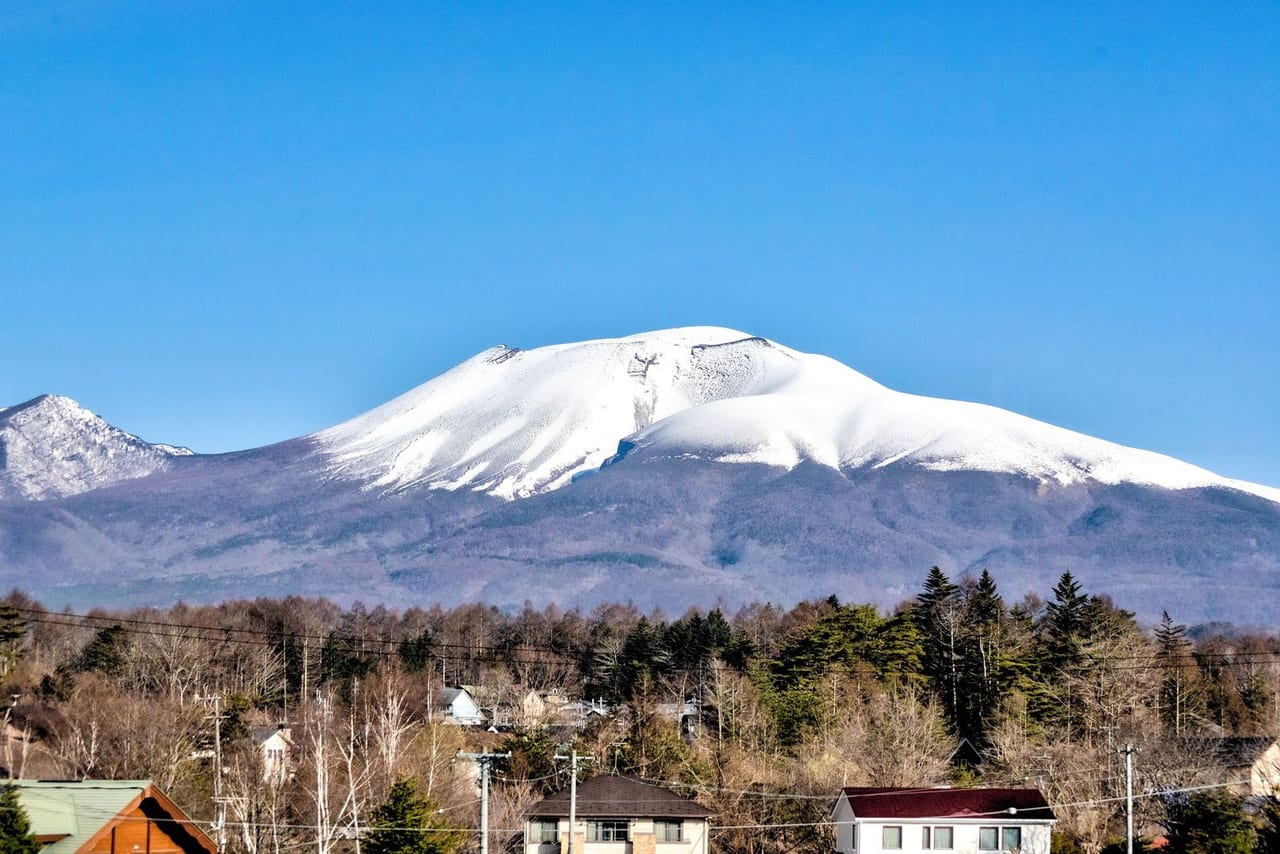
The active volcano Mount Asama looms on Karuizawa’s north side, and its presence runs through the whole landscape — many people do not realize that the jagged black lava field on the north edge, Onioshidashi, was formed when lava from the great 1783 (Tenmei 3) eruption of Mount Asama cooled and hardened. The park has walking paths that wind through the lava field and the Asama-yama Kannon-do hall, making it one of the rare places in Japan where you can walk up close into volcanic lava terrain.
Per official information, admission to Onioshidashi is about ¥650 for adults and ¥450 for children, open roughly 8:00–17:00 (last entry 16:30). It lies inside Gunma, far from Karuizawa Station with infrequent buses, so drive or hire a car, and chain it with Shiraito Falls as a single northern-mountain day. Anyone into geology or volcanic terrain will find it striking; if you came to Karuizawa only to shop and sip coffee, you can skip it and keep that time for the town and the Hoshino area. To extend a Chubu trip into more highland and mountain routes, see our Takayama (Hida) guide, or lock in the Tokyo backbone of the whole trip first with our Tokyo 5-day itinerary.
Transport & lodging
Getting in is very simple: take the Hokuriku Shinkansen Asama or Hakutaka from Tokyo Station to Karuizawa Station, about 60–70 minutes at best. Trains run frequently and non-reserved seats can be bought on the spot, which is exactly why Karuizawa works as a Tokyo day trip. If your overall Japan backbone is "into Tokyo, out of Kanazawa or Toyama" along the Hokuriku line, then weigh whether a JR East or Hokuriku-area pass pays off — the leg-by-leg versus pass break-even math is in our JR Pass guide.
Around town splits in two. The station and old Karuizawa cluster (the Prince outlet, old Ginza, Kumoba Pond) is covered on foot and by rental bike, with the leafy lanes most comfortable to cycle. The far-out mountains (Shiraito Falls, Onioshidashi, the Mount Asama direction) rely on the Seibu sightseeing bus or a rental car — the buses are infrequent, so if you have two or more mountain stops and want to move efficiently, a half-day rental car or hired taxi usually beats waiting for buses. The Hoshino area (churches, Harunire Terrace) has a free shuttle from the station that is worth using.
For lodging, options range from hotels by the station to the Hoshino resort lodges and villa-style stays in the woods of old Karuizawa. Day-trippers do not need to stay; for those after the slow version, I would point you to the Hoshino area or the old-Karuizawa woods — the forest after the day crowds leave, the lit churches at night, and the empty Kumoba Pond at dawn are all scenes a day trip cannot give you. Peak periods (Golden Week, summer, foliage weekends, winter illumination) bring high rates and full houses, so book early. Karuizawa overall runs a little pricier than Tokyo, so budget with some margin.
One- to two-day plans
Here is the same content shaped into routes that walk well:
- Day trip (highlights): early Shinkansen from Tokyo → arrive at Karuizawa Station, start with Kumoba Pond (dawn reflection) → Kyu-Karuizawa Ginza for jam and bread, rent a bike for the leafy lanes → after lunch, hit the Prince outlet by the station → evening train back to Tokyo. The churches and mountain sights have to be sacrificed on this version.
- Day 1 (town + forest): arrive and drop bags → stroll Kumoba Pond → Kyu-Karuizawa Ginza and cycling → afternoon shuttle to the Hoshino area for the Stone Church and Kogen Church, resting at a Harunire Terrace cafe → back to town for the night.
- Day 2 (mountains + shopping): morning rental car or hired taxi to Shiraito Falls + Onioshidashi (with Mount Asama’s lava terrain) → back to town at midday → afternoon at the Prince outlet → evening Shinkansen back to Tokyo or onward to Hokuriku (Kanazawa, Toyama).
North of Karuizawa you can chain Nagano City (Zenkoji) — note that Zenkoji holds its once-every-seven-years Gokaicho from April to June 2027, and crowds during that window are a different animal, see when to go for the 2027 Zenkoji Gokaicho; to the northwest the Hokuriku coast brings Kanazawa and Toyama; and south takes you back to Tokyo. If your whole trip is built around Tokyo, Karuizawa is an ideal "add one highland day" option — for how to plan the backbone, see our Tokyo 5-day itinerary.
FAQ
- Q1:How many days do you need in Karuizawa? Is a day trip enough?
- It depends on how deep you want to go. If you just want Kyu-Karuizawa Ginza, Kumoba Pond, and the Prince outlet, a day trip from Tokyo is completely doable — the Shinkansen runs about 60 minutes each way, so out in the morning and back at night is easy. But what makes Karuizawa special is the slowness: the Hoshino-area churches, a forest cafe at Harunire Terrace, the empty Kumoba Pond reflection at dawn. Per official information, the deeper version is best over two days, one night — day one for the town and outlet, day two by car for Shiraito Falls and the Onioshidashi lava park further out. Add days if you want to chain Nagano or the Hokuriku coast.
- Q2:How do I get to Karuizawa from Tokyo, and what ticket do I need?
- The fastest way is the Hokuriku Shinkansen: take the Asama or Hakutaka from Tokyo Station to Karuizawa Station, about 60–70 minutes at best, with non-reserved seats you can buy on the spot. If your overall route is "into Tokyo, out of Kanazawa or Toyama" along the Hokuriku line, then weigh a JR East or Hokuriku-area pass — the leg-by-leg versus pass break-even math is in our JR Pass guide. In town you mostly walk, rent a bike, or ride the Seibu sightseeing bus; for the far-out Shiraito Falls and Onioshidashi, renting a car or hiring a taxi beats the thin bus schedule.
- Q3:Which churches in Karuizawa are worth seeing, and can I go in?
- The two most famous are in the Hoshino area: the Stone Church (Uchimura Kanzo Memorial Hall) and Karuizawa Kogen Church, sitting next to each other across the Hoshino resort. Per official information, the Stone Church is an organic-architecture work of stone and glass (fusing thinker Uchimura Kanzo’s "non-church" ideals with architect Kendrick Kellogg’s design), with viewing roughly 9:00–18:00 — but visits pause during weddings, so check the day’s notice before going. The town also has St. Paul’s Catholic Church and the Karuizawa Union Church, both photogenic. These are working churches for worship and weddings, not pure attractions — stay quiet and do not disturb any ceremony.
- Q4:Is the Prince outlet worth it, and how far is it from the station?
- Very much so, and it is rare in Japan: the Karuizawa Prince Shopping Plaza sits right outside the station’s south exit, about a 3-minute walk — most outlets need another transfer or shuttle. Per official information, it is an open-air, forest-style shopping village with more than 200 stores, spanning luxury brands, fashion, outdoor and sports gear, and homeware, with lawns and a pond in the middle to rest. The smart move is to slot it in before your return train: finish shopping, then wheel your bags straight into the station. Peak periods (Golden Week, summer, foliage weekends) get busy, so avoid weekend midday if you want the deals.
- Q5:When is Kumoba Pond foliage best, and how long do I need at Shiraito Falls?
- Per official and local foliage data, Karuizawa sits high and turns early: the Kumoba Pond area peaks around mid-October to early November, when the water mirrors the red and yellow leaves — the signature shot. Go at dawn for soft light and fewer people; a loop of the pond is about 20 minutes. Shiraito Falls is a roughly 70-meter wide curtain of spring-fed water; 30–40 minutes is plenty to photograph it. It sits well out of town on the mountain road toward Kusatsu, reached by car or a sparse bus, with cool air in summer, foliage in autumn, and night illumination in some winter periods. Both are seasonal, so pair them in one day at different times.
- Q6:What is Onioshidashi, and is it worth the detour?
- Onioshidashi is a lava park on Karuizawa’s north side, just inside Gunma, formed when lava from the great 1783 eruption of Mount Asama cooled into a jagged black field running to the foot of the volcano, with walking paths and the Asama-yama Kannon-do hall. Per official information, admission is about ¥650 for adults and ¥450 for children, open roughly 8:00–17:00 (last entry 16:30). It is far from the station with infrequent buses, so drive or hire a car, and chain it with Shiraito Falls. Lovers of volcanic geology find it striking; if you only came to shop and sip coffee, skip it and keep your time for the town and the Hoshino area. For more Chubu highland ideas, see our Takayama (Hida) guide.
Related reading:
Hida-Takayama Guide 2027: Old Town, Jinya, Hida Beef & Festival
The little Kyoto of Hida — the Sanmachi old streets, Japan's only surviving jinya, the morning market, Hida beef and the Takayama Festival.
Kanazawa Travel Guide 2027: Kenrokuen, 21st Century Museum & Chaya
The craft old capital of Kaga — the three-great-garden Kenrokuen, the 21st Century Museum pool, Higashi Chaya gold leaf and Omicho Market seafood.
Tokyo 5-day itinerary 2026
A clear 5-day plan: Shinjuku base, two zones per day, honest budget.