Less than an hour from Osaka-Umeda, you can walk into a mountain temple whose grounds are buried in daruma — Katsuo-ji. It is the 23rd temple on the Saigoku 33 Kannon pilgrimage, founded as far back as 727, and every stone step, rock crevice, and tree branch is crammed with the red katsu-daruma (lucky daruma) that worshippers have dedicated here. It is one of the most instantly recognizable prayer temples in Kansai. Adult admission is just ¥500, yet it delivers a mountainside of dedicated daruma, the gravity of a Saigoku pilgrimage temple, and foliage from mid-November. This guide skips the tourist-brochure fluff and uses verified official sources to lay out where the "victory" name comes from, the nine-step daruma ritual, goshuin types and prices, the four seasons, and the thing that trips people up most: the Hankyu bus access (whose fares just jumped in 2024) and how to dodge the crowds.
📍 Katsuo-ji is usually paired with the waterfall below it into one Minoo day — see the Minoo Falls guide; to slot it into a wider Kansai foliage trip, see the Osaka and Nara autumn guide, our "Kansai alternative for when Kyoto is too crowded."
- Katsuo-ji = the lucky-daruma temple: Saigoku 33 No. 23, with a mountainside of dedicated daruma as its signature scene
- Adult admission ¥500 (rate after the March 2023 hike); open to 17:00 weekdays, extended to 18:00 Saturdays
- The daruma has an official nine-step ritual: pick, write your goal, offer incense, open the eye, reflect, report, dedicate — "winning" means beating yourself, not others
- Goshuin prices are all secondary-source (no official goshuin page): standard ¥300, waka/Enko Daishi about ¥500 each; confirm on site
- Access is the pain point: Hankyu bus fares jumped in October 2024 (Minoo-Kayano to Katsuo-ji ¥400→¥800); infrequent, and roads clog on peak weekends
📖 Table of Contents (click to expand)
- What Katsuo-ji is: Osaka's mountain daruma temple
- History: from Miroku-ji to the "victory" name
- The lucky daruma: the nine-step ritual
- Goshuin: types, prices, and reception hours
- Four seasons: hydrangeas, foliage, and cherry
- Annual events calendar
- Access: buses after the 2024 hike, and parking
- On site: daruma goods and the exit teahouse
- Pairing with Minoo Falls: how to order the day
- Beating the crowds and "is it worth it"
- FAQ
What Katsuo-ji is: Osaka's mountain daruma temple
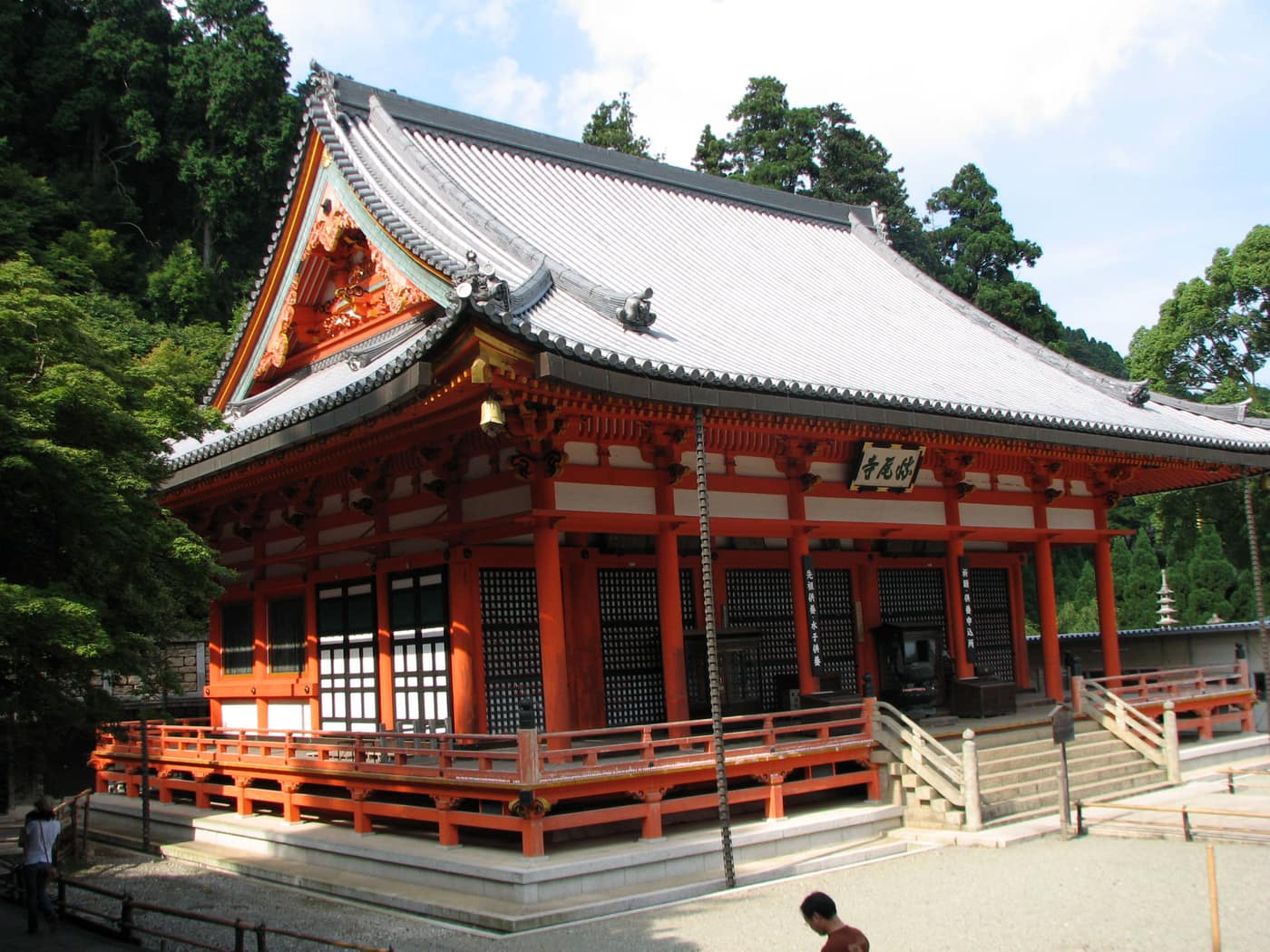
Katsuo-ji is a Shingon Koya-school temple in the mountains of Minoo, Osaka Prefecture. What makes it stick in the memory among the countless temples of Kansai is not scale or grandeur, but one extremely recognizable image: the entire grounds — steps, ponds, rocks, and branches — packed with small red daruma dedicated by worshippers. These are the katsu-daruma, the lucky daruma at the heart of Katsuo-ji faith and the reason it is called the "temple of victory."
Its three draws are independent, and only stack up together into the full picture:
- The victory faith and the mountainside of daruma. This is the soul of the place. Whether praying for an exam, a career, or recovery from illness, worshippers "receive" a daruma to take home and make a wish on, then return it to the temple once the wish comes true. The mountainside of daruma is what accumulates from that, year after year.
- A Saigoku pilgrimage temple. Katsuo-ji is the 23rd of the Saigoku 33 Kannon temples — an essential stop for pilgrims walking the route, and a layer of orthodox temple gravity beyond the daruma.
- The four seasons. Wrapped in mountains, the grounds cycle through autumn foliage, early-summer hydrangeas, and spring cherry. Plenty of people assume only the foliage season is worth it — that is a misunderstanding.
The downside, up front: it is in the mountains, with no direct train, reachable only by an infrequent Hankyu bus whose fares just rose sharply in 2024. So a big chunk of this guide is about access and timing, because how well your Katsuo-ji visit goes depends mostly on transit.
History: from Miroku-ji to the "victory" name
The "victory" name has a specific official origin story — and it runs on a separate track from the daruma figure itself. Get that straight and you will not be misled by the cause-and-effect that tourist articles often invent.
Founding and the temple name
Per official records, Katsuo-ji traces to 727 (Jinki 4), when the brothers Zenchu and Zensan entered the mountain to build a grass hermitage and practice. The temple proper, built in the Heian period, was originally named Miroku-ji, not Katsuo-ji. Its first head priest was Prince Kaijo, who enshrined a kojin deity as the "Sanbo Kojin" (which the temple calls Japan's first kojin) and, with the support of his father Emperor Konin, established a sutra-copying hall. So at the start, Katsuo-ji had nothing to do with "victory" — that name came later.
From "Katsuo-ji [victory-king]" to "Katsuo-ji [victory-tail]": the one official origin
What actually established the "victory" character is this passage, recorded verbatim by the temple: when Emperor Seiwa fell gravely ill, he summoned the sixth head priest, Gyojun, to pray. Gyojun prayed from deep in the mountain, sending his kesa and prayer beads toward the capital, and the emperor recovered. Moved, the emperor wished to grant the temple the name "Shoo-ji" (勝王寺) — meaning its spiritual power had prevailed over the emperor himself, a king of the nation. But Gyojun felt using the character for "king" (王) was too presumptuous, so he replaced it with "tail" (尾), giving us today's Katsuo-ji (勝尾寺).
This is the only "victory" origin the temple gives. Note that the official pages do not state the exact year of the renaming, only that it falls within Emperor Seiwa's reign (generally understood as 858 to 876), so this article does not pin a year.
Genpei, Ashikaga, Toyotomi: this is decline-and-revival history, not the victory origin
You may have seen claims elsewhere tying Genpei, Ashikaga, and Toyotomi figures to Katsuo-ji. To be clear: they do appear in the official chronology, but that is the secular history of the temple being destroyed, protected, taxed, and rebuilt — not the religious origin of "daruma = victory." Do not conflate the two. Per the official timeline:
- 1184 (Juei 3): the Genpei conflict burns the entire temple down.
- 1336 (Kenmu 3): Ashikaga Takauji orders the temple lands protected; in 1423 the Ashikaga Yoshimochi shogunate recognizes it as a prayer temple.
- 1585 (Tensho 13): Toyotomi Hideyoshi surveys the mountain and levies taxes; in 1603 Toyotomi Hideyori funds the rebuilding of the main hall.
- 1674 (Enpo 2): the sect changes from Tendai to Shingon.
As for "why a daruma" — that is a third track entirely. The daruma figure's limbless, big-faced shape comes from the legend of the Indian monk Bodhidharma, whose limbs are said to have withered from years of seated meditation facing a wall. That is the general cultural origin of the Japanese daruma doll, not a Katsuo-ji-specific explanation; the temple never states why it chose the daruma as its votive object. So the correct reading is: (1) Emperor Seiwa's naming established the "victory" character (official); (2) the daruma doll has its own meditation-legend shape (general knowledge); (3) later ages fused the two into today's lucky daruma. Keep the three tracks separate and no invented causal story can lead you astray.
Saigoku pilgrimage and cultural properties
Katsuo-ji is the 23rd Saigoku 33 temple (officially confirmed). Its important cultural properties include the Yakushi triad (Important Cultural Property, early Heian), the national historic site Hatten Sekizo (1230, with eight bronze statues of the Four Heavenly Kings and Four Great Wisdom Kings), the national historic site Choseki Gorinto (1247, 36 markers, eight of which are considered Japan's oldest distance markers), and over 3,000 items of the Katsuo-ji documents (prefectural cultural property). These give Katsuo-ji real historical weight — it is not merely a daruma photo stop.
The lucky daruma: the nine-step ritual
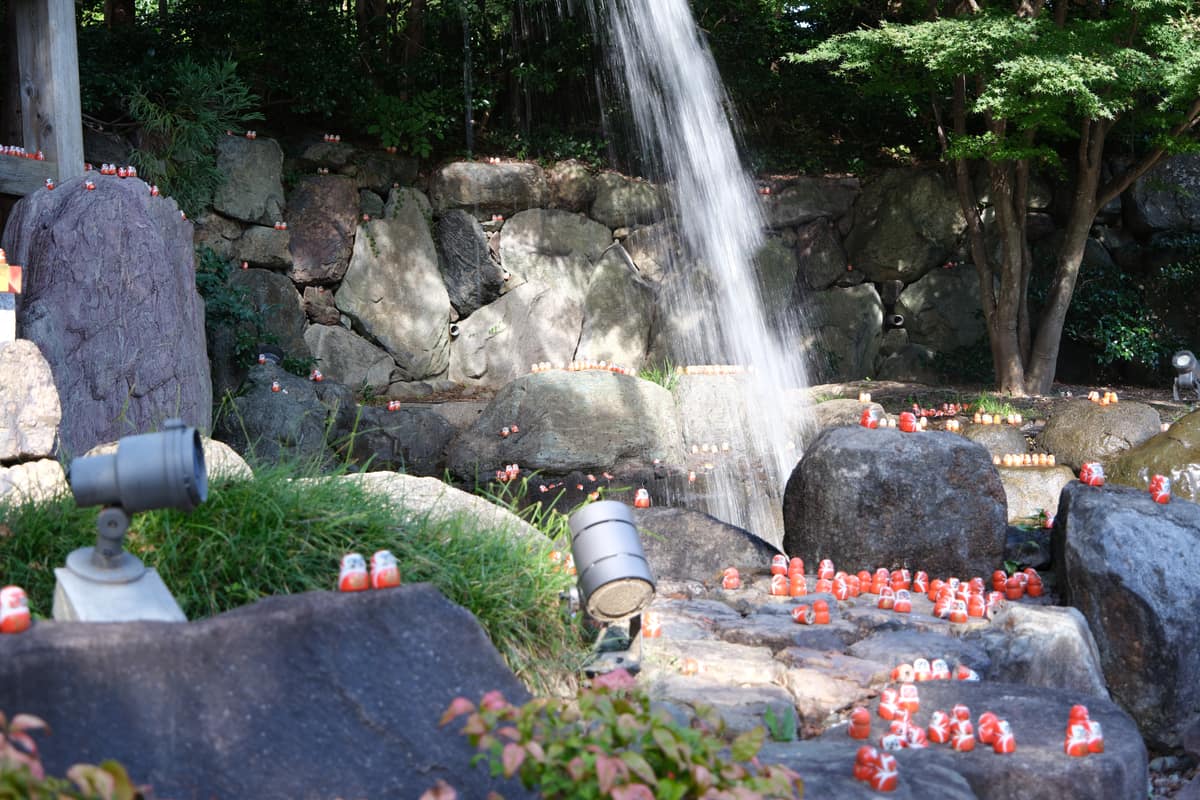
The Katsuo-ji daruma is not a souvenir; it is a whole ritual of intention. The temple's definition of "winning" is worth savoring — officially it means facing yourself and overcoming your own weak heart. In other words, "victory" here is not about beating others but about conquering your own laziness and flaws. Read the steps below with that in mind and they carry more meaning.
The temple's nine-step daruma process:
- Choose a daruma you feel a connection with.
- Write your life purpose on its base.
- Write the concrete goal you want to reach within the coming year (365 days) on its back.
- Offer incense in gratitude.
- Let the incense of gratitude infuse the daruma.
- Sign and fill in the daruma's right eye (the left side as you face it) — the "eye-opening" (me-ire).
- Take it home and use the temple's reflection calendar to keep yourself accountable.
- Once the goal is achieved, return to the main hall to report it.
- Dedicate the daruma to the daruma shelf — the mountainside of daruma you see is exactly this, accumulated one at a time.
Put simply, the daruma is a long-term commitment device — you make a wish, spur yourself on at home for a year, then come back to fulfill it — not a one-off charm. That is why the mountainside of daruma is so moving: each one is a goal that has been (or is being) worked toward.
On daruma prices: the official page says it is being prepared, with no formal rates. The range in circulation runs from about ¥2,000 for the smallest size up to tens of thousands of yen for the largest, but that is a single, uncross-checked secondary source, so take it only as a rough "from about two thousand yen" and confirm the actual price on site. The grounds also sell a daruma-shaped fortune slip (daruma-mikuji), a popular little keepsake.
Goshuin: types, prices, and reception hours
An honest note first: Katsuo-ji's official website has no goshuin page. I checked the official sitemap entry by entry and found nothing goshuin-related site-wide. So the types and prices below are all secondary sources, included here so you have a reference on site, but not official notices; always confirm the price posted at the nokyosho on the day.
Per those secondary sources, Katsuo-ji offers at least these:
| Goshuin type | Reference price | Notes |
|---|---|---|
| Standard goshuin (Daihiden) | about ¥300 | Secondary source; the most basic |
| Waka goshuin (Saigoku 33 Kannon poem) | about ¥500 | Secondary source |
| Enko Daishi goshuin (Prince Kaijo) | about ¥500 | Secondary source |
| Goshuin book | from about ¥2,000 | Sold at the nokyosho |
Beyond these, other seal types exist — Saigoku Kannon Mandala, Honen Shonin 25 sites, Settsu 33, the Shinbutsu Reijo pilgrimage — but with no reliable prices, so no numbers are invented here. Payment, per secondary sources, can be cash, credit card, or e-money.
⚠️ Goshuin reception hours are NOT the same as general viewing hours — do not read across the wrong row.
Per secondary sources, goshuin reception (the nokyosho) is 8:00 to 17:00 on weekdays, 8:00 to 17:30 on Saturdays, and 8:00 to 18:00 on Sundays and holidays; whereas general viewing hours run to 17:00 on weekdays, extended to 18:00 on Saturdays, and to 17:00 on Sundays and holidays. So the latest times for Saturday versus Sunday-holiday are actually reversed — easy to mis-copy. Go by what the nokyosho posts on the day.
If you are walking the Saigoku 33 or just starting to collect goshuin, Katsuo-ji is a representative stop. For the etiquette, how to choose a goshuin book, and the worship order, read our Japan goshuin collecting guide first — the concepts will make the visit land better.
Four seasons: hydrangeas, foliage, and cherry
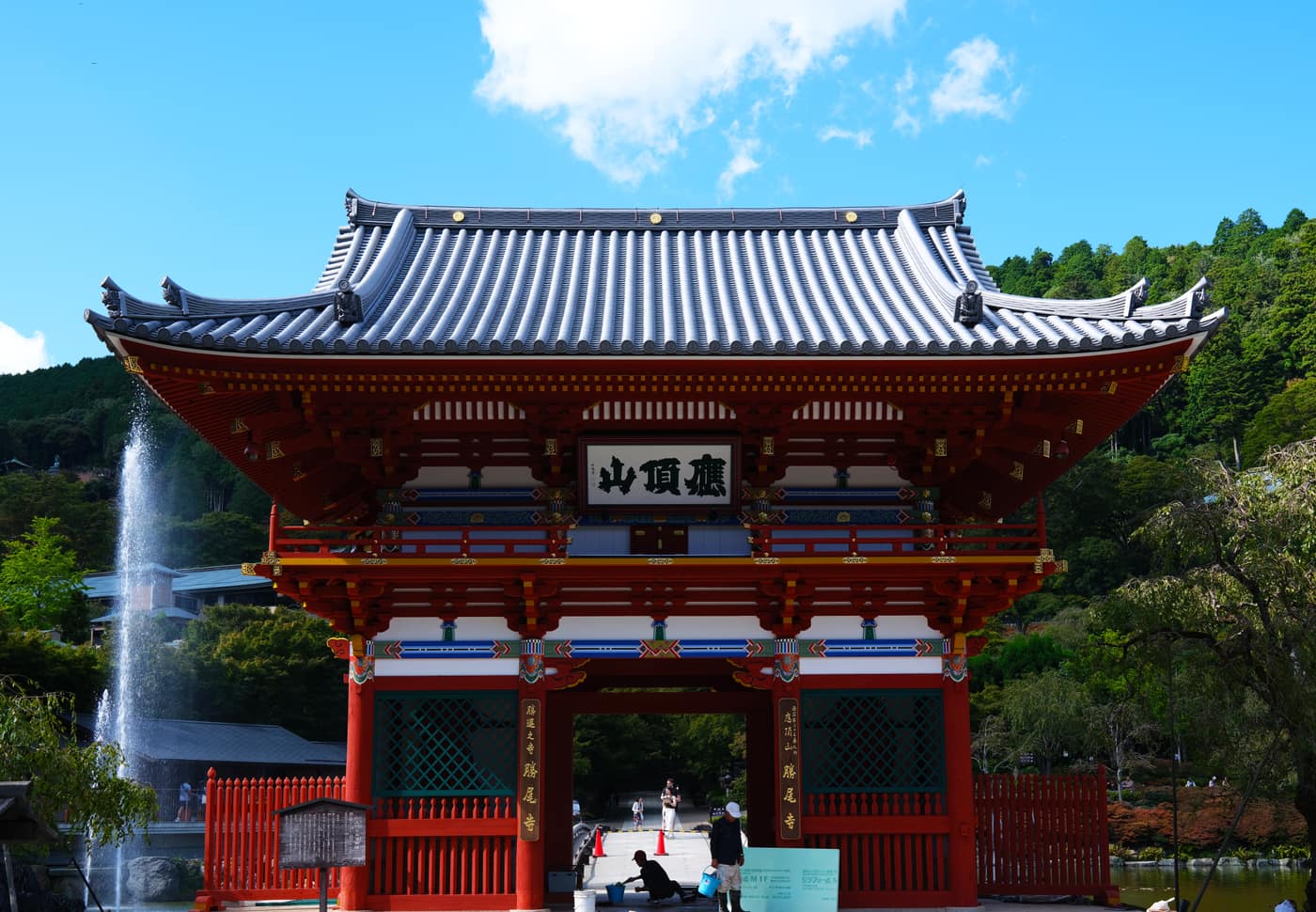
Many assume Katsuo-ji is only worth it in autumn, but it is a genuine four-season temple, and skipping the busiest foliage season is often the calmer call. Below, where the official season pages state a window I cite the official long-term average; where they do not, I name the source. Nothing here is a precise 2026 forecast.
| Season | Draw | Typical window | Source status |
|---|---|---|---|
| Spring | Cherry (hikanzakura → weeping → yae, in sequence) | early–late April | Official season page |
| Late spring | Fresh green maples | early May–early June | Official season page |
| Summer | Hydrangeas (multiple varieties) | early June–mid July | Official season page |
| Autumn | Foliage + night illumination (Kinshu no Yoimode) | peak mid-Nov–early Dec | Official long-term average |
| Winter | Snowscapes (grounds under snow) | no fixed month listed | Official, descriptive only |
The summer hydrangeas are an underrated highlight. Katsuo-ji really is a regional hydrangea spot: the official summer page names several varieties, and the grounds turn red, purple, blue, and white through early June to mid-July. One caveat — tourist sites often package this stretch as an "ajisai matsuri (hydrangea festival)," but that is a Minoo tourism-circle nickname, not an official event name; the official pages only describe the hydrangea peak and never use the word "festival." Use the term to search if you like, but do not mistake it for an official temple event.
The autumn foliage peaks mid-November to early December per the official long-term average. During peak there is the night illumination, Kinshu no Yoimode — the official foliage page does confirm the illumination exists, but it does not post the specific 2026 dates and times. Third-party roundups cite the 2025 pattern as "every weekend and holiday in November, reception ending at 20:00," so if you want night foliage, verify against Katsuo-ji's or the Minoo tourism association's current-year notice rather than reusing last year's dates.
Annual events calendar
If you want to time your visit to a festival or ceremony, here is the temple's official fixed annual calendar (standing events, not one-off 2026 notices):
| Period | Event |
|---|---|
| Jan 1–Feb 3 | New Year special prayers |
| January | Hatsumode / New Year |
| Jan 28 | Sanbo Kojin Grand Festival |
| February / Feb 3 | Exam-success prayers / Setsubun |
| Mid-March | Spring equinox service |
| April | Honen Shonin memorial service |
| 18th of every month | Kannon ennichi service (year-round) |
| Mid-September | Autumn equinox service |
| Oct 29 | Goshoshinsai (memorial for first head priest Prince Kaijo) |
| November / Nov 21 | Shichi-Go-San growth prayers / Mieku |
| Late December | Year-end daruma-mikuji gathering |
| Dec 28 / Dec 31 | Otakiage service (old daruma and talismans) / New Year's Eve |
The most daruma-relevant is the Otakiage service on December 28, when the temple ritually burns the dedicated old daruma and talismans — the annual close of the daruma faith. There is also February's exam-success prayer, the peak time for students coming to receive a lucky daruma. Both are especially fitting if you want to soak up the prayer atmosphere.
Access: buses after the 2024 hike, and parking
This is the section to read carefully. Katsuo-ji has no direct train; public transit always requires a Hankyu bus leg, and that leg just jumped in price in 2024 and runs infrequently — the easiest place to get caught out.
Public transit: transfer to a Hankyu bus (Hokusetsu Reien line)
Two common approaches: take the Kita-Osaka Kyuko line to Senri-Chuo Station and transfer to a Hankyu bus; or transfer at the newer Minoo-Kayano Station. Buses to the Katsuo-ji stop belong to the Hokusetsu Reien line, running toward Hankyu Kita-Senri (route 29) and toward Minoo-Kayano (route 30). The key point is fares — Hankyu classes this as a "special surcharge" sightseeing line (on par with mountain-climbing and ski routes) and it rose sharply on October 1, 2024:
| Segment | Before Oct 1, 2024 | After (current) | Notes |
|---|---|---|---|
| Minoo-Kayano Station → Katsuo-ji | ¥400 | ¥800 | ~22 min, bay 8, Hankyu bus route 30 |
| Senri-Chuo → Katsuo-ji | ¥520 | ¥900 | From Oct 1, 2024 |
| Hankyu Kita-Senri Station → Katsuo-ji | ¥520 | ¥900 | From Oct 1, 2024 |
In short: from October 1, 2024, the Minoo-Kayano direction rose to ¥800 and the Senri-Chuo and Kita-Senri directions to ¥900 — a one-step sightseeing surcharge on top of the old fares. From Minoo-Kayano it is about 22 minutes, boarding at bay 8 on Hankyu bus route 30, and you can tap ICOCA, Suica, and other IC cards, so no need for coins. Still treat the Hankyu Bus website fare table as the final word. Frequency and last-bus times could not be extracted verbatim from the official query system this round, so check the day's schedule with a transit app before you go — especially if you are staying for the night illumination and need the last bus, so you are not stranded when the lights go off.
The taxi option from Hankyu Minoo Station
If you are already at Hankyu Minoo Station (say, after walking Minoo Falls), you can take a taxi straight up to Katsuo-ji, about 20 minutes per the official page. Note that the official pages do not give a walking route or time from Minoo Station to Katsuo-ji — it is a mountain road, not a city stroll — so this article invents no walking figure. To save on transit, use the bus or a taxi.
Driving and parking
If you drive, on-site parking is ¥1,000 per two hours for a regular car (paid on site), with tour buses at ¥3,000 by advance reservation or ¥7,000 same-day. One crucial limit: weekends, holidays, and designated days are fully reservation-only (the official page notes full reservation-only from January 1, 2026). Weekdays allow drive-up parking, but once full you cannot wait. Peak-foliage weekends fill and jam especially fast, so without a reservation you could burn a lot of time in the mountain traffic. Unless you have elderly companions or heavy luggage, I still suggest the bus on peak weekends, or reserve a parking slot on the official system in advance.
Entry ticket: pay cash at the gate, or buy online first
You do not need to buy ahead — cash at the gate gets you in. If you would rather not dig for coins or queue, three channels carry this ticket. Here is what each one lists (amounts are whatever the channel shows on the day):
| Channel | Adult (high school and up) | Other fares | Voucher and cancellation |
|---|---|---|---|
| KKday | NT$102 | not itemised on the page | show the QR code on site; the product header says non-cancellable while the option text says free cancellation up to the valid date — the two disagree |
| Klook | NT$103 | elementary/junior high NT$82, preschool NT$21 | voucher valid 28 days from confirmation, expiring 16:30 on the last day |
| Trip.com | TWD 96 (valid 30 days) / TWD 100 (valid 7 days) | elementary and junior high TWD 82, high school TWD 103, infant TWD 21 | no voucher redemption needed |
There are five days when you should not buy. All three product pages carry the same temple rule: entry is free from January 1 to January 5, and tickets already bought are not refunded — if you are coming over New Year, just walk in. Note too that Trip.com files high schoolers under student tickets at a price above its own adult ticket; that is how the channel grades it, not a typo. Take your pick: Katsuo-ji entry ticket on KKday, Katsuo-ji entry ticket on Klook, Katsuo-ji ticket types on Trip.com.
One last practical note: checking the day's Hankyu bus times, matching them against closing hours, or calling a taxi all need a connection, and the signal in the Minoo hills is patchy. Sort out an unlimited-data eSIM before you fly and scan the QR on landing: KKday Japan eSIM.
On site: daruma goods and the exit teahouse
Per multiple consistent secondary sources and visitor reviews, a teahouse-style restaurant and a souvenir corner sit near the exit of the worship route, where you can sit and rest, with goods centered on daruma-shaped items and confectionery. One caveat: Katsuo-ji's official souvenir-shop page is currently marked as under preparation with no public product or price list, so treat the menu and lineup as confirm-on-site — certain "daruma-themed dishes" floating around online have no reliable source behind them, so they are not listed here.
The safest keepsake is the daruma itself: a small katsu-daruma or a daruma-mikuji fortune slip is unmistakably Katsuo-ji. Taking a small daruma home and writing your goal on it also carries the meaning of the visit forward.
Pairing with Minoo Falls: how to order the day
Few people make a special trip for Katsuo-ji alone; most pair it with Minoo Falls below it into a "Minoo day." The two have very different characters, so getting the order right makes the whole day flow:
- Minoo Falls: about a 40-to-50-minute walk along the well-paved, gently graded "Takimichi" from Hankyu Minoo Station — free the whole way, with an insect museum en route. It is an easy half-day stroll, and in autumn the maples flanking the waterfall are a classic Osaka-outskirts scene. See the Minoo Falls guide for the full routing.
- Katsuo-ji: deeper in the mountains, reachable only by the infrequent Hankyu bus — a much "heavier" transit character.
My order is Katsuo-ji in the morning, Minoo Falls in the afternoon: while you are fresh and the bus is still easy to catch, clear the schedule-limited Katsuo-ji first and take in the mountainside of daruma and foliage; come down around midday, then walk the Takimichi to the falls from Hankyu Minoo Station and wind up near the station in the evening. Do it the other way — finish the 40-to-50-minute Takimichi first, then rush to catch the bus up — and you can end up stranded on the "one bus an hour" schedule, spending your time waiting rather than sightseeing.
To fit this Minoo day into a wider Kansai foliage trip, the Osaka and Nara autumn guide maps the peak windows and access difficulty for five spots — Minoo, Katsuo-ji, Nara Park, the Midosuji ginkgo, and more — handy for deciding which days to do Kyoto and which to divert to Osaka-Nara. If your trip also strings together the classic Osaka-Kyoto sights, the Osaka-Kyoto 5-day itinerary gives you the big-picture frame.
A note on the pass: Katsuo-ji and Minoo run on the Hankyu line and Hankyu buses, which are not in the Osaka Amazing Pass's subway coverage, so the pass does nothing for reaching Katsuo-ji itself — worth being honest about, so do not force spots just to justify a card. But if your foliage trip spends other days in central Osaka stringing together paid sights like Osaka Castle tower, Tsutenkaku, and a Dotonbori river cruise, the pass pays off easily and can bundle transit and admissions: KKday Osaka Amazing Pass.
Beating the crowds and "is it worth it"
The Katsuo-ji grounds take about 1.5 to 2 hours to walk; the problem is never how long, but how many people you share it with and whether there is a parking slot. Here are off-peak tactics drawn from common visitor discussion (not official data):
- Come on a weekday if you can. The crowd gap between peak weekdays and weekends is large, and the 8-to-10 a.m. window right after opening is the widely agreed calm slot.
- Dodge the two peak-weekend crunches: 9 a.m. to noon, and the 4-to-7 p.m. run-up before the night illumination, are considered the most crowded.
- If driving on a peak weekend, arrive very early. Visitors report the car park often fills before 7 a.m., and with weekends and holidays being reservation-only, do not gamble on a walk-up slot.
So the real question: is Katsuo-ji worth a special trip? My take, plainly — if you just want easy autumn viewing or a temple visit in Osaka, the city center and Nara Park offer better value with less hassle, and you need not spend this extra mountain-bus leg on Katsuo-ji; but if you want an image nothing else can replicate — a whole mountainside of dedicated daruma packed into steps and rock crevices, wrapped in the atmosphere of a Saigoku temple and the seasons of flowers and foliage — then Katsuo-ji does justify the half day, round-trip transit included. And it does not have to be the crowded foliage season: the early-summer hydrangeas are far quieter and just as good. Pairing it with Minoo Falls below into a Minoo day, motion and stillness balancing out, is the way I think wastes that transit least.
Frequently Asked Questions
- Q1:How much is admission to Katsuo-ji, and what are the opening hours?
- Adult admission (high-school age and up) is currently ¥500, junior-high and elementary students ¥400, preschoolers ¥100, and under-2s free — this is the rate after the March 2023 increase (adults went from ¥400 to ¥500). Per the official site, opening hours are 8:00 to 17:00 on weekdays (last entry 16:30), extended to 8:00 to 18:00 on Saturdays (last entry 17:30), and 8:00 to 17:00 on Sundays and public holidays (last entry 16:30). If you are aiming for the autumn night illumination, note that the weekday and Saturday closing times differ, so check the operating hours for your specific day.
- Q2:How do I get to Katsuo-ji from central Osaka? Is there a direct train?
- There is no direct train — Katsuo-ji sits deep in the Minoo mountains. The usual way is to take the Kita-Osaka Kyuko line to Senri-Chuo Station and transfer to a Hankyu bus (Hokusetsu Reien line, toward Minoo-Kayano or Kita-Senri) to the Katsuo-ji stop; the newer Minoo-Kayano Station is another transfer point. Two warnings: this route is classed by Hankyu as a special surcharge sightseeing line and its fares jumped on October 1, 2024 (Minoo-Kayano to Katsuo-ji rose from ¥400 to ¥800, and the Senri-Chuo direction from ¥520 to ¥900) — treat the Hankyu Bus website fare table as the final word. Second, buses are not frequent and the roads clog on peak-foliage weekends. If you drive, on-site parking is ¥1,000 per two hours for a regular car, but weekends, holidays, and designated days are fully reservation-only.
- Q3:How do the lucky daruma work — how do you buy and dedicate one?
- Katsuo-ji lays out a full nine-step process: pick a daruma you feel a connection with, write your life purpose on its base and a concrete goal for the coming year (365 days) on its back, offer incense in gratitude, then sign and fill in the daruma right eye (the left side as you face it) — the "eye-opening." You take it home, use the temple reflection calendar to keep yourself accountable, and once you achieve the goal you return to the main hall to report it and dedicate the daruma to the daruma shelf. The temple definition of "winning" is unusual — officially it means facing yourself and overcoming your own weak heart, not defeating others. Prices are not officially posted (the page says it is being prepared); some travel blogs put the range from about ¥2,000 for the smallest size, so treat that as a rough floor and confirm on site.
- Q4:Does Katsuo-ji have goshuin (temple seals), and how much are they?
- Yes, and more than one type — but honestly, the official website has no goshuin page at all, so every figure below comes from secondary sources, not official notices. Per those sources, the standard goshuin (Daihiden) runs about ¥300, while the Saigoku 33 waka goshuin and the Enko Daishi goshuin are about ¥500 each, and a goshuin book starts around ¥2,000, issued at the nokyosho beside the main hall. Other types exist (Saigoku Kannon Mandala, Honen Shonin 25 sites, and more) but with no reliable prices. Importantly, the goshuin reception hours differ from the general viewing hours — and the Saturday versus Sunday-holiday timings are actually reversed — so confirm at the nokyosho on the day. If you are starting to collect, our Japan goshuin guide covers the basics first.
- Q5:What is the best season at Katsuo-ji? Is it only autumn?
- Autumn is the most famous, but Katsuo-ji is genuinely a four-season temple. Per the official long-term average, foliage peaks mid-November to early December, with a night illumination (Kinshu no Yoimode) during peak — the temple confirms the illumination exists, but the specific 2026 dates are not yet posted. In summer, Katsuo-ji is actually a regional hydrangea spot: the official season page lists multiple varieties, peaking early June to mid-July. Spring brings hikanzakura, weeping cherry, and yae cherry in sequence (early to late April), and fresh green maples follow in May to early June. Winter gets only a descriptive mention of the grounds under snow, with no fixed month. So skipping the crowded foliage season for early-summer hydrangeas is a smart, quieter alternative.
- Q6:Is Katsuo-ji worth a special trip, and is half a day enough?
- It depends on your pace. If you just want easy autumn viewing or a temple visit in Osaka, the city center and Nara Park offer better value with far less hassle. But if you want a scene you cannot get elsewhere — a whole mountainside packed with dedicated lucky daruma, wrapped in the atmosphere of a Saigoku pilgrimage temple — then Katsuo-ji does justify the half day, round-trip transit included. The grounds take about 1.5 to 2 hours to walk, and with the one-way bus ride and waiting time, half a day fits. My advice is to pair it with Minoo Falls below as a Minoo day trip: do Katsuo-ji in the morning while buses are easier to catch, then walk the free waterfall trail in the afternoon.
Read next
Osaka & Nara Autumn 2026: Minoo Falls, Katsuoji & Deer Park
Kyoto crowds got you down? Minoo Falls, Katsuoji daruma slopes, and deer-and-maple Nara — routes and fees decoded.
Goshuin Guide: Collecting Japan Shrine Stamps
How to start collecting goshuin: books, etiquette, fees, and a first-timer route.
Osaka & Kyoto 5-day itinerary
Dotonbori, Kiyomizu, Arashiyama — full tested route.
📊 See the 2026 Price Index (JR Pass, DPA, eSIM, Airport Transport) →