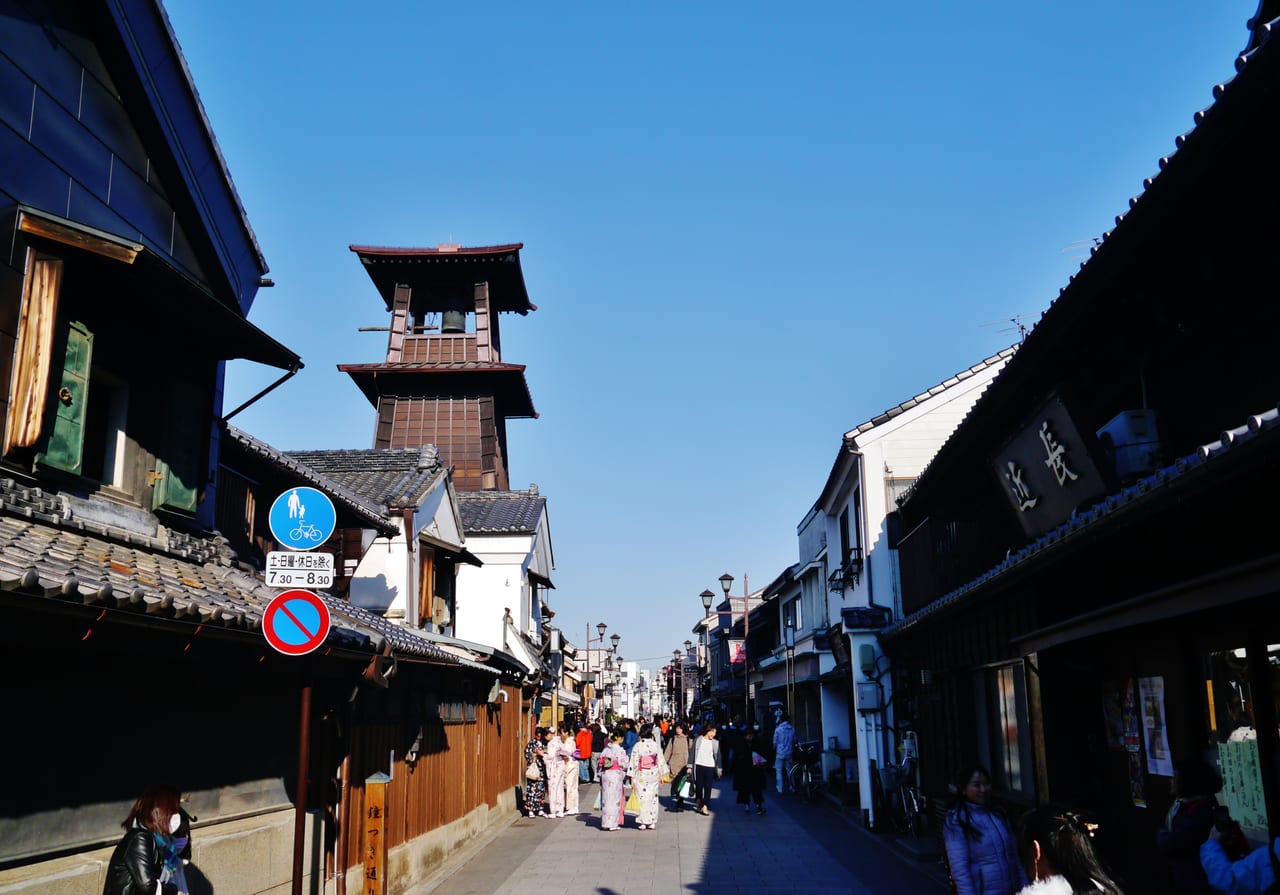
If you have only half a day in Tokyo and want the single "most Japanese, most photogenic" old street to spend it on, Kawagoe is probably the best-value answer — about 30 minutes from Ikebukuro on a Tobu Tojo Line express, for under ¥500. Kawagoe is nicknamed "Little Edo" because it preserves a full street of Edo-period black-tiled "kurazukuri" merchant warehouses, anchored by the Bell of Time, a wooden tower that still rings four times a day. Tucked off the main street is Candy Alley, a lane of old-fashioned sweet shops. This guide covers the warehouse street, the Bell of Time, Candy Alley, the Hikawa Shrine that went viral for its summer wind chimes, the Kitain temple that hides a room from Edo Castle, and the October Kawagoe Festival — plus how to get here from Tokyo and how to plan the smoothest route. For Kawagoe vs Kamakura vs Yokohama, the FAQ below compares them directly.
- The closest "Little Edo" to Tokyo: about 30 minutes and ¥490 from Ikebukuro on a Tobu Tojo express
- Core area is walkable: the warehouse street, Bell of Time, and Candy Alley cluster together — half a day covers the highlights
- The Bell of Time rings four times daily (6/12/15/18h), an ~16 m wooden landmark; you photograph it, you do not climb it
- Hikawa Shrine summer wind-chime tunnel runs roughly early July to early September (confirm 2026 dates with the shrine); built around matchmaking
- Kitain: 500 arhats + Iemitsu’s birth room: ¥400 for adults — add it if you want a full day
📖 Contents
- 1. Why visit Kawagoe
- 2. The warehouse street & the Bell of Time
- 3. Candy Alley, the old-fashioned sweets lane
- 4. Hikawa Shrine & the summer wind chimes
- 5. Kitain: 500 arhats & an Edo Castle room
- 6. The Kawagoe Festival & seasonal events
- 7. Transport & getting around
- 8. A half- or full-day Kawagoe plan
- 9. FAQ
Why visit Kawagoe
Tokyo has no shortage of day trips, but Kawagoe’s niche is clear: it is the closest and most intact Edo-era old street to the capital. Kamakura sells the sea and the Great Buddha, Nikko sells mountains and shrines, Yokohama sells harbor night views — Kawagoe sells an entire street of black-tiled, white-walled "kurazukuri" merchant warehouses. That heavy, fireproof clay-walled style had all but vanished from central Tokyo through fire and redevelopment, yet Kawagoe preserved it block after block, which is how it earned the "Little Edo" name. For anyone who wants to spend just half a day and still capture a very Japanese scene, the density of sights and the low commuting cost make it a great deal.
Its charm is that you can string it all together on foot. The warehouse street, the Bell of Time, and Candy Alley nearly run into one another; Hikawa Shrine and Kitain are a little farther but within bus or bike range. In other words, you do not change trains constantly the way you do across Tokyo — once you arrive, it is essentially one main street walked end to end, with a few detours into side lanes. The common traveler takeaway is that Kawagoe rewards a slow, eat-as-you-walk pace rather than a checklist sprint: wagashi sweets, eel rice, local sake, matcha soft-serve, all sampled along the way, are the point. My advice is simple — if you can only spare half a day, put it all on the warehouse street; if you have a full day, add Kitain and Hikawa Shrine.
The warehouse street & the Bell of Time
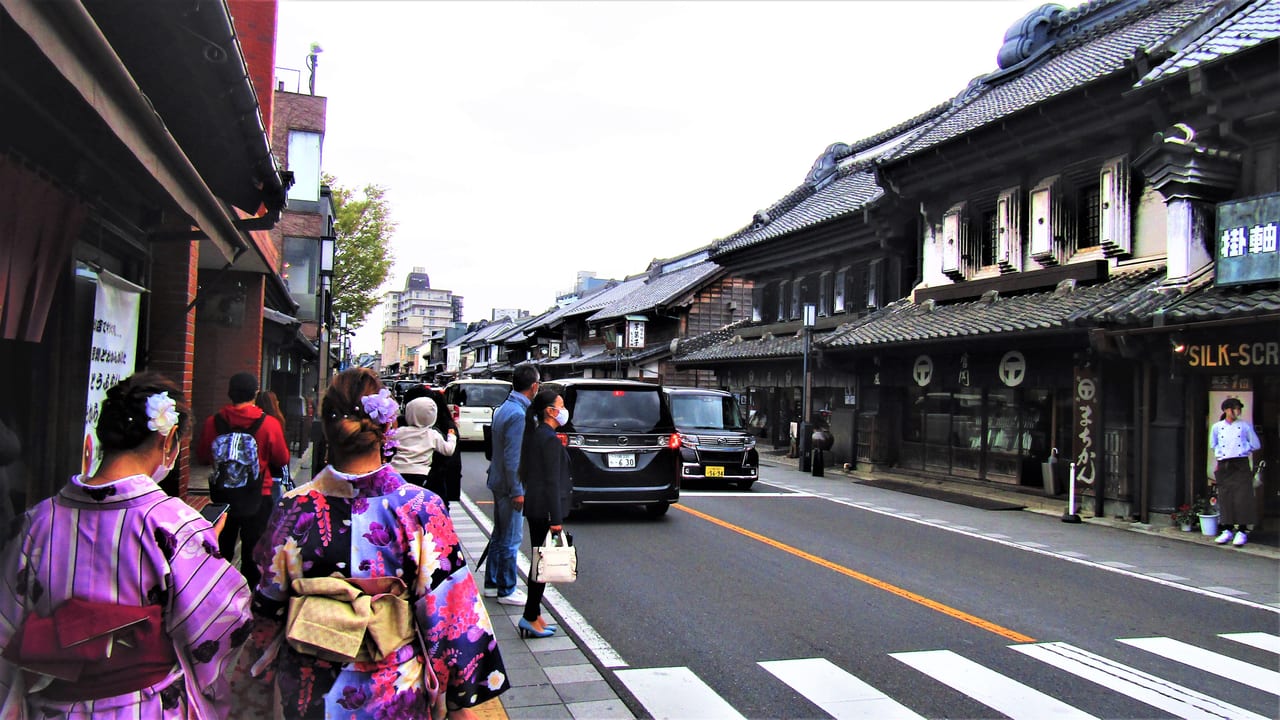
The Kurazukuri warehouse street (kurazukuri no machinami) is Kawagoe’s main stage and the one stop almost no one skips. Both sides are lined with black-tiled, thick-walled "kurazukuri" townhouses — a fireproof merchant style with heavily plastered exterior walls that Kawagoe traders deliberately adopted when rebuilding after a major Meiji-era fire, which is why so many survive intact. The whole street is free, and simply strolling, photographing, and browsing is satisfying: there are old eel-rice restaurants, wagashi shops, local-sake specialists, and every kind of sweet made with matcha or sweet potato (Kawagoe’s signature "satsumaimo"). Even a Starbucks here was remodeled into a wooden, period-style storefront that blends into the old town — an unexpected photo stop.
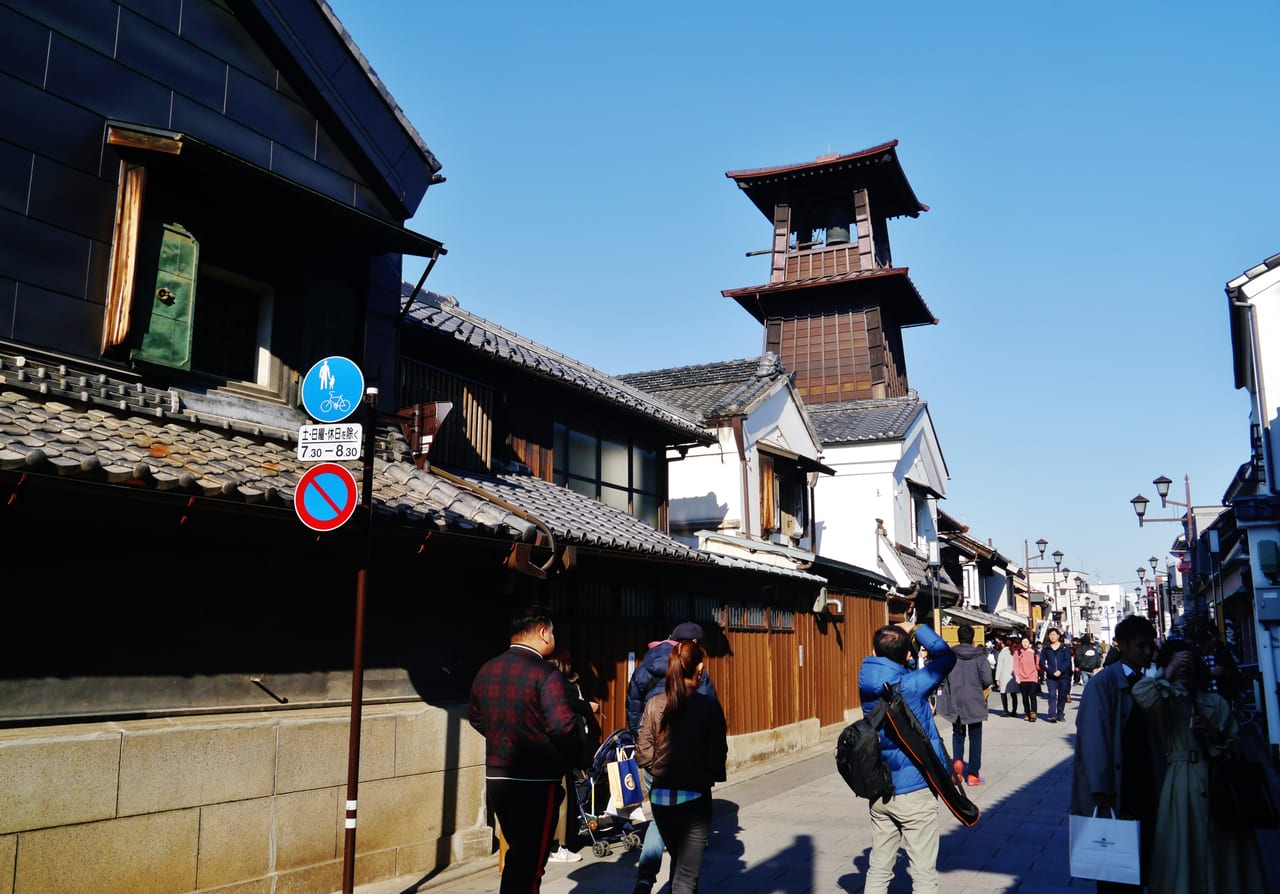
The wooden tower in the middle of the street is Kawagoe’s icon — the Bell of Time (Toki no Kane). It stands about 16 meters tall; the current structure dates from the Edo period, and for centuries it kept time for the castle town. It still rings automatically four times a day: 6 a.m., noon, 3 p.m., and 6 p.m. Its sound was added to Japan’s "100 Soundscapes" in 1996, so if you happen to be there on the hour you may catch that low, resonant peal. To be clear: the tower is not open to climb — it is a look-up-and-photograph landmark, and passing directly beneath it leads to the small Yakushi Shrine. For a clean, crowd-free shot, aim for early morning on arrival or evening once it is lit; the hour or so around each chime tends to draw more people during the day.
Candy Alley, the old-fashioned sweets lane
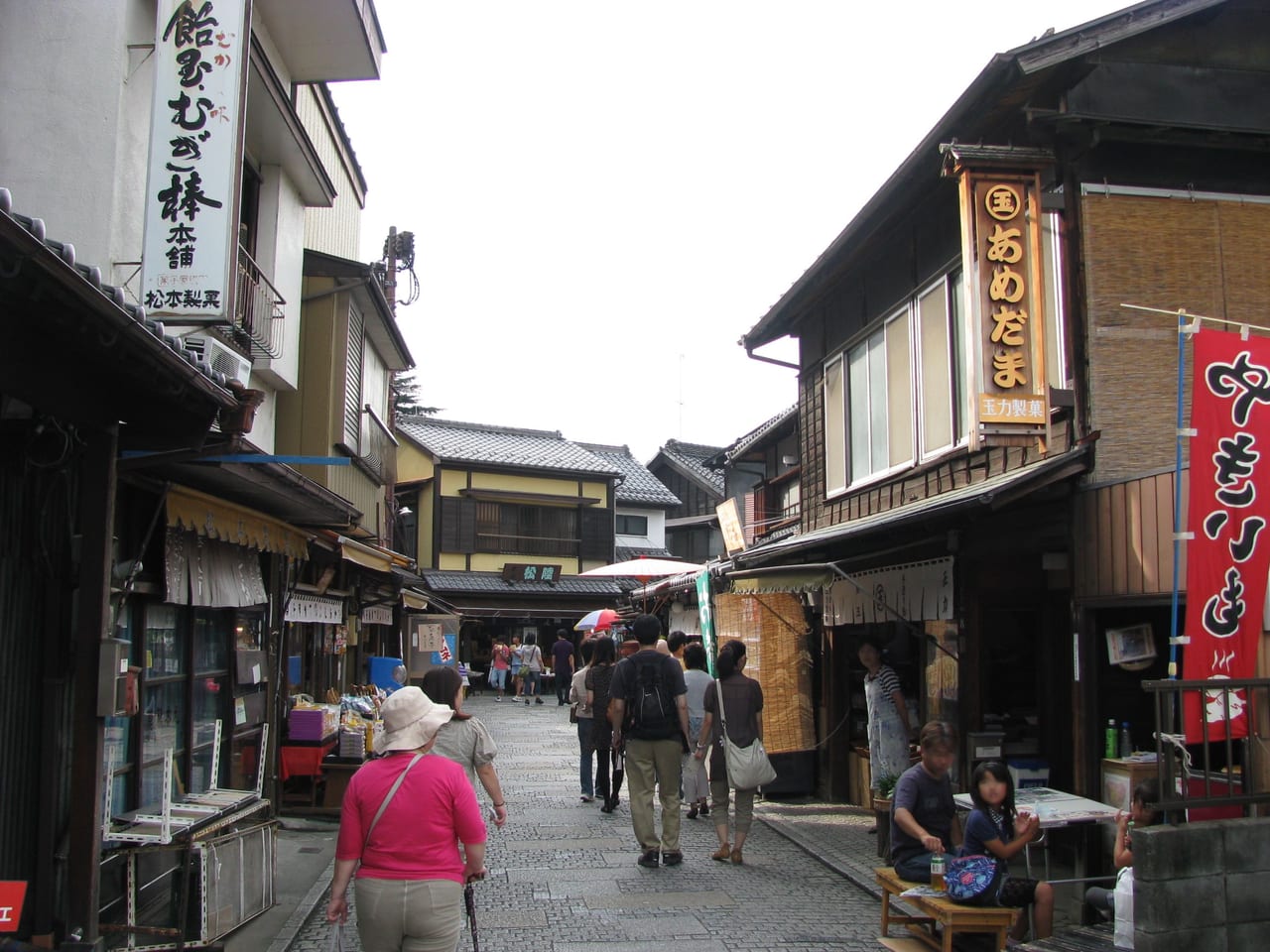
Turn off the warehouse street into a small lane and you reach Candy Alley (Kashiya Yokocho) — a stone-paved street packed with traditional sweet shops. What they sell is the "dagashi" of Japanese childhood memory: brown-sugar karinto, malt candy, ramune soda, jewel-bright konpeito, every kind of sweet-potato treat, and novelty items like an absurdly long stick of fu-gashi puffed wheat candy. Prices are gentle — a few hundred yen buys a small bag to snack on (pause beside the shop to nibble; eating while walking is frowned upon in Japan) — which makes it a favorite stretch for families and anyone who loves retro odds and ends.
A couple of practical notes: most Candy Alley shops are small, long-running stores that close early (many shut around 5 p.m.), so come during the day rather than leaving it to the end. The lane is short — a slow browse with a few tastings runs about 30–40 minutes. On weekends and holidays the narrow alley fills up, so avoid weekend midday if crowds bother you. Since this lane sits right beside the Bell of Time and the warehouse street, it slots straight into your route — no separate planning required.
Hikawa Shrine & the summer wind chimes
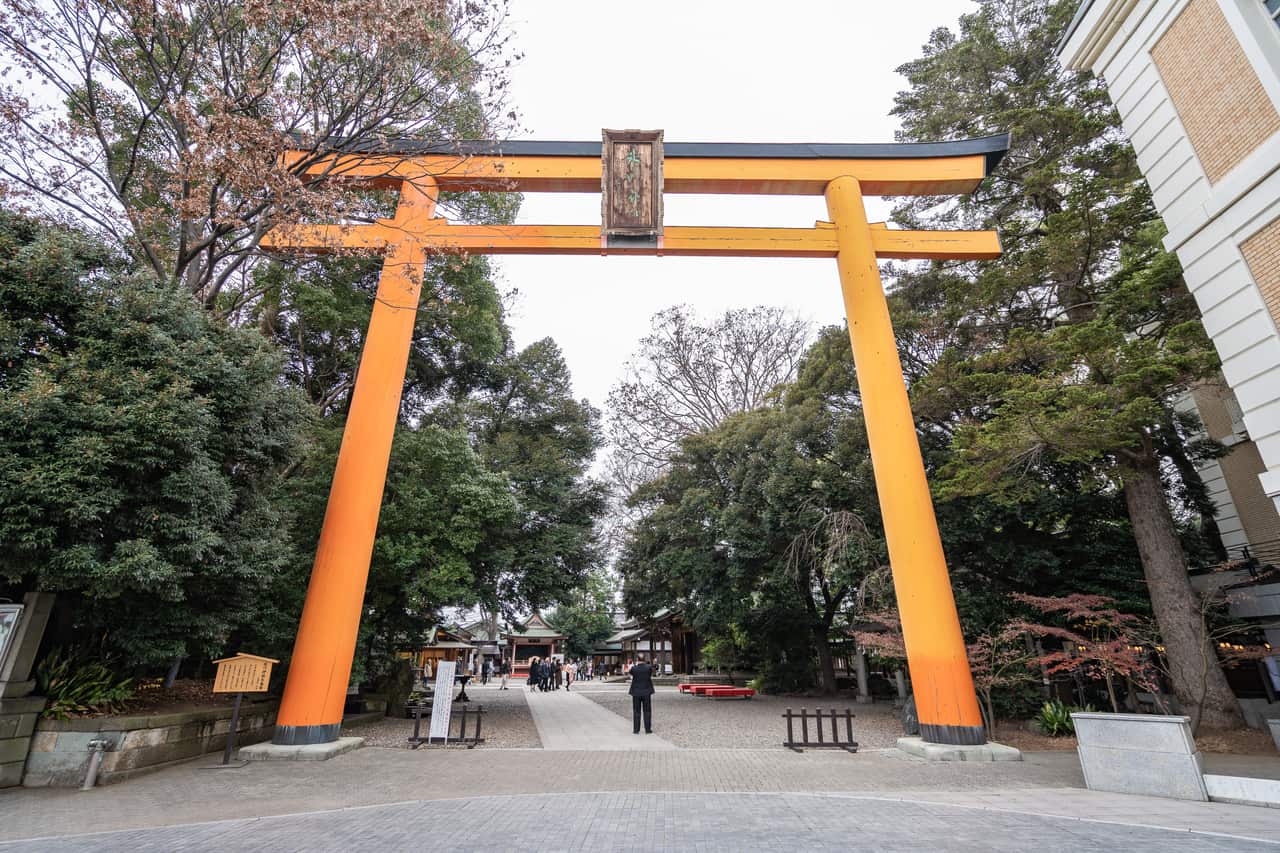
A little farther from the old street, but the hottest spot in recent years, is Kawagoe Hikawa Shrine. With nearly 1,500 years of history, the shrine’s combination of enshrined deities has made it famous for "enmusubi" (matchmaking), and that reputation alone draws many people to Kawagoe. Two things stand out. First is the limited "tai-mikuji" — you fish a red or pink sea-bream-shaped fortune out of a basin with a tiny rod, with the paper fortune tucked inside; it is both adorable and endlessly photographed. Second is the summer "Enmusubi Furin."
The summer wind chimes are the talk of the season: the shrine strings over a thousand colorful Edo glass chimes into a "wind-chime lane" and corridor, where worshippers hang small wooden plaques with their wishes; a breeze sets the whole lane tinkling, and once it is lit at dusk it turns especially dreamy, pulling large crowds every year. By the shrine’s usual pattern, the display runs roughly from early July to early September (held since 2014), but the exact start and end dates shift each year, so confirm the 2026 dates against the shrine’s official announcement before you plan around it. Worship is free year-round, and there is no extra ticket during the wind-chime season. The grounds also include a stone path said to bring good matches — overall a mood-driven sight made for slow wandering.
Kitain: 500 arhats & an Edo Castle room
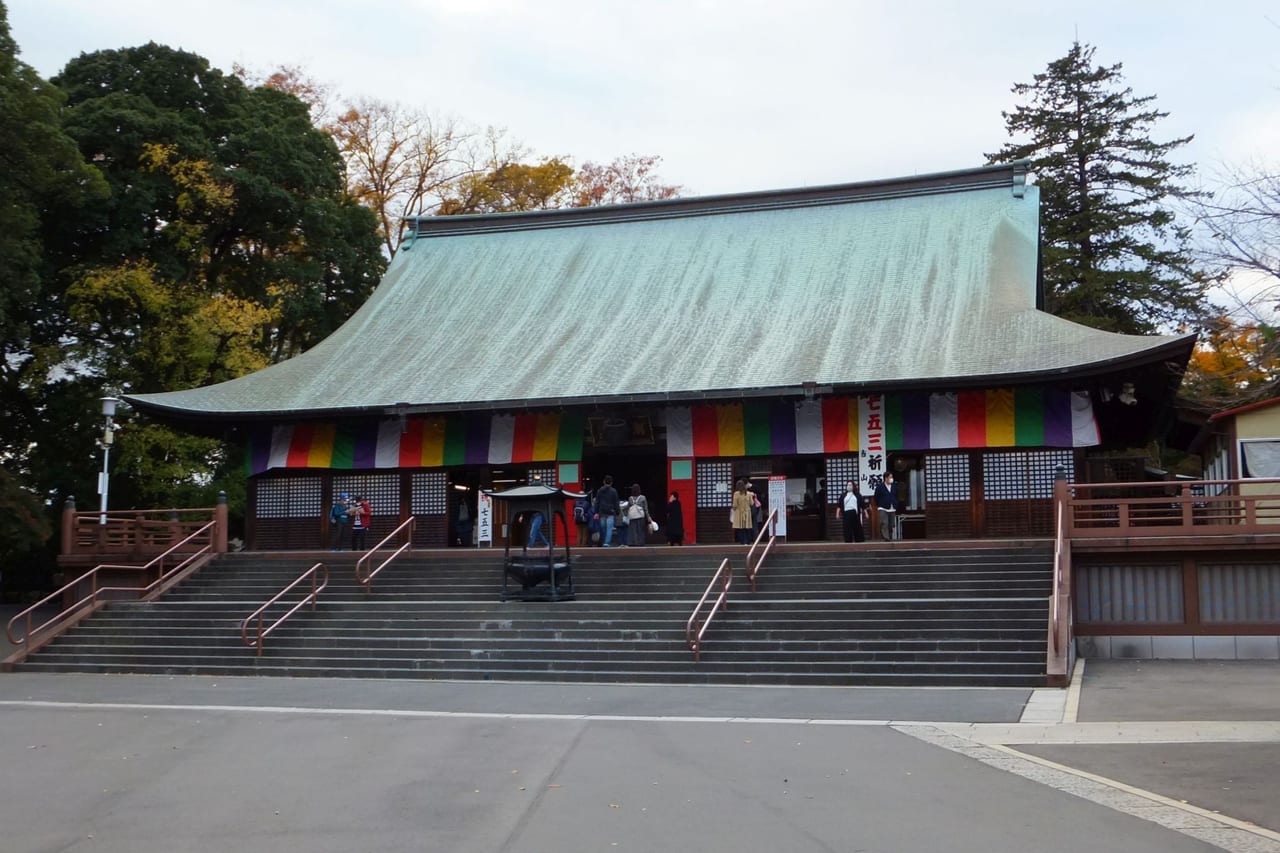
If you are stretching Kawagoe into a full day, Kitain is well worth adding, and it is the stop with the most historical weight. Kitain is Kawagoe Daishi, deeply tied to the Tokugawa house — the room where the third shogun, Iemitsu, was born ("Iemitsu’s birth room") and the dressing room of his wet nurse Kasuga-no-Tsubone were relocated here in their entirety from Edo Castle (today’s Imperial Palace), which is why Kitain is regarded as one of the few surviving structures of Edo Castle. For anyone who loves Japanese history, standing in a room that was physically moved from Edo Castle is an experience you cannot get elsewhere.
Kitain is also famous for its 500 arhats — a field of 538 stone arhat statues carved over roughly 50 years from 1782, counted among Japan’s three greatest arhat collections. Every face and pose differs — some laughing, some weeping, some dozing, some whispering to a neighbor — and it is said that rubbing the one that most resembles you brings good luck, a corner that delights adults and children alike. Admission to the guest hall and 500 arhats is ¥400 for adults, ¥200 for school-age children. Hours shift by season (roughly a 9:00 opening, closing somewhere between 4:00 and 4:50 p.m., earlier in winter), so check the day’s times before you go. The outdoor gate and belfry can be seen freely.
The Kawagoe Festival & seasonal events
On a normal day Kawagoe is a mellow old town, but once a year the whole city erupts for the Kawagoe Festival (Kawagoe Matsuri). With over 370 years of history, it is registered as a UNESCO Intangible Cultural Heritage and a nationally designated Important Intangible Folk Cultural Asset. The draw is more than a dozen ornate floats (dashi) parading the old streets, each topped with a figure and a hayashi music troupe. The most thrilling moment is the after-dark "hikkawase" — when several floats meet at an intersection and duel with music and lanterns, neither yielding, in an electric atmosphere.
It usually falls on the third weekend of October (Saturday and Sunday) — 2025 ran Oct 18–19 — but the 2026 dates can only be confirmed once the organizers announce them, so do not simply copy last year. If your trip lines up, it is highly worth planning around, but be ready for it: the two festival days bring enormous crowds, traffic control, and lodging that must be booked very early. Beyond the October festival, summer brings the Hikawa Shrine wind chimes and the July–August "Million Lights Summer Festival," and autumn brings foliage and a quieter, photogenic old town. If what you are after is a clean, photogenic old street, weekdays outside the festival are actually the most comfortable.
Transport & getting around
From Tokyo to Kawagoe, you have three options: the Tobu Tojo Line (from Ikebukuro), the Seibu Shinjuku Line (from Seibu-Shinjuku), and the JR Kawagoe Line (through-service from Shinjuku on the Saikyo Line). For speed and value, the Tobu Tojo Line wins — on an express or rapid express, Ikebukuro to Kawagoe is about 30 minutes for roughly ¥490, fast and cheap, the pick for most people; the Seibu Shinjuku limited express is about 45 minutes, and JR about 50–60. The three lines have different terminals: Tobu and JR share "Kawagoe Station," Tobu also has "Kawagoeshi Station," and Seibu uses "Honkawagoe Station," of which Honkawagoe is closest to the warehouse street, while JR Kawagoe Station is the farthest (a further ~20-minute walk or a bus). JR Pass holders can take the JR Kawagoe Line, but note that distance — whether the nationwide JR Pass pays off is covered in our JR Pass guide.
Getting around town: the core three (warehouse street, Bell of Time, Candy Alley) are best done on foot, all within a 5–10 minute walk of each other. For the slightly farther Hikawa Shrine, Kitain, and Honmaru Goten, hop on a "Koedo loop bus" (Koedo Meisho Meguri Bus) — a sightseeing loop that circles the main sights on a fixed schedule, handy when you would rather not walk; plenty of people also rent bicycles to bounce between stops. If you will ride the bus many times in a day, Tobu sells a "Koedo Kawagoe" combo (round-trip rail plus city bus) worth considering, but for the core old street alone, walking plus a single-ride IC card is cheapest — no need to force a pass.
A half- or full-day Kawagoe plan
Here is the same content shaped into a route that walks well:
- Half-day (core old street): leave Tokyo early on the Tobu Tojo Line to Honkawagoe → walk into the warehouse street, snacking on wagashi and sweet-potato treats → look up at the Bell of Time and pass beneath it to Yakushi Shrine → duck into Candy Alley for retro sweets → lunch of old-shop eel rice → head back to Tokyo by evening. All on foot, about 4–5 hours.
- Full day (add the shrine and temple): start at Hikawa Shrine in the morning (summer wind chimes, the sea-bream fortune, a matchmaking wish) → return to the warehouse street, Bell of Time, and Candy Alley for browsing and eating → in the afternoon, bus or walk to Kitain for the 500 arhats and Iemitsu’s birth room (¥400 for adults) → back to the old street to photograph the lit Bell of Time at dusk → dinner, then the train back to Tokyo.
Kawagoe pairs nicely with Tokyo’s other day trips across separate days: for the sea and the Great Buddha, take Kamakura (see our Kamakura day-trip guide); for harbor night views and Chinatown, take Yokohama. Stay in Saitama and ride the Seibu line deeper into the hills, and Chichibu's moss-phlox fields, Nagatoro river-rafting and night festival turn this trip into a two-day "old town plus nature" combo. Pre-trip weather and packing are in our Japan packing & weather guide. The short version: Kawagoe is the best-value stop near Tokyo for capturing a street full of Edo character in half a day — do not skip it if you love old-town strolling and Japanese sweets.
FAQ
- Q1:How many days do you need in Kawagoe? Is half a day enough?
- Honestly, the highlights of Kawagoe take about half a day — the Kurazukuri warehouse street, the Bell of Time, Candy Alley, and Hikawa Shrine all sit within easy walking distance of one another. If you leave Tokyo early, arrive before noon, and head back by evening, half a day is a comfortable rhythm. To stretch it into a full day, add Kitain temple (the 500 arhats and the room where shogun Iemitsu was born) and the Hikawa Shrine area, with a leisurely lunch and some souvenir shopping. Most people treat Kawagoe as a half-day escape from Tokyo, the same way they do Kamakura or Yokohama — no overnight needed. For Tokyo itself, see our Tokyo 5-day itinerary.
- Q2:How do I get to Kawagoe from Tokyo, and which line is fastest and cheapest?
- Three railways reach Kawagoe: the Tobu Tojo Line (from Ikebukuro), the Seibu Shinjuku Line (from Seibu-Shinjuku), and the JR Kawagoe Line (through-service from Shinjuku via the Saikyo Line). The fastest is the Tobu Tojo Line express or rapid express, Ikebukuro to Kawagoe in about 30 minutes; the Seibu Shinjuku limited express runs about 45 minutes and JR about 50–60. For value, the Tobu Tojo local is roughly ¥490 and both fast and cheap — the pick for most people. JR Pass holders can ride the JR Kawagoe Line, but JR Kawagoe Station is farther from the old street (a walk or a bus away). If you plan to hop between many bus stops, a Tobu "Koedo Kawagoe" combo ticket exists, but for the core area walking is enough.
- Q3:When are the summer wind chimes at Kawagoe Hikawa Shrine?
- The summer "Enmusubi Furin" (matchmaking wind chimes) at Kawagoe Hikawa Shrine has become one of the area’s most photographed sights — over a thousand colorful Edo glass chimes strung into a "wind chime lane," especially dreamy once lit at dusk. By the shrine’s usual pattern the display runs from early July to early September (it has been held annually since 2014), but the exact start and end dates shift each year, so the 2026 dates should be confirmed against the shrine’s official announcement before you go. The shrine is best known for "enmusubi" (matchmaking), and its limited "tai-mikuji" sea-bream fortune is a big draw. Worship is free year-round, and there is no separate ticket for the wind-chime season.
- Q4:Does the Bell of Time still ring? Can you go up it?
- Yes. The Bell of Time (Toki no Kane) is Kawagoe’s landmark — the current wooden bell tower, about 16 meters tall, dates from the Edo period and still rings automatically four times a day: 6 a.m., noon, 3 p.m., and 6 p.m. Its sound was selected by Japan’s Ministry of the Environment as one of the country’s "100 Soundscapes." One thing to know: you cannot go up the tower — it is a look-up-and-photograph stop, and passing right beneath it leads to the small Yakushi Shrine. The best time for a clean shot is early morning before the crowds or in the evening once it is lit. It stands right on the warehouse street, so just take it in as you stroll — no queue needed.
- Q5:When is the Kawagoe Festival, and is it worth going out of your way for?
- The Kawagoe Festival (Kawagoe Matsuri) is one of the Kanto region’s signature festivals, with over 370 years of history, registered as a UNESCO Intangible Cultural Heritage and a nationally designated Important Intangible Folk Cultural Asset. The draw is more than a dozen ornate floats (dashi) parading the old streets; after dark, the most thrilling moment is the "hikkawase," when floats meet at an intersection and compete with their hayashi festival music. It usually falls on the third weekend of October (Saturday and Sunday) — 2025 ran Oct 18–19 — but the 2026 dates await the official announcement. If your trip lines up it is very much worth planning around, but expect huge crowds and book lodging early. Outside the festival, weekdays in Kawagoe are mellow and better for a slow wander.
- Q6:Kawagoe vs Kamakura vs Yokohama — which Tokyo day trip should I pick?
- All three are classic 30–60 minute day trips from Tokyo, but they feel completely different. Based on official information and common traveler discussion, the trade-off is this: Kawagoe is about "Little Edo" — the Kurazukuri warehouse street, wagashi sweets, shrine wind chimes; retro, photogenic, and easy on the wallet, ideal if you love old-town strolling and a Japanese-period mood. Kamakura is the Great Buddha, the Enoden tram, the coast, and temples — arty plus seaside, for those who want the ocean and an ancient capital (see our Kamakura day-trip guide). Yokohama is the harbor, the red-brick warehouses, Chinatown, and night views — the most cosmopolitan of the three. If you can do only one and want the most "Japanese, most photogenic" old street, Kawagoe is a safe bet; pick Kamakura for the sea and Yokohama for the night skyline.
Related reading:
Kamakura Day Trip 2026: Great Buddha, Hasedera & Enoden
About 57 minutes from Tokyo on the JR Yokosuka Line — the Great Buddha you can step inside, Hasedera in hydrangea season, and the Enoden out to Enoshima.
Yokohama Day Trip 2026: Chinatown, Minato Mirai & More
30 minutes direct from Shibuya: Japan's largest Chinatown, the Minato Mirai night skyline, the Red Brick Warehouse, Sankeien, and Yamashita Park.
Tokyo 5-day itinerary 2026
A clear 5-day plan: Shinjuku base, two zones per day, honest budget.