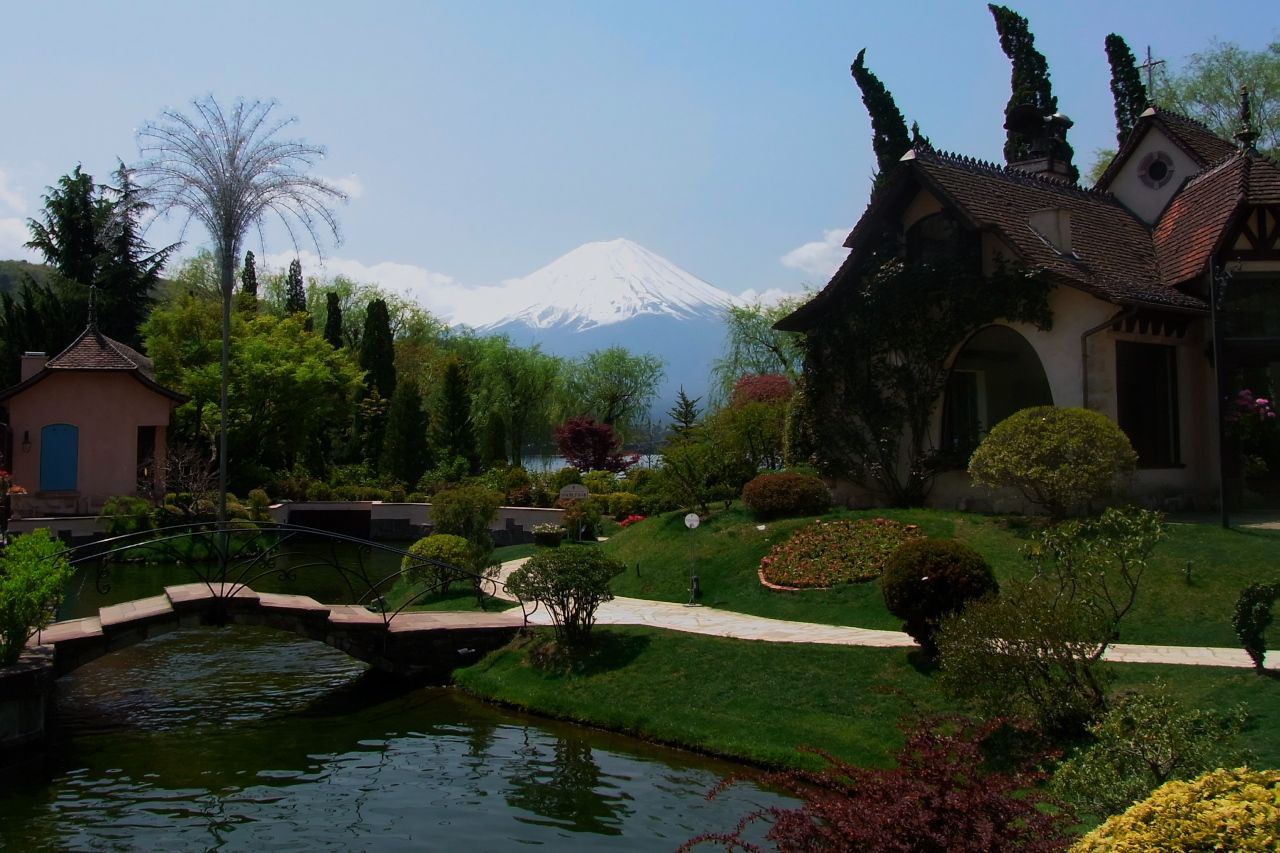
Tucked into a European-style garden on Lake Kawaguchiko's north shore is a self-playing instrument that was built for the Titanic but never made the sailing, plus a self-playing organ the museum bills as "one of the world's largest." Before the rose garden and the Fuji backdrop pull you in, though, remember the two things that catch most people out: adult admission comes in three tiers — weekday ¥1,800, weekend/holiday ¥2,100, and high season ¥2,300, so the same adult pays up to ¥500 more depending only on the day; and the museum is closed on Tuesdays and Wednesdays in principle, so plenty of visitors turn up on a Wednesday to a locked gate. This guide lays out how to work the three-tier fare for the least money, how to actually check the closed days, how the Titanic story splits into a permanent and a limited layer, how to time the daily performances, when the rose garden peaks, how to get there by loop bus, and an honest read on exactly who this place is for. All prices and times are official, verified July 2026.
📍 The museum is on Kawaguchiko's north shore. A few stops along the same loop-bus line is the free viewpoint covered in the Oishi Park guide (lavender, shibazakura and Fuji); to climb for the lake-in-one-frame shot see the Mt. Tenjo ropeway guide; for lakeside foliage timing see the Kawaguchiko autumn guide; and for getting here from Tokyo, the Tokyo to Mt. Fuji access guide.
- Three-tier tickets: adult weekday ¥1,800 / weekend ¥2,100 / high season (2026 = Aug 11–16) ¥2,300; elementary/junior-high a flat ¥1,000
- Closed-day trap: Tuesdays and Wednesdays in principle, but peak season is an exception (August 2026 closes only on the 25th and 26th) — check the current monthly calendar first
- Titanic story, two layers: the permanent self-playing instrument (always there) vs the 2026 "Museum Bath × TITANIC" exhibition (only through Dec 31)
- Several shows daily: the world-class dance organ, sand art, opera — pick up the day's timetable at the desk
- Rose garden: peaks in June, autumn roses in October, best with a Fuji backdrop on a clear day
📖 Table of Contents (click to expand)
- The three-tier fare: weekday, weekend, high season
- The closed-day trap: Tue/Wed in principle, but peak-season exceptions
- The Titanic story: permanent instrument vs 2026 exhibition
- The world-class dance organ and daily performances
- Rose garden seasons and the Fuji backdrop
- Experiences: princess dress-up and music-box crafting
- How to buy for less: advance discounts vs the Special Ticket
- Access: loop bus, taxi, and direct highway buses from Tokyo
- In-museum etiquette: photography and costume rules
- Is it worth a dedicated trip? Who it's for, who it isn't
- FAQ
The three-tier fare: weekday, weekend, high season
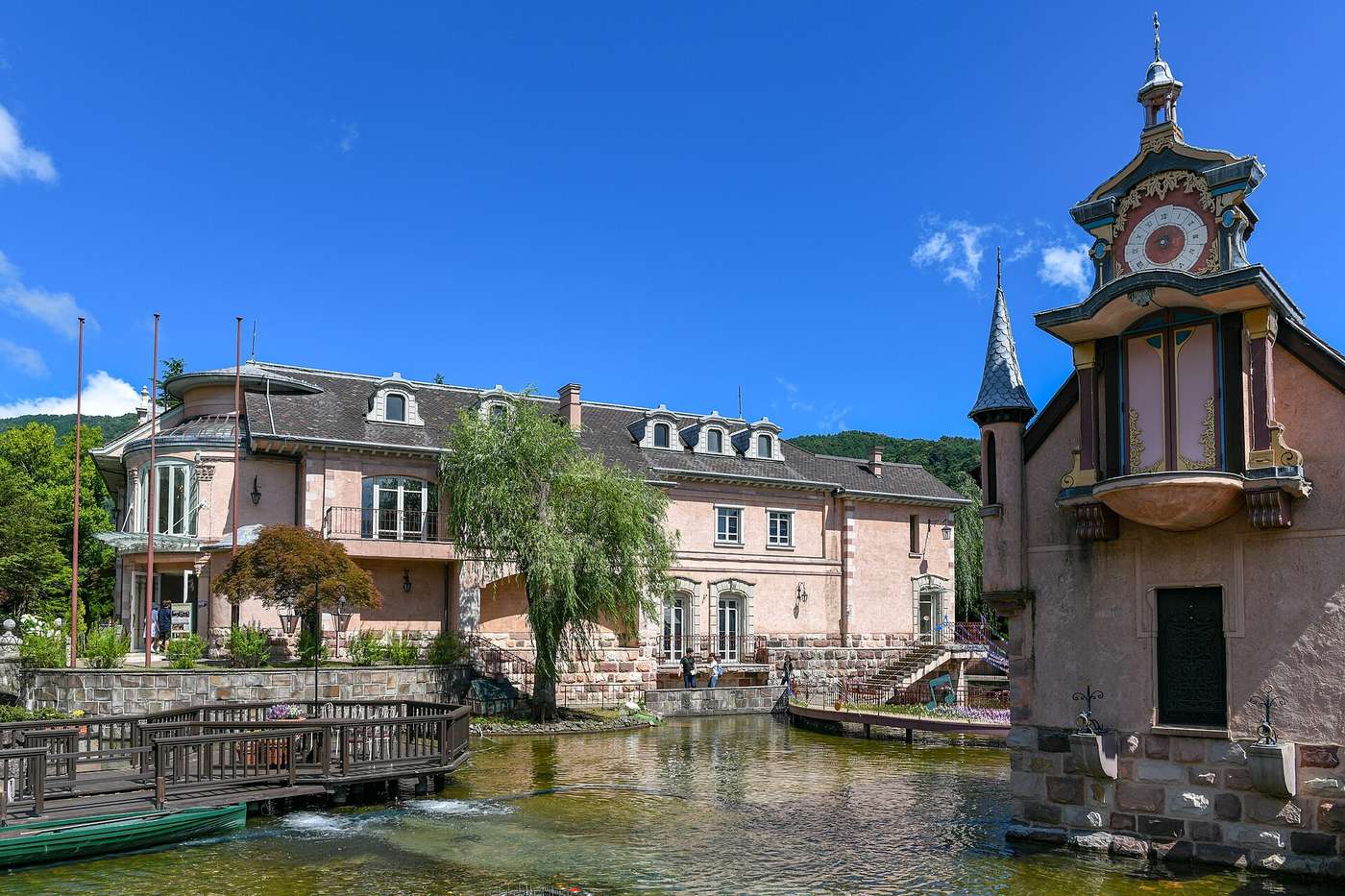
Let's clear up the fare most likely to trip you up. Admission here is not a single price — it splits into three tiers: weekday, weekend/holiday, and high season. Many people see "¥1,800" online and assume that's the flat rate, then get charged ¥2,100 at the gate on a weekend and think they misremembered — that's simply the official weekend surcharge. Per the official 2026 fare page, general admission is as follows:
| Category | Weekday | Weekend/holiday | High season (Aug 11–16, 2026) |
|---|---|---|---|
| Adult | ¥1,800 | ¥2,100 | ¥2,300 |
| University / high-school student | ¥1,300 | ¥1,600 | ¥1,800 |
| Elementary / junior-high student | ¥1,000 | ¥1,000 | ¥1,000 |
Two points. First, an adult pays up to ¥500 more on a peak day (weekday ¥1,800 vs high season ¥2,300), which is real money for your budget — if your dates are flexible, dodging weekends and the Obon week saves you the difference. Second, elementary and junior-high students are a flat ¥1,000 that doesn't rise on holidays, and preschoolers are free, so families with small children actually come out relatively better on a weekend. High season in 2026 is officially August 11 (Tuesday) to August 16 (Sunday) — the Obon holiday week — with no high-season surcharge in any other month.
Two easily-missed discount brackets: groups of 10 or more drop to ¥1,500 for a weekday adult, and disability-certificate holders plus one accompanying person pay just ¥900 for a weekday adult. Both save a lot for those who qualify, but you'll need to show documentation on site.
The closed-day trap: Tue/Wed in principle, but peak-season exceptions
This is the second high-frequency trap after the fare. The official FAQ's exact wording is that the museum is "closed in principle on Tuesdays and Wednesdays" — note "in principle," which signals exceptions, not "shut every single Tuesday and Wednesday." Peak season and long holidays often stay open.
The 2026 calendar makes the difference clearest:
- July 2026: closed days were the 1st, 7th, 8th, 14th, 15th, 21st, 22nd, 28th and 29th — the regular Tuesday-plus-Wednesday rhythm, matching "in principle."
- August 2026: the whole month closes only on the 25th and 26th. During the summer peak it's open almost every day, including the high-season week (Aug 11–16).
In other words, if you see "the Music Forest is closed Wednesdays" and simply block Wednesday off your plan, you might miss a peak-season day it stays open; conversely, a quiet-season Wednesday really will be shut, and turning up to a locked gate stings more. There's only one safe approach: check the official monthly calendar before you go (the official /info/ page posts it as a month grid), or phone to confirm — don't go on memory. Opening hours themselves are 10:00 to 17:30, last admission 17:00, and the operator notes hours may change without notice, so treat even the times as subject to the current official posting.
The Titanic story: permanent instrument vs 2026 exhibition
The thing this museum is best known for by word of mouth is its Titanic connection. But two separate things get blurred online, so here's the split, to save you confusion on site.
Layer one — the permanent instrument's backstory (always there). The museum owns a large self-playing instrument, the "Philharmonic Orchestrion," and the official display label is explicit: it was meant to be installed on the British luxury liner Titanic to entertain first-class passengers, but was finished too late to make the sailing, so it never boarded that ship. Precisely because it never boarded, it escaped the sinking and survives to play here today. It's a permanent exhibit — whatever month you visit, you'll hear it and read its story card.
Layer two — the 2026 limited exhibition (time-sensitive). Separately, there is a time-limited special exhibition, "Museum Bath × TITANIC — Toward a Thrilling Voyage," running March 28 to December 31, 2026 (originally a shorter run, extended to year's end by popular demand). It features a Titanic-themed concert, a re-creation of the film's grand staircase, and a themed "Titanic lunch" — the lunch needs booking two days ahead and is not accepted during August 11 to 16 (the high-season week). This is a limited event that may close or change after 2026, so don't treat it as permanent. If you're coming specifically for this exhibition, confirm on the official site that it's still running — don't assume from an old article that it's always on.
The world-class dance organ and daily performances
The heart of this museum isn't "exhibits sitting there for you to look at" — it's that several live performances run every day, which is what sets it apart from an ordinary museum. The key halls:
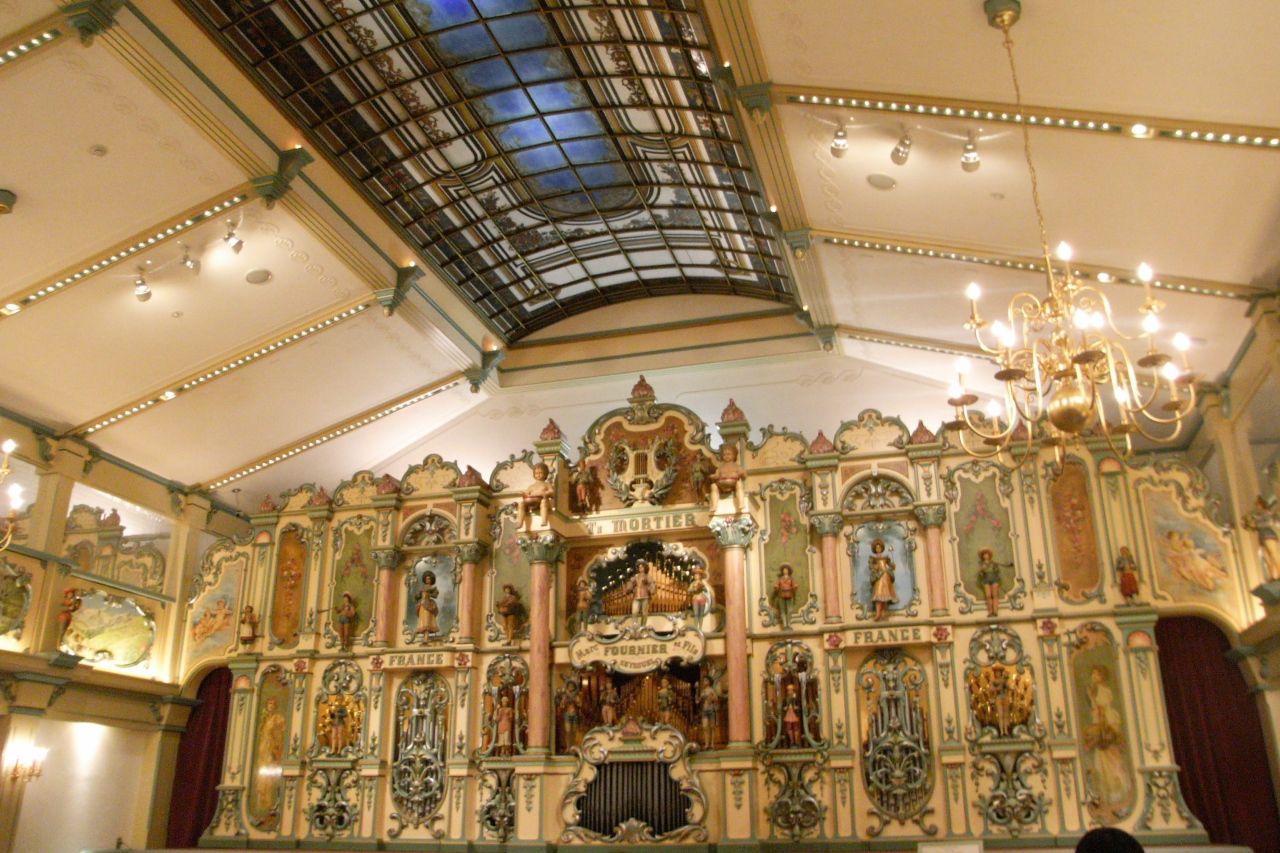
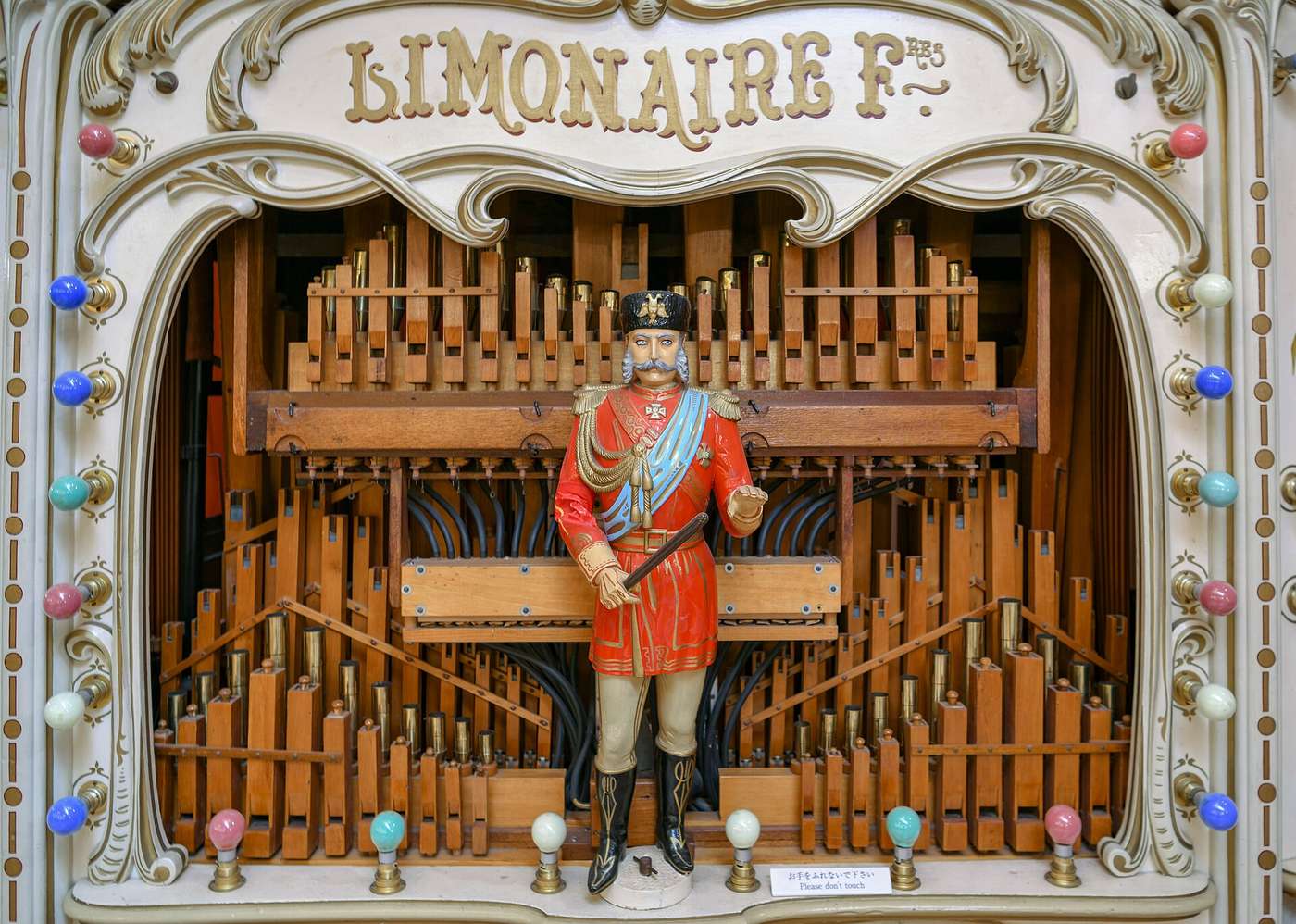
- Organ Hall — the world-class dance organ: this is the headline act. The museum calls it "one of the world's largest dance organs," made by Belgium's Mortier around 1920. The entire 20-metre-long room is itself a giant instrument, 13 metres wide and 5 metres tall, with roughly 800 pipes and a total of 43 figures on the side walls that move in time with the music. Hearing a century-old mechanical organ play itself while the figures sway is the one show worth planning your visit around.
- Concert Hall (main hall): a live recital of the self-playing-instrument collection — this is where the "almost sailed on the Titanic" instrument from the last section lives.
- Sand Art: dynamic sand painting set to live violin or piano, the image flowing with the story; the July 2026 program was "Cinderella," and the program rotates seasonally.
- Opera concert: billed by the museum as "a century-old self-playing instrument and a modern opera singer performing across time," a contrast of the mechanical and the human voice.
- Carillon plaza: an outdoor fountain-and-bell show, on the hour from 11:00 to 17:00 — the only slot with a firm, fixed time, so it's the easiest to schedule around.
To be honest with you: apart from the carillon plaza's hourly slot, the exact start times for the other shows shift by date and program, posted by the museum on a daily schedule. So I won't hand you a "this show at this exact minute" timetable — those go stale and leave you missing shows. The practical move is to pick up the day's timetable at the desk when you enter, circle the dance organ and sand-art shows you most want, then work the garden and lunch around them. That way you won't lose yourself in the garden and miss the flagship organ performance.
Rose garden seasons and the Fuji backdrop
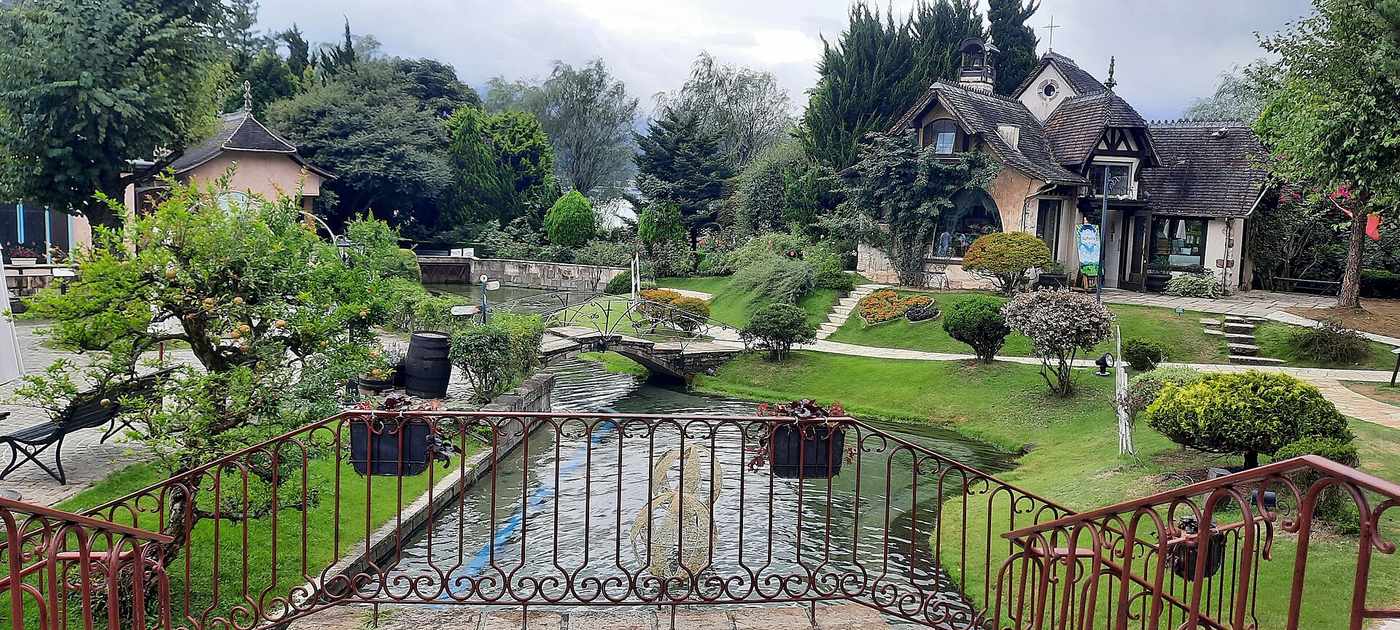
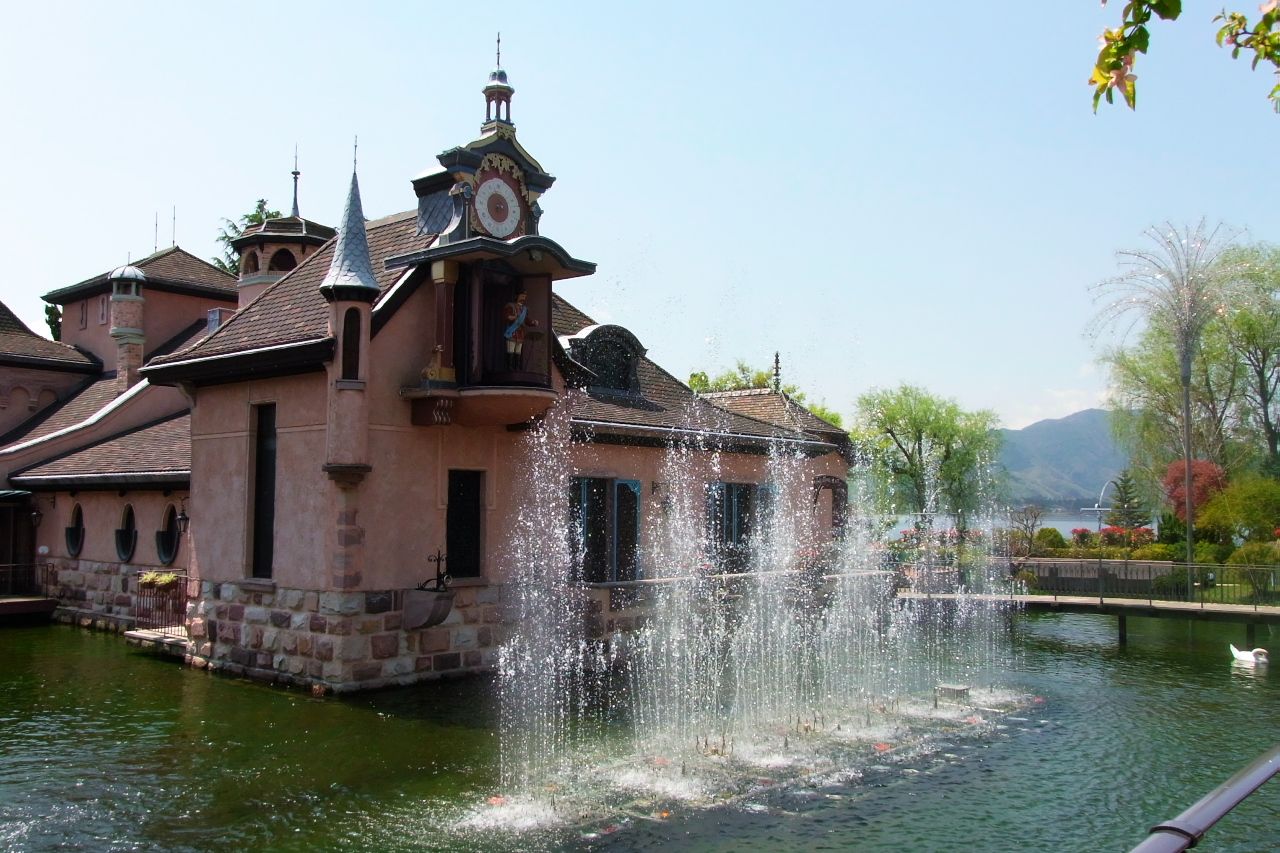
The garden is the main stage for photos. The official rose garden has 720 varieties and 1,200 plants, with a clear seasonal split:
- June is the "rose garden's peak," which the museum calls "the most gorgeous scene of the year" — for a garden full of roses, this month is the safest bet.
- October brings the autumn roses into their best, which the museum describes as a "quieter, more refined mood," with fewer people than June — good for anyone who prefers a calm composition.
Actual bloom timing drifts year to year, and the museum itself suggests checking its "Garden Diary" blog for the live state of the flowers — so if you're coming specifically for the roses, check that week's blog update before you book, rather than trusting the broad "June peak" line; a bloom running one or two weeks early or late is common.
As for the frequent question, "how do I get roses with Fuji in the shot": the official page doesn't name any single vantage point, so I won't invent a "stand at this gazebo, this angle" fiction. The reality is that the garden faces toward Fuji, and on a clear day when the mountain is out, you can stack the foreground roses, the mid-ground European clocktower and the distant Fuji into one frame; the deciding factor is still the weather — no composition rescues a Fuji buried in cloud. In that respect it's the same as Oishi Park across the lake: a clear day is the real headliner.
Experiences: princess dress-up and music-box crafting
If you have children along, or just want to do something different, two paid experiences are worth knowing:
Princess dress-up (dress rental): rent a gown to photograph in the garden and European settings. Adult gowns run 90 minutes at ¥2,000 / ¥3,000 / ¥4,000 by style, sizes 7 to 21, around 60 to choose from; children's gowns are 90 minutes at ¥2,000, 90cm to 160cm, around 70 available. Accessories such as hats, parasols and flower crowns are ¥500 each. You can book online (via Activity Japan) or apply at the desk on the day. Two things to note: while wearing a gown you cannot enter the restaurant or the music-box crafting workshop, and weather may limit which gowns can be worn outdoors.
Music-box crafting: assemble a music box to take home. The clear-dome version is 30 minutes from ¥1,850; Dome A (pink/blue/white) from ¥2,300; Dome B (rose gold) from ¥2,500; a hand-crank wooden box is 60 minutes at ¥2,100; a wind-up wooden box is 60 minutes at ¥2,500 (these are starting prices for the mechanism plus the case, with decorative parts extra). You can book online or join on the day without a reservation. The fine detail of these prices and the booking availability do change, so reconfirm the current rates on the official site before you go — what I've given here is the July 2026 verified figure.
How to buy for less: advance discounts vs the Special Ticket
There are two money-saving routes for admission; which one depends on whether you want to save cash or add value:
Route one — official advance-sale partners (choose this to save money). The partners the official fare page itself lists include KKday, Rakuten and Jalan, discounting about ¥200–300 per person, with Rakuten also giving points back. Buy an e-ticket ahead on your phone and you pay a little less than the gate price while skipping the ticket queue. This is a fact the official page states, not a sales pitch — use whichever platform you already have an account with and useful points on.
Route two — the Special Ticket (choose this if you'll spend inside). The museum also sells a "Special Ticket" priced a bit higher than a regular one (weekday adult ¥2,000 / student ¥1,500; weekend adult ¥2,300 / student ¥1,800) but bundled with a ¥500 voucher usable at all in-museum facilities, valid that day. The math is easy: if you were going to eat, buy a music box or do a crafting experience inside anyway (well over ¥500), this ticket effectively buys ¥500 of credit for ¥200 — worth it; but if you're only going to see the exhibits, watch the shows and stroll the garden with no extra spend, skip it and pair a regular ticket with an advance discount instead.
You can also buy admission online and scan the voucher at the gate, which suits anyone who would rather skip the ticket window: Music Forest Museum tickets on KKday →Check two things before you click. First, this is calendar-based pricing, not a fixed discount — the same adult ticket moves through several price bands by date, and on a busy date it can land above the official gate price, so compare it with the table above for your own date. Second, online tickets cannot be cancelled, changed or refunded, and the museum normally closes on Tuesdays and Wednesdays — pick the wrong date and the ticket is simply dead. If your itinerary is still fluid, buying at the gate costs you nothing.
Access: loop bus, taxi, and direct highway buses from Tokyo
The museum is on Kawaguchiko's north shore (address: 3077-20 Kawaguchi, Fujikawaguchiko, Minamitsuru District). Ways to reach it:
- Kawaguchiko Retro Loop Bus: from Kawaguchiko Station, about 26 minutes for ¥380, getting off at the "Kawaguchiko Music Forest Museum" stop right at the entrance — the mainstream way.
- Taxi: about 16 minutes and roughly ¥2,000 from Kawaguchiko Station, worth it if you're pressed for time or splitting the fare among several people.
- Direct highway buses from Tokyo: the highway buses from Shinjuku and Tokyo Station (Yaesu) stop at both the museum and the "Shizen Seikatsukan" stop — which is right beside Oishi Park. Sample official services: Shinjuku departs 12:45, arrives at the museum 14:49; Tokyo Yaesu departs 11:20, arrives 13:30; return services leave Shizen Seikatsukan at 15:35 / 16:10. That means you can head straight from Tokyo to the north shore, skipping a transfer at Kawaguchiko Station.
Parking: about 300 spaces for cars and 30 for large buses, free for museum visitors, located across the road. A friendly touch if you're driving.
The smoothest itinerary strings the three north-shore/lakeside sights together in one day: the Music Forest, Oishi Park, and the Mt. Tenjo ropeway. The two highway-bus stops (the museum and Shizen Seikatsukan, beside Oishi Park) already sit on the same line, while the Mt. Tenjo ropeway is on the east shore and the loop bus reaches it too. Just note the Music Forest and Oishi Park are not within walking distance of each other (different bus stops), so hop one leg on the loop bus. For the full Tokyo-to-Kawaguchiko comparison (Limited Express Fuji Excursion, highway bus, JR to Fujikyuko Line), see the Tokyo to Mt. Fuji access guide.
In-museum etiquette: photography and costume rules
This is a very photogenic place, but the museum has clear rules on shooting, and knowing them spares you an awkward moment on site. Per the official photography rules:
- Cosplay outfits and wedding dresses are not allowed inside — if you want to photograph in finery, use the museum's own princess dress-up plan, which is the only permitted form of "non-everyday costume" photography.
- Changing or costume photography outside the princess plan is prohibited.
- Tripods, selfie sticks, reflectors and drones are prohibited. To shoot roses with Fuji, rely on handheld framing and don't bring a tripod.
None of this affects an ordinary visitor snapping photos, but if you were planning to wear special costume or bring pro gear, read the rules first so you don't haul it there for nothing.
Is it worth a dedicated trip? Who it's for, who it isn't
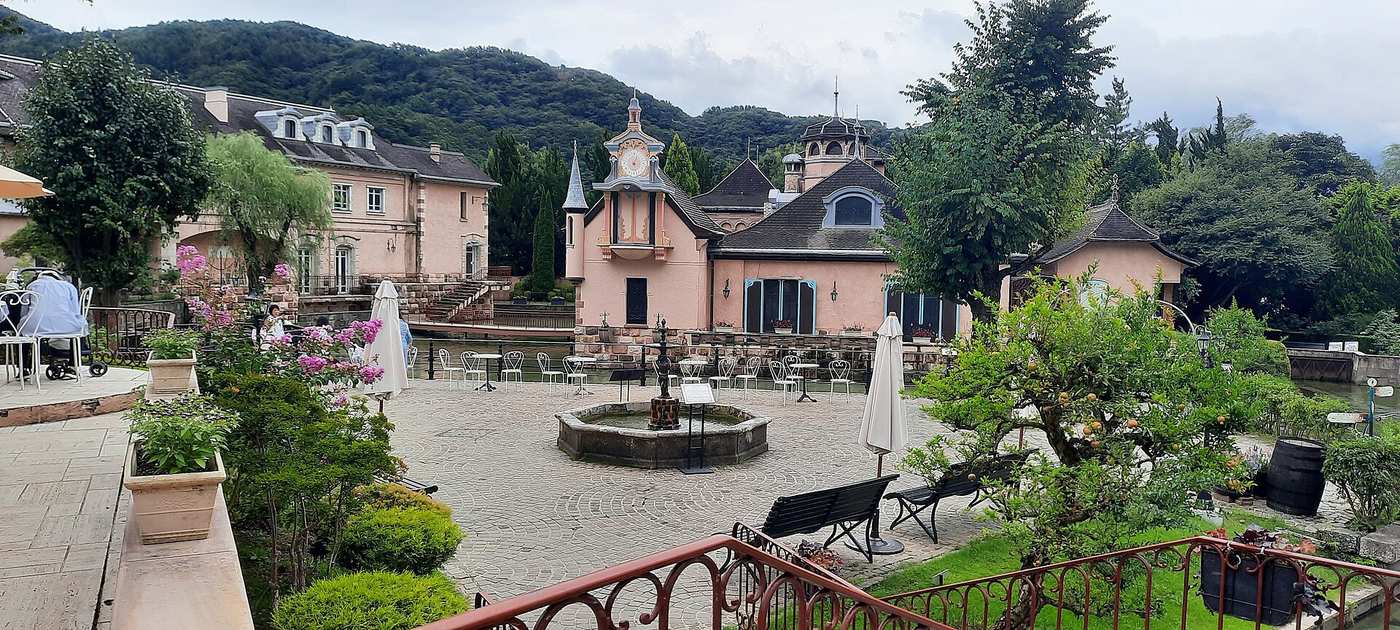
Here's my straight take. Who this suits: people who love music boxes, mechanical antiques and a European-garden mood; families with children who want to try princess dress-up and crafting; and anyone who wants a "works even in the rain" indoor backup in a Kawaguchiko itinerary — that last point is genuinely practical. The lakeside Fuji-view spots (the Mt. Tenjo ropeway, Oishi Park) lose a lot to cloud and rain, whereas the Music Forest's core draw is indoor performances that hold up fine in bad weather — a strong Plan B for the day Fuji is buried in cloud.
Who it isn't for: people who purely want to save money and just want to see Fuji without paying into a museum (the free lakeside spots fit you better); people on a very tight schedule cramming five or six stops into a day (doing this place properly, with the performances, needs 2 to 3 hours, and rushing wastes the ticket); and anyone with no interest in music boxes or mechanical instruments who just wants one quick photo (a ticket from ¥1,800 isn't good value for a "snap and go" visit).
The honest one-liner: it isn't a "must-do at Mt. Fuji" sight — it's a "people who get it will find it very worthwhile" sight. If a century-old self-playing instrument, a rose garden, and the backstory of an instrument that never made its ship speak to you, it may be the stop you remember most from this Kawaguchiko trip; if not, your time and budget go further on the free lakeside scenery. To sort the north-shore day first, pair this with the Oishi Park guide and the Kawaguchiko autumn guide. If your date is fixed and you want the ticket in hand: Music Forest tickets on KKday →
Frequently Asked Questions
- Q1:How much are tickets to the Kawaguchiko Music Forest Museum, and are weekends really pricier?
- Yes — this is the thing most people only discover at the gate. Per the official 2026 fare page, adult admission comes in three tiers: ¥1,800 on weekdays, ¥2,100 on weekends and holidays, and ¥2,300 in high season, so the same adult pays up to ¥500 more depending only on the day. High season in 2026 is August 11 to 16 (the Obon holiday week). University and high-school students pay ¥1,300 weekday / ¥1,600 weekend / ¥1,800 high season; elementary and junior-high students are a flat ¥1,000 across all three tiers; preschoolers are free. To save a little, the museum's official advance-sale partners (KKday, Rakuten, Jalan) discount about ¥200–300 per person if you buy ahead on your phone.
- Q2:Which days is the Music Forest Museum closed? Could I turn up to a locked gate?
- The official FAQ says it is closed "in principle on Tuesdays and Wednesdays" — and the words "in principle" matter, because peak season brings exceptions. In practice: in July 2026 the closed days were the 1st, 7th, 8th, 14th, 15th, 21st, 22nd, 28th and 29th (the regular Tuesday-plus-Wednesday pattern); but in August, as the summer peak, the whole month closes only on the 25th and 26th, staying open even through the high-season week (Aug 11–16). So don't take "closed Tuesdays and Wednesdays" as gospel — peak season often stays open, and a quiet-season Wednesday really will be shut. The safest move is to check the current monthly calendar on the official site, or phone, before you plan around it.
- Q3:What is the museum's connection to the Titanic?
- There are two layers here, and people often blur them. The first is a permanent piece: the museum owns a large self-playing instrument, the Philharmonic Orchestrion, which the official label explains was meant to be installed on the British liner Titanic to entertain first-class passengers — but it was finished too late to make the sailing, so it never boarded. That instrument is on permanent display and plays whenever you visit. The second layer is time-limited: for 2026 there is a special exhibition, "Museum Bath × TITANIC," running March 28 to December 31, 2026 (extended by popular demand), with a Titanic-themed concert, a grand-staircase set, and a Titanic lunch (the lunch needs booking two days ahead and is not accepted during Aug 11–16). That exhibition is a limited event that may end after 2026 — don't confuse it with the permanent instrument story.
- Q4:Do the self-playing instrument performances run on a fixed timetable?
- There is a schedule, but it is not a single fixed timetable. The museum runs several live performances a day across its halls: the Organ Hall's world-class dance organ (made by Belgium's Mortier around 1920, with roughly 800 pipes and 43 figures on the walls that move to the music), the Concert Hall's self-playing-instrument recital, the Sand Art show (dynamic sand painting with live violin or piano), an opera concert, and the carillon plaza's hourly fountain-and-bell show (11:00 to 17:00, on the hour). Exact start times for the individual shows shift by date and program and are posted on a daily schedule, so the practical move is to pick up the day's timetable at the desk when you enter and build your visit around the shows you most want — rather than trusting an old timetable found online.
- Q5:How do I get there from Kawaguchiko Station, and can I combine it with Oishi Park?
- Two main ways: the Kawaguchiko Retro Loop Bus takes about 26 minutes for ¥380, getting off at the "Kawaguchiko Music Forest Museum" stop right at the entrance; or a taxi is about 16 minutes and roughly ¥2,000 if you're in a hurry. Coming straight from Tokyo, the highway buses from Shinjuku and Tokyo Station stop at both the museum and the "Shizen Seikatsukan" stop (which is right beside Oishi Park), so the Music Forest, Oishi Park, and the Mt. Tenjo ropeway can all be strung into one north-shore day. Note the museum and Oishi Park are not within walking distance of each other (different bus stops), but they sit on the same loop-bus line, so linking them by bus is easy.
Read next
Oishi Park: lavender & kokia calendar, access guide
The free Fuji-and-flowers spot on Kawaguchiko — official bloom calendar, lavender and kokia timing, and access.
Kachi Kachi Ropeway: fares, passes & is it worth it?
3 minutes up Mt. Tenjo for the lake-and-Fuji frame — fares, four official passes, the ¥500 swing, and the 40-min hike down.
Kawaguchiko Autumn 2026: Momiji Corridor & Ropeway Guide
A spot-by-spot peak-timing table, Fujikaiyu vs highway bus math, and how to dodge the leaf-season crowds.
📊 See the 2026 Price Index (JR Pass, DPA, eSIM, Airport Transport) →