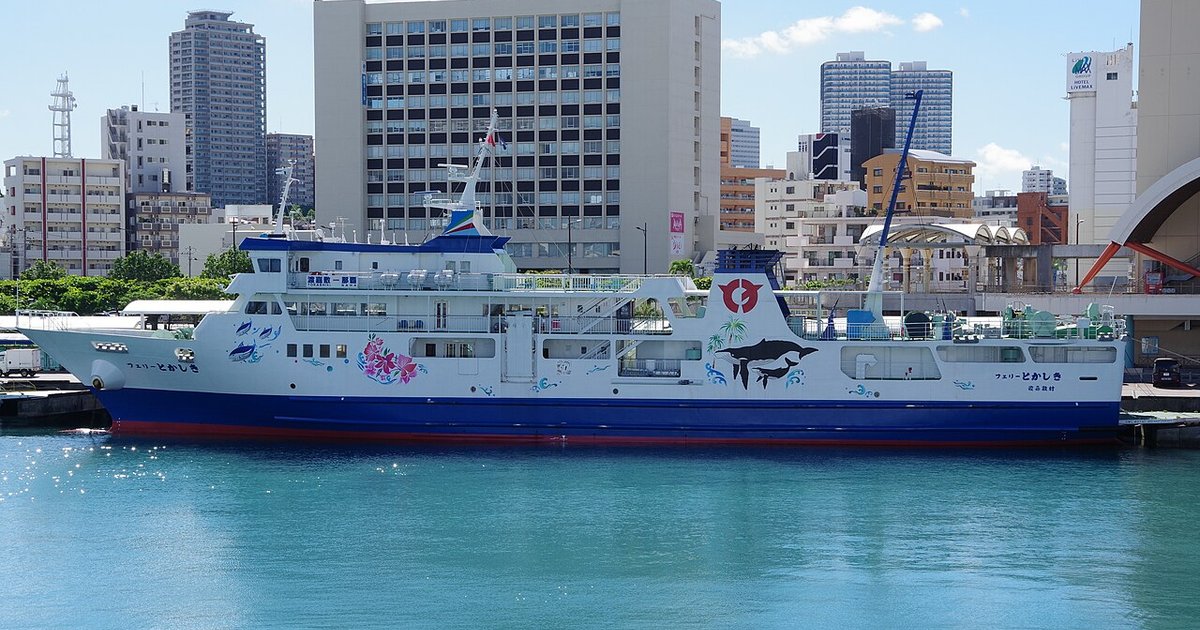
In Kerama waters an ordinary whale gets you a maximum of two hours per boat. A mother with a calf gets the entire fleet one hour in the morning — and at Tokashiki, that single hour is the whole day. You also cannot get in the water. This guide explains who wrote those rules, how far they reach, and why boats leaving Naha the same winter sell whale swims openly and legally. Along the way it settles the three things that actually decide whether your trip works: there is exactly one boat a day-tripper can catch, both villages' ferry fares change before the 2027 season, and at 08:00 on the morning of your trip you will learn two things at once.
- No swimming with whales — but it is a voluntary rule, not law. For non-member boats the official text only requests cooperation, and there is no penalty.
- Watching time comes in three tiers. Two hours per boat for ordinary whales; for mothers and calves, one hour morning plus one hour afternoon for the whole Zamami fleet, and one morning hour at Tokashiki.
- Day trips to Tokashiki work only via the 09:00 high-speed boat. The association states it cannot take passengers off the 10:00 ferry.
- 2027 is the first season on both new fare tables. Zamami raised fares on 1 Jan 2026; Tokashiki raises them on 1 Oct 2026, by about 30%.
- Your ferry cancels before the whale boat does. Ferries stop at 1.5 m wave height inside the port; whale boats run until 3 to 4 m.
📖 Table of contents (click to expand)
- Can you swim with whales in Kerama?
- How far do these rules reach?
- Kerama vs Naha: two products with the same name
- How long you actually get
- Zamami vs Tokashiki vs a Naha day trip
- Is a day trip from Naha worth it?
- The 2027 season runs on new fares
- Will the boat sail?
- How to book, and who to book with
- What are the odds of seeing one?
- Why there are no photos of Kerama whales here
- What has been announced for 2027
- FAQ
- Appendix: original Japanese sources
Can you swim with whales in Kerama?
No. But that is not Japanese law — it is a rule two village associations wrote for themselves, and for boats that are not members the official text only requests cooperation.
The usual assumption is that this is a national park prohibition with an enforcement arm behind it. That reading is wrong in a way that matters, because it implies both that the ban applies elsewhere in Japan and that someone will fine you. Neither holds.
Start with what the rule looks like. The Zamami association's rule page is headed with the Japanese term for a voluntary rule. Article 1 of the Tokashiki rules says outright that the association establishes them of its own accord. Both then carry the same sentence about non-member boats: cooperation is requested. When the Ministry of the Environment turned this framework into a bilingual booklet, the English it chose was "asked to cooperate" — a request, not a prohibition.
Now look at whether the legal layer contains anything. The restrictions the ministry publishes for Kerama Shoto National Park cover the collection and capture of coral and ornamental fish in marine park zones, and the picking and damaging of designated plants. There is no provision about approach distance to cetaceans and none about people entering the water.
So the accurate phrasing is the association's own: whale swimming is not recognised in the national park waters of the Kerama Islands — with the association, not the state, doing the recognising.
The officials themselves say it is not there yet
Could this become a legally backed designation? Yes, and it is being pushed. On the evening of 9 November 2025 the two associations signed an agreement at the Zamami community centre. Zamami's deputy mayor, Mayumi Miyahira, characterised the ceremony as an important step toward making Kerama humpbacks a specific natural tourism resource under the Ecotourism Promotion Act, so they can be protected and nurtured.
That designation is the layer with actual legal process behind it. The word used was step. Read that sentence and you have the boundary of the current framework straight from the officials pushing to extend it.
A footnote from the same report is worth carrying with you: the ceremony was brought forward at short notice because of rough seas. Even the signing got rescheduled by the weather — a theme you will meet again in the sailing section.
How far do these rules reach?
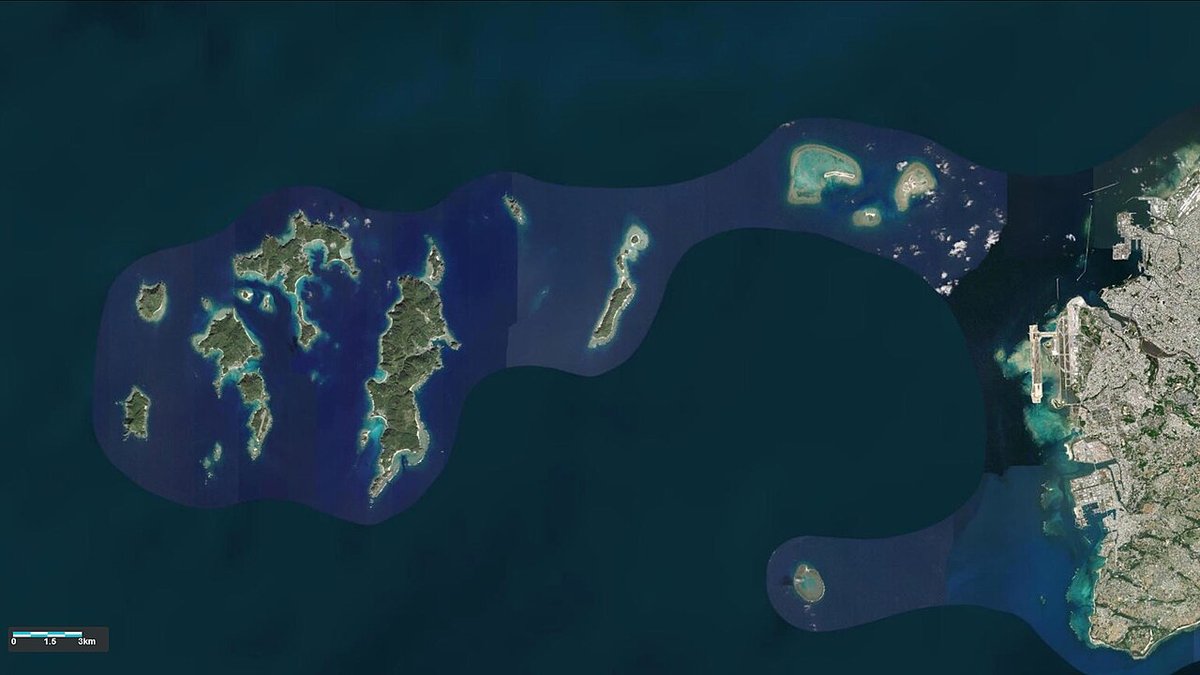
Zamami draws its line at 10 nautical miles (18 km) from the shores of its islands; Tokashiki draws its at 7 km. The two numbers differ, and that is not a typo.
Each village writes the area into its own rules and includes the other: the Zamami text names both the 18 km zone around Zamami's islands and the 7 km zone around Tokashiki's, while the Tokashiki text refers to the national park area designated in 2014 and 7 km from each island's coast. The ministry's English version keeps both figures side by side rather than harmonising them.
One detail here has practical consequences. "Each island" is not just Zamami and Tokashiki — it takes in Aka, Geruma, Fukaji, Maejima and Nagannu. The next section uses that.
What the rules actually regulate
They apply to baleen whales including humpbacks, and to sperm whales. Distance comes in two rings: a 300 m slow-down zone and a 100 m restricted zone. Inside the restricted zone a boat may not approach the whale; if a whale approaches the boat, the boat stops and holds until the animal leaves the zone. No sudden acceleration, no sharp turns.
Note who this binds. The text explicitly includes non-powered craft — yachts, traditional sabani canoes, kayaks and stand-up paddleboards. Rent a SUP and paddle out near shore and you are inside the same framework.
Then there are the mother-and-calf sanctuaries, where boat-based whale watching is banned outright, with a single exception for survey vessels flying a designated survey flag. Tokashiki added a line to that section that is genuinely useful to visitors: placing the protected area in the inner bay is expected to increase opportunities for whale watching from land. The sanctuary sits close to shore, so the shore is where you can watch. Hold that thought for the photography section.
The no-swimming clause differs between the two villages
Zamami's version is the longer one. It prohibits people entering the water to watch whales, including surface swimming such as whale swims, diving and snorkelling — and it adds a clause the other village does not have: underwater photography of whales is also prohibited in principle. The single exception has a local name, takkuwari, describing a whale that comes close to the boat of its own accord; in that case you may gently lower a camera into the water from the gunwale. A further clause bans making whale calls or similar sounds underwater, with normal engine noise excluded.
Tokashiki's text only prohibits in-water watching including surface swimming. It contains no underwater photography clause. The ministry booklet adopted the Zamami wording and published it under the Kerama name, which is why the stricter version is the one most often seen. To be precise: attribute the photography ban to Zamami.
Non-profit education, survey and research work has a route in — submit a plan in advance, obtain association permission, and fly the survey flag.
Kerama vs Naha: two products with the same name
They are different associations, different waters and different rules — and the difference is not about which one is ethical, it is about how binding the rules are and how far they reach.
The Okinawa Main Island Central-Southern Whale Association, based in Nishi 1-chome in Naha, runs a dedicated whale swim page. The method it describes is approaching by small boat, then entering the water quietly and observing from the surface, with its own participant guidelines attached: no free-diving or duck-diving, no strobes, no feeding, no touching. Amami likewise has an association and its own whale swim rules — I could not retrieve that association's own site, so none of its clauses are quoted here.
Why does Kerama not follow suit? The associations explained it themselves in the announcement banning whale swims, and the load-bearing word is small. They wrote that with overuse in Okinawa and Amami raising concern about harm to whales, and scientific findings showing worsening effects on the mothers and calves that carry the population's future, their conviction was to protect at least the Kerama waters — a particularly important breeding area, and a national park.
That "at least" tells you what this is. Not the local edition of a national ban. Two villages drawing a line in an environment where no line otherwise exists.
Where Naha day trips actually watch whales
Here is the grey zone worth understanding. Naha departures often watch whales around Nagannu Island, which belongs to Tokashiki Village and therefore falls inside the 7 km zone the Tokashiki rules describe. But those operators are not association members, so the rules reach them only as a request for cooperation.
The practical difference looks like this. One Naha operator runs a six-hour trip: meet at Mie-gusuku Port at 08:30, depart 09:00, landing on Nagannu included, 11,880 yen for adults aged 5 and over and 5,630 yen for children up to 4, plus a 100 yen environmental cooperation fee collected on the day. Its terms state plainly that no refund is given if no whale is encountered. That is a complete, legal, guideline-bound product. It simply sits in a different rule set from the two villages.
So which one should you buy?
Off the Kerama member boats you are buying a constrained encounter: a fleet-wide time quota on mothers and calves, no closing inside 100 m, no entering the water, no underwater photography at Zamami, and a trip that may be deliberately shortened. Part of what you pay for is the not-looking.
Out of Naha or in Amami you are buying the other thing: surface entry, close observation, and guidelines enforced by the operator's own discipline. The ceiling on the experience is much higher, and so is your dependence on picking an operator that genuinely follows its own rules.
Pick by what you want to come home with. If it is one close encounter at the surface, Naha and Amami have it. If it is a breeding ground being kept deliberately quiet, that is what Kerama trades for. Tokashiki association chairman Kazunori Hase put the trade well at the signing: he wants this to be a place where whales still come back with their young a hundred years from now. His Zamami counterpart Takeshi Nakamura called it the island and sea the whales chose.
How long you actually get
It depends on which whales you find, and the tightest limit is not counted against your boat.
| Situation | Time limit | Counted against |
|---|---|---|
| Ordinary whale (one animal or one group) | 2 hours | Each boat separately |
| Mother and calf, Zamami | 1 hour morning + 1 hour afternoon | 🔴 The entire watching fleet |
| Mother and calf, Tokashiki | 1 hour morning | 🔴 The entire watching fleet |
Tokashiki has only the morning slot because the same rules restrict departures to mornings. So mother-and-calf watching there amounts to one hour a day, shared by every boat on the island.
What that means for you: time used by boats that went out before you is gone. It is a quota, not a duration, and your ticket does not reserve you a share of it.
The associations spell out the consequence too. Zamami's tour information notes that when only mothers and calves are found, the trip may become about an hour for conservation reasons. You book the 1 to 2 hours the association advertises, and the association tells you in advance it may be cut. Do not stack a flight or another booking tightly behind it.
Zamami vs Tokashiki vs a Naha day trip
Start with whether you are staying on an island. Day-tripping points to Tokashiki; an unhurried trip points to staying at Zamami.
| Zamami | Tokashiki | Naha departure (non-member) | |
|---|---|---|---|
| Rule set | 🟢 Village association voluntary rules, binding on members | 🟢 Same | 🟡 Inside Tokashiki's zone but non-member; only asked to cooperate |
| Can you enter the water? | 🔴 No | 🔴 No | 🟢 A separate Naha association sells whale swims |
| Departures | Morning and afternoon | Basically one morning sailing | Morning departure, about 6 hours |
| Advertised duration | About 1–2 hours | 2 hours | About 6 hours including island landing |
| Mother-and-calf quota | Fleet: 1h AM + 1h PM | Fleet: 1h AM | Not applicable (non-member) |
| Association rate, 2026 season | ¥7,700 + ¥600 spotting fee | ¥8,800 (one price, adults and children) | 11,880 yen adult (single operator's quote) |
| 2026 season window | 8 Jan – 25 Mar (77 days) | 24 Jan – 8 Mar (44 days) | Varies by operator |
| Day trip from Naha | Works in Feb–Mar; confirm high-speed sailings for Jan | 🟢 Works, but only the 09:00 boat | 🟢 Naha round trip by design |
| Payment | By boat; some take cards and QR | 🔴 Island is effectively cash only | By operator |
Read the price row carefully. What the associations publish is a standard rate, not a fixed one. Zamami notes that member boats may charge differently and asks you to confirm when booking; one member boat I checked advertises 6,600 and 5,500 yen, below the association standard. Tokashiki's two checked member shops both quote the same figure, 8,000 yen before tax, one price for adults and children.
One more thing that has nothing to do with budget and everything to do with your day: Tokashiki Village states directly that there are almost no places on the island that accept cards, and asks visitors to bring cash in advance. One Tokashiki whale boat operator states it settles in cash only. Draw cash in Naha before you go.
Is a day trip from Naha worth it?
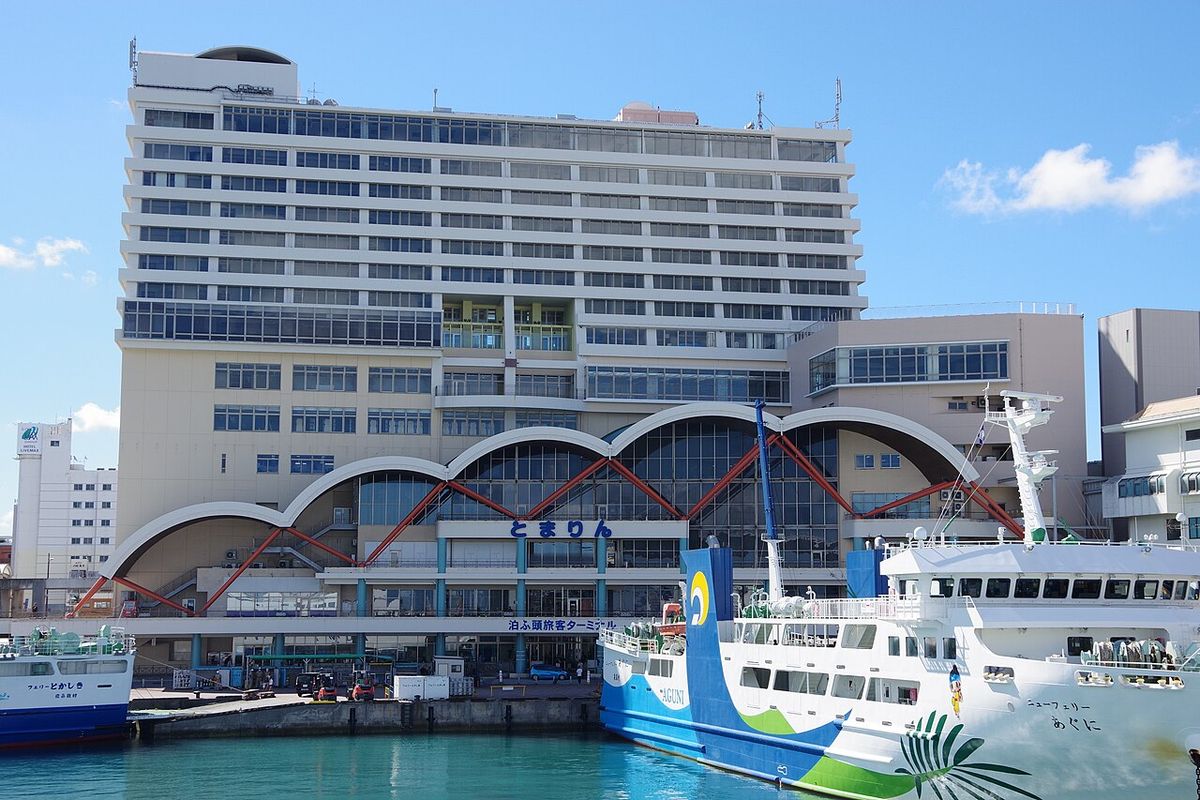
For Tokashiki, yes — through exactly one door. The 09:00 high-speed boat from the north side of Tomari Port. Passengers on the 10:00 ferry cannot be accommodated, and the association says so.
The association splits its schedule by guest type: guests staying on Tokashiki sail at 09:00 for two hours; on days when day visitors are included, departure moves to 10:00 for two hours. Then the warning — only guests arriving on the 09:00 Marine Liner Tokashiki from the north side of Tomari Port can be accommodated, and guests on the 10:00 Ferry Tokashiki cannot.
Line it up against the official timetable and the reason is obvious: the ferry does not leave until 10:00 and docks at 11:10, by which time the whale boat has sailed.
| Step | Time | Notes |
|---|---|---|
| Tomari Port north side, high-speed boat 1 | 09:00 dep | Boarding from 08:30; buy tickets 30 min before departure |
| Tokashiki Port arr | 09:40 | The member boat meets you at the port |
| Whale boat departs | 10:00 | On days with day visitors |
| Whale boat returns | about 12:00 | |
| Return by ferry | Tokashiki 15:30 → Tomari 16:40 | 3.5 hours of slack |
| Return by high-speed boat 2 | Tokashiki 17:00 → Tomari 17:40 | 5 hours of slack |
It works, and the return leg is generous. Two further constraints: no same-day bookings. One member shop requires reservations by 17:30 the previous day, and the association separately notes that without a booking by 18:00 the day before, the boat may not sail at all. Turning up at Tomari Port in the morning hoping to sign up does not work.
Zamami: February and March yes, January needs checking
Zamami's answer is tied to the month. In February and March the high-speed Queen Zamami departs Tomari's north side at 09:00 and arrives at 09:50, returning at 16:20 to reach Tomari at 17:10 — about six and a half hours on the island, enough for either the morning or afternoon tour. One Zamami member boat states on its own site that day visitors from the main island can join.
January is different. The village's published monthly timetable for January 2026 shows no high-speed section at all, only the ferry: Tomari 10:00 to Zamami 12:00, returning Zamami 14:00 to Tomari 16:00. That leaves 12:00 to 14:00 on the island — two hours flat. The association advertises 1 to 2 hours for the tour itself, and with check-in, boarding and return you cannot fit it.
Treat that as something to confirm rather than a conclusion. The January page itself has a gap in its date blocks, I found no official suspension notice, and the February and March pages both include the high-speed sailings. If January is your window for Zamami, ask the village shipping section whether the high-speed boat is running that month — if it is, the answer becomes the same as February.
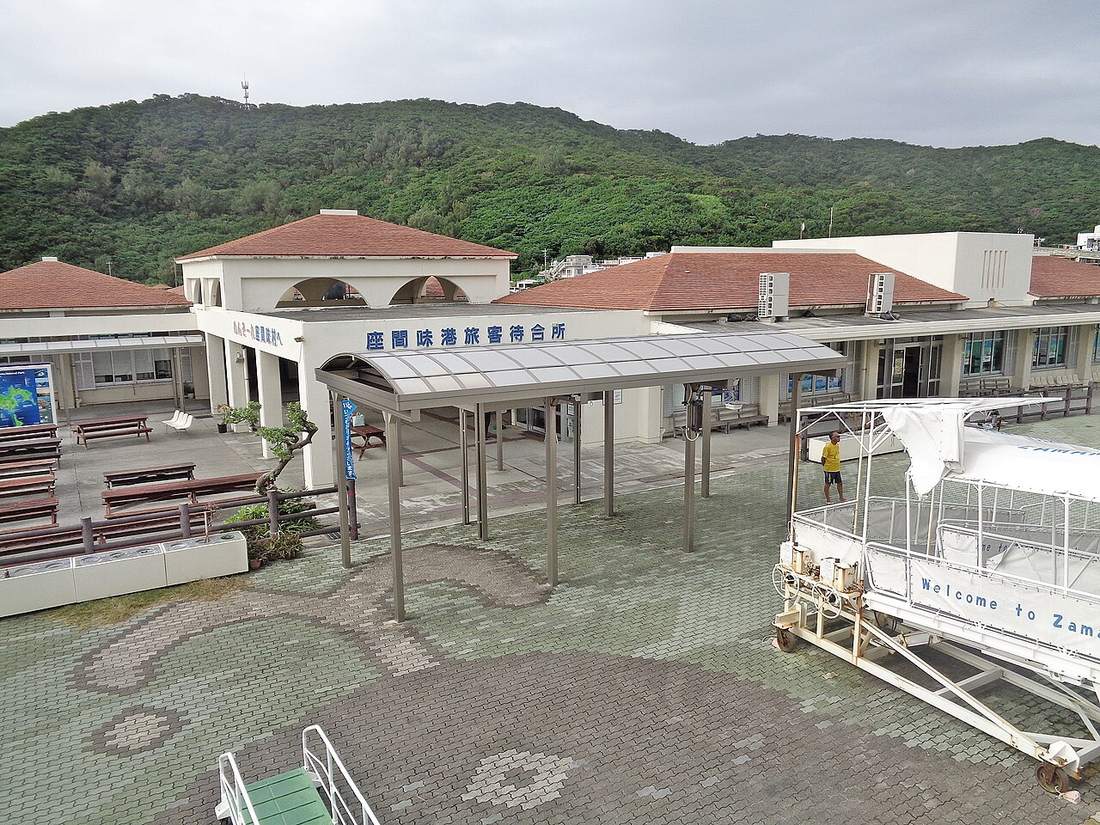
Either island, know which quay you want. Ferries use the south side of Tomari Port, by the Tomarin building; high-speed boats use the north side. Zamami's own note says it is about a ten-minute walk from the Tomarin ticket counter to the high-speed berth. From Naha Airport, Tokashiki Village lists roughly 20 minutes by taxi, about 14 minutes on the monorail to Miebashi plus a ten-minute walk, or about 25 minutes on bus route 99 to the Tomarihashi stop. Drivers should note there is no free parking at the port: the multi-storey Tomarin Parking holds 600 cars and the Tomari wharf underground car park holds 60, both paid, and Tomarin Parking is another ten-minute walk from the high-speed berth. If this slots into a driving itinerary, the pickup and insurance mechanics are covered in the Okinawa rental car guide.
The 2027 season runs on new fares
Both villages have revised their fares, and the timing sandwiches the 2027 season between them.
| Village | Effective | Status |
|---|---|---|
| Zamami | 1 January 2026 | Already in force |
| Tokashiki | 1 October 2026 | Next month; new table published |
Both give the same reason in different words. Tokashiki cites rising vessel operating costs led by inflation and fuel prices, in order to maintain safe and stable service. Zamami cites rising fuel and vessel maintenance costs and a difficult financial position.
Zamami, current
- Ferry Zamami, adult one way ¥2,900, return ¥5,510; child ¥1,450 and ¥2,760. About 2 hours, departs Tomari south side.
- Queen Zamami high-speed, adult one way ¥3,950, return ¥7,510; child ¥1,980 and ¥3,760. Departs Tomari north side.
- A separate island entry tax of ¥100 applies, waived for children up to junior high school age and for disabled visitors themselves.
- Child fares apply up to elementary school age; one infant aged 5 or under travels free per adult, with child fare from the second.
Tokashiki, from 1 October 2026
| Vessel | Current one way | New one way | Increase | New return (from Naha) |
|---|---|---|---|---|
| Ferry Tokashiki, adult | 1,690 yen | ¥2,200 | +30.2% | ¥4,180 |
| Marine Liner Tokashiki, adult | 2,530 yen | ¥3,300 | +30.4% | ¥6,270 |
Child fares become a flat half of the adult fare (¥1,100 on the ferry, ¥1,650 on the high-speed boat). There is also something new: return tickets are now priced differently depending on where you start — from Naha versus from Tokashiki (¥4,180 versus ¥3,740 on the ferry; ¥6,270 versus ¥5,610 on the high-speed boat). The current system makes no such distinction.
Tokashiki also collects an environmental cooperation tax of ¥100, levied on passengers of high school age and above. The two villages' island taxes are the same amount with opposite brackets: Zamami waives its tax up to junior high school age, while Tokashiki starts charging at high school age. You may pass through both in one trip, and it is easy to apply the wrong rule.
One timetable switch to watch
Tokashiki runs its winter timetable from 1 October to the end of February and switches to the summer timetable on 1 March (high-speed boat 2 moves to 16:30 and 17:30; the ferry leaves Tokashiki at 16:00). The Tokashiki 2026 season ended on 8 March, so 1–8 March fell under the summer timetable. The tail of the whale season crosses the switch — check which one applies to your day before booking the return.
The high-speed boat also carries an official note on its duration: since 11 April 2021 it has run at reduced speed for fuel economy, adding roughly five minutes to the crossing.
Will the boat sail?
Decided at 08:00 on the day — and the thing that usually cancels first is the ferry, not the whale trip.
Three sets of official numbers apply here, and they govern different things.
1. Whale boat cancellation criteria (Ministry of the Environment)
The ministry's Kerama whale watching booklet devotes a Q&A page to it: wind of 10 m/s or more, wave height of 3 to 4 m or more, visibility of 300 m or less; forecast heavy rain or thunderstorms, or any issued advisory or warning; and cancellation by the association under those criteria. The English edition carries the same passage.
2. Ferry sailing criteria (Zamami Village safety management regulations)
Zamami publishes its criteria in full. Before departure, any one of the following conditions inside the departure port stops the sailing:
| Vessel | Port | Wind | Wave height | Visibility |
|---|---|---|---|---|
| Ferry | Naha (Tomari) | 10 m/s+ | 1.5 m+ | 500 m or less |
| Ferry | Zamami | 10 m/s+ | 1.0 m+ | 500 m or less |
| Ferry | Aka | 7–8 m/s+ | 1.0 m+ | 500 m or less |
| High-speed | Naha (Tomari) | 13 m/s+ | 1.5 m+ | 500 m or less |
| High-speed | Zamami / Aka | 13 m/s+ | 1.0 m+ | 500 m or less |
A second set covers conditions expected en route: wind of 17 m/s or waves of 4.0 m for the ferry, wind of 15 m/s or waves of 3.0 m for the high-speed boat, also stop departure.
Tokashiki Village's FAQ gives the open-water version: rain alone does not cancel sailings, but waves of 3 m or more may cancel the high-speed boat and 4 m or more the ferry.
Zamami's 1.0–1.5 m and Tokashiki's 3–4 m look like a threefold discrepancy but are not measuring the same water: Zamami's figures are wave height inside the departure port, Tokashiki's are open sea. Both are official and both hold.
3. Put the two together and something falls out
The Tomari ferries stop at 1.5 m inside the port. The whale boats keep going to 3 or 4 m. For anyone starting in Naha, the first thing to cancel is usually your crossing, not your whale trip. So the first thing to check in the morning is the route's operating status, not the association's notices.
Tokashiki's own clause: rain
Tokashiki works by having spotters confirm whale positions and behaviour from a hilltop before boats depart. So the association adds that when it rains, whales may not be findable from the hill and the trip may be cancelled for weather.
Set that against the village ferry FAQ line that rain alone does not cancel sailings and you get a very specific picture: on a rainy day at Tokashiki, the boats run and the whale trip may not. That is the opposite of most people's instinct. For what winter on the water actually feels like, the month-by-month Japan weather and packing guide is a useful cross-check — it is considerably colder offshore than on land.
When you find out, and how
Both villages decide sailings at 08:00 on the day, and the Tokashiki whale association makes its cancellation call at 08:00 too. You learn both things in the same minute.
Tokashiki's online booking lets you opt into notifications, and a cancellation or schedule-change email goes out around 08:00; the village states that bookings on cancelled sailings are cancelled automatically with no need to contact them, but moving to a later sailing requires a new booking. Zamami's English note on its monthly timetable page asks you to check for updates before travelling.
One thing that should be said and cannot be invented: neither village publishes historical cancellation rates. They publish sailing criteria and same-day operating status, and no statistics. So no "X% of winter sailings are cancelled" figure appears here. What you can do instead is hold those thresholds against the forecast and leave slack in the itinerary.
Cancellation fees sit with the boats, not the associations
Neither association publishes cancellation terms; the Zamami FAQ page has been empty since the site was rebuilt in January 2026, with all three categories showing no listed questions. The actual terms live with individual operators and vary widely:
| Tokashiki member shop A | Tokashiki member shop B | Naha operator | |
|---|---|---|---|
| Cancellation fee | 50% day before / 100% on the day | Yes (rate not published) | Not stated |
| Waived when | Scheduled ferry cancelled so you cannot reach the island; operator cancels for weather; operator deems it unavoidable | Operator deems it unavoidable | — |
| Notice deadline | 08:00 on the day (no contact means the fee is charged) | 08:00 on the day | — |
| No whale seen | Not stated | Not stated | 🔴 Explicitly no refund |
Ferry tickets have their own rules. Zamami's online booking terms state that if you do not notify a cancellation before departure there is no refund; passenger-initiated cancellations are refunded in cash minus a 30% fee, with nothing refunded after departure; and fares are refunded in full in cash when a sailing is suspended due to vessel trouble and the like. Note that the clause says vessel trouble and the like, and does not spell out weather cancellations — the treatment of weather cancellations is not written into those terms, so confirm at the counter. Tokashiki is more direct: cancelled sailings are refundable; an unused return leg for passenger reasons is refunded minus 30%; and if you hold a high-speed return ticket and choose to come back on the ferry, the difference is not refunded.
How to book, and who to book with
Contact the individual boats. The Zamami association stopped taking individual bookings in January 2024.
The association states it on its tour page: from January 2024, individual and small-group bookings must be made by customers directly with each watching boat or shop, while groups such as schools and companies go through the association's group booking form. It also recommends booking by the day before departure, since trips shift with weather and sea conditions.
Operator lists do exist and they are thorough. The Zamami association publishes nine member boats with company name, vessel name, maximum passenger count and hull dimensions; Tokashiki publishes thirteen member shops. When choosing, these markers matter most to visitors:
- Is there a toilet on board? Three of the nine Zamami boats are listed with one — one specifying a flush toilet, another adding a shower and charging outlets. Two hours offshore in winter makes this less trivial than it sounds.
- English? Only two boats are flagged for English on the association page.
- Cards? One of those two is also flagged for credit cards and QR payment. For Tokashiki, plan on cash regardless.
- A hydrophone? One Zamami boat lists one, meaning you can hear the songs rather than only watch.
- Boat size. Maximum passengers range from 10 to 30 and hulls from 9.23 to 14.00 m. Smaller boats see better; larger ones ride steadier.
One warning: a former domain belonging to one Tokashiki member shop now resolves to a domain-for-sale page. Reach operators from the association's own list rather than from search results.
If you do not read Japanese
You can book the boat yourself. You effectively cannot book the whale trip online.
The crossing works. Zamami Village's vessel booking system has an English entry point, Tokashiki bookings go through the Tokashiki Ferry portal, and the village site carries an English information page for visitors. Zamami's booking terms are worth knowing in advance: reservations open 55 days before sailing and close the day before; one booking covers up to five people including yourself, with six or more requiring a phone call from one month out; a reservation lapses 20 minutes before departure; and payment must be by card in a single instalment. Tokashiki opens bookings on the same date two months before sailing and closes them the day before, with no same-day online booking — buy at the counter if seats remain.
The whale trip layer is where it breaks. Both association sites are Japanese only, with no other language version, and most member boats publish nothing but a phone number. The realistic routes are the two English-capable boats, an English-language OTA selling Naha departures, or asking your accommodation to book for you.
There is an irony worth flagging: an official English version of these rules exists, but at the ministry, not at the associations. Pages 25 to 28 of the ministry's English booklet translate the voluntary rules and the Q&A in full. The associations' own sites have nothing. If you need to show the rules to someone who does not read Japanese, that PDF is the best artefact available.
For where to stay the night before and how to reach Tomari Port, see the Naha city guide; if this is one piece of a winter Okinawa itinerary, the winter Okinawa planning guide sets out the season's rhythm.
What are the odds of seeing one?
The Zamami association has never published an encounter rate, so no percentage for Zamami appears here.
Every page of the association site was read for this — home, whale watching, tours, reservations, rules, FAQ, about the association, about Zamami, about humpbacks, news — along with all 18 pages of the ministry booklet in both languages. There is no sighting or encounter figure anywhere in them.
The percentages that circulate belong to other parties and mean different things, so attribute them:
| Figure | Whose | Which waters |
|---|---|---|
| 100% | Tokashiki whale watching association (official) | Tokashiki, conditional on "if we can sail" |
| Over 90% | Okinawa Main Island Central-Southern Whale Association (official) | 🔴 West coast of Okinawa main island, not Kerama |
| 97% (last season) | One Naha operator | Around Nagannu Island |
| Over 90% | One Zamami member boat | Zamami |
The Tokashiki 100% cannot be quoted without its conditional clause. The full statement is that in Kerama they confirm whale positions and behaviour from the hill before sailing, and if they can sail, encounters are 100%. Sailing is decided at 08:00, and rain can block the hilltop spotters. Strip the condition and it becomes a guarantee nobody made.
A better official number than an encounter rate
The Zamami association has run fluke photo identification since its founding in 1991. The ministry booklet states that more than 1,800 whales have been identified, numbered from ZA-1. That tells you more about this stretch of water than any percentage: the same population, recognised individually, for over three decades.
The individuals the booklet names stick better than the statistic:
- ZA-8, "Z" — confirmed returning for over thirty years since 1990, with a distinct Z shape on the right side of the fluke. Recorded moving between Okinawa and the Philippines within a single winter.
- ZA-177, "White Lady" — has returned with a calf roughly every other year since 1999.
- ZA-550, "RuPhiZO" — named from the initials of where it has been sighted: Russia, Philippines, Zamami, Ogasawara.
- ZA-1451, "Swan" — recorded alongside its mother at birth in 2015, and back in 2024 with a calf of its own.
- ZA-1880, "H" — first confirmed in 2025, with a calf sharing the same white fluke.
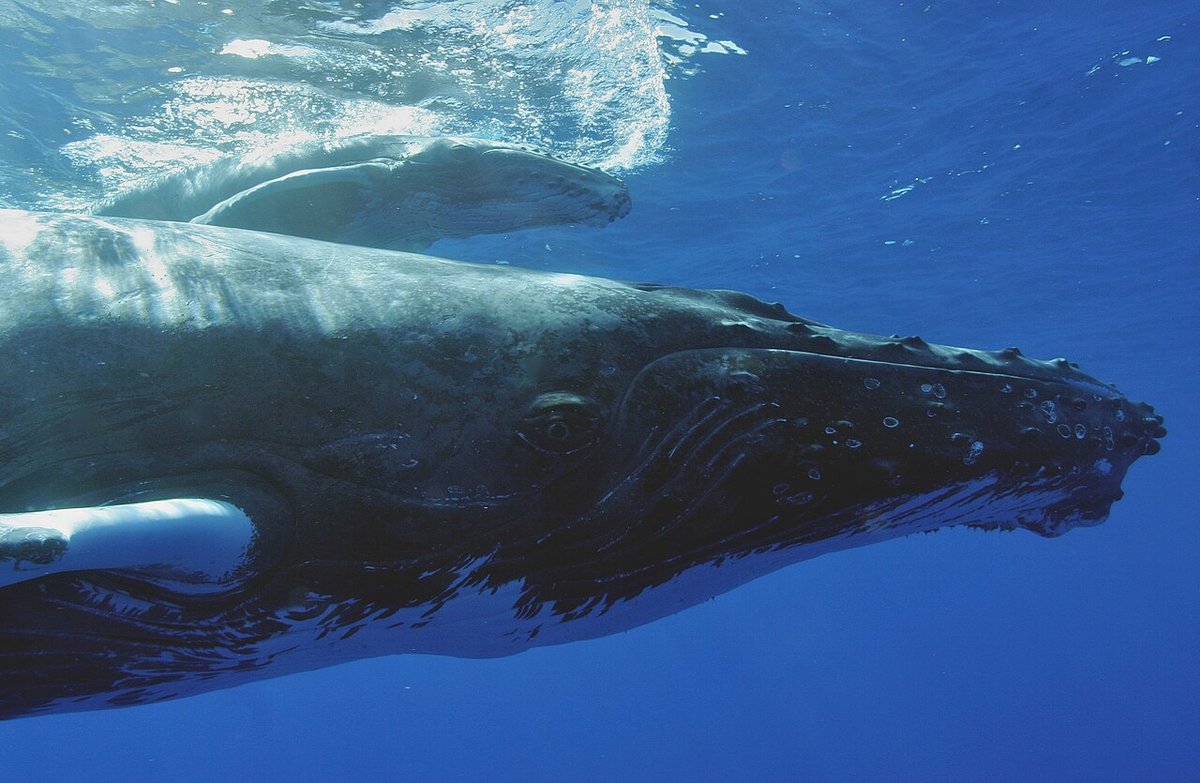
Get the scale right before you go. Humpbacks run 12 to 14 m and 30 to 40 tonnes, and the ministry's English edition puts it in one line: roughly the same size as Kerama whale watching boats. The member boat list runs 9.23 to 14.00 m. The animal alongside you is in the same size class as the hull under your feet.
Why there are no photos of Kerama whales here
Because no freely licensed photograph of a humpback whale in Japanese waters exists.
That was checked, not assumed. On Wikimedia Commons, the humpback whale category organised by location has nine subcategories — Canada, Colombia, Greenland, Iceland, Glacier Bay National Park, Hawaii, Norway, Shetland, Mexico. No Japan, no Okinawa. The Japanese cetacean category holds aquarium belugas and dolphins, whale meat shops, a stranded blue whale, a grey whale off Aogashima and North Pacific right whales off Niijima. The category named for whale watching in Japan contains fourteen files, all dolphins. A coordinate search within 10 to 12 km of Zamami returns nothing.
On the other side, the photographs on both association sites and inside the ministry booklet — including those fluke identification shots — are not freely licensed and cannot simply be reused.
So where a humpback appears in this guide, the caption names where it was taken. Hawaii and Okinawa are both North Pacific humpback winter breeding grounds, which makes a Hawaiian photograph an honest way to show what a mother and calf look like, rather than passing something off as Kerama.
This actually tells you something useful
Translated into advice: you will not be photographing whales underwater there either. Zamami's rules prohibit underwater photography of whales in principle, with the single takkuwari exception when a whale comes alongside of its own accord and you may lower a camera from the gunwale. So underwater humpback footage credited to Kerama is either that exception or not from Kerama.
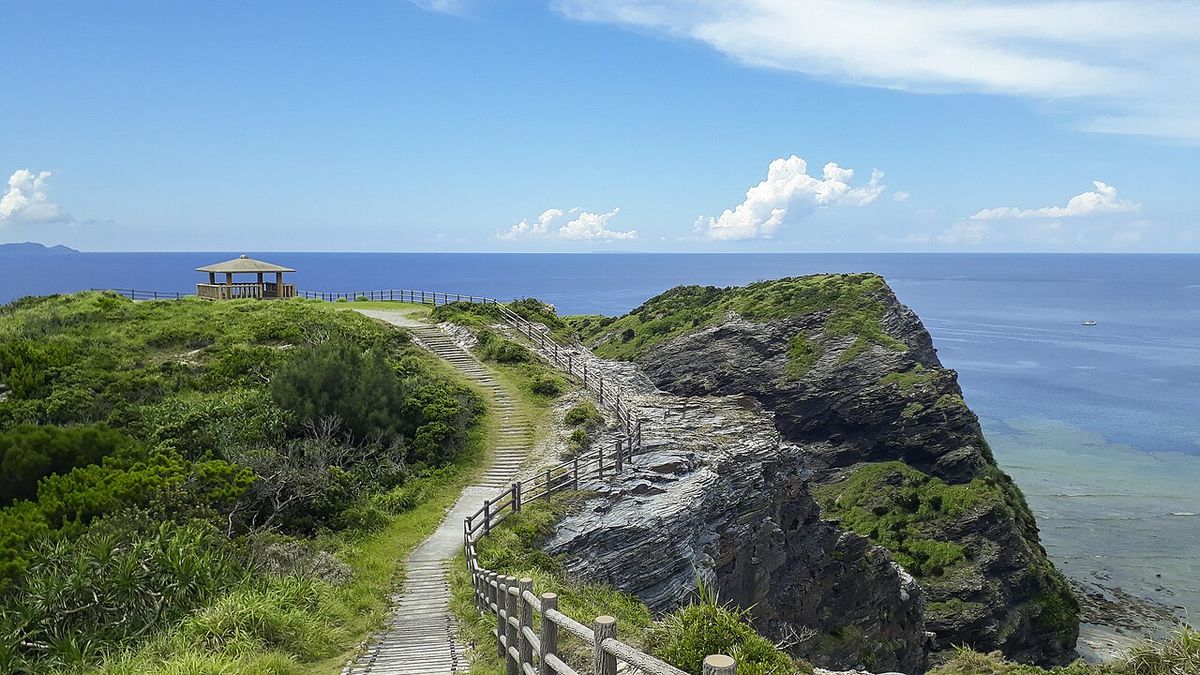
And the officially encouraged vantage point is on land. Tokashiki placed its mother-and-calf sanctuary in the inner bay partly, in its own words, to increase opportunities for land-based whale watching. Several Zamami lookouts are the ones the spotters use, and one of them, the Unajinosachi observatory, does exist in the free image archives. If you miss the boat, or the 08:00 call cancels it, a lookout is what can still save that day. Bring binoculars, find high ground, and watch the water. This is not a consolation prize — it is exactly how the hilltop spotters work.
What has been announced for 2027
Nothing yet. Both association sites still display the 2026 season.
| Zamami | Tokashiki | |
|---|---|---|
| 2026 season (announced, completed) | 8 Jan – 25 Mar (77 days) | 24 Jan – 8 Mar (44 days) |
| 2027 season dates | 🔴 Not announced | 🔴 Not announced |
| 2027 prices | 🔴 Not announced | 🔴 Not announced |
| Daily sailings | Morning and afternoon tours | Basically one morning sailing |
| Duration | About 1–2 hours | 2 hours |
The home pages, tour pages and news pages of both associations were checked page by page for 2027 and Reiwa 9 with zero hits. As of 30 August 2026 both still carry the finished 2026 season, with the Tokashiki home page still showing 24 January to 8 March.
Zamami adds a note beside its dates: the season timing differs from year to year. Tokashiki explains its own brevity — the season is set for whale protection, with an apology to guests for how short it is. Tokashiki's 44 days against Zamami's 77 is close to half, and it is deliberate.
For timing: Zamami's 2026 season opened on 8 January and Tokashiki's on 24 January, and Tokashiki Village's association page was last updated on 6 January 2026. So 2027 information should reasonably surface between late November and late December 2026. Check both sites in each of those windows. Book flights before that if you like, but do not treat the whale day as a fixed point in the itinerary yet.
The last page before you go
Everything above, reduced to what you will actually do:
- Book the day before. Tokashiki takes no same-day bookings (17:30 per one member shop, 18:00 per the association); Zamami recommends booking by the previous day too.
- Draw cash before Tokashiki. The village states there are almost no card-accepting places on the island.
- Day-tripping Tokashiki means the 09:00 high-speed boat. Tomari north side, boarding from 08:30, ticket 30 minutes before departure.
- South side and north side are ten minutes apart. Ferries south, high-speed boats north, and no free parking at the port.
- Check two things at 08:00. The route's operating status, and the whale operator's decision. The ferry cancels before the whale boat does.
- Do not read the rain yourself. At Tokashiki the boats run and the whale trip may not — the reverse of what you would guess.
- Leave slack. On mother-and-calf-only days the association says the trip may shrink to about an hour.
- Tell them if you cannot make the crossing. Zamami's terms give no refund if you do not notify before departure.
Appendix: original Japanese sources (click to expand)
The Japanese passages quoted or paraphrased above are collected here so you can check them yourself. Sources: zwwa.okinawa (Zamami Village Whale Watching Association), wwtokashiki.jp (Tokashiki Village Whale Watching Association), env.go.jp (Ministry of the Environment Kerama whale watching booklet, Japanese and English editions), vill.zamami.okinawa.jp and vill.tokashiki.okinawa.jp (the two village offices), and okinawa-whale.com (Okinawa Main Island Central-Southern Whale Association).
1. Voluntary rules; non-members are only asked to cooperate
一般社団法人渡嘉敷村ホエールウォッチング協会(以下、協会)が自主的に制定する
協会会員以外のボートには、ルールを守るよう協力を求めます
Non-member boats are asked to cooperate with following the guidelines.(Ministry of the Environment brand book, English edition, p.25)
2. The Zamami deputy mayor: this is "a step"
今回の調印式は、慶良間のザトウクジラをエコツーリズム推進法の特定自然観光資源にして守り育てていくための大切な一歩となる(宮平真由美 副村長)
(海上時化のため、急きょ日程を前倒しして開催)(signing ceremony report PDF footnote)
3. Why only Kerama
近年、沖縄や奄美でオーバーユース等によるクジラへの悪影響の懸念が高まり…科学者の研究結果でも、特に、未来を担う親子クジラへの影響が深刻化…そこで私たちは「沖縄近海の中でも、特に重要な繁殖海域であり国立公園である慶良間海域だけでもしっかり守っていこう」との切実な思いで
4. Area of application (the two villages differ)
座間味村の各島沿岸から10マイル(18km)以内の海域、渡嘉敷村の各島沿岸から7km以内の海域において適用します。(Zamami rules, art. 2)
2014年慶良間諸島国立公園エリア 各島海岸から7km以内(Tokashiki rules, art. 7)
within 10 miles (18 km) of the coast of the islands in Zamami and within 7 km of the coast of the islands in Tokashiki(English edition, p.26)
5. Entering the water and underwater photography
クジラと一緒に泳ぐスイム、ダイビング、シュノーケリングなどの海面遊泳を含めて、人が海中に入ってクジラをウォッチングすることを禁止します。また、クジラの海中撮影も原則禁止です。(Zamami, art. 7)
クジラの鳴き声、それに類似した音を海中で発しないこと(但し、船舶が発する通常の動力音は含みません)(Zamami, art. 7)
海面遊泳を含めた、海中でのウォッチングをしてはならない(Tokashiki rules; no underwater photography clause)
6. The three watching-time tiers
1頭または1群のクジラに対して、2時間以内(both villages)
但し、親子クジラはウォッチング船全体で、午前・午後それぞれ1時間以内を厳守すること(Zamami, art. 5)
親子鯨に対しての制限時間は、ウォッチング船全体で午前1時間以内とする(Tokashiki, 4-3-2)
午前中のみに出航とする(Tokashiki, 4-3)
for mother whales and their calves, whale watching must be limited to 1 hour in the morning and 1 hour in the afternoon for all boats(English edition, p.26)
7. The association says the trip may be shortened
※母子クジラしか見つからない場合には、保護の観点から1時間程度のツアーになることがあります(Zamami tour information)
8. The sanctuary, and why land-based watching improves
渡嘉敷港前 長岬から城(ぐすく)を結んだラインから渡嘉敷港内(Tokashiki sanctuary boundary)
内海に保護区域を設定することで陸域からのホエールウォッチングの機会が増えることが期待されます(Tokashiki)
9. Day visitors can only use the 09:00 high-speed boat
渡嘉敷島宿泊のお客様のみの場合 9:00出航〜2時間/日帰りのお客様とご案内をする場合は 10:00出航〜2時間 ※9:00泊港北岸マリンライナーとかしきからの出航のみご案内可能です。フェリーとかしき10:00発のお客様はご案内できないのでご注意ください。
10. The association no longer takes individual bookings
2024年1月から、個人・グループでのご予約は、お客様で各ウォッチング船(ショップ)へ直接申し込んでいただくことになりました。(Zamami)
ツアーの実施日は天候や海況によって変わる場合がありますので、出発前日までのご予約をおすすめします(Zamami)
11. Whale boat cancellation criteria (ministry booklet p.28)
Q. 慶良間諸島のホエールウォッチング船「欠航の判断基準」について/A.・風速10m/s以上、波高3〜4m以上、視程300m以下の場合・大雨や雷雨の予報、各種注意報や警報が発令された場合・上記の基準で協会が「中止」と判断した場合
12. Ferry cancellation (open sea) and the rain clause
雨だけでは欠航にはなりません。波高が3メートル以上で高速船マリンライナーとかしき、4メートル以上でフェリーとかしきが欠航になる可能性があります。(Tokashiki Village vessel FAQ)
※雨が降った場合クジラが山から探せないことがあります天候により中止になることがあります(Tokashiki WW association)
その日の天候により朝8:00中止の判断を致します(Tokashiki WW association)
13. Reasons given for the fare revisions
昨今の物価高騰や燃料価格をはじめとする船舶運航経費の上昇を受け、安全で安定した航路運航を維持するため(Tokashiki, effective 2026-10-01)
近年の燃料費や船舶維持管理等の維持コストなどの上昇により、厳しい経営状況が続いている(Zamami, effective 2026-01-01)
14. Cash on the island
渡嘉敷島内ではカードが使えるところはほとんどありませんので、現金を事前にご用意ください。(Tokashiki Village vessel FAQ)
15. Season windows
※年によって開催時期が異なります(Zamami)
クジラの保護の為開催期間を設定しています。お客様には短いシーズンかと思いますが…(Tokashiki)
16. The two encounter-rate statements (the conditional clause is not separable)
慶良間諸島では山からクジラの位置行動などを確認したうえで出航いたします。出航ができれば100%クジラに遭遇できます。(Tokashiki WW association)
クジラの遭遇率は90%以上!(もちろん野生生物なので見られないこともあります)(Okinawa Main Island Central-Southern Whale Association; refers to the west coast of Okinawa main island)
17. The Naha whale swim
小型のボートでクジラに近づき、静かに入水して水面から観察します(okinawa-whale.com /swimming/)
18. Photo identification and size (ministry booklet p.29, p.31)
More than 1,800 whales have been identified
Roughly the same size as Kerama whale watching boats(appended to the 12–14 m / 30–40 t description)
19. The two chairmen, at the 2025-11-09 signing
クジラに選ばれた島と海(Takeshi Nakamura, Zamami WW association chairman)
100年先までクジラが子どもを連れて帰って来てくれる場所にしていきたい(Kazunori Hase, Tokashiki WW association chairman)
Frequently Asked Questions
- Q1:Is swimming with whales illegal in the Kerama Islands?
- No. It is prohibited, but not by law, and there is no penalty. The ban is a voluntary rule written by the two village whale watching associations — Zamami and Tokashiki. The heading on the Zamami rule page is literally the Japanese word for voluntary rule, and article 1 of the Tokashiki rules states that the association established them of its own accord. For boats that are not association members, both texts say only that cooperation is requested, which the Ministry of the Environment renders in English as "asked to cooperate". Kerama Shoto National Park does have legal restrictions in these waters, but the ones published by the ministry cover collecting coral and ornamental fish and picking designated plants. Nothing about approaching whales or entering the water. There is a plan to move it up a level: at a signing ceremony in November 2025, the Zamami deputy mayor described the agreement as an important step toward having Kerama humpbacks designated a specific natural tourism resource under the Ecotourism Promotion Act. A step, meaning not there yet.
- Q2:So why can operators in Naha legally sell whale swims?
- Because that is a different association and a different stretch of water. The Okinawa Main Island Central-Southern Whale Association is based in Naha and runs an entire page on whale swimming, describing an approach by small boat followed by entering the water quietly and observing from the surface, with its own participant guidelines: no free-diving or duck-diving, no flash, no feeding, no touching. Amami has its own association and its own whale swim rules as well. Kerama restricts itself to Kerama by choice, and the associations said why: in their announcement banning whale swims they wrote that with overuse concerns rising across Okinawa and Amami, they wanted to protect at least the Kerama waters, an especially important breeding area and a national park. That word "at least" is the whole story. One wrinkle worth knowing: Naha day trips often watch whales around Nagannu Island, which belongs to Tokashiki Village and sits inside the 7 km zone the Tokashiki rules cover — but those operators are not members, so the rules only request their cooperation.
- Q3:How long does a Kerama whale watching trip actually last?
- It depends which whales you find, and the tightest limit is not measured per boat. For an ordinary whale or group, each boat may stay up to 2 hours. For a mother with a calf, Zamami caps the entire watching fleet at 1 hour in the morning plus 1 hour in the afternoon, and Tokashiki caps the fleet at 1 hour in the morning only — Tokashiki rules also restrict departures to mornings, so that single hour is the whole day. This is a shared quota, not your trip length: time spent by boats ahead of you is gone. The Zamami association also states in its tour information that on days when only mothers and calves are found, the trip may be shortened to around an hour for conservation reasons. You book 1 to 2 hours and the association itself tells you it may be cut.
- Q4:Can you do Kerama whale watching as a day trip from Naha?
- Tokashiki yes, but through exactly one door: the 09:00 high-speed boat from the north side of Tomari Port. The Tokashiki association states that it can only accommodate day visitors arriving on that 09:00 Marine Liner, and cannot accommodate passengers on the 10:00 ferry — the ferry does not dock until 11:10 and the whale boat leaves at 10:00. Getting back is easy: the 15:30 ferry or the 17:00 high-speed boat. Zamami depends on the month. In February and March the high-speed Queen Zamami runs 09:00 to 09:50 out and 16:20 back, giving you about six and a half hours on the island, which works. But the village timetable published for January 2026 shows no high-speed sailings at all, only the ferry, which puts you on the island from 12:00 to 14:00 — two hours, not enough. That January page also has a gap in it and no suspension notice was found, so treat it as something to confirm with the village shipping section rather than a settled fact. Tokashiki also refuses same-day bookings: reserve by 17:30 the day before.
- Q5:What happens if the weather is bad, and do you get a refund?
- Sailing decisions are made at 08:00 on the day, and the thing most likely to cancel first is your ferry, not the whale trip. The Ministry of the Environment booklet publishes the whale boats' cancellation criteria: wind of 10 m/s or more, wave height of 3 to 4 m or more, visibility of 300 m or less, or forecast heavy rain and thunderstorms and any issued advisory or warning. The Zamami ferries, by contrast, stop sailing when wave height inside the departure port reaches 1.5 m. Tokashiki adds a reversal that catches people out: its spotters locate whales from a hilltop before boats depart, so rain can cancel the whale trip — while the village ferry FAQ states plainly that rain alone does not cancel sailings. Refunds have no association-wide policy; they sit with each boat. One Tokashiki member shop charges 50% the day before and 100% on the day, with three listed exemptions, and one Naha operator states outright that no refund is given if no whale is encountered. Ask the operator you are booking.
- Q6:What are the odds of actually seeing a whale?
- The Zamami association has never published an encounter rate, so no percentage for Zamami appears in this guide. Every page of the association site and both language versions of the ministry booklet were checked; there is no such figure. Numbers that do exist belong to other parties and mean different things. Tokashiki states 100%, but only within the clause "if we can sail", and sailing is decided at 08:00 and can be cancelled by rain blocking the hilltop spotters. The Naha-based association advertises over 90% for itself, but for the west coast of Okinawa main island, not Kerama. The rest are single operators quoting themselves. A better official number exists: Zamami has run fluke photo identification since 1991 and has identified more than 1,800 individual whales, numbered from ZA-1.
- Q7:Have the 2027 season dates and prices been announced?
- Not by either association. Both sites were checked page by page for 2027 and Reiwa 9 with zero hits, and both still display the finished 2026 season. Those 2026 figures are the best available reference: Zamami ran 8 January to 25 March, 77 days; Tokashiki ran 24 January to 8 March, 44 days, a shorter window the association says is deliberate for whale protection. Association rates for 2026 were 7,700 yen for adults plus a 600 yen whale-spotting service fee at Zamami, and 8,000 yen before tax at Tokashiki with one price for adults and children. What has definitely changed is the boat fares: Zamami raised its fares on 1 January 2026 and Tokashiki raises its own on 1 October 2026 by about 30%. The 2027 season will be the first one running on both new fare tables. Check the association sites in late November and late December 2026.
Read next
Okinawa in Winter: Whale Watching, 17°C, Fewer Crowds
While the mainland freezes, Naha averages ~17°C in January. Whale season, yanbaru hikes, early cherry blossoms and the off-season trade-offs, weighed.
Naha Travel Guide 2027: Shuri Castle, Kokusai-dori & Okinawan Food
Okinawa's gateway and old Ryukyu capital — the rebuilt Shuri Castle, Kokusai-dori and Makishi Market, plus Okinawa soba and taco rice.
Okinawa self-drive complete guide
Rental company comparison, insurance, must-drive routes.
📊 See the 2026 Price Index (JR Pass, DPA, eSIM, Airport Transport) →