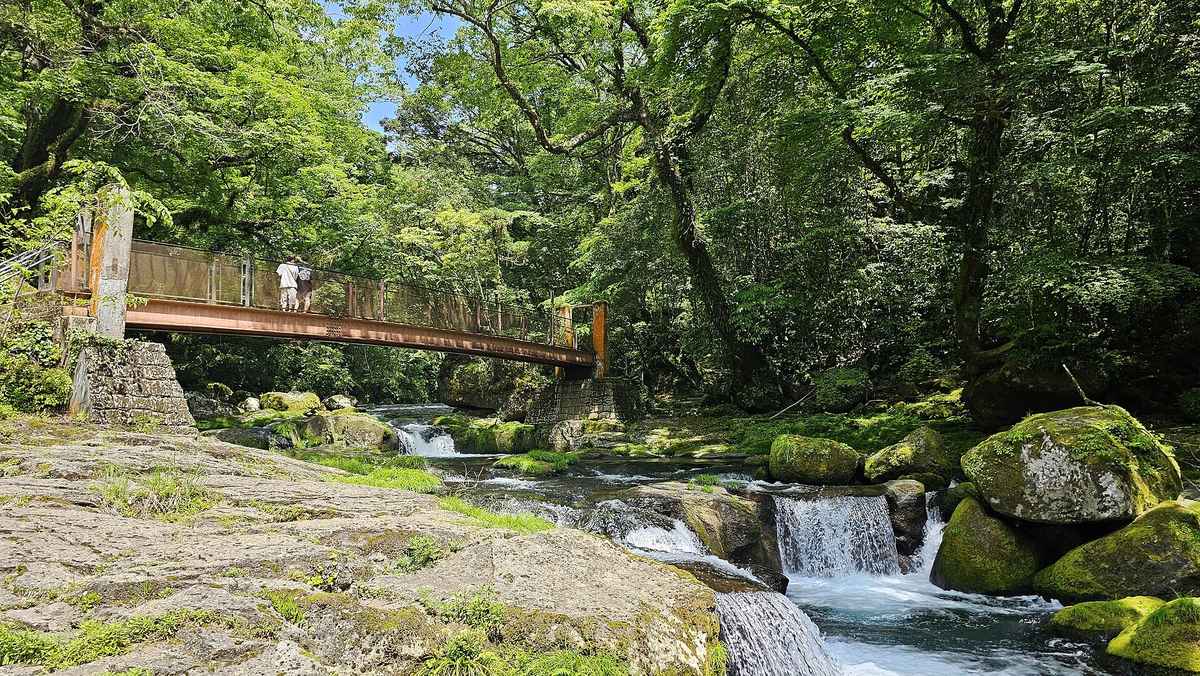
Kumamoto summers routinely hit 35°C, but drive ninety minutes into Kikuchi Gorge and, in the operator's own words, the summer average water temperature is 13°C and the gorge calls itself a "natural cooler." Walk through the shade and the cold mist coming off the stream and it genuinely feels far below the city — and the whole thing costs just a ¥500 contribution fee for high-school age and up, with free parking. It is one of the best places in Kyushu to beat the summer heat. But here is what most intro pieces will not tell you: Kikuchi Gorge sits on a gorge floor and closes on short notice after heavy rain — in June and July 2026 alone, the official site issued three rounds of rain-related entry bans. So before you come, always check the latest official notice. Using the newest official verification from July 2026, this guide covers admission, the season deadline, the two official trails (40 minutes and 1 hour 20 minutes), the honest no-direct-bus access, the seasons, the rules — and whether it is worth a special trip if you do not have a car.
📍 Kikuchi Gorge is one point on Kyushu's autumn-foliage map — for the full Kyushu autumn picture with peak timing and route comparisons, see the Kyushu autumn guide; to pair it by car with the northern Aso rim, Kumamoto Castle, and the volcano, see the Kumamoto & Aso guide.
- A summer cooling ace: official "summer average water temperature 13°C," self-styled "natural cooler" — the gorge feels clearly cooler than Kumamoto city in high summer
- Great value: the fee applies only to high-school age and up at ¥500, parking is free, and the receipt gets 200 yen off a Kikuchi Onsen bath
- Rain closures are a routine risk (most important): three rain bans in June-July 2026 — always check kikuchikeikoku.com/news/ before you go
- Season deadline: April 1 to Nov 30, 8:30 to 17:00 staffed; after Nov 30 no attendants — see the autumn leaves before the close
- Access, honestly: no public transport reaches the gorge directly — it is a drivers' spot; car-free means a two-stage bus-plus-reserved-taxi trip
📖 Table of Contents (click to expand)
- Summer relief: the 13°C stream and the "natural cooler"
- Rain-closure status: three 2026 summer bans (read first)
- Season & fees: the Apr 1–Nov 30 deadline, fee, parking
- Trail logistics: the 40-min and 1h20 routes & four falls
- Access: the honest, no-direct-bus reality
- The "100 selections" titles and the four seasons
- Safety & rules: can you swim, can you fly a drone
- Nearby: Kikuchi Onsen & the visitor center
- Worth a special trip? Drivers vs the car-free
- FAQ
Summer relief: the 13°C stream and the "natural cooler"
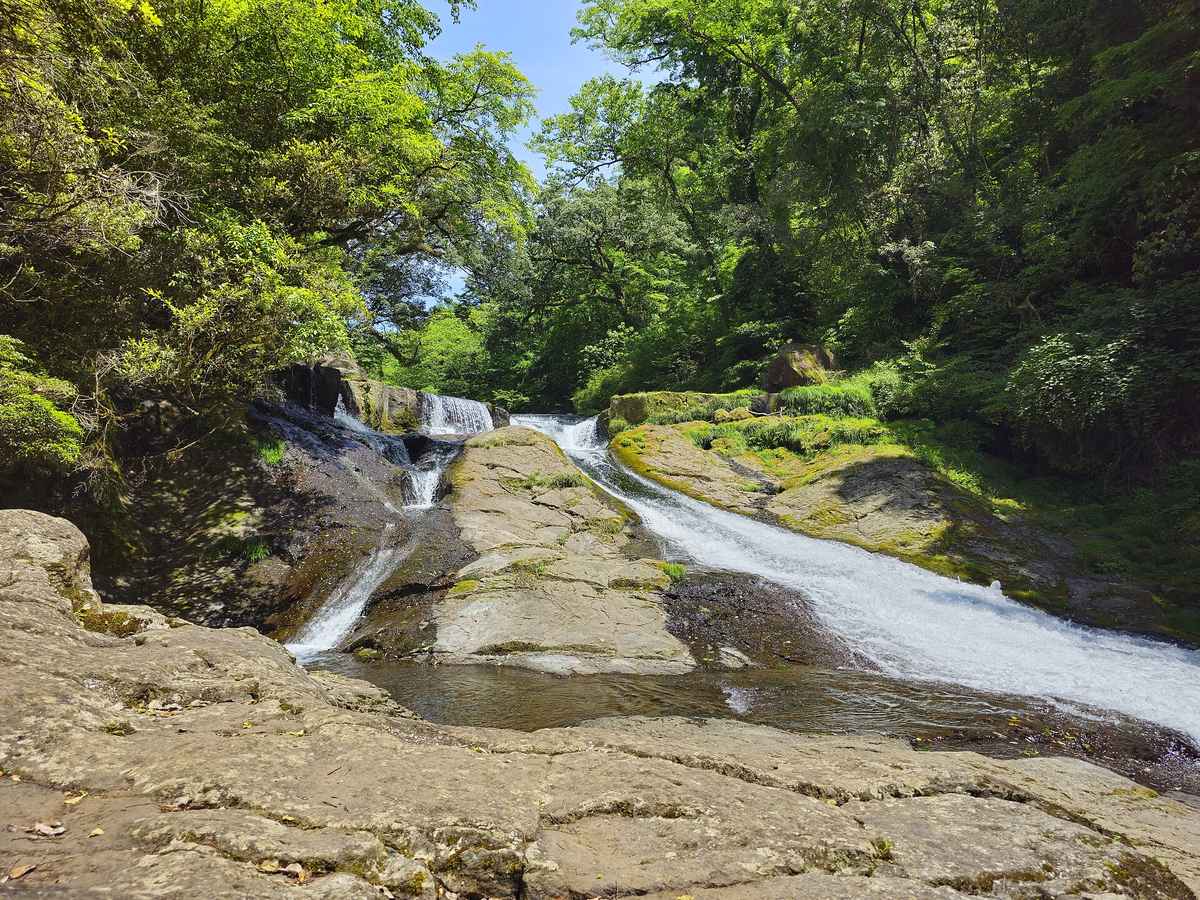
Kikuchi Gorge lies in Kikuchi City, Kumamoto Prefecture, about 17 km east of the town center on the northwest side of the Aso outer-rim mountains at roughly 500 to 800 metres elevation. The whole gorge runs about 4 km, a clear stream hemmed in tight by forest inside Aso-Kuju National Park. Its most distinctive selling point is written into the operator's own description: the summer average water temperature is 13°C, so it is nicknamed a "natural cooler." The official text calls the ice-cold stream ideal for escaping the heat.
One precision point: the operator says the summer average water temperature is 13°C — not a year-round constant of 13°C. Winter is obviously not that temperature, so do not picture it as icy all year. But for high summer the number matters: when Kumamoto city pushes toward 35°C, stepping into a gorge wrapped in shade and cold mist drops the felt temperature noticeably. This is not a filtered look — your body actually cools. For anyone who wilts in the heat but still wants to be out in nature without risking heatstroke, Kikuchi Gorge is one of Kyushu's most genuinely useful summer options. And the barrier to entry is low: the operator charges only high-school age and up a ¥500 contribution fee, and parking is entirely free — strong value for a summer attraction.
Rain-closure status: three 2026 summer bans (read first)
⚠️ 2026 note: Kikuchi Gorge sits on a gorge floor and closes on short notice after heavy rain.
In June and July 2026 alone, the official news page carried three rounds of rain-related entry-ban-then-reopening notices. The status below reflects the official (kikuchikeikoku.com) notice as of July 2026, but wet-season conditions change fast — re-check the latest official notice before you travel: kikuchikeikoku.com/news/.
This is the most important section, and the part most intro pieces skip. Because the gorge lies at the bottom of a valley, heavy rain upstream brings rockfall and surging-water risk, and the operator issues temporary entry controls. Laying out the 2026 record:
- June 2: entry banned, lifted the next day.
- June 24: entry banned, lifted around June 26.
- July 2: entry banned after rain damage, reopening only in early July once repairs were done and safety confirmed; the operator added a reminder to wear sturdy shoes because the footing was poor.
Three closures in two months tells you one thing: in the wet season — especially the June-July rainy season and typhoon period — a temporary closure at Kikuchi Gorge is a routine risk, not a freak event. The operator also states outright that the gorge may be closed under a heavy-rain warning. So the only safe move is to check the official notice page, kikuchikeikoku.com/news/, the day before you go to confirm it is open, rather than locking in a rigid plan off a months-old article or someone else's old trip report. To be able to check the official notice and the weather the moment you land and while you travel, set up mobile data online first: buying a SIM at an airport counter in summer often means queuing, so a KKday Japan eSIM that connects on arrival makes it easy to check a closure or replan on the fly. For how the five main eSIMs compare, see the Japan eSIM guide.
Season & fees: the Apr 1–Nov 30 deadline, fee, parking
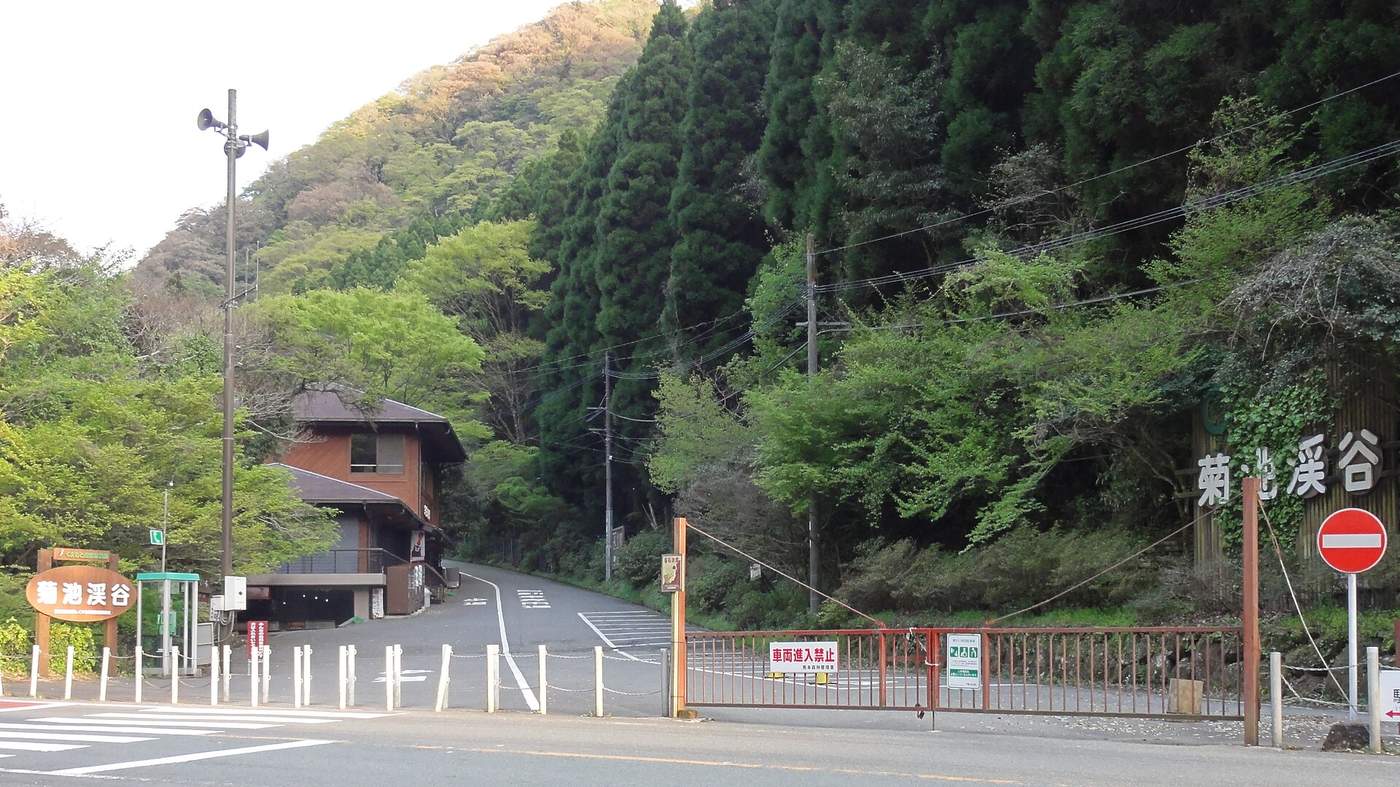
Two pieces of hard information first: the open season and the fees.
Open season: officially April 1 to November 30, staffed 8:30 to 17:00. There is an autumn-foliage deadline buried here — the official page states plainly that you can still enter outside those dates, but no staff are present. In other words, from December 1 to the following March 31 you can technically get in, but with no attendants and no guaranteed safety. The operator never uses words like "winter closure" or "entry prohibited" — only "no staff outside the season" — but for the average traveler the takeaway is the same: to see the autumn colour safely, do it before the November 30 close and do not push into December. Winter's frost-covered trees are beautiful, but that is the unstaffed state and the safety is on you.
Fees: the operator charges only high-school age and up a maintenance contribution fee of ¥500 per person, used for nature protection and visitors' safety and convenience. The official table lists only high-school age and up at 500 yen; junior-high age and younger are not listed as chargeable, so confirm on site — this guide does not invent a figure. Parking is entirely free: the first lot has about 80 spaces plus 7 for large vehicles year-round; a second lot of about 45 and a central lot of about 300 open only in the busy season. Note an official reminder — car navigation may route you to the wrong spot, so the operator suggests using Google Maps. And keep your contribution-fee receipt: it gets you a 200-yen discount at a Kikuchi Onsen day-bath, handy if you pair the gorge with a soak.
Trail logistics: the 40-min and 1h20 routes & four falls
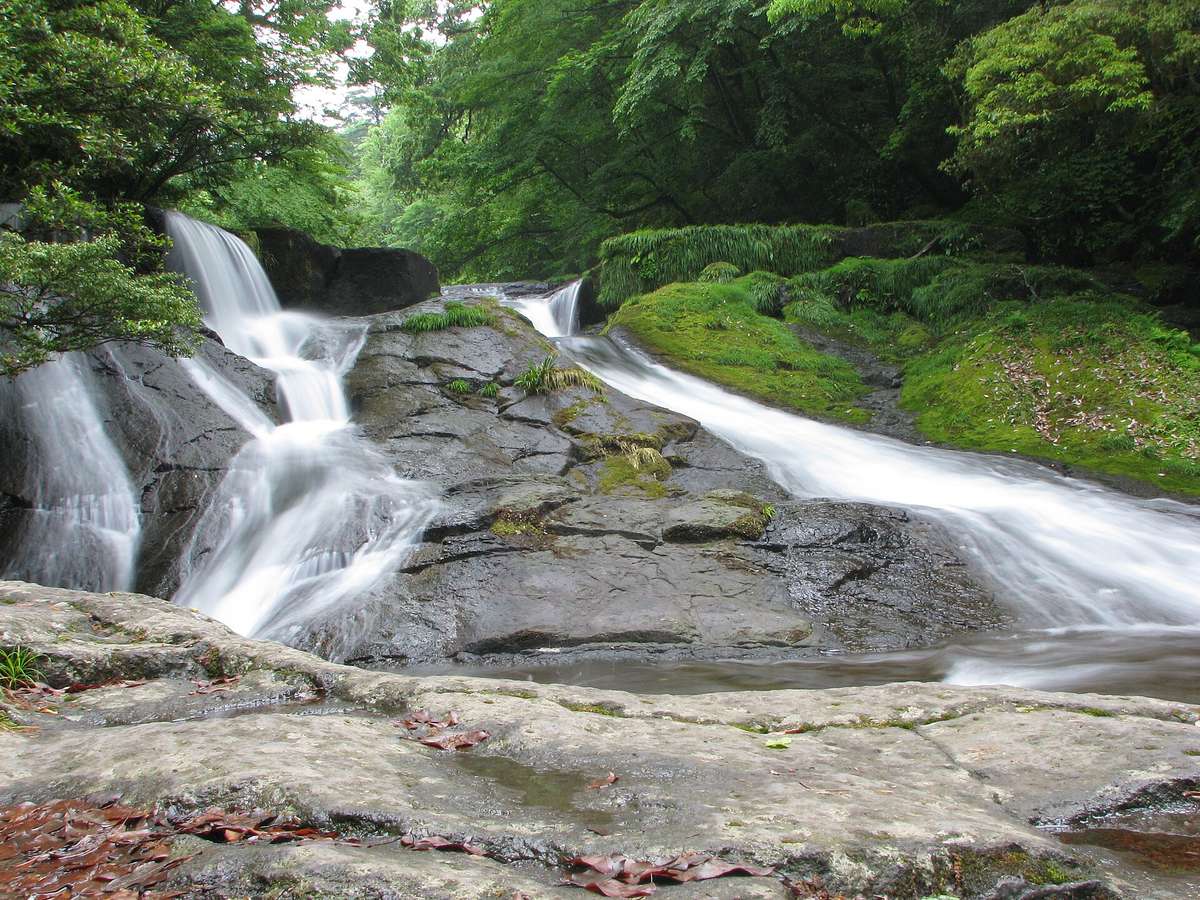
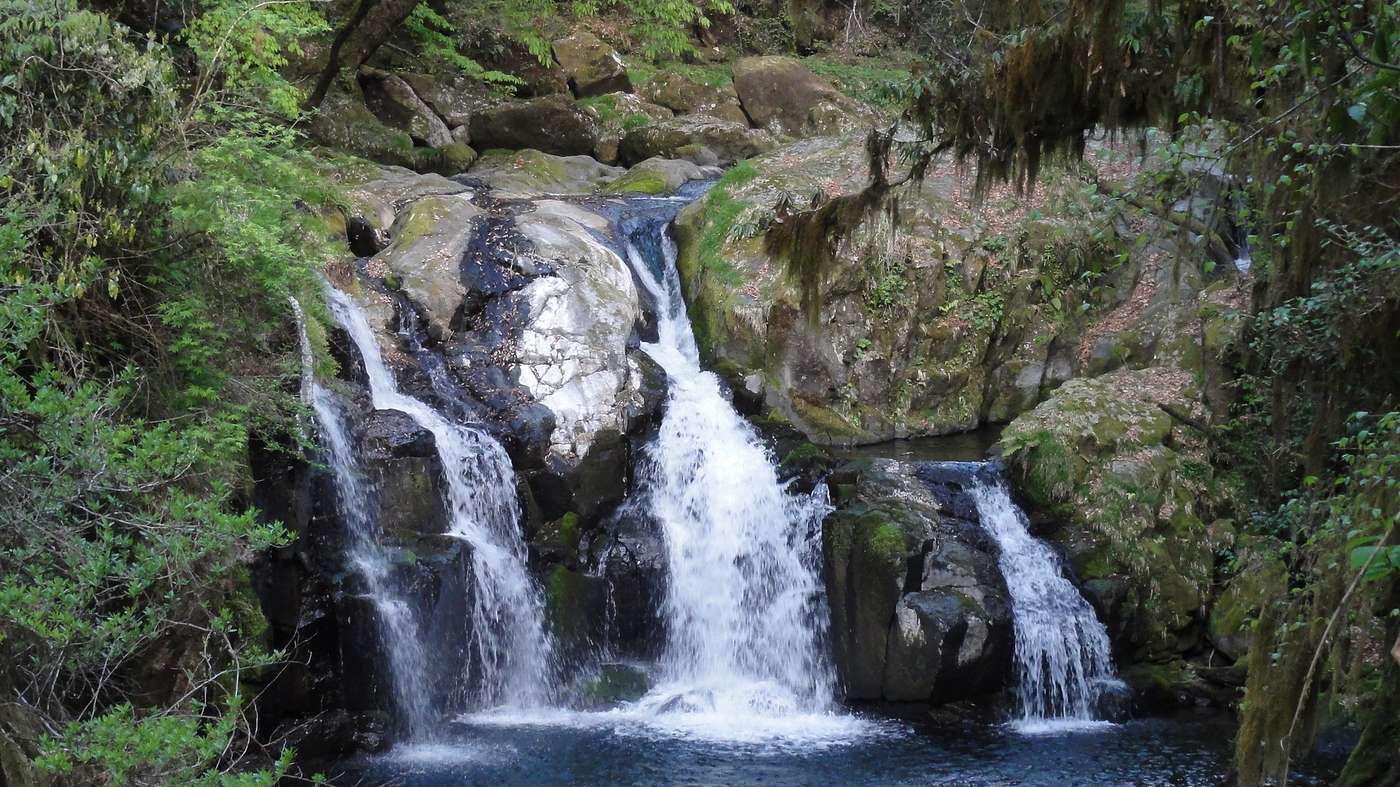
Kikuchi Gorge offers two routes of differing effort (cross-confirmed by the Kikuchi City official leaflet and the official site's English page, two official sources that agree):
| Route | Round-trip distance | Time | Best for |
|---|---|---|---|
| Iyashi course (healing) | about 1 km | about 40 min | Limited time, an easy loop |
| Mankitsu course (full) | about 2 km | about 1 hr 20 min | Reaching Hirokawara, seeing it all |
Use these official times (40 min / 1 hr 20 min) to plan. The gorge is a natural promenade over moss-green rock and boardwalk, and with the stream constantly washing over the stone, surfaces get slippery, so grippy, sturdy shoes are essential (do not tough it out in sandals or flat dress shoes — recall that when the operator reopened after the July rain, it specifically warned that footing was poor). The four main sights along the way each have official names:
- Reimei-no-taki: a waterfall whose spray drifts like morning mist — the imagery behind that "natural cooler" nickname comes from the cold mist around here.
- Kakumaku-no-taki: the tallest-drop waterfall in the gorge, named for the way its curtain of water hangs like a stage backdrop.
- Tengu-taki: a drop of about 8 metres, said in legend to be where the yamabushi (mountain ascetics) purified themselves during training.
- Ryugafuchi: a cobalt-blue deep pool, quiet enough to feel like another world.
- Shijusanman-daki: at the gorge's headwater section, selected as one of Japan's "100 Notable Waterfalls" — the most substantial fall on the stream.
Stringing these together is exactly the value of the Mankitsu course. If you only have time for the Iyashi course you will still get the gorge's coolness and its main scenes, but reaching Shijusanman-daki at the headwaters is what makes a Kikuchi Gorge visit complete.
Access: the honest, no-direct-bus reality
I have to be blunt about access, because it is Kikuchi Gorge's biggest barrier: no public transport reaches the gorge directly from central Kumamoto or the airport — this is fundamentally a spot for drivers.
Driving (the mainstream way; the drive times below are from the official access section):
| From | Drive time | Route |
|---|---|---|
| Fukuoka City | about 2 hr 10 min | Kyushu Expressway |
| JR Kumamoto Station | about 1 hr 30 min | — |
| Kumamoto Airport (Aso Kumamoto) | about 1 hr | — |
| Ueki IC | about 50 min | — |
| Hita IC | about 1 hr 40 min | — |
| Kikuchi town center | about 20 min | — |
Parking is free across three lots, so driving here means no parking worries at all (management office: Kikuchi-shi Hara 5026, tel 0968-27-0210; navigate with Google Maps, since as noted the car nav may route you wrong).
Without a car (up front: it is a hassle): no scheduled bus runs from central Kumamoto straight to the gorge entrance. The practical approach is two-stage — first take a Kumamoto Denki bus (from Kumamoto Station or the Sakuramachi terminal) to the Kikuchi town area around "Kikuchi Onsen / Shimin Hiroba-mae," but that is still about a 20-minute drive from the gorge entrance, and that last leg has no scheduled bus — it is car or taxi only. Kikuchi has a Kikuchi ainori (shared) taxi, but it is reservation-only; call 0968-26-5022 in advance, and confirm the fare and timing yourself. I will not sugar-coat it: coming car-free means budgeting for "bus to town" plus "a reserved taxi or charter about 20 minutes into the gorge," on both the way in and out, or you can easily get stranded in town.
Peak-season shuttle (2026 official, for reference only): per the operator's July 17 notice, between July 18 (Sat) and August 30 (Sun) 2026, on "days when heavy visitor numbers are expected," a free shuttle runs central car park ↔ gorge entrance to ease congestion. But the 2026 notice gives no specific hours, saying only that operating times are posted on on-site signage — so take the shuttle's timing from the signboard on the day (past years' equivalent notices ran roughly 10:00 to 15:00, for reference only, not a confirmed 2026 window). This shuttle mainly solves busy-season congestion between the central lot and the entrance; it is not a way for car-free visitors to get from town into the gorge, so do not confuse the two.
The "100 selections" titles and the four seasons
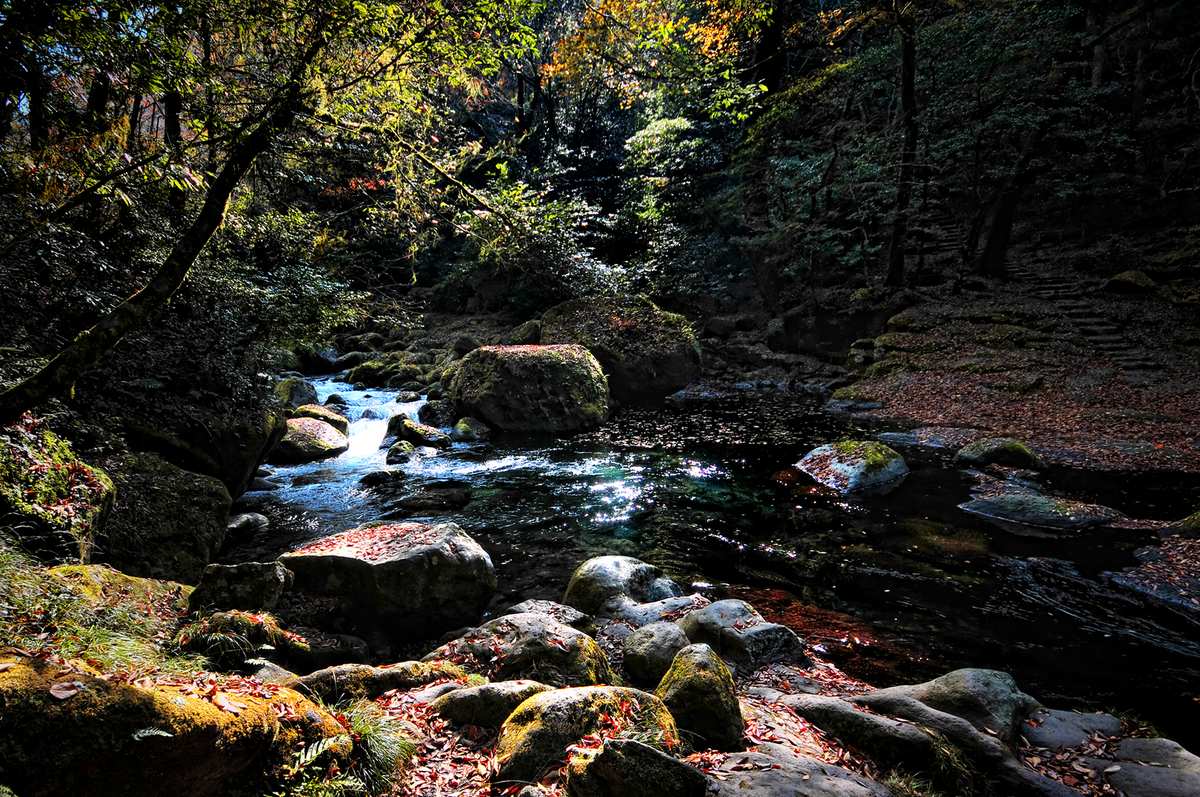
Kikuchi Gorge is not just a summer spot — the operator itself lists a whole row of "100 selections" titles: Japan's 100 Forest-Bathing Forests, Japan's 100 Notable Waters, Japan's 100 Notable Waterfalls, the 100 Water-Source Forests, Kumamoto's 100 Green Scenes, Kumamoto's 100 Nature Sites, and the New Kumamoto 100 Scenes — seven lists on one gorge. Its headwater section is a first-class special zone of Aso-Kuju National Park and a Kumamoto nature-recreation forest; the whole area is about 1,193 hectares, home to some 900 plant species, mixed conifer-broadleaf forest, roughly 50 bird species, plus wild boar, giant flying squirrels, and other wildlife — a strictly protected stretch of forest.
Each season has its face, per the operator: mountain wisteria and fresh green in spring, the shaded clear stream in summer, autumn foliage, and frost-covered trees in winter.
- Summer (the signature): the "natural cooler" described above — shaded stream, beating the heat — the season most people make a special trip for.
- Autumn (foliage): per third-party weather and travel sites, Kikuchi Gorge's peak falls roughly late October to mid-November. Note this is a rough multi-year range, not an official fixed date, and not a hard date for any given year — the current-year forecast usually only appears in September-October, so re-check about two weeks out. And remember the November 30 season deadline: catch the leaves before it. For the whole Kyushu autumn map and peak-timing comparisons, see the Kyushu autumn guide.
- Winter (frost): the operator lists winter frost-covered trees, but by then the November 30 season is over and no staff are present, so safety is on you — not recommended for the average traveler to come specifically in winter.
Safety & rules: can you swim, can you fly a drone
Kikuchi Gorge is a strictly protected national-park gorge, and the operator has a full set of rules — know them before you go:
- Swimming (most important): the operator strongly prohibits swimming, because the current is fast and falling in is very dangerous. However cool the water, walk beside it and feel the mist — do not get in.
- Drones: listed among the prohibited activities, so leave it in the bag. That is the site and protected area’s own rule, not a question of “national permission” — Japan’s Civil Aeronautics Act requires permission only for specified airspace (near airports, Densely Inhabited Districts, 150 m and above) and specified flight methods (night, beyond visual line of sight, within 30 m of people or property, above a gathering). Daytime line-of-sight flying in a mountain gorge needs no application under that Act at all. What binds you here is the gorge’s own rule — plus the law that widened the rings around key facilities to 1,000 m in July 2026. All four layers are set out in Flying a Drone in Japan 2026.
- Other banned items: pets, taking plants or animals, smoking, using fire (including cooking), and camping.
In short, Kikuchi Gorge is positioned for quiet scenery and beating the heat, not for water play or camping. Treat it as a healing walk wrapped in forest and clear stream and you will get the most out of it — and never cross the line on the rules.
Nearby: Kikuchi Onsen & the visitor center
The gorge itself takes about half a day, so it pairs well with the surroundings:
- Kikuchi Onsen: colourless, transparent, mildly alkaline water with a source temperature of about 45°C, nicknamed the "beautiful-skin bath" and "makeup bath," opened in 1954 (Showa 29). ⚠️ Phrases like "100% natural hot spring" are governed by advertising law rather than the Hot Springs Act — the Fair Trade Commission asks that they be accompanied by disclosure of added water, added heat and recirculation, so read the statutory notice on site for what the bath actually does. The day-bath "Yumeguri Tegata" is a set of three tickets for 1,500 yen (tax included) with no expiry, each ticket for one person's bath at one facility; the operator notes you should phone ahead about facilities not usable on the day. As mentioned, your Kikuchi Gorge contribution-fee receipt gets 200 yen off. A soak in the evening after the gorge is a very natural way to end the day.
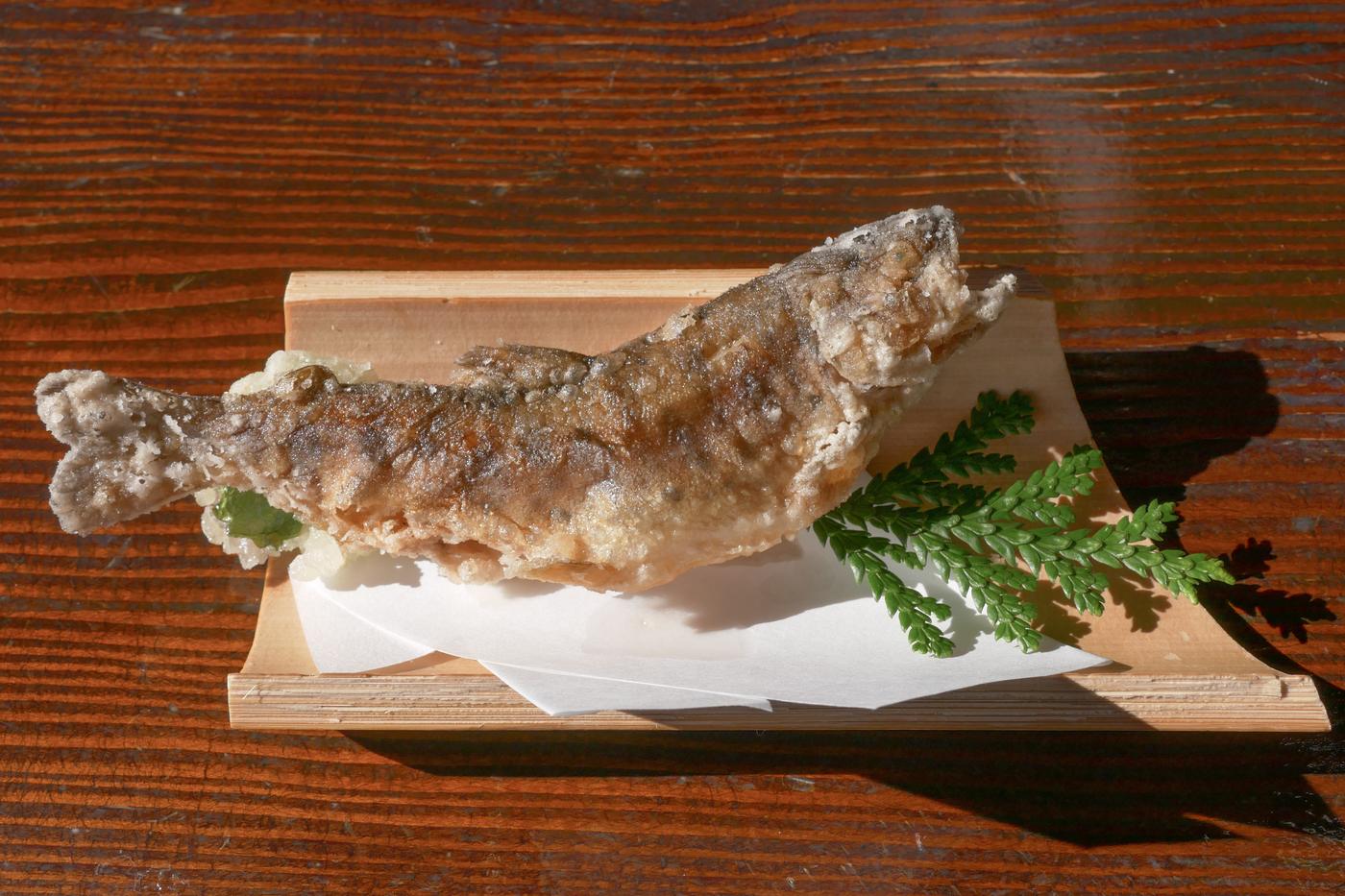
- Kikuchi Gorge Visitor Center: right at the gorge entrance, the gateway facility, selling local specialties and light meals — the signature being yamame no shioyaki (salt-grilled mountain trout) — plus tourist information. Opening hours are not published verbatim officially, so treat them as on-site-only. It is a handy stop for a grilled fish or information before or after the gorge.
As for restaurants in Kikuchi town, since this guide could not verify specific shop names and operating status one by one, I will not name any outright — for local produce, note a few keywords instead: Kikuchi rice, paddy-field burdock, Rindo pork, and Waou wagyu, then pick a place on the ground by its current Google status. To fold Kikuchi into a fuller Kyushu onsen-and-nature trip, see the fellow Kyushu hot-spring pieces — the Unzen onsen town guide and the Unzen & Shimabara national park guide.
Worth a special trip? Drivers vs the car-free
Finally, the key question: is Kikuchi Gorge worth a special trip? My answer splits by traveler type, because the transport situation cleaves it so cleanly.
- Drivers: very much worth it, and you should fold it in. If you have rented a car around Kumamoto and Aso, Kikuchi Gorge is almost a must in summer — inside 90 minutes' drive, free parking, a cheap contribution fee, and one of Kyushu's best heat-beating gorges. Better still, its position on the northwest side of the Aso outer rim slots neatly into a northern Aso-rim driving route, chaining Kikuchi Gorge, Daikanbo, the Aso volcano, and Kumamoto Castle into a one-to-two-day trip (for the Aso leg, see the Kumamoto & Aso guide). For drivers, this is a bonus with almost no reason to skip.
- Car-free: think it through — I will not tell you to force it. As the access section spelled out, there is no direct bus and the final leg needs a reserved shared taxi or charter, with waiting and reservation time on both ends. For pure public-transport travelers, transport alone will eat most of a day, on top of the temporary-closure variable. If you just want a heat-beating spot near Kumamoto and have no car, honestly I would give the time to places with smoother access — unless you were going to rent a car anyway, or are willing to arrange a charter specifically for this gorge, you do not need to force it onto public transit.
Put another way, the experience itself is excellent — a 13°C summer stream, seven "100 selections" titles, cheap and with free parking — the barrier is not the spot but whether you have a car. With one, it is one of Kyushu's best-value summer cooling aces; without one, weigh the transport cost honestly. Either way, always re-check the official notice before you go to confirm no rain closure that day, so a single downpour does not send you home empty-handed.
Frequently Asked Questions
- Q1:Is there an admission fee for Kikuchi Gorge, and how much?
- Yes, but the charge applies only to high-school age and up, at 500 yen per person. The operator calls it a maintenance contribution fee, used for nature protection and for visitors safety and convenience. The official fee table lists only high-school age and up at 500 yen and does not list a figure for junior-high age and younger, so confirm on site; this guide does not invent a figure. Parking, by contrast, is entirely free (the first car park has about 80 spaces plus 7 for large vehicles year-round, with a second lot of about 45 and a central lot of about 300 opened only in the busy season). Keep your fee receipt: it gets you a 200-yen discount at a Kikuchi Onsen day-bath.
- Q2:Is Kikuchi Gorge actually cooler in summer, and what is the water temperature?
- Yes, and this is its biggest summer draw. The official site states the summer average water temperature is 13°C and nicknames the gorge a natural cooler, describing the ice-cold stream as ideal for escaping the heat. The important caveat: that is the summer average, not a year-round constant of 13°C — winter is not that temperature. Walking through the gorge, wrapped in shade and cold mist off the water, genuinely feels well below Kumamoto city in high summer. That is the real reason to come in July or August: not a photo trick, but your body actually cooling down.
- Q3:Did Kikuchi Gorge close due to rain in summer 2026?
- Yes, and more than once. Kikuchi Gorge sits on the floor of a river gorge, so heavy rain brings a real risk of rockfall and surging water, and the operator issues temporary entry bans. In June and July 2026 alone the official news page carried three rounds of rain-related entry-ban-then-reopening notices (around June 2, June 24, and July 2). The early-July one followed rain damage, and the gorge only reopened after repairs and a safety check, with the operator adding a reminder to wear sturdy shoes because the footing was poor. That means temporary closures are a routine wet-season risk, so before you go, check the official notice page at kikuchikeikoku.com/news/ for the current status rather than trusting an old blog.
- Q4:Can you reach Kikuchi Gorge without a car? Is public transport convenient?
- Honestly, no — and this is the difficulty worth flagging up front. There is no scheduled bus running directly from central Kumamoto or the airport to the gorge. You can take a Kumamoto Denki bus to the Kikuchi town area (around Kikuchi Onsen / Shimin Hiroba-mae), but that is still about a 20-minute drive from the gorge entrance, and that final leg has no scheduled bus — it is basically car or taxi only. Kikuchi has an ainori (shared) taxi you can use, but it is reservation-only; call 0968-26-5022 in advance, and confirm the fare and timing yourself. The blunt conclusion: Kikuchi Gorge is a spot for drivers. Without a car, budget for a two-stage trip — bus to Kikuchi town, then a reserved taxi or charter about 20 minutes into the gorge — and plan the return the same way.
- Q5:When does Kikuchi Gorge close for the season, and can you still catch the autumn leaves?
- The official open season is April 1 to November 30, staffed 8:30 to 17:00. There is an autumn-foliage deadline hidden in this: after November 30 the official season is over, and the site states plainly that you can still enter outside those dates but no staff are present. So you can technically go, but with no attendants and no guaranteed safety. If you want to see the autumn colour safely, do it before the November 30 closure. As for peak timing, third-party weather and travel sites put it roughly late October to mid-November based on past years — that is a rough seasonal feel, not an official fixed date, and not a date for any specific year, so re-check the current-year forecast about two weeks out.
- Q6:Can you swim in Kikuchi Gorge?
- No — swimming is strongly prohibited by the operator. The current in Kikuchi Gorge is fast, and the official warning is explicit that falling in is very dangerous, so swimming is a banned activity. Beyond swimming, the operator also bans pets, taking plants or animals, smoking, using fire, camping, and flying drones — that is the site and protected area’s own rule, not a question of “national permission” (Japan’s Civil Aeronautics Act only requires permission for specified airspace and specified flight methods; see the drone rules guide). The gorge sits in the first-class special zone of Aso-Kuju National Park and is a designated nature-recreation forest, so protection is strict. The point of coming here is quiet scenery and beating the heat, not playing in the water. If you want to cool off, walking the shaded trail beside the stream, surrounded by cold mist, already does the job.
Read next
Kyushu Autumn 2026: Mifuneyama, Unzen & Yabakei Guide
Mifuneyama 2026 illumination dates are out — Kyushu foliage is scattered, so here is the drive-vs-rail verdict.
Unzen Onsen: day baths, ryokan & is a stay worth it?
A 1,300-year sulfur onsen town — the full 12-facility day-bath table, the ¥500 Kojigoku bathhouse, and the 1935 classic hotel.
Unzen & Shimabara Guide 2026: Jigoku Hells, Ropeway & Castle
Japan's first national park — the free steaming Unzen Jigoku, the ¥1,500 ropeway to view the Heisei-Shinzan lava dome, plus Shimabara Castle's Christian-rebellion history and a spring-water carp town. The Shimabara–Kumamoto ferry is a smart route.
📊 See the 2026 Price Index (JR Pass, DPA, eSIM, Airport Transport) →