Travelers often slot Kobe in as a one-day side trip on a Kyoto-Osaka loop, but it is the most characterful port city in Kansai — about 30 minutes from Osaka on any of three parallel lines (JR, Hankyu, or Hanshin). Here you get certified, melt-in-the-mouth Kobe beef stamped with its real mark; the Kitano hillside of foreign houses left from the 1868 port opening; the free, pork-bun-scented Nankinmachi Chinatown; the Kobe Port Tower freshly reopened in April 2024; and the Mt. Rokko and Mt. Maya "ten-million-dollar" night views, two of Japan’s top three. Half an hour deeper into the mountains lies Arima, one of Japan’s oldest hot springs. This guide covers how to eat Kobe beef without getting burned, how to walk Kitano and Nankinmachi, Port Tower pricing, how to ride up for the night view, the Arima gold and silver springs, and transport and lodging. For the wider route, see our Osaka & Kyoto 5-day itinerary.
- 30 minutes from Osaka: JR / Hankyu / Hanshin, day trip or overnight both work
- Certified Kobe beef carries the "Kobe Beef" chrysanthemum mark; lunch from ¥3,880 is best value, full dinner ¥8,000+
- Kitano Ijinkan walk is free; the houses charge ¥400–880 each; Nankinmachi Chinatown is free to wander
- Kobe Port Tower reopened Apr 26, 2024: ¥1,000 observation, ¥1,200 with rooftop, timed entry
- Mt. Rokko / Maya ten-million-dollar night view; Arima Onsen gold and silver springs as a half-day soak
📖 Contents
Why visit Kobe
Honestly, Kobe is not a city that overflows with sights you cannot finish. Its appeal is its mixed-heritage character and its sea-to-mountain compactness. Opening as a treaty port in 1868 gave it an early head start on Western influence — the Kitano foreign houses, the Nankinmachi Chinatown, the European-style buildings by the water — making it one of the few Japanese cities that feels international down to its bones. The geography is unusual too: it backs onto mountains and faces the sea, the city a thin strip in between, so it is barely a 15-minute walk from the waterfront to the foot of the hills. You can eat Kobe beef by the harbor at midday and ride a cable car up for the night view by evening — a sea-to-summit span in a single day, rare in Japan. And sitting between Osaka and Himeji on the rapid line, the cost of "stopping for a stretch" is tiny. Per traveler reports, Kobe is most often underrated for its night views and its onsen — most people do a half-day in the center and leave, when a night with the Rokko view or an Arima soak is what reveals the whole city.
Kobe beef: certification & how to eat it
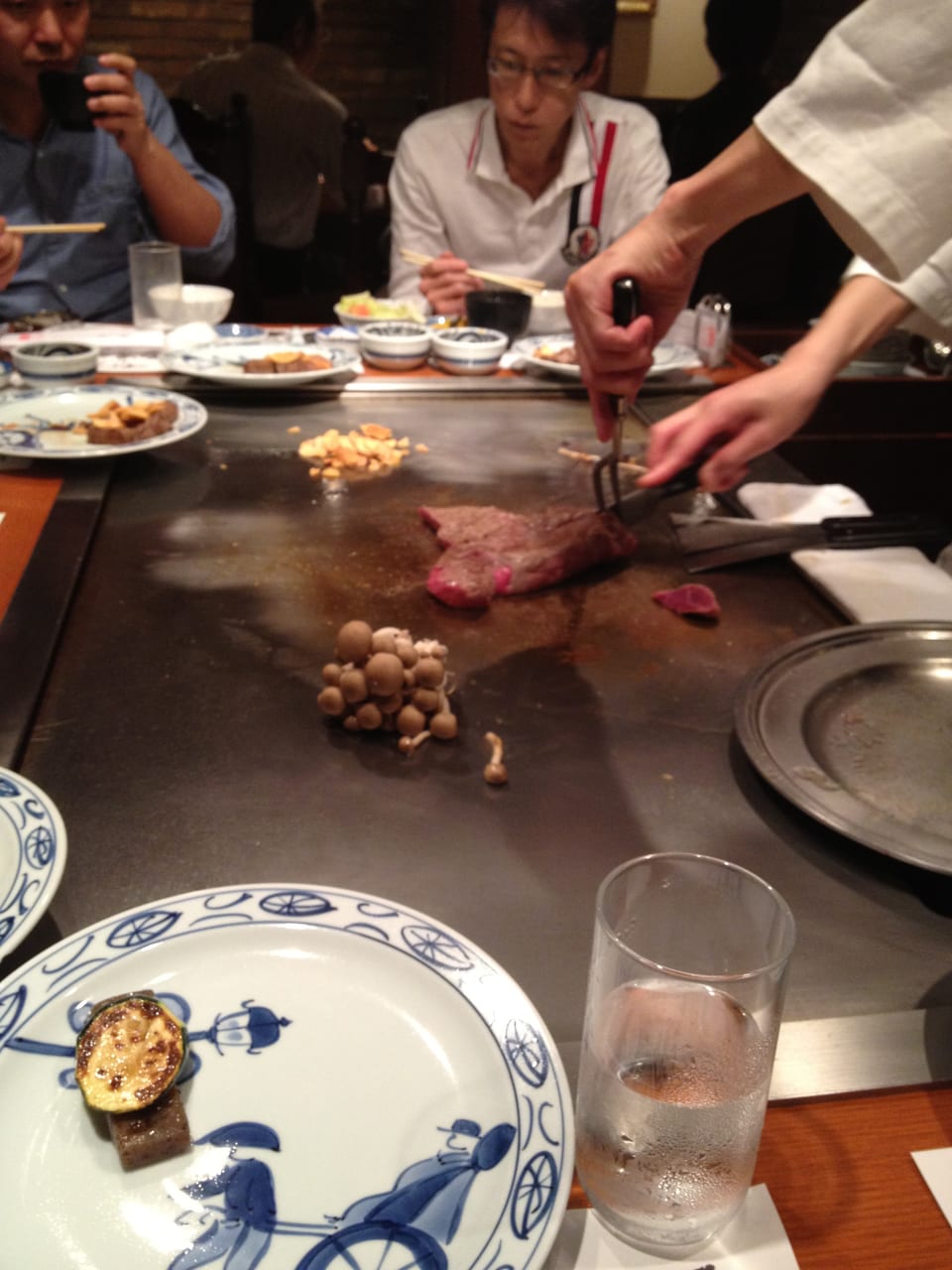
Coming to Kobe and skipping Kobe beef leaves a hole in the trip — but this is also the easiest place to get burned. "Kobe beef" is plastered everywhere, yet real certified beef clears a high bar. Remember one thing: look for the "Kobe Beef" certification mark, a black circle with a chrysanthemum design and the characters for "Kobe beef." Only meat that meets the Kobe Beef Marketing and Distribution Promotion Association standard — Tajima cattle bloodline from Hyogo, grade A4 or A5, a qualifying BMS marbling score — can carry it, and restaurants usually post the certification number at the entrance. A sign that only says "Kobe style" is not proof.
The pricing trick is lunch versus dinner: the same certified cut often costs half at lunch, so for value without sacrificing quality, target lunch. But first, how to make sure what you are eating is the real thing, because that trips people up more than the price does. The certified meat is stamped with the nojigiku (Nippon chrysanthemum) crest, which you will never see at the table. What you see at the door is three things: a membership certificate, a designation certificate and a bronze statue of a cow — the statue is the mark that this shop is licensed to sell Kobe beef, and it beats any wording on a sign. One level deeper: the 10-digit individual identification number posted inside lets you look up that animal’s pedigree, birthplace, where it was raised and whether it was certified. Note the grading rule while you are at it, since this is the part most often written wrong: Kobe beef is Tajima cattle at yield grade A or B with meat quality grade 4 or above and marbling of BMS No.6 or higher — so B4 is genuine, not only A5. Why so expensive? The association’s own answer is scarcity: under 0.2% of the beef traded in Japan, about 7,000 head a year. There are 202 licensed restaurants in Kobe city; pick one off the official list and phone ahead rather than gambling on a sign. Teppanyaki value is not only the beef; the chef searing, controlling the heat, and seasoning in front of you is part of the show, so grab a counter seat in the front row. Book ahead at popular spots; Sannomiya, Kitano, and the harbor area have the most choices.
The Kitano foreign houses
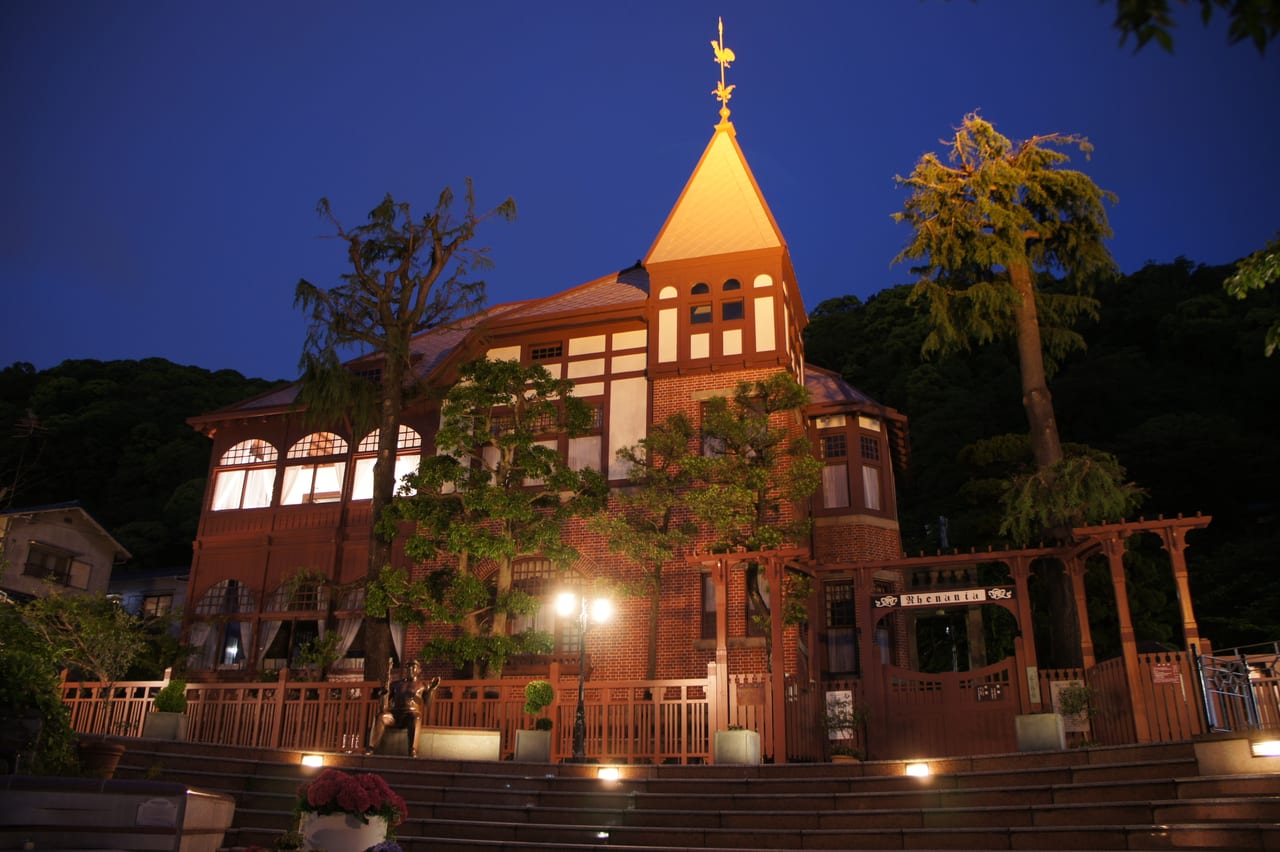
Kitano Ijinkan is the most internationally flavored corner of Kobe. After the port opened in 1868, European and American merchants settled on the Kitano hillside and built homes in the styles of their own countries — German half-timber, British colonial, American clapboard — packed side by side. About 20 survive, several restored and open as museums. Walking the district is free, but entering the houses usually means buying tickets individually, roughly ¥400–880 each, often with combo deals.
The two signatures stand next to each other: the Weathercock House, a 1909 German merchant’s residence whose rooftop weathervane is the landmark of all Kitano, with a highly recognizable red-brick exterior (about ¥500); and the neighboring Moegi House, the 1903 residence of the U.S. consul general, a very photogenic mint-green clapboard building (about ¥400), with a combo ticket around ¥650. Per official info, it is a 10–15 minute uphill walk north from JR Sannomiya along Kitano-zaka. Honestly, the interiors are all small, so I would pick the Weathercock and Moegi houses to go inside and spend the rest of the time strolling the slopes, photographing the foreign streetscape, and ducking into the hillside cafes — that is the best of Kitano. The slopes are steep, so wear comfortable shoes.
Nankinmachi Chinatown
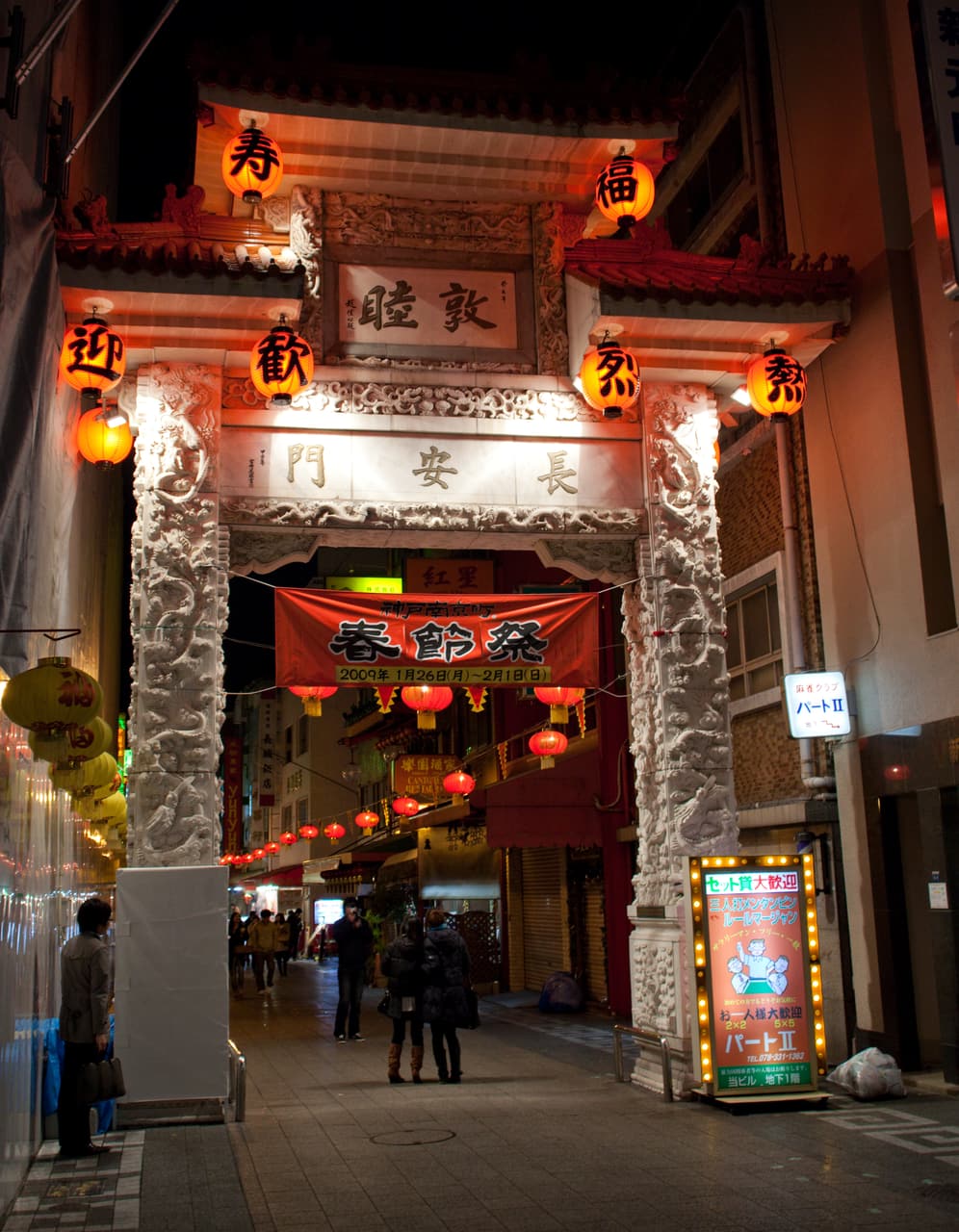
Walk down from Kitano toward the water and the Motomachi area holds Nankinmachi — ranked with Yokohama and Nagasaki as one of Japan’s three great Chinatowns. It is small, about 270 meters east-west and 110 meters north-south, but the red-and-green gates, lanterns, and stone-paved lanes pack it with life. Wandering is free; the point is the street food, bought at the counter and eaten standing right beside the shop. The famous ones are butaman (steamed pork buns) and kakuni-man (braised pork buns) — juicy filling in fluffy dough for a few hundred yen — and gyoza, soup dumplings, candied chestnuts, and sesame balls are everywhere too.
It is easy to reach: per official info, the nearest station is JR / Hanshin Motomachi, a few minutes’ walk, while Sannomiya is about a 15-minute walk, so you can string Sannomiya shopping and Nankinmachi snacking into one line. My advice is to treat Nankinmachi as a snack stopover between bigger meals — you do not need a full sit-down dinner here; buy two or three small items, eat each one by the storefront (finishing before you walk on is the local manner), soak up the treaty-port Chinatown bustle, then continue to the harbor or back to Sannomiya.
The harbor, Port Tower & Meriken Park
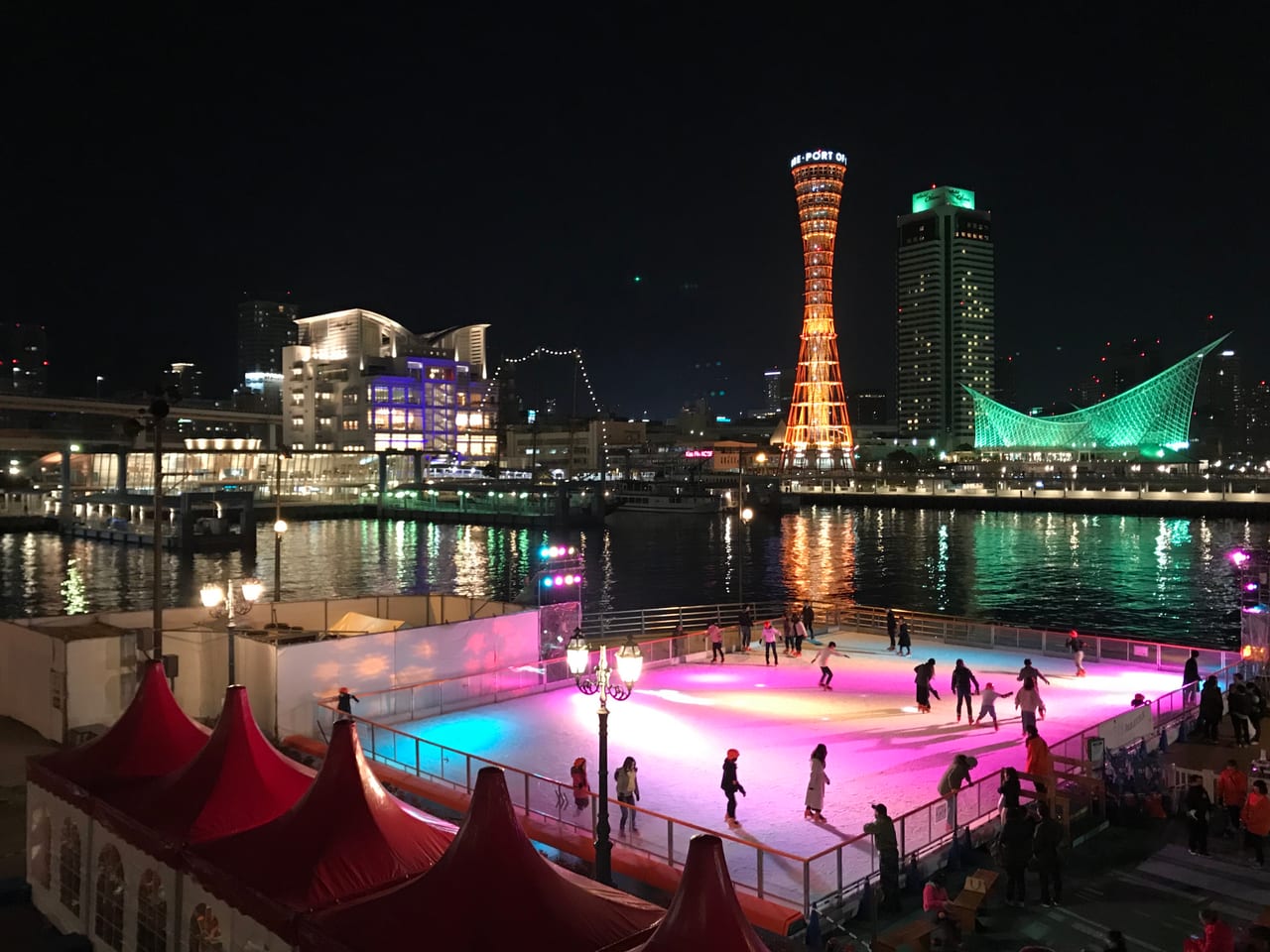
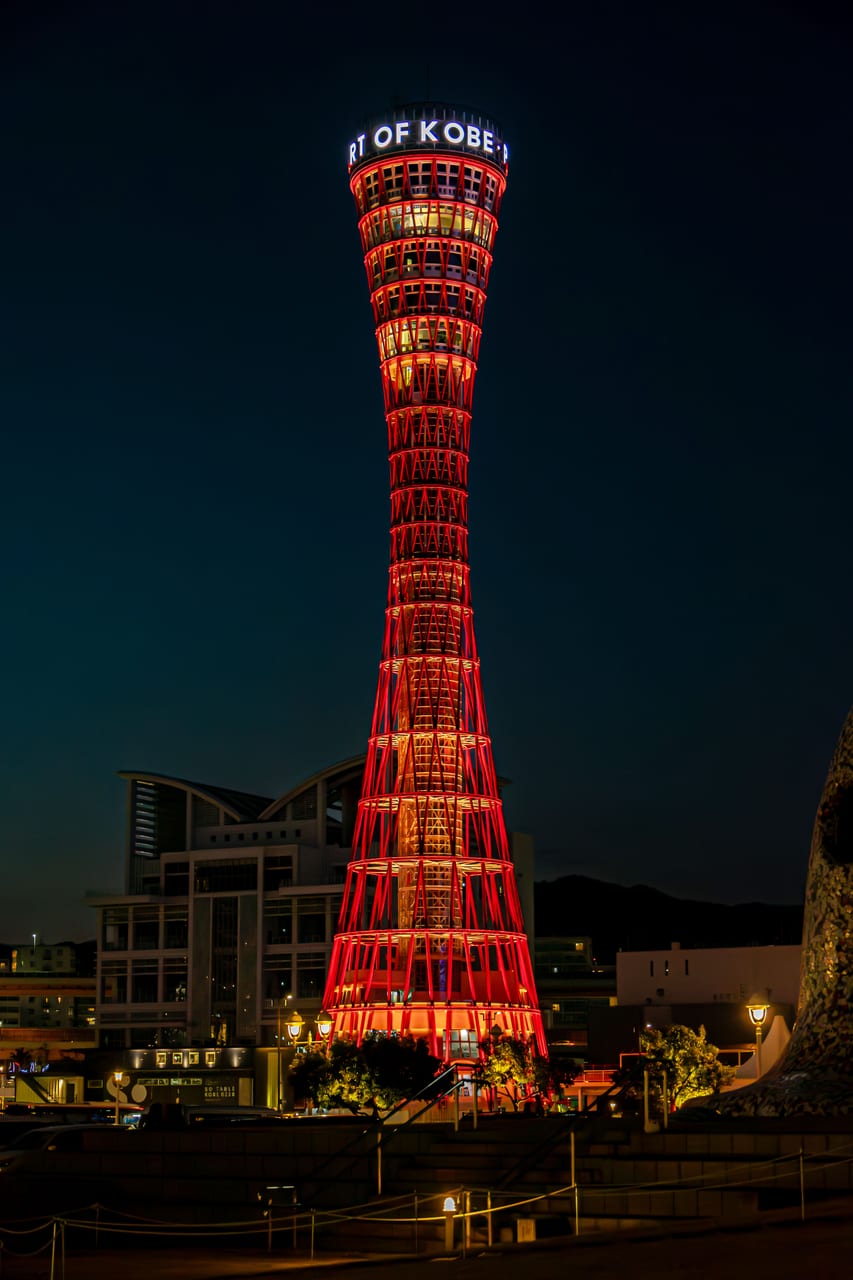
Kobe is a port city, and the waterfront — Harborland/umie and Meriken Park — is where you want to be from dusk into the evening. The landmark Kobe Port Tower deserves a status note: after renovation from late 2021 to early 2024, it reopened on April 26, 2024 with a new open-air rooftop observation deck and a rebuilt shopping complex at its base. Per official pricing, the observation floor is ¥1,000 for adults, ¥1,200 with the rooftop deck (¥400/¥500 for children, free for preschoolers). Note that the observation floors and rooftop use timed-entry reservations and sell out — to catch a night-view slot or visit in peak season, book the time online first.
Around the tower, Meriken Park, the red Port of Kobe Earthquake Memorial Park, and the Harborland Ferris wheel and malls run together; from here you watch the sun drop into the sea at dusk and the lights come up after dark — Kobe’s classic port night scene, and you photograph it from the waterfront, no mountain required, which suits anyone who would rather not travel far or who has older relatives or kids along. Shopping, dinner, and the night view in one place make a natural close to a city day. Visiting in December? The old foreign settlement nearby hosts an annual light festival — see the full Kobe Luminarie 2027 guide for dates and access.
Mt. Rokko & Maya night views
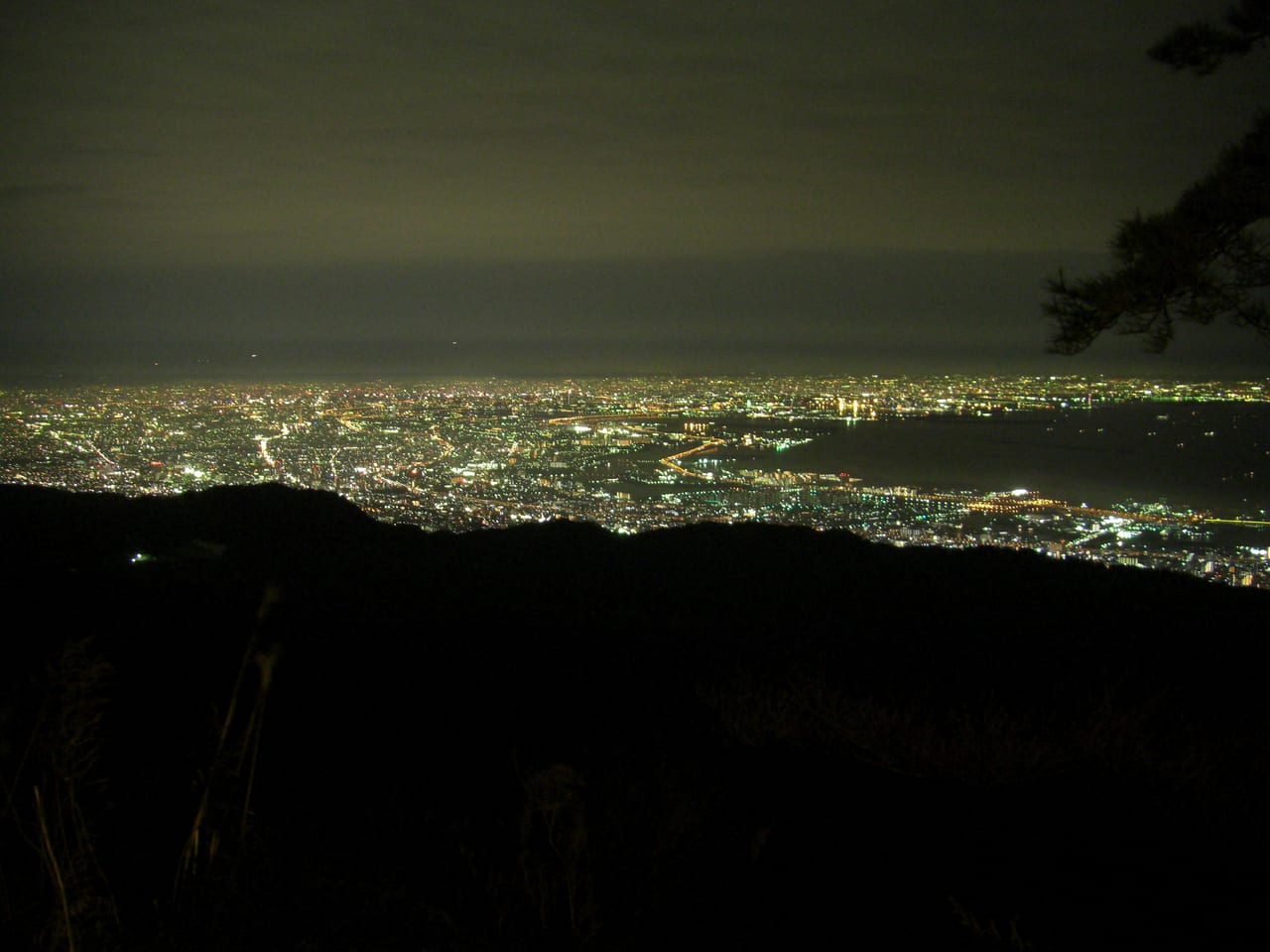
Kobe earns its place among Japan’s top three night views on the strength of these two mountains behind it. Both give the ten-million-dollar view; they differ in access and angle, so choose by your time:
- Mt. Maya’s Kikuseidai: around 700 meters, taking in Osaka Bay, the whole city, and the port — many find this the more dramatic view. The name means roughly "a terrace where you could scoop up the stars." You reach it via the Maya Viewline (a cable car plus aerial ropeway in two stages).
- Mt. Rokko: larger, with more facilities — the Rokko Garden Terrace, observation decks, and restaurants — so it suits anyone who wants to linger and combine dinner with the view. Ride the Rokko Cable Car about 10 minutes to the top.
How do you get up? Per official info, from Osaka-Umeda take the Hankyu or Hanshin line to Rokko or Mikage, then a Kobe city bus plus the cable car — about 30–50 minutes, under an hour total; it is closer from Sannomiya. The most important reminder: the night view needs darkness, so check the last cable car and bus times before you go — there are few taxis up top, and missing the last ride is a real problem. The summit is much colder than the city in winter, so bring a jacket. For the wider Kansai rail picture, see our JR Pass guide.
The Arima Onsen day trip
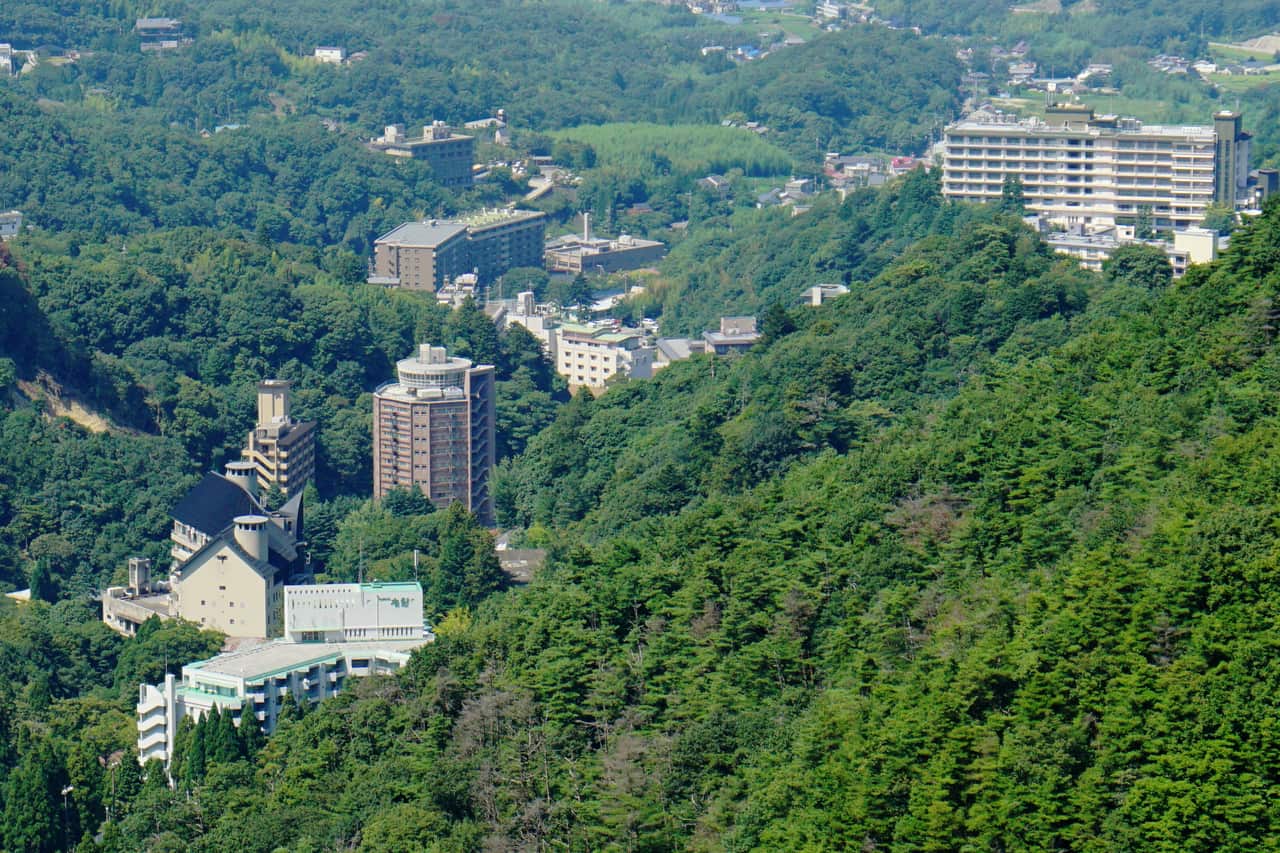
Over the far side of Mt. Rokko lies Arima Onsen — one of Japan’s oldest hot springs, tucked in a mountain valley close to central Kobe and an easy day-trip soak. Arima’s signature is its two waters: the Gold Spring (Kin no Yu) is iron- and salt-rich, colorless at the source and oxidizing to gold-brown in the air, prized for cold hands and feet and skin warmth; the Silver Spring (Gin no Yu) is a clear carbonated and faintly radioactive radium spring that feels crisp — one gold, one silver, each with its devotees.
You can soak without staying over: two public bathhouses in town take day visitors, and per official pricing, Kin no Yu is about ¥800 (¥600 some weekdays), Gin no Yu is separate, and a combo ticket is around ¥1,200. Per official info, reach it via the Shintetsu Arima Line (transfer at Suzurandai) or a direct highway bus from Shin-Kobe. My advice: if you are short on time, do a same-day round trip soaking the gold and silver springs and grabbing a carbonated senbei in the onsen town; if you want to slow down, stay a night at an old ryokan for kaiseki and a private bath — a pace you cannot get on a same-day return. It is a completely different side of Kansai from the temple-hopping of Kyoto-Nara (see our Nara day-trip guide).
Transport & lodging
Getting in is very easy — three parallel railways connect Kobe and Osaka: the JR Kobe Line (Special Rapid) is about 20 minutes to Sannomiya, the Hankyu Kobe Line limited express about 25, and the Hanshin Main Line about 30, all quick from Osaka-Umeda or Namba. West of Kobe, Himeji and its UNESCO White Heron Castle are only about 40 minutes by JR Special Rapid, so "Osaka–Kobe–Himeji" makes a smooth western Kansai line. Push further into northern Hyogo and you can extend to Kinosaki Onsen and its seven public baths for an overnight in a yukata. Sannomiya is Kobe’s transit core, where JR, Hankyu, Hanshin, the subway, and the Port Liner all meet.
Around town, central Kobe is genuinely walkable: Kitano, Sannomiya, Motomachi (Nankinmachi), and the harbor roughly line up on a north-south axis, doable on foot plus a little subway or bus. To go up Rokko or Maya for the night view, or out to Arima, use the cable car, Shintetsu, or highway bus described above. If your Kansai trip spans Osaka, Kyoto, Kobe, and Himeji, buying each leg gets pricey, so weigh a Kansai JR Pass or private-railway pass — the break-even math is in our JR Pass guide, and only if it clears look at the JR Kansai WIDE Area Pass (5 days). Know what it excludes first: it covers JR only, and the Rokko and Maya cable cars, plus the Shintetsu, Hankyu and Hanshin lines out to Arima, are all private railways, so none of those legs are covered. If you are staying inside Kobe, you do not need this pass.
For lodging, base yourself around Sannomiya: best transit, easy in-and-out to Osaka and up the mountains, dense with restaurants and shops. For port night views within walking distance of Harborland, the harbor area is also nice but a little farther from the station. Kobe has plenty of hotels at gentler prices than Kyoto or Osaka, but most people actually treat Kobe as an Osaka satellite on a day trip — staying in Osaka and visiting Kobe by day works perfectly and saves the room entirely. You only need a Kobe or Arima room if you want the night view or an Arima overnight.
A one-to-two-day Kobe plan
Here is the same content shaped into a route that walks well:
- One-day highlights (day trip from Osaka): morning JR / Hankyu / Hanshin to Sannomiya → walk up to Kitano Ijinkan (Weathercock + Moegi) → down to Nankinmachi for a butaman snack → certified Kobe beef lunch (target the lunch set for value) → afternoon around Motomachi and Sannomiya, or out to the harbor for Harborland and Port Tower → sunset and night view by the water → back to Osaka.
- Two-day deep dive (overnight in Kobe or Osaka): Day 1 as above, but instead of returning to the harbor at dusk, ride the cable car up Mt. Maya’s Kikuseidai or Mt. Rokko for the ten-million-dollar night view → Day 2 all day at Arima Onsen, soaking the gold and silver springs and wandering the onsen town, then back to Kobe or onward to Kyoto-Osaka.
If you only have half a day, just walk the Kitano + Nankinmachi + Kobe beef lunch line; leave the night view and Arima for next time or an extra night. East of Kobe lie Osaka and Kyoto (see our Osaka & Kyoto 5-day itinerary); west lie Himeji Castle and Okayama. Slot Kobe into a Kansai trip and it will be the most port-flavored, international day of the lot.
FAQ
- Q1:How many days do you need in Kobe? Is a day trip from Osaka enough?
- Kobe is compact and its sights cluster tightly, so the city core — Kitano, Nankinmachi, the harbor, and a Kobe beef lunch — fits in one day, and at 30 minutes from Osaka a day trip works perfectly. But if you want to add the night view from Mt. Rokko or Mt. Maya, or a soak at Arima Onsen, the night view needs darkness and the onsen needs time, so two days or one overnight is more comfortable — city by day, ten-million-dollar night view at dusk, or a full second day at Arima. Kobe is often squeezed into a Kyoto-Osaka trip as a single day, but it rewards more. See our Osaka & Kyoto 5-day itinerary for the wider route.
- Q2:How do I avoid fake Kobe beef, and what should it cost?
- The keyword is the "Kobe Beef" certification mark — a black circle with a chrysanthemum design and the characters for "Kobe beef." Only meat that passes the Kobe Beef Marketing and Distribution Promotion Association standard can carry it — Tajima cattle, yield grade A or B with meat quality grade 4 or above and a marbling score of BMS No.6 or higher. That means B4 is genuine Kobe beef too, not only A4 and A5, which is the detail most guides get wrong. What you can actually see at the door is a membership certificate, a designation certificate and a bronze statue of a cow — the statue is the mark of a licensed shop. A menu that just says "Kobe style" is not a guarantee. Inside, the 10-digit individual identification number on display can be looked up in the official Tajima cattle pedigree system. There are 202 licensed restaurants in Kobe city on the official list. Prices vary by shop; the same cut at lunch often costs half what it does at dinner, so target lunch. It is expensive because it is scarce — under 0.2% of the beef traded in Japan, about 7,000 head a year.
- Q3:Do you pay to enter the Kitano foreign houses? Which ones are worth it?
- Walking the Kitano Ijinkan district is free, but most of the Western houses that open as museums charge separately (roughly ¥400–880 each, with combo tickets). After Kobe opened as a treaty port in 1868, European and American merchants built homes in their own national styles on the Kitano hillside; about 20 survive, several open to the public. The two signatures are the Weathercock House (1909, a German merchant’s home, about ¥500) and the neighboring Moegi House (1903, the U.S. consul’s residence, about ¥400), with a combo ticket around ¥650. Per official info it is a 10–15 minute uphill walk north from JR Sannomiya along Kitano-zaka. Honestly, the interiors are small — see those two signatures and spend the rest of your time wandering the streetscape.
- Q4:Is Kobe Port Tower reopened? How much is admission?
- Yes. Kobe Port Tower reopened on April 26, 2024 after renovation that ran from late 2021 to early 2024, adding a new open-air rooftop observation deck and a refreshed shopping complex at its base. Per official pricing, the observation floor is ¥1,000 for adults, ¥1,200 with the rooftop deck (¥400/¥500 for children, free for preschoolers). Note that the observation floors and rooftop use timed-entry reservations, and same-day tickets are unavailable once sold out — book a slot online in peak season or for a night-view time. The tower sits beside Meriken Park, linked with the Harborland/umie complex and Ferris wheel into Kobe’s classic harbor night scene.
- Q5:How do the Mt. Rokko and Mt. Maya night views differ, and how do I get up?
- Both deliver Kobe’s famous ten-million-dollar night view (one of Japan’s top three), differing in access and angle. Mt. Maya’s Kikuseidai sits around 700 meters and takes in Osaka Bay and the whole city — many consider it the more dramatic view; you reach it via the Maya Viewline (a cable car plus aerial ropeway in two stages). Mt. Rokko is larger with more facilities (the Rokko Garden Terrace, observation decks), reached by the Rokko Cable Car in about 10 minutes. Per official info, from Osaka-Umeda take the Hankyu or Hanshin line to Rokko or Mikage, then a bus and the cable car — under an hour total; it is closer from Sannomiya. Night views need darkness, so check the last cable car and bus times before you go.
- Q6:What are Arima Onsen’s gold and silver springs, and is it a day trip?
- Arima is one of Japan’s oldest hot springs, tucked in the hills close to central Kobe. It has two waters: the Gold Spring (Kin no Yu) is iron- and salt-rich and oxidizes to a gold-brown when it meets the air, prized for cold hands and feet and skin warmth; the Silver Spring (Gin no Yu) is a clear carbonated and mildly radioactive radium spring that feels crisp. You can soak without staying: per official pricing, Kin no Yu is about ¥800 (¥600 some weekdays) and Gin no Yu is separate, with a combo ticket around ¥1,200. Per official info, reach it via the Shintetsu Arima Line (transfer at Suzurandai) or a direct highway bus from Shin-Kobe. A day trip soak is entirely doable; an overnight at an old ryokan with kaiseki is also worthwhile. For a different Kansai pace, see our Nara day-trip guide.
Related reading:
Himeji Day Trip 2026: Castle, Koko-en & Mt. Shosha
Thirty minutes from Shin-Osaka and fifteen from Shin-Kobe, Himeji is the easiest day trip in Kansai — how to sequence the castle, Koko-en, Engyo-ji and the zoo into a route that actually walks.
Nara Guide 2026: Todaiji, the Deer Park & Kasuga Taisha
About 40 minutes by Kintetsu from Osaka or Kyoto — the Todaiji Great Buddha, feeding roughly 1,700 free-roaming deer, Kasuga Taisha lanterns, and the Kofukuji pagoda restoration status.
Osaka & Kyoto 5-day itinerary
Dotonbori, Kiyomizu, Arashiyama — full tested route.