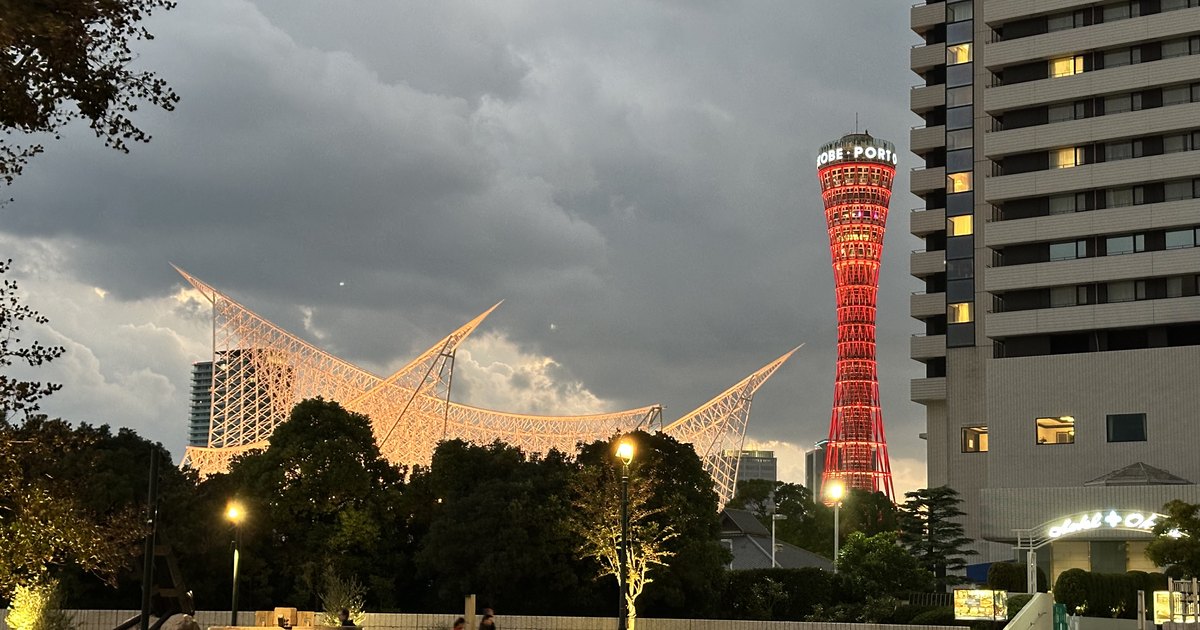
Kobe Luminarie 2027, the 32nd edition, runs January 29 (Fri) to February 7 (Sun), ten days, and the arched light corridor is inside a paid area in Meriken Park: advance tickets are ¥500 on weekdays and ¥750 on weekends. You can still see lights for free at Higashi Yuenchi Park and in the former foreign settlement. Two assumptions send people the wrong way: that the corridor runs down a street in the old settlement, and that this is a December event. It is now three separate sites with no set route, and only one area is ticketed. Below: which parts are free, when tickets are due on sale, what time to go and which station to use. The corridor is called the Galleria (ガレリア) on official pages, which is the word to look for when buying.
- Dates: 32nd Kobe Luminarie, Jan 29 (Fri) to Feb 7 (Sun), 2027, ten days
- Only one area is ticketed: the Galleria light corridor is in Meriken Park's paid area; the works at Higashi Yuenchi Park and the former foreign settlement are free
- Prices: advance ¥500 weekdays, ¥750 weekends; same-day ¥1,000 and ¥1,500
- On sale: scheduled for Sunday, Nov 1, 2026, with a timed entry slot; sales channels not yet announced
- When to go: 2027 lighting time not published (last time: dusk to 21:30); pick a weekday, and I would buy the 18:30 slot
- Don't buy the wrong ticket: the "Kobe light show ticket" on KKday is a different event in Kita Ward
Table of Contents (click to expand)
- Is Kobe Luminarie right for your trip?
- Key facts: 2027 dates, sites and cost
- How much are paid-area tickets, and when do they go on sale?
- Where is the light corridor, and what is at each site?
- What time and which day?
- Don't buy the wrong ticket: Kobe Illuminage is a different event
- How to plan it in three situations
- What first-timers get wrong
- Getting there: stations and walking times
- How I would plan the evening
- Why January and not December?
- FAQ
- What I would do
- Official information
Is Kobe Luminarie right for your trip?
It suits you if
- You are in Kansai between January 29 and February 7 with two or three free hours in an evening.
- You want to walk through the arched corridor and are willing to buy a timed ticket in advance.
- You are staying in Osaka or Kyoto and want to be back the same night.
You can skip planning around it if
- Your trip is in December or the first half of January: it is not running.
- You won't buy a ticket but expect to walk through the corridor: last time the free sites had a wall of light and a box-shaped piece, and the arches were only in the paid area.
- You can only come on a weekend and dislike crowds: the organisers themselves recommend weekdays, and weekend tickets cost 50% more.
Key facts: 2027 dates, sites and cost
| Dates | January 29 (Fri) to February 7 (Sun), 2027, ten days (32nd edition) |
|---|---|
| Sites | Meriken Park (part of it a paid area), Higashi Yuenchi Park, and the former foreign settlement (centred on the plaza in front of the Sumitomo Mitsui Banking Corporation Kobe head office building) |
| Lighting hours | 2027 not published (last time: dusk to 21:30) |
| Cost | Higashi Yuenchi Park and the former settlement are free; Meriken Park paid area, advance ¥500 weekdays, ¥750 weekends |
| Tickets | Scheduled to go on sale Sunday, November 1, 2026; timed entry; channels not yet announced |
| Nearest stations | Higashi Yuenchi Park: Sannomiya; Meriken Park: Motomachi; former settlement: Motomachi or Sannomiya |
| Time needed | About 2.5 hours for all three sites (on my plan below) |
| Official site | kobe-luminarie.jp |
How much are paid-area tickets, and when do they go on sale?
Prices are fixed, and advance tickets cost half the same-day price. The sale date and time slots are still "scheduled".
| 32nd edition | Weekday | Sat/Sun |
|---|---|---|
| Advance | ¥500 | ¥750 |
| Same-day | ¥1,000 | ¥1,500 |
The organisers label these four points as scheduled, so plan on them until the final rules are out:
- On sale: Sunday, November 1, 2026, as either an e-ticket or a paper ticket.
- Time slots: 17:30-18:30, 18:30-19:30, 19:30-20:30 and 20:30-21:30; you choose one when buying.
- Advance deadline: the day before each date. On the day, only same-day tickets remain.
- Children: free up to elementary-school age, accompanied by an adult.
The sales channels have not been announced; the organisers say that comes in autumn. Whether late arrivals get in, whether tickets can be refunded, and when same-day tickets go on sale are not yet set for the 32nd edition. The next section has how it worked last time.
What is the 100-yen contribution?
A voluntary donation, not an entry fee. Visitors are asked for 100 yen per person. You can see the free sites without giving, and it is separate from the paid-area ticket.
Where is the light corridor, and what is at each site?
The light corridor is in the paid area at the south-east corner of Meriken Park; Higashi Yuenchi Park and the former settlement have free works. What follows is the layout and the rules of the previous edition (the 31st, in 2026). The 32nd uses the same three sites and again has a paid area in Meriken Park; which work goes where is due to be announced around October.
| Site | Last edition's work | Cost |
|---|---|---|
| Meriken Park (paid area) | The Galleria light corridor, about 75 m long, entered through the Frontone, a gateway piece about 48 m wide | Ticket |
| Meriken Park (outside the paid area) | A Spalliera, or wall of light, near the Earthquake Memorial Park | Free |
| Higashi Yuenchi Park | A Spalliera on the lawn, about 50 m long and 22 m at its highest; food stalls and a music stage in the south of the park | Free |
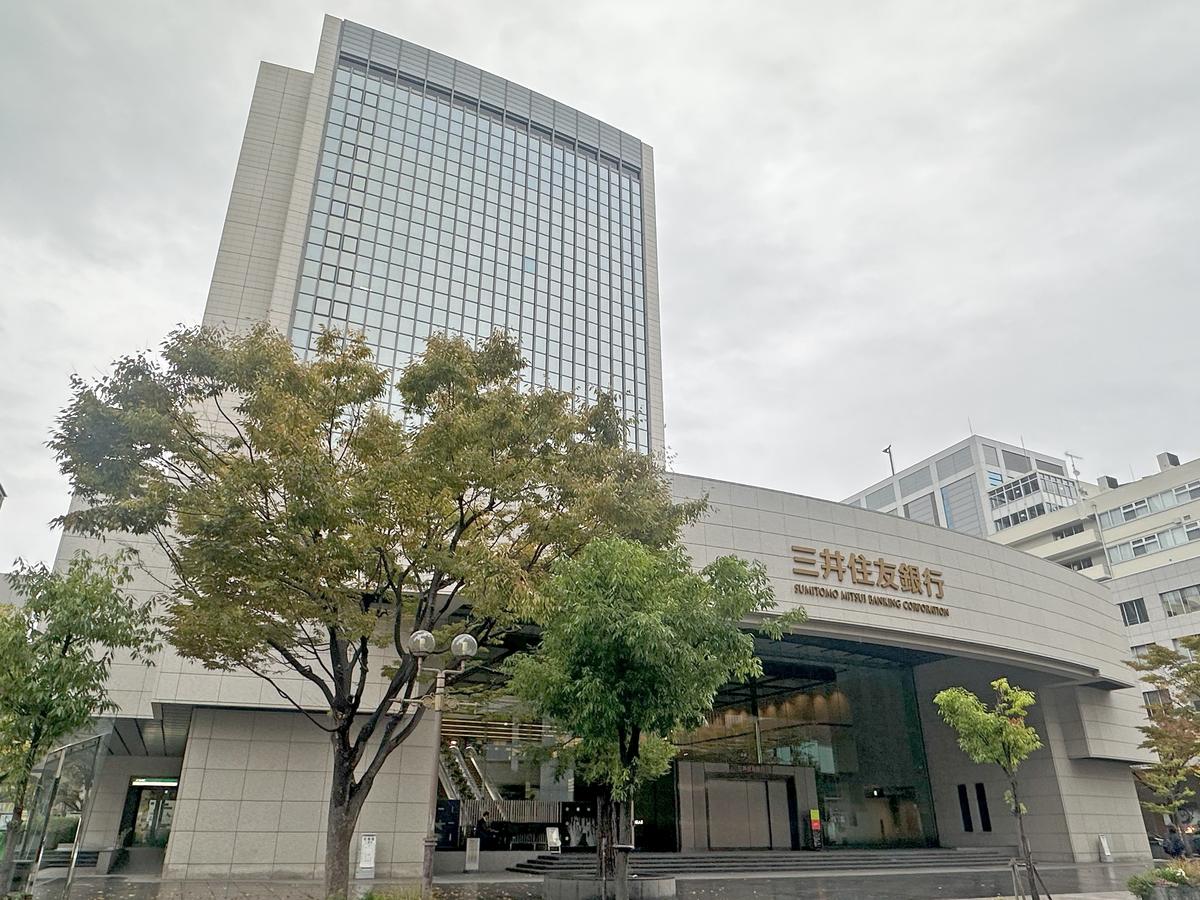
| Former foreign settlement | The Doppio Gazebo, a box-shaped piece about 7 m high and 16 m wide, on the plaza in front of the Sumitomo Mitsui Banking Corporation Kobe head office building | Free |
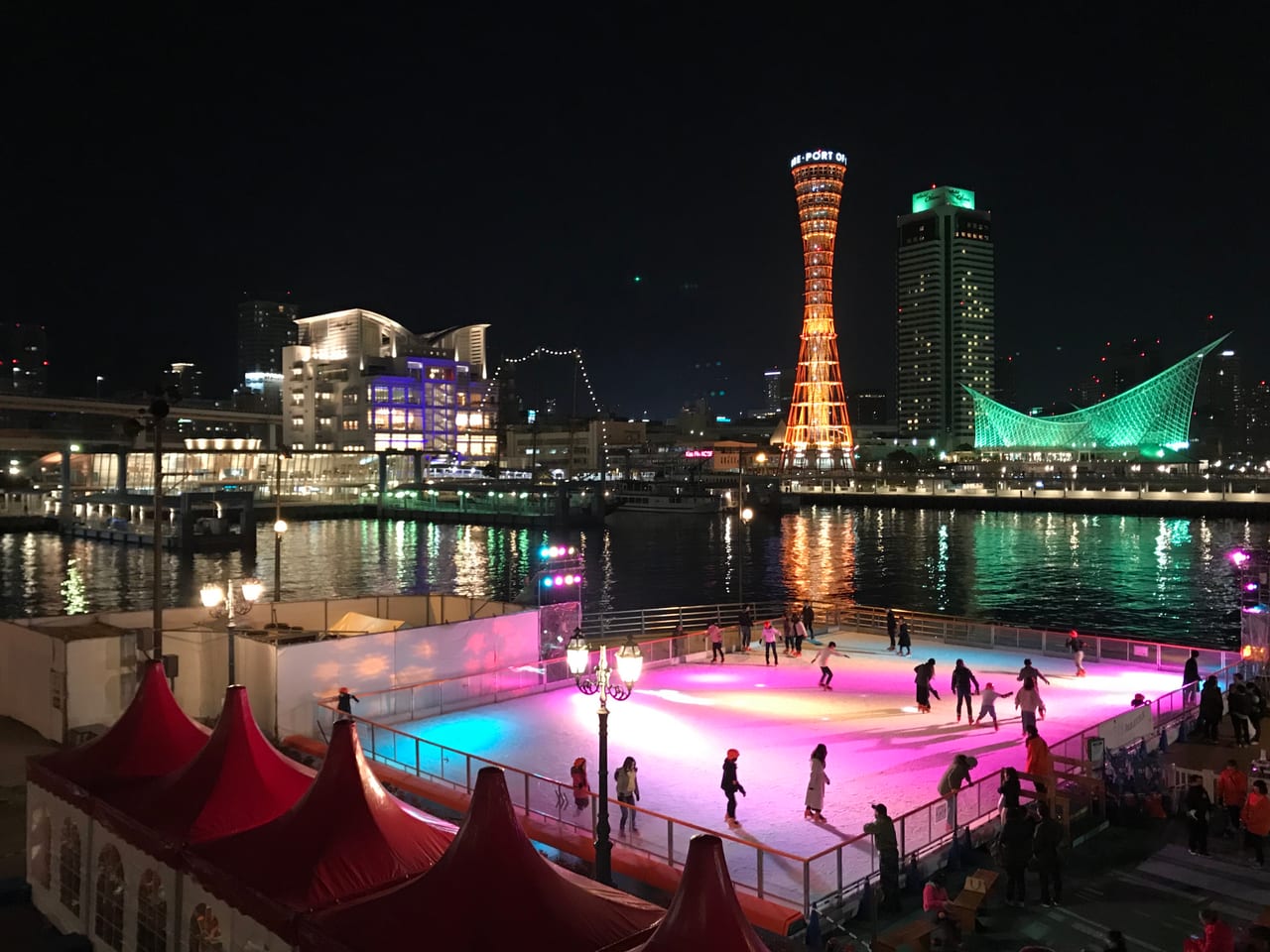
How did entry to the paid area work last time?
- Arrive in the slot on your ticket. Outside that slot you were not admitted.
- No changes, no refunds for a change of plans on your side.
- Same-day tickets went on sale at 15:00 each day at the Meriken Park site, and on days when advance tickets sold well they might not be sold at all.
- Advance channels were Lawson Ticket, KANSAI MaaS, tabiwa by WESTER and Loppi terminals.
What time did the lights come on, and was there a route?
Lighting was "dusk to 21:30", and there was no set route. The organisers said they would not answer in advance what minute the lights come on; it is decided on site each day. The three sites could be seen in any order and entered from anywhere, following the guards when it got busy. Car parks nearby operated as usual.
What time and which day?
Go on a weekday, and for the paid area I would buy the 18:30-19:30 slot rather than the first one at 17:30. The 2027 lighting time is not out, and last time the lights came on when it got dark, with no fixed minute. Walk in the moment the 17:30 slot opens and you may be standing under a sky that is not yet dark. By the second slot it is certainly dark, and you still finish in time for a train back to Osaka or Kyoto.
Two reasons for a weekday: during the last run the organisers themselves posted a "weekdays recommended" notice, and weekday advance tickets are cheaper than weekend ones. Six of the ten days are weekdays: Friday, January 29, and Monday to Friday, February 1 to 5.
Don't buy the wrong ticket: Kobe Illuminage is a different event
A KKday listing whose Chinese title reads "Kobe light show ticket" (神戶燈光秀門票) does not get you into Luminarie's paid area. It is for Kobe Illuminage, held at the roadside station Kobe Fruit Flower Park Ozo in Kita Ward from October 23, 2026 to February 14, 2027. The two are separate events in different parts of the city: Luminarie is in central Kobe around Sannomiya, Motomachi and the harbour, and the other one is not.
The names are close enough to confuse, so check two things before paying:
| Kobe Luminarie | Kobe Illuminage | |
|---|---|---|
| Dates | Jan 29 to Feb 7, 2027 (ten days) | Oct 23, 2026 to Feb 14, 2027 |
| Where | Meriken Park, Higashi Yuenchi Park, former foreign settlement | Roadside station Kobe Fruit Flower Park Ozo, Kita Ward |
You may want to see Illuminage as well, and it is open in early and mid-January when Luminarie is not. Just don't book it thinking it is the same thing.
How to plan it in three situations
If you are staying in Osaka or Kyoto and have one evening
Keep your daytime plans, ride over in the late afternoon and go back the same night; there is no need to book a night in Kobe, which is around an hour from either city. Buy the second or third slot and don't run the daytime to the last minute, because under last edition's rules a missed slot meant no entry. To see where this evening fits in a wider trip, see how to lay out five days in Osaka and Kyoto.
If you don't want to buy a ticket
Get off at Sannomiya, go to Higashi Yuenchi Park first, walk on to the work in the former settlement, and leave from Motomachi. That costs nothing. What you miss is the arched corridor, which is only inside the paid area.
If you are bringing young children
Children up to elementary-school age are scheduled to be free but must be with an adult, and the adult still needs a timed ticket. I would take the 18:30 slot and be walking to the station by about 19:30.
If your Kansai dates are in December or early January
You won't see it; plan Osaka instead. In December, Kansai's lights are in Osaka: the Midosuji Illumination runs to December 31 and OSAKA Hikari no Renaissance only from December 11 to 25. From January 1 to 28 there is no major street illumination in Kansai, and Kobe does not open until January 29. For what is lit on which December dates, see which nights to see Osaka's winter illuminations.
If the same winter trip includes Hokuriku, book the Shirakawa-go light-up first: it is reservation-only with very few nights, and for Kobe you can then pick any weekday out of ten.
What first-timers get wrong
- ⚠️ ① Looking for the light corridor in the former settlement. It is in Meriken Park's paid area; last time the settlement had a box-shaped piece.
- ⚠️ ② Planning to buy on the night. Same-day tickets cost double, and last time they might not be sold at all on days when advance tickets sold well.
- ⚠️ ③ Treating the time slot as a suggestion. It is your entry window. Under last edition's rules, miss it and you were not admitted, with no refund.
- ⚠️ ④ Trying to look up tonight's lighting time. The organisers do not publish an exact minute. Plan for "after dark".
- ⚠️ ⑤ Taking the contribution for a ticket. The 100 yen is a voluntary donation and does not get you into the paid area.
Getting there: stations and walking times
Use Sannomiya for Higashi Yuenchi Park and Motomachi for Meriken Park, and walk between the sites. The walking times below are the ones the organisers gave last time.
| Site | Nearest station | Walk |
|---|---|---|
| Higashi Yuenchi Park | Sannomiya (any line) | 5-10 min |
| Former foreign settlement | Motomachi or Sannomiya | 5-10 min |
| Meriken Park | Motomachi (Kobe Station is also about 10 min) | 10 min |
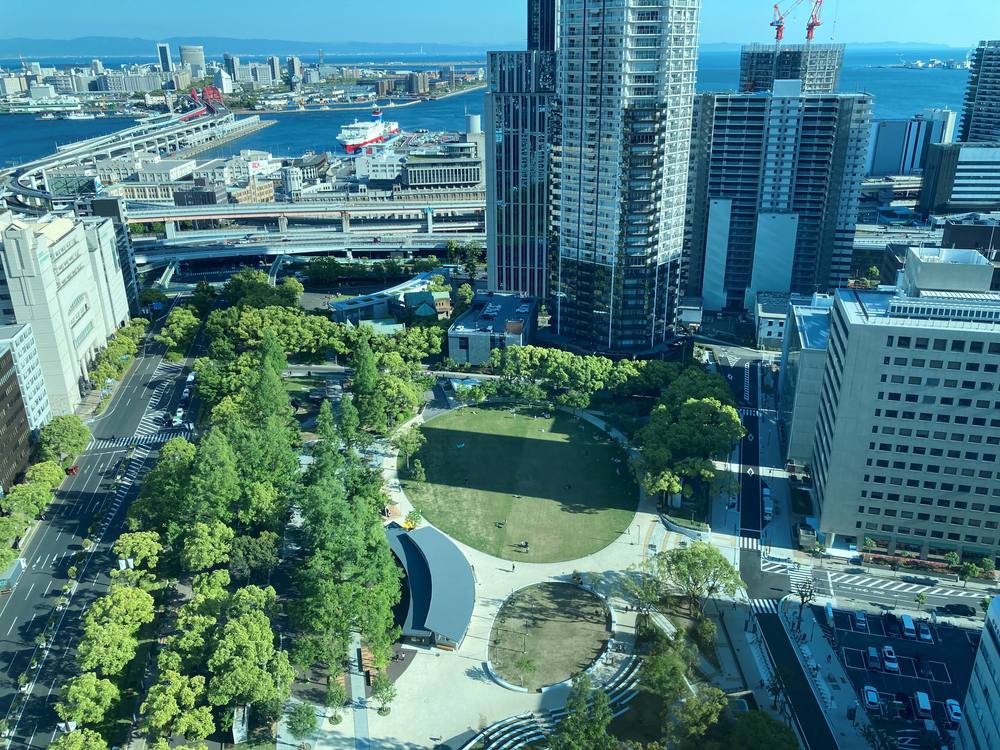
Meriken Park to Higashi Yuenchi Park is about a 15-minute walk: open this walk in Google Maps. Arrive at Sannomiya and leave from Motomachi, or the reverse, and you never double back.
Drivers: no traffic restrictions have been announced for the 32nd edition so far, so check the official site again closer to the dates. Meriken Park is on the water and the run is in late January and early February, so dress for the coldest part of winter and bring a scarf and gloves; the guide to what to wear in Japan by season has the detail. For what to do with a half day in the city first, see what to see in central Kobe.
How I would plan the evening
A weekday, the 18:30-19:30 ticket, in at Sannomiya and out at Motomachi. This follows last edition's layout, so the order may need adjusting once the 32nd layout is published.
- 17:20: get off at Sannomiya and walk 5-10 minutes to Higashi Yuenchi Park.
- 17:30-18:10: Higashi Yuenchi Park. Wait for dark and the lights, see the wall of light on the lawn, and eat here if you need to.
- 18:10: leave for the work in the former settlement, then on to Meriken Park. Direct it is about 15 minutes; with the extra stop allow 30-40.
- Around 18:45: enter the paid area and walk the light corridor, then see the free wall of light outside it.
- 19:45: walk to Motomachi, about 10 minutes.
- Around 20:00: board for Osaka or Kyoto.
Why January and not December?
Because the organisers want to hold it as soon as possible after January 17. Kobe Luminarie commemorates the Great Hanshin-Awaji earthquake of January 17, 1995, which killed 6,434 people and injured 43,792. It used to be a December event; since the 29th edition in 2024 it has run in late January and early February: January 19-28 for the 29th, January 24 to February 2 for the 30th, January 30 to February 8 for the 31st, and January 29 to February 7 for the 32nd.
The look of the works comes from festival decorations of medieval Italy. The parts are prepared in Italy, shipped to Kobe and assembled by Italian craftsmen together with Japanese staff, which is why they read as buildings made of light and not as strings of bulbs in trees.
Kobe Luminarie 2027 FAQ
- Q1:When is Kobe Luminarie in 2027?
- The 32nd edition runs January 29 (Fri) to February 7 (Sun), 2027, ten days. It is spread across three sites: Meriken Park, Higashi Yuenchi Park and the former foreign settlement. Lighting hours for 2027 are not out yet; last time it was dusk to 21:30.
- Q2:Where is the light corridor (Galleria), and do I need a ticket?
- In the paid area at the south-east corner of Meriken Park, and yes, you need a ticket. That was its position at the previous (31st) edition. The 32nd edition again has a paid area in Meriken Park, with the layout of the works due to be announced around October.
- Q3:How much are paid-area tickets, and when do they go on sale?
- Advance tickets are ¥500 on weekdays and ¥750 on weekends; same-day tickets are ¥1,000 and ¥1,500. Sales are scheduled to open on Sunday, November 1, 2026, with a timed entry slot chosen at purchase and advance sales closing the day before each date. The sales channels have not been announced.
- Q4:What can I see without a ticket?
- The works at Higashi Yuenchi Park and in the former foreign settlement are free. Last time that meant a wall of light about 50 m long at Higashi Yuenchi, a box-shaped piece in the settlement, and one more free wall of light outside the paid area in Meriken Park. The arched corridor itself is only inside the paid area.
- Q5:What time do the lights come on, and which days are quieter?
- The 2027 lighting time has not been published. Last time it was "dusk to 21:30", and the organisers said outright that the exact minute is decided on site each day. Weekdays are quieter: the organisers themselves posted a "weekdays recommended" notice during the last run.
- Q6:Is there a set route between the three sites?
- No. At the last edition the organisers set no route: you could enter anywhere and see the works in any order, following the guards when it got busy. Meriken Park to Higashi Yuenchi Park is about a 15-minute walk.
- Q7:Is the 100-yen contribution an entry fee?
- No, it is a voluntary donation. Visitors are asked for 100 yen per person, and you can see the free sites without giving. It is separate from the paid-area ticket.
- Q8:Is the "Kobe light show ticket" on KKday a Luminarie ticket?
- No. That listing is for Kobe Illuminage, held at the roadside station Kobe Fruit Flower Park Ozo in Kita Ward from October 23, 2026 to February 14, 2027. It is a different event, and the ticket does not get you into the paid area at Meriken Park.
What I would do
For a first visit I would buy the ticket. A weekday advance ticket is ¥500, and the arched corridor exists only inside the paid area, so this is not where I would save money. I would pick a weekday, take the 18:30 slot, arrive at Sannomiya and leave from Motomachi. If you decide late, or advance tickets are gone, the two free sites still make an evening, as long as you know it is not the corridor you will be seeing. If your trip is in December, don't wait for Kobe: that month's lights are in Osaka. The one thing to do now is check the official site on November 1 for the sales channels.
Official information
Kobe Luminarie official site: kobe-luminarie.jp. Prices, time slots, lighting hours and the layout of the works follow the organisers' latest announcement.
Read next
Kobe Travel Guide 2026: Beef, Kitano & Night Views
30 minutes from Osaka: certified Kobe beef teppanyaki, the Kitano foreign houses, free Nankinmachi Chinatown, the reopened Port Tower, the Rokko and Maya night views, and Arima Onsen.
Shirakawa-go Illumination 2027: Dates & Booking
Four 2027 dates, 17:30–19:30, fully reservation-only.
What to Wear in Japan 2026: 4 Regions × 4 Seasons Packing Guide
A 4,500-word pillar: climate physics, region-by-region clothing strategy, four-season packing lists.