Kumamoto Castle reopened on 13 August 2026, and since 18 August the castle has listed itself as operating normally, keep included. Open is not the same as fully back, though: the Wakuwakuza museum below the castle is still temporarily closed, the combo tickets that include it are off sale, and one of the car parks is shut. Based on official notices as of 14 September 2026, here is what you can visit, what has not reopened, what tickets cost, when the gates close and how to get there.
- Open: closed temporarily after the 28 July quake, reopened 13 August, operating normally since 18 August
- Not back yet: Wakuwakuza museum, the two- and three-facility combo tickets, Sannomaru No. 2 car park
- Tickets: ¥800 for high school age and up, ¥300 for elementary and junior high; sold at the gate, and official online tickets are non-refundable
- Hours: 9:00–17:00 from September to June (last entry 16:00); open to 21:00 during Shiro Akari, 2 Oct–1 Nov
- Gates: weekdays South Gate only; weekends and holidays South or North Gate
Table of contents
Can you visit Kumamoto Castle now?
Yes, it reopened on 13 August 2026. Here is the sequence of official notices after the earthquake:
| Date (2026) | Official notice |
|---|---|
| 28 July | Reiwa 8 Kumamoto earthquake; the castle then closed temporarily |
| 29 July | Three events planned for August cancelled (Natsu no Irodori evening lanterns, the Kumamoto Castle REVIVAL tour, the Takenomaru special opening) |
| 5 August | Free shuttle between Josaien and Ninomaru car park resumes; castle still closed |
| 10 August | Reopening on 13 August announced; online tickets for 13 August onward on sale from 11 August |
| 13 August | Castle reopens |
| 18 August | Facility status list: castle operating normally (still the latest version as of 14 September) |
| 25 August | Maintenance planned for 30 September was completed during the closure; the castle opens as normal that day |
The 18 August list carries a note that aftershocks or safety inspections may change opening information at any time. Whether you booked months ago or are going on a whim, open the news page on the official castle site the day before; it beats any second-hand summary.
One thing that trips people up: the castle's Traditional Chinese page still says many areas are off-limits and the keep can only be seen from the Ninomaru plaza, which describes the situation before the keep reopened in 2021. Current hours and prices are on the Japanese visitor information page, which is where the figures in this guide come from.
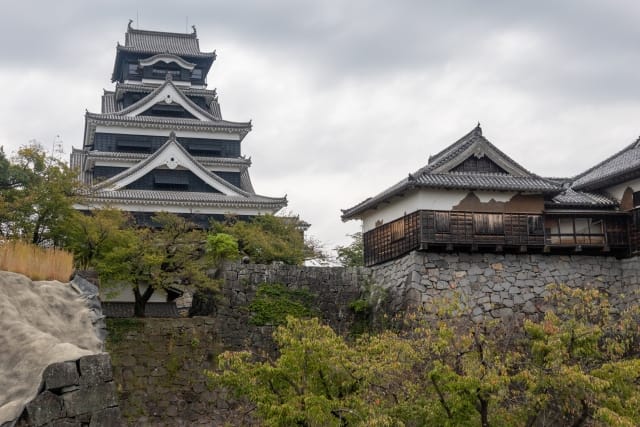
What has not reopened yet?
Three things: the Wakuwakuza museum, the combo tickets and the Sannomaru No. 2 car park. Most other facilities below the castle are operating normally. The table follows the official 18 August status list; no newer version had been posted as of 14 September 2026.
| Facility | Status |
|---|---|
| Kumamoto Castle (paid area) | Operating normally |
| Kumamoto Castle Museum Wakuwakuza (history museum inside Josaien) | Temporarily closed; its ticket office is closed, the group desk is open |
| Two- and three-facility combo tickets | Off sale |
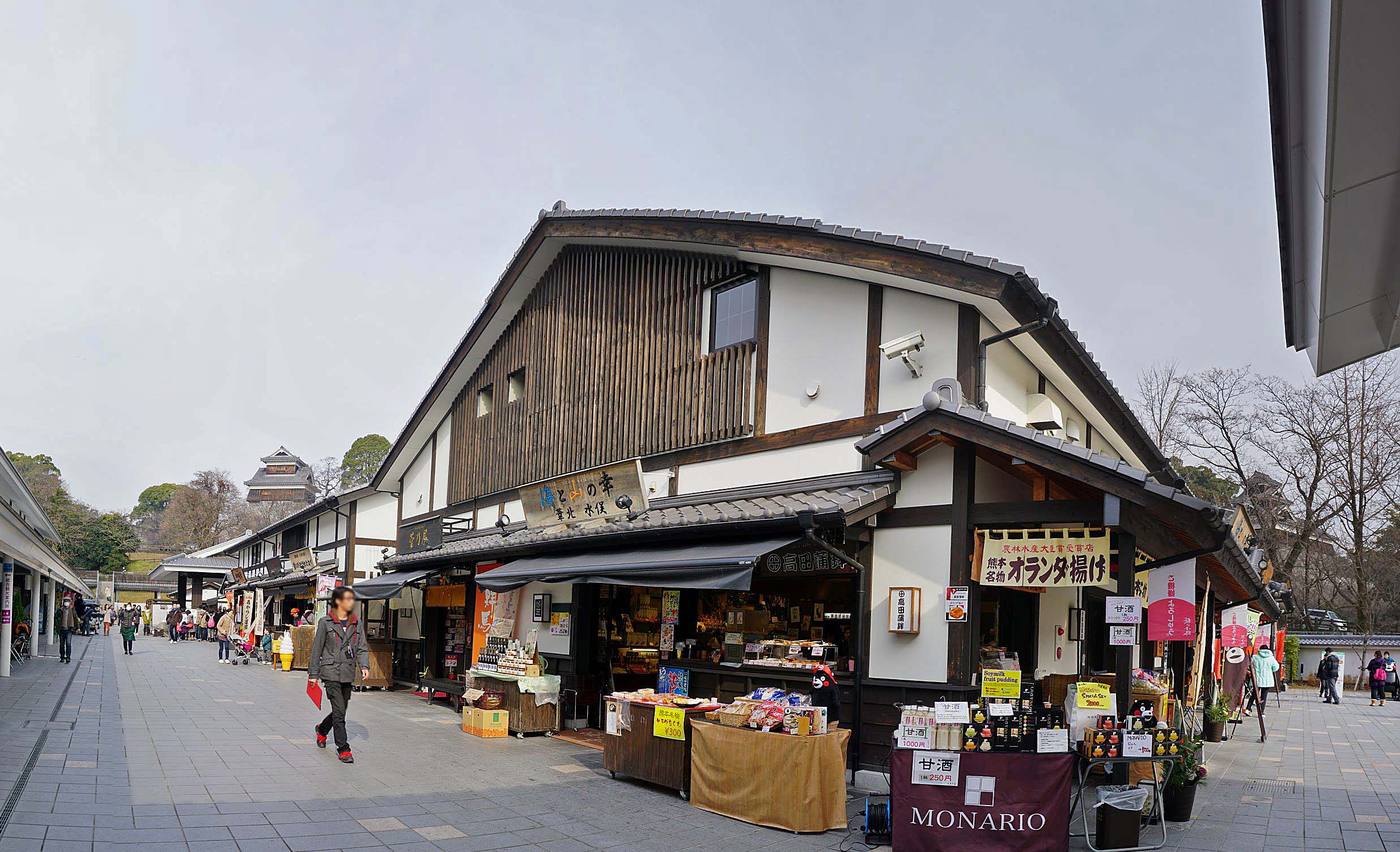
| Sakura no Koji (food and souvenir street at Josaien) | Operating normally |
| Tourist information center | Operating normally; the second-floor multipurpose space is unavailable |
| Kumamoto Castle Omotenashi Bushotai (costumed samurai) | Talks and photos at Josaien, no performances |
| Volunteer guides (Kumamoto Yokatoko Annainin no Kai) | Activities resumed |
| Kumamoto City Museum, Kumamoto Prefectural Museum of Art (main building) | Operating normally |
| Car parks | Open: Ninomaru, Sannomaru No. 1, Miyauchi, Sakura-no-baba bus parking, Sakura-no-baba tourism facility parking (partly closed) Closed: Sannomaru No. 2 |
Wakuwakuza now has a target month. Josaien announced on 11 September 2026 that the museum plans to reopen in December, without naming a day, and that every event scheduled between September and November is cancelled or postponed. For the combo tickets, no resumption date has been announced at all — do not read the December target as covering them. The visitor information page still lists combo ticket prices; that is stale, so don't head to the counter expecting to buy one.
If you're driving: the 18 August notice includes a map marking in red the road sections closed for safety. The closures are only shown on the image, not listed in text, so open the notice and look at the map before you set off.
How much are tickets, and should you buy online?
You don't have to buy ahead: the South Gate and Ninomaru ticket offices sell every day, and the North Gate office also opens on weekends and holidays.
| Ticket | Price | Where to buy |
|---|---|---|
| High school age and up (individual) | ¥800 | Ticket offices, official online ticket |
| Elementary and junior high (individual) | ¥300 | Ticket offices, official online ticket |
| Preschool | Free | — |
| Annual pass (high school age and up) | ¥1,600 | Ninomaru ticket office only |
| Two- and three-facility combo tickets | Off sale | — |
The Ninomaru office stops selling at 16:00 all year, so if you arrive late in the afternoon, buy at the South Gate.
The official online ticket (an e-ticket, linked from the castle's home page) suits people whose date and time are fixed. Two conditions: first, it cannot be cancelled, changed or refunded; second, the 9 September Shiro Matsuri notice says online sales close the day before your visit, so on the day itself you buy at the gate. The castle recommended buying online in both the 10 August reopening notice and the 9 September notice because it expects crowds. That is a recommendation, not a reservation requirement.
Besides the official online ticket, KKday also sells Kumamoto Castle admission; its product page says you show the QR code to staff at the entrance instead of queuing at a ticket office. The conditions match the official ticket: it is valid only on the date you book, with no cancellation, date change or refund. The product description still lists two- and three-facility combo passes, but those options cannot be selected; only the castle-only ticket is on sale, matching the official suspension of combo tickets.
See Kumamoto Castle admission on KKday →
My own rule: going on a weekend or during Shiro Akari with a date that won't move, I'd buy the online ticket the day before; on a weekday, or if plans may shift, I'd just buy at the South Gate. Ticket offices take credit cards (VISA, Mastercard, JCB, UnionPay, Diners, AMEX, Discover; the ticket machines don't take UnionPay or Discover) and transit IC cards including PiTaPa.
Opening hours and last entry
From September to June the castle is open 9:00–17:00, last entry 16:00.
| Period | Open | Last entry | Last entry to the keep |
|---|---|---|---|
| September to June | 9:00–17:00 | 16:00 | 16:30 |
| July–August | 9:00–19:00 | 18:00 | 18:30 |
| 2 Oct–1 Nov 2026, Shiro Akari (special open area) | Until 21:00 | 20:00 | Not stated in the notice |
The only scheduled closing day is 29 December, and the castle may close in severe weather. On weekdays you can only enter and exit by the South Gate; on weekends and national holidays either gate works, though the castle notes the North Gate can be unavailable depending on construction. Plan weekday visits around the South Gate.
Shiro Akari is the castle's autumn evening event for 2026: from 2 October to 1 November the special open area stays open until 21:00, with projection mapping, lasers, searchlights and bamboo lanterns around the square in front of the keep; the yabusame is on 3 November. Admission is still required for the paid area. During the event the Ninomaru, Sannomaru No. 1 and Miyauchi car parks extend to 8:00–21:30 (last entry 20:30). The event notice also lists Sannomaru No. 2, but the 18 August status list shows it closed, so don't count on parking there.
Can you go up the keep?
Yes. The 18 August status list shows the castle as a whole operating normally without listing the keep as closed, and the visitor information page still gives the keep's last entry time.
The keep was repaired after the 2016 Kumamoto earthquake, which brought down roof tiles and the shachi ornaments on the top floor and collapsed part of the basement stone wall. Its restoration was given top priority, was completed in March 2021, and the keep reopened on 26 April 2021 with fully renewed exhibits and a view over Kumamoto from the top floor.
Still under repair is the Uto Turret, partly collapsed in 2016 and being dismantled and rebuilt since 2022, with completion planned for 2032. The special viewing walkway built in 2019–2020 is, in the castle's own words, a temporary path to be removed once restoration is complete.
One caveat: the castle has not said whether the 2026 earthquake caused new damage to the keep, stone walls or Uto Turret. The restoration map on its site is dated December 2025, before this quake, so it can't tell you the current state.
How do you get to the castle?
By public transport, the castle's access page points you to the Shiromeguri-n loop bus from Kumamoto Station; if you drive, use the Ninomaru car park. Shiromeguri-n runs from Kumamoto Station around the castle and nearby sights; its fare and frequency couldn't be read from the official page text, so check at the station or on the site.
A free shuttle runs Sakura-no-baba Josaien – South Gate – Ninomaru car park, 9:00–17:00, every 10–15 minutes, with the last departure from Ninomaru. It was suspended after the quake and has run daily again since 5 August.
| Ninomaru car park | Hours |
|---|---|
| September to June | 8:00–18:30 (last entry 17:30) |
| July–August | 8:00–20:30 (last entry 19:30) |
| 2 Oct–1 Nov 2026, Shiro Akari | 8:00–21:30 (last entry 20:30) |
Ninomaru has 210 spaces; expect it to fill during Shiro Akari and on weekends.
The Kumamoto tram takes Suica: Kumamoto City Transportation Bureau's payment page (checked 14 September 2026) lists Suica, ICOCA, SUGOCA and the other nationwide transit IC cards, plus contactless cards and QR payments. Buses in Kumamoto follow different rules; read the Kumamoto section of our Japan IC card guide before you board one.
Rail and bus services into Kumamoto from Fukuoka and elsewhere after the earthquake are outside what this guide verified, so check JR Kyushu's service information before travelling. For fitting Kumamoto into a rail loop, see our Kyushu 3-day rail itinerary; for the Fukuoka end, our Fukuoka travel guide.
Heading on to Aso or Kurokawa?
For Aso, read our Aso Nakadake crater guide; for Kurokawa, our Kurokawa Onsen guide. Aso's volcanic alert level and crater restrictions change often, so the crater status lives only in that guide and is deliberately left out here.
Other places often paired with Kumamoto: Kikuchi Gorge on the way to Aso, Takachiho Gorge further inland, Amakusa's wild dolphins and Sakitsu Church toward the sea, and Unzen and Shimabara across the water. Check each guide and operator for post-quake changes to those routes. For castle stamps, see how gojoin differ from goshuin.
Frequently Asked Questions
- Q1:Is Kumamoto Castle open now?
- Yes. The castle closed temporarily after the Reiwa 8 (2026) Kumamoto earthquake of 28 July and reopened on 13 August 2026; the official facility status list of 18 August shows the castle as operating normally. As of 14 September 2026 no newer status notice had been posted. The castle warns that aftershocks or safety inspections can change opening information at any time, so check the news page on the official site the day before you go.
- Q2:Can I go up the main keep after the 2026 earthquake?
- Yes. The 18 August status list shows the castle as a whole operating normally and does not list the keep as closed, and the visitor information page still gives the last entry time for the keep (16:30 from September to June). The castle has not said whether this earthquake caused new damage to the keep or the stone walls; the restoration map on its site is dated December 2025, before the quake.
- Q3:How much is Kumamoto Castle admission, and do children pay?
- Individual tickets are ¥800 for high school age and up and ¥300 for elementary and junior high students; preschool children are free. The South Gate and Ninomaru ticket offices sell every day, the North Gate office only on weekends and national holidays, and the Ninomaru office stops selling at 16:00 all year.
- Q4:Can I get a refund on the official online ticket?
- No. The official page says online tickets cannot be cancelled, changed or refunded. You do not have to buy online: the ticket offices on site sell as normal. The castle recommends buying ahead because it expects crowds, so if your date may still move, buy at the gate.
- Q5:Can I still buy the two- or three-facility combo ticket?
- No. Because the Wakuwakuza museum is temporarily closed after the earthquake, the castle announced on 10 August that sales of the two- and three-facility combo tickets are suspended for the time being. The visitor information page still lists their prices; go by the notice. No resumption date has been announced.
- Q6:When is Shiro Akari, and how late is the castle open?
- From 2 October to 1 November 2026. During that period the castle's special open area stays open until 21:00 (last entry 20:00), with projection mapping, lasers, searchlights and bamboo lanterns around the square in front of the keep; the Kumamoto Castle yabusame is on 3 November. You still need an admission ticket for the paid area, and the castle asks visitors to buy tickets ahead and use public transport.