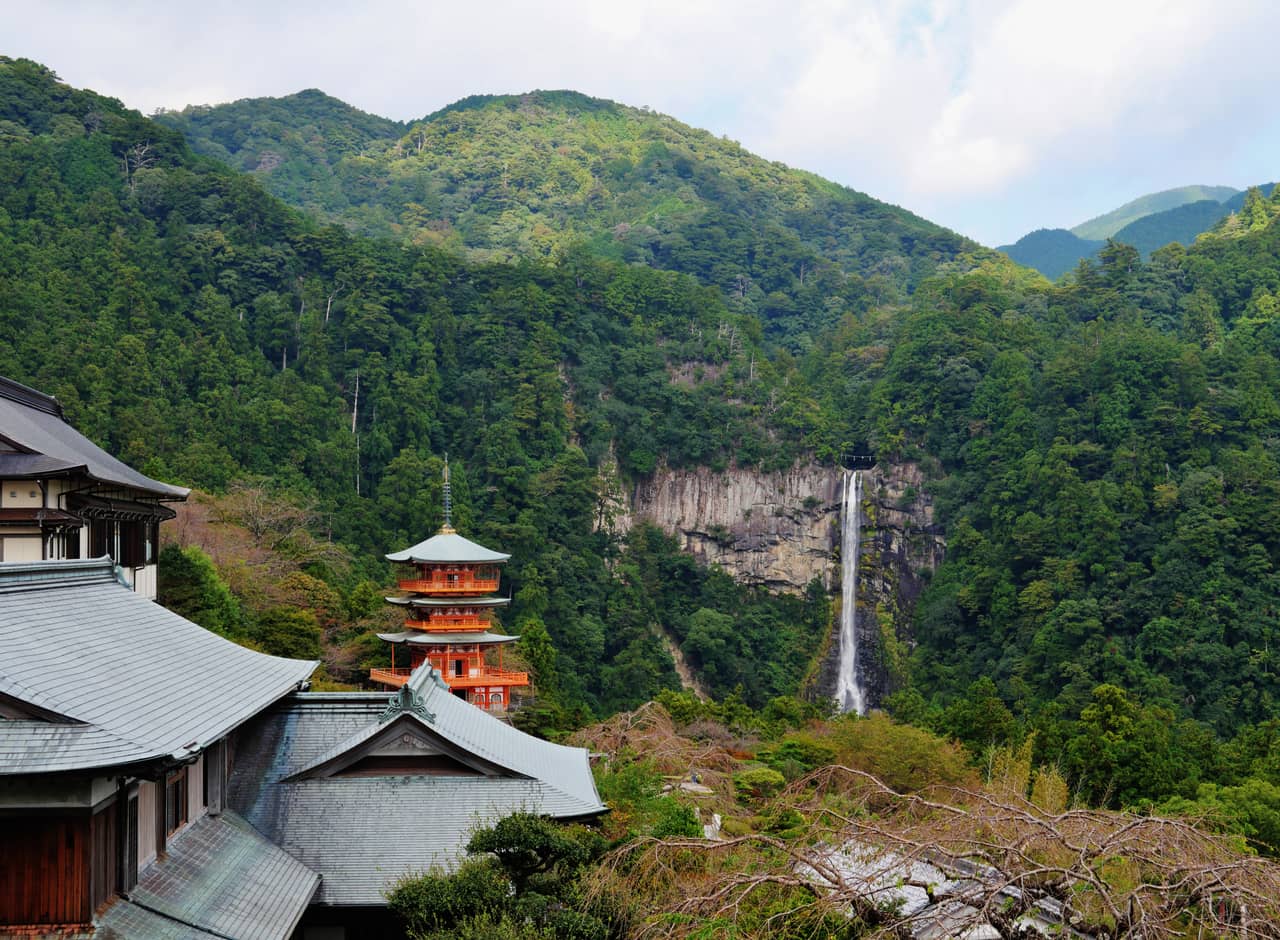
The Kumano Kodo is one of the few places in Japan that lets you empty your head while you walk. It is a UNESCO World Heritage pilgrimage route dual-listed with Spain’s Camino de Santiago — the only two pilgrimage trails on Earth to hold that distinction. But do not let the word "pilgrimage" scare you off: you do not have to cover hundreds of kilometers. Most visitors walk just one beginner-friendly section of about 7 km, gently downhill, done in 2.5 hours, to feel the stone-paved path through the cedars, then link the three Kumano shrines — Hongu, Hayatama, and Nachi — by bus. This guide lays out how to sequence the shrines, 133-meter Nachi Falls and its pagoda, Japan’s largest Oyunohara torii, the World Heritage Tsuboyu onsen, and the part that trips people up most: the infrequent buses and the Kuroshio limited express. The honest headline is that Kumano’s real barrier is not fitness — it is the bus schedule, so plan around the timetable.
- A World Heritage pilgrimage route dual-listed with the Camino — but you do not have to walk it all
- Beginner stretch "Hosshinmon-oji to Hongu" is about 6.9 km, 2.5 hours, gentle downhill — doable for first-timers
- Nachi Falls at 133 m is Japan’s tallest single-drop waterfall; pair it with the Seiganto-ji pagoda
- Oyunohara torii at 33.9 m is Japan’s largest torii — a free 10-minute walk from Hongu
- Tsuboyu is the only World Heritage onsen you can bathe in; buses are sparse, so check times first
📖 Contents
Why visit the Kumano Kodo
Honestly, Kumano is not a snap-a-photo-and-leave kind of place. Its value is in the process and the atmosphere. These mountains have been a pilgrimage destination since the Heian period, drawing emperors and commoners alike in numbers that earned the phrase "the ant pilgrimage to Kumano." In 2004 the routes were inscribed as part of the UNESCO World Heritage Site "Sacred Sites and Pilgrimage Routes in the Kii Mountain Range." What makes Kumano special is that in 2008 it became a sister route to Spain’s Camino de Santiago — the only two pilgrimage trails jointly recognized as World Heritage — and walking a set distance on each even earns a dual-pilgrim certificate.
For an independent traveler, Kumano’s charm is its slowness. There is no dense cluster of must-see attractions and no city noise; instead there are towering cedars over stone-paved paths, a giant torii rising from the mist, and the thundering 133-meter Nachi Falls. It is the ideal antidote to a high-intensity Osaka or Kyoto itinerary: give it 2–3 days and let the pace drop right down. My advice is blunt: if you just want to "see" Kumano, a single day of bussing between the three shrines and the falls works; but if you want to "feel" it, set aside half a day to walk a section of the old road and stay a night to soak in an onsen — that is the heart of the trip.
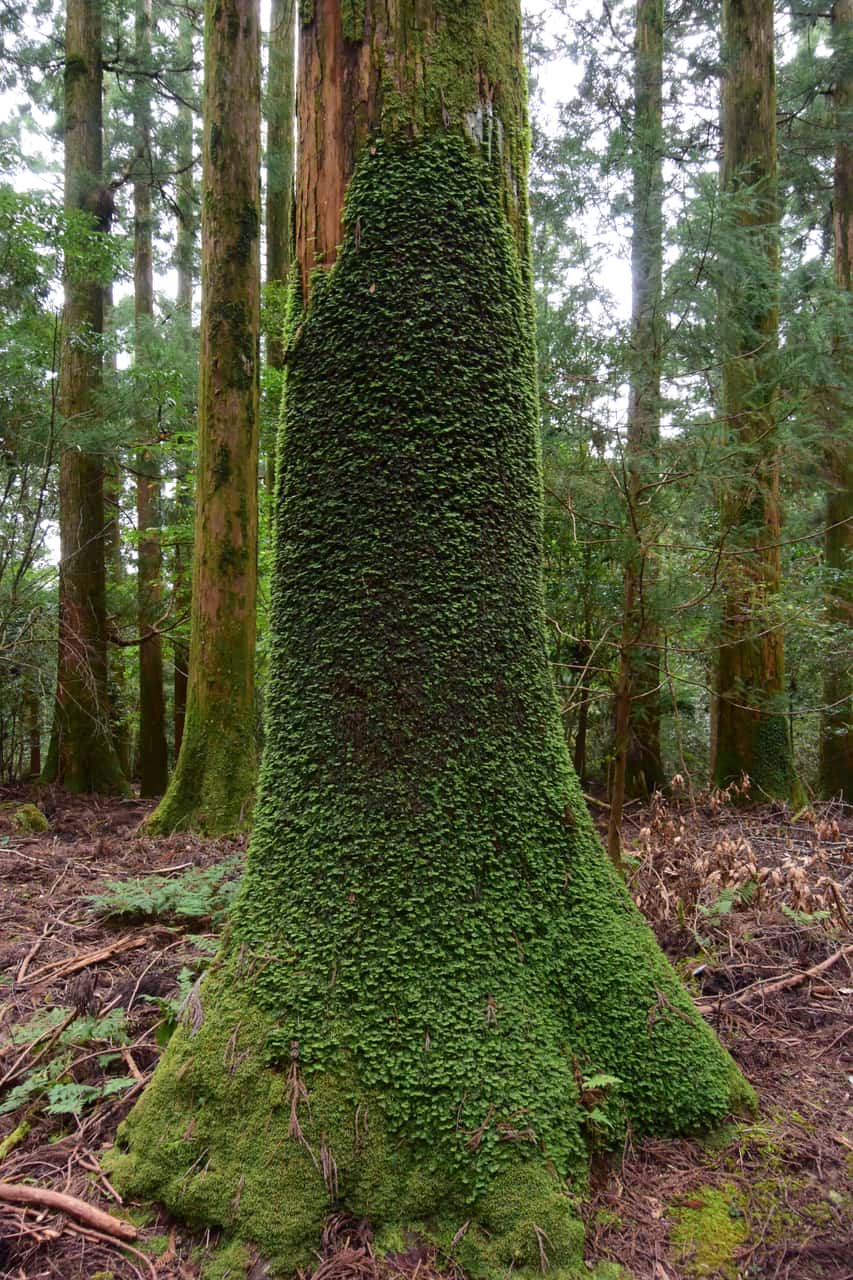
The three Kumano shrines
The core of any Kumano trip is visiting the Kumano Sanzan — the collective name for three shrines of worship, each with its own character. They are worth seeing all three because their styles differ so much:
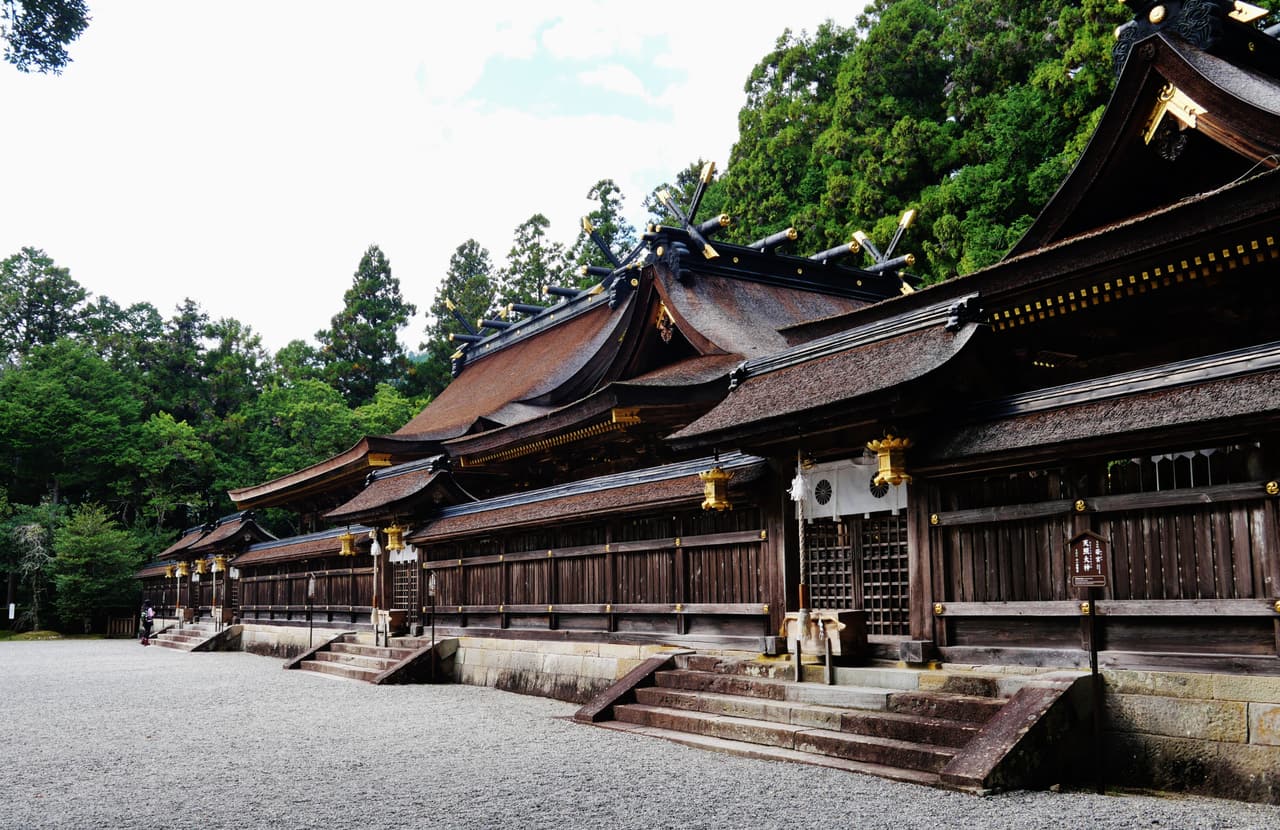
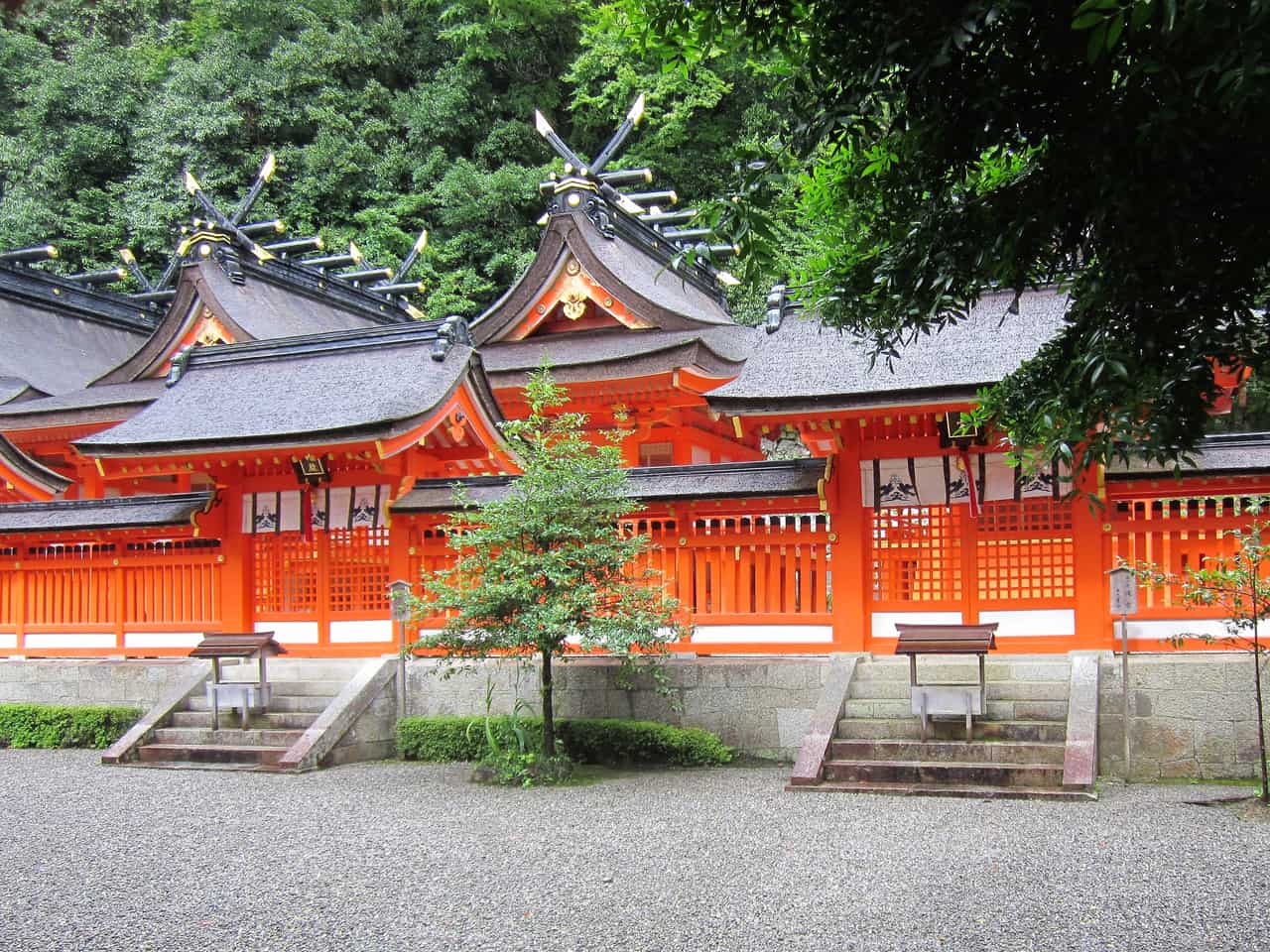
- Kumano Hongu Taisha (Hongu, Tanabe City): set in the mountains, this is the spiritual end of the pilgrimage. Its halls are left unpainted, keeping the raw color of cypress wood — restrained and quiet, the most contemplative of the three. It originally stood nearby at Oyunohara and moved to higher ground after the 1889 flood.
- Kumano Hayatama Taisha (Shingu): coastal and flat, with vivid vermilion halls that contrast with Hongu’s plainness — visually the brightest of the three. It sits in Shingu town with relatively easy access, often slotted in as the mid-point of the trio.
- Kumano Nachi Taisha (Nachikatsuura): built on a hillside next to the Seiganto-ji three-story pagoda and Nachi Falls — the most scenic of the three. Shrine, temple, and waterfall blend on one mountain, the clearest snapshot of Kumano’s fusion of Shinto and Buddhism.
The traditional order was Hongu, then Hayatama, then Nachi, but modern travelers usually adjust for transport. Coming from the Osaka side and wanting to walk a trail section, a common flow is Hongu first (with the Hosshinmon walk and Oyunohara), then Shingu for Hayatama, then Nachi for the falls, exiting from Shingu or Kii-Katsuura. To stress it again: the shrines are linked entirely by infrequent buses, so check the timetable in advance. This is where Kumano trips most often unravel — unlike in a city, you cannot just turn up and ride.
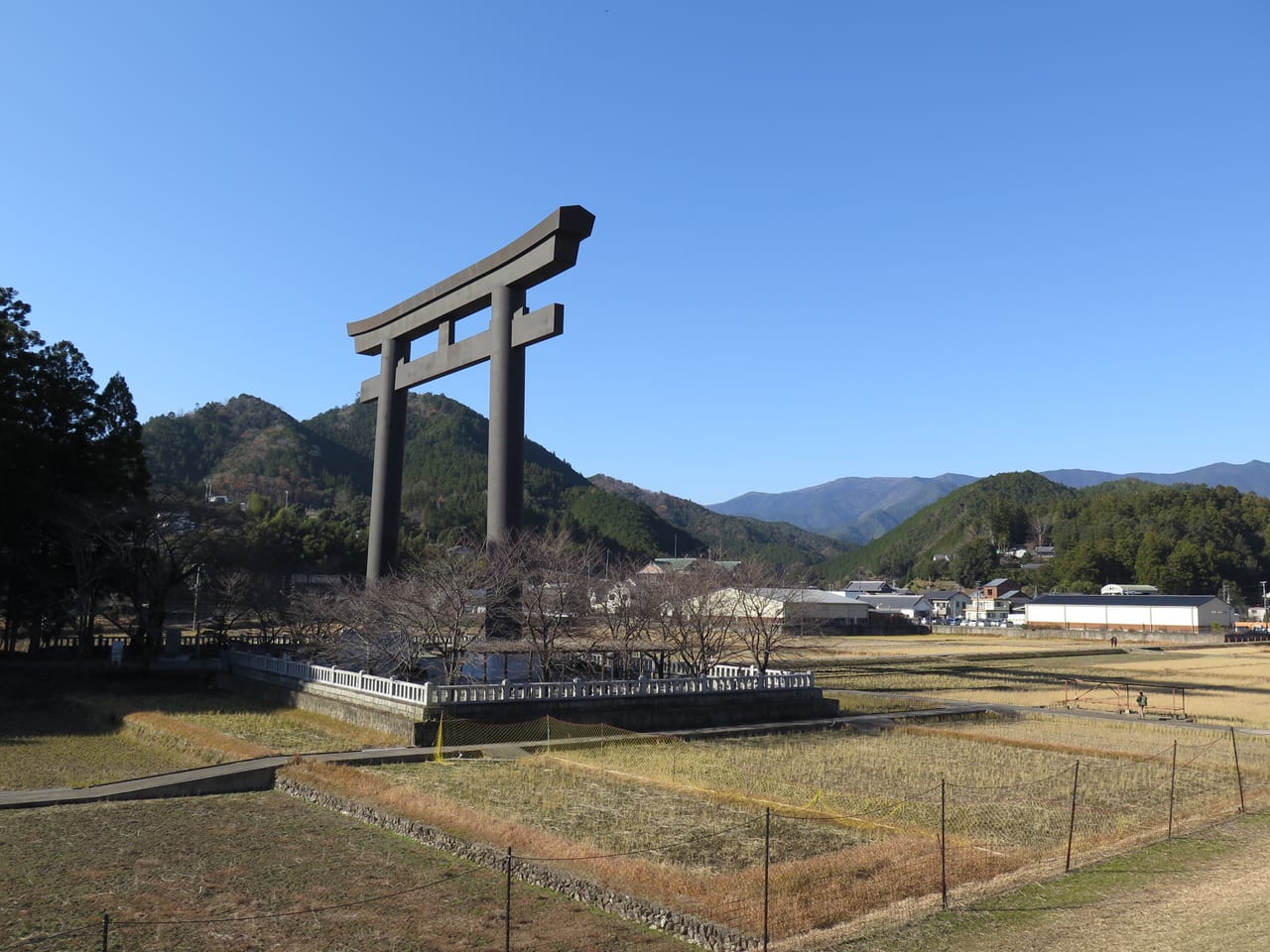
After Hongu, walk 10 minutes to the former shrine site of Oyunohara. Only an approach path and one enormous torii remain in the middle of the rice fields, but that Great Torii stands 33.9 meters tall and 42 meters wide — Japan’s largest (steel, built in 2000, about 172 tons). It is free and open, and most powerful at dusk and in morning mist. For many people, the black torii rising out of the fields is their lasting image of Kumano — do not skip it.
Hayatama Taisha may be less famous than Hongu or Nachi, but it is the easiest to reach — right in Shingu town, a short distance from JR Shingu Station. Its vermilion halls and the thousand-year-old sacred nagi tree in the precinct are both worth a look. If your route enters Kumano from the south (Kii-Katsuura, Shingu), Hayatama is usually the first shrine you can comfortably visit after arriving.
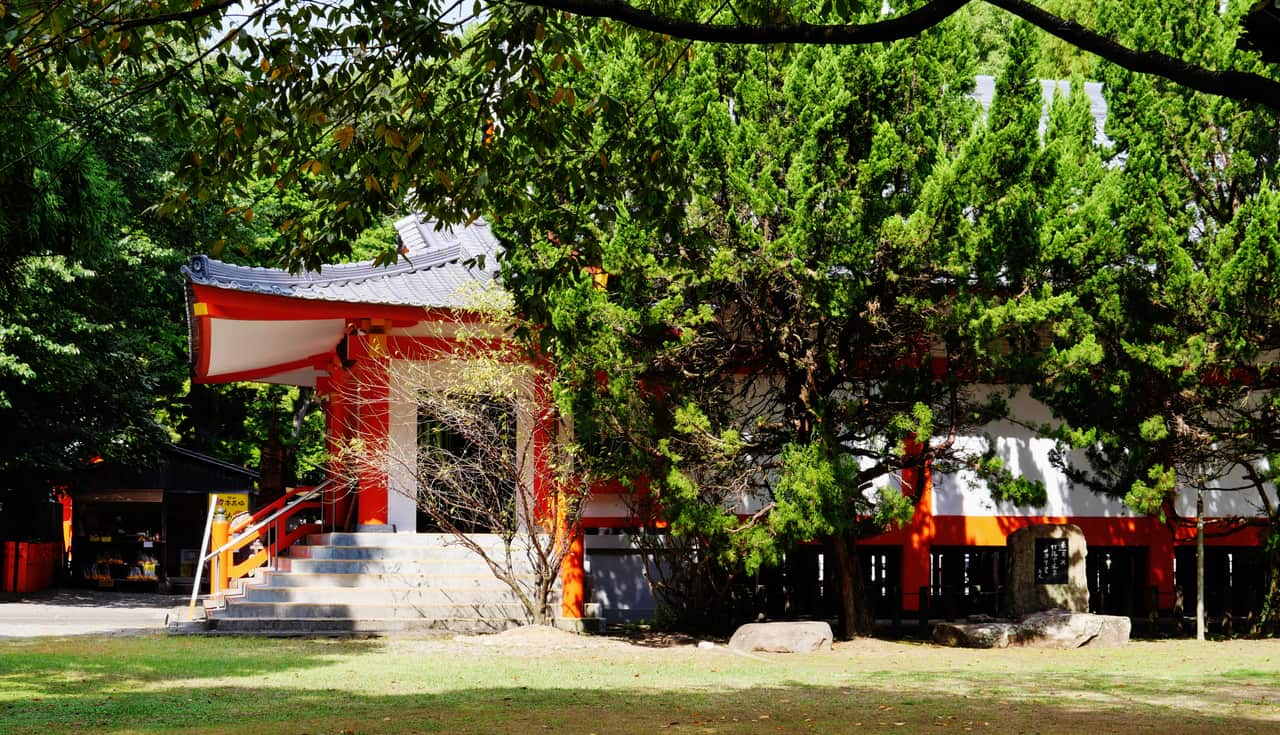
Nachi Falls & the Seiganto-ji pagoda
If you can take home just one image from Kumano, make it Nachi. Nachi Falls (Nachi-no-Taki) drops 133 meters and is about 13 meters wide — Japan’s tallest single-drop waterfall, worshipped as a deity since ancient times; the Hiro Shrine in front of it has no main hall because the waterfall itself is the god. Standing at the viewing platform, with the roar and the spray on your face, hits in a way no photo conveys.
That postcard you have surely seen — the vermilion pagoda in front, Nachi Falls behind — is framed from the Seiganto-ji three-story pagoda on the slope. Seiganto-ji sits right beside Kumano Nachi Taisha, a Buddhist temple and a Shinto shrine side by side, the most concrete picture of Kumano’s blend of the two faiths. In practice: bus to Nachisan, visit Nachi Taisha and Seiganto-ji, get that classic shot from the pagoda, then walk down the stone steps to Hiro Shrine for a close view of the falls — budget 2 to 3 hours. To frame the pagoda with the falls, go up the pagoda’s viewing floor (a small admission). A note: there are plenty of stone steps between Nachisan and the falls, so wear decent shoes — the stone gets slippery in rain.
The beginner day hike: Hosshinmon-oji to Hongu
The Kumano Kodo is really a whole network, including the Nakahechi, Ohechi, Kohechi, Iseji, Kiiji, and Omine Okugake routes. For 99% of travelers, the one to walk is the Nakahechi — the main artery to the three shrines, the best-maintained and easiest to follow.
The classic beginner section of the Nakahechi is Hosshinmon-oji to Kumano Hongu Taisha. Per official sources, it runs about 6.9 km and takes roughly 2.5 hours on foot (allow 3.5 hours with rests), and it is mostly gentle downhill on wide, easy paths, passing hamlets, cedar groves, and several "oji" (small wayside shrines) before delivering you straight into the back gate of Hongu Taisha — a real sense of having "finished the pilgrimage." Officials call it Kumano’s "golden route" precisely because it is low-difficulty, scenically condensed, and rewarding to complete, well within reach of beginners and average fitness.
The logistics are simple: take a bus to the Hosshinmon-oji stop (shuttle buses run up from the Hongu Taisha area), then follow the signs downhill to Hongu. There are toilets and rest points along the way, but no convenience stores, so carry water and a snack. Wear good walking or trail shoes, moisture-wicking layers, and a rain layer — the mountains often turn in the afternoon. If even this feels like too much, you can walk only the final 1–2 km from the Sangenjaya-ato ruins to Hongu and still get that walk-into-the-shrine feeling. One firm warning: Hosshinmon-oji has no dense transport other than your own car, return buses are sparse, so confirm the day’s times in advance.
World Heritage onsen: Tsuboyu & Kawayu
The best way to close a Kumano trip is a soak with real history behind it. Near Hongu, Yunomine Onsen holds Tsuboyu — the only hot spring on the UNESCO World Heritage list you can actually bathe in. Pilgrims historically performed ritual purification here before reaching Hongu, so Tsuboyu was inscribed along with the whole pilgrimage route. It is a tiny riverside rock pool that fits about two people, and the water is said to change color through the day.
Know the rules before you go: Tsuboyu is rotational, about 30 minutes per group — you register at the Yunomine public bathhouse counter, take a number, and enter in turn. Per official sources, admission is around ¥800 (including the public bath), open about 6:00–21:30. Because only one group goes at a time and it is a popular World Heritage spot, expect a queue on weekends; aim off-peak. Afterward, buy a freshly boiled onsen egg at the spring source.
A short way off, Kawayu Onsen is a different experience entirely — here the hot spring wells up straight from the riverbed, and in winter (roughly December to February) the town walls off a huge open-air bath called the Sennin-buro ("thousand-person bath") where you can soak under the stars. Both onsen sit around Hongu, so an overnight stay makes the evening soak natural and strings "walk the trail, visit Hongu, soak" into one complete pilgrim experience.
Transport & lodging (read this)
The most important thing first: a Kumano trip lives or dies on whether you can read the bus timetable. The area is large and services are sparse — you cannot just turn up and ride like you can in a city.
Getting in mainly means the Kuroshio limited express on the JR Kisei (Kinokuni) Line. Per official sources, Shin-Osaka to Kii-Tanabe is about 2 hours 20 minutes, and to Shingu about 4 hours, stopping at Shirahama, Kii-Katsuura, and others. There are two main ways into Kumano:
- From the west (Kii-Tanabe / Shirahama): get off at Kii-Tanabe or Shirahama and transfer to a Ryujin bus for Hongu Taisha — good if you want to walk the Hosshinmon section first, then head to Nachi.
- From the south (Shingu / Kii-Katsuura): ride the Kuroshio to Shingu or Kii-Katsuura, see Hayatama and Nachi first, then take a Kumano Gobo Nankai bus toward Hongu — good if you want the falls first.
Both bus operators (Ryujin Bus and Kumano Gobo Nankai Bus) run only a handful of times a day, so build your plan around the official timetable and never assume "another one will come soon." If your wider Japan trip has lots of long rail legs, run the math on a JR Pass — but note the Kumano leg runs on buses, so a Pass mainly saves on the Osaka⇄Kii-Tanabe/Shingu express segment. To keep it simple, a private charter or a local day tour to Hongu and Nachi is a common choice that spares you the bus research.
For lodging, base yourself around Hongu / Yunomine / Kawayu Onsen (the best way to chain trail, shrine, and soak — but options are few, so book early), or Kii-Katsuura / Shingu (easy transport, more dining; Kii-Katsuura also has sea-view onsen ryokan and famous tuna). Kumano has far fewer rooms than Osaka or Kyoto, and peak periods (autumn foliage, long weekends, the winter Sennin-buro at Kawayu) fill fast — reserve several weeks ahead. Treat Kumano as a slow destination; an overnight is essentially mandatory, since a same-day return burns most of the time on transport.
A 2–3 day plan
Here is the same content shaped into two routes that work well:
- Two days, one night (the essentials): Day 1, morning Kuroshio from Osaka to Kii-Tanabe / Shirahama → Ryujin bus to Hongu → walk the Hosshinmon-oji to Hongu trail section (2.5 hours) → visit Hongu Taisha and the Oyunohara torii → stay at Yunomine / Kawayu Onsen and soak in Tsuboyu. Day 2, bus to Nachi → Nachi Taisha, the Seiganto-ji pagoda, and Nachi Falls → return on the Kuroshio from Shingu (with Hayatama on the way) or Kii-Katsuura.
- Three days, two nights (the full version): add a day to complete all three shrines and walk more of the trail, with a night in Kii-Katsuura for tuna and a sea-view onsen — a more relaxed pace, ideal if you really want to slow down for Kumano.
Kumano works beautifully as a calm finale after a Kansai itinerary. If you want the religious depth of Mt. Koya too, pair it with our Koyasan guide (also a Kii Mountain Range World Heritage site, connected to Kumano via the Kohechi route); to extend toward Ise Grand Shrine and Shima, see our Ise-Shima guide. Whether long rail legs justify a pass is covered in our JR Pass guide and its break-even math.
FAQ
- Q1:Do I have to walk the whole Kumano Kodo? Can I go if I am not fit?
- You do not have to walk it all. The Kumano Kodo is a whole network of routes, not one single line, and most travelers walk only a short section as a taste. The classic beginner stretch on the Nakahechi route is Hosshinmon-oji to Kumano Hongu Taisha — official sources put it at about 6.9 km and roughly 2.5 hours of walking, mostly gentle downhill on easy, wide paths through hamlets and cedar forest, which is why it is called the "golden route." A bus serves the Hosshinmon-oji trailhead, so you can start there and drop back to the road if needed. If even that is too much, you can simply take buses to Hongu and to the foot of Nachi Falls and still see all three Kumano shrines. Picking one section to walk beats forcing the whole thing.
- Q2:Which are the three Kumano shrines, and in what order should I visit?
- The Kumano Sanzan are three head shrines: Kumano Hongu Taisha (in the mountains, Tanabe City; the spiritual end of the pilgrimage), Kumano Hayatama Taisha (in Shingu, near the coast, with vivid vermilion halls), and Kumano Nachi Taisha (in Nachikatsuura, right beside Nachi Falls and the Seiganto-ji three-story pagoda). The traditional order was Hongu, then Hayatama, then Nachi, but modern travelers usually follow transport instead. Coming from Osaka and walking the trail, a common flow is Hongu first (with the Hosshinmon walk), then Shingu for Hayatama, then Nachi for the falls, exiting from Shingu or Kii-Katsuura. Buses link the shrines, and they are infrequent — always check the timetable first. This is the single biggest planning trap in Kumano.
- Q3:How tall is Nachi Falls? Is it the same place as Nachi Taisha and the pagoda?
- Nachi Falls (Nachi-no-Taki) has a 133-meter drop and is about 13 meters wide — Japan’s tallest single-drop waterfall, worshipped as a deity for over a thousand years. It sits in the same mountain area as Kumano Nachi Taisha and the Seiganto-ji three-story pagoda, but not at the exact same spot: the shrine and pagoda are up the slope in the shrine precinct, while the falls belong to Hiro Shrine on another side. The iconic postcard view — vermilion pagoda in front, Nachi Falls behind — is shot from the Seiganto-ji pagoda area. In practice you bus to Nachisan, visit Nachi Taisha and Seiganto-ji, then walk down to Hiro Shrine for a close look at the falls; budget 2 to 3 hours.
- Q4:What is the Oyunohara torii, and is it worth a detour?
- It is worth it, and it is many people’s first mental image of Kumano. Oyunohara is the former site of Kumano Hongu Taisha; after a major flood in 1889 the main hall moved to higher ground, leaving an approach path and one enormous torii on the old site. That Great Torii stands 33.9 meters tall and 42 meters wide — Japan’s largest torii gate (steel, built in 2000, weighing about 172 tons). It is about a 10-minute walk from the current Hongu Taisha, rising from the middle of rice fields, and it is most striking at dusk and in morning mist. It is free and open, so swing by right after visiting Hongu.
- Q5:Is the Tsuboyu bath at Yunomine really a World Heritage onsen? How do I use it?
- Yes. Tsuboyu, in Yunomine Onsen near Hongu, is the only hot spring on the UNESCO World Heritage list you can actually bathe in — historically pilgrims purified themselves here before reaching Hongu, so it was listed along with the pilgrimage route. It is a tiny riverside rock pool that fits about two people, and the water is said to change color through the day. Use is rotational, roughly 30 minutes per group: you register at the Yunomine public bathhouse counter and enter in turn. Per official sources, admission is around ¥800 (including the public bath), open about 6:00–21:30. Buy an onsen egg at the source nearby. Down the road, Kawayu Onsen lets you dig your own open-air bath in the riverbed in winter.
- Q6:How do I get to Kumano from Osaka, and how many days do I need?
- The workhorse is the Kuroshio limited express on the JR Kisei (Kinokuni) Line. Per official sources, Shin-Osaka to Kii-Tanabe is about 2 hours 20 minutes, and to Shingu about 4 hours. Most travelers get off at Kii-Tanabe or Shirahama and transfer to a Ryujin bus for Hongu, or ride to Shingu / Kii-Katsuura to enter Hayatama and Nachi from the south. The big caveat: buses are infrequent (Ryujin Bus and Kumano Gobo Nankai Bus run only a handful of times a day), so build the trip around the timetable, not the other way around. Kumano is spread out and slow, so plan at least two days and one night (a stay at Hongu, Kawayu, or Yunomine works best); three days lets you see all three shrines, walk a trail section, and soak. For long rail legs, run the math with a JR Pass.
Related reading:
Koyasan Guide 2026: Okunoin, Temple Stays & Access
The 1,200-year-old head temple of Shingon Buddhism: the free Okunoin cedar path, the Konpon Daito, a shukubo temple stay with shojin cuisine, and how to get up from Osaka.
Ise-Shima Guide 2026: Ise Jingu, Toba & Shima
Japan's holiest shrine is free to visit, rebuilt every 20 years (next 2033) — the Geku-then-Naiku order, Okage Yokocho, Meoto Iwa, Toba's pearls and dugong, Ago Bay, and the Shimakaze train.
JR Pass 2026: Is It Still Worth It?
Four real routes calculated, six alternatives that may beat the Pass.