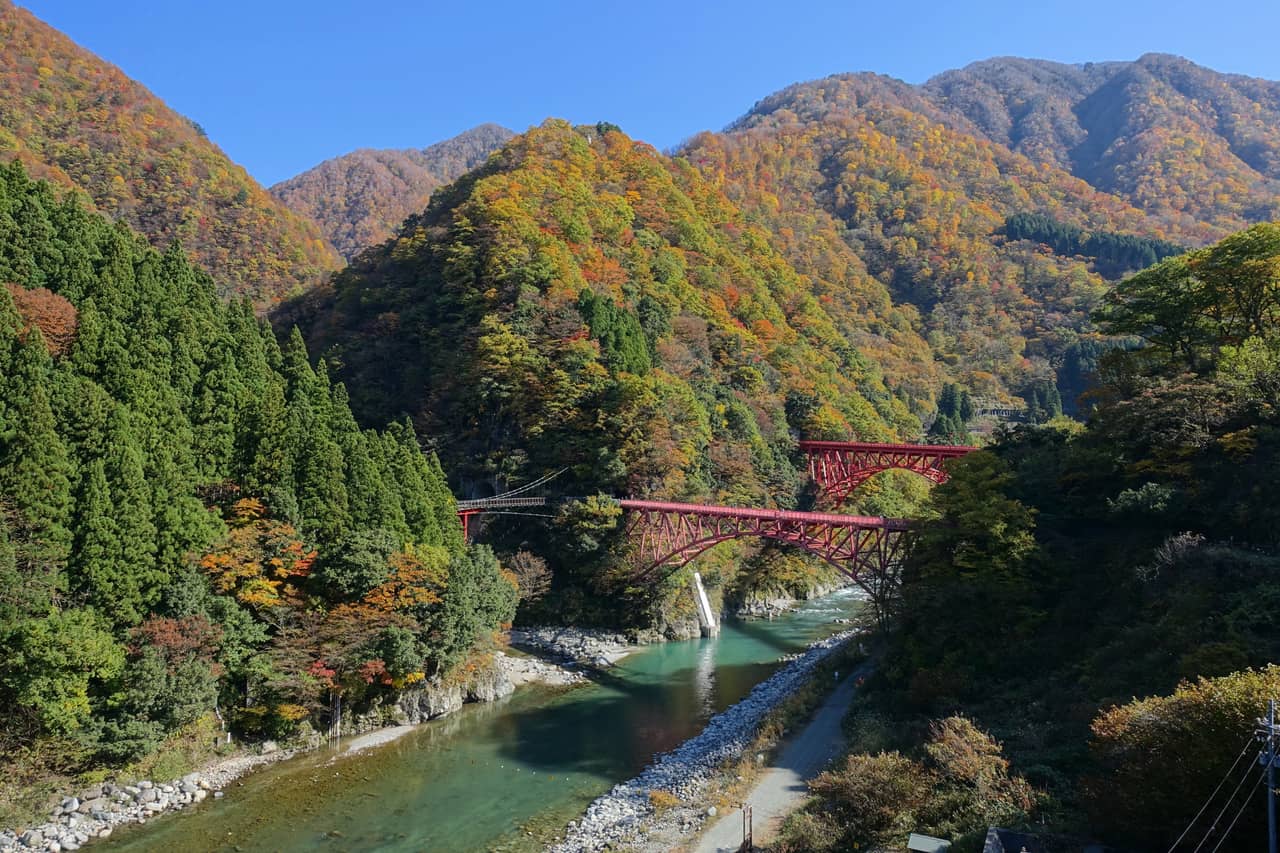
You cannot buy a seat to Keyakidaira online — for the 2026 season the operator takes telephone bookings only, and the web system simply does not sell that destination. Meanwhile, on 1 October 2026 the Kurobe Gorge torokko resumes full-line service and the terminus at Keyakidaira reopens after more than two years dark, at ¥2,480 one way from Unazuki. This guide covers three things in enough detail to act on: exactly what changes on 1 October, how to actually get a ticket, and how far you can walk once you arrive.
This article covers the torokko and the Canyon Route in their 2026 state. For the rest of Toyama — the Gokayama gassho villages, the Amaharashi coast, where to sleep in Unazuki Onsen — see our Toyama and Kurobe Gorge guide. The high-altitude crossing of the Tateyama range with the snow walls and the Kurobe Dam is an entirely different route; that is the Tateyama Kurobe Alpine Route guide.
- Full-line service to Keyakidaira resumes 1 October. Announced 3 July 2026, effective from the first Unazuki departure. The first full line since the January 2024 quake.
- Nekomata closes to passengers the same day. Trains still pass through and continue upward — that is not the same as "you cannot get there any more."
- Keyakidaira seats are phone-only: 0765-62-1011. Internet booking is officially unavailable; Kanetsuri and Kuronagi still sell online.
- You cannot walk far at Keyakidaira. Only the station building, its rooftop and the visitor centre are open. Sarutobi Gorge stays closed with no published end date.
- Keyakidaira peaks first for autumn colour, in late October — and that stretch was unreachable in both 2024 and 2025.
- Canyon Route tours are reportedly almost gone, and it barely matters. The gorge leg inside those tours is the ride you can buy yourself for ¥2,480 one way.
📖 Contents
- What actually changes on 1 October 2026
- What happened to Nekomata station
- How far can you walk at Keyakidaira?
- How to buy a ticket to Keyakidaira
- Fares and carriages
- Which week for autumn colour?
- What is the Kurobe Unazuki Canyon Route?
- Are Canyon Route places still available?
- Is the trip worth it without a tour place?
- What about 2027?
- So how should you book?
- Appendix: the official Japanese wording
What actually changes on 1 October 2026
The train reaches the end of the line again, for the first time in more than two years.
Kurobe Gorge Railway published a notice on 3 July 2026 headed with full-line resumption and the progress of restoration work on the Kanetsuri bridge. The date in it is unambiguous: from the first Unazuki-departing, Keyakidaira-bound train on Thursday 1 October 2026, full service resumes between Unazuki and Keyakidaira. On the same day the governor of Toyama told a press conference that the railway had announced the prospect of full-line reopening from 1 October this year. Two independent official sources, one date.
The background matters for judging how solid that date is. The Noto Peninsula earthquake of 1 January 2024 damaged structures along the line, most critically the Kanetsuri bridge and a slope collapse upstream of Kanetsuri station. For two operating seasons the torokko could only shuttle between Unazuki and Nekomata. The same notice reports that Kanetsuri bridge restoration started on 18 May, that scaffolding is up and damaged sections are being replaced on schedule, and that materials and equipment have been going in to the collapsed slope since 11 May with slope countermeasure work now under way.
And then the caveat, which deserves to be stated plainly rather than buried. The word the railway uses is the Japanese for "prospect," and the notice closes by saying restoration may shift depending on weather and site conditions, with any change to the operating plan announced separately. So the accurate phrasing is that the operator has announced 1 October, not that 1 October is locked. As of 28 August 2026 the news list carries nothing about a postponement; the most recent item is dated 20 August. Refresh the official site the week before you travel.
| Through 30 September | From 1 October | |
|---|---|---|
| Section operated | Unazuki–Nekomata shuttle | Unazuki–Keyakidaira, full line |
| Stations where you may board or alight | Unazuki, Kuronagi, Nekomata | Unazuki, Kuronagi, Kanetsuri, Keyakidaira |
| Nekomata | 🟢 Terminus, you can get off | 🔴 Trains pass, no boarding or alighting |
| Longest one-way adult fare | Unazuki–Nekomata ¥1,410 | Unazuki–Keyakidaira ¥2,480 |
| Online booking | 🟢 Available | 🟡 Kanetsuri and Kuronagi only, not Keyakidaira |
Two ceremonies bracket the reopening, and neither is something you can ride. On 30 September the city of Kurobe and partners hold an opening ceremony at the Kurobe City Serene arts centre; on 1 October there is a departure ceremony at the railway's Unazuki station along with a commemorative train. That commemorative service runs for JTB members only, ahead of the tours starting on 2 October. Ordinary travellers ride the ordinary timetable.
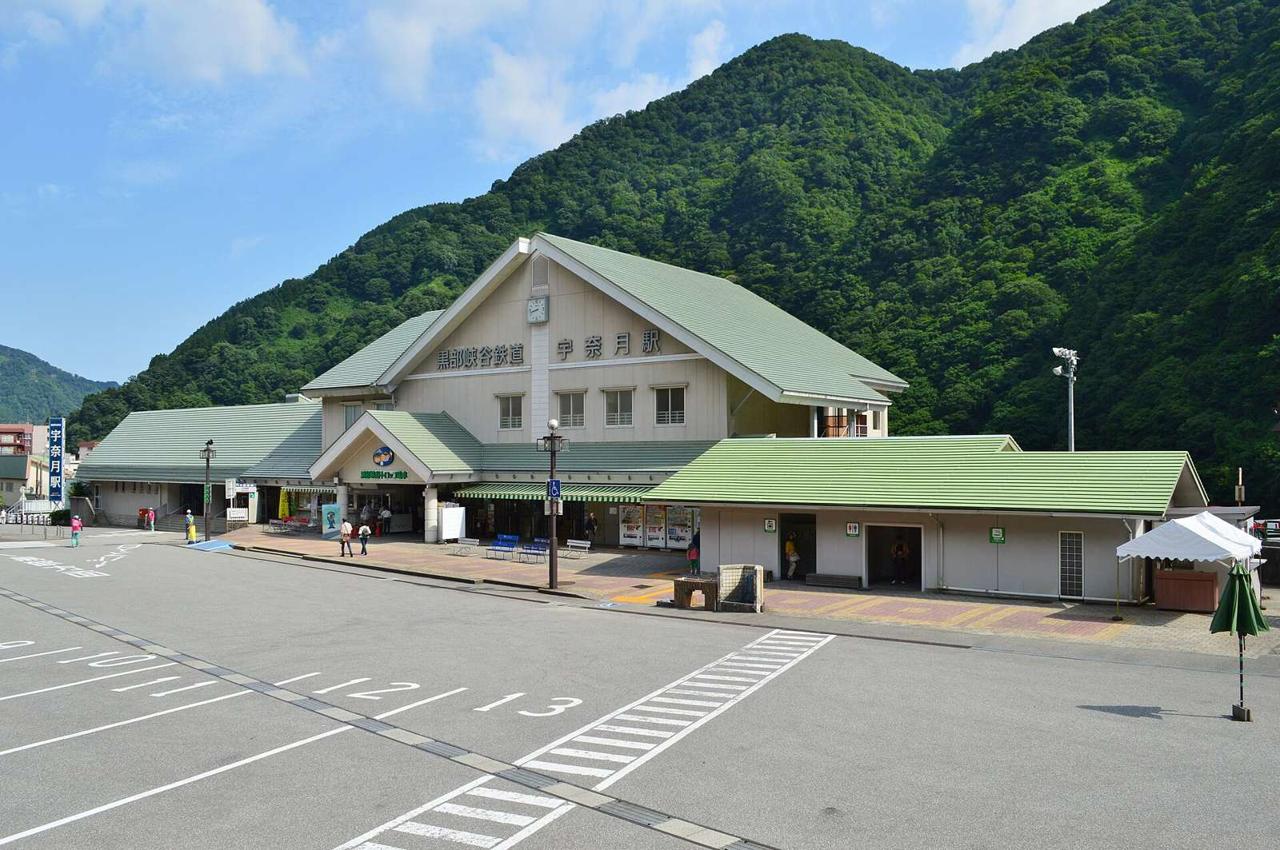
What happened to Nekomata station
From the same day, Nekomata no longer lets passengers on or off.
Take that sentence literally, because the shorthand version misleads in both English and Chinese. It is not that the line stops short of Nekomata — it is that Nekomata is no longer a place you can stand on. Trains run through it and continue to Kanetsuri and Keyakidaira. For two years Nekomata was the terminus; from October it becomes something you see through a carriage opening and pass.
The railway has said this three times. The 3 July notice enumerates the boarding stations from 1 October as Unazuki, Kuronagi, Kanetsuri and Keyakidaira, then states directly that boarding and alighting at Nekomata will not be possible. The 19 July notice about reservations repeats it. The third instance is the most evocative: on 8 August the operator announced a new photo panel at Nekomata, explaining that the sight of trains reversing at Nekomata can only be seen until the end of September, and noting that the panel itself will be installed only until 30 September.
There is mechanical evidence too. On the official timetable page, the table for 20 April to 30 September has columns for departures from Unazuki and Kuronagi and arrival at Nekomata. The two tables covering 1 October onwards have columns for Unazuki, Kuronagi and Kanetsuri departures and arrival at Keyakidaira — the Nekomata column has been removed entirely.
The practical upshot splits by date. If you happen to travel before the end of September, the reversal operation and that photo panel are both limited-run items. If you travel from October, delete Nekomata from your plan and do not say the word at the ticket window.
How far can you walk at Keyakidaira?
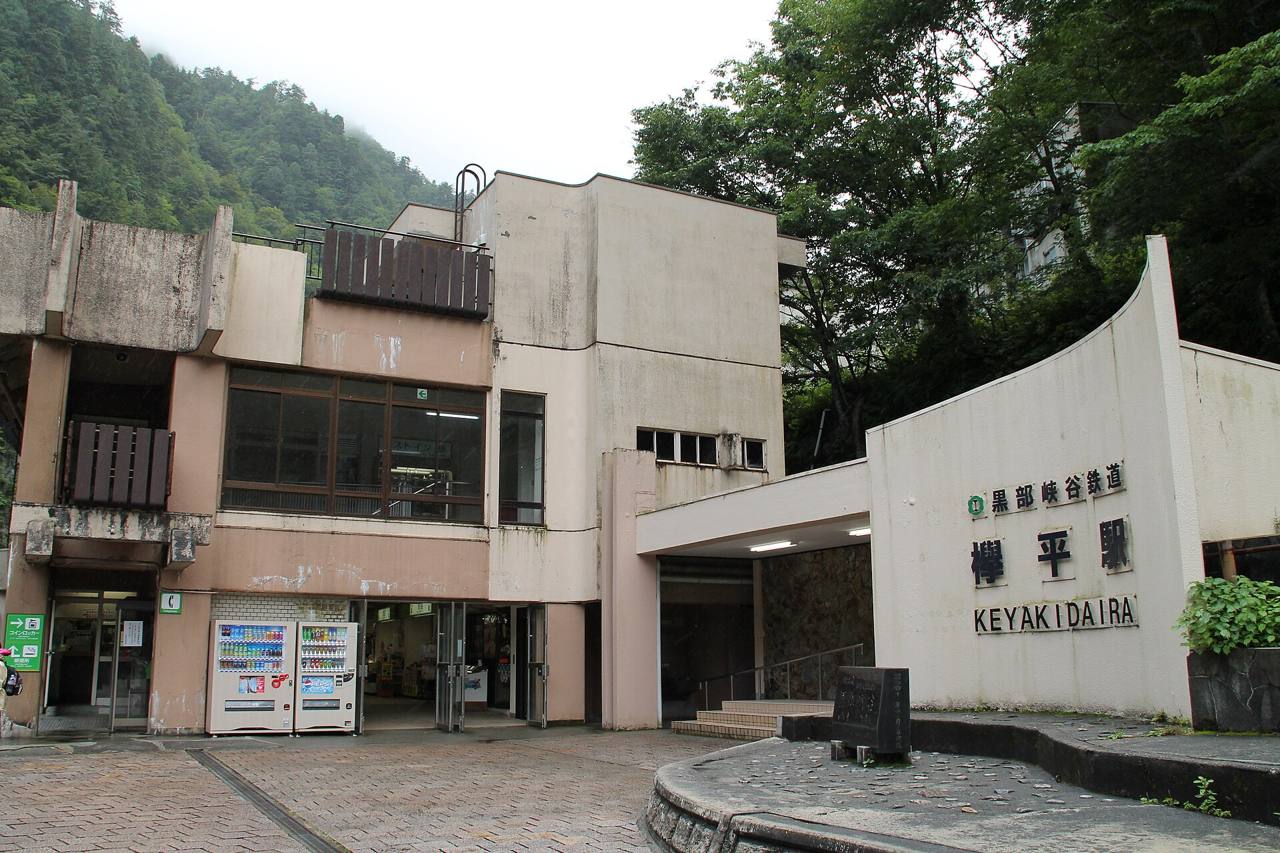
The station building plus one visitor centre. That is the whole of it.
This is the section most likely to save you a wasted day. A reopened line does not mean a reopened Keyakidaira. The 3 July notice states that because of the effect of the works an off-limits zone has been set across the Keyakidaira sightseeing area, so even after boarding resumes, for the time being visitors may not proceed beyond the station building and the visitor centre.
The 19 July notice frames the same restriction as a whitelist instead of a blacklist, which is more useful. Three things are available: part of the station forecourt, the view from the rooftop, and the interior of the Keyakidaira Visitor Center. Nothing outside that list.
What falls outside is essentially everything Keyakidaira was known for — Sarutobi Gorge, Okukane Bridge, the Hitokui-iwa overhang, the riverside viewing deck. And here is the trap: the railway's own Keyakidaira attractions page still lists all of them, while carrying the closure banner at the top of the very same page. That attractions list is still online, but it no longer describes anywhere you can reach.
How long will it last? The operator has never published an end date; the phrase is the Japanese equivalent of "for the time being." The strongest corroboration is from the other side: asked about it at his 3 July 2026 press conference, the governor of Toyama said space had been secured at Keyakidaira for a certain amount of sightseeing, that entry elsewhere had to be restricted for tour-participant safety, and that the prefecture had not yet been told by the railway how long the works would take. If the prefectural government has not been given a schedule, no reopening year has an official basis behind it.
A second restriction rides along with the first: because the closure limits the sightseeing area, the operator says it will cap the number of boarding and alighting places sold for Keyakidaira, in the interests of safety and crowd control around the station. No number has been published. That is the real reason to make the phone call early.
One more inconsistency worth knowing about, in the operator's favour if you are checking sources: the accessibility section of the FAQ page still says that at Keyakidaira, strolling beyond the station forecourt requires assistance. That is legacy wording implying the forecourt is a starting point for walks, and it contradicts the current notices. Go with the July 2026 announcements.
How to buy a ticket to Keyakidaira
By telephone. There is no online option.
The operator states it in three places: internet reservations for Keyakidaira are unavailable for the 2026 season. The FAQ page says it twice, and the 19 July reservations notice repeats it in red underlined text. Kanetsuri and Kuronagi can be booked either by phone or through the web ticketing site.
Which leaves one number for Keyakidaira: the customer centre on 0765-62-1011, 09:00 to 16:30, in Japanese. For an overseas visitor this is more urgent than the Canyon Route sellout, because a tour you miss still leaves you the independent ticket, whereas an independent ticket you cannot book leaves you nothing but luck at the window.
Be precise about the limit of what is known. The operator has never published anything specifically about the English-language booking site. What is verifiable is that the Keyakidaira rule carries no language exception, and that the overseas booking entry point runs on the same web system, whose own page states that the service available there is limited. The reasonable inference is that you cannot book Keyakidaira online in any language, but it is an inference. Phone, or use a travel agency counter in Japan and confirm at the time of booking.
The remaining reservation rules, exactly as the operator publishes them:
- Booking window: from three months before your travel date until 15:00 the day before. Individuals only, meaning parties under 15.
- "Reservations open on 1 April each year" applies only to April-to-June travel. Every other month follows the three-month rule.
- Boarding at Kuronagi cannot be reserved at all, per the operator.
- Bookings for elementary-age children unaccompanied are not accepted.
- Same-day tickets go on sale at the Unazuki window at 07:40. The operator recommends booking ahead during Golden Week, Obon and the autumn foliage season, since your preferred train or carriage may not be available on the day.
- Every train is reservation-capacity based, so all passengers have a seat.
Attach one honest boundary to the same-day option: the operator states only that same-day tickets go on sale at 07:40, and says nothing about whether that extends to Keyakidaira-bound seats, while the same batch of announcements says Keyakidaira boarding numbers will be capped. Those two statements do not combine into an answer. Ask at the window, or ask on the phone first.
Here are all four channels, not just the one that happens to work best:
| Channel | To Keyakidaira | To Kanetsuri / Kuronagi | Notes |
|---|---|---|---|
| Official online booking | 🔴 Not available | 🟢 Available | Operator states Keyakidaira is offline-only for 2026 |
| Phone 0765-62-1011 | 🟢 Available | 🟢 Available | 09:00–16:30, Japanese |
| Travel agency counter in Japan | 🟡 Proxy booking, confirm on the spot | 🟡 As left | Not listed by the operator as a formal channel |
| Same-day at Unazuki window | 🟡 Operator has not said whether it applies | 🟢 On sale from 07:40 | Preferred train may be unavailable in peak periods |
If you normally handle Japanese rail tickets through an online reservation system, note that Kurobe Gorge Railway is an independent private railway and sits outside every JR platform — neither Ekinet nor e5489 touches it. For which system sells what, and which of them overseas residents are even eligible to use, see our guide to booking Japanese train tickets online.
Fares and carriages
A new fare table takes effect on 1 October.
These are the one-way fares the operator publishes for full-line running from 1 October to 30 November:
| Section (one way) | Adult | Child (6 to 11) |
|---|---|---|
| Unazuki → Kuronagi | ¥830 | ¥420 |
| Unazuki → Kanetsuri | ¥1,780 | ¥890 |
| Unazuki → Keyakidaira | ¥2,480 | ¥1,240 |
| Kanetsuri → Keyakidaira | ¥700 | ¥350 |
Note what is missing. The official fare page lists one-way prices only. Return tickets do exist — the page states they are valid for two days from the travel date — but no return fare is published. So the figure of 4,960 yen for an Unazuki-Keyakidaira return that circulates online is one-way doubled. It happens to check out against the operator's group-discount table, but it is still a derivation, not an official published price. Through 30 September, the Unazuki-Nekomata return is ¥2,820 adult and ¥1,420 child; both figures expire on 1 October.
On carriages, there are two. This needs saying flatly because "special cars," "luxury cars" and "panorama cars" do not appear anywhere on the current official pages — they are obsolete names that have dropped off the operator's own carriage list:
- Standard car, open type: no supplement. No windows, seats four across, and the operator itself suggests rain gear in wet weather.
- Relax car, with windows: ¥600 per one-way leg, so two supplements for a round trip. Seats three across, reversible to face the direction of travel, windows that open. No air conditioning; heating only in the cold months.
A handful of published operating rules affect how you build the day:
- Even turning straight round at Kanetsuri or Keyakidaira takes a minimum of 20 minutes. Do not plan a tighter connection than that.
- Breaking your journey voids the rest of the ticket: you may not board or alight anywhere other than the printed origin and destination, and getting off at an intermediate station forfeits the remainder.
- No toilets on board, no smoking, no pets.
- Coin lockers cost 500 yen per use at Unazuki and Keyakidaira; oversized bags can be held at Unazuki, Kanetsuri and Keyakidaira for 1,000 yen per item.
- Mobile coverage: all carriers at Unazuki; docomo, SoftBank and au near Kuronagi, Kanetsuri and Keyakidaira stations; au only along the line itself.
Which week for autumn colour?
It depends which station you want, and the four stages span a full month.
The operator's FAQ page splits the season into four stages, and this is the most useful set of dates in the whole article for planning:
| Period | Stage |
|---|---|
| Mid-October | Colour begins around Keyakidaira |
| Late October | Peak around Keyakidaira; colour begins around Kanetsuri and Nekomata |
| Early November | Peak around Kanetsuri and Nekomata; colour begins around Unazuki |
| Mid-November | Peak from Kanetsuri down to Unazuki |
That table has been on the site for years, but 2026 is the first season it means anything to an independent traveller: the stretch that peaks earliest, Keyakidaira, was unreachable in both 2024 and 2025. If you want the deepest part of the gorge in colour, late October is the answer, which lands in the fourth week after the line reopens.
Two timetable details will decide which day you pick:
- Services thin out from 24 to 30 November, dropping from eleven round trips on the 1 October to 23 November timetable to nine, and eight of those nine are marked "R" — almost the entire week runs as Relax car formations. Colour has retreated to the Unazuki end by then, but if you feel the cold, that is the most comfortable week of the season.
- One service between 1 October and 23 November runs Fridays, Saturdays, Sundays and Mondays only (12:09 from Unazuki, 13:53 back from Keyakidaira), with nothing Tuesday to Thursday. Check it if you were planning a midday departure.
For how these dates compare with other Japanese foliage destinations, and for the gap between tourism-industry "peak" and meteorological definitions of the term, see our Japan autumn foliage guide. The gorge and its tunnels run far colder than the lowlands and an open-sided carriage takes wind for the whole ride, so treat late October as early winter; packing baselines are in our Japan weather and packing guide.
What is the Kurobe Unazuki Canyon Route?
It is the working-infrastructure passage from Keyakidaira up to the Kurobe Dam, sold only as a packaged tour.
Keep the two things apart. The torokko runs Unazuki to Keyakidaira and anyone can buy a ticket. The Kurobe Unazuki Canyon Route continues above Keyakidaira through Kansai Electric Power's construction infrastructure all the way to the Kurobe Dam, and for decades it was works-only, closed to the public. On 2 October 2026 it opens to general visitors for the first time.
The causal chain is explicit: the torokko reopens fully on 1 October, the Canyon Route starts on 2 October, and the governor stated at his press conference that the start date was decided precisely because the railway resumes full-line operation on 1 October. The first season runs only to 30 November.
Structurally it is not a ticket, it is a travel product. The official line is that 2026 tour products went on sale simultaneously at roughly 1,180 travel agencies nationwide from 23 July, and that because the first season covers only October and November it is a limited release of around 2,700 places.
Read the price as a range, not a headline. The Q&A figure of around 140,000 yen describes the first Unazuki departure on the two-day, one-night basic course, and the same paragraph adds that prices differ across the four courses. The four basic courses published by the prefecture's tourism site actually run ¥127,600–182,500. Only basic course C starts from the Nagano side, at Omachi Onsen; the other three enter and exit on the Toyama side. Separately, the 250,000 yen per person figure the governor mentioned belongs to a three-day JTB package from Tokyo including Shinkansen travel and hotel nights either side — it is not a basic course price.
The participation conditions are stricter than most people expect, and the operator lists them individually. Several of these will simply exclude people:
- Aged 11 or over.
- Able to board, alight and manage stairs without difficulty.
- Must wear the helmet provided by the tour throughout.
- Walking aids such as canes and wheelchairs cannot be used on the route.
- Pregnant travellers, those prone to motion sickness, and anyone with severe claustrophobia or fear of heights are asked to refrain.
- Hand luggage limited to roughly one rucksack you can hold on your lap.
- There are stops for sightseeing, but you cannot leave the itinerary, and you cannot join the route partway through.
And four flat refusals in the official Q&A: no same-day participation, participation only for those who booked and purchased a tour product in advance, no Keyakidaira-to-Kurobe-Dam segment sold on its own, and no participation without accommodation. The basic courses are designed around a bundled overnight stay.
At its far end the route meets the Kurobe Dam, which is the middle of the Tateyama Kurobe Alpine Route. If you would rather approach from that side, for the snow walls or the dam's summer discharge, the season and the transport are completely different — see the Tateyama Kurobe Alpine Route guide.
Are Canyon Route places still available?
Press reports in mid-August said almost none were left. No official source has said so.
Both halves matter, because they carry different weight. The "almost sold out" claim has two sources: Kitanippon Shimbun on 13 August 2026, citing the governor's regular press conference of 12 August and reporting that the roughly 2,700 places through the end of November were already close to sold out; and Tulip TV on 14 August, citing the JTB Toyama branch and using the same phrase.
The official side is blank. The canyon-route.jp news page has published nothing since 3 July and carries no sellout announcement. On the prefecture's page for the 12 August press conference, the question-and-answer section reads, verbatim, that it will be posted at a later date — the transcript of what reporters actually asked is still not online — and the Canyon Route does not appear in that conference's list of announced items.
So the correct formulation is this: per mid-August 2026 reporting, the roughly 2,700 places are close to sold out, sourced to the JTB Toyama branch and the governor's regular press conference; the official site has never announced a sellout. To find out, ask a travel agency, not a travel article.
Is the trip worth it without a tour place?
Yes, and the evidence is in the tour operators' own itineraries.
Open the itinerary column for the four basic courses. On courses A and B the third leg reads Unazuki to Keyakidaira by torokko; on courses C and D the fifth leg reads Keyakidaira to Unazuki by torokko. That is the identical ride an independent traveller buys for ¥2,480 one way.
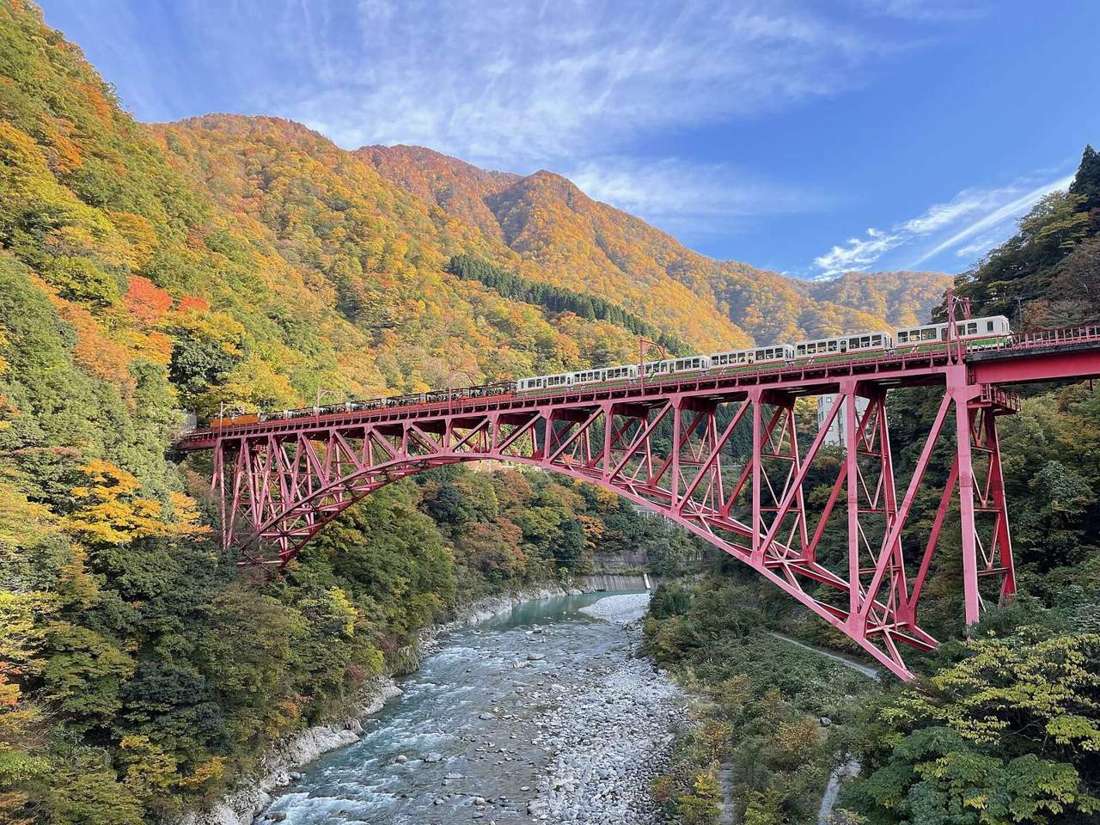
What the tour price adds is three things: the passage above Keyakidaira through Kansai Electric's inclined lift, upper tunnel railway and horizontal adit; guides and safety equipment; and the bundled hotel night. That upper section genuinely is tour-only and nothing substitutes for it. But it is a different product from the gorge scenery — the red arch bridges, the jade-green river and the wind through an open carriage are all on the torokko leg, and from October 2026 you can ride that leg to its end for the first time since 2023.
Which reframes the urgency. Whether you win one of 2,700 tour places and whether you get to Keyakidaira this year are two separate questions, and only one of them is settled by a phone call you can make today.
What about 2027?
Nothing has been published.
Season dates, capacity, pricing, whether two months becomes a full season — the canyon-route.jp news and Q&A pages and the railway's own news list return zero hits for 2027 or its Japanese era equivalent. The only adjacent statement is from the governor's 3 July press conference, where he said he would be promoting the Canyon Route hard during a national governors' tourism trip to New York in the autumn, with next year in mind. That is intent. No dates, no capacity, no word on extending the season.
So do not extrapolate from 2,700, and treat any article quoting 2027 dates as invented. If you want to track it, this year's publishing rhythm is the guide: start date announced 3 July, sales opened 23 July. Checking the official site between March and April 2027 is the sensible point.
So how should you book?
Decide whether you actually need Keyakidaira before you decide whether to make the call.
Three kinds of traveller, three answers:
- You want the gorge scenery and do not care about the terminus. Book Kanetsuri or Kuronagi — both sell online, and Unazuki to Kanetsuri is ¥1,780 one way. Kanetsuri peaks for colour in early November, two weeks after Keyakidaira and considerably easier to schedule.
- You want Keyakidaira specifically. Call 0765-62-1011 (09:00–16:30, Japanese) or have a travel agency counter in Japan book it. The window opens three months before travel, and with the operator saying Keyakidaira boarding numbers are capped without publishing the cap, calling early costs you nothing. Accept the trade: when you arrive, you get the station, the rooftop and one visitor centre.
- You want the Canyon Route tour. Ask an agency directly rather than trusting a capacity figure in a guide. Reports say it is nearly gone, officials have said nothing, and if you miss it the torokko leg is still yours to buy.
Fix two dates in mind: 30 September is the last day of the Nekomata reversal era, photo panel included, and 1 October begins Keyakidaira's first season back. For how to string the rest of Toyama together and where to sleep in Unazuki Onsen, carry on to our Toyama and Kurobe Gorge guide.
Appendix: the official Japanese wording quoted above
1. Kurobe Gorge Railway, 3 July 2026, full-line resumption notice
2026年10月1日(木)宇奈月発・欅平行きの始発便より宇奈月駅~欅平駅間で全線運行を再開いたします。
〔注〕復旧工事は天候や現地作業環境等により工程が変更となる場合があります。今後、運行計画に変更が生じる場合は、あらためてお知らせいたします。
・鐘釣橋復旧工事は、5月18日に着工。足場設置後、損傷部分の交換等を実施中であり、計画工程内で進捗しています。
・鐘釣駅上流斜面崩落個所は、5月11日から順次資機材を搬入し、現在斜面対策工事を行っています。
・10月1日以降の乗降駅は、宇奈月駅、黒薙駅、鐘釣駅、欅平駅となり、猫又駅での乗降はできなくなります。
・なお、この工事の影響により欅平の観光エリアに立入禁止区域を設定するため、欅平駅での乗降再開後も当面の間、欅平駅舎およびビジターセンター以外のエリアにはお進みいただけません。
・上記の立入禁止措置に伴う観光エリアの制限を踏まえ、お客さまの安全確保および駅周辺の混雑緩和のため、欅平駅行きの乗降受付数を限定いたします。
乗車日 9月1日~11月30日/受付開始日 7月8日(水)9:00~/宇奈月駅~黒薙駅、鐘釣駅間はインターネットおよび電話にて受付。宇奈月駅~欅平駅間(10月1日~)は電話にて受付。
2. Kurobe Gorge Railway, 19 July 2026, reservations from 1 October
○10月1日以降は、猫又駅での乗降はできません。
・欅平行きの予約受付は電話のみとし、Webサイトからの予約はできませんのでご注意願います。
欅平駅周辺は、10月1日以降も震災復旧工事が続くため、お客さまの安全を考慮し、当面の間一部立ち入り箇所を制限しております。欅平駅前広場の一部と屋上からの景色そして欅平ビジターセンター内の見学がお楽しみいただけます。
3. Kurobe Gorge Railway, 8 August 2026, new photo spot at Nekomata
全線開通に伴って「猫又駅での折返し運行」という光景が見られるのも9月末までとなりました。このラストスパートを記念し、猫又駅撮影用オリジナルパネルを新たに設置。(…)※パネル設置期間は9月30日までとなります。
4. Kurobe Gorge Railway, Keyakidaira attractions page, banner
全線運行の再開後、欅平駅周辺は当面の間、駅舎および欅平ビジターセンター以外のエリアにはお進みいただけません
5. Kurobe Gorge Railway FAQ (reservations, same-day tickets, onboard rules)
予約の受付は乗車日の3ヶ月前から前日15:00までです。なお、予約は個人(15名未満)のお客さまに限ります。
ただし、2026年度の欅平行き予約は、弊社お客さまセンター(0765-62-1011)での電話予約のみとさせていただきます。Webサイトでのご予約はいただけませんのでご注意ください。
2026年度の欅平行きインターネット予約はご利用いただけません。
※お子さま(小学生以下)のみの予約はできません。なお、4~6月分のご乗車については、4月1日から受付となります。
黒薙駅からのご乗車に関しては、ご予約いただけません。
乗車できます。宇奈月駅窓口で当日券をお買い求め下さい。当日券は、午前7時40分より発売しております。※GW、お盆、紅葉シーズン等の混雑時は、ご希望の列車や車両にご乗車できない場合がありますので、事前に予約されることをおすすめします。
鐘釣駅および欅平駅ですぐお帰りになる場合でも最低20分の時間を必要とします。
券面に表示された発着駅以外での乗り降りはできません。(発着区間内の途中駅で下車した場合は前途無効となります。)
全列車とも定員制となっており、すべてのお客さまの座席が確保されます。
10月中旬 欅平周辺色づきはじめ/10月下旬 欅平周辺見頃・鐘釣、猫又周辺色づきはじめ/11月上旬 鐘釣、猫又周辺見頃・宇奈月周辺色づきはじめ/11月中旬 鐘釣~宇奈月周辺見頃
6. Kurobe Gorge Railway, carriage types
普通客車(オープン型) 片道追加料金/なし / 窓がなく開放感があります。(雨天時は雨具の着用をおすすめします) 座席は横一列4人掛けとなります。
リラックス客車(窓付) 片道追加料金/600円 / 座席は横一列3人掛けで、進行方向に転換できます。(…)窓は開閉可能です。(冷房設備はございません。)
7. Governor of Toyama, extraordinary press conference, 3 July 2026
そして、本日、黒部峡谷鉄道において、本年10月1日からの全線開通の見通しが発表されました。
黒部宇奈月キャニオンルートツアーは、本年10月2日より始動します。初年度は、11月30日までのツアー催行となる予定です。これは黒部峡谷鉄道が、10月1日から全線運行されることを受けて決定をしたものです。
9月30日に黒部市などと連携して、黒部市芸術創造センターセレネにおいて、開業記念式典を開催します。(…)10月1日は黒部峡谷鉄道宇奈月駅において、出発式と記念便の運行を実施します。この記念便は、10月2日からのツアーの始動、スタートに先立ち、旅行商品運営主体であるJTBにより、会員顧客を対象に限定して運行をされるものです。
欅平で、ある程度、景色を見るようなスペースは確保できていますが、それ以外のエリアへの立入りは制限させていただき、ツアーのお客様の安全は確保していかなければならないと考えています。この工事がどれぐらいかかるかというのは、現状ではまだ黒部峡谷鉄道さんからは聞いていません。
こちらの商品は、2、3名1室の利用で、おひとり25万円で販売される予定です。
8. Kurobe Unazuki Canyon Route, official Q&A
2026年度の黒部宇奈月キャニオンルートの旅行商品は7月23日(木)より全国約1,180社の旅行会社で一斉販売されます。なお、初年度については、10月、11月の2か月間のツアー実施となるため、約2,700人枠の限定販売となります。
1泊2日基本コースの宇奈月発第1便は、14万円程度となる見込みです。ただし、料金は4つのコースごとに異なりますので、詳しくは販売する旅行会社にご確認ください。
当日の参加はできませんか? できません。「一般開放・旅行商品化」は、いつでもだれでも参加できるものではなく、必ず事前に旅行商品を予約し購入した方のみ、参加できます。
欅平・黒部ダム間のみの参加はできませんか? できません。基本コースが宿泊をセットした設定としているため、欅平・黒部ダム間の乗車のみの設定はありません。
宿泊なしで参加できませんか? できません。
・11才以上/・乗り物の乗降や階段の歩行に支障のない方/・安全確保のためツアーで用意するヘルメットを必ず着用すること/・杖、車椅子等の歩行補助器具を使用しての通行はできないこと/・妊娠中の方や乗り物酔いしやすい方、重度の閉所・高所恐怖症の方はご遠慮いただいていること/・手荷物はひざ上で抱えられるリュックサック1個程度とすること
見学のための途中下車はありますが、行程から離脱する途中下車はできません。また、途中からルート区間に入って参加することもできません。
9. Kurobe Unazuki Canyon Route, news item of 3 July 2026
富山県では、2026年10月2日(金)から黒部宇奈月キャニオンルートツアーを始動することを決定しました。
10. Toyama Prefecture, 12 August 2026 regular press conference page, Q&A section
(※)後日掲載いたします。
FAQ
- Q1:How far does the Kurobe Gorge torokko run after 1 October 2026?
- All the way to the terminus at Keyakidaira. Kurobe Gorge Railway announced on 3 July 2026 that full-line service between Unazuki and Keyakidaira resumes from the first Unazuki-departing Keyakidaira train on Thursday 1 October 2026 — the first time the whole line has operated since the 1 January 2024 Noto Peninsula earthquake damaged the Kanetsuri bridge and other structures. The same day, Nekomata stops accepting passengers: the operator lists the boarding stations from 1 October as Unazuki, Kuronagi, Kanetsuri and Keyakidaira only. Read that carefully, because it is the opposite of what it sounds like — trains still pass through Nekomata and carry on up the valley, they simply do not stop there for you. One honest caveat: the word the operator uses is "prospect," and the notice adds that restoration work may shift if weather or site conditions change. As of 28 August 2026 the news page carries no postponement, with the most recent item dated 20 August.
- Q2:Can I book a seat to Keyakidaira online?
- No. Kurobe Gorge Railway states in three separate places that internet reservations for Keyakidaira are unavailable for the 2026 season, and that only telephone booking is accepted. The number is the customer centre on 0765-62-1011, staffed 09:00 to 16:30, in Japanese. Kanetsuri and Kuronagi can still be booked either by phone or through the online ticketing site. This is the single most trip-ruining detail for overseas visitors, and it is worth being precise about what is and is not official here: the operator has never published a language-specific exception to the Keyakidaira rule, and the overseas booking portal runs on the same web system, whose own page says the service available there is limited. The reasonable inference is that the English site cannot sell Keyakidaira either — but that is an inference, not a published statement. Phone, or have a travel agency counter in Japan book it and confirm on the spot. Same-day tickets go on sale at the Unazuki window at 07:40, though the operator has never said whether that applies to Keyakidaira-bound seats, and the same announcements say Keyakidaira boarding numbers will be capped. Ask at the window.
- Q3:What does the torokko cost, and what are the carriage types?
- A new fare table takes effect on 1 October. Per the official fare page, one-way adult fares are 2,480 yen Unazuki to Keyakidaira, 1,780 yen to Kanetsuri and 830 yen to Kuronagi, with child fares (ages 6 to 11) at exactly half: 1,240, 890 and 420 yen. Kanetsuri to Keyakidaira is 700 yen for adults. The operator publishes one-way fares only. Return tickets exist and are valid for two days, but no return price is posted anywhere, so a figure like 4,960 yen for an Unazuki-Keyakidaira return is doubling arithmetic rather than an official number — it can be cross-checked against the published group-discount table, but it is still a derivation. Through 30 September the Unazuki-Nekomata return is 2,820 yen adult and 1,420 yen child, and those two figures cease to exist on 1 October. On carriages, there are exactly two and neither of them is called "special" or "panorama," whatever older guides say: standard open-type cars have no windows, seat four across and cost nothing extra, while the windowed Relax car seats three across on reversible seats, has openable windows, adds 600 yen per one-way leg — twice for a round trip — and has no air conditioning, only heating in the cold months.
- Q4:Can I walk to Sarutobi Gorge from Keyakidaira?
- No. The operator states that because of the restoration work an off-limits zone has been set across the Keyakidaira sightseeing area, so even after boarding resumes there, for the time being nothing beyond the station building and the visitor centre is accessible. A second notice puts the same rule as a whitelist rather than a blacklist: what you can enjoy is part of the station forecourt, the view from the rooftop, and the interior of the Keyakidaira Visitor Center. Everything else is out — Sarutobi Gorge, Okukane Bridge, Hitokui-iwa, the riverside viewing deck. Watch for one trap here: the railway's own Keyakidaira sightseeing page still lists all of those attractions, with the closure banner sitting at the top of the same page, and English and Chinese guides that promise a Sarutobi Gorge walk are generally copying that un-updated list. As for when it reopens, the operator has never published an end date — the phrase used is "for the time being." At his 3 July 2026 press conference the governor of Toyama said outright that the prefecture had not yet been told by the railway how long the work would take.
- Q5:Are Canyon Route tour places still available, and what do they cost?
- Press reports in mid-August 2026 said the roughly 2,700 places were close to sold out, but no official source has ever announced a sellout. The "almost sold out" wording traces to Kitanippon Shimbun on 13 August, citing the governor's 12 August regular press conference, and to Tulip TV on 14 August, citing the JTB Toyama branch. Meanwhile the canyon-route.jp news page has published nothing since 3 July, and the prefecture's page for that 12 August conference still shows the question-and-answer transcript as to be posted at a later date. On price, the official Q&A figure of "around 140,000 yen" describes one scenario only — the first Unazuki departure of the two-day, one-night basic course — and the same passage says prices differ across the four courses. The four basic courses published by the prefecture's official tourism site actually run from 127,600 to 182,500 yen. Four hard rules are worth memorising: no same-day participation, tickets only through a travel agency purchased in advance, no Keyakidaira-to-Kurobe-Dam-only segment, and no participation without the bundled overnight stay.
- Q6:If I cannot get a Canyon Route place, is the trip still worth making?
- Yes, and the reason is specific rather than consoling. Look at the itinerary column for the four basic courses: the gorge leg is written as Unazuki to Keyakidaira by torokko on courses A and B, and Keyakidaira to Unazuki by torokko on courses C and D. That leg is the same ride an independent traveller buys for 2,480 yen one way. What the tour price additionally buys is the stretch above Keyakidaira — the inclined lift, upper tunnel railway and horizontal adit inside Kansai Electric Power's working infrastructure — plus guides, safety equipment and the mandatory hotel night. That section genuinely is tour-only. But it is a different product from the gorge scenery: the red arch bridges, the jade-green Kurobe River and the wind through an open-sided carriage are all on the torokko leg, and from October 2026 you can ride it to the end yourself for the first time since 2023. The thing to sort out early is not the tour, it is the phone call.
Related reading:
Toyama & Kurobe Gorge Guide 2026: Torokko, Gokayama & Coast
Hokuriku's most underrated stop, 2h10 from Tokyo. From 1 October 2026 the Kurobe Gorge torokko runs the full line to Keyakidaira again; plus World-Heritage Gokayama and the Amaharashi coast.
Tateyama Kurobe Alpine Route 2027: Snow Walls, Kurobe Dam & Tickets
A high-mountain route across the Northern Alps, mid-April to late November only — the Snow Walls, Kurobe Dam discharge and six transport modes.
Japan Autumn Foliage 2026: Peak Forecast & 5-Region Guide
Region-by-region peak-forecast map from late-September Hokkaido to mid-December Kyushu, with itineraries and booking timing.