As of September 2026, the Yugama crater lake on Mt. Kusatsu-Shirane cannot be visited. The JMA lowered the eruption alert to Level 1 on May 15 and Route 292 fully reopened on May 29, but on May 22 Kusatsu Town barred entry within 500 m of the crater and closed the summit car park and rest house. This guide covers why an open road still does not mean an open crater, winter closures, buses, and what to do in Kusatsu Onsen instead — the Yubatake, the baths and Netsu-no-Yu are all down in town and unaffected.
- Yugama is closed: no entry within 500 m of the crater; summit car park and Shirane Rest House closed; no reopening date
- Level 1 does not mean open: the JMA sets the level, Kusatsu Town decides access
- Route 292 is open 24 hours, but you can only drive past the crater; the JR bus to Shirane Kazan is suspended
- This winter's road closure dates are not out yet; last season ran mid-November to late April
- Kusatsu Onsen is business as usual: stay a night, soak at Sai-no-Kawara, see the Yubatake lit at night
Contents
Is the Yugama crater open?
No, you cannot see Yugama right now. On May 22, 2026 Kusatsu Town designated a 500 m radius around the crater as a no-entry zone and stated plainly that Yugama cannot be visited; the trails leading into that zone should not be used either. Yugama is the crater lake at the summit — about 300 m across, 30 m deep and around 18°C, and one of the most acidic lakes in the world — but for now the only view is the JMA webcam.
| Status | Closed (no entry within 500 m of the crater) |
|---|---|
| Eruption alert | Shirane (Yugama area) Level 1 since 2026-05-15 / Motoshirane Level 1 since 2019-04-05 |
| Summit car park | Closed |
| Shirane Rest House | Closed |
| Reopening | Not announced. The town says it is preparing shelters, parking, toilets and a walking area |
| Live view | JMA volcano webcam (Shirane, Yugama area) |
The alert is Level 1 — why is Yugama still closed?
Because the JMA sets the alert level, while Kusatsu Town decides who may enter. When the JMA lowered the Yugama area from Level 2 to Level 1 on May 15, it still warned that very small ash emissions are possible within about 500 m of the crater and told people to follow local instructions. Kusatsu Town uses exactly that radius for its no-entry zone, and trail safety, parking, toilets and shelters are not ready yet, so for the time being only through-traffic on the road is allowed.
Mt. Kusatsu-Shirane carries two separate alert levels — Shirane (Yugama area) and Motoshirane — both currently Level 1. Check the Shirane (Yugama area) one before you go.
If the level goes back up, the Shiga-Kusatsu Road closes (see the table in the next section); when it rose to Level 2 on August 4, 2025, the road was shut by 6:45 that morning.
Can you drive the Shiga-Kusatsu Road (Route 292)?
You can drive through, but you cannot stop to look. Route 292 has been open end to end, 24 hours a day, since 13:00 on May 29, 2026; the stretch past the crater is drive-through only, with the summit car park closed.
| Status | Open end to end, 24 hours (since 2026-05-29 13:00) |
|---|---|
| Crater stretch | Sessho Gate (Kusatsu) to Manza Sansaro Gate (Tsumagoi), about 8.5 km — drive through only, no stopping |
| If alert rises to 2 | Manza Sansaro to Sessho closes |
| If alert rises to 3 | Shibu Pass to Sessho closes |
| Road status | Gunma road restrictions (Japanese) |
Is there a bus to Mt. Shirane?
No. JR Bus Kanto has suspended all services between Kusatsu Onsen and Shirane Kazan "for the time being" because of road conditions.
The Nagaden express Shiga Kogen line (Nagano Station east exit to Kusatsu Onsen) resumed running through to Kusatsu on May 30, 2026; the Kusatsu section operates April 23 to November 3. It crosses the Shiga-Kusatsu Road via Shiga Kogen and Shibu Pass, but there is no stop at Mt. Shirane — you only pass by. No reservation needed; services marked ★ are cashless, so buy a ticket at Nagano Station east exit if paying cash. Services may stop without notice if the alert rises.
| Direction | Departs | Arrives |
|---|---|---|
| Nagano → Kusatsu | Nagano Sta. east exit 10:40 / 13:15 | Kusatsu Onsen 13:00 / 15:33 |
| Kusatsu → Nagano | Kusatsu Onsen 14:00 / 16:50 | Nagano Sta. east exit 16:20 / 19:10 |
Will Mt. Shirane open this winter or in spring 2027?
The road always closes in winter, and no 2027 opening date has been announced. Gunma has not yet published the 2026–27 closure; for reference, last season:
| 2025–26 winter closure | 2025-11-12 13:00 to 2026-04-22 10:00 (Tenguyama Gate to Shibu Pass, 17.9 km) |
|---|---|
| Spring 2025 exception | Planned for 4/23, but an avalanche during snow clearing pushed it to 5/22, with alternating one-lane traffic 8:00–17:00 at first |
| Yugama reopening | Not announced |
If you plan to drive it in spring, check Gunma's road page the week before rather than relying on past dates. The onsen town stays open all winter.
Without Yugama, is Kusatsu still worth it?
Yes. Kusatsu is an onsen town first: it has the largest natural hot-spring discharge in Japan and strongly acidic water around pH 2. The crater is at the summit; the town is far below it, and the Yubatake, Sai-no-Kawara and Netsu-no-Yu are unaffected. If you have sensitive skin, read our guide to onsen disclosure notices first — acidic springs carry statutory bathing contraindications.
The Yubatake: come back after dark
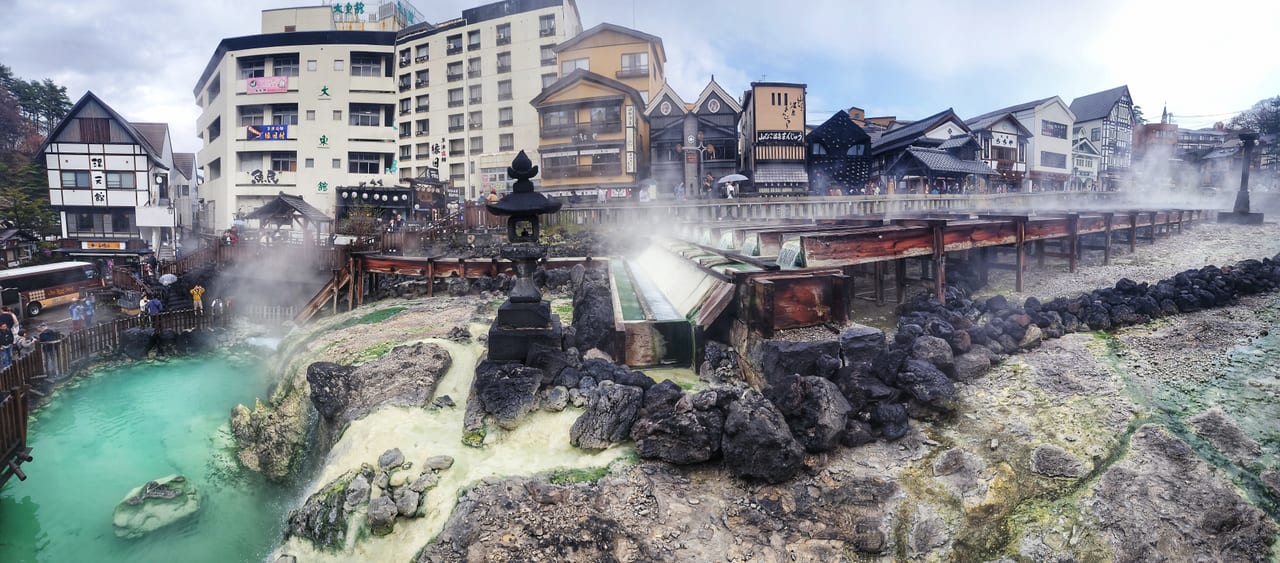
The Yubatake is the spring source in the middle of town, pouring out about 4,000 litres a minute through wooden troughs that cool the water and leave yellow yu-no-hana deposits; it was designated a national Place of Scenic Beauty in 2017. The town itself recommends the twilight just after sunset, when the lights come on before full dark.
Netsu-no-Yu: the yumomi show
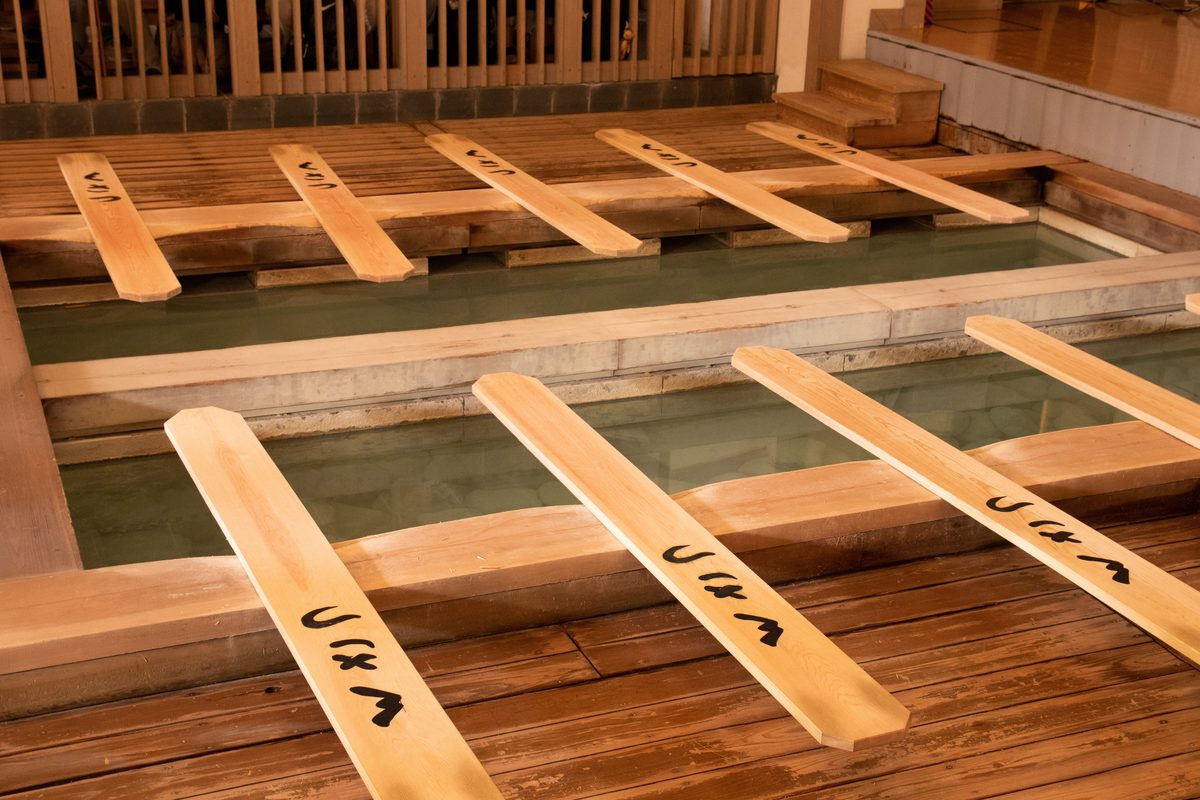
Kusatsu's water is too hot to bathe in straight from the source, and the traditional fix is yumomi — cooling it by stirring with long wooden paddles. The "Yumomi and Dance" show at Netsu-no-Yu, facing the Yubatake, is ¥700 for adults and ¥350 for elementary children; on Sundays and Mondays you can try the paddling yourself for ¥300 (elementary age and up). Show times change and the hall closed for maintenance in June 2026, so check the official page on the day.
The three town baths
On a first visit, I would start with Sai-no-Kawara: a large open-air bath at the back of a park where hot water runs between the rocks. If you want all three, get the three-bath pass.
| Bath | Adult / child | Hours | Note |
|---|---|---|---|
| Sai-no-Kawara Rotenburo | ¥800 / ¥400 | Apr–Nov 7:00–20:00, Dec–Mar 9:00–20:00; last entry 19:30 | Mixed-bathing day every Friday |
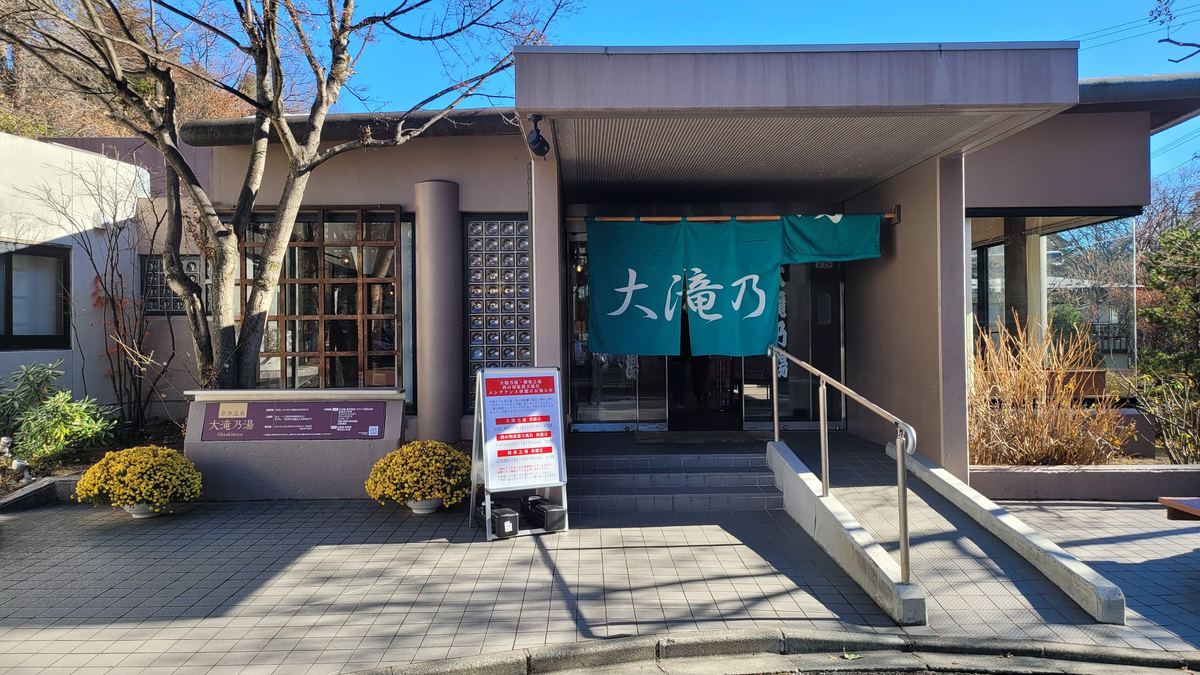
| Otaki-no-Yu | ¥1,200 / ¥600 | 9:00–21:00, last entry 20:00; maintenance closure in December | Women's side has "awase-yu" baths at stepped temperatures |
| Goza-no-Yu | ¥800 / ¥400 | See official site | Right by the Yubatake |
| Three-bath pass (Sanyu Meguri Tegata) | ¥1,950 / ¥900 | — | One entry to each of the three |
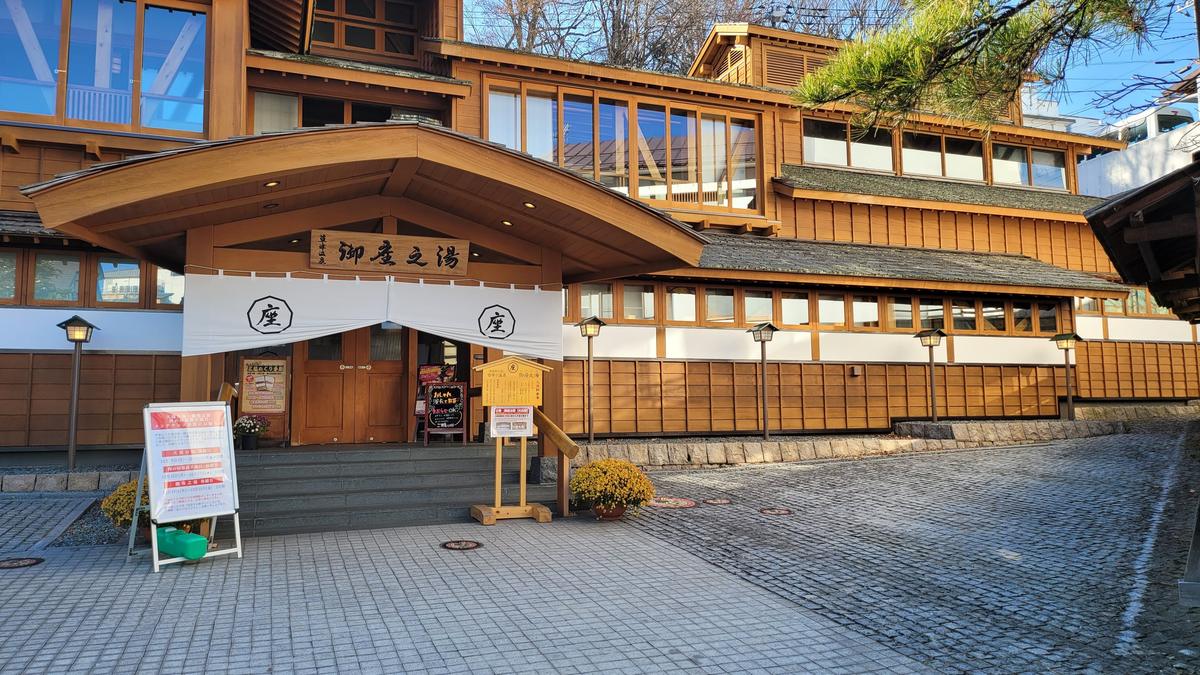
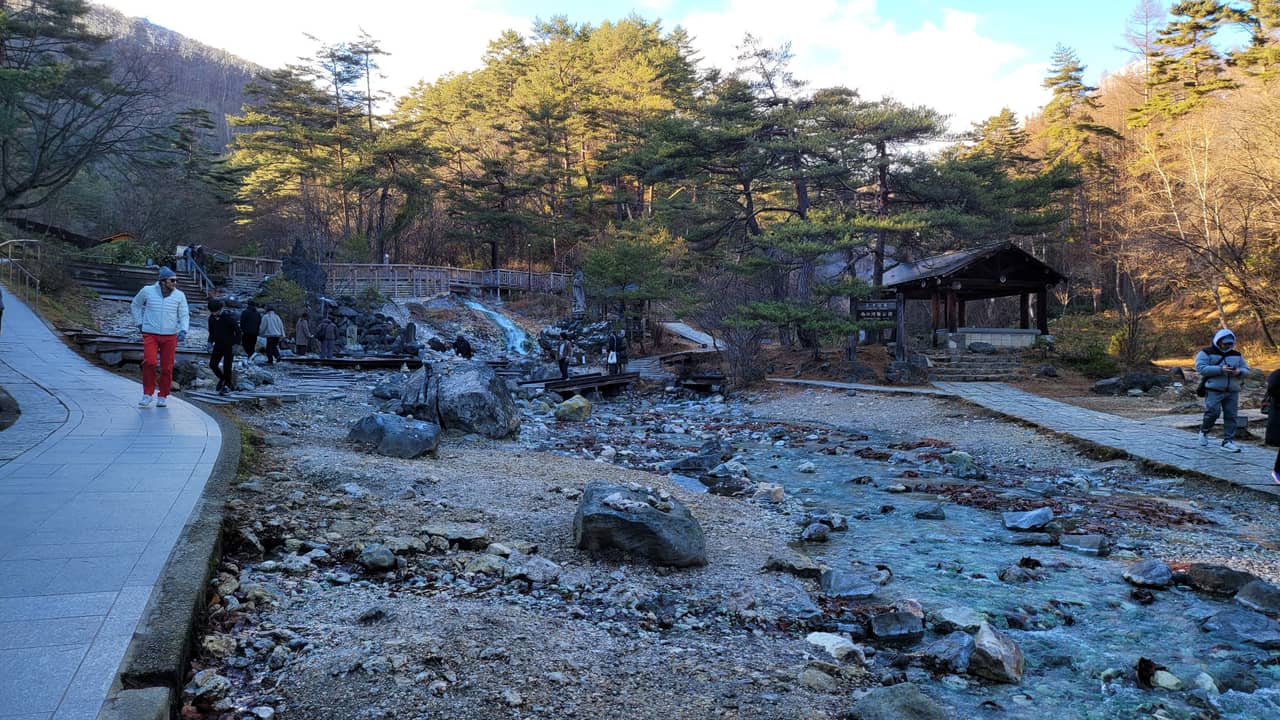
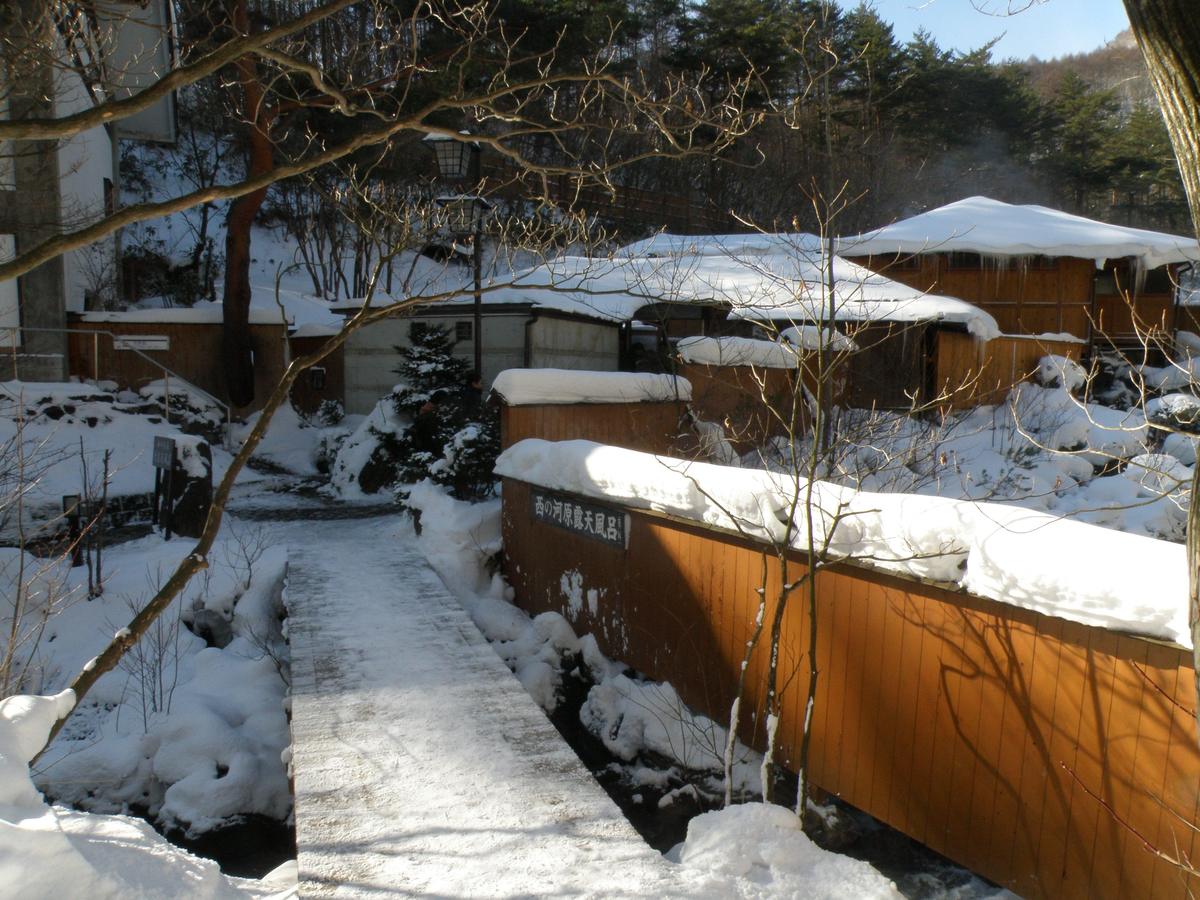
Free communal baths (Shirahata-no-Yu, Chiyo-no-Yu, Jizo-no-Yu) sit around the Yubatake; rinse off first, keep towels out of the water, keep quiet. With tattoos, see our onsen with tattoos guide.
How do you get to Kusatsu from Tokyo or Karuizawa?
There is no direct train; from Tokyo the simplest option is the highway bus straight through.
| Route | Time | Fare | Book ahead? |
|---|---|---|---|
| Joshu Yumeguri highway bus Tokyo Sta. Yaesu South / Busta Shinjuku → Kusatsu Onsen Bus Terminal | About 4 hours (e.g. Shinjuku 8:05 → 12:08) | ¥2,720–4,100, varies by service and date; children half | Yes: reserved seats, on sale 10:00 one month before |
| JR Agatsuma Line to Naganohara-Kusatsuguchi → JR bus | Bus about 22–25 min | — | Bus cannot be reserved; queue, board until full; pay on exit, Suica/PASMO OK |
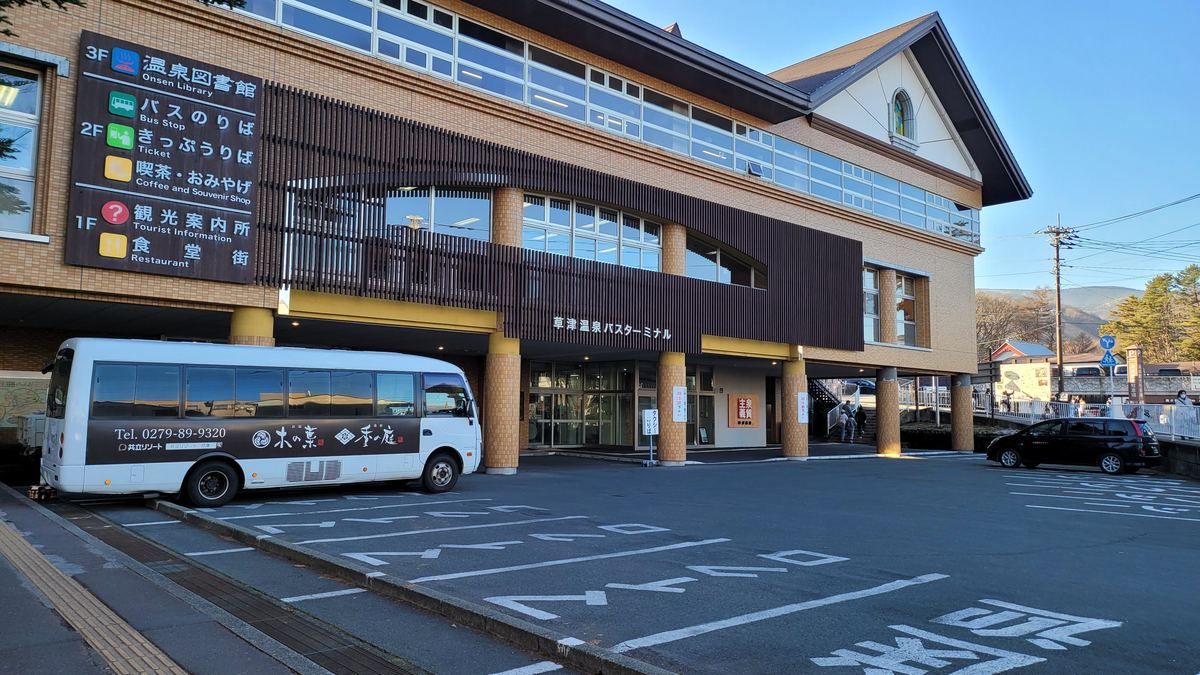
| Karuizawa Sta. north exit stop 2 → Kusakaru bus | About 1 h 15–25 min | ¥2,240 | No, pay on board |
The Joshu Yumeguri is sold only through JR's own Kosoku Bus Net, JR Bus counters and Lawson/MiniStop.
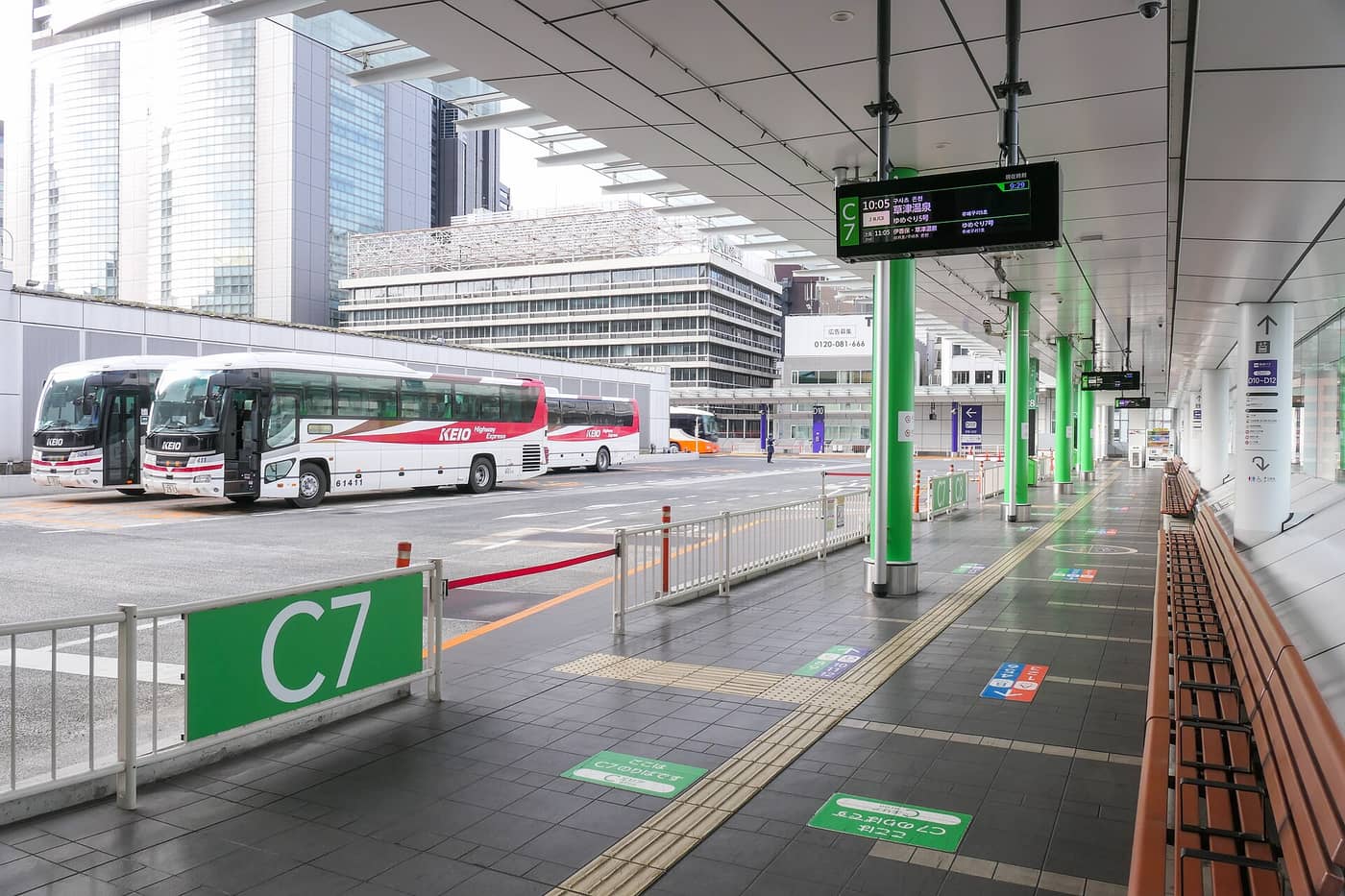
The weekend Kusakaru Direct Line from Karuizawa has been suspended since August 1, 2026, so only the regular route bus runs. Once in Kusatsu, everything in town is walkable. Coming via Karuizawa makes an easy two-stop trip.
Where should you stay?
Stay in the onsen town around the Yubatake so you can walk back after dark. Before you book, note that Shiga Prefecture has a different city called Kusatsu, and that the Chuo Yubatake-dori street in front of the Yubatake closes 20:00–7:00 on five weekdays between October 13 and 23, 2026, with another 2–3 week closure planned for late November to mid-December (the town has not said whether pedestrians can pass).
| Platform | Before you click |
|---|---|
| Booking.com Kusatsu stays → | The list opens on today's date; change it to your night first |
| Agoda Kusatsu stays → | Confirm the location reads Kusatsu Onsen, Gunma |
| Rakuten Travel Kusatsu stays → | The property count is this platform's inventory, not every inn in town |
A one-night Kusatsu plan
- Day 1, 8:05 Joshu Yumeguri from Busta Shinjuku
- 12:08 Arrive at Kusatsu Onsen Bus Terminal, drop bags at the inn
- 13:00 Walk the Yubatake, catch a yumomi show if one is on
- 15:30 Sai-no-Kawara open-air bath (last entry 19:30)
- 18:00 Dinner at the inn
- After sunset Back to the Yubatake for the lights
- Day 2, 9:00 Otaki-no-Yu at opening, or a morning soak at the inn
- 11:00 Browse the town, then head back to Tokyo or on to Karuizawa
For another crater-status question, see our Mt. Aso Nakadake crater guide.
FAQ
- Q1:Is the Yugama crater on Mt. Kusatsu-Shirane open?
- No. On May 22, 2026 Kusatsu Town barred entry within a 500 m radius of the Yugama crater, so the crater lake cannot be visited, and the summit car park and Shirane Rest House are also closed. No reopening date has been announced.
- Q2:The eruption alert is down to Level 1. Why can I still not see Yugama?
- Because the alert level and access are separate decisions. The JMA sets the level and warns that very small ash emissions remain possible within about 500 m of the crater; Kusatsu Town uses that radius to bar entry.
- Q3:Can you go up Mt. Shirane in winter?
- No. Route 292 closes every winter; last season it was closed from 13:00 on November 12, 2025 to 10:00 on April 22, 2026. Gunma has not yet announced the 2026–27 dates.
- Q4:Can I stop on the Shiga-Kusatsu Road to look at Yugama?
- No. The road is open 24 hours, but you can only drive through the stretch near the crater; the summit car park is closed.
- Q5:Is there a bus to Mt. Shirane?
- No. The JR Bus Kanto route from Kusatsu Onsen to Shirane Kazan is fully suspended. The Nagaden express bus from Nagano drives over the Shiga-Kusatsu Road but has no stop at Mt. Shirane.
- Q6:Without Yugama, is Kusatsu still worth visiting?
- Yes. Kusatsu was always about the Yubatake and the baths: Sai-no-Kawara open-air bath is ¥800 for adults and the Netsu-no-Yu yumomi show ¥700, all in the onsen town and untouched by the volcanic restrictions. Just do not plan the trip around the crater.
- Q7:Do I need to book the bus from Tokyo to Kusatsu?
- For the Joshu Yumeguri highway bus, yes. Seats are reserved and go on sale at 10:00 one month before travel. The JR local bus from Naganohara-Kusatsuguchi cannot be reserved; you queue and board.
Official sources
- Kusatsu Town: crater-area restriction notice (Japanese)
- JMA: Kusatsu-Shirane (Yugama area) activity (Japanese)
- Gunma Prefecture: Shiga-Kusatsu Road reopening (Japanese)
- JR Bus Kanto: Kusatsu–Shirane Kazan suspension (Japanese)
- Nagaden Bus: Shiga Kogen express timetable (Japanese)
Prices, times and restricted areas follow the latest official notices.
Related reading:
Karuizawa Guide 2026: Kumoba Pond, Shiraito Falls & Outlets
Tokyo's easiest highland escape, 60 minutes by Hokuriku Shinkansen — Kumoba Pond reflections, Shiraito Falls, the Prince outlet, Hoshino-area churches and Harunire Terrace.
Hakone Guide 2026: Free Pass, Owakudani & Lake Ashi
About 85 minutes from Shinjuku by Romancecar — the 2026 Hakone Free Pass, Owakudani, Lake Ashi pirate ships, the floating torii, and a two-day onsen loop.
Nikko Guide 2026: Toshogu, Kegon Falls & Lake Chuzenji
About 1h50 from Asakusa by Tobu express — the World Heritage Toshogu (Yomeimon, three monkeys, sleeping cat), Kegon Falls, Lake Chuzenji, and the Irohazaka autumn hairpins.