Osaka & Kyoto 5-day itinerary
Dotonbori, Kiyomizu, Arashiyama in one five-day route.
A pilgrimage that still works in the shortage years.

Kyoto matcha in 2026 sits in a strange place: almost every tea you'd want is still pourable, but most of it now comes with a queue or a cap. Kyoto Prefecture's hand-picked tencha collapsed 40% in 2025, premium auction prices surged 116% to ¥43,330 per kilo, and old houses like Ippodo, Ito Kyuemon, and Nakamura Tokichi have held a one-tin-per-customer cap for more than a year. From March 2026, Ippodo extended the cap to hojicha and genmaicha as well. But that also means: there has never been a better reason for a serious matcha drinker to actually show up in person.
Global matcha demand has compounded around 10% a year for a decade. After 2024's TikTok-driven latte boom, it doubled again. Japan's supply moved the other way: Kyoto's hand-picked tencha — the raw leaf behind every truly ceremonial-grade matcha — fell to 6,140 kg in 2025, down from 10,216 kg the year before. The weather only explains part of it. Tea farmers are aging, the next generation has chosen the city, and the labor-intensive shade-grown method behind premium leaf has roughly doubled in cost.
Three things this actually means for a traveler. First, drinking matcha in-store hasn't really gotten more expensive (¥600–1,000 for a bowl of usucha) — shops don't want to scare off the experience visit. Second, take-home tins are universally capped; Ippodo extended the cap to hojicha and genmaicha starting March 2026. Third, and most usefully, experience-based offerings — tea ceremonies, stone-mill workshops — are now the best value on the menu: the same ¥3,500 buys you more tea, in better company, than it does taking a tin home.
First, the upstream context: almost every matcha trip lands at Kansai Airport (KIX) and takes the HARUKA limited express straight to Kyoto Station (~75 min). Round-trip TPE→KIX runs ¥18,000–28,000; first-flush season (late April) and the autumn foliage / kuchikiri window (late November) add 25–40%. If schedule is flexible, mid-May and early October — the "shoulder peak" — are the sweet spot, with the same tea at roughly ¥6,000 less. Compare flights to Osaka →
From Kyoto Station, JR Nara Line local trains run to Uji in 18 minutes for ¥240, 6–10 minutes apart at peak, 15 minutes apart off-peak. The March 15, 2026 timetable revision added two new rapid services that skip from Fushimi-Inari straight to Uji, shaving four minutes. Keihan's Uji Line (transfer at Chushojima) takes about 35 minutes for ¥430 — useful only if you're already staying around Gion. For speed and price, JR wins without argument.
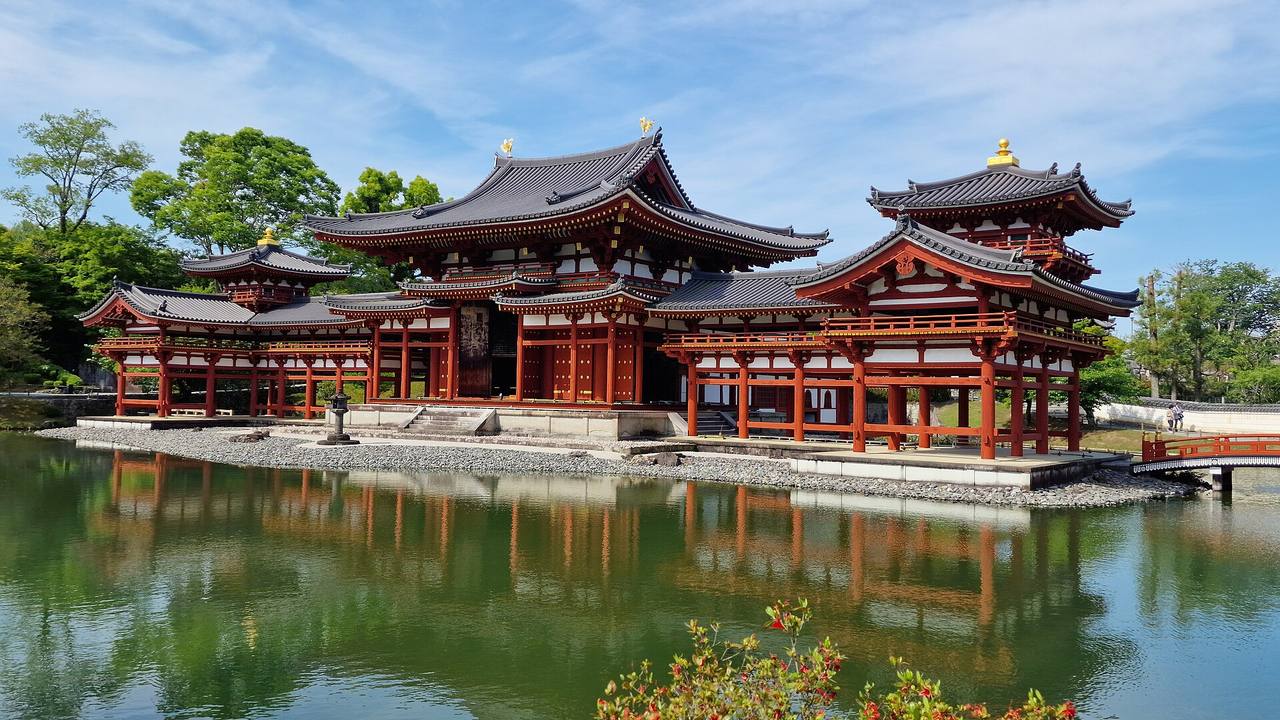
From Uji Station, Byodo-in is a 10-minute walk; the route between is essentially an open-air matcha museum — tea houses and confectioneries every 50 meters. I usually spend a half day here (10:00–14:30) hitting three tea houses, Byodo-in, and Ujigami Shrine, then come back to central Kyoto for a second tea round — for how the buses, subway, and Randen connect once you're back in the city, see our Kyoto transport guide. You don't need a JR Pass for this — round-trip is ¥480, and the math doesn't change unless you're chaining Nara, southern Osaka, or a roughly 50-minute JR hop to Shiga for Hikone Castle and Lake Biwa into the same day. (For when it does, see the JR Pass 2026 calculator.)
One newer thing in Uji can reshape this half day: the Nintendo Museum sits in the same city, out in the Ogura district. It runs on an advance lottery with tickets bound to the names of the people entering — not somewhere you can walk up and buy — so check the application timing before you try to pair it with tea. How that works is in our guide to getting into the Nintendo Museum; if your slot lands, the other half of that day fits this tea route neatly.
If your Japanese is limited and you'd rather not piece this together yourself, there is an English-guided walking tour that meets at Uji Station at 9:45 AM and runs about three hours — Byōdō-in, the Tachibana and Asagiri suspension bridges, Uji Shrine and Ujigami Shrine, ending at Uji Bridge around 12:45 PM with the tea and sweets stop built in. Be clear about what you're buying: it's a guided walk with tastings, not a seated tea ceremony, and it hands you the morning rather than the whole day — you're back on the street at lunchtime, free to do the Kyoto half yourself. Take the small-group option; the private upgrade costs roughly three times as much and a walking route through Uji gains very little from having the guide to yourself. Book the guided Uji morning →
Kyoto is also one of Japan's more vegetarian-friendly cities — matcha wagashi are almost all meat-free, and several tea houses and temples in town and in Uji serve Buddhist shojin ryori. If you're vegetarian or vegan, how to order and which dishes are safe is in our Japan vegetarian and vegan guide.

The standard first stop for an Uji matcha trip. Behind the main hall is a tea room called Zuishōan, which offers a tencha-to-koicha tea ceremony by advance reservation (details on the official site). The store-exclusive Maruto Matcha Parfait runs ¥1,430 tax included — one of the densest matcha-flavored desserts in town. The yokan gift boxes and baked goods sit outside the purchase cap, a reliable last-stop souvenir. KKday bundles the Zuishōan ceremony with the store-exclusive Namacha Jelly into a single English/Japanese-bookable product — faster than emailing the main store in Japanese. Book Nakamura Tokichi ceremony on KKday →
Founded in 1160 (Eien 1) — Japan's oldest continuously operating tea house. The wooden plaque on the main beam was written in 1671; every emperor since has stepped through. The shop is now in the hands of the 24th-generation owner, who still demonstrates the chasen technique at the counter. This isn't a parfait stop. It's where you sit for 30 minutes and feel 800 years of unbroken tea craft. Open 9:30 a.m. – 5:30 p.m., east end of Uji Bridge. Take-home tea is small-batch and outside the purchase cap; current line-up on the official site.
This is the hands-on stop. Fukujuen Uji Kobo runs a "Simple and Easy! Making Matcha with a Stone Mill" course of about 100 minutes — you take shaded tencha, grind it on a stone mill, drink the resulting usucha on the spot, and take the rest home. One gram is roughly 60 turns; faster than that, friction heats the powder and heat destroys the amino acids — exactly the kind of detail an instructor walks you through during the session. Course options, schedule, and current prices on the official site.


The four inner-city houses cluster along the Karasuma–Kawaramachi axis: 7 minutes on foot from Karasuma Station to Saryō Suisen, 10 minutes to Ippodo, 15 minutes to Ito Kyuemon Gion. If this trip is built around tea, stay in Karasuma or Kawaramachi — mid-range business hotels run ¥12,000–18,000 per night for a double, less on weekdays, and all four shops are walkable. Search Kyoto hotels →
The benchmark of Kyoto tea houses. The flagship's Kaboku tea room serves tea by grade: Usucha "Ikuyo no Mukashi" ¥1,210, Usucha "Kyogoku no Mukashi" ¥1,650, Koicha "Kitano no Mukashi" ¥2,200 (each with seasonal wagashi). Limited menus like "Tokusen Matcha" and "Nanrai" can run above ¥3,000 for koicha. The chasen and chashaku are laid out so you whisk it yourself — a forgiving introduction with full atmosphere. The retail counter still holds one-tin-per-person but by SKU, so you can leave with one tin of usucha, one of gyokuro, and one of hojicha. Full current menu on the Kaboku page.
The mothership is in Uji, but the Gion branch runs a full tea room plus a matcha-soba lunch that's quieter than the Uji crowds. The "Matcha Soba Zen" — matcha kneaded directly into the noodles, with cold tofu and small dishes — is one of the city's most underrated matcha lunches; current menu and prices on the official site. The gift counter leans toward tea bags and baked goods, which means no cap pressure — the right stop to clear a gift list.
In the shortage years, what's in the bowl isn't just tea — it's time.
The lowest tourist ratio of the four — where Kyoto locals take their afternoon tea. Signature menu: Koicha Warabi-mochi ¥1,650, Koicha Matcha Parfait ¥1,650, Matcha Cake Parfait ¥1,980 (current rates on the official site) — these use ceremonial-grade koicha rather than the lighter usucha most dessert shops dilute their menu with. That's the differentiator. The room seats around 22; weekend 13:00–15:00 means a 40-minute wait, weekdays are walk-in. No retail counter — pure tea house, which is exactly why the quality stays.
A small garden tea house tucked into a side street west of Kitano Tenmangu — the kind of place Kyoto residents take visiting parents. The "Matcha Gozen" set — five small dishes, koicha, and a primary wagashi — is one of the rare options at this price tier where koicha is part of the deal; current menu on the parent Tawaraya Yoshitomi site. Online reviews are scattered and Google often misses it, but the proportions of garden, stepping stones, and tatami all read right. A clean way to close an afternoon that started at Kinkaku-ji or Kiyomizu.
Uji's municipal tea center, opened in 2021, is the lowest barrier to entry: floor-one exhibits, floor-two workshops. They offer stone-mill grinding, chasen-whisking classes, and full tea ceremonies — current programs and prices on the booking system. English guidance, no Japanese needed, walk-in possible — but at least one-day-ahead booking is safer. The right choice for families, older travelers, or first-time-in-Japan companions.
Several machiya tea rooms in Gion, Teramachi, and Karasuma run 60–120 minute private ceremonies, some led by retired geiko. The session usually covers one bowl of koicha, one of usucha, two primary wagashi, plus live commentary on technique and history — details like why the chasen has 100 bamboo prongs and why the bowl rotates two and a half turns click faster in person than from any book. Pricing typically runs ¥2,500–5,000 and varies by venue; current options surface on KKday, Klook, or by booking the tea rooms directly.
Several sub-temples in the Myoshin-ji compound (Hanazono side) take foreign visitors for guided zen sittings. Shunkō-in runs the most consistent English program — vice-abbot Kawagami Zenryu leads sessions 4–5 times a week, 9:30–11:00, capacity 30, no booking required (though check the current Peatix listing for schedule and pricing). The session covers ~20 minutes of zazen, matcha preparation and drinking, plus a garden and main-hall tour. For travelers building the whole trip around matcha, this is the move that promotes tea from a drink to a meditation.
Split your matcha budget into three tiers. Daily drinking (¥1,500–2,500 per tin) — Ippodo's "Hatsumukashi" or Marukyu Koyamaen's "Aoi" — stable in aroma, holds up against milk or ice without collapsing. Gifting (¥3,000–5,000 per box) — Nakamura Tokichi's yokan sets, Ito Kyuemon's tea-bag assortments — outside the cap, no refrigeration required. Ceremonial (¥6,000 and up) — effectively gated for repeat customers; don't fight for these on a first visit. A 40-gram tin of usucha yields around 20 bowls at 2 grams each — about two weeks of mornings. Treated less as a one-time treat and more as a returnable ritual, the tin becomes a souvenir worth carrying.
| Slot | 1-Day Highlight (half Uji, half Kyoto) | 2-Day Deep Cut (Uji day + Kyoto day) |
|---|---|---|
| D1 AM | JR to Uji → Tsuen → Byodō-in → Nakamura Tokichi lunch | Same + Fukujuen stone-mill workshop (1 hr) |
| D1 PM | Back to Kyoto → Ippodo Kaboku → Saryō Suisen | Ujigami Shrine → Chazuna workshop → walk back to Kyoto |
| D1 Evening | Gion stroll | Gion machiya dinner |
| D2 | — | Ippodo → Geiko-led ceremony (2 hr) → Ito Kyuemon soba lunch → Charon evening |
| Daily budget | ¥6,500–9,000 / person | ¥12,000–16,000 / person (2 days) |
If you'd rather not move bags between trains, the private-car version of this day exists, but it isn't the template above with a driver bolted on. The one currently sold is a nine-hour English-guided charter pairing the Uji half — Byōdō-in plus a hands-on matcha-making session — with Nara: Tōdai-ji, Kasuga Taisha and the deer park, hotel pickup and lunch included. So you trade the Kyoto afternoon (Ippodo, Saryō Suisen, the Gion stroll) for Nara. That's a real swap, not a free upgrade, and it only makes sense if Nara was already on your list. Watch the arithmetic too: it's priced per group, so the per-person cost falls off a cliff as you add people — a solo booking is roughly four times the per-head rate of a party of six. Below four, take the trains. See the private Uji + Nara day →
As of May 2026, Ippodo, Ito Kyuemon, and Nakamura Tokichi all keep a one-tin-per-person cap on flagship usucha, but the cap is per SKU, not per brand. You can leave with one tin of usucha, one tin of sencha, and one tin of hojicha. For gifts, the smarter buy is mid-tier daily usucha (¥1,200–1,800 / 40g) — the ceremonial grade (¥3,500+) is effectively reserved for repeat customers.
Uji is the production heartland: tea fields, tencha workshops, stone-mill experiences. Central Kyoto is the refinement and tasting capital: Ippodo and Marukyu Koyamaen flagship rooms offer the deepest ritual space. Half a day budget? Pick Uji if you're chasing the raw leaf, central Kyoto if you're chasing the room and the sweets.
Usucha (thin tea) is the daily form — whisked into froth, bitter-sweet, ¥600–1,000 is normal. Koicha (thick tea) is the ceremonial form — triple dose, no froth, intensely vegetal, ¥2,000+, and on a first visit best taken with a tea master walking you through it. Matcha latte is the tourist drink — more milk and sugar than tea — ¥700-ish. For the pure thing, order usucha.
Late April to mid-May is ichibancha (first flush) — small limited batches, the most aromatic moment of the year. October–November is kuchikiri, when stored tencha is opened and the tea hits its roundest. Summer's nice for iced matcha and air-conditioned tea rooms, but the leaf itself loses layers under heat. December–January brings new-year limited tins for souvenir hunters. If you're combining with Kyoto autumn foliage, late November is the matcha + maples double bill.
Unopened sealed tins travel fine at room temperature. Once opened, refrigerate (away from light, moisture, temperature swings). Most airlines have no special restriction on tea powder, but pack tins inside clothing to absorb pressure. The real risk is matcha chocolate in summer — melts on the way home; ship cold by Japan Post EMS or pack with cold packs.
The matcha shortage isn't ending next year. But that also means: travelers who walk in now still hit a window where the price hasn't fully broken, where the experience rooms haven't been crowded out by volume. On the flight home, think back — and the thing you'll remember best won't be the tin you didn't manage to take.
WaTabi · Researched & curated · May 2026