Two facts will overturn whatever plan you currently have for New Year in Kyoto. First, the famous joya no kane at Chion-in is no longer something you can simply turn up and watch. Based on the 2025-26 season arrangements it is a paid, advance-application-only event at 3,000 yen per person, with online applications opening at 14:00 on December 1 for four sessions of 500 people each, an allocation the city tourism board recorded as already full — and the only free way to watch is the temple live stream. Second, the Kyoto City Transportation Bureau states in writing that there is no all-night operation of city buses or the subway on New Year Eve, and no extension of last services. That is the reverse of what most visitors assume a big Japanese city does on that night, and it means the crowd standing at Yasaka Shrine at midnight has already missed the last bus. What follows is not a listicle of pretty temples. It is the officially verifiable operational picture of one week in Kyoto: the full okera mairi timeline, the four temples that genuinely let you ring a bell, the one railway still running at 02:00, and the Nijo Castle trap that hides a National Treasure for eight of nine days. Every item is labelled by status — standing official facts are stated as fact, anything not yet announced for 2026-27 is flagged as a typical-year pattern.
📍 This guide only covers what changes during the New Year week. For how Kyoto's buses, subway and passes work the rest of the year, see the Kyoto transport guide. For fitting these days into a wider trip, see the Osaka and Kyoto 5-day itinerary.
- Chion-in joya no kane is ticketed: 3,000 yen per person for the 2025-26 season, online from Dec 1 at 14:00, four sessions of 500, phone applications refused. Free viewing is the live stream only
- To ring a bell yourself, go elsewhere: Kodai-ji (tickets from 22:00, first 108 groups), Tenryu-ji (23:45), Chishaku-in, Eikando. Kiyomizu-dera is reservation-only with no published process
- No all-night municipal transport: buses and subway stop at their normal last service. Your way home is Keihan, which ran all night from 18:00 Dec 31 to 07:00 Jan 1
- Okera mairi runs ~19:30 Dec 31 to ~05:00 Jan 1 at Yasaka Shrine. Officially, the rope is displayed in the kitchen after the flame is out; a ready-made one is 1,000 yen
- Two planning traps: Nijo Castle hides the Ninomaru Palace on 8 of 9 days from Dec 26; and Kyoto's first sales start Jan 3, a day later than Tokyo
📖 Contents
- Joya no kane at Chion-in: what has changed
- Where you can actually ring the bell yourself
- Okera mairi: the real reason to be in Kyoto
- Transport: nothing runs all night except Keihan
- Choosing a hatsumode shrine in Kyoto
- The 16-shrine goshuin circuit: how to skip the crush
- What is open: the Nijo Castle trap and Kyoto's first sales
- First sunrise: can you see it in Kyoto?
- What to lock in now, and the December check-back list
- FAQ
Joya no kane at Chion-in: what has changed
If you take one thing from this guide, make it this section.
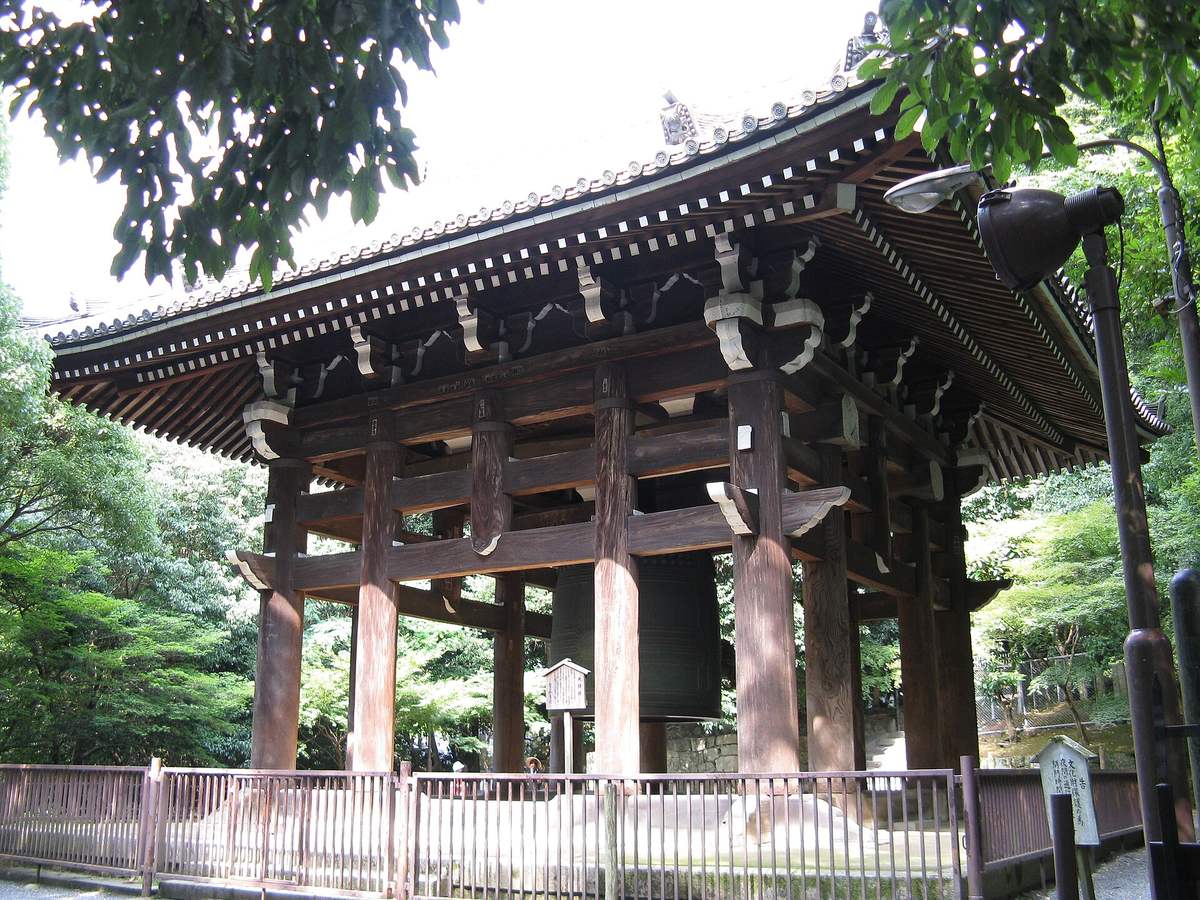
Chion-in produces the most recognisable New Year image in Japan. One lead ringer on the parent rope and sixteen monks on the child ropes, seventeen people in total, work the great bell to the calls of eei hitotsu and sore, with the lead ringer throwing his whole body backwards until he is almost horizontal. The temple's own wording is that the 108 strikes are rung using the whole body and carry across midnight into the new year. That much is standing description and does not change from year to year.
What has changed is everything about getting in.
The 2025-26 arrangements: paid and pre-booked
Here is what Chion-in published for December 31, 2025. The 2026-27 version has not been announced as of this guide's verification date; the temple typically posts the new page in early December, so read the table as a typical-year pattern rather than a booking guide.
| Item | 2025-26 season, as published |
|---|---|
| Rite inside the bell tower | from around 22:20 |
| Ringing begins | around 22:40 |
| Ends | around 00:35 |
| Who can attend | Advance application only, paid. Attendees watch only and do not ring |
| Online applications | From 14:00 on December 1, application form, telephone not accepted, first come, 4 sessions of 500 |
| Counter ticket sales | December 8 to 24, Yuzen-en reception, 9:00 to 16:00, cash only, 4 sessions of 100 |
| Price | 3,000 yen per person, free for elementary age and under |
| Free viewing | Official live stream only |
Kyoto City's tourism page carried a note that the online allocation had already reached capacity — this sells out. One thing I genuinely do not know and will not guess at: the official page says nothing about whether ticketless visitors can enter the grounds or watch from outside. Neither a yes nor a no is stated, so neither is stated here. Wait for the December page or follow on-site instruction.
Three useful things buried in the official notes
- Naked flames are strictly prohibited on the temple grounds because of the designated cultural properties there. This directly conflicts with okera mairi — you cannot carry a burning rope into Chion-in. If you plan to do both on the same night, work out the sequence and the point at which you extinguish the flame (see the okera mairi section).
- The grounds run one-way, and the temple asks you to use the toilet before entering the bell tower area. Once you are in the flow, there is no going back.
- Tripods, selfie sticks, drones, microphones and loudhailers are banned, as are flash photography and personal live streaming. Lower your photographic expectations accordingly: late at night, high ISO, handheld, no support.
- The temple also warns of a long wait in the cold. A late December night in Higashiyama, standing still for two hours, is not something to underdress for.
The free, close-up alternative: the December 27 rehearsal
This is the most useful thing in the guide and it is almost absent from English coverage.
Chion-in holds a tameshi-tsuki, a rehearsal ringing by the monks, in the days before New Year Eve. For the 2025 season the official time was 14:00 on December 27, and the temple stated plainly that no advance application is required. So: free, no booking, in daylight, photographable, using the same seventeen-person technique as the real thing.
If what you want is to see that backward-falling ringing style with your own eyes, go to the rehearsal and keep December 31 evening free for okera mairi. The rehearsal gives you the image; okera mairi gives you the thing no other city in Japan has.
⚠️ One flagged uncertainty: December 27, 2026 falls on a Sunday, and the temple has not announced whether the rehearsal stays on that date. Check the official page in early December.
For reference, the temple's standing information: grounds open 6:00 to 16:00 with individual receptions from 9:00; garden admission is ¥300 for Yuzen-en and ¥400 for the Hojo garden, or ¥500 for the combined ticket (¥250 for children). No special New Year opening hours are published, so do not assume the grounds stay open through the night.
Where you can actually ring the bell yourself
The previous section in one line: Chion-in is for watching, not for ringing. If you want to swing a beam into a temple bell yourself, you need a different address.
From the Kyoto City official tourism listing of joya no kane locations for 2025 (the 2025-26 season):
| Temple | Time | How ordinary visitors take part |
|---|---|---|
| Kodai-ji (Higashiyama) | from 23:45 on Dec 31 | Numbered tickets from 22:00, first 108 groups; one ticket per group, one strike |
| Tenryu-ji (Arashiyama) | from 23:45 | Numbered tickets from 23:45, first 108 groups |
| Chishaku-in (Higashiyama) | from 23:40, reception closes 00:40 | One strike per group |
| Eikando (Sakyo-ku) | 23:00 to 00:30 | Official wording: those queuing in that window get to ring |
| Chion-in | from 22:40 | Watching only, paid, advance application |
My recommendation is blunt. To watch the most spectacular version, Chion-in — if you win a ticket. To ring one yourself, Kodai-ji or Tenryu-ji. Kodai-ji and Chion-in are both in Higashiyama and walkable to each other, but the timings clash: Kodai-ji hands out tickets from 22:00 while Chion-in starts ringing at 22:40, so you have to choose. Tenryu-ji is in Arashiyama, a completely different part of the city, so choosing it means committing your whole evening to the west.
💡 Two corrections. First, Kiyomizu-dera does not hand out numbered tickets for its bell. The Kiyomizu-dera events page contains a single sentence on the subject — that bell ringing is by reservation — with no application period, quota, fee or spectator policy published, and that information typically appears only in December. The temples issuing numbered tickets are Kodai-ji and Tenryu-ji. Second, the Kyoto City listing does not publish fees for the four temples above, so no amounts are quoted here. All of this is 2025-26 data; the same page is refreshed each December.
Okera mairi: the real reason to be in Kyoto
If joya no kane is the sound of Kyoto New Year, okera mairi is the fire — and it is a living folk ritual that survives at Yasaka Shrine and effectively nowhere else.
The timeline below comes from the shrine's standing annual calendar, not a year-specific announcement, so these are fixed calendar dates you can plan around:
| Time | Rite | What happens |
|---|---|---|
| Dec 31, 15:00 | Oharae-shiki | Great purification, clearing six months of accumulated impurity |
| Dec 31, 19:00 | Joya-sai | Priests move the sacred flame from the inner sanctuary to three okera lanterns in the grounds |
| Dec 31 ~19:30 to Jan 1 ~05:00 | Okera mairi proper | Visitors take the flame and carry it home |
| Dec 31, 21:00 | Sea bream offering from Imamiya Ebisu | Visit from the affiliated shrine |
| Jan 1, 05:00 | Okera-sai | Closing rite, praying to avert illness and misfortune for the year |
| Jan 3, 09:00 | Hatsu-no offering | Kongo and Kanze school heads perform Okina and shimai |
| Jan 3, 13:00 | Karuta-hajime | Children and karuta-hime in Heian court dress play the hundred-poem cards |
| Jan 9 to 10 | Gion no Ebessan | Standing annual event |
What okera actually is
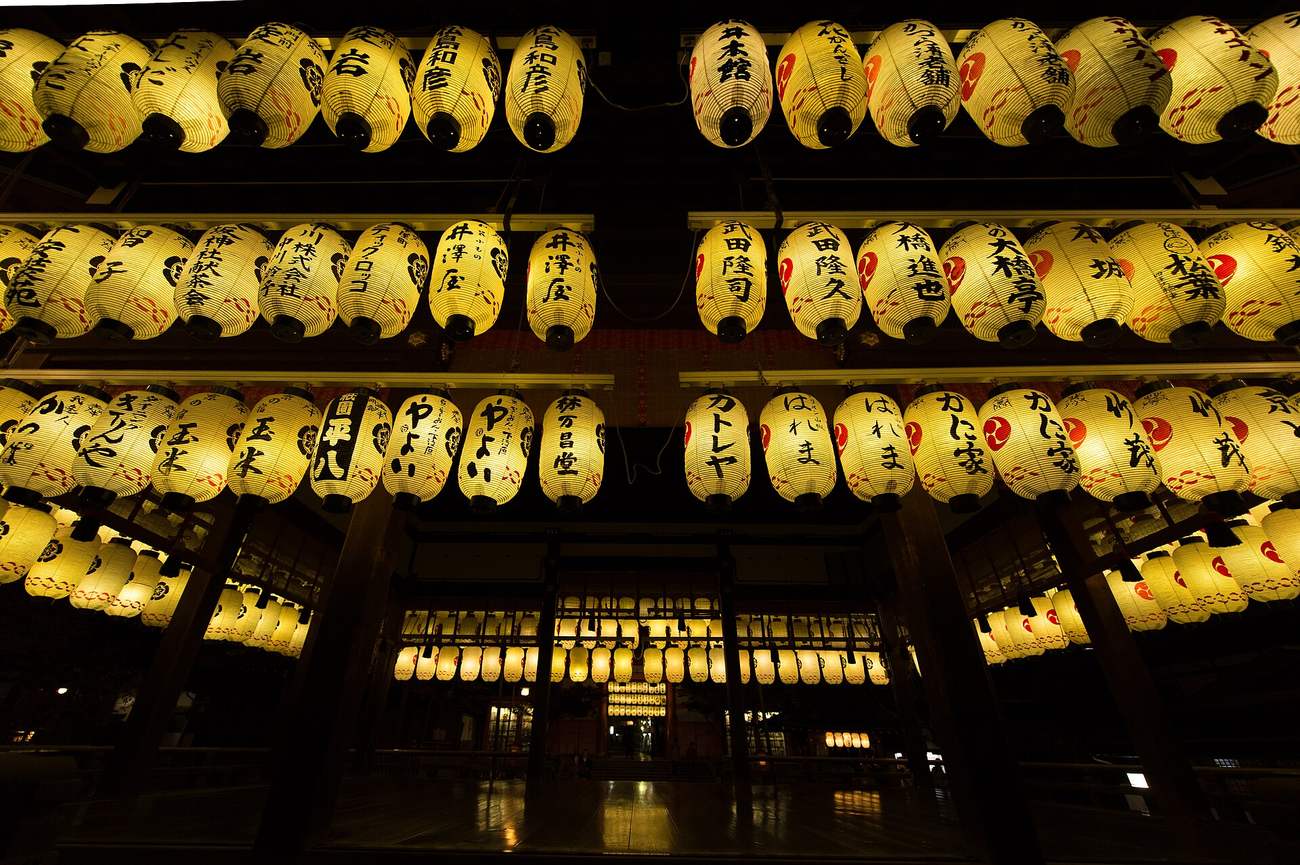
The shrine is specific. What burns in the lanterns is fragments of okera, together with okera wood inscribed by parishioners and worshippers with a year of prayers for freedom from illness.
Okera is Atractylodes, a plant in the daisy family. The shrine's explanation is that its dried root, when burned, gives off a powerful scent that drives away malign influences. Then comes the line I find most interesting: ordinary households did this too, up until the Edo period. This was not a shrine monopoly — it was a domestic New Year custom that survives now in one place. Standing in front of the lanterns knowing that changes what the smell means.
Carrying the rope home, and the question nobody answers
The mechanics are simple: light your rope, the kitcho-nawa, from the okera flame and carry it home, swinging it in circles so the flame does not die. That swinging motion is the signature image of the night.
Then comes the question every visitor asks: can you take a burning rope onto a train or bus?
The shrine publishes no rule about carrying the rope on any form of transport — neither permission nor prohibition. The shrine is explicit about how the rope is used today, and that answer settles it in practice:
- Historically: the flame was carried home to light the pot for New Year zoni stew, or the lamp on the household shelf, as a prayer for a year of good health.
- Today, in the shrine's own current wording: once the okera flame has been extinguished, the rope is displayed in the kitchen as a hibuse charm, a protection against fire.
So the visitor's correct move is clear: swing the rope in the grounds, confirm the flame is completely out, then pack it away and travel. That is not me imposing a rule — it is the shrine describing the extinguished rope as the current form of the custom. It also resolves the clash with Chion-in, which strictly prohibits naked flames on its grounds.
If you would rather not carry fire through a crowd at all, the shrine offers a ready-made kakebi-nawa for a stated offering of 1,000 yen, described officially as a rope onto which the okera sacred flame has been transferred, to be hung in the kitchen. It is the tidy version of the same thing.
📌 Basic shrine etiquette — the bow at the torii, the purification trough, two bows two claps one bow — is covered in the shrine etiquette guide rather than repeated here, and what changes specifically at New Year — arrows, returning last year's charms, whether hatsumode has a deadline — is in the hatsumode guide. The 2026-27 season details, meaning amulet counter hours and the New Year Eve traffic restrictions, are typically announced by the shrine only in December; as of this guide's verification date the official news list contained no year-end items at all.
Transport: nothing runs all night except Keihan
This is where most Kyoto New Year coverage gets it wrong, and where getting it wrong actually strands you. Kyoto has no safety net of extended late services the way Tokyo does — and in fairness, neither does Osaka, whose Metro has stated in writing two years running that it runs nothing overnight.
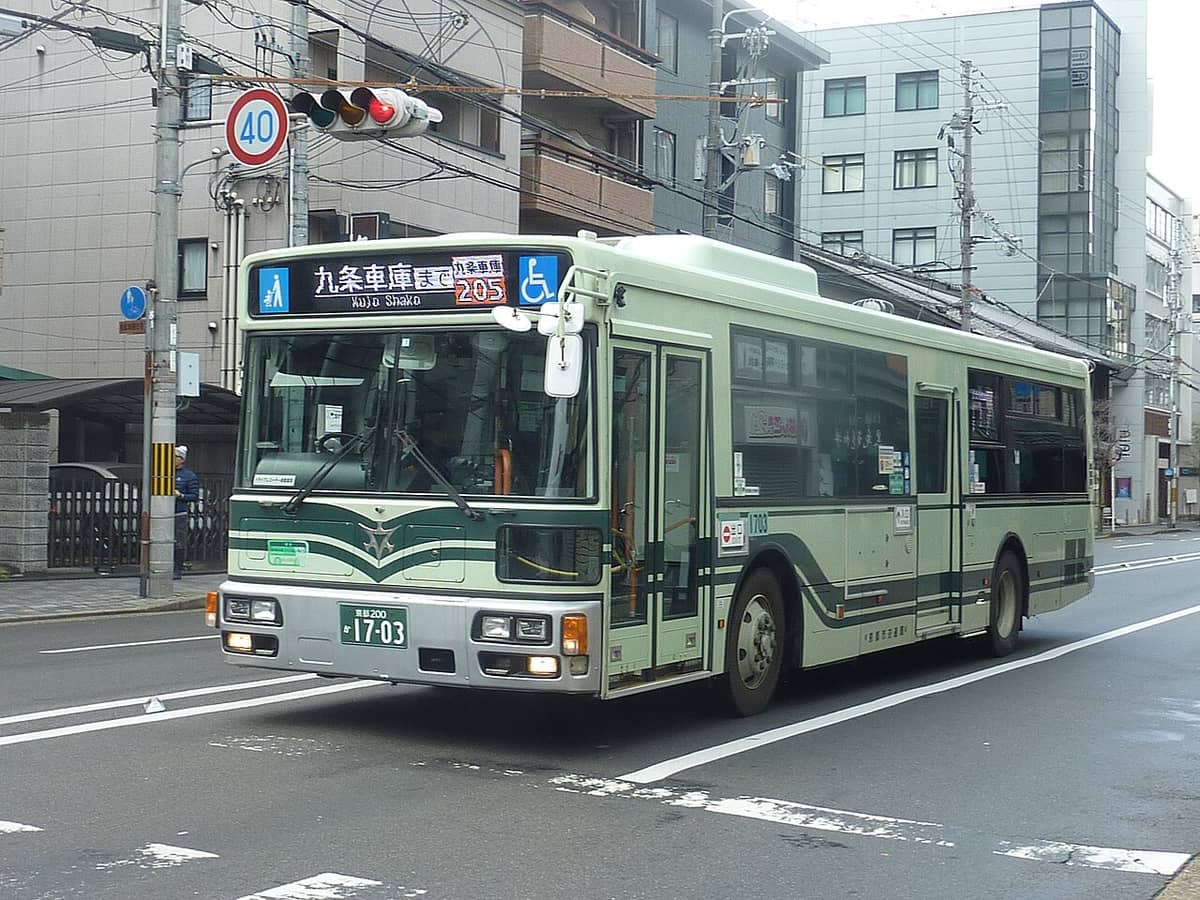
City buses and subway: officially, nothing extra
The Kyoto City Transportation Bureau notice of December 8, 2025 (the 2025-26 season) leaves no room for interpretation:
- City buses: holiday timetable from December 28 to January 4.
- Subway: Saturday-and-holiday timetable from December 27 to January 4.
- On New Year Eve there is no all-night operation of buses or subway, and no postponement of last service times.
- A detail worth knowing: January 3, 2027 is a Saturday but city buses run the holiday timetable, meaning even fewer services.
Translated into decisions: if you intend to be at Yasaka Shrine or Chion-in at midnight, municipal transport will not wait for you. Three workable answers — stay somewhere you can walk back from (Higashiyama, Gion, the Shijo-Kawaramachi area), take Keihan, or call a taxi and accept that you may not get one.
There is a bonus in the same notice. The sightseeing express buses, routes EX100 and EX101, which normally run only at weekends and on public holidays, operate daily from December 27 to January 4. They are the relief route toward Kiyomizu-dera and Ginkaku-ji. Since the subway-and-bus one-day pass covers them (see the Kyoto transport and pass comparison), the pass is arguably better value over New Year than in a normal week — ¥1,100 for adults, ¥550 for children. The official year-end notice mentions no restrictions on any travel pass, and there is no special New Year edition pass either; ignore claims in both directions.
Keihan: the only late-night rail in the city
Per the Keihan Electric Railway news release of December 11, 2025 (2025-26 season):
| Item | 2025-26 season, as published |
|---|---|
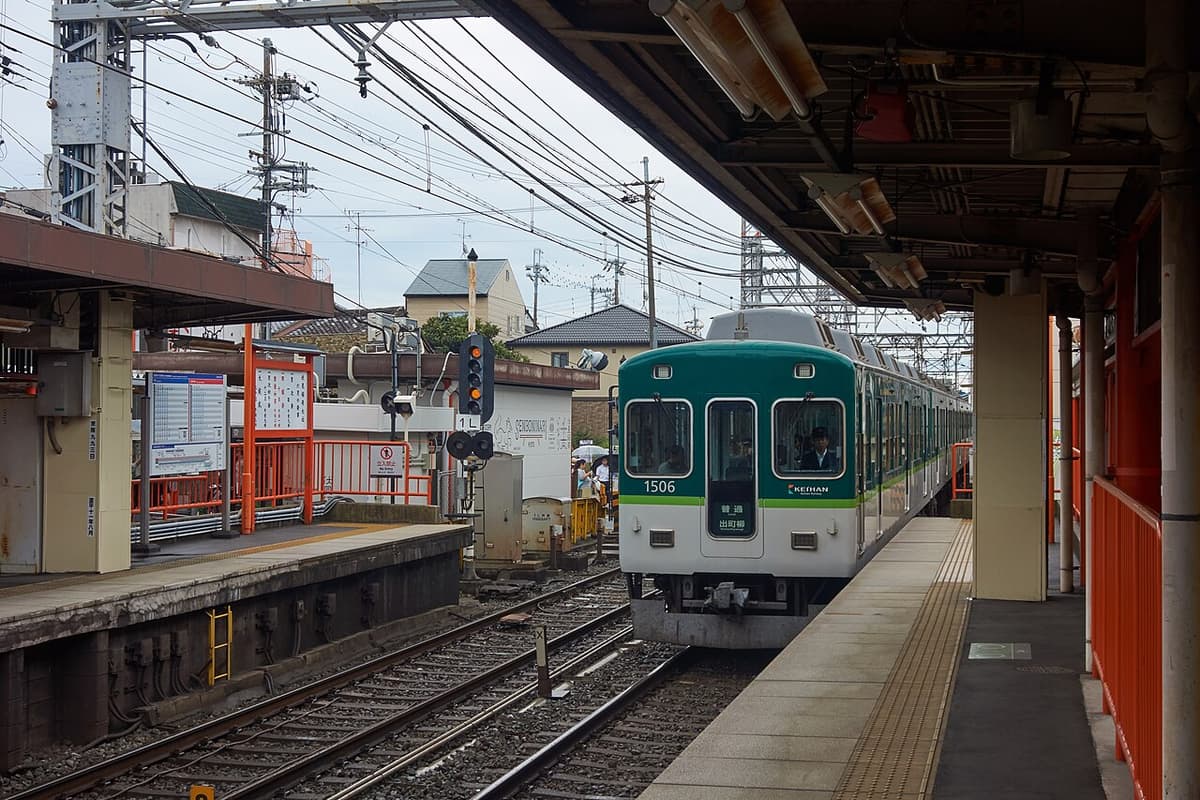
| New Year Eve timetable | 18:00 Dec 31 to 07:00 Jan 1; all-night service on the Keihan Main, Oto, Nakanoshima, Katano and Uji lines |
| Late-night frequency (Main / Oto) | Limited express from Yodoyabashi to the 23:00 hour at roughly 20-minute intervals; express from Yodoyabashi to the 01:00 hour and from Demachiyanagi to the 02:00 hour at roughly 20 to 30 minutes; semi-express or local every 15 to 30 minutes |
| Nakanoshima / Katano / Uji lines | Local trains roughly every 20 to 30 minutes in the 23:00 hour, every 30 to 40 minutes after midnight |
| Iwashimizu Hachimangu cable car | All-night, every 5 to 15 minutes |
| Otsu lines (Keishin, Ishiyama-Sakamoto) | No all-night operation, Saturday and holiday timetable |
| New Year timetable | 07:00 Jan 1 to Jan 3; daytime limited express, express and local roughly every 15 minutes |
| Rakuraku rapid limited express | Jan 1 to 3, non-stop between Kyobashi and Shichijo; 5 morning northbound, 4 afternoon southbound. Stops: Yodoyabashi, Kitahama, Temmabashi, Kyobashi, Shichijo, Gion-Shijo, Sanjo, Demachiyanagi (not Hirakatashi, Kuzuha, Chushojima or Tambabashi) |
One sentence: if you count down at Gion and need to get back to Osaka or southern Kyoto, the answer is Keihan Gion-Shijo. The station is a short walk west from the Yasaka Shrine gate along Shijo-dori, and it is the shortest, least risky exit from the busiest place in the city. Note the exception: the Otsu lines are not part of the all-night operation, so if you are staying in Otsu or heading into Shiga after midnight, that route is closed.
The other three operators: no times stated
- Hankyu Kyoto Line: in a typical year it does not run all night on New Year Eve, per the wording of its official FAQ. Getting from Kawaramachi back to Osaka after midnight means Keihan or a taxi. Check the Hankyu FAQ before you travel.
- JR West: in recent years it has not run all-night services, instead adding extra New Year Eve trains after the normal last service. Check its December release for the lines and times.
- Kintetsu: typically runs all night on most lines, but has cancelled it in at least one past year. Only superseded official PDFs were obtainable, so no times are given. Check the current-year notice.
Temporary bus rerouting on New Year Eve
Traffic restrictions operate around Yasaka Shrine on New Year Eve, and in a typical year city bus routes including 202, 206 and 207 are temporarily rerouted and skip stops around Gion, with the details announced in late December. The practical conclusion: do not build your New Year Eve on city buses.
Being able to check last services, congestion data and rerouted stops in real time is worth more on this one night than on any other of your trip — a Japan data eSIM is the usual answer, and the eSIM comparison guide covers how the main providers differ.
Where you sleep matters more than any pass in Kyoto over New Year. With municipal transport stopped by midnight, staying in Higashiyama, Gion or around Shijo-Kawaramachi means you can walk home; staying south of Kyoto Station or north of Kitaoji means depending entirely on Keihan or a taxi. This is also one of the tightest lodging weeks of the Kyoto year — compare Kyoto hotels for the New Year window on Trip.com to get a sense of pricing and remaining availability before deciding whether to commit now.
Choosing a hatsumode shrine in Kyoto
General hatsumode questions — what it is, when to go, what to do with omikuji and hamaya — belong in a dedicated guide. This section covers only what each Kyoto shrine specifically does.
Yasaka Shrine: the only one with published 24-hour access
The shrine's visitor page is unambiguous: worship is possible 24 hours a day, with the shrine office open 9:00 to 17:00 and prayer reception 9:00 to 16:00. Visiting at midnight has an official basis here rather than being a crowd habit. Combined with okera mairi running until around 05:00, Yasaka is the one place in Kyoto genuinely built for an all-night New Year. City bus 206 stops right outside at Gion — but as covered above, that bus is not a plan on this particular night. Use Keihan Gion-Shijo.
Heian Jingu: the most fully documented New Year schedule
Heian Jingu is the only shrine here with published day-by-day closing times. Its notice of December 16, 2025 for the 2025-26 season was headed all-night lanterns and hatsumode, and stated:
- The shrine opens through the night from New Year Eve and lights every lantern in the grounds.
- Extra amulet counters operate from January 1 to 5 under a special staffing arrangement.
- Closing times for that season: 19:00 on the 1st, 18:30 on the 2nd and 3rd, 17:30 on the 4th and 5th, 17:00 from the 6th — but 17:30 on all Saturdays, Sundays and public holidays in January.
The 2026-27 version has not been published; the shrine typically posts it in mid-December, so treat the above as the pattern. Standard hours are 6:00 opening with the garden reception from 8:30; from November to the end of February the shrine closes at 17:00 with garden reception ending 16:30. Garden admission is ¥600, open year round. Access is city bus to Okazaki-koen Bijutsukan Heian-jingu-mae then three minutes on foot, or Tozai subway line to Higashiyama then ten minutes — and the subway is the more dependable of the two over New Year, running a Saturday-and-holiday timetable from December 27.
Fushimi Inari: read this before you plan to drive
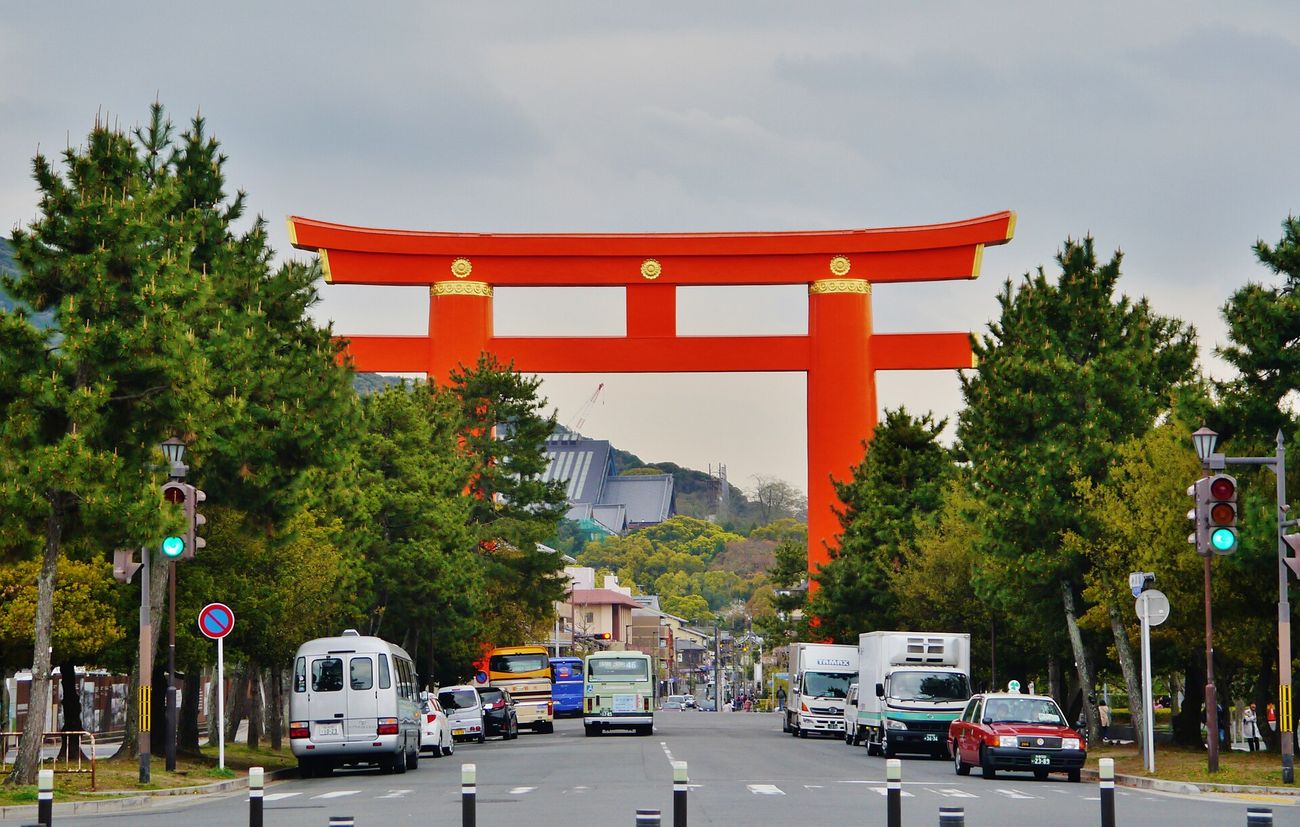
Fushimi Inari draws the heaviest international crowd and needs the most expectation management. The hardest official fact concerns parking: the shrine's access page states that the on-site car park is closed from December 30 to January 6, adding that surrounding roads become severely congested and asking visitors to use public transport. Driving to Fushimi Inari over New Year means nowhere to park. Do not gamble on it.
Take the train instead: JR Nara Line to Inari station, immediately outside the entrance and about five minutes from Kyoto Station, or Keihan Main Line to Fushimi-Inari, five minutes east on foot. Keihan is inside the all-night operation, while JR West in recent years adds extra New Year Eve trains rather than running through the night.
Two clarifications. First, the shrine does not publish 24-hour opening anywhere — neither the access page nor the front page publishes worship hours or opening times at all. What is true is that the approach is open, with no gates on the mountain path, but the amulet and goshuin counters do have set hours, and the trail above the Senbon Torii has no lighting after dark. Judge accordingly if you are thinking of climbing Inari-san at 02:00. Second, there are no official visitor numbers. The National Police Agency stopped publishing hatsumode attendance statistics in 2010, and the figures circulating online come from travel platforms with no official source. Fushimi Inari is among the most crowded shrines in Kyoto; that description is enough.
Kitano Tenmangu: the one for exam results
Kyoto City's tourism board lists Kitano Tenmangu as the representative shrine for academic success, which makes it the hatsumode destination for students and the families of students. Current published hours are the main gate 7:00 to 20:00, amulet counters 9:00 to 19:30, and prayer reception 9:00 to 16:00. No year-end arrangements have been announced as of this guide's verification date; check the official site in December.
Shimogamo and Kamigamo: the good stuff comes after January 3
The two Kamo shrines are worth knowing about precisely because their set pieces fall after the three-day crush:
- Shimogamo Shrine, kemari-hajime, January 4 — the courtly kickball game introduced in the Nara period and beloved of Heian aristocrats, performed by the Kyoto Kemari Preservation Society. There is paid special seating with reception from noon, but the price and capacity are not officially published, so no figure is given here.
- Kamigamo Shrine, hakuba-soran-shinji, January 7 — the white horse rite, listed on the shrine's own annual calendar.
- Kyoto City's tourism board lists Shimogamo as the representative shrine for warding off misfortune.
🚨 Shimogamo publishes no New Year hours: no opening or closing times for the year-end period appear anywhere on its official site. Kamigamo likewise does not publish opening hours; its office takes calls 8:30 to 17:00. If you need to arrive at a specific time, phone ahead.
Rokuharamitsu-ji and obukucha: the small one with the best story
If you want something in the first three days that is not wall-to-wall tourists, this is my pick. Rokuharamitsu-ji serves obukucha over the New Year days: tea brewed with the first water drawn on New Year morning, with a small pickled plum and a knotted strip of kelp, as a prayer for a year without illness.
The origin is vivid. During a Heian-period epidemic the monk Kuya distributed tea to the sick; Emperor Murakami drank it and recovered, so it became the tea the emperor drank — obukucha. Kyoto's familiar New Year ofukucha comes from the same root, which changes how the boxed version in every convenience store looks.
Per Kyoto City information for the 2026 edition (the 2025-26 season): January 1 to 3, 9:00 to 16:00, obukucha 500 yen, plus a Benzaiten auspicious first rice ear at 1,000 yen while stocks last. The 2027 edition has not been announced; the dates are fixed in a typical year but confirm the amounts against the official listing.
The 16-shrine goshuin circuit: how to skip the crush
If your dates do not fall on January 1 to 3, or you simply do not want to queue in a crowd, this section is the best answer in the guide.
The Kyoto Sixteen Shrines Goshuin Pilgrimage runs from New Year Day to February 15 — a month and a half. Which means the premise that hatsumode must happen in the first three days is not actually true: Kyoto operates its own official system for spreading New Year worship across six weeks. The rules (the 2026 edition is announced; the 2027 edition is not, though the period rules are fixed in a typical year):
| Item | Official detail |
|---|---|
| Period | January 1 to February 15 |
| Reception hours | 9:00 to 17:00 (Ichihime, Kyoto Kumano and Gokonomiya until 16:00) |
| Stamp fee | 300 yen per shrine |
| Dedicated stamp book | Free, available at all sixteen shrine offices during the period |
| Completion reward | Collect all sixteen and receive a zodiac figurine commemorating your New Year visit |
| Order | Free choice |
One thing to watch: the list of sixteen changes. From 2026, Imakumano Shrine left the circuit and Sugawara-in Tenmangu joined. Use the official list published each year, since the membership is revised. Kyoto City also lists a further six or so pilgrimage routes running January 1 to February 15, including the Seven Lucky Gods circuit.
How to choose a stamp book, what the customary offering is and the general etiquette of collecting are covered in the goshuin collecting guide; this section covers only the rules specific to this limited-period circuit. My practical view: if you arrive in Kyoto in mid-January, this is the most comfortable way to do hatsumode at all — crowds gone, book free, and the sixteen shrines scattered enough that you collect them along whatever sightseeing route you were walking anyway, rather than devoting a day to it.
There is a second thing that picks up in mid-January: Kyo no Fuyu no Tabi, the winter special opening programme run by Kyoto City and the tourism association, which opens normally closed temples and shrines under one set of rules. It does not begin on 1 January — the advertised campaign period and the actual viewing period are eight days apart, so anyone booking by the campaign banner sees nothing in the first week. Who runs which of the four annual windows, and why the prices differ, is covered in Kyoto special openings: two organisers, four windows.
What is open: the Nijo Castle trap and Kyoto's first sales
Nationwide year-end closure patterns — convenience stores, banks, ATMs, pharmacies, courier services — belong in a general guide, namely what's open in Japan over New Year. This section covers Kyoto-specific traps, and there are two that visitors reliably fall into.
Trap one: Nijo Castle hides its National Treasure for eight of nine days
From the official visitor information:
| Item | Official detail |
|---|---|
| Opening | 8:45 to 16:00 (grounds close 17:00) |
| Castle closed | December 29 to 31 |
| Ninomaru Palace viewing suspended | Every Tuesday in January, July, August and December, plus December 26 to 28 and January 1 to 3 |
| Honmaru Palace viewing suspended | Third Monday of each month and the following day, plus December 26 to 28 and January 1 to 3 |
Stack those and across the nine days from December 26 to January 3, there are eight on which the Ninomaru Palace cannot be seen — the National Treasure interior with its painted screens and nightingale floor. So:
- It is wrong to say Nijo Castle is closed over New Year — January 1 to 3 it is open.
- It is equally wrong to say it operates normally — December 29 to 31 it is shut entirely, and on the three days it does open you get in but see only gardens.
- The correct answer: if the palace matters, schedule Nijo Castle for January 4 or later.
Admission: general entry ¥800, entry plus Ninomaru Palace ¥1,300, junior and senior high school students ¥400, elementary students ¥300, and the Honmaru Palace (reservation required) ¥1,000. On January 1 to 3 there is no point buying the combined ticket, since the palace is closed.
Everything else: Kinkaku-ji is the dependable one
| Site | Year-end and New Year | Hours and admission |
|---|---|---|
| Kinkaku-ji | No closing days (stated by Kyoto City) | 9:00 to 17:00 (last entry); ¥500, children ¥300 |
| Kiyomizu-dera | ⚠️ No closing days published; no New Year hours published at all | Standard 6:00 opening to 18:00 (18:30 in July and August); ¥500, children ¥200. Amulet and goshuin counters from around 8:00 |
| Chion-in | ⚠️ No closing days published | Grounds 6:00 to 16:00 (receptions from 9:00); combined garden ticket ¥500, children ¥250 |
| Heian Jingu | Open year round plus all-night opening from New Year Eve | Garden ¥600 |
| Nijo Castle | Closed Dec 29 to 31; open Jan 1 to 3 with palaces shut | Entry ¥800; 8:45 to 16:00 |
🚨 The Kiyomizu-dera gap, stated plainly: the temple publishes nothing about special year-end hours — not whether it opens through New Year Eve night, not what time it opens on January 1. So this guide makes no claim that Kiyomizu-dera stays open overnight or opens at any particular hour on January 1. The only publishable fact is the standard 6:00 opening. If you plan to go on the night, follow the temple's own news page or on-site notices.
Trap two: Kyoto's first sales start January 3, a day after Tokyo
The Daimaru Kyoto opening-hours page states that the main building and surrounding stores trade every day except New Year Day and January 2.
Read that carefully: Daimaru Kyoto is closed on both January 1 and January 2, and reopens on January 3. Most major department stores in the Tokyo area open for first sales on January 2. So Kyoto runs a day behind. If fukubukuro are on your list, put Kyoto's first sales on January 3 rather than copying a Tokyo schedule.
Some brands issue same-day numbered tickets for fukubukuro, with the rules set store by store — check the store's own page before you queue.
Nishiki Market: the one official rule over New Year
Nishiki Market is Kyoto's kitchen: 390 metres long, four centuries of history, and a direct connection to the painter Ito Jakuchu, whose family ran a greengrocery wholesaler in the market. That background makes walking it a different experience.
On New Year hours: the market association's official site publishes no opening hours, no closing days and no year-end notice. What is documented: the end of December is the market's busiest stretch as Kyoto households buy for New Year, individual shops set their own hours, and some close over the New Year days. The market does provide congestion forecasting and a live camera, which is the practical thing to check before you set out.
One rule to follow: the market officially asks visitors not to eat while walking, and to eat in front of or inside the shop you bought from. In a market this crowded at year end, that matters more than usual.
First sunrise: can you see it in Kyoto?
The number first: per the National Astronomical Observatory of Japan, sunrise in Kyoto on January 1, 2027 is at 07:05 and sunset at 16:56.
But Kyoto is not a place to watch the first sunrise, for three reasons:
- The terrain is against you. Kyoto sits in a basin ringed by mountains on three sides, with the Higashiyama range immediately east of the centre. Astronomical sunrise is 07:05, but the sun clearing the ridge takes noticeably longer, and there is no sea horizon to give you the image people have in mind.
- There is no official provision for it. Kyoto city has no officially designated first-sunrise viewpoint. The Kyoto City tourism board's year-end feature covers joya no kane, hatsumode, pilgrimage circuits and New Year food, with no hatsuhinode section at all — the opposite of Okinawa or Tokyo, where official sunrise events exist.
- The hilltop spots circulating online have no official basis, and climbing unlit trails before dawn carries a genuine safety cost.
My call: the value of Kyoto New Year is the fire and the bell at midnight, not the sunrise. If you want a first sunrise, that is a different trip — coastal or upland — not something to force into a Kyoto morning.
There is a better picture with an official basis, and it is at the other end of the day. Sunset on January 1 is 16:56, and per the 2025-26 notice Heian Jingu stays open until 19:00 on January 1 with every lantern in the grounds lit. Heian Jingu after 17:00 on New Year Day — sky just gone dark, lanterns all burning, crowds thinner than at midnight — is a far better bet than gambling on a sunrise the geography does not support. It is how I would end January 1.
What to lock in now, and the December check-back list
Here is what to do now versus what only becomes knowable in December.
Lock in now
- Accommodation, and location over price. This is the only genuinely now-or-never item. Because municipal transport stops at midnight, the location of your hotel is the feasibility of your itinerary: Higashiyama, Gion or Shijo-Kawaramachi means you can walk home; south of Kyoto Station or north of Kitaoji means depending entirely on Keihan or a taxi. It is also one of the tightest weeks in the Kyoto lodging year.
- Decide which kind of joya no kane you want, now. Watching Chion-in means chasing the 14:00 December 1 online release or the December 8 to 24 counter sales. Ringing one yourself means queuing at Kodai-ji from 22:00 or Tenryu-ji from 23:45 on the night. The two are mutually exclusive on the same evening, and the choice determines which side of the city you should sleep on.
- If you only want the image, book December 27 into your trip — the rehearsal ringing is free and needs no application. Highest value per unit of effort.
- Sequence the week: shrines during January 1 to 3, temples and Nijo Castle from January 4. That single rule prevents most of the wasted journeys.
Only knowable in December — set a reminder
| Item | Typical publication | Where |
|---|---|---|
| Chion-in joya no kane 2026-27 process and application date | Early December (applications typically Dec 1, 14:00) | Chion-in official joya no kane page |
| Chion-in rehearsal date (whether Dec 27 holds) | Early December | Same page |
| Kyoto city joya no kane listing (ticket systems by temple) | December | Kyoto City official tourism site |
| Yasaka Shrine New Year counter hours and traffic restrictions | December | Yasaka Shrine news |
| Kyoto City bus and subway New Year timetable | Early December | Transportation Bureau site |
| Keihan New Year Eve and New Year timetables | Early to mid December | Keihan press releases |
| Hankyu, JR West and Kintetsu New Year operations | December | Each operator's notices and FAQ |
| New Year Eve bus rerouting around Gion | Late December | Transportation Bureau site |
| Heian Jingu 2027 New Year opening times | Mid December | Heian Jingu notices |
| Sixteen-shrine circuit 2027 edition (membership changes) | December | Circuit official site |
| Kiyomizu-dera bell reservation process | December | Kiyomizu-dera events page |
| Rokuharamitsu-ji obukucha 2027 | December | Kyoto City tourism site |
How I would run the four days
- Dec 30 Arrive, ease into the city. Nishiki Market is at its most seasonal now, though hours are shop-by-shop, so check the congestion feed first. Sleep in Higashiyama, Gion or Shijo-Kawaramachi.
- Dec 31, daytime Temples — but note Nijo Castle is shut today. Kinkaku-ji has no closing days and is the safe choice. Back to the hotel to sleep in the afternoon; the evening is the main event.
- Dec 31, evening 19:00 joya-sai at Yasaka Shrine, okera mairi from 19:30 (swing the rope, confirm the flame is out, then pack it), midnight worship at Yasaka, which publishes 24-hour access. If you want to ring a bell, be at Kodai-ji from 22:00 for a numbered ticket — the two sites are walkable. Go home via Keihan Gion-Shijo, not the bus.
- Jan 1 Sleep in. Skip the sunrise; the basin does not deliver one. Daytime at Fushimi Inari (by train — the car park is closed Dec 30 to Jan 6) or Kitano Tenmangu, then Heian Jingu after 17:00 with every lantern lit, which is the best photograph of the day.
- Jan 2 to 3 A leg of the sixteen-shrine circuit (no rush, it runs to February 15) or obukucha at Rokuharamitsu-ji (Jan 1 to 3, 9:00 to 16:00). Daimaru Kyoto opens January 3 — that is Kyoto's first sales day. Leave Nijo Castle and the Shimogamo kemari for January 4 onward.
Kyoto is not a countdown-party destination. No street closures for a countdown, no official fireworks, and municipal transport stopping at midnight. On pure spectacle it loses to Tokyo, and it is a completely different proposition from, say, the Okinawa New Year version of the same holiday. Its value is elsewhere: at 19:30 you can stand in front of a lantern at Yasaka Shrine and carry away a flame that ordinary households were lighting in the Edo period; at 22:40, on the other side of Higashiyama, seventeen people are swinging a beam into a bell that will still be ringing when the year changes. Nowhere else in Japan gives you both on the same night. If that is what you came for, Kyoto over New Year is absolutely worth the trip — you just have to do two things other cities do not require: come back in December to re-check the official notices, and book a bed you can walk home to.
For fitting these days into a wider Kansai trip — how to split time with Osaka, whether Nara is worth a day, which rail passes make sense — see the Kansai five-day itinerary. And if you want to see what the same temples look like in a different season, the Kyoto autumn foliage guide covers Eikando and Tenryu-ji — the same two on the bell-ringing list above.
Frequently Asked Questions
- Q1:Can you watch the joya no kane at Chion-in for free, and how do you get in?
- Based on the officially published arrangements for the 2025-26 season, watching Chion-in ring its great bell is a paid, advance-application-only event: 3,000 yen per person, free for elementary school children and younger, and attendees watch only, they do not ring. There are two routes in. Online applications opened at 14:00 on December 1 on a first-come basis through the temple application form, with four sessions of 500 people each, and the temple states explicitly that telephone applications are not accepted. Separately, physical viewing tickets were sold from December 8 to 24 at the Yuzen-en reception inside Chion-in, 9:00 to 16:00, cash only, four sessions of 100 tickets each. Kyoto City official tourism pages noted that the online allocation had already filled, so treat this as something that sells out fast. The only free way to watch is the temple official live stream. Whether ticketless visitors can enter the grounds or see anything from outside is not addressed anywhere on the official page. All of the above is the 2025-26 season; the 2026-27 arrangements are typically published in early December.
- Q2:Is there any way to see the Chion-in bell up close for free?
- Yes. Chion-in holds a tameshi-tsuki, a rehearsal ringing, in the days before New Year Eve. For the 2025 season the official page gave the time as 14:00 on December 27 and stated plainly that no advance application is required. That means free, no booking, in daylight, with enough light to actually photograph it, using the same technique as the real thing: one lead ringer on the parent rope plus sixteen monks on the child ropes, seventeen people in total. If you are in Kyoto in late December, or you missed out on the paid tickets, this beats the New Year Eve session on almost every practical measure. Two caveats. December 27, 2026 falls on a Sunday and the temple has not yet confirmed whether the rehearsal stays on that date. And a rehearsal is not the full 108-strike ceremony that crosses midnight. Check the Chion-in official page in early December.
- Q3:Do Kyoto trains and buses run all night on New Year Eve, and how do you get back from Gion at midnight?
- The answer runs against most travellers instincts. The Kyoto City Transportation Bureau notice published on December 8, 2025 states outright that on New Year Eve there is no all-night operation of city buses or the subway and no extension of last-train and last-bus times. The rest of that notice: city buses run a holiday timetable from December 28 to January 4, the subway runs a Saturday-and-holiday timetable from December 27 to January 4, and city buses run a holiday timetable on January 3 even though it is a Saturday. So when you finish counting down at Yasaka Shrine at midnight, municipal transport has already stopped. The workable answer is Keihan. Per its official release dated December 11, 2025, Keihan ran a New Year Eve timetable from 18:00 on December 31 to 07:00 on January 1 with all-night service across the Keihan Main, Oto, Nakanoshima, Katano and Uji lines, plus all-night running on the Iwashimizu Hachimangu cable car. The Otsu lines, meaning the Keishin and Ishiyama-Sakamoto lines, explicitly did not run all night. Gion-Shijo station sits at the bottom of the street below Yasaka Shrine, which makes it the reliable way out. For the other operators: Hankyu Kyoto Line does not run all night in a typical year, JR West in recent years runs extra New Year Eve services rather than all-night operation, and Kintetsu typically runs all night on most lines but has cancelled it in at least one past year. Everything above is the 2025-26 season; operators publish the new versions in early to mid December.
- Q4:Which Kyoto temples actually let you ring the New Year bell yourself?
- This is what most people actually want, and it is not Chion-in. According to the Kyoto City official tourism listing of joya no kane locations for 2025, the temples where ordinary visitors can ring are these. Kodai-ji in Higashiyama begins at 23:45 on December 31 and distributes numbered tickets from 22:00 on a first-come basis to 108 groups, one strike per group. Tenryu-ji in Arashiyama also caps at 108 groups, with numbered tickets from 23:45. Chishaku-in in Higashiyama starts at 23:40 with reception closing at 00:40, one strike per group. Eikando in Sakyo-ku states that anyone queuing between 23:00 and 00:30 gets to ring. So the numbered-ticket system belongs to Kodai-ji and Tenryu-ji. Kiyomizu-dera does not issue numbered tickets: its official events page says only that bell ringing is by reservation, with no published application period, quota, fee or spectator policy, and that information typically appears only in December. Do not turn up expecting to queue and ring there. Note also that the Kyoto City listing does not publish fees for the four temples above. All of the above is 2025-26 data and Kyoto City refreshes the same page each December.
- Q5:What is okera mairi at Yasaka Shrine, and can you take the burning rope onto a train?
- Okera mairi is the sacred-fire ritual at Yasaka Shrine and it is the genuinely irreplaceable part of Kyoto New Year. The official annual calendar gives the sequence: the great purification rite at 15:00 on December 31, the joya-sai at 19:00 when priests move the sacred flame from the inner sanctuary to three okera lanterns in the grounds, okera mairi itself from around 19:30 through to about 05:00 on New Year morning, and the Okera-sai closing rite at 05:00 on January 1. What burns in the lanterns is fragments of okera, plus okera wood inscribed by parishioners with a year of prayers for good health. Okera is Atractylodes, a plant in the daisy family; the shrine explains that its dried root gives off a powerful scent when burned and drives away malign influences, and adds that ordinary households did this too up until the Edo period. Visitors light a rope, the kitcho-nawa, from the sacred flame and carry it home, swinging it in circles so the flame does not go out. On the train question: the shrine publishes no rule about carrying the rope on any form of transport, in either direction. What the shrine does state is how the rope is used today, and that answers the question by itself. Historically the flame was carried home to light the New Year zoni stew or a household lamp. Today the official wording is that the rope, once the flame has been extinguished, is displayed in the kitchen as a hibuse charm against fire. So the sensible visitor approach is to swing the rope in the grounds, confirm the flame is fully out, and then pack it away before travelling. There is also a ready-made kakebi-nawa available at the shrine for a stated offering of 1,000 yen.
- Q6:Is Nijo Castle open over New Year, and when do Kyoto department stores start their New Year sales?
- Both have clear official answers and both surprise people. Nijo Castle is the biggest itinerary trap in Kyoto over this period. The official visitor information states that the castle is closed entirely from December 29 to 31. On January 1 to 3 the castle is open, but viewing of both the Ninomaru Palace and the Honmaru Palace is suspended, and the same suspension also applies from December 26 to 28. Stack those together and across the nine days from December 26 to January 3 there are eight on which you cannot see the Ninomaru Palace, which is the National Treasure interior with the painted sliding screens and the nightingale floor. On the three days the castle is open you are effectively paying to walk the gardens. If seeing the palace matters, schedule it for January 4 or later. On department stores, Kyoto runs a day behind Tokyo. The Daimaru Kyoto official opening-hours page states that the main building and surrounding stores trade every day except New Year Day and January 2. Both January 1 and January 2 are closed and the store reopens on January 3, whereas most major Tokyo department stores start their New Year sales on January 2. If fukubukuro lucky bags are on your list, put Kyoto first sales on January 3. Nishiki Market publishes no opening hours, closing days or New Year notice at all on its official site, so no specific times are given for it either.
- Q7:Is Kyoto a good place to watch the first sunrise of the year?
- No. The National Astronomical Observatory of Japan gives sunrise in Kyoto on January 1, 2027 at 07:05 and sunset at 16:56. But Kyoto sits in a basin ringed by mountains on three sides, with the Higashiyama range immediately east of the city centre. The astronomical sunrise time is 07:05, but the sun actually clearing the ridge takes longer, and there is no sea horizon to give you the picture people imagine. More decisively, Kyoto city has no officially designated or officially supported first-sunrise viewing site. The Kyoto City tourism board year-end feature covers joya no kane, hatsumode, pilgrimage routes and New Year food, with no hatsuhinode section at all, which is the opposite of the situation in Okinawa or Tokyo. The hilltop viewpoints that circulate online have no official basis, and hiking up an unlit trail in the dark carries a real safety cost. The value of Kyoto New Year is the fire and the bell around midnight, not the sunrise. If you do want a photograph on January 1, the better bet has an official basis: sunset is at 16:56, and per the 2025-26 season notice Heian Jingu stays open until 19:00 on January 1 with every lantern in the grounds lit. Late afternoon at Heian Jingu beats gambling on a sunrise the terrain does not support.
Read next
Getting Around Kyoto 2026: Buses, Subway & Passes
Kyoto transport is a notorious headache — buses are slow and jammed. The ¥700 bus pass is gone, so what now? Which mode wins for each route, whether the 2024 sightseeing express buses and the day pass pay off, worked out for you.
Osaka & Kyoto 5-day itinerary
Dotonbori, Kiyomizu, Arashiyama — full tested route.
Goshuin Guide: Collecting Japan Shrine Stamps
How to start collecting goshuin: books, etiquette, fees, and a first-timer route.
📊 See the 2026 Price Index (JR Pass, DPA, eSIM, Airport Transport) →