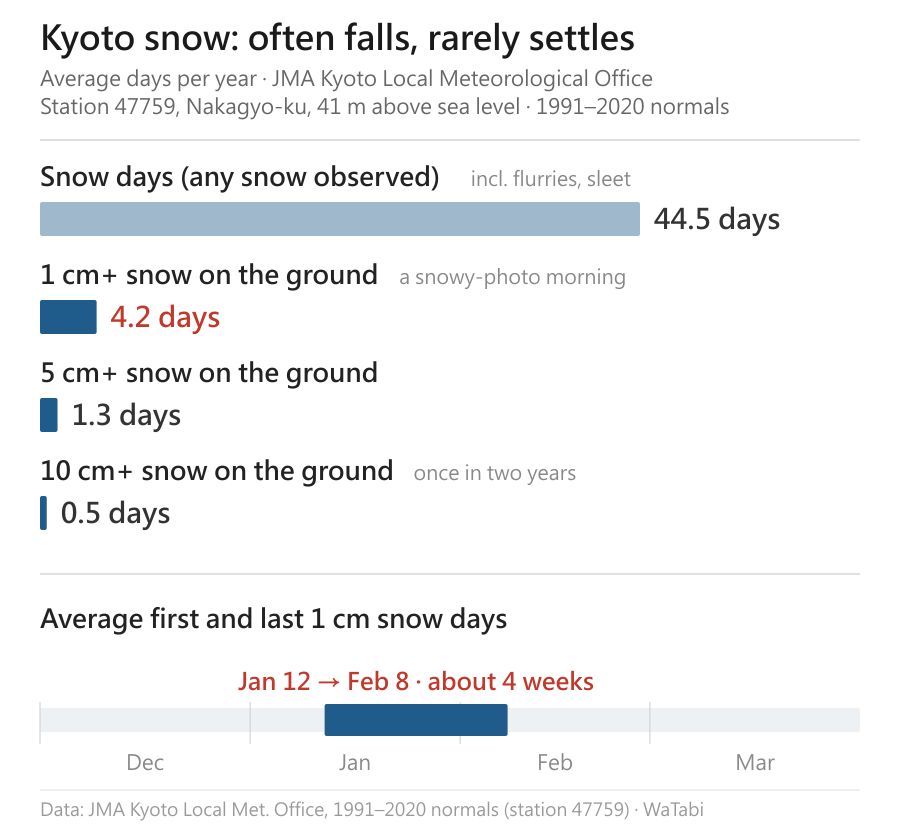
Kyoto records snow on 44.5 days a year, but the ground actually collects 1 cm or more on only 4.2 days. In an average winter the first 1 cm day is January 12 and the last is February 8, a window of under four weeks; December and March do get some, but together they add up to less than one day a year. This guide lays out the month-by-month and ten-day snow figures, the swings over the last 12 winters, and the gap between the city and the mountains, then tells you what number to check the day before, how long the snow will last, and whether the trains will run. On Japan Meteorological Agency (JMA) tables, a "snow day" counts any day snow is observed, including flurries and sleet; "maximum snow depth" means the deepest the snow got on the ground that day.
- Seeing snowflakes is easy, seeing snow on the ground is hard: 44.5 snow days a year, but only 4.2 days with 1 cm on the ground, 1.3 with 5 cm and 0.5 with 10 cm
- If you are betting, bet on mid-January to mid-February: average snowfall peaks in early February, and in 5 of the last 12 winters the deepest day fell in late January
- January has the most flurries, February the most snow cover: 16.3 snow days in January, while February has 50% more days with snow on the ground
- Good and bad years differ tenfold: in 4 of the last 12 winters, the deepest snow all season was 1 cm
- Ohara and Kibune have no official snow measurements; in Kyoto Prefecture only central Kyoto, Miyama and Maizuru do (15 / 179 / 135 cm of snow a year)
- How long snow lasts depends on the day's high: on a 1.3°C day 5 cm remained by evening; on a 6.0°C day it was gone by noon
- 7 cm in the city can paralyze the railways, so do not plan long JR trips on a snowy evening
Is it worth staying an extra day in Kyoto for snow?
Worth having as a backup plan, not worth building a fixed date around. Kyoto gets settled snow on about four days a year, and some winters only once; plan a whole trip on "it will be white that day" and you will be disappointed eight times out of ten. On the other hand, mid-January to early February is already Kyoto's quietest, cheapest stretch for hotels, so you lose little if it does not snow.
Good fit
- Your trip already falls between mid-January and mid-February, and you are deciding whether to keep a morning free for snow
- You are staying in central Kyoto and happy to look out the window before deciding the day's plan
- Photographers willing to prepare two routes for one chance
You can skip it if
- You can only come in December: average snowfall in early and mid-December is zero
- You have two or three fully booked days: you need the flexibility to change plans when snow arrives
- You want snow up to your shins: that means Hokuriku, Tohoku or Hokkaido; for snow underfoot on a day trip from Kyoto, the nearest option is Biwako Valley ski resort
- You are traveling with older relatives or a stroller: stone steps and slopes are slippery on snow days, which is exactly when to stay out of the hills
Kyoto snow: the basic numbers
Everything in this guide builds on this table: 30-year normals (1991–2020) from the Kyoto Local Meteorological Office. The station is in Nakagyo Ward at 41 m elevation, right in the city center at the same height as your hotel.
| Station | Kyoto Local Meteorological Office (Nakagyo Ward, 41 m) |
|---|---|
| Period | 1991–2020, 30-year average |
| Average first snow | December 11 |
| Average last snow | March 23 |
| First / last day with ≥1 cm on the ground | January 12 / February 8 |
| Snow days per year | 44.5 |
| Days per year with ≥1 cm on the ground | 4.2 |
| Total snowfall per year | 15 cm |
| Maximum snow depth per year | 7 cm |
| Coldest ten-day periods | Late January (average daily low 1.1°C), early February (1.0°C) |
| Record snow depth | 41 cm (January 26, 1954, records since 1886) |
For first-snow dates and snowfall rankings across Japan, see when the first snow falls around Japan; Kyoto is in the later group.
How often does Kyoto get snow that settles?
You will often see snowflakes, but the ground stays white on only 4.2 days a year. "Snowing in Kyoto" and "snow on the ground in Kyoto" are two different things, and the photo you want belongs to the second.
| Snow on the ground | Days per year | In practice |
|---|---|---|
| 1 cm or more | 4.2 | Four mornings a year |
| 5 cm or more | 1.3 | A little over once a year |
| 10 cm or more | 0.5 | Once every two years |
| 20 cm or more | 0.1 | Once a decade |
And the average is misleading, because Kyoto alternates between big and small snow years. The last 12 winters show it (each winter is labeled by the year it ends, August to July):
| Winter | Total snowfall | Deepest snow | On | Days ≥1 cm |
|---|---|---|---|---|
| 2015 | 45 cm | 22 cm | 1/3 | 9 |
| 2016 | 7 | 4 | 1/20 | 3 |
| 2017 | 24 | 14 | 1/15 | 6 |
| 2018 | 1 | 1 | 1/25 | 1 |
| 2019 | 7 | 7 | 1/27 | 2 |
| 2020 | 1 | 1 | 2/18 | 1 |
| 2021 | 2 | 1 | 12/31 | 2 |
| 2022 | 28 | 14 | 1/21 | 8 |
| 2023 | 22 | 15 | 1/24 | 7 |
| 2024 | 1 | 1 | 1/25 | 1 |
| 2025 | 12 | 8 | 2/8 | 4 |
| 2026 | 11 | 7 | 2/8 | 2 |
In four of these twelve winters the deepest snow all season was 1 cm, while two winters had more than seven mornings of settled snow. That is what the "probability" really looks like: not roughly the same every year, but a tenfold swing. The last truly big snow was 22 cm on January 3, 2015, the deepest since 1936; only the 41 cm of January 26, 1954 beats it. The other extreme is just as stark: January 2026 had 0.0 mm of precipitation, the driest month since records began in 1880, with no settled snow at all.
January or February: which is better for snow?
Pick January for falling snow and February for snow on the ground. In Kyoto these are separate things, and most people want the second.
| Month | Snow days | Days ≥1 cm on ground | Total snowfall | Deepest snow |
|---|---|---|---|---|
| December | 6.9 | 0.7 | 2 cm | 2 cm |
| January | 16.3 | 1.3 | 5 cm | 3 cm |
| February | 14.2 | 2.0 | 7 cm | 4 cm |
| March | 6.8 | 0.2 | 1 cm | 1 cm |
Snow falls on more than half the days in January, but it is not yet cold enough to stick; February has slightly fewer snow days but 50% more days with snow on the ground. Splitting the months into ten-day periods makes the pattern clearer.
| Period | Total snowfall | Deepest snow |
|---|---|---|
| Late December | 2 cm | 2 cm |
| Early January | 1 | 1 |
| Mid-January | 1 | 1 |
| Late January | 2 | 1 |
| Early February | 3 | 2 |
| Mid-February | 2 | 2 |
| Late February | 1 | 1 |
| Early March | 1 | 1 |
If you can choose your dates, choose mid-January to mid-February, and narrow it to late January and early February if you can. Average snowfall peaks in early February, but that is a 30-year average; in the 12-winter table above, the season's deepest day fell in January 8 times, 5 of them in late January, and in early February twice. Late January and early February are also Kyoto's two coldest ten-day periods, with average daily lows of 1.1°C and 1.0°C, and cold is what lets snow stay.
Do not expect snow in December. Average snowfall is zero in early and mid-December and only 2 cm in late December. Kyoto's average first snow is December 11, but that means flakes in the air, not a white ground.
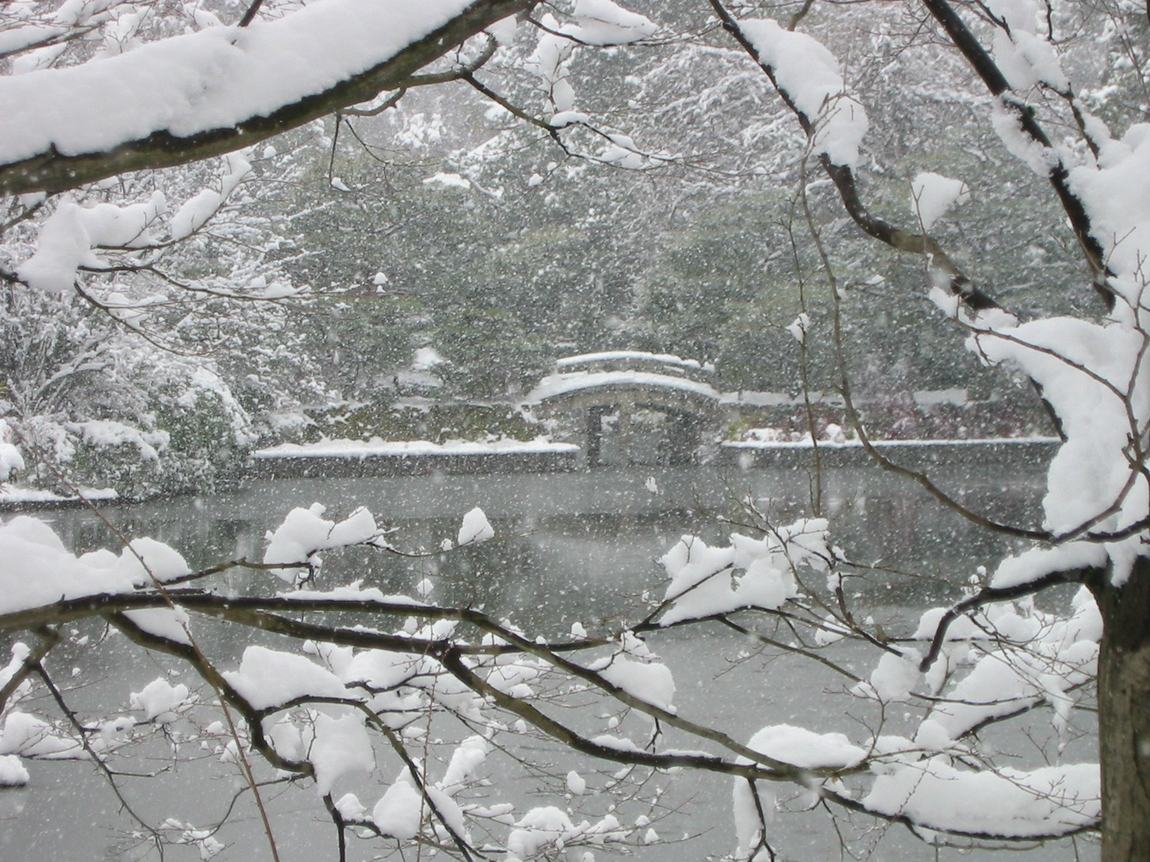
Is there really more snow in the mountains?
Yes, so much so that the official heavy-snow advisory thresholds are set separately. But first, one thing that changes how you look up data: only three places in Kyoto Prefecture measure snow depth.
| Station | Location | Elevation | Annual snowfall | Deepest snow | Days ≥5 cm | Days ≥10 cm |
|---|---|---|---|---|---|---|
| Kyoto | Nakagyo Ward, Kyoto | 41 m | 15 cm | 7 cm | 1.3 | 0.5 |
| Miyama | Miyama, Nantan | 200 m | 179 cm | 34 cm | 22.0 | 15.1 |
| Maizuru | Northern Kyoto Prefecture | 2 m | 135 cm | 33 cm | 19.0 | 12.6 |
Drive 80 minutes north from central Kyoto to Miyama and annual snowfall is 12 times higher, with 30 times as many days of 10 cm or more. Note that Maizuru sits at just 2 m: what decides snow in Kyoto Prefecture is not altitude but whether you face the Sea of Japan.
Even within Kyoto city there are two standards. These are JMA's heavy-snow advisory and warning thresholds for Kyoto city:
| Trigger | Lowlands | Mountains |
|---|---|---|
| Heavy snow advisory | 5 cm in 12 hours | 20 cm in 12 hours |
| Heavy snow warning | 15 cm in 12 hours | 45 cm in 12 hours |
The mountain threshold is three times the lowland one; the same city has two kinds of winter.
Ohara and Kibune, though, have no official snow measurements. Both are only 40 minutes from the center, yet neither is on JMA's snow-depth list, and nor are Kurama, Keihoku or Hanase Pass. So "how many days of snow does Ohara get" has no official answer; for current conditions there, use the live tools in the next section.
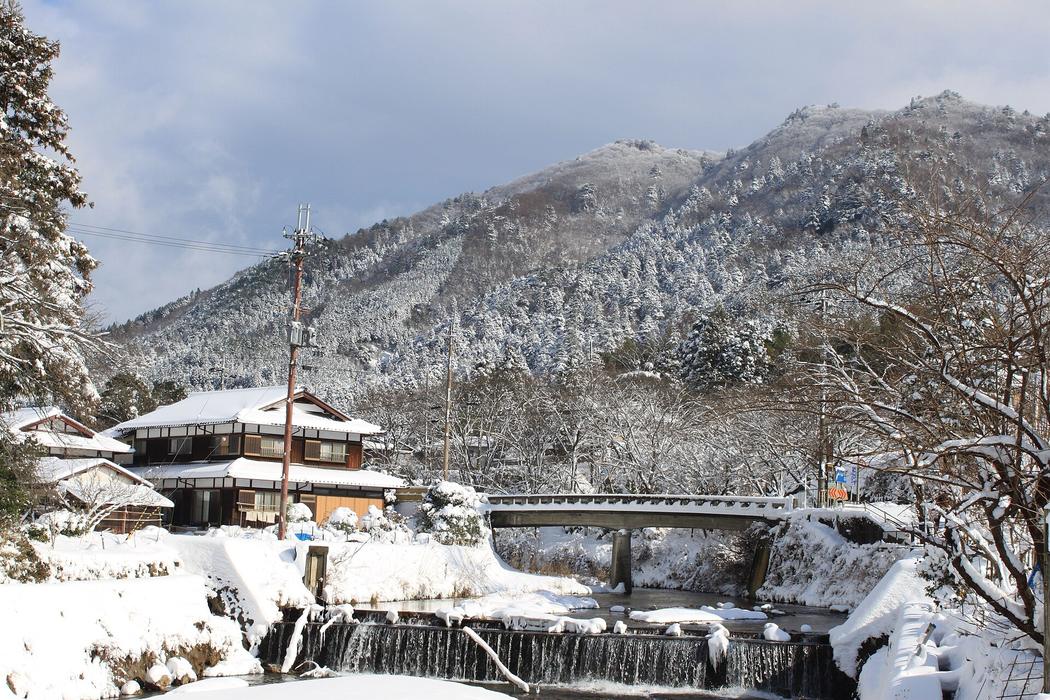
How to check whether it will snow in Kyoto before you go
Check in three layers: seasonal outlooks a season ahead for the general trend, heavy snow advisories a few days before, and live cameras that morning. Do not expect an answer two months out; that answer does not exist.
A season ahead: JMA seasonal outlooks
| Outlook | Issued | Upcoming |
|---|---|---|
| Cold-season outlook (Dec–Feb) | Every September, with the 3-month outlook | Issued September 18, 2026 |
| 3-month outlook | 14:00 | 2026/10/20, 11/24, 12/22, 2027/1/19, 2/22 |
| 1-month outlook | Thursdays 14:30 | — |
| 2-week temperature outlook | Daily 14:30 | — |
| Early warning information | Generally Mondays and Thursdays 14:30 | Only issued when warning-level conditions are expected |
The cold-season outlook issued on September 18, 2026 gives the Kinki region a 60% chance of above-normal temperatures this winter (December–February), with 10% below normal and 30% near normal, a 50% chance of above-normal precipitation on the Pacific side of Kinki, and fewer sunny days than usual. JMA reviewed it on October 20 with no changes; from November, just read the latest 3-month outlook.
One easy trap: JMA does not issue snowfall outlooks for the Kyoto city side. It splits Kinki in two. The Sea of Japan side covers northern Kyoto Prefecture, northern Hyogo and northern Shiga; southern Kyoto Prefecture, where Kyoto city is, belongs to the Pacific side. So a line like "50% chance of below-normal snowfall" refers to northern Kyoto Prefecture, not Kyoto city.
A few days before: heavy snow advisories
The rule is easy to remember: in Kyoto's lowlands, a forecast of 5 cm in 12 hours triggers a heavy snow advisory, and 15 cm a warning. Central Kyoto only gets 15 cm in an average year, so a single advisory-level snowfall equals a normal year's total. If you see an advisory, that is probably your chance.
That morning: live cameras and road conditions
| Tool | What it shows |
|---|---|
| Kinkakuji official live camera | Whether there is snow at Kinkakuji right now, updated every 3 minutes |
| Miyama thatched village live camera | Current snow at Miyama (YouTube live stream) |
| Kyoto Prefecture road information system (Japanese) | Snow depth on mountain roads (in 10 cm steps), winter road closures, road cameras |
| JR West train status | Whether planned suspensions are in place that day |
| Kyoto Bus service status | Same-day status of the Ohara and Kibune routes |
| Eizan Railway train status | Demachiyanagi to Kibuneguchi and Kurama |
On a snowy morning, the Kinkakuji camera beats any forecast, which is also how the temple's own FAQ answers the question. Bookmark it.
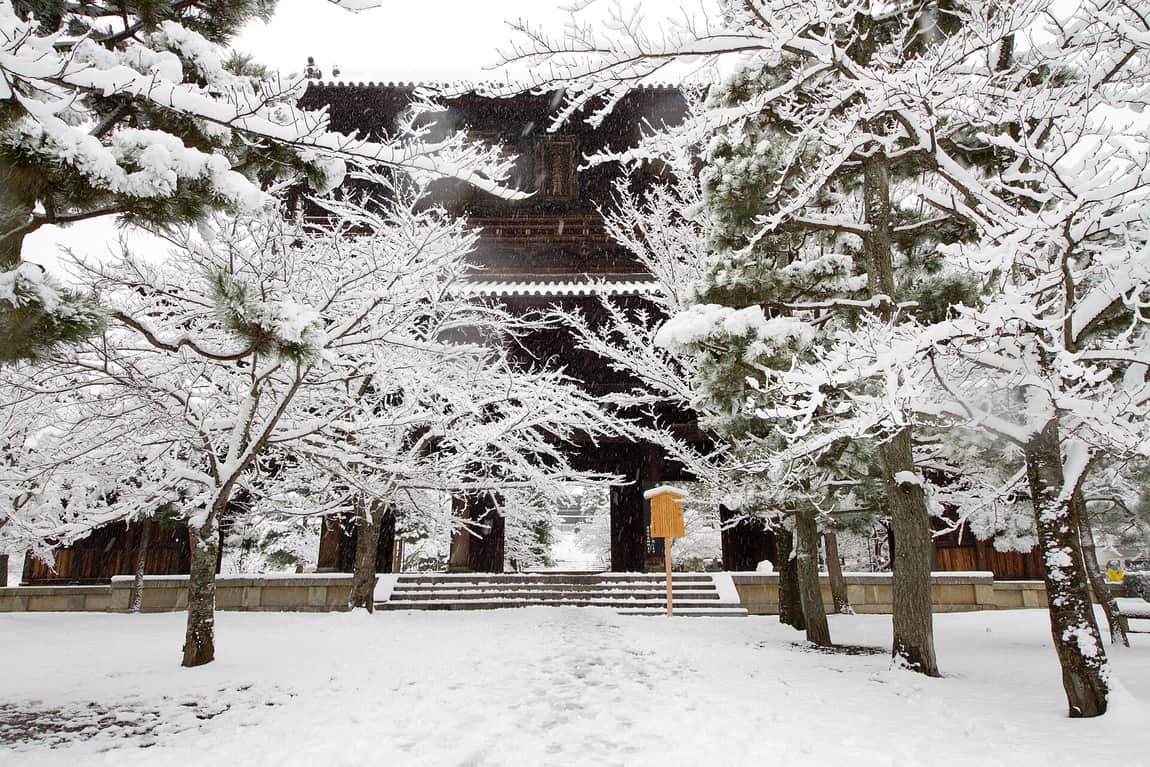
After a snowfall, what time do you need to be there?
The day's high temperature decides how long the snow lasts, not the clock, and temples open at 9:00, so being there at opening is the best you can do. Kinkakuji opens 9:00–17:00 and Sanzenin in Ohara 9:00–16:30 in winter; rushing in at dawn is not an option in Kyoto.
Two real mornings show the difference, from the Kyoto Local Meteorological Office's hourly snow depth readings.
January 24, 2023: 15 cm fell, and the next day's high was only 1.3°C
| Time | Snow on the ground |
|---|---|
| 01:00 | 14 cm |
| 06:00 | 12 cm |
| 09:00 | 11 cm |
| 12:00 | 9 cm |
| 15:00 | 7 cm |
| 18:00 onward | 5 cm |
February 8, 2026: 11 cm fell, and the next day's high was 6.0°C
| Time | Snow on the ground |
|---|---|
| 01:00 | 6 cm |
| 08:00 | 4 cm |
| 10:00 | 3 cm |
| 11:00 | 2 cm |
| 12:00 | 0 cm |
Both were "a dozen-odd centimeters yesterday", yet one stayed white all day with 5 cm left at dusk and the other was bare by noon. So before you head out, check the forecast high: below 3°C, take your time; 6°C or above, go at opening and forget about the afternoon.
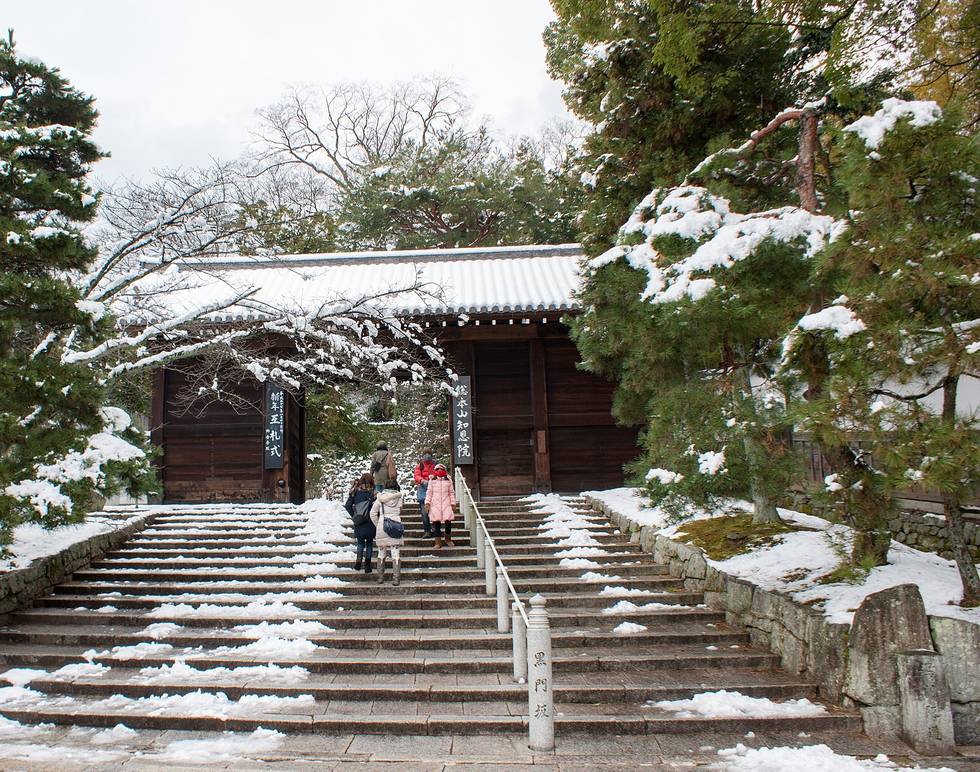
Where to go on a snow day
Only four places are worth rerouting for: three around the city and one 80 minutes north. Plenty of famous spots look good in snow, but these four are the ones where snow makes them a different place.
Kinkakuji
My first pick for snow, for a practical reason: it has an official live camera, so you can check from your hotel whether there is snow before you leave. The downsides are big crowds on snowy mornings and written restrictions on photography.
| Hours | 9:00–17:00, open daily |
|---|---|
| Admission | Adults and high school students ¥500, elementary and junior high students ¥300, preschoolers free |
| Address | 1 Kinkakuji-cho, Kita Ward, Kyoto |
| Getting there | City bus to Kinkakuji-michi |
| Checking for snow | The live camera on the official site, updated every 3 minutes |
| Time needed | About 1 hour |
| Photo rules | Small cameras for personal keepsakes only; photography intended for sharing with third parties (including social media) and commercial photography is declined. No drones, and no lockers on the grounds |
| Official site | Rokuonji (Kinkakuji) |
Kifune Shrine
Kifune holds a special light-up on snowy days, and red lanterns on snow-covered stone steps is the photo everyone has seen. It is also the hardest spot here to plan: the dates come out in mid-January, and whether it runs on the day is only announced at 3 p.m.
| Winter hours | Main shrine 6:00–18:00 (the notice for December 1 – April 30) |
|---|---|
| Admission | Free, open every day |
| Amulet office / goshuin | 9:00–17:00 (prayer requests 9:00–15:00) |
| Snow-day light-up | 2027 dates not announced; in the 2026 season, weekends from 1/17 to 2/28, sunset to 20:30, with shrine hours extended to 20:00 those days |
| How to know if it is on | The shrine states it announces on its social media accounts at 15:00 that day, and asks people not to phone |
| Getting there | Eizan Railway to Kibuneguchi, then Kyoto Bus route 33 to Kibune and about 5 minutes on foot; without the bus, it is about 30 minutes and 2 km on foot from Kibuneguchi |
| Bus fare | Adults ¥200 / children ¥100; ICOCA and Suica accepted (tap once when getting off) |
| Ticket trap | Eizan Railway's Kurama-Kibune day ticket is not valid on that bus; with that ticket you walk the 2 km |
| Parking | 8 spaces at the main shrine and 10 at the inner shrine, ¥1,000 per 2 hours; the shrine asks visitors to use public transport, and snow tires are a must if you drive |
| Official site | Kifune Shrine |
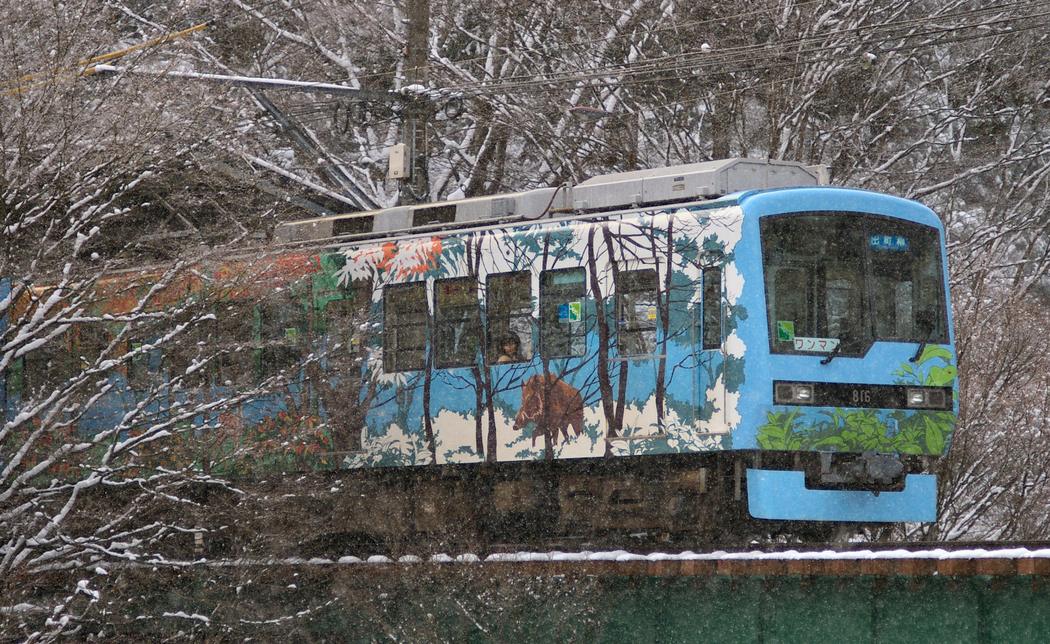
Sanzenin, Ohara
Ohara's advantages are that it is only 40 minutes from the city and quieter than Kibune, and the moss gardens under snow look like a different season of the same place. Just one thing to watch: it closes half an hour earlier in winter.
| Winter hours | December–February 9:00–16:30 (March–October 9:00–17:00, November 8:45–16:45) |
|---|---|
| Admission | General ¥700 / junior high and high school ¥400 / elementary ¥150 |
| Closed | Open daily |
| Address | 540 Ohara Raigoin-cho, Sakyo Ward, Kyoto |
| Getting there | Kyoto Bus Ohara line to Ohara; on snow days check Kyoto Bus service status first |
| Parking | The temple has no parking; use nearby private lots |
| Official site | Sanzenin Monzeki |
For the same spots in autumn and which week to go, see our Kyoto autumn foliage guide; the quieter winter spots work on the same routes.
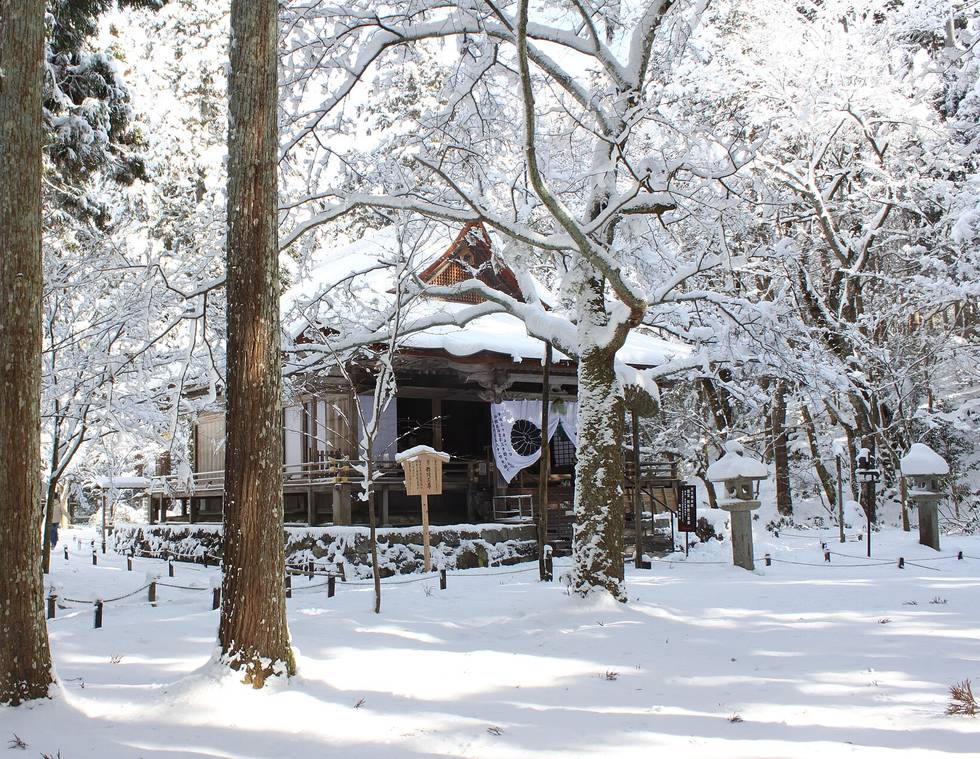
Miyama Thatched Village Winter Lantern Festival
If you want to push your odds of seeing snow as high as possible, this is the place: Miyama gets 179 cm of snow a year, 12 times central Kyoto. At the end of January there are eight evenings of lighting, with lanterns among the thatched farmhouses and free entry. Transport is the hard part, so read the last-bus row below before deciding to go.
| 2027 dates | January 30 (Sat) – February 6 (Sat), 8 days |
|---|---|
| Lighting | Daily 17:00–19:00 (about 80 street lanterns and about 200 LED lanterns) |
| Entry | Free |
| Food stalls | Daily 15:00–19:00, about 8 stalls; cash only, no ATM nearby |
| Paid extras | Mochi pounding with sweet red bean soup ¥300 (17:15–18:15; 17:00–17:45 on 2/3); Japanese dance offering ¥500 (2/3 only) |
| Not held in 2027 | No winter fireworks this year |
| Public transport | JR Sagano Line from Kyoto to Sonobe → train toward Fukuchiyama / Goma to JR Hiyoshi → Nantan city bus to the Kita stop |
| Last bus | From the thatched village toward JR Hiyoshi: weekdays 18:25, Saturdays 17:01, Sundays and holidays 16:54 |
| Driving and parking | All days, all vehicles, advance reservation only: cars ¥1,500 each, tour buses ¥10,000 each; online card payment or bank transfer only. Reservations opened September 7, 2026 and close at 23:59 the day before, or earlier if full; parking after 16:00 always needs a reservation, and arriving before 15:00 costs an extra standard parking contribution of ¥500, paid in cash on the day. Cancellation costs 30% from 7 to 2 days before, 40% the day before and 100% on the day, even if traffic makes you late |
| Direct bus | Keihan Kyoto Kotsu's Kyoto–Miyama line will not run in 2027. Without a car, the organizer suggests its own day bus tour from Kyoto Station in the next row |
| Official day bus tour | Round trip from Kyoto Station, ¥12,000 per person, including a 1,500-yen meal voucher for the venue and a local guide; runs 1/30–2/6 |
| Official site | Miyama Thatched Village Winter Lantern Festival |
You cannot see the lighting on a same-day trip by public transport. On weekends the last bus leaves at 17:01 or 16:54 and the lighting starts at 17:00, so the times simply do not overlap. Weekdays are no different in the organizer's view: it states there is no evening bus back, so a same-day round trip by public transport alone is not possible. Your options are to drive (with a parking reservation made by the day before), stay overnight in Miyama, or join the bus tour.
For another thatched village with a winter light-up but completely different rules (lotteries and parking reservations), compare how the Shirakawa-go light-up lottery and reservations work.
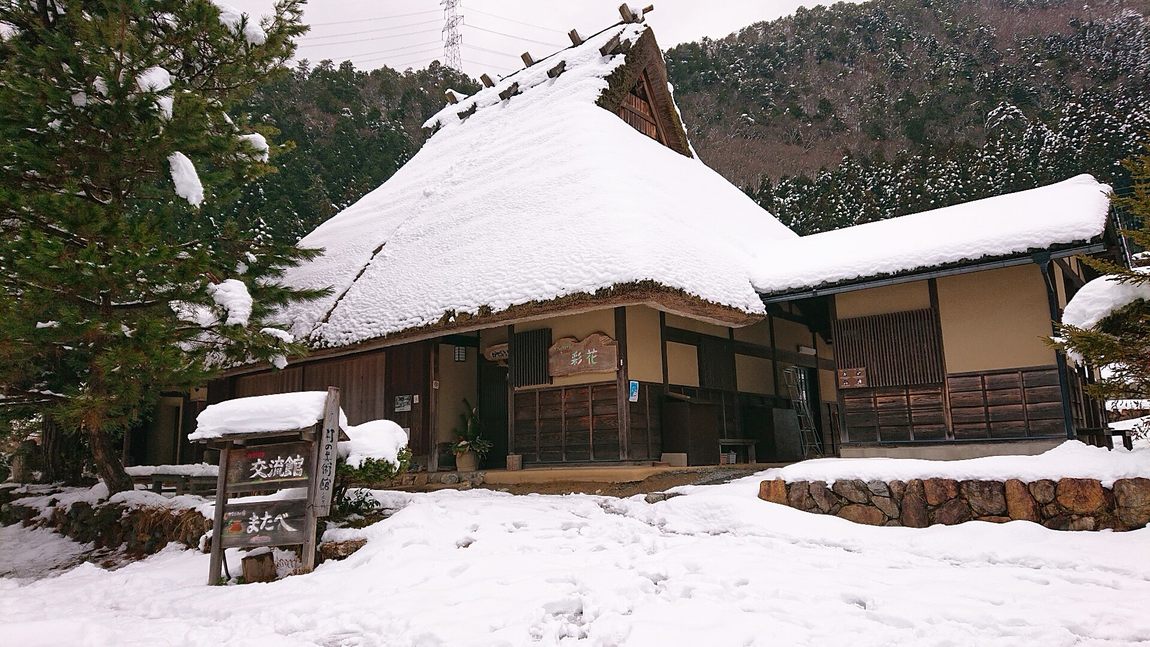
Why did Miyama rename its "Snow Lantern" festival to "Winter Lantern"?
Because there is not enough snow anymore, and the organizers say so on the official site. The event used to be called the Miyama Kayabuki-no-Sato Snow Lantern Festival (Yuki Touro): Miyama once got over a meter of snow each winter, and villagers made lanterns from it to welcome winter visitors. The organizers go on to say that because of a "serious snow shortage" in recent years, from the 21st edition in 2026 the name changed to Miyama Kayabuki-no-Sato Fuyu Touro (Winter Lantern Festival).
That changes what you will see. The 2027 program lists about 80 street lanterns plus about 200 LED lanterns, with no lanterns made of snow, no snow huts, no make-your-own snow lantern activity, and no winter fireworks this year. Go expecting the old "snow lantern" name and it will not match.
The good news is that the event runs without snow: the official FAQ says it is held "regardless of the weather or whether there is snow", and is only called off if the organizers judge it dangerous. So you can schedule Miyama as a fixed day, with snow as a bonus.
Do trains and buses stop when it snows?
Yes, and 7 cm in central Kyoto has caused a meltdown before. JR West put the details in its own incident report.
On January 24, 2023, Kyoto Station recorded 0 cm at 17:00 and 7 cm at 18:00, seven centimeters in one hour. JR West's February 17, 2023 report sets out what followed:
- From 19:00, points (track switches) failed at Mukomachi, Yamashina and Kyoto stations, 21 locations in all
- Between Yamashina and Shimamoto, 15 trains were stranded between stations; 13 were brought back to the nearest station, the longest taking 5 hours 22 minutes
- A local train between Kyoto and Yamashina carrying 1,400 passengers was stuck from 19:40 until everyone was off at 5:30 the next morning
- 16 people were taken to hospital in total
- Kyoto city opened 4 temporary shelters (about 530 people) and handed out drinks and thermal blankets for about 1,500
The report lists the cause plainly: no planned suspensions or reduced services were in place in the Kyoto area at the time. JR West has since set clear criteria for suspending and cutting services in the Kyoto area during snow, which means the approach now is to suspend early rather than late.
The takeaway is one line: if a heavy snow advisory or early warning is out for Kyoto, remove anything that depends on long-distance JR travel that evening. Move a Kansai Airport run or a change of city on a snowy night to the next morning. If you do get caught by a suspension, see what to do when trains stop in Japan.
Heading into the hills, keep one more page open: the Kyoto Prefecture road information system has "snow" and "winter closure" layers covering Ohara, Kibune, Keihoku and Miyama. Which roads close in winter 2026–27 is only announced once winter starts. For passes and getting around the city, see our Kyoto transport guide.
Common mistakes on a first winter trip to Kyoto
⚠️ ① Treating "it snows in Kyoto" as "you will get snow photos". 44.5 snow days versus 4.2 days of settled snow is a tenfold gap; plan around the second number.
⚠️ ② Treating December as snow season. Average snowfall is zero in early and mid-December; the December 11 first-snow date means flakes, not white ground.
⚠️ ③ Reading "below-normal snowfall in Kinki" as a Kyoto city forecast. That line covers the Sea of Japan side of Kinki, meaning northern Kyoto Prefecture; Kyoto city is on the Pacific side, where JMA issues no snowfall outlook.
⚠️ ④ Going to Miyama expecting a "snow lantern" festival. It was renamed "Winter Lantern" in 2026, and the 2027 program is street lanterns and LED lanterns, with no snow huts and no fireworks.
⚠️ ⑤ Taking the train and bus to Miyama for the lighting as a day trip. The last bus is 17:01 on Saturdays and 16:54 on Sundays and holidays, while the lighting starts at 17:00. The weekday last bus is 18:25, but the organizer says there is no evening bus back on any day, so public transport alone does not work for a same-day trip.
⚠️ ⑥ Keeping a long JR trip on a snowy evening. JR West now suspends Kyoto-area services early during snow, so move city changes and airport runs to the next morning.
Where should you stay?
Stay in central Kyoto, as close as you can to the spot you most want to shoot. The reason is the hourly table above: on days when snow is gone by noon, you only get the 9 a.m. opening slot. Commuting in daily from Osaka gives up half your chances; staying up in the hills is the other extreme, with few rooms in Kibune and Ohara and road worries on snow days. For Kinkakuji and flexibility around the city, stay near Kyoto Station; for the Higashiyama area, stay in Higashiyama or Gion and walk. The links below open area listings; first thing, change the dates to your night.
| Channel | Good to know |
|---|---|
| Booking.com Kyoto → | All of Kyoto city, including Arashiyama and Yamashina; check the map for distance to a station before booking |
| Agoda Kyoto → | When prices for the same room are close, compare cancellation terms; in winter you want free cancellation |
| Trip.com Kyoto hotels → | Member rates are sometimes lower, but check the change and refund rules first |
| Booking.com Shimogyo (around Kyoto Station) → | The easiest base for Kinkakuji, Arashiyama and the train to Hiyoshi |
| Booking.com Higashiyama → | Walking distance to Kiyomizu-dera and Yasaka, but hilly and slippery on snow days |
Average daily lows in this period are just over 1°C, so waterproof shoes and outer layers matter more than thick ones; for packing, see our Japan weather and what to wear guide.
How I'd plan a snow day
If you wake up to white ground
| Time | Where | What |
|---|---|---|
| 07:30 | Hotel | Check two things: today's forecast high and the Kinkakuji live camera |
| 08:20 | Head out | Below 3°C, keep your planned route; 6°C or above, go straight to one spot and skip a second stop |
| 09:00 | Kinkakuji | In at opening before the crowds build, about 1 hour |
| 10:30 | Across the city | Toward Higashiyama or Ohara; check conditions again on the way |
| 11:30–14:00 | Second stop | Sanzenin closes at 16:30, so do not put Ohara off until the afternoon |
| After 15:00 | City | Call it a day once the snow turns slushy; no long JR trips that evening |
If there is no snow at all
Do not wait around in the city. To see snow, go north: Miyama has 22 days a year with 5 cm or more on the ground and Maizuru 19, against 1.3 in central Kyoto. For a day trip Miyama is easier (about 80 minutes by road from Kyoto Station), and the Winter Lantern Festival runs with or without snow.
If that is too far, the Kasuga lanterns along the approach to Kifune's main shrine are lit every evening of the year from dusk until 20:00, so there is something to see even without snow (the main shrine closes at 18:00 in winter, after which you view it from the approach). In the city, switch to a winter-only theme: from January to March a group of normally closed temples opens to visitors, and the routes are in how to choose Kyoto's winter special openings.
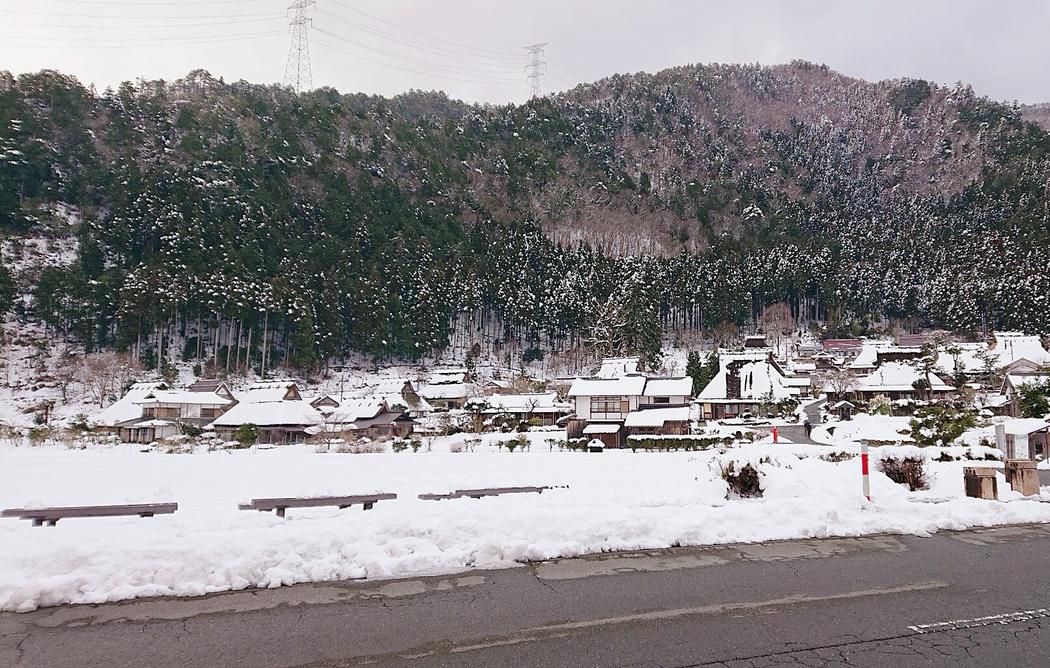
Frequently Asked Questions
- Q1:How many days a year does it snow in Kyoto?
- Snow is observed on 44.5 days in an average year, but only 4.2 days have 1 cm or more on the ground. Days with 5 cm average 1.3 a year, and 10 cm just 0.5, so once every two years. These are the Kyoto Local Meteorological Office 30-year normals for 1991–2020.
- Q2:Which month has the best chance of snow in Kyoto?
- It depends which kind of snow you mean. January has the most days with falling snow (16.3), while February has the most days with snow on the ground (2.0) and the most total snowfall (7 cm). Aim for mid-January to mid-February; over the last 12 winters the deepest day of the season most often fell in late January.
- Q3:Will it snow in Kyoto in winter 2027?
- Nobody can forecast that far ahead, and the Japan Meteorological Agency does not issue snowfall outlooks for Kyoto city. Check at three points instead: the latest 3-month outlook from November, heavy snow advisories a few days before, and the Kinkakuji live camera on the morning itself. The "How to check" section explains each.
- Q4:Do Ohara and Kibune always have more snow than central Kyoto?
- Generally yes, but there are no numbers to check, because neither place has an official snow-depth station. Of Kyoto Prefecture's 24 weather stations, only central Kyoto, Miyama and Maizuru measure snow depth, with annual snowfall of 15, 179 and 135 cm. If you want to be sure of snow, go north, not to Ohara.
- Q5:How long does snow last in Kyoto after it falls?
- It depends on the day's high temperature, not the time you leave. On January 25, 2023 the high was only 1.3°C and 5 cm was still on the ground in the evening; on February 9, 2026 the high was 6.0°C and it was gone by noon. Temples open at 9:00, so being there at opening is the best you can do.
- Q6:Do trains stop when it snows heavily in Kyoto?
- Yes, and 7 cm in the city has caused a major breakdown before. On January 24, 2023, 7 cm fell at Kyoto Station in one hour; 15 trains were stranded between stations that night and 16 people were taken to hospital. If a heavy snow advisory is out, drop any long-distance travel that evening.
- Q7:When is the Kifune Shrine snow-day light-up in 2027?
- Not announced yet. In the 2026 season it ran on weekends from January 17 to February 28, sunset to 20:30, and the dates are usually posted in mid-January. Even then, whether it runs on a given day is announced by the shrine on social media at 15:00 that day.
- Q8:Can I see the Miyama Winter Lantern lighting by public transport?
- Not on a same-day trip. The lighting starts at 17:00, and the organizer states there is no evening bus back, so a same-day round trip by public transport alone is not possible. Without a car, the option is the organizers' own day bus tour from Kyoto Station at ¥12,000.
What I would do
On a first winter trip to Kyoto, I would put my dates in late January to early February, stay near Kyoto Station, and treat snow as a bonus rather than the main course: those weeks are already the quietest and cheapest of the year, so no snow is no loss. If the whole point is snow photos, I would keep one spare morning and check the day's high every morning before choosing a route. With only three days and no appetite for gambling, I would give one evening at the end of January straight to the Miyama Winter Lantern Festival, where snowfall is 12 times the city's and the event does not depend on it. For hotels I would keep two or three channels open side by side, and what matters is not a few dollars' difference but whether you can cancel for free; in Kyoto in winter, flexibility is worth more than price.
Official information
- JMA Kyoto normals and historical observations (Japanese)
- Rokuonji (Kinkakuji) / Kifune Shrine / Sanzenin Monzeki
- Miyama Thatched Village Winter Lantern Festival
- Kyoto Prefecture road information system (Japanese)
Prices and times are subject to the latest official announcements.
Original Japanese text
Sources: Miyama Winter Lantern Festival official site (yukitouro.jp); JR West report of 2023-02-17; JMA Kyoto Local Meteorological Office.
1. Why the Miyama event was renamed
しかし近年、深刻な雪不足が続いていることから、2026年(第21回)の開催より、イベント名を「美山かやぶきの里 冬灯廊(ふゆとうろう)」に改め、実施しております。
2. Miyama last buses and same-day trips in 2027
公共交通機関の場合、かやぶきの里からJR日吉駅方面の最終バスは、平日18:25発、土曜日17:01発、日曜祝日16:54発です。
夜に帰るためのバスが無いため、公共交通機関のみを用いた日帰りでの冬灯廊のご利用はできません。
3. The Winter Lantern Festival runs without snow
天候や積雪の有無にかかわらず開催いたします。
4. Cause listed in JR West's report
京都エリアでは計画運休や間引き運転を実施しなかった