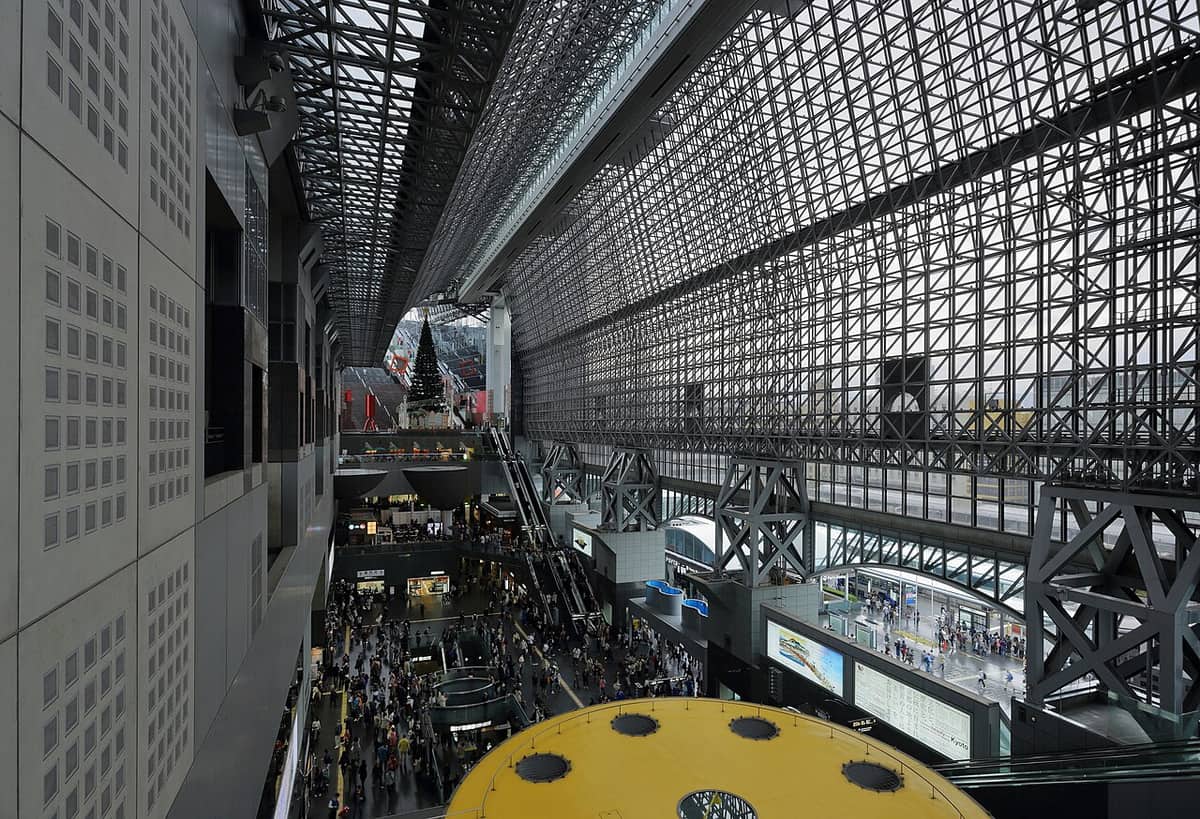
Kyoto is often described as "small and walkable," and that's only half true. The grid of the central downtown is genuinely pleasant on foot, but the sights you're actually here for — Kiyomizu-dera, Arashiyama, Fushimi Inari, Kinkaku-ji — sit 5 to 10 kilometers apart, scattered across different corners of the bus network. And Kyoto's buses are one of the most notorious traffic pain points in all of Japan. In 2024 the city went so far as to abolish its beloved, dirt-cheap ¥700 bus day pass, stating outright that it wanted to "ease bus congestion." That's rare in Japanese transport history: a ticket so good it overcrowded the buses, so the city killed it.
So this guide is not going to tell you to "buy a day pass and hop on and off mindlessly." What I want to give you is a smarter Kyoto movement strategy: which legs you should ride the bus for, which legs you should firmly switch to subway or train, how to use the weekend-only ¥500 express buses, and exactly when that ¥1,100 Subway & Bus 1-Day Pass is actually worth your money. Get this logic right and you'll save at least an hour or two a day that would otherwise be lost stuck in traffic.
- The ¥700 bus day pass is gone (sales ended Sept 2023, validity ended March 2024). The replacement is the Subway & Bus 1-Day Pass at ¥1,100, with a higher break-even — you need 5+ rides a day to make it pay.
- Buses are the workhorse but also the pain point: routes to Kiyomizu, Arashiyama and Gion jam badly at peak. Switch to rail wherever you can.
- The subway has only 2 lines (Karasuma north–south, Tozai east–west). Limited coverage, but its punctuality is priceless.
- The EX100 / EX101 express buses are new for 2024: weekend/holiday only, flat ¥500, running straight from Kyoto Station to Kiyomizu and Ginkaku-ji.
- ICOCA / Suica work on everything — buses, subway, JR and all private railways. No pass? Just tap.
📖 Table of contents (tap to expand)
- Why Kyoto transport is a headache
- City buses: the workhorse, but don't rely on them alone
- Sightseeing express buses: the weekend congestion-buster
- The subway: only 2 lines, but it never jams
- JR: fastest for Arashiyama, Fushimi Inari and Uji
- Private railways: Keihan, Hankyu, Randen, Eizan
- Passes and IC cards: what to actually buy
- Mode-by-mode comparison table
- Real strategy: how to plan a day
- FAQ
Why Kyoto transport is a headache
In Tokyo and Osaka, tourists get around almost entirely by subway — dense networks, frequent trains, no traffic. Kyoto is the opposite. Its sightseeing backbone is the bus, and buses run on surface streets, fighting for the same lanes as every car, taxi and tour coach. In peak season (cherry blossom, autumn foliage), a bus on Higashioji-dori or Shijo-dori can sit through several light cycles without moving. I'm not exaggerating to scare you — this is a problem the city itself talks about openly. Otherwise it wouldn't have gone to the trouble of abolishing that universally loved bus pass.
Kyoto's transport has three structural problems. First, the subway has only 2 lines, and many headline sights (Kiyomizu-dera, Kinkaku-ji, Ginkaku-ji) aren't on it at all, so the last leg always falls back to bus or walking. Second, the sights are spread out — Fushimi Inari in the south, Kinkaku-ji in the north, Arashiyama in the west, with no single line linking them. Third, tourist density is extreme; the post-pandemic rebound regularly leaves peak-hour buses too full to board. Once you understand those three things, you'll see why relying on buses alone is a losing game.
City buses: the workhorse, but don't rely on them alone
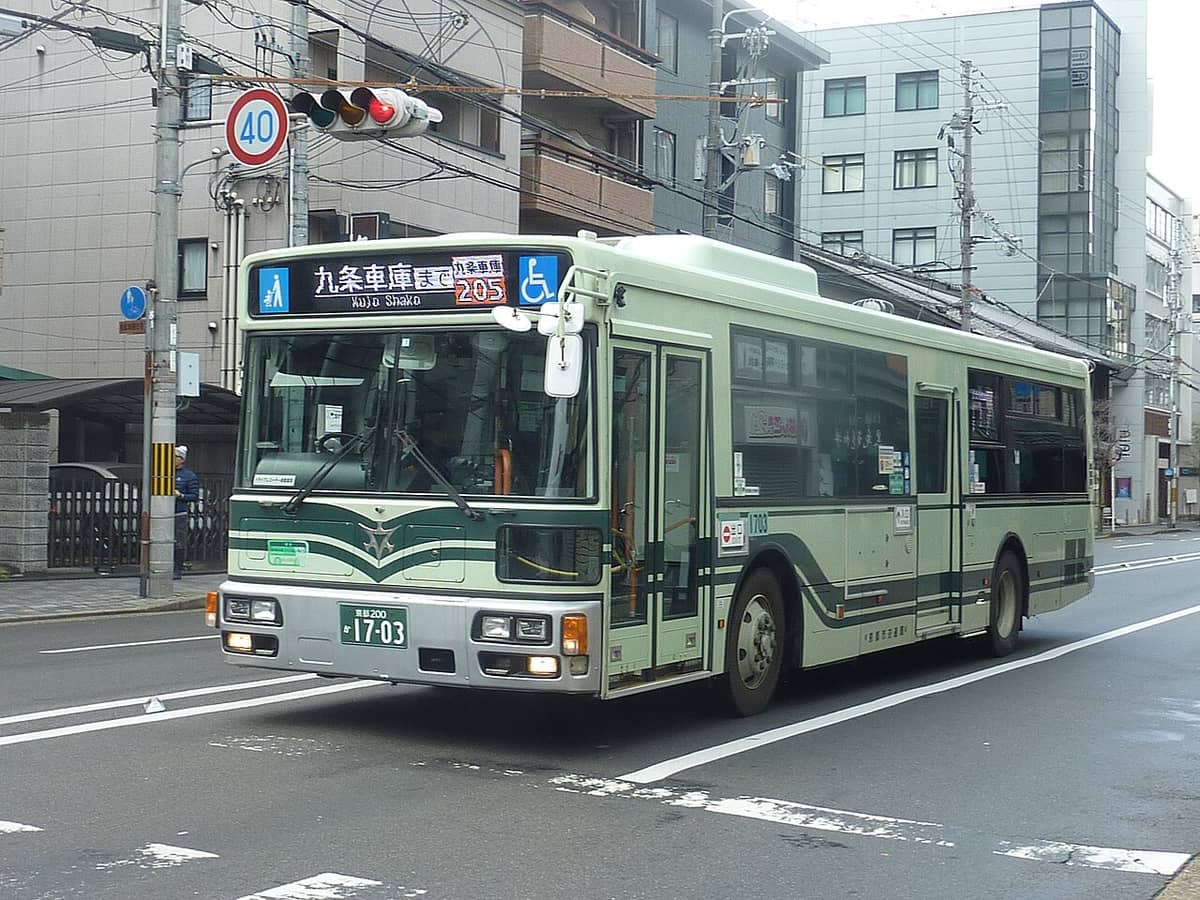
Let's be clear: you will still ride Kyoto buses, and you should. Kinkaku-ji, Ginkaku-ji and Kiyomizu-dera are "bus or nothing" — there's no way around them. Within the central zone, Kyoto City Buses charge a flat ¥230 per adult ride (¥120 children), the same no matter how many stops; only routes out to the western suburbs or Ohara switch to distance-based fares.
Boarding changed in 2024
This trips up a lot of older guides: most central Kyoto city bus routes now use front-boarding, pay-on-entry. You used to board at the rear and pay at the front when leaving; now it's reversed — tap your ICOCA or drop ¥230 as you board at the front, then exit through the rear. The express buses are prepay too. A few suburban distance-fare routes still use the old rear-board, pay-at-front system. Don't get jammed at the wrong door on your first ride.
Which routes tourists use most
Per Kyoto City Transportation Bureau route maps, the high-frequency tourist routes are: 100 and 206 (Kyoto Station ↔ Kiyomizu ↔ Gion ↔ Ginkaku-ji, the Higashiyama line); 205 (Kyoto Station ↔ Kinkaku-ji ↔ Kitaoji); and 101 and 111 (toward Kinkaku-ji and Nijo Castle). These are exactly the routes that gridlock in peak season, especially around Kiyomizu-michi from 1pm to 4pm. My view is blunt: if you can route around the Higashioji jam zone using the subway or a train, don't force yourself onto a bus. Specific workarounds below.
Sightseeing express buses: the weekend congestion-buster
The Sightseeing Limited Express Buses (EX100 / EX101) Kyoto introduced in June 2024 are the single most useful new thing in the city's transport in years. The design goal is simple: pull the Kiyomizu-/Ginkaku-ji-bound tourists who were jamming the regular buses on Higashiyama onto an express line that stops only at major points and runs frequently.
Routes and frequency
Per the Kyoto City Transportation Bureau, the two services are:
- EX100 (Kiyomizu / Gion / Ginkaku-ji line): Kyoto Station → Gojo-zaka (Kiyomizu-dera) → Gion → Okazaki Park / Heian Shrine → Ginkaku-ji. It strings together the most popular run of Higashiyama sights on one line.
- EX101 (Kiyomizu line): Kyoto Station → Gojo-zaka (Kiyomizu-dera) direct, no detours, the fastest way to Kiyomizu.
In the morning they leave Kyoto Station roughly every 7–8 minutes. No reservation needed; board at the front and pay first, cash or IC card.
Operating days and fare (this is the catch)
The express buses run only on Saturdays, Sundays, national holidays, and the Obon (mid-August) and New Year periods — never on a regular weekday, which you absolutely must remember or you'll wait at the stop for a bus that never comes. The flat adult fare is ¥500 (¥250 children), more than double a regular bus's ¥230. That sounds steep, but what you buy is "no detours, frequent service, and relatively less crush." Crucially, the Subway & Bus 1-Day Pass covers the express buses for free, so if you've bought the pass, riding it on a weekend costs nothing extra. One Obon caveat while we are here: on the night of 16 August, the city dims its lights from 19:50 to 20:50 and climbing any of the five mountains is banned outright — moving around Kyoto that evening is not a bus-route problem, so check where the official free viewing stretches are before you set out.
The New Year period deserves a separate note. Per the Kyoto City Transportation Bureau notice for the 2025-26 season, the express buses run daily from December 27 to January 4, weekdays included — which makes the one-day pass better value over New Year than in a normal week. The same notice, however, states plainly that there is no all-night operation and no extension of last services on New Year Eve, so the midnight logistics need separate planning. That is covered in full in the Kyoto New Year and hatsumode guide.
The subway: only 2 lines, but it never jams
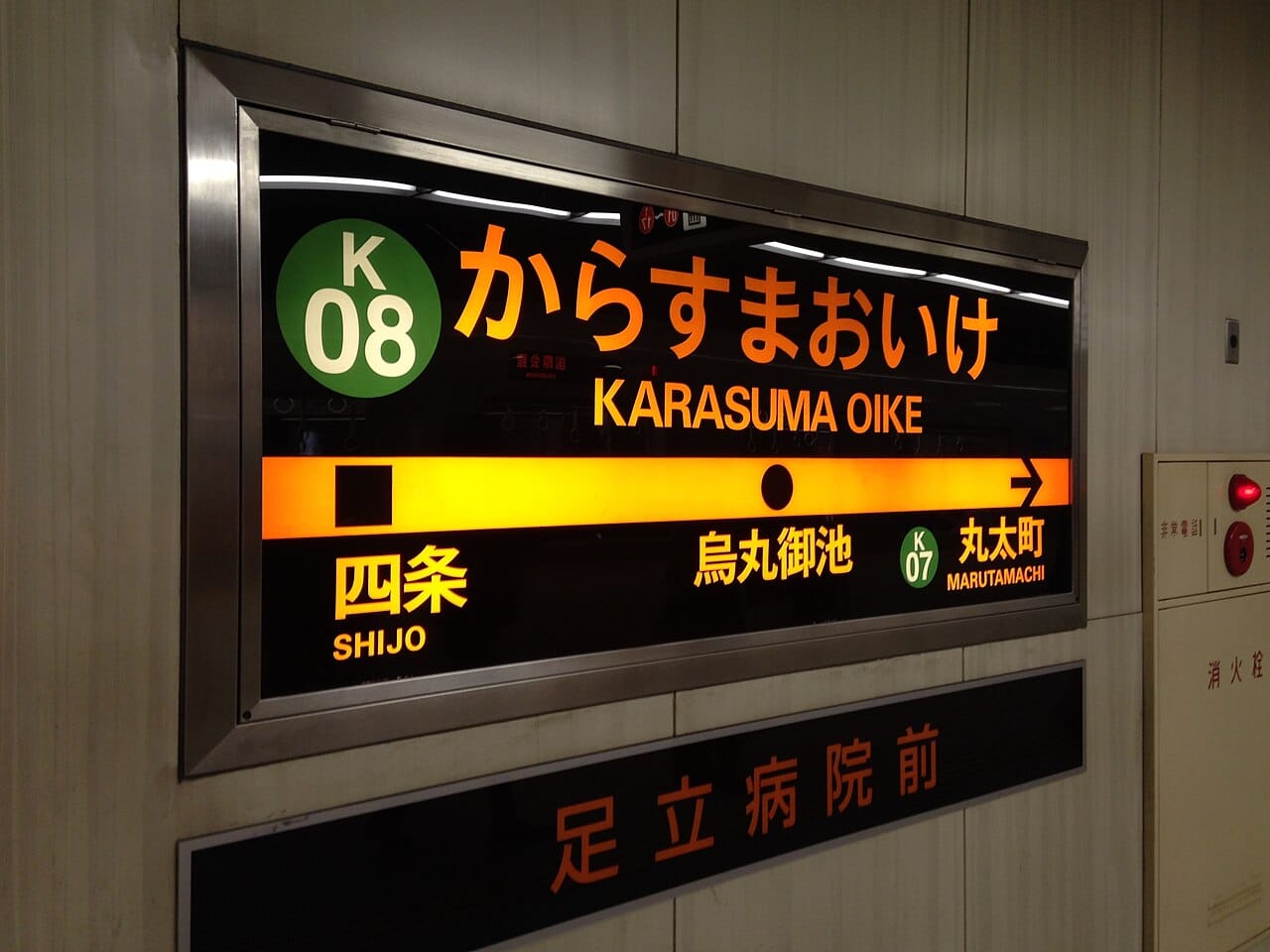
The Kyoto Municipal Subway has just two lines, which is mercifully easy to memorize:
- Karasuma Line (north–south): Kokusaikaikan ↔ Takeda, running through Kyoto Station, Shijo (the downtown core), Karasuma-Oike and Imadegawa. The one you'll use most.
- Tozai Line (east–west): Rokujizo ↔ Uzumasa-Tenjingawa, via Yamashina, Sanjo-Keihan, Karasuma-Oike and Nijo. This is your line for Nijo Castle and Keage (Nanzen-ji, Heian Shrine direction).
The two cross at Karasuma-Oike Station, the transfer heart of the system. Subway fares start at ¥220 by distance.
The subway's real value: punctuality
The subway's coverage genuinely loses to the buses — it doesn't reach Kiyomizu, Kinkaku-ji or Arashiyama at all. But it gives you the one thing a bus never can: it's on time. Running underground, it's immune to surface traffic, and in peak season that's the difference between heaven and hell. My strategy is to treat the subway as a "trunk line": use it to whisk you to the station nearest your sight (Karasuma to "Shijo," Tozai to "Keage"), then walk or take one short bus leg for the last mile. You avoid the main bus-jam battlefield without being shackled to the subway's limited reach.
Sights the subway reaches directly
- Nijo Castle: step out of "Nijojo-mae" on the Tozai Line — the cleanest connection of the lot.
- Nanzen-ji, Heian Shrine, Keage Incline: "Keage" station on the Tozai Line.
- Nishiki Market, the Shijo-Kawaramachi downtown: "Shijo" station on the Karasuma Line.
- Shimogamo Shrine, Kyoto Imperial Palace: near "Imadegawa" / "Marutamachi" on the Karasuma Line.
JR: fastest for Arashiyama, Fushimi Inari and Uji
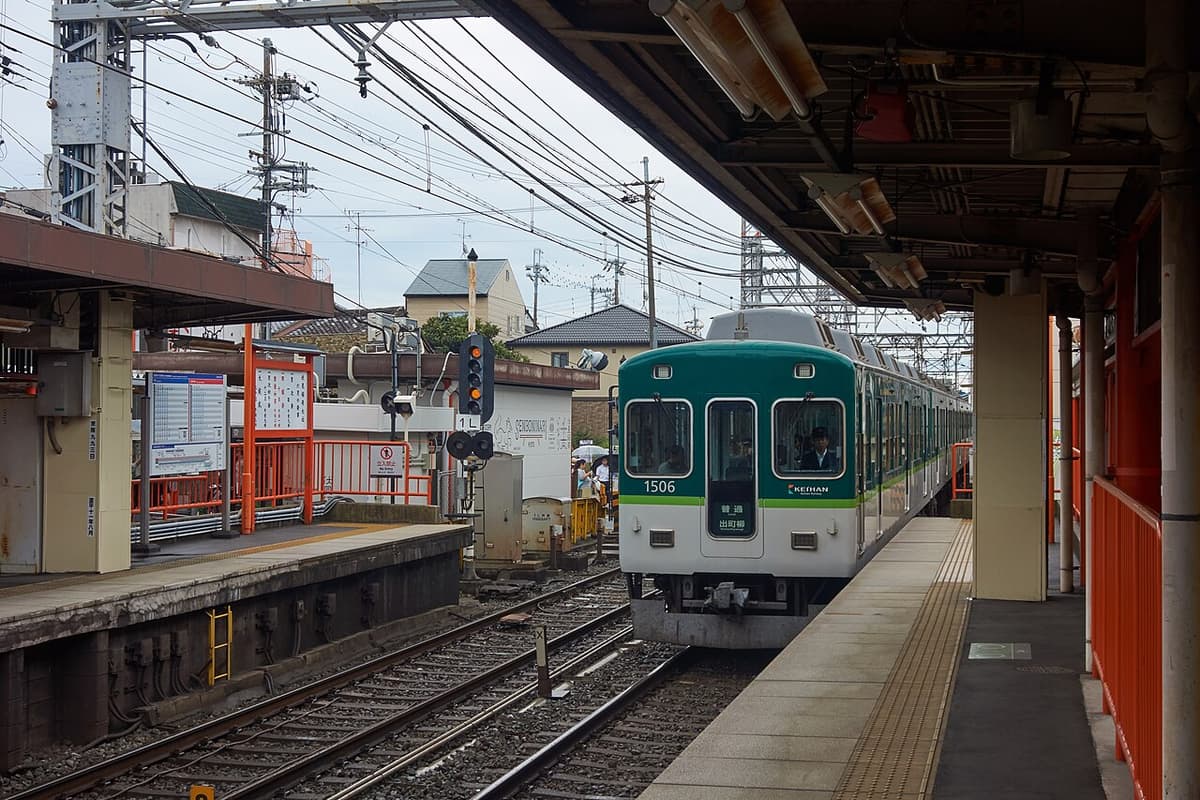
Many people forget that JR is excellent inside Kyoto too, and for these three popular sights JR is faster than the bus and doesn't jam:
| Destination | JR line | From Kyoto Station | One-way fare |
|---|---|---|---|
| Arashiyama (Saga-Arashiyama) | JR Sagano (Sanin Main) Line | ~15 min | ¥240 |
| Fushimi Inari (Inari) | JR Nara Line | ~5 min | ¥150 |
| Uji (Uji) | JR Nara Line | ~30 min | ¥240 |
Fushimi Inari is the classic case: the JR Nara Line runs 5 minutes straight from Kyoto Station to "Inari," and the Senbon Torii entrance is right across from the exit — vastly faster than the long bus loop. For how to time and sequence an Arashiyama day, read it alongside our complete Arashiyama day-trip guide, which breaks down the morning-to-dusk order in detail.
If you hold a JR Pass or a Kansai regional pass, these JR legs are usually already included, so they're effectively free. Whether a pass is worth it and which version to choose is covered in our full JR Pass worth-it analysis — but here's the headline conclusion: if you're staying only within Kyoto and not traveling between cities, a JR Pass is absolutely not worth it. These in-city JR legs are cheap one-ways; just tap an ICOCA.
Private railways: Keihan, Hankyu, Randen, Eizan
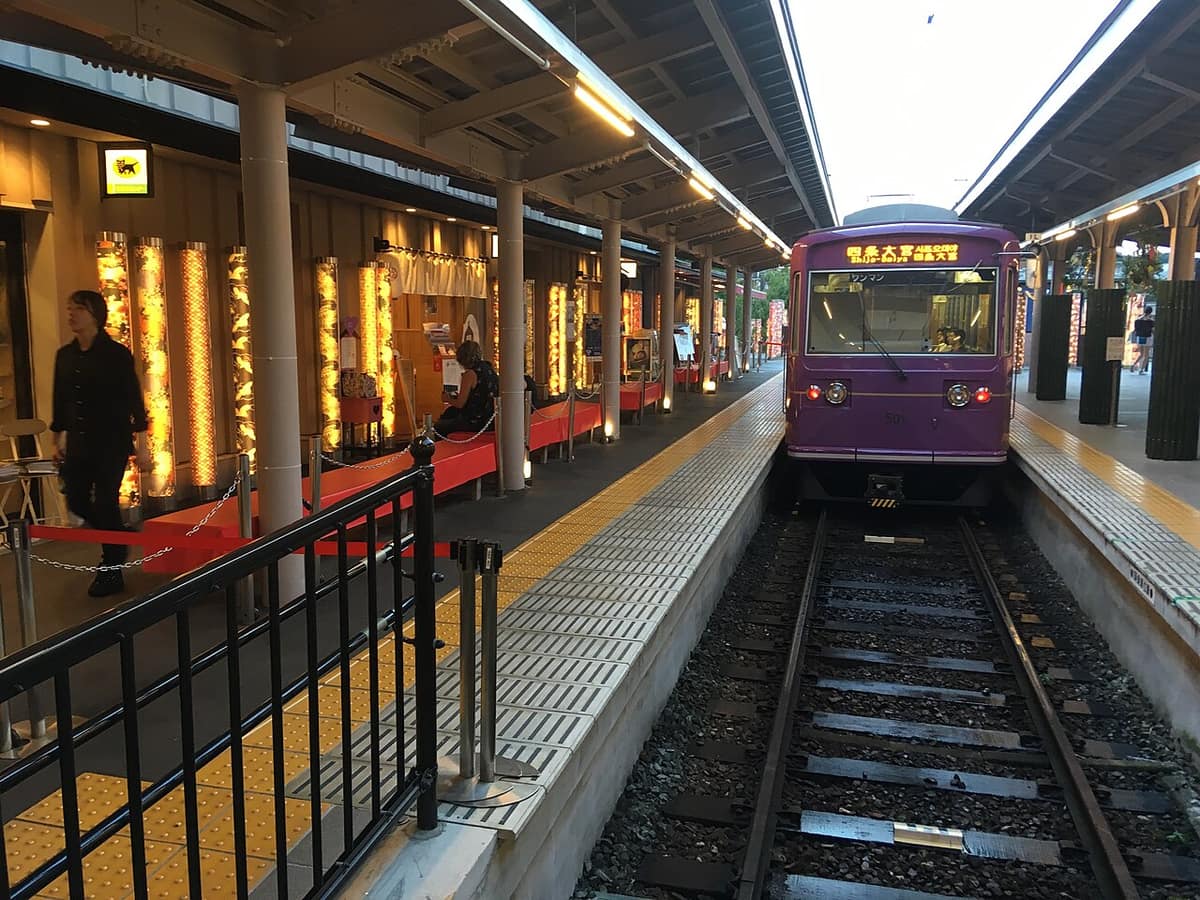
Kyoto's private railways each have a specialty, and knowing them lets you route around a lot of bus traffic:
- Keihan: runs north–south along the east bank of the Kamo River. Great for Fushimi Inari (Fushimi-Inari station), Tofuku-ji, Kiyomizu-Gojo (an alternate walk up to Kiyomizu), and Demachiyanagi. It also runs straight through from Osaka (Yodoyabashi), making a Kyoto day trip from Osaka easy.
- Hankyu: Kyoto-Kawaramachi ↔ Osaka-Umeda, the most direct private-rail link between downtown Osaka and downtown Kyoto — about 45 minutes, ¥410, far cheaper than the shinkansen. This is the main artery if you're based in Osaka and day-tripping to Kyoto.
- Randen (Keifuku): a retro streetcar, flat ¥250. Shijo-Omiya and Kitano-Hakubaicho ↔ Arashiyama, passing Ninna-ji, Ryoan-ji and Myoshin-ji — the line that ties together the cluster of temples west of Kinkaku-ji with Arashiyama.
- Eizan (Eiden): from Demachiyanagi toward Kibune and Kurama (riverside dining in summer, the maple tunnel in autumn) and the Mount Hiei direction. Its autumn "maple tunnel" night illumination is the line's signature.
All of these private railways accept ICOCA / Suica — just tap. Their shared advantage is that they run on their own tracks, immune to surface traffic — which is exactly the value you want in peak Kyoto season. For when each line's foliage peaks and how to avoid the crowds, see our complete Kyoto autumn foliage guide, which maps out the maple spots along the Randen and Eizan lines.
Passes and IC cards: what to actually buy
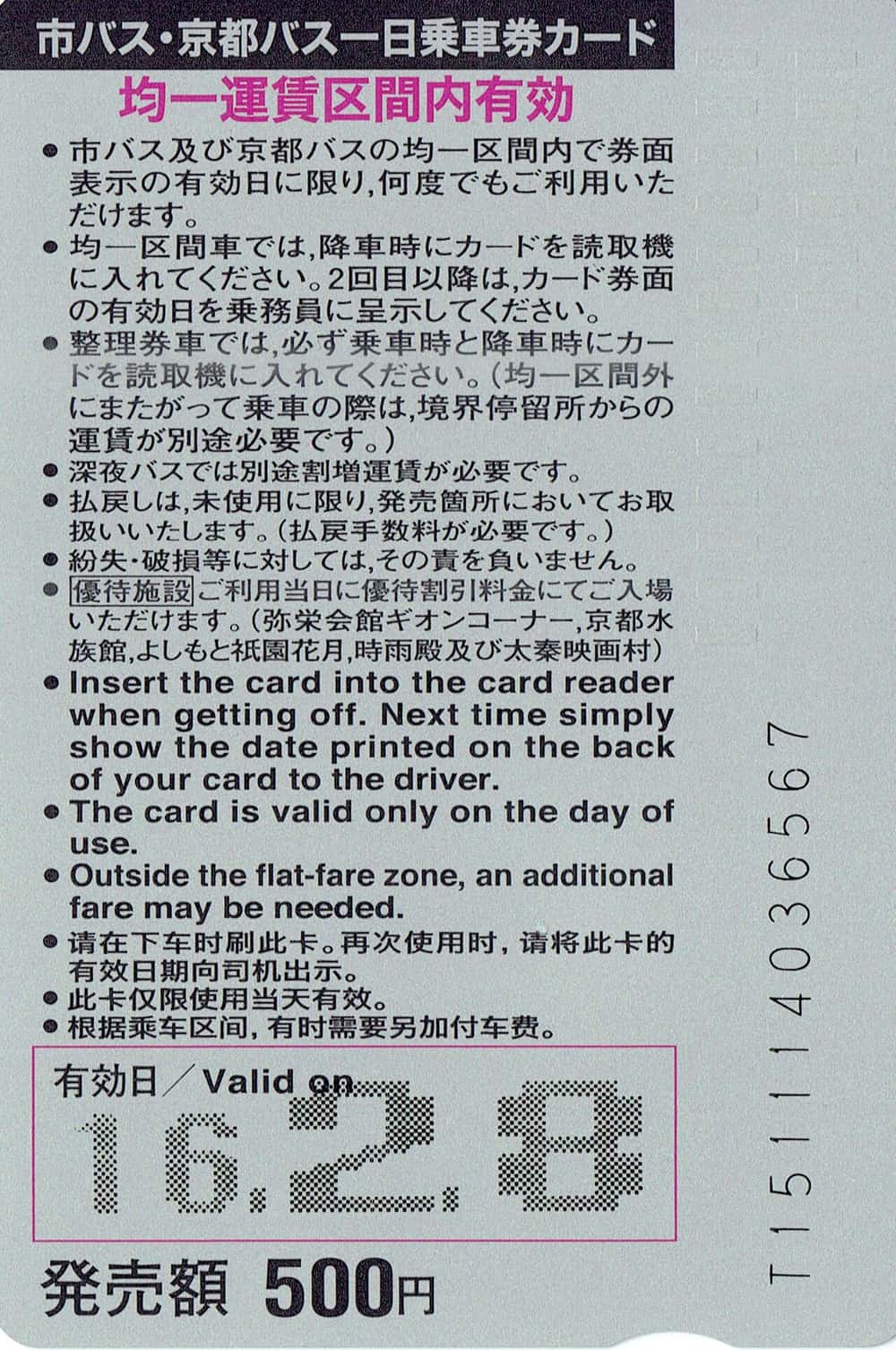
1. The ¥700 bus day pass — abolished (stop looking for it)
Let's clear up the biggest misunderstanding first. Kyoto's most beloved ticket, the bus one-day pass (unlimited flat-zone City Bus + Kyoto Bus rides, last priced at ¥700), was withdrawn from sale at the end of September 2023 and stopped being valid at the end of March 2024. Per the Kyoto City Transportation Bureau, the withdrawal was meant "to ease bus congestion and steer travelers onto the subway." If you see a pre-2023 guide telling you to "buy the ¥700 bus day pass," that's outdated — you can't buy it anymore.
2. Subway & Bus 1-Day Pass ¥1,100 — the current workhorse
The replacement is the Subway & Bus 1-Day Pass, ¥1,100 adult, ¥550 child. Its coverage is broader than the old bus pass: the entire Kyoto Municipal Subway, plus Kyoto City Buses and Kyoto Bus (in certain zones), all unlimited — and on weekends it covers the express buses for free too.
Is it worth it? Let's do the math. City bus is a flat ¥230, subway starts at ¥220:
- Four bus rides in a day = ¥920 → doesn't break even; the pass loses.
- "Two subway + three bus" rides = ¥1,130 → roughly even, and you skip tapping each time; worth it.
- Six or more rides of dense movement → the pass clearly wins.
My view: Kyoto's sights are spread out, so a full day often does exceed 5 rides, and the pass usually pays off for a "bus + subway mix" day; but if your day is mostly JR/private rail or walking and you only take a bus once or twice, skip it and tap ICOCA instead. Don't default to "you must buy a day pass in Kyoto." One important caveat: this pass does not cover JR, Keihan, Hankyu, Randen or Eizan — you tap separately for those private railways.
3. ICOCA / Suica — the most foolproof option
If you don't want to count rides, a single ICOCA (or Suica, or PASMO) gets you across all of Kyoto. City Bus, Kyoto Bus, the subway, JR, Keihan, Hankyu, Randen and Eizan all accept a tap, deducting fares automatically with no per-leg ticket. No card? Buy a physical ICOCA from any vending machine at JR Kyoto Station or a subway station; the balance even works at convenience stores and restaurants. How to buy and refund an IC card, and how Suica and ICOCA differ, is laid out in our complete Japan IC card guide.
My own decision rule is simple: if that day means dense bus + subway use (5+ rides), buy the Subway & Bus 1-Day Pass; otherwise, just tap ICOCA. Unlike Tokyo, Kyoto has no must-buy ticket like a 24-hour subway pass, so the flexibility of an IC card serves most travelers best.
Mode-by-mode comparison table
| Mode | Fare (one-way) | Speed / punctuality | Coverage | Best for |
|---|---|---|---|---|
| City bus | ¥230 flat | ⚠️ Jams easily | ✅ Widest | Kiyomizu, Kinkaku-ji, Ginkaku-ji |
| Express bus | ¥500 flat (weekends only) | ○ More punctual, frequent | Higashiyama line | Weekend trips to Kiyomizu, Ginkaku-ji |
| Subway | From ¥220 | ✅ Punctual, no jams | ❌ Only 2 lines | Nijo Castle, Keage, downtown Shijo |
| JR | ¥150–240 | ✅ Fast and punctual | Radial | Fushimi Inari, Arashiyama, Uji |
| Keihan / Hankyu | ¥150–410 | ✅ No jams | N–S / toward Osaka | Fushimi Inari, Tofuku-ji, Osaka day trips |
| Randen / Eizan | ¥250 flat / by distance | ○ Slow but steady streetcar | Arashiyama / Kibune-Kurama | Arashiyama line, Kurama foliage |
| Taxi | From ¥500, short hop ~¥1,000–2,000 | ○ Traffic-dependent | Anywhere | Tight schedule, splitting among 3+, heavy luggage |
Real strategy: how to plan a day
Let's distill all of the above into rules you can apply immediately. This is the Kyoto movement logic I think wastes the least time:
Rule 1: Plan live with Google Maps, don't worship the route map
Kyoto's bus numbering is complex (100, 206, 205…) and memorizing the map is pointless. Just type your sight into Google Maps and it tells you which bus, whether to transfer onto the subway mid-route, and how bad traffic is right now. It automatically surfaces "subway to a station, then walk" hybrid options — which is exactly the key to dodging traffic. The prerequisite is stable mobile data.
Rule 2: Avoid Higashioji buses at peak (afternoons)
From 1pm to 4pm, and throughout cherry-blossom and foliage season, the buses around Higashiyama (Kiyomizu ↔ Gion ↔ Ginkaku-ji) are the worst jam zone. For these legs, switch to subway-plus-walk or JR/Keihan whenever possible. For Kiyomizu, instead of cramming onto bus 206 at Kyoto Station, take Keihan to "Kiyomizu-Gojo" and walk up, or subway to "Shijo" and transfer. On weekends, just take the ¥500 express.
Rule 3: Treat subway and JR/private rail as the "trunk," buses as the "last mile"
Subway and JR/private rail are immune to surface traffic and beat buses on both speed and punctuality. Use them to deliver you to the station nearest your sight; reserve the bus only for the final leg you can't walk. That way most of your travel time is "punctual and predictable," and only the last mile might jam — which keeps your whole day's rhythm far steadier.
Rule 4: Buy the day pass only on "dense bus + subway" days
While planning, use Google Maps to estimate roughly how many rides a given day involves. More than 5 (bus + subway) → buy the Subway & Bus 1-Day Pass at ¥1,100; otherwise tap ICOCA. A pure bus-and-subway day like "Kinkaku-ji → Ginkaku-ji → Kiyomizu" makes the pass pay; but a JR-heavy day like "Fushimi Inari (JR) → Arashiyama (JR)" gets no use out of it — just tap.
Once you've got in-city Kyoto sorted, if you're stringing it together with Osaka and Nara, plan the inter-city movement and accommodation rhythm with our classic Osaka–Kyoto 5-day itinerary. And for that very first leg from the airport into Kyoto on HARUKA, how to link and start the WEST QR e-ticket is in our HARUKA e-ticket guide. Everything else you should pack and prep for the trip is bundled into our Japan travel essentials checklist.
Gion: kimono and tea ceremony in one sitting
Once transport is handled, spend the time you saved on the experiences. Orizuruya in Gion bundles the kimono and the tea ceremony into one booking, 1.5–2 hours, about US$49 — a timed session, not an all-day rental, so book a separate rental if you want to keep the kimono on all day. The listing does not state which languages the session runs in, so ask first if that matters.
See the Gion kimono & tea ceremony →Frequently Asked Questions
- Q1:Can I still buy the Kyoto ¥700 city bus one-day pass?
- No. The Kyoto City Bus one-day pass (flat-fare unlimited bus rides, last priced at ¥700) was withdrawn from sale at the end of September 2023 and stopped being valid at the end of March 2024. The city's stated reason was bus overcrowding — it wanted to push tourists onto the subway. The replacement is the Subway & Bus 1-Day Pass at ¥1,100, which adds the whole subway network but is harder to break even on.
- Q2:Is the Kyoto Subway & Bus 1-Day Pass worth it?
- It depends how many rides you take. A central-zone city bus is a flat ¥230 and the subway starts at ¥220, so you need about 5 or more rides (bus + subway combined) in one day to beat ¥1,100. If your day is a dense mix like two subway hops plus three bus rides, it pays off. If you only take one bus to Kiyomizu and one back, tapping an ICOCA card is cheaper. Kyoto sights are spread out, so a full day often does hit 5 rides — but don't assume you must buy it.
- Q3:Do ICOCA and Suica work on Kyoto buses and subway?
- Yes. ICOCA, Suica, PASMO, PiTaPa and all nationwide IC cards work on Kyoto City Buses, Kyoto Bus, the municipal subway, JR, Keihan, Hankyu, Randen and Eizan trains — just tap on and off, no paper ticket needed. Note that as of 2024 most central Kyoto city buses switched to board at the front and pay first (front-boarding, prepay), unlike the old rear-board system. If you don't have a card, buy a physical ICOCA at any JR or subway station — it works across all of Kansai.
- Q4:What are the Kyoto sightseeing express buses (EX100 / EX101) and how much do they cost?
- These are the new "Sightseeing Limited Express" buses Kyoto launched in June 2024 to relieve tourist congestion toward Kiyomizu-dera and Ginkaku-ji. They run only on Saturdays, Sundays, national holidays, and the Obon and New Year periods — never on regular weekdays. The flat fare is ¥500 for adults (¥250 children), more than a normal bus but they stop only at major points and run every 7–8 minutes in the morning. EX100: Kyoto Station → Gojo-zaka (Kiyomizu) → Gion → Heian Shrine → Ginkaku-ji; EX101: Kyoto Station → Gojo-zaka (Kiyomizu) direct. IC cards work, and the Subway & Bus 1-Day Pass covers them for free.
- Q5:How do I get from Kyoto Station to Kiyomizu-dera?
- On weekends/holidays take the EX100 or EX101 express bus (¥500, no detours). On weekdays there's no express, so take city bus 86, 100 or 206 (¥230) — but expect serious jams near Kiyomizu-michi at peak times. My preferred move: take the subway to "Shijo" or the Keihan train to "Kiyomizu-Gojo" and walk up. It's a 15–20 minute uphill walk, but you completely skip the buses stuck on Higashioji-dori, so your timing is far more predictable. Short on time? A taxi from the station is roughly ¥1,500–2,000.
- Q6:How much should I budget for transport in Kyoto per day?
- Using official flat fares: five bus rides is about ¥1,150; a mix of two subway plus three bus rides is about ¥1,130. The Subway & Bus 1-Day Pass at ¥1,100 roughly matches that and saves you tapping each time. Express buses cost more on weekends, and a short taxi hop starts around ¥1,000. Budgeting ¥1,100–1,500 a day for transport is realistic — cheaper than Tokyo, but don't be fooled by "Kyoto is small": the sights are not actually close together.
Read next
Kyoto Arashiyama Day Trip 2026
15M visitors a year, but mornings and post-noon are quiet. Hour-by-hour plan, four afternoon branches, and Romantic Train booking truths.
Osaka & Kyoto 5-day itinerary
Dotonbori, Kiyomizu, Arashiyama in one five-day route.
Suica vs ICOCA vs PASMO 2026: Which IC Card to Buy?
The chip shortage is over — unregistered Suica and PASMO went back on sale in March 2025, alongside the deposit-free Welcome Suica and phone options. Which to pick, and how they differ.