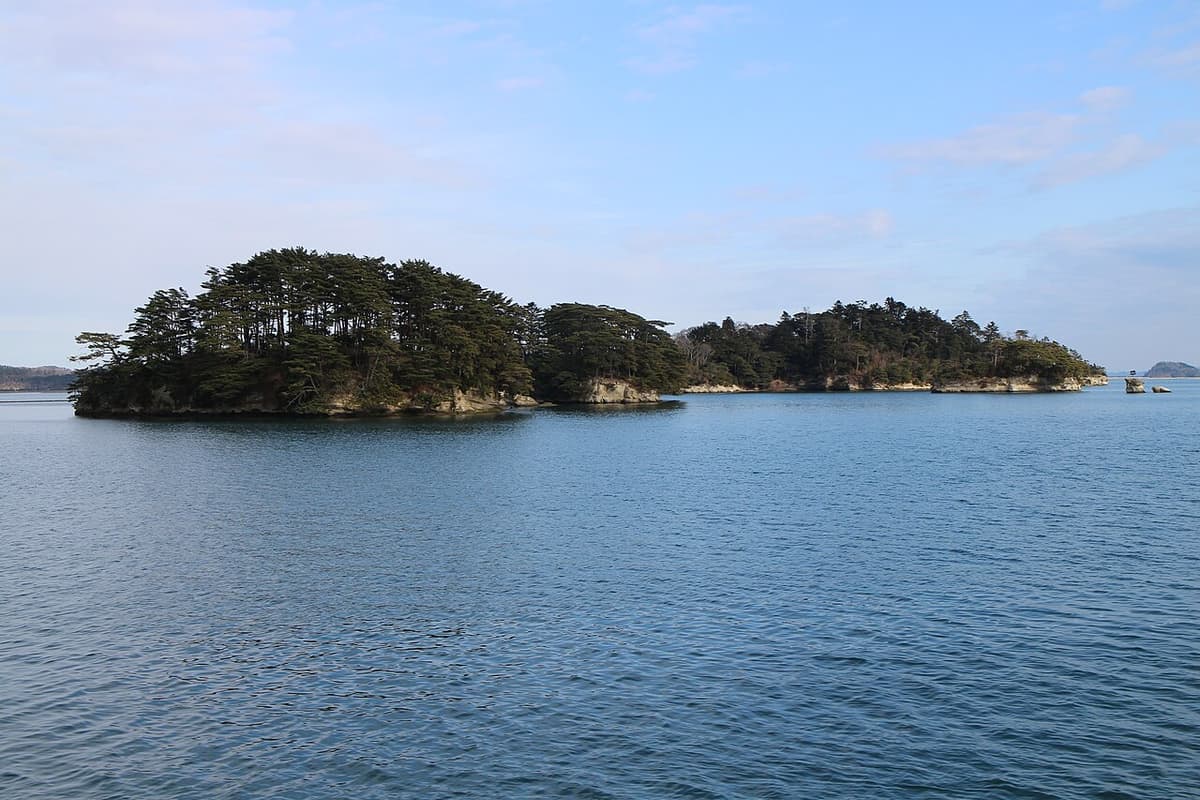
The single most important number in Matsushima changed this year. Admission to Zuiganji, the National Treasure Zen temple that anchors the town, rose from ¥700 to ¥1,000 on April 1, 2026, under a revision notice the temple dated March 15, 2026. The second number that ruins afternoons is the closing time: Zuiganji shuts at 16:00 in November with last admission at 15:30, which is precisely when the foliage crowds arrive. This guide takes the bay apart facility by facility: the temple price hike and its four published goshuin, the free hall over the water whose hidden Buddhas next appear in 2039, Entsuin's confirmed October 24 to November 23 illumination, the 50-minute Niomaru cruise and the deck upgrade you can only buy once aboard, the toll bridge and the free islands, oysters whose official season is November to March, and the two similarly-named stations that cost careless visitors a 15-minute walk. Every figure below was checked against official pages in July 2026.
📍 This guide covers Matsushima only. Aoba Castle, Zuihoden, beef tongue and the Tanabata festival belong to the city itself and are covered in the Sendai travel guide.
- Zuiganji went up in April 2026: adults ¥700 → ¥1,000, children ¥400 → ¥500; 16:00 close and 15:30 last entry in November
- Godaido is free, 8:30–17:00 — built by Date Masamune in 1604 and the oldest surviving Momoyama building in Tohoku; its Five Wisdom Kings are shown once every 33 years, next in 2039
- Entsuin's 2026 illumination is confirmed: Oct 24 – Nov 23; daytime admission ¥500, but the evening hours and fee are not yet published
- Niomaru cruise: ~50 minutes, ¥1,500; the second-deck green seat adds ¥600 and is sold on board only
- Station trap: you want Matsushimakaigan Station on the Senseki Line (10 min to Zuiganji), not Matsushima Station on the Tohoku Main Line (25 min)
- Oyster season is November to March: all-you-can-eat grilled oysters, 45 minutes, now listed at two prices — ¥3,500 and ¥4,000 — with no stated difference between them (checked 2026-09-06), no reservations taken
📖 Table of Contents (click to expand)
- Zuiganji: is ¥1,000 still worth it after the hike?
- The four published goshuin at Zuiganji
- Godaido: free, see-through bridges, and 2039
- Entsuin and the confirmed 2026 night illumination
- The Niomaru cruise and the deck you buy on board
- Fukuura Bridge, Oshima and the free walks
- Kanrantei: a pavilion moved from Fushimi Castle
- Oysters: the real season and the real 2026 price
- Getting there, the station trap and the pass maths
- Matsushima vs Miyajima vs Amanohashidate
- Half day or full day? An honest verdict
- FAQ
Zuiganji: is ¥1,000 still worth it after the hike?
Start with the ticket, because almost nothing written in English has been updated. Zuiganji published a revision notice dated March 15, 2026, and from April 1, 2026 the admission fee changed as follows.
| Category | Until Mar 31, 2026 | From Apr 1, 2026 (current) | Groups of 30+ |
|---|---|---|---|
| Adult (incl. university, vocational, high school) | ¥700 | ¥1,000 | ¥900 |
| Child (junior high and elementary) | ¥400 | ¥500 | ¥400 |
| Disability certificate (cash, shown at window) | — | ¥400 adult / ¥200 child | — |
| Educational student groups | — | ¥900 high school and above / ¥400 younger | — |
The temple is unusually specific about why: rising maintenance costs for the grounds under general inflation, plus funding for a full renovation of the treasure hall and conservation work on the cultural properties in its collection. That deserves a fair hearing. The Main Hall and the Kuri, the great monastic kitchen, are National Treasures, and buildings at that grade are not maintained out of ticket revenue alone.
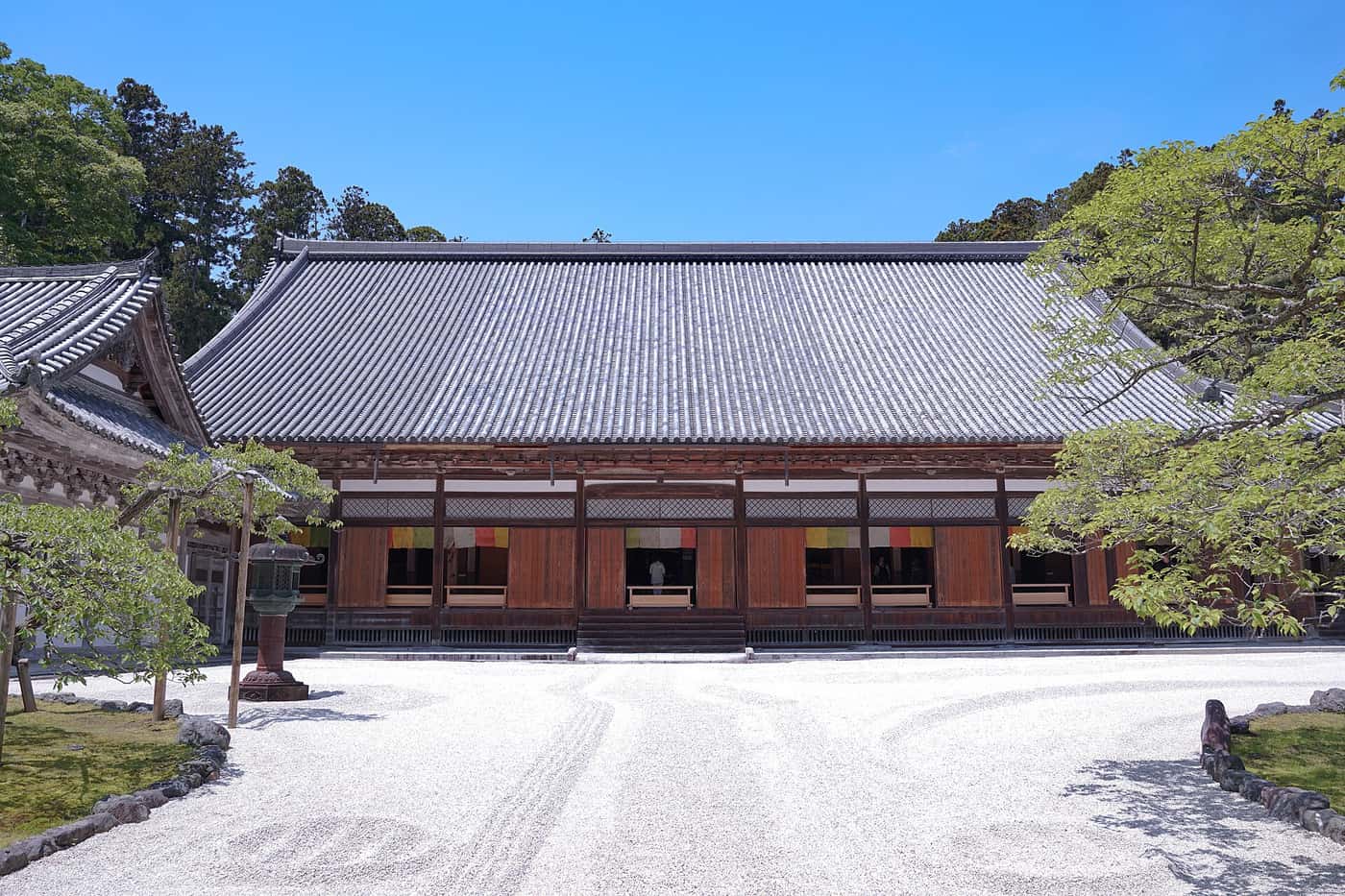
So is ¥1,000 worth paying? Yes — and more than that, Zuiganji is the one thing in Matsushima you cannot skip and still claim to have been here. The logic is simple. Everything else the bay offers — the islets, the sea light, the vermilion bridges — is either free or a few hundred yen, and you can absorb most of it from a boat or a walkway. The temple that Date Masamune spent years rebuilding is the only place in Matsushima where the wealth and taste of the Date clan take physical form, and it carries National Treasure status to prove it. Its full formal name is Matsushima Seiryuzan Zuigan Enpuku Zenji, of the Myoshinji branch of Rinzai Zen. If you have two hours and can pay for exactly one thing, pay for this.
Three limitations the temple states outright, which are worth knowing before you arrive. Wheelchair access covers the treasure hall only — not the Main Hall or the Kuri. There is no dedicated car park, so drivers use the paid lots nearby. And the posted visit time is 30 to 40 minutes, so this is not a stop you can compress into a photo and a exit.
The closing time moves every few months, and November is the trap
Opening is a steady 8:30 all year. Closing is not, and the tightest months land on the two seasons most visitors pick.
| Month | Open | Close | Last admission |
|---|---|---|---|
| January | 8:30 | 15:30 | 15:00 |
| February | 8:30 | 16:00 | 15:30 |
| March | 8:30 | 16:30 | 16:00 |
| April–September | 8:30 | 17:00 | 16:30 |
| October | 8:30 | 16:30 | 16:00 |
| November | 8:30 | 16:00 | 15:30 |
| December | 8:30 | 15:30 | 15:00 |
The rule behind the table is that last admission is always 30 minutes before the gate closes. Apply that to November and the failure mode becomes obvious: cruise in the morning, eat oysters at midday, wander to the temple in the afternoon, and arrive after 15:30 to a closed desk. November is also the month of the Entsuin night illumination, which tempts people to keep the daytime loose — exactly the wrong instinct.
My scheduling advice is blunt: in November, make Zuiganji your first stop and be there when it opens at 8:30. The approach is quiet, the light is low, and finishing a 30-to-40-minute visit puts you neatly onto the 9:00 or 10:00 cruise.
One time-limited note while it is current: the temple's special exhibition, "Ikutsumo no Matsushima — Prayer, Travel, Landscape", runs from July 28 to October 12, 2026. If you are visiting before mid-October you can add it; afterwards it is gone, and those dates should not be reused for a later year.
The four published goshuin at Zuiganji
If you collect goshuin, this section matters, because Zuiganji publishes its offerings officially rather than leaving you to find out at the desk — which is less common than you would think.
| Goshuin | Offering | Note |
|---|---|---|
| Principal image (Sho-Kannon) | ¥500 | Uses the sanbo-in seal, signifying the Three Treasures: Buddha, Dharma, Sangha |
| Godaido (Five Wisdom Kings) | ¥500 | Uses a goho-in seal with the Sanskrit character for Fudo Myo-o |
| Sanshodo | ¥500 | — |
| Shiji Kairo pilgrimage | ¥300 | For the four-temple circuit, not an individual hall seal |
The desk sits to the left of the admission reception, opening at 8:30, with last acceptance falling between 15:00 and 16:30 depending on the month — meaning it tracks the closing table above and tightens in November and winter.
The temple also gives a piece of practical advice worth following exactly: each goshuin is brushed by hand and takes time, so leave your book at the desk, go and pay your respects at the Main Hall, and collect it on the way out. The implication for late arrivals is unforgiving. Turning up at 15:00 in November while hoping for all four seals before a 15:30 cut-off does not work. Collectors need to be earlier than everyone else.
One rule the temple flags explicitly: taking only the Godaido goshuin does not complete the Shiji Kairo pilgrimage. If the circuit is your goal, ask for the pilgrimage seal. For how the practice works generally — preparing a book, the order of worship, what not to do — see the Japan goshuin guide, with the ritual itself covered in the shrine etiquette walkthrough.
Godaido: free, see-through bridges, and 2039
The little hall standing over the water — the shot that sells Matsushima — costs nothing. Godaido is free to visit, open 8:30 to 17:00, and sits right beside the cruise pier, about 8 minutes on foot from Matsushimakaigan Station. It is the best-value stop in town, and most visitors treat it as a backdrop, which is a waste.
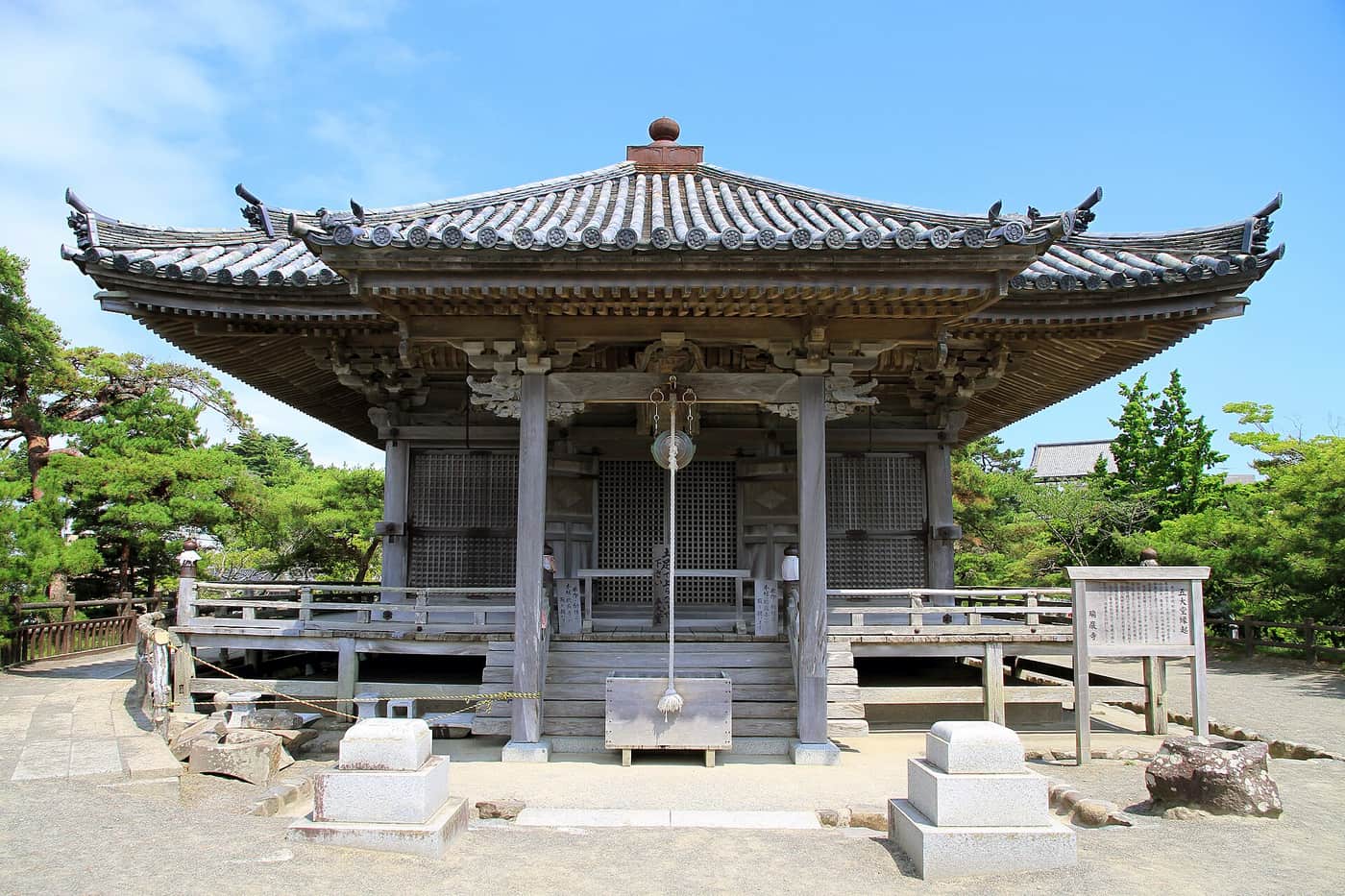
Its credentials first. The hall standing there now was built by Date Masamune in 1604, and it is the oldest surviving Momoyama-period building in Tohoku, designated an Important Cultural Property. It is not a replica and not a postwar reconstruction — it is the structure Masamune put up, four centuries ago, and knowing that changes how it reads.
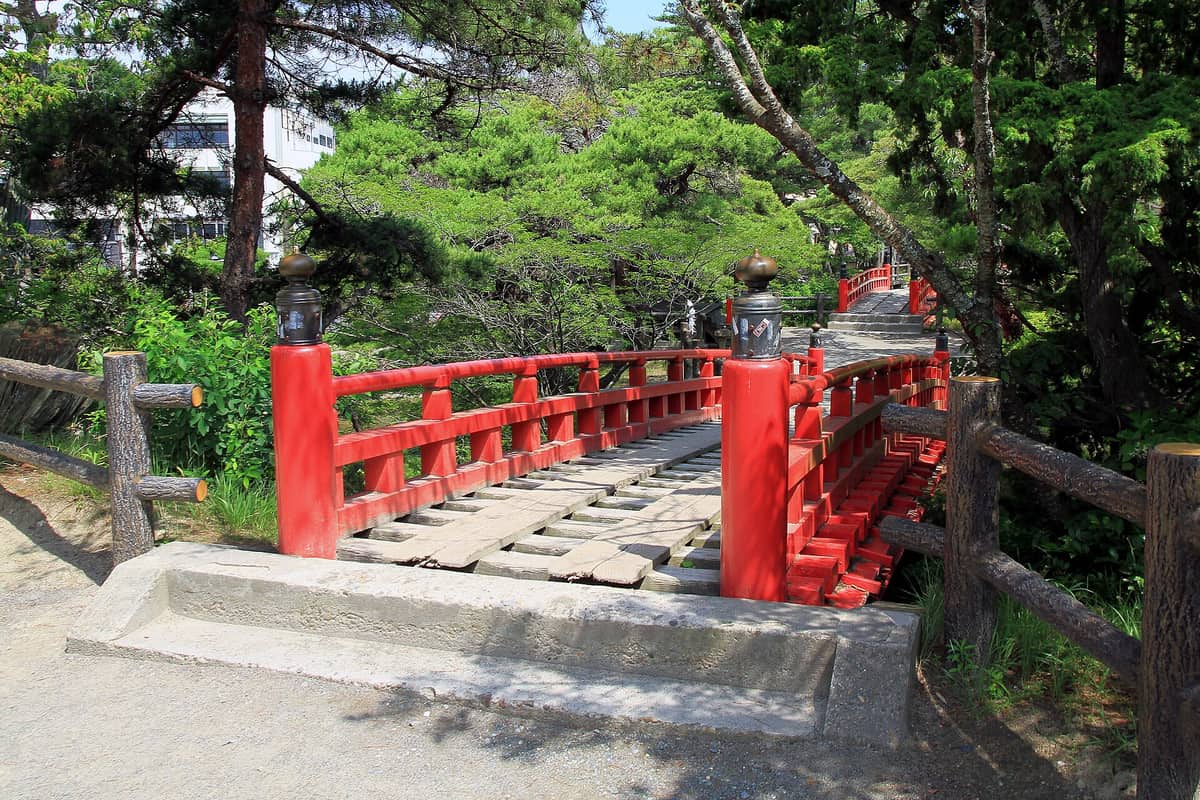
Then the bridges. Two short vermilion spans, the sukashibashi or see-through bridges, carry you across to the islet, and their decks are laid in an open lattice — you look straight down through the gaps at the sea some 5 metres below. This is deliberate rather than dilapidated: the official explanation is that the design forces you to compose yourself before entering sacred ground. In practice you slow down, watch your feet, and cross from tourist to pilgrim in about ten seconds. Anyone in heels, or carrying a small child, should take it carefully.
Finally, the fact that decides what you will actually see: the Five Wisdom Kings enshrined inside are hidden Buddhas, revealed once every 33 years, and the next opening is in 2039. In 2026 you are visiting the architecture, the setting and the sea, not the icons. Knowing that in advance saves you circling the hall looking for a way in.
Entsuin and the confirmed 2026 night illumination
Entsuin stands a few minutes along the same approach as Zuiganji, and plenty of visitors skip it to save time. If you are here in autumn, skipping it is the biggest mistake available to you.
| Item | Detail |
|---|---|
| Admission | Adults ¥500 / elementary and junior high ¥300 (groups of 15+: ¥400 / ¥200) |
| April–November | 9:00–16:00 |
| December–March | 9:00–15:30 |
| Closed | Open all year |
The temple asks visitors to enter at least 30 minutes before closing. Its published daytime highlights are a rose garden in summer, the Enmusubi Kannon for matters of the heart, where wishes are written on small kokeshi figures, and a hands-on prayer-bead workshop. That first one connects neatly to Fukuura Bridge later in this guide, whose nickname is the Meeting Bridge and whose legend promises a good match to anyone who crosses it. Taken together they make a genuine matchmaking route through Matsushima, which is a way of using the town that almost nobody writes up.
The 2026 illumination: dates confirmed, hours and fee not
This is the most time-sensitive section in the guide, so the confirmed and the unconfirmed are kept strictly apart.
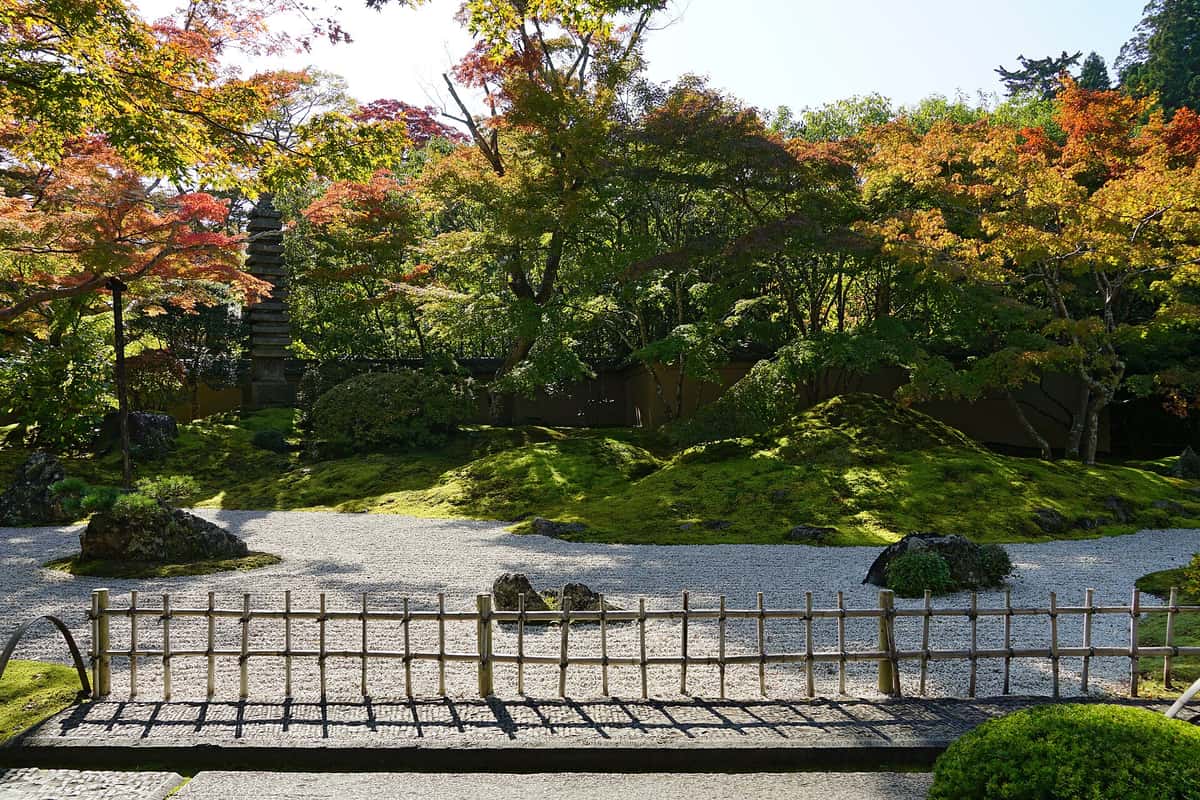
🍁 Officially announced by Entsuin on July 9, 2026: the "Entsuin Autumn Foliage Illumination 2026" runs October 24 (Sat) to November 23 (Mon, a public holiday), 2026. The temple describes the draws as the inverted maples reflected in the Shinji Pond, the illuminated dry-landscape garden, and live music performed in the grounds.
Now the honest part: the 2026 opening time and evening admission fee are not in that announcement. What exists is the 2025 edition, reposted by a local hotel rather than by the temple — 17:30 to 21:00 daily, last entry 20:45, ¥1,300 for adults meaning junior-high age and up, free for elementary-age children and younger. Treat that strictly as a sense of scale: the evening ticket runs a couple of times the daytime price, and the gates close around nine. Do not budget or pre-pay against those numbers. Check the official site the week before you travel and you will have the real ones.
Is it worth reshaping a trip for? My view: if your Tohoku dates already fall between late October and late November, give Matsushima the evening. Maples mirrored in still water after dark are not common in Japan, and the crowds here are nothing like Kyoto's famous temples. If it would mean shifting an entire itinerary, no — Tohoku's autumn is deep, and the Oirase Stream peaks earlier and at a different scale, while the nationwide timing comparison sits in the Japan autumn foliage guide.
The Niomaru cruise and the deck you buy on board
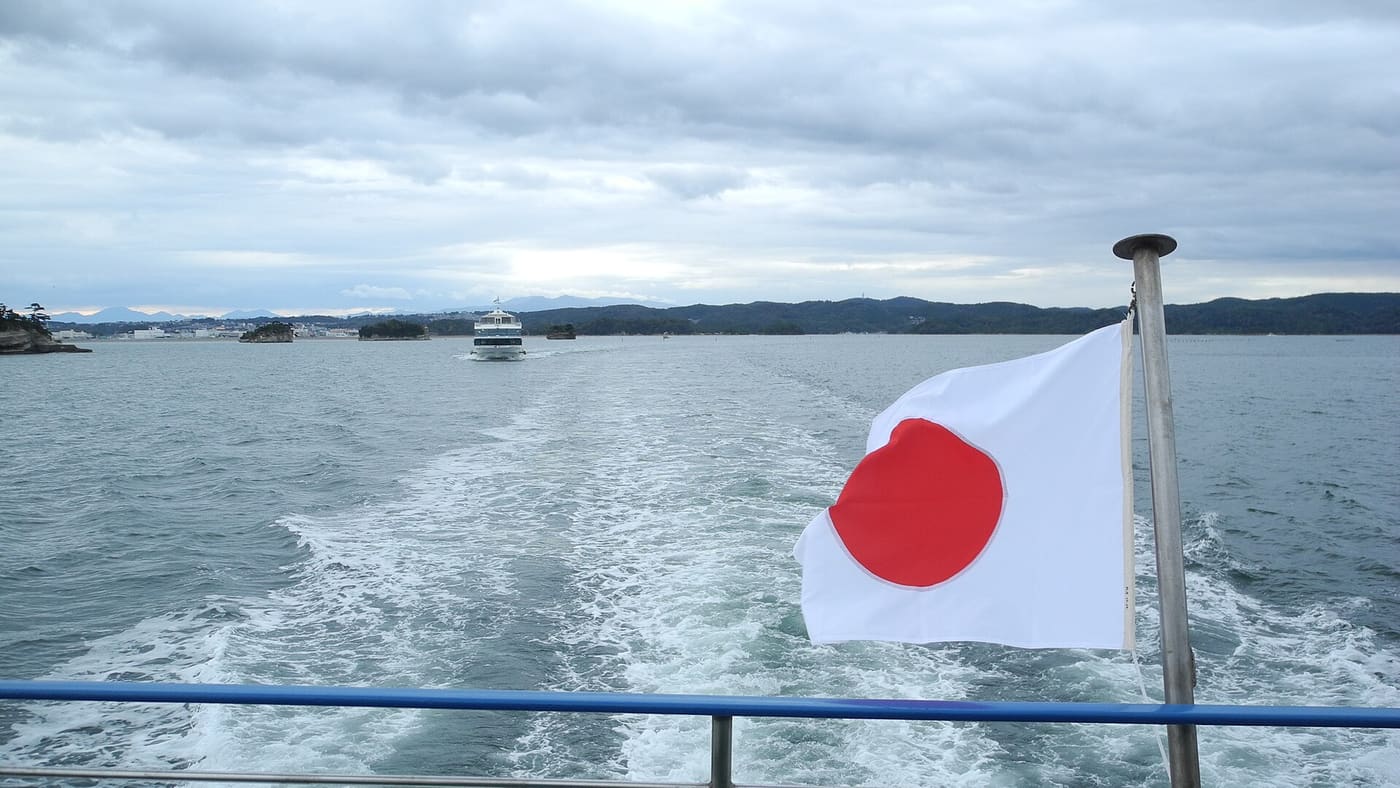
These islands are meant to be seen from the water. From the shore you get a row of silhouettes; from a boat you get the channels between them, the wave-undercut rock, and the improbable sight of pines rooted in stone with no soil to speak of. Those are different experiences.
There are several routes, but for an independent traveller the choice is really one: the Niomaru course, the large-boat route operated by the official cooperative. About 50 minutes, roughly 17 km around the bay, past named islets including Kaneshima and Niojima, and threading between the inhabited islands of Katsurashima and Nonoshima.
| Ticket | Fare | Note |
|---|---|---|
| Adult (junior high and up) | ¥1,500 | 10% off for groups of 15+ |
| Child (elementary) | ¥750 | — |
| Preschool | Free | A charge can apply if they outnumber guardians |
| 2F green seat (adult) | +¥600 | Sold on board only, no reservations |
| 2F green seat (child) | +¥300 | Disability discounts do not apply to it |
The green seat needs explaining in advance, because the way you buy it is counter-intuitive. The second deck is the observation level, the whole of it including the open-air section carries the green-seat surcharge, and seating is unreserved; the operator itself recommends it for photography. But it is sold on board and cannot be booked — not at the window, not online. Buy an ordinary ticket, board, then find a crew member. In peak season the upper deck fills, so do that immediately rather than settling in downstairs first. The lower deck has priority wheelchair seating.
Timetable, simply: hourly on the hour from 9:00 to 16:00, eight sailings a day, each about 50 minutes. Three variables to hold: the 16:00 sailing is cancelled in winter because the light goes, the 9:00 sailing may run on a smaller roughly 70-seat vessel, and Golden Week and Obon bring extra departures. The ticket office runs 8:00 to 17:00, or 8:30 to 16:00 in winter, on 022-354-2233. The operator's home page states that booking online carries a benefit while buying at the window on the day means the standard fare — but the size and nature of that benefit is a campaign matter and is not spelled out on the page, so no figure appears here. Check the current terms on the official timetable page before you decide to buy on the day.
Some practical detail. There is an on-board kiosk, and the items currently listed officially include beef-tongue jerky at ¥400, Matsushima local beer at ¥700 and an oyster rice ball at ¥200 — an oyster onigiri while the islands slide past strikes me as a better use of ¥200 than most things sold on the promenade. The Niomaru itself entered service on April 19, 2020, carries 400 passengers, and has onboard Wi-Fi, power sockets and an accessible toilet, which makes it a reasonable proposition with older relatives or a pushchair. Disability discounts run at 50% for the holder plus one companion, 10% otherwise, but the green-seat surcharge is excluded from them and cannot be combined with booking discounts.
Two further routes exist but are charter-only rather than per-seat: course B, about 25 minutes, ¥13,500 for up to 15 people and ¥900 per head beyond; course C, about 40 minutes, ¥20,250 for up to 15 and ¥1,350 beyond. Worth it for a group, pointless for a couple. Other operators also work the bay, but I checked the official cooperative only, so no prices for the others appear here.
Fukuura Bridge, Oshima and the free walks
Once the temple and the boat are paid for, most of what remains in Matsushima is free or nearly so, and the good news is that it strings into one coastal walk.
Fukuura Bridge: 252 metres of the "Meeting Bridge"
The vermilion Fukuura Bridge runs 252 metres and takes about 7 minutes to cross. The toll is ¥200 for adults and ¥100 for elementary and junior-high students, and it includes entry to the island; tickets are sold inside the Cafe Bayland at the bridgehead, with group rates for 30 or more. Its nickname is the Meeting Bridge, from a tradition that crossing it draws a good match — the other half of the Entsuin matchmaking route.
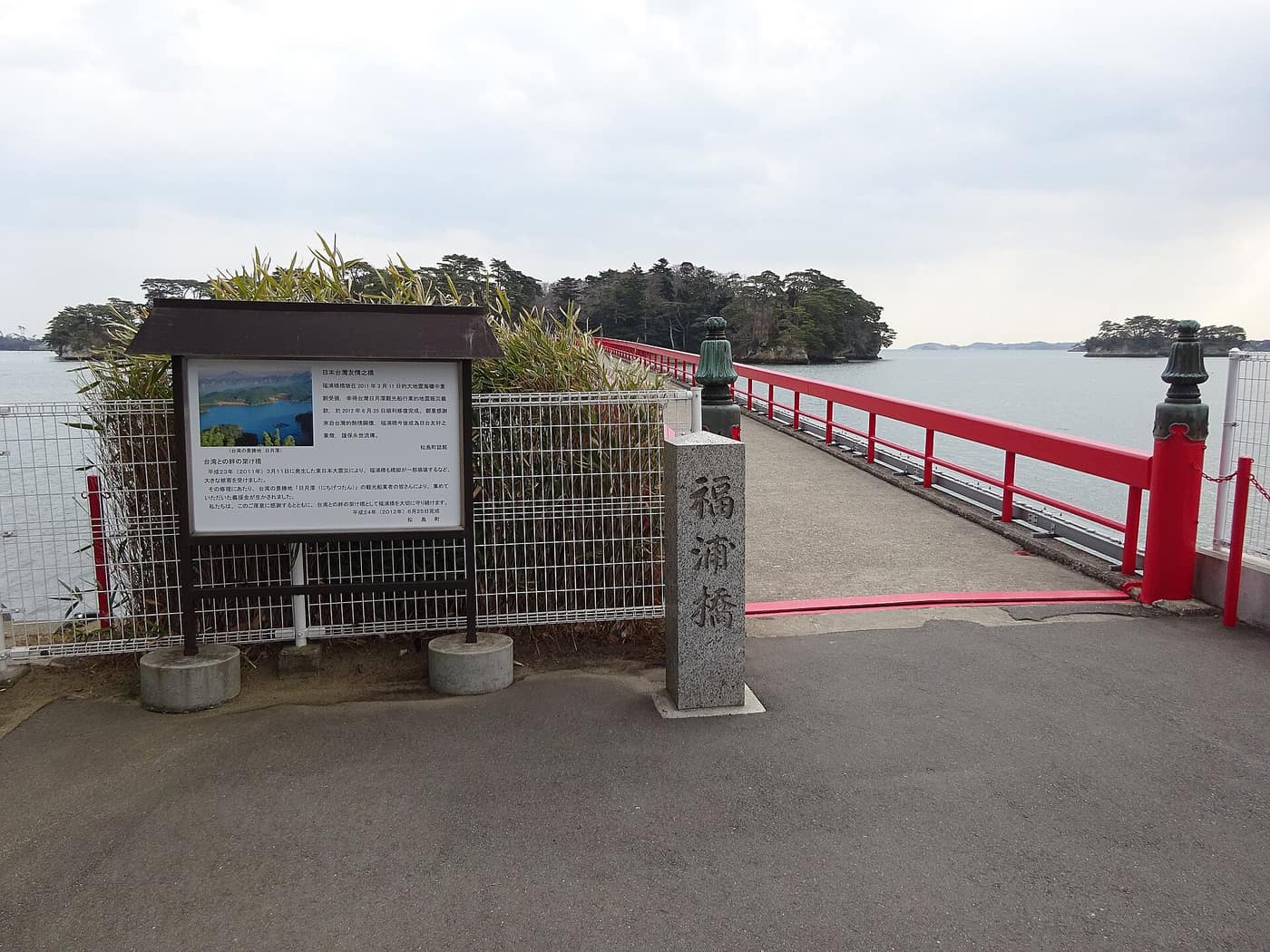
On the far side, Fukuurajima is a prefectural natural botanical park, and a full circuit of the island takes about 30 to 40 minutes. Budget roughly an hour for the whole thing including both crossings. Opening hours differ slightly between two official pages, so the safe framing is around 8:30 to 17:00, closing 16:30 from November to February.
There is an evening illumination, but it is for looking, not for crossing: 18:00 to 22:00 from April to August and 17:00 to 22:00 from September to March, with the colour shifting seasonally between cherry pink, pine green and bay blue. If you stay for Entsuin's night opening, the lit bridge is a free encore on the way back.
One caution on the price. Claims of an increase to ¥300 from April 2026 circulate online, but no official page carries the figure; both official DMO pages still listed ¥200 on July 28, 2026. This guide uses the official figure, but tolls move — glance at the board by the bridgehead when you arrive.
Oshima and Togetsu Bridge: free, and the quietest corner here
Oshima is free, joined to the mainland by the vermilion Togetsu Bridge. It was once an island of ascetic practice for monks, and it holds a group of rock-cut caves. Honestly, the verification behind this guide reaches only that far — the number of caves, the literary connections — so no deeper lore is invented here.
Even at that level, it earns a recommendation for one reason: the waterfront by the cruise pier is dense with people in season, and Oshima is nearly empty. A free island with an ascetic past, inside a resort that otherwise runs on commerce, is a rare thing. When Matsushima gets loud, cross the Togetsu Bridge.
Saigyo Modoshi no Matsu Park: 260 cherry trees and a miniature-garden view
Free, on high ground, and the place where the bay resolves into something like a miniature garden — a completely different photograph from anything taken at sea level. The park holds around 260 cherry trees, which gives spring visitors two reasons to climb.
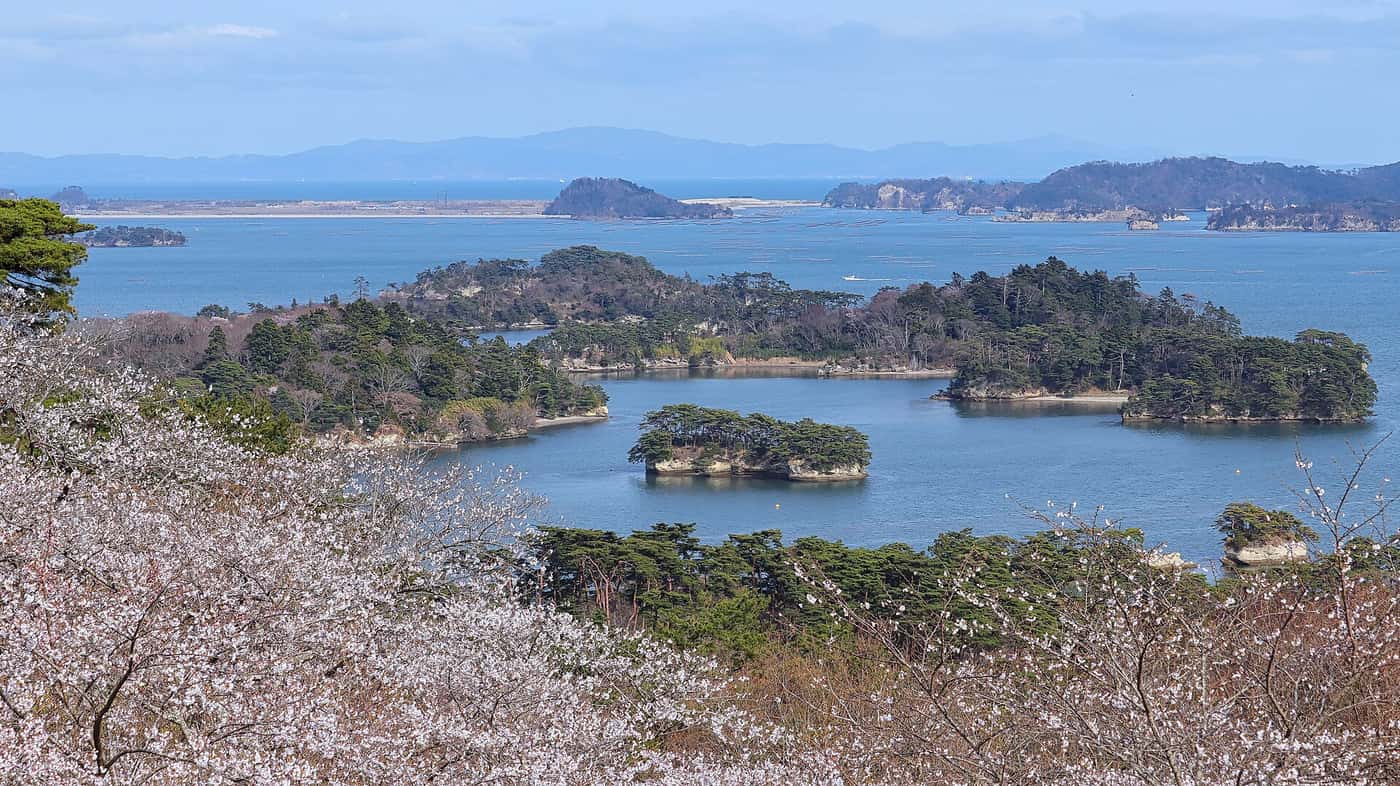
The name comes from a very Japanese story: the poet-monk Saigyo, travelling here, lost a Zen exchange with a child beneath a pine tree and turned back — hence "the pine that turned Saigyo back". There are cafe facilities in the park, but I did not confirm names or menus, so none appear here.
Matsushima also has its Four Great Views — Sokan, Reikan, Yukan and Ikan, four hilltop vantage points that frame the islands differently. Their individual access and opening details were not verified here, so they are named rather than described; without a car most visitors cannot realistically do all four, and Saigyo Modoshi no Matsu gets you most of the way there on its own.
Kanrantei: a pavilion moved from Fushimi Castle
This section is for anyone who searched for a castle, and it also happens to be the most underrated building in town.
There is no Matsushima Castle. What Matsushima has is a building that came out of one. Kanrantei began as a structure inside Toyotomi Hideyoshi's Fushimi Castle; Date Masamune received it, and the second lord, Tadamune, had it moved to Matsushima without altering a single timber, where the Date used it for taking the cool air and viewing the moon — hence the nickname the Moon-Viewing Palace.
| Item | Detail |
|---|---|
| Admission | Adults ¥300 / high, junior high and elementary ¥100 (30+: ¥250 / ¥50) |
| Matcha with a sweet | From ¥600, admission charged separately |
| Attached | Matsushima Museum: a 1/5000 relief model of the bay plus Date clan cultural properties, rotated seasonally |
| Phone | 022-353-3355 |
Here is how to use it. If you have half an hour spare and want to sit down, Kanrantei beats any cafe in town. A ¥300 ticket plus matcha from ¥600 buys you a bowl of tea inside a four-hundred-year-old relocated building, facing the bay. The 1/5000 relief model in the attached museum is also the fastest way to understand how two hundred–odd islands are actually arranged — see the model, then take the boat, and you will know what you are looking at.
Two caveats, stated plainly. The admission figures come from the Matsushima Tourism Association's official page as listed in July 2026, but an older ¥200 version of the price still circulates from an undated source, and the operator is the town itself, whose own site I could not cross-check — so treat ¥300 as probably right but worth confirming on site. And the opening hours are not published on the official page, so no times are invented here; phone ahead or read the board at the gate.
Oysters: the real season and the real 2026 price
Matsushima is oyster country. What decides which day you come is when they are actually in season, and what they now cost.
One thing sets Matsushima apart from Kyushu and Hiroshima: the staff steam the oysters and bring them to you, so there is no charcoal or gas surcharge layered on top. For how the three pricing models across Japan differ, see our comparison of oyster hut rules.
Season first, because it may decide your month. Matsushima Sakana Ichiba puts it this way officially: the flavour is exceptional specifically during the November-to-March season. Steamed and grilled preparations are sold year-round, but the recognised season is November to March, and October counts only as the beginning of it — so ignore the widespread claim that oyster season starts in October. Usefully, that overlaps the Entsuin illumination from October 24: mid-to-late November gives you peak-season oysters and lit maples on the same day, which is the densest window in the Matsushima year.
| Item | Price |
|---|---|
| All-you-can-eat grilled oysters (45 min) | ¥3,500 / ¥4,000 (two tiers listed, difference unstated) |
| Same, plus oyster rice and oyster soup | ¥4,000 |
| À la carte: two grilled oysters | ¥600 |
| À la carte: oyster rice / oyster soup | ¥400 / ¥300 |
| Matsushima grilled oyster set | ¥2,100 |
| Hours | Weekdays 10:00–15:00 / weekends and holidays 9:00–15:00 |
| Reservations | Not accepted — first come, first served, with queues in season |
Those are the prices listed officially in July 2026 for the Yakigaki House, beside the Matsushima Sakana Ichiba car park. The verification date is stated because this price has clearly moved more than once — ¥2,300, ¥2,800 and ¥3,300 versions are all still findable online and all obsolete. Budget ¥3,500 and confirm before you go.
The parent market is worth a look in its own right: Matsushima Sakana Ichiba, at 4-10 Fugendo, Matsushima, Miyagi-gun, Miyagi Prefecture, open 9:00 to 16:00 on weekdays and 8:00 to 16:00 at weekends and on holidays, closed only over the new year period, on 0120-50-2318.
A verdict on the buffet. Whether 45 minutes for ¥3,500 pays depends entirely on how much oyster you genuinely want. Two grilled oysters cost ¥600 à la carte, so the buffet needs about eleven or twelve before it breaks even, and grilled oysters get heavy towards the end. My recommendation: take the buffet only with two or more committed oyster eaters; solo, or with someone who does not eat shellfish, order two grilled oysters and a bowl of oyster rice for ¥600 plus ¥400 and come out ahead. Since reservations are not accepted and queues form in season, buffet-minded visitors should aim for opening time — 10:00 on weekdays, 9:00 at weekends — rather than the lunch peak.
One practical note: finish grilled oysters at the shop before moving on. They drip, they leave shells and skewers, and neither the temple approach nor the shrine precincts are the place to deal with that. There are seats and bins on site; sitting down to finish is both easier and closer to local habit.
Getting there, the station trap and the pass maths
Nearly everyone arrives from Sendai, and there is one classic way to get it wrong.
Sendai to Matsushimakaigan: ¥420, about 40 minutes, direct
Take the JR Senseki Line to Matsushimakaigan Station: ¥420, or ¥418 with an IC card, about 40 minutes, no transfer. That figure comes from several transit planners in agreement; JR East's own fare search renders in JavaScript and could not be fetched directly, which is noted here rather than glossed over.
The station trap
🚉 Two lines, two stations, one word apart. Matsushimakaigan Station on the JR Senseki Line is the right one — Zuiganji 10 minutes on foot, Godaido about 8, the cruise pier 10 to 15. Matsushima Station on the JR Tohoku Main Line is inland, and Zuiganji's own access page puts it at a 25-minute walk.
The trap works because a Tohoku Main Line rapid service to "Matsushima" looks perfectly plausible on a Sendai departure board, and is sometimes quicker on paper. You then step out at a small inland station with no shops or restaurants along the walk and a quarter of an hour between you and the bay. It is walkable; there is simply no reason to do it. When buying tickets, setting navigation or telling a taxi driver, insist on the word in the middle: Matsushimakaigan.
The Sendai Marugoto Pass: don't buy it just for Matsushima
The current price of this two-day pass is ¥2,930 for adults and ¥1,470 for elementary students, revised from the batch issued March 14, 2026 — the ¥2,720 figure still floating around is dead. Coverage is genuinely broad: JR between Sendai, Matsushimakaigan, Yamadera and Shiroishi, plus the Sendai Airport Access Line, the Loople Sendai loop bus, all Sendai municipal buses and subway lines, the Miyagi Kotsu Akiu Otaki route, and the Abukuma Express between Tsukinoki and Abukuma.
For a Matsushima day trip alone, though, it plainly loses, and here is the arithmetic:
- Sendai ⇄ Matsushimakaigan return = ¥840
- Pass, adult = ¥2,930
- Gap to close = about ¥2,090, within two days, from other journeys
Closing that gap in practice means adding Yamadera, or using the Loople and the subway hard around the city. The individual fares for those legs were not verified for this guide, and unverified numbers do not go into the maths here — but the direction is unambiguous: for a single day trip, buy ordinary tickets. Conversely, if your plan is "a city day plus a Matsushima day", or "Matsushima plus Yamadera over two days", the pass moves into the range where it deserves a proper calculation. For how to structure the city day and use the Loople, see the Sendai guide.
One practical reality: cruise departures, the current illumination hours and the queue at the oyster house all have to be checked on the spot, and November darkness arrives early enough that you will want live confirmation of the last train. Data that works the moment you land saves real time on a day like this — a KKday Japan eSIM is the usual choice, and the five-brand comparison sits in the Japan eSIM guide.
Matsushima vs Miyajima vs Amanohashidate
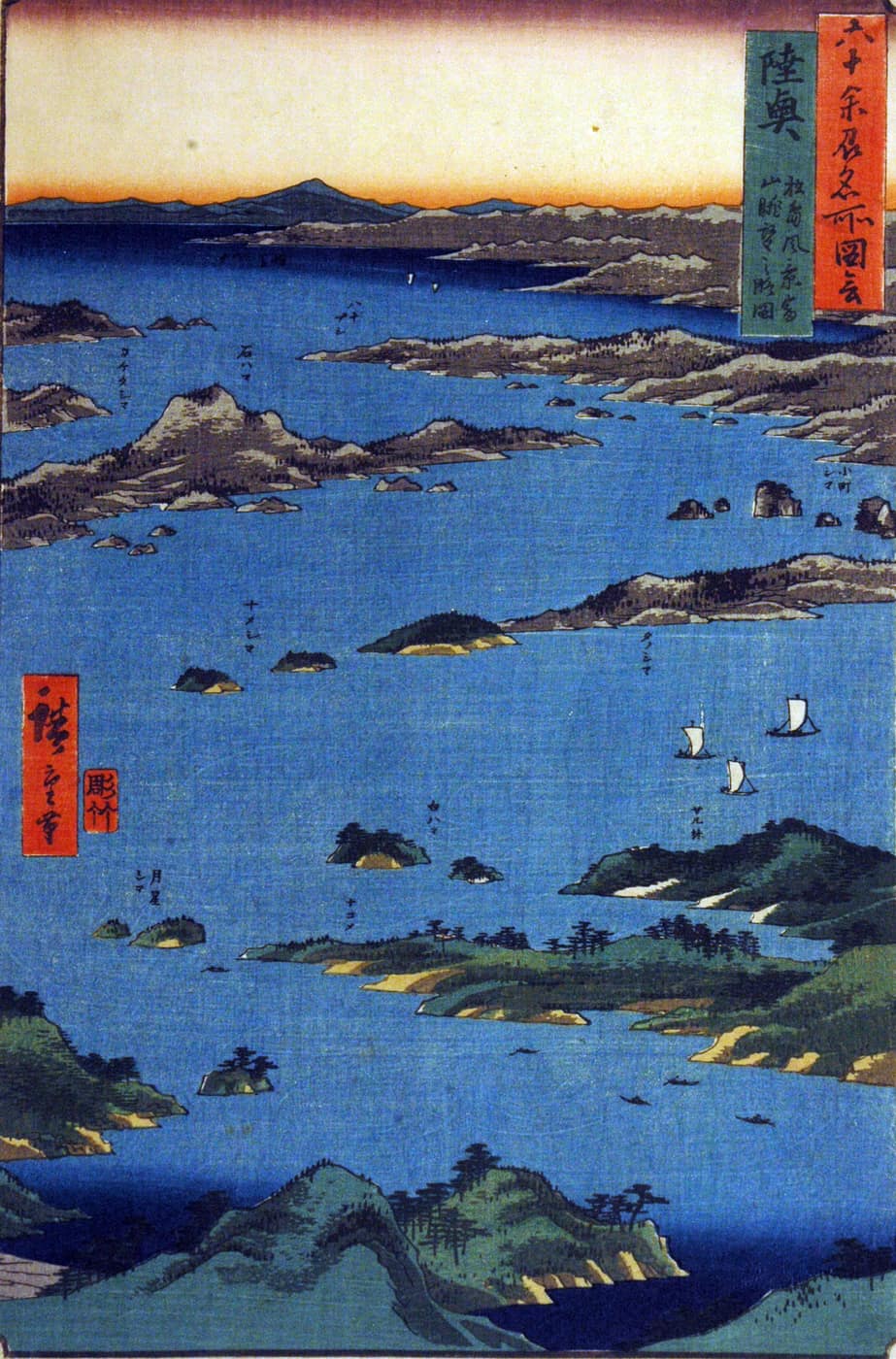
Matsushima is grouped with Amanohashidate in Kyoto and Miyajima in Hiroshima as the Three Views of Japan. Few travellers do all three, and the real question is usually narrower: if you can only visit one, which? There is a full Itsukushima Shrine guide for Miyajima, and now a full Amanohashidate and Ine guide as well — so the comparison below runs across all three.
| Point of comparison | Matsushima (Miyagi) | Miyajima (Hiroshima) | Amanohashidate (Kyoto) |
|---|---|---|---|
| Core paid sight | Zuiganji ¥1,000 | Itsukushima Shrine ¥300 | One viewpoint or the other: View Land ¥1,000 or the Kasamatsu cable car ¥800 |
| Structure over water | Godaido (1604, Masamune — free) | The great torii and the shrine's sea corridors | None — the sandbar itself is the sight (about 3.6km long) |
| How you see the sea | 50-minute island cruise (¥1,500) | Ferry across to the island | 12-minute boat crossing (¥800), or walk it in 40–50 min / cycle in 15–20 |
| Terrain | 200-plus pine islets spread horizontally across a bay | A single island with Mt. Misen and real vertical relief | A pine sandbar laid across the bay — it only works seen from above |
| Local specialty | Oysters (season Nov–Mar) | Oysters (also a famous oyster area) | Chie-no-mochi at the temple gate; Tango snow crab in winter (6 Nov–20 Mar) |
| What can spoil it | Season and sea conditions | The tide — whether the torii floats at all | Which viewpoint you pick — Hiryukan or Shoryukan, plus the official Ichijikan and Sesshukan |
My reading is this. Miyajima concentrates into a single image — the torii and the shrine on the water — and that image is governed by the tide, so you check a tide table before you go. Matsushima has no single defining picture; it is a dispersed landscape, and for that reason nothing about it is hostage to a time window. Miyajima is a performance you have to arrive on time for. Matsushima is a stretch of coast you can walk at your own pace. A first-time visitor who wants "that photograph" should go to Miyajima; someone on a third or fourth trip who wants an afternoon of temple, bridge, island and a plate of oysters will get more out of Matsushima.
And a useful non-difference: both are famous oyster regions, so eating oysters in Japan is not a reason to choose north over south. Follow whatever your itinerary was already doing.
With the third view finally in the comparison, the question gets easier to answer: Miyajima sells you an image, Matsushima sells you a landscape, and Amanohashidate sells you a viewpoint that does not exist until you climb to it. Walk the 3.6km at ground level and it reads as a long pine path, nothing more; the whole payoff is the forty minutes up on the hill. Of the three, Amanohashidate is the one you cannot treat as a stop-off — squeeze it into half a day and you have effectively not seen it.
Half day or full day? An honest verdict
The short answer: a half day is tight, a full day fits, and two days only make sense during the autumn night illumination.
The maximum a four-hour visit holds is roughly Zuiganji (40 minutes), Godaido (20), a cruise (50 plus waiting) and one oyster meal, with no slack anywhere. It works, but Entsuin, Fukuura Bridge, Oshima and Kanrantei all get cut — and those are exactly the parts that turn Matsushima from a photo stop into a proper outing. When people come back saying Matsushima was "fine", I suspect this is the version they did.
Given a full day, here is the shape I would use:
- 8:30 Zuiganji at opening (essential in November, with that 15:30 cut-off). Collectors: leave the goshuin book, worship, collect on the way out.
- 9:30 Entsuin next door — 30 to 40 minutes for the daytime version
- 10:00 The hourly cruise; buy the second-deck upgrade the moment you board
- 11:00 Godaido and the see-through bridges (free, 20 minutes)
- 11:30 Oysters — buffet-minded visitors should move this to opening time instead, to dodge the queue
- 13:00 Fukuura Bridge and a circuit of the island (about an hour)
- 14:30 Oshima for a quiet 20 minutes, or matcha at Kanrantei for a seated 30
- 16:00 Back to Matsushimakaigan Station — or stay for the Entsuin illumination if it is between Oct 24 and Nov 23
Should you sleep in Matsushima? Usually not — base yourself in Sendai and day-trip, since the return fare is ¥840 and Sendai wins comfortably on lodging choice, food and transport connections. The exception is that late-October-to-November illumination window, which finishes around nine and makes a rushed return awkward. If you are weighing where to sleep, compare Sendai hotels before deciding whether one night deserves relocating for.
So, finally: is Matsushima worth it? Yes — with the caveat that it does not deliver the kind of single-blow spectacle the "Three Views of Japan" label implies. It delivers density. Read it as one National Treasure Zen temple, one four-century-old hall standing over the sea, a 50-minute passage between islands, a plate of in-season oysters and a free coastal walk, all within walking distance of one another and 40 minutes from Sendai — and on that measure the value here is high by Japanese sightseeing standards. If what you want is to stand at a viewpoint and be floored, Miyajima does that more directly, and you should go there instead.
One sentence of advice to end on: give Matsushima a whole day, put Zuiganji first, take oysters between November and March, and take the maples between October 24 and November 23. The sea breeze handles the rest.
Frequently Asked Questions
- Q1:Is there a "Matsushima Castle"?
- No. No castle of that name exists in Matsushima, and the search term usually means one of three things. The closest real answer is Kanrantei. It began as a building inside Toyotomi Hideyoshi's Fushimi Castle; Date Masamune received it, and the second lord, Tadamune, had it relocated to Matsushima without altering a single timber, where it served the Date clan as a pavilion for taking the cool air and viewing the moon, earning the nickname the Moon-Viewing Palace. So Matsushima genuinely has castle lineage, just not a castle: admission is ¥300 for adults and ¥100 for students. The second possibility is that you are looking for Date Masamune architecture, which means Zuiganji, the Date family temple he rebuilt, and Godaido, which he erected in 1604. The third is a mix-up with Matsumoto Castle in Nagano or Sendai Castle, also called Aoba Castle, in Sendai city itself.
- Q2:How much is Zuiganji, and did the price change?
- It changed, and by a lot. Zuiganji issued a revision notice dated March 15, 2026, and from April 1, 2026 admission went from ¥700 to ¥1,000 for adults and from ¥400 to ¥500 for children of elementary and junior-high age. The adult band includes university, vocational-school and high-school students. Groups of 30 or more pay ¥900 and ¥400; educational student groups pay ¥900 for high school and above and ¥400 for elementary and junior high; visitors with a disability certificate pay ¥400 and ¥200, shown at the window and paid in cash. The temple states the reason plainly: rising maintenance costs for the grounds, plus funding for a full renovation of the treasure hall and conservation work on the cultural properties it holds. If you see ¥700 anywhere, that is the pre-April figure.
- Q3:What time does Zuiganji close?
- The closing time changes four times a year, and the shortest months are exactly the ones most visitors choose. The official schedule is 8:30 to 15:30 in January and December, 8:30 to 16:00 in February and November, 8:30 to 16:30 in March and October, and 8:30 to 17:00 from April through September. Last admission is always 30 minutes before closing. That means an autumn-foliage visitor in November faces a 15:30 cut-off and a 16:00 close, which catches out anyone who cruises and eats first and leaves the temple for the afternoon. The temple states that a visit takes 30 to 40 minutes, so aim to be at the reception desk by 15:00 at the latest, and considerably earlier if you want goshuin, since each one is brushed by hand.
- Q4:Which Matsushima cruise should I take, and what is the green seat?
- Independent travellers should take the Niomaru course, the large-boat route run by the official operators' cooperative. It lasts about 50 minutes, covers roughly 17 km inside the bay, passes named islets including Kaneshima and Niojima, and threads between the inhabited islands of Katsurashima and Nonoshima. Fares are ¥1,500 for adults, meaning junior-high age and up, and ¥750 for elementary students; preschoolers ride free, though a charge can apply when they outnumber their guardians. Departures run hourly on the hour from 9:00 to 16:00, eight sailings a day. In winter the 16:00 sailing is cancelled and the 9:00 one may switch to a smaller roughly 70-seat boat, while Golden Week and Obon add extra runs. The second-deck green seat costs ¥600 extra for adults and ¥300 for children, is unreserved, and is the best position for photographs, but it is sold on board only and cannot be booked in advance.
- Q5:What is the difference between Matsushimakaigan Station and Matsushima Station?
- They are two stations on two different lines, and mixing them up is the most common mistake here. Matsushimakaigan Station on the JR Senseki Line is the one you want: it puts you on the waterfront, 10 minutes on foot from Zuiganji, about 8 minutes from Godaido and 10 to 15 minutes from the cruise pier. Matsushima Station on the Tohoku Main Line sits inland, and Zuiganji's own access page states it is a 25-minute walk from there. From Sendai the Senseki Line runs direct to Matsushimakaigan in about 40 minutes for ¥420, or ¥418 with an IC card. If you see a Tohoku Main Line rapid service to "Matsushima" and assume it is faster, you will land 15 minutes of walking away from the bay with nothing along the route. Look for the word "kaigan", meaning coast, in the middle.
- Q6:Is the Sendai Marugoto Pass worth buying for Matsushima?
- Not for Matsushima alone, and the arithmetic is not close. The pass is valid for two consecutive days and, from the batch issued on March 14, 2026, costs ¥2,930 for adults and ¥1,470 for elementary students; the older ¥2,720 figure is dead. It covers JR between Sendai, Matsushimakaigan, Yamadera and Shiroishi, plus the Sendai Airport Access Line, the Loople Sendai bus, all Sendai municipal buses and subway lines, the Miyagi Kotsu Akiu Otaki route, and the Abukuma Express between Tsukinoki and Abukuma. The problem is that a Sendai to Matsushimakaigan round trip costs only ¥840, leaving roughly ¥2,090 to make up within two days. That only works if you also add Yamadera, or heavy use of the Loople and the subway. For a single day trip to the bay, buy ordinary tickets.
- Q7:When is the best time to visit Matsushima, and when are oysters in season?
- It depends on what you came for. For oysters, come in winter: Matsushima Sakana Ichiba states that the flavour is exceptional specifically during the November-to-March season. Steamed and grilled preparations are served year-round, but the official season is November to March, and October only counts as the start of it. For autumn colour, target late October into November, because Entsuin has confirmed that its 2026 foliage illumination runs from October 24 to November 23, with the inverted reflection of the maples in the Shinji Pond, the lit dry-landscape garden and live music in the grounds. For fine weather with thinner crowds, May to June and September are the comfortable windows. Note that November is also the month when Zuiganji closes at 16:00, so plan the daytime and evening halves separately.
- Q8:What time and price is the Entsuin 2026 autumn illumination?
- The dates are confirmed; the hours and the evening fee are not. Entsuin published on July 9, 2026 that the event runs from October 24 to November 23, 2026, which is solid enough to plan around. The opening time and the evening admission fee, however, do not appear in the 2026 announcement. For scale only, the 2025 edition ran 17:30 to 21:00 with last entry at 20:45, at ¥1,300 for adults meaning junior-high age and up, with elementary-age children and younger free; that comes from a local hotel's reposting rather than the temple, and it is last year's figure, so do not budget on it. Daytime admission is a separate matter at ¥500 for adults and ¥300 for elementary and junior-high students. Check the official site the week before you go.
Read next
Sendai Travel Guide 2027: Matsushima, Aoba Castle, Zuihoden & Gyutan
Tohoku's gateway and City of Trees — Matsushima of the Three Views, Date Masamune's Aoba Castle ruins and Zuihoden, Jozenji-dori, gyutan and zunda.
Itsukushima Shrine 2026: Reading Tides, Fees, Goshuin
The floating torii needs a 250cm+ tide; below 100cm you walk to its base. Reading the official tide table, seasonal closing bands, 2026 works and goshuin.
Tohoku Oirase Stream 2026: 14 km Walking Trail Guide
Japan’s Top-100 foliage stream: reverse-walk strategy, Lake Towada cruise, JR East Pass math.
📊 See the 2026 Price Index (JR Pass, DPA, eSIM, Airport Transport) →