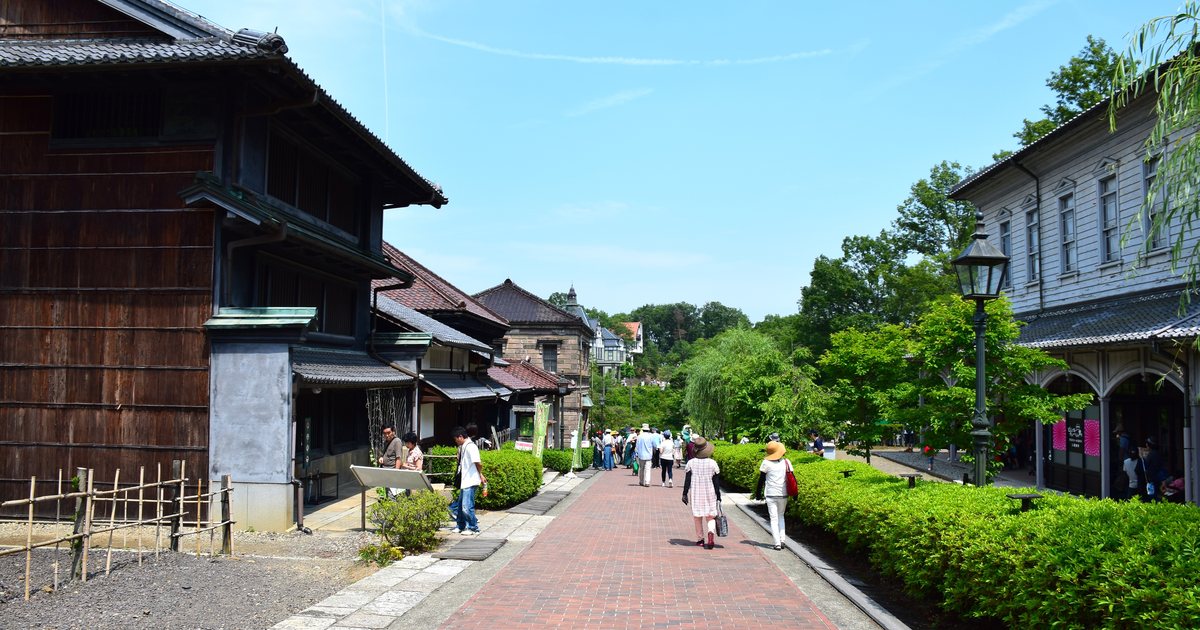
The same ¥2,500 ticket buys a noticeably different day depending on when you use it. Turn up on a Friday and you can ride a locomotive built in 1912; turn up on a Wednesday and the only Meiji-era vehicle still moving is a Kyoto tram. Come in October and the gates are open seven and a half hours; come in January and you get six, which is exactly the length of the museum's own full-day itinerary. This guide hangs the ticket prices, the in-park vehicles, the opening hours and the bus timetable on a single axis: which day you go. It also clears up two figures that have outlived their accuracy by more than two years.
This article covers Meiji-mura itself and the Inuyama day trip around it. For the wider city, see the Nagoya travel guide; for what is and is not open at the castle, see Nagoya Castle tickets and the keep closure; for the autumn temple on the other side of Inuyama Station, see autumn colour around Nagoya.
- Admission is 2,500 yen, not 2,000. Revised on 1 April 2024. The senior and university brackets were abolished rather than raised, so those two groups actually went up 56 per cent.
- The 3,300 yen vehicle bundle no longer exists. The three-vehicle day pass and the admission ticket containing it were both withdrawn on the same date. Nothing now covers the bus together with the train and tram.
- The steam train does not run Monday to Thursday. Add the summer suspension from 21 July to 19 September 2026, the overhaul of locomotive 9, and a broken turntable, and you have three separate ways to miss it.
- Winter cannot fit the official itinerary. December to February the museum opens for six hours; the official full-day route is six hours.
- From Nagoya, the Time Travel Ticket is almost always right. Unbundled, its unlimited Meitetsu day pass costs you 520 yen. But its excluded dates land exactly on the summer evenings when wearing a yukata halves your admission.
📖 Contents
- Which Meiji-mura are you going to?
- What does admission cost?
- Are the train and tram included in the ticket?
- Will the steam locomotive run on your day?
- Can you see it in one day?
- Opening hours and closure days
- Getting there from Nagoya
- How often does that bus run?
- Which ticket should you buy?
- Can you add Inuyama Castle?
- Which buildings actually matter?
- Who should think twice
- What is different in 2026
- The verdict in three sentences
- Appendix: official Japanese source text
Which Meiji-mura are you going to?
The one in Inuyama, Aichi Prefecture. There is a second place nicknamed Meiji-mura in Toyoma, Miyagi Prefecture, and a third institution in Koganei, Tokyo doing much the same job at one fourteenth of the size. All three are real, and confusing them costs a three-hour bullet train ride.
The Miyagi mix-up is not hypothetical. Search a booking platform for "Meiji-mura" and the results will include the Miyagi Meiji-mura history museum in Tome City and tours built around Toyoma. That district preserves a genuine cluster of Meiji-period prefectural and school buildings and is worth visiting on its own terms, but it sits roughly 600 km from the Aichi museum. Before booking, check that the product name says Inuyama or Aichi.
The Tokyo confusion runs the other way, because the Edo-Tokyo Open Air Architectural Museum is genuinely the same idea at a different scale. Both dismantle real old buildings, move them and reassemble them outdoors. The gap that matters is size:
| Meiji-mura | Edo-Tokyo Open Air Architectural Museum | |
|---|---|---|
| Location | Inuyama, Aichi | Koganei, Tokyo |
| Opened | 1965 | 1993 |
| Area | About 100 hectares | About 7 hectares (one fourteenth) |
| Period | Mainly Meiji | Early Edo to mid-Showa |
| Transport inside | Steam train, Kyoto tram, village bus (all charged separately) | None |
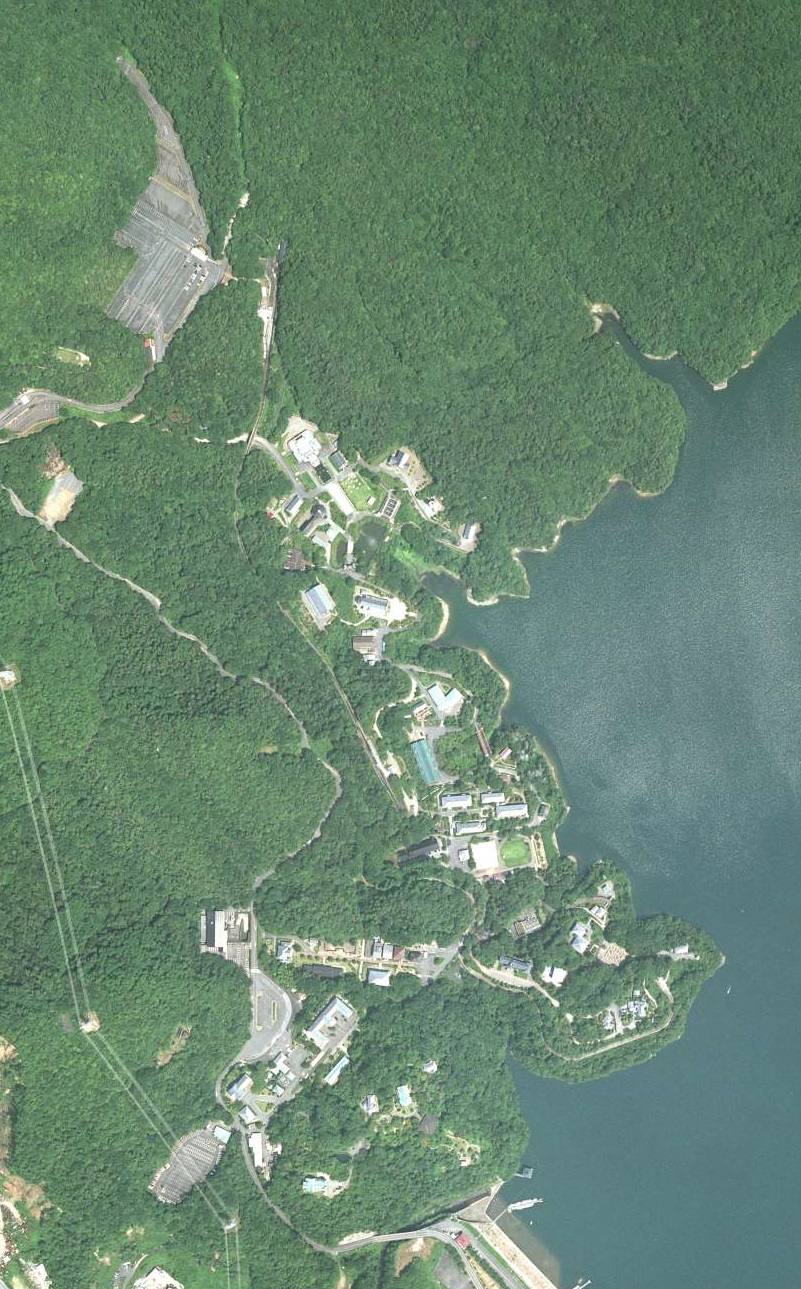
That area row explains everything downstream. Meiji-mura needs internal transport, splits into five districts, and tells you in writing that you cannot finish it in a day, because it covers a square kilometre. Half a day is plenty in Tokyo. A full day in Aichi still leaves buildings unvisited.
What does admission cost?
Adults pay ¥2,500. The 2,000 yen figure stopped being true on 31 March 2024.
The museum published the revision on 30 January 2024, effective 1 April that year. It repays reading line by line, because it did more than raise a number:
| Category | Before | After | Real change |
|---|---|---|---|
| Adult | 2,000 yen | 2,500 yen | +25% |
| Senior (65 and over) | 1,600 yen | bracket abolished, pays 2,500 | 🔴 +56% |
| University student | 1,600 yen | bracket abolished, pays 2,500 | 🔴 +56% |
| High school student | 1,200 yen | 1,500 yen | +25% |
| Elementary and junior high | 700 yen | 700 yen | held |
Read only the top line and this looks like an ordinary 25 per cent rise. Read the next two and the word is "abolished", which sounds like housekeeping. For an actual 65-year-old visitor or an actual university student, last year cost 1,600 yen and this year costs 2,500. That is 56 per cent, the largest increase on the sheet, and it is the one that does not look like an increase. When a Japanese attraction announces a revision, read the bracket structure, not just the headline figure.
The practical takeaway is one line: a student card is no longer worth producing here. Discounts end at high school age, and high schoolers must show ID. The 700 yen elementary and junior high tier was the only one held, and the museum's stated reason was to keep offering learning opportunities to that age group. Pre-schoolers are free, and the museum also lists, charmingly, anyone born in the Meiji era.
Two other things belong here:
- Donation-inclusive ticket, ¥3,000: on sale since 15 June 2026, of which 500 yen funds building repair and site upkeep, with a small gift in return. Buy it if you want to support the conservation; buy the standard ticket if you just want to get in.
- The disability discount covers admission only. Half price for the holder plus one companion at grade 1 class 1 or judgement A, half price for the holder otherwise, and the Mirairo ID app is accepted. The museum states explicitly that this discount does not extend to any of the ride fares.
Payment is where things turn. The entrance gate takes credit cards, QUICPay and transport IC cards including manaca, TOICA, Suica, ICOCA and PASMO. The vehicle boarding points inside take cash only. The next section explains why that bites.
Online ticket platforms sell an e-ticket, and it is worth being precise about what that is. Converted back into yen, the KKday listing works out at roughly 2,474 yen against the official 2,500, a gap inside exchange-rate noise. That is the standard price, not a discount. Buying online saves you from carrying cash and from the ticket line; it does not save you money. The ticket that genuinely does is covered further down.
Are the train and tram included in the ticket?
No. All three vehicles are extra, and the boarding points take cash only.
| Vehicle | Junior high and above | Elementary | Runs |
|---|---|---|---|
| SL and tram day pass | ¥1,000 | ¥700 | per vehicle below |
| Steam locomotive, single ride | ¥700 | ¥500 | 🟡 Fri, Sat, Sun, holidays |
| Kyoto tram, single ride | ¥500 | ¥300 | 🟢 daily |
| Village bus, unlimited day | ¥500 | ¥500 | 🟢 daily |
Riding everything costs an adult 1,000 plus 500, so 1,500 yen, a 60 per cent uplift on the ticket, payable in cash. For a family of four that is six thousand yen in notes, at a hilltop museum rather than a city centre. Draw the cash at Inuyama Station.
Now the ticket line most likely to be out of date wherever you read it. The day pass covering all three vehicles no longer exists. The museum withdrew it on 1 April 2024, along with the admission ticket that bundled it — the 3,300 yen adult product. It has been unbuyable for more than two years, and the price was wrong even before that. Nothing available today covers the village bus together with the SL and tram; they have to be bought separately.
The 2024 revision hid one more increase in this table: the elementary village bus fare went from 300 to 500 yen, up 67 per cent, but the notice presents it as merely matching the adult fare. Same technique as the admission table.
Deciding is simple. If your plan is to walk all five districts, the 500 yen bus pass is close to compulsory on a square kilometre of hillside. The SL and tram are experiences rather than transport; their value is that the rolling stock is genuinely Meiji, not that they save your legs.
Will the steam locomotive run on your day?
Not from Monday to Thursday. And not on any day between 21 July and 19 September 2026.
Three independent conditions have to clear before you can ride it.
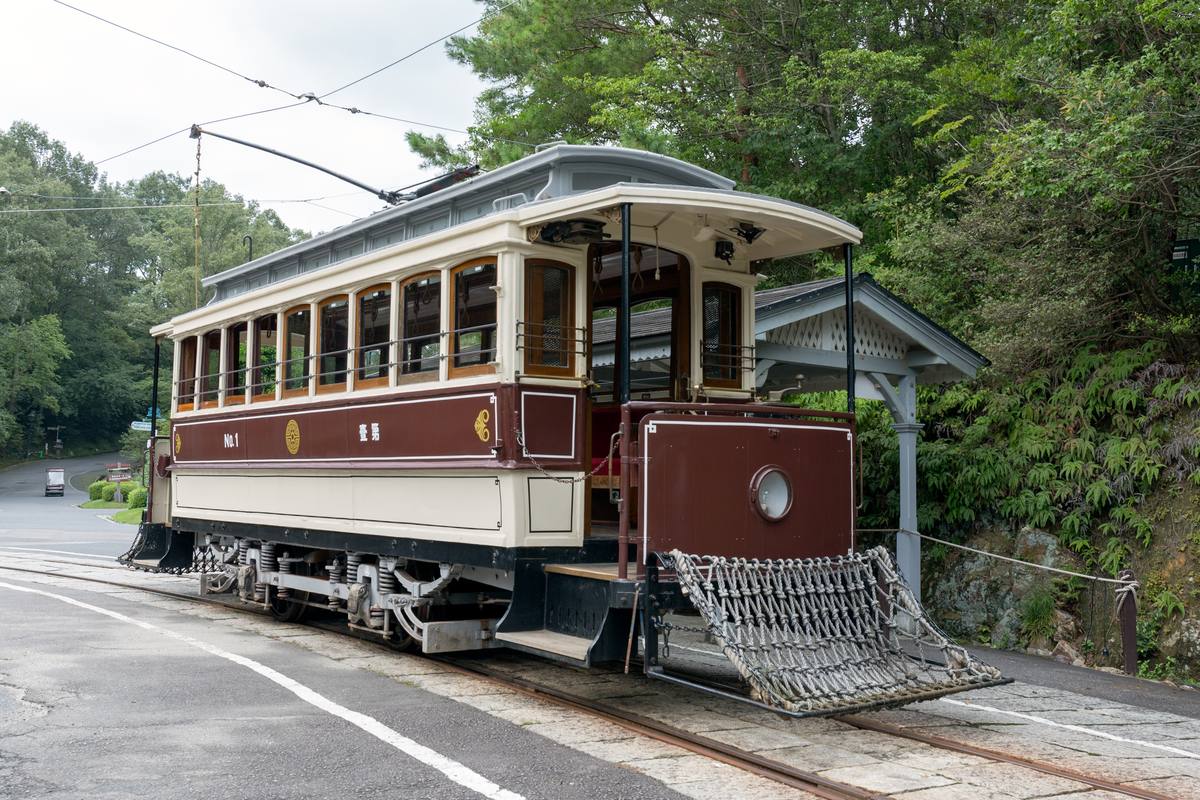
First, the weekday. The museum publishes a monthly vehicle operating calendar whose legend reads: SL runs Friday, Saturday, Sunday and public holidays; Kyoto tram daily; village bus daily. Only the locomotive carries a weekday restriction. That leaves Monday-to-Thursday visitors with the tram as their sole moving Meiji-era vehicle, which is a better consolation than it sounds. The cars date from 1910 and 1911, and the line they descend from opened in Kyoto in 1895 over roughly 6.4 km from near today's Kyoto Station to Fushimi. The museum puts it flatly: commercial electric railway operation in Japan started with this tram. Treat it as the main course, not the backup.
Second, the season. A notice dated 28 June 2026 suspended SL operation on heat-illness and safety grounds from 21 July 2026, and the September calendar pins the end at 19 September. The same notice states that the tram and bus run as normal. The locomotive therefore did not turn a wheel in August 2026 — which is the month with the school holidays and the museum's own evening opening season, and the month when most visitors arrive expecting a steam train.
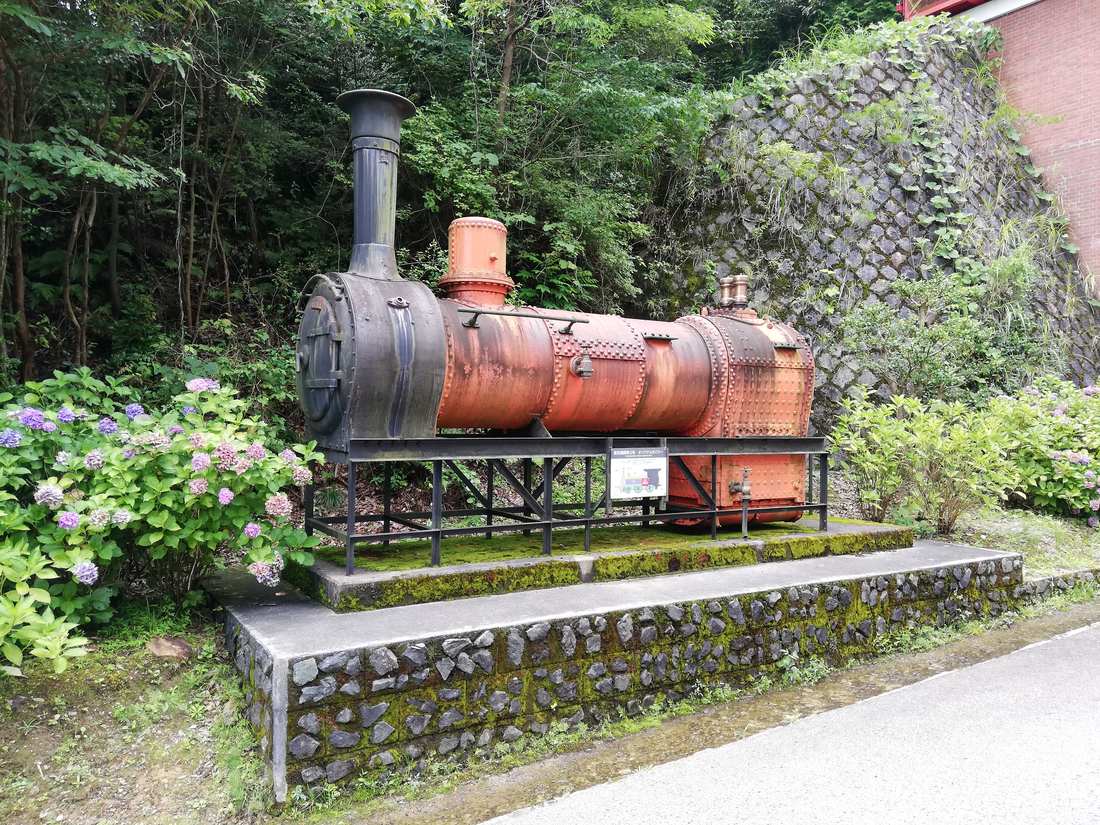
Third, the hardware. Two things at once. Locomotive number 9, built in 1912, was approved for a major overhaul and completed its move out of the museum in July 2023; the museum wrote at the time that the work would take roughly two years, but the page still says number 12 is covering services for the time being, and no return date has been announced, so none is guessed at here. Separately, the turntable has failed. The locomotive is now swapped using a track junction and a siding, Nagoya-end departures run with the engine reversed, and the museum states that the turning operation cannot be viewed at any time of day. Watching the locomotive spin on the turntable is off the menu.
If all three clear, what you get is worth knowing. The engine is number 12 from 1912, the carriages are Hafu 11 from 1908 and Hafu 13 and 14 from 1912, and the entire consist, engine included, is Meiji-era rolling stock. It has been running in preservation here since 1974.
Can you see it in one day?
The museum says no in writing, and tells you to pick a district instead.
The site covers about one square kilometre, divided into five numbered districts with the main gate in district one and the north gate in district five, holding more than sixty relocated and restored buildings. It opened in 1965 and turned sixty in 2025. The founders were the architect Yoshiro Taniguchi and Motoo Tsuchikawa, then chairman of Meitetsu — which explains why the transport, the combination tickets and the parent company in this article all run through one railway.
On duration, the museum publishes four figures that do not agree:
| Official source | Stated duration |
|---|---|
| FAQ, "how long does a visit take" | 2 to 3 hours for a casual stroll |
| The very next sentence | "one day is not enough" if you look properly |
| Suggested route, family half-day | 4 hours |
| Suggested route, full-day | 6 hours |
| Area introduction page | too large for a day; pick highlights per area |
Do not try to pick the true one. All four are official, and the disagreement is the information: two to three hours is a walk-through with photographs, four hours is roughly half the districts, six hours passes through all five without entering everything, and "not enough" describes going inside sixty buildings. Decide which visitor you are before you pick a date, because the next section shows that some dates cannot supply six hours at all.
Opening hours and closure days
From December to February the museum is open six hours, exactly the length of its own full-day itinerary.
| Period | Open | Usable |
|---|---|---|
| April to July, September, October | 9.30 – 17.00 | 7.5 hours |
| August | 10.00 – 17.00 | 7 hours (evening dates extend to 20.30) |
| November, weekdays | 9.30 – 16.00 | 6.5 hours |
| November, weekends and holidays | 9.30 – 17.00 | 7.5 hours |
| December to February | 10.00 – 16.00 | 🔴 6 hours |
| March | 9.30 – 17.00 | 7.5 hours |
Put that against the six-hour route from the previous section and the winter arithmetic writes itself: six hours open, six hours of itinerary, before you subtract lunch, toilets, waiting for the bus and waiting for a train that is not running anyway. A winter visitor physically cannot complete the museum's own full-day plan. Both numbers are the museum's; no outside source is needed. Last entry is 30 minutes before closing, so the real winter deadline to be at the gate is 3.30 pm, and the car park keeps the same hours.
If winter is your only option, cut scope rather than hurrying: choose two districts, buy the bus pass, and give up on entering every building.
Closure days are a separate trap, because they are not a fixed weekday but irregular blocks of weekdays, up to five in a row. Published through January 2027:
| Published | Closed |
|---|---|
| July 2026 | 27 – 31 |
| August 2026 | 4 – 6, 18 – 20, 25 – 27 |
| September 2026 | 1 – 3, 7 – 11 |
| December 2026 | 14 – 18, 31 |
| January 2027 | 1, 12 – 15, 19 – 20, 26 – 27 |
| February 2027 onwards | not yet published |
Closure days switch off more than the gates. Meitetsu's notice of 1 July 2026 suspends the Meiji-mura section of the Nagoya direct highway bus on museum closure days between 27 July and 11 September 2026, so turning up at the bus stop without checking means no bus at all. The Time Travel Ticket also excludes every closure day. Check the closure calendar before you check anything else.
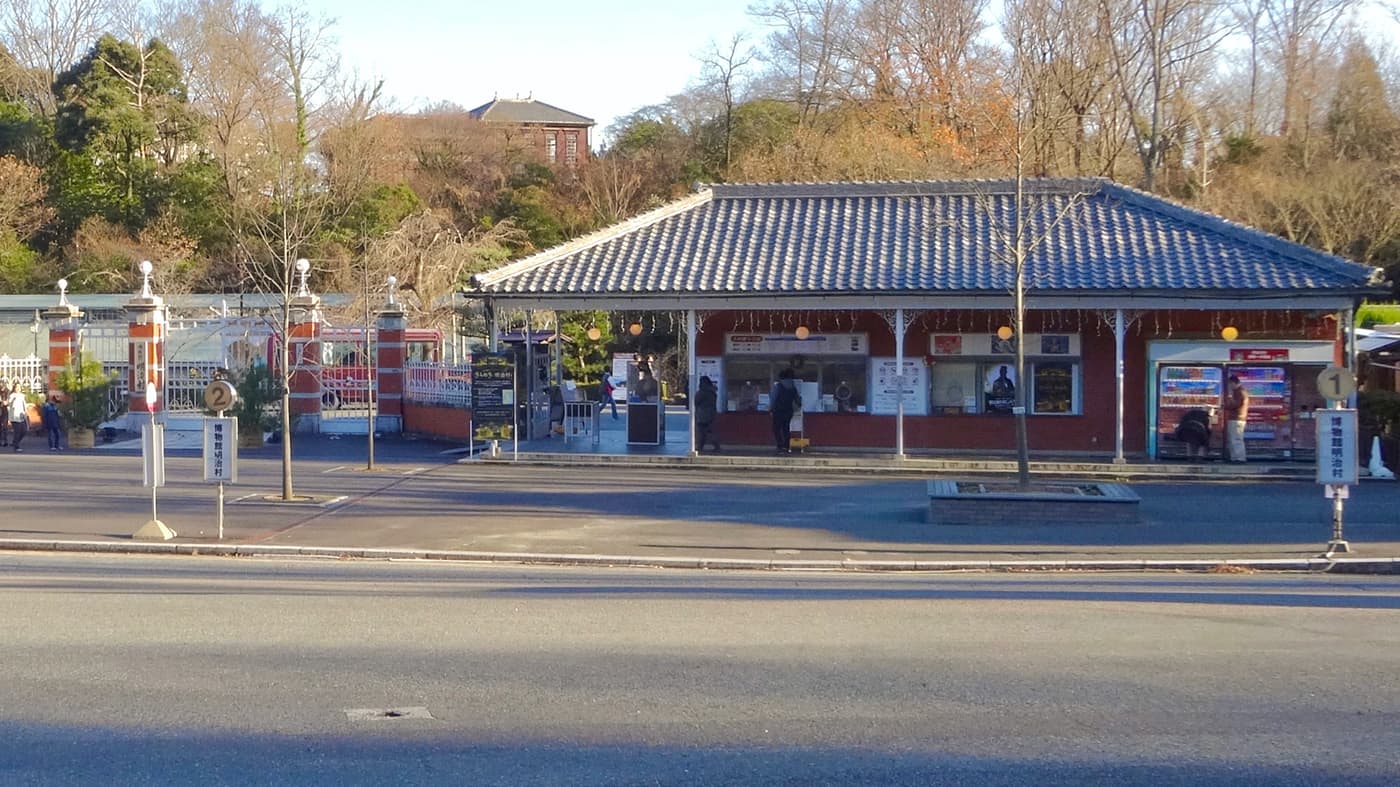
Getting there from Nagoya
Train to Inuyama plus a local bus takes about 50 minutes, half an hour faster than the direct highway bus from Nagoya.
| Route | Journey time | One-way fare |
|---|---|---|
| Nagoya → Meitetsu Inuyama line → Inuyama Stn east exit | about 30 min | not stated on the official map |
| Inuyama east exit → Gifu Bus Meiji-mura line → main gate | about 20 min | ¥540 |
| Meitetsu Bus Centre → direct highway bus → main gate | 🔴 about 1 h 20 min | ¥1,500 |
| Sakae Oasis 21 → direct highway bus → main gate | about 1 h 5 min | ¥1,400 |
| Gifu → Meitetsu Kakamigahara line → Inuyama Stn | about 35 min | not stated on the official map |
Add the first two rows and you get roughly 50 minutes. The direct bus takes 1 hour 20. The direct option is half an hour slower and, at 1,500 yen against a 540 yen bus leg, more expensive even after adding the train fare. "Take the direct bus" is the wrong instinct here.
The direct bus is not useless. It needs no reservation, and if you are travelling with luggage or with older relatives and would rather not change platforms at Inuyama, half an hour is a fair price for not having to think. Just remember it gets suspended on closure days.
One operator worth pinning down: the Inuyama east exit shuttle is run by Gifu Bus, not Meitetsu Bus. The timetable button on the museum's own access page links straight to the Gifu Bus site. Meitetsu Bus runs the Nagoya and Sakae highway services. Looking up the wrong operator returns a completely different timetable.
Driving, the museum is about 3 km from the Komaki-higashi interchange on the Chuo Expressway. Parking is ¥1,000 for a car (900 spaces), ¥200 for a motorcycle and ¥1,500 for a coach, cannot be reserved, and is paid on site; the car park opens 30 minutes before the museum.
Drivers face a layout trap worth planning around. The car park sits at the north gate in district five, while the buses stop at the main gate in district one — drivers and bus passengers enter from opposite ends of the site. Because the museum states that re-entry is not permitted once you leave, you cannot walk to the far end and fetch the car. Drivers should work from district five towards district one; bus passengers should work from one towards five and use the village bus to get back. The Imperial Hotel entrance hall stands in district five, so this decides whether it opens or closes your day.
How often does that bus run?
Weekdays and weekends are two different services: 15 departures against 22 outbound, and 13 against 26 coming back.
| Weekdays | Sat, Sun and holidays | |
|---|---|---|
| From Inuyama Stn east exit | 15 departures (first 8.45, last 17.13) | 22 departures (first 8.28, last 16.58) |
| From Meiji-mura | 🔴 13 departures (first 9.21, last 17.45) | 26 departures (first 8.55, last 18.00) |
The return row is the one that matters: weekday return services are half the weekend count. Weekdays also contain two unpleasant gaps — outbound, nothing between 12.10 and 13.20, a 70-minute hole; returning, nothing between 9.21 and 10.35, a 74-minute hole. At weekends buses come every 15 to 30 minutes and you can more or less ignore the timetable.
Lay that over the locomotive's Friday-to-Sunday pattern and the conclusion falls out: Meiji-mura is a weekend attraction. A weekday visit collects three penalties at once — no steam train, a third fewer outbound buses, and half the return services. If your schedule bends, put Meiji-mura on a Friday, Saturday or Sunday. If it cannot, shift your focus to the buildings and the tram, and write down the specific return departure you intend to catch rather than assuming one turns up every half hour.
Two footnotes on the timetable. The 18.00 weekend departure from Meiji-mura is marked seasonal and does not run from November to February, so the real winter weekend last bus is 17.30. Two of the 13 weekday return departures are marked as running only from 1 March to the end of November, but the timetable PDF does not make clear which two, so they are not named here; in winter, check the printed timetable at the stop.
Which ticket should you buy?
Coming from Nagoya for Meiji-mura alone, Meitetsu's Time Travel Ticket is almost always right — unbundled, its unlimited Meitetsu day pass costs you 520 yen.
The ticket is ¥4,100 for adults and ¥1,850 for children, and contains three things: a one-day free pass for the whole Meitetsu network plus the Gifu Bus leg between Inuyama east exit and Meiji-mura, museum admission, and a discount voucher for a convenience store at Inuyama Station. It is on sale from 1 April 2026 to 31 March 2027. The admission portion needs no exchange; hand it to staff at the gate.
To judge it, strip out the two components whose prices are known:
| Item | Amount |
|---|---|
| Time Travel Ticket | 4,100 yen |
| less museum admission at the official rate | −2,500 yen |
| less Gifu Bus return (540 × 2) | −1,080 yen |
| = implied price of unlimited Meitetsu travel for a day | 520 yen |
Five hundred and twenty yen. No return journey from Nagoya, or from anywhere else on the Meitetsu network, costs less than that, so the rail component is effectively free. This is calculated backwards on purpose: Meitetsu's single-fare lookup runs in JavaScript and cannot be retrieved programmatically, so no unverified fare is quoted here, and the subtraction does not need one. Reserved-seat cars require a separate Mu-Ticket, which this pass does not cover.
It does carry a list of excluded dates, and that list is longer than you would expect. It covers not only every museum closure day but also the summer extended-opening evenings — 8 to 16, 22 and 23, and 29 and 30 August. As the next section explains, those are precisely the dates when wearing a yukata halves your admission. Take the yukata discount and you cannot use this pass; take the pass and you must avoid those dates. The two discounts are mutually exclusive.
Three tickets compared, using one consistent set of official figures:
| Your situation | Cheapest combination | Total |
|---|---|---|
| From Nagoya, Meiji-mura only | Time Travel Ticket | 4,100 yen |
| From Nagoya, museum and castle same day | Time Travel Ticket + castle 1,000 | 5,100 yen |
| (For comparison) via the Inuyama Castle Town Ticket | 1,950 + bus return 1,080 + admission 2,500 | 5,530 yen |
| From Nagoya, castle only | Inuyama Castle Town Ticket | 1,950 yen |
For both sites in a day, the Time Travel route is 430 yen cheaper and still includes unlimited Meitetsu travel. The Inuyama Castle Town Ticket earns its place elsewhere: it bundles castle admission with merchant-street vouchers and suits people staying in the old town rather than crossing to the museum.
There is also a castle-and-museum combination ticket at ¥3,300 for adults against 3,500 bought separately, and ¥850 for children against 900. That saves an adult 200 yen and a child 50, and the museum states it is sold at ticket windows in cash only. It includes no transport. Unless you are already standing at the castle ticket office with cash and heading to the museum the same day, it barely registers.
Can you add Inuyama Castle?
Same day, yes. On the way, no — the castle is at the station's west exit and the museum bus leaves from the east.
The castle's own directions say a 20-minute walk from Inuyama Station: leave by the west exit, turn right at the Honmachi crossing and go straight up Honmachi-dori. The Gifu Bus for Meiji-mura leaves from the east exit. Moving between them means 20 minutes back to the station, crossing to the other side, waiting for a bus and riding 20 minutes — realistically 45 to 60 minutes each way, plus the weekday risk of a 30 to 70 minute wait.
Do them in this order: museum first, castle second. The museum is the one with a hard closing time and only six hours of winter opening, so spend the fresh part of the day there; the castle runs to 5 pm with last entry at 4.30, and the keep itself does not take long. Reverse the order and you will lose the morning at the castle and arrive at the museum with three and a half hours left.
Castle admission is ¥1,000 for adults, ¥200 for school pupils and free for pre-schoolers, open 9.00 to 17.00 with last entry 16.30, closed 29 to 31 December. Meitetsu Nagoya to Inuyama takes about 25 minutes on an Inuyama line express or semi-express bound for Shin-Unuma.
Which buildings actually matter?
The museum picks five, and the most famous of them, the Imperial Hotel entrance hall, is not an Important Cultural Property.
Get the cultural-property counts straight first. The museum's own statement is that 11 of its buildings are national Important Cultural Properties, one is an Aichi Prefecture tangible cultural property, two items of historical material are national Important Cultural Properties, and almost everything else is a nationally Registered Tangible Cultural Property. Registration and designation are two different systems, and registration has the lower threshold.
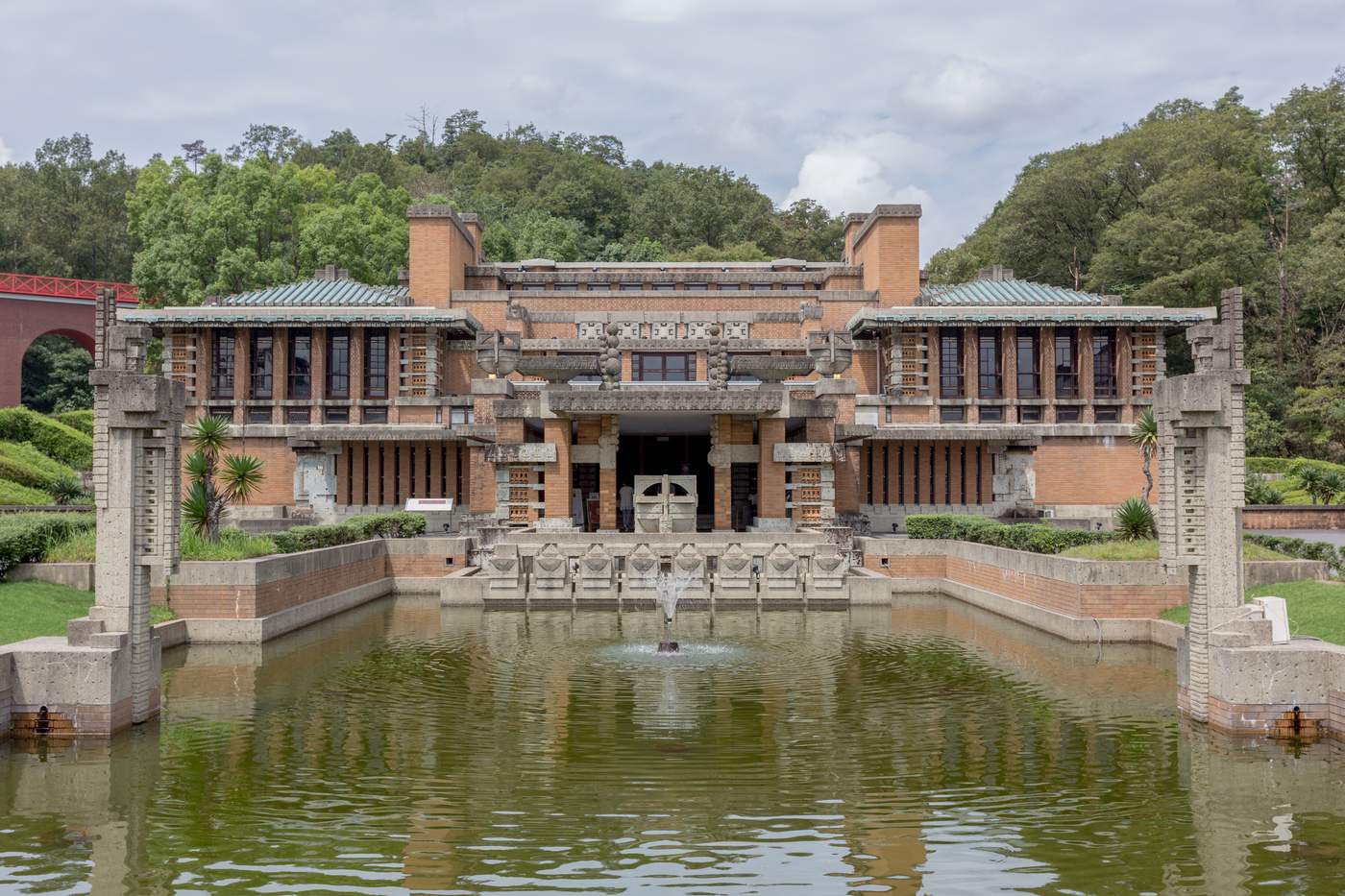
The Imperial Hotel entrance hall's own data panel reads Registered Tangible Cultural Property, registered 2004. The single most famous structure at Meiji-mura is not among the eleven. That takes nothing away from it. It is the central entrance section of Frank Lloyd Wright's Imperial Hotel, completed in 1923 — and the museum notes that the completion date fell on the day of the Great Kanto Earthquake. The original ran about 100 m across the front and over 150 m deep, more than 34,000 square metres in total; it was dismantled in 1968 and re-erected here in 1976, along with a recreation of the pool that stood in front of it. It occupies plot 67 in district five, at the north gate end.
The five the museum highlights on its own attractions page:
- Imperial Hotel entrance hall (district five, registered tangible property, Frank Lloyd Wright)
- Mori Ogai and Natsume Soseki residence
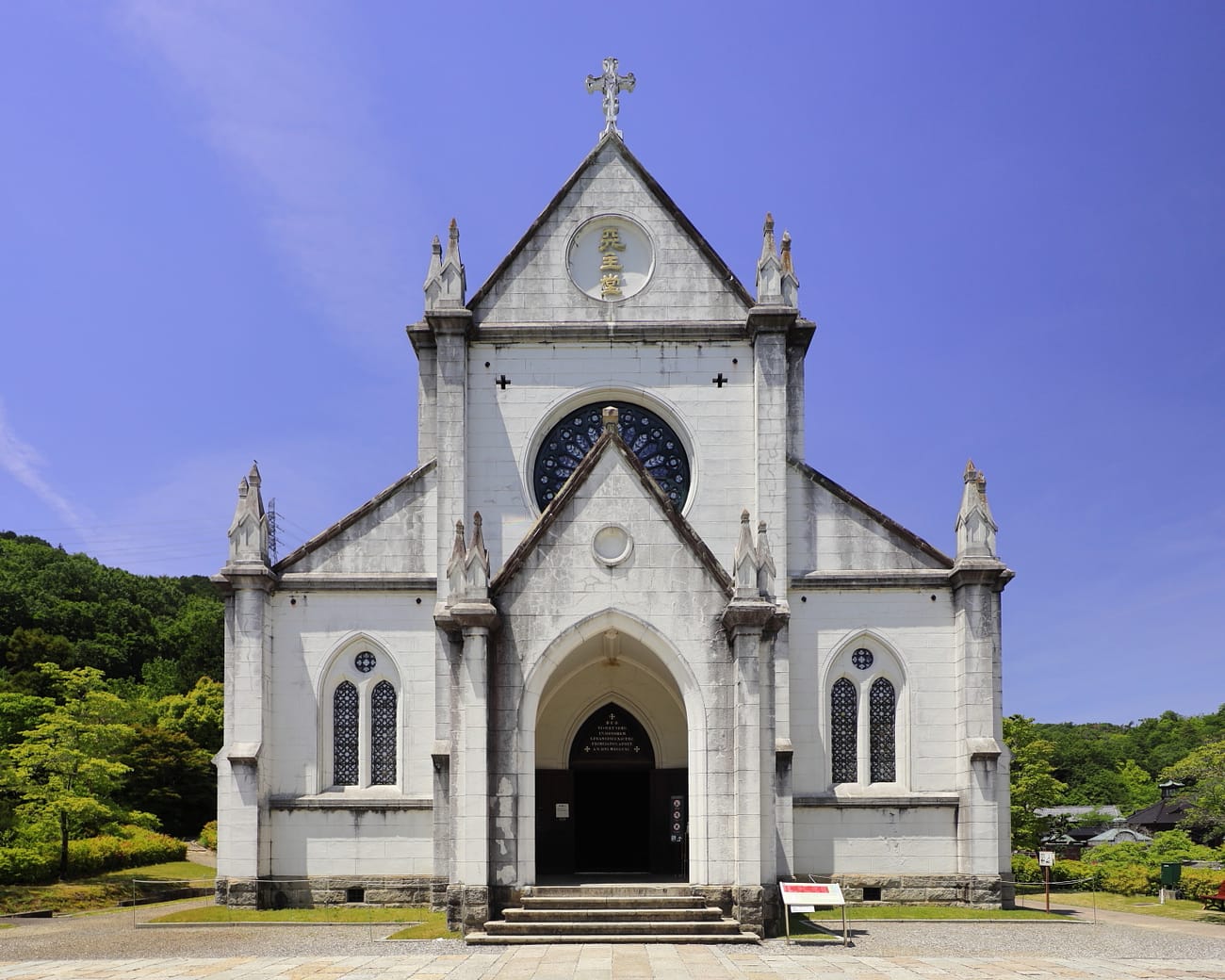
- St Francis Xavier's Cathedral
- Steam locomotives 12 and 9 with third-class carriage
- Naikaku Bunko (Cabinet Library)
The full list of the eleven Important Cultural Properties sits behind a JavaScript filter that cannot be retrieved programmatically, so no possibly-wrong list is reproduced here. Read the interpretation board beside each building on site; it states the property classification. One footnote: item four above names locomotive 9, but that is standing site copy, not a statement that number 9 is present — it left for overhaul in 2023.
Who should think twice
Anyone with limited mobility, a pushchair, or no appetite for walking should read the museum's own sentence first.
The FAQ is unusually candid: because the displays work with the natural terrain and the character of the historic buildings, there are steep slopes and level changes throughout, and barrier-free access is not fully in place. On a square kilometre of hillside that is a statement of fact, not a disclaimer. Manual wheelchairs are lent free; pushchairs are 500 yen each; the audio guide (Japanese and English) takes a 1,000 yen deposit per day, refunded on return but forfeited if damaged. Lockers run 600, 500 and 400 yen by size. Nursing rooms are in the Hekisuitei restaurant in district one and on the ground floor of the Imperial Hotel entrance hall in district five. Umbrellas are sold in the shops at 660 yen.
Rules that will be enforced on the spot:
- The entire site is non-smoking except in designated places.
- No pets other than guide, hearing and service dogs, and the museum will not hold animals for you.
- Do not eat or drink inside buildings other than the restaurants.
- No tripods inside buildings, and no photography from inside the woodland; do not aim a flash at vehicle drivers.
Meiji-mura is a well-known cosplay location and publishes a full rule page. The ones people trip over: there is no changing room, only a simple changing space beside the lockers at the main gate; wedding dresses, shiromuku and uchikake bridal kimono, real-world uniforms, mascot costumes and anything closely resembling them are prohibited; military uniforms are prohibited, with the museum defining that to include historically real uniforms, imitations hard to distinguish from them, and replicas; and reflectors over one metre across when open, or step ladders over 70 cm, cannot be brought in. Renting Meiji-period clothing on site is a different matter and is offered, though current rental prices were not verified for this article — check the on-site notice.
What is different in 2026
Wear a yukata on a summer evening date and admission is half price — but those are exactly the dates the Time Travel Ticket excludes.
The summer first. The 2026 evening opening season, Yoi no Meiji-mura, runs on 8 to 16, 22 and 23, and 29 and 30 August, extending closing to 8.30 pm (some areas close at 5 pm, and the extension can be cancelled in bad weather). The programme includes a fireworks competition, jazz and bossa nova live sets, a participatory projection-mapping piece in front of St Francis Xavier's Cathedral, and a first-time rakugo and kodan evening at the Kureha-za theatre with performers rotating daily. Buried in the same notice: visitors who come wearing a yukata on those dates pay half admission, so 2,500 yen becomes 1,250. Dates for 2027 have not been announced, so treat the pattern — a run of evenings in mid and late August — as a planning guide rather than a booking date.
Then the clean conflict. Those dates fall entirely inside the Time Travel Ticket's excluded-date list. One option saves 1,250 yen but leaves you buying your own rail tickets; the other charges you 520 yen for unlimited rail travel but full admission. If you own a yukata and are staying in central Nagoya, where the rail fare is low anyway, take the yukata discount; if you plan to use the Meitetsu network for other stops, take the pass. They cannot be stacked. Also note that the locomotive did not run at all in August, so an evening visit is about buildings, light and fireworks, not trains.
For autumn, a notice dated 21 August 2026 opened the season on 12 September: a Meiji-themed puzzle attraction billed as the final chapter of an Edogawa Ranpo series running since 2022; seven dishes reimagined from recipes in the 1903 bestselling novel Shokudoraku by the Aichi-born author Gensai Murai; and a refurbished permanent display of Meiji court furniture. That notice does not state the closing date of the autumn season, nor the fee or duration of the puzzle attraction, so check the events page.
Finally, the closures that will waste a trip, all from 2026 notices:
| Building | Status | Period |
|---|---|---|
| St John's Church | Front towers and ground-floor hall under repair; part of the exterior not visible | 1 Jul – mid Sep |
| Mie Prefectural Office, Meiji court furniture room | Closed for redisplay (reopens refurbished from October) | 10 Jun – end Sep (planned) |
| Higashi-Yamanashi District Office, second-floor display room | Closed for facility works | 1 Aug – mid Sep |
| Volunteer guides | Suspended | 27 Jul – 11 Sep |
Two smaller items: the donation-inclusive ticket went on sale on 15 June 2026, and the Tsumiki Hiroba Gabe play area closed on 22 January 2026. And note what is not published: nothing for 2027's events, no closure days beyond February 2027, and no vehicle operating calendar beyond November, with the October vehicle timetable described as "to be announced later". Check the official notices a month before you travel; this place changes often.
The verdict in three sentences
First: choose the day of the week before you decide anything else. Friday to Sunday and public holidays give you the steam locomotive, 22 outbound buses and 26 return buses; Monday to Thursday shrinks all three while the admission price stays identical. That is the single most useful sentence here.
Second: re-check every price before you go. Admission is ¥2,500, not 2,000 yen; the 3,300 yen bundle with three vehicles was withdrawn in April 2024; and the senior and university discount brackets no longer exist. The three in-park vehicles are extra, cash only, and add 60 per cent to the ticket if you ride them all.
Third: from Nagoya, buy the Time Travel Ticket — unless you are coming in a yukata on an evening opening date. Unbundled, its unlimited rail day pass costs 520 yen, but the August evening dates are excluded, and those are the dates when a yukata halves admission. The two savings cannot be combined, so start from the calendar.
As for whether the day is worth it: if architecture leaves you cold and you want spectacle, a square kilometre of hillside will feel like work. If you care about the Meiji period, or about the question of where each of these buildings originally stood, then sixty-odd genuine structures plus a train made entirely of Meiji-era rolling stock is something nowhere else in Japan can offer. It is not a theme park. It is a museum you have to walk through.
Appendix: official Japanese source text
1. Meiji-mura price revision press release, 30 January 2024 (PDF)
シニア(65歳以上)/大学生:この区分は廃止いたします
※小中学生については、同年代への学習機会の積極的なご提供を目的に据置といたします。
※のりもの3種をご利用いただける「のりもの一日券」は、2024年4月1日より発売を休止いたします。
これは、60件を超える歴史的建造物や明治期製造の蒸気機関車および市電、文豪の書簡や錦絵などの歴史資料をはじめとした貴重な文化財を今後も適切に保存・修理していくために必要な資金の確保を主な目的として実施するものです。
2. Meiji-mura official price page
※のりもの一日券付入村券は、2024年4月1日より発売を中止いたします。
未就学児と明治生まれの方は無料です。
一旦、ご退出されますと再入村はできません。
障害者手帳のご提示による割引は、入村料金のみ対象となります。各種乗物の乗車料金は割引対象外
お支払いは現金のみとなります。
3. Meiji-mura vehicle operating calendar, legend
乗物運行日/SL…金・土・日・祝運行/京都市電…毎日運行/村営バス…毎日運行
4. Meiji-mura SL suspension notice, 28 June 2026
このたび、熱中症対策を含む安全面への配慮から、下記の期間中、SLの運行を休止させていただきます。運行休止期間: 2026年7月21日(火)~9月中旬予定……なお、上記期間において、京都市電及び村営バスは、通常通りの運行予定です。
・SLの運行は2026年7月21日(火)~9月19日(土)まで熱中症対策などのため休止させていただきます。
5. Meiji-mura timetable page, locomotive notices
【転車(方向転換)作業の休止について】ただいま転車台の不具合、および車両保護の観点から、SLは両駅での転車台を使用した方向転換作業を行わず、線路の分岐と側線を利用して汽車を入れ替えており、名古屋発は逆機連結となります。これにともない、方向転換作業は終日見学ができません。
【蒸気機関車について】明治45年に製造された動態保存車両の「蒸気機関車9号」について、オーバーホール(大規模修理)の実施が決定し、2023年7月に村外への搬出作業が完了いたしました。今後、約2年間(予定)をかけて調査及び修理を実施いたします。このため当面の間、村内のSLは蒸気機関車12号による運行となります。
6. Meiji-mura pages on the locomotive and the Kyoto tram
実際に乗ることができる客車も、明治41年(1908)製造のハフ11、明治45年(1912)製造のハフ13・14の計3両あり、機関車も含めてすべて明治時代の車両による編成です。
京都市電は明治28年、現在の京都駅近くから伏見までの約6.4kmで開業。……日本での電車の営業においてはこの京都市電が最初となっています。
7. Meiji-mura area introduction page (size and duration)
約100万㎡という広大な敷地面積を誇る明治村。正門のある1丁目から北口のある5丁目まで、5つのエリアがあります。1日では回りきれない広さなので、各エリアごとにポイントを絞って散策することをおすすめしています。
お気軽な散策をしていただく場合は2~3時間程度/じっくり見て回る場合は、1日では足らない広さです
8. Meiji-mura opening hours page
※1 宵の明治村開催日 (8/8~16、22・23、29・30) は 20:30まで延長開村いたします。(一部エリアは17:00まで、荒天時は延長開村中止の可能性あり)
入村は閉村時間の30分前までとなります。
9. Meiji-mura access and parking page
明治村へのアクセスは、名鉄犬山駅よりバスで20分。名古屋駅と栄駅から直通の高速バスもあります。
愛知県犬山市内山根比敷1(明治村北口出てすぐ)/予約不可、現地精算となります。
10. Meitetsu Bus section-suspension notice, 1 July 2026
高速バス(予約不要)【名古屋・桃花台線】<2026年7月27日(月)~ 2026年9月11日(金)>「博物館 明治村」休村日に伴う区間運休について
11. Meitetsu Meiji-mura Time Travel Ticket
「名鉄電車全線・岐阜バス(犬山駅東口 ⇔ 明治村間)の1DAYフリーきっぷ」と「明治村入村券」がセットになったおトクなきっぷです!
※明治村休村日と夏の延長営業日は設定除外日とさせていただきます。
・「博物館 明治村」入村券は、引換不要です。入村窓口の係員にお渡しください。
※ 名鉄線の特別車をご利用の場合は、別途特別車両券(ミューチケット)が必要です。
12. Inuyama Castle official pages
犬山駅西口から交差点(本町交差点)を右に曲がり本町通を真っすぐ進みましょう。
犬山城+明治村 セット券 3,300円(通常料金の場合3,500円)/850円(通常料金の場合900円)
※ 各種セット券は窓口での現金払いのみのお取り扱いとなります。
13. Meiji-mura "about" page (cultural property counts)
建造物では11件が国の重要文化財、1件が愛知県の有形文化財、歴史資料では、2件が国の重要文化財に指定され、その他、ほとんどの建造物が国の有形登録文化財に登録されています。
14. Imperial Hotel entrance hall data panel and description
建設年 大正12年(1923)/村内所在地 5丁目67番地/旧所在地 東京都千代田区内幸町/文化財種別 登録有形文化財/登録年 平成16年(2004)/解体年 昭和43年(1968)/移築年 昭和51年(1976)
4年間の大工事を経て、東京都千代田区内幸町に帝国ホテル(ライト館)が竣工したのは、大正12年(1923)、奇しくも関東大震災当日のことでした。
15. Meiji-mura evening opening notice, 17 July 2026
また「宵の明治村」開催日に浴衣を着てご来村すると入村料が半額でお楽しみいただけます!
16. Meiji-mura FAQ (accessibility and site rules)
自然の地形と歴史的建造物の特徴を活かした展示をおこなっているため、急な勾配の坂道、段差などが各所にあり、必ずしもバリアフリーが行き届いておりません。
村内は指定場所を除いてすべて禁煙です。
更衣室はございません。正門のコインロッカー横の簡易的な更衣スペースをご利用ください。
ウェディングドレス・白無垢・色打掛・実在する制服・着ぐるみ、及びどれに類似するものの着用/軍服の着用
17. Edo-Tokyo Open Air Architectural Museum overview (for disambiguation)
東京都は、1993年(平成5)東京都江戸東京博物館の分館として、敷地面積約7haを擁する「江戸東京たてもの園」を開設しました。
18. Meiji-mura autumn programme notice, 21 August 2026
9/12(土)より、秋のイベントがスタート/明治謎解きアトラクション「江戸川乱歩と不可解な残像~暁と影~」を9/12(土)より開催!2022年より続く「江戸川乱歩」シリーズの最終章がいよいよ開幕!
Frequently Asked Questions
- Q1:How much does Meiji-mura cost, and is the 2,000 yen figure still right?
- Adult admission is 2,500 yen. The 2,000 yen figure was correct until 31 March 2024 and has been wrong ever since; the museum published the revision in a press release dated 30 January 2024. High schoolers pay 1,500 yen, junior high and elementary pupils pay 700 yen each, and pre-schoolers are free. The revision did something that a price table does not show clearly: the two 1,600 yen brackets, seniors aged 65 and over and university students, were abolished rather than raised. Both groups now pay the full 2,500 yen, which is a 56 per cent increase and the largest jump on the whole sheet, even though the published line for them reads as an administrative tidy-up. The practical consequence for visitors is short: a student card is no longer worth carrying here, because discounts stop at high school age. A 3,000 yen donation-inclusive ticket also exists, launched on 15 June 2026, of which 500 yen goes towards building conservation and comes with a small gift.
- Q2:Does admission include the steam train, the Kyoto tram and the village bus?
- No. All three are charged separately, and the boarding points take cash only even though the main entrance gate accepts credit cards and transport IC cards. The SL and tram day pass is 1,000 yen for junior high age and above and 700 yen for elementary pupils; single rides are 700 yen on the steam train and 500 yen on the tram; the village bus day pass is 500 yen regardless of age. One important thing is easy to hit stale information on: the combined pass covering all three vehicles, and the admission ticket that bundled it, were both withdrawn from sale on 1 April 2024. That bundle is the one still widely quoted at 3,300 yen for an adult. No single ticket now covers the village bus together with the SL and tram, so they have to be bought separately. Riding all three costs an adult 1,500 yen on top of admission, a 60 per cent uplift, in cash.
- Q3:Does the steam locomotive run every day?
- It does not, and there are three independent reasons it might not be running on your day. The first is the weekly pattern: the museum's own vehicle operating calendar states in its legend that the SL runs Fridays, Saturdays, Sundays and public holidays, while the Kyoto tram and the village bus run daily. Monday to Thursday visitors cannot ride it at all. The second is seasonal: a notice dated 28 June 2026 suspended SL operation for heat-illness prevention from 21 July 2026, and the September calendar fixes the end of that suspension at 19 September 2026, meaning the locomotive did not run on a single day in August. The third is mechanical: locomotive number 9, built in 1912, was shipped out of the museum for a major overhaul in July 2023 and the site still says number 12 is handling all services for the time being, with no announced return date. Separately, the turntable is out of order, so the locomotive is turned using a siding instead, and the museum states plainly that the turning operation cannot be observed at any time of day. Guides that list the turntable performance as a highlight are describing something you currently cannot see.
- Q4:How long do I need at Meiji-mura?
- The museum publishes four different answers, and the contradiction is itself the useful information. Its FAQ says two to three hours for a casual stroll, then adds in the next sentence that one day is not enough if you look properly. Its suggested itineraries label a family half-day route as four hours and a full-day route as six hours. Its area introduction page states outright that the site is too large to cover in a day and recommends picking a few highlights per area. The grounds cover roughly one square kilometre across five numbered districts, with the main gate in district one and the north gate in district five, and more than sixty relocated buildings. Read the numbers this way: four hours covers about half the districts, six hours walks all five without entering everything, and one day is not enough describes going inside the buildings seriously. Then check the calendar, because from December to February the museum is only open for six hours, which is exactly as long as its own full-day route.
- Q5:What is the fastest way from Nagoya, and should I take the direct bus?
- The direct bus is not the fast option, which surprises most people. A Meitetsu Inuyama line train takes about 30 minutes from Nagoya to Inuyama Station, then the Gifu Bus Meiji-mura line takes about 20 minutes from the east exit to the main gate, roughly 50 minutes in total at 540 yen for the bus leg. The direct highway bus from the Meitetsu Bus Centre takes about 1 hour 20 minutes at 1,500 yen one way, and the one from Sakae Oasis 21 takes about 1 hour 5 minutes at 1,400 yen. The direct service is half an hour slower and more expensive. Two things worth knowing: the Inuyama to Meiji-mura shuttle is operated by Gifu Bus, not Meitetsu Bus, which matters when you look up timetables; and on museum closure days the Meitetsu highway bus suspends its Meiji-mura section entirely, as its notice of 1 July 2026 confirms for the period from 27 July to 11 September 2026. Driving, the museum is about 3 km from the Komaki-higashi interchange, parking is 1,000 yen for a car, and spaces cannot be reserved.
- Q6:Can I combine Meiji-mura with Inuyama Castle in one day?
- You can do both in a day, but they are not on the way to each other. Inuyama Castle is a 20-minute walk from the west exit of Inuyama Station, while the Meiji-mura bus leaves from the east exit, so moving between them means walking 20 minutes back, crossing the station, waiting for a bus and riding 20 minutes, which realistically costs 45 to 60 minutes each way, plus a weekday wait that can reach 70 minutes. Do Meiji-mura first: it is the one with a hard closing time and only six hours of opening in winter, while the castle stays open until 5 pm with last entry at 4.30 pm. Castle admission is 1,000 yen for adults and 200 yen for schoolchildren. A combined castle and museum ticket exists at 3,300 yen for adults, but it saves only 200 yen, is sold at ticket windows in cash only, and includes no transport. Coming from Nagoya, the Meitetsu Time Travel Ticket at 4,100 yen plus 1,000 yen for the castle is the cheaper route.
- Q7:Which days is the museum closed?
- Closure days are not a fixed weekday. They come as irregular blocks of weekdays, up to five consecutive days, so check the official calendar before booking anything. Published dates run to January 2027: 27 to 31 July 2026; 4 to 6, 18 to 20 and 25 to 27 August; 1 to 3 and 7 to 11 September; 14 to 18 December and 31 December; then 1 January 2027, 12 to 15, 19 and 20, and 26 and 27 January. Nothing beyond February 2027 has been published. Closure days also disable other things: the Meitetsu direct highway bus suspends its Meiji-mura section, and the Meitetsu Time Travel Ticket lists every closure day as an excluded date. Opening hours vary by season too: 9.30 am to 5 pm from April to July and in September and October, 10 am to 5 pm in August, 9.30 am to 4 pm on November weekdays and to 5 pm on November weekends, 10 am to 4 pm from December to February, and 9.30 am to 5 pm in March. Last entry is always 30 minutes before closing.
Read next
Nagoya Travel Guide 2027: Castle, Ghibli Park & Nagoya Meshi
Chubu's gateway and an underrated food city — Nagoya Castle's Honmaru Palace, the Aichi Ghibli Park, Atsuta Shrine and hitsumabushi.
Can you go inside Nagoya Castle? 2026 ticket guide
The keep is shut but the grounds are open — how the October 2026 price doubling works, and why the Honmaru Palace is the real draw.
Nagoya Autumn Foliage 2026: Which Garden Is Worth It?
The October price rise skipped two of the gardens, so the one with the most maples is also the cheapest. The city peaks one to two weeks after Korankei — by early December, Korankei is bare.
📊 See the 2026 Price Index (JR Pass, DPA, eSIM, Airport Transport) →