If Hiroshima got just one "do not miss," I would pick Miyajima without hesitation. The vermilion great torii of Itsukushima Shrine, seeming to float on the sea at high tide, is one of Japan's most iconic images — but here is what trips people up: whether you see the "floating torii" depends entirely on the tide, and showing up without checking it can leave you facing a stretch of mudflat. If the tide is all you came to look up, skip ahead: how to read the Miyajima tide table — under 100 cm to walk to the torii, over 250 cm before it floats gives you the thresholds straight. This guide covers everything: how to time the tides, the cost of the shrine and the Mt. Misen ropeway, choosing the JR or Matsudai ferry, the visitor tax, and how to eat the oysters and anago-meshi. It is the island deep dive paired with our Hiroshima city guide.
- The torii is tide-dependent: floating at high tide, walkable to its base at low tide — read the tide table in centimetres, not the word "high tide" (≤100cm to walk out to the torii, ≥250cm before it sits in water)
- Fees: Itsukushima Shrine ¥300, Mt. Misen ropeway ¥2,000 round trip
- Ferries: JR and Matsudai cost the same; JR's high-tide service loops near the torii and is free with a JR Pass
- Visitor tax: ¥100 per person, charged once on the way over
- Must-eat: grilled Hiroshima oysters, anago-meshi, momiji manju; stay a night for the quiet Miyajima
📖 Contents
How to check the Miyajima tide table: what level lets you walk to the torii?
Use the Miyajima Tourist Association's annual tide table: at a tide level of 100 cm or less you can walk to the base of the great torii, and at 250 cm or more the shrine and torii look like they float on the sea. The figures are for Hiroshima Port; at Miyajima (Itsukushima Port) the tide runs slightly earlier, so arrive a little ahead. The 2027 month-by-month tables are not online yet (the new year's tables have gone up sometime between late December and February); for a 2027 date, use the single-day lookup on the same page, whose year menu already offers 2027.
Whether the torii "floats" is decided by the tide level, not the weather. The shrine and torii stand on a tidal flat, and the sea rises and falls twice a day:
- Tide level 250 cm or more: water rises beneath the torii and the shrine corridors, producing the classic image of a shrine and torii floating on the sea — the postcard Miyajima, best for photos.
- Tide level 100 cm or less: the water recedes to reveal a broad mudflat, and you can walk right out to the base of the great torii to see its enormous pillars up close (the main pillars are made from centuries-old camphor trees), even hunting for shells and crabs on the flat.
Don't go by the words "high tide" and "low tide" alone: the tourist association itself calls that a misconception — a high tide doesn't always pass 250 cm, and on some days the level never drops below 100 cm at all. So first check whether the day has those two windows, then decide when to arrive. My advice is to pick a day where the two windows aren't too far apart, shoot the floating torii at high water, then wait for the ebb and walk to its base — both in one visit. For the step-by-step method of marking the windows on the monthly table and building a day around them, see how to plan your Miyajima day from the annual tide table; admission, seasonal closing times and goshuin are in that guide too.
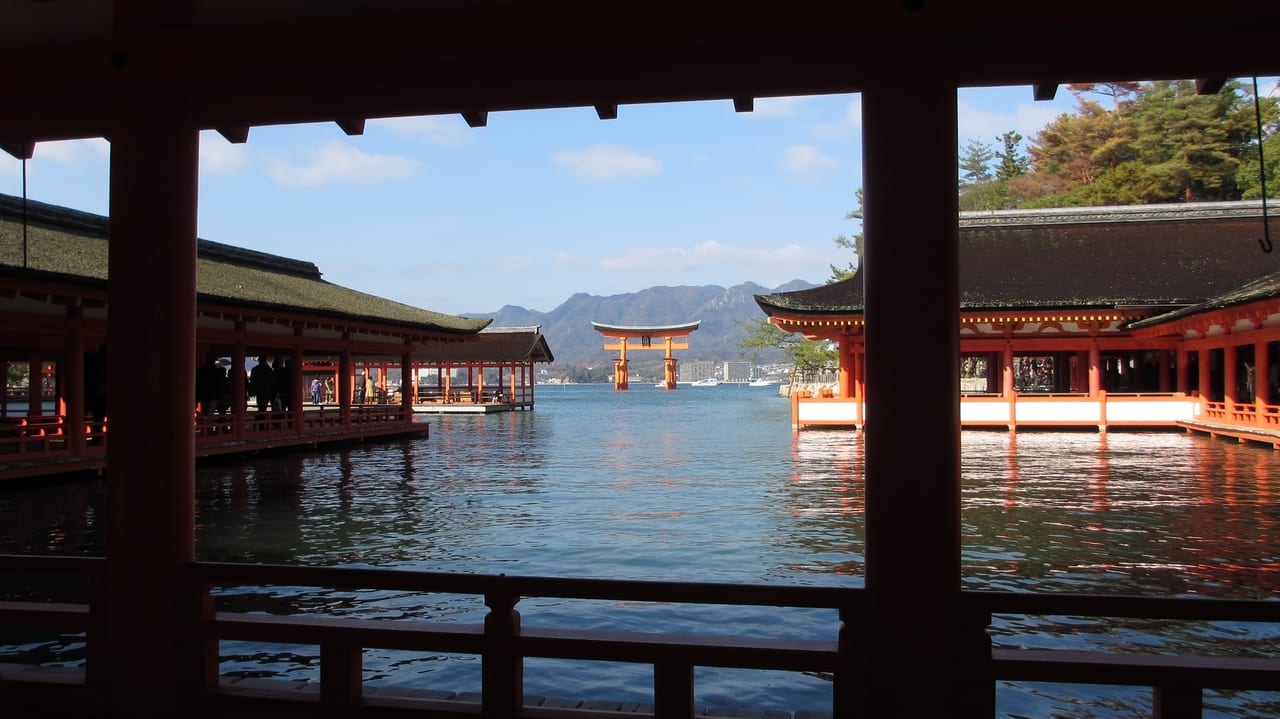
Itsukushima Shrine and around
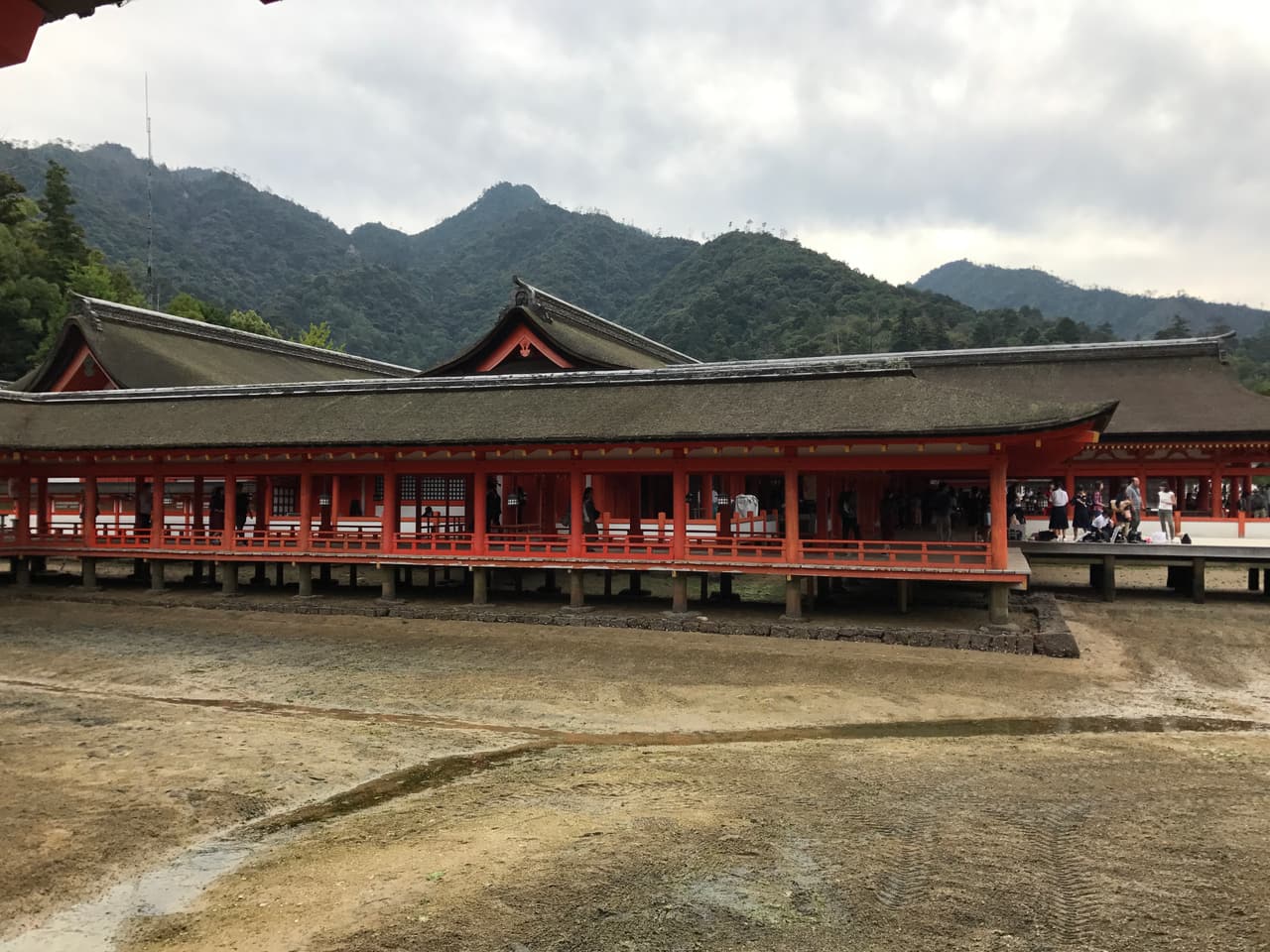
Legend traces Itsukushima Shrine to the 6th century, but its over-the-water layout was shaped by Taira no Kiyomori in the 12th century, and in 1996 it was inscribed as a UNESCO World Heritage Site along with the sea in front and the primeval forest of Mt. Misen behind. What makes it special is that the whole shrine is built over the sea — vermilion corridors link the main hall, worship hall, and Noh stage on pilings above the water, and the entire thing floats at high tide, wearing a completely different face as the tide turns. Admission is ¥300 for adults, and a one-way loop along the corridors takes 20–30 minutes. Note: the great torii, wrapped in scaffolding from 2019 for three years of repairs, was fully restored by the end of 2022, so what you see now is the finished torii.
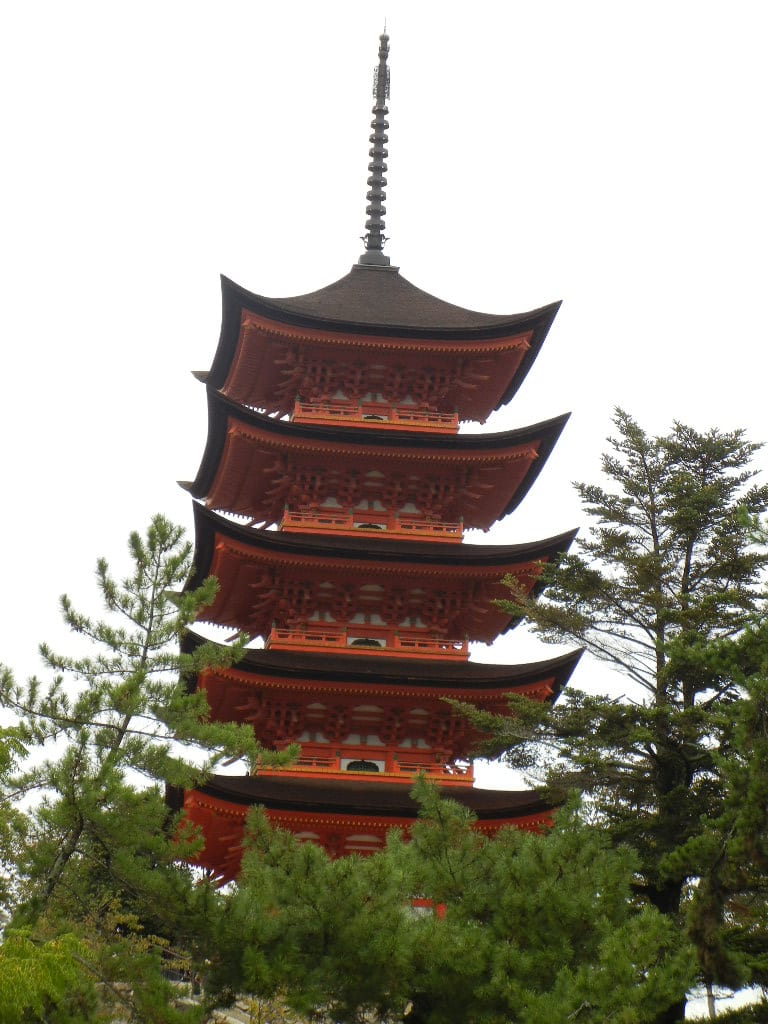
A few stops are usually paired with the shrine: Senjokaku (Toyokuni Shrine) and the five-story pagoda sit on a small hill just east — Senjokaku is a vast wooden sutra hall ordered by Toyotomi Hideyoshi, airy and cool, and the vermilion pagoda beside it is a landmark on the Miyajima skyline. Further up the slope is Daishoin, the island's oldest temple, climbing the hillside in tiers with far fewer visitors than the main shrine — a quiet place to escape the crowds. Budget 1.5–2 hours for this cluster plus the shrine.
The Mt. Misen ropeway and hike
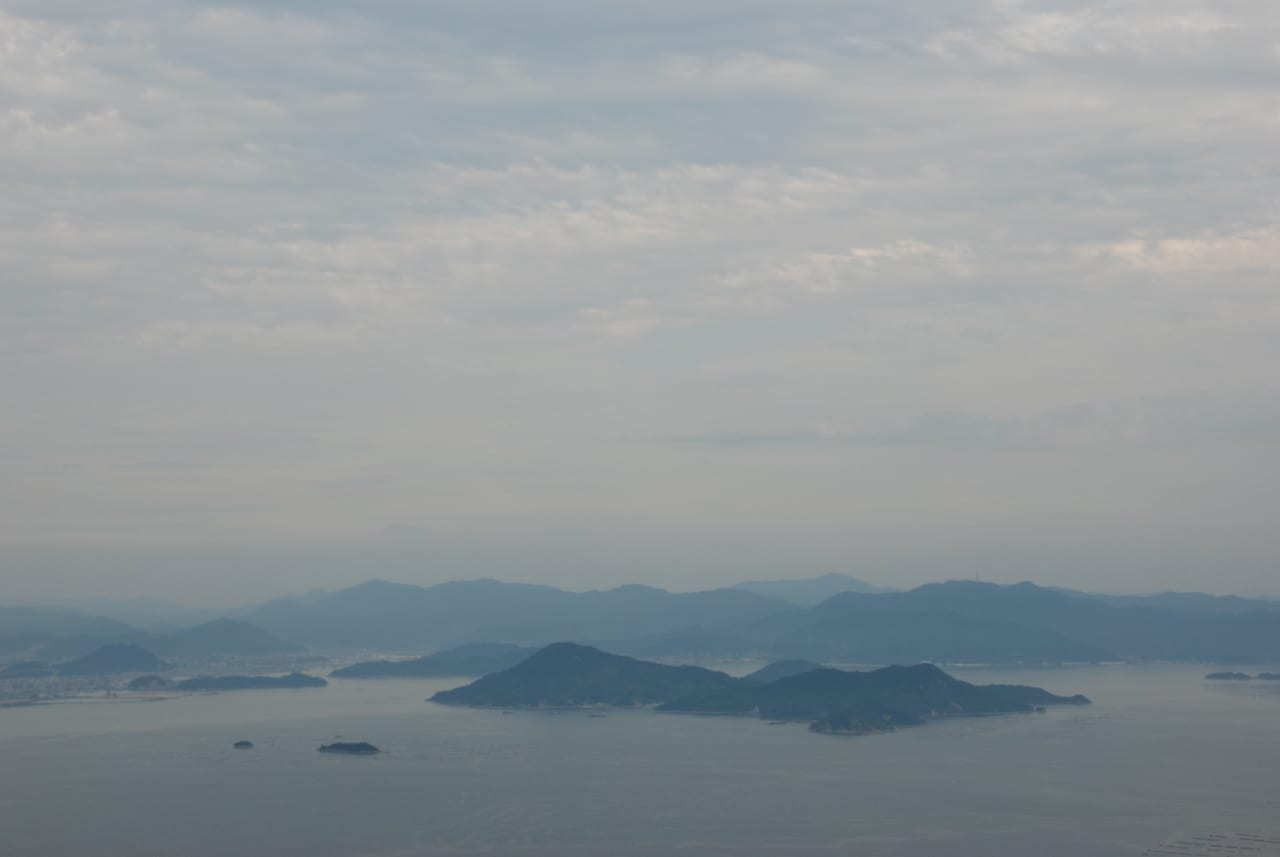
Many people see only the shrine and head back, but the views from Mt. Misen (535 m) are well worth adding. From Momijidani Park, the Miyajima Ropeway runs in two stages (Momijidani → Kayatani → Shishiiwa) up to the Shishiiwa observatory, where you look out over the whole island-studded Seto Inland Sea — countless islands scattered across the water, with Shikoku visible on a clear day. It is a rare sea-view panorama in Japan. The ropeway is ¥2,000 round trip / ¥1,100 one-way for adults.
From Shishiiwa Station, reaching the summit of Mt. Misen is another ~30-minute hike (ups, downs, and stone steps — wear good shoes and bring water), passing the "Reikado" hall with its flame said to have burned for over a thousand years since the monk Kukai lit it. If time or stamina is short, the sea view from the Shishiiwa observatory alone is worth the trip — you do not have to summit. Autumn (November) brings famous foliage to Misen and Momijidani valley, which is also where the "momiji manju" maple-leaf cakes get their name. For pre-trip weather and packing, see our Japan packing & weather guide.
Getting there: ferries and the visitor tax
Reaching Miyajima has two legs: first get to Miyajimaguchi, then take a ferry to the island. From central Hiroshima, the JR Sanyo Line takes about 25–30 minutes (fastest), or the Hiroden Miyajima Line runs all the way for about an hour-plus (slower but cheaper, and you can tap the city streetcar straight through). At Miyajimaguchi, the ferry is about 10 minutes to the island.
There are two ferry operators — JR West Miyajima Ferry and Miyajima Matsudai Kisen — with nearly identical fares and timing (about 10 minutes, every 10–15 minutes, IC cards accepted). The only difference: at high tide the JR ferry runs a service that loops in close to the great torii (good for photos from the boat), and the JR ferry is free with a JR Pass. So: take JR if you hold a pass or want the torii photo run; otherwise either is fine. If your trip is a Sanyo loop like "Okayama + Hiroshima + Miyajima," the Okayama–Hiroshima Area Pass covers the JR leg to Miyajimaguchi and the JR ferry — price it against per-leg tickets first.
Also remember a small fee: the ¥100 visitor tax per person (since October 2023), collected only on the outbound ferry, usually bundled into the fare or taken as you board.
What to eat: oysters, anago-meshi, momiji manju
Miyajima is not just for looking — eating is half the point, concentrated along Machiya-dori and the Omotesando shopping street between the ferry pier and the shrine:
- Grilled Hiroshima oysters: Hiroshima is Japan's top oyster producer, and stalls along Machiya-dori grill them to order — two per serving with lemon, plump and sweet, fattest in winter (Nov–Feb). A must-eat.
- Anago-meshi (conger eel rice): Seto Inland Sea conger eel, glazed and laid over rice, fragrant and not greasy — the island's signature local dish and a satisfying meal, with famous old shops near Miyajimaguchi.
- Momiji manju: maple-leaf-shaped cakes in red bean, custard, chocolate, and cheese, Miyajima's signature souvenir; freshly deep-fried "age-momiji," crisp outside and soft within, is best eaten on the spot.
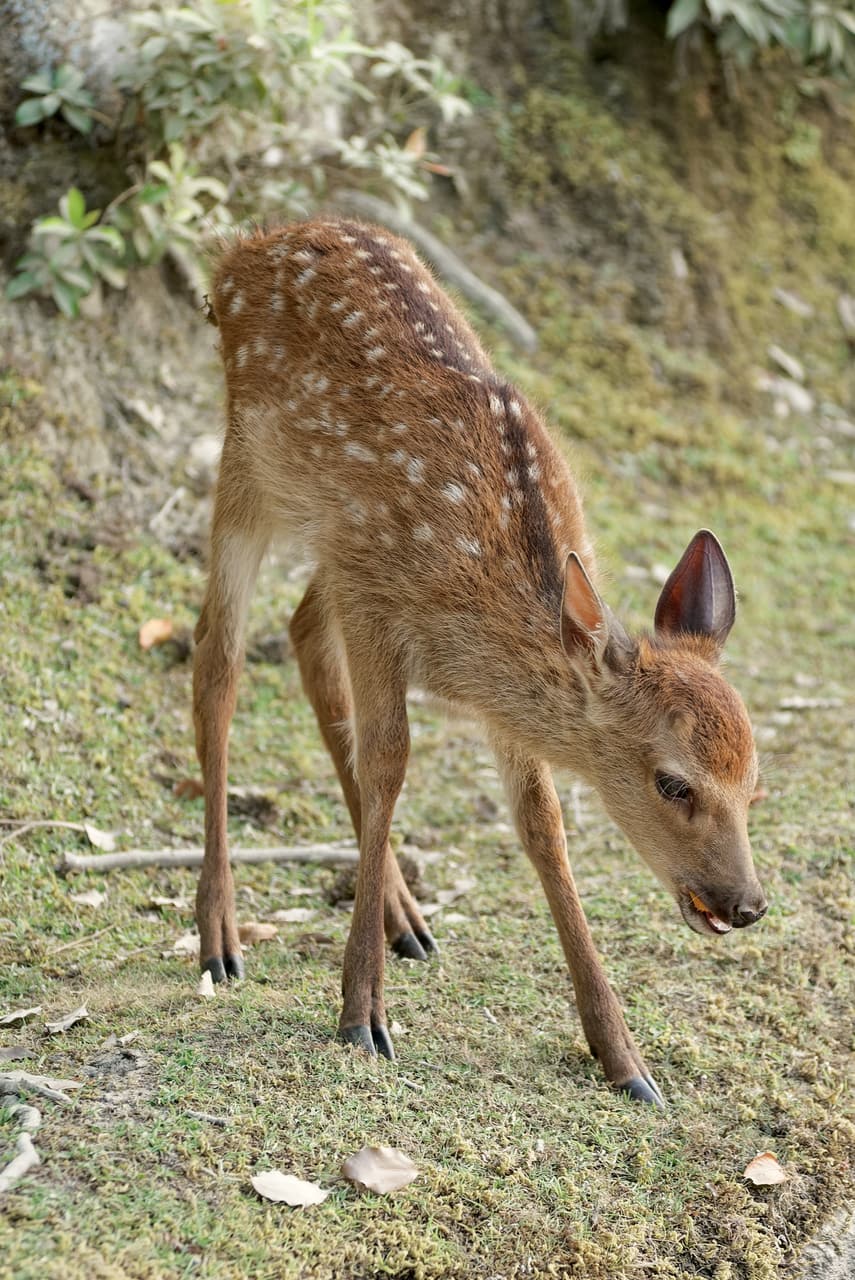
One more thing: the island has many free-roaming deer that are unafraid of people and will come right up — but do not feed them (it encourages snatching and is bad for them), and watch food, maps, and paper bags, which they will happily grab.
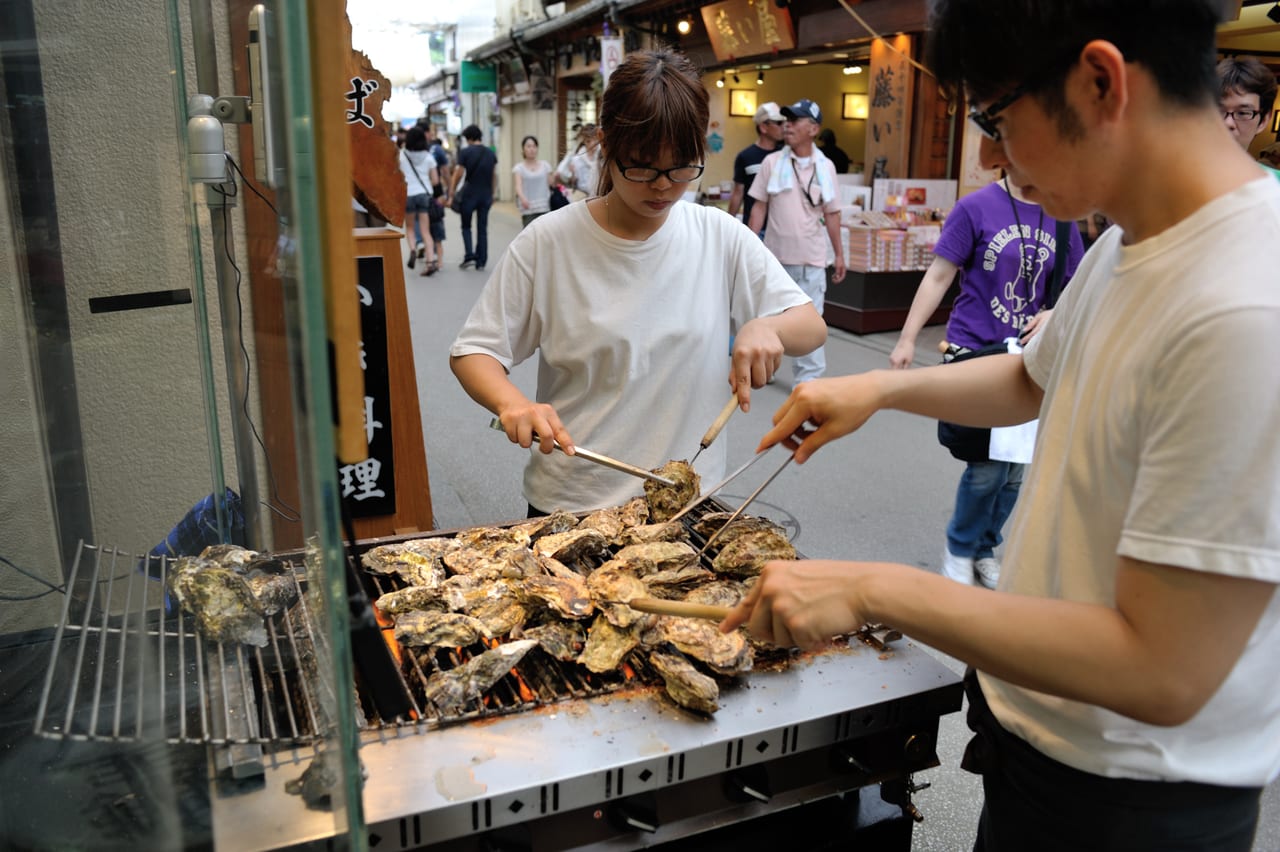
If a few off the coals is not enough, there is a self-grill oyster hut back across the water at Miyajima-guchi — though that one refuses same-day bookings and will not confirm free seats by phone, so read its rules before you build a day around it.
A word on crowds and timing, because Miyajima can feel very different depending on when you go. The island is busiest from late morning to mid-afternoon, when day-trip groups and the occasional cruise excursion arrive together; if you can be on one of the first ferries, you get the shrine and the torii foreshore far quieter, and the light is better for photos. Seasonally, spring brings cherry blossoms around the shrine and Momijidani, and November turns the maple valley brilliant red — both gorgeous but the most crowded windows of the year, so start early. Summer is hot and the deer seek shade; winter is quiet and cold but the oysters are at their best. Whatever the season, the rule that matters most is still the tide — a perfect-weather day at dead low water will not give you the floating torii, so let the tide table, not the forecast, lead your plan.
Day trip vs. overnight
Most people treat Miyajima as a day trip from a Hiroshima base, which works perfectly: arrive in the morning, time the torii and shrine to the tide, ride up Misen, eat oysters, and return in the evening. But if you want a "different Miyajima," I strongly recommend staying a night — the lit great torii in the evening with almost no one around, and the empty approach and freshly opened shrine at dawn, are scenes a same-day return cannot give you. The trade-off is that island lodging (inns and onsen ryokan) is limited and pricier, and books out early in peak season. On a tighter budget, do the day trip and keep your lodging in central Hiroshima, where hotels are plentiful and cheaper.
A one-day Miyajima route
The same content shaped into a smooth route (reorder by the day's tide):
- Morning: JR from central Hiroshima to Miyajimaguchi → ferry over (pay the visitor tax on the way) → if it is high tide now, head to Itsukushima Shrine first to shoot the floating torii and walk the corridors.
- Midday: oysters and anago-meshi on Machiya-dori (finish them at the counter — carrying food along the street attracts the deer), momiji manju boxed up to take home, and the five-story pagoda and Senjokaku on the way through.
- Afternoon: ropeway up Misen from Momijidani, the Seto Inland Sea panorama from Shishiiwa (summit if you have the energy) → back down, and if the tide has dropped, walk out to the base of the great torii.
- Evening: ferry back to Miyajimaguchi, on to Hiroshima or the Shinkansen for your next stop. Staying on the island? Hang around for the lit torii at night.
Miyajima is an all-but-mandatory part of any Hiroshima trip, and the two together fit best over two days. For one more half-day stop, Miyajimaguchi is a short hop west to the Kintaikyo Bridge in Iwakuni (close by, with its five wooden arches and the white snakes), while eastward in Hiroshima Prefecture you can join the Shimanami Kaido cross-sea cycling route from Onomichi. Heading east, the Chugoku region continues to Okayama and Kurashiki (see our Okayama & Kurashiki guide); for long-haul transport and whether a pass pays off, see our JR Pass guide.
FAQ
- Q1:When can you see the "floating torii," and how do I check the tide?
- This is the key question on Miyajima: whether the great torii appears to "float" depends entirely on the tide. Check the Miyajima Tourist Association's annual tide table and read the level in centimetres: at 250 cm or more the shrine and torii look like they float, and at 100 cm or less you can walk to the base of the great torii. The table is for Hiroshima Port, so on Miyajima the tide turns slightly earlier.
- Q2:How much are Itsukushima Shrine and the Mt. Misen ropeway?
- Itsukushima Shrine admission: ¥300 for adults, ¥200 for high schoolers, ¥100 for junior-high and elementary; a combined ticket with the treasure hall is ¥500 for adults. Mt. Misen ropeway: ¥2,000 round trip / ¥1,100 one-way for adults, ¥1,000 round trip for children. The ropeway runs from Momijidani Park up to Shishiiwa Station for the views; reaching the actual summit of Mt. Misen (535 m) is another ~30-minute hike on stone paths (wear proper shoes). If time or energy is short, the Seto Inland Sea panorama from the Shishiiwa observatory alone is worth the ride.
- Q3:JR ferry or Matsudai — does it matter?
- Two operators run from Miyajimaguchi to the island — JR West Miyajima Ferry and Miyajima Matsudai Kisen — with nearly identical fares and timing (about 10 minutes, every 10–15 minutes, IC cards accepted). The one real difference: at high tide the JR ferry runs a service that loops in close to the great torii (the "Otorii route"), best if you want to photograph it from the boat. If you hold a JR Pass (including the Sanyo-area version), the JR ferry is free, so take that. Otherwise either operator is fine.
- Q4:What is the Miyajima visitor tax, and how is it collected?
- Since October 2023, Miyajima charges a ¥100 visitor tax per person to maintain the island's environment. It is collected only on the outbound ferry (Miyajimaguchi → Miyajima), not on the return; in most cases it is bundled into the fare or taken when you board, by IC card or cash. For a typical visitor it just means ¥100 extra on the way over — small, but good to know it exists.
- Q5:How long should I spend on Miyajima? Should I stay overnight?
- For a day trip, budget half a day to a full day: Itsukushima Shrine and the torii, the Mt. Misen ropeway, and a stroll down Machiya-dori for oysters and momiji manju fill a day nicely. But if you want a different Miyajima, staying a night is worth it — the lit great torii in the evening after the day-trippers leave, and the empty approach and shrine at dawn, are scenes you cannot get on a same-day return. Island lodging (inns and onsen ryokan) is limited and pricier, so book well ahead. On a tighter budget, do the day trip and base yourself in Hiroshima.
- Q6:What should I eat on Miyajima — oysters or anago-meshi?
- Both. Hiroshima oysters (Japan's top producer) are grilled fresh at stalls along Machiya-dori — two per order with a squeeze of lemon, plump and sweet, fattest in winter (Nov–Feb) and a must-eat. Anago-meshi (grilled conger eel over rice) is the island's signature local dish, fragrant and satisfying as a proper meal, with famous old shops near Miyajimaguchi. For something sweet, momiji manju (maple-leaf cakes with red bean, custard, or chocolate) is the classic souvenir, and the freshly deep-fried "age-momiji" is best eaten hot, standing at the shop. One local rule worth following: finish what you buy in front of the counter rather than carrying it along the street, because the island's free-roaming deer will target food in your hands.
Related reading:
Hiroshima Guide 2026: Peace Park, Okonomiyaki & Miyajima
Chugoku's gateway — 1.5 hr from Shin-Osaka by Shinkansen, the World Heritage A-Bomb Dome, layered okonomiyaki, and a Miyajima day trip.
Okayama & Kurashiki Guide 2026: Korakuen, Bikan & Denim
Korakuen (one of Japan's three great gardens), the white-walled Kurashiki Bikan quarter and Kojima denim — the best stop on the Sanyo Line.
JR Pass 2026: Is It Still Worth It?
Four real routes calculated, six alternatives that may beat the Pass.