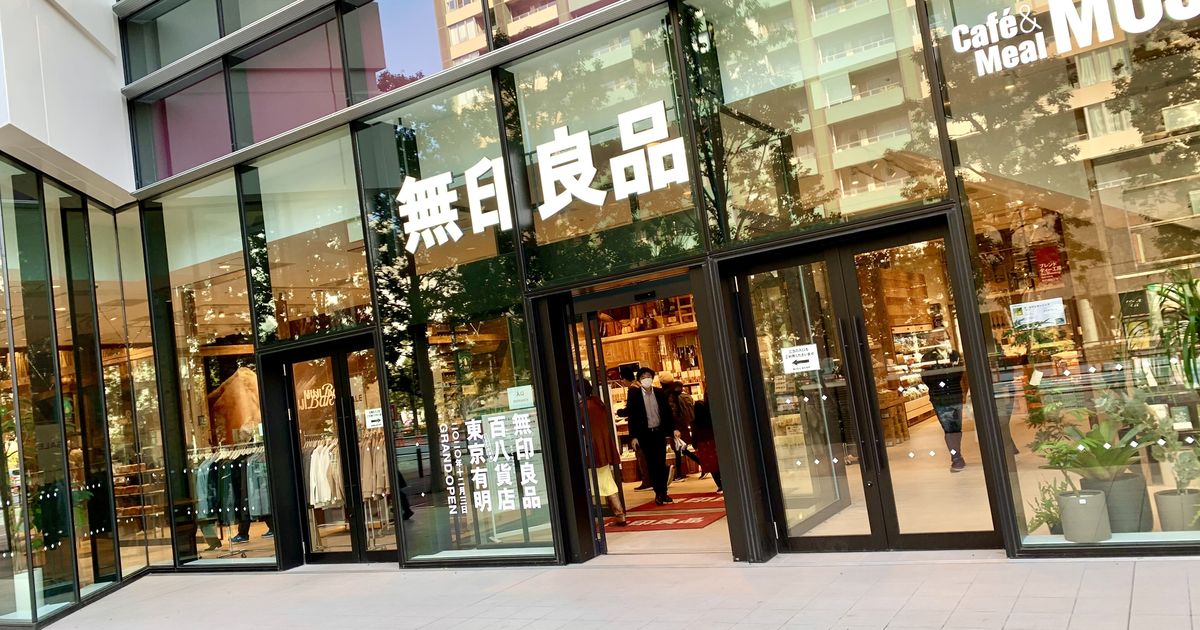
Short answer, so you can stop searching: MUJI does not issue a tourist coupon. Its official page for inbound visitors is titled “Tax-free Services” in English and Traditional Chinese, and contains nothing but tax-free procedure — no discount rate, no campaign, nothing to claim. But the absence of a coupon is only half the story, and the second half is what actually costs people money. MUJI's one genuine 10% discount, MUJI Week, is members-only — and MUJI states on two separate official pages that when you use the tax-free service, point accrual and member benefits are unavailable. So the real question is not “where is the coupon” but “tax-free 10% or member 10% — which one do I take?” This guide answers that, unpicks a tax-free threshold that MUJI itself states three different ways in three languages, and flags the border-control trap that can wipe out your tax-free entirely: MUJI does not accept the Visit Japan Web QR code.
- No tourist coupon exists — the “Welcome” page is a tax-free explainer; its English title is literally Tax-free Services
- Tax-free and the member 10% are mutually exclusive — stated outright on two official pages
- Visitors should take tax-free: membership is officially for Japan residents, and MUJI Week runs “a few times a year, irregularly”
- 🚨 Automated immigration gates leave no landing stamp — and no stamp means no tax-free; MUJI does not accept Visit Japan Web, so carry the physical passport
- Ginza flagship closes at 21:00 but its 4th-floor tax-free register shuts at 20:30; overseas MUJI points do not work in Japan
📖 Contents
- 1. The MUJI coupon that does not exist
- 2. Tax-free 10% vs member 10%: you must choose
- 3. MUJI's tax-free rules (and its own contradictions)
- 4. The landing stamp: the trap that voids everything
- 5. What MUJI Week is, and why nobody knows the next date
- 6. MUJI passport, points, and paying with a foreign card
- 7. The discount that does work — plus a September price rise
- 8. Three stores worth the detour (with counter hours)
- 9. FAQ
The MUJI coupon that does not exist
Let us nail this down first, because it is the reason most readers arrive here.
MUJI does maintain a page aimed squarely at inbound visitors, published in six languages — Japanese, Traditional and Simplified Chinese, English, Korean and Thai. The confusion starts with one detail: the Japanese version carries the browser title “Welcome Campaign”. Anyone skimming for a visitor promotion sees the word “campaign” and concludes there is something to claim.
Open it and the picture is unambiguous:
- The English and Traditional Chinese versions of the identical page are titled “Tax-free Services” — the word campaign does not appear.
- The site-wide footer link pointing at that page is also labelled Tax-free Services.
- The content is entirely tax-free procedure: who qualifies, the spending threshold, the documents required, the caveats. No coupon, no discount percentage, no dated promotion.
MUJI's official FAQ has only two tax-free entries that concern visitors, and neither mentions a coupon.
This puts MUJI in familiar company. We reached the same conclusion about Loft, which has no tourist coupon, and about Yodobashi, which issues no visitor coupon either. Japan's big chains split cleanly into two camps: those that court tourists with official scan coupons (Matsumoto Kiyoshi, Don Quijote, Bic Camera) and those that do not bother. MUJI belongs to the second camp — and it goes further than Loft or Yodobashi, because it will not even give you points on a tax-free purchase.
Tax-free 10% vs member 10%: you must choose
This is the section that decides how much you actually save.
MUJI does run a 10% discount in Japan. It is called MUJI Week, and it comes with two conditions. It is members-only, and MUJI repeats the following on two independent official pages — the inbound visitor page and the FAQ entry on tax-free shopping:
Member services provided under the MUJI member terms, including the MUJI app, are services for customers residing in Japan. When the tax-free service is used, the various services provided to MUJI members — including point accrual and member preferential treatment — cannot be used.
Translated into shopping terms: process a purchase as tax-free and you forfeit points and the MUJI Week 10% on that transaction. They cannot be stacked. What makes this worth writing about is that MUJI actually says so — most chains leave the question unanswered. When we researched Yodobashi we had to tell readers honestly that the official site was silent on whether points and tax-free coexist, and that they should ask at the till. MUJI removes the ambiguity.
So: two discounts of roughly the same magnitude, and you can only have one. Which?
| Factor | Tax-free (consumption tax exemption) | MUJI Week 10% off |
|---|---|---|
| Who qualifies | Non-resident foreign nationals within 6 months of their landing permission — i.e. you. Japanese nationals living abroad also qualify (two years or more of continuous residence outside Japan, within 6 months of a temporary return) | MUJI members, officially defined as customers residing in Japan |
| What you save | Through Oct 31, 2026: the 10% tax comes off at the till, so a ¥11,000 tax-inclusive item costs ¥10,000. From Nov 1, 2026: you pay the ¥11,000 and the ¥1,000 is refunded on departure — same amount, later money | 10% off at the register: roughly ¥1,100 on the same ¥11,000 item, immediately |
| Threshold | Same store, same day, ¥5,000 pre-tax and up (the ¥500,000 cap is abolished from Nov 1, 2026) | No spending minimum — but you have to be there during a campaign |
| When it is available | Any day, at any of the 223 tax-free MUJI stores | “A few times a year, irregularly”; at the time of writing the official page says it has ended |
| What you must present | Physical passport with landing stamp — Visit Japan Web QR not accepted | A member barcode at the register (app, LINE membership card or MUJI Card) |
| Stackable? | No. Official wording: when tax-free is used, points and member benefits are unavailable. | |
On a short trip, take the tax-free and stop thinking about membership. Three reasons.
- Eligibility. The member terms state plainly that the service is for customers residing in Japan. You can argue about whether a sign-up form would technically accept you, but building a shopping plan on a scheme whose own definition excludes you is a bad foundation.
- Timing. MUJI Week has no fixed schedule and is announced only in-store, on the website, by member newsletter and in the app. Domestic members get days of notice. A visitor who booked flights in advance cannot plan around it at all.
- Control. The tax-free condition is ¥5,000 pre-tax at one store on one day — a condition you can simply choose to meet by consolidating your shopping into a single large branch on a single visit. A discount you control beats a discount you have to be lucky to catch.
The one exception: if you are already in Japan, MUJI Week happens to be running, and your basket will not reach ¥5,000 pre-tax — then tax-free is off the table anyway and the member discount becomes the only option on the shelf (assuming you have member status at all). Otherwise the answer is tax-free, every time.
🔴 From November 1, 2026 this comparison changes shape
The new system decides which rules apply by purchase date rather than departure date, with no transition period whatsoever: buy on October 31 and you are on the old rules, buy on November 1 and you are on the new ones, even inside one trip. For this section it changes exactly one thing, and it is a real one — the 10% no longer comes off at the till; it comes back to you after you have left the country.
Three consequences to weigh together:
- The member 10% is money now; tax-free becomes money later. The amounts are still ¥1,000 versus ¥1,100 on an ¥11,000 basket, but one is an instant reduction and the other is a pending refund.
- And how that refund arrives is barely regulated. The method and the number of days are set by each tax-free retailer — no law, no official figure. On fees the government has answered only "who pays": whether it falls on the traveller or the shop is "not specifically prescribed", and the government itself charges nothing; the rate is still the retailer's call. Whether MUJI charges a fee, and how long the refund takes, are questions for the till. You register your refund details (a card, typically) in the store rather than at the airport; each shop's refund operator sets the deadline, so it is not always due at the till, but doing it there is safest.
- The verdict does not flip. None of the three reasons for taking tax-free — eligibility, timing, control — is weakened by the reform, while the membership side keeps both its problems: officially it is for Japan residents, and MUJI Week still has no published schedule.
Two operational details to carry into the airport: the customs check happens in the international departures hall before you check your luggage and before security, outside the restricted area — and a checked bag cannot be retrieved. And a receipt passes or fails as a whole: if one item from a single purchase transaction is missing at the check, every other item on that receipt is refused with it. The complete procedure is in our walkthrough of the new refund system.
One related question MUJI does not answer: can tax-free be combined with limited-time pricing? Limited-time pricing is a shelf-price reduction for all customers rather than a member benefit, so logically the tax exemption would apply to the reduced price — but MUJI has published nothing on this. If it matters to your basket, ask before you pay.
MUJI's tax-free rules (and its own contradictions)
Tax-free is the discount, so here is how MUJI runs it. The FAQ is the authority.
- Threshold: ¥5,000 pre-tax and up, combinable across purchases at the same store on the same day. ⚠️ The ¥500,000 maximum MUJI's FAQ quotes is the old consumables cap, abolished nationally from November 1, 2026 (judged by purchase date); the minimum itself is unchanged.
- Who qualifies: foreign nationals who are non-residents and are within 6 months of their landing permission date. If you have re-entered Japan, the original entry date applies. Dual nationals must present the passport actually used to enter.
- 🔴 Japanese passport holders should not rule themselves out. Under national law Japanese nationality is not an automatic disqualification: a Japanese national who is a non-resident, has lived outside Japan continuously for two years or more, and is within six months of a temporary return, is an eligible tax-free customer — on a passport plus one of a copy of the family-register attachment, a certificate of residence abroad, or a My Number card (the reform dropped the requirement to show the registered domicile and added the My Number card). The disqualifier, stated officially, is a single instance of Japanese resident registration during those two years. ⚠️ MUJI's own bar is higher: it wants an original certificate of residence abroad or certified copy of the family register attachment — photos and photocopies are refused, with no discretionary exceptions (a green card or an overseas driving licence will not do). Where MUJI illustrates the Taiwan case, the document it names is one issued by the Japan-Taiwan Exchange Association.
- 🔴 Japanese nationals face one extra hurdle at the register: the shop checks the re-entry stamp in the passport, and there is no Visit Japan Web alternative for them (foreign nationals in principle have three routes — landing-permission sticker, TTP card, or the Visit Japan Web tax-free QR — except that MUJI explicitly does not accept the QR). Clear immigration through an automated gate with no stamp and tax-free is off; officially, you can ask an immigration officer to add the stamp afterwards.
- Same-day only: tax-free must be processed on the day of purchase — returning with yesterday's receipt does not work. MUJI also notes that tax-free processing hours differ from trading hours at some stores.
- No shipping abroad on tax-free purchases.
- Appliances: MUJI electrical goods are built to Japan's 100V standard with warranty valid only in Japan, and the official wording is blunt — they cannot be used overseas. Check voltage before you buy.
🔴 The trap: MUJI's own pages contradict each other
If you have already looked this up, you may have found completely different numbers. You did not misread — MUJI's inbound page states the threshold three different ways in three languages, and all three conflict with its own FAQ:
| Source | Threshold as stated |
|---|---|
| Official FAQ (tax-free shopping in Japan) | ¥5,000–500,000 pre-tax, combinable same store same day — the minimum and the combining rule match national law, but the ¥500,000 ceiling was abolished nationally on November 1, 2026, so this cell goes stale too |
| Inbound page, Japanese | General goods from 10,801 yen (tax included); consumables 5,401–540,000 yen (tax included); states general goods and consumables cannot be combined |
| Inbound page, Traditional Chinese | General goods over 5,400 yen (tax included) |
| Inbound page, English | 5,400 yen (tax included) and up |
Four figures, three stories, and the Japanese page differs from the English one by a factor of two — while its “cannot be combined” line directly contradicts the FAQ's “can be combined”. Since the threshold is set by national law rather than by the retailer, there is only one correct answer: the FAQ's ¥5,000 pre-tax, combinable at the same store on the same day. If a register tells you otherwise, ask. After November 1, 2026 the contradiction only widens — the general-goods/consumables distinction is abolished that day, so the inbound page's whole “count them separately” framing loses even its legal basis, and MUJI has yet to change a word of it.
All of those contradictory numbers show up when you search for the MUJI tax-free minimum; go by the FAQ. For the tax-free system as a whole — including the reform landing on November 1, 2026 — see our Japan tax-free guide.
Does MUJI charge a tax-free handling fee?
A fair follow-up: does MUJI deduct a commission when processing tax-free? Loft publishes a 1.55% fee, which is why its 10% is really about 8.45%. What about MUJI?
MUJI does not say. The FAQ has no entry on a tax-free handling fee, and the official list of tax-free stores does not mention a commission. Not stated is not the same as zero — ask at the counter, or read the refund breakdown on your receipt.
MUJI is equally silent on the November 1, 2026 reform. Its official notices and FAQ said nothing about it through August 2026. The mechanics of the new system — pay the tax-inclusive price, then reclaim the tax at an airport terminal within 90 days counted from the day after purchase, with the money paid out by the tax-free retailer or its appointed refund operator rather than by the airport — are covered in our discount coupons guide and the tax-free reference. How MUJI's stores will implement it is something only MUJI can tell you, and it has not yet. ⚠️ And note that the reform does not settle the fee question either: refund method and timing are unregulated and carry no official figure, and on fees the government says only that who bears it is “not specifically prescribed” and that it charges nothing itself — the rate is left to each retailer, so “does MUJI charge a fee” will still be a question for the counter.
The landing stamp: the trap that voids everything
If you remember one paragraph from this guide, make it this one. It can cost you the entire tax-free saving, and there is no way to fix it after the fact.
MUJI's official FAQ states two things:
- MUJI has not implemented Visit Japan Web. The exact wording is that the company has not adopted the provision of passport information and identity verification via the QR code displayed by the Visit Japan Web service, introduced with the April 1, 2023 tax-free reform. That QR code works at plenty of other retailers. At MUJI it does not. Bring the physical passport.
- No landing stamp, no tax-free. Automated gates (including facial-recognition gates) do not stamp your passport. Without the stamp MUJI cannot confirm your entry date, cannot confirm you are within the six-month non-resident window, and therefore cannot process the exemption. MUJI's stated remedy is the only one available: ask an immigration officer to stamp your passport at the time you clear the border.
What makes this so easy to get wrong is the gap in time. The mistake happens in the three minutes after you land; you discover it on day three, standing at a register with ¥40,000 of shopping. The ten minutes the automated gate saved you can cost 10% of everything you buy — on a ¥50,000 haul that is ¥5,000, and it applies at every other retailer too, not just MUJI.
So make it a habit: at immigration, hand over the passport and ask for a stamp. A simple “Stamp, please” is understood everywhere, and it applies to tax-free at every shop on the trip, not just MUJI.
What MUJI Week is, and why nobody knows the next date
MUJI Week is the chain's flagship sale: 10% off at the register for members. Domestic customers famously save up furniture, mattresses and storage purchases for it. For a visitor, three mechanics matter:
- There is no coupon involved. MUJI states explicitly that no coupon needs to be presented during MUJI Week — the discount applies when the member barcode is scanned. So searches for a “MUJI Week coupon download” are chasing something that was never a coupon in the first place.
- How you present it is fiddly. At a staffed register you can show the MUJI app, a LINE membership card, a MUJI Card, the newsletter (on screen or printed) or a logged-in My Page screen. But self-checkout terminals only read barcodes — the newsletter and My Page screens will not work there. Fail to present it at the time and the discount cannot be added later and the transaction will not be re-rung.
- It has no fixed dates. The official FAQ says MUJI Week is held a few times a year, on an irregular basis, announced only in stores, on the website, by member newsletter and via the app.
The official MUJI Week page currently carries exactly one line: the campaign has ended. No campaign is running, and no next date has been published.
The only schedule MUJI has published is “a few times a year, irregularly”, so do not plan around any predicted date. The practical tactic: if you happen to be in Japan and see the campaign posted in-store, it is real; otherwise do not reshape your itinerary around it. And even if you do catch one, you are straight back to the choice in section two — for a visitor with tax-free eligibility, tax-free usually still wins.
Worth knowing if you shop MUJI at home as well: overseas markets run their own MUJI Weeks. Taiwan, for example, advertises its own member 10% off. Those are separate campaigns run by separate operating companies and have nothing to do with the Japanese schedule.
MUJI passport, points, and paying with a foreign card
The second common misconception: “I have points on my MUJI passport at home, so I can spend them in Japan.” You cannot.
The official FAQ is explicit: points cannot be earned or redeemed with the Japanese MUJI app at stores outside Japan, and only the check-in function works worldwide. The reverse is equally true — the two systems are independent, and overseas markets are run by separate companies (Taiwan's stores, for instance, by MUJI (Taiwan) Co., Ltd.).
| Item | Japan | Taiwan (as an example of an overseas market) |
|---|---|---|
| Scheme | MUJI GOOD PROGRAM since September 9, 2025 | Still branded MUJI passport |
| Earning | 1 point per ¥100 including tax, on showing the MUJI app, LINE membership card or MUJI Card in store | 1 point per NT$100 spent; 1 point = NT$1, valid 365 days |
| Who it is for | Officially, customers residing in Japan | Local customers |
| Interaction with tax-free | No points on tax-free purchases (stated officially) | Not applicable |
| Extras | — | NT$150 birthday-month voucher; the co-branded card earns NT$5 per NT$100 in MUJI Dollars, which can be redeemed alongside passport points but only earned on one scheme or the other |
Two Japan-side details worth carrying with you: screenshots, printouts and reciting a membership number all earn nothing, and points cannot be credited retroactively. Whatever your membership status, it has to be on screen at the moment of payment.
And one FAQ entry that gets badly misquoted. MUJI does publish a line stating that credit cards issued outside Japan cannot be used, even when they carry a Visa, Mastercard or JCB logo. But that entry is tagged “Net Store / payment methods” — it is about the online shop, not the physical stores. In-store is a different world: the Ginza flagship's official payment list covers major credit cards, transit IC money, MUJI passport Pay, COIN+, PayPay, Rakuten Pay, au PAY, d-Barai, plus UnionPay, Alipay and WeChat Pay. Walking into a Japanese MUJI branch with a foreign credit card is not affected by that online-shop restriction.
The discount that does work — plus a September price rise
Having ruled out two things you probably cannot use, here is one you can: limited-time pricing.
These are MUJI's recurring shelf-price reductions, and their three characteristics are exactly what a visitor wants: not members-only, no coupon required, the price on the label is simply lower. Foreign shoppers and locals pay the same. In 2026 MUJI's own store notices show two windows: Golden Week, April 29 – May 6 (cool-touch T-shirts marked down, sunscreen and some foods 10% off) and summer, August 11–20 (online until 10:00 on August 21; the clear-care skincare line, cool bedding and similar household goods 15% off, emergency-stock foods 10% off). Both sat around Japanese holiday periods and ran a week to ten days. The next one has not been announced; if your trip overlaps a Japanese holiday, check MUJI's campaign page or the in-store posters before you go.
If your trip coincides with one, the genuinely optimal combination is limited-time pricing plus tax-free. Whether the two formally combine is, as noted above, not addressed by MUJI — so ask at the register.
489 product lines went up in price from September 2026
On August 7, 2026 MUJI announced that from September 4, 2026, 489 product lines across clothing, household goods and food were repriced upward. Its IDÉE brand issued a separate price-revision notice the same day.
This applies to anyone travelling now: any MUJI shopping list written before August 2026 may have stale prices. For which items went up and by how much, see MUJI's price-revision list (PDF, Japanese).
This is also part of why you will not find a home-country-versus-Japan price comparison table here. Cross-market comparisons go wrong the moment the SKUs drift apart — different volumes, generations or seasonal editions — and produce a table that looks authoritative and is quietly wrong. Add a price revision on September 4 and an August comparison expires within weeks. For a broader look at what is worth carrying home, see our Japan souvenirs and shopping guide.

Three stores worth the detour (with counter hours)
MUJI's official list of tax-free stores runs to 223 branches, airports included: MUJI to GO at New Chitose, Narita Terminal 1, Narita Terminal 2 and Naha are all on it — but Haneda is not. If you were planning a last-minute run at Haneda, plan differently.
Three Tokyo stores justify a special trip:
| Store | Hours | Access | What makes it different |
|---|---|---|---|
| MUJI Ginza (world flagship) 3-3-5 Ginza, Chuo-ku | Daily 11:00–21:00 🚨 Tax-free register: 4F, 11:00–20:30 (shipping desk 5F, same cutoff) | Metro Ginza stn exit C8, 3 min / Ginza-Itchome stn exit 5, 3 min / JR Yurakucho central exit, 5 min | ReMUJI, Found MUJI, MUJI BOOKS, regional products, fresh produce, IDÉE including vintage furniture, embroidery studio, fragrance studio |
| MUJI Tokyo Ariake 2-1-7 Ariake, Koto-ku (1–3F) | Weekdays 10:00–20:00 / weekends and holidays 10:00–21:00 — note this differs from Ginza | Yurikamome Ariake stn, 4 min / Ariake-Tennis-no-Mori stn, 3 min / Rinkai line Kokusai-Tenjijo stn, 7 min | About 1,800 parking spaces in Ariake Garden, open 24h; full IDÉE range, embroidery studio including hand-drawn illustration embroidery, self-serve coffee, Wi-Fi and charging stations |
| Found MUJI Aoyama 5-50-6 Jingumae, Shibuya-ku (1–2F) | Mon–Fri 12:00–20:00 / Sat–Sun 11:00–20:00 — opens later than an ordinary branch | Metro Omotesando stn exit B2, 2 min | ReMUJI and antique furniture sourced worldwide, fragrance studio, water station; no parking, and fewer payment options than Ginza (no PayPay, Rakuten Pay, au PAY or d-Barai) |
That 12:00 opening at Found MUJI Aoyama is the single most common wasted journey here — plenty of people schedule Omotesando for the morning and arrive at a closed shutter. Weekdays it opens at noon; only at weekends does it open at 11:00.
Two more things about the Ginza building. First, floors 1 to 6 are the flagship store itself, carrying what MUJI describes as around 7,000 product lines, with MUJI HOTEL GINZA on the sixth floor — 79 rooms, the smallest with a 2,100mm frontage, entered from Ginza Renga-dori. Food and drink in the same building: MUJI Diner in the basement, 118 seats, lunch 11:00–14:00, tea 14:00–17:00, dinner 17:00–22:00 (last entry 21:00, last order 21:30); MUJI Coffee & Bakery on the ground floor, 11:00–21:00; and ATELIER MUJI on the sixth floor, 11:00–21:00, free to enter — two galleries, a coffee salon, a library and MUJI BOOKS. A free place to sit down mid-afternoon in Ginza is not nothing.
Second, ignore the “MUJI HOTEL GINZA is closed” posts. There is a closure notice sitting at the top of the official news list, but the closure it describes ran from 12:00 on July 15, 2026 to 08:00 on July 16, 2026 and is long finished — it simply has not been pushed down the list yet.
For drivers: the Ginza store validates parking at the Yomiuri Namiki-dori building, Tokyo Kotsu Kaikan and Tokyo International Forum — one hour free on ¥5,000 including tax, two hours on ¥10,000; the Ginza municipal car park gives 50 minutes and 100 minutes on the same spend levels, processed at the ground-floor information desk.
Fitting these into a route: Ginza sits comfortably in a shopping half-day on our Tokyo 5-day itinerary, while Found MUJI Aoyama slots into an afternoon around Omotesando and Harajuku. To compare how the various chains handle coupons and tax-free side by side, see our coupons hub.
The three-sentence version
One: stop looking for a coupon. MUJI does not issue one — the page people mistake for a promotion is titled Tax-free Services in English and Chinese.
Two: tax-free and the member 10% are mutually exclusive, and visitors should take tax-free. MUJI states outright that tax-free purchases earn no points and no member benefits; membership is officially for Japan residents and MUJI Week has no published schedule, whereas the tax-free condition — ¥5,000 pre-tax, one store, one day — is entirely within your control.
Three: the whole thing can be lost at immigration. MUJI does not accept Visit Japan Web, and automated gates leave no stamp. Ask for the stamp when you land. It is the highest-return five seconds of the trip.
Frequently Asked Questions
- Q1:Does MUJI have a tourist coupon or a foreign visitor discount?
- No. MUJI does run a dedicated page for inbound visitors, and the Japanese version of that page carries the browser title “Welcome Campaign”, which is easy to read as a promotion. But the Traditional Chinese and English versions of the very same page are titled “Tax-free Services”, the site-wide footer link is also called Tax-free Services, and the page content is nothing but tax-free procedure from top to bottom: no coupon, no discount rate, no campaign. The official FAQ entries on tax-free shopping for visitors mention no coupon either. For chains that genuinely do issue official visitor coupons, see our Japan discount coupons guide.
- Q2:Can I combine tax-free with the MUJI members 10% discount?
- No — and unusually, MUJI states this outright. The same sentence appears on two independent official pages (the inbound visitor page and the FAQ entry on tax-free shopping in Japan): member services are provided to customers residing in Japan, and therefore when you use the tax-free service, point accrual and member preferential treatment are unavailable. MUJI Week — the members-only 10% off — is exactly that kind of member benefit, so it and tax-free are mutually exclusive. This is a sharper answer than we could give for Yodobashi, where the official site says nothing at all about points versus tax-free. Our recommendation for visitors is unambiguous: take the tax-free.
- Q3:When is the next MUJI Week (Muji Ryohin Shukan)?
- MUJI has not announced one. The official MUJI Week page currently contains a single line: the campaign has ended. The official FAQ describes the schedule as “a few times a year, on an irregular basis”, announced only in stores, on the website, in the member newsletter and via the MUJI app. In other words even domestic members find out at short notice — a visitor booking flights three months ahead has nothing to plan around. Do not plan around any predicted date.
- Q4:What is the tax-free minimum at MUJI? Why do sources disagree?
- Go by the official FAQ: ¥5,000(同店同日最低消費(稅拔)) pre-tax and up, combinable at the same store on the same day. ⚠️ The ¥500,000 ceiling the FAQ also quotes is the old consumables cap, abolished nationally on November 1, 2026 — and the cut-off is decided by purchase date, not departure date, so anything bought from that day on has no ceiling. The ¥5,000(同店同日最低消費(稅拔)) pre-tax minimum itself is unchanged by the reform. You will find other numbers because MUJI's own inbound page contradicts itself across languages and contradicts its own FAQ: the Japanese version states general goods from “10,801 yen (tax included)” and consumables “5,401–540,000 yen (tax included)”, while the Traditional Chinese version says “over 5,400 yen (tax included)” and the English version says “5,400 yen (tax included) and up”. The Japanese version even states that general goods and consumables cannot be combined, directly contradicting the FAQ. The threshold is a national rule, not a store policy, so the FAQ figure is the one to trust — and ask staff if you get a different answer at the register.
- Q5:Does using the automated immigration gate stop me getting tax-free at MUJI?
- Yes — this is the single most expensive mistake in this guide. Two things are stated in MUJI's official FAQ. First, MUJI has not implemented Visit Japan Web: the QR code that presents your passport data at other retailers is not accepted, so you must carry the physical passport. Second, automated gates do not stamp your passport, and without a landing stamp MUJI cannot verify your date of entry — which means it cannot process tax-free at all. The fix takes five seconds: ask the immigration officer for a stamp as you go through. ⚠️ Japanese nationals have an officially documented second chance — after passing an automated gate you may still ask an immigration officer to add the re-entry stamp. No such official route is published for foreign nationals, and MUJI does not accept the Visit Japan Web QR either, so for them it really is a decision to make at the border.
- Q6:Can I use my overseas MUJI passport points in Japan?
- No. The systems are entirely separate. The official FAQ states that points cannot be earned or redeemed with the Japanese MUJI app at stores outside Japan; only the check-in function works worldwide. Taiwan, for instance, is operated by a separate company, MUJI (Taiwan) Co., Ltd., with its own MUJI passport scheme (1 point per NT$100, 1 point = NT$1, 365-day expiry) and its own local MUJI Week 10% member discount. Japan itself switched to the “MUJI GOOD PROGRAM” on September 9, 2025, earning 1 point per ¥100 including tax when you show the app, LINE membership card or MUJI Card — screenshots, printouts and reciting your ID number are all rejected, and nothing can be added after the fact.
- Q7:How will tax-free at MUJI work after November 1, 2026?
- The national system changes, but MUJI itself has published nothing. Its notices and FAQ said nothing about the reform through August 2026. The reform itself — which system applies is decided by purchase date, not departure date, with no transition period; you pay the full tax-inclusive price in store, then claim the consumption tax back at an airport terminal within 90 days counted from the day after purchase, with the money coming from the retailer or its appointed refund operator rather than from the airport — is covered in our Japan tax-free guide. How MUJI's registers will handle it is not announced yet. Re-check MUJI's inbound page before a post-November trip.
- Q8:What time does the Ginza flagship stop processing tax-free?
- 20:30 — half an hour before the store closes. MUJI Ginza (whose official store page describes it as the world flagship store) trades 11:00–21:00 daily, but the tax-free register is on the 4th floor and accepts customers 11:00–20:30; the shipping desk on the 5th floor keeps the same cutoff. Turning up at 20:45 with a full basket means paying full price. MUJI also warns generally that tax-free processing hours differ from trading hours at some stores — there are 223 tax-free MUJI stores nationwide and most do not publish a counter time, so check the specific store page rather than assuming Ginza hours apply elsewhere.