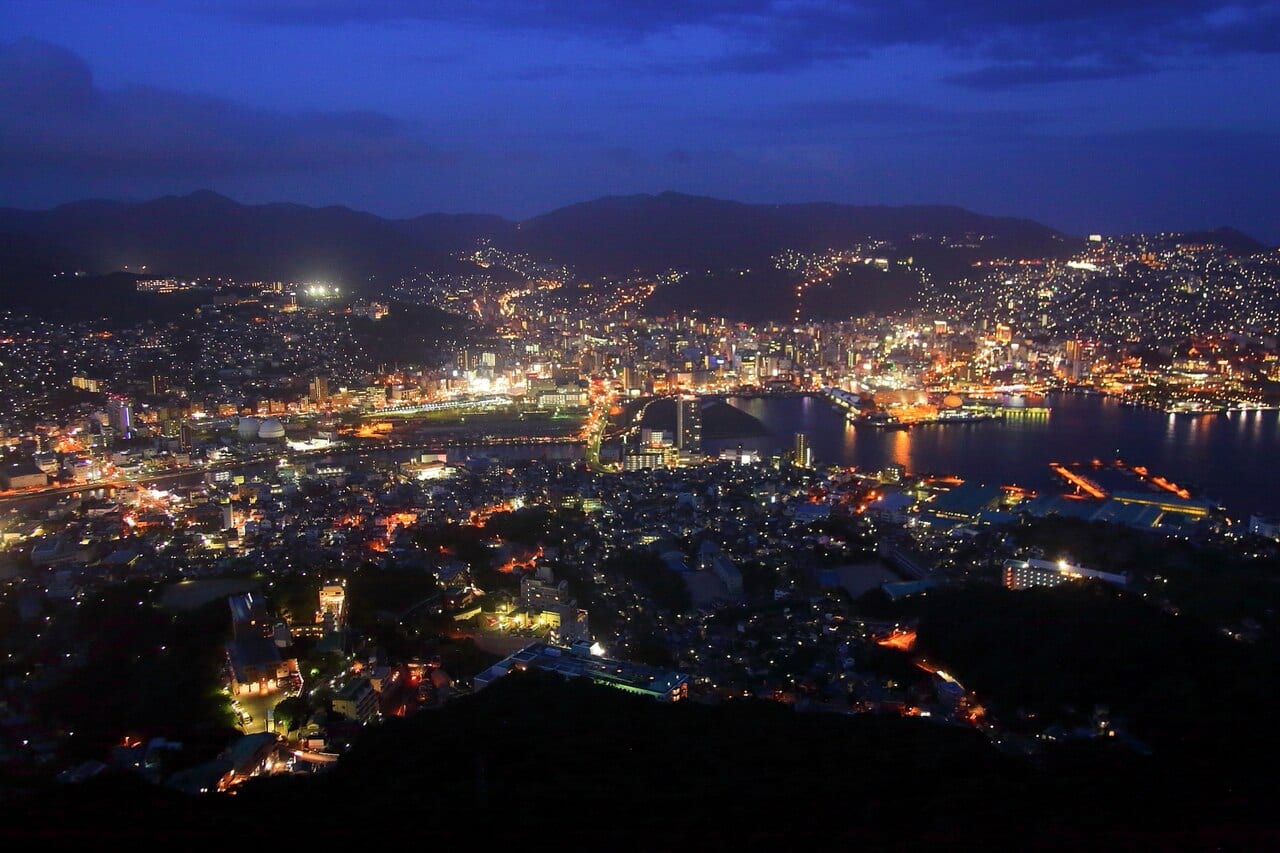
Nagasaki is Kyushu's most "foreign" city. Through the two-plus centuries of Japan's closed-country era it was the one window open to the Dutch and the Chinese, and so this harbor town holds, all at once, a world-class night view from Mt. Inasa, the hillside Western mansions of Glover Garden, Japan's oldest church at Oura, the reconstructed trading post of Dejima, and the World Heritage ruins of Gunkanjima. This guide covers their tickets, the sea-condition limits on a Gunkanjima landing, the weight of the Peace Park, and Nagasaki's champon and access. It's the Nagasaki deep-dive for Kyushu; the rail loop is in our Kyushu 3-day rail itinerary.
- Japan's closed-country window to the world: a Dutch + Chinese + Nanban harbor city
- Mt. Inasa's world-class night view: ropeway ¥1,250 round trip, best at dusk
- World Heritage mansions: Glover Garden ¥1,300, Oura Church, Dejima ¥1,100
- Gunkanjima rides on the sea: high waves mean a cruise only, no guaranteed landing
- Must-eat: champon, sara udon, castella
📖 Table of contents
What kind of city Nagasaki is
What sets Nagasaki apart from the rest of Kyushu is its thick "exotic" atmosphere. During the Edo-era closed country, Japan all but shut its doors to the world — except for one crack here: the Dutch lived on the man-made island of Dejima, Chinese merchants gathered in the Tojin-yashiki quarter, and Western science, medicine and food all came in through this port. After the country reopened, foreign traders built their Western mansions up the hillsides. Today's Nagasaki is therefore a layered city of harbor, steep slopes, Western mansions, churches and a Chinatown, and walking its streets you keep feeling that "this doesn't look like typical Japan."
Geographically Nagasaki is a harbor town cradled by mountains, the city built up the slopes with trams threading between them. It's that bowl-shaped terrain that, after dark, stacks every household's lights up the hillsides into the world-class night view from Mt. Inasa. Treat Nagasaki as "a city for slowly climbing slopes, reading history and watching the night view," and it clicks.
Mt. Inasa night view
The night view from Mt. Inasa (333 m) is Nagasaki's signature, often listed among the "world's three great" or "Japan's new three great" night views. The 360° summit deck looks out over the entire harbor and hill-city, and after dark the lights spread up the bowl of terrain in layers — the kind of scene that quiets you down and holds you for a while.
The usual way up is the Nagasaki Ropeway, ¥1,250 round trip for adults (¥940 junior/senior-high, ¥620 elementary), a few minutes to the top; a shuttle bus or driving also work. Practical tip: go up about 30 minutes before sunset — watch the sky turn from blue to black and the lights flick on one by one; this "blue hour" is actually lovelier than full dark. It's windy at the top, so bring a light jacket even in summer.
Glover Garden and Oura Church
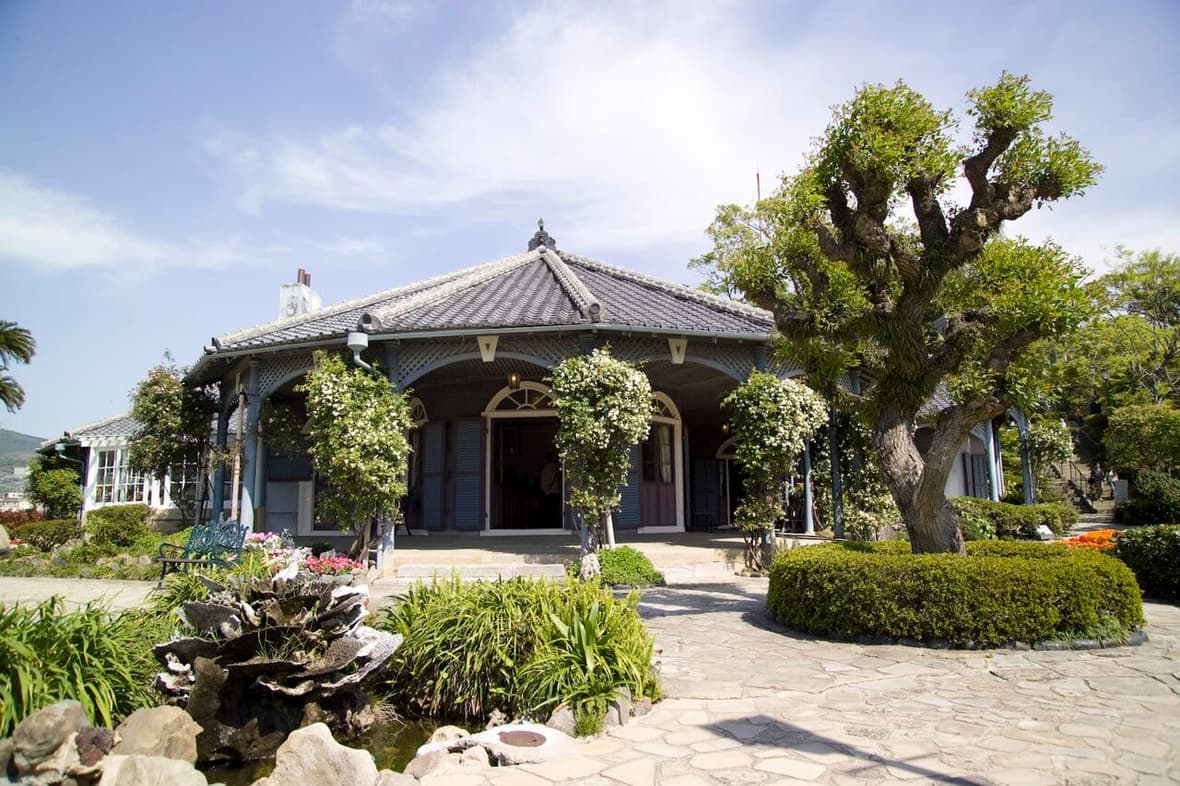
The hillside on the south side of the city is Nagasaki's prime stretch of historical walking. Glover Garden gathers the Meiji-era mansions of merchants like the Scotsman Thomas Glover, relocated and restored on a slope above the port; inside you look down over the harbor with mansions and gardens interwoven, and the former Glover Residence is a component of the "Sites of Japan's Meiji Industrial Revolution" World Heritage. Entry is ¥1,300 (¥650 students). It's built on the slope with moving walkways, and an unhurried visit takes about 1-1.5 hours.
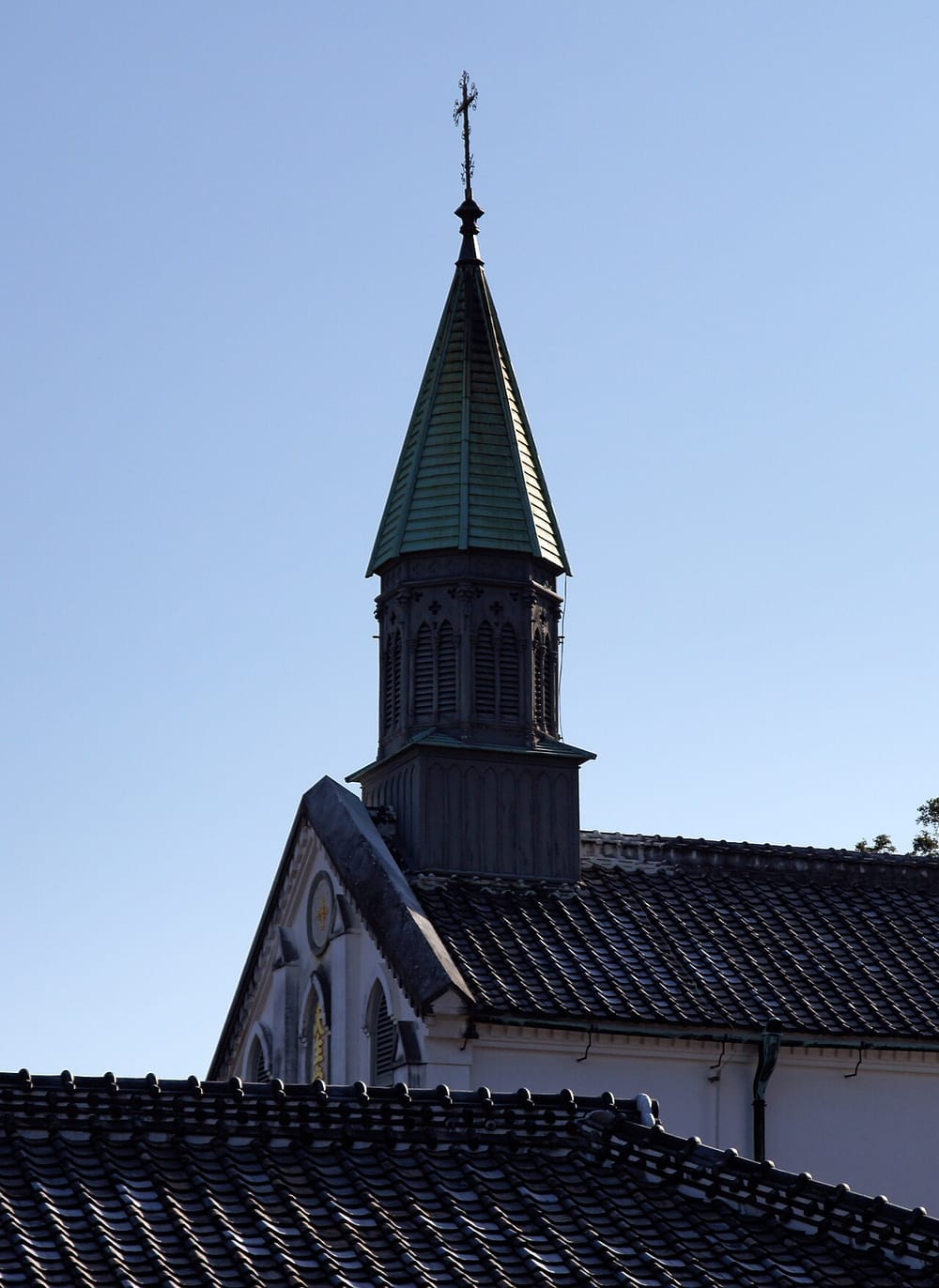
Within walking distance, Oura Church is Japan's oldest surviving church and a National Treasure, and the heart of the "Hidden Christian Sites in the Nagasaki Region" World Heritage; its white Gothic facade at the top of the slope is quite a sight, and admission is about ¥1,000 (including the adjoining Christian museum). The other end of that same World Heritage listing is across the water in Kumamoto, where Amakusa's Sakitsu Church and dolphin coast hold a more remote, fishing-village Hidden-Christian settlement worth extending to if this history grabs you. Linking Glover Garden, Oura Church and the nearby Dutch Slope and Western old streets into one afternoon is Nagasaki's most concentrated exotic-flavored walk. For where to stay, see our 5 best Japanese onsen ryokans.
Dejima, Megane Bridge and Chinatown
To understand Nagasaki's history, three spots are essential. Dejima is the fan-shaped artificial island built in the Edo period for the Dutch trading post — Japan's sole window to Europe during the closed country — now partly reconstructed into a street-block museum where a walk-through makes the old trade and daily life tangible; entry is ¥1,100 (¥550 students, revised April 2026). Megane Bridge (Spectacles Bridge) is one of Japan's oldest stone arch bridges, its reflection forming the "spectacles" double-loop — a favorite riverside photo stop downtown. And Nagasaki Shinchi Chinatown, one of Japan's three great Chinatowns, is the continuation of the Chinese merchant quarter and the birthplace of champon and sara udon.
Peace Park and the Atomic Bomb Museum
Nagasaki was, after Hiroshima, the world's second city struck by an atomic bomb. On the north side, the Peace Park holds the famous Peace Statue, and the nearby Nagasaki Atomic Bomb Museum (admission about ¥200) records the catastrophe of August 9, 1945 through objects and testimony. The mood here is solemn — not a photo stop but a place to pause and reflect. Visit quietly and respectfully; it's well worth including — a profound counterpoint to the cheerful exotic flavor of Nagasaki's other sights, and the city's most important memory.
Gunkanjima
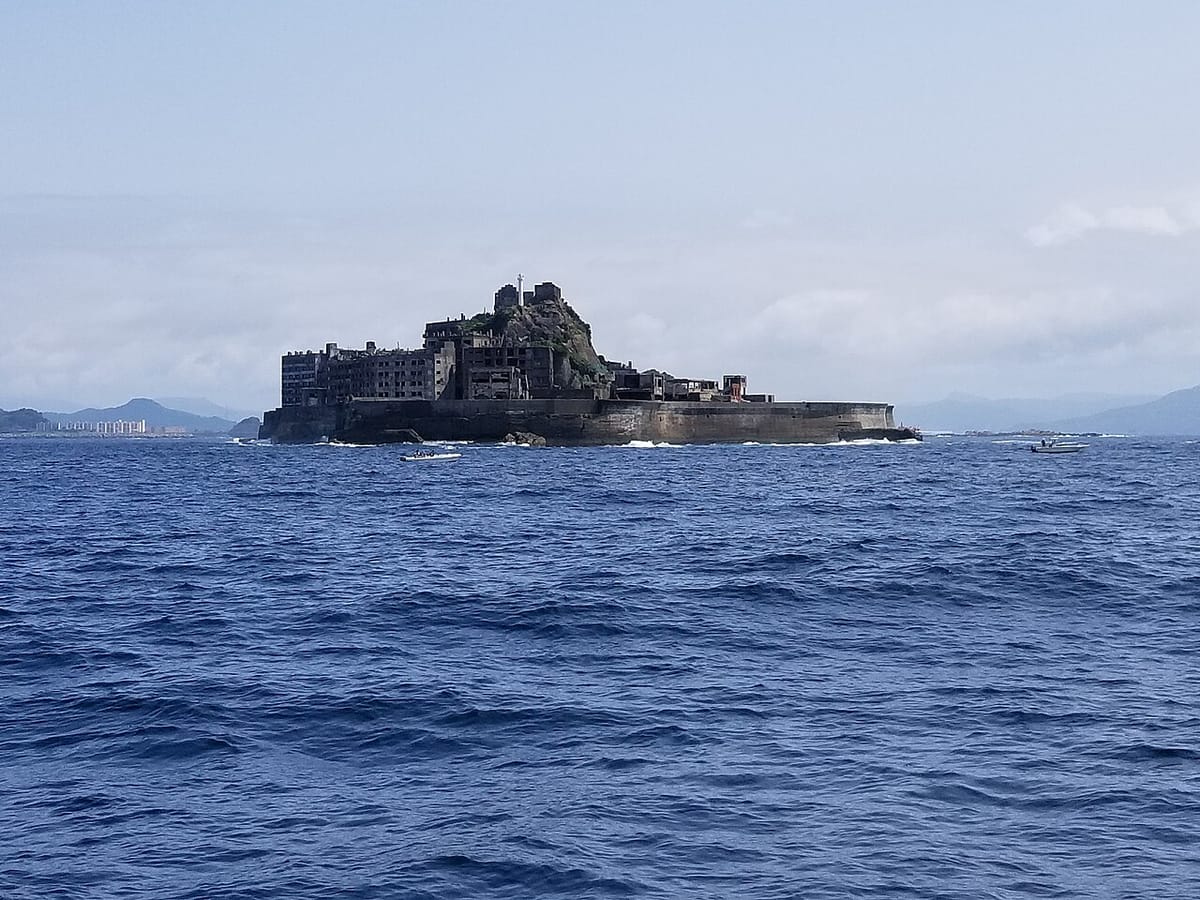
Gunkanjima (Hashima) is an abandoned coal-mining island off Nagasaki, once one of the most densely populated places on Earth, left a concrete ghost town after it closed, named for its battleship-like silhouette and inscribed as a "Sites of Japan's Meiji Industrial Revolution" World Heritage. You visit it on a private boat tour: the cost is the boat fare (from around ¥3,600 depending on operator) plus Nagasaki City's landing fee of ¥650 for adults, booked in advance.
Key caveat: whether you can actually "land" depends on the day's sea conditions. When the waves are too high the pier can't be used and the tour becomes a cruise around the island only, no landing (very common in winter and typhoon season). So treat landing as "a bonus if the weather is good" and don't pin the trip on it — even just circling, the silhouette of those ruins from the sea is striking. For Hashima's rise and fall, its full history, the landing conditions and operator booking details, see our complete Gunkanjima landing guide. Before you go, our Japan packing & weather guide covers preparing for the wind out on the water.
Nagasaki food
Nagasaki's food is a snapshot of its cosmopolitan history, blending Chinese and Nanban (Portuguese) flavors — a few must-eats:
- Champon: thick noodles in a rich, milky pork broth piled with seafood and vegetables — generous and savory, the signature of Chinatown and the whole city, born of localized Chinese cooking.
- Sara udon: thin noodles fried until crisp, then topped with a starchy mixed sauce — the same lineage as champon in two different textures, and the choice if you love a crunch.
- Castella: the Nanban-derived, localized honey sponge cake — moist and fine-crumbed, the classic souvenir, with loyal fans for each old shop.
There's also Turkish rice (a single plate of pork cutlet, spaghetti and rice) and shippoku cuisine (a Chinese-Japanese-Western banquet) — both very Nagasaki. A bowl of champon while wandering Chinatown and a box of castella to take home rounds up the city's flavors.
Access and day-trip vs overnight
Access: from Fukuoka (Hakata) the Nishi-Kyushu Shinkansen is fastest — the Relay Kamome limited express to Takeo-Onsen, then a same-platform change to the Kamome shinkansen to Nagasaki, about 1 hour 20-30 minutes total; a direct highway bus also runs (~2.5 hours, cheaper). Around town the tram is easiest (a flat coin fare), with nearly all the main sights on its lines. You'll be checking signals, boat times and tram routes on the slopes and offshore a lot, so set up a KKday Japan eSIM online first; for a multi-leg loop around Kyushu, compare whether a JR Kyushu Rail Pass pays off.
Day-trip vs overnight: the city core (Mt. Inasa, Glover Garden, Oura Church, Dejima, Megane Bridge, Chinatown, Peace Park) can be done in one tight day; but adding a Gunkanjima landing (a half-day boat trip) or doing the Atomic Bomb Museum justice needs two. And with the night view as a headliner and the slope-city so atmospheric, an overnight rounds it out a lot — history by day, the blue hour atop Mt. Inasa, champon in Chinatown at night. Still within Nagasaki Prefecture, a short rail or drive onward lets you add a soak at the Unzen Hells and the Shimabara castle town. Heading on to Kumamoto? See what has reopened at Kumamoto Castle; for hot springs to the east, our Beppu onsen guide.
A suggested one-day route that minimizes backtracking on the trams: start in the morning at the Peace Park and Atomic Bomb Museum on the north side while you're fresh and the mood calls for focus; tram back down to Megane Bridge and the Dejima area for a midday history walk; lunch on champon in Chinatown next door; spend the afternoon on the southern hillside at Dejima Wharf, then Oura Church and Glover Garden (allow 1.5-2 hours for the two together); then time it to be at the foot of Mt. Inasa about half an hour before sunset for the blue hour and the full night view. If you have a second day, that's when you slot the Gunkanjima boat tour, which sails morning or afternoon and eats a half day on its own. Buy a one-day tram pass if you'll ride more than three or four times — otherwise the flat per-ride coin fare is simplest.
Frequently Asked Questions
- Q1:Can I see Nagasaki in a day, and how long should I stay?
- The main city sights (Mt. Inasa, Glover Garden, Oura Church, Dejima, Megane Bridge, Chinatown, Peace Park) are compact and linked by tram, so a tight single day covers the highlights. But if you add a Gunkanjima landing (a half-day boat trip) or want to do the Atomic Bomb Museum justice, you need two days. Nagasaki's night view is a headliner and the hilly harbor city is a lovely place to wander, so an overnight rounds it out a lot — history by day, Mt. Inasa at dusk, champon at night.
- Q2:How do I get up Mt. Inasa, and what does it cost?
- Mt. Inasa (333 m) has a night view rated among the world's best, with a 360° summit deck over the harbor and the hillside lights. The usual way up is the Nagasaki Ropeway, ¥1,250 round trip for adults (¥940 junior/senior-high, ¥620 elementary); a shuttle bus or driving also work. Best tip: go up about 30 minutes before sunset — watching the sky shift blue to black as the lights come on, the "blue hour," is lovelier than full dark. It's windy up top, so bring a layer even in summer.
- Q3:Is a Gunkanjima landing guaranteed?
- No — whether you can land depends on the day's sea conditions. Gunkanjima (Hashima) is the World Heritage abandoned coal-mining island, visited via private boat tours, but when the waves are too high the pier can't be used and the tour becomes a cruise around the island only, with no landing (common, especially in winter and typhoon season). The cost is the boat fare (from around ¥3,600 depending on operator) plus Nagasaki City's landing fee of ¥650 for adults, booked in advance. Treat landing as "a bonus if the weather cooperates" — even circling the island, the ruins are a striking sight.
- Q4:How much are Glover Garden, Dejima and Oura Church?
- Per the latest 2026 prices: Glover Garden ¥1,300 (¥650 students), Dejima ¥1,100 (¥550 students), Oura Church about ¥1,000 (including the Christian museum). All three are on the south side of the city within walking distance of each other, so you can string them into an afternoon of "World Heritage mansions + church + closed-country trade history." Confirm prices on each official site (both Glover Garden and Dejima revised fees in April 2026).
- Q5:What should I eat in Nagasaki?
- Nagasaki's food blends Chinese and Nanban (Portuguese) influences: champon — thick noodles in a rich, milky pork broth piled with seafood and vegetables, the signature of Chinatown and the whole city; sara udon — crisp-fried thin noodles under a starchy seafood-and-vegetable sauce, the textural counterpart to champon; and castella — the Nanban-derived honey sponge cake, the classic souvenir. There's also Turkish rice and shippoku cuisine, edible snapshots of Nagasaki's cosmopolitan history.
- Q6:How do I get to Nagasaki from Fukuoka?
- The Nishi-Kyushu Shinkansen is fastest: from Hakata take the Relay Kamome limited express to Takeo-Onsen, change across the platform to the Kamome shinkansen to Nagasaki, about 1 hour 20-30 minutes total. A direct highway bus also runs (~2.5 hours, cheaper). Around town the tram is easiest (a flat coin fare), and nearly all the main sights sit on its lines. The Fukuoka end is in our Fukuoka travel guide.