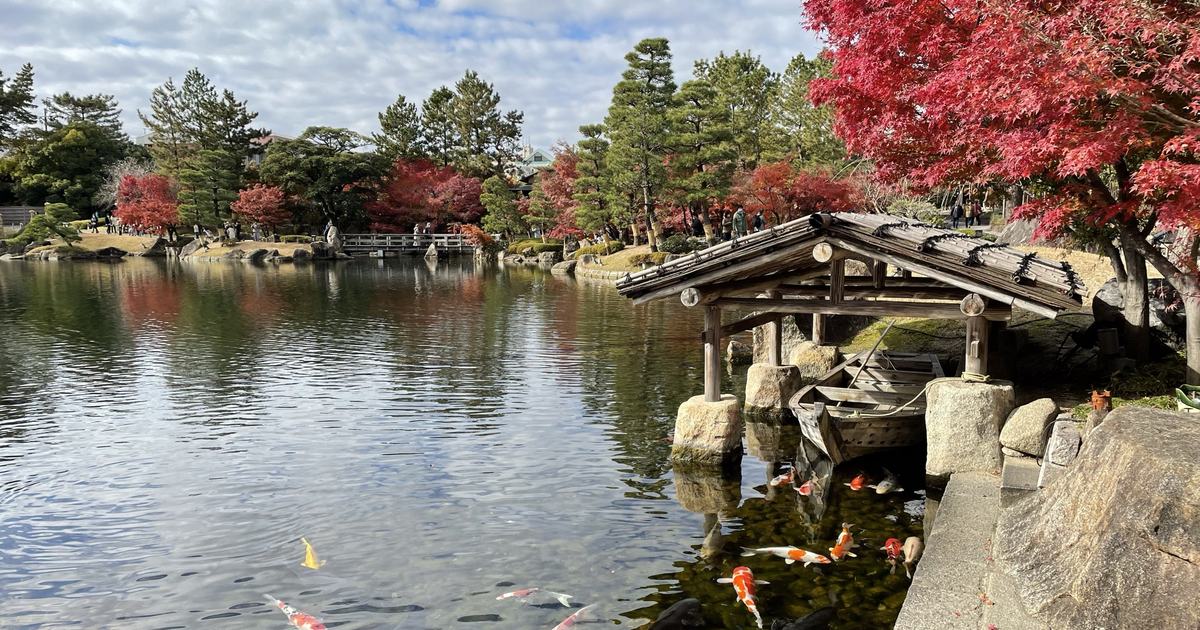
On October 1, 2026, Nagoya City raised admission to Higashiyama Zoo and Botanical Gardens from ¥500 to ¥800 and doubled Nagoya Castle from ¥500 to ¥1,000 — one month before the maples turn. But Tokugawaen and Shirotori Garden are not on that revision list and both stay at ¥300, which inverts the value ranking for this particular autumn: the garden with the most maples is now the cheapest one, and the garden with the fewest maples per yen is the most expensive. The second thing worth knowing is timing. The Japan Meteorological Agency's 1991–2020 normals put Nagoya's maple colouring date at November 28 — one to two weeks later than Korankei, the valley everyone tells you to visit. Follow the standard advice in early December and you will spend a full day in a gorge that has already dropped its leaves and switched off its lights. This guide sorts out which place to visit on which date, using official figures only.
- The October 1 price rise hits only half the gardens: Higashiyama ¥800 and Nagoya Castle ¥1,000, while Tokugawaen and Shirotori stay at ¥300
- The most maples now cost the least: Shirotori Garden has roughly 1,500 — the most in Nagoya — at the lowest admission of the three
- The city peaks one to two weeks after Korankei: JMA normals are November 28 for maples, November 18 for ginkgo
- Night illumination is seven evenings, not a season: in 2025 Higashiyama lit up 7 nights and Tokugawaen extended hours on 7, and five of them clashed
- 🚨 All six venues' 2026 dates are still unpublished — Higashiyama only announced 2025 on October 22
- Jokoji is in Seto, not Kasugai; Jakkoin has about 1,000 maples — double Higashiyama and closer than Korankei
📖 Contents
- 1. October 1, 2026: the price rise that skipped two gardens
- 2. Nagoya turns later than you think: JMA normal of November 28
- 3. Ten spots compared side by side
- 4. The six city spots: which to visit, which to skip
- 5. Night illumination is seven evenings, not a season
- 6. Four out-of-town spots and three transport traps
- 7. Is Korankei worth a dedicated day?
- 8. Plan by arrival date
- 9. FAQ
October 1, 2026: the price rise that skipped two gardens
Start here, because it changes how you should spend money for the rest of the trip.
Nagoya City's fiscal 2026 revision of usage fees and charges takes effect, as a general rule, on October 1, 2026. The facilities the city itemises are Higashiyama Zoo and Botanical Gardens, Nagoya Castle, the Nagoya City Science Museum and the Nagoya City Art Museum. Two of those matter for foliage:
- Higashiyama Zoo and Botanical Gardens: ¥500 becomes ¥800 — the first increase in 32 years. The same revision moves city residents aged 65 and over from ¥100 to ¥200, the annual passport from ¥2,000 to ¥3,200, the Sky Tower combination ticket from ¥640 to ¥880, and parking from ¥800 to ¥1,000 for a standard car (¥2,000 to ¥2,500 for large vehicles, ¥400 to ¥500 for motorcycles). Junior high school age and under stay free.
- Nagoya Castle: ¥500 becomes ¥1,000, a straight doubling. City residents aged 65+ go from ¥100 to ¥300, groups of 30+ from ¥450 to ¥900, the season ticket from ¥2,000 to ¥4,000, and the combination ticket with Tokugawaen from ¥640 to ¥1,040. One easily-confused detail: the castle's car park went up separately on June 1, 2026, from ¥180 to ¥250 per 30 minutes — a different effective date from the admission change.
Tokugawaen and Shirotori Garden are absent from the list. Neither garden's own site nor the city's fee page carries any increase notice. Both stay at ¥300.
The result: the value ranking flips
Put maple counts and ticket prices side by side and autumn 2026 produces a situation that did not exist a year ago:
| Garden | Maples (official) | 2026 foliage-season admission | Cost per 100 maples |
|---|---|---|---|
| Shirotori Garden | approx. 1,500 — the most in Nagoya | ¥300 | about ¥20 |
| Tokugawaen | approx. 100 | ¥300 | about ¥300 |
| Higashiyama | approx. 500 | ¥800 | about ¥160 |
A garden is not a tree count, and Tokugawaen's hundred maples sit inside a strolling-garden composition that reads far denser than the number suggests. But the table makes one point cleanly: if you are choosing a single spot and the price matters, 2026's answer is Shirotori Garden, which also happens to hold its colour the longest (typically late November into early December). That was not true last year, when Higashiyama also cost ¥500 and nothing separated them.
One genuinely fair piece of small print: Higashiyama tickets purchased on or before September 30, 2026 remain valid after October 1 with no additional payment, so if you are holding one, just use it. Nagoya Castle has a comparable rule, with one deadline attached — season tickets sold before September 30 must be first used by September 30, 2027.
There are two days of road restrictions to dodge this autumn: October 18 and 19 are the 5th Asian Para Games opening ceremony, and both the castle–prefectural office area and the Nagoya Station area are restricted in blocks (around the castle: Oct 18 at 11:30–13:00, 16:00–17:30 and 20:00–21:30; Oct 19 at 9:00–10:30). The subway is entirely unaffected — what you change is driving, taxis and car parks — and October 20 to 24 currently carries no restrictions. Nagoya's maples peak in late November, so the two dates barely overlap with foliage season; but if you arrive in mid-October and plan to drive out to Korankei, move those city-centre journeys either side of the 18th and 19th. Full restriction times and attraction impacts are in our Nagoya travel guide.
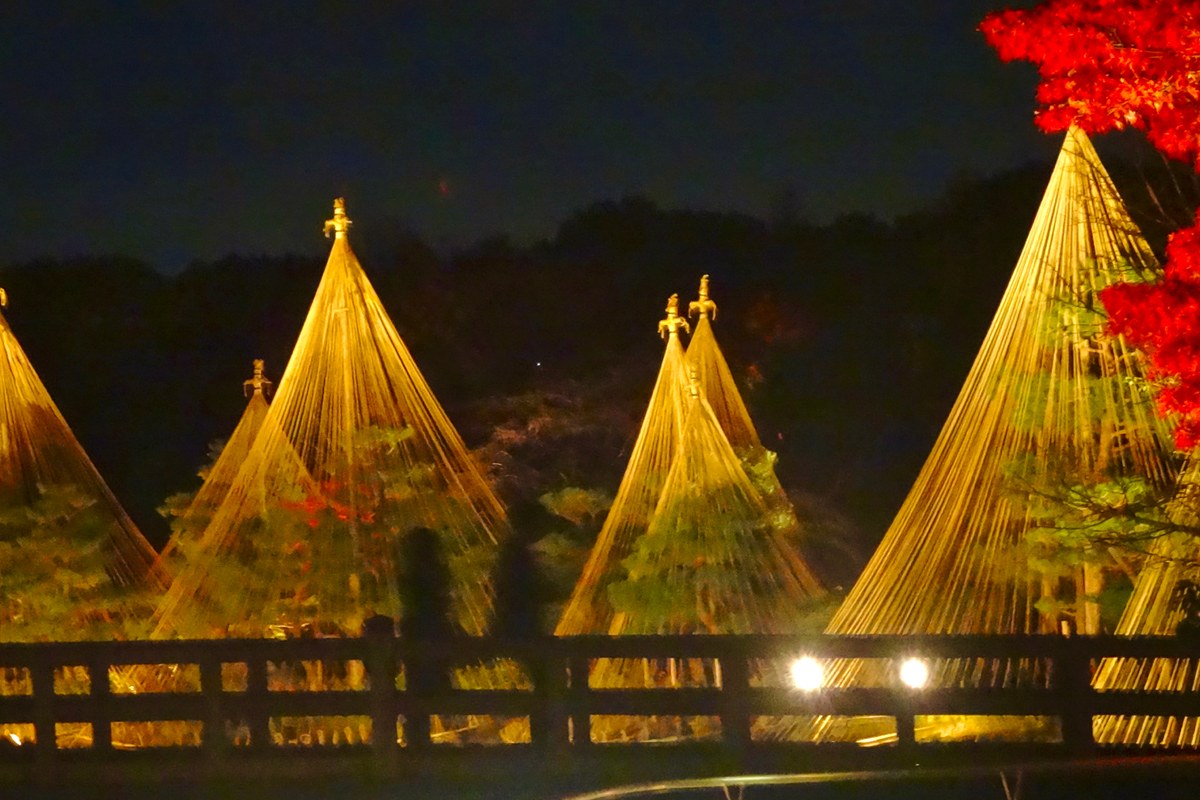
Nagoya turns later than you think: JMA normal of November 28
This is the core of the guide, and it is the part almost no English-language Nagoya article covers.
From the Japan Meteorological Agency's phenological observations, 1991–2020 normals:
- Nagoya maple colouring date: November 28 on average. The 2024 observation was December 5 (+7 against normal) and 2025 was November 25 (−3) — two independent readings that reconcile to the same normal.
- Nagoya ginkgo yellowing date: November 18 on average (2024: November 16, −2; 2025: November 10, −8).
- For reference, Gifu's maple normal is November 26 — two days ahead of Nagoya.
The JMA's national description matches: maple colouring reaches the Tokai region by around November 30 and the Pacific coastal belt of Kanto and Tokai in early-to-mid December, while ginkgo yellowing reaches the Hokuriku-to-Tokai band around November 20.
⚠️ One limitation has to be stated, or the number gets misused. The JMA's specimen tree sits at the Nagoya Local Meteorological Observatory in Chikusa Ward — it represents the flat urban area. It cannot be transplanted onto a gorge like Korankei or Iwayado, which cool earlier and therefore turn earlier. Quoting November 28 as Korankei's peak is using an official figure in the wrong place.
Which means the valleys and the city are not in sync
Line up the typical peak windows that Nagoya City's official tourism site publishes for each spot and the gap is obvious:
- Korankei (Asuke, Toyota City): mid-to-late November, with illumination running only during November
- City Japanese gardens: mid-November to early December
- Shirotori Garden: late November to early December — the latest in the city
The conclusion is blunt, and it contradicts the standard advice: Korankei turns first and drops first; central Nagoya turns later and holds later. A visitor arriving in early December who follows the “Nagoya means Korankei” line spends a day in a gorge past its peak with the lights already off, because Korankei's illumination conventionally ends with November. On that same day Shirotori Garden, the Higashiyama botanical section and Koshoji are at their best.
The inverse also holds. Arrive around November 15 and the valleys are the right call — Korankei and Iwayado are on time while the city gardens have only partly turned. If you are stitching a multi-region autumn trip together, start from our nationwide five-region peak timing map and slot Nagoya into the Chubu leg from there.
Ten spots compared side by side
The list below follows the ten spots in Nagoya City's official tourism foliage feature rather than a personal shortlist. Admission reflects the post-October 1 rates, because that is what you will actually pay during the season.
| Spot | Maples (official) | 2026 admission | Typical peak | From Nagoya Station | Night lighting |
|---|---|---|---|---|---|
| Shirotori Garden (Atsuta) | approx. 1,500 | ¥300 | Late Nov – early Dec | Meijo Line to Jingu-nishi, or Tsurumai Line to Sanno | Yes (viewing party; 2026 TBA) |
| Higashiyama Zoo & Botanical Gardens (Chikusa) | approx. 500 | ¥800 | Mid-Nov – early Dec | Higashiyama Line: Higashiyama-koen exit 3 (3 min) or Hoshigaoka exit 6 (7 min) | Yes (only 7 nights in 2025) |
| Tokugawaen (Higashi) | approx. 100 | ¥300 | Mid-Nov – early Dec | JR Chuo Line or Meijo Line to Ozone | Yes (extended hours only 7 nights) |
| Yagotosan Koshoji (Showa) | approx. 100 | Grounds free | Late Nov – early Dec | Tsurumai / Meijo Line to Yagoto | No |
| Yokiso (Chikusa) | approx. 100 | North garden free / Choshokaku ¥300 | Late Nov – early Dec | Higashiyama Line to Kakuozan | No |
| Meijo Park (Kita) | not published | Free | Mid-to-late Nov | Meijo Line to Meijo-koen | No |
| Jakkoin (Inuyama City) | approx. 1,000 | Not published by the temple | Mid-Nov – early Dec | Meitetsu Inuyama Line to Inuyama-yuen, 20 min walk (+20 min to the hall) | No (momiji festival; 2026 TBA) |
| Jokoji (Seto City) | approx. 200 | Not published | Mid-Nov – early Dec | JR Chuo Line to Jokoji, 20 min walk (2 trains/hour) | No |
| Iwayado Park (Seto City) | not published | Free (parking disputed, see below) | Approx. 2 weeks from mid-Nov | Meitetsu to Owari-Seto, bus to Shinano-honmachi, then 25–30 min on foot | Yes (2026 TBA) |
| Shurakuen Park (Tokai City) | approx. 500 | Free | Mid-Nov – early Dec | Meitetsu Tokoname Line to Shurakuen | Yes — the latest of all, into early-to-mid December |
| Korankei (Asuke, Toyota City) | approx. 3,000 across 11 species | Free (parking ¥1,000 per car) | Mid-to-late Nov | Train + bus, about 1.5 hours — see our dedicated guide | Yes (sunset–21:00, November only) |
Three names to skip: Tsuruma Park, Kojakuin and the Ainosan Green Space. None of the three has any official basis as a foliage spot. Tsuruma Park's official site does not contain the word for autumn foliage anywhere — it is a cherry blossom and iris destination — and Nagoya City's own top-ten foliage feature omits it. The Ainosan Green Space is described on the city's Green Affairs and Public Works page as deciduous woodland of konara and abemaki oak, which browns rather than reddens; its genuine official selling point is a habitat for terrestrial himebotaru fireflies. Kojakuin has no official website at all, and it is dangerously easy to confuse with Kojakuji, the temple inside Korankei — similar names, entirely different places.
The six city spots: which to visit, which to skip
Shirotori Garden: the clear first choice for 2026
If you have half a day in Nagoya, spend it here. The arithmetic was above: roughly 1,500 maples (the most in the city), the lowest admission of the three at ¥300, and the latest peak. No other garden combines all three this year.
Practicalities: open 9:00–17:00 with last entry at 16:30, closed Mondays (rolling to the next weekday after a public holiday) and December 29 to January 3. Watch that last one: Tokugawaen closes December 29 to January 1, Shirotori December 29 to January 3, so anyone chaining both around New Year needs to check them separately. City residents aged 65+ pay ¥100 with a seniors' handbook, and junior high age and under are free. A combination ticket with Tokugawaen costs ¥480.
Tokugawaen: only 100 maples, but that is not what it sells
Tokugawaen has about 100 maples and loses the volume contest outright. Its case is the evening. In 2025 its foliage festival ran November 14 to December 7 (closed Mondays), and — this is the part that matters — the lighting began around 16:00 and ran on every open day of the festival. That is a different proposition from Higashiyama, whose illumination existed on only seven nights. At Tokugawaen it is the extension of opening hours to 20:00 that is limited to seven nights, not the lights themselves. So if what you want is lit maples after dark, and you do not specifically need to be there at 20:00, Tokugawaen has a far higher hit rate.
Open 9:30–17:30 (last entry 17:00), closed Mondays and December 29 to January 1. The combination ticket with Nagoya Castle was ¥640 and rises to ¥1,040 on October 1, 2026 in step with the castle. If the castle is on your list anyway, it still saves money; if you only came for maples, skip the combination ticket and pay the ¥300 — the castle keep cannot be entered in any case.
Higashiyama: 500 maples for ¥800, so a conditional recommendation
Judged purely on foliage, Higashiyama is the weakest value of the three in 2026: a third of Shirotori's maples for 2.7 times the price. Its strength lies elsewhere — it is a combined zoo and botanical garden, and foliage is one component of a much larger day out. Families with children should go (junior high age and under are free); adults visiting purely for autumn colour can leave it third on the list.
If you do go, two official details save both money and legwork:
- The transit-ticket discount. The city's own worked example after the revision takes ¥800 down to ¥640. On a weekend, the Donichi Eco Kippu at ¥620 is the cheapest route to that discount — but it is sold only on Saturdays, Sundays, holidays and the 8th of the month. On weekdays use the ¥870 subway-and-bus one-day ticket instead.
- Which station to use. The park's official access page states plainly that Hoshigaoka Station is the convenient one for the botanical gardens. Since the maples are concentrated in the botanical section, the 7-minute walk from Hoshigaoka exit 6 beats the 3-minute walk from Higashiyama-koen exit 3, which lands you next to the zoo and a long way from the trees.
Open 9:00–16:50 (last entry 16:30), closed Mondays and December 29 to January 1.
The three free ones: Koshoji, Yokiso and Meijo Park
Yagotosan Koshoji charges nothing for its grounds. Its draw goes beyond the roughly 100 maples: the five-storey pagoda was built in 1808, stands 26 metres tall, and is both the oldest surviving pagoda in Aichi Prefecture and a nationally designated Important Cultural Property. Red maples against an Edo-period timber pagoda is a composition the other city gardens cannot offer. The Fumon-en sub-garden can be visited separately (10:00–16:00, from ¥500, varying by event, reservations preferred) — the temple publishes a floating starting price rather than a fixed one, so check the current notice before you go.
Yokiso is the former villa of the founder of the Matsuzakaya department store, at 2-5-17 Hoo-cho in Chikusa Ward. The north garden is free; only Choshokaku in the south garden charges, at ¥300. Open 9:30–16:30, closed Mondays and December 29 to January 3. It sits on the same Higashiyama subway line as the botanical gardens (Kakuozan), which makes chaining the two on one day natural.
Meijo Park is free, peaks mid-to-late November, and has no published tree count — its colour is scattered rather than massed. My call: not worth a dedicated trip, but a good loop if you are visiting the castle anyway. Note that Nagoya Castle itself costs ¥1,000 from October 1 and its keep remains closed to visitors — buying that ticket for the maples alone does not add up.
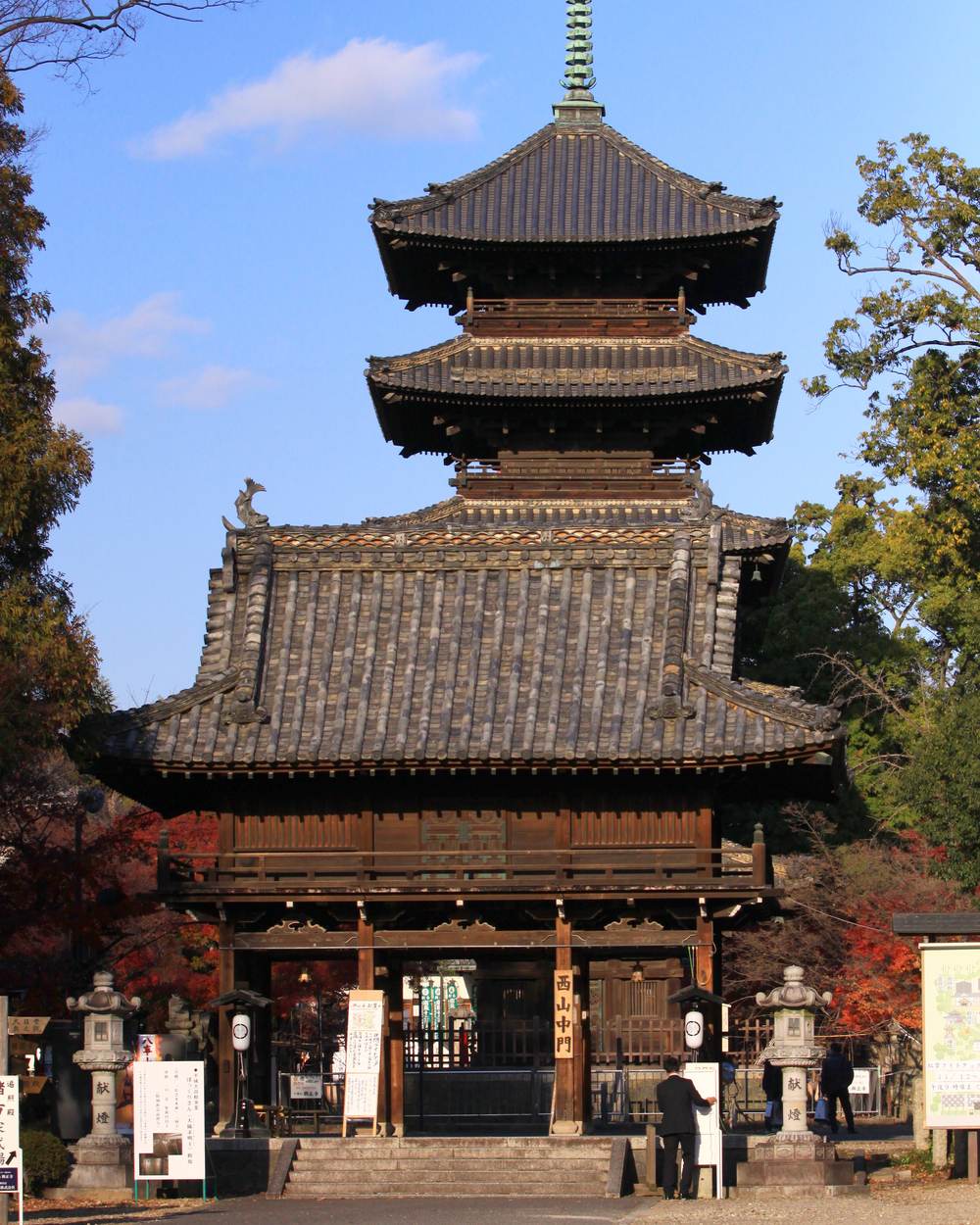
Night illumination is seven evenings, not a season
This is the second point where the general advice misleads. “Nagoya has autumn illuminations” is true; the impression it creates — that you can turn up any November evening — is not.
The 2025 record makes it clear:
| Venue | 2025 actual illumination / extended hours | Times | 2026 status |
|---|---|---|---|
| Higashiyama | 7 nights only: Nov 22, 23, 24, 29, 30, Dec 6, 7 (the momiji event itself ran Nov 15 – Dec 7) | Extended to 20:30, last entry 20:00 | Unpublished (2025 was announced October 22) |
| Tokugawaen | Festival Nov 14 – Dec 7; lighting on every open day, but extended hours on only 7 nights: Nov 21–24 and Nov 28–30 | Extended to 20:00; lighting from around 16:00 | Unpublished |
| Shirotori Garden | Viewing party on Fridays, weekends and holidays, Nov 15–30 | Per that year's notice | Unpublished (the 35th-anniversary display is described only as “the November viewing party”, with no dates) |
| Iwayado (Seto) | Typically about two weeks from mid-November, run by the NPO Shinano Tsukushi-kai | Evenings | Unpublished (the official 2026 page says only “November 2026”) |
| Shurakuen Park (Tokai) | ⚠️ Two official sources disagree (see below) | — | Unpublished |
| Jakkoin (Inuyama) | Momiji festival Nov 8 – Dec 7 (no illumination) | — | Unpublished |
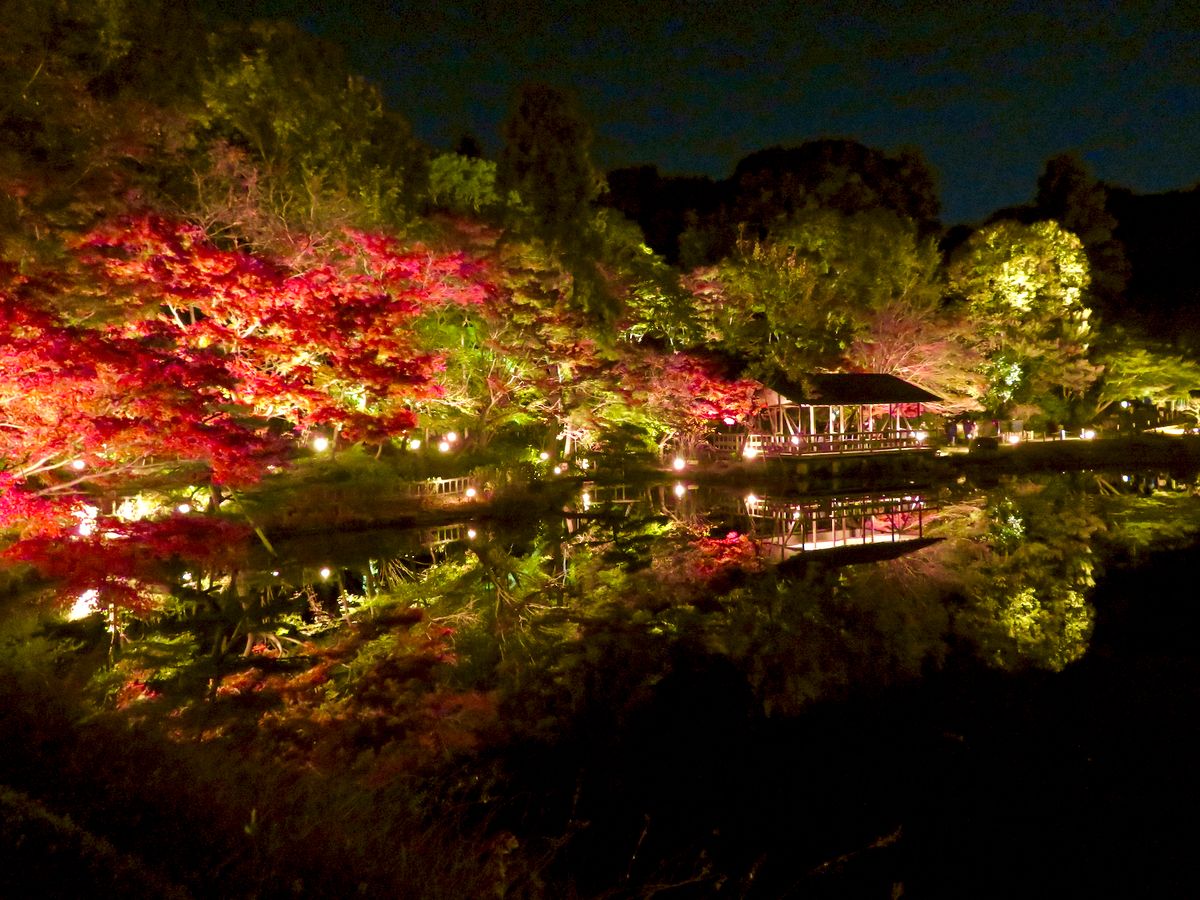
The clash is the thing to plan around. Higashiyama's seven nights and Tokugawaen's seven extended evenings overlap completely on November 22, 23, 24, 29 and 30 — five dates on which you must choose one. They are also all weekend dates, which is to say the busiest. I would take Tokugawaen. Higashiyama runs half an hour later (20:30 against 20:00), but on those nights it opens only the Hoshigaoka and botanical garden gates, which constrains your route; Tokugawaen is small enough to cover comfortably after dark. In Higashiyama's favour: the illumination carries no surcharge — the standard admission ticket gets you in, and the set pieces are the inverted maple reflection at Oku-ike pond, the five-colour maples along the Gassho line, and the restored lighting of the Important Cultural Property greenhouse front building. If lit historic glasshouse architecture is what you want, that part is genuinely unique to Higashiyama.
🔴 Nobody has the 2026 dates yet
As of August 15, 2026, none of the six venues above has published its 2026 schedule. This is not a research failure on our part — the official pages say so themselves. Higashiyama's page states that its content reflects the 2025 season and that 2026 onwards will be announced via official SNS and the site's news page. Seto's dedicated 2026 Iwayado page says only “November 2026”, followed by a line promising details once arrangements are complete. Shirotori Garden's 2025 viewing-party page has already been removed and returns a 404.
The one usable official precedent: Higashiyama's 2025 press release went out at 10:00 on October 22. Expect the 2026 dates in late October.
So any “Nagoya illumination 2026: November X to Y” you see today can only have come from the 2025 schedule. Wait for the official announcement before you book a date around it.
Practically: book a trip skeleton for late November into early December and leave the “which evening” cell blank, then fill it in once the announcements land in late October. Checking six Japanese-only venue sites and their social feeds while you are already in Japan needs reliable data — sort a KKday Japan eSIM with unlimited data before you fly rather than hunting for Wi-Fi, since most of these notices are never translated.
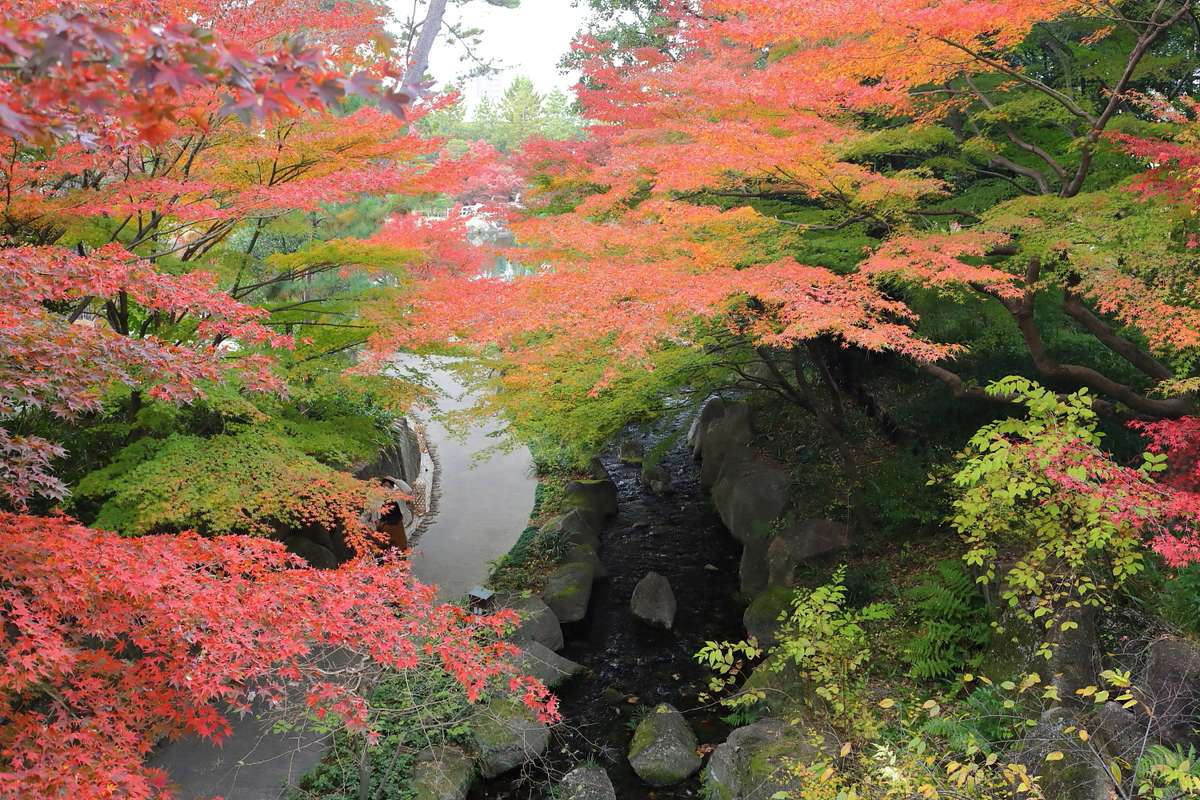
Four out-of-town spots and three transport traps
Each of the four suburban spots earns its place, but their transport quirks need more advance planning than the sites themselves. That is what this section is about.
Jakkoin, Inuyama: 1,000 maples, double Higashiyama, closer than Korankei
Conclusion first: if you want volume without surrendering an entire day to Korankei, this is my top pick. Jakkoin is nicknamed the maple temple of Owari, and the temple claims roughly 1,000 maples — twice Higashiyama's 500. Peak is mid-November to early December, and the momiji festival typically runs early November to early December (the 2025 dates were November 8 to December 7; 2026 is unannounced).
🚨 Trap one: station to main hall is about 40 minutes on foot, uphill. The temple's access page gives about 20 minutes from the east exit of Inuyama-yuen Station on the Meitetsu Inuyama Line, 2 km up the Kiso River (or roughly 5 minutes by taxi) — but those 20 minutes only reach the first gate of the approach. The page then adds 10 minutes from the first gate to the temple office and rest house, and another 10 to the main hall. If you have only seen the 20-minute figure, that is the first leg alone — reaching the station is not reaching the temple.
🚨 Trap two: Inuyama's community bus is listed as a weekday service. The Wanmarukun bus on the Kurisu-Tomioka route (Inuyama Station east exit to the Jakkoin stop) is listed by the city as running Monday to Friday, suspended December 29 to January 4, at ¥200 for adults and ¥100 for elementary school children on a day ticket. So the momiji festival's weekends have no bus. A second detail that is easy to miss: between November 1 and December 15 the bus stop moves from the main gate to the first gate — precisely during foliage season, so anyone working from older information will be waiting in the wrong place. Confirm against Inuyama City's current timetable before you go.
On tickets, Meitetsu sells an Inuyama Castle Town Ticket at ¥1,950 from Meitetsu Nagoya (¥1,620 from Meitetsu Gifu, ¥3,870 from Toyohashi), bundling a discounted return fare, admission to the National Treasure castle keep, a discount voucher for Urakuen (¥1,500 down to ¥1,100) and castle-town coupons, valid March 1, 2026 to February 28, 2027. From Nagoya it covers travel as far as Inuyama-yuen. But be clear-eyed: it does not include Jakkoin, and the castle and the temple sit on opposite sides of the station. If you are skipping the castle, this ticket does not pay. For a more comfortable ride, Meitetsu's reserved cars need a ¥450 Mu-Ticket on top of the fare, discounted to ¥300 under the off-peak web fare on weekend services and on weekday departures between 09:00 and 16:59 — which is exactly when a weekday foliage run to Inuyama would leave.
⚠️ Jakkoin does not publish an admission fee. Neither the temple's foliage page nor its access page carries one, so go by the notice at the gate. Meitetsu's fares sit behind a JavaScript search system, so check the one-way fare from Meitetsu Nagoya to Inuyama-yuen on Meitetsu's own site or at the ticket machine.
Jokoji (in Seto, not Kasugai): get the address right first
This one deserves calling out on its own. Both Jokoji temple and Jokoji Park are in Seto City — Aichi Prefecture's official tourism association lists the temple at 373 Jokoji-cho, Seto and the park at number 297.
So why does half the internet say Kasugai? Because Jokoji Station on the JR Chuo Main Line genuinely is in Kasugai; the temple is across the Shonai River in Seto. One river, two municipalities, station and temple in different cities. The practical damage is navigation: searching “Kasugai Jokoji” routes you to the wrong place.
🚨 Trap three: two trains an hour, and nothing fast stops. Per JR Central's official station timetable under the March 2026 revision, every train calling at Jokoji is a local — rapid, new rapid and the Shinano limited express all pass through. Saturday and holiday departures toward Nagoya run at :19 and :52 in the 10:00 hour, :13 and :53 through the 11:00–13:00 hours, :13 and :56 at 14:00, :15 and :56 at 15:00, and :17 and :56 at 16:00 — a steady two per hour with a maximum 40-minute gap. First train 5:28, last 23:08 toward Nagoya; toward Tajimi, daytime departures cluster around :05 and :45.
In plain terms: miss one and you wait 40 minutes at a quiet valley station. Decide your return train before you walk back, rather than drifting toward the platform. Drivers have it easier — Jokoji parking is free, with 160 spaces for standard cars (plus 3 coach bays, by reservation). Roughly 200 maples, peaking mid-November to early December. The temple does not publish an admission fee — the prefectural tourism page leaves that field blank.
⚠️ Get the JR Nagoya to Jokoji fare at the ticket window, not from this page. JR Central's fare table charges ¥510 for 26–30 km, ¥590 for 31–35 km and ¥680 for 36–40 km, but it does not publish the operating kilometres for this section, so buy from the machine or the counter and let it do the sum.
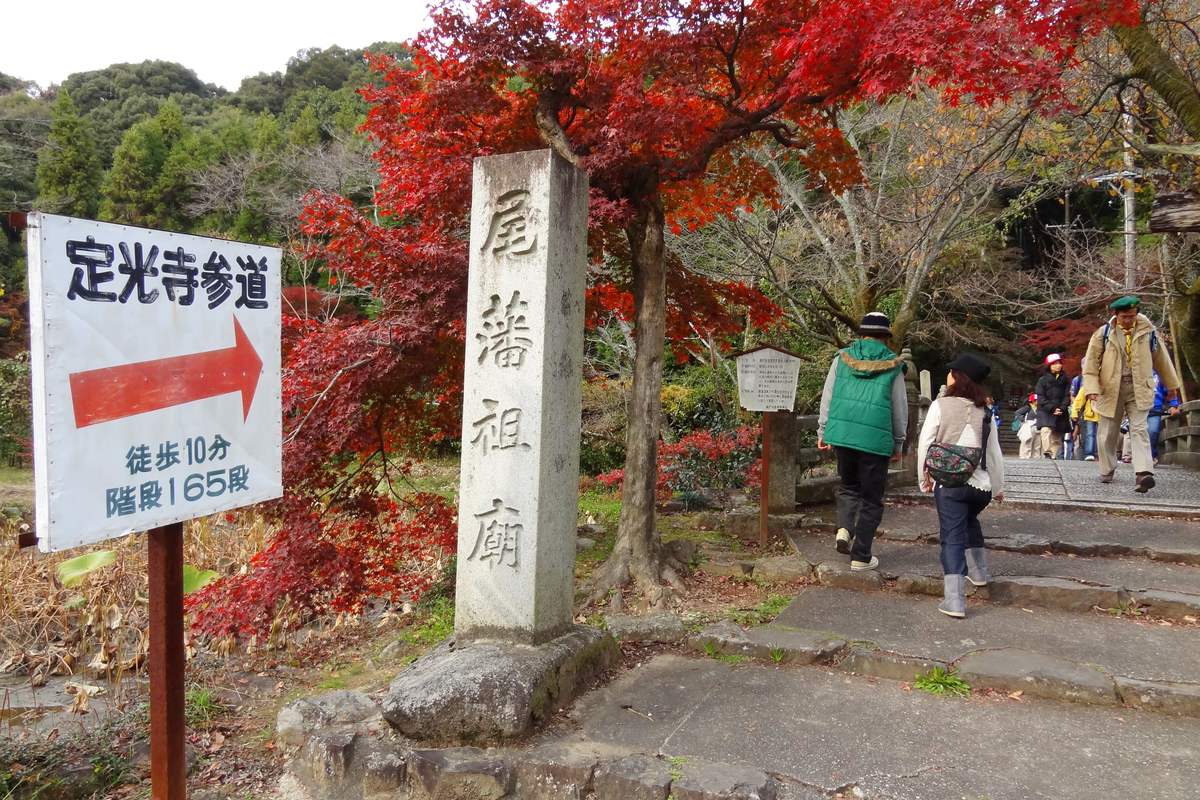
Iwayado Park, Seto: it has illumination, but the bus does not reach the gate
Iwayado sits at 81 Iwaya-cho, Seto, inside the Aichi Kogen Quasi-National Park, and is the illumination venue on the Seto side. The lighting is organised by the NPO Shinano Tsukushi-kai, and Seto City's tourism information describes the usual run as about two weeks from mid-November. The 2026 dates are unset.
Public transport is more awkward than it sounds. From Meitetsu's Owari-Seto Station you take a Meitetsu bus toward Shinano (the route Seto City calls the Shinano line, toward Kami-Shinano and the Shinano bus centre), get off at Shinano-honmachi — and then walk a further 25 minutes per Seto City's tourism page, or about 30 per the prefectural page. As for Seto's community bus on the Iwayado route, it is a reservation-based demand service and still a social experiment (the trial runs to March 31, 2027), so it cannot be treated as a turn-up-and-ride shuttle.
The parking fee is genuinely disputed between two public sources. Seto City's tourism information says free for 180 cars, noting some private paid lots nearby; Aichi Prefecture's official tourism page says free for 180 cars but a flat ¥1,000 during the illumination. No third source settles it, so plan for free outside the illumination, ¥1,000 in cash during it. Meitetsu does not publish the Owari-Seto to Shinano-honmachi bus fare on an auditable page either — read the fare display when you board.
Shurakuen Park, Tokai: the latest illumination in the region
About 500 maples across roughly six species, free, with illumination — and its distinguishing feature is that the season pushes into early-to-mid December, the latest of the ten spots here. It is reached on the Meitetsu Tokoname Line to Shurakuen. If your trip lands in the first days of December and you still want lit maples, this is one of very few venues still operating.
⚠️ The scheduling data is poor, though: even the 2025 dates disagree between two official sources — Nagoya City's tourism site gives November 23 to December 7, while a Tokai City facilities management page shows November 28 to December 13 (possibly for a different year). 2026 is unpublished. So treat it as a window: late November to mid-December, pending Tokai City's announcement for the year.
Is Korankei worth a dedicated day?
The numbers first: Korankei has roughly 3,000 maples across 11 species along the Tomoe River, free entry, and illumination from sunset to 21:00. Nothing near Nagoya matches that scale — Jakkoin's 1,000 already triples the best city garden, and Korankei triples Jakkoin.
So: yes, worth it — provided you pick the right date and accept it is a full-day commitment.
Three conditions:
- Your trip falls in mid-to-late November. That is its typical peak. If you arrive in December, do not go — the leaves are mostly down and the illumination only runs during November.
- You can give it a whole day. It is in Asuke, Toyota City, roughly 1.5 hours from central Nagoya by train and bus, and the crowds and traffic on a peak weekend are a genuine cost.
- You want a sea of maples rather than a garden. Korankei is a gorge full of trees plus the water view at Taigetsukyo bridge; the city gardens sell composition and architecture. Both are worth doing, but a half-day only fits one.
If that fits, the transport, parking, shuttle buses, crowd-avoidance timings and the Asuke old town detour all live in a separate article — go straight to our full Korankei guide rather than a summary here. If you would rather hand an entire day to someone else and push further into the mountains, a Shirakawa-go and Hida-Takayama bus tour from Nagoya removes the transfer planning — though be clear that its subject is the thatched-roof village and the old town, not foliage, so do not buy it as an autumn colour trip.
Plan by arrival date
Everything above, reduced to a “I arrive on this date, so I go here” table.
| Arrival | Go here | Avoid | Why |
|---|---|---|---|
| Early November | Skip foliage; do Nagoya Castle, Atsuta Shrine, Osu instead | All foliage spots | The JMA normal for Nagoya maples is November 28 — the city has not started. The valleys run earlier but are not at peak either. |
| Mid-November | Korankei, Iwayado (illumination usually starts mid-month), Meijo Park | Shirotori Garden (too early) | Valleys turn first; the city gardens are only part-way there |
| Late November (busiest, safest) | All three city gardens: Shirotori's viewing party, Tokugawaen's festival, Higashiyama's momiji event; Jakkoin is also at peak | — | Straddles the November 28 normal. But Higashiyama and Tokugawaen's evening events clash — pick one |
| Early December (where the standard advice fails) | Shirotori Garden (latest in the city), Higashiyama botanical section, Koshoji, Yokiso, Shurakuen's illumination | Korankei (leaves down, illumination ended with November) | City gardens hold into early December. Going to Korankei now is a wasted day |
One day, one route you can copy
Assume you arrive on the last weekend of November with a single full day:
- 09:00 — Shirotori Garden at opening (Meijo Line to Jingu-nishi or Tsurumai Line to Sanno). ¥300, and the first hour is the quietest of the day.
- Midday — walk or ride to the Atsuta Shrine area for hitsumabushi grilled eel, which is the home ground of that dish.
- Afternoon — Higashiyama Line to Hoshigaoka for the botanical gardens (the park officially recommends Hoshigaoka for that section), or swap in the free pairing of Yokiso at Kakuozan and Koshoji at Yagoto.
- From around 16:00 — Tokugawaen at Ozone. Lighting starts around 16:00, and if your date lands on one of the seven extended evenings you can stay until 20:00.
Tickets: Donichi Eco Kippu at ¥620 on weekends (Saturdays, Sundays, holidays and the 8th only), or the ¥870 one-day ticket on weekdays. Admissions total about ¥1,240 for Shirotori plus Tokugawaen plus a discounted Higashiyama — and the ¥160 Higashiyama discount alone claws back a quarter of the transit ticket.
None of these gardens requires advance booking — every one sells at the gate, so you can decide on the morning based on the weather rather than committing weeks ahead. That flexibility is a real advantage over Korankei, which is all-or-nothing once you set off. For the wider city itinerary, see our Nagoya travel guide; for sequencing a multi-region autumn trip, start with the Japan autumn foliage guide.
What does need booking ahead is the room, not the ticket — the weekday-to-weekend price gap in Nagoya is steep. The route above runs entirely on the subway, so Nagoya Station, Sakae or Kanayama all work; you do not need to pick a neighbourhood around any one garden. Search Nagoya hotels for foliage season →
Three closing points
One: in 2026, the garden with the most maples is the cheapest one. Higashiyama becomes ¥800 and Nagoya Castle ¥1,000 on October 1, but Tokugawaen and Shirotori are not on the revision list and hold at ¥300. Shirotori's roughly 1,500 maples make it simultaneously the largest, the cheapest and the latest-peaking. Choosing one spot, choose that one.
Two: if you arrive in December, do not go to Korankei. The JMA normal for Nagoya maples is November 28, the city gardens hold into early December, and Korankei peaks mid-to-late November with illumination ending in November. “Nagoya means Korankei” is advice that only works in November.
Three: the 2026 illumination dates do not exist yet, so do not trust a guide that quotes them. All six venues were silent as of August 15, 2026, and the official precedent points to a late-October announcement. Book the skeleton of your trip, leave the evening slot open, and fill it in at the end of October.
Frequently Asked Questions
- Q1:When does Nagoya autumn foliage actually peak — mid-November or early December?
- Both, and which one applies depends on whether you go into the city or out to the valleys. Per the Japan Meteorological Agency's phenological normals for 1991–2020, Nagoya's maple colouring date averages November 28 and its ginkgo yellowing date averages November 18. Nagoya City's official tourism site puts Korankei at mid-to-late November, the city's Japanese gardens at mid-November to early December, and Shirotori Garden later still (late November to early December). So mid-November arrivals should head for the valleys — Korankei and Iwayado — while the city gardens are only part-way turned. Early December arrivals need the exact opposite plan: Korankei has largely dropped its leaves and its illumination only runs during November, while Shirotori, Higashiyama and Koshoji are at their best. The blanket advice that Nagoya foliage means Korankei is wrong for anyone arriving in December.
- Q2:Is Higashiyama Zoo and Botanical Gardens ¥500 or ¥800?
- It is ¥800(大人(2026-10-01 起)) now; ¥500 is the old price. Nagoya City's fiscal 2026 revision of usage fees took effect on October 1, 2026, moving Higashiyama admission from ¥500(大人(至 2026-09-30)) to ¥800(大人(2026-10-01 起)). It is the first increase in 32 years, and it lands one month before the foliage season, so the whole of autumn 2026 is charged at the new rate. The same revision moves city residents aged 65+ from ¥100 to ¥200, the annual pass from ¥2,000 to ¥3,200, the Sky Tower combination ticket from ¥640 to ¥880, and standard car parking from ¥800 to ¥1,000. Junior high school students and younger remain free. One genuinely useful clause: tickets bought on or before September 30 are honoured after October 1 with no top-up. If you see ¥500 quoted anywhere, that is a stale page, not your mistake.
- Q3:What are the 2026 illumination dates for Nagoya foliage?
- Nobody knows yet. As of August 15, 2026, not one of the six venues has published 2026 dates. Higashiyama, Tokugawaen, Shirotori Garden, Iwayado Park in Seto, Jakkoin in Inuyama and Shurakuen Park in Tokai are all silent. Higashiyama's own page states outright that its content reflects the 2025 season and that 2026 details will follow via official SNS and the news page; Seto's dedicated 2026 Iwayado page says only “November 2026” plus a line promising details when ready; Shirotori Garden's 2025 viewing-party page has already been taken down and returns a 404. The one official precedent worth planning around is that Higashiyama issued its 2025 press release on October 22. Expect late October for 2026. Any exact 2026 date you see before then can only have come from the 2025 schedule.
- Q4:Is Jokoji Temple in Kasugai or Seto?
- Seto. Aichi Prefecture's official tourism association lists the temple at 373 Jokoji-cho, Seto and Jokoji Park at number 297. The confusion is real and has a real cause: Jokoji Station itself, on the JR Chuo Main Line, is in Kasugai — the temple sits across the Shonai River in Seto. Search or navigate for “Kasugai Jokoji” and you will be routed to the wrong side. One more thing to plan around before you go: only local trains stop at Jokoji Station — rapid, new rapid and the Shinano limited express all pass straight through. Under the March 2026 timetable, Saturday and holiday services toward Nagoya run twice an hour through the daytime with a maximum 40-minute gap. Miss one and you are waiting 40 minutes at an unstaffed valley station, so pick your return train before you leave the temple.
- Q5:Which transit ticket makes sense for a garden-hopping day in Nagoya?
- Donichi Eco Kippu (¥620(ドニチエコきっぷ(大人,限土日祝與每月 8 日))) on weekends, the standard one-day ticket (¥870(バス・地下鉄全線一日乗車券(大人))) on weekdays. The catch nobody mentions: Donichi Eco Kippu is sold only on Saturdays, Sundays, public holidays and the 8th of each month (the city's environment day), so weekday visitors simply cannot buy it. Its hidden value is not the fares — Nagoya City Transportation Bureau officially confirms that showing a valid one-day ticket earns facility discounts, and the headline case after the October revision is Higashiyama at ¥800(大人(2026-10-01 起)) discounted to ¥640(持一日乘車券折扣(2026-10-01 起)), a ¥160 saving on its own. Run the numbers for a weekend: Shirotori ¥300(大人) plus Tokugawaen ¥300(一般・高中大學生) plus a discounted Higashiyama ¥640(持一日乘車券折扣(2026-10-01 起)) comes to ¥1,240 in admissions, and roughly a quarter of your ¥620(ドニチエコきっぷ(大人,限土日祝與每月 8 日)) transit ticket is clawed back by that one discount. All three gardens sell tickets at the gate — none requires advance booking.
- Q6:Is Jakkoin in Inuyama worth the trip, and what does it cost?
- Worth it — but the temple publishes no admission fee anywhere on its site. Jakkoin is nicknamed the maple temple of Owari, and the temple's own site claims roughly 1,000 maples — double Higashiyama's 500, on a site that is markedly closer to central Nagoya than Korankei is. You reach it on the Meitetsu Inuyama Line to Inuyama-yuen Station. Read the official access line to the end: the page says about 20 minutes on foot from the east exit, but that only gets you to the first gate. From there the temple adds 10 minutes to the office and rest house and another 10 to the main hall — so station to main hall is about 40 minutes of walking, uphill. Inuyama's community bus on the Kurisu-Tomioka route is listed by the city as running Monday to Friday, so do not count on it during a weekend momiji festival; check the city's current timetable before you go. As for admission, neither the temple's foliage page nor its access page carries a fee line, so go by the notice at the gate rather than assuming it is free.
- Q7:Do I have to pay for parking at Iwayado during the illumination?
- Two government sources disagree, so here are both. Seto City's official tourism information states free parking for 180 cars, with a note that some private paid lots also exist nearby. Aichi Prefecture's official tourism page states free for 180 cars but a flat ¥1,000 during the illumination period. Both are public bodies and no third source breaks the tie. Practical advice: assume free outside the illumination and carry ¥1,000 in cash during it. The 2026 illumination dates are themselves unpublished; the organiser is the NPO Shinano Tsukushi-kai and the typical run is around two weeks from mid-November.
- Q8:Nagoya Castle and Higashiyama both went up — what about Tokugawaen and Shirotori?
- Neither increased. They are not on the revision list. Nagoya City's fee revision names Higashiyama Zoo and Botanical Gardens, Nagoya Castle, the Nagoya City Science Museum and the Nagoya City Art Museum; Tokugawaen and Shirotori Garden do not appear on it, and neither their own pages nor the city's fee page carries any increase notice. The upshot for autumn 2026 is that the value ranking flips completely: Shirotori Garden, with roughly 1,500 maples — the most in Nagoya — is the cheapest at ¥300(大人), while Higashiyama's 500 maples now cost ¥800(大人(2026-10-01 起)) and Nagoya Castle has doubled to ¥1,000(大人(2026-10-01 起)). If you are picking one place on a budget, 2026 has an unusually clear answer: Shirotori Garden.