Naha is the gateway and largest city of Okinawa's main island — nearly every Okinawa trip flies in and out through here. It's also the old capital of the Ryukyu Kingdom, and its subtropical climate, red-tiled roofs and sanshin music, and food and culture distinctly unlike mainland Japan, give Naha its own southern character. The city's sights are concentrated: the rebuilt Shuri Castle, bustling Kokusai-dori and Makishi Market, and Okinawan food. This guide covers Shuri Castle's status, the city sights, Okinawan food, the monorail and car rental, getting to Churaumi, and day-trip vs overnight. It's the gateway-city deep-dive for Okinawa; for driving, see our Okinawa car rental guide.
- Okinawa's gateway and old Ryukyu capital: subtropical character, the base for the main island
- Shuri Castle's main hall rebuilt: burned 2019, opening to the public Nov 23, 2026 — interior viewing is by advance reservation in 30-minute timed slots; free areas stay open
- The monorail covers the city: airport straight to Kokusai-dori and Shuri; rent a car for the north
- Kokusai-dori + Makishi Market: the center for shopping and eating
- Must-eat: Okinawa soba, taco rice, goya champuru, Blue Seal ice cream
- Coming over New Year? Re-plan this itinerary: Daiichi Makishi Public Market closes Jan 1–3 as a standing rule — see Okinawa New Year 2027: first-sunrise spots and what stays open
📖 Table of contents
What kind of city Naha is
Naha sits in the south of Okinawa's main island, the prefectural capital and political-economic center. Okinawa was once the independent Ryukyu Kingdom, trading with China, Japan and Southeast Asia, and it developed a distinct culture — red-tiled roofs, shisa lion guardians, sanshin music and a cuisine unlike the mainland. The 1945 Battle of Okinawa all but destroyed Naha, so the rebuilt cityscape is modern, but the Ryukyu legacy lives on in Shuri Castle, the traditional market and the food. The subtropical climate keeps it warm year-round, milder than the mainland even in winter.
For travelers Naha has two uses. One, the city is worth visiting in itself: Shuri Castle, Kokusai-dori, Makishi Market, Naminoue Shrine — a day's worth. Two, it works as the base for the main island: fly in and out here, then head north for Churaumi and Kouri, or south for Senagajima and Okinawa World. Below, the city first, then how to extend.
Shuri Castle: the current status
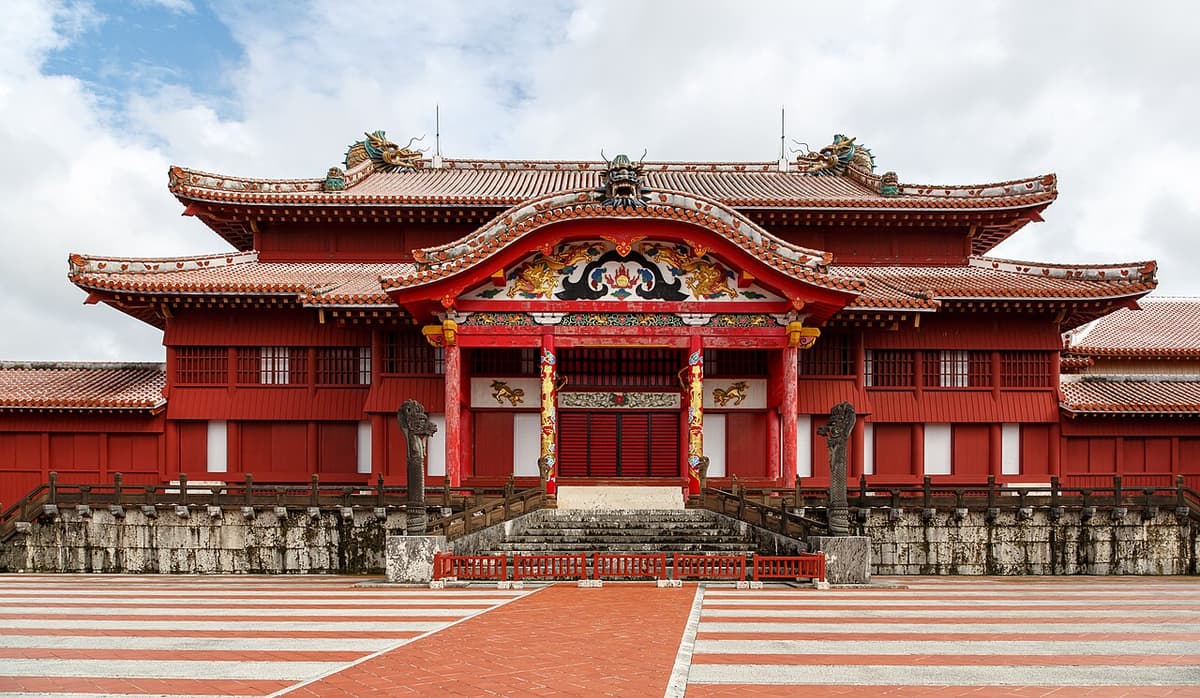
Shuri Castle was the royal palace of the Ryukyu Kingdom, its vermilion main hall blending Chinese and Ryukyu architecture — Okinawa's most important historic symbol and a component of the "Gusuku Sites and Related Properties of the Kingdom of Ryukyu" World Heritage (the inscription covers the remains; the hall is a reconstruction). The key status first: the main hall burned down in October 2019, and reconstruction followed.
The good news: the rebuilt main hall is scheduled to reopen to the public on November 23, 2026, so a 2027 visit will see the newly completed Seiden. Notably, in the years between the fire and reopening the castle opened as a "visible reconstruction," letting visitors watch the timber assembly and lacquering from a dedicated viewing area — but that has ended: the scaffolding viewing area closed on June 8, 2025. What stands now is the elevated viewing deck completed in May 2026, looking straight at the Seiden's exterior. Shuri Castle Park has free and paid areas: the Shureimon gate, the walls and the Sonohyan-utaki stone gate stay open for free, while the Seiden area is paid (fare per the official site). Because the status is still changing, reconfirm the current scope and fare on the official park site before you go. Two things that decide whether you get inside at all: the ticket release covering 2026 entry closes on October 1, and on opening day itself the park is shut until noon — both are unpacked in the Shuri Castle Seiden 2026 guide.
Kokusai-dori and Makishi Market
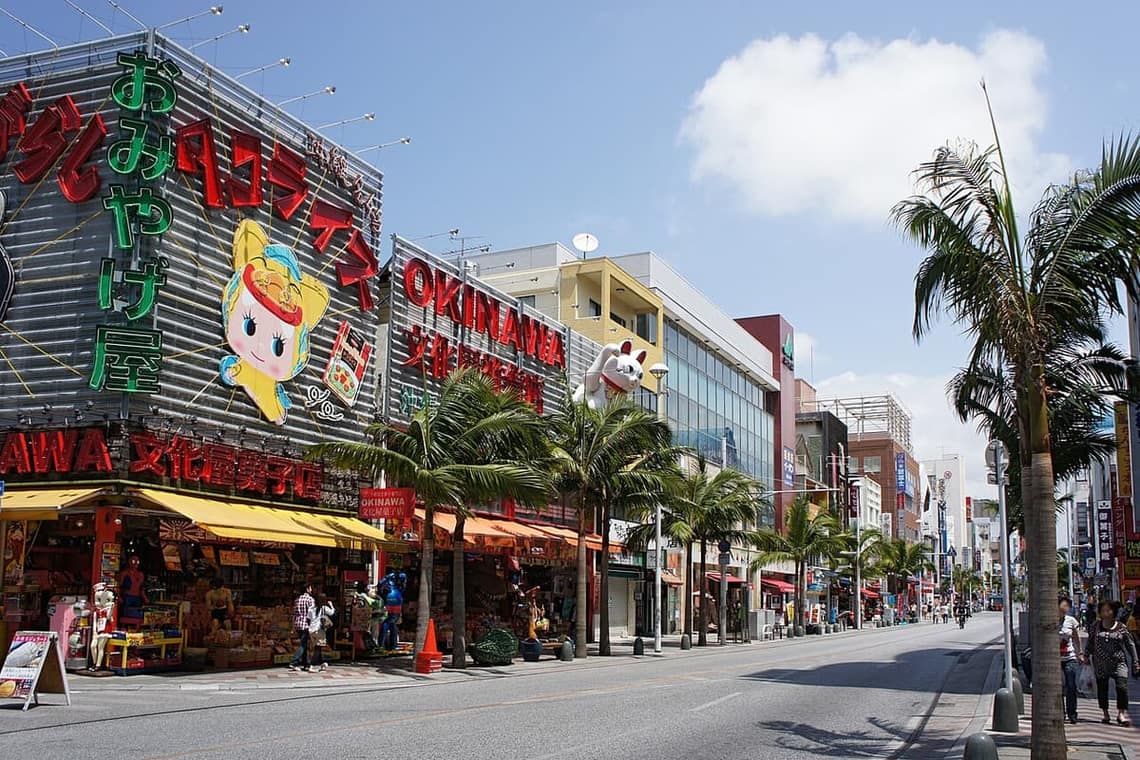
Naha's liveliest center is Kokusai-dori — a 1.6 km avenue that rose quickly from the postwar ruins, once nicknamed the "Miracle Mile." It's lined with souvenir shops, restaurants, drugstores, Okinawan sundries and shisa crafts, the first choice for shopping, eating and gifts, reached by monorail to Kencho-mae or Makishi.
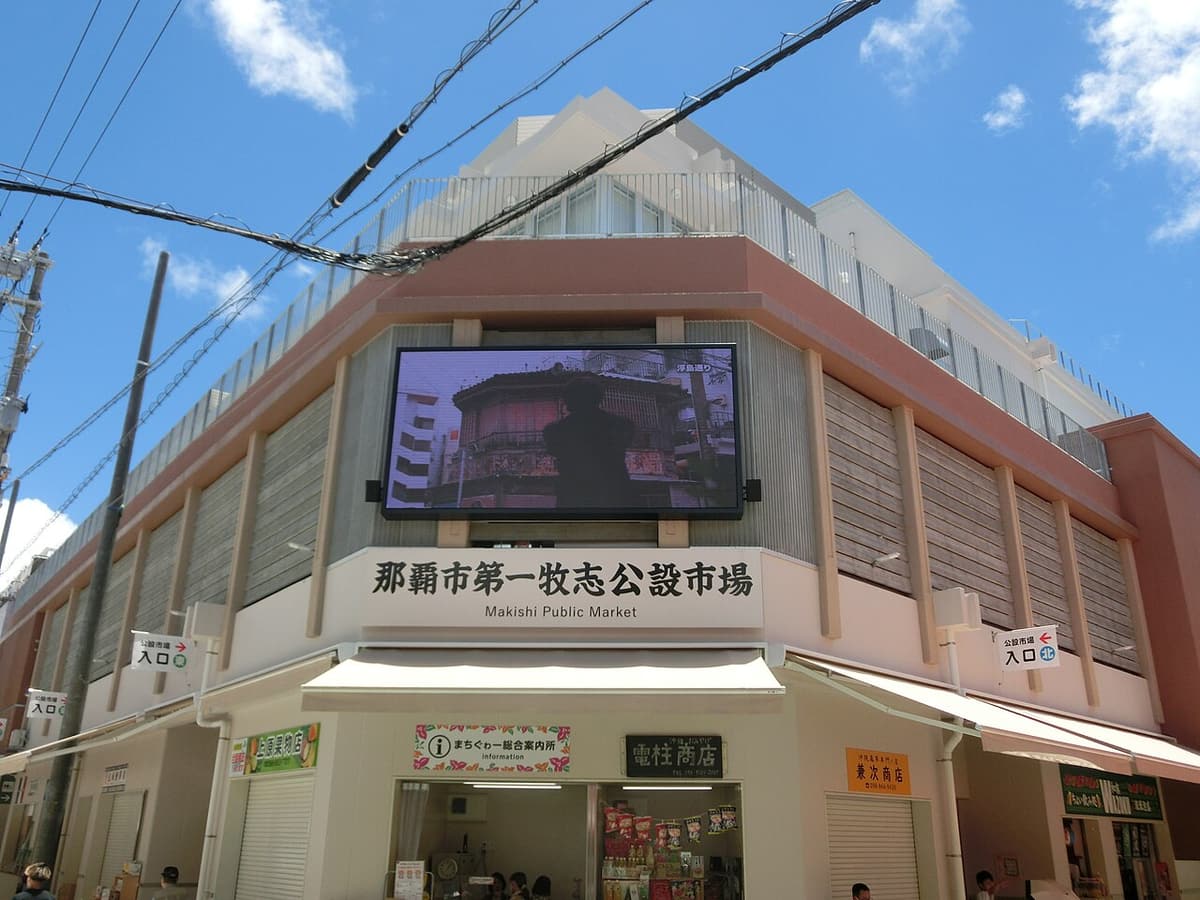
Turning off Kokusai-dori into the market arcade, the First Makishi Public Market is "Naha's kitchen." Ground-floor stalls sell seafood and Okinawan ingredients — vivid tropical fish, sea grapes, agu pork — and the fun way to eat is "mochiagi": buy your seafood downstairs and take it to a second-floor diner to be cooked (steamed, as sashimi, salt-grilled), bought and eaten at peak freshness. The market was rebuilt into a bright new building in 2023.
Okinawan food
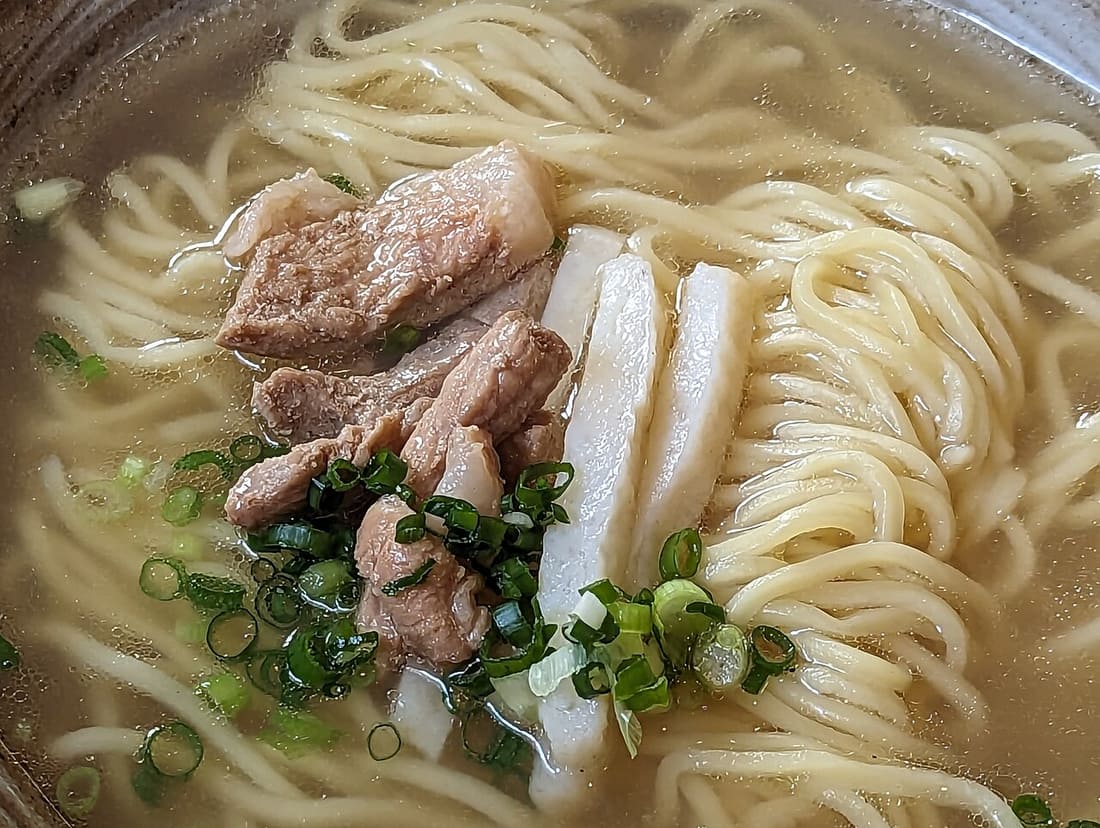
Okinawan cuisine blends Ryukyu, Japanese and American influences into its own thing — a few must-eats:
- Okinawa soba: wheat noodles (not buckwheat) in a light bonito-and-pork broth, topped with slow-stewed pork belly or rib (soki soba) — the islands' national noodle.
- Taco rice: Mexican taco filling, cheese and lettuce over rice, a fast food born in Okinawa under American influence.
- Goya champuru: bitter melon stir-fried with tofu, egg and pork — Okinawa's most home-style dish.
The sweets and drinks are just as Okinawan: Blue Seal ice cream with local flavors like beni-imo (purple sweet potato), crisp-outside sata andagi doughnuts, and Okinawa's distilled spirit awamori. Kokusai-dori and Makishi Market are the easiest places to gather all of these.
Around Naha and heading north and to the islands
Naha's greatest value is as the main-island base, with rewarding extensions north and south. North (central-north) is the island's main stage: the hugely popular Churaumi Aquarium (whale sharks), the bridge-linked Kouri Island, the sea-cliff scenic spot Cape Manza, and the resort beaches around Onna — about 1-2 hours by car; see our Churaumi and northern Okinawa guide.
South and nearby suit a half-to-full day: the photogenic Senagajima island by the airport (where you can watch planes land), the cave-and-culture park Okinawa World, and World Heritage gusuku sites like Sefa-utaki and Zakimi Castle ruins. To island-hop further south to Ishigaki or Miyako, you fly a domestic leg from Naha Airport. Combine Naha (the city), the main island's north and south, and optionally the outer islands for a full Okinawa trip.
A few more spots reward time within Naha itself. Tsuboya Yachimun Street is the city's pottery quarter, a stone-paved lane of kilns, studios and shops selling Okinawan ceramics and shisa figures — a quieter, more atmospheric browse than Kokusai-dori. Naminoue Shrine, perched on a cliff above the only city beach, is Okinawa's foremost shrine and an easy add — if you are here over the year-end, the hatsumode crowds, road closures and first-sunrise routing are covered in our Okinawa New Year 2027: hatsumode, first sunrise and Lunar New Year. And the Chinese-style Fukushuen Garden reflects Naha's old trade ties with Fuzhou. None take long, but together they round out a day beyond the headline sights and show the layered, trading-port side of the old Ryukyu capital.
Access and day-trip vs overnight
Access: around the city the Yui Rail monorail is easiest — straight from Naha Airport to Kencho-mae, Makishi (Kokusai-dori) and Shuri (Shuri Castle), so city sightseeing needs no car. But for the central and northern island (Churaumi, Kouri, Cape Manza), public transport is sparse, so a rental car is best, the standard way to do main-island Okinawa; for car comparison and insurance see our Okinawa car rental guide. Set up a KKday Japan eSIM first for navigation and lookups.
Day-trip vs overnight: the city core (Shuri Castle, Kokusai-dori, Makishi Market) fits a day; but Okinawa's essence is the sea and the central-north island, so an overnight is essentially required. A common main-island trip is 3-5 days: Naha takes the first and last 1-2 (city and airport), with a car run north to stay a night or two for Churaumi and the resort beaches. Before you go, see our Japan packing & weather guide — Okinawa is warm year-round, but May-June is the rainy season and summer-autumn brings typhoons, so keep the plan flexible.
When to go and a sample plan: Okinawa is warm year-round, but the beach season runs roughly April to October (peak July-August, hot and busy); spring and autumn are the comfortable sweet spots for sightseeing and driving; May-June is the rainy season; and winter is mild for the city and culture though cool for swimming, with whale-watching offshore. A clean 4-day main-island plan: day one arrive and do Naha (Shuri Castle, Kokusai-dori, Makishi Market); days two and three pick up a rental car and head north to base around Onna for Churaumi, Kouri and the resort beaches; day four return south for Senagajima or a last Naha morning before flying out. Book the rental car and any peak-season resort early, and reconfirm Shuri Castle's open areas near your dates.
Frequently Asked Questions
- Q1:Can I see Shuri Castle now? Is the main hall rebuilt?
- Shuri Castle's main hall (Seiden) burned down in October 2019, and reconstruction followed. Per the official announcement, the rebuilt Seiden is scheduled to reopen to the public on November 23, 2026 (with the completion ceremony the day before) — so a 2027 visit will see the newly rebuilt main hall. In the years between the fire and reopening, the castle opened as a "visible reconstruction," letting visitors watch the rebuilding. The free areas — Shureimon gate, the walls, the Sonohyan-utaki stone gate — stay open, while the Seiden area is paid (check the official park site for the fare). Reconfirm the current scope on the official site before you go.
- Q2:How many days does Naha need?
- The city core (Shuri Castle, Kokusai-dori, Makishi Market, Naminoue Shrine) fits a tight day, but Naha is more often the gateway and base for Okinawa's main island — most people fly in and out here, then rent a car for the Churaumi Aquarium and Kouri Island to the north, or Senagajima and Okinawa World to the south. A main-island trip is commonly 3-5 days, with Naha taking 1-2 (city plus arrival/departure).
- Q3:How do I get around Naha? Do I need a car?
- Around the city the Yui Rail monorail is plenty — straight from Naha Airport to Kencho-mae, Makishi (Kokusai-dori) and Shuri (Shuri Castle), no car needed. But to reach the central and northern island (Churaumi, Kouri, Cape Manza), public transport is sparse, so a rental car is best, and driving is the standard way to do main-island Okinawa. For choosing a car, insurance and tips, see our Okinawa car rental guide.
- Q4:What should I eat in Okinawa?
- Okinawan food is its own cuisine: Okinawa soba uses wheat noodles in a bonito-and-pork broth with tender pork belly or rib (soki); taco rice sets Mexican taco filling over rice, an Okinawan invention; and goya champuru (stir-fried bitter melon with tofu, egg and pork) is the home-style staple. For sweets and drinks, there's Blue Seal ice cream (with local flavors like beni-imo), sata andagi doughnuts, and Okinawa's distilled spirit awamori. Kokusai-dori and Makishi Market are the easiest places to try them all.
- Q5:What are Kokusai-dori and Makishi Market?
- Kokusai-dori is Naha's liveliest avenue, about 1.6 km long, lined with souvenir shops, restaurants, drugstores and Okinawan crafts — the center for shopping and eating, reached by monorail to Kencho-mae or Makishi. Turning into the lanes, the First Makishi Public Market is "Naha's kitchen": the ground floor sells seafood and Okinawan ingredients (vivid tropical fish, sea grapes), which you can buy and take upstairs to a diner to be cooked for you ("mochiagi") — bought and eaten at peak freshness. The market was rebuilt into a new building in 2023.
- Q6:How do I get from Naha to the Churaumi Aquarium?
- The Churaumi Aquarium is in Motobu in the island's north, about 90-100 km from Naha; driving the expressway takes about 2 hours, the easiest way. Without a car, take a highway bus or a day-tour bus. Because it's far with limited services, plan Churaumi plus the north (Kouri Island, Cape Manza) as a full day, or stay a night up north. For the north, see our Churaumi Aquarium and northern Okinawa guide.