Nara is the easiest ancient capital in Kansai to fold into an existing trip — about 40 minutes by Kintetsu from Osaka-Namba or Kyoto, and doable in half a day. This was Japan's first permanent capital (Heijo-kyo, 710 AD), and it left behind a cluster of World Heritage Sites: the roughly 15-meter Todaiji Great Buddha, roughly 1,700 deer roaming freely through the streets and parks, the lantern-covered Kasuga Taisha, and Kofukuji with its famous Ashura statue. This guide covers the Todaiji Daibutsuden (note: admission rose to ¥800 in 2024), how to feed the deer the right way, Kasuga Taisha, the Kofukuji five-story pagoda's restoration status (the whole pagoda is wrapped and not visible), Mt. Wakakusa, and a one-day route. To place Nara inside a wider plan, pair this with our Osaka & Kyoto 5-day itinerary.
- A day trip from Osaka or Kyoto is simplest: ~40 min by Kintetsu to Kintetsu-Nara, everything within walking distance
- Todaiji Daibutsuden ¥800 (raised April 2024, first hike in six years); squeeze the pillar hole for luck
- Roughly 1,700 deer in Nara Park (1,687 in the 2026 official survey): feed only ¥200 shika senbei, then show empty palms — don't tease them
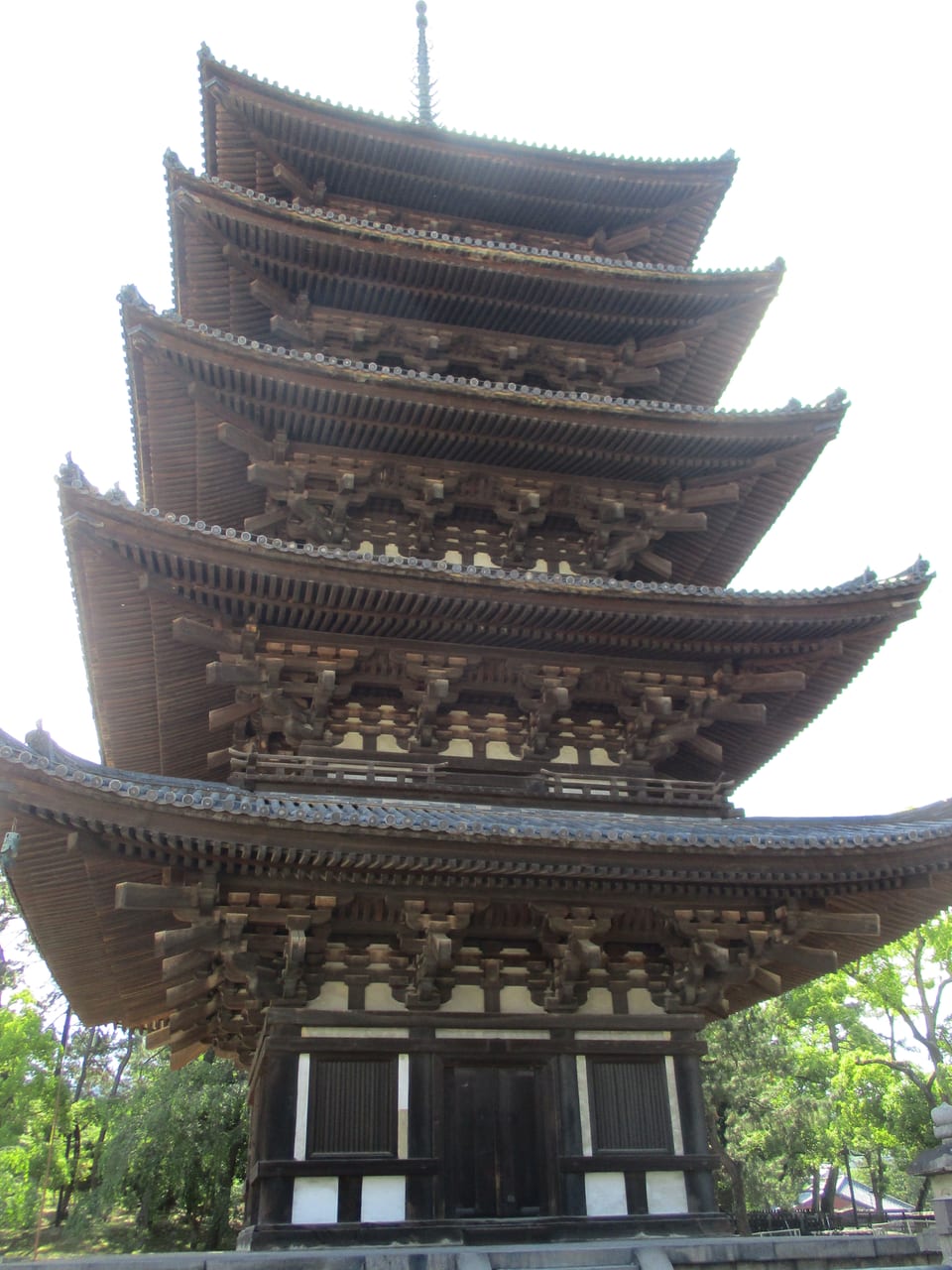
- The Kofukuji pagoda is wrapped: the Reiwa restoration (2023–2031) has a 60 m cover; you can't see the tower
- Kasuga Taisha grounds are free; ¥700 for the inner special worship; ~3,000 lanterns are the signature
📖 Contents
Why visit Nara
Honestly, Nara is not a city that needs several days; its charm is being dense and slow at the same time. The main sights all pack into one continuous strip of greenery east of Kintetsu-Nara station — Kofukuji, Nara Park, Todaiji, and Kasuga Taisha in a line, walkable end to end, with deer wandering between them. Its mood is the opposite of next-door Kyoto: where Kyoto is polished and crowded with named sights, Nara is open and unhurried, more of a giant park where you slow down and sunbathe alongside the deer. My take is simple: do not greedily plan three days in Nara, but do not give it just one hour to sprint through Todaiji either — that misses the best part, which is doing nothing in the park while deer surround you.
Any season works, but two windows stand out. Spring softens the place with cherry blossoms around Nara Park and Todaiji, set against deer in fresh greenery; November turns Mt. Wakakusa and the Kasugayama primeval forest deep red, and the stone lanterns look their best against it. The window to avoid is midsummer noon — the Nara basin is muggy and the walking is mostly outdoors, so go early or late. Note that during the autumn rut (September–November), the stags get more aggressive and powerful, so watch children closely while feeding; the early-October "antler cutting" ceremony exists for the same reason.
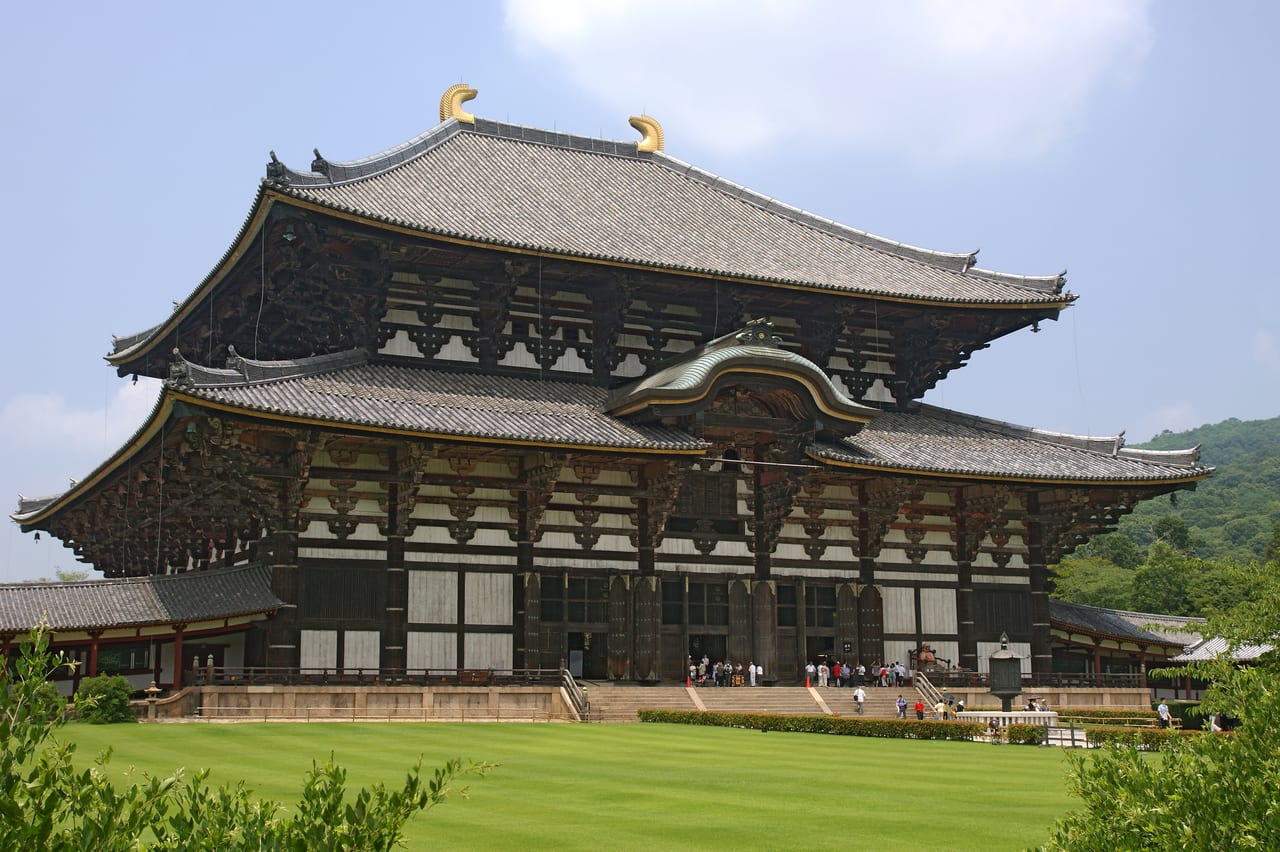
Todaiji & the Great Buddha
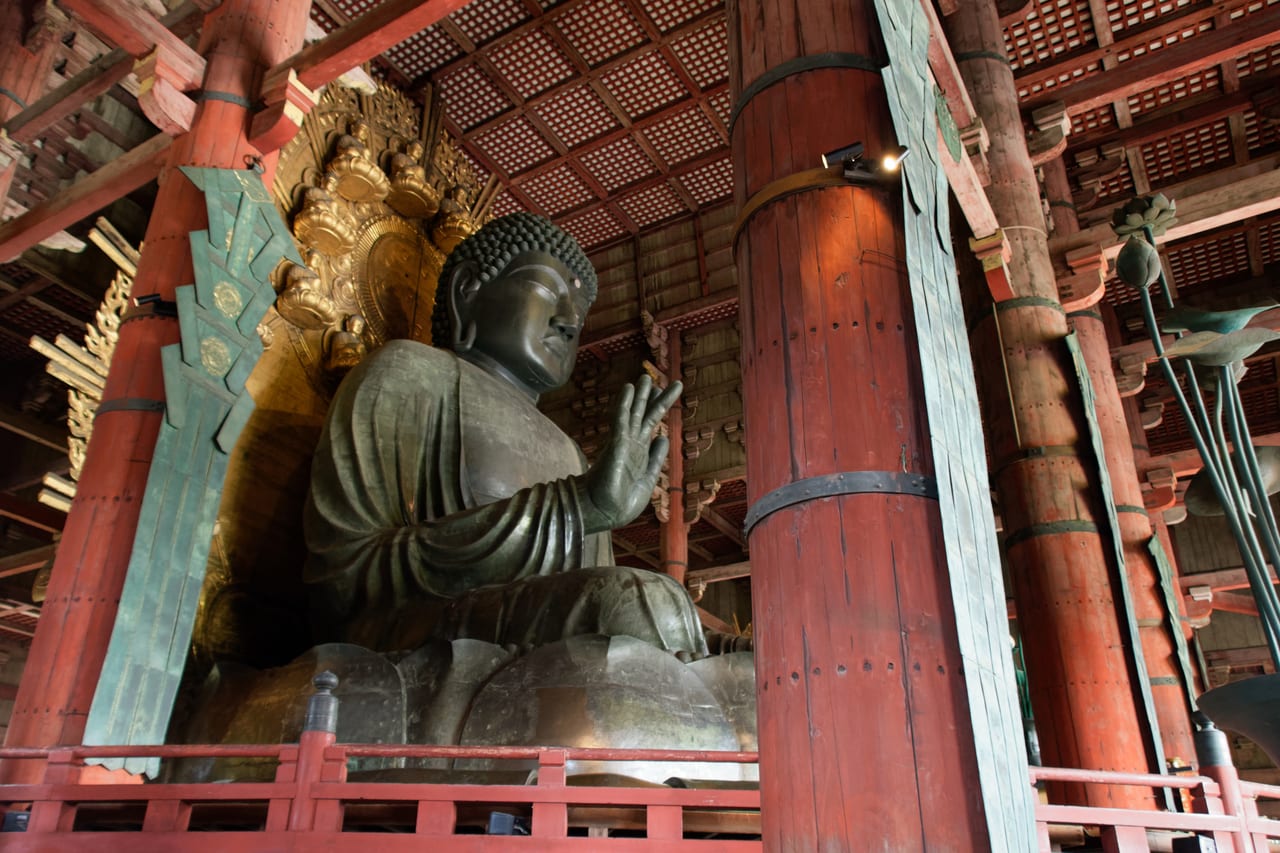
Todaiji is Nara's signature, and almost no one skips it. Its showstopper is the Daibutsuden (Great Buddha Hall) — one of the largest wooden buildings on earth, and astonishingly, the current 1709 rebuild is actually smaller than the original, yet still big enough to make you look up and gasp on the way in. It houses the Vairocana Buddha (the Nara Daibutsu), a bronze statue about 15 meters tall that has survived fires and repairs since its consecration in 752 — one of Japan's most iconic Buddhist images.
Get the money and timing straight first: per Todaiji's official notice, admission to the Great Buddha Hall rose on April 1, 2024 to ¥800 for junior-high and up, ¥400 for elementary students (from ¥600 / ¥300), the first increase in six years and still current in 2026. Hours shift seasonally: 7:30–17:30 (Apr–Sep), 7:30–17:00 (Oct), 8:00–16:30 (Nov–Feb), 8:00–17:00 (Mar). To photograph the hall with few people, be there right at opening — a bit later and tour groups pour in until the interior is packed. Inside, one pillar has a famous hole — about 37×30 cm, said to match the size of the Buddha's nostril — that you can crawl through for good luck and protection; kids slip through easily, adults gauge by waistline. It is one of the few playful moments in Nara.
One thing this guide does not drill into but you should know before you go: Todaiji sells several separate tickets — the Great Buddha Hall, Hokkedo, Kaidando, and the Todaiji Museum are ¥800 each, only hall-plus-museum has a combo, the window is cash only, and Hokkedo and Kaidando close at 16:00 all year. The full hall-by-hall fee table, seasonal hours, goshuin reception, and the current deer-safety rules are in our deep-dive on Todaiji and Nara Park.
Two nearby halls are often seen together with the main building: uphill is Nigatsudo (free; its terrace overlooks the Nara cityscape and is gorgeous at dusk — the March "Omizutori" rite happens here), and Sangatsudo (Hokkedo). If Todaiji gets only an hour, do the Daibutsuden; with two hours, walk up the path to Nigatsudo for that city view — it is the free Nara sight I push hardest.
Feeding the deer: etiquette & tips
For many people, the deer are the reason to come. First, who they are: per the Nara Deer Preservation Foundation's 2026 population survey, 1,687 wild sika deer live around Nara Park (up 222 year on year), designated a national natural treasure — not farmed, not anyone's pets, but wild animals tied to shrine belief that have coexisted with people for over a thousand years. Precisely because they are wild, feeding follows rules.
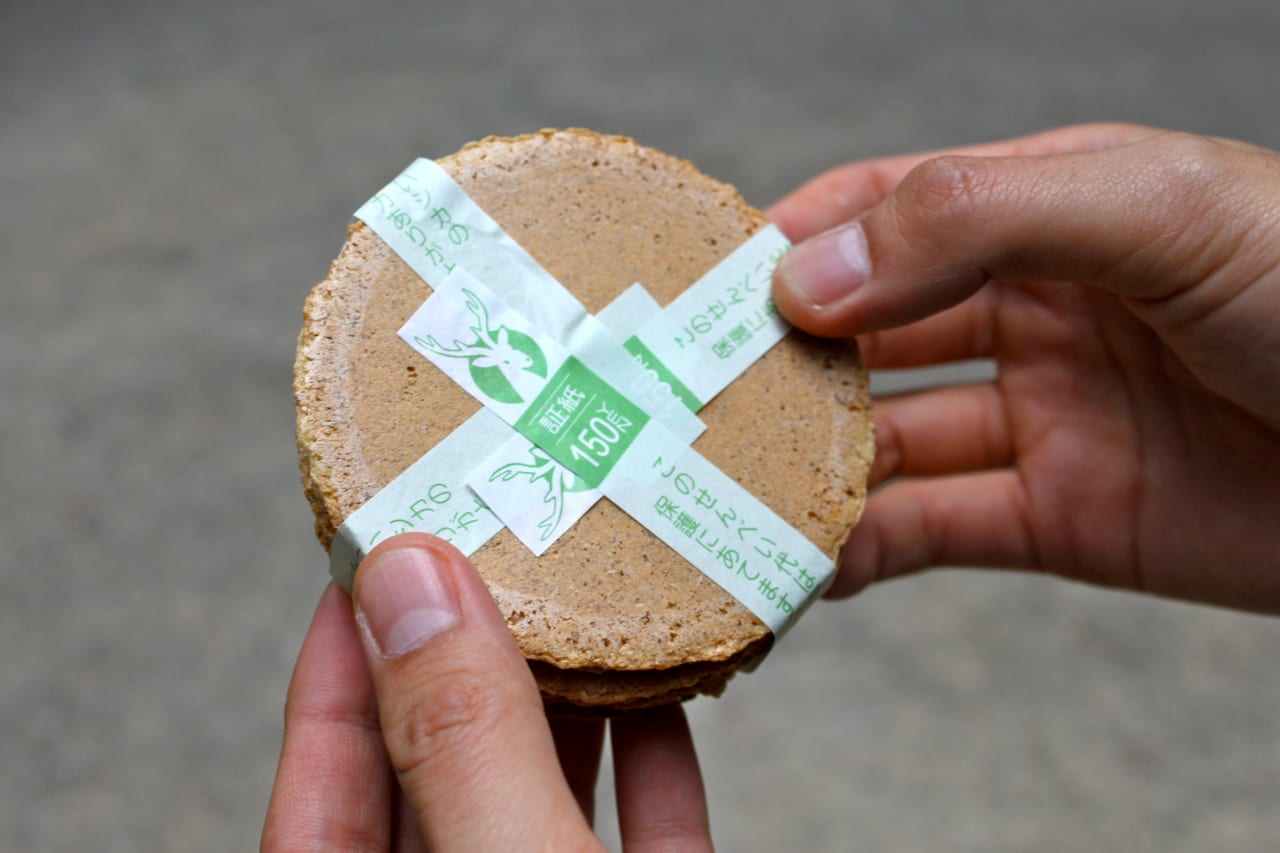
- Only feed "shika senbei": sold at roadside stands and vending machines, ¥200 for a bundle of 10, made of just flour and rice bran with no sugar (for the deer's health). Never feed snacks, bread, vegetables, or leftovers — it makes them sick.
- How to feed: peel off and pocket the paper wrapper first (it gets snatched along with the crackers), then give them one at a time, quickly and decisively — the more you tease, the more likely a headbutt or a nip.
- The "all gone" signal: open both palms toward the deer to show there is nothing left; most Nara deer understand and disperse.
- Bowing: Nara deer are famous for bowing to beg for crackers, but it is a learned behavior, not universal — do not dangle food just to film a bow.
- Stow your stuff: maps, tickets, paper bags, and menus really do get eaten; pregnant visitors, small children, and anyone unsteady should be especially careful of headbutts.
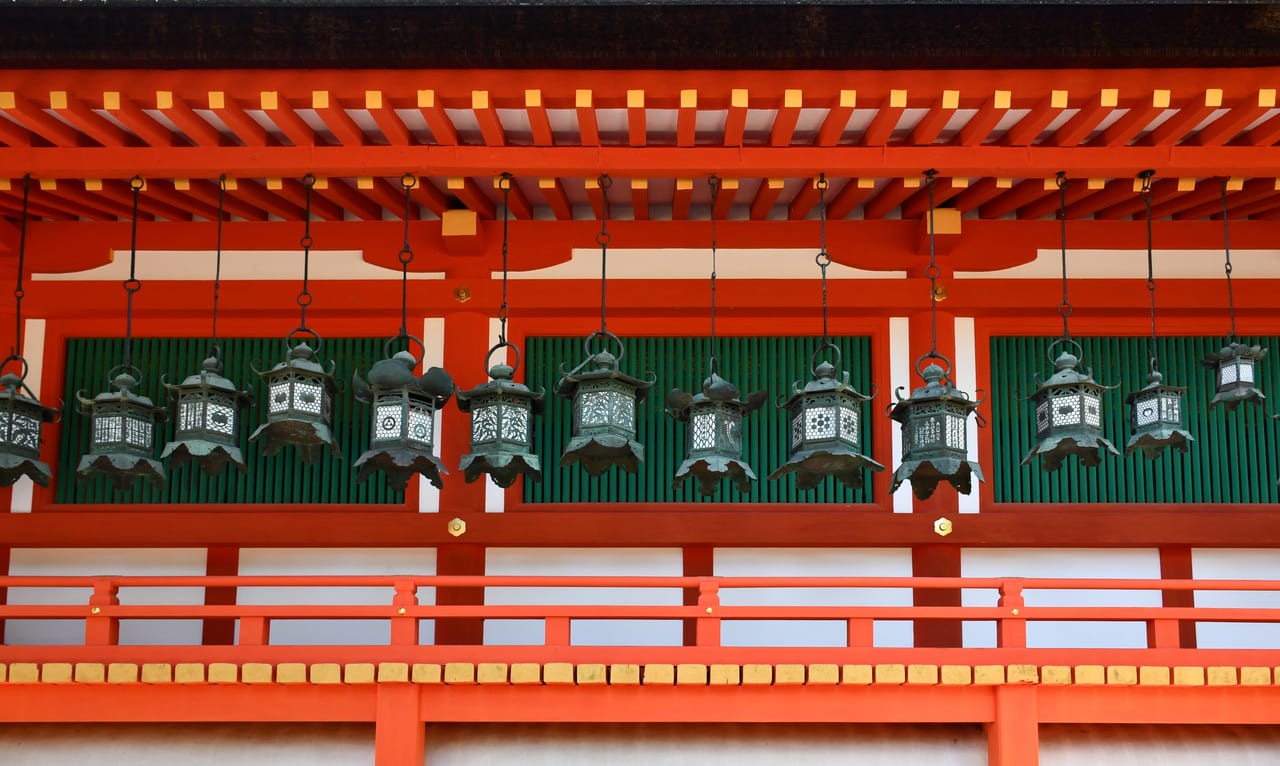
Kasuga Taisha, the lantern shrine
Walk east through Nara Park to the edge of the Kasugayama primeval forest and you reach Kasuga Taisha, the tutelary shrine built by the Fujiwara clan in the Nara period. Its vermilion halls hide among deep-green old-growth trees, and the mood is very different from the open park — quiet and solemn. Its defining feature is lanterns: roughly 2,000 stone lanterns line the approach and about 1,000 bronze lanterns hang in the corridors, around 3,000 in total, said to be the most of any shrine in Japan.
The practical bits: the grounds are free — walking the approach and seeing the vermilion tower gate and rows of stone lanterns costs nothing. But to enter the "special worship" area in front of the main sanctuary and see the densely hung corridor lanterns up close, there is an offering of ¥700 (about 8:30–16:00; closed on some festival days, so check the official notice). The lanterns are normally unlit; to catch them all glowing you need the Mantoro festivals in early February (Setsubun) and on August 14–15 — one of Nara's best night scenes, but also the most crowded. The Setsubun edition runs 17:30 court dance, 18:00 full lighting and about 20:30 closing — and Setsubun is not permanently February 3; see the Setsubun guide for the date and the ceremonies. If you miss the lighting, do not fret: rows of moss-covered stone lanterns with deer threading through them are themselves one of Nara's signature images.
Kofukuji & Mt. Wakakusa (pagoda status)
Get the current status straight first so you are not let down: Kofukuji's National Treasure five-story pagoda is undergoing the "Reiwa Great Repair" (roughly 2023–2031, its first major restoration in about 120 years), and a protective cover about 60 meters tall now completely encases the pagoda. In other words, in 2026 you will not see the pagoda's exterior at all, and construction traffic has rerouted some nearby paths. If photographing the pagoda was a headline reason to come, adjust your expectations — for these few years it is one big wrap.
But that is no reason to skip Kofukuji. It sits right beside Kintetsu-Nara station on the western edge of Nara Park, and the Eastern Golden Hall, the Nan-endo, and the National Treasure Museum are all open — and the Ashura statue inside the museum is Kofukuji's real signature. That three-faced, six-armed boy Ashura, with his delicate, melancholy expression, is one of the most beloved Buddhist statues in Japan, and plenty of people make the trip just for him. My advice: drop the pagoda from your plans and make the National Treasure Museum the focus instead — you'll come away happier.
If you still have energy, the grassy slope on the east side of Nara Park is Mt. Wakakusa. It is open from the third Saturday of March to the second Sunday of December, 9:00–17:00, with admission of ¥150 for junior-high and up, ¥80 for children 3 and over (closed in winter). It is about a 30-minute climb, and the summit overlooks the whole Nara basin — the cityscape and distant hills at dusk are lovely, one of Nara's few real viewpoints. The January "Wakakusa Yamayaki," when the entire hillside is set ablaze, is Nara's signature winter festival.
Transport & lodging
Getting in comes down to two options, and I usually pick Kintetsu:
- Kintetsu (recommended): Osaka-Namba → Kintetsu-Nara in about 35–40 minutes (rapid express / express), Kyoto → Kintetsu-Nara in about 35–45 minutes (limited express around 36–38 min, express longer). Kintetsu-Nara station opens onto the shopping street and Kofukuji, closest to the sights, with frequent trains. From Kyoto the limited express costs an extra fee but saves time and gives you a seat.
- JR: both Osaka and Kyoto run direct JR trains to JR Nara station, but it sits farther from the Todaiji area than Kintetsu-Nara — a 20-minute walk or a bus on arrival. Unless you already hold a Kansai-area or nationwide JR Pass and want to amortize the fare, Kintetsu is smoother for Nara alone.
Whether a JR Pass pays off — and whether to buy one for the Nara leg at all — run your whole Kansai trip through the break-even math in our JR Pass guide before deciding; don't buy a pass just for one Nara hop. Within the city, most sights are walkable; if your feet give out, the Nara Kotsu buses run toward Todaiji and Kasuga Taisha.
Lodging: honestly, most people don't stay in Nara — a day trip from Osaka or Kyoto is the most efficient, with lodging better placed at a transport hub. But if you want "Nara Park and the Great Buddha Hall at dawn, empty after the day-trippers leave," a night around Kintetsu-Nara station is worth it: after 6 p.m. the tour crowds recede and the park is just you and the deer, and you can be first into the Daibutsuden at opening — a Nara you cannot get on a same-day return. Lodging is more limited than in Osaka or Kyoto and mid-priced, and cherry and autumn weekends fill up, so book early if you stay. For the logic of pairing Nara with other Kansai day trips like Arashiyama and Uji, see how we structure our Kyoto Arashiyama day trip.
A one-day Nara route
Here are the sights shaped into one walkable, no-backtracking line (starting from Kintetsu-Nara station):
- Morning: Kintetsu-Nara → through the shopping street to Kofukuji (the National Treasure Museum's Ashura; the pagoda is wrapped for now) → into Nara Park to start feeding deer (buy ¥200 shika senbei) → on to Todaiji to see the Daibutsuden before the crowds, crawl the pillar hole, then walk uphill to Nigatsudo for the city view.
- Lunch: the stretch from Todaiji's Nandaimon back toward the station has plenty of kakinoha-zushi (persimmon-leaf sushi), local Nara fare, and cafes for a break.
- Afternoon: continue east through Nara Park to Kasuga Taisha (the lanterns; the ¥700 inner special worship is optional) → with energy to spare, climb Mt. Wakakusa (¥150) for sunset over the Nara basin → return to Kintetsu-Nara in the evening and ride back to Osaka or Kyoto.
If you only have half a day, cut Mt. Wakakusa and the Kasuga special worship and focus on the core line — Todaiji plus feeding the deer — which fills 3–4 satisfying hours. Nara is ideal as a single day dropped into a Kansai trip: it is just 40 minutes back west to Osaka or north to Kyoto, which is exactly why I keep calling it the best-value side trip in Kansai. For how a multi-day Kansai plan fits together, see our Osaka & Kyoto 5-day itinerary; to push deeper into the Kii Peninsula for pilgrimage atmosphere, continue to our Koyasan Okunoin & temple-lodging guide or head east to Ise Grand Shrine & Shima.
FAQ
- Q1:How many days do you need in Nara? Is a day trip from Osaka or Kyoto enough?
- Enough. Nara's highlights — the Todaiji Great Buddha, feeding the deer in Nara Park, Kasuga Taisha, and Kofukuji — all cluster within walking distance, so a half day to a full day covers them, and most people come as a day trip from Osaka or Kyoto. Kintetsu-Nara station drops you right by the shopping street and Kofukuji, then it is a single eastward walk through Nara Park to Todaiji and Kasuga Taisha. Stretch it to a full day if you want the Great Buddha hall before the crowds or sunset from Mt. Wakakusa. To slot Nara into a wider Kansai trip, see our Osaka & Kyoto 5-day itinerary.
- Q2:How much is the Todaiji Daibutsuden, and what are the 2026 hours?
- Per Todaiji's official notice, admission to the Great Buddha Hall rose on April 1, 2024: ¥800 for junior-high and up (was ¥600), ¥400 for elementary students (was ¥300) — the first increase in six years, and still the price in 2026. Hours shift by season: 7:30–17:30 (Apr–Sep), 7:30–17:00 (Oct), 8:00–16:30 (Nov–Feb), 8:00–17:00 (Mar). Inside, a famous pillar has a hole (about 37×30 cm, said to match the Buddha's nostril) that kids squeeze through for good luck. For normal hours you just buy on the spot — no reservation needed.
- Q3:Can you feed the deer in Nara Park? What are the rules?
- Yes, but with etiquette. Nara Park is home to roughly 1,700 wild sika deer (the Nara Deer Preservation Foundation counted 1,687 in its 2026 survey), designated a national natural treasure — they are wild animals, not pets. The only food allowed is shika senbei (deer crackers), ¥200 for a bundle of 10, made of just flour and rice bran with no sugar (for the deer's health); never feed them snacks, bread, vegetables, or scraps. To feed: peel off the paper wrapper first, give crackers one at a time, quickly and decisively — do not tease or hide them, which is how people get headbutted. When you are out, show open, empty palms so the deer know there is no more. The famous bowing is a learned move to beg for crackers; do not dangle food to force it. Keep maps, tickets, and paper bags tucked away — the deer really will eat them.
- Q4:Can you see the Kofukuji five-story pagoda right now? I heard it is being restored.
- You cannot see the pagoda itself — set expectations first. Kofukuji's National Treasure five-story pagoda is undergoing the "Reiwa Great Repair" (roughly 2023–2031, its first major restoration in about 120 years), and a protective cover roughly 60 meters tall now fully wraps the pagoda. So in 2026 you will not see its exterior, and construction traffic has rerouted some paths nearby. Do not make a special trip just to photograph it — you will be disappointed. But the Eastern Golden Hall, the National Treasure Museum (home to the Ashura statue), and the Nan-endo are all open and very much worth it. The Ashura is Kofukuji's real star.
- Q5:Does Kasuga Taisha cost anything? Is it really famous for lanterns?
- Entering the grounds is free, but to enter the "special worship" area in front of the main sanctuary and see the dense vermilion corridors and hanging lanterns up close, there is a ¥700 offering (about 8:30–16:00; closed on some festival days). The shrine is famous for its lanterns — roughly 2,000 stone lanterns lining the approach and about 1,000 bronze lanterns in the corridors, around 3,000 total. They are all lit only during the Mantoro festivals in early February (Setsubun) and mid-August. Even unlit, rows of moss-covered stone lanterns with deer wandering through make one of Nara's most iconic scenes.
- Q6:How do I get to Nara from Osaka or Kyoto? Do I need a JR Pass?
- Two options. Kintetsu runs Osaka-Namba → Kintetsu-Nara in about 35–40 minutes and Kyoto → Kintetsu-Nara in about 35–45 minutes, stopping right beside the sights at Kintetsu-Nara — the most convenient. JR reaches JR Nara station, but it sits farther from the Todaiji area, needing a longer walk or a bus. Unless you already hold a Kansai-area or nationwide JR Pass and want to amortize the fare, I'd take Kintetsu for Nara alone (closer station, frequent trains). Whether a JR Pass pays off, run your route through the break-even math in our JR Pass guide first.
Related reading:
Osaka & Kyoto 5-day itinerary
Dotonbori, Kiyomizu, Arashiyama — full tested route.
Kyoto Arashiyama Day Trip 2026
15M visitors a year, but mornings and post-noon are quiet. Hour-by-hour plan, four afternoon branches, and Romantic Train booking truths.
JR Pass 2026: Is It Still Worth It?
Four real routes calculated, six alternatives that may beat the Pass.