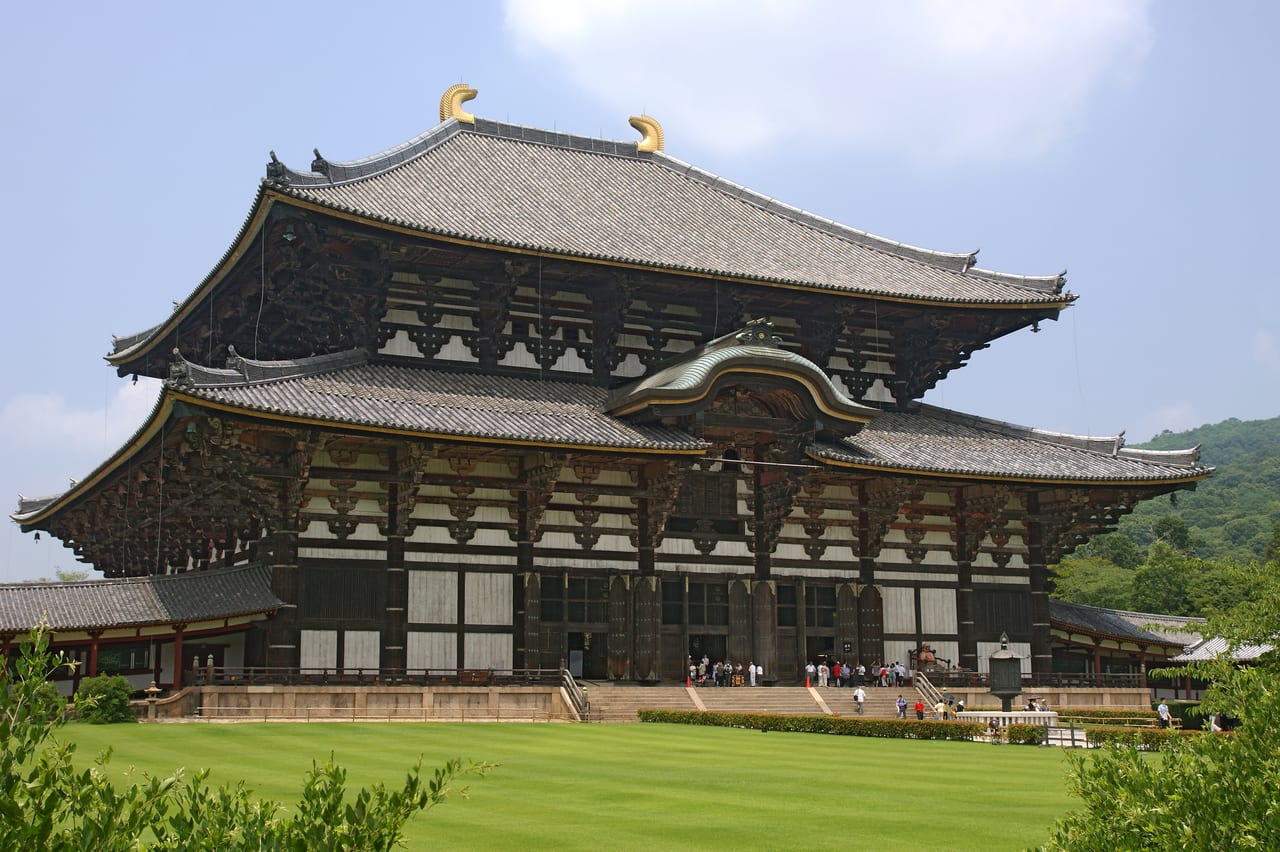
Todaiji is not one ¥800 ticket — it is four separate ¥800 tickets for the Great Buddha Hall, Hokkedo (Sangatsudo), Kaidando, and the Todaiji Museum, with exactly one combo (¥1,200 for hall plus museum) and, per the temple's own notice, cash only at the window. The bigger itinerary-breaker is closing time: Hokkedo and Kaidando shut at 16:00 year-round, an hour and a half before the Great Buddha Hall does in summer. This guide lays out the full hall-by-hall fee table, the seasonal hours, an honest read on goshuin, the 1,687 deer now officially counted in Nara Park and the safety rules that go with them, the fixed 2026 dates for Nara Tokae and the Shosoin Exhibition, and real transit numbers from Osaka and Kyoto — then answers the question plainly: is Todaiji worth carving a day out of your Kansai trip for?
📍 This guide focuses on Todaiji and Nara Park themselves — tickets, timing, rules. For a full day linking Kasuga Taisha and Kofukuji into one route, read the Nara day-trip guide. For autumn, where Nara Park's foliage peak sits against Osaka's spots, see the Osaka and Nara autumn guide.
- Four facilities, same price, one combo: hall / Hokkedo / Kaidando / museum each ¥800, child ¥400; hall + museum combo ¥1,200
- Cash only at the ticket window, stated officially — sort out yen before you arrive
- A 90-minute gap in closing times: Hokkedo and Kaidando close at 16:00 all year; the Great Buddha Hall runs to 17:30 in summer
- 1,687 deer in the 2026 official survey (up 222 year on year); crackers are ¥200 for 10 and are the only food allowed
- Fixed 2026 dates: Nara Tokae Aug 5–14, lit 19:00–21:30; the 78th Shosoin Exhibition Oct 24 – Nov 9 (ticket price not yet announced)
- Access: Kintetsu ¥680 from Osaka-Namba, ¥760 from Kyoto; the Gurutto Bus now runs weekends and holidays only
📖 Table of Contents (click to expand)
- Admission: four tickets, one combo, cash only
- Opening hours: the 16:00 trap
- Nara Park deer: 1,687 of them, and the safety rules
- Goshuin: what the temple does not publish
- Fixed 2026 dates: Tokae and the Shosoin Exhibition
- Access, and the bus change the official page missed
- Eating near the park: finish it at the shop
- Is Todaiji worth it? Paid halls vs the free ground
- FAQ
Admission: four tickets, one combo, cash only
Most visitors arrive expecting one ticket and one big Buddha. What you actually find is a temple complex made of several separately ticketed facilities. Per the official admission page, the current rates are:
| Facility | Adult / high school / junior high | Elementary school |
|---|---|---|
| Great Buddha Hall (Daibutsuden) | ¥800 | ¥400 |
| Hokkedo (Sangatsudo) | ¥800 | ¥400 |
| Kaidando | ¥800 | ¥400 |
| Todaiji Museum | ¥800 | ¥400 |
| Great Buddha Hall + Museum combo | ¥1,200 | ¥600 |
The table says it all: the only combined ticket is hall plus museum, which saves ¥400 against two singles. Hokkedo and Kaidando sit outside every bundle, so each is another ¥800 at its own door. Do all four and you are at ¥2,800 for the day — a number worth knowing before you decide how many halls you actually want.
Then the small, very practical trap: the temple states in writing that admission is paid in cash. Japanese tourist sites have gone cashless fast enough that most travellers now assume a card will work; at Todaiji it will not. Doing all four halls means carrying close to ¥3,000 in notes and coins, so draw cash at Kintetsu Nara or JR Nara Station on the way in and hang on to your coins — you will want them again for deer crackers and, as covered below, for goshuin.
The 2024 price rise: ¥600 to ¥800
Great Buddha Hall admission rose on April 1, 2024, from ¥600 to ¥800 for junior-high students and above and from ¥300 to ¥400 for elementary children — the first increase in six years, and still the rate in 2026. A lot of older articles and tour-listing blurbs are frozen at ¥600; ignore that number when you see it. It is also why this site keeps ticket prices in a single data source rather than typed into each article: when a temple raises prices, one file changes and every page follows.
My call: which of the four to actually enter
No fence-sitting, here is the ranking:
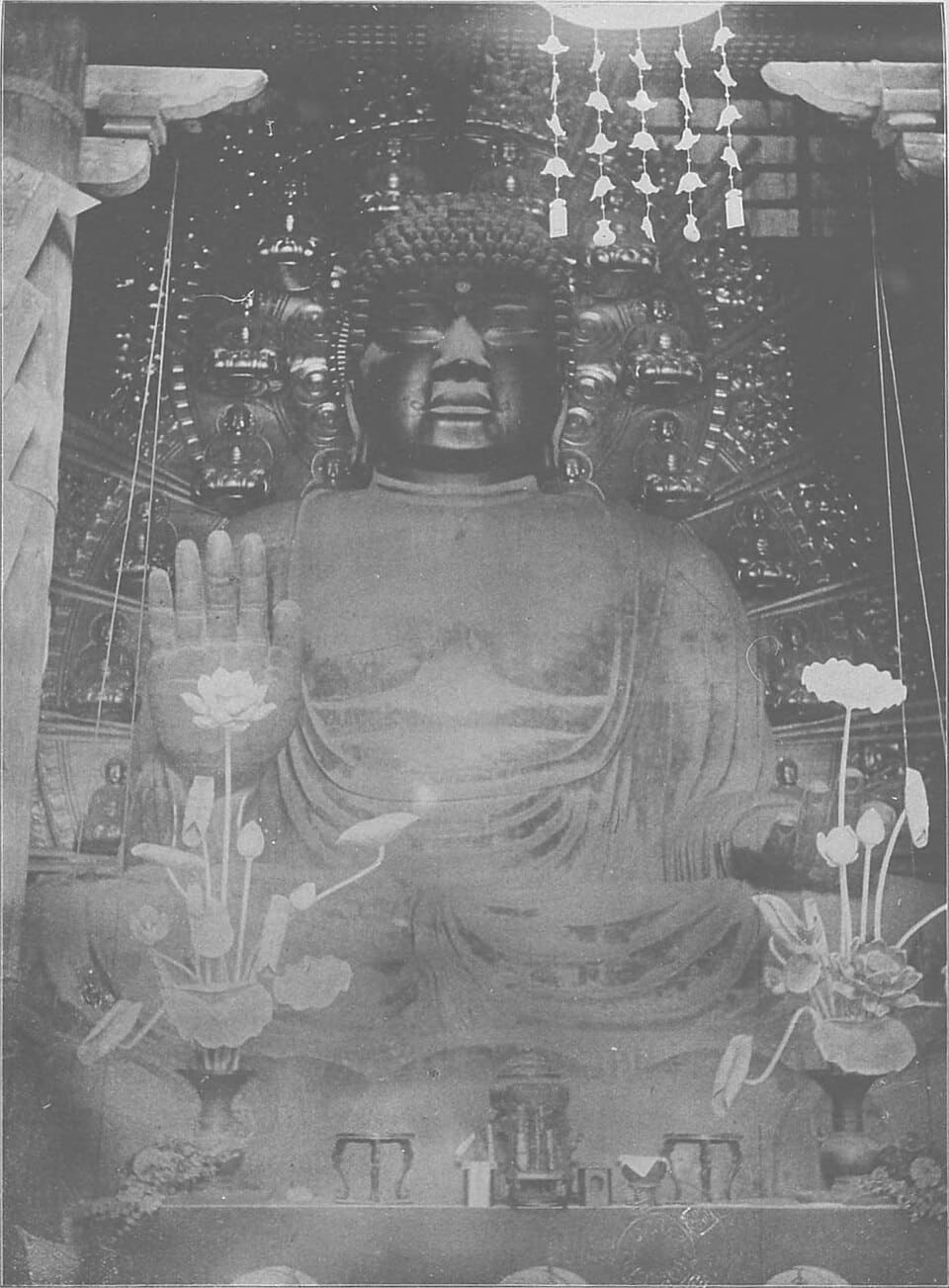
- The Great Buddha Hall is non-negotiable. ¥800 buys you one of the largest wooden buildings on earth and a roughly 15-metre bronze Vairocana inside it. On value per yen it is near the top of anything in Kansai.
- Hokkedo (Sangatsudo) second. It is among the oldest surviving structures at Todaiji, and the dense group of Nara-period sculptures inside is where sculpture people lose track of time. If the Ashura statue at Kofukuji's treasure hall did something for you, this will too.
- The museum depends on your clock. It shares a combo with the hall and sits right by the approach, so if you have the time it is an easy add. Skip it and you lose nothing from the "see the Great Buddha" mission.
- Kaidando depends on your taste. Its Four Heavenly Kings are famous pieces, but if you have already done Hokkedo and have one hour left, I would spend it on the free view from Nigatsudo rather than a fourth hall.
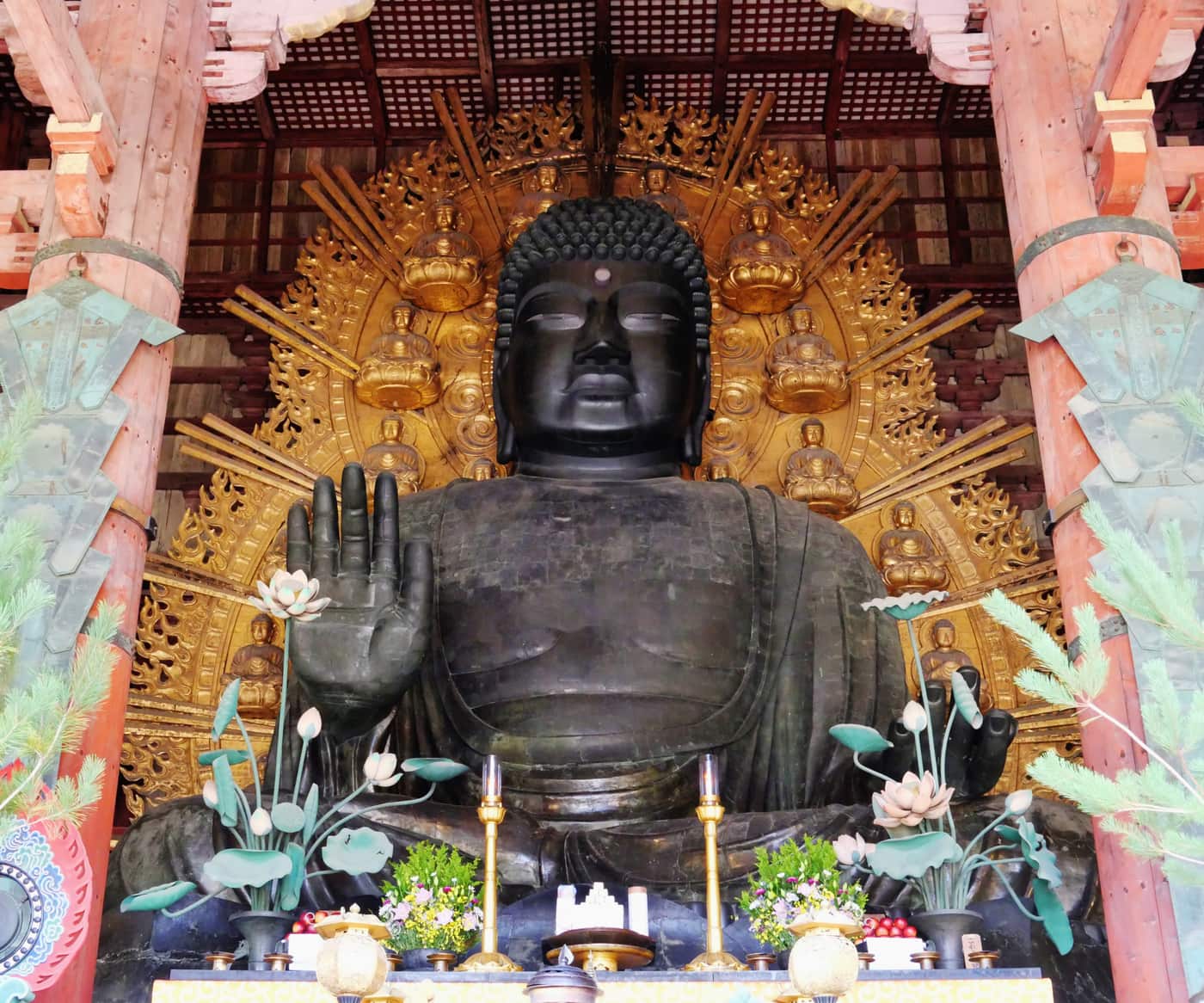
One structural point to hold on to: Nara Park itself, the Great South Gate with its pair of guardian figures, and the slopes and terrace around Nigatsudo are all free. The tickets only buy entry into buildings. That fact drives the whole "is it worth it" answer later — you can have a very full day around Todaiji on a single ¥800 ticket.
Opening hours: the 16:00 trap
If you only keep one section of this guide, keep this one. Closing times across Todaiji's four facilities differ by up to 90 minutes, and the earliest closers are exactly the halls most people leave until later:
| Facility | April–October | November–March |
|---|---|---|
| Great Buddha Hall | 7:30–17:30 | 8:00–17:00 |
| Hokkedo (Sangatsudo) / Kaidando | 8:30–16:00 | 8:30–16:00 (same year-round) |
| Todaiji Museum | 9:30–17:30 (last entry 17:00) | 9:30–17:00 (last entry 16:30) |
Translated into itinerary terms: arrive at 15:30 and the two smaller halls are gone. The temple puts the walk from Kintetsu Nara Station at about 20 minutes, and the stretch from the Great South Gate up the approach eats more time than you expect because you will stop to photograph it. Leave the station at 15:30 and you reach the smaller halls with barely ten usable minutes, which is ¥800 wasted.
The right order is early halls first, Great Buddha Hall last — it closes latest, as late as 17:30 in summer. That order also pays off at the other end of the day, because the Great Buddha Hall opens at 7:30 from April to October, which is remarkably early for a major Japanese temple. Reasoning from the posted hours, that 7:30-to-9:00 window sits ahead of coach-tour arrivals. That is an inference, not a crowd statistic — no official footfall data exists for Todaiji or Nara Park — but "the early-opening site is quiet early" is a very safe bet, and it is the recommendation I hold most confidence in.
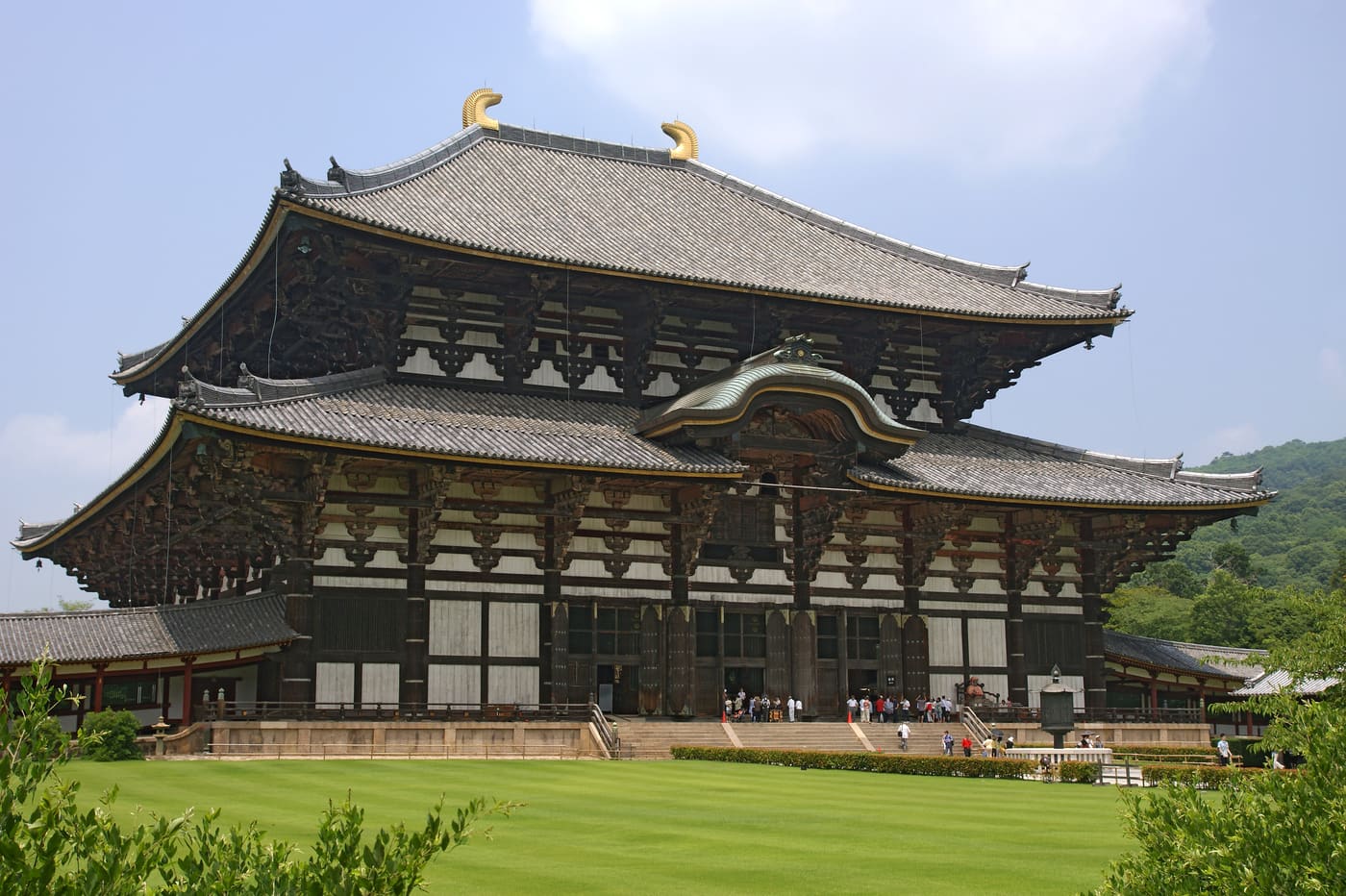
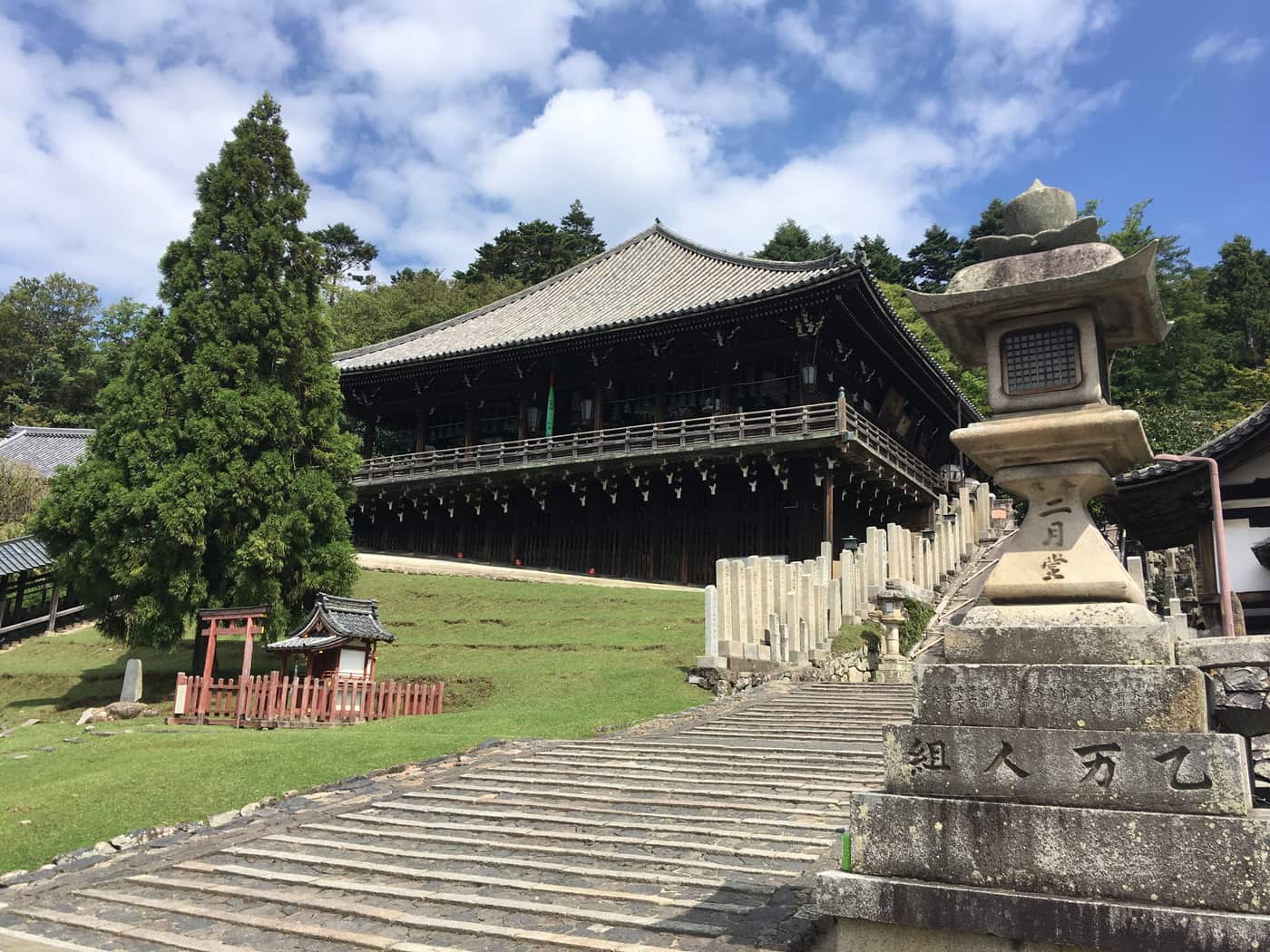
Flip it around for the afternoon crowd: if you want to dodge the Great Buddha Hall's peak, front-load the small halls. Do Hokkedo and Kaidando around 14:00, let them close at 16:00, then enter the Great Buddha Hall afterwards and finish by walking up to Nigatsudo for the view over Nara at dusk — the terrace is free and not bound by hall hours. The entire route falls out of the official timetable; you need no extra information to run it.
Nara Park deer: 1,687 of them, and the safety rules
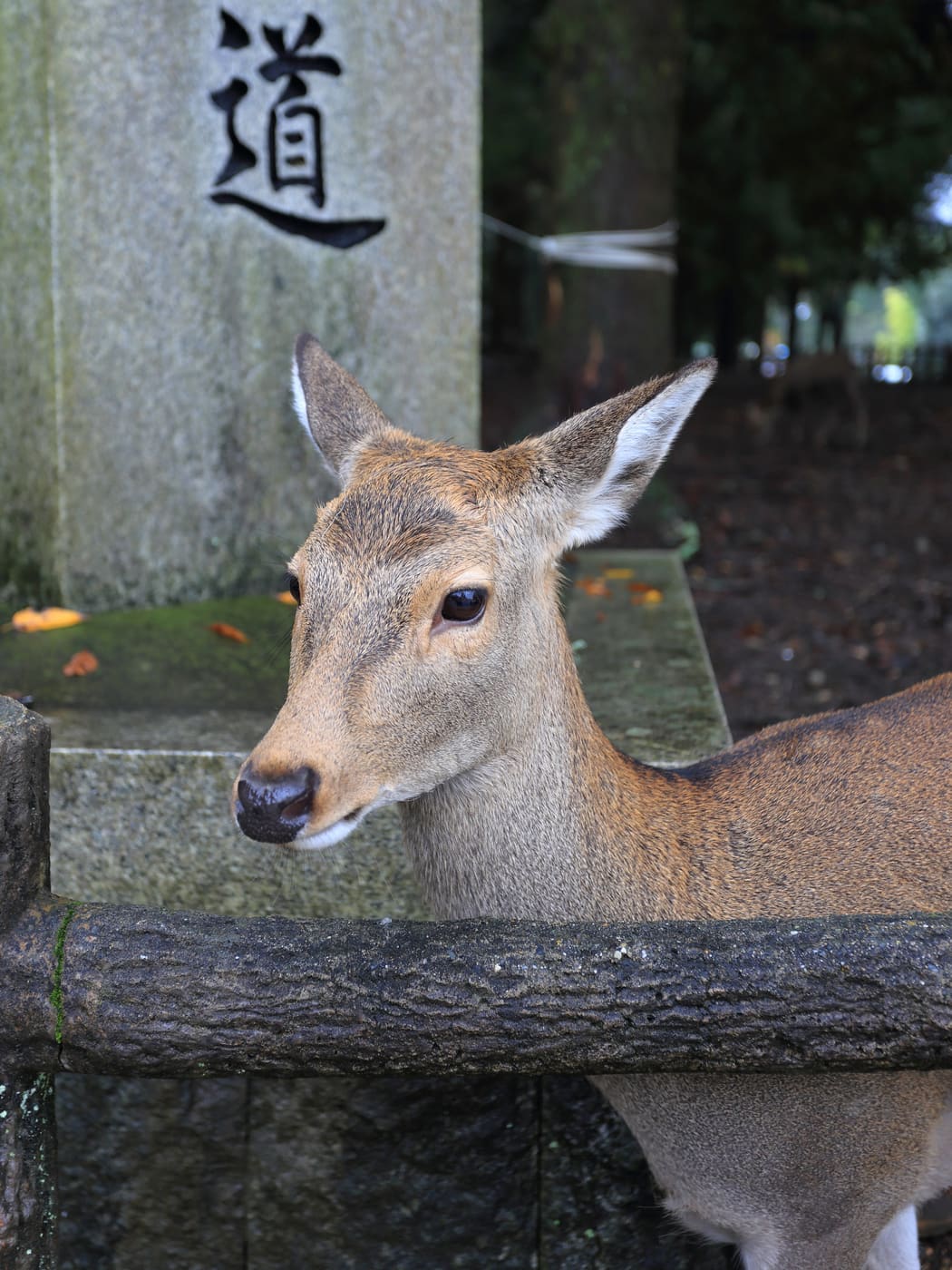
Start with a number that was updated this year, so anything written earlier will disagree with it. Per the population survey published by theNara Deer Preservation Foundation, the 2026 count across Nara Park is 1,687 deer, up 222 from 1,465 the year before — 411 stags (+96), 990 does (+174), and 286 fawns (−48). The "about 1,200" and "roughly 1,300" figures still circulating online are old; the foundation's annual survey is the authoritative source.
Their status matters too: these are wild animals and a designated national natural monument. Nobody farms them, and they are not a zoo exhibit. They approach people because of a thousand years of shrine tradition and feeding habit, but not one wild instinct has been bred out. That premise explains every rule below.
Shika senbei: ¥200 for ten, and nothing else
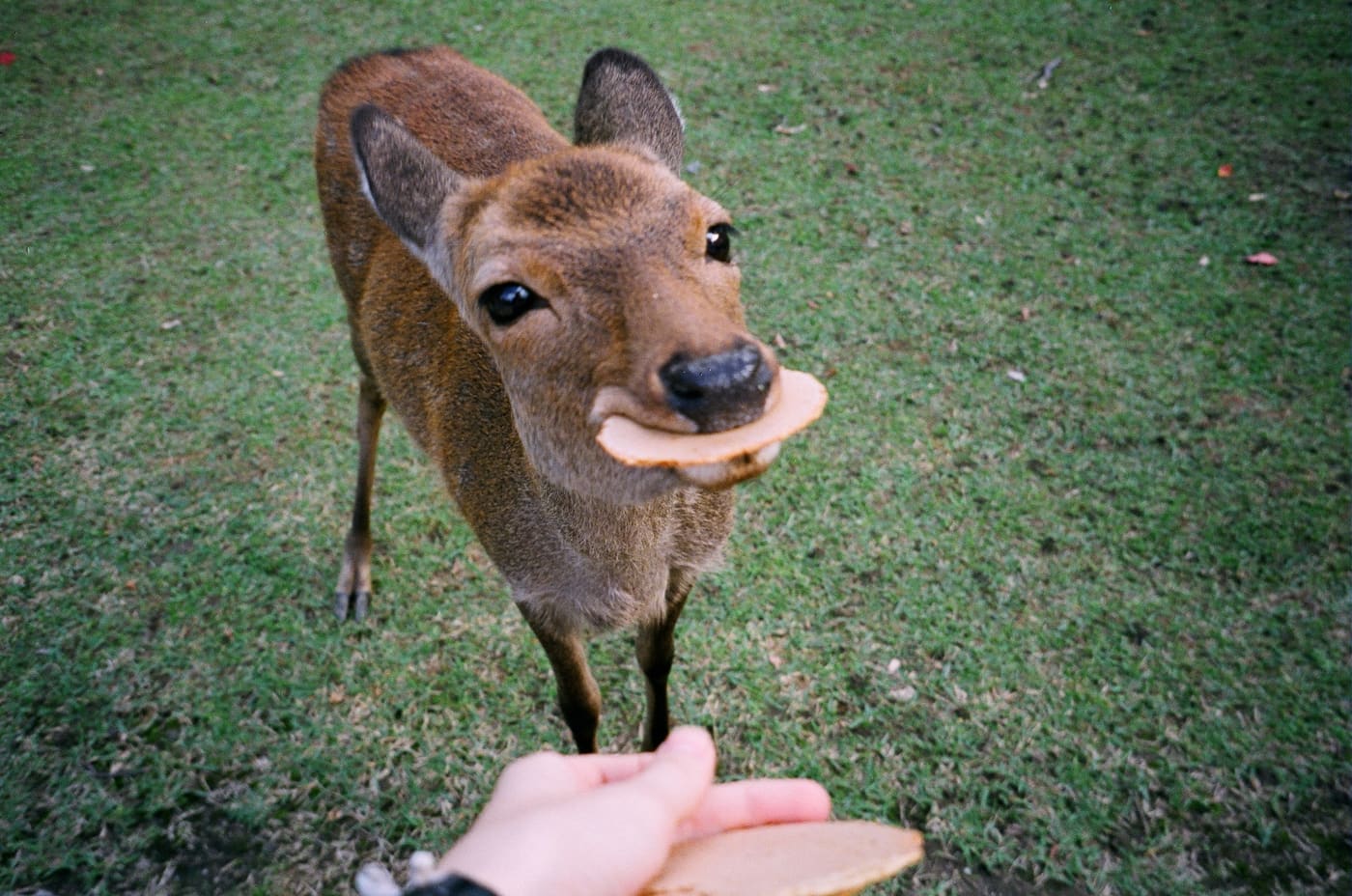
Nara's deer crackers cost ¥200 for a bundle of ten, sold from roadside stalls and vending machines. The paper band around each bundle carries the foundation's registered "shika senbei" mark, and part of the proceeds funds deer welfare work. One frequently garbled point worth correcting: the last price change was in October 2019, from ¥150 to ¥200 — described by the foundation as the first revision in 28 years — and there has been no change since. If you read that they now cost ¥300 or that a fresh rise landed recently, that is not official.
The feeding rules come from Nara Prefecture's official Nara Park guide. Treat them as safety instructions rather than politeness tips:
- Only shika senbei. Snacks, bread, and vegetables make the deer ill, and the prefecture explicitly rules them out.
- Do not fake a feed and pull back. The official guide names this behaviour directly as a trigger for biting and headbutting. The famous bow is charming, but dangling a cracker to force one is the classic way people get hurt.
- Do not let crackers stick out of a pocket. Visible food is a signal to the whole herd, and being surrounded escalates fast.
- Show open, flat palms when you are done. Most of the deer read it and disperse.
- Wash your hands afterwards. Same logic as any contact with wildlife.
Two officially flagged higher-risk seasons
This is the safety point I most want you to take away. Nara Prefecture's guide singles out two periods:
- Autumn, September to November: stags are in rut, tempers are shortest, and antlers are dangerous. The "shika no tsunokiri" antler-cutting ceremony held in early October exists precisely to reduce that risk.
- Spring and summer: does are protecting fawns. Never approach or reach for a fawn — a doe will attack to defend it. Use your zoom, not your feet.
Families with young children should read that twice. A child's head sits at exactly antler height, and a child holding crackers tends to panic and either raise them overhead or clutch them to the chest — both of which invite a deer to jump up. The practical fix I would use: an adult holds the bundle and hands crackers over one at a time, so the child feeds fast and never has a stash. The foundation also publishes an awareness video on deer-related injuries; watching it with your kids before the trip is time well spent.
Goshuin: what the temple does not publish
Todaiji is a major stop for goshuin collectors, but this section needs a verification line drawn first: the official Todaiji website publishes no goshuin list, no price, and no reception hours. Where the temple is silent, I am not going to invent a figure.
Per goshuin platforms and collector records (unofficial, for reference, confirm on site):
- The Great Buddha Hall goshuin reads "Kegon," usually hand-written. Multiple independent sources report ¥300, but treat that as the commonly seen figure and go by the posted price on the day.
- Reception is inside the Great Buddha Hall, over by the exit — meaning you need a paid admission ticket to reach it at all. Plenty of people only discover that at the gate.
- Hours broadly follow hall hours: 7:30–17:30 April to October, 8:00–17:00 November to March. Collecting right at opening is the calmest option.
- Other halls issue their own: Nigatsudo ("Namu Kan"), Hokkedo, the Kaidan-in Senjudo, and Shunjodo. Which designs are available, whether they are pre-written slips, and whether limited editions exist are not posted officially — go by each hall's own notice, and do not treat one visitor's photo of a limited edition as a permanent product.
Practical note: goshuin, like admission, is a cash transaction, so ¥100 coins and small notes keep things moving. If you are starting a collection, our guide to collecting goshuin in Japan covers choosing a book, the worship-then-stamp order, and when not to ask for a hand-written version. And if you want more temple stamps on the same Kansai trip, Hase-dera in Nara — Saigoku 33 temple no. 8 pairs well, with peony and foliage seasons both worth timing for.
Fixed 2026 dates: Tokae and the Shosoin Exhibition
Nara Park works any time of year, but the second half of 2026 has two date-locked events worth planning around.
Nara Tokae 2026: August 5–14
Per the official site, the 28th Nara Tokae runs Wednesday, August 5 to Friday, August 14, 2026, lit 19:00 to 21:30, across nine areas of Nara Park. Thousands of candles are set out along the lawns and around the water, with the Great Buddha Hall's silhouette in the distance — it is the most distinctive summer-evening scene the city has. The organisers note dates and times can change, so re-check the official notice close to your trip.
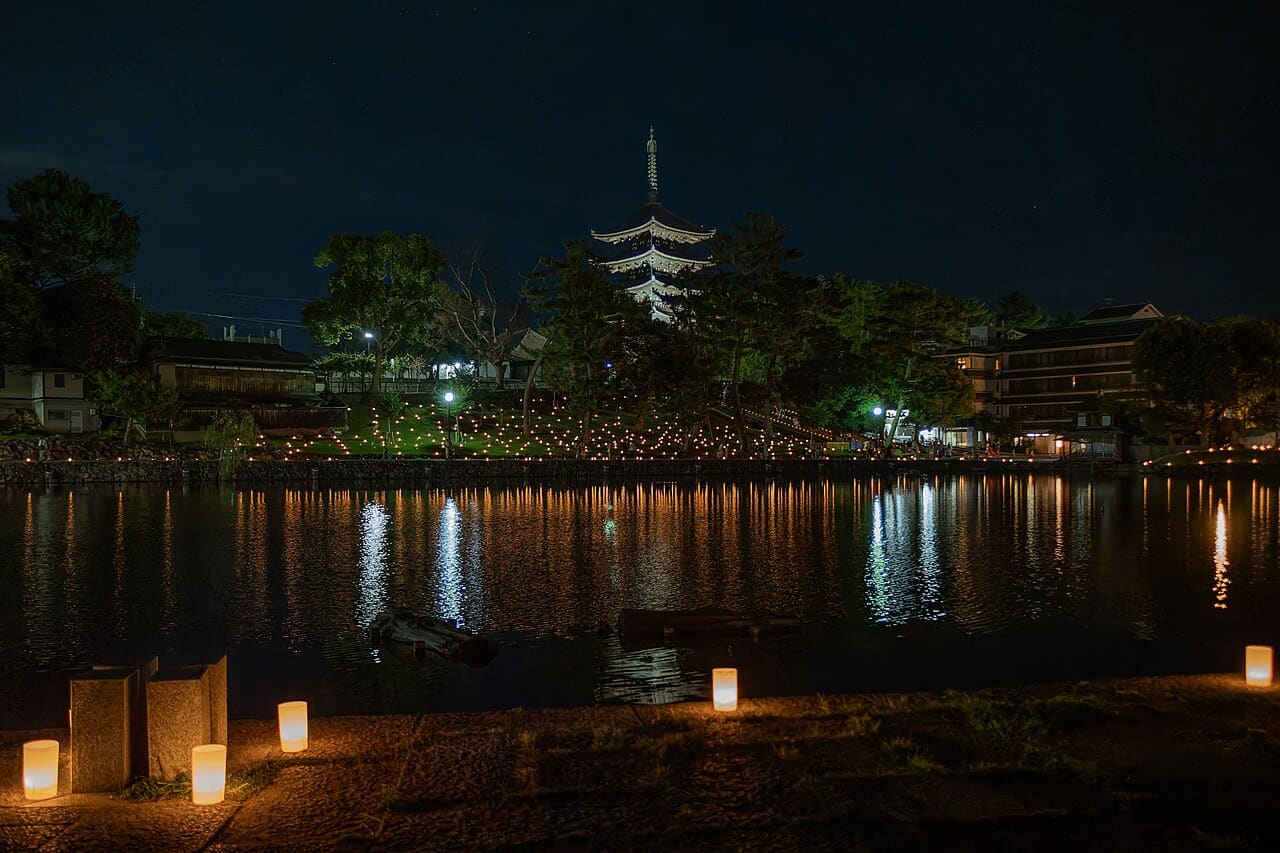
The itinerary implication is direct: during Tokae, foot traffic concentrates on the lit areas from dusk. If you are here in early August, do the Todaiji halls as normal during the day (remember the 16:00 line), then do not rush back to Osaka — have dinner and wait for the 19:00 lighting. This is one of the few windows where staying into the night in Nara clearly pays.
The 78th Shosoin Exhibition: October 24 – November 9
Autumn's headline is the Shosoin Exhibition at the Nara National Museum. The 78th edition runs Saturday, October 24 to Monday, November 9, 2026, in the East and West New Wings, open every day of the run, 8:00 to 18:00, extended to 20:00 on Fridays, Saturdays, Sundays and public holidays, with last entry 60 minutes before closing. This edition presents 60 treasures, 11 of them shown for the first time, including a lacquered ewer and a set of stained-ivory game pieces.
Two honest caveats. First, ticket prices and the sales method had not been announced as of July 2026 — recent editions have used timed-entry ticketing and the terms shift year to year, so any "previous year's price" you find elsewhere should not be carried over; check the Nara National Museum site. Second, the museum's own pages currently block automated retrieval, so the dates and times above come from the official July 14, 2026 press release as carried consistently by multiple outlets, with the weekdays checked against the 2026 calendar (October 24 is a Saturday, November 9 a Monday — matching the exhibition's long-standing pattern).
A scheduling trick: Friday to Sunday and holidays run to 20:00. By long-reported convention the evening slots are easier than midday, so if your plans have any give, put the exhibition in the evening and keep daylight for Todaiji and the park.
One more question that comes up constantly: Nigatsudo's Omizutori rite is normally held March 1 to 14, so the 2026 round is long finished. If the great torches are on your list, plan for spring 2027 and check the temple's announcement for that year.
Access, and the bus change the official page missed
Getting to Nara first. There are two rail options, and for Todaiji and Nara Park specifically, Kintetsu wins comfortably — Kintetsu Nara Station sits at the western edge of the park, while JR Nara Station is noticeably farther out and needs a walk or a bus on top.
| Route | Fare | Time | Notes |
|---|---|---|---|
| Kintetsu Osaka-Namba → Kintetsu Nara | ¥680 | ~35–40 min rapid express | Limited express adds ¥520 |
| Kintetsu Kyoto → Kintetsu Nara | ¥760 | ~45 min express / ~35 min limited express | Limited express adds ¥520 |
| JR Osaka → Nara | Check JR's official fare lookup | ~50 min Yamatoji Rapid | JR Nara Station is farther from Todaiji |
| JR Kyoto → Nara | Check JR's official fare lookup | ~45 min Miyakoji Rapid | As above |
Kintetsu fares are from the operator's official fare table. JR fares are deliberately not pinned here — confirm with JR's official lookup or a transit app before you travel.
While we are here, one common error to block: a figure of "¥620 Kyoto to Nara by Kintetsu" circulates online and contradicts the ¥760 on Kintetsu's official fare table. Do not budget from it.
Station to the Great Buddha Hall: 20 minutes on foot, or 5 by bus
Per Todaiji's official access page, it is about a 20-minute walk from Kintetsu Nara Station to the Great Buddha Hall. It is also the nicest walk in the city — you head east straight into Nara Park, greenery and deer the whole way, and most people forget they are commuting. My advice is to walk in and ride out: you have energy and good light on the way in, and after a day of halls and slopes the bus back to the station is the kind thing to do to your legs.
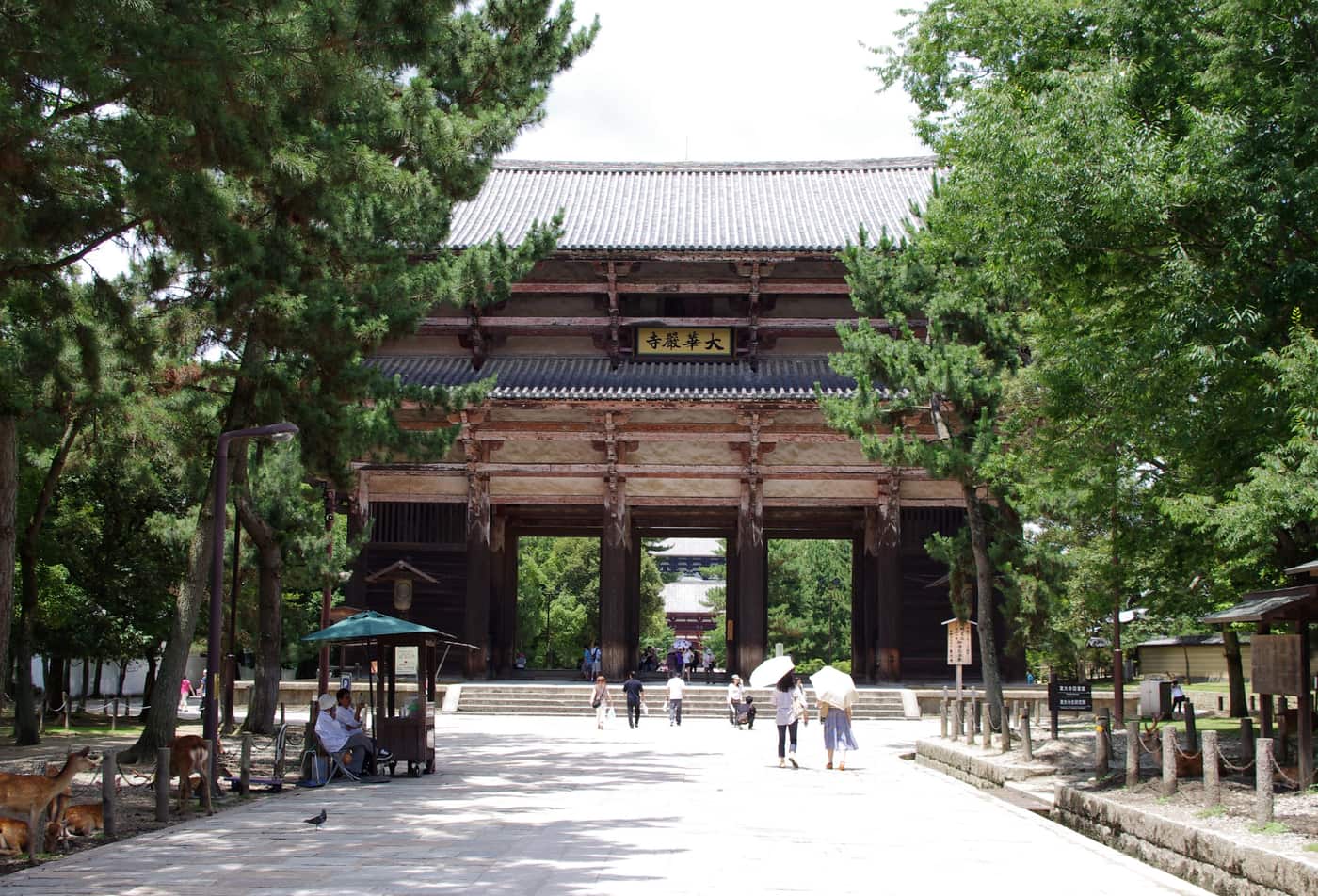
If you would rather not walk, city loop buses run from both JR Nara and Kintetsu Nara stations; get off at "Todaiji Daibutsuden / Kasuga Taisha-mae", which the temple puts at a 5-minute walk from the hall. The fare is ¥250 (per the February 2024 fare revision; confirm against the in-bus display before you pay).
The Gurutto Bus was rerouted in 2025 — the temple page still says otherwise
Here is a trap that Todaiji's own access page has not caught up with, so let's say it plainly: the temple page still describes taking the Gurutto Bus Omiya-dori route. Per Nara Kotsu's official page, the Gurutto Bus network was revised in April 2025 and the Omiya-dori route was abolished. The service that remains runs on Saturdays, Sundays and public holidays only, at ¥250 per ride (¥130 for children).
In other words: if you are visiting on a weekday, do not go looking for the Gurutto Bus. Walk, or take the city loop. Official pages going stale is not rare in Japanese tourism information, and when two official sources disagree my rule is to follow the operator — here, Nara Kotsu — because timetables and fares are theirs to set.
Eating near the park: finish it at the shop
There is plenty of food around Nara Park and the arcades by Kintetsu Nara Station (Higashimuki shopping street and the Naramachi district). But one rule matters more here than in any other Japanese city: eat what you buy in front of the shop, and do not carry food through the park.
The reason is concrete: the deer will take it. They read paper bags and plastic wrappers alarmingly fast, and per the prefecture's official guide, human food other than shika senbei is not something they should be eating at all. Losing your crepe is not just losing a snack — it means feeding a deer something that harms it, and the same official guide notes that paper and packaging cause health problems when swallowed. So in Nara, "finish it at the shop" is not fussiness; it is the version that is better for the deer and for you. If you want photos, stow food inside your bag rather than swinging it from one hand.
| Shop | Why stop | Notes |
|---|---|---|
| Nakatanidou (map) | The high-speed mochi pounding is a spectacle in itself; yomogi (mugwort) mochi pounded and sold on the spot | Hashimoto-cho, Nara; founded 1992. Hours and prices per the shop's own notice |
| Kakinohasushi Honpo Tanaka, Nara main store (map) | Nara's signature persimmon-leaf sushi, right by the Gyoki statue in front of Kintetsu Nara Station — easy on the way in or out | Higashimuki-Nakamachi; 9:00–19:00, with an attached tea room 11:00–16:00 |
| Shizuka Koen-ten (map) | A 60-year-old kamameshi (clay-pot rice) house whose signature is a seven-ingredient Nara version — the sit-down option | Noborioji-cho, walkable from the park; takeout kamameshi from ¥1,300 per the shop's site. Expect a queue |
| Tenkyokudo Nara main store (map) | Yoshino kudzu desserts (kuzukiri, kuzumochi) on the walk up toward the Great Buddha Hall — a good place to sit when your legs go | Beside the former Todaiji west gate site; hours and prices per the shop's notice |
| Mahoroba Daibutsu Pudding (map) | The default Nara souvenir pudding, in a glass jar with a Great Buddha lid that everyone recognises | The main store is out in the suburbs; check the company's current store list for in-city outlets |
Hours and closing days go by each shop's own notice; prices are indicative and deliberately not pinned here.
Three practical calls: to sit down and eat properly, pick Shizuka or Tenkyokudo, which also solves the carry-food problem for you; to eat fast, buy persimmon-leaf sushi at Tanaka and finish it in the shop or by the station before entering the park; to buy souvenirs, go for the Daibutsu pudding — but do not assume there is a counter inside Kintetsu Nara Station, because the company's current store list does not show one. Check the official list before you count on it.
Is Todaiji worth it? Paid halls vs the free ground
Now the real question: is Nara Park and Todaiji worth a dedicated trip out from Osaka or Kyoto?
Yes — and the barrier is lower than you think. It is ¥680 and a bit over half an hour from Osaka-Namba, deer start appearing the moment you walk out of the station, and one ¥800 ticket gets you inside one of the largest wooden buildings in the world. Unlike Kyoto, you are not hopping buses between temples; almost everything worth seeing in Nara lines up along one walkable green strip.
But "a dedicated trip" comes in two sizes, and picking the right one matters more than the yes.
- Half-day version (¥800 total): in from Kintetsu Nara, 20 minutes on foot to the Great Buddha Hall, buy that ticket only, then climb to Nigatsudo for the view, feed deer on the way back, and browse the Higashimuki arcade. Roughly four hours, one ticket. First time in Kansai and short on time? Take this one — it captures perhaps eighty percent of what makes Nara good (the Buddha, the deer, the openness).
- Full-day version (around ¥2,800 in tickets): Hokkedo and Kaidando from 8:30, kamameshi for lunch, the hall-plus-museum combo in the afternoon, Nigatsudo and Kasuga Taisha at dusk. Worth it if you care about Buddhist sculpture, or if this is your second visit.
And a stronger opinion about the free ground: a large share of the best things around Todaiji cost nothing. The guardian figures at the Great South Gate — masterworks of the Unkei and Kaikei school — stand in the unticketed zone, visible the moment you look up. The Nigatsudo terrace overlooks the whole city and is free, best at dusk. Nara Park itself is free throughout. So if money or time is tight, buying only the Great Buddha Hall ticket and spending the rest of the day on free ground is a completely defensible plan. Do not stack up four tickets just because it feels like better value to "do it all."
When would I tell you to wait? Midday in high summer. The Nara basin gets muggy and this entire itinerary is outdoors on foot; noon in August is punishing. If summer is your only window, be at the 7:30 opening or shift your weight to the evening — in early August that lines up with Tokae anyway. And in autumn, with stags in rut, I would set expectations lower for feeding deer with a preschooler, or keep it to a short session near the busier cracker stalls.
One line to close on: Todaiji is not a see-the-Buddha-and-leave stop; it is a complex where tickets are bought separately and time has to be budgeted separately. Hold the 16:00 line in your head, bring cash, treat the deer as the wild animals they are, and the day runs smoothly. To slot Nara into a wider Kansai plan, read on in the Nara one-day route and where to stay.
Frequently Asked Questions
- Q1:How much does Todaiji cost, and is there a combined ticket?
- Per the temple's official admission page, four facilities charge separately: the Great Buddha Hall (Daibutsuden), Hokkedo (Sangatsudo), Kaidando, and the Todaiji Museum. Each is ¥800 for adults (university students and above) plus high-school and junior-high students, and ¥400 for elementary-school children. There is exactly one combined ticket: Great Buddha Hall plus Museum, at ¥1,200 for junior-high and up and ¥600 for elementary children, saving ¥400 over two singles. Hokkedo and Kaidando are not included in any combo and must be bought individually. One detail that catches people out: the temple states payment is cash only, so do not plan on a card or phone at the window. Nara Park itself, the Great South Gate, and the Nigatsudo terrace are all free — you only pay to enter the halls.
- Q2:What are Todaiji opening hours, and why do people miss the smaller halls?
- Because the four facilities close at different times, which is the single most common way a Nara itinerary breaks. The Great Buddha Hall runs 7:30 to 17:30 from April through October and 8:00 to 17:00 from November through March. Hokkedo and Kaidando run 8:30 to 16:00 all year. The Todaiji Museum runs 9:30 to 17:30 April through October (last entry 17:00) and 9:30 to 17:00 November through March (last entry 16:30). So if you leave Kintetsu Nara Station at 15:30 and take the 20-minute walk in, Hokkedo and Kaidando are effectively already gone. The fix is to front-load the two halls that shut at 16:00 and save the Great Buddha Hall for last, since it stays open the longest.
- Q3:How many deer are in Nara Park, and what is the deer etiquette?
- Per the Nara Deer Preservation Foundation population survey, the 2026 count is 1,687 deer — up 222 from 1,465 the previous year — comprising 411 stags, 990 does, and 286 fawns. The rules come from Nara Prefecture's official Nara Park guide: feed only shika senbei (deer crackers, ¥200 for a bundle of 10); snacks, bread, and vegetables make the deer ill. Pretending to feed and pulling your hand back, or letting crackers stick out of a pocket, is what provokes biting and headbutting. When the crackers are gone, hold both palms open and flat so the deer can see. The prefecture also flags two higher-risk periods: September to November, when stags are in rut, and spring to summer, when does are protecting fawns. Wash your hands after touching a deer.
- Q4:Does Todaiji offer goshuin, and how much are they?
- Honest answer first: the official Todaiji website publishes no goshuin list, price, or reception hours, so no exact figure here should be treated as official. Per goshuin platforms and collector records (unofficial, for reference): the Great Buddha Hall goshuin reads "Kegon," is usually hand-written, and is commonly reported across multiple sources at ¥300 — confirm the posted price on site. Reception is inside the Great Buddha Hall itself, near the exit, which means you need a paid admission ticket to reach it. Hours broadly track hall hours: 7:30 to 17:30 April through October, 8:00 to 17:00 November through March. Nigatsudo ("Namu Kan"), Hokkedo, the Kaidan-in Senjudo, and Shunjodo also issue their own goshuin, but designs, whether they are pre-written slips, and any limited editions are not officially posted — go by what each hall displays on the day. Bring cash.
- Q5:What is happening in Nara Park in late 2026?
- Two fixed-date events. Nara Tokae runs August 5 (Wednesday) to August 14 (Friday) in 2026, lit from 19:00 to 21:30 across nine areas of Nara Park — thousands of candles set out on the lawns and water, and the best reason all year to stay in Nara after dark. Then the 78th Shosoin Exhibition at the Nara National Museum runs October 24 (Saturday) to November 9 (Monday), in the East and West New Wings, open every day of the run, 8:00 to 18:00, extended to 20:00 on Fridays, Saturdays, Sundays and holidays, with last entry 60 minutes before closing. This edition shows 60 treasures, 11 of them exhibited for the first time, including a lacquered ewer and a stained-ivory game piece set. Important: as of July 2026 the museum had not announced ticket prices or the sales method, so do not reuse a previous year's figure — check the museum site. Separately, Nigatsudo's Omizutori rite normally runs March 1 to 14, so the 2026 round has already passed.
- Q6:What is the easiest way to reach Todaiji from Osaka or Kyoto?
- Kintetsu, comfortably. Per Kintetsu's official fare table, Osaka-Namba to Kintetsu Nara is ¥680 (add a ¥520 limited-express surcharge if you take the tokkyu), roughly 35 to 40 minutes on a rapid express; Kyoto to Kintetsu Nara is ¥760 (same ¥520 surcharge), about 45 minutes by express or 35 by limited express. JR also serves Nara, but JR Nara Station sits farther from Todaiji — check JR's official fare lookup for that route. On arrival, the temple states it is about a 20-minute walk from Kintetsu Nara Station to the Great Buddha Hall; alternatively take a city loop bus to "Todaiji Daibutsuden / Kasuga Taisha-mae" and walk 5 minutes, at ¥250 (per the February 2024 fare revision; confirm on the in-bus display). Note that Todaiji's own access page still describes the Gurutto Bus Omiya-dori route, which was abolished in the April 2025 network revision — the current Gurutto Bus runs weekends and holidays only, at ¥250 per ride (¥130 for children).
Read next
Nara Guide 2026: Todaiji, the Deer Park & Kasuga Taisha
About 40 minutes by Kintetsu from Osaka or Kyoto — the Todaiji Great Buddha, feeding roughly 1,700 free-roaming deer, Kasuga Taisha lanterns, and the Kofukuji pagoda restoration status.
Osaka & Nara Autumn 2026: Minoo Falls, Katsuoji & Deer Park
Kyoto crowds got you down? Minoo Falls, Katsuoji daruma slopes, and deer-and-maple Nara — routes and fees decoded.
Goshuin Guide: Collecting Japan Shrine Stamps
How to start collecting goshuin: books, etiquette, fees, and a first-timer route.