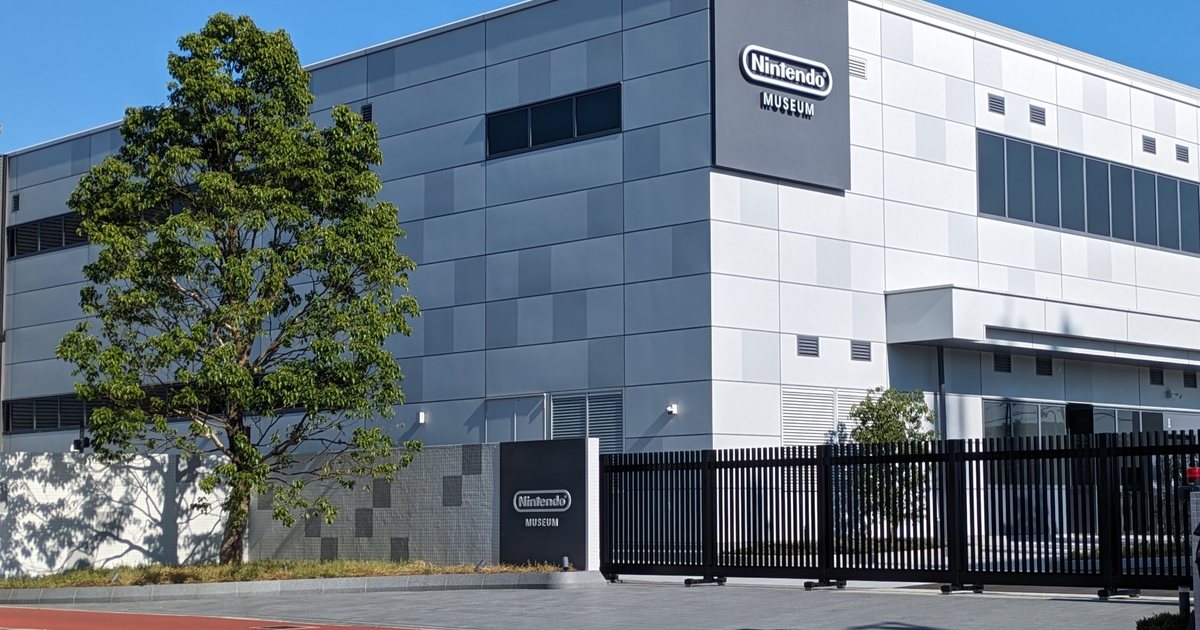
An adult ticket costs ¥3,300, and exactly one place in the world sells it: Nintendo’s own ticket page. There is no box office at the building. The official sentence is blunt — tickets are not sold anywhere other than the Nintendo Museum ticket page. What should actually stop you, though, is the next part. Those listings you have seen on booking platforms offering to enter the lottery for you, or to secure an admission slot on your behalf, are covered by a prohibition clause in the official terms of use — and the clause names both sides, including the traveller who asks. The stated penalty is not that one ticket failing. It is every ticket you hold being voided without prior notice, your future admission being suspended, and refunds and compensation being refused outright. Nintendo has a dedicated notice page about this, and its first sentence is not a caution about what could happen. It reports what already has, more than once.
Two places get confused constantly, so let us separate them first. This guide is about the Nintendo Museum in Uji, Kyoto Prefecture — a museum on a former factory site, ticketed exclusively by Nintendo. Super Nintendo World is an area inside Universal Studios Japan in Osaka, entered with a USJ park ticket under a completely separate timed-entry system. For that one, see our guide to Express Passes and getting into Super Nintendo World.
- The official ticket page is the only channel — the museum itself does not sell tickets on site, and the official wording carries no exception
- Agency buying is a prohibited act, and it binds both parties — Article 17.1 names requesting such a purchase, not only performing one
- The penalty is not limited to that ticket: every ticket you have bought may be voided without prior notice, admission suspended, and no refund or compensation given
- An agency cannot make it work mechanically: applications require the full names and phone numbers of every visitor, matching their ID, and the lottery opens three months before the visit date
- There is no Chinese-language official page — the terms prohibiting agency purchases exist in Japanese and English only
📖 Contents
- Whose name is on the ticket?
- What do the terms actually say about agencies?
- Has anyone actually been turned away?
- Could an agency make it work at all?
- Who gets to read the rules?
- Who can you hand a ticket to?
- Who needs a ticket, and who cannot go in alone?
- Can you change your mind?
- Things that look like admission but are not
- How this differs from the Ghibli Museum
- So how should you buy it?
- FAQ
Whose name is on the ticket?
Every person who will walk through the gate, and that name has to match the document you produce there.
This is the foundation the rest of the article stands on. On the official list of what a purchase requires, the first item is the full names of all visitors, and immediately underneath sits a note stating those names must be identical to the names on the identification documents used for identity verification. The English page is even more explicit about why: in order to verify each visitor’s identity, the full names provided must match the names listed on their respective identification documents.
The arrival procedure matches. The official visit-flow page lists step one as presenting your QR ticket together with your ID, to staff, in front of the security gate. The sentence that follows says admission may be refused where identity cannot be verified.
Be precise about that verb. May be is a reserved right, not a promise that every visitor is checked line by line. But the inverse does not follow either. No official document and no verifiable source supports the idea that mismatched tickets usually get through. What you actually hold is two facts: Nintendo has reserved this right, and Nintendo says it has used it.
The accepted documents are listed: My Number card, driving licence (including a driving history certificate), passport, residence card and similar, plus a disability certificate or Mirairo ID. Minors, including preschool-age children, may substitute a health insurance card or eligibility certificate, a maternal and child health handbook, or a student ID. For an overseas visitor that means the passport, so transcribe the romanised name from the passport letter by letter when you apply. A middle name dropped for convenience is a mismatch.
What do the terms actually say about agencies?
They name it as a prohibited act, and they prohibit both sides of the transaction.
The clause is Article 17.1 of the terms of use. Its main body prohibits transferring or reselling tickets to third parties, then carves out one exception: transferring, by the method Nintendo specifies, to companions who were entered at the time of purchase or lottery application. The sentence worth reading twice is the parenthesis that closes the clause. It places two things side by side — purchasing tickets on behalf of others for profit, and requesting such purchases from others — and prohibits both.
The English text mirrors it exactly, prohibiting acts of purchasing tickets on behalf of others for profit, as well as acts of requesting such ticket purchases from others. The two language versions do not diverge here, in strength or in scope.
Note where the clause lives. Not in guidance, not in a cautionary note — in the prohibited acts article of a document with an effective date. It was established on 1 June 2024 and last updated on 1 April 2026. The measures the terms reserve for a breach are broader than most people assume:
| Measure | Scope as written |
|---|---|
| Ticket invalidation | Not only the offending ticket — every ticket purchased, and without prior notice |
| Admission rights | Suspension of future admission to the museum |
| On the day | Refusal of entry, refusal of access, and being asked to leave the premises |
| Money | Refunds and compensation are not accepted at all |
| Commercial relationship | Refusal of all future transactions with the company |
Now put that table next to one detail: invalidation happens without prior notice. You are not told before you fly. You find out at the gate, in Uji, with the day already committed and the people you brought standing behind you.
Has anyone actually been turned away?
Nintendo says yes, and it says so in the past tense — multiple cases confirmed.
There is a standalone notice page whose title puts three things in one line: resale, payment agency services, and websites or services resembling them. Its opening sentence does not warn about a hypothetical. It states that multiple cases have been confirmed of tickets bought outside the official ticket page being invalid, leaving the holder unable to enter.
The phrase payment agency in that title deserves a pause. That is the industry name for exactly the service model in question — we complete the checkout for you, we register on your behalf, you pay us a fee. Nintendo filed it in the same heading as ticket touting. The target is not just the old-fashioned scalper with a paper stub. It includes the tidier, more respectable-looking version.
Further down, the same page addresses sellers rather than visitors: anyone who continues to resell tickets while knowing those tickets cannot be used may face fraud charges. That sentence is not aimed at you, but it tells you what register Nintendo is writing in.
One caution about evidence, because the temptation is obvious. Five-star reviews on a booking platform, even ones marked as verified bookings, demonstrate that people completed a checkout on that platform. They do not demonstrate that anyone walked into the building. And the turned-away cases are being counted by Nintendo, not by a review section. Absence of a public complaint is not a clean bill of health; it is an absence of data from the only place that has any.
Could an agency make it work at all?
No, because the names are fixed at the moment of application, and the lottery opens three months before the visit date.
This section is the practical heart of the guide, because it stops arguing about rules and starts describing physics. For the agency model to work, the agency must be able to enter the lottery first and hand you the ticket afterwards. Nintendo blocks that in two separate places.
The first is the purchase requirements already quoted: full names of all visitors, matching their ID. The second is an entry in the official FAQ that reads like it was written for exactly this situation. Someone asks whether they can buy tickets in advance while their companions are still undecided. The answer is that applying to purchase requires the names and phone numbers of every visiting person to be confirmed. The English version says entering a ticket drawing requires the full names and phone numbers of every visitor.
Stack those two together and the agency faces a timing paradox. The lottery opens three months out, and at that moment the agency does not know you exist. To get you through the gate it would have to type the name on your passport into the application form, three months before you found the listing. It cannot. So it enters its own name, or a placeholder, and later hands you a ticket registered to somebody else.
Which is why the phrase the ticket was invalid in the official notice is not a scare tactic. It is a description. From the moment that ticket was drawn, the registered visitor was not you.
Who gets to read the rules?
Readers of Japanese and English. That is the entire list.
Verifying this takes about a minute. The site declares two alternate languages and no more, the language control offers a single ENGLISH button, and the common Chinese-language path patterns all return an identical 404 page — identical down to the byte count, which is how you tell a genuine absence from a page hidden at some other address.
The bare fact is unremarkable. The asymmetry it creates is not. For a Chinese-reading traveller, nearly every page about this museum written in their own language is a listing for the kind of product the terms prohibit. The binding document sits behind a language barrier; the sales pitch does not. Rules untranslated, advertising translated. If you are travelling with family who read only Chinese, that gap is the single most useful thing in this article to relay to them.
One citation note, if you plan to show the English page to someone. The English title of the resale notice renders the Japanese phrase for payment-agency and similar sites or services with the added evaluative word Misleading, which the Japanese original does not contain. Same direction, slightly stronger tone, no contradiction — but quote each language from its own page rather than presenting one as a translation of the other.
Who can you hand a ticket to?
Only the people already named in your application, and only through the function Nintendo calls distribution.
That is what the exception in Article 17.1 refers to. Distribution exists for the case where one representative buys tickets for several visitors and then needs to hand each person their own QR ticket. Three constraints travel with it:
- The recipients are fixed in advance. Article 7.1 states that tickets cannot be distributed to anyone other than the companions entered at application, and Article 2 defines a companion as a person entered as a visitor at the time of purchase or lottery application, excluding the purchaser themselves.
- The recipient needs an account. Receiving a distributed ticket requires holding a Nintendo Account. This is where overseas groups stall, because the grandparents usually do not have one.
- There is a window. Distribution can be performed within 30 days including the visit date.
Then comes the rule that quietly solves the problem: you do not have to distribute at all. Nintendo states that even without distributing, the purchaser can present every companion QR ticket on the day, and the group may enter with everyone present together.
So if someone in your party refuses to create an account, the answer is not to find a workaround for transferring the ticket. The answer is that you all walk in together. The cost is coordination: nobody arrives separately, nobody is late, nobody wanders off for a drink first. Settle that the night before rather than in the queue.
One more detail for whoever is organising: after distribution, the purchaser’s own account no longer retains a record of the companions. Screenshot your list before you distribute.
Who needs a ticket, and who cannot go in alone?
Four price tiers that follow school year rather than age, and elementary-age children cannot enter unaccompanied.
| Visitor | Price | What to watch |
|---|---|---|
| Adult (18 and over) | ¥3,300 | At least one of these is required when a child ticket is in the basket |
| Junior / senior high school student | ¥2,200 | An 18-year-old high school student belongs here, not in the adult tier |
| Elementary school student | ¥1,100 | Cannot enter alone; must be bought with at least one adult ticket |
| Preschool age | ¥0 | Free, and likewise cannot enter unaccompanied |
| Visitor with a disability, plus one companion | ¥1,100 | Show a disability certificate or Mirairo ID on the day; preschool-age visitors with a disability are free |
The tier that costs people money is age 18. Nintendo adds a specific note asking 18-year-old high school students to buy the junior and senior high school ticket. The boundary is the school system, not the birthday, and getting it wrong costs an extra ¥1,100.
The accompaniment rules split into two layers. Elementary school age and below cannot enter by themselves and must be accompanied by someone holding an adult ticket, and when buying a child ticket Nintendo requires that at least one adult ticket be purchased together with it. From junior high school age upward the rule flips: a ticket alone is enough to enter.
A last one buried in the terms: a minor cannot agree to the terms of use on their own, and a legal representative must do it instead. If you are the parent, the booking account is yours. Do not hand the phone to the twelve-year-old to finish the form.
Can you change your mind?
Yes, under four simultaneous conditions — and one of them closes at 14:00 the day before.
The official cancellation conditions are cumulative, not alternatives:
- It is still before your booked date and time.
- The QR ticket has not yet been displayed.
- Where you have companions, distribution has not yet been performed.
- If child tickets remain after the cancellation, at least one adult ticket must remain as well.
Condition two is the irreversible one. QR tickets can be issued from 14:00 on the day before the visit, and the official line is that once the QR ticket has been issued, cancellation is no longer possible. That afternoon is the watershed. If tomorrow still has variables in it — a typhoon warning, a delayed connection, a child running a temperature — leave the ticket unissued and resist the urge to open it early just to check it works.
Condition three deserves the same caution: distribution is a one-way door. Once the tickets are out, cancellation is gone. Confirm your headcount, then distribute, in that order.
There is also a technical requirement that bites on the day, stated in Article 8.2 of the terms: using a ticket requires an internet-connected smartphone or tablet. The QR ticket is called up from the ticket page at the gate; a screenshot saved last week is not the same thing. Uji is not remote, but signal, battery and a login session that decides to expire are three independent failure points. My own habit is charging the power bank and confirming the account still logs in over hotel Wi-Fi the night before — it is a question of sequencing, not equipment.
Things that look like admission but are not
Two categories: the prohibited agency purchase, and transport tickets that mention the museum without including entry.
The first has occupied most of this article. On booking platforms you will find listings offering to secure an admission slot or to enter the lottery on your behalf, usually priced at somewhere between three and four times the official ticket (exchange rates drift, so no precise multiple here). What that premium buys is not certainty. It buys a purchase route that the operator has explicitly prohibited and that has already left people at the gate.
The second category is sneakier, because the product is entirely legitimate and genuinely works — it simply is not a ticket. There is a Keihan bus one-day pass sold on booking platforms whose description lists the area around the Nintendo Museum among the places you can explore. That description is not false. The pass really does carry you there. It is a transport ticket. It does not include admission, and it will not open the security gate. Anyone who buys it in place of a museum ticket discovers that at the door.
The test is short enough to memorise: if the product was not bought on the official ticket page, under your own Nintendo Account, with your own name typed into the application, it is not admission to this museum. The official sentence — that tickets are not sold anywhere other than the Nintendo Museum ticket page — comes with no exception clause attached.
How this differs from the Ghibli Museum
Both require advance booking and neither sells at the door, but the hard part is in a completely different place.
If your itinerary covers both Tokyo and Kansai you may well want both, and merging the two sets of notes is the most reliable way to get something wrong. The differences that matter:
| Nintendo Museum (Uji) | Ghibli Museum (Mitaka) | |
|---|---|---|
| What makes it hard | Eligibility is bound to your name | The rules are split across three websites |
| Who sells the ticket | The official ticket page, and nowhere else | LAWSON; the museum itself does not sell |
| What you must enter | Full names and phone numbers of every visitor, matching ID | Booker details; the ID check targets the purchaser |
| Transfers | Distribution only, to companions named at application | Companions enter together with the booker |
| Official languages | Japanese, English | Japanese, English |
The first row is the whole distinction, and it is what each of our two guides is built to solve. In Mitaka the difficulty is scattered information — the museum’s Japanese pages, its English pages, and the Japanese-only page of the company that actually sells the tickets say different things, and the page you can read is missing several of the rules that waste trips. In Uji the information is centralised and clearly written; the difficulty is bound eligibility. The ticket carries a specific person’s name from the moment it is drawn, and there is a market selling a way to bypass that.
Put another way: the Mitaka guide asks you to read three sites at once, this one asks you to enter the lottery under your own name. The details for the other one are in our guide to who actually sells Ghibli Museum tickets. Do not transplant those rules to Uji.
So how should you buy it?
Apply yourself, on the official ticket page, under the name in your passport, and accept that a lottery is a lottery.
Condensed into a sequence of actions:
- Create a Nintendo Account first. Anyone in your group who wants to hold their own QR ticket needs one too. Whoever refuses takes the everyone-enters-together route instead.
- Lay the passports out and copy the names. Spelling exactly as printed, no shortening. Confirm phone numbers at the same time, because Nintendo requires every visitor to be finalised.
- Count back three months from your visit date to find when lottery applications open. If your travelling party is not settled by then, note that buying ahead with undecided companions is explicitly not allowed.
- After winning, do not rush to issue the QR ticket. Issuance kills cancellation, and the earliest it opens is 14:00 the day before. Leave it until the last sensible moment if anything is still uncertain.
- Arrive with ID and a charged phone. The gate wants the QR ticket and the document together, and the QR ticket needs a connection to appear.
As for how hard the lottery is — this guide gives you no number. Nintendo has never published a success rate, and it cannot be measured without occupying application slots that belong to real visitors. The percentages circulating online have no traceable source either. Rather than chase the odds, get the controllables right: names correct, party finalised, ticket unissued until you are certain.
Which brings the decision back to one line. That listing offering to secure a slot for you is selling what looks like admission and is actually a purchase route the operator prohibits — one that names the buyer, meaning you, as a party to the breach. The downside is not paying triple. The downside is standing at the gate in Uji, being told the ticket is invalid, with refunds and compensation explicitly refused. This museum is not hard to visit. It is only hard to visit under someone else’s name, and that is by design.
One planning bonus while you are here: the museum sits in Uji, the same small city as Byōdō-in, the Uji Bridge and several of Japan’s oldest tea houses. Whichever half-day your ticket slot does not occupy pairs naturally with tea — routes and shops are in our guide to drinking matcha properly in Uji and Kyoto.
📄 Source appendix — official wording, Japanese and English
1. The official ticket page is the only channel (resale notice)
チケットは必ずニンテンドーミュージアム チケットページからご購入ください。ニンテンドーミュージアム チケットページ以外ではチケットの販売を行っておりません。
2. Multiple invalid-ticket cases already confirmed (resale notice, opening line)
ニンテンドーミュージアム チケットページ以外でチケットを購入し、チケットが無効で入館できないケースを複数確認しております。
3. Transfer and resale prohibited, with one exception (resale notice)
ニンテンドーミュージアムのチケットは、営利・非営利を問わず、第三者への譲渡または転売行為を禁止しております。
当社が定める正規の方法による同行者間の譲渡を除き、いかなる形であっても第三者への提供は認めておりません。
4. Consequences (resale notice)
転売サイト・オークション・SNS等を通じて不正な販売または譲渡が確認された場合は、当該チケットに限らず、購入いただいたすべてのチケットを事前の予告なく無効とし、以後のニンテンドーミュージアム入館資格の停止等を行うことがあります。また、これらに伴う返金および補償には一切応じかねます。
5. Agency purchase prohibited in both directions (Terms of Use, Article 17.1)
17.1 お客様が第三者にチケットを譲渡または転売することを禁止します。ただし、チケット販売サービス利用者が、チケットの購入申し込み時および抽選申込時に入力した同行者に対して当社が指定する方法で譲渡する場合はこの限りではありません。(なお、チケットの購入を代行しそれに伴う利益を得る行為およびこのような代行を依頼しチケットを購入する行為は禁止します。)
English text of the same article: (In addition, acts of purchasing Tickets on behalf of others for profit, as well as acts of requesting such ticket purchases from others, are prohibited.)
6. Only registered visitors may use the ticket (Terms of Use, Article 8.1)
8.1 チケットに表示されたチケット販売サービス利用者および同行者以外の方が当該チケットを利用することはできません。お客様は、入館時に本人確認のために身分証明書の提示を求められた場合は、これに応じなければなりません。
7. Limits on distribution (Terms of Use, Article 7.1)
7.1 チケットの購入申込時および抽選申込時には、チケット販売サービス利用者および来館する同行者の氏名情報等の入力が必要です。入力された同行者以外の方にチケットを分配することはできません。また、分配するためには分配を受けるお客様がニンテンドーアカウントを保有していることが必要です。
8. Definition of companion (Terms of Use, Article 2)
「同行者」とは、チケット販売サービス利用者が、チケットの購入申込時および抽選申込時に、来館者として入力する方(チケット販売サービス利用者本人を除きます。)をいいます。
9. Identity verification on arrival (visit-flow page)
当日の入館時、セキュリティゲート前でスタッフに「QRチケット」と身分証明書をご提示ください。本人確認ができない場合、入館をお断りする場合があります。
10. Purchases need every visitor name, matching ID (official FAQ)
・来館者全員の氏名
※本人確認のための身分証明書に記載の氏名と同じである必要があります。
English: Full names of all visitors / In order to verify each visitor’s identity, the full names provided for each visitor must match the names listed on their respective identification documents.
11. You cannot buy ahead with undecided companions (official FAQ)
Q. チケット購入時に同行者が未定であっても、先にチケットを購入しておくことはできますか?
A. チケット購入を申し込むには来館される方全員の氏名と電話番号が確定している必要があります。
12. Distribution is optional (visit-flow page)
なお、分配をしなくても、来館当日にチケットを購入された方がすべての同行者の「QRチケット」をご提示いただくことで、全員がそろった状態でのご入館が可能です。
13. No cancellation once the QR ticket is issued (visit-flow page)
QRチケットを発券しますと、以降はチケットのキャンセルができなくなります。
14. Minors and accompaniment (official guide page)
小学生以下の方だけでの入館はできません。必ず大人(18歳〜)のチケットをご購入の方が、同伴していただく必要があります。
※小学生以下の方は保護者の同伴が必要です。小学生のチケットを購入する際は、必ず大人(18歳〜)1名以上のチケットを一緒に購入してください。
※18歳の高校生の方は「中学・高校生チケット」をお買い求めください。
15. Resold tickets may not be used (official guide page, appears twice)
※転売等で入手したチケットの利用や、購入時に登録した来館者以外へのチケットの譲渡は固くお断りします。
English: The use of tickets obtained through resale or other prohibited means and the transfer of tickets to anyone other than visitors legitimately registered at the time of purchase are strictly prohibited.
16. Confirmation dialogue shown before purchase
ご来館される本人のお名前でご予約をお願いいたします。当日来館時に身分証を確認させていただきます。
English: Please make a reservation in the name of the person visiting the museum. We will check your identification on the day of your visit.
17. A connected device is required (Terms of Use, Article 8.2)
チケットの利用にはインターネットに接続されたスマートフォンやタブレットが必要です。
Frequently Asked Questions
- Q1:Can I use a ticket bought through a booking agency or a resale platform?
- The official terms of use list that as a prohibited act, and the prohibition runs in both directions — including the person who asked the agency to buy. Article 17.1 of the terms puts it in a parenthesis at the end of the clause: purchasing tickets on behalf of others for profit is prohibited, and so are acts of requesting such ticket purchases from others. The English text uses that exact construction. Nintendo also publishes a standalone notice about resale and payment-agency services, and its opening line is not a warning about what might happen — it states that multiple cases have already been confirmed of people buying outside the official ticket page, finding the ticket invalid, and being unable to enter. The stated consequences go past the one ticket: every ticket you have purchased may be voided without prior notice, future admission may be suspended, and refunds and compensation are explicitly not accepted.
- Q2:Whose name goes on the ticket, and do they really check ID at the door?
- Every person walking in, and the name has to match the ID you hand over at the gate. The official list of what you need in order to buy states the full names of all visitors, with a note directly beneath saying those names must match the names on the identification documents used for identity verification. The visit-flow page describes step one as presenting your QR ticket and your ID to staff in front of the security gate, followed by the line that admission may be refused if identity cannot be verified. Read that phrasing precisely: it is a reserved right, not a guarantee that every visitor is checked one by one. It also does not support the opposite reading. Nothing official or verifiable suggests that unmatched tickets usually pass. Accepted documents include a passport, a My Number card, a driving licence and a residence card; minors may instead use a health insurance card, a maternal and child health handbook, or a student ID.
- Q3:Can I give a spare ticket to a friend?
- Only through one mechanism, called distribution, and only to people who were already named at the time of application. Article 7.1 states that tickets cannot be distributed to anyone other than the companions entered at the time of purchase or lottery application, and that the recipient must hold a Nintendo Account. Article 2 closes the remaining gap by defining a companion as a person entered as a visitor at the time of purchase or lottery application. Distribution can be carried out within a 30-day window that includes the visit date. There is also a route many people miss: distribution is optional. The purchaser can present every companion QR ticket on the day, and the group can enter with everyone present together.
- Q4:Which ages need a ticket, and can children go in alone?
- Elementary school children and younger cannot enter alone, and buying a child ticket requires buying at least one adult ticket alongside it. There are four tiers: adult (18 and over) ¥3,300, junior and senior high school student ¥2,200, elementary school student ¥1,100, and preschool age free. Visitors with a disability certificate or Mirairo ID pay ¥1,100 along with one accompanying person, and preschool-age visitors with a disability enter free. The tier that catches people out is age 18: an 18-year-old still in high school buys the student ticket, not the adult one, because the tiers follow school year rather than age. Junior high school age and above may enter alone with a ticket. The terms also state that a minor cannot agree to the terms of use themselves — a legal representative has to.
- Q5:If my plans change, can I cancel?
- Yes, but four conditions have to hold at once, and one of them becomes irreversible the afternoon before your visit. The conditions are: it is still before your booked date and time; the QR ticket has not yet been displayed; distribution has not yet been carried out if you have companions; and if child tickets remain after the cancellation, at least one adult ticket must remain too. The second condition is the trap. QR tickets can be issued from 14:00 on the day before your visit, and the official wording is that once issued, the ticket can no longer be cancelled. Treat that hour as the point of no return and keep your finger off the button while a typhoon, a flight or a sick traveller is still in play. One more practical requirement sits in Article 8.2: you need an internet-connected smartphone or tablet, because the QR ticket is pulled up on the spot rather than saved in advance.
- Q6:Is this the same as Super Nintendo World in Osaka?
- Two entirely different places, with no shared ticketing rule between them. This guide covers the Nintendo Museum in Uji, Kyoto Prefecture — a converted factory site whose tickets are sold only through the official ticket page, tied to the names registered at application, and released through a lottery plus a first-come window. Super Nintendo World is an area inside Universal Studios Japan in Osaka, which you enter with a USJ park ticket, using timed entry tickets and a paid area-guarantee product that has nothing to do with the museum lottery. Different rules, different channels, different refund conditions. Keep the two sets of notes apart.
- Q7:Does the official site have a Chinese version?
- No. Japanese and English only. The site declares only those two languages, the switcher offers a single ENGLISH button, and Chinese-language paths all return the same 404 page. The consequence matters more than the inconvenience: the binding document that prohibits agency purchases exists only in those two languages. That produces an asymmetry worth naming — for a Chinese-reading traveller, almost every page about this museum written in their own language is a listing for exactly the kind of product the terms prohibit. The rules were not translated. The listings were.
Read next
Ghibli Museum Tickets 2026: The Rules Sit on Three Sites
Tickets are ¥1,000, but the binding rules sit across three sites and the English page omits seven of them — including the entry slots, the one-hour window, and no re-entry.
USJ Express Pass + Nintendo World guide
Express 4 vs 7 compared, timed-entry tickets explained.
Kyoto Matcha Journey 2026: A Pilgrimage Through the Shortage
Kyoto hand-picked tencha collapsed 40% and prices surged 116%. The route through Uji and Kyoto that's still worth the trip.
📊 See the 2026 Price Index (JR Pass, DPA, eSIM, Airport Transport) →