In August 2026 most Japanese resorts still had not posted their new-season lift prices. Niseko is one of the few that had: the 2026-27 all-mountain pass is published in full, from ¥13,500 for a peak-season adult day down to ¥6,300 in the final band — and the official page states that the early-season pass (28 Nov to 11 Dec 2026) is not sold online at all. This guide covers the four linked areas, the full 2026-27 price tables, Grand Hirafu's published rental rates (where the outerwear costs more than the skis), the airport bus fare, and the Niseko Rules — the most thoroughly institutionalised out-of-bounds framework in Japan. It's the Niseko deep-dive companion to our Japan ski resort comparison.
- 2026-27 pass prices are published: peak day ¥13,500, final band ¥6,300. No half-day pass exists, and the early-season pass is window-only
- Multi-day passes save only 2-3% — the real lever is which season you go, not how many days you buy
- Outerwear costs more than skis: Hirafu 2026-27 adult outerwear set ¥9,000 vs Standard skis and boots ¥8,500
- Four linked areas: Grand Hirafu (liveliest), Annupuri (gentle, sunsets), Niseko Village, Hanazono (family and backcountry)
- About 3 hours from New Chitose, ¥6,000 one way (2025-26 published fare) — no car needed
- Out-of-bounds rescue is priced in the rules: "a minimum of 100,000 yen"
📖 Table of contents
Why Niseko
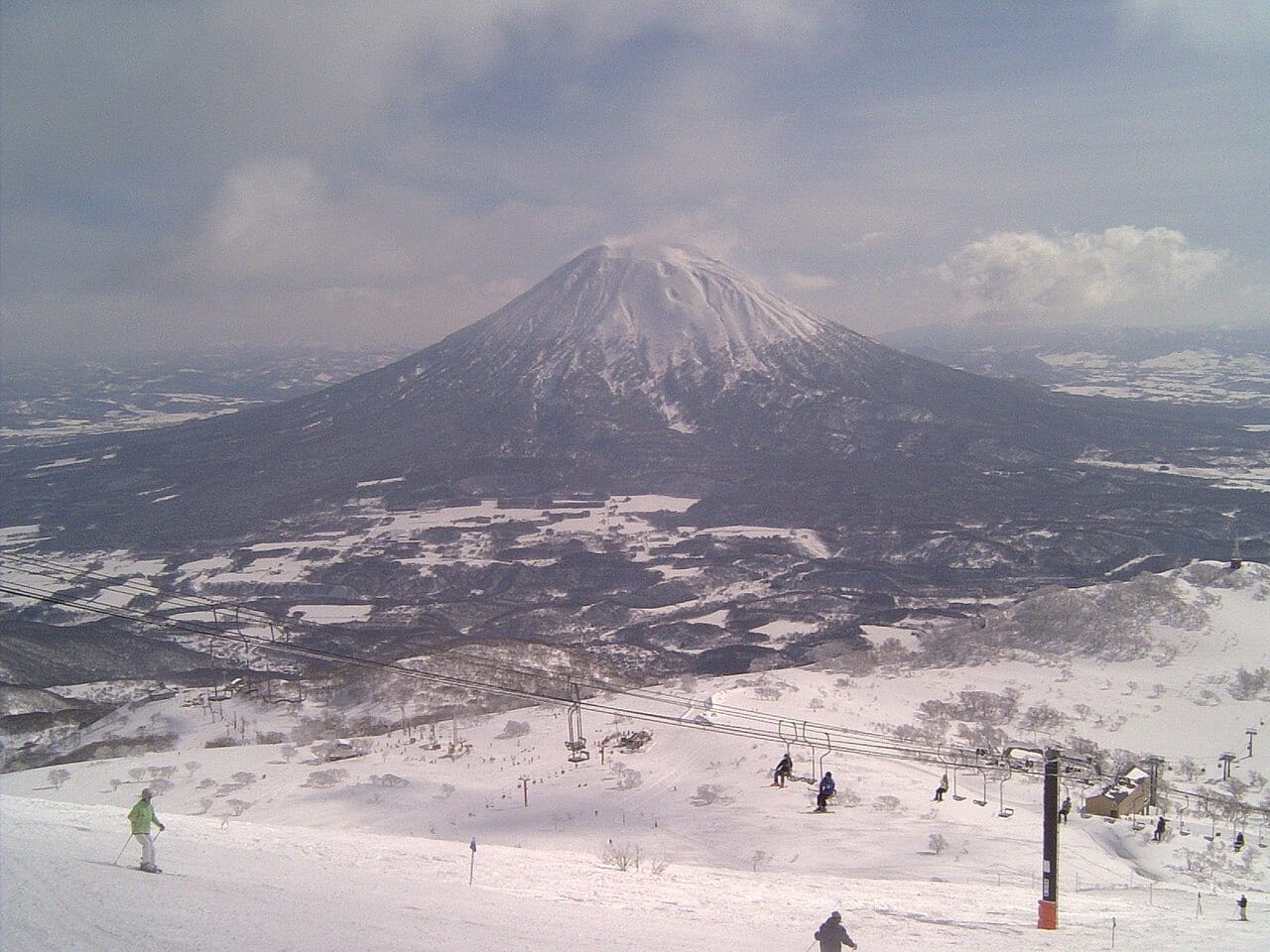
Niseko sits in western Hokkaido, catching the moisture that comes off the Sea of Japan, and it is one of the most reliable powder destinations anywhere. Rather than repeat the adjectives, here is the published number: Grand Hirafu's official 2025-26 monthly snowfall totals were 386cm in December, 620cm in January, 263cm in February, 75cm in March and 15cm in April — roughly 13.6m across the season. That is one season's record rather than a long-run average, but it establishes two things: the volume is real, and it is concentrated in January.
What actually makes Niseko the beginner's recommendation, though, is friction. English service, menus, rental systems and international-facing operations are all in place, gentle runs are plentiful, and the direct airport shuttle removes the two hardest parts of skiing in Japan — language and transport.
The cost is equally direct: Niseko is among Japan's most expensive resorts and its most foreigner-heavy. In peak season you will barely hear Japanese in Hirafu village. That said, "most expensive" deserves a caveat. Niseko's 2026-27 peak adult day pass is ¥13,500, while Rusutsu's published 2025-26 window price was ¥16,200 — higher still. Those are different seasons and not a like-for-like comparison, but they do show Niseko is not uniquely expensive. If you want "Japan, but international, with zero language stress," you will love it. If you want a purely Japanese feel on a smaller budget, Furano is the better fit. And if what you actually want is Honshu's long, steep terrain rather than Hokkaido powder, our Hakuba ski guide covers that alternative.
The four areas
Niseko is not a single resort but four linked areas ringing Mount Annupuri, connected at the summit:
- Grand Hirafu: the biggest and liveliest area. Night skiing, restaurants, bars and lodging cluster here, along with the densest concentration of rental shops and ski schools. Beginner through advanced terrain.
- Annupuri: the gentlest runs and the most relaxed feel, west-facing for the best sunsets — good for beginners and anyone dodging crowds.
- Niseko Village: mostly intermediate runs and resort hotels, tidily laid out.
- Hanazono: the most complete family facilities (kids' snow park, snow activities) and the best-organised backcountry gateways.
All four can be skied on the Niseko United All Mountain Pass, with lifts and shuttle buses linking them — the default choice for most visitors.
What about single-area passes? Honestly, there is no answer to give right now. As of August 2026 the Grand Hirafu official page still read "lift ticket prices and sale dates will be posted on this site once confirmed" — the 2026-27 single-area prices had not been released, and the resort typically posts them around September or October. So the all-mountain pass below is currently the only Niseko lift ticket you can budget against. If your trip will stay entirely within Hirafu, check the official site again a month before departure; a single-area pass may well be cheaper.
Lift passes: the full 2026-27 tables
Niseko United has published the complete season-band pricing for 2026-27. That is early by Japanese standards — over the same period Hakuba, Rusutsu, Kiroro and Zao were still showing last season's tables, or had switched their sites to summer mode entirely. Since the official numbers exist, this section will not fall back on "prices change yearly, check the official site."
Season bands and adult 1-day prices
| Season band | Dates (2026-27 official) | Adult 1-day |
|---|---|---|
| Early | 28 Nov to 11 Dec 2026 | ¥8,800 Not sold online — window only |
| Regular | 12 to 23 Dec 2026, and 1 to 22 Mar 2027 | ¥12,600 |
| Peak | 24 Dec 2026 to 28 Feb 2027 | ¥13,500 |
| Spring | 23 Mar to 4 Apr 2027 | ¥8,800 |
| Final | 5 Apr to 5 May 2027 | ¥6,300 |
Prices by age category (2026-27 official)
| 1-day pass | Adult | Child (4-12) | Junior high (13-15) | Senior (65+) |
|---|---|---|---|---|
| Peak | ¥13,500 | ¥8,100 | ¥11,500 | ¥11,500 |
| Regular | ¥12,600 | ¥7,600 | ¥10,700 (junior high and senior share a price) | |
| Early / Spring | ¥8,800 | ¥5,300 | ¥7,500 | |
| Final | ¥6,300 | ¥3,800 | ¥5,400 | |
Multi-day passes (peak season, adult)
| Pass | Price | Same days bought singly | Actual saving |
|---|---|---|---|
| 2-day | ¥26,500 | ¥27,000 | ¥500 |
| 3-day | ¥39,500 | ¥40,500 | ¥1,000 |
| 4-day | ¥52,500 | ¥54,000 | ¥1,500 |
| 5-day | ¥65,500 | ¥67,500 | ¥2,000 |
| 6-day | ¥78,500 | ¥81,000 | ¥2,500 |
| 7-day | ¥91,500 | ¥94,500 | ¥3,000 |
The point of that table is not the prices — it is how small the discount is. Divide the official numbers and each additional day costs a flat ¥13,000 against a single-day price of ¥13,500, which works out to a discount of just 2-3%. Even seven straight days saves only ¥3,000. So "multi-day passes are much better value" simply is not true at Niseko. What a multi-day pass actually buys you is not queueing at the window every morning. If your trip has any chance of a rest day — an onsen day, a run into Sapporo, a storm day — buying singles is the more flexible call, because the official terms state that multi-day passes are valid "for consecutive days from the date of issue through the final day." Consecutive, not days of your choosing. A day you skip is a day you paid for.
There is no half-day pass, and beginners need to know that first
The Niseko all-mountain pass has no half-day option. For a first-timer that is a real problem: beginner legs rarely last until the lifts close, wanting to stop by two or three in the afternoon is completely normal, and you will be holding a full-day ticket. The official flexibility comes in exactly two forms:
- 12-point ticket, ¥7,500 (adult, same price in every season band) — points are deducted per ride, so you pay for the runs you take.
- Free 50-Hour Pass, ¥121,200 (adult, online sales only) — counted in hours, which suits a longer stay where you ski half-days.
To be straight about a limitation: how many points a single lift ride deducts was not published on the official page at the time of writing, so that is a question for the ticket window. But at least you know the option exists alongside the day pass. For contrast, nearby Kiroro sells a 4-hour ticket and Zao Onsen does too, both of which are friendlier to beginners; the cross-resort ticket-structure comparison is in our Japan skiing beginner's guide.
One last rule worth knowing: season passes cannot be resold or transferred, and the official terms state that ticket inspectors check whether the purchaser and the user match, invalidating the pass on the spot if they do not. People do try to resell season passes online. Don't buy one.
Season and snow, by the official numbers
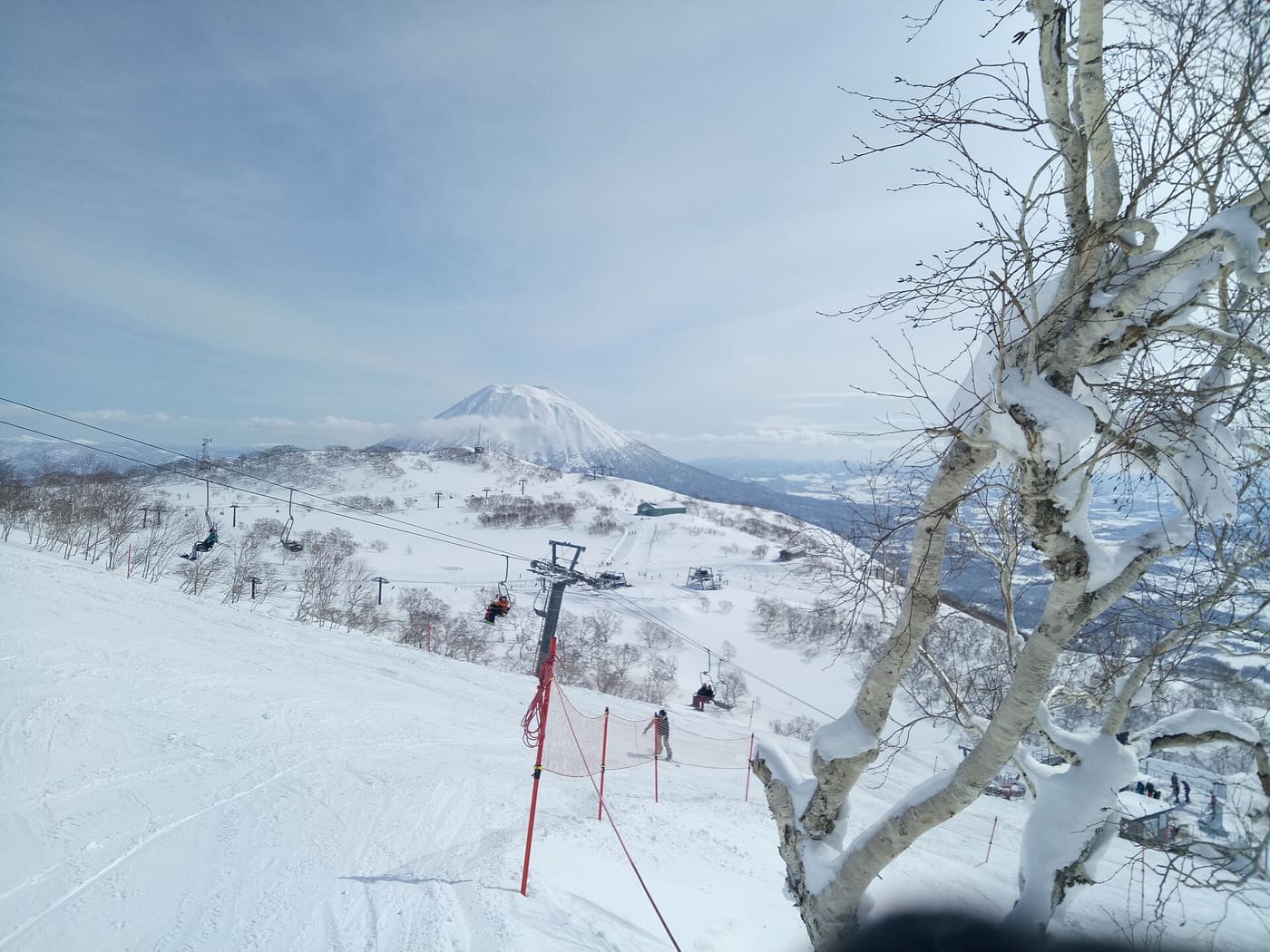
The season runs roughly early December through April, and the final all-mountain pass band is scheduled to 5 May 2027, bridging Golden Week. For "when is the snow best," Grand Hirafu's published 2025-26 monthly totals answer it directly:
| Month (2025-26 actual) | Snowfall total | Matching 2026-27 pass band |
|---|---|---|
| December | 386cm | Early → Regular → Peak |
| January | 620cm | Peak (most expensive) |
| February | 263cm | Peak (ends 28 Feb) |
| March | 75cm | Regular → Spring |
| April | 15cm | Spring → Final |
Three conclusions you can plan around:
- January delivered 2.4 times February's snowfall. "January is the powder month" is a published figure, not a slogan. The cost is that it sits in the Peak band, at the highest price and the heaviest crowds.
- Late February is still strong, but 28 February flips the switch. Peak ends 28 Feb 2027 and Regular resumes on 1 March at ¥12,600, a ¥900 difference per day. The last week of February into the first week of March is the prettiest spot on the price-versus-conditions curve.
- Do not expect powder after March. 75cm in March and 15cm in April is a steep drop-off. A spring trip to Niseko is about quiet runs and a ¥6,300 ticket, not deep snow. Chasing powder in April will disappoint.
Grand Hirafu's night skiing is one of Niseko's signatures and a good way to dodge busy days. Operating periods for night skiing are set by each area and announced separately by season, so confirm before you travel.
Access and lodging
Access: the easiest route is the reserved Hokkaido Chuo Bus shuttle, no car required. Fares below are Niseko United's published 2025-26 figures:
| Route | One way adult / child | Return adult / child | Journey time |
|---|---|---|---|
| New Chitose Airport ⇔ Niseko | ¥6,000 / ¥3,000 | ¥10,000 / ¥5,000 | about 3 hours |
| Sapporo Station ⇔ Niseko | Same fares on both routes | about 2.5 hours | |
Two practical notes. First, the "2.5 to 3 hours from the airport" figure you see everywhere conflates two different routes: the official timings are about 3 hours from New Chitose and about 2.5 hours from Sapporo Station. Budget 3 hours, not 2.5. Second, a return ticket at ¥10,000 saves ¥2,000 against two singles — the least debatable saving on this entire trip, so book the return as soon as your dates are fixed. All of the above is 2025-26 published data (operating 13 Dec 2025 to 22 Mar 2026); the 2026-27 period and fares had not been released. Niseko United also lists White Liner and Hokkaido Resort Liner as alternative operators, but the official page does not publish their fares, so no numbers for those here.
If your Hokkaido trip takes in more than Niseko — Rusutsu, Furano or Tomamu as well — there is one ticket that skips the operator-by-operator research: Trip.com sells a bus running from New Chitose Airport or central Sapporo direct to those resorts, ski gear allowed, no transfers, from TWD 773 — Hokkaido ski resort bus ticket (Trip.com) →. One caveat up front: it is marked "available from 1 December," so searching for it in summer returns nothing.
Winter driving on Hokkaido snow is genuinely demanding for visitors. If you are set on a car, read our Japan winter driving guide first and settle the winter tyre, snow clearance and insurance questions before booking. The wider Hokkaido transit and rail pass picture is in our Hokkaido JR Pass guide.
Lodging: for a first trip, stay in the Grand Hirafu village centre, within walking distance of lifts, restaurants and rental shops. Ski season is peak season, so good rooms go 8-12 weeks out; compare on stays in Kutchan on Booking (the town Niseko sits in). To fit Niseko into a full winter itinerary, see our Hokkaido winter 7-day itinerary.
Out-of-bounds skiing and the Niseko Rules
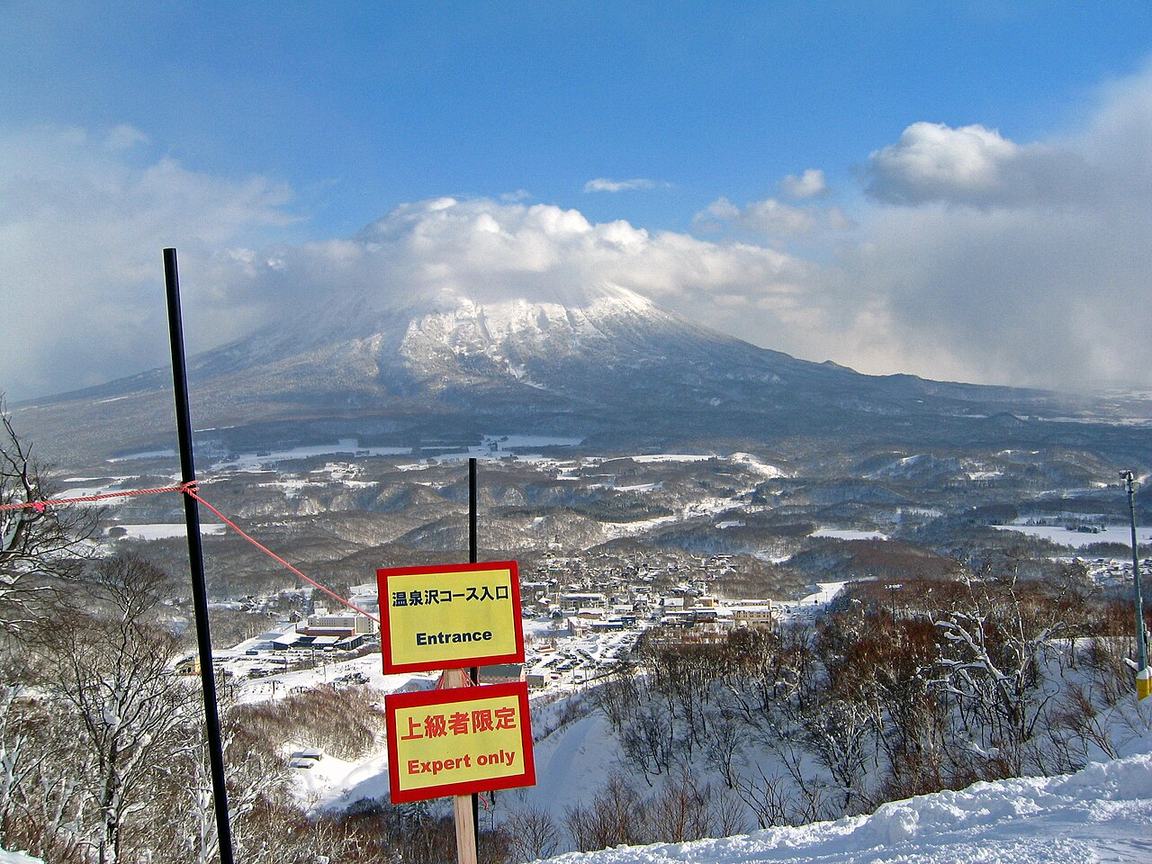
If only one section of this guide survived, it would be this one. Niseko sets out its out-of-bounds framework more explicitly than anywhere else in Japan, and the official preamble does not soften it: "Niseko was once the mountain with the most avalanche fatalities in Japan." The entire reason the Niseko Rules exist is in that sentence.
The six Niseko Rules
- To leave the ski area, you must go out through a gate.
- You must not duck a rope to ski outside the ski area.
- Outside the ski area, a helmet and an avalanche beacon are considered the minimum necessary equipment.
- You must not go out when a gate is closed.
- You must never enter prohibited zones.
- Elementary school children are prohibited from skiing outside the ski area unaccompanied.
Read together, the logic is clear: a gate is a conditional permission, not an open door. Seeing people ski on the far side of a rope does not mean you may follow them — they most likely carried a helmet and a beacon and went out through an open gate. The stated penalty is unambiguous: violators "may be refused use of the ski area through confiscation of the lift ticket, suspension of sales" and similar measures.
What makes Niseko different is institutionalisation, not permissiveness
A lot of English coverage frames Niseko as "the one Japanese resort that lets you ski out of bounds." That is wrong. In fact, five of Hakuba Valley's ten resorts operate backcountry gates while the other five ban access outright; Nozawa Onsen runs two official access points at the summit of Mount Kenashi; and Kiroro designates specific exits. Gates are the norm at major Japanese resorts. The rope-ducking penalties are near-identical too — all three publish confiscation of the lift ticket. Our beginner's guide carries the full cross-resort comparison of rules and penalties, so it isn't repeated here.
So what is genuinely distinctive about Niseko? The institutions:
- A named, numbered set of six rules — not disclaimer text buried in terms and conditions, but a posted document you will see beside the gates.
- A dedicated body: the Niseko Annupuri District Avalanche Accident Prevention Council, with its secretariat in the Niseko Town Hall commerce and tourism division. This is local government involvement, not a single resort's internal policy.
- A local, daily avalanche information service: the Niseko Avalanche Research Institute forecasts each day's hazard using its own methodology and publishes early each morning (Niseko Avalanche Information). The final bulletin of the 2025-26 season was No. 115 in late March, which tells you it publishes nearly every day of the season.
- Even the disclaimer is explicit: the official text states that "this information does not guarantee the safety of skiing outside the marked courses." They publish the forecast; they do not promise you a safe outcome.
The official guidance also strongly recommends carrying a beacon, probe and shovel, and notes that accidents cluster in bad weather such as blizzards, that you should not over-trust your knowledge, skills or equipment, that you must follow patrol instructions, and to watch for crevasse falls and tree collisions.
For anyone on their first or second ski trip, the practical conclusion is one sentence: don't go out. The groomed runs and in-bounds tree areas will keep you busy for days, and the price of a ¥13,500 lift pass was never meant to cover a rescue bill starting at 100,000 yen.
Rental rates and lessons
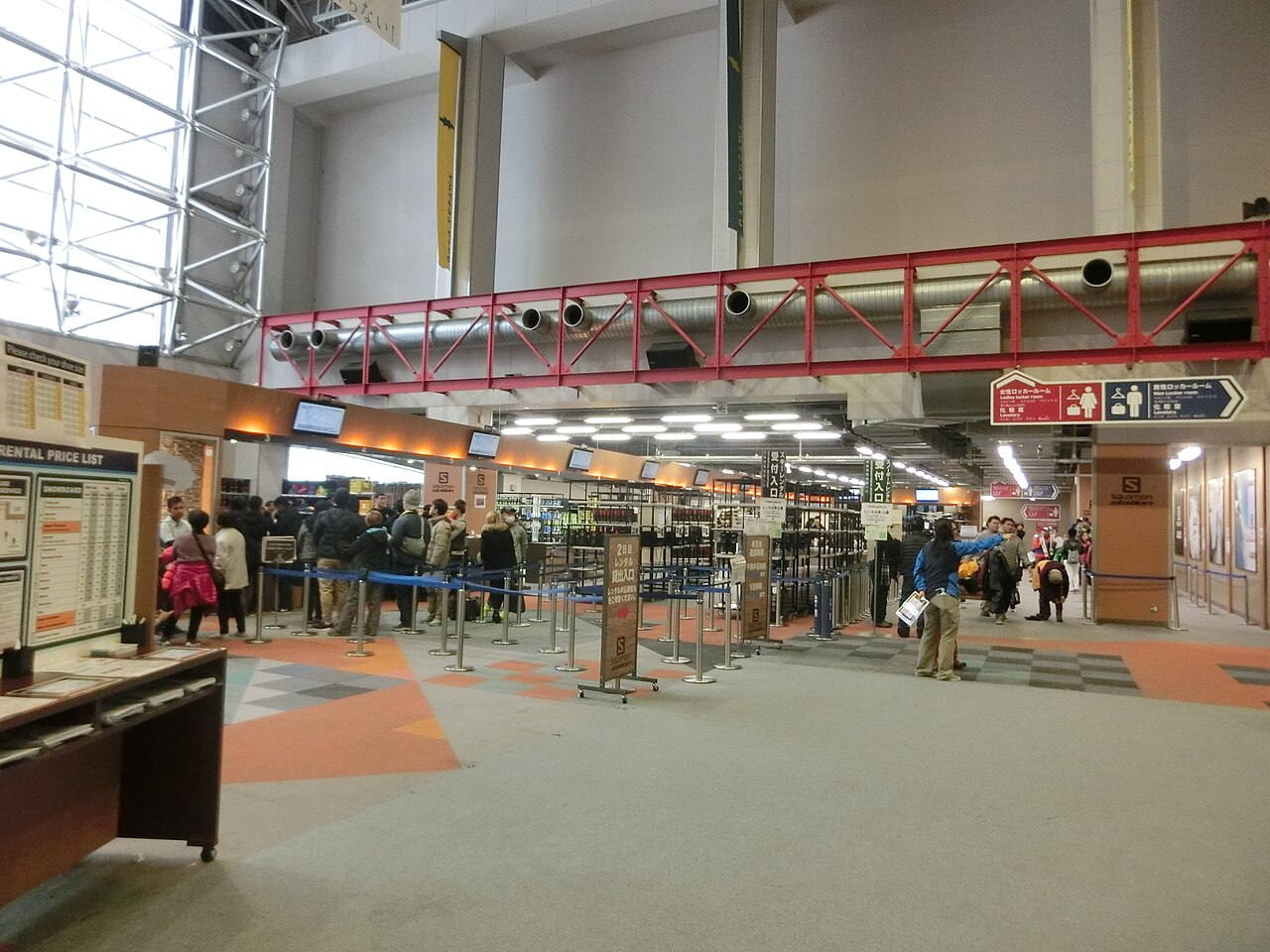
First, a correction to something the earlier version of this article also said too loosely: "you can rent everything on site" is true, but it will make you budget wrong. At Japanese resorts the word "set" almost universally means skis or board plus boots (plus poles), and never includes outerwear. Grand Hirafu's 2026-27 official rate sheet (a PDF posted on 6 August 2026) lays this out clearly.
Grand Hirafu 2026-27 official rental rates (1 day)
| Item | What's included | 1 day |
|---|---|---|
| Standard, adult | Skis and poles, or snowboard, plus boots | ¥8,500 |
| Standard, adult | Skis or board only (no boots) | ¥7,100 |
| Standard, child | Skis or board plus boots | ¥5,900 |
| High Grade, adult | Skis or board plus boots | ¥10,500 |
| Boots only | Ski or snowboard boots (adult and child same price) | ¥5,000 |
| Poles only | Ski poles | ¥1,500 |
| Helmet | Adult and child same price | ¥3,000 |
| Outerwear Set, adult | Jacket and pants (no skis or boots) | ¥9,000 |
| Outerwear single, adult | Jacket or pants, one piece | ¥5,000 |
| Outerwear Accessories Set, adult | Jacket, pants, beanie, gloves, goggles (no skis, boots or helmet) | ¥15,000 |
| Outerwear Set, child | Jacket and pants | ¥7,000 |
| Outerwear Accessories Set, child | Jacket, pants, beanie, gloves, goggles | ¥13,000 |
My call is simple: bring your own gloves and goggles. Swapping the full accessories set at ¥15,000 for the plain outerwear set at ¥9,000 drops the same day's gear total from ¥26,500 to ¥20,500 — ¥6,000 saved per day, or ¥18,000 over three days. Gloves and goggles are also the easiest items to pack, the least bulky, and the ones that most benefit from actually fitting your hands and face. The helmet at ¥3,000 is the line item I would not cut: Niseko Rule 3 requires one outside the ski area anyway, and heads hit the ground in bounds too.
Multi-day rental is priced separately: a Standard adult skis-and-boots set is ¥15,300 for 2 days and ¥22,100 for 3 days, then ¥6,800 per extra day (all 2026-27 official figures). Separately, the resort has run a 20% early-bird rental discount from early March to the end of August in past years — the 2026-27 window ran 6 March to 31 August 2026. The window differs each year and closes early, so using it means committing months ahead rather than the week before you fly.
For pickup, the official listings name two ski-in shops: the summit centre shop at the ACE lift station, and the base shop at the foot of the King lift. If you are booking a lesson and renting at the same time, the resort directs you to ".BASE". Guests at nearby accommodation can leave skis and boots overnight rather than hauling them back to the room each evening — which matters a lot with children.
The cross-resort cost structure, and the general question of what to bring versus what to rent (including the trap where some resorts sell gloves and goggles but will not rent them), is covered in our Japan skiing beginner's guide rather than repeated here. For comparable resort-style neighbours that also run their own rental operations, see our Rusutsu ski guide and Kiroro ski guide.
Lessons: there is no Chinese in the official system
This needs saying plainly, because it is the question people arrive with: per Grand Hirafu's official 2026-27 pages, none of the four on-mountain ski schools list Chinese among their languages.
| Hirafu on-mountain school | Group lesson languages | Private lesson languages |
|---|---|---|
| Niseko Tokyu Grand HIRAFU Ski School | English | Japanese / English |
| JAPAN SNOWBOARD ACADEMY | English | English |
| NAC NISEKO ADVENTURE | (no group lessons listed) | Japanese / English |
| GOSNOW | English | English |
Across the wider Niseko United area the official listing names five schools, adding Niseko Annupuri Snow School, NVSS (Niseko Village) and NISS (Hanazono). One detail worth knowing if you hate queueing: the official pages note that Hirafu's schools can use a dedicated priority lane on the gondola and lifts, and that children's lessons can be taken in either Japanese or English.
Independent Chinese-speaking instructors do work in the area, but they operate outside the resort's official school system and I do not recommend, compare or endorse them. If your English is good enough for "turn left, weight forward, snowplough to stop," the official schools' English group lessons will do the job; if you genuinely have no English, a private lesson is the realistic route. As for cost — Hirafu had not published its 2026-27 lesson prices (the school page was returning a 404 in August 2026, with the site still in summer mode), so this guide gives no lesson prices at all. If you need to budget, the cross-resort group-versus-private price structure, with actual official figures, is in the beginner's guide.
If you don't ski
One of Niseko's real advantages is that the trip still works if someone in your group has no intention of skiing. Hirafu village has a dense cluster of international restaurants, bars and cafes, and the liveliest nightlife of any Japanese resort; several natural onsen are nearby, and an open-air bath in falling snow is one of the best things here; snowmobiling, snowshoeing and dog-sledding are all available. On a clear day the view of Mount Yotei (Ezo-Fuji) justifies the trip by itself.
There is one thing to work out in advance, though: if the non-skier just wants one lift ride for the view, the ticket options are awkward. The all-mountain pass has no half-day option (see the lift pass section), and the only flexible official ticket is the 12-point ticket at ¥7,500; how many points a single ride deducts was not published on the official page, so it is a question for the window. The safer plan is to build the non-skier's day around the village, the onsen and the food, then sort out the sightseeing lift ride at the ticket office on the day — rather than buying them a full-day pass before you leave home.
Sorting connectivity before you fly saves a lot of friction on the mountain, from finding restaurants to checking shuttle times: a KKday Japan eSIM. Warm, waterproof layering is covered in our Japan packing and weather guide.
Budget and where the savings actually are
Niseko is one of Japan's priciest resorts — lift passes, rental, lodging and dining all run above Furano or the Honshu resorts, peak-season Hirafu rooms easily hit five figures of yen a night, and restaurants sit at international-resort prices. Since this guide has the official numbers on the table, saving money does not have to be guesswork. Ranked by how much leverage each one actually has:
- The biggest lever is which season, not how many days. The same all-mountain pass costs ¥13,500 at Peak and ¥6,300 in the Final band — a 53% gap. Multi-day passes discount 2-3%. So "book a multi-day pass early and save a lot" is a myth; "move the trip from January to March" is the real move.
- The last week of February into early March is the sweet spot. Peak ends 28 Feb 2027 and Regular resumes at ¥12,600: conditions have not dropped far, the price has, and the crowds have thinned.
- Bring your own gloves and goggles: ¥6,000 a day (Hirafu accessories set ¥15,000 versus plain outerwear ¥9,000).
- Buy the return bus ticket: ¥10,000 against ¥12,000 for two singles saves ¥2,000.
- Stay on the Hirafu fringe or in Kutchan: the village centre is the most convenient and the most expensive; a little further out, with a shuttle, is far friendlier on price.
- Self-cater or eat at local diners: there is a supermarket in the village, and an apartment-style place with a kitchen removes the international-restaurant premium.
- Catch the rental early-bird window: Hirafu has run 20% off rentals from early March to the end of August in past years (the 2026-27 window was 6 March to 31 August 2026) — which requires deciding on the trip about six months out.
If budget is the priority and Hokkaido dry powder is the goal, Furano is the cheaper substitute. But if what you want is Niseko's international ease and near-zero language friction, that price gap is precisely what you are buying.
The line item not to cut is insurance — but the usual internet advice about it is wrong. "Travel insurance doesn't cover skiing" is repeated constantly and is imprecise. Taiwan's model travel accident insurance policy lists, under exclusions, competition or exhibition in wrestling, judo, boxing and similar, plus motor vehicle and cycle racing — skiing is not named as an exclusion in the model policy itself. Individual insurers may nonetheless add "specified activities" exclusions of their own, or require a rider. So the only reliable approach is to read the exclusions clause of your specific policy line by line before buying, and get written confirmation if you need it. For a sense of the exposure, the Japan-side anchor is in the previous section: Niseko's official rules state that out-of-bounds search and rescue starts at 100,000 yen. Our Japan travel insurance guide covers what to check.
Your first day
First time on snow, and you picked Niseko. Here is how day one goes smoothly:
- Sort the ticket type before you buy. If your trip falls in 28 Nov to 11 Dec 2026, remember the Early pass at ¥8,800 is window-only; every other band sells online. If you doubt your stamina, decide up front whether the 12-point ticket suits you better.
- Budget rental as three line items, not one. Skis and boots, outerwear, helmet — three separate charges. Get to the shop on arrival or first thing to size boots and collect gear, leaving time for fitting and adjustment; if you're staying nearby, ask whether you can leave the skis and boots overnight.
- Book a half- or full-day lesson. Don't skip it. An instructor takes you from putting gear on and off, to braking (pizza and french fries), to gentle-slope practice — far faster than working it out alone and much lower injury risk. Group lessons at Hirafu's on-mountain schools are in English, so set expectations accordingly.
- Start on the Annupuri or Hirafu beginner slopes. Take a magic carpet or a beginner lift, get speed control and turns solid, then step up.
- When you see a rope, stop. Niseko Rule 2 is exactly this. The rule beginners break on day one isn't skiing too fast — it's following someone under a rope.
- Watch your energy and warmth. Don't try to ski all day on day one; beginner muscles tire fast. Break indoors at lunch to eat, hydrate and dry your gloves, then half an afternoon is plenty.
Frequently Asked Questions
- Q1:How much is a Niseko lift pass?
- Niseko is one of the few Japanese resorts that had published its full 2026-27 prices by August 2026. Per Niseko United, the adult all-mountain 1-day pass runs on five season bands: Early (28 Nov to 11 Dec 2026) and Spring (23 Mar to 4 Apr 2027) at 8,800 yen, Regular at 12,600 yen, Peak (24 Dec 2026 to 28 Feb 2027) at 13,500 yen, and Final (5 Apr to 5 May 2027) at 6,300 yen. Three official rules catch people out: there is no half-day pass at all; multi-day passes run on consecutive days from the date of issue rather than days of your choosing; and the Early season pass is explicitly not sold online, only at the ticket window.
- Q2:Is Niseko worth it for a first-time skier?
- Yes, and it is probably the single easiest place in Japan to learn. The snow is dry and soft to fall on, gentle and beginner runs are plentiful, rental and instruction are set up for international visitors, and the airport transfer runs direct with no train changes. The trade-offs are price and atmosphere: it is among Japan's most expensive resorts and the most foreigner-heavy. One practical warning: the all-mountain pass has no half-day option, and beginners often run out of energy by mid-afternoon. The only flexible official tickets are the 12-point ticket at 7,500 yen and the online-only 50-hour pass.
- Q3:What are Niseko's four areas, and do I need the all-mountain pass?
- Niseko is four linked areas around Mount Annupuri: Grand Hirafu (biggest and liveliest, most dining and nightlife), Annupuri (the gentlest runs and the best sunsets), Niseko Village (intermediate runs and resort hotels) and Hanazono (best family facilities and backcountry gateways). They connect at the summit, so the Niseko United All Mountain Pass covers all four. Worth knowing: Grand Hirafu had not published its own single-area 2026-27 pass prices as of August 2026, with the official page still saying prices will be posted once confirmed. So the all-mountain pass is currently the only Niseko lift ticket you can actually budget against.
- Q4:When does Niseko get the best snow?
- The season runs roughly early December to April, with the final all-mountain pass band scheduled through 5 May 2027. For how much snow falls and when, Grand Hirafu's published 2025-26 monthly totals are the clearest answer: 386cm in December, 620cm in January, 263cm in February, 75cm in March and 15cm in April, roughly 13.6m for the season. January delivered 2.4 times February's snowfall, so "January is the powder month" is a number rather than marketing, but January is also the most expensive and most crowded band. After February the totals fall away fast, so a spring trip is about empty runs and cheap tickets, not deep snow.
- Q5:How do you get from New Chitose Airport to Niseko?
- The simplest option is the reserved Hokkaido Chuo Bus shuttle. Per Niseko United's published 2025-26 fares, a one-way adult ticket is 6,000 yen and a child ticket 3,000 yen, while a return is 10,000 yen adult and 5,000 yen child. Journey times differ by origin: about 3 hours from New Chitose Airport and about 2.5 hours from Sapporo Station, at the same fare. Buying the return saves 2,000 yen over two singles, so book the return once your dates are fixed. The 2026-27 operating period and fares had not been published at the time of writing. Winter driving on snow is genuinely difficult for visitors, so most people take the bus.
- Q6:Are there Chinese-language ski lessons at Niseko?
- Not inside the resort's official system. Grand Hirafu's own 2026-27 pages list four on-mountain schools (Niseko Tokyu Grand HIRAFU Ski School, JAPAN SNOWBOARD ACADEMY, NAC NISEKO ADVENTURE and GOSNOW), and the languages given are English for group lessons and Japanese or English for private lessons, with children's lessons choosable between Japanese and English. Chinese does not appear anywhere in the official language listings. Independent Chinese-speaking instructors do operate in the area, but they sit outside the resort's official school system and I do not endorse or compare them. Hirafu had also not published its 2026-27 lesson prices as of August 2026, so no lesson prices appear in this guide.
- Q7:Can I ski outside the ropes if other people are doing it?
- No. Those skiers almost certainly went out through an official gate, and a gate is a conditional permission rather than an open door. The six Niseko Rules require that you leave the ski area only through a gate, never duck a rope, treat a helmet and an avalanche beacon as the minimum necessary equipment outside the area, stay in when a gate is closed, never enter closed zones, and never let elementary school children ski outside the area alone. The stated penalty is confiscation of your lift ticket and suspension of sales. The same page states that an out-of-bounds search and rescue is billed at a minimum of 100,000 yen. Note also that gates are the norm at major Japanese resorts, not a Niseko exception. What makes Niseko unusual is how institutionalised its system is, not how permissive it is.
- Q8:Is Niseko worth visiting if you do not ski?
- Genuinely yes. Hirafu village has a dense cluster of international restaurants, bars and cafes and the liveliest nightlife of any Japanese ski resort, several natural onsen are nearby, and snowmobiling, snowshoeing and dog-sledding are all available. On a clear day the view of Mount Yotei is worth the trip on its own. One budgeting note for non-skiers: the all-mountain pass has no half-day option, so a single sightseeing lift ride is awkward to price. The only flexible official ticket is the 12-point ticket, and how many points one lift ride costs was not published on the official page, so ask at the window rather than buying a full-day pass in advance.