Ask whether you can travel to Noto and the official answer comes back twice, from the same stack of documents. Ishikawa's prefectural tourism site says that visitors coming to Noto's sightseeing areas lead to an early recovery. Wajima City's own notice says applications from individuals are declined and that, as a rule, it does not run site inspections. And the list of what is still missing was not written by an outsider — Wajima's recovery committee wrote it, and it has three items on it: roads, parking, toilets. This guide is not a status roundup, because that is the shortest-lived thing anyone can publish about Noto. It handles three things that last longer: the prefecture's own statistics contain three recovery figures that contradict each other, the road timetable runs in years rather than months, and the least reliable source of information about Noto right now is the official tourism websites — for a reason the officials themselves have put on the record.
- There is no single recovery percentage. Accommodation operating rate 48.8% (end of March 2026, target 100%), Noto visitor arrivals back to 59.4% of pre-earthquake, Wakura Onsen overnight stays only 28.8% — and Wajima Onsen fell 30.4% in 2025, the only place on the table still dropping.
- The Wajima morning market is not on Asaichi-dori. It operates inside a commercial facility, Y Plaza Wajima. The old street is a land readjustment project area.
- The Noto Railway runs the full line with no replacement buses — 17 services each way, all eight stations. The Hanayome Noren sightseeing train still runs weekends, with dates out to February 2027.
- The stay-and-win campaign excludes you. It is a prize draw, not a discount, and entrants must live in Japan with a Japanese delivery address.
- Roads run on a three-year clock. Five routes at eight locations remain closed; full restoration is targeted for fiscal 2028, and Route 249 along the outer coast for spring 2029.
📖 Table of contents (click to expand)
- Is Noto actually asking visitors to come?
- Three recovery numbers that disagree
- When will the roads be fixed?
- Where the Wajima morning market went
- What still reaches Noto: rail, air, bus, boat
- Can you get a room? Wakura, Suzu and those 388 rooms
- One campaign you cannot enter, one discount you might get
- Why the official tourism sites cannot be trusted right now
- The decision being made this winter
- Where officials want you to go instead
- What in this guide will expire
- FAQ
Is Noto actually asking visitors to come?
Yes, and it is the prefecture's own tourism site doing the asking — but the same set of documents draws a line, and the line is harder than most people expect.
Start with the invitation. Hot Ishikawa, the official prefectural tourism site run by the Ishikawa Tourism Federation, hosts a section called Tabishite Oen, Noto. Its line, verbatim, is that visitors coming to Noto's sightseeing areas leads to an early recovery for the affected region. It is short, direct, and it comes from the prefecture's official tourism channel rather than a press summary. A separate prefectural page on supporting Noto through consumption puts travel to Noto alongside buying local products and volunteering, and closes with an invitation to help in whatever way you can manage — though that page was last updated in March 2025, so quote it with the year attached. Wajima City slips in a line of its own on the inspection-visits notice, asking those who do come to consider eating and staying inside the city.
Now the line, from the same Wajima notice published on 15 July 2026. It accepts inspection visits from national, prefectural and municipal government bodies, from university research organisations, and from groups whose purpose is to inform recovery policy. Then it says two things outright: applications from individuals are declined, and as a rule no site inspections are conducted. Intake runs at roughly one group per week, and the notice adds that requests may be refused to protect the recovery work that takes priority over everything else.
Put the halves together and the practical meaning is specific. Coming as a traveller who eats, sleeps, rides trains and spends money is welcomed. Applying as a private individual to be walked around the damage is not. Ishikawa's passable-roads PDF adds a line that applies to everyone regardless: residents, contractors and volunteers are working on recovery, so please refrain from anything that gets in their way.
Three recovery numbers that disagree
There is no single recovery percentage, because Ishikawa publishes at least three official figures measured differently and moving in different directions. Most people assume a recovery rate is something you can look up. Collapse these three into one tidy 60 percent and you erase what is actually happening in Wakura and Wajima.
| Official indicator | Current value | Date and basis |
|---|---|---|
| Accommodation operating rate | 48.8% (target 100%) | End of March 2026. Three cities and three towns of Noto, measured by guest capacity, north of Hodatsushimizu. Progression: 5.6% right after the quake, 34.3% end of 2024, 48.8% end of 2025 |
| Noto visitor arrivals | 59.4% of pre-quake | Calendar 2025 = 3.724 million, up 31.1% year on year. Kanazawa on the same table: 105.4% |
| Wakura Onsen overnight stays | 28.8% of pre-quake | 2025 = 171,000 guest-nights, up 96.4% year on year |
| Wajima Onsen overnight stays | 46.2% of pre-quake, down 30.4% year on year | 2025 = 62,000 guest-nights. The only entry on that table still falling in 2025 |
| (Reference) Notojima Aquarium | 68.2% of pre-quake | 2025 = 278,000 visitors |
All four are simultaneously true, and they point different ways: Noto overall is climbing, Wakura is far behind, Wajima is still going down. If you only take one figure into your planning, take the first row. Capacity able to accept ordinary travellers is back to under half, which is why beds are hard to get and why turning up on spec in peak weeks is a bad idea.
Two boundaries to state plainly. Figures for 2026 do not exist yet — the prefecture publishes visitor statistics annually, the following April, so 2025 is the newest citable year. And although Ishikawa's creative recovery plan runs to the end of fiscal 2032 with short, medium and long phases, the prefecture has never published a target year for tourism returning to pre-earthquake levels. Anyone quoting a year for that is filling in a blank the prefecture left empty.
Worth noting alongside those numbers: at the fifth recovery headquarters meeting on 23 April 2026, Ishikawa graded its own tourism workstream a C, meaning further effort is required. And on the question travellers care about most — is there a discount — the answer right now is no. The prefecture's own travel support scheme ran from March to July 2026 and has ended, while the national recovery travel discount is still described in the same document as under consideration.
When will the roads be fixed?
The big picture runs in years, not months. At the fourth Wajima district road recovery council on 28 July 2026, Ishikawa's road maintenance division reported that the earthquake closed a peak of 87 locations on 42 prefectural routes and the subsequent heavy rain a peak of 48 locations on 25 routes, and that as of that date everything has been reopened except eight locations on five routes where landslides or tunnel collapses caused large-scale damage.
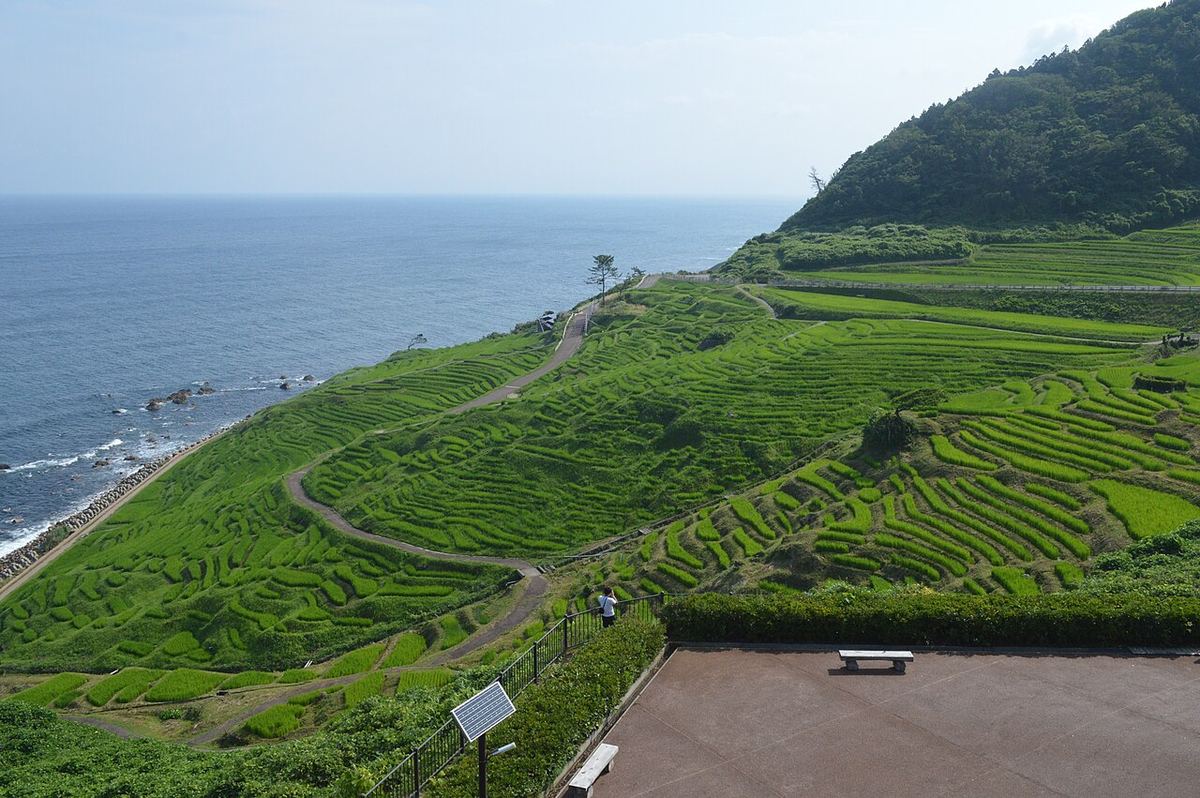
The timetable for what is left is in the same minutes. The Oku-Noto civil engineering office aims to complete restoration by fiscal 2028, with the caveat that sections being rebuilt to an improved standard involve land acquisition and will run past that. For National Route 249 along the outer coast — the road towards the Shiroyone Senmaida terraces, Sosogi and Suzu — the ministry's Noto reconstruction office plans permanent restoration that makes use of the uplifted coastline, and is targeting opening by spring 2029 for both the Senmaida section and the Nakaya tunnel section.
Other confirmed details that matter if you are driving: the Wajima-Uragami prefectural route has a large-scale collapse between Unyu and Shimoyama, with a temporary road targeted for completion this fiscal year and permanent restoration requiring a tunnel of roughly two kilometres on no announced schedule; the Suzu-Sato prefectural route remains closed with an alternative alignment under design; the Osayo tunnel on the Magaki city road is closed for works with winter access still under review; and on prefectural route 38 between Shimoyama and Kamiyama the prefecture states outright that heavy rain may close it again. Isolated communities have all been reconnected.
Then the practical rule for this section: do not read day-level closures in an article, read the map. The source Ishikawa designates is Ishikawa Michi Joho Net at douro.pref.ishikawa.lg.jp, a JavaScript map whose contents no article can freeze. Open it yourself. And know that the two most authoritative static maps are both out of date: the Oku-Noto road conditions page was last updated on 27 March 2026 and carries a passable-roads PDF stamped 13:00 on 25 March 2026, while the ministry's road recovery visualisation map states on its own front page that it may not reflect current conditions.
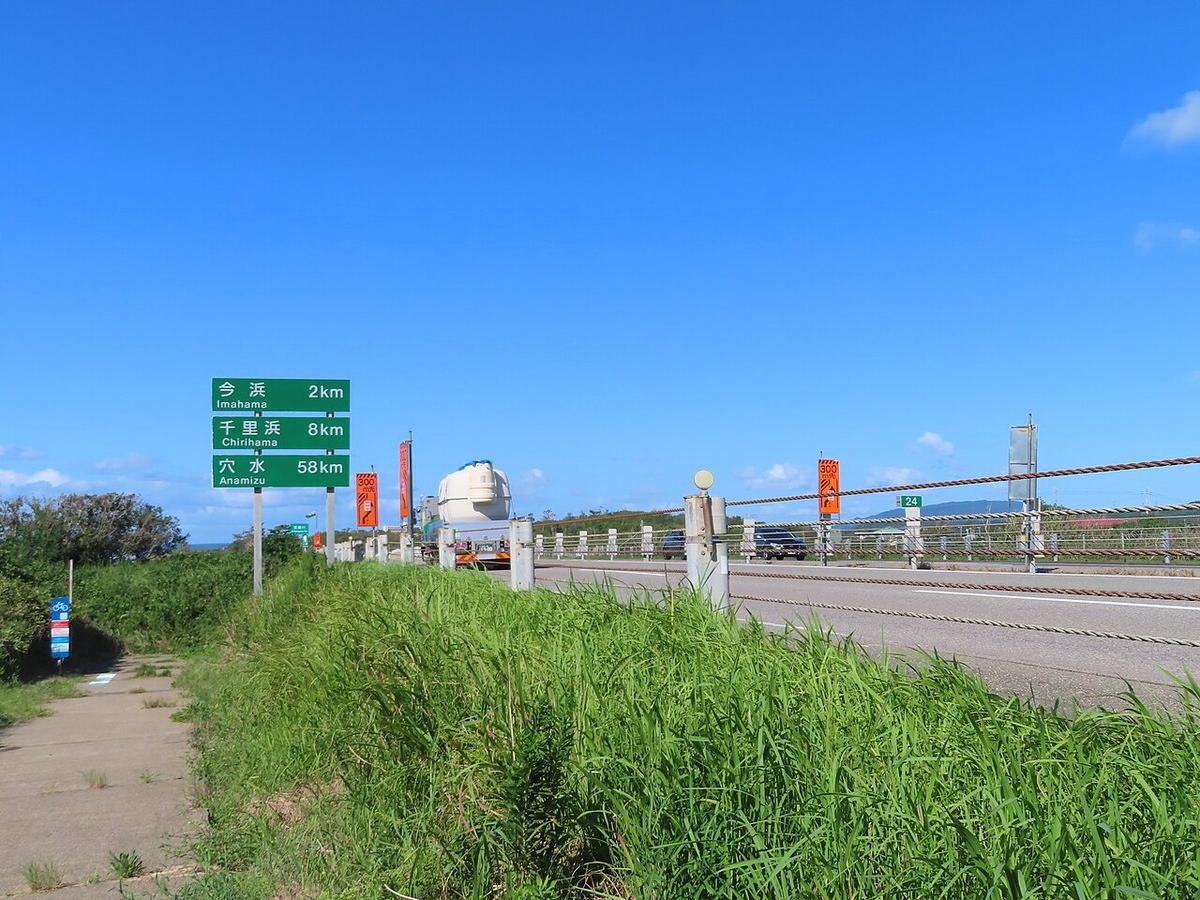
One more driving detail that has nothing to do with the earthquake and everything to do with your afternoon: there are no petrol stations on the Noto Satoyama Kaido, and the prefectural page says so outright, asking drivers to fill up beforehand. The same page notes the Yanagida to Jike section was widened to four lanes in December 2025. For licences, insurance and winter tyres in general, see our Japan self-drive guide.
Where the Wajima morning market went
The market now trades inside a commercial building in town, not on Asaichi-dori. Wajima Tabimusubi, the official site run by the city's tourism division and the tourism association, gives that listing a heading that translates as the travelling Wajima morning market at Y Plaza Wajima, and describes cooperative members turning out daily with vegetables, seafood and Wajima lacquerware.
What is Asaichi-dori itself? The city's notice of 24 August 2026 names it as part of the second disaster-affected urban district recovery land readjustment project for the Honmachi area, and the recovery committee's records place Honmachi at the consultation stage. Follow an older guide there and you arrive at a construction site. That is probably the single most immediately useful sentence in this guide.
An honest gap goes with it. The official page publishes no opening hours or closing days for the relocated market, and the cooperative's own site did not respond when I checked, so no hours are stated here. Ring the Wajima tourism association on 0768-22-1503 before you commit a morning to it. In Noto that is not fussiness — the reason is in the official-sources section below.
The Shiroyone Senmaida terraces themselves are free to view, and the roadside station beside them charges no admission, but it opens only on Fridays, Saturdays, Sundays and public holidays, 10:00 to 15:00, with its restaurant running 11:00 to 14:00. That is an easy wasted drive. As for the winter Azenokirameki illumination on the terraces: the association's own wording is that it was not held in the 2025 fiscal year, and as of early September 2026 nothing has been announced for this winter. That is unannounced, not cancelled — and the association page still displays the dates from the 2022 edition, which you should not copy.
What still reaches Noto: rail, air, bus, boat
All three arteries — rail, air and express bus — are running. The gap is the last mile.
Noto Railway and JR
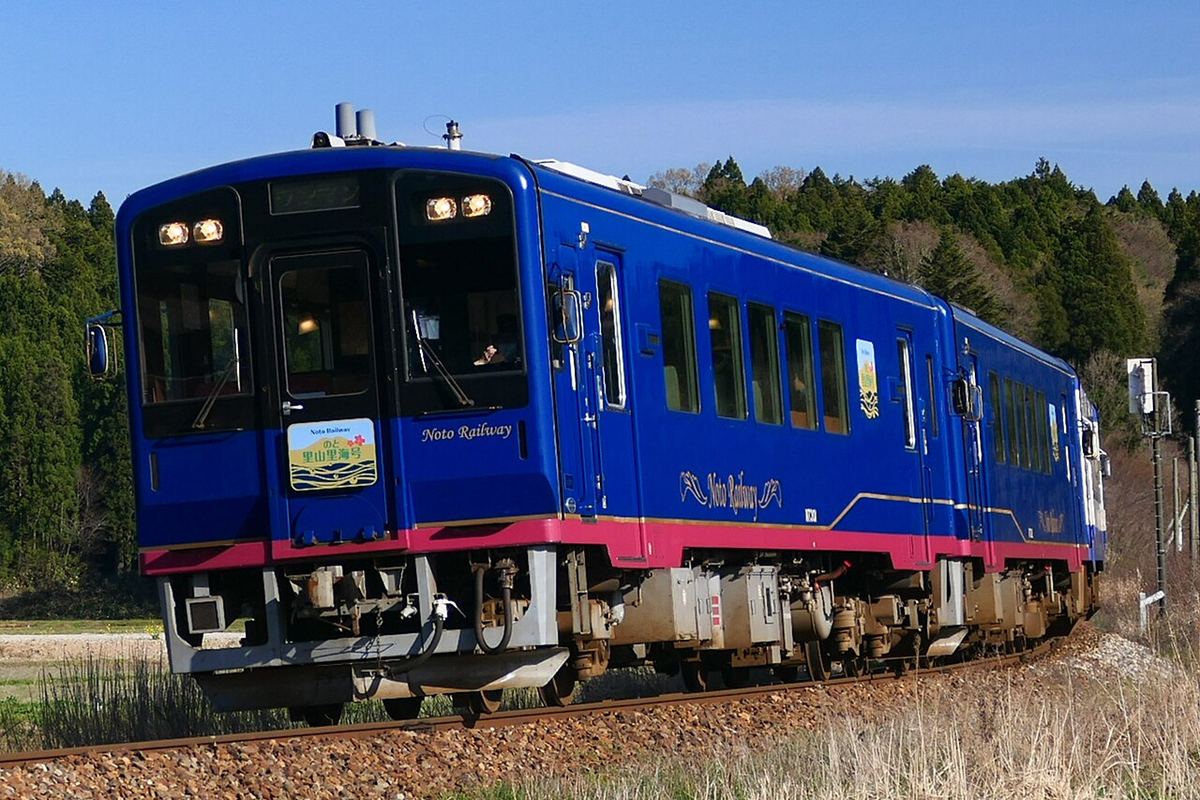
The operating-status box on the Noto Railway's home page currently reads that services are running as normal. The timetable in force is the spring 2026 schedule from the revision of 14 March 2026: 17 services down and 17 up, with Nanao, Wakura Onsen, Tatsuruhama, Kashimaho, Noto-Nakajima, Nishigishi, Noto-Kashima and Anamizu all served, end to end in 43 to 47 minutes. There are no replacement buses, and the operator's FAQ returns nothing for slow running or suspensions. Precision matters here: the operator has never published the phrase full-line restored, so what is stated above is what the status box and timetable show.
There is also a trap unrelated to trains. The old domain nototetsu.co.jp serves a certificate that does not match its name, so requests to it simply fail; the current official domain is nototetsu.jp. Claims that the railway's website is offline usually come from hitting the old address.
On JR West, the Noto Kagaribi limited express runs Kanazawa to Nanao and Wakura Onsen as five round trips numbered 1 to 10, with six-car formations on some days. The Hanayome Noren sightseeing train is also still running: Saturdays and Sundays, with operating dates published through February 2027. Service 1 leaves Kanazawa at 11:00 and reaches Wakura Onsen at 12:31; service 3 leaves at 15:28 and arrives 16:40; returning, service 2 departs 12:57 and service 4 departs 17:07. All seats are reserved, at 1,490 yen for adults and 740 yen for children in the normal season, on sale from 10:00 one month before travel via e5489.
Noto Airport and the most honest line in this guide
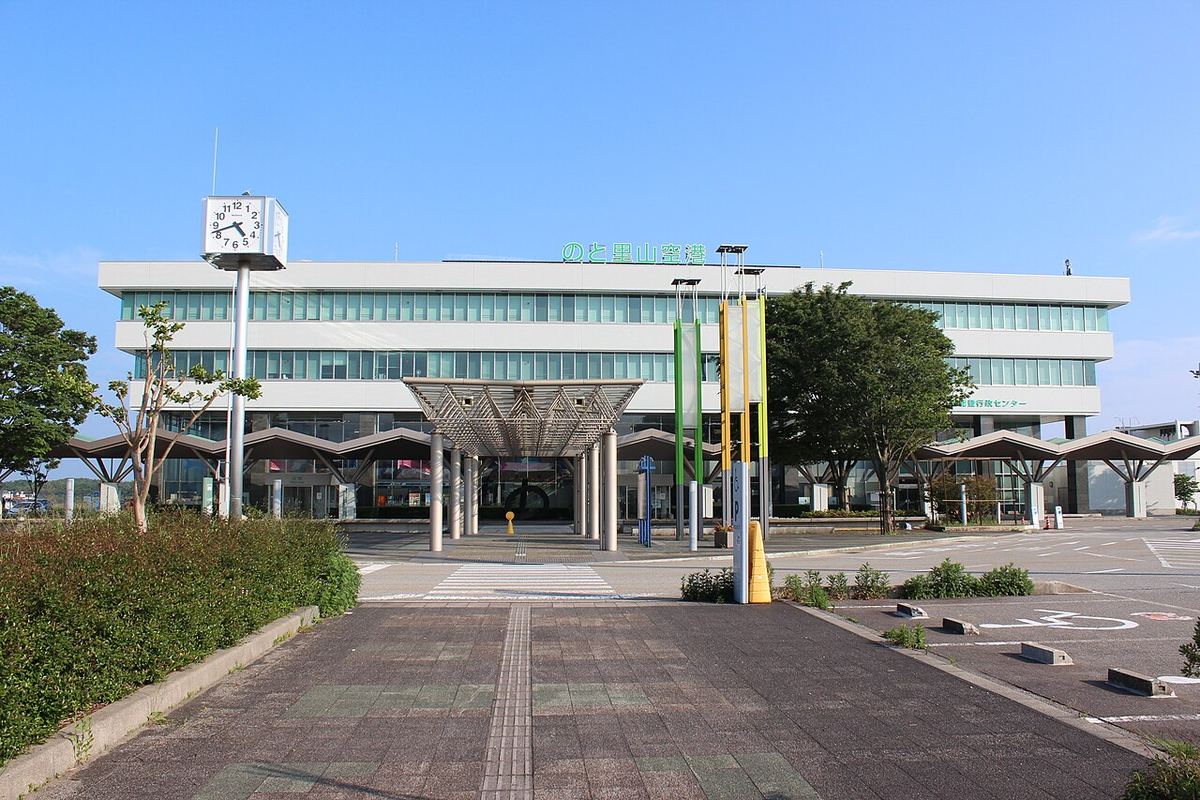
Noto Satoyama Pokémon with You Airport — it has been renamed — has two ANA round trips a day to and from Haneda, every day. Haneda departures NH747 at 8:55 and NH749 at 15:30; Noto departures NH748 at 10:30 and NH750 at 17:10, on the schedule covering 29 March to 24 October 2026.
And then, on that same page, the airport's own warning about the last mile, which is worth more than any itinerary advice: there are no taxis at the airport. The page states that transport between the airport and destinations across Noto is limited, and asks passengers to secure their own means of onward travel before flying. All three rental car desks operate, but the airport labels them limited operation and notes it differs from normal service. The community Furusato Taxi must be booked by 15:00 the day before.
Express buses from Kanazawa
Hokuriku Railroad's Noto-direction express buses, on the revision of 15 March 2026, run six times a day from Kanazawa Station west exit: 7:15, 10:20, 12:00, 13:30, 15:40 and 17:20. The route runs Kanazawa to Anamizu Station, then Noto Airport, then Wajima Station, with branches to Noto Town and to Suzu splitting at the airport. Taking the first departure as the example: Kanazawa 7:15, Anamizu 9:14, airport 9:34, Wajima Station 10:04; the Suzu branch leaves the airport at 10:10 for Suzunari-kan at 11:03. Returning, Wajima departs 6:20, 7:30, 10:00, 11:30, 13:30 and 17:20; Suzunari-kan at 6:45, 12:45 and 16:35.
Fares, revised on 1 February 2026: Kanazawa west exit to Anamizu 1,930 yen, to Noto Airport 2,200 yen, to Wajima Station 2,300 yen, children half fare. One catch is printed on the fare table: the ICa card does not support through fares across connections. The timetable page also still carries a post-earthquake note that the Mii Station stop has been relocated for the duration of restoration works.
Hegura Island: the boat sails, passengers cannot board
The Kimi ferry to Hegurajima off Wajima resumed on 18 May 2026 after its mooring facility was completed, running weekdays only with Saturdays, Sundays and holidays suspended. The operator's notice also states that for the time being it is not accepting passengers other than islanders and recovery-related contractors such as survey, design and construction personnel, and apologises directly to the birdwatchers and anglers who have been waiting. Crossing time is 85 minutes, once a day, with no advance reservations taken. In short: the boat is sailing and you cannot be on it.
Can you get a room? Wakura, Suzu and those 388 rooms
You can book, but what you book is not the Noto of 2023 — and 388 rooms are ring-fenced away from travellers by policy.
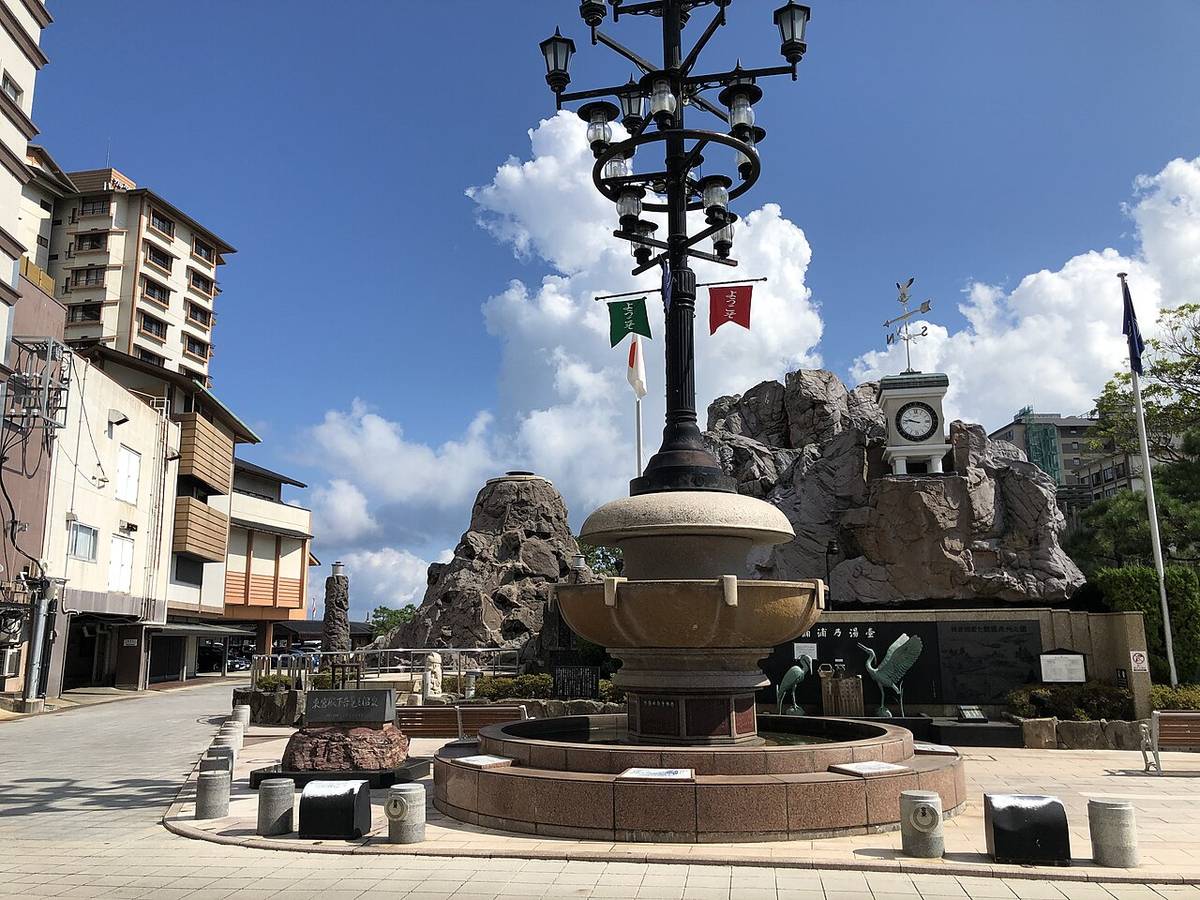
Wakura first. The Wakura Onsen tourism association and ryokan cooperative state that 11 inns have resumed operation, and that cooperative membership dropped from 20 to 19 on 1 April 2026. The two lines the officials added themselves matter more: some of the reopened inns are mid-demolition or mid-construction and operate provisionally out of temporary facilities with no entrance hall, lobby or front desk; and seawall works along the shore mean sea views from inside the buildings are impaired.
The per-inn labels on the association's listing page read: five closed (Togetsuan, Aenokaze, Niji to Umi, Tadaya, Kagaya), three accepting disaster-support personnel only, two operating provisionally (Bibanso and Hotel Kaibo), and nine carrying no label. On Kagaya specifically, the association shows only closed, with no reopening date stated anywhere; the company's own notice of 28 August 2026 puts the new-building project at 7.7 billion yen with a grant decision dated 31 July 2026 and completion scheduled for 30 December 2028. Both association pages carry no date stamp at all, so what is described here is what those pages showed on 4 September 2026.
Now the figure that explains why beds are scarce. Ishikawa's temporary accommodation page, updated 31 July 2026, states that eligible users are supporters of the 2024 earthquake and the 2024 Oku-Noto floods, including recovery contractors, across 288 rooms at Noto Satoyama Pokémon with You Airport, 50 at the Suzu Hachigasaki auto camp ground and 50 at the Anamizu Noto Fureai Cultural Centre — 388 rooms in total. The same page notes that vacancy information for supporter-eligible accommodation across the six Noto municipalities is published separately by the Noto Peninsula Wide-Area Tourism Association.
Lay that beside the 48.8 percent operating rate and the conclusion writes itself: beds in Noto are an explicitly scarce resource, and a whole tranche of them is closed to tourists by design. Book early, and do not cancel casually. That argument needs no moralising; it is printed in a prefectural notice.
How you book is also not what you are used to. The prefectural tourism federation's accommodation notice of 1 March 2026 says that while some Noto properties operate mainly to house support personnel, the number accepting ordinary tourists is increasing, and asks anyone wanting to stay to contact properties directly. The wide-area tourism association runs its own vacancy search. One address correction while we are here: the Noto Peninsula Wide-Area Tourism Association is at notohantou.com, while notohantou.jp is the Suzunari roadside station — two different organisations.
On the Oku-Noto side, the only official list I found with names and phone numbers is the 18 properties published by Suzu City: Suzu Beach Hotel, Notojiso, Kinoura Village, Sakamoto, the temple stay at Jokoji and others. The names tell you the scale — these are minshuku and small inns, not chains. That is the reason this guide carries no booking links: sending you to an online travel agency would hide the small places that are actually open and would cost you the on-the-spot subsidy described in the next section. For how to choose a ryokan generally, our best onsen ryokan guide covers the selection logic in regions where capacity is normal.
One campaign you cannot enter, one discount you might get
The prefecture-wide campaign is limited by law of its own terms to people living in Japan; Suzu City's on-the-spot subsidy sets no residence condition at all. Same winter, same peninsula, two rules pointing opposite ways.
Take the misleading one first. The Tabishite Oen, Noto stay-and-present campaign runs from 1 September 2026 to 31 March 2027. Stay at a participating property, answer a survey, enter a draw: 360 winners, with 10 prizes worth 50,000 yen, 100 worth 10,000 yen and 250 worth 5,000 yen, in two draws covering 1 September to 31 December and 1 January to 31 March. Your room rate does not move. The eligibility line is explicit: entrants must live in Japan and have a delivery address in Japan. That restricts residence and delivery address, not nationality — people living outside Japan do not qualify. You will see the poster with its QR code on the wall of your inn, and now you know it is not aimed at you. The official list of participating properties, last updated as of 1 September, also warns that some may have paused accepting tourists or may not have the poster up.
Now the one that actually saves money. Suzu City's visitor subsidy, page updated 13 April 2026, applies to people who fly through Noto Satoyama Airport and stay at a participating property in the city: 2,000 yen per adult from junior high school age, 1,000 yen per child aged three and over, taken straight off the accommodation bill. Eligibility has been extended from Haneda-to-Noto passengers to Noto-to-Haneda passengers as well. The fine print: under-threes do not qualify, the amount does not increase for stays of two nights or more, and it cannot be combined with other Suzu City subsidies.
To claim it you hand the property a copy of your boarding pass, mobile boarding pass, boarding certificate or e-ticket receipt. The page flags two traps itself: ANA counters no longer issue boarding certificates (if you have the booking or confirmation number, the promotion association's window on the first floor of Noto Airport can help), and the old pink boarding guide slip has been discontinued.
An honest boundary: the Suzu page states no nationality or residence condition, but it also does not explicitly say overseas visitors qualify. Confirm with the property when you book. It costs you three minutes.
One related thing that gets misread. The Japan Tourism Agency does run a Noto tourism regeneration support programme — 60 applications in fiscal 2026, 18 selected, 17 in Ishikawa and one in Toyama, with recipients including the Wajima morning market cooperative, the Wakura Onsen tourism association, the Wajima tourism association and Suzu City. But the call for applications describes the support as dispatching experts and similar assistance. It funds planning and content, not traveller subsidies.
Why the official tourism sites cannot be trusted right now
The least reliable source of information about Noto today is the official tourism websites, and the reason is on the official record.
Minutes of Wajima's recovery follow-up committee from 17 February 2026 have the secretariat stating that the tourism association is currently short-handed and cannot get as far as training guides. That single sentence explains the whole list below.
| What you will hit | Actual state |
|---|---|
| Azenokirameki illumination dates on the Wajima tourism association page | Still showing 22 October 2022 to 12 March 2023. A second listing on the same site is titled with the note that it was not held in the 2025 fiscal year — but that detail page returns a 404 |
| The "official site" link for Shiroyone Senmaida on that page | The domain has been repurposed and now serves a Japanese house-builder comparison blog carrying affiliate links, with no connection to the rice terraces |
| The Noto business-status list linked from Ishikawa's earthquake page | Redirected away, and the list no longer exists. The Noto-specific digital map was officially closed to the public on 31 March 2026 |
| Suzu tourism site's rental-car accommodation subsidy menu | The menu item exists; the page says no information is currently posted |
| The ministry's road recovery visualisation map | States on its own front page that it may not reflect the latest road conditions |
| The bus timetable link on the Noto Railway site | 404. The railway's own former domain also serves a mismatched certificate |
One more figure says as much as the table: Wajima City's own tourism statistics page stops at fiscal 2023 and has not been updated since the earthquake.
So plan a Noto trip the other way round from usual: phone first, website second. When you see a date, a festival period or an opening time on a web page, assume it may be old, then call. This is not pessimism — it is the officials' own account of both the symptom and the cause. For how to handle disruption and emergency channels in Japan generally, see our Japan earthquake and typhoon guide.
The decision being made this winter
Whether Noto's earthquake ruins can ever be visited, and how, is being decided this winter. Ishikawa's committee on how the disaster should be remembered held its first meeting at 10:00 on 2 September 2026, under terms of reference in force since 27 July 2026, with eight members including the vice-chair of the Ishikawa Tourism Federation.
The published schedule is short:
- September 2026 — first committee meeting
- September to October 2026 — site visits to memorial facilities and candidate earthquake ruins
- November to December 2026 — second meeting, interim draft of the report
- March 2027 — third meeting, consideration of the final report draft
What the committee is deciding covers the measures needed to pass on the memory of the disaster, whether a memorial facility is needed and what it would do, and the preservation and use of earthquake ruins. The papers also cite precedents and their costs elsewhere — roughly 1.7 billion yen for Kumamoto's KIOKU facility, roughly 6 billion yen each for the two wings of the Disaster Reduction and Human Renovation Institution — along with the problems: visitor numbers that are high at opening and decline over the years, and, in a Noto facing depopulation and ageing, the burden of staffing plus long-term maintenance and operating costs.
So what can be seen now? Very little, because the candidate sites are being covered and fenced. The provisional-preservation subsidy lists its eligible costs verbatim: screening materials such as blue tarpaulins and vinyl greenhouses, fences and barriers to prevent entry, relocation costs for items that cannot be preserved in place, and land or building rental. That funding list describes the physical reality without needing any commentary added.
On survey progress, 56 locations were surveyed in Wajima and Suzu during fiscal 2025, with Nanao, Shika, Anamizu and Noto Town scheduled for fiscal 2026. Only one case is settled: the Shiromaru post office in Noto Town, badly damaged by a four to five metre tsunami, has been designated for preservation as an earthquake ruin. For Mitsukejima in Suzu, no policy has been decided on restoring or protecting its collapsed profile, though the city intends to develop a memorial park nearby. The damaged large lens from the Rokkosaki lighthouse is being prepared for public display.
Where officials want you to go instead
There is already an official set of channels for understanding what happened, and none of them involves looking at wrecked houses. All four are listed in the same committee papers:
- The Noto Railway storyteller sightseeing train between Anamizu and Nanao. The trains run anyway, so this is the lowest-effort option on the list.
- Suzu Enden Village roadside station, which runs a permanent exhibition on earthquake remains in cooperation with the Noto reconstruction office. Nearby, the Suzunari roadside station runs a winter monkfish campaign at a special price subsidised by Suzu City, and the Suzu Marukajiri food event on Sunday 22 February 2027, 10:00 to 15:00. Note that its bicycle rental is currently suspended, even though the home page still promotes it.
- Town-walk guides from the Wajima tourism association, framed around recovery and currently being trained.
- The storyteller programme run by Wajima Junior High School students with Kanazawa University.
There is also Ishikawa's earthquake learning programme set: 26 programmes across six Noto municipalities on three themes — the force of nature, disaster prevention and mitigation, and recovery efforts — pitched to travel agencies. That is a group and school-trip channel rather than something an independent traveller books. The prefecture's progress report notes 18 of those programmes also accept visitors outside school trips, with about 28,000 participants as of February, and grades the workstream A, ahead of plan.
What these share: each is backed by an official document, each keeps money in the local economy, and none requires anyone to stand in a disaster area as a spectator. As for the Oku-Noto Triennale, its permanent artworks can be seen now, but no year has been announced for the next edition, so this guide does not name one.
What in this guide will expire
The frame holds for roughly a year, the seasonal items for a season or two, and three categories should be checked on the day you travel. Treat this table as the maintenance manual:
| Item | Shelf life | Where to check it yourself |
|---|---|---|
| Day-level road closures | 🔴 Check on the day | Ishikawa Michi Joho Net (douro.pref.ishikawa.lg.jp) |
| Accommodation operating status and counts | 🔴 Check on the day | Phone the property directly; the Wakura association pages carry no date stamp |
| Facility opening days and hours | 🔴 Check on the day | Wajima tourism association 0768-22-1503, or the facility itself |
| Rail, air and bus operations | 🔴 Check on the day | nototetsu.jp / noto-airport.jp / hokutetsu.co.jp |
| Stay-and-present campaign | 🟡 Runs to 31 March 2027 | nototomatte.jp |
| Memorial committee decisions | 🟡 December 2026 and March 2027 | Ishikawa recovery pages |
| Prefectural tourism statistics | 🟢 Updated each late April | Ishikawa tourism strategy division |
| Road restoration targets (fiscal 2028, spring 2029) | 🟢 Three-year horizon | Ishikawa road division / ministry Noto reconstruction office |
One last note on how this guide is written: everything above is something an official body has said, including the places where they contradict each other. Whether to go, and what to do when you get there, is your call; what this page provides is what the documents actually say and which of those lines are firmer than travellers expect. To fit Noto into a wider route, the Kanazawa end is covered in our Kanazawa one-day guide, and winter driving in the Hokuriku loop in the Shirakawa-go illumination guide.
Appendix: official Japanese source texts (click to expand)
The longer Japanese passages quoted above are collected here so you can verify them yourself.
1. Ishikawa Tourism Federation, "Tabishite Oen, Noto"
能登で営業を再開している施設やイベント情報等を随時発信中。皆様に能登の観光地にお越しいただくことが、被災地の早期復興につながります!
2. Wajima City, acceptance of inspection visits (published 15 July 2026)
個人でのお申し込みは辞退させていただきます。
原則、現地視察は行いません。
視察にお越しの際は、ぜひ、輪島市内でのお食事、ご宿泊をご検討ください。
3. Ishikawa road division, 4th Wajima road recovery council (28 July 2026)
県管理道路では、地震で最大42 路線87 箇所、豪雨で最大25 路線48 箇所が通行止め。現時点では、地すべりやトンネル崩落などの大規模な被害が発生した5 路線8 箇所を除きすべて解消。
令和10 年度までに復旧を完成させることを目標、と考えている。ただし、改良復旧…するところは、用地買収が伴うので、令和10 年度以降も工事が続く予定。
Ministry Noto reconstruction office, Route 249 outer coast: 「千枚田工区と大川浜工区については、隆起海岸を活用した本復旧を予定」「令和11 年春までの開通を目指している」. Under "other business": 「比丘尼沢ポケットパークに新たに快適トイレを設置した。」
4. Wajima recovery follow-up committee minutes (17 February 2026)
観光の視点から、震災直後みたいに「入るな」ではなく、「能登に来てください」という動きが少しずつ出ているが、道路や駐車場の整備がまだの段階である。…また、トイレの問題もまだまだ怖い、心配されていると思われているところがあり、個人で移動する際もスーパーなど(の店舗)に頼っている状況である。
現在は観光協会が手薄となっており、育成まで手が回っていない。
5. Wakura Onsen tourism association / ryokan cooperative (page undated)
営業再開旅館は11軒となります(R8.4.1より和倉温泉旅館協同組合加盟旅館数は20軒⇒19軒に変更)。なお、営業再開した旅館の中には、解体・建設工事中につき、玄関・ロビー・フロントなどもなく、仮設の設備の中、仮営業として再開した旅館も含まれております。また、海沿いでは護岸工事が行われており、館内からの海の景観が損なわれております。
6. Ishikawa Prefecture, temporary accommodation (updated 31 July 2026)
利用対象者:令和6年能登半島地震または令和6年奥能登豪雨の支援者(復旧工事関係者含む)
7. Stay-and-present campaign eligibility
日本国内にお住まいで、賞品の発送先が日本国内である方。
キャンペーン期間 令和8年9月1日から令和9年3月31日まで
8. Suzu City visitor subsidy (updated 13 April 2026)
のと里山空港(能登空港)を利用して、市内宿泊施設にお泊りになられた方を対象とした助成制度を設けました。対象者を羽田↠能登便利用者に加え、能登↠羽田便利用者へも拡大しています。
宿泊料金から下記金額がその場で割引されます。
Adults (junior high and above) 2,000 yen; children (3 and over) 1,000 yen. 「※Anaカウンターでの搭乗証明書の発行ができなくなりました。」「※ご搭乗案内(ピンク色)は廃止されました。」
9. Noto Satoyama Pokémon with You Airport (published 22 May 2026)
特に、空港と能登各地との間の移動については、現在、利用できる交通機関が限られているため、必ずアクセス手段をお客様ご自身で確保の上、ご利用ください。
空港にタクシーはおりません。
10. Hegura Kouro, Hegurajima ferry (published 8 May 2026)
5月18日から平日(土日祝日は休航)にかぎり運航を再開いたします。しばらくの間は、島民と復旧関係事業者(調査設計・工事関係者)以外の乗船を見合わせることといたしました。
11. Ishikawa memorial committee, first meeting papers (2 September 2026)
遮蔽物(ブルーシートやビニールハウス等)の設置費用/進入を防ぐための柵やフェンス設置費用/移動して仮保存するための費用(現場保存が難しい物)/土地や建物の借用費など
9月:第1回検討委員会開催/9~10月:伝承施設及び震災遺構候補視察/11~12月:第2回検討委員会開催 ※報告書の中間案の提示/3月:第3回検討委員会開催 ※報告書のとりまとめ案検討
12. Ishikawa Tourism Federation, accommodation information (1 March 2026)
現在、能登の宿泊施設については、支援者の受け入れを中心に営業しているところもありますが、一般観光客のお客さまを受け入れている施設も増えてきております。宿泊をご希望の場合は…直接、宿泊施設へのご連絡をお願いします。
13. Wajima tourism association, morning market listing
出張輪島朝市 in ワイプラザ輪島店
輪島朝市が輪島市内の商業施設「ワイプラザ輪島店」で営業再開。毎日朝市組合員が野菜や魚介類、輪島塗などをを揃えてお待ちしております!
14. Ishikawa Noto Satoyama Kaido division (updated 29 July 2026)
のと里山海道には給油所がありません。事前に周辺給油所で給油してください。
15. Ishikawa passable-roads PDF (as of 13:00, 25 March 2026)
地域にお住まいの方や工事に従事される方、ボランティアの方など、多くの方々が復旧復興に取り組んでおられますので、作業の妨げとなる行為はお控えいただきますよう、お願いいたします。
Frequently Asked Questions
- Q1:Is it acceptable to travel to the Noto Peninsula as a tourist in 2026?
- Yes, and Ishikawa Prefecture's own tourism site is asking you to. The prefectural tourism federation runs a section called Tabishite Oen, Noto, and its line is that visitors coming to Noto's sightseeing areas leads to an early recovery for the disaster-affected region. A separate prefectural page, updated in March 2025, lists travel to Noto alongside buying local products and volunteering as ways to help. But the same body of official documents also draws a line, and it is harder than most people expect. Wajima City's notice of 15 July 2026 on accepting inspection visits states that it accepts applications from government bodies, university research groups and organisations whose purpose is to inform recovery policy, then says in plain Japanese that applications from individuals are declined, and that as a rule it does not conduct site inspections. It accepts roughly one group per week. So the split is clean: coming as a traveller who eats, sleeps, rides and buys is welcomed; applying as an individual to be shown around the damage is not. The prefecture's road map PDF adds one line that applies to everyone, asking people to refrain from actions that get in the way of the residents, contractors and volunteers doing recovery work.
- Q2:How much of Noto has recovered? Is it around 60 percent?
- There is no single number, and 60 percent is two different statistics collapsed into one. Ishikawa publishes at least three official figures that point in different directions. The first is the accommodation operating rate in its objective-indicators set: across the three cities and three towns of Noto, measured by guest capacity, it moved from 5.6 percent immediately after the earthquake to 34.3 percent at the end of December 2024 and 48.8 percent at the end of March 2026. The stated target is 100 percent, with no deadline attached. The second is visitor arrivals for calendar 2025: Noto recorded 3.724 million, up 31.1 percent year on year, which is 59.4 percent of the pre-earthquake level. On the same table, Kanazawa sits at 105.4 percent, already above where it was. The third is overnight stays by onsen resort. Wakura Onsen recorded 171,000 guest-nights, up 96.4 percent year on year but still only 28.8 percent of pre-earthquake. Wajima Onsen village recorded 62,000, down 30.4 percent year on year, making it the only place on that table still falling in 2025. All three are true at once. One more boundary worth knowing: 2026 figures do not exist yet, because the prefecture publishes annual tourism statistics the following April, and the prefecture has never published a target year for returning to pre-earthquake visitor numbers.
- Q3:Where is the Wajima morning market now?
- Not on Asaichi-dori. The official tourism site run by Wajima City and the local tourism association lists it under a heading that translates as the travelling Wajima morning market at Y Plaza Wajima, a commercial facility inside the city, and says market cooperative members are there daily with vegetables, seafood and Wajima lacquerware. The old market street itself is now a land readjustment project area: the city's notice of 24 August 2026 covers the second disaster-affected urban district recovery land readjustment project for the Honmachi area, and the city's recovery committee records show the Honmachi area is still at the consultation stage. Walk to Asaichi-dori using an older guide and you arrive at a construction site. One honest gap: the official page does not publish opening hours or closing days for the relocated market, and the market cooperative's own website did not respond when I checked, so no hours are stated here. Phone the Wajima tourism association on 0768-22-1503 before you go.
- Q4:Is the Noto Railway running, and are there replacement buses?
- It is running and there are no replacement buses. The operating-status box on the Noto Railway home page currently reads that trains are running as normal, and the timetable in force is the spring 2026 schedule from the 14 March 2026 revision: 17 services in each direction, all eight stations served — Nanao, Wakura Onsen, Tatsuruhama, Kashimaho, Noto-Nakajima, Nishigishi, Noto-Kashima and Anamizu — end to end in 43 to 47 minutes. A full-text search of the operator's FAQ returns nothing for slow running, replacement services or suspensions. One precision point: the operator has never published the words full-line restored, so treat the above as what the operating-status box and the timetable show, not as a restoration announcement. There is also a trap that has nothing to do with trains. The old domain nototetsu.co.jp now serves a certificate that does not match, so it simply fails to load; the current official domain is nototetsu.jp. Reports that the railway's site is down usually trace back to that. On the JR side, the Noto Kagaribi limited express runs Kanazawa to Nanao and Wakura Onsen, five round trips as services 1 to 10, and the Hanayome Noren sightseeing train is still running on Saturdays and Sundays with dates published through February 2027, all seats reserved, reserved limited express ticket 1,490 yen for adults and 740 yen for children in the normal season, on sale from 10:00 one month ahead via e5489.
- Q5:Can overseas visitors enter the Noto stay-and-win campaign?
- Almost certainly not, and it is a prize draw rather than a discount in any case. The Tabishite Oen, Noto stay-and-present campaign runs from 1 September 2026 to 31 March 2027. You stay at a participating property in the Noto area, answer a survey, and go into a draw: 360 winners in total, with 10 prizes worth 50,000 yen, 100 worth 10,000 yen and 250 worth 5,000 yen, split into two draws covering 1 September to 31 December and 1 January to 31 March. Your room rate does not change by a single yen. The eligibility line states that entrants must live in Japan and have a delivery address in Japan. It restricts residence and delivery, not nationality, so people living outside Japan do not qualify. You will see the poster with its QR code on the wall at your accommodation; that is the entry route, and it is not a perk aimed at you. Suzu City's own subsidy is the opposite case: fly into Noto Satoyama Airport and stay at a participating property inside Suzu and 2,000 yen per adult, or 1,000 yen per child aged three and over, comes straight off the room bill. That page sets no residence condition, though it also does not explicitly say foreign visitors qualify, so confirm with the property when you book.
- Q6:Can I visit earthquake ruins or damaged buildings to understand what happened?
- Barely, because the candidate sites are currently being covered up and fenced off. Ishikawa's committee on how the disaster should be remembered held its first meeting on 2 September 2026, and its papers list what the provisional-preservation subsidy actually pays for: screening materials such as blue tarpaulins and vinyl greenhouses, fences and barriers to prevent entry, relocation for items that cannot be preserved in place, and land or building rental. That single funding list describes the physical state of those sites better than any commentary could. Only one site is settled so far: the Shiromaru post office in Noto Town, badly damaged by a four to five metre tsunami, has been designated for preservation. For Mitsukejima in Suzu, no policy has been decided on whether to restore or protect its collapsed profile. The lens from the Rokkosaki lighthouse is being prepared for public display. The official alternatives already exist and are listed in the same papers: the Noto Railway runs a storyteller sightseeing train between Anamizu and Nanao; the Suzu Enden Village roadside station runs a permanent exhibition on earthquake remains with the Noto reconstruction office; the Wajima tourism association is training town-walk guides framed around recovery; and students at Wajima Junior High School run a storyteller programme with Kanazawa University. Ishikawa's earthquake learning programmes — 26 of them across six municipalities — are pitched through travel agencies, so they are a group and school-trip channel rather than one an independent traveller can book.
- Q7:Which information do I have to check myself on the day?
- Three categories: day-level road closures, accommodation operating status, and opening days for individual facilities. For roads, the source Ishikawa itself designates is the Ishikawa Michi Joho Net map at douro.pref.ishikawa.lg.jp. It is a JavaScript map, so its contents cannot be frozen into any article — open it yourself. Note that the two most authoritative static maps are both stale: Ishikawa's Oku-Noto road conditions page was last updated on 27 March 2026 and the passable-roads PDF it carries is stamped 13:00 on 25 March 2026, while the national road recovery visualisation map from the Ministry of Land, Infrastructure, Transport and Tourism says on its own front page that it may not reflect the latest road conditions. For accommodation, the prefectural tourism federation's notice of 1 March 2026 asks travellers to contact properties directly, and the Wakura Onsen association's pages carry no date stamp at all, so any count of open inns has to be confirmed on the day. Facility opening days are the same. By contrast the big picture on roads runs on a three-year timetable and the tourism statistics are annual, so those two do not need rechecking every trip.
- Q8:Why does the official Shiramine Senmaida website look completely wrong?
- Because that domain has been repurposed. On the Wajima tourism association's page for the Shiroyone Senmaida rice terraces, the official-site link points to senmaida.wajima-kankou.jp, and that address now serves a Japanese affiliate blog comparing house builders, with nothing to do with the terraces. It is not an isolated case. The same association page still shows the Azenokirameki illumination running from 22 October 2022 to 12 March 2023; Ishikawa's earthquake information page still links to a Noto business-status list that has been redirected away and no longer exists; the Suzu tourism site's rental-car accommodation subsidy menu opens to a note saying no information is currently posted; and the timetable link the Noto Railway points at for the connecting bus operator is a 404. The reason is on the record. Minutes from Wajima's recovery follow-up committee of 17 February 2026 have the secretariat stating that the tourism association is currently short-handed and cannot get as far as training guides. So invert your usual research order in Noto: phone first, web second. Incidentally, the association's own wording is that Azenokirameki was not held in the 2025 fiscal year, and as of early September 2026 nothing has been announced for this coming winter — unannounced, not cancelled.
Read next
Kanazawa Travel Guide 2027: Kenrokuen, 21st Century Museum & Chaya
The craft old capital of Kaga — the three-great-garden Kenrokuen, the 21st Century Museum pool, Higashi Chaya gold leaf and Omicho Market seafood.
Self-Drive in Japan 2026: License, Insurance & ETC Guide
The thing that stops first-timers isn't driving on the left — it's the licence. Geneva vs Vienna IDP, where to drive, CDW+NOC insurance, ETC cards, fuel and winter tyres.
Japan Disaster Alerts 2026: New Names, and Your Phone
Japan renamed every weather warning on 29 May 2026. The new Level 3-5 names, what JMA says to do in the first minute, and whether a roaming phone alerts at all.
📊 See the 2026 Price Index (JR Pass, DPA, eSIM, Airport Transport) →